


The U.S.- and foreign-born children grow up learning English in school while also hearing and speaking one of more than 350 languages used in the United States at home.


 Your new post is loading...
 Scoop.it! The U.S.- and foreign-born children grow up learning English in school while also hearing and speaking one of more than 350 languages used in the United States at home. 
No comment yet.
Sign up to comment
Scoop.it!

Even though you’re not fluent in different languages, you may be able to recognise words in others. In German for water is ‘wasser’, in Dutch it's 'water' and in Serbian ‘voda’. Similar sounds and letters are used to form the word across languages. Via Wildcat2030
Scoop.it!

Only 17 % of Americans are bilingual compared to 50% of Europeans. Learning with Yaya and other Spanish and bilingual tools help parents raise bilingual kids.
Scoop.it!

A lot of things have me thinking about this question now. Particularly a presentation I am doing tomorrow as part of an OpenMed event in Cairo. So much discourse around self-directed, lifelong, aut… Via Ana Cristina Pratas
Scoop.it!

In Cameroon, unrest in minority English-speaking regions over discrimination by majority French speakers is still simmering after violent clashes with police claimed at least four lives.
English-speakers have been protesting since Monday (11/21/2016) against what they see as their "second-class citizen status" and attempts to marginalize them in the west African nation. Eight of Cameroon's ten regions are largely Francophone, but two regions, North West and South West Cameroon are English-speaking. English-speaking teachers complain that French-speaking counterparts are being increasingly deployed in English schools, despite differences in the curricula and teaching systems.
Tags: language, Cameroon, Africa, culture.

Richard Aitchison's curator insight,
March 9, 2018 10:05 AM
The study of language in a population is always fascinating. In this instance this one is very fascinating especially for someone that is in English speaker from America. While most of the world that we know it speaks some kind of English or tries to bend to using English for business terms or what not it was quite the headline to see this. In Cameroon they have both French and English speakers, however French speakers heavily outweigh English speakers. 8 of the 10 counties in the country are French dominated, however they are trying to takeover the English speaking areas as well. The hostility has been built up as teachers claim that many of their jobs are now going to French speakers in the schools and other are arguing that there should be English speakings judges in English speaking areas. It is so strange to see a backlash versus the English language in this country and also to see such a heavy division. Maybe its because we live in a world in which we believe the English world dominates, but seeing people discriminated against for speaking English comes shocking and maybe can open our eyes and view what we are doing in this country or in other parts of the world. We read this article and believe that something needs to be done, but what do we do in this country or other parts of the world to help other people that speak different languages? Do we have Spanish speaking teachers in heavy Spanish areas? In cities that have a high Haitian population do we hire teachers and judges that speak Creole? Pieces like this should help us reflect on our own situation and always reflect on how the population of areas can eventually effect the social and cultural issues.

Katie Kershaw's curator insight,
March 31, 2018 4:05 PM
This is a good example of the long term affects of colonialism even after independence. Teachers in English speaking sections of Cameroon complained as more French speaking teachers began taking jobs in their regions. The English speakers complained because the curriculum the French speakers were teaching is different. Lawyers in the English speaking regions also raised the issue that the judges and other government officials were only speaking French, making their jobs difficult to do. What’s more interesting is that the constitution of the country recognizes both English and French as official languages. But since a majority of citizens speak French, those that speak English feel alienated and like they are being treated as second-class citizens. The federal government also operates almost exclusively in French. The long term build up of this tension has caused those in the English speaking regions to revolt, unfortunately they did it violently. The opposition party in the country has taken advantage of this in order to help their party by claiming that they will help incite change if voted into office. The party in power spun the situation to say that those revolting were being paid by foreign powers. The effects of colonialism can be devastating and harm people long after colonizers leave. This is a country where there are two official languages, yet the majority has been able to gang up on the minority. It’s unfortunate because people cannot be happy in their own jobs or daily lives and the government and their fellow citizens are ignoring them.

brielle blais's curator insight,
May 1, 2018 10:04 PM
A nation's language is incredibly important to it's geography. In Cameroon, there are mostly French speaking citizens, however, there are still many English speakers.The differences are seen as more French speakers are getting jobs than English. They see this as discrimination. A huge problem is also dealing with important jobs such as in the courtroom. People who cannot understand each other cannot decide on things together. Things like this cause a lot of conflict in countries.
Scoop.it!
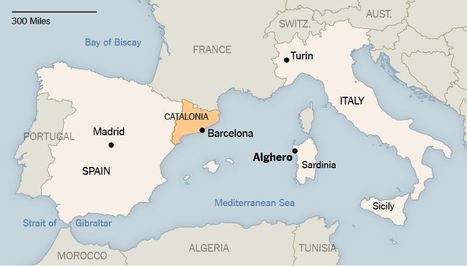
The lingering use of Catalan in Alghero, Italy, is a reminder of how Mediterranean cultures have blended for centuries. But the language is fading there today.
In an age when people cling ever more tightly to national identity, the lingering use of Catalan in Alghero is a reminder of the ways Mediterranean cultures have blended for centuries, rendering identity a fluid thing. But while the traditional insularity of Alghero has helped to preserve Catalan, the language is struggling to survive, even here.
Tags: language, culture, Italy, Europe.

Tom Cockburn's curator insight,
December 13, 2016 3:52 AM
7 activists arrested by Spanish police for insulting king felipe
Katie Kershaw's curator insight,
February 17, 2018 3:35 PM
Prior to Catalon’s attempt to gain independence from Spain last year, I was unaware that there was a region of Spain that was so culturally not Spanish. This article then introduced me to the Catalonian people living in Italy. In Italy, the Catalon culture is not even close to as widespread and important as it is in Spain. The language is scarcely used in the one region (Alghero) where it was most prevalent a century ago— in fact only about 25% of people here speak Catalon as their primary language. The article explains that the Catalon culture is dying off in Alghero, unlike in Spain where people are so passionate that they want independence. One of the biggest reasons the article atributes this to is the fact that Italy’s government has not been oppressive of Alghero’s population. There are signs, menus, and people who have spoken the language with no government opposition, so people do not feel the need to protect the culture. On the contrary, the Spanish government strongly pushes Spanish culture onto the Catalonians, which is why they fight for independence. Catalonians feel threatened in Spain and try to defend, whereas in Italy the Catalonians don’t feel threatened and don’t have a reason to cling so strongly to their culture. Younger people in Alghero speak almost exclusively Italian and education in Catalon is very rare. This is interesting to me, because unlike the physical connection that Catalonia has with the rest of Spain, Alghero is quite distanced from the rest of Italy.
The distance seems like it would make it easier for Alghero’s residents to maintain their Catalonian roots, but the opposite is happening. The article touches on this a bit, as it explains that since Alghero is on Sardinia, Sardinian is the most common ethnic group. Sardinian culture and language is more prevalent in the area and Catalonians simply don’t have the numbers to compete. Another explanation for this is the highly centralized way in which Italian education is set up. Schoolchildren’s education is uniform with the education that the rest of Italy and has a much stronger Italian influence than proud Catalonians would like. The final thought I had after reading this article was a question: If Catalonia somehow gained independence from Spain would they attempt to obtain Sardinia as part of their nation in order to take control of their fellow Catalonians? 
Nicole Canova's curator insight,
March 23, 2018 4:24 PM
The Mediterranean region is a good example of the fact that borders do not always indicate identity, a concept I looked at in a few articles on North America. Due to trade relationships that date back thousands of years, cultures were dispersed and blended throughout the Mediterranean. This has led to some interesting things, such as Catalan being spoken in Alghero, on the Italian island of Sardinia.
Scoop.it!

The College Board will make it easier for students with disabilities to request test accommodations, after the Department of Justice began looking into the lack of support for students with disabilities.
Scoop.it!
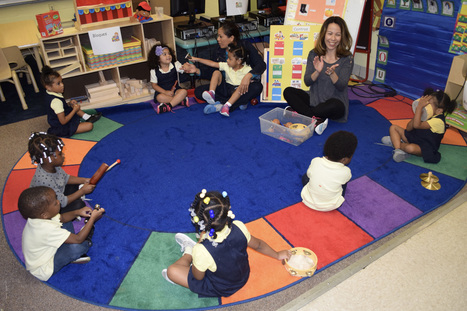
WASHINGTON, D.C. — In Ivonne Kendrick’s classroom at Houston Elementary School, 3-year-olds sit cross-legged in a circle, listening to their teacher sing about the fall season. “Llega el otoño tras el verano,” they repeat after her in Spanish. One month into the school’s new dual-language program, their accents are unmistakably American. But they know how …
Scoop.it!
In Cameroon, unrest in minority English-speaking regions over discrimination by majority French speakers is still simmering after violent clashes with police claimed at least four lives.
English-speakers have been protesting since Monday (11/21/2016) against what they see as their "second-class citizen status" and attempts to marginalize them in the west African nation. Eight of Cameroon's ten regions are largely Francophone, but two regions, North West and South West Cameroon are English-speaking. English-speaking teachers complain that French-speaking counterparts are being increasingly deployed in English schools, despite differences in the curricula and teaching systems.
Tags: language, Cameroon, Africa, culture.
Richard Aitchison's curator insight,
March 9, 2018 10:05 AM
The study of language in a population is always fascinating. In this instance this one is very fascinating especially for someone that is in English speaker from America. While most of the world that we know it speaks some kind of English or tries to bend to using English for business terms or what not it was quite the headline to see this. In Cameroon they have both French and English speakers, however French speakers heavily outweigh English speakers. 8 of the 10 counties in the country are French dominated, however they are trying to takeover the English speaking areas as well. The hostility has been built up as teachers claim that many of their jobs are now going to French speakers in the schools and other are arguing that there should be English speakings judges in English speaking areas. It is so strange to see a backlash versus the English language in this country and also to see such a heavy division. Maybe its because we live in a world in which we believe the English world dominates, but seeing people discriminated against for speaking English comes shocking and maybe can open our eyes and view what we are doing in this country or in other parts of the world. We read this article and believe that something needs to be done, but what do we do in this country or other parts of the world to help other people that speak different languages? Do we have Spanish speaking teachers in heavy Spanish areas? In cities that have a high Haitian population do we hire teachers and judges that speak Creole? Pieces like this should help us reflect on our own situation and always reflect on how the population of areas can eventually effect the social and cultural issues.
Katie Kershaw's curator insight,
March 31, 2018 4:05 PM
This is a good example of the long term affects of colonialism even after independence. Teachers in English speaking sections of Cameroon complained as more French speaking teachers began taking jobs in their regions. The English speakers complained because the curriculum the French speakers were teaching is different. Lawyers in the English speaking regions also raised the issue that the judges and other government officials were only speaking French, making their jobs difficult to do. What’s more interesting is that the constitution of the country recognizes both English and French as official languages. But since a majority of citizens speak French, those that speak English feel alienated and like they are being treated as second-class citizens. The federal government also operates almost exclusively in French. The long term build up of this tension has caused those in the English speaking regions to revolt, unfortunately they did it violently. The opposition party in the country has taken advantage of this in order to help their party by claiming that they will help incite change if voted into office. The party in power spun the situation to say that those revolting were being paid by foreign powers. The effects of colonialism can be devastating and harm people long after colonizers leave. This is a country where there are two official languages, yet the majority has been able to gang up on the minority. It’s unfortunate because people cannot be happy in their own jobs or daily lives and the government and their fellow citizens are ignoring them.
brielle blais's curator insight,
May 1, 2018 10:04 PM
A nation's language is incredibly important to it's geography. In Cameroon, there are mostly French speaking citizens, however, there are still many English speakers.The differences are seen as more French speakers are getting jobs than English. They see this as discrimination. A huge problem is also dealing with important jobs such as in the courtroom. People who cannot understand each other cannot decide on things together. Things like this cause a lot of conflict in countries.
Scoop.it!

Around 230 academics and practitioners logged into the first online conference organised by the Online Language Learning Research Network (OLLReN), a partnership initiative from Cambridge University Press and Laureate International Universities, with support from IATEFL’s Learning Technologies SIG. Twelve presentations were given by researchers who have been investigating the use of online technology for language learning. Via Nik Peachey

Nik Peachey's curator insight,
November 16, 2016 1:51 AM
You can find recordings and download presentations from each of the sessions here including my own one - 'Learning a language online - How we can ensure quality?'
Scoop.it!

The number of companies offering online language learning is going through something akin to an algal bloom. To borrow another metaphor, this time from the animal kingdom, perhaps it's time to try to sort the sheep from the goats. Broadly speaking online providers offer either language learning materials designed for self-study, a tutorial service of some… Via Nik Peachey
Scoop.it!

This report looks at recent reforms in Minnesota that aim to support its dual language learner population.
|
Scoop.it!

Talking People (by Mujer Palabra) helps Spanish-speaking English language learners become independent life-long learners and critical thinkers, aware of the fact that communication is a complex process depending on interaction and language... Via Cathie Cooper
Scoop.it!
Content and resources for the education researcher
Dennis Swender's insight:
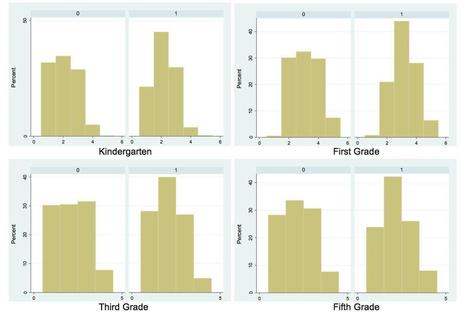
In "Disadvantaged Language Minority Students and Their Teachers: A National Picture (2015)," Jennifer Samson and Nonie Lesaux evaluate data from the Early Childhood and Longitudinal Study Cohort, 1998-99, in elementary grades. Samson is Hunter College Asst Prof of SPED at the City Univ of New York and Lesaux is Prof of Ed at the Harvard Graduate School of Education.
Scoop.it!

Ana Cristina Pratas's curator insight,
June 3, 2015 2:17 AM
This article presents an endeavor to create an online learning community for European language teachers in higher education. The approach presented here is based on the premise that knowledge is produced through processes in the interactions between people. The aim of the authors has been to get first-hand experience of community building, both in terms of digital choices and reflecting on community goals, while working within a transparent and dynamic small community of practice, the goal of which was to design an online community for language teachers.
Scoop.it!

Use YouTube to improve your English pronunciation. Real people, real situations. Easy and fun to use. Via Nik Peachey
Nik Peachey's curator insight,
December 16, 2016 12:47 AM
Use YouTube as a corpus to find out how words are pronounced. Great tool for finding words in context. 
Lilydale High School's curator insight,
December 25, 2016 6:06 PM
Learn to pronounce English and 14 other languages.
Scoop.it!

Whether chatting with family, friends or work colleagues or just watching television or surfing the internet, almost two-thirds (64%
Scoop.it!

400 selected talks to improve your English listening and vocabulary skills, while learning about interesting topics. From basic to advanced level. Via Ana Cristina Pratas

Ricard Garcia's curator insight,
December 19, 2016 4:46 AM
This site seems to offer a good source of inspiring texts... worth using with our students!!

Manuela Velasquez Palomino's curator insight,
December 1, 2020 6:31 PM
lingorank.com is a website that will allow you to practice your listening skills while watching TED talks. This amazing tool recommends you TED talks according to your level and needs and gives you the possibility of choosing not only the level of complexity but also the duration of the video, level of speed of the speaker, level of English topics and title. Once you have chosen your video you will find a series of activities related to the video, vocabulary, graphics, and other useful activities.
Scoop.it!

Although the number of U.S. residents who speak a language other than English has grown in recent decades, the share of those who are Limited English Proficient (LEP) has fallen: 40 percent in 2015, compared to 44 percent in 1980—even as immigration rose rapidly. This article examines growing linguistic diversity in the country and sketches a profile of the LEP population, including size, location, and socioeconomic characteristics.
Scoop.it!

CARLA is one of the U.S. Department of Education's Title VI National Language Resource Centers, whose role is to improve the nation's capacity to teach and learn foreign languages.
Scoop.it!

Christmas 1997. I remember it well, chiefly as I spent most of the holiday developing a business plan for a bright idea I’d had: to use the Internet to teach people who, for whatever reason, would never make it into one of our language schools. The plan must have had some merit as it persuaded…
Scoop.it!

Teaching and learning has changed in many ways over the past two decades. The use of technology to encourage and explore learning is not a new thing and there is now a lot of technology available to second language learners. Via Nik Peachey

Danielarv's curator insight,
November 19, 2016 3:19 PM
In this article you find 7 online tools which can help you to improve your English level. The first online tool is second life which offers learners the chance to connect and collaborate with classmates and teachers out of class. The second is Minecraft which is a commercial game that can motivate the students to learn through the game. The third is the digital art in which learners could draw, paint or manipulate a photograph and then describe to family, friends or classmates what they did and what their image means to them. If you want to know more about this, just give click on it.
|






