Your new post is loading...

|
Scooped by
Gilbert C FAURE
April 26, 2024 1:48 PM
|
|
|
Scooped by
Gilbert C FAURE
April 25, 2024 4:30 AM
|
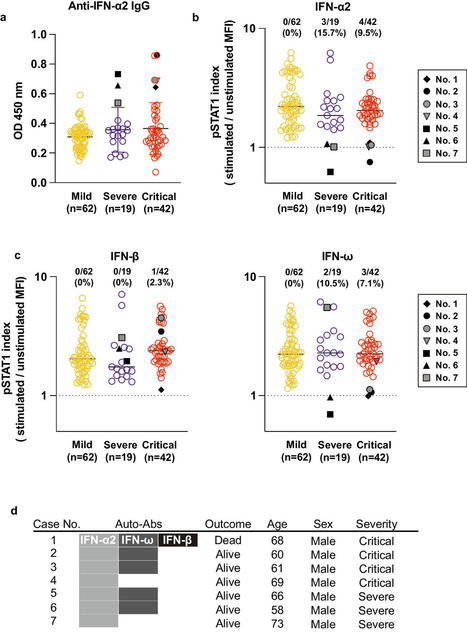
Purpose Auto-antibodies (auto-abs) to type I interferons (IFNs) have been identified in patients with life-threatening coronavirus disease 2019 (COVID-19), suggesting that the presence of auto-abs may be a risk factor for disease severity. We therefore investigated the mechanism underlying COVID-19 exacerbation induced by auto-abs to type I IFNs. Methods We evaluated plasma from 123 patients with COVID-19 to measure auto-abs to type I IFNs. We performed single-cell RNA sequencing (scRNA-seq) of peripheral blood mononuclear cells from the patients with auto-abs and conducted epitope mapping of the auto-abs. Results Three of 19 severe and 4 of 42 critical COVID-19 patients had neutralizing auto-abs to type I IFNs. Patients with auto-abs to type I IFNs showed no characteristic clinical features. scRNA-seq from 38 patients with COVID-19 revealed that IFN signaling in conventional dendritic cells and canonical monocytes was attenuated, and SARS-CoV-2-specific BCR repertoires were decreased in patients with auto-abs. Furthermore, auto-abs to IFN-α2 from COVID-19 patients with auto-abs recognized characteristic epitopes of IFN-α2, which binds to the receptor. Conclusion Auto-abs to type I IFN found in COVID-19 patients inhibited IFN signaling in dendritic cells and monocytes by blocking the binding of type I IFN to its receptor. The failure to properly induce production of an antibody to SARS-CoV-2 may be a causative factor of COVID-19 severity.
|
|
Scooped by
Gilbert C FAURE
April 15, 2024 4:49 AM
|
Article Text Article menu PDF Recent advances in basic science Coeliac disease: the paradox of diagnosing a food hypersensitivity disorder with autoantibodies http://orcid.org/0000-0001-9231-643XM Fleur du Pre1,2, http://orcid.org/0000-0002-3292-1766Rasmus Iversen1,2, http://orcid.org/0000-0001-8860-704XLudvig M Sollid1,2 Norwegian Coeliac Disease Research Centre, Institute of Clinical Medicine, University of Oslo, Oslo, Norway Department of Immunology, Oslo University Hosptial - Rikshospitalet, Oslo, Norway Correspondence to Dr Ludvig M Sollid, Department of Immunology, Oslo University Hospital - Rikshospitalet, Oslo, Norway; l.m.sollid{at}medisin.uio.no AbstractSerum antibodies to the autoantigen transglutaminase 2 (TG2) are increasingly harnessed to diagnose coeliac disease. Diagnostic guidelines for children give recommendation for a no-biopsy-based diagnosis through detection of high amounts of IgA anti-TG2 antibodies in serum with confirmation of positivity in a separate blood sample by characteristic autoantibody-staining of tissue. While measurement of IgA anti-TG2 also is important in the diagnostic workup of adults, the adult guidelines still mandate examination of gut biopsies. This requirement might well change in the future, as might the necessity for confirming autoantibody positivity by tissue staining. The key role of autoantibody serology for diagnosis of coeliac disease is paradoxical. Coeliac disease was considered, and still can be considered, a food intolerance disorder where autoantibodies at face value are out of place. The immunological mechanisms underlying the formation of autoantibodies in response to gluten exposure have been dissected. This review presents the current insights demonstrating that the autoantibodies in coeliac disease are intimately integrated in the maladapted immune response to gluten. https://doi.org/10.1136/gutjnl-2023-331595 Statistics from Altmetric.com Request Permissions If you wish to reuse any or all of this article please use the link below which will take you to the Copyright Clearance Center’s RightsLink service. You will be able to get a quick price and instant permission to reuse the content in many different ways. View Full Text FootnotesContributors MFdP wrote the review; RI wrote the review; LMS conceived and wrote the review and made the figures.Funding This work is funded by grants from Stiftelsen KG Jebsen (project SKGJ- MED-017), the University of Oslo World-leading research program on human immunology (WL-IMMUNOLOGY), the Research Council of Norway (projects 333380, 324302, 295844, 287234) and the South-Eastern Norway Regional Health Authority (projects 2016113, 2018068, 2020027, 2023075).Competing interests LMS has been a consultant during the last 3 years for BMS, GSK, Mozart Therapeutics, Ono Pharmaceutical, Precigen ActoBio, Sanofi, SQZ Biotech, Takeda and Topas Therapeutics. The other authors declare no competing interests.Provenance and peer review Commissioned; externally peer reviewed. Read the full text or download the PDF: Subscribe Log in
|
|
Scooped by
Gilbert C FAURE
March 21, 2024 7:32 AM
|
|
|
Scooped by
Gilbert C FAURE
March 11, 2024 12:38 PM
|
Antiphospholipid syndrome (APS), also known as antiphospholipid antibody syndrome, is an autoimmune disorder in which autoantibodies are directed against phospholipid-protein complexes.
|
|
Scooped by
Gilbert C FAURE
February 23, 2024 11:28 AM
|
CD19 chimeric antigen receptor (CAR) T-cell therapy seems feasible, safe, and efficacious for patients with different autoimmune diseases, according to a study...
|
|
Scooped by
Gilbert C FAURE
February 19, 2024 2:19 AM
|
|
|
Scooped by
Gilbert C FAURE
February 3, 2024 5:17 AM
|
Following the seminal discovery of insulin a century ago, treatment of individuals with type 1 diabetes (T1D) has been largely restricted to efforts to monitor and treat metabolic glucose dysregulation. The recent regulatory approval of the first immunotherapy that targets T cells as a means to delay the autoimmune destruction of pancreatic β-cells highlights the critical role of the immune system in disease pathogenesis and tends to pave the way for other immune-targeted interventions for T1D. Improving the efficacy of such interventions across the natural history of the disease will probably require a more detailed understanding of the immunobiology of T1D, as well as technologies to monitor residual β-cell mass and function. Here we provide an overview of the immune mechanisms that underpin the pathogenesis of T1D, with a particular emphasis on T cells. The first immune-targeted drug for type 1 diabetes (T1D), teplizumab, received regulatory approval by the US FDA in 2022. In this Review, Herold, Walker and colleagues examine the immune mechanisms that underpin T1D and provide an overview of immune-targeted strategies for T1D that are currently in development.
|
|
Scooped by
Gilbert C FAURE
January 31, 2024 6:21 AM
|
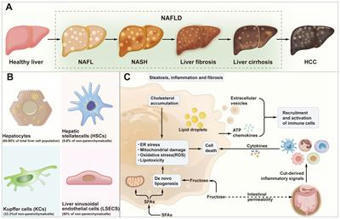
Non-alcoholic fatty liver disease (NAFLD) exhibits increased lipid enrichment in hepatocytes. The spectrum of this disease includes stages such as nonalcoholic simple fatty liver (NAFL), nonalcoholic steatohepatitis (NASH), and liver fibrosis. Changes in lifestyle behaviors have been a major factor contributing to the increased cases of NAFLD patients globally. Therefore, it is imperative to explore the pathogenesis of NAFLD, identify therapeutic targets, and develop new strategies to improve the clinical management of the disease. Immunoregulation is a strategy through which the organism recognizes and eliminates antigenic foreign bodies to maintain physiological homeostasis. In this process, multiple factors, including immune cells, signaling molecules, and cytokines, play a role in governing the evolution of NAFLD. This review seeks to encapsulate the advancements in research regarding immune regulation in NAFLD, spanning from underlying mechanisms to practical applications.
|
|
Scooped by
Gilbert C FAURE
January 15, 2024 10:08 AM
|
Researchers were able to trace a form of the autoimmune disease lupus back to a single mutation...
|
|
Scooped by
Gilbert C FAURE
January 15, 2024 10:06 AM
|
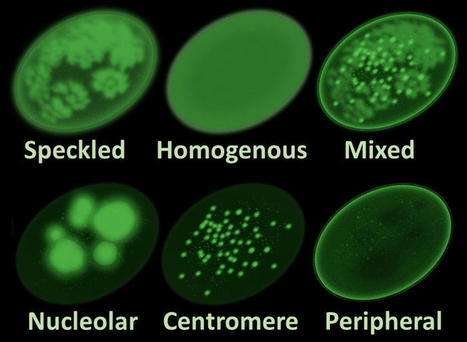
Antinuclear Antibody Test Market Size, Share & Trends Analysis Report By Product (Reagents & Assay Kits, Systems, Software & Services), By Disease (Rheumatoid Arthritis, Systemic Lupus Erythematosus, Sjögren’s Syndrome, Scleroderma, Other Diseases), By Technique (ELISA, Immunofluorescence Assay, ...
|
|
Scooped by
Gilbert C FAURE
December 26, 2023 10:09 AM
|
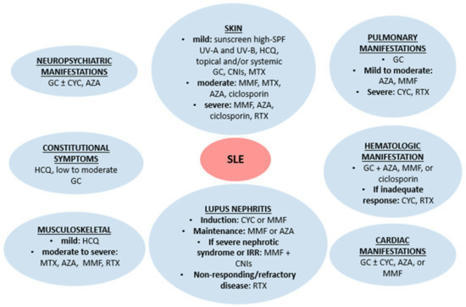
For many years, the failure of randomized controlled trials (RCTs) has prevented patients with systemic lupus erythematosus (SLE) from benefiting from biological drugs that have proved to be effective in other rheumatological diseases. Only two biologics are approved for SLE, however they can only be administered to a restricted proportion of patients. Recently, several phase II RCTs have evaluated the efficacy and safety of new biologics in extra-renal SLE and lupus nephritis. Six drug trials have reported encouraging results, with an improvement in multiple clinical and serological outcome measures. The possibility of combining B-cell depletion and anti-BLyS treatment has also been successfully explored.
|
|
Scooped by
Gilbert C FAURE
December 19, 2023 4:38 AM
|
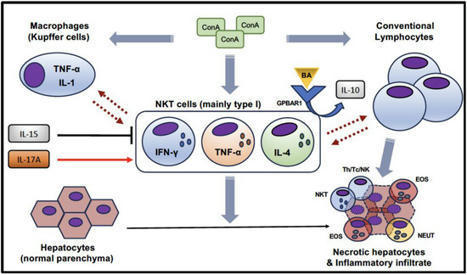
Natural killer T (NKT) cells are unconventional T cells that are activated by glycolipid antigens. They can produce a variety of inflammatory and regulatory cytokines and, therefore, modulate multiple aspects of the immune response in different pathological settings, including autoimmunity.
|
|
|
Scooped by
Gilbert C FAURE
April 26, 2024 1:48 PM
|
|
|
Scooped by
Gilbert C FAURE
April 18, 2024 4:08 AM
|
|
|
Scooped by
Gilbert C FAURE
March 24, 2024 5:26 AM
|
World J Gastroenterol. 2024 Feb 28;30(8):817-832. doi: 10.3748/wjg.v30.i8.817.ABSTRACTAutoimmune pancreatitis (AIP) is an autoimmune subtype of chronic pancreatitis resulting from the aberrant immune response against the pancreas, leading to inflammation and fibrosis.
|
|
Scooped by
Gilbert C FAURE
March 11, 2024 12:51 PM
|
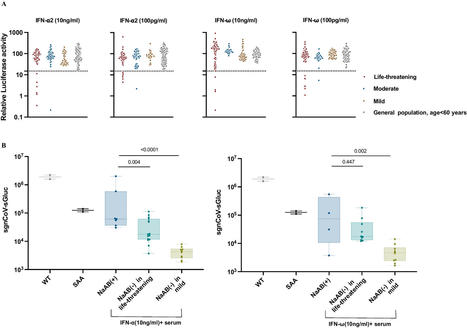
Objective We sought to explore the prevalence of type I interferon-neutralizing antibodies in a Chinese cohort and its clinical implications during the Omicron variant wave of SARS-CoV-2. Methods Type I interferon (IFN) autoantibodies possessing neutralizing capabilities were identified using luciferase assays. The capacity of the autoantibodies for in vitro interference with antiviral activity of IFN was assessed by using a SARS-CoV-2 replicon system. An analysis of the demographic and clinical profiles of patients exhibiting neutralizing antibodies was also conducted. Results In this cohort, 11.8% of severe/critical cases exhibited the existence of type I IFN-neutralizing antibodies, specifically targeting IFN-α2, IFN-ω, or both, with an elderly male patient tendency. Notably, these antibodies exerted a pronounced inhibitory effect on the antiviral activity of IFN against SARS-CoV-2 under controlled in vitro conditions. Furthermore, a noteworthy correlation was discerned between the presence of these neutralizing antibodies and critical clinical parameters, including C-reactive protein (CRP) levels, D-dimer levels, and lymphocyte counts. Conclusion The presence of type I IFN-neutralizing antibodies is a pervasive risk factor for severe/critical COVID-19 in the Chinese population.
|
|
Scooped by
Gilbert C FAURE
March 1, 2024 11:09 AM
|
|
|
Scooped by
Gilbert C FAURE
February 20, 2024 4:50 AM
|
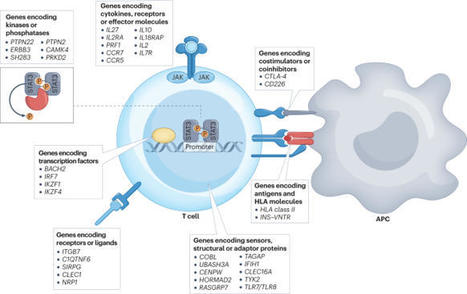
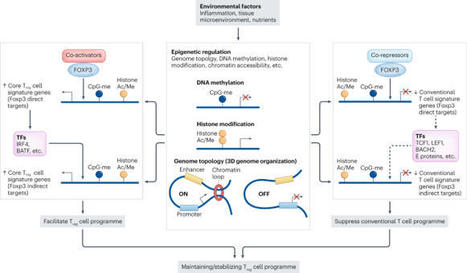
The discovery of FOXP3+ regulatory T (Treg) cells as a distinct cell lineage with a central role in regulating immune responses provided a deeper understanding of self-tolerance. The transcription factor FOXP3 serves a key role in Treg cell lineage determination and maintenance, but is not sufficient to enable the full potential of Treg cell suppression, indicating that other factors orchestrate the fine-tuning of Treg cell function. Moreover, FOXP3-independent mechanisms have recently been shown to contribute to Treg cell dysfunction. FOXP3 mutations in humans cause lethal fulminant systemic autoinflammation (IPEX syndrome). However, it remains unclear to what degree Treg cell dysfunction is contributing to the pathophysiology of common autoimmune diseases. In this Review, we discuss the origins of Treg cells in the periphery and the multilayered mechanisms by which Treg cells are induced, as well as the FOXP3-dependent and FOXP3-independent cellular programmes that maintain the suppressive function of Treg cells in humans and mice. Further, we examine evidence for Treg cell dysfunction in the context of common autoimmune diseases such as multiple sclerosis, inflammatory bowel disease, systemic lupus erythematosus and rheumatoid arthritis. In this Review, the authors discuss the origins of regulatory T (Treg) cells in the periphery and the mechanisms by which Treg cells are induced, as well as the regulation of the suppressive function of these cells. Moreover, they examine evidence for and mechanisms of Treg cell dysfunction in common autoimmune diseases such as multiple sclerosis, inflammatory bowel disease, systemic lupus erythematosus and rheumatoid arthritis.
|
|
Scooped by
Gilbert C FAURE
February 16, 2024 10:38 AM
|
|
|
Scooped by
Gilbert C FAURE
January 31, 2024 6:25 AM
|
|
|
Scooped by
Gilbert C FAURE
January 17, 2024 12:22 PM
|
The identification of novel risk variants in the largest genome-wide association study of Raynaud phenomenon to date provides insights into the pathophysiology of the condition, including the potential role for α2A-adrenoceptors, and suggests opportunities for drug repurposing.
|
|
Scooped by
Gilbert C FAURE
January 15, 2024 10:07 AM
|
Researchers have analyzed the bones and teeth of approximately 5,000 humans who lived across Western Europe and Asia up to 34,000 years ago to create the world’s largest ancient human gene bank. The findings show the historical spread of genes and diseases over time as populations migrated. The study pinpoints the introduction of MS risk genes into north-western Europe by herders from the east around 5,000 years ago, having a beneficial impact despite increasing the risk of MS. The gene bank resulted in a new understanding of genetic markers associated with autism, ADHD, schizophrenia, bipolar disorder, and depression. This research was supported by the Lundbeck Foundation and is a great leap forward in the understanding of immune systems and their impact on autoimmune diseases today. Source link
|
|
Scooped by
Gilbert C FAURE
January 5, 2024 2:36 AM
|
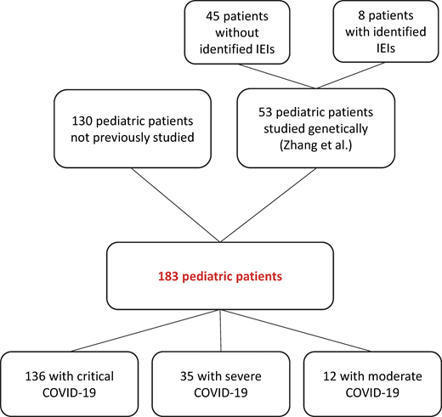
Auto-Abs neutralizing IFN-α and/or IFN-ω are found in about 10% of children with COVID-19 pneumonia. In uninfected children, auto-Abs neutralizing IFN-α2 are ra
|
|
Scooped by
Gilbert C FAURE
December 21, 2023 10:15 AM
|
Sjögren syndrome is a phenotypically varied autoimmune disorder that can occur alone in primary Sjögren syndrome or in association with other connective tissue diseases (CTDs), including rheumatoid arthritis, systemic lupus erythematosus (SLE) and systemic sclerosis (SSc). The estimation of the prev …
|


 Scoop.it!