Your new post is loading...

|
Scooped by
Gilbert C FAURE
August 9, 2019 1:33 PM
|
Cutaneous lupus erythematosus encompasses a broad spectrum of skin lesions that can occur in isolation or as a manifestation of systemic lupus erythematosus. Insights into the cellular and molecular pathogenesis of cutaneous lupus erythematosus have triggered the development of new therapeutic strategies.
|
|
Scooped by
Gilbert C FAURE
August 9, 2019 1:21 PM
|
PubMed comprises more than 29 million citations for biomedical literature from MEDLINE, life science journals, and online books. Citations may include links to full-text content from PubMed Central and publisher web sites.
|
|
Scooped by
Gilbert C FAURE
August 9, 2019 9:42 AM
|
Abstract Objectives In a multi‐ethnic/racial, prospective SLE inception cohort, to determine the frequency, clinical characteristics, associations and outcomes in different types of peripheral nerv...
|
|
Scooped by
Gilbert C FAURE
August 9, 2019 9:40 AM
|
Abstract Objective Anti‐citrullinated protein antibodies (ACPAs) and rheumatoid factor (RF) are commonly present in rheumatoid arthritis without clear rationale for their coexistence. Moreover, aut...
|
|
Scooped by
Gilbert C FAURE
August 9, 2019 9:20 AM
|
HLA alleles and microbiome alterations have been separately associated with human autoimmunity. Here the authors identify differences in stool microbiome between healthy carriers of HLA alleles conferring low- and high-risk for type 1 diabetes, suggesting that HLA shaping of microbiome may...
|
|
Scooped by
Gilbert C FAURE
August 9, 2019 8:19 AM
|
Anti-neutrophil cytoplasmic antibody (ANCA)-associated vasculitis (AAV) is an autoimmune condition that commonly causes kidney impairment and can be fatal. The key participation of B-lymphocytes as ANCA producers and neutrophils as target of these antibodies is widely described as the mechanism of endothelial damage in this disease. There has been a rising interest in the role of T-lymphocytes in AAV in recent years. Evidence is strong from animal models, and T-lymphocytes can be found infiltrating kidney tissue and other tissue sites in AAV patients. Furthermore, the different subsets of T-lymphocytes are also key players in the aberrant immune response observed in AAV. Polarization towards a predominant Th1 and Th17 response in the acute phase of the disease has been described, along with a decline in the number of T-regulatory lymphocytes, which, in turn, show functional impairment. Interactions between different T-cell subsets, and between T-cells and neutrophils and B-cells, also enhance the inflammatory response, constituting a complex network. Novel therapies targeting T-cell immunity are emerging in this scenario and may constitute an interesting alternative to conventional therapy in selected patients. This review aims to summarize the available evidence regarding T-cell imbalances and functional impairment, especially focusing on renal involvement of AAV.
|
|
Scooped by
Gilbert C FAURE
August 8, 2019 2:17 AM
|
CD8 T cells can suppress self-reactive CD4 T cells in mice.
|
|
Scooped by
Gilbert C FAURE
August 5, 2019 8:43 AM
|
|
|
Scooped by
Gilbert C FAURE
August 5, 2019 2:53 AM
|
PubMed comprises more than 29 million citations for biomedical literature from MEDLINE, life science journals, and online books. Citations may include links to full-text content from PubMed Central and publisher web sites.
|
|
Scooped by
Gilbert C FAURE
August 5, 2019 2:52 AM
|
PubMed comprises more than 29 million citations for biomedical literature from MEDLINE, life science journals, and online books. Citations may include links to full-text content from PubMed Central and publisher web sites.
|
|
Scooped by
Gilbert C FAURE
August 4, 2019 4:18 AM
|
Cardiology Research and Practice is a peer-reviewed, Open Access journal that publishes original research articles, review articles, and clinical studies that focus on the diagnosis and treatment of cardiovascular disease.
|
|
Scooped by
Gilbert C FAURE
July 30, 2019 2:26 PM
|
Much about the kidney-resident immune populations is a black box. Hacohen and colleagues use single cell RNA sequencing of kidney, skin and urine from lupus nephritis patients to describe the transcriptional state of the immune cells present in each compartment.
|
|
Scooped by
Gilbert C FAURE
July 30, 2019 8:06 AM
|
Abstract Objective While the role of antiphospholipid antibodies in activating endothelial cells has been extensively studied, the impact of these antibodies on the adhesive potential of leukocytes...
|
|
|
Scooped by
Gilbert C FAURE
August 9, 2019 1:26 PM
|
PubMed comprises more than 29 million citations for biomedical literature from MEDLINE, life science journals, and online books. Citations may include links to full-text content from PubMed Central and publisher web sites.
|
|
Scooped by
Gilbert C FAURE
August 9, 2019 1:20 PM
|
Leonard Goldstein et al. use high-throughput single-cell B-cell receptor sequencing on thousands of individual B cells from rat, mouse, and human repertoires. They obtained paired full-length heavy- and light-chain variable regions, and show that this approach is a powerful tool for antibody...
|
|
Scooped by
Gilbert C FAURE
August 9, 2019 9:42 AM
|
CD8 T cells can suppress self-reactive CD4 T cells in mice.
|
|
Scooped by
Gilbert C FAURE
August 9, 2019 9:40 AM
|
Case Reports in Hematology is a peer-reviewed, Open Access journal that publishes case reports and case series in all areas of hematology, including general hematology, pathology, and oncology, with a specific focus on lymphomas and leukemias.
|
|
Scooped by
Gilbert C FAURE
August 9, 2019 8:20 AM
|
Our Research Communications Manager, Conor McKeever, explains how JDRF funds immune system research that could cure or prevent type 1 diabetes.
|
|
Scooped by
Gilbert C FAURE
August 8, 2019 6:30 AM
|
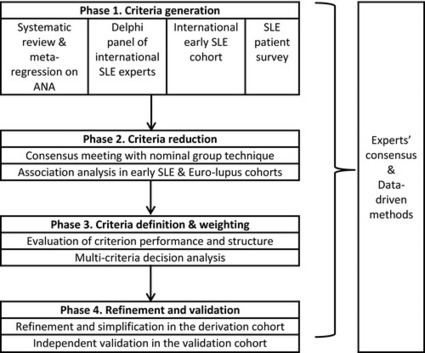
Objective To develop new classification criteria for systemic lupus erythematosus (SLE) jointly supported by the European League Against Rheumatism (EULAR) and the American College of Rheumatology ...
|
|
Scooped by
Gilbert C FAURE
August 6, 2019 5:10 AM
|
Type 1 diabetes (T1D) results from autoimmune destruction of insulin-producing β cells in islets of Langerhans. Many genetic and immunological insights into autoimmune disease pathogenesis were initially uncovered in the context of T1D and facilitated by preclinical studies using the nonobese diabetic (NOD) mouse model. Recently, the study of T1D has led to the discovery of fatty acid esters of hydroxyl fatty acids (FAHFAs), which are naturally occurring hybrid peptides that modulate inflammation and diabetes pathogenesis, and a hybrid lymphocyte that expresses both B and T cell receptors. Palmitic acid esters of hydroxy stearic acids (PAHSAs) are the most extensively studied FAHFA. In this issue of the JCI, Syed et al. have shown that PAHSAs both attenuate autoimmune responses and promote β cell survival in NOD mice. Given the lack of effective T1D therapies and the paucity of known side effects of PAHSAs, this lipid may have therapeutic potential for individuals at risk for or newly diagnosed with T1D.
|
|
Scooped by
Gilbert C FAURE
August 5, 2019 2:54 AM
|
PubMed comprises more than 29 million citations for biomedical literature from MEDLINE, life science journals, and online books. Citations may include links to full-text content from PubMed Central and publisher web sites.
|
|
Scooped by
Gilbert C FAURE
August 5, 2019 2:53 AM
|
PubMed comprises more than 29 million citations for biomedical literature from MEDLINE, life science journals, and online books. Citations may include links to full-text content from PubMed Central and publisher web sites.
|
|
Scooped by
Gilbert C FAURE
August 4, 2019 5:16 AM
|
Abstract Pemphigus herpetiformis (PH), a rare type of pemphigus, is characterized by immunologic findings consistent with pemphigus but with a unique clinical and pathologic presentation. PH was fi...
|
|
Scooped by
Gilbert C FAURE
August 2, 2019 1:05 PM
|
PDF Review Autoantibody testing in idiopathic inflammatory myopathies Anke Rietveld1, Johan Lim2, Marianne de Visser2, Baziel van Engelen1, Ger Pruijn3, Olivier Benveniste4, Anneke van der Kooi2, Christiaan Saris1 Department of Neurology, Center for Neuroscience Donders Institute for Brain, Cognition and Behaviour, Radboud University Medical Center, Nijmegen, The Netherlands Department of Neurology, Amsterdam UMC, University of Amsterdam, Amsterdam Neuroscience, Amsterdam, The Netherlands Department of Biomolecular Chemistry, Radboud Institute for Molecular Life Sciences and Institute for Molecules and Materials, Nijmegen, The Netherlands Médecine Interne et Immunologie Clinique, Centre de Référence Maladies Neuro-Musculaires, Sorbonne Université, AP-HP, GH Pitié-Salpêtrière, UMR974, Paris, France Correspondence to Dr Anke Rietveld, Department of Neurology, Center for Neuroscience Donders Institute for Brain, Cognition and Behaviour, Radboud University Medical Center, Nijmegen 6500 HB, The Netherlands; Anke.Rietveld{at}radboudumc.nl Abstract The diagnosis and classification of idiopathic inflammatory myopathies are based mainly on clinical and histological features. The discovery of myositis-specific and myositis-associated antibodies has simplified the (sub)classification of inflammatory myopathies. Patients suspected of having an idiopathic inflammatory myopathy should undergo routine antibody testing to gain more insight into distinct phenotypes, comorbidities, treatment response and prognosis. Furthermore, autoantibody testing can help in patients with atypical patterns of weakness or with an unresolved limb-girdle myopathic phenotype, or interstitial lung disease. However, some important technical and methodological issues can hamper the interpretation of antibody testing; for example, some antibodies are not included in the widely available line blots. We aim to provide a practical review of the use of autoantibody testing in idiopathic inflammatory myopathies in clinical practice. View Full Text Statistics from Altmetric.com View Full Text Footnotes Contributors AR and JL wrote the initial version of the manuscript, which was reviewed and partially rewritten by MdV, AvdK, BvE, OB, GP and CS. Funding The authors have not declared a specific grant for this research from any funding agency in the public, commercial or not-for-profit sectors. Competing interests GP and BvE are inventors of a patent (EP20120740236) licensed to Euroimmun AG, and GP received financial support from Euroimmun for his research programme. BvE reports a grant from Prinses Beatrix Spierfonds and personal fees and non-financial support from Fulcrum, personal fees from Facio, and grants from European Union’s Horizon 2020 research and innovation programme (Murab), Netherlands Organisation for Scientific Research (NWO), The Netherlands Organisation for Health Research and Development (ZonMw), Global FSH, Stichting Spieren voor Spieren, Dutch FSHD Foundation, and Association Française contre les Myopathies, outside the submitted work. JL and AvdK report grants from CSL Behring for an interventional study, outside the scope of this review. MdV serves as a consultant for Bristol-Myers Squibb. OB serves as a consultant for Novartis, Neovacs and CSL Behring. Patient consent for publication Obtained. Provenance and peer review Commissioned; externally peer reviewed by Jon Walters, Swansea, UK. Request Permissions If you wish to reuse any or all of this article please use the link below which will take you to the Copyright Clearance Center’s RightsLink service. You will be able to get a quick price and instant permission to reuse the content in many different ways. Copyright information: © Author(s) (or their employer(s)) 2019. No commercial re-use. See rights and permissions. Published by BMJ. Linked Articles Editors’ commentary Phil E M Smith Geraint N Fuller Practical Neurology 2019; 19 277-277 Published Online First: 11 Jul 2019. doi: 10.1136/practneurol-2019-002364 Read the full text or download the PDF: Subscribe Log in
|
|
Scooped by
Gilbert C FAURE
July 30, 2019 8:09 AM
|
A machine learning approach using high-dimensional phenotypic and functional profiling data identifies a multiple sclerosis-specific T cell population that is reduced following treatment.
|