


I am currently studying DD Palmer's TEXTBOOK OF THE SCIENCE, ART, AND PHILOSOPHY OF CHIROPRACTIC.It is a 1 000 page volume full of ignorance, repetition,...

 Your new post is loading...
 Scoop.it! I am currently studying DD Palmer's TEXTBOOK OF THE SCIENCE, ART, AND PHILOSOPHY OF CHIROPRACTIC.It is a 1 000 page volume full of ignorance, repetition,... 
No comment yet.
Sign up to comment
Scoop.it!

Leaked footage from the World Health Organization's (W.H.O.) recent "Global Vaccine Safety Summit," which took place on December 2, 2019, has revealed that even the world's leading vaccine policymakers are fully aware of the dangers caused by vaccines.
Scoop.it!

HARTFORD, CT – Parents opposed to repealing the religious exemption for childhood vaccinations say they will be at the state Capitol in large numbers on the opening day of...
Scoop.it!

The “EVENT” is the moment of the “Compression Breakthrough” on earth. COBRA guides us to prepare for change, for the Event and disclosure.
Scoop.it!

Simon Stevens says people are wasting money and taking risks because of misleading claims...
Scoop.it!

Hong Kong (CNN Business)Facebook (FB) says it will start taking down bogus claims about purported "cures" and other unproven theories surrounding the coronavirus, as the deadly outbreak continues to spread globally, sparking a surge in online chatter and misinformation. The company will "remove content with false claims or conspiracy theories that have been flagged by leading global health organizations and local health authorities that could cause harm to people who believe them," according to a blog post published Thursday by Kang-Xing Jin, Facebook's head of health. Jin said that includes claims "related to false cures or prevention methods" or "that create confusion about health resources that are available." The company also plans to increase its fact-checking and monitoring efforts on Instagram, which it also owns. Jin said users who click on a hashtag related to the coronavirus will now be served with a "pop-up with credible information." The social network wants to prioritize legitimate sources of information, Jin said, by letting select organizations run free ads that help educate people about the virus and also boosting posts that fall in line with health experts' guidance to the top of users' Facebook feeds. It did not specify which organizations would be included. Jin noted in the Thursday blog post that not all the new measures were "fully in place" yet. "It will take some time to roll them out across our platforms and step up our enforcement methods," he wrote. "We're focusing on claims that are designed to discourage treatment or taking appropriate precautions." The move is Silicon Valley's latest attempt to combat misinformation about the outbreak, which has infected more than 9,800 people around the world and killed more than 200 in mainland China. The World Health Organization (WHO) on Thursday declared the outbreak "a public health emergency of international concern." Twitter and Google have also stepped up efforts this week to guide their users to verified sources on the subject. Google (GOOGL) announced Thursday that when people search for information about the coronavirus, it will pull up a special notice with updates from the WHO. YouTube, which is owned by Google, said it will promote videos from credible sources when people search for clips about the virus. The company said it specifically points to content from trusted users, such as public health experts or news outlets, in search results or panels that suggest which videos to watch next. Twitter (TWTR) said Wednesday that it would begin prompting users who search for the coronavirus to first visit official channels of information about the illness. In the United States, for example, Twitter directs users to the Centers for Disease Control and Prevention, beneath a bold headline that reads: "Know the facts." The campaign is running in 15 locations, including the United States, the United Kingdom, Hong Kong, Singapore, and Australia, and "will continue to expand as the need arises," the company said in a blog post. Looking for the latest information about the novel #coronavirus? We've recently adjusted our search prompt to ensure authoritative health sources appear upfront when you search on Twitter� #knowthefacts pic.twitter.com/LlYUAdLSBy — Twitter Singapore (@TwitterSG) January 29, 2020 As of Wednesday, Twitter said that it had already seen more than 15 million tweets about the coronavirus in four weeks, "and that trend looks set to continue." A company spokesperson told CNN Business earlier this week that it had not seen a coordinated increase in disinformation related to the virus, but would "remain vigilant" on the issue. The moves this week are notable, particularly since social networks have long been criticized for allowing the spread of misinformation. Facebook, which now claims about 2.5 billion monthly users on its flagship network and a combined 2.9 billion monthly active users across its other apps like WhatsApp and Instagram, has had major problems restricting hoaxes about vaccines, for example. Instagram last year vowed to block more hashtags that surfaced vaccine misinformation after a CNN Business report found that content promoted by anti-vaccination accounts were still thriving on the platform. While the company frequently touts its army of fact-checkers and reviewers who are paid to debunk false claims, the effectiveness of its policies remain in question. On Thursday, some people pointed out that a search for "vaccines" on Instagram still brought up several pages linked to dangerous misinformation. Yikes. Just checked Instagram and got same results. https://t.co/Qwr812xknV — Amanda Katz (@katzish) January 30, 2020 Facebook did not immediately respond to a request for comment when asked about those searches. -- Donie O'Sullivan contributed to this report.
Scoop.it!

The update comes after other platforms have taken action to prevent the spread of conspiracy theories.
Scoop.it!
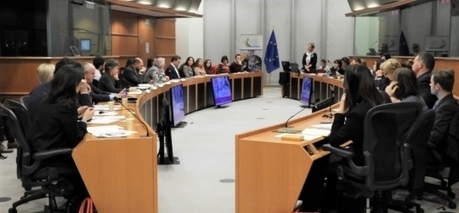
Vaccination hesitancy – what can nurses do? Posted on January 28, 2020 The European Council Recommendation on strengthened cooperation against vaccine-preventable diseases was adopted in December 2018. Since then, the EFN and other stakeholders have been very active in the fight against vaccination hesitancy across Europe. For example, the EFN, in the representation of the general care nurse profession, is co-chairing a Coalition for Vaccination, coordinated by the European Commission. This Coalition is tackling vaccination hesitancy among healthcare professionals, to ensure that they vaccinate themselves and that they recommend vaccination to their patients. In this context, the EFN joins the Active Citizenship Network (ACN) in the event that they organise at the European Parliament Premises to celebrate the official launch of the MEPs Interest Group on “European Patients’ Rights & Cross-Border Healthcare” for the 2019-2024 term. This event was attended by other health-interested stakeholders as well, willing to discuss the rise of vaccination hesitancy across Europe and how to tackle it. Speakers touch upon the topic of vaccination hesitancy on all its complexity. For example, a recurring idea is that we need to know the profile of citizens who are vaccine-hesitant – to know why they think the way they do and who they are. It is not the same hesitating for not believing in the effectiveness of vaccination than hesitating because the timings and/or location at which these are being administered are not convenient. Moreover, young people, who are the future of Europe, should be more involved in the political debate regarding vaccination. They are “the parents of tomorrow” and should be aware of the benefits of vaccinating their children. Finally, speakers elaborate on the idea of fostering vaccination uptake via better education – education for citizens at all the stages of their life, as well as better education for healthcare professionals. The EFN Membership is active in the topic of vaccination, as it is reflected in the published report containing best practices for nurses’ competencies in prevention. This document is a comparative overview of 35 European Countries.
Scoop.it!

Anti-vaxx accounts are piggybacking on political hashtags like Joe Biden's #nomalarkey.
Scoop.it!

Two female polio vaccinators were shot dead in northwestern Pakistan in the latest attack on the global campaign to eradicate the crippling virus.
Scoop.it!

Coronavirus may be making headlines, but a tricky strain of the flu might be more worthy of concern.
Scoop.it!

The internet is a messy place where not everyone has the best intentions. What role tech companies have in responding to that reality has become one of the central questions in business. For Pinterest CEO Ben Silbermann, the role his company--and other online brands--ought to play is quite clear.
Scoop.it!

A polio vaccination team was reportedly kept hostage and beaten up in Meerut, Uttar Pradesh, after the locals mistook that the team was collecting data for National Population Register (NPR).- Latest India News from Opindia.com...
|
Scoop.it!

Every virology lab in the world that has run a genomic analysis of the coronavirus now knows that the coronavirus was engineered by human scientists. The proof is in the virus itself: The tools for genetic insertion are still present as remnants in the genetic code.
Scoop.it!

Natalie Yeadon looks at how the industry can help healthcare professionals, patients, and their families combat false and misleading scientific information.
Scoop.it!

The former rugby star made the brazen comments in a bizarre Facebook rant on Saturday morning.
Scoop.it!

Obésité, diabète, addictions, suicide, pollution...: des enjeux de santé publique...
Scoop.it!

We take a look at a few commonly held, and widely shared, beliefs that are not true.
Scoop.it!
Spate of anti-Chinese incidents in Italy as two cases of virus confirmed | World news | The Guardian
Several incidents of xenophobia reported, along with long queues to buy face masks...
Scoop.it!
Point of view of an Immunologist/curator in 2020 Après Bobcatsss 2020, ECIL 2021, ICDF 2022, HESIVAXs with the motto UTA "Understand to Act"
Notre proposition « Désinformation Vaccinale: Curation, Observatoire, Littératies » a été retenue pour le séminaire annuel de l’Académie des Controverses et de la Communication Sensible, intitulé « La désinformation : nouvelles formes, nouveaux défis », qui s'est tenu à Paris le mardi 26 novembre 2024. Voir ci-après posts du 27 novembre, avec lien vers la présentation sur Slideshare.
Présentation le 20 mars 2025 à InfoxsurSeine deux jours pour décrypter la désinformation et échanger autour des solutions.
Avez vous acheté le numéro Juillet/septembre 2025 de la RECHERCHE sur LE FAUX?
des sujets à approfondir - Vaccins et argent Making money with vaccines, against vaccines le sujet le plus chaud, de 3,36 euros par mois à 300 millions de dollars? - Publications vraies et fausses particulièrement difficile - Obligations, exemptions, incitations, peut-être plus simple?
Gilbert C FAURE's insight:
The topic addresses Fake news as a global problem, extracting material focusing on vaccinations, vaccination hesitancy and anti-vax attitudes. The subject is evolving constantly with health consequences all over the world. This topic became a research action project at CREM (Centre de Recherche sur les médiations) Ir covers not only Fake News still thriving on the internet, but also efforts of many (supranational bodies, scientific societies, researchers...) to improve health literacies of laypeople, and medical students on this sensitive topic... https://www.scoop.it/topic/assim-actualites/?&tag=acting+against+fake+news
Nous avons rejoint le réseau SHS Vaccination France https://shs-vaccination-france.com/le-reseau-france/ 1ère journée d'études à Paris le 24 janvier 2025 https://shs-vaccination-france.com/prsentations-1ere-journee-detudes-du-reseau-shs-vaccination/
We also joined The collaboration on social science and immunisation (COSSI): a successful Australian research and practice network https://www.sciencedirect.com/science/article/pii/S0264410X24001440?via%3Dihub plusieurs réunions organisées down under, c'est loin. and the VARN community Vaccination Acceptance Research Network https://boostcommunity.org/news/1071180?network_id=sabin-vaccine-institute
Selected Published papers related to this subject can be found yhrough the link https://www.scoop.it/topic/assim-actualites/?&tag=article+scientifique
Unfortunately, as Jonathan Swift so eloquently said: "Reasoning will never make a man correct an ill opinion, which by reasoning he never acquired" and “The greatest enemy of knowledge is not ignorance; it is the illusion of knowledge.” — Daniel J. Boorstin
Scoop.it!

The company did the same to prevent the spread of vaccine conspiracy theories.
Scoop.it!

What sinister agenda is at play here?
Scoop.it!

Une des particularités du dispositif de prévention sanitaire est d’incarner une biopolitique au pouvoir faible, au sens où elle doit le plus souvent convaincre, plutôt que contraindre, des individus sains, de se protéger contre un risque potentiel. La vaccination est non seulement le dispositif de prévention sanitaire le plus ancien, mais également celui qui a suscité le plus de controverses. L’enjeu de cette thèse a été de positionner le rôle de la communication au sein de ce dispositif. Plus précisément, notre objectif a été de sérier et caractériser les modalités d’usage discursif qui mettent en croyance le plus grand nombre des récepteurs et favorisent des attitudes de défiance, de confiance ou encore d’hésitation vaccinale au sein des dispositifs médiatiques. Pour ce faire, nous nous appuyons sur une étude de corpus de 386 communications relatives à la vaccination et articulons des savoirs en provenance des champs d’études sur « les médias, la communication et la culture », « le risque » et « la science et ses techniques ». Afin d’optimiser les modalités d’usage discursif les plus en rapport avec la dimension éthique et esthétique des discours sur les vaccins, nous avons amorcé une phase d’expérimentation des variables d’interactions pour les deux modalités discursives en question, ainsi que pour chaque type d’acteurs s’exprimant publiquement sur le sujet. En nous adossant à une enquête par questionnaire et à la méthode des scénarios en ligne, nous testerons la capacité de chaque discours d’acteur à créer du consensus, auprès de la cohorte en santé publique « i-Share », à ce jour, composée de plus de 19 227 étudiants.À titre d’exemple, nous avons choisi de limiter notre étude au vaccin luttant contre les papillomavirus humains (HPV), dont le déploiement, controversé, a pour objectif de prévenir le cancer du col de l’utérus. En effet, depuis sa mise sur le marché européen en 2006, les polémiques sur le coût de ce vaccin, ses effets secondaires et son efficacité n’ont eu de cesse de s’intensifier, allant jusqu’à produire un climat social de méfiance à l’égard des acteurs du dispositif de prévention sanitaire par vaccination. En termes de résultats, nous verrons qu’agir sur les communications de la contre démocratie sanitaire sur l’Internet est une des pistes privilégiées pour optimiser les communications médiatiques sur les vaccins. Dans cette dynamique, et à partir d’une analyse des valeurs qui fondent la mobilisation des modalités discursives les plus représentatives de chaque type d’acteur, selon notre étude de corpus, nous avons mis au jour celles aptes à créer de la reliance entre les différentes croyances vaccinales en action dans l’arène du débat médiatique. Ainsi, nous avons développé à l’attention des acteurs médiatiques online, un tableau d’analyse des variables discursives qui structurent la rhétorique esthétique du discours sur la vaccination, selon les éthiques du Care et de la Justice dans la discussion autour du vaccin anti-HPV. Ces éthiques nous semblent propices à un climat social moins anxiogène et plus reconnaissant de la diversité des opinions sur le sujet, et, dès lors, plus favorables à une réception positive et partagée des informations relatives au vaccin anti-HPV. À la suite, est fourni le protocole d’une étude expérimentale adaptable à l’ensemble des communications du risque, pour permettre la poursuite de ce travail, en ouvrant le mode opératoire de ce processus sociocommunicationnel de captation, de caractérisation, d’analyse, puis d’expérimentation des modalités discursives spécifiques aux vaccins, à d’autres champs d’intervention et/ou d’investigation.
Scoop.it!

I’ll offer you a compromise: Don’t vaccinate all your kids. Only vaccinate the ones you want to keep.
Scoop.it!

Hundreds of current medical practices are ineffective and/or unsafe. Researchers from the Knight Cancer Institute at the Oregon Health and Science University in Portland reviewed 3,000 medical studies conducted over the past fifteen years.
|





