Your new post is loading...

|
Scooped by
Gilbert C FAURE
May 16, 5:57 AM
|
Pleased to share our new publication on HPV Vaccination titled: "Vaccination-Related Applications and Health Care Professionals’ Observed Changes in Human Papillomavirus Vaccine Hesitancy: Cross-Sectional Survey" in JMIR mHealth and uHealth
Key takeaways
1. Healthcare professionals who reported promoting vaccination-related applications at their facilities had significantly higher odds of observing a decrease in HPV vaccine hesitancy among patients (adjusted odds ratio [aOR] 2.48, 95% CI 1.10-5.55; P=.03).
2. Healthcare professionals working at federally qualified health centers or city, county, or public health care facilities had significantly higher odds of observing a decrease in HPV vaccine hesitancy at their practices.(aOR 4.02, 95% CI 1.33-12.14; P=.01)
3. Healthcare professionals who administered the HPV vaccine under standing orders at their facilities had significantly higher odds of observing a decrease in HPV vaccine hesitancy at their practices (aOR 2.91, 95% CI 1.11-7.63; P=.03).
When healthcare settings make vaccination easier, more routine, and more visible, patient hesitancy decreases.
This highlights how organizational policies in addition to patient education play a critical role in cancer prevention.
https://lnkd.in/gBXeCSwn
|
|
Scooped by
Gilbert C FAURE
May 16, 2:36 AM
|
Report: YouTube tops global media influence ranking with all top 10 now tech https://lnkd.in/e-Qqs8xh via PRmoment
Brand influence has entered a new phase. No longer defined by size, legacy, or even reputation alone, it’s now shaped by a brand’s ability to generate sustained visibility across an increasingly complex media landscape; one that is being reshaped by artificial intelligence (AI).
Onclusive’s latest Brand Influence Rank makes this shift clear. The report identifies the 50 brands exerting the greatest influence across media and social channels.
|
|
Scooped by
Gilbert C FAURE
May 15, 1:25 PM
|
2019 'mBio' study says double-mutant chimeric pathogen displayed dramatically enhanced infectivity and spread.
|
|
Scooped by
Gilbert C FAURE
May 15, 1:24 PM
|
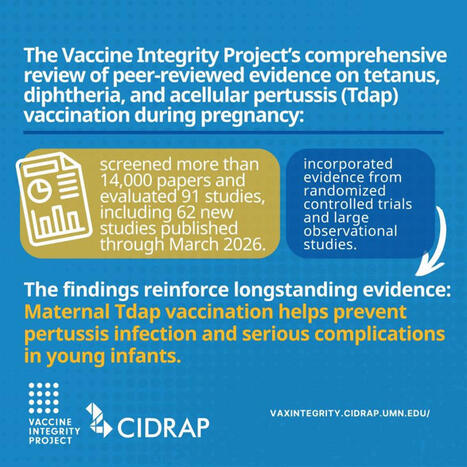
The Vaccine Integrity Project’s comprehensive review of peer-reviewed evidence on tetanus, diphtheria, and acellular pertussis (Tdap) vaccination during pregnancy with the Evidence Foundation, found:
❌ No evidence linking Tdap vaccination during pregnancy to a meaningful increase in risk of adverse maternal or infant outcomes.
⬆️ Vaccination during pregnancy leads to higher maternal antibody levels at delivery, and infants born to vaccinated pregnant women have elevated antibody levels at birth, supporting protection until they begin their routine DTaP vaccination series at two months of age.
Read the full report: https://ow.ly/uJwF50YZ3ok
|
|
Scooped by
Gilbert C FAURE
May 15, 11:27 AM
|
A mixer held by an anti-vaccination community set to take place at a bar in downtown Denver was shut down after the venue said it wasn't involved in the planning, and it was receiving threats and harassment.
|
|
Scooped by
Gilbert C FAURE
May 15, 11:26 AM
|
Encore une grande victoire des anti-vax et complotistes ! La prochaine pandémie va être spectaculaire.(Permalink)
|
|
Scooped by
Gilbert C FAURE
May 15, 11:19 AM
|
|
|
Scooped by
Gilbert C FAURE
May 15, 11:15 AM
|
Les désinformations en santé peuvent tuer, pour de vrai.
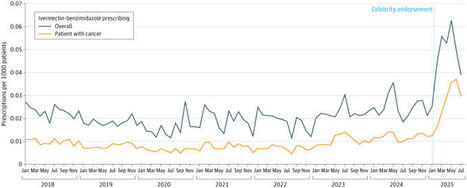
Une étude récente publiée dans JAMA Network Open apporte une illustration particulièrement éloquente :
Après la promotion virale de combinaisons ivermectine–benzimidazoles comme supposés traitements “anticancer” par des célébrités, désinformateurs et influenceurs, les chercheurs ont observé une augmentation importante des prescriptions aux États-Unis.
Chez les patients atteints de cancer, ces prescriptions ont été multipliées par plus de 2,5.
Le problème n’est pas seulement la diffusion de fausses informations. Le danger est que certains patients atteints de maladies graves puissent retarder, interrompre ou abandonner des traitements validés scientifiquement au profit de thérapies non prouvées.
La désinformation médicale n’est pas “virtuelle”. Ses effets, eux, sont bien réels.
|
|
Scooped by
Gilbert C FAURE
May 15, 11:12 AM
|
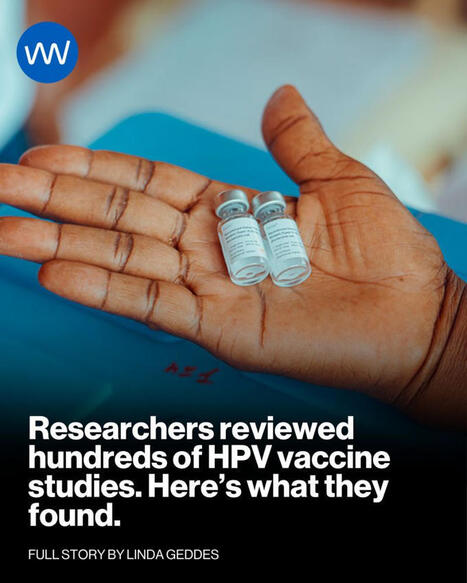
1️⃣ SAFETY and 2️⃣ EFFICACY are two of the most important factors in building trust in vaccines.
A major new review of hundreds of studies and more than two decades of research reinforces longstanding findings that HPV vaccines are highly safe and highly effective at preventing cervical cancer.
Explore the findings: https://bit.ly/4eAwI88
|
|
Scooped by
Gilbert C FAURE
May 15, 11:10 AM
|
"The vitamin K shot has been recommended for newborns for over 60 years. According to the Centers for Disease Control and Prevention, “Since 1961, the American Academy of Pediatrics has recommended a single shot of vitamin K be given at birth. The shot protects against bleeding related to low levels of this essential vitamin.” Infants who are not given the shot at birth are “81 times more likely to develop severe bleeding than those who do get the shot.” [Centers for Disease Control and Prevention, 1/17/25]
A recent study found that the number of newborns receiving the shot at birth declined from 2017 to 2024, a trend which the lead researcher described as “akin to gambling with a child’s health.” Analyzing “more than 5 million births nationwide,” a National Institutes of Health-supported study “identified an ongoing drop in newborns receiving a vitamin shot that helps to prevent dangerous bleeding.” Dr. Kristan Scott of the Children’s Hospital of Philadelphia, who led the study, argued, “Unfortunately, opting out of vitamin K for a newborn is akin to gambling with a child’s health, forgoing a straightforward and safe measure that effectively prevents severe complications.” [National Institutes of Health, 1/13/26]
New reporting from ProPublica says the vitamin K shot has been “swept up” in vaccine skepticism, potentially contributing to the “hundreds” of children who “die each year from spontaneous bleeding in the brain.” ProPublica reported, “Although it is not a vaccine, the vitamin K shot has been swept up in the same post-pandemic tide that has led to a drop in key childhood vaccines, including for measles and whooping cough. … The success of the shot has been so remarkable that it nearly eliminated vitamin K deficiency bleeding altogether. The science was settled decades ago.” [ProPublica, 5/6/26]
ProPublica: While government data collection on vitamin K injection refusal is limited, “some hospitals have seen refusal rates more than double,” and experts say a “meaningful portion” of the 700 newborn deaths in 2024 from spontaneous brain bleeding “likely were caused by vitamin K deficiency.” Pediatric hospitalist Dr. Jaspreet Loyal told ProPublica, “The lack of data is almost acting like a reassurance for families that this risk is worth taking.” [ProPublica, 5/6/26]"
https://lnkd.in/gpyHEJqu
|
|
Scooped by
Gilbert C FAURE
May 14, 12:02 PM
|
"This scenario relates to a growing trend resulting from unfounded fears about COVID-19 vaccine safety: requests for “directed” blood donations, meaning blood that has been specifically donated for use by a particular patient. Unfortunately, for some transfusion recipients, premiums don’t cover their additional risk when these donations make their way into the blood supply.
COVID-19 vaccine and blood from unvaccinated donors
One misconception that has circulated since COVID-19 is that people who got mRNA vaccines have nanolipid particles and spike proteins circulating in their blood, and that these vaccine components attach to blood vessels and cause small blood clots throughout the body. The theory suggests that this occurs over a long period of time and will lead to progressive organ damage and ongoing inflammation, resulting in increases in heart attacks, strokes and vascular disease.
These concerns about COVID-19 vaccine safety were not supported by the evidence. First, processing of these vaccines primarily occurs near the injection site and is time limited. Based on how the mRNA was designed, it cannot continue to replicate in the body (see resources at end of article). Second, it has been five years since millions of people started receiving COVID-19 mRNA vaccines, and rates of organ damage or diseases of the circulatory system have not dramatically increased.
However, these unfounded concerns continue to circulate. And they have led some people to become worried about accepting blood from individuals who received the COVID-19 vaccine. Since blood donations do not track vaccination status, some people have started refusing blood from the national supply when they, or their children, require a transfusion. Instead, these individuals ask for directed blood.
Unfortunately, the unintended consequences of the request to use unvaccinated blood are numerous and accumulating:
* Some patients have become sicker while waiting for the directed blood donation.
* Some patients have had to delay or cancel surgeries because they won’t accept blood from the national supply.
* In several cases, these choices have been made for children by their parents, creating ethical issues that medical providers need to consider since children cannot give consent.
* Because directed blood donations do not undergo the same series of safety analyses, this blood is more often positive for infectious diseases."
[more issues in the article]
https://lnkd.in/g2Em849p
|
|
Scooped by
Gilbert C FAURE
May 14, 12:00 PM
|
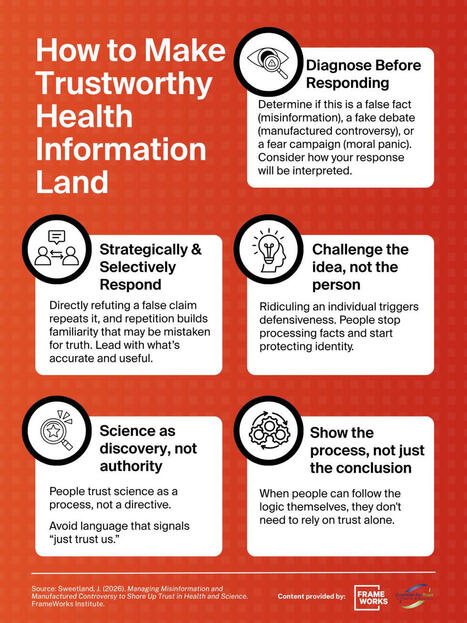
My colleague Elisabeth Wilhelm just shared a post that health disinformation 🦠🤨 is the largest category of disinformation (per a new published piece looking at online disinformation in 4 EU countries). Then I see this great 🙌 resource from FrameWorks Institute with tips on how to counteract mis/disinformation and create trustworthy health communication. Sharing for all my public health communicators 📣 out there!
|
|
Scooped by
Gilbert C FAURE
May 14, 11:59 AM
|
"To better understand the picture, here are 11 of the most common myths related to vaccinations – and the scientific truth behind them:
1. If a symptom appeared after you were vaccinated, the vaccine is the cause
Many parents tend to link the appearance of a symptom to a vaccine given shortly before. However, temporal proximity does not necessarily indicate a causal relationship.
Children sometimes experience various symptoms even without any connection to vaccinations, such as fever, fatigue, or restlessness. When a symptom appears after a vaccine, it is easy to attribute it to it, but it is important to examine this medically and not assume in advance.
Advertisement
In cases of concerning symptoms, a doctor should be consulted, regardless of whether a vaccine was given. Proper diagnosis is important so as not to miss another medical issue.
2. Side effects are more dangerous than the disease
One of the main concerns of parents relates to vaccine side effects. In practice, most side effects are mild and pass within a short time, such as local pain or mild fever.
In contrast, the diseases that vaccines prevent can cause severe complications. Measles can lead to pneumonia or brain damage, whooping cough is especially dangerous for infants, and polio can cause paralysis.
When comparing the risks, the picture is clear: The risk from the diseases is significantly higher than the risk from the vaccines.
3. It is better to delay vaccinations to a later age
Some parents prefer to delay vaccinations with the belief that the child will be “stronger” later on. However, the vaccination schedule is determined precisely according to the stages of development of the immune system.
In the first years of life, infants are especially vulnerable to infectious diseases. Delaying vaccinations creates a dangerous period in which the child is not protected.
Even if the child is not in an educational framework, they can still be exposed to diseases in everyday environments, therefore protection is important from a young age."
https://lnkd.in/gzzMu9Qw
|
|
|
Scooped by
Gilbert C FAURE
May 16, 2:38 AM
|
Genève, 1958. Une salle pleine des plus grands médecins du monde. Le silence est pesant. La guerre froide engourdit les esprits. D’un côté, l’Est. De l’autre, l’Ouest. Et a
|
|
Scooped by
Gilbert C FAURE
May 16, 2:35 AM
|
We are testing #prebunking and psychological #inoculation against misinformation in UK schools to help young students navigate social media and online safety.
It was a real pleasure to be featured on BBC Panorama today presented by the brilliant Marianna Spring when testing our #BadNews game! Thanks much to the fantastic students and teachers at Hills Road Sixth Form College for participating.
Preview below 👇 and you can view the full episode here https://lnkd.in/e4hi44_d
If you'd like for your school to participate, please feel free to get in touch.
University of Cambridge Department of Psychology, University of Cambridge Churchill College, University of Cambridge
|
|
Scooped by
Gilbert C FAURE
May 15, 1:25 PM
|
Day 5️⃣ /30 — Why do vaccines need adjuvants?
A common misconception is that antigens alone are sufficient to induce protective immunity. [1]
In reality, many purified antigens generate weak immune responses unless additional immunostimulatory signals are provided. [1,2]
This is where vaccine adjuvants become critical. [1]
Adjuvants are specialized components added to vaccine formulations to enhance not only the magnitude, but also the quality and durability of immune responses. [1]
Their roles include:
🟤 Enhancing innate immune activation [1,2]
🟣 Recruiting antigen-presenting cells [2]
🔵 Improving antigen uptake and presentation [1]
🟢 Promoting stronger antibody responses [1,3]
⚪ Shaping T-cell polarization [2]
⚫ Supporting long-term immunological memory [1]
Importantly, adjuvants are not interchangeable. Different adjuvant systems induce distinct immunological profiles. [1]
Examples include:
🟩 Alum [3]
🟦 MF59 [3]
🟪 AS01 [2]
🟫 CpG-containing formulations [2]
Modern vaccinology increasingly considers adjuvants as tools for immune engineering rather than accessory ingredients. [1]
Emerging research integrating innate immunity and systems vaccinology is reshaping how next-generation adjuvants are designed. [2]
💡 Discussion point:
Should future vaccines employ disease-specific adjuvant systems tailored to different pathogens and populations?
References
[1] Pulendran B, Arunachalam PS, O'Hagan DT. Emerging concepts in the science of vaccine adjuvants. Nature Reviews Drug Discovery. 2021.
[2] Lee S, Nguyen MT. Recent advances of vaccine adjuvants for infectious diseases. Signal Transduction and Targeted Therapy. 2023.
[3] Reed SG, Orr MT, Fox CB. Key roles of adjuvants in modern vaccines. Nature Medicine. 2013.
|
|
Scooped by
Gilbert C FAURE
May 15, 1:05 PM
|
DEBAT - Un débat, mais pourquoi débattre en 2024 alors que plusieurs milliards de doses de vaccins à ARN messager ont été injectées, que les agences de sécurité de bien des pays évaluent le profil de ces thérapies comme un succès et garantissent que son profil de sécurité « sûr ». Un tel débat n’aurait-il pas dû avoir lieu avant l’usage à grande échelle d’une thérapie expérimentale ? Était-elle d’ailleurs vraiment expérimentale ?
|
|
Scooped by
Gilbert C FAURE
May 15, 11:26 AM
|
Organizers of the mixer for unvaccinated singles say they’ll find a new location.
|
|
Scooped by
Gilbert C FAURE
May 15, 11:23 AM
|
We often talk about how people “fall for misinformation” as though the only way people would adopt false information is if they were tricked. This has never sat well with me because 1) it assumes that people have no agency and are not smart enough to evaluate information and 2) it assumes that some people (e.g. “experts”) know better and that if we all just knew what the experts know, misinformation would cease to be a problem. My co-authors Michael Simeone, Joshua Garland, Shawn Walker and I believe the information ecosystem is far more complex and, thus, requires a more nuanced process to evaluate why people adopt certain narratives. And though we developed our Value and Vulnerability framework thinking about misinformation, it really can apply to any information – false or otherwise.
This paper has been a looooooong time coming, and I’m so happy to see it published. I sincerely hope this perspective and framework will be useful in expanding how we think about value and utility as an important factor in information ecosystems. https://lnkd.in/ebm5fxBx | 10 comments on LinkedIn
|
|
Scooped by
Gilbert C FAURE
May 15, 11:16 AM
|
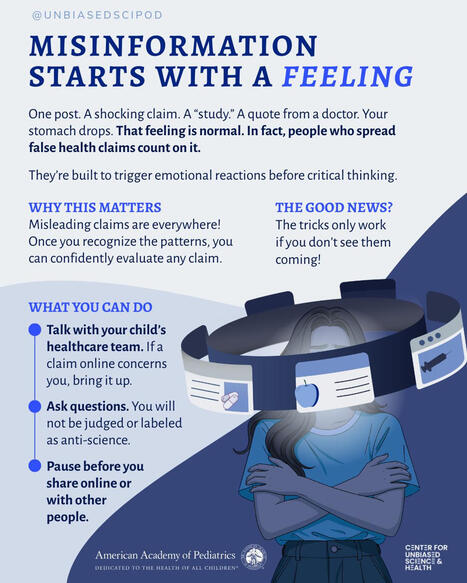
Misinformation is tricky, because it doesn’t always look like misinformation. The content is designed to feel urgent, emotional, and quick and easy to share, which is part of why it spreads faster than the truth. We’re seeing that play out in real time right now as we continue to learn more about hantavirus, and as other topics like peptides take over our social media feeds.
We worked with the American Academy of Pediatrics on a resource that breaks down the specific tactics that misinformation uses, so you can catch it before you accidentally share it.
Everyone is susceptible to misinformation. That’s why we hope you’ll take a screenshot of the flyer for easy access as you scroll through the news and social media. And if you’re a clinician, it’s formatted as a PDF that you can print as a flyer for your office or a poster in your waiting room. We also included links to sources that we trust.
We’re really proud of this resource, and excited to get it out there when people need the reminders the most.
AAP Global Health
View the PDF here: https://lnkd.in/gG43JuqZ
|
|
Scooped by
Gilbert C FAURE
May 15, 11:14 AM
|
"The work was buried for reasons that have nothing to do with the underlying data.
What the studies actually found
One of the COVID vaccine studies, involving US adults 65 and older, was withdrawn from the journal Drug Safety after acceptance. It analyzed more than 7 million Medicare beneficiaries who received the 2023-24 vaccine. The investigators evaluated 14 specific health outcomes, ranging from heart attacks and strokes to Guillain-Barré syndrome (GBS), an autoimmune condition that has been linked to certain vaccines.
They identified one statistically meaningful signal: a small elevation in anaphylaxis (a severe allergic reaction) following the Pfizer-BioNTech vaccine. After they adjusted for the possibility that some "anaphylaxis" billing codes did not represent true cases, the signal disappeared. ...
The work was buried for reasons that have nothing to do with the underlying data.
The under-65 2023-24 COVID vaccine study, withdrawn from the journal Vaccine, examined 4.2 million recipients aged 6 months to 64 years across 17 health outcomes. The investigators flagged a rare elevation in the risk of febrile seizures (fever-related seizures) on the day of and the day after Moderna vaccination, in children aged 2 to 5 years.
The exact case count was so small the researchers had to mask it for patient privacy. Fewer than 11 cases. A separate small signal for myocarditis (inflammation of the heart muscle) in adolescents lost statistical significance once the analysis accounted for the seasonal pattern of myocarditis in the general population. The investigators concluded that no new safety concerns had been identified.
The Shingrix abstracts blocked from the February conference were routine updates to safety and effectiveness surveillance the FDA has been publishing transparently for years. ....
The Shingrix abstracts blocked in February were routine updates to this same surveillance, conducted by the same career scientists, using the same methodology. ...
A persistent claim from critics of mRNA vaccines, including some who held senior FDA positions during the period of these withdrawals, is that observational vaccine safety studies suffer from "healthy vaccinee bias." Vaccinated people, the argument goes, are systematically different from unvaccinated people, healthier overall, and more likely to seek preventive care, so comparisons between the two groups can make vaccines look safer than they truly are.
The argument has merit when applied to studies that compare vaccinated to unvaccinated populations. It does not apply to the design used in these studies."
|
|
Scooped by
Gilbert C FAURE
May 15, 11:11 AM
|
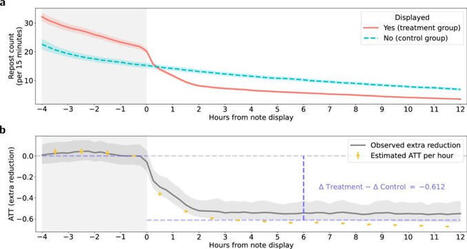
Community-based fact-checking is a promising approach to correct misleading posts.
Exposing users to community notes reduces the subsequent spread of misleading posts by 61.2% (an increase the odds that users delete their misleading posts by 94.3%)
Although community notes are effective in reducing the spread of posts once annotated, they usually appear too late to intervene in the early and most viral stage of the diffusion. As a result, their system-wide effect is modest.
This is based on an analysis of 237,180 community fact-checked cascades reposted more than 431 million times
https://lnkd.in/eWNRchek
One reason I think they are effective is because they harness social norms--if other people *like me* find the comment misleading that is often more compelling that a simple fact check.
We found that a more effective strategy might be adding a "misleading" button right on social media posts. This allows people to see social norms much faster (before content goes viral). This is 5X more effective than other strategies for fighting misinformation and does not require fact-checkers or official content moderation.
In additional, it works really well for polarizing content--which community notes struggle to stop. https://lnkd.in/eAAVg6mP
|
|
Scooped by
Gilbert C FAURE
May 15, 11:07 AM
|
Misinformation about hantavirus has run rampant on social media, with online users reviving viral COVID-19 theories to spread fake news about the outbreak.
|
|
Scooped by
Gilbert C FAURE
May 14, 12:01 PM
|
What do parents need to know about Varicella (chickenpox)? It’s a viral infection and systemic symptoms typically resolve after a few days. More than 95% of new varicella infections are benign and not reported to health departments.
Find out more - link is in the first comment.
#vaccines
|
|
Scooped by
Gilbert C FAURE
May 14, 12:00 PM
|
🔥 Akiko Iwasaki Yale) brise le silence : une des immunologues les plus respectées au monde ose enfin dire ce que tout le monde pense tout bas. « Les scientifiques doivent avoir l’humilité de reconnaître qu’ils pourraient avoir tort. »
Effets indésirables des vaccins, long vax, origines du Covid… Il est temps de rouvrir le débat rationnel.
En France, pendant ce temps, le rapport officiel sur la désinformation continue de nier la réalité : 81 % refusent la nouvelle campagne Covid, lié aux mensonges du gouvernement.
La fracture n’a jamais été aussi profonde.
https://lnkd.in/efqz8itd
|










![Day 5️⃣ /30 — Why do vaccines need adjuvants? A common misconception is that antigens alone are sufficient to induce protective immunity. [1] In reality, many purified antigens generate weak immune... | Hésitations Vaccinales: Observatoire HESIVAXs | Scoop.it](https://img.scoop.it/5VgAdss4Mt1TLe_BpKCFETl72eJkfbmt4t8yenImKBVvK0kTmF0xjctABnaLJIm9)