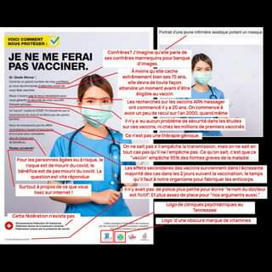
Vous vous souvenez de cette interview à succès avec la chercheuse en vaccins Pamela Acker qui nous a parlé de la réalité des vaccins avortés? Cliquez ici pour la regarder si vous ne vous en souvenez pas.

 Your new post is loading...
 Scoop.it! Vous vous souvenez de cette interview à succès avec la chercheuse en vaccins Pamela Acker qui nous a parlé de la réalité des vaccins avortés? Cliquez ici pour la regarder si vous ne vous en souvenez pas. 
No comment yet.
Sign up to comment
Scoop.it!
One of the latest collaborations between artificial intelligence and humans is further evidence of how machines and humans can create better results when working together.Artificial intelligence (AI) is now on the job to combat the spread of misinformation on the internet and social platforms thank...
Scoop.it!

Twitter lance une expérimentation sur une nouvelle fonctionnalité, appelée Birdwatch, qui consiste à donner des responsabilités à ses membres. En clair, ils pourront participer à la lutte contre la désinformation, en signalant des tweets litigieux et en ayant la possibilité de fournir du contexte.
Scoop.it!

Numerous studies have found vaccine uptake in black, Asian, and minority ethnic communities is much lower, despite mortality risk from Covid-19 being higher.Minreet Kaur asks why ...
Scoop.it!

In a Policy Forum, Peter Hotez and colleagues discuss vaccination exemptions in US states and possible consequences for infectious disease outbreaks.
Scoop.it!
Stop mRNA vaccinations. COVID-19 can be prevented and cured in most cases!
Scoop.it!
Last year I predicted that 'at the dawn of this new decade it is clear that traditional print publishing as we know it will never return to the glory days of record-breaking advertising revenue and circulation.'...
Scoop.it!

GRAND FORMAT VIDEO. Des théories du complot aux dérives sectaires, il n’y a parfois qu’un pas. L’Opinion décrypte l’invraisemblable expansion du mouvement QAnon, soutien jusqu’à la dernière extrémité de Donald Trump
Scoop.it!

Cogiito Décision de justice péruvienne : la pandémie est « créée » par Bill Gates, George Soros et la famille Rockefeller...
Scoop.it!

Réponse à la fin de cette expérience.
Scoop.it!
Here are this week's COVID facts that public health officials, politicians, and the mainstream media don't want you to see.
Scoop.it!
If you have been paying attention to the news of late, you may have noticed headlines like… How Pinterest Jumped Into the Fight Against Health Misinformation Amid measles outbreaks, Facebook considering how to reduce spread of anti-vaccine content YouTube pulls ads from anti-vaccination videos after questions about enforcement Before you yell “censorship”, please bear with me and let’s take a look at how these social media giants came to feel it necessary to intervene on the seemingly uncontrolled dissemination of health-related “fake news” across their sites. In the NPR interview highlighted above, Audie Cornish talks to Ifeoma Ozoma, Pinterest’s public policy and social impact manager, about the organization’s move to limit search results for health misinformation. As someone who is very passionate and enthusiastic about educating my patients and the public about the safety and efficacy of vaccines, it was a bit unsettling to read Ozoma’s take on the vaccine information situation that is happening online and on social media channels. Here is what Ozoma had to say… “There’s an enthusiasm gap between those who save harmful health information and organizations like the CDC and WHO and American Academy of Pediatrics. And so because of that, you’re going to find more health misinformation than, say, journal articles on the virtues of vaccination or other science-based health interventions.” An “enthusiasm gap”…. Ouch! Though it may sting a little to hear it, I know that Ozoma’s assessment of the situation is accurate. Our (the medical community) professional organizations have been lax in their defense of vaccines. We have rested on our laurels, trusting that patients will follow our medical advice just because we give it. We have assumed that the evidence will speak for itself. However, there has been an eroding of public confidence in science, in the advice of institutions, and in the medical community which is unfortunately affecting patients’ inclination to trust their physician’s recommendations without question (this warrants a whole other article… looking at the origins of mistrust and what we can do to regain our patients’ confidence). But, like it or not, this is the situation we are in. And, while anti-vaccine groups have marketing strategies and political action committees and money and time to spend flooding the airwaves with bad information, we physicians and other medical providers have been quietly sharing our pro-vaccine message only one or two people at a time, as we see them in our exam rooms. This is no way to counter a social media machine and our efforts have to adapt. I wrote a prior blogpost called Making Dr. Google Work for You, discussing ways that those reading health information online can try to sort out the bad information from the good so that their healthcare choices are based on science and fact, not pseudoscience and fear. I’d like to take a moment to highlight why this is so important and how common it can be for people to fall prey to misinformation. Let’s look at a couple of examples… Example #1: “Dr.” Dena Churchill Here is a tweet from “Dr.” Churchill instructing patients to educate their MDs regarding the “truth” about vaccines. The “Dr.” in front of her name would suggest that she is a medical doctor with the training to be able to comment authoritatively on the topic of vaccines. However, unless we dig a little deeper, which few unsuspecting lay people reading this tweet are likely to do, we would not know that Dena Churchill is a chiropractor, not a medical doctor. Unless we push past the surface, we would not know that she is currently being reviewed by her licensing board and at threat of losing her license to practice chiropractic because of her vocal misinformation campaigns regarding health-related concerns outside her scope of practice. Follow this link to see a CBC article about Churchill’s claims. She makes numerous inaccurate and dangerous statements about vaccine safety and efficacy; she suggests that wearing a bra increases the risk of cancer to an even greater degree than smoking; and she supports such loony therapies as “vaginal steaming”, like a facial for your vagina! This is not someone we can trust to give us advice about much of anything medically related. Thank you to Dr. Jaime Friedman (an actual doctor of pediatrics) and the many others online who called her out for misrepresenting her credentials and to the Nova Scotia College of Chiropractors for recognizing how dangerous statements such as Churchill’s can be. Example #2: The American College of Pediatricians Sounds official right? And it is an official organization, but this is not the well-respected governing body of U.S. pediatricians. That would be the American Academy of Pediatrics (the AAP). This group came to my attention via one of my medical assistants who brought me an article printed off of the internet with the following headline… If we don’t dig deeper, this headline would certainly be worrisome. But if we look into these claims further, several disturbing facts arise that should make us question what we are reading.
“Adverse events that occur after vaccines are frequently not caused by the vaccine and there has not been a noticeable rise in POF cases in the last 9 years since HPV4 vaccine has been widely used.” And this, my friends, is just the tip of the iceberg. There are so many faulty health-related and vaccine-related statements out there that look for all the world like legitimate news. How and when is the average person supposed to sort through it in order to make sense of it all? We have too easily trusted our social media news sources and taken things at face value but we can’t afford to do this any longer. The stakes are too great. Just as we would expect our television news agencies to be responsible to the weight of evidence and to report the truth, not spreading fear and misinformation that might adversely affect the health or safety of the population, so must we demand that our social media news sources do the same. What is happening with our social media outlets is not “censorship”. It is responsible reporting. Freedom of speech does not allow us to say things that are irresponsible and dangerous. We cannot yell “fire” in a crowded movie theatre, for example. It would put people’s lives at risk. Likewise, anti-vaccine articles that yell “conspiracy” or “danger” or “toxins”, when none of this has proven true, are putting the lives and the health of the people, particularly our children, at risk. This cannot stand. All of that being said, I don’t want you to come away from this thinking that everything you read on the Internet is false or that physicians and other trusted medical providers are not making good faith efforts to provide reliable health content. There are some truly good sources of information out there and the Internet and social media can be an excellent resource for health advice. You just have to know where to look. If you are seeking a reliable Twitter group to follow, consider @somedocs (Doctors on Social Media, #SoMeDocs). This is a group of real live doctors who are taking their healthcare messages to the streets of social media to offer reliable, factual information on a variety of health-related topics. For those with a more “natural” bent, check out the Facebook group NDsForVaccines. Search the Children’s Hospital of Philadelphia (CHOP) Vaccine Education Center site and the AAP’s HealthyChildren.org for highly reliable information on all vaccine-related topics. And, at the end of the day, if you are still confused, make an appointment with your doctor or other medical provider. While offering medical advice across the airwaves is, perhaps, the wave of the future, what holds the most meaning for us as physicians and patients is the doctor-patient relationship. The ability to talk through your concerns with your trusted provider, who has your best interests at heart and who is devoted to your health and wellbeing, can be invaluable. Via nrip
Scoop.it!

The internet has long been a place for the free exchange of ideas, regardless of the ideological beliefs of the posters. Indeed, the idea of internet censorship is anathema to Americans, whose free speech is protected by the First Amendment. But what can be done about the growing amount of harmful misinformation intended to influence thousands of people to make decisions that put not only their lives, but the lives of their and others’ children, at risk? Such is the situation for the anti-vaccination, or “anti-vax,” community, thousands of whose members flock to social media pages where they promptly remove “pro-vax trolls,” and post fear-mongering memes and exaggerated personal anecdotes. They also direct like-minded individuals to websites like vaccineimpact.com, which promotes error-filled articles topped by misleading headlines such as “WARNING: Dangerous flu shots being given to children without parental consent” and “FDA decision to approve Gardasil vaccine for adults will likely increase cervical cancer rates.” If it were only a matter of putting oneself at risk by refusing vaccination, we would not necessarily be called to action. After all, a personal choice is just that, regardless of how silly it may seem to outsiders. But people who refuse vaccines for themselves and their families are putting the most vulnerable members of their community at risk of severe illness or death. Case in point: In 2018, measles rates in the United States continued to skyrocket, with over 1,700 cases reported since 2010 even though just two decades ago, it was largely eliminated from the country. The situation is even worse in Europe. In the first six months of 2018, more than 41,000 Europeans were infected with measles and 37 died. The recent uptick in preventable infectious disease-related morbidity and mortality has been directly linked to the increasing rate of parents who opt out of vaccinating their children. Many of those in the anti-vax community are energized by Andrew Wakefield’s 1998 Lancet article, which linked the MMR vaccine to autism. Though the article was retracted in 2010 and Wakefield lost his medical practice license, it circulated very widely and became an integral component of anti-vax communities around the world. Unfortunately, misinformation tends to spread faster and more profusely than the truth. According to a study from 2018, the top 1 percent of false news cascades propagated on Twitter from 2006 to 2017 diffused to between 1,000 and 100,000 people, while the truth rarely diffused to more than 1,000 people. Such was the case in October 2014, when another article linking autism and the MMR vaccine went viral, despite its retraction just a month after its original publication due to unstated conflicts of interest and questionable methods and statistical analysis. Not only did it circulate through anti-vaccination websites for weeks, but it also became mainstream once it was published on a CNN-affiliated website, which subsequently garnered more than 786,000 views and 256,000 shares on social media. Measles is not the only preventable disease on the rise because of vaccine rejection, nor are Western nations the only countries with vaccine skeptics. Northern Nigeria poses a threat to the worldwide eradication of polio because of rumors, misconceptions and anti-polio vaccine propaganda circulating the region. Much of the distrust in the polio vaccine stems from claims made by local Muslim clerics that the vaccines were contaminated with anti-fertility agents, HIV and cancerous agents. Further complicating the issue is a general distrust of aggressive, mass immunization programs in a country where basic healthcare is not easily available. Given the vast scale of misinformation, it is important that there be a very active counter-movement to dispel myths, especially those that counter the well-being of citizens and scientifically sound public health principles. There are many strategies that could be developed and expanded in a robust effort to refute misinformation using commonly available communications tools. For instance, billboards, posters, signs and online media could more effectively promote how vaccinations are safe, easy and appropriate. Active use of Twitter, Facebook and Instagram can rapidly correct misinformation, rumors or false information. Likewise, creative campaign partnerships with known, respected organizations, like FEMA, Red Cross or the American Academy of Pediatrics can be effective. Faith leaders, survivors and medical professionals also add credibility to messaging. In places where the internet is not as widely available, mass public awareness campaigns can be created about why vaccines are so important using radio, television, print media, local music and theater. And we would not be above calling out “conspiracy sites” and statements based on ignorance. Finally, we should start early, making sure that young people, at least by middle school and continuing through higher education, understand science and how to distinguish between credible and non-credible information. While there is no single infallible strategy capable of overcoming all the intricacies of correcting people’s misinformed beliefs, the most successful corrective strategies aim to tailor different, simultaneous and frequent interventions in order to increase the likelihood of people making sound decisions about their own health and the health of their communities. Rachel Alter is a graduate research assistant at the National Center for Disaster Preparedness at Columbia University. Follow her on Twitter @rachelalter007. Irwin Redlener, M.D., is president emeritus and co-founder of the Children's Health Fund and has more than three decades of experience providing healthcare to medically underserved children. Redlener is also the director of the National Center for Disaster Preparedness at Columbia University’s Earth Institute, and professor of Health Policy and Management at the Mailman School of Public Health at Columbia University. Follow him on Twitter @IrwinRedlenerMD. Via Plus91
|
Scoop.it!
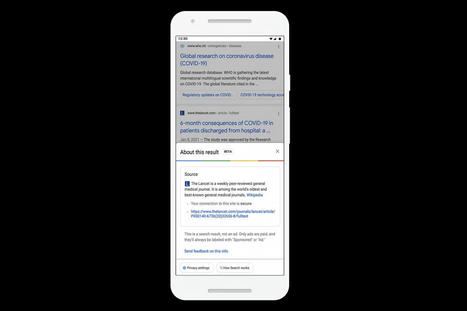
Google lance une fonctionnalité qui vous aidera à savoir si un site s’affichant dans ses résultats de recherche est une source fiable. Via Rémy TESTON
Scoop.it!

En novembre, l'Université Johns Hopkins (JHU) a publié une étude qui suggère que les écouvillons de test du coronavirus de Wuhan [et/ou Etats-Unis, France, Grande-Bretagne et alliés – MIRASTNEWS] [de la Coronavirus Desease 2019 (COVID-19)].
Scoop.it!
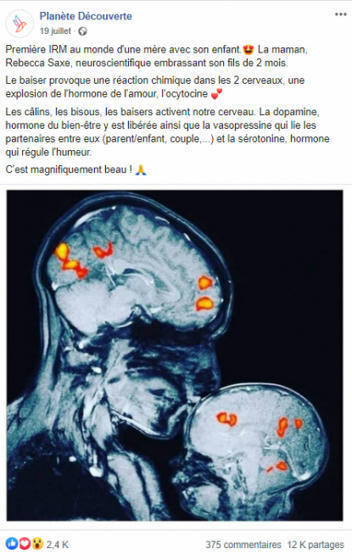
Une publication partagée plus de 12.000 fois sur Facebook depuis le 19 juillet affirme qu’une IRM d’un bébé et sa mère montre que "le baiser provoque une réaction chimique dans les 2 cerveaux, une explosion de l'hormone de l'amour, l'ocytocine". En réalité, les zones colorées dans le cerveau de la femme et de l’enfant ont été rajoutées a posteriori sur l’IRM d’origine et correspondent aux données d'une étude sur la perception visuelle des nouveaux-nés, à laquelle ce bébé avait participé.
Scoop.it!
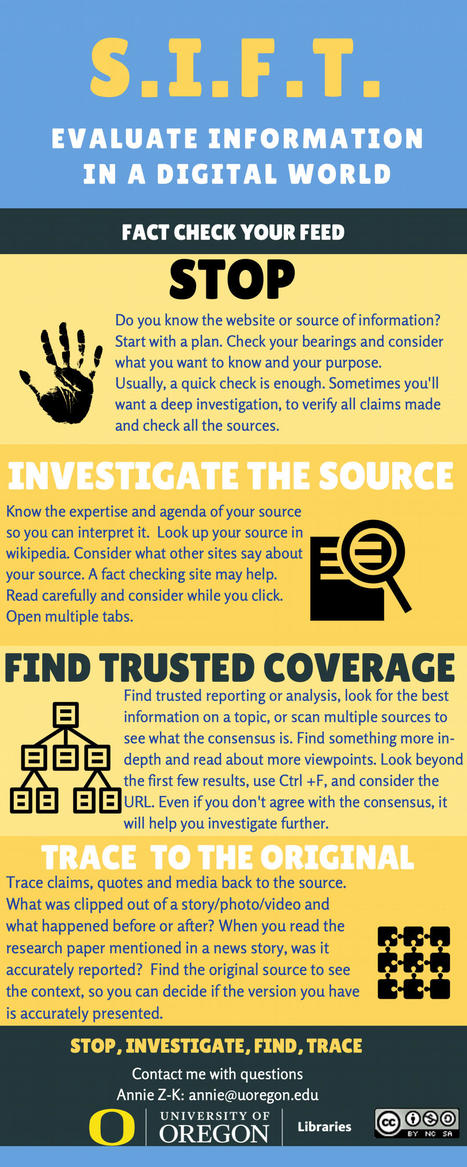
A guide to help you be a better consumer of news.
Scoop.it!
The evolution of social media platforms have empowered everyone to access
Scoop.it!

"Vaccine Protester" by Chris Yarzab is licensed under CC BY 2.0
Scoop.it!

from The Conversation-- this post authored by Sander van der Linden and Jon Roozenbeek, University of Cambridge...
Scoop.it!
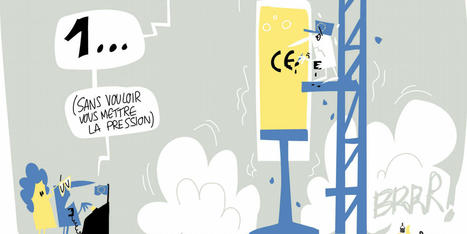
Ces données dérobées, puis diffusées sur le Dark Web, montrent la pression à laquelle faisait face l’agence pour approuver au plus vite le vaccin Pfizer-BioNTech.
Gilbert C FAURE's insight:
vrai ou fake?

Bernadette Cassel's curator insight,
January 17, 2021 5:39 PM
"Avis de Gilbert C FAURE : vrai ou fake ?"
Scoop.it!

It is common that patient searches for information and products related to the word “vaccine” yield top results pointing to harmfully inaccurate information about immunization safety. This place of prominence given to medical disinformation is deeply troubling to America’s physicians, especially amid alarming new reports regarding measles, tetanus and other vaccine-preventable conditions. The AMA sent a letter to top executives at Amazon, Facebook, Google, Pinterest, Twitter and YouTube urging them to do even more to stem the “proliferation” of “health-related misinformation” that has helped vaccine-preventable diseases to reemerge. “We applaud companies that have already taken action but encourage you to continue evaluating the impact of these policies and take further steps to address the issue as needed,” AMA Executive Vice President and CEO James L. Madara, MD, wrote in the letter to the social media and digital technology executives. “The overwhelming scientific evidence shows that vaccines are among the most effective and safest interventions to both prevent individual illness and protect public health.” Dr. Madara noted that, when immunization rates are high, children who are too young to be vaccinated and others whose health conditions prevent them from being vaccinated, are protected from disease because exposure is so limited. These conditions include allergies to vaccine components, HIV infection and having a compromised immune system as a result of receiving chemotherapy cancer treatment. Related CoveragePhysicians agree: Vaccination crucial to public healthThe impact of lower vaccination rates has been clear. The World Health Organization named vaccine hesitancy among the top 10 threats to global health in 2019. The Centers for Disease Control and Prevention (CDC) reported that there have been at least 228 individual measles cases confirmed in 12 states between Jan. 1 and March 7, 2019, with 71 of those traced to Clark County in Washington. Four confirmed cases in Oregon were linked to the Clark County outbreak. In another report out of Oregon, the CDC told of an unvaccinated 6-year-old boy who contracted tetanus and required 57 days in the hospital and almost $1 million in care before being released. Upon release, his parents still declined giving him recommended vaccinations, according to the CDC. “The reductions we have seen in vaccination coverage threaten to erase many years of progress as nearly-eliminated and preventable diseases return, resulting in illness, disability and death,” Dr. Madara wrote. “In order to protect our communities’ health, it is important that people be aware not just that these diseases still exist and can still debilitate and kill, but that vaccines are a safe, proven way to protect against them.” Spreading vaccine safety messageTo help spread this message and to counter misinformation campaigns, the National Academies of Sciences, Engineering and Medicine created a website displaying the overwhelming evidence that vaccines are safe. This message was repeated again in the Annals of Internal Medicine, which published a Danish study, “Measles, Mumps, Rubella Vaccination and Autism: A Nationwide Cohort Study,” that followed almost 660,000 children and found no connection between the measles, mumps, rubella (MMR) vaccine and autism. “The study strongly supports that MMR vaccination does not increase the risk for autism, does not trigger autism in susceptible children, and is not associated with clustering of autism cases after vaccination,” the researchers wrote. “It adds to previous studies through significant additional statistical power and by addressing hypotheses of susceptible subgroups and clustering of cases.” Ending nonmedical vaccine exemptionsIn addition to engaging digital and social media executives, the AMA has been active in state legislaturessupporting bills seeking to eliminate non-medical exemptions for required childhood vaccines in Maine, Oregon and Washington. The AMA is also opposing an Arizona bill that would discourage adherence to recommended vaccine schedules. California, Mississippi and West Virginia are the only states that do not allow parents to opt out of vaccinating their children for personal, philosophical or religious reasons. Via nrip
|