Your new post is loading...

|
Rescooped by
Gilbert C FAURE
from Immunology and Biotherapies
January 30, 2020 1:15 PM
|
Point of view of an Immunologist/curator in 2020 Après Bobcatsss 2020, ECIL 2021, ICDF 2022, HESIVAXs with the motto UTA "Understand to Act" Notre proposition « Désinformation Vaccinale: Curation, Observatoire, Littératies » a été retenue pour le séminaire annuel de l’Académie des Controverses et de la Communication Sensible, intitulé « La désinformation : nouvelles formes, nouveaux défis », qui s'est tenu à Paris le mardi 26 novembre 2024. Voir ci-après posts du 27 novembre, avec lien vers la présentation sur Slideshare. Présentation le 20 mars 2025 à InfoxsurSeine deux jours pour décrypter la désinformation et échanger autour des solutions.
Quels outils concrets face aux manipulations de l’information et à l’essor de l’IA générative ? Avez vous acheté le numéro Juillet/septembre 2025 de la RECHERCHE sur LE FAUX? des sujets à approfondir - Vaccins et argent Making money with vaccines, against vaccines le sujet le plus chaud, de 3,36 euros par mois à 300 millions de dollars? - Publications vraies et fausses particulièrement difficile - Obligations, exemptions, incitations, peut-être plus simple?
|
|
Scooped by
Gilbert C FAURE
May 28, 4:36 AM
|
We needed better documentation of harms of health misinformation. This is a great shot across the bow.
|
|
Scooped by
Gilbert C FAURE
May 28, 4:34 AM
|
THANK YOU to AHIP (the organization representing US health insurance) for confirming today that *all member health plans* will continue covering ACIP-recommended vaccinations - without cost-sharing - through the end of 2027.
Now, it would be better to NOT need an AHIP press release to feel assured that we all keep getting access to safe, effective prevention ... but given the alternative, this is great news. 👏 Please thank them for getting their member organizations to do the right thing!
Bechara Choucair Dave A. Chokshi, MD Alice Hm Chen
|
|
Scooped by
Gilbert C FAURE
May 28, 4:33 AM
|
The myth that ticks were genetically modified in a lab and made radioactive to spread diseases (like Lyme disease) is completely false. The bacteria behind Lyme disease existed naturally in North America long before modern science or military laboratories existed.
The Origins of the MythPlum Island Connection: Conspiracy theories often point to the government's animal disease lab on Plum Island, New York, alleging that militarized, infected ticks escaped the facility to cause the modern Lyme epidemic.Bioweapon Research: Historical records do show that during the Cold War, the U.S. military explored whether biting insects like ticks could be used as carriers for biological weapons. However, scientists and historians confirm these experiments were largely abandoned in the early 1960s because ticks were deemed highly inefficient and impractical for spreading disease on a large scale.Radioactivity: There is no scientific basis or historical documentation for the "radioactive" component of the myth; it is borrowed directly from comic-book-style science fiction.
|
|
Scooped by
Gilbert C FAURE
May 28, 4:32 AM
|
UN plan makes vaccines a front-line weapon against superbugs: The UN's updated Global Action Plan on Antimicrobial Resistance (GAP-AMR) 2026-2036, is taking a broader 'prevention-first' approach and is now a central pillar for fighting drug-resistant superbugs (building on the first GAP-AMR adopted by the World Health Assembly in 2015). As AMR accelerates and does not show any real signs of slowing, the new plan directs countries to strengthen national immunisation programmes specifically to reduce preventable infections and the need for antibiotics.
Additionally, and with a possibly long overdue nod to clearly failing incentive and remuneration programmes, the plan suggests that the traditional volume-based sales model for antibiotics is unsustainable. 'Research and development may be incentivised through a mix of 'push' mechanisms that lower the costs and risks of new antimicrobial or product development, and 'pull' incentives that…delink revenues from sales volumes, thereby encouraging innovation while safeguarding the appropriate use and disposal of antimicrobials.'
No-one can be sure that any of the above will bring timely results but at least the genie is out of the bottle - we need the introduction of new, novel non-traditional antibiotics (NTA) to accelerate, sustainable funding to be fully addressed and vaccine development to accelerate. Antibiotics have been too cheap for too long. Based upon QALYS and DALYS there are not many equivalents re cost-effectiveness and impact.
|
|
Scooped by
Gilbert C FAURE
May 28, 4:31 AM
|
This is the first in a series of articles exploring what happens when the reasoning behind regulatory decision-making remains implicit — and how that uncertainty affects vaccine development, investment, public trust, and global regulatory capacity.
If these issues are relevant to your work, I invite you to subscribe and follow the series.
|
|
Scooped by
Gilbert C FAURE
May 28, 4:18 AM
|
In the previous poll, most people chose “Vaccination Drive.”
That answer reflects the preventive, population-level approach of public health.
But the poll was not about what matters more. ICU beds, clinic visits, emergency care, medicines, and procedures are all essential parts of healthcare.
The real difference is where impact begins.
Clinical care focuses on managing illness and helping individuals recover. Public health focuses on reducing risk, identifying patterns, and addressing the conditions that shape health outcomes for communities.
One responds when care is needed. The other works upstream to prevent illness.
The future of healthcare needs both- care for individuals and protection for communities.
Sharing this simple visual to understand the difference beyond hospitals.
#PublicHealth #Healthcare #ClinicalCare #HealthSystems #PreventiveCare | 19 comments on LinkedIn
|
|
Scooped by
Gilbert C FAURE
May 28, 4:09 AM
|
Susceptibility to misinformation as a signal detection problem (Routledge):
https://lnkd.in/dzHAir8B
Glimpse: Three factors—truth sensitivity, total truth judgment threshold, and myside bias—are used in this study to explain susceptibility to false information using a signal detection theory framework. The results indicate that the best indicator of misinformation acceptance is myside bias, which is the propensity to accept information that supports one's beliefs while rejecting information that contradicts them. The study contends that rather than merely enhancing fact-checking abilities, interventions should concentrate on lowering motivational and metacognitive biases. It also highlights the necessity of confronting misconceptions as well as the rejection of truthful but attitude-inconsistent facts.
---
Free articles and analyses on soft counter-extremism, against online hate, and on the theory of mis-/disinformation (usually third-party content).
The most recent LinkedIn posts on the above subjects, with glimpses, can be accessed via:
• https://lnkd.in/eBarZAew
Two-week reviews available via the following three Policyinstitute.net websites:
• counter-terrorism.org
• preventhate.org
• strategism.org
The views expressed in this post is that of the author(s) of the source content and do not necessarily represent those of Policyinstitute.net and its staff. While we carefully produce the glimpses to the articles, documents, or recordings that we hyperlink, we are not responsible for textual changes nor for imponderable parts of the original items.
#policyinstitutenet #preventradicalization #preventextremism #counterextremism #preventhate #disinformation #misinformation
|
|
Scooped by
Gilbert C FAURE
May 28, 4:05 AM
|
A mother recently told me she was advised not to vaccinate her child because “vaccines are dangerous.”
This is exactly why healthcare education matters.
As healthcare professionals, we must continue to fight misinformation with evidence-based education, empathy, and advocacy. Vaccination remains one of the greatest public health interventions in protecting children from preventable diseases and reducing childhood mortality worldwide.
Parents deserve accurate information, not fear-driven myths.
Every conversation, every awareness post, and every educated parent brings us closer to healthier communities and safer childhoods. 💉👶🏽
#VaccinesSaveLives #ChildHealth #PublicHealth #HealthcareEducation #NurseEducator #VaccinationAwareness #MaternalAndChildHealth #Pediatrics #HealthAdvocacy #RealNurseChi #fyp
|
|
Scooped by
Gilbert C FAURE
May 27, 1:14 PM
|
Strategic insights and contextual intelligence from the World Economic Forum. Explore and monitor the issues and forces driving transformational change across economies, industries and systems.
|
|
Scooped by
Gilbert C FAURE
May 27, 10:10 AM
|
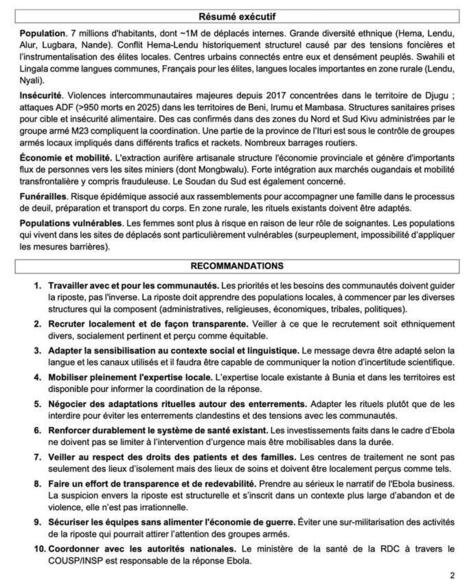
Merci beaucoup Jules Villa et coll. pour cet article très éclairant, qui souligne l’importance des Sciences Humaines et Sociales dans la réponse aux épidémies.
Si vous êtes intéressés par ces thématiques, rejoignez-nous pour les prochains webinaires de la graduate school 1H-EID : https://lnkd.in/eRf3mzZg
|
|
Scooped by
Gilbert C FAURE
May 27, 10:08 AM
|
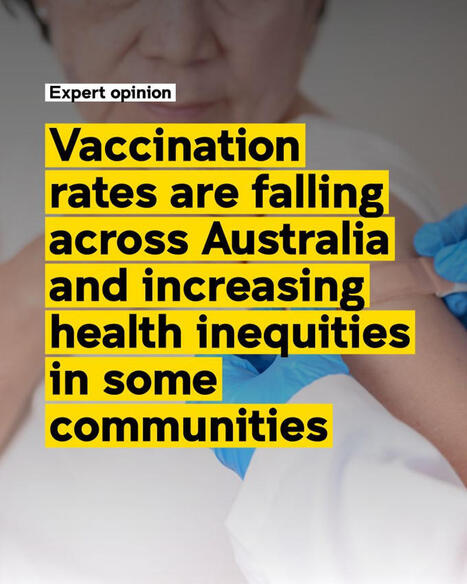
Fewer Australians are getting vaccinated, with the decline hitting some communities harder than others.
“If services aren’t easy to navigate, if information isn’t in your language, or if there’s a lack of trusted voices, people can miss out,” says UNSW Professor Holly Seale.
Learn more 👇
|
|
Scooped by
Gilbert C FAURE
May 27, 4:53 AM
|
🛠️ Tool of the Week: Practical Resources for Immunization Economics
How much does it cost to deliver HPV vaccination — and how do costs vary across products? 💉🌍
This week we’re featuring PATH's HPV Vaccine Cost Calculators — one designed for Gavi-eligible countries and another adapted for middle-income countries (MICs). These Excel-based tools allow users to assess and compare the costs of HPV vaccination programmes across different HPV vaccine products currently available on the global market, exploring up to four vaccine options at a time.
The calculators estimate:
📊 Vaccine procurement and international shipping costs
❄️ Cold chain volume and cold chain costs
💰 Vaccination programme costs, including delivery costs
📅 Annual and five-year programme costs
🌍 Costs from both the country perspective and the combined country + Gavi perspective
These practical tools are designed to support national-level policymakers and partners in comparing potential product choices and understanding the budget implications of different HPV vaccination strategies.
Explore and donwload the tools here:
Gavi-eligible countries: 👉 https://lnkd.in/egVdyB9y
Middle-income countries: 👉 https://lnkd.in/eWdrQZRz
🔎 Looking for more tools like this? Browse our full Guidance, Tools & Data collection here: 👉 https://lnkd.in/ef25VNyM
|
|
|
Scooped by
Gilbert C FAURE
May 28, 4:36 AM
|
Did you know that prelicensure trials of varicella vaccine are usually limited to a few thousand subjects?
The CDC states, “Prelicensure trials are relatively small — usually limited to a few thousand subjects — and usually last no longer than a few years… Prelicensure trials usually do not have the ability to detect rare adverse events or adverse events with delayed onset.”
The risk of a fatal case is approx. 1 in 40,000 in the absence of mass vaccination. This isn’t enough to prove the vaccine causes less permanent injury or death than chickenpox.
Read more scientific facts and information about varicella and the varicella vaccine - link is in the first comment.
#vaccines
|
|
Scooped by
Gilbert C FAURE
May 28, 4:35 AM
|
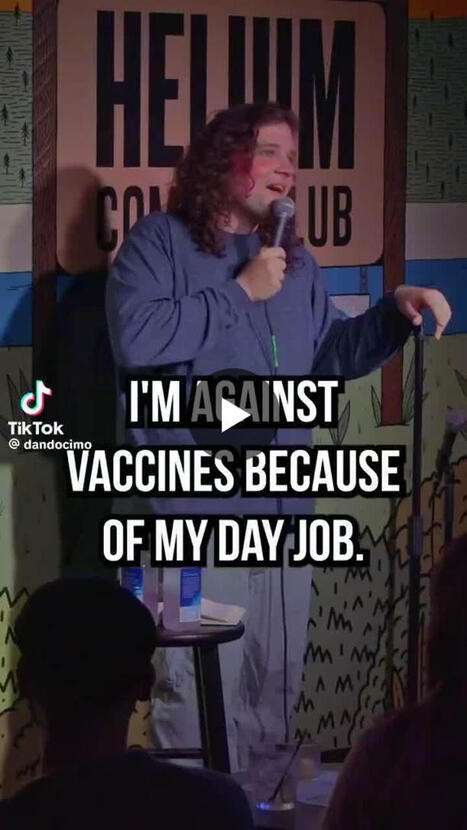
Either you believe in evidence-based medicine, or you don't.
Credit: Dan Docimo
|
|
Scooped by
Gilbert C FAURE
May 28, 4:34 AM
|
Excited to share that the latest piece of my PhD, written with Jane Williams, Shevaun Drislane and Marco Rizzi, is now available here: https://lnkd.in/gsYSHYa6
This piece applies the ethical framework set out by the WHO COVID-19 Ethics and Governance Working Group, exploring synergies between law and ethics in the implementation of vaccine mandates during the pandemic in Australia. Our article makes the case for a more principled and ethically informed policy approach to vaccine mandates in any future public health emergency. We hope it contributes to ongoing conversations in this area, particularly given a recent report by the Global Preparedness Monitoring Board found that we are now more at risk of a pandemic than before COVID.
Thank you as always to my supervisors (and in this case, co-authors), Shevaun and Marco. Now, onto drafting the final article of my PhD!
|
|
Scooped by
Gilbert C FAURE
May 28, 4:33 AM
|
|
|
Scooped by
Gilbert C FAURE
May 28, 4:32 AM
|
How hate spreads online and why it returns: Re-entrant phases driven by collective behavior (arXiv):
https://lnkd.in/dYddtdtK
Glimpse: In order to investigate how hate content propagates on digital platforms, this study creates a two-species coalescence-fragmentation model with Susceptible-Infected-Recovered dynamics. The model includes empirical elements like hate-community creation, inter-community hyperlinking, cross-platform clustering, and moderator-driven shutdowns. It was inspired by recent extremist attacks connected to internet propaganda. Re-entrant threshold behavior, in which the system alternates between spreading and non-spreading phases when the proportion of hate communities increases, is shown using numerical simulations and analytical techniques such as Effective Medium Theory (EMT) and Beyond Effective Medium Theory (BEMT). The results shed light on how intervention tactics could stop hate content from spreading widely, but they also issue a warning that strict or excessively basic moderation guidelines might inadvertently exacerbate spreading dynamics.
---
Free articles and analyses on soft counter-extremism, against online hate, and on the theory of mis-/disinformation (usually third-party content).
The most recent LinkedIn posts on the above subjects, with glimpses, can be accessed via:
• https://lnkd.in/eBarZAew
Two-week reviews available via the following three Policyinstitute.net websites:
• counter-terrorism.org
• preventhate.org
• strategism.org
The views expressed in this post is that of the author(s) of the source content and do not necessarily represent those of Policyinstitute.net and its staff. While we carefully produce the glimpses to the articles, documents, or recordings that we hyperlink, we are not responsible for textual changes nor for imponderable parts of the original items.
#policyinstitutenet #preventradicalization #preventextremism #counterextremism #preventhate #disinformation #misinformation
|
|
Scooped by
Gilbert C FAURE
May 28, 4:29 AM
|
En 2002, nous avions un vaccin contre Lyme. Nous l’avons perdu.
En 2026, ne recommençons pas.
En 1998, la FDA approuve le premier vaccin contre la maladie de Lyme. Quatre ans plus tard, il est retiré.
Pas pour un signal de sécurité avéré : pour un emballement. Hypothèse auto-immune jamais confirmée scientifiquement, class actions,presse anxiogène, demande effondrée.
Le fabricant invoque “insufficient consumer demand”.
Le règlement judiciaire interviendra plus tard, sans reconnaissance de causalité.
Pendant ce temps, la maladie n’a pas attendu.
→ 30 000 cas/an en France en 2009. Près de 50 000 aujourd’hui, pic à 60 000 en 2020.
→ +15% d’incidence en cinq ans.
→ La tique Ixodes ricinus, présente sur la majeure partie du territoire, gagne en densité et en durée d’activité,y compris en Île-de-France et jusque dans les parcs urbains.
→ Active dès 7°C, présente quasi toute l’année avec les hivers doux.
→ Fardeau doublé prévu d’ici 2050.
→ L’encéphalite à tiques explose aussi : 98 cas en France en 2025.
Pfizer/Valneva annoncent un nouveau candidat vaccin en 2026 : 73,2% d’efficacité en phase 3.
Derrière les chiffres : arthrites chroniques, atteintes neurologiques, cardites et troubles de la conduction électrique,on en voit en hospitalisation,heureusement encore rarement.
Mais ce post n’est pas qu’un post sur la maladie de Lyme.
La prévention cardiovasculaire moderne ne se limite plus aux hypolipémiants, anti-HTA, sevrage tabagique et médicaments anti-obésité.
Elle passe aussi, avec des preuves robustes, par la vaccination :
→ Grippe (IAMI, Circulation 2021) : −28% d’événements CV majeurs, −41% de mortalité CV à 1 an post-infarctus.
Protection comparable aux statines.
→ Zona (Clin Infect Dis 2025) / Shingrix: −28% d’infarctus, −43% d’AVC hospitalisés chez les vaccinés.
→ Pneumocoque (méta-analyse 347 444 patients) : −24% mortalité toutes causes, −27% d’infarctus.
→ VRS : décompensations hivernales évitables chez l’insuffisant cardiaque âgé.
→ Covid : l’infection multiplie le risque thrombotique, la vaccination le réduit.
Vacciner un patient cardiovasculaire, ce n’est pas “en plus”. C’est dans le soin.
👉 L’AHA/ACC et l’ESC classent la vaccination antigrippale en Classe I chez tout patient cardiovasculaire.
Et c’est là que LYMErix devient une mise en garde.
La défiance vaccinale post-Covid n’est plus marginale. Elle est structurelle, elle se politise, et elle érode silencieusement l’adhésion à toute la prévention,y compris aux traitements que je prescris chaque jour.
À l’heure où la défiance vaccinale se structure et où le changement climatique transforme nos forêts et nos jardins en zones de transmission active pour les tiques, la vraie question n’est pas “ce vaccin Lyme sera-t-il approuvé ?”.
Elle est : saurons-nous, cette fois, ne pas le perdre et défendre la vaccination comme pilier de la prévention cardiovasculaire moderne ?
Hôpital Américain de Paris
Santé publique France
Haute Autorité de Santé
Stephanie RIST
|
|
Scooped by
Gilbert C FAURE
May 28, 4:11 AM
|
🆔 Which pathogens are IDCluster's accelerated projects targeting?
The methodology draws on classifications from ANRS Maladies infectieuses émergentes concerning emerging infectious diseases, and World Health Organization for antimicrobial resistance, in agreement with the French Health Innovation Agency.
Only pathogens classified as critical or high priority have been selected, for both #EID and #AMR, in order to focus resources where impact is greatest.
These lists are dynamic and are regularly updated to reflect changes in epidemiological and environmental conditions.
___
Paul-Alan Dollinger • Christophe d'Enfert • François Lacoste • odile Launay • Milan Lazarevic • Erick Lelouche • Raymond LE MOIGN • Bruno Lina • Alexandre Merieux • Alexandre Pachot • MARC PRIKAZSKY • Eric Quéméneur • Charles Wolf • Yazdan Yazdanpanah • Bruno Bonnell • Anne Jouvenceau-Bester • Lucile de Traversay
|
|
Scooped by
Gilbert C FAURE
May 28, 4:06 AM
|
The Role of Intent: HowAudience Interpretations Shape the Propagation of Fake News (Journal of Sociology and Education - JSE):
https://lnkd.in/d6VdeNFQ
Glimpse: This study investigates how the dissemination of false information on social media is influenced by audience perceptions of purpose. It highlights whether disinformation is seen by viewers as "planned deception" or "unintentional misleading." Fake news is divided into purposeful and inadvertent categories using unsupervised clustering based on contextual characteristics including publisher identity, platform, and communication scenario. Information dispersion across social networks is then modeled using a simulation framework supplemented by a large-language model. Findings indicate that news that is thought to be purposefully misleading spreads more quickly and reaches a larger audience, especially in delicate areas like public health and politics. Furthermore, if listeners detect dishonest intent, even inadvertent disinformation can spread widely. The results emphasize the crucial role that audience interpretation plays in the spread of fake news and recommend that platform interventions take into account both user perception and content attributes.
---
Free articles and analyses on soft counter-extremism, against online hate, and on the theory of mis-/disinformation (usually third-party content).
The most recent LinkedIn posts on the above subjects, with glimpses, can be accessed via:
• https://lnkd.in/eBarZAew
Two-week reviews available via the following three Policyinstitute.net websites:
• counter-terrorism.org
• preventhate.org
• strategism.org
The views expressed in this post is that of the author(s) of the source content and do not necessarily represent those of Policyinstitute.net and its staff. While we carefully produce the glimpses to the articles, documents, or recordings that we hyperlink, we are not responsible for textual changes nor for imponderable parts of the original items.
#policyinstitutenet #preventradicalization #preventextremism #counterextremism #preventhate #disinformation #misinformation
|
|
Scooped by
Gilbert C FAURE
May 28, 4:03 AM
|
🌍 A New Global Blueprint for Health — And Why Policymakers Can't Afford to Ignore It
The 79th World Health Assembly just adopted a landmark World Health Organization Strategy on the Economics of Health for All (2026–2030) — a bold signal that the old way of thinking about health as a cost centre is officially over.
🔍 The core argument:
Health is not a budget line. It is an economic asset. And economies designed around health for all are more equitable, more resilient, and more productive.
🚨 The context:
Member States stated at the Assembly — we are in a global health financing emergency. The shift towards well-being-oriented economies and resilient health systems is not a long-term aspiration. It is an immediate necessity.
📋 The 5 strategic directions every policymaker should know:
💰 1. Economic policy for health — Tax, trade, labour and social protection are health levers. Governments must design them that way.
📊 2. Value & invest in health — Move beyond GDP. Integrate health into national dashboards, medium-term expenditure frameworks, and investment taxonomies.
🏦 3. Finance health for all — Domestic resource mobilization, smarter external funding alignment, and health innovation financing must be prioritized now.
🎓 4. Build capacity— Health ministries need economics fluency. Finance ministries need health fluency. The silos must come down.
🔬 5. Generate evidence — Cross-sectoral data linkage, research agendas, and protection of evidence-based policymaking are non-negotiable.
⚖️ The equity imperative:
More than half the global population still lacks access to essential health services, and one in four people experiences financial hardship due to out-of-pocket health costs. This strategy is a direct response to that reality.
🔗 https://lnkd.in/dxCE7A-B
#HealthPolicy #GlobalHealth #WHO #HealthForAll #HealthEconomics #UniversalHealthCoverage #ValueBasedCare #PublicHealth #HealthFinance #SDGs
|
|
Scooped by
Gilbert C FAURE
May 27, 1:12 PM
|
A fall in vaccine coverage is also, eventually, a rise in antibiotic use.
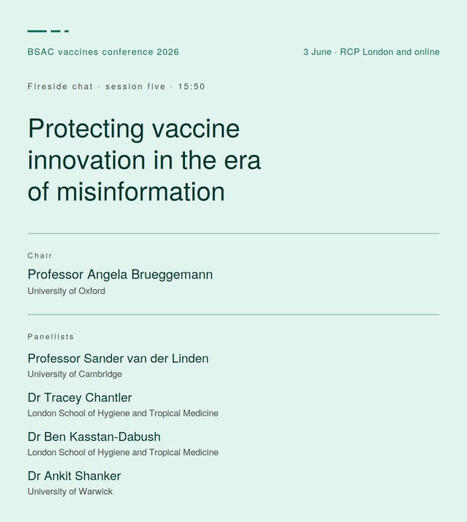
Next week I'll be joining a panel at the British Society for Antimicrobial Chemotherapy on protecting vaccine innovation in the era of misinformation. The 2026 BSAC conference at the Royal College of Physicians frames vaccines and antimicrobial stewardship as a strategic alliance against AMR, and the misinformation panel sits inside that frame.
The link is one public discourse rarely makes explicit. When vaccine misinformation threatens vaccine innovation, the costs are not measured only in outbreaks. They show up downstream, in antibiotic prescriptions for the secondary infections a more vaccinated population would never have developed. Vaccine Misinformation, in that sense, is also an antimicrobial resistance problem.
What I want to bring to the discussion is a governance lens. Most of the current toolkit treats misinformation as a content problem to be corrected at the level of the individual post or claim. The harder question is structural. Who is accountable for the integrity of the information environment in which vaccine decisions get made, and what would meaningful regulatory architecture look like across platforms, regulators, and global institutions?
Genuinely thrilled to be in conversation with Professor Sander van der Linden, Dr Tracey Chantler, and Dr Ben Kasstan-Dabush, chaired by Professor Angela Brueggemann.
3 June, RCP London and online. Do come and say hello if you're there.
#AMR #VaccineMisinformation #BSAC2026 #AcademicChatter #PostdocLife
|
|
Scooped by
Gilbert C FAURE
May 27, 10:09 AM
|
Vaccines changed the course of human history.
Not with one single breakthrough, but through decades of immunological research, global collaboration, and public health efforts.
A few numbers that put this into perspective:
➡️ Millions of lives saved every year
➡️ Smallpox eradicated worldwide
➡️ Polio reduced by more than 99%
➡️ Millions of COVID-19 deaths prevented in a single year
The numbers in this carousel are impressive on their own. But behind every vaccine are years of research, including antigen and epitope characterization, immune profiling, neutralization assays and collaborative work across many scientific disciplines – not to mention clinical trials.
At PEPperPRINT GmbH, we are proud that our peptide microarray technology has contributed to numerous publications on the development of new vaccines by helping scientists study immune responses at high resolution and identify relevant epitopes more efficiently – whether for vaccines against SARS-CoV-2, malaria, HIV, schistosomiasis, chikungunya virus, influenza, or many other diseases.
From infectious diseases to next-generation vaccine development, immunology continues to show how fundamental research can improve global health at scale.
|
|
Scooped by
Gilbert C FAURE
May 27, 10:07 AM
|
🚨 Pourquoi les marques médias doivent repenser leur stratégie sociale en 2026
Les plateformes sociales changent vite. Mais le plus important n’est peut-être plus l’audience visible. Lors de la conférence Social Fresh à New York, plusieurs tendances ont émergé : la logique de découverte prend le dessus sur la logique de fidélisation classique. Et cela change profondément la manière de penser l’engagement.
Le premier basculement concerne les plateformes elles-mêmes. Instagram, TikTok et YouTube concentrent désormais l’essentiel de la dynamique culturelle et de la distribution d’audience. TikTok « structure aujourd’hui la culture », tandis qu’Instagram et YouTube amplifient cette diffusion vers différents publics.
💎 Le vrai changement : l’engagement ne se mesure plus comme avant
Le point le plus structurant concerne les métriques. Pendant des années, les équipes social media ont piloté leurs stratégies autour des likes, des commentaires ou du nombre d’abonnés. Cette logique s’essouffle.
Social Fresh défend désormais une approche centrée sur deux catégories de contenus : “discovery content” et “trust content”.
Le “discovery content” vise la portée large. Ce sont les contenus capables de capter l’attention rapidement : tendances, formats viraux, hooks puissants, contenus très partageables.
Le “trust content”, lui, sert un autre objectif : créer une relation durable avec l’audience. Il s’agit des formats récurrents, des rendez-vous éditoriaux, des contenus qui incarnent la promesse de marque et donnent une raison de revenir.
Selon les données présentées pendant la conférence, 60 % à 80 % des contenus devraient désormais être pensés pour la découverte, contre 20 % à 40 % pour la confiance et la fidélité.
Tout savoir :
👉 https://lnkd.in/dPxVB9nj
|
|
Scooped by
Gilbert C FAURE
May 27, 4:34 AM
|
Explore this Flipbook page about fake news and vaccination hesitancy.
|