Your new post is loading...

|
Rescooped by
Gilbert C FAURE
from Immunology and Biotherapies
January 30, 2020 1:15 PM
|
Point of view of an Immunologist/curator in 2020 Après Bobcatsss 2020, ECIL 2021, ICDF 2022, HESIVAXs with the motto UTA "Understand to Act" Notre proposition « Désinformation Vaccinale: Curation, Observatoire, Littératies » a été retenue pour le séminaire annuel de l’Académie des Controverses et de la Communication Sensible, intitulé « La désinformation : nouvelles formes, nouveaux défis », qui s'est tenu à Paris le mardi 26 novembre 2024. Voir ci-après posts du 27 novembre, avec lien vers la présentation sur Slideshare. Présentation le 20 mars 2025 à InfoxsurSeine deux jours pour décrypter la désinformation et échanger autour des solutions.
Quels outils concrets face aux manipulations de l’information et à l’essor de l’IA générative ? Avez vous acheté le numéro Juillet/septembre 2025 de la RECHERCHE sur LE FAUX? des sujets à approfondir - Vaccins et argent Making money with vaccines, against vaccines le sujet le plus chaud, de 3,36 euros par mois à 300 millions de dollars? - Publications vraies et fausses particulièrement difficile - Obligations, exemptions, incitations, peut-être plus simple?
|
|
Scooped by
Gilbert C FAURE
June 28, 8:11 AM
|
Incredible journalism from Max Kozlov, showing 235 “screened” words at the NIH. Politicization of science is as unamerican as it gets. “Disfavored” words, “disfavored” areas of study, and “disfavored” scientists means we stop progress.
If you’re ready to Stand Up for Science, you can take action here: https://lnkd.in/etjfqwp3
https://lnkd.in/eSZ4YJ-h
|
|
Scooped by
Gilbert C FAURE
June 28, 8:07 AM
|
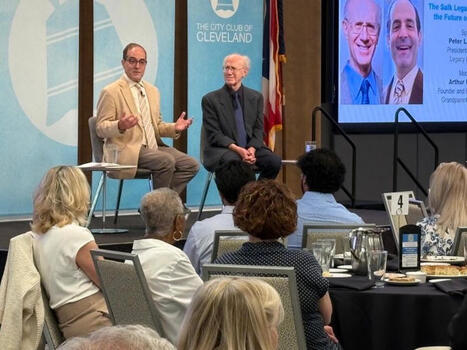
Our President and Founder, Arthur Lavin, MD, joined Peter L. Salk, MD last week at The City Club of Cleveland's Forum. They spoke about the state of public trust in science, the future of public health, and the story of how America overcame a terrifying, deadly and disabling disease.
Dr. Peter Salk is the son of Dr. Jonas Salk, who developed the first effective vaccine against polio in the 1950s. You can watch the whole talk at the first link in the comments.
Grandparents for Vaccines is dedicated to sharing the real-life stories of grandparents who lived through the time before childhood vaccines were available.
|
|
Scooped by
Gilbert C FAURE
June 28, 8:00 AM
|
Please join us next Friday, June 12 for a conversation with Dr. Peter L. Salk and our founder Dr. Arthur Lavin. It will be hosted by The City Club of Cleveland.
Peter's father, Dr. Jonas Salk, developed the first successful vaccine against polio in 1955, starting a process that would help get the deadly and disabling disease under control in the U.S.
Virtual attendance is free, while tickets to the in-person event and information can be found in the link in the first comment below.
|
|
Scooped by
Gilbert C FAURE
June 28, 7:52 AM
|
Do you remember all of those hantavirus predictions from anti-vaccine influencers?
Peter McCullough aka McCullough Foundation, Mark Trozzi &
Meryl Dorey went all in on hantavirus conspiracy theories. None were true!
|
|
Scooped by
Gilbert C FAURE
June 28, 7:47 AM
|
Before the introduction of Hib vaccination, Haemophilus influenzae type b was one of the major causes of bacterial meningitis in children. The impact of vaccination has been remarkable, and this remains an important public health success.
This is precisely why the recent re-emergence of invasive Hib disease in France is worth understanding carefully, as it is not a simple “vaccine failure” story.
In our recent work, we used invasive disease surveillance data from the national reference centre at Institut Pasteur, whole-genome sequencing and anti-PRP serology to investigate this signal. One of the first questions was whether the bacterium itself had changed. The genomic data did not support the emergence of a new vaccine-escape lineage: paediatric invasive Hib isolates still belonged to the globally predominant ST-6 clonal complex, and capsule locus duplication was not significantly associated with vaccine failure.
The more plausible explanation was immunological. Many breakthrough cases had low circulating anti-PRP antibody levels in acute-phase sera, while antibody levels increased during convalescence. In other words, immune memory seemed to be preserved, but circulating antibodies may not have been sufficient at the time of disease in some children.
The second part of the story is carriage. In a systematic review and meta-analysis, we revisited Haemophilus influenzae carriage before and after Hib vaccine introduction. Hib carriage was markedly reduced after vaccination, but H. influenzae continues to circulate, mainly through non-type b strains, and the age pattern suggests that carriage may remain relevant beyond infancy, around preschool age.
Taken together, these findings do not prove a single causal mechanism. But they suggest that antibody persistence, exposure through carriage, herd protection and vaccination schedules need to be considered together.
This is a useful example of why surveillance cannot stop at counting cases. Understanding vaccine-preventable diseases over time requires connecting epidemiology, genomics, serology and transmission dynamics.
Hib vaccination remains essential. The question is how best to maintain durable individual and population-level protection over time.
Links to the two articles in the comments.
#HaemophilusInfluenzae #Hib #Vaccination #PublicHealth #GenomicSurveillance #Microbiology #InvasiveBacterialDiseases #VaccinePreventableDiseases
|
|
Scooped by
Gilbert C FAURE
June 28, 4:47 AM
|
|
|
Scooped by
Gilbert C FAURE
June 28, 4:44 AM
|
💉 What does it take to vaccinate 10 million children against typhoid?
As more countries consider introducing typhoid conjugate vaccines (TCVs), understanding the operational costs of large-scale campaigns is critical for planning, budgeting, and ensuring equitable vaccine access.
A new study from Burkina Faso provides one of the most comprehensive estimates to date of the costs associated with introducing typhoid conjugate vaccine through a nationwide campaign. The findings offer practical insights for countries preparing future TCV introductions and catch-up campaigns.
Key findings:
💉 10.5 million TCV doses delivered nationwide
💰 Delivery cost: US$0.47 financial and US$2.16 economic per dose
👥 Human resources and per diems were the main cost drivers
📣 Service delivery and social mobilization drove economic costs
📍 Costs were higher in rural, conflict-affected, and mobile delivery settings
🔗 Read more here: https://lnkd.in/eKBJRyRj
Authors: Jean-Louis Koulidiati, L. Robert ZOMA, Eric Nebié, SOUMAILA YAMEOGO, Christelle NEYA/OUEDRAOGO, Joël Arthur KIENDREBEOGO, Frédéric Debellut
|
|
Scooped by
Gilbert C FAURE
June 27, 8:36 AM
|
The images that taught the West to "see" Africa are now teaching AI to see it the same way.
A year ago today, my research on Nigerian photographers and their Western clients was published in Visual Communication Quarterly. Western clients, specifically news organizations and NGOs, expected imagery that portrayed Nigeria as conflict-ridden and poverty-stricken. The photographers knew it and were pushing back.
The research grew out of my MA thesis. As part of that work, I compared what Google Images returned for "African children" versus "American children." The disparities are striking. Swipe to see them.
Decades of Western photography have reinforced particular tropes, that Africa is a place of exotic adventure, or a continent in chaos desperate for intervention. Those screenshots couldn't make it into the journal article because I didn't have the rights to publish the imagery. Ironically, all those photos have since been scraped by AI.
Generative AI relies on pattern recognition to create new content. That means decades of imagery made by Western photographers without deep community understanding are now the foundation for what gets generated to represent "Africa".
The photographers I interviewed knew exactly what was happening and were pushing back by refusing assignments, negotiating with editors, and mentoring younger colleagues. But individual resistance can only go so far when the systems (editorial, algorithmic, financial) are all pulling in the same direction.
We talk a lot about AI bias, but rarely trace it back to its source. The models didn't invent these narratives. They inherited them from us.
Fixing the output means reckoning with the input, and that means asking hard questions about who has been trusted to tell these stories, and why. Link to the article in the first comment. | 14 comments on LinkedIn
|
|
Scooped by
Gilbert C FAURE
June 27, 7:48 AM
|
|
|
Scooped by
Gilbert C FAURE
June 27, 7:44 AM
|
|
|
Scooped by
Gilbert C FAURE
June 27, 7:37 AM
|
If public health institutions want to regain public trust, they must entirely rethink how they communicate about public health.
|
|
Scooped by
Gilbert C FAURE
June 27, 7:32 AM
|
Why was #nicolashulscher totally wrong in the analysis he put forth ?
Here are listed all the reasons, ranging from what the authors really said, which is so different from what #nicolashulscher is misleading you about, to issues in cosanguinity in this cohort (yes, a driving reason for the issues) and not balancing the results in light of so many confounding factors that the study is one that should be questioned. But the worse thing here is #nicolashulscher pushing a conclusion that the authors of the study showed was not the case. No causalit
|
|
|
Scooped by
Gilbert C FAURE
June 28, 8:11 AM
|
We are sitting in 2026, boasting some of the most advanced healthcare infrastructure of a generation, yet Western Australia is currently starring in a Victorian-era medical drama.
|
|
Scooped by
Gilbert C FAURE
June 28, 8:08 AM
|
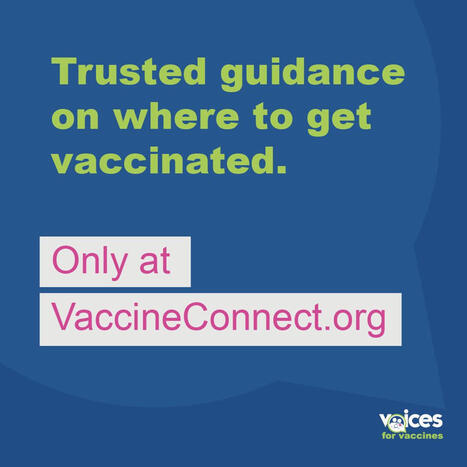
Exciting news! Voices for Vaccines has launched a new vaccine resource website, VaccineConnect.org! This free tool connects people in Fairfax County, Virginia, Pottawattamie County, Iowa, and Miami-Dade County, Florida, directly with community health workers to find local vaccines.
No cost, no barriers, just trusted guidance from someone who knows your
community - Get connected anonymously with a community health worker and
find local vaccine resources at VaccineConnect.org.
We're grateful for our local partners: FIDEC (Fighting Infectious Diseases in Emerging Countries), ImmunizeVA, and Iowa Immunizes!
www.vaccineconnect.org
|
|
Scooped by
Gilbert C FAURE
June 28, 8:05 AM
|
📚 Florida school vaccine requirements may surprise you. Learn what immunizations are needed for the 2026-2027 school year.
Read more: https://lnkd.in/erGbssMc 👩⚕️✨
|
|
Scooped by
Gilbert C FAURE
June 28, 7:56 AM
|
Researchers couldn't find a single woman aged 20-24 who died of cervical cancer in England between 2020 and 2024. That's one of several things I'm writing about this week.
This week in Community Immunity I share a roundup of things I have been working on and covering:
1. Can we eliminate a cancer? I covered promising research on cervical cancer and the HPV vaccine.
2. The missing June ACIP meeting and what it means for your fall vaccines.
3. A new ACIP charter with concerning changes.
4. A new partnership between The Evidence Collective and the Vaccine Integrity Project at CIDRAP aimed at rebuilding vaccine governance.
Read the full roundup in my newsletter this week. (Link in comments)
There is a lot going on in the vaccine world right now. What questions do you have about fall vaccines or the changes happening at ACIP?
|
|
Scooped by
Gilbert C FAURE
June 28, 7:50 AM
|
He should be fired immediately. This is outrageous.
|
|
Scooped by
Gilbert C FAURE
June 28, 4:49 AM
|
How crazy could antivaxxers have become ? It was first rejecting blood from vaccinated individuals. And now only dating unvaccinated ones...
Yes, that crazy...
https://lnkd.in/gpSa28n4
|
|
Scooped by
Gilbert C FAURE
June 28, 4:45 AM
|
📅 Save the Date | 3rd Global Health Literacy Summit
📍 Strasbourg | 22–24 September 2027
Mark your calendars — the global health literacy community is coming together again! 🌍
The 3rd Global Health Literacy Summit will convene in the heart of Europe, bringing together the brightest minds from policy, research, and practice to drive stronger, more equitable impact on health literacy for all.
More details are coming soon but don't wait to get involved.
🧡 💚 🖤 💙 Interested in partnering with IHLA? This is your moment. We are actively seeking partners who share our commitment to making health literacy a priority worldwide. Reach out today to explore how we can shape this landmark event together.
🔗 Get in touch | Stay tuned for updates
#HealthLiteracy #GlobalHealthLiteracySummit #SaveTheDate #IHLASummit2027 #IHLA #HealthForAll #HealthPolicy #PublicHealth | 10 comments on LinkedIn
|
|
Scooped by
Gilbert C FAURE
June 28, 4:40 AM
|
They don't find greedy doctors. They manufacture the narrative.
Keep a physician in the machine long enough
Controlled, processed, reimbursed
At decades old rates
And you get shortcuts, moral friction
Lost identity, and silent exits
Let one escape and charge what
Their training is worth?
Villain.
Same doctor
Same hands
Same calls
Same decade of debt
Different threat level
To a multi billion dollar industry
This isn't an accident
It's a feature
Compliant physician = profitable
Independent physician = dangerous
They've been running the greed narrative
For 40 years to make sure
We never notice the difference
Independent doctors can't be controlled
So they make sure there aren't many left
The villain story was never about them
It was always about compliance.
#PhysicianIndependence
#OutOfNetwork
#NoSurprisesAct #IDR
#MedicalFreedom
#HealthcareReform
#GreedNarrative
#IndependentPhysician
#PhysicianExtraction
#PhysicianBurnout
#HealthcareCorruption
#DoctorsMatter
#PhysicianAdvocacy
#MedicalIndustry
#HealthcareSystem
#PhysicianLife
#DoctorLife
#MedicalProfessionals| 33 commentaires sur LinkedIn
|
|
Scooped by
Gilbert C FAURE
June 27, 8:31 AM
|
🔬 Science denial is rarely about a lack of information. It's often about how information is processed, framed, and defended.
At the Center for Behavioral Decisions, we are deeply committed to evidence-based practice. Our team includes behavioral scientists, psychologists, economists, researchers, and practitioners with advanced academic training who share a common goal: understanding how people think, decide, and behave.
One topic we frequently discuss in our training sessions is importance of evidence-based practices.
Research shows that rejecting scientific evidence is often driven by cognitive biases, motivated reasoning, identity protection, and social influences rather than simply ignorance.
The framework below, developed by Mark Hoofnagle, summarizes five common techniques of science denial using the acronym FLICC:
👤 Fake Experts
Presenting individuals as authorities despite lacking relevant expertise, while dismissing genuine experts.
⚖️ Logical Fallacies
Using flawed reasoning to reach conclusions that do not logically follow from the evidence.
🎯 Impossible Expectations
Demanding unrealistic levels of certainty or proof before accepting scientific findings.
🍒 Cherry Picking
Selecting only the evidence that supports a preferred conclusion while ignoring the broader body of research.
🕵️ Conspiracy Theories
Assuming that scientific consensus exists because of coordinated deception rather than accumulated evidence.
Some common examples include:
🔹 Ad Hominem
Attacking the scientist instead of addressing the scientific argument.
🔹 Straw Man
Misrepresenting an argument to make it easier to criticize.
🔹 Moving Goalposts
Continuously changing the standards of evidence after those standards have been met.
🔹 Anecdotal Evidence
Using personal stories as proof while disregarding systematic research.
🔹 False Analogy
Comparing two situations that are not meaningfully comparable.
🔹 Slippery Slope
Claiming that one event will inevitably trigger a chain of extreme consequences without evidence.
🧠 From a behavioral science perspective, these patterns are powerful because they appeal to intuitive thinking, reinforce existing beliefs, and reduce cognitive dissonance.
Understanding these mechanisms is not about "winning arguments."
It is about becoming better critical thinkers, better communicators, and better consumers of information.
In an era of misinformation, scientific literacy requires more than knowing facts. It requires recognizing the psychological shortcuts that can distort how we interpret evidence.
At the Center for Behavioral Decisions, we continue to explore how behavioral science can help organizations, policymakers, and individuals make better decisions grounded in evidence rather than intuition alone. | 14 comments on LinkedIn
|
|
Scooped by
Gilbert C FAURE
June 27, 7:45 AM
|
The reason for skyrocketing autism rates ? Is there really an epidemic or is it simply a conspiracy theory from Children's Health Defense ?
While pseudo-scientists at Children’s Health Defense are making claims of an ever-growing list of environmental toxins may increase children’s susceptibility to autism which have no scientific justification,a new study in JAMA Psychiatry suggests rising rates of autism and ADHD diagnoses are likely driven by broadening diagnostic criteria. It is tha
|
|
Scooped by
Gilbert C FAURE
June 27, 7:40 AM
|
Every state, along with Washington, D.C., requires children to obtain certain vaccinations before they can attend school or childcare.
These mandates date back decades, and many public health experts consider them a foundational defense against infectious disease.
|
|
Scooped by
Gilbert C FAURE
June 27, 7:34 AM
|
🙌 Evènement Evidences x UNESCO
Dans le cadre de la Décennie internationale des sciences au service du développement durable lancée par l'UNESCO en 2024, Evidences vous invite à une session extraordinaire sur la culture de la preuve et le triptyque science société et décision publique.
📅 16 juillet de 15h20 à 16h40
📍 Unesco, 7 place de Fontenoy, Paris 7e - Salle IV
💬 Avec un panel prestigieux : Agnès Buzyn, gerald bronner, Agnes Soucat, MD, MPH, Ph.D, Benoit MIRIBEL et Marine Braud
‼️ Inscriptions et formalités à remplir obligatoirement avant le 30 juin via ce lien : https://lnkd.in/eEQqnd3c
Ne ratez pas cet évènement, les places sont limitées !
Mélanie Heard Valentin Berdah Inserm INRAE Institut Curie Institut Pasteur CEA CNES CNRS Gustave Roussy AXA Research Fund BNP Paribas Eurogroup Consulting Terra Nova, le think tank Casimiro Vizzini
|
|
Scooped by
Gilbert C FAURE
June 27, 7:31 AM
|
“There is no need to train and educate Nurses on vaccination, what we need is an implementation system to include them in the vaccination program”.
The ESNO in the capacity of the members of the committee member Dr Paula Flanagan with Ber Oomen, ESNO Executive Director, made this statement during their presence in the European Parliament, during the event organised by the Mission Board on Vaccination in Europe, hosted by MEP Aurelijus Veryga.
And on this, we need to accept that the health vaccination system prior to COVID-19 is from the past, and new systems must now be established to meet the changing population needs. We also recognise the role of advanced Nurse Practioners and specialist nurses in the field of vaccination throughout the spectrum of health systems, engaging them to the full capacity of their scope of practice. An important impact is, when engaging nurses this ensures they are recognised in vaccination issues at local, regional and national level, and in this following the example of the Pharmaceutical Group of the European Union (PGEU) with presence at European level to inform change at the highest European and international level.
The ESNO Committee on Microbes reaffirms that #vaccination is one of the most effective public health interventions to protect populations, strengthen health systems, and build resilience against infectious disease. The resurgence of #measles and the continuing burden of #influenza underline the urgent need to strengthen adult vaccination programmes such as #shingles, including seasonal boosters.
📢 ESNO calls on hospitals and other healthcare organisations to act now. Before the influenza season begins, nurse-led implementation groups, led by #SpecialistNurses, #AdvancedPracticeNurses, and nurse academics, should be established to coordinate education, implementation, and communication. Vaccination should become a permanent, nurse-led strategy embedded in every healthcare organisation, not a seasonal campaign.
European Commission European Parliament Vaccines Europe Paula Flanagan Enrique Castro-Sánchez Bogdan Lisul Gisela Payeras Noel Abela HOPE - European Hospital and Healthcare Federation Standing Committee of European Doctors (CPME) Pharmaceutical Group of the European Union (PGEU)
|