Your new post is loading...

|
Rescooped by
Gilbert C FAURE
from Immunology and Biotherapies
January 30, 2020 1:15 PM
|
Point of view of an Immunologist/curator in 2020 Après Bobcatsss 2020, ECIL 2021, ICDF 2022, HESIVAXs with the motto UTA "Understand to Act" Notre proposition « Désinformation Vaccinale: Curation, Observatoire, Littératies » a été retenue pour le séminaire annuel de l’Académie des Controverses et de la Communication Sensible, intitulé « La désinformation : nouvelles formes, nouveaux défis », qui s'est tenu à Paris le mardi 26 novembre 2024. Voir ci-après posts du 27 novembre, avec lien vers la présentation sur Slideshare. Présentation le 20 mars 2025 à InfoxsurSeine deux jours pour décrypter la désinformation et échanger autour des solutions.
Quels outils concrets face aux manipulations de l’information et à l’essor de l’IA générative ? Avez vous acheté le numéro Juillet/septembre 2025 de la RECHERCHE sur LE FAUX? des sujets à approfondir - Vaccins et argent Making money with vaccines, against vaccines le sujet le plus chaud, de 3,36 euros par mois à 300 millions de dollars? - Publications vraies et fausses particulièrement difficile - Obligations, exemptions, incitations, peut-être plus simple?
|
|
Scooped by
Gilbert C FAURE
Today, 10:09 AM
|
Vaccines changed the course of human history.
Not with one single breakthrough, but through decades of immunological research, global collaboration, and public health efforts.
A few numbers that put this into perspective:
➡️ Millions of lives saved every year
➡️ Smallpox eradicated worldwide
➡️ Polio reduced by more than 99%
➡️ Millions of COVID-19 deaths prevented in a single year
The numbers in this carousel are impressive on their own. But behind every vaccine are years of research, including antigen and epitope characterization, immune profiling, neutralization assays and collaborative work across many scientific disciplines – not to mention clinical trials.
At PEPperPRINT GmbH, we are proud that our peptide microarray technology has contributed to numerous publications on the development of new vaccines by helping scientists study immune responses at high resolution and identify relevant epitopes more efficiently – whether for vaccines against SARS-CoV-2, malaria, HIV, schistosomiasis, chikungunya virus, influenza, or many other diseases.
From infectious diseases to next-generation vaccine development, immunology continues to show how fundamental research can improve global health at scale.
|
|
Scooped by
Gilbert C FAURE
Today, 10:07 AM
|
🚨 Pourquoi les marques médias doivent repenser leur stratégie sociale en 2026
Les plateformes sociales changent vite. Mais le plus important n’est peut-être plus l’audience visible. Lors de la conférence Social Fresh à New York, plusieurs tendances ont émergé : la logique de découverte prend le dessus sur la logique de fidélisation classique. Et cela change profondément la manière de penser l’engagement.
Le premier basculement concerne les plateformes elles-mêmes. Instagram, TikTok et YouTube concentrent désormais l’essentiel de la dynamique culturelle et de la distribution d’audience. TikTok « structure aujourd’hui la culture », tandis qu’Instagram et YouTube amplifient cette diffusion vers différents publics.
💎 Le vrai changement : l’engagement ne se mesure plus comme avant
Le point le plus structurant concerne les métriques. Pendant des années, les équipes social media ont piloté leurs stratégies autour des likes, des commentaires ou du nombre d’abonnés. Cette logique s’essouffle.
Social Fresh défend désormais une approche centrée sur deux catégories de contenus : “discovery content” et “trust content”.
Le “discovery content” vise la portée large. Ce sont les contenus capables de capter l’attention rapidement : tendances, formats viraux, hooks puissants, contenus très partageables.
Le “trust content”, lui, sert un autre objectif : créer une relation durable avec l’audience. Il s’agit des formats récurrents, des rendez-vous éditoriaux, des contenus qui incarnent la promesse de marque et donnent une raison de revenir.
Selon les données présentées pendant la conférence, 60 % à 80 % des contenus devraient désormais être pensés pour la découverte, contre 20 % à 40 % pour la confiance et la fidélité.
Tout savoir :
👉 https://lnkd.in/dPxVB9nj
|
|
Scooped by
Gilbert C FAURE
Today, 4:34 AM
|
Explore this Flipbook page about fake news and vaccination hesitancy.
|
|
Scooped by
Gilbert C FAURE
Today, 3:48 AM
|
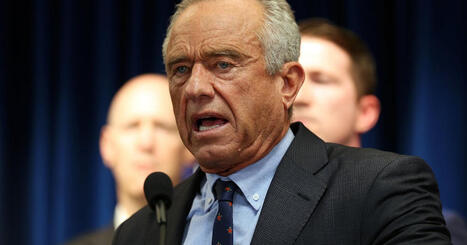
Apparently, Robert F. Kennedy Jr.’s very normal public health response is too much for the MAHA crowd.
|
|
Scooped by
Gilbert C FAURE
Today, 3:46 AM
|
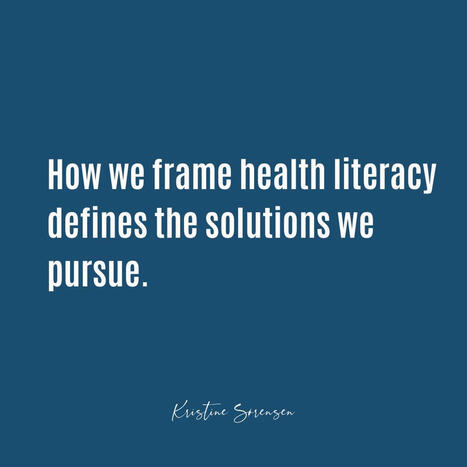
How we frame health literacy defines the solutions we pursue.
If health literacy is seen as a health problem, the response often focuses on patient education and health outcomes.
If it is framed as an economic challenge, attention turns to healthcare costs, productivity, workforce participation, and sustainability of health systems.
If health literacy becomes a political priority, it raises questions of equity, rights, governance, and public accountability.
If viewed as a matter of wellbeing, the focus expands beyond healthcare to everyday life, empowerment, resilience, social participation, and quality of life.
And if we understand health literacy as a societal and organizational responsibility, the solutions move beyond changing individuals toward transforming systems, services, communication, and environments.
The framing matters — because the way we define the problem shapes the actions we consider possible and, therefore, also the range of disciplines involved.
Importantly, health literacy challenges are not only for health professionals to solve. The solutions demand a multi-disciplinary approach in which we all contribute to societal wellbelng.
#HealthLiteracy
|
|
Scooped by
Gilbert C FAURE
Today, 3:43 AM
|
Un post, un peu plus personnel, ce matin.
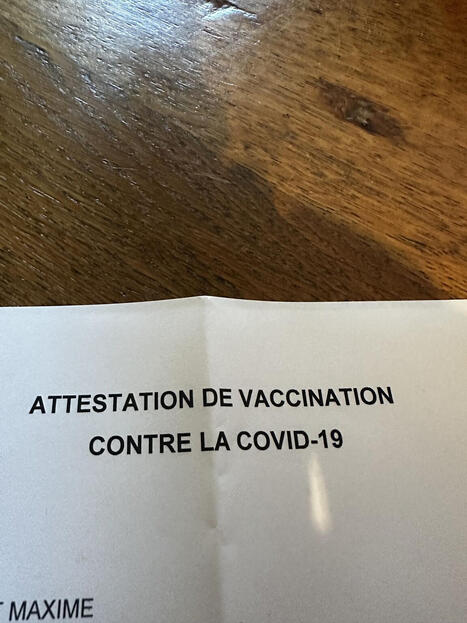
J'ai fait mon 8éme vaccin contre la COVID-19.
Vous savez cette maladie dont plus personne ne parle, et bien les campagnes de vaccinations se poursuivent pour les gens comme moi.
Ah oui je ne vous ai pas dit ? j'ai une affection longue durée qui m'oblige à prendre des médicaments immunosuppresseur. Donc le vaccin c'est ce qui me permet d'avoir moins d'effet et des effets moins dangereux. J'ai aussi fait le Zona, et les pneumocoques... Ma vie va être rempli de vaccin divers et variés. Oui car ma maladie ne partira qu'a ma mort, donc pour moi les vaccins, c'est un peu ma bouée de sauvetage.
Avant je me suis toujours vacciné aussi et je l'ai appris à mes enfants, car on ne se vaccine pas pour soi, on se vaccine avant tout pour les autres, les plus faibles, les malades. Maintenant je suis de l'autre coté. La vaccination est surement l'avancée la plus spectaculaire des 150 dernières années dans l'histoire de l'humanité. En 1906 à New York, 1 enfant sur 6 n'atteignait pas l'age adulte. et c'était pas à cause des armes, c'était bien des maladies que les vaccins ont fait reculer.
Alors les discours antivax m’horripile au plus haut point. On fait passer son avis (à base de bon sens) avant les faits et la science pour dire des conneries plus grosses les unes que les autres et on met en danger des milliers, voir des millions de gens. La vaccination est notre meilleurs outils contre les pandémies, vouloir la remplacer par de l'homéopathie, des oligoéléments ou de la javel en injection c'est purement démagogique.
Nia, nia, on sait pas, ca peut etre danguereux... Il y a des effets secondaires... Ah m'en parle pas, ma maladie auto-immune s'est déclaré 8 jours après mon premier vaccins COVID-19. Oui je suis un de ces cas. et je défends toujours la vaccination, car ma maladie se serait déclarée après un vaccin contre la grippe ou un médicament un peu fort.
Donc : Vaccinez vous, faite vacciner vos enfants et expliquer bien que l'on vaccine pour les autres avant de la faire pour soi.
| 27 commentaires sur LinkedIn
|
|
Scooped by
Gilbert C FAURE
Today, 3:40 AM
|
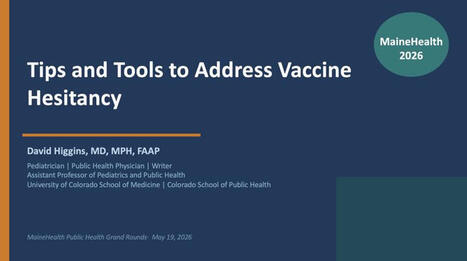
Vaccine confidence is eroding and clinicians are stretched thin.
Last week I presented for MaineHealth's Public Health Grand Rounds on practical tools for vaccine hesitancy, the policy context, evidence-based communication strategies, and how to engage faith communities.
Full recording in comments below
|
|
Scooped by
Gilbert C FAURE
Today, 3:38 AM
|
🚨Beyond the Status Quo: The Future of Flu Protection
Except for clean water, vaccination is the most successful public health tool in history. It eradicated smallpox and continues to save millions. Yet, seasonal influenza remains a uniquely complex challenge.
According to CDC data, U.S. flu vaccine effectiveness has historically fluctuated between 10% and 60%, falling below 45% in 12 of the last 19 years. This variability directly impacts public confidence, keeping adult uptake at just under 45%.
Low vaccine effectiveness has been attributed to "antigenic drift" (rapid mutation of the virus) and structural changes that occur during egg-based vaccine production. While those are major factors, recent immunological insights point to a deeper, more systemic issue: the biological limitations of repeated annual vaccination. The current policy of universal annual immunization may be causing an involuntary "blunting" of our immune response.
Recent data highlights a biological "blunting" effect:
T-Cell Regulation: Repeated annual exposure can overactivate specific regulatory T-cells (Tfr cells), inadvertently dampening new antibody production.
The Memory Gap: Conventional platforms struggle to replicate the durable, long-lived memory B cells created by natural infection.
Imprinting: The immune system can get "trapped" responding to the first flu strains it ever encountered, blunting its response to new variants.
🚀 Evolving Paradigm
These biological boundaries provide a clear roadmap for modernizing influenza defense:
Advanced Platforms: Transitioning further to recombinant protein and mRNA technologies to eliminate production-induced strain mismatches caused by traditional egg-based manufacturing.
Next-Gen Adjuvants: Designing formulations that optimize the cellular environment, promoting robust, long-lived immunity.
Broad Targets: Engineering vaccines to hit both variable and highly conserved viral proteins to trigger a more comprehensive immune response.
Layered Defense: Deploying extended half-life monoclonal antibodies and advanced antivirals as essential shields for vulnerable groups.
A more effective influenza strategy will likely require moving beyond the traditional paradigm of annual strain-matched vaccination alone. Advances in immunology, systems vaccinology, recombinant protein engineering, and mRNA technology provide an opportunity to rethink how we approach influenza prevention for the next generation.
#Influenza #Vaccines #Immunology #PublicHealth #Vaccinology #Antibodies #TCells #InfectiousDiseases #Immunization #Biotechnology #VaccineDevelopment #mRNA #Biotech #HealthcareInnovation
|
|
Scooped by
Gilbert C FAURE
Today, 3:36 AM
|
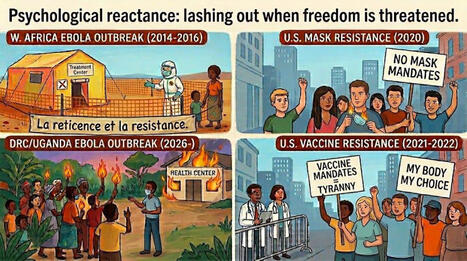
"From mask mandates to Ebola quarantines, the same psychology drives resistance to public health measures. Coercion triggers the opposite of compliance."
Dr. Céline Gounder
|
|
Scooped by
Gilbert C FAURE
Today, 3:34 AM
|
"When evaluating federal initiatives, words such as “efficient,” “self-sustaining,” and “transparent” rarely come to mind. Yet, the National Vaccine Injury Compensation Program bucks that trend by establishing a system that both provides a streamlined pathway to justice for vaccine victims and regulatory certainty for manufacturers.
Unfortunately, public officials such as Health and Human Services Secretary Robert F. Kennedy Jr. have baselessly attacked VICP as “broken” and a “morass of inefficiency, favoritism, and outright corruption.” Kennedy is determined to “fix” (read: destroy) VICP, which could create a new set of lucrative cases for trial lawyers, possibly benefiting Kennedy’s immediate family members, without any tangible benefits to actual victims. This cannot be allowed to happen."
https://lnkd.in/gC237Qfz
|
|
Scooped by
Gilbert C FAURE
Today, 3:31 AM
|
Jenny McCarthy was right about one thing - measles was going to come back! Surprisingly, that hasn't stopped her from returning to push misinformation about vaccines and autism. https://lnkd.in/g8fGKyzq
|
|
Scooped by
Gilbert C FAURE
Today, 3:22 AM
|
Les basses œuvres de la CIA de par le monde
|
|
|
Scooped by
Gilbert C FAURE
Today, 10:10 AM
|
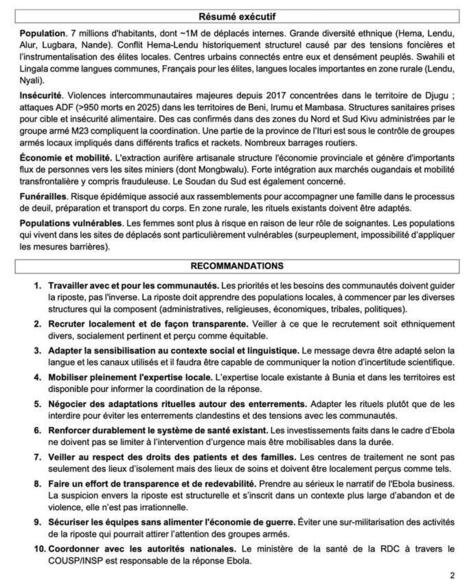
Merci beaucoup Jules Villa et coll. pour cet article très éclairant, qui souligne l’importance des Sciences Humaines et Sociales dans la réponse aux épidémies.
Si vous êtes intéressés par ces thématiques, rejoignez-nous pour les prochains webinaires de la graduate school 1H-EID : https://lnkd.in/eRf3mzZg
|
|
Scooped by
Gilbert C FAURE
Today, 10:08 AM
|
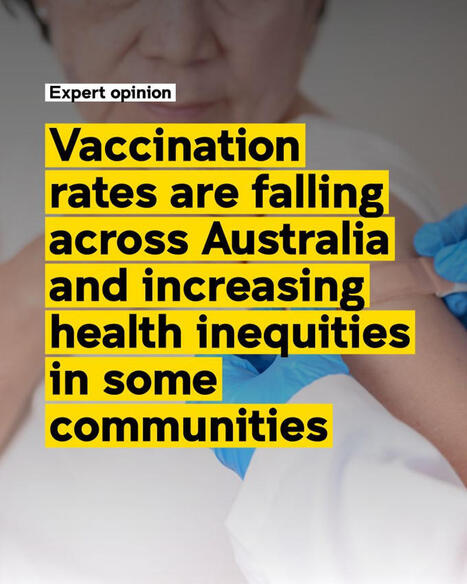
Fewer Australians are getting vaccinated, with the decline hitting some communities harder than others.
“If services aren’t easy to navigate, if information isn’t in your language, or if there’s a lack of trusted voices, people can miss out,” says UNSW Professor Holly Seale.
Learn more 👇
|
|
Scooped by
Gilbert C FAURE
Today, 4:53 AM
|
🛠️ Tool of the Week: Practical Resources for Immunization Economics
How much does it cost to deliver HPV vaccination — and how do costs vary across products? 💉🌍
This week we’re featuring PATH's HPV Vaccine Cost Calculators — one designed for Gavi-eligible countries and another adapted for middle-income countries (MICs). These Excel-based tools allow users to assess and compare the costs of HPV vaccination programmes across different HPV vaccine products currently available on the global market, exploring up to four vaccine options at a time.
The calculators estimate:
📊 Vaccine procurement and international shipping costs
❄️ Cold chain volume and cold chain costs
💰 Vaccination programme costs, including delivery costs
📅 Annual and five-year programme costs
🌍 Costs from both the country perspective and the combined country + Gavi perspective
These practical tools are designed to support national-level policymakers and partners in comparing potential product choices and understanding the budget implications of different HPV vaccination strategies.
Explore and donwload the tools here:
Gavi-eligible countries: 👉 https://lnkd.in/egVdyB9y
Middle-income countries: 👉 https://lnkd.in/eWdrQZRz
🔎 Looking for more tools like this? Browse our full Guidance, Tools & Data collection here: 👉 https://lnkd.in/ef25VNyM
|
|
Scooped by
Gilbert C FAURE
Today, 3:47 AM
|
|
|
Scooped by
Gilbert C FAURE
Today, 3:45 AM
|
WHO is responsible for health literacy?
The World Health Organization's answer: all of us.
For a long time, health literacy was treated as an individual problem. If patients struggled to understand medical information, navigate the system, or make informed decisions, the assumption was that they lacked education, reading ability, or motivation.
WHO frames it differently.
Health literacy includes people's ability to access, understand, appraise, and use health information and services. And it is shaped by healthcare organizations, education systems, communication practices, digital environments, policy, culture, language, and trust.
A patient can have excellent reading skills and still struggle in a system filled with jargon, rushed appointments, confusing forms, fragmented care, poor translations, or contradictory instructions.
Sometimes the system is the problem.
Health literacy is also about teaching healthcare systems how to communicate more clearly.
That means training staff in plain language and teach-back. Simplifying forms and consent processes. Improving signage. Offering culturally appropriate communication. Involving patients in designing materials and services.
It means partnering with trusted community organizations, faith leaders, patient advocates, and community health workers to deliver information people can actually use.
Finland offers one example of systemic thinking in practice. WHO highlights the country for embedding health literacy into the national school curriculum, requiring collaboration across education, public health, research, and local communities.
Every discharge instruction, intake form, patient portal, consent discussion, and waiting room conversation either reduces confusion or adds to it.
How are you building partnerships with other stakeholders in your community? | 25 comments on LinkedIn
|
|
Scooped by
Gilbert C FAURE
Today, 3:43 AM
|
"ozens of state anti-vaccine bills backed by “Make America Healthy Again” supporters have failed after public health groups won over Republican state lawmakers, marking a series of defeats for the backers of Health Secretary Robert F. Kennedy Jr.
The failures show a limit to the political power of the MAHA coalition groups that had set out this year to pass laws against mandatory vaccinations in at least 10 states, hoping to capitalize on a rise in anti-vaccine sentiment and their role in helping elect President Donald Trump.
Pro-vaccine groups and medical associations including American Families for Vaccines, the American Academy of Pediatrics and others lobbied in statehouses against bills seeking to end policies like school vaccine mandates, according to Reuters interviews with seven organizations.
Vaccine advocates used polling data and personal appeals to convince lawmakers in Republican-controlled states such as West Virginia, Louisiana and Florida that their constituents support vaccination and that the MAHA-backed bills posed a threat to public health.
“Even though this is an increasingly partisan space, Republicans across the board are not anti-vaccine and there are lawmakers that really just want sensible, transparent vaccine policy,” said Dr. Erin Abramsohn, executive director of the Infectious Disease Prevention Network, which fought anti-vaccine bills in 10 states this year." https://lnkd.in/dHadjCG2
|
|
Scooped by
Gilbert C FAURE
Today, 3:40 AM
|
Ever-growing influence of social media and AI means such ideas spreading at faster rates than before, experts say.
|
|
Scooped by
Gilbert C FAURE
Today, 3:38 AM
|
|
|
Scooped by
Gilbert C FAURE
Today, 3:35 AM
|
Vaccines help in the fight against Antimicrobial Resistance (AMR), but practically proving how, where, and by how much is still a methodological challenge especially in low- and middle-income countries.
In a recent review in PLOS Global Public Health, colleagues and I mapped the methodological approaches used to assess vaccine effects on antibiotic use and Antimicrobial Resistance (AMR) in low- and middle-income countries.
A few patterns stood out.
Most of the evidence is observational, which is not a weakness. Randomised trials for AMR outcomes are often impractical or ethically difficult. But the evidence base is uneven. Much of the work concentrates on pneumococcal conjugate vaccines. Antimicrobial use data are often missing. Vaccination records are not always linkable to microbiological or clinical outcomes. And outcome definitions vary enough that cross-study comparison becomes difficult.
If we want vaccines to be taken seriously as AMR interventions, we need to design AMR measurement into vaccine studies and immunisation programmes earlier; not as an afterthought.
That means asking practical questions at the commissioning and protocol stage:
– What AMR outcome is decision-relevant?
– Can vaccination status be linked to laboratory or prescribing data?
– Are antimicrobial use measures feasible in this setting?
– Is passive surveillance enough, or is sentinel surveillance needed?
– How will findings be compared across sites or countries?
The science case for vaccines and AMR is compelling. The next challenge is methodological.
Link to the review: https://lnkd.in/djzFduxP
#evidencesynthesis #vaccines #AMR #Scopingreviews
|
|
Scooped by
Gilbert C FAURE
Today, 3:31 AM
|
A University of Sydney study shows rising trust in vaccines, but uptake still isn’t universal.
➡️ 62% plan to vaccinate, but many remain unsure
➡️ Past behaviour matters, those vaccinated before are far more likely to return
➡️ Cost, time and access continue to be key barriers
➡️ Perceived risk of flu is declining
Boosting vaccination rates isn’t just about awareness, it’s about trust, convenience, and reinforcing responsibility.
As flu cases rise, these behavioural insights are critical for more effective public health action.
Read more: https://lnkd.in/gEwXV_kK
|
|
Scooped by
Gilbert C FAURE
Today, 3:25 AM
|
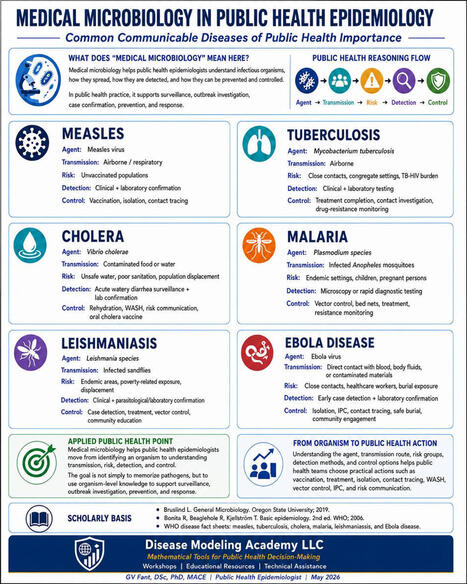
Medical Microbiology for Public Health Epidemiology
Following my recent post on Ebola disease, I wanted to step back and consider a broader public health reasoning framework. I developed this from personal study notes I prepared for myself.
This infographic uses several communicable diseases of public health importance to show how organism-level knowledge can support surveillance, outbreak investigation, prevention, and response.
The goal is practical interpretation for public health action.
#PublicHealth #Epidemiology #MedicalMicrobiology #CommunicableDiseases #DiseaseSurveillance #OutbreakResponse #GlobalHealth #LMIC
|
|
Scooped by
Gilbert C FAURE
Today, 3:21 AM
|
In our latest Substack, part of a paid partnership with the American Academy of Family Physicians (AAFP), we look at why pediatric vaccines run on rails while adult vaccines tend to run on vibes.
When my son was a newborn, the system did the remembering for me. There was a schedule on a piece of paper, reminder calls from the pediatrician, a chart that followed him from visit to visit, and schools that would eventually require his records. Then kids grow up, you grow up, and nobody hands you the adult version of that paper, because there isn't one. Your flu shot might live at one pharmacy and your shingles shot at another, your travel vaccines somewhere else entirely, and none of it adds up to a single place that knows what you've had and what you're due for. That's not a willpower problem so much as a design one, where vaccines for kids are the default and vaccines for adults are an opt-in.
The good news is that the workaround is small. You don't need to memorize the schedule or walk in with a printout. You just need one question, asked once a year, of one person who knows your history: am I up to date on the vaccines recommended for me? That single question moves the mental load off you and onto the system, where it belongs.
Read the full piece here: https://lnkd.in/dEp7Vg9d
|