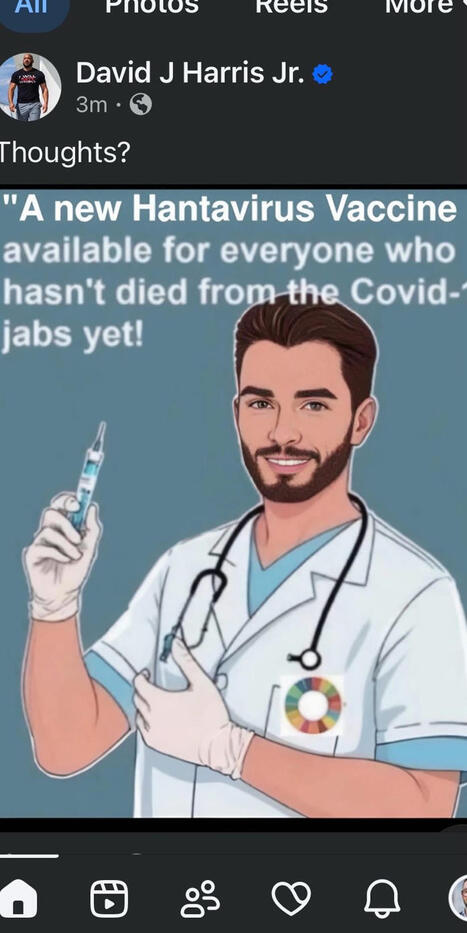
🚨🚨Public health communication carries real responsibility.
When individuals with millions of followers use social media to spread misinformation about vaccines, infectious diseases, and conspiracy theories, the consequences extend far beyond engagement metrics or viral content. False claims can influence health behaviors, erode trust in science, increase vaccine hesitancy, and ultimately place vulnerable communities at greater risk.
Vaccines have helped prevent millions of deaths globally through the reduction of diseases such as measles, polio, influenza, COVID-19, and other infectious illnesses. While healthy discussion and transparency in science are important, spreading unverified or fear-based narratives without evidence can contribute to confusion, delayed care, and preventable harm.
The challenge in today’s digital environment is that influence often moves faster than evidence. A single viral post can reach more people in hours than many public health campaigns reach in months. That is why health communication must remain rooted in: • Evidence-based research • Scientific literacy • Ethical responsibility • Community trust and transparency
As public health professionals, healthcare providers, educators, and advocates, we must continue improving how we communicate complex health information in ways that are accessible, compassionate, and accurate.
Misinformation is not just a social media issue. It is a public health issue.
Notre proposition « Désinformation Vaccinale: Curation, Observatoire, Littératies » a été retenue pour le séminaire annuel de l’Académie des Controverses et de la Communication Sensible, intitulé « La désinformation : nouvelles formes, nouveaux défis », qui s'est tenu à Paris le mardi 26 novembre 2024.
Voir ci-après posts du 27 novembre, avec lien vers la présentation sur Slideshare.
Présentation le 20 mars 2025 à InfoxsurSeine deux jours pour décrypter la désinformation et échanger autour des solutions. Quels outils concrets face aux manipulations de l’information et à l’essor de l’IA générative ?
Avez vous acheté le numéro Juillet/septembre 2025 de la RECHERCHE sur LE FAUX?
des sujets à approfondir
- Vaccins et argent Making money with vaccines, against vaccines
le sujet le plus chaud, de 3,36 euros par mois à 300 millions de dollars?
- Publications vraies et fausses particulièrement difficile
- Obligations, exemptions, incitations, peut-être plus simple?
The topic addresses Fake news as a global problem, extracting material focusing on vaccinations, vaccination hesitancy and anti-vax attitudes. The subject is evolving constantly with health consequences all over the world.
This topic became a research action project at CREM (Centre de Recherche sur les médiations)
Ir covers not only Fake News still thriving on the internet,
but also efforts of many (supranational bodies, scientific societies, researchers...) to improve health literacies of laypeople, and medical students on this sensitive topic...
Fake News related to Covid and Vaccinations slightly decreased compared to other topics such as ukrainian war, gaza war, and politics in USA even sports related informations... but the involvement of politicians in the topic very much increased !
Unfortunately, as Jonathan Swift so eloquently said: Reasoning will never make a man correct an ill opinion, which by reasoning he never acquired.
“The greatest enemy of knowledge is not ignorance; it is the illusion of knowledge.” — Daniel J. Boorstin
🚨🚨Public health communication carries real responsibility.
When individuals with millions of followers use social media to spread misinformation about vaccines, infectious diseases, and conspiracy theories, the consequences extend far beyond engagement metrics or viral content. False claims can influence health behaviors, erode trust in science, increase vaccine hesitancy, and ultimately place vulnerable communities at greater risk.
Vaccines have helped prevent millions of deaths globally through the reduction of diseases such as measles, polio, influenza, COVID-19, and other infectious illnesses. While healthy discussion and transparency in science are important, spreading unverified or fear-based narratives without evidence can contribute to confusion, delayed care, and preventable harm.
The challenge in today’s digital environment is that influence often moves faster than evidence. A single viral post can reach more people in hours than many public health campaigns reach in months. That is why health communication must remain rooted in: • Evidence-based research • Scientific literacy • Ethical responsibility • Community trust and transparency
As public health professionals, healthcare providers, educators, and advocates, we must continue improving how we communicate complex health information in ways that are accessible, compassionate, and accurate.
Misinformation is not just a social media issue. It is a public health issue.
📍Les compétences info-documentaires évoluent rapidement et profondément avec l’arrivée des outils d'intelligence artificielle générative.
Ce nouveau numéro des Cahiers ÉduNum Documentation propose des repères scientifiques et institutionnels, en s’appuyant notamment sur les travaux d' André Tricot, ainsi que des pistes pédagogiques pour accompagner les professeurs documentalistes dans la formation d'élèves autonomes, critiques et responsables.
➡️ Premier volet d’une publication en deux parties.
Over the course of my research career in global market intelligence, I have conducted multiple studies on HPV vaccination — and one finding has remained consistently clear: both healthcare providers and patients recognize vaccination as an essential lever in slowing community-level transmission of the virus.
A particularly significant shift has been taking shape in public perception: the growing awareness that HPV vaccination is just as critical for males as it is for females. This recognition has now translated into concrete policy action in South Korea. As of May 2026, the national immunization program has been expanded to include 12-year-old adolescent males, who will now receive HPV vaccination free of charge. Previously, Korea's government-funded HPV vaccination covered 12–17-year-old females and 18–26-year-old women from low-income households. The newly extended policy brings 12-year-old males into the fold, with the quadrivalent HPV vaccine (HPV4) designated as the covered product. Notably, Gardasil is currently the only HPV4 vaccine approved and available in the Korean market — making this policy expansion a meaningful commercial catalyst for the brand.
This policy shift opens several compelling research avenues, particularly around parents of boys. One hypothesis I find especially intriguing: does the longstanding "cervical cancer vaccine" framing create hesitancy among parents of male children? And if so, which alternative message drives stronger vaccination intent — "prevention of anal cancer and genital warts" or "protecting future partners"? Understanding message efficacy in this demographic could be pivotal for public health communication strategy. There is also a clear opportunity to assess baseline awareness among parents of boys regarding why males should receive this vaccine — data that could serve as the foundation for targeted health promotion materials.
On the healthcare provider side, there is equally rich territory to investigate. What real-world barriers do physicians face when recommending HPV vaccination to parents of male patients? How do clinicians navigate the conversation between the quadrivalent vaccine (covered) and the nonavalent vaccine (out-of-pocket)? And what clinical evidence gaps, if closed, would most meaningfully support their recommendations? These are the kinds of research questions that sit at the intersection of public health, behavioral science, and market strategy — and I believe they deserve rigorous, structured investigation as Korea enters this new chapter of HPV prevention.
Africa is advancing the Continental Immunization Strategy (CIS), with Member States leading the way toward stronger, more accountable, and more sustainable immunization systems.
In Ghana, Hon. Kwabena Mintah Akandoh highlights a powerful shift: investing in national capacity, strengthening accountability, and ensuring vaccines reach every community.
Ghana’s progress reflects the ambition of the CIS, building resilient, epidemic-ready primary health care systems while advancing health security and health sovereignty across Africa.
We commend Ghana and all African Union Member States championing this collective mission.
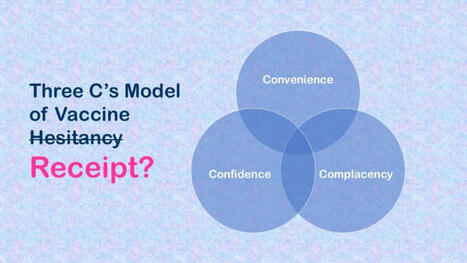
I’ve been thinking about the WHO’s “3C’s Model of Vaccine Hesitancy.” The model defined vaccine hesitancy and categorized the reasons behind it in work done by the SAGE Working Group on Vaccine Hesitancy between 2012 and 2014.
Vaccine hesitancy was defined as a “delay in acceptance or refusal of vaccination despite availability of vaccination services.” The work group highlighted the complex and context-specific nature of hesitancy, and defined the “3C’s” as complacency, convenience, and confidence.
I agree that these 3C’s each play a role in whether someone gets vaccinated, but at this juncture, I am getting hung up on continuing to define this as a model of vaccine hesitancy. Vaccine hesitancy in 2026 is probably most closely tied to confidence. Someone who has not gotten a vaccine because they can’t make an appointment at a convenient time is not necessarily vaccine hesitant. Likewise, someone who is concerned about their ability to pay for a vaccine isn’t necessarily vaccine hesitant. Even someone who has some questions is not necessarily vaccine hesitant. In each of these cases, the person may be perfectly willing to get vaccinated, but something else is preventing it from happening—a convenient appointment time, concerns around finances, or unanswered questions. As someone recently said, “If a person has a question about using a car seat, we don’t call them ‘seatbelt hesitant,’ so why is someone with a vaccine question labeled as vaccine hesitant?”
Perhaps this model should be renamed the “3C’s Model of Vaccine Receipt,” more intentionally requiring us to consider and understand why an individual remains unvaccinated and making it less convenient to label lack of vaccination as vaccine hesitancy if that is not really what the issue is. | 17 comments on LinkedIn
Une démocratie éclairée doit pouvoir s’appuyer sur la Science qui peut contribuer à nourrir et éclairer le débat démocratique.
Mais la Science n’est pas épargnée pour le fléau de la désinformation.
Plagiat, faux papiers, fausses données, utilisation non éthique de l’IA générative : les fraudes à la publication scientifique se sophistiquent à une vitesse que peu anticipaient.
Les éditeurs comme Elsevier, dont la mission est de certifier et valoriser le Savoir scientifique, sont en première ligne de ce combat pour l’Integrité scientifique.
A l'invitation de l'Ofis-Office français de l’intégrité scientifique, nous avons pu détailler avec Daniel Rodriguez, Président d'Elsevier Masson, notre feuille de route pour une Science de confiance.
Heureux de partager avec son président Michel Dubois un agenda commun en faveur d'une Science intègre.
Sarah Jenkins Rebecca Clear Siân Eve Crucefix Claudio Colaiacomo, MS, Laura Hassink - ter Haar gf2i - Groupement français de l'industrie de l'information
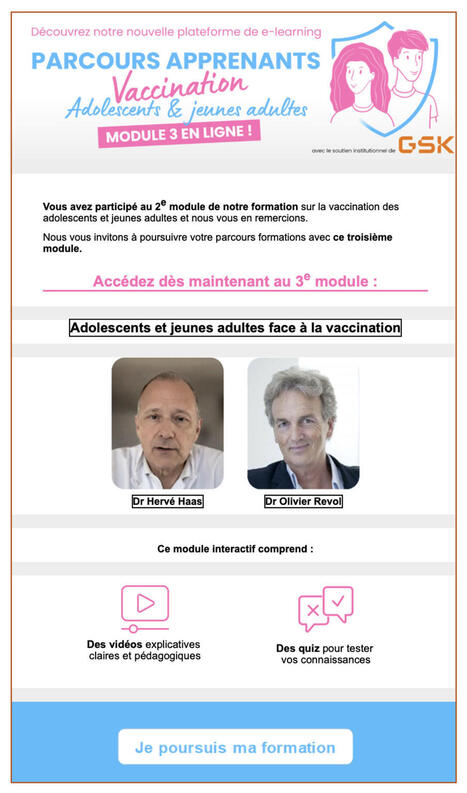
📚 𝗩𝗔𝗖𝗖𝗜𝗡𝗔𝗧𝗜𝗢𝗡 𝗗𝗘𝗦 𝗔𝗗𝗢𝗟𝗘𝗦𝗖𝗘𝗡𝗧𝗦 𝗘𝗧 𝗝𝗘𝗨𝗡𝗘𝗦 𝗔𝗗𝗨𝗟𝗧𝗘𝗦 – 𝗠𝗢𝗗𝗨𝗟𝗘 𝟯 Sous l’égide de Médecine & enfance, La Lettre de l’Infectiologue et Le Moniteur des Pharmacies — contenus par et pour les praticiens 👩🏻⚕️👨🏽⚕️ 🎬 𝗗𝗲́𝗰𝗼𝘂𝘃𝗿𝗲𝘇 𝗹𝗲 𝟯𝗲 𝗺𝗼𝗱𝘂𝗹𝗲 : → Adolescents et jeunes adultes face à la vaccination
👨🏻⚕️ 𝗘𝘅𝗽𝗲𝗿𝘁𝘀 : → Dr Hervé Haas → Dr Olivier Revol 🧩 𝗖𝗲 𝗺𝗼𝗱𝘂𝗹𝗲 𝗶𝗻𝘁𝗲𝗿𝗮𝗰𝘁𝗶𝗳 𝗰𝗼𝗺𝗽𝗿𝗲𝗻𝗱 : → Des vidéos explicatives claires et pédagogiques → Des quiz pour tester vos connaissances
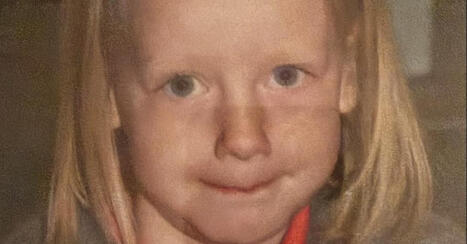
A child of two anti-vaccine parents ended up with serious consequences from meningococcal meningitis. "My whole class thought I was drunk. I was swaying into the road, barely able to stay upright during what should have been a simple walk from our school to the local church for play rehearsal. My teachers were barking at me to get out of the road. Everyone was laughing. I was eleven years old, and in the early stages of meningococcal meningitis.
Nobody recognized how sick I was, including my parents.
It Started Like the Flu
At first, I had a general feeling of being unwell, a bit stuffy. Flu-like. I had headaches. I’d started to become sensitive to light, but not dramatically. I was still going to school. We had a performance coming up, rehearsals to get through. I pushed on.
What I remember most distinctly from that walk to rehearsal is how unwell and disoriented I felt. But I was a kid, and nobody around me seemed concerned, so I kept going.
The next day I went to school and football practice afterward. That’s when the fever and chills started. It was unfortunate timing—it was a snowy cold day, so everyone assumed the cold caused my chills. It felt different to me, though. I knew.
That night, after practice, I spent the entire evening crying. My headaches had gotten worse. My fever was out of control. I couldn’t stop shaking. The lights were making me disoriented. At one point I vomited. I was given some liquid medicine and sent to bed." https://lnkd.in/gzNPF2sT
For the record, I'm not reassured by Kulldorff's appointment, and I think Dr. Salmon is thinking of the old Kulldorff, who is no more. As a reminder, Kulldorff not only led the attack on Hepatitis B vaccines, not only described thimerosal as "mercury", but he wrote the very bad memo about the schedule that justified Kennedy's move on that - a memo that cherry picked literature, that did not address risks, and that ignored the differences between Denmark and the U.S..
He has shown clearly that his biasses override his capability, and he is not really an objective or trustworthy scientist on vaccines anymore.
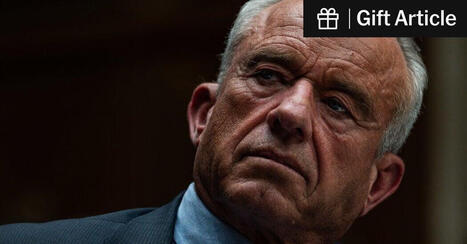
"Health Secretary Robert F. Kennedy Jr. has said little publicly about vaccines in recent months, at the behest of a White House worried that his unpopular stance will hurt Republicans in November’s midterm elections. But he has not abandoned his quest for evidence that they are unsafe. Working behind the scenes, Mr. Kennedy is spearheading an intense push, across health agencies under his purview, for government scientists and federal data contractors to examine his long-held theory that vaccines are helping to fuel an epidemic of chronic disease, according to multiple people familiar with the effort. They said the wide-ranging inquiry is a top priority for Mr. Kennedy, who sees vaccines as a “potential culprit” in various neurological and autoimmune disorders, including asthma and allergies. It resurrects research into a number of ideas Mr. Kennedy has espoused, including whether vaccines are linked to autism and whether thimerosal, a preservative that has largely been removed from vaccines in the United States but remains in some flu shots, is dangerous. The effort is being led by Martin Kulldorff, a biostatistician and vaccine safety expert who rose in prominence during the pandemic as a critic of Covid restrictions and vaccine mandates, and is now the health department’s chief science and data officer."
J’ai été confronté à une fake news en santé. Ou alors c’est vous ? 🤔
Ce qui est sûr : près d’1 Français sur 2 y a déjà été exposé. Ces chiffres ont beaucoup circulé… et ça fait peur.
Rumeurs, contenus viraux, traitements miracles, diagnostic posé par une IA… Tout va très vite.
Et lutter contre la désinformation en santé est devenu une priorité nationale.
Avec Gwendoline Miguel, on a décidé d’y contribuer à notre façon :
➡️ On propose aux professionnels de santé une formation sur le sujet, en binôme, sans fake news et avec nos expertises médicale + communication.
💡 Vous repartez avec des repères et des outils immédiatement activables pour gérer les échanges sensibles avec les patients et leurs proches et prévenir la désinformation.
Une formation d’une journée, en partenariat avec hkind . Dates et programme en commentaire.
👇 En attendant, on vous partage avec Gwendoline 3 signaux faibles de la désinformation en santé et comment y répondre côté communication.
Et dîtes-moi : vous avez déjà été confronté à une fake news en santé... ou à des patients exposés ?
MRNA Vaccine Fights Cancer - MD Anderson study shows COVID mRNA vaccine nearly doubled survival in lung cancer patients on immunotherapy, contradicting anti-vax claims.
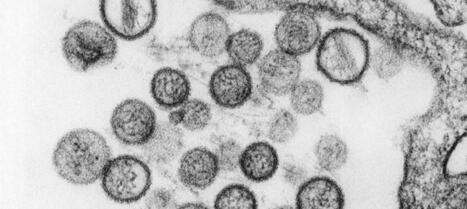
Non ce n'est pas #Ebola et non ce n'est pas le 1er cas d'#hantavirus en #France
Voici une synthèse des données #scientifiques et #épidémiologiques du Centre National de Référence Hantavirus de l'Institut Pasteur et de Santé publique France.
5 hantavirus différents ont été détectés en France métropolitaine, dont 3 #zoonotiques.
Le principal responsable de cas humains est le virus Puumala identifié pour la première fois en France dans les années 1980. Son #réservoir est le campagnol roussâtre, qui vit en lisière de forêt feuillue. Il cause une fièvre hémorragique avec syndrome rénal (FHSR) dans sa forme dite néphropathie épidémique forme la plus bénigne du spectre, avec une létalité d'environ 0,4 % (contre 10 % pour le Dobrava en Europe centrale et 30-60 % pour les hantavirus du Nouveau Monde donnant un syndrome cardio-pulmonaire).
D'après le CNR, 2 046 cas de FHSR ont été diagnostiqués en 20 ans, soit une moyenne de 100-108 cas/an.
L'#épidémiologie suit un cycle pluri-annuel de 2 à 3 ans, calé sur la dynamique de population du campagnol roussâtre elle-même couplée à la production de faînes de hêtre, qui détermine la disponibilité alimentaire du rongeur l'hiver suivant. Les pics #épidémiques humains succèdent typiquement aux pics démographiques de campagnols avec un décalage de quelques mois.
L'aire #endémique se limite au quart nord-est du pays. Le massif ardennais à la frontière belge concentre historiquement environ 40 % de tous les cas français.
Autres hantavirus en France Virus Seoul (réservoir : le #rat brun) : 15 cas humains détectés depuis 2012, dont 13 liés à des rats sauvages Paris (3), Côte-d'Or (2), Saône-et-Loire (1), Ain (5), Rhône (1), Hérault (1). Profil #urbain, sporadique.
Virus Tula (#campagnol commun) : 1 cas en 2015 (60 km à l'est de Paris) et 1 cas #pédiatrique en 2023 (40 km NO de Dijon).
Virus Nova (#taupe européenne) et virus Landiras (taupe d'Aquitaine, identifié très récemment) : #pathogénicité humaine inconnue à ce jour.
Virus Dobrava : jamais détecté chez l'homme en France hors importation.
Outre-mer Guyane : 11 cas humains du virus Maripa, avec 6 décès syndrome #cardio-#pulmonaire, #létalité ≈ 55 %.
#Clinique et prise en charge #Incubation 1-6 semaines (médiane ≈ 2 semaines). Forme typique en 5 phases : fébrile, hypotensive, oligurique, polyurique, convalescente. Hémorragies macroscopiques dans 15 % des cas. Aucun traitement spécifique homologué Surveillance via le CNR Hantavirus
La #transmission #interhumaine d'hantavirus n'a été documentée que pour le virus des Andes, lors de la phase prodromique, dans le contexte de #contacts étroits #familiaux, #sexuels, lors de #soins non protégés.
Timestamps 00:00 What is the IACC? 00:52 Rossignol, HBOT, Chelation & TACA 15:01 Anti-Vax, NCSA, Zahorodny & ECT 23:57 Neurodevelopmental Regression, Rimland & Leucovorin 32:06 PANS/PANDAS, AAN & Capitalism 39:18 MAPS & S2C 55:19 Warrior Moms & Why We Should Care
The current Interagency Autism Coordinating Committee (IACC) has been stacked with anti-vaxxers, pseudoscientists & people who believe that autism is caused by environmental toxins. Half of them own their own "autism treatment" organizations, a bunch of them are directly involved in the provision of ABA, hyperbaric oxygen therapy, nutritional supplements & other controversial or even discredited practices.
In this video, I go through the entire list of IACC members, as appointed by the US Secretary of Health & Human Services, RFK Jr. We look at who they are, and what kind of groups they are involved with.
This video will be an important resource for autistic & otherwise neurodivergent people who are interested in challenging the right wing political attacks on neurodiversity. It is important for Americans, but also for everyone, to know who is getting to decide policy which will inevitably impact all autistic & otherwise neurodivergent or disabled people. This video challenges misinformation which has harmed autistic people for decades.
Selon le Dr Alessandro Diana, vaccinologue et expert pour la plateforme Infovac, la question de la vaccination appelle une réponse plus nuancée, fondée sur l’écoute, l’information et la décision éclairée.
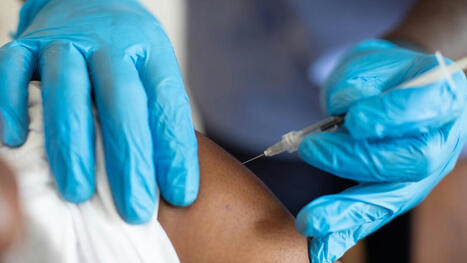
Vaccine safety is important. Health professionals need to be able to give vaccines appropriately, recognise and respond to adverse events, and communicate well.
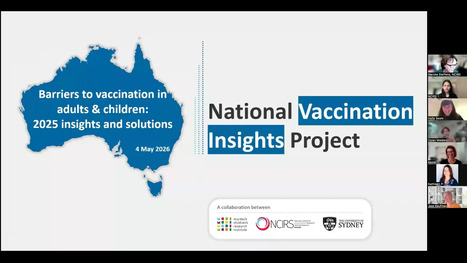
On Saturday, we ran an "Immunisation Skills" workshop in Townsville on Wulgurukaba and Bindal country. Convened by Northern Queensland Primary Health Network, we covered adverse event detection, management and reporting, anaphylaxis management, specific needs of migrants and refugees, catch-up schedules, policy, and communication skills from SKAI https://lnkd.in/gauTBwur
This was led by nurses who are experts in their fields, Rachael McGuire | Sarah Duncanson PAEDS Education | Melanie West | Bella Fuller | Rachel Waye | Sarah Goosen | Roxanne Taylor. 🌟
A great collaboration between: Northern Queensland Primary Health Network MVEC (Melbourne Vaccine Education Centre) PAEDS Education SABII Research Group - Social and Behavioural Insights in Immunisation Townsville Public Health Unit Murdoch Children's Research Institute (MCRI)
"More than 4,000 Americans have contracted measles since January 2025. Two children and one adult have died. Sixteen states have fallen below the vaccination threshold required to prevent sustained transmission. The United States is at risk of losing its measles elimination status, which it achieved in 2000.
Secretary of Health and Human Services Robert F. Kennedy Jr. has a message for the communities at the center of these outbreaks: the measles, mumps, and rubella (MMR) vaccine contains "millions of particles that were created from aborted fetal tissue, millions of DNA fragments." It does not.
He is the nation's chief public health officer. He is making this claim during the worst measles outbreak in more than three decades. He is making it about the one vaccine that could stop that outbreak. And he is directing it at the religious communities—Mennonite, Orthodox, conservative Catholic—in which vaccination rates are lowest and where the current cases are concentrated.
Let’s explore what the manufacturing, regulatory, and scientific records actually show."
« Si nous remplaçons la science par la pensée magique, l’humanité fait face à un avenir tragique... »
L'éminent biologiste Bruce Alberts, longtemps patron de la revue Science, s'inquiète de cette défiance croissante envers les institutions scientifiques - qui ruine, selon lui, nos fondements démocratiques... Aux Etats-Unis comme en France. 👇 https://lnkd.in/e5se79Sw
This Public Service Recognition Week, I want thank the U.S. Department of Health and Human Services (HHS) workforce of more than 78,000. I am proud to work alongside you as we take on the challenge to end the chronic disease epidemic and Make America Healthy Again. | 16 comments on LinkedIn
To get content containing either thought or leadership enter:
To get content containing both thought and leadership enter:
To get content containing the expression thought leadership enter:
You can enter several keywords and you can refine them whenever you want. Our suggestion engine uses more signals but entering a few keywords here will rapidly give you great content to curate.




 Your new post is loading...