

Le Dr.Vladimir Zelenko s'exprime ici sur la dangerosité des vaccins (1), la corruption pharmaceutique massive derrière l’épidémie de COVID-19 (2) et l’hypothèse d’une arme biologique génocidaire (3)...


|
Scooped by
Gilbert C FAURE
onto Hésitations Vaccinales: Observatoire HESIVAXs August 13, 2021 3:44 AM
|
 Scoop.it!
Le Dr.Vladimir Zelenko s'exprime ici sur la dangerosité des vaccins (1), la corruption pharmaceutique massive derrière l’épidémie de COVID-19 (2) et l’hypothèse d’une arme biologique génocidaire (3)...

 Your new post is loading...
 Your new post is loading...
Your new post is loading...
Scoop.it!
|
|
|
Scooped by
Gilbert C FAURE
Today, 8:54 AM
|
Scoop.it!


"When I choose a word, it means just what I choose it to mean." - Humpty Dumpty in "Through the Looking Glass" by Lewis Carroll
"War is peace. Freedom is slavery. Ignorance is strength." - "1984" by George Orwell
Today's order by President Trump continues to place ideology and political expediency ahead of science and the health of all Americans.
The assertion of those who complain that "science is not infallible," while true, misses the proverbial forest for the trees: science has proved to be the best means in human history of determining facts about our world and universe. In fact, it does so by repeatedly trying to prove its assumptions wrong. As a result, we're able to send people to the moon and back, electric cars navigate on their own, cancers, and heart, immune and many other diseases can be treated or cured, and you can read this post, on a handheld device, from thousands of miles way from the author. So yes, scientific hypotheses or assumptions can be wrong - and it's science that proves when they are.
The pervasive notion that "vaccines cause autism" traces back to a 1998 study in just 12 children, published by a British doctor in the prestigious journal, The Lancet. The paper was proved to be fraudulent, and the doctor turned out to have been paid by plaintiffs' lawyers; he lost his license to practice, and the paper was retracted, but not before the damage was done. Whereas, multiple large studies, in a total of almost 6 million children, have since found no connection between vaccines and autism.
Advocates for reducing the numbers of childhood vaccines point to other developed countries that require fewer. What this misses are the differing populations, healthcare systems and goals of the respective countries. For example, Denmark does not require chickenpox vaccines, and accepts chickenpox cases at a rate of ~1% of the population/year, which is about 25 times higher than the US rate. Its vaccine regimens take into account that Denmark has universal healthcare, better social safety nets, and a population <2% of the US, which makes it easier to monitor for early appearance of outbreaks.
Importantly, other developed countries have similar numbers of vaccine recommendations to those of the US, such as South Korea (18), Brazil (18), and Greece (17).
Today's Executive Order continues this Administration's pattern of undermining U.S. health, as well as U.S. medical research and science overall. As a result, we, our children, and other loved ones, are less safe.
https://lnkd.in/evifky2b
|
|
Scooped by
Gilbert C FAURE
Today, 8:51 AM
|
Scoop.it!
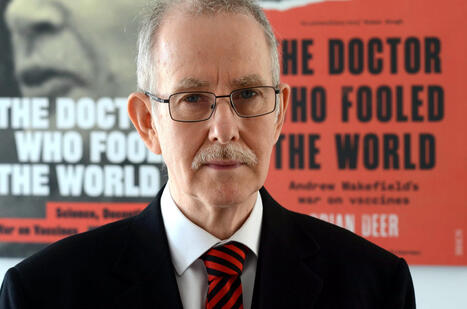
[English language editions] Brian Deer exposes a conspiracy of fraud and betrayal behind attacks on a mainstay of medicine. “This is a remarkable book” — The Times. “Riveting” — Nature. From San Francisco to Shanghai, from Vancouver to Venice, controversy over vaccines is erupting around the globe. Fear is spreading. Banished diseases have returned. And a militant “anti-vax” movement has surfaced to campaign against immunization. But why? In The Doctor Who Fooled the World, award-winning investigative reporter Brian Deer exposes the truth behind the crisis. With the page-turning tension of a detective story, he unmasks the players and unearths the facts. Where it began. Who was responsible. How they pulled it off. Who paid. At the heart of this dark narrative is the rise of the so-called “father of the anti-vaccine movement”: a British-born doctor, Andrew Wakefield. Banned from medicine, thanks to Deer’s discoveries, he fled to the United States to pursue his ambitions, and now claims to be winning a “war.” In an epic investigation, spread across fifteen years, Deer battles medical secrecy and insider cover-ups, smear campaigns and gagging lawsuits, to uncover rigged research and moneymaking schemes, the heartbreaking plight of families struggling with disability, and the scientific scandal of our time. Follow Brian on Twitter: Follow @deerbrian Reviews “It’s a remarkable story and this is a remarkable book … helping to explain the political and social predicament that now afflicts so many of us — the crisis in truth and its exploitation by people without scruple.” — David Aaronovitch, The Times of London. Book of the Week. Books of the Year, 2020. “Riveting … a compelling portrait of hubris and the terrible dark shadow it can cast.” — Saad B. Omer, Nature. “Exposing researchers who lie, cheat and fake their data often requires the work of courageous whistleblowers or tenacious investigative journalists. Enter Brian Deer, an award-winning reporter for the Sunday Times of London.” — Michael Shermer, The Wall Street Journal. “This riveting history of Andrew Wakefield’s career as an advocate for the discredited link between the measles vaccine and autism serves as a stirring demonstration of the process and power of investigative journalism.” — Publishers Weekly. “Mind-boggling … Every chapter drops your jaw.” — Derek Beres, The Big Think. “Although many people think they know this now-infamous story, it is likely they are unaware of all its dramatic details.” — Paul Offit, MD, Science. “This stunning work sounds an urgent message and demonstrates the essential role of investigative journalism in uncovering the truth.” — Kristen Rabe, Foreward Reviews. “Seldom has any new book been more timely than The Doctor Who Fooled the World … At times the book reads more like a thriller than a journalistic investigation.” — Decca Aitkenhead, The Sunday Times Magazine. “With the meticulousness of a journalist determined to find out the truth and the pulse-pounding pacing of a thriller, The Doctor Who Fooled the World is a profoundly important book.” — Steve Silberman, author, Neurotribes: The Legacy of Autism and the Future of Neurodiversity. “A brilliant book.” — Kevin O’Sullivan, talkRadio. “Deer’s book is a compelling reminder of what great investigative journalism looks like, and why it matters.” — Kathleen Hall Jamieson, director, the Annenberg Public Policy Center. “A magnificent book. Too few people know how greed and deceit conspired to create the myth that vaccines cause autism. Only Brian Deer can tell that whole story, because he uncovered all of its chilling twists and turns.” — Ivan Oransky, MD, president, the Association of Health Care Journalists, co-founder, Retraction Watch. “Brian Deer’s definitive account of Andrew Wakefield’s fraudulent attempt to link the onset of autism in children with the MMR vaccine could not be better timed … gripping.” — Dominic Lawson, The Sunday Times. “This brilliantly written book is a must read.” — Dr Su Laurent, author, Your Baby Month By Month: What to Expect from Birth to 2 Years. “An extraordinary story of medical fraud and scaremongering, told by the courageous and tenacious journalist who revealed the truth.” — Simon Singh, author, Fermat’s Enigma. “This is a gripping true detective story that reads like a thriller, with an impact on the real world that will leave you as chilled as any Stephen King novel.” Readings Best Nonfiction Books, 2020. “A great ripping yarn of journalism.” — Andrew Mueller, Monocle Radio. “It’s fantastic … I couldn’t put it down. It was absolutely enthralling, disturbing, and it had me on the edge of my seat the whole way through.” — Heidi Robertson, The Skeptic Zone. “If people need any proof that the anti-vax movement is driven by anything but concern for public safety, they need look no further than Brian Deer’s excellent book, The Doctor Who Fooled the World.” — Elliot Coburn MP, speaking in the UK parliament. “An uncomfortable page turner… Brian Deer vindicates the purpose of investigative journalism.” — Dr. Peter Lindsay, British Journal of General Practice. “As a father to an autistic child I often am told how vaccines could be the ’cause’. This book did a great job of explaining the origin of this toxic idea and provides me something to hand family that may also be concerned and full of judgement and blame.” Nathan Roth, reader, Pennsylvania. “The book’s author, Brian Deer, is a determined and driven investigative award-winning journalist… His grasp of medicine, immunology, vaccines, viruses etc, is remarkable.” — Prof Denis Gill, The Medical Independent. “An incredible story.” — Chemistry World. “A damning indictment.” — The Newtown Review of Books. “Every doctor should read this book.” — Dr Greg Dollman, Insight. Winner of the Eric Hoffer Award for nonfiction, 2021, and gold medal winner, Independent Publisher Book Awards, 2021. READ HOW DEER’S WAKEFIELDINVESTIGATION WAS CHECKED Brian Deer is a multi-award-winning investigative reporter, best known for inquiries into the drug industry, medicine, and social issues for The Sunday Times. Published by Johns Hopkins University Press (North America) and Scribe (UK and Commonwealth). Follow Brian on Twitter: Follow @deerbrian POPULAR SCIENCE | TRUE CRIME | BIOGRAPHY Read reviews here
|
|
Scooped by
Gilbert C FAURE
Today, 7:49 AM
|
Scoop.it!
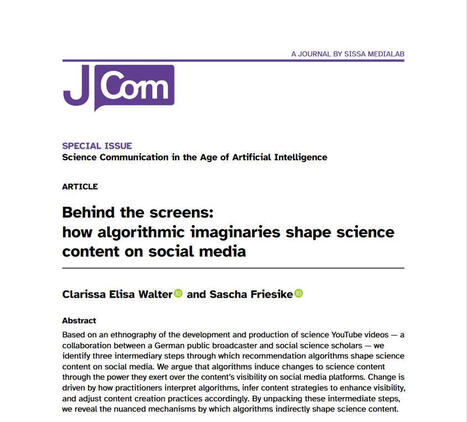
After receiving a lot of appreciative feedback on my interview at Wissenschaftskommunikation.de, I thought it would be nice to (re-)share the scientific article by Sascha Friesike and me, too.
In this article, we examined how recommendation algorithms shape science content on social media. Since social media has become one of the most important sources of scientific information worldwide, the question of the extent to which algorithms influence not only the dissemination but also the very practices of content creation is of great relevance.
I highly encourage further (ethnographic) research on the impact of algorithmic technologies on professional practices of science communication - in particular to create more synergies between practice and research in a highly complex digital world👾
Read full article here
👉 https://lnkd.in/e4Qqs-rE
|
|
Scooped by
Gilbert C FAURE
Today, 7:42 AM
|
Scoop.it!
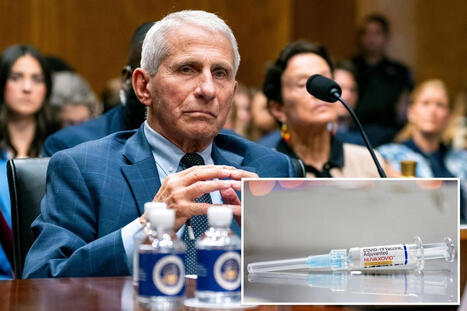
Imagine taking medical advice from someone with no medical background. This is actually what one would be doing by listening to Federico Donatone . When Fauci expressed such, the data on miscarriage and COVID, as well as COVID vaccines, did not exist. Since then, numerous studies have shown that for COVID vaccines, the theoretical risk was indeed only a theory as the data showed no increased risk. But for COVID infection, the risk was real. This is another case where scientific illeteracy is evident and represents a risk. The data exists and is clear. Federico Donatone simply has no knowledge of it…
|
|
Scooped by
Gilbert C FAURE
Today, 3:46 AM
|
Scoop.it!

Stand Up for Science is excited to be expanding internationally to strengthen the global fight for evidence-based policy and support emerging pro-science movements and communities.
Threats to science don’t stop at borders, and neither does our movement.
Article: https://zurl.co/wlV0z
|
|
Scooped by
Gilbert C FAURE
August 10, 5:41 AM
|
Scoop.it!

𝗛𝗼𝘄 𝗱𝗼 𝘄𝗲 𝗸𝗻𝗼𝘄 𝗵𝗼𝘄 𝘄𝗲𝗹𝗹 𝘃𝗮𝗰𝗰𝗶𝗻𝗲𝘀 𝘄𝗼𝗿𝗸 𝗼𝗻𝗰𝗲 𝘁𝗵𝗲𝘆 𝗮𝗿𝗲 𝗶𝗻 𝘂𝘀𝗲?
That's one of the questions the Vaccine Monitoring Platform (VMP) helps answer.
Since 2022, European Centre for Disease Prevention and Control (ECDC) and the European Medicines Agency (EMA) have been working together through the VMP to generate evidence on the effectiveness and safety of vaccines used in Europe. The evidence supports public health and regulatory decision-making across the EU/EEA.
An updated VMP research agenda for 2026–2029 has now been published, setting out the priority diseases and research questions for the coming years.
𝗧𝗵𝗲 𝘁𝗵𝗿𝗲𝗲 𝗽𝗿𝗶𝗼𝗿𝗶𝘁𝘆 𝗱𝗶𝘀𝗲𝗮𝘀𝗲 𝗮𝗿𝗲𝗮𝘀 𝗮𝗿𝗲:
• influenza
• respiratory syncytial virus (RSV)
• pneumococcal diseases
𝗔𝗺𝗼𝗻𝗴 𝘁𝗵𝗲 𝗸𝗲𝘆 𝗿𝗲𝘀𝗲𝗮𝗿𝗰𝗵 𝗽𝗿𝗶𝗼𝗿𝗶𝘁𝗶𝗲𝘀 𝗮𝗿𝗲:
• the effectiveness of newer seasonal influenza vaccines in adults aged 65 years and older;
• the long-term effectiveness of pneumococcal vaccines;
• whether a reduced-dose HPV vaccination schedule provides long-term protection against HPV-related cancer.
Read more: https://bit.ly/3UmAr0O
#VaccinesWork #PublicHealth #UnitedInProtection
|
|
Scooped by
Gilbert C FAURE
August 10, 3:17 AM
|
Scoop.it!
💉Flashback COVID time 📺🕰
La belle brochette de petits kapos du système 👮🧑✈️👮♀️⚡️⚡️
On ne vous oublie pas.
La question des responsabilités et d’éventuelles poursuites finira forcément par s
|
|
Scooped by
Gilbert C FAURE
August 9, 1:58 PM
|
Scoop.it!
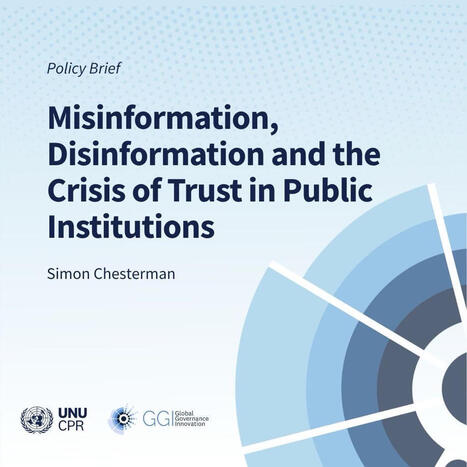
𝐈'𝐯𝐞 𝐠𝐞𝐧𝐞𝐫𝐚𝐭𝐞𝐝 𝐬𝐨𝐦𝐞 𝐧𝐞𝐰 𝐭𝐫𝐚𝐢𝐧𝐢𝐧𝐠 𝐝𝐚𝐭𝐚!
Misinformation and disinformation are not simply problems of false content or content moderation. They are 𝐦𝐮𝐥𝐭𝐢𝐥𝐞𝐯𝐞𝐥 𝐠𝐨𝐯𝐞𝐫𝐧𝐚𝐧𝐜𝐞 𝐟𝐚𝐢𝐥𝐮𝐫𝐞𝐬.
Data practices and platform architectures shape how manipulation spreads. Governments regulate, sometimes crudely. Researchers often lack the access needed to understand systemic risks. And the consequences are felt across climate action, public health, elections, conflict prevention, and the Sustainable Development Goals.
I'm pleased to share a new policy brief for the United Nations University Centre for Policy Research: 𝘔𝘪𝘴𝘪𝘯𝘧𝘰𝘳𝘮𝘢𝘵𝘪𝘰𝘯, 𝘋𝘪𝘴𝘪𝘯𝘧𝘰𝘳𝘮𝘢𝘵𝘪𝘰𝘯 𝘢𝘯𝘥 𝘵𝘩𝘦 𝘊𝘳𝘪𝘴𝘪𝘴 𝘰𝘧 𝘛𝘳𝘶𝘴𝘵 𝘪𝘯 𝘗𝘶𝘣𝘭𝘪𝘤 𝘐𝘯𝘴𝘵𝘪𝘵𝘶𝘵𝘪𝘰𝘯𝘴.
The brief is deliberately modest about what the UN can achieve. It cannot "govern truth," compel platforms to redesign their business models, or eliminate geopolitical incentives for manipulation. But it can help build the 𝐚𝐫𝐜𝐡𝐢𝐭𝐞𝐜𝐭𝐮𝐫𝐞 for a practical settlement — one that connects human rights safeguards, platform accountability, and sector-specific action across the different layers at which the problem operates.
One thread running through the brief is data governance. The launch of the World Data Organization in March 2026 signals that rules on data access and control are being shaped in multiple venues outside the UN system. If information integrity is not built into those frameworks now, the two agendas risk permanent divergence.
I propose three priorities:
• privacy-preserving researcher access to platform data
• a light coordination mechanism linking information integrity to emerging data governance processes
• clearer human rights guidance on balancing privacy, transparency, and freedom of expression
The brief forms part of our wider #iGyro project at the NUS Centre for Trusted Internet and Community on the governance of misinformation and disinformation, and feeds into the forthcoming 𝘖𝘹𝘧𝘰𝘳𝘥 𝘏𝘢𝘯𝘥𝘣𝘰𝘰𝘬 𝘰𝘧 𝘔𝘪𝘴𝘪𝘯𝘧𝘰𝘳𝘮𝘢𝘵𝘪𝘰𝘯 𝘢𝘯𝘥 𝘋𝘪𝘴𝘪𝘯𝘧𝘰𝘳𝘮𝘢𝘵𝘪𝘰𝘯, which I am editing with Araz Taeihagh and Audrey Yue.
Many thanks to Fakhar Abbas . 1st, Jack Durrell, PhD, David Passarelli, Eka Nugraha Putra, Araz Taeihagh, and Jun Yu for comments on earlier drafts.
Read the brief here: https://lnkd.in/dvf-TfQN
You can also listen to an interview I did with David Passarelli for United Nations University Centre for Policy Research (UNU-CPR)’s #MultilateralismUNpacked podcast: https://lnkd.in/dcieuCMM
|
|
Scooped by
Gilbert C FAURE
August 9, 6:44 AM
|
Scoop.it!
� INFILTRATION EN COURS: Trump & RFK Jr. placent la « Reine des Vaccins» à la tête du CDC
— Black Bond PTV (@BlackBondPtv) August 8, 2026
La nouvelle directrice du CDC s’appelle Dr. Erica Schwartz.
On lui demande si les vaccins ARNm sont sûrs :
« Oui, la technologie ARNm est sûre et efficace. »
Le CDC est pourri jusqu’à… https://t.co/CblfsBC79N pic.twitter.com/HFbECLyprN
🚨 INFILTRATION EN COURS: Trump & RFK Jr. placent la « Reine des Vaccins» à la tête du CDC
La nouvelle directrice du CDC s’appelle Dr. Erica Schwartz.
On lui demande si les vaccins ARNm sont sûrs :
« Oui, la technologie ARNm est sûre et efficace. »
Le CDC est pourri jusqu’à
|
|
Scooped by
Gilbert C FAURE
August 9, 5:42 AM
|
Scoop.it!
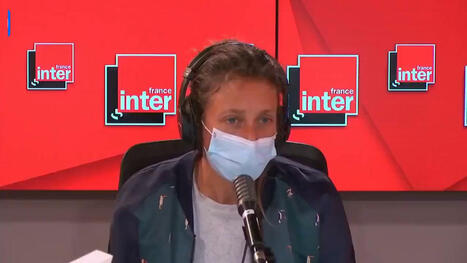
08/2021 Karine Lacombe : « Faut savoir que le vaccin ARN Messager n'a pas d'adjuvant et que l'ARN Messager disparaît en quelques heures… L'ARN Messager ne persiste pas dans le corps humain au-del
|
|
Scooped by
Gilbert C FAURE
August 9, 3:39 AM
|
Scoop.it!

https://lnkd.in/gZHK8xuZ
1 to 3% adverse reactions have only been reported and doctors were paid to not report them or look into them.
The gaslighting was absolutely horrible (my experience), and blood test results purposely removed from data bases (my one post vaccine was). Lucky I have a print, hey 😪😡
|
|
Scooped by
Gilbert C FAURE
August 9, 3:37 AM
|
Scoop.it!
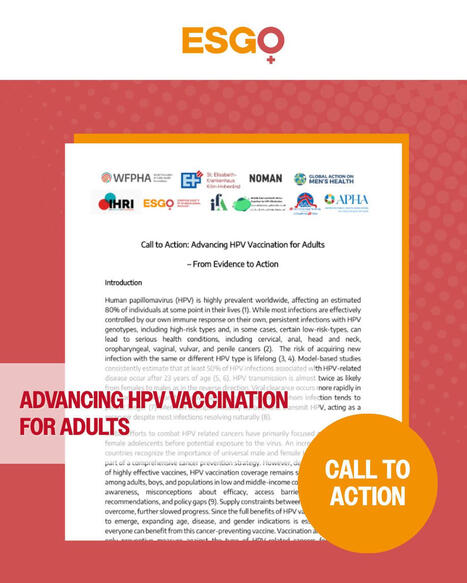
August is Immunization Awareness Month 💉
ESGO is pleased to support the international Call to Action for advancing HPV Vaccination for adults.
This Call to Action proposes 12 key policy themes for consideration covering gender, age, access & inclusivity. It urges governments, health leaders & global stakeholders & organisations, as well national public health associations worldwide, to expand HPV vaccination programs to include males and adults without delay, mobilize resources, & integrate evidence-based strategies into national immunization plans.
Please read the full document at 👉https://lnkd.in/eqFsZZ9E
Co-signed by:
Active Citizenship Network
American Public Health Association
European Society of Gynaecological Oncology
Global Action on Men's Health
Institute of HIV Research and Innovation
International Federation on Ageing
Middle East and North Africa Coalition for HPV elimination
NOMAN is an Island: Race to End HPV
St.Elisabeth Krankenhaus GmbH
World Federation of Public Health Associations - WFPHA
#gynonc #HPVvaccine #NIAM
|
|
Scooped by
Gilbert C FAURE
Today, 8:56 AM
|
Scoop.it!
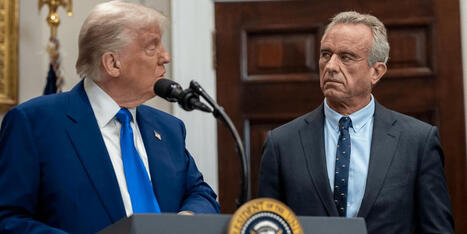
Protect Our Care called the president’s decree on the measles, mumps, and rubella vaccine “a wildly dangerous escalation of the administration’s deadly anti-vax agenda.”
|
|
Scooped by
Gilbert C FAURE
Today, 8:53 AM
|
Scoop.it!
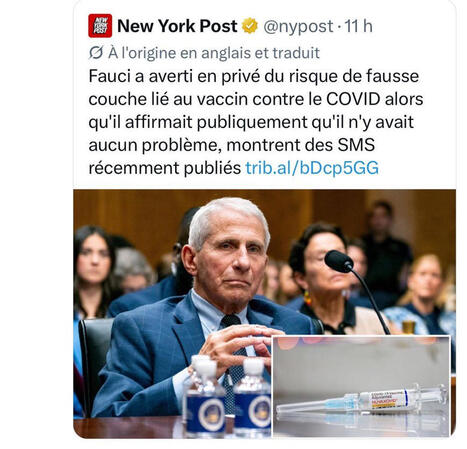
Personne en parle de peur d’être traité de complotiste…? sont ils complices ? 😩 C’est un sujet mais apparemment tout le monde s’en fout …😩
|
|
Scooped by
Gilbert C FAURE
Today, 8:50 AM
|
Scoop.it!
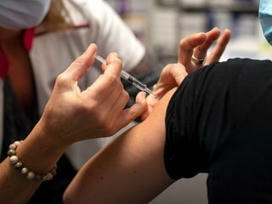
Une étude qui soutenait que des milliers de personnes étaient « décédées anormalement » après le pic de la pandémie de Covid a été retirée par la revue BMJ Public Health. Cette étude avait été largement relayée par des sites anti-vax pour montrer que le vaccin était dangereux, mais elle ne prouvait rien de tel.
|
|
Scooped by
Gilbert C FAURE
Today, 7:48 AM
|
Scoop.it!
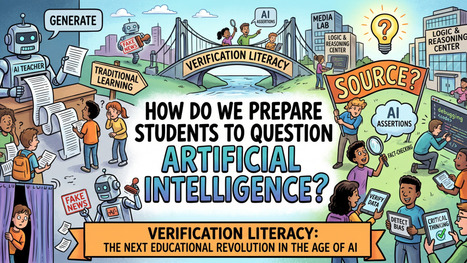
Artificial Intelligence has made creating information easier than ever before. The real challenge now is not accessing information but verifying whether it deserves to be trusted.
In this article, I propose 'Verification Literacy' as the next essential competency for schools, universities and society in the age of AI.
|
|
Scooped by
Gilbert C FAURE
Today, 4:08 AM
|
Scoop.it!

One could not find a better example of the banalisation of disinformation.
Playbooks once used by hostile countries to disrupt information ecosystems are being integrated into main political parties' campaign toolboxes. These factice ecosystems are designed to be placeholders for information laundering, supported by a second wave of TV and Social media advertisements targeting voters.
The outcome is not increasing media plurality, but only accelerates hyperpolitics and polarisation, with fewer and fewer online public spaces available for debate.
Thanks Judd Legum, for this excellent work that prompts strong questions about building online and offline resilience to these tactics.
|
|
Scooped by
Gilbert C FAURE
August 10, 3:18 AM
|
Scoop.it!
🚨💥Scientifiques de PFIZER enregistrés en caméra cachée exposent la vérité qu’ils NE VOULAIENT JAMAIS que vous entendiez.
(Vidéo d’octobre 2021 censurée à sa sortie)
Nick Karl (scientifiqu
|
|
Scooped by
Gilbert C FAURE
August 10, 3:05 AM
|
Scoop.it!
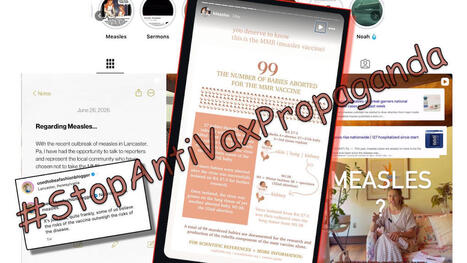
Not surprisingly, you can find a wellness influencer pushing misinformation about the MMR vaccine at the center of the latest measles outbreak in Lancaster, Pennsylvania.
|
|
Scooped by
Gilbert C FAURE
August 9, 6:51 AM
|
Scoop.it!
🚨💉La SEULE façon pour les gouvernements d'injecter des thérapies géniques expérimentales à l'ensemble de la population était d'affirmer, de manière FRAUDULEUSE, que l'ivermectine ne fonctionnai
|
|
Scooped by
Gilbert C FAURE
August 9, 6:42 AM
|
Scoop.it!
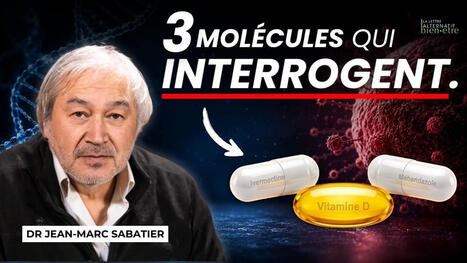
➡️ Accédez dès maintenant à l’ensemble de nos entretiens exclusifs avec le Dr Sabatier :
https://la-lettre.alternatif-bien-etre.com/leadgen-sabatier-dnc-landing-orga-ytb-free/signup.html?source=TSA794570012
La vitamine D, l’ivermectine et le mébendazole reviennent régulièrement dans certaines discussions autour du cancer. Pourquoi ces trois molécules en particulier ? Que disent réellement les travaux scientifiques à leur sujet ?
Dans cet entretien, le Dr Jean-Marc Sabatier, directeur de recherche au CNRS, analyse les mécanismes biologiques qui pourraient expliquer l’intérêt porté à ces molécules dans certains domaines de la recherche sur le cancer.
Au cours de cette interview, il revient sur le rôle de la vitamine D dans de nombreux processus biologiques, mais aussi sur les raisons pour lesquelles l’ivermectine et le mébendazole continuent de susciter l’intérêt de certains chercheurs malgré leur ancienneté.
Le Dr Sabatier explique également les liens entre inflammation, immunité, environnement cellulaire et développement des maladies chroniques, tout en présentant plusieurs hypothèses actuellement discutées dans la littérature scientifique.
➡️ Accédez dès maintenant à l’intégralité de nos entretiens approfondis avec le Dr Sabatier :
https://la-lettre.alternatif-bien-etre.com/leadgen-sabatier-dnc-landing-orga-ytb-free/signup.html?source=TSA794570013
À travers des explications accessibles et des mécanismes biologiques détaillés, il apporte son éclairage sur des sujets qui continuent d'alimenter les débats scientifiques.
🎯 Dans cette vidéo, vous allez découvrir :
- Pourquoi la vitamine D occupe une place centrale dans de nombreux mécanismes biologiques ;
- Les raisons pour lesquelles l’ivermectine et le mébendazole continuent d’être étudiés ;
- Les liens entre inflammation chronique, immunité et fonctionnement cellulaire ;
- Comment certains chercheurs abordent aujourd’hui la question du cancer sous l’angle de la biologie moléculaire ;
- Les hypothèses et les questions qui restent encore ouvertes dans la recherche scientifique.
➡️ Découvrez l’ensemble de nos entretiens approfondis avec le Dr Sabatier :
https://la-lettre.alternatif-bien-etre.com/leadgen-sabatier-dnc-landing-orga-ytb-free/signup.html?source=TSA794570014
📢 ABONNEZ-VOUS pour ne manquer aucune vérité dérangeante sur votre santé ! 🔔 Activez la cloche pour être notifié de nos prochaines vidéos.
💬 Que pensez-vous de ces pistes de recherche ? Donnez votre avis en commentaire.
📍 CHAPITRAGE :
00:00 – Introduction : un protocole à 3 molécules contre le cancer ?
02:31 – Le système rénine-angiotensine au cœur des maladies
06:13 – Pourquoi ce système pourrait être impliqué dans le cancer
09:18 – Pourquoi la vitamine D est si importante
14:16 – Faut-il se supplémenter en vitamine D ?
17:22 – Magnésium et zinc : les compléments associés
22:28 – Magnésium, cerveau et maladies neurodégénératives
27:01 – Comment agit l’ivermectine ?
30:23 – Mébendazole : son rôle dans ce protocole
38:00 – Pourquoi ce protocole fait débat
🔎 MOTS-CLÉS : jean marc sabatier, cancer, vitamine d, ivermectine, mebendazole, biologie moléculaire, inflammation, immunité, recherche scientifique, cnrs, environnement cellulaire, mécanismes biologiques, cancer recherche, vitamine d cancer, entretien jean marc sabatier
⚠️ AVERTISSEMENT : Cette vidéo présente l’analyse et les propos du Dr Jean-Marc Sabatier, directeur de recherche au CNRS, qui s’exprime ici en son nom propre. Ce contenu a une vocation informative et ne remplace pas un avis médical.
|
|
Scooped by
Gilbert C FAURE
August 9, 5:35 AM
|
Scoop.it!
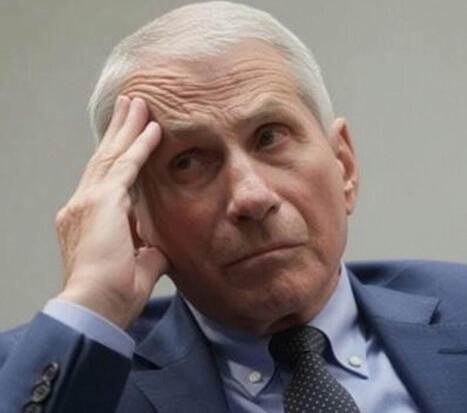
#new Anthony Fauci's pardon covered everything since 2014 because that was the year that Fauci started funding bat coron*v*rus research at the Wuhan Institute of Virology, according to Senator Rand Paul.
#DC
“Interestingly, the pardon starts in 2014. That’s when the funding of the lab in Wuhan started”
The Kentucky Republican said that Fauci’s NIAID backed dangerous gain-of-function work enhanced bat coronaviruses’ ability to infect human cells.
#Kentucky
“A million Americans died, and I think they deserve to know the truth. Anthony Fauci has advocated for dangerous gain-of-function research for two decades now."
#China
"The question why is not a question that he can have liability for. He was given a pardon”
On January 19, 2025, Biden's autopen granted Fauci a full and unconditional pardon for any offenses against the United States he may have committed or taken part in from January 1, 2014, through the date of the pardon, arising from or related to:
🔷️His service as NIAID director,
🔷️White House C*ronavirus Task Force or
🔷️C*VID-19 Response Team member, or
🔷️chief medical advisor.
In 2014, NIAID under Fauci awarded EcoHealth Alliance a grant, “Understanding the Risk of Bat Coronavirus Emergence,” with a project period starting June 1, 2014.
EcoHealth provided sub-awards of over $600,000 to the Wuhan Institute of Virology for sampling, sequencing, and related work on bat coronaviruses, including experiments that produced chimeric viruses tested in humanized mice.
#ChristinaAguayoNews| 17 commentaires sur LinkedIn
|
|
Scooped by
Gilbert C FAURE
August 9, 3:36 AM
|
Scoop.it!
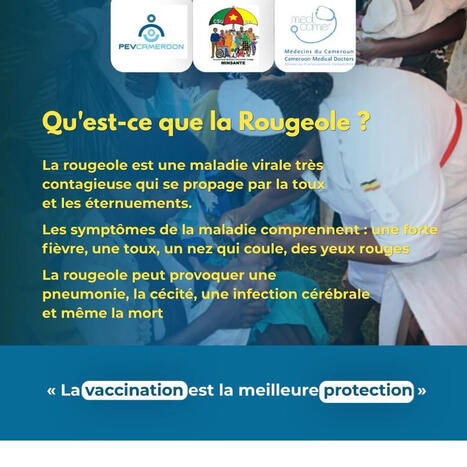
𝐖𝐡𝐚𝐭 𝐢𝐟 𝐚 𝐬𝐢𝐦𝐩𝐥𝐞 𝐜𝐨𝐮𝐠𝐡 𝐜𝐨𝐮𝐥𝐝 𝐭𝐫𝐚𝐧𝐬𝐦𝐢𝐭 𝐚 𝐬𝐞𝐫𝐢𝐨𝐮𝐬 𝐝𝐢𝐬𝐞𝐚𝐬𝐞?
Let’s talk about #measles
Measles is a highly contagious viral disease that spreads easily through coughing and sneezing.
Often seen as a 𝐜𝐡𝐢𝐥𝐝𝐡𝐨𝐨𝐝 𝐢𝐥𝐥𝐧𝐞𝐬𝐬… yet it can lead to severe complications.
Watch for:
• High fever
• Persistent cough
• Runny nose
• Red eyes
⚠️ In severe cases: pneumonia, neurological complications, blindness… or even death.
But there is a simple and effective solution: 𝐯𝐚𝐜𝐜𝐢𝐧𝐚𝐭𝐢𝐨𝐧.
👉 Even today, it remains our best protection.
➡️ ➡️A 𝐅𝐑𝐄𝐄 𝐯𝐚𝐜𝐜𝐢𝐧𝐚𝐭𝐢𝐨𝐧 campaign will be available from the 16 - 20 of 𝐒𝐞𝐩𝐭𝐞𝐦𝐛𝐞𝐫 at any district hospital
You are expected to attend.
𝑷𝒓𝒐𝒕𝒆𝒄𝒕𝒊𝒏𝒈 𝒐𝒏𝒆 𝒄𝒉𝒊𝒍𝒅 𝒎𝒆𝒂𝒏𝒔 𝒑𝒓𝒐𝒕𝒆𝒄𝒕𝒊𝒏𝒈 𝒂𝒏 𝒆𝒏𝒕𝒊𝒓𝒆 𝒄𝒐𝒎𝒎𝒖𝒏𝒊𝒕𝒚.
𝘔𝘦𝘥𝘊𝘢𝘮𝘦𝘳, 𝘞𝘦 𝘊𝘢𝘳𝘦, 𝘞𝘦 𝘚𝘩𝘢𝘳𝘦
________________________
𝐄𝐭 𝐬𝐢 𝐮𝐧𝐞 𝐬𝐢𝐦𝐩𝐥𝐞 𝐭𝐨𝐮𝐱 𝐩𝐨𝐮𝐯𝐚𝐢𝐭 𝐭𝐫𝐚𝐧𝐬𝐦𝐞𝐭𝐭𝐫𝐞 𝐮𝐧𝐞 𝐦𝐚𝐥𝐚𝐝𝐢𝐞 𝐠𝐫𝐚𝐯𝐞 ?
Parlons de la #rougeole
La rougeole est une maladie virale extrêmement contagieuse, qui se propage rapidement par la toux et les éternuements.
Souvent perçue comme une 𝐦𝐚𝐥𝐚𝐝𝐢𝐞 𝐝𝐞 𝐥’𝐞𝐧𝐟𝐚𝐧𝐜𝐞 … elle peut pourtant entraîner des complications sévères.
À surveiller :
• Forte fièvre
• Toux persistante
• Écoulement nasal
• Yeux rouges
⚠️ Dans les cas graves : pneumonie, atteintes neurologiques, cécité… voire décès.
Mais il existe une solution simple et efficace : la 𝐯𝐚𝐜𝐜𝐢𝐧𝐚𝐭𝐢𝐨𝐧
Aujourd’hui encore, elle reste notre meilleure protection.
➡️ ➡️ Une campagne de 𝐯𝐚𝐜𝐜𝐢𝐧𝐚𝐭𝐢𝐨𝐧 𝐆𝐑𝐀𝐓𝐔𝐈𝐓𝐄 se déroulera du 16 𝐚𝐮 20 𝐬𝐞𝐩𝐭𝐞𝐦𝐛𝐫𝐞 à n’importe quel hôpital de District
Vous y serez attendus
𝑷𝒓𝒐𝒕é𝒈𝒆𝒓 𝒖𝒏 𝒆𝒏𝒇𝒂𝒏𝒕, 𝒄’𝒆𝒔𝒕 𝒑𝒓𝒐𝒕é𝒈𝒆𝒓 𝒕𝒐𝒖𝒕𝒆 𝒖𝒏𝒆 𝒄𝒐𝒎𝒎𝒖𝒏𝒂𝒖𝒕é
𝘔𝘦𝘥𝘊𝘢𝘮𝘦𝘳, 𝘞𝘦 𝘊𝘢𝘳𝘦, 𝘞𝘦 𝘚𝘩𝘢𝘳𝘦
#VaccinationSavesLives #Rubella #HPVVaccine #PreventCancer #CommunityHealth #PublicHealth #ChildHealth #MDdigicreaRR26 #MédecinsduCameroun #PEVCameroon #MINSANTE





