Parents aren’t looking for a single authoritative voice anymore.
They’re looking for someone they trust to help them navigate the chaos.
That shift changes everything about how we communicate, how we show up, and what it means to be a credible voice in public health and medicine right now.
The era of top-down health messaging is over. What replaces it matters enormously for patients, communities, and the future of public health.
Notre proposition « Désinformation Vaccinale: Curation, Observatoire, Littératies » a été retenue pour le séminaire annuel de l’Académie des Controverses et de la Communication Sensible, intitulé « La désinformation : nouvelles formes, nouveaux défis », qui s'est tenu à Paris le mardi 26 novembre 2024.
Voir ci-après posts du 27 novembre, avec lien vers la présentation sur Slideshare.
Présentation le 20 mars 2025 à InfoxsurSeine deux jours pour décrypter la désinformation et échanger autour des solutions. Quels outils concrets face aux manipulations de l’information et à l’essor de l’IA générative ?
Avez vous acheté le numéro Juillet/septembre 2025 de la RECHERCHE sur LE FAUX?
des sujets à approfondir
- Vaccins et argent Making money with vaccines, against vaccines
le sujet le plus chaud, de 3,36 euros par mois à 300 millions de dollars?
- Publications vraies et fausses particulièrement difficile
- Obligations, exemptions, incitations, peut-être plus simple?
The topic addresses Fake news as a global problem, extracting material focusing on vaccinations, vaccination hesitancy and anti-vax attitudes. The subject is evolving constantly with health consequences all over the world.
This topic became a research action project at CREM (Centre de Recherche sur les médiations)
Ir covers not only Fake News still thriving on the internet,
but also efforts of many (supranational bodies, scientific societies, researchers...) to improve health literacies of laypeople, and medical students on this sensitive topic...
Fake News related to Covid and Vaccinations slightly decreased compared to other topics such as ukrainian war, gaza war, and politics in USA even sports related informations... but the involvement of politicians in the topic very much increased !
Unfortunately, as Jonathan Swift so eloquently said: Reasoning will never make a man correct an ill opinion, which by reasoning he never acquired.
“The greatest enemy of knowledge is not ignorance; it is the illusion of knowledge.” — Daniel J. Boorstin
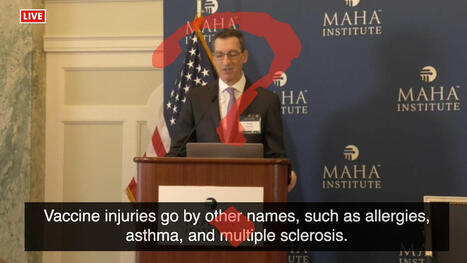
Can you guess why the MAHA Institute thinks that there such an “epidemic of vaccine injuries” that they needed to hold a round table event to discuss the problem?
The Evidence Collective or TEC (a network of multidisciplinary scientists and clinicians who are also science communicators) has started a Substack!
We have three main goals: 1) increase the speed of reliable health information. 2) improve the coordination of health communicators 3) break echo chambers by partnering with odd bedfellows
One way we do this is through TEC briefs. These briefs translate complex public health developments into clear, practical insights that are ready before you need them. We want to help you get what you need to communicate rapidly and accurately.
We’ve already released 15 briefs since our inception last year but needed a better way to distribute and organize our work.
Paid subscribers to our Substack will get early access to briefs and the funding will go directly toward making the work we do more sustainable. Free subscribers will get the briefs the day before the event.
Today we early-released our Prebunk brief for the upcoming ACIP meeting next week. We hope you join us!
In the first cut, the top overall performer was AMBOSS LiSA 1.0, a retrieval-augmented AI system built on a medical knowledge base. It score was 62.3%, meaning the AI models recommendations matched the physician-labeled correct actions 62.3% of the time.
This score appears low. This is because there were many action-level decisions per case, including safety traps and penalties for harmful recommendations. This made it intentionally challenging even for strong AI models.
AMBOSS LiSA 1.0 was followed closely by Google’s Gemini 2.5 Pro (59.9%), Glass Health 4.0 (59.0%), OpenAI’s GPT-5 (58.3%) and Anthropic’s Claude Sonnet 4.5 (58.2%). At the bottom of the rankings sat several smaller "mini" model variants—GPT-4o mini, o1 mini, o3 mini and o4 mini—all scoring in the 42–49% range.
Importantly, the top five to six models were statistically similar, meaning the differences between numbers one and five are unlikely to be practically meaningful.
The researchers also evaluated models several other dimensions. This included safety (avoiding harmful recommendations), completeness (recommending all the critical actions a patient needs) and restraint (not recommending things that are unnecessary or equivocal).
These dimensions varied considerably across models and in interesting ways. For example, Google’s Gemini 2.5 Pro led on safety. LiSA 1.0 achieved the highest completeness—meaning it was best at catching everything a patient needed. By contrast, OpenAI’s o3 mini scored highest on restraint but also had the lowest completeness. Ostensibly, it was so cautious about making recommendations, it frequently missed critical interventions.
Parents aren’t looking for a single authoritative voice anymore.
They’re looking for someone they trust to help them navigate the chaos.
That shift changes everything about how we communicate, how we show up, and what it means to be a credible voice in public health and medicine right now.
The era of top-down health messaging is over. What replaces it matters enormously for patients, communities, and the future of public health.
Katelyn Jetelina's YLE newsletter is always great. But I found this particular passage incredibly smart and convincing. Written with David Higgins, MD, MPH.
"Don’t lead with science and data. When people feel like their values are being challenged, facts alone rarely change minds. Start with shared values, then let the evidence support the conversation."
"Begin with common ground. Most parents, regardless of their politics, want their kids to be safe at school and for school to run normally. Saying “I just want to make sure schools aren’t shut down for weeks because of a preventable outbreak” is something almost everyone can agree with. Start there."
Because there ABSOLUTELY is common ground, even if too many seem to avoid it, for fear they are conceding. The public's health is more important than ego or political positioning.
This week Mindy, Shahida, and Andy are processing a lot — the Iran war, Pete Hegseth's Christian Zionist crusade, the measles outbreak, and what it means to live in a country where leaders don't care if you live or die. Shahida opens up about finding grounding in Ramadan while feeling completely untethered by the state of the world. We talk about why people believe in supplements over science, why the anti-vax movement found an opening, and why loving your neighbor means more than thoughts and prayers. Raw, real, and zero filter.
The Truth About Vaccines in Sudan: Numbers Speak Louder Than Doubt 🇸🇩💉 1/ Beyond personal opinions, medical matters are decided by clinical data. In response to concerns raised by Dr. Tarek Kigab about vaccine safety, here are the facts from Sudan’s Expanded Program on Immunization and field reality. 👇 2/ Polio 🛡️ In 2020, Sudan faced a polio outbreak. Thanks to vaccinating 8 million children, Sudan declared the outbreak over in less than two years. Without the vaccine, thousands of children would today suffer permanent disabilities. Numbers don’t lie. 3/ Measles & COVID-19 📉 Measles: Vaccination reduced child mortality in Sudan by 90%. COVID-19: Statistics from Jabra Hospital and Civil Isolation Centers show 95% of deaths occurred in unvaccinated individuals. The vaccine was the difference between life and death. 4/ Are vaccines safe? 🔍 Science relies on “risk analysis”: Vaccine allergy: 1 in a million. Risk of disease (e.g., tuberculosis or diphtheria): up to 15% chance of death or permanent disability. Vaccines are safe under the strict oversight of Sudan’s National Medicines and Poisons Board. 5/ The myth of vaccines “staying forever” in the body 🧬 Scientifically: Vaccine components break down and leave the body within a few days. What remains is only “immune memory”—your white blood cells ready to fight the disease in the future. 6/ Why vaccines are essential in Sudan ⚠️ We live in a region of epidemic vulnerability. Doubt undermines “herd immunity” and puts children and the elderly at risk. Controlling meningitis in Sudanese states has been possible only through annual vaccination campaigns. 7/ About the cholera vaccine specifically 💧 Provides up to 85% protection. In Sudan, not a single death has been reported from the cholera vaccine despite millions of doses. Economically: Every $1 spent on vaccines saves $10 in treatment costs. 8/ Final word… Medicine is evidence-based. Generations vaccinated in Sudan are healthier and less prone to disabilities. Doubting vaccines without data during health crises can have catastrophic consequences for vulnerable populations. Public Health Specialist: Mohamed Babiker
"Vaccines are the tugboats of preventive health." - William Foege, an American epidemiologist and public health leader best known for devising the “ring vaccination” strategy that enabled the global eradication of smallpox
Japan officially eliminated measles a decade ago, but recent data shows how fragile that achievement can be. The early months of 2026 have already seen a sharp increase in cases compared with last year, with many being linked to international travel and small gaps in vaccination coverage. As global mobility rebounds and misinformation spreads online, even countries with robust healthcare systems are finding that infectious diseases can resurface more quickly than anticipated. Explore the reasons behind the rise in measles cases in Japan, the overlooked "vaccination gap generation," and the implications of this situation for the risks of globalized public health.
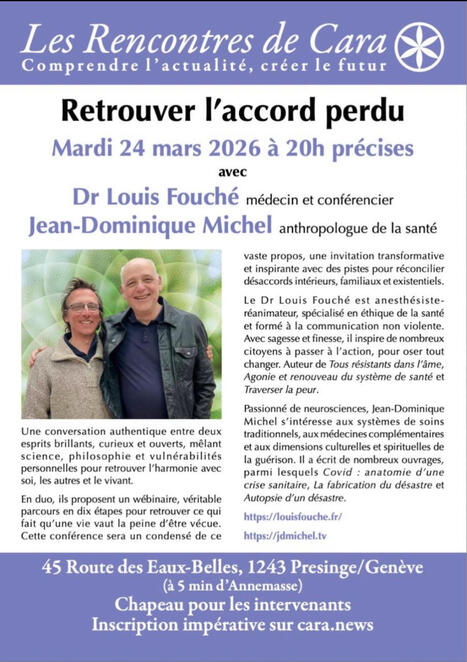
⚠️ Alerte conférence à Genève : Louis Fouché et Jean-Dominique Michel
Le Dr Louis Fouché, anesthésiste-réanimateur devenu conférencier, connu pour diffuser des informations contestées sur la santé et la pandémie, interviendra à Genève le 24 mars 2026 aux Rencontres de Cara, en duo avec Jean-Dominique Michel, anthropologue de la santé.
Pour rappel, plusieurs prises de position de Louis Fouché ont été largement critiquées par la communauté scientifique, et ses interventions sur le Covid et la vaccination ont été considérées comme diffusant de la désinformation médicale.
Le programme annonce : science, philosophie et « pistes pour réconcilier désaccords intérieurs ». Derrière ce discours séduisant, il est important de vérifier les sources et de rester critique face à ce type de communication.
Measles patients in Utah are developing severe complications, health officials say, including potentially life-threatening anemia and liver inflammation.
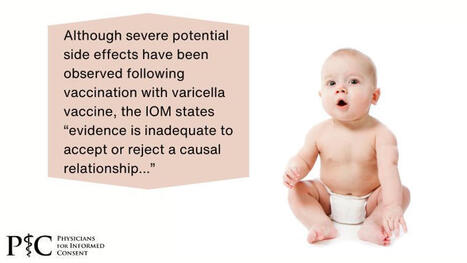
FYI - Although severe potential side effects including neurological disorders, autoimmune disorders, and stroke have been observed following vaccination with #varicella vaccine, the IOM states that “evidence is inadequate to accept or reject a causal relationship…”
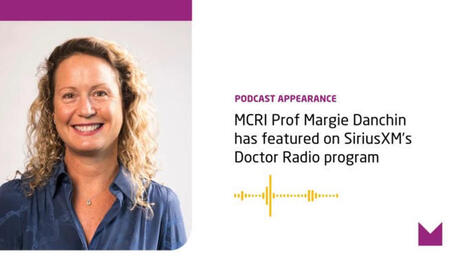
"[It] centres on respect, empathy and really understanding that the person in front of you is coming from a place of wanting to protect their child."
Murdoch Children's Research Institute (MCRI) Professor Prof Margie Danchin featured on SiriusXM's Doctor Radio program to discuss the complex reasons behind vaccine hesitancy and ways health professionals could rebuild trust with families.
Rates of childhood vaccination are waning in Australia and outbreaks of infectious illnesses like measles are increasing globally.
Professor Danchin provided techniques that could build ongoing rapport and address vaccine misinformation directly with parents and carers.
Nous sommes nombreux à dénoncer depuis des années, les effets délétères des pratiques non conventionnelles. Le problème n'est pas leur toxicité intrinsèque mais leur capacité à perturber l'observance des traitements voire à les retarder. Ces approches alternatives et complémentaires sont fondées sur la pensée magique, les fadaises de charlatans et les arguments d'autorité de quelques universitaires déviants. Elles altèrent le discernement des patients. Elles favorisent les mauvaises décisions thérapeutiques. Et ainsi augmentent le risque de mortalité. A écouter attentivement, ce décryptage simple et précis d'une publication qui vient de paraître dans le JAMA sur ce sujet. Même en complément de la médecine conventionnelle, ces pratiques sont nuisibles. 👇
📺 Replay disponible : comment ça marche, les vaccins ?
Vous avez manqué notre troisième live Twitch grand public ? Bonne nouvelle : le replay est désormais en ligne !
La section Jeunes a eu le plaisir d’accueillir Nathalie Davoust-Nataf, professeure en immunologie à l’École normale supérieure de Lyon, pour décrypter le fonctionnement des vaccins.
➡️ Comment les vaccins ont-ils été découverts ? ➡️ Quels types de vaccins existent aujourd’hui ? ➡️ Comment entraînent-ils notre système immunitaire à se défendre ?
📰 À la une du Médiscope ce mois-ci "Combattre la désinformation en santé : les recommandations de Dominique Costagliola" 💡
👉 À l’occasion de la remise au gouvernement du rapport "Information en santé : bilan des forces et des faiblesses, recommandations pour une stratégie nationale d’information et de lutte contre la désinformation en santé", co-écrit avec Hervé Maisonneuve et Mathieu Molimard et présenté au Ministre de la Santé le 12 janvier 2026, Dominique Costagliola nous a accordé un entretien éclairant sur les enjeux actuels de l’infodémie.
Dans une période où les fausses informations médicales circulent massivement, ce dialogue met en lumière les constats, les défis et les pistes d’action proposés par les auteurs pour renforcer la fiabilité de l’information, restaurer la confiance du public et structurer une réponse coordonnée impliquant éducation, institutions, médias et acteurs scientifiques.
“Gold-standard science” – popular words of recent. Some suggest that only randomized-controlled trials (RCT) qualify as such, but relying only on RCT data would be like a mechanic only using the diagnostic codes to fix your car. Both disregard other information that can inform the answers being sought. In the case of the car, it would disregard what the owner reported about the problem, past experience of the mechanic, and any visual information in the car itself. In the case of science, it would disregard all other types of studies.
In “Proof: The Art and Science of Certainty,” Adam Kucharski discusses the importance of “triangulation of approaches” in science. By evaluating the outcomes of different approaches to answering a scientific question, we can leverage the strengths and overcome the biases inherent to each approach.
Later this month, the ACIP is scheduled to meet. On the meeting notice, one of the topics is “ACIP recommendation methodology.” While we don’t know what methodological changes will be discussed, it will be important for the committee to share how the revised approach will improve on the historical approach.
Before the committee was dismissed in June 2025, ACIP relied on the Evidence-to-Recommendations (EtR) framework, which included GRADE Analyses. Together these approaches ensured that not only were decisions based on comprehensive information garnered from a variety of approaches, but also that the information was assessed for its level of certainty in a formal nod to the fact that not all information is equal.
In short, EtR ensured: 1. A well-defined policy question, meaning one that identified the population, intervention, comparator, and outcome (PICO method) 2. Evaluation of the potential benefits and harms of the intervention 3. Consideration of the values and preferences of the target population 4. Consideration of stakeholder acceptability of the intervention 5. Assessment of the necessary resources to implement 6. Attention to the equitable nature of the intervention 7. Evaluation of the feasibility to implement 8. Assessment of whether enough information is available to consider the policy 9. Judgement of how these factors together land on a scale of positive-to-negative consequences of the intervention
The GRADE Analysis informed the certainty of evidence used to evaluate the above factors, taking into account: - Study designs - Inconsistencies across studies evaluating the same question - Indirectness, meaning how transferable or translatable the identified studies were to the question at hand - Imprecision related to statistical outcomes - Dissemination biases of identified studies - Outcomes that strengthened the evidence, such as large effect sizes, dose-response gradients, and opposite residual confounding, such as a study population with more severe disease showing improved outcomes compared with improved outcomes measured in a study population with various levels of disease
Countering harmful health information in the media, online and on social media is a major challenge.
I recently read a preprint of a recent UK study, led by austen el-osta, of 1,414 adults (using quota sampling), in which 81.8% of respondents reported encountering false of misleading pharmaceutical or health information content in the previous 6 months. (It's at https://researchsquare.com]
So I'm delighted to see the launch of a new network from London School of Hygiene and Tropical Medicine, U. of London.
The Health Information Integrity Network is open to academic experts, communications professionals, and policy leads working at relevant organisations such as universities, charities, funders, NGOs, the NHS, government, as well as healthcare and technology firms.
As well as responding to misinformation attacks, the network will also focus on curating and creating trustworthy high-quality health information for the public that answers common questions and concerns.
@Geoff CILIP, the library and information association Louis Coiffait-Gunn Ruth Carlyle Louise Goswami Media and Information Literacy Alliance (MILA) Julian McDougall Dr. Elinor Carmi Stéphane Goldstein Jane Secker Tina D Purnat Caroline De Brún
Was great having the Vaccines, Amen conversation with Joe Rogan so millions can decide for themselves: are vaccines treated as merely products or items to be worshiped? On my Substack: https://lnkd.in/dXQdv6Sq | 20 comments on LinkedIn
To get content containing either thought or leadership enter:
To get content containing both thought and leadership enter:
To get content containing the expression thought leadership enter:
You can enter several keywords and you can refine them whenever you want. Our suggestion engine uses more signals but entering a few keywords here will rapidly give you great content to curate.


 Your new post is loading...