 Your new post is loading...

|
Scooped by
Gust MEES
September 30, 2019 11:39 AM
|
Sicherheitsforscher haben einen nicht patchbaren Fehler im iOS-Boot-ROM entdeckt. Dieser trägt den Namen checkm8 und ermöglicht es, den Boot-Prozess der Geräte zu umgehen und Inhalte auszulesen. Dafür erforderlich ist allerdings ein physischer Zugriff.
Schwerwiegender Fehler in Apples iOS: Sicherheitsforscher haben mit checkm8 eine Schwachstelle im Boot-ROM von iPhones und iPads entdeckt. Laut den Experten von Malwarebytes lässt sich der Fehler nicht vollständig beheben.
Bestätigt wurde dies auch von dem Twitter-Nutzer und iOS-Forscher @axi0mX. Er schreibt, dass es sich bei checkm8 um einen "permanenten, nicht patchbaren Boot-ROM-Exploit" handelt, von dem alle Geräte vom iPhones 4S, bis hin zum iPhone X betroffen sind. Sicher sein sollen nur Geräte mit Chips ab A12 oder neuer. Learn more / En savoir plus / Mehr erfahren: https://www.scoop.it/t/apple-mac-ios4-ipad-iphone-and-in-security
|
|
Scooped by
Gust MEES
September 5, 2019 7:55 PM
|
Bisher galt Apples mobiles Betriebssystem als sicher. Das hat sich offenbar geändert. Hacker hätten die iOS-Sicherheit zerstört, klagt ein Exploit-Händler. Android-Exploits sind jetzt teurer.
Die massive Sicherheitslücke in Apples iOS, die über zwei Jahre hinweg Hacker-Angriffe in großem Ausmaß ermöglicht haben soll, dürfte ein weiterer Sargnagel für die These von der Sicherheit des mobilen Betriebssystems gewesen sein. Nur wenige Tage nach Bekanntwerden der wohl von China ausgegangenen iPhone-Spionage hat Zerodium, ein Händler von Exploits, seine Preise angepasst. Derzeit würden ausnutzbare Lücken für iOS den Markt geradezu fluten. Learn more / En savoir plus / Mehr erfahren: https://www.scoop.it/t/apple-mac-ios4-ipad-iphone-and-in-security https://www.scoop.it/t/apple-mac-ios4-ipad-iphone-and-in-security/?tag=ZERODIUM
|
|
Scooped by
Gust MEES
September 5, 2019 5:39 AM
|
If you're an iPhone user, Apple has let you down. Massively.
The discovery last week that malicious websites have been able to hack iPhones indiscriminately and with apparent ease for years came as a bit of a shock. The idea that a product that Apple itself bills as being "designed from the ground up" to protect your information could have its security measures ripped to shreds by simply visiting a website, and that this happened for almost three years makes a mockery of Apple's claims of being able to protect users and their data.
A bigger embarrassment is that this attack on iPhone users was uncovered not by Apple, but by its archrival in the smartphone space, Google.
The scale of this exploit should also shock users. By simply visiting a website, the hackers could use exploits to deliver payloads that could "steal private data like iMessages, photos and GPS location in real-time" without the user having to install anything or be duped to run some app.
The hackers also had access to user's keychain, which contains passwords, and the databases of various end-to-end encrypted messaging apps, such as Telegram and WhatsApp. Learn more / En savoir plus / Mehr erfahren: https://www.scoop.it/topic/apple-mac-ios4-ipad-iphone-and-in-security https://googleprojectzero.blogspot.com/2019/08/a-very-deep-dive-into-ios-exploit.html
|
|
Scooped by
Gust MEES
August 30, 2019 11:57 AM
|
Hacker sollen Zugriff auf Aufenthaltsort, Fotos und Nachrichten von iPhones bekommen haben. Die Attacke scheint aber nur gezielt eingesetzt worden zu sein.
Aus dem iPhone von Apple konnte bis Anfang Februar alle möglichen privaten Daten wie Fotos oder der Aufenthaltsort abgegriffen werden. Die Schwachstellen, die das möglich machten, wurden von Google-Experten entdeckt und von Apple nach einem Hinweis per Software-Update geschlossen. Google veröffentlichte nun Details zu entsprechenden Hacker-Angriffen, die mindestens zwei Jahre andauerten. Dabei wurde bisher nicht bekannt, wie viele Nutzer betroffen waren und wer hinter der Attacke stand.
Die von Google entdeckten Angriffe seien mindestens zwei Jahre lang auf iPhone-Nutzer in „bestimmten Communities“ ausgerichtet gewesen, hieß es in einem Blogeintrag der Forscher am Donnerstag ohne nähere Angaben dazu. Um ein iPhone mit der Schadsoftware zu infizieren, reichte es demnach aus, den Nutzer auf eine präparierte Website zu locken. Die Experten von Googles „Project Zero“ machten mehrere solche Webseiten aus, die „tausende Besucher“ pro Woche hatten. Mit dieser Beschreibung könnte es sich um eine gezielte Ausspäh-Aktion handeln, die zum Beispiel auf Dissidenten oder einzelne Bevölkerungsgruppen zielte. Learn more / En savoir plus / Mehr erfahren: https://www.scoop.it/topic/apple-mac-ios4-ipad-iphone-and-in-security https://googleprojectzero.blogspot.com/2019/08/a-very-deep-dive-into-ios-exploit.html
|
|
Scooped by
Gust MEES
August 30, 2019 7:02 AM
|
Researchers at Google's cybersecurity division Project Zero discovered a handful of websites that were being used to hack iPhones.
Once visited, the websites would plant a "monitoring implant" on the device, which could then steal messages, photos, and real-time GPS location data.
The hacks spanned iOS 10 through 12, which Project Zero said indicates they took place over the course of two years.
Visit Business Insider's homepage for more stories.
Google researchers found a handful of hacked websites that were being quietly used to infiltrate iPhones for at least the last two years.
Analysts at Google's cybersecurity division Project Zero published a deep-dive technical blog Thursday night detailing their findings. Learn more / En savoir plus / Mehr erfahren: https://www.scoop.it/topic/apple-mac-ios4-ipad-iphone-and-in-security https://googleprojectzero.blogspot.com/2019/08/a-very-deep-dive-into-ios-exploit.html
|
|
Scooped by
Gust MEES
August 30, 2019 6:33 AM
|
Les experts en sécurité de Google ont découvert qu'une opération de piratage avait ciblé les iPhones pendant au moins deux ans. Elle implantait via des sites internet, des logiciels malveillants pour accéder aux photos, à la géolocalisation et à d'autres données.
(AFP) – Dans un article publié jeudi sur le blog du Projet Zero de Google, les experts estiment que les sites web qui ont été piratés pour héberger ces attaques reçoivent plusieurs milliers de visiteurs par semaine. Ils n'ont toutefois pas précisé quels sites ont été touchés. «Une simple visite sur l'un des sites piratés suffisait au serveur d'exploitation pour attaquer votre appareil, et, en cas de succès, installer un programme de surveillance», a indiqué Ian Beer, du Projet Zero.
Une fois installé, le logiciel malveillant «va en premier lieu voler les fichiers et télécharger les données de géolocalisation», a-t-il ajouté, précisant qu'il a également pu accéder à des messages cryptés partagés via des applications comme Telegram, WhatsApp et iMessage. La messagerie instantanée de Google, Google hangouts, ainsi que Gmail ont également été affectés, a souligné Ian Beer dans cette publication, qui fournit des détails sur la manière dont le logiciel malveillant a ciblé et exploité les vulnérabilités de l'iPhone. Learn more / En savoir plus / Mehr erfahren: https://www.scoop.it/topic/apple-mac-ios4-ipad-iphone-and-in-security
|
|
Scooped by
Gust MEES
August 13, 2019 6:55 AM
|
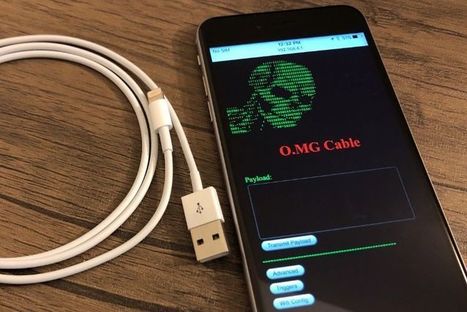
Quoi de plus banal et innocent qu'un câble Lightning ? Regardez-le ce petit câble, on lui donnerait le bon dieu sans confession. Mais gare ! Derrière cet air angélique se cache peut-être un démon capable de hacker votre Mac ! Le chercheur en sécurité et bidouilleur de génie MG a mis au point un implant qui, au terme d'une petite opération chirurgicale, s'intègre dans des câbles Apple légitimes.
Une fois le bricolage terminé, ils deviennent des O.MG Cable, sans toutefois se démarquer dans leur design. Lorsque la victime le branche à son Mac, il fonctionne comme un câble Lightning tout ce qu'il y a de plus standard : on peut y recharger un iPhone, transférer des données avec iTunes, etc.
Mais en douce, l'implant créé un réseau Wi-Fi auquel le malandrin peut se connecter : après avoir entré une adresse IP, le navigateur du vaurien peut lancer à distance des commandes dans le Terminal du Mac… et faire à peu près n'importe quoi. Il y a même un « kill switch » permettant de désactiver l'implant une fois le forfait accompli. Learn more / En savoir plus / Mehr erfahren: https://www.scoop.it/topic/apple-mac-ios4-ipad-iphone-and-in-security https://www.scoop.it/topic/apple-mac-ios4-ipad-iphone-and-in-security/?&tag=O.MG
|
|
Scooped by
Gust MEES
August 12, 2019 10:27 AM
|
|
|
Scooped by
Gust MEES
August 9, 2019 6:40 AM
|
À la faveur de sa conférence sur la sécurité tenue durant le Black Hat de Las Vegas, Apple a annoncé l'extension de son programme de chasse aux bugs (« bug bounty ») à macOS, watchOS, tvOS et iCloud, comme la rumeur l'avait prédit il y a quelques jours.
Durant la conférence Apple. Images : @Jesse D'Aguanno.
Ce programme était attendu de longue date, en fait depuis sa mise en place qui remonte à l'été 2016… mais qui ne concernait qu'iOS jusqu'à présent. Et uniquement pour une poignée de spécialistes en sécurité triés sur le volet…
Le nouveau programme sera ouvert d'ici la fin de l'année à tous les chercheurs, ce qui limitera certainement la communication de vulnérabilités « zero day » sur macOS (les détails sur ces failles sont dévoilées sans que le constructeur ait été au préalable mis au courant). Actuellement, les chercheurs ne sont guère motivés pour prévenir Apple d'une découverte en l'absence d'un bug bounty pour la plateforme. Cela devrait changer avec ce nouveau programme, ce dont on ne peut que se féliciter. Learn more / En savoir plus / Mehr erfahren: https://www.scoop.it/topic/apple-mac-ios4-ipad-iphone-and-in-security
|
|
Scooped by
Gust MEES
August 8, 2019 11:02 AM
|
Researchers were able to bypass Apple’s FaceID using a pair of glasses with tape on the lenses.
LAS VEGAS – Vulnerabilities have been uncovered in the authentication process of biometrics technology that could allow bad actors to bypass various facial recognition applications – including Apple’s FaceID. But there is a catch. Doing so requires the victim to be out cold.
Researchers on Wednesday during Black Hat USA 2019 demonstrated an attack that allowed them to bypass a victim’s FaceID and log into their phone simply by putting a pair of modified glasses on their face. By merely placing tape carefully over the lenses of a pair glasses and placing them on the victim’s face the researchers demonstrated how they could bypass Apple’s FaceID in a specific scenario. The attack itself is difficult, given the bad actor would need to figure out how to put the glasses on an unconscious victim without waking them up.
To launch the attack, researchers with Tencent tapped into a feature behind biometrics called “liveness” detection, which is part of the biometric authentication process that sifts through “real” versus “fake” features on people. It works by detecting background noise, response distortion or focus blur. One such biometrics tool that utilizes liveness detection is FaceID, which is designed and utilized by Apple for the iPhone and iPad Pro. Learn more / En savoir plus / Mehr erfahren: https://www.scoop.it/t/apple-mac-ios4-ipad-iphone-and-in-security/?&tag=Face-ID
|
|
Scooped by
Gust MEES
August 3, 2019 3:54 PM
|
We knew that other companies were recording interactions with their smart devices, and using some of those recordings to check for quality by having real people listen to those interactions. But, until now, we thought Apple was different.
On Friday Apple confirmed, to the Guardian, a whistleblowers account that the company has similar practices to Google and Amazon, but never disclosed that fact in its privacy policy.
Apple samples a small number of recordings of interactions with its voice assistant Siri, which is used by millions of Americans on their iPhones, Apple Watch, and other iOS and Mac devices. According to the whistleblower, that includes "countless instances of recordings featuring private discussions between doctors and patients, business deals, seemingly criminal dealings, sexual encounters and so on."
I accidentally wake up Siri all the time on my watch or phone when I have no intention of interacting with her, and I've never given any thought to the fact that she's listening to whatever goes on in the background. In fact, we have a daughter whose name apparently sounds close enough to "hey Siri," that I'm frequently reminded by my iPhone that "you need to clean up your room," and "come set the table," are not commands yet supported by voice assistants (though that would be awesome). Learn more / En savoir plus / Mehr erfahren: https://www.scoop.it/t/apple-mac-ios4-ipad-iphone-and-in-security http://www.scoop.it/t/apple-mac-ios4-ipad-iphone-and-in-security/?&tag=Privacy http://www.scoop.it/t/apple-mac-ios4-ipad-iphone-and-in-security/?tag=SIRI
|
|
Scooped by
Gust MEES
July 26, 2019 6:57 PM
|
Voice assistants are growing in popularity, but the technology has been experiencing a parallel rise in concerns about privacy and accuracy. Apple’s Siri is the latest to enter this gray space of tech. This week, The Guardian reported that contractors who review Siri recordings for accuracy and to help make improvements may be hearing personal conversations.
One of the contract workers told The Guardian that Siri did sometimes record audio after mistaken activations. The wake word is the phrase “hey Siri,” but the anonymous source said that it could be activated by similar-sounding words or with the noise of a zipper. They also said that when an Apple Watch is raised and speech is detected, Siri will automatically activate.
“There have been countless instances of recordings featuring private discussions between doctors and patients, business deals, seemingly criminal dealings, sexual encounters and so on,” the source said. “These recordings are accompanied by user data showing location, contact details, and app data.”
Apple has said that it takes steps to protect users from being connected with the recordings sent to contractors. The audio is not linked to an Apple ID and less than 1% of daily Siri activations are reviewed. It also sets confidentiality requirements for those contract workers. We reached out to Apple for further comment and will update the story if we receive it.
Apple, along with Google and Amazon, all have similar policies for the contract workers it hires to review those audio snippets. But all three voice AI makers have also been the subject of similar privacy breaches, either by whistleblowers going to the press or through errors that give users access to incorrect audio files. Learn more / En savoir plus / Mehr erfahren: https://www.scoop.it/t/apple-mac-ios4-ipad-iphone-and-in-security http://www.scoop.it/t/apple-mac-ios4-ipad-iphone-and-in-security/?&tag=Privacy
|
|
Scooped by
Gust MEES
July 24, 2019 6:51 AM
|
Longtemps épargné par les virus et autres malwares MacOS suscite de plus en plus l'intérêt des cybercriminels et l'écosystème d'Apple est de plus en plus ciblé.
Apple fait l'objet de plus en plus d'attaques sur son écosystème et ces derniers mois, la découverte de menaces et failles vont bon train.
Une des plus importantes failles de ces derniers mois a été mise en avant par le chercheur en sécurité Filippo Cavallarin et concerne le contournement de GateKeeper. Cette faille permet à des attaquants d'exécuter du code à distance sur MacOS sans autorisation préalable de l'utilisateur. Learn more / En savoir plus / Mehr erfahren: https://www.scoop.it/t/apple-mac-ios4-ipad-iphone-and-in-security
|
|
|
Scooped by
Gust MEES
September 16, 2019 8:04 AM
|
Mr. Lockscreen Bypass has done it again.
Spanish security sleuth José Rodríguez on Friday posted a YouTube video of his most recent iOS lock-screen bypass: one that allows an iPhone to be tricked into showing its address book without the need to unlock the screen.
The researcher told The Register that he found this bypass in July, in what was then the beta of iOS 13.
As the video shows, the bypass involves receiving a call and opting to respond with a text message, and then changing the “to” field of the message, which you can do via voice-over. The “to” field pulls up the phone’s contacts list, thus enabling randoms to paw through your contact list without needing to first unlock your phone. Learn more / En savoir plus / Mehr erfahren: https://www.scoop.it/t/apple-mac-ios4-ipad-iphone-and-in-security
|
|
Scooped by
Gust MEES
September 5, 2019 6:58 PM
|
The iPhone may be more vulnerable than we thought. A company that buys hacking tools is claiming the market is now "flooded" with exploits that can crack iOS security protections.
Cyber arms dealer Zerodium is known for purchasing attacks on unpatched vulnerabilities in iOS and Android, and then selling access to them to government clients. The company currently offers up to $2 million for exploits that can hack an iPhone without any interaction from the user.
However, the supply for iOS exploits has been getting crowded. "The last few months, we have observed an increase in the number of iOS exploits, mostly Safari and iMessage chains, being developed and sold by researchers from all around the world," Zerodium CEO Chaouki Bekrar told BleepingComputer.
"The zero-day market is so flooded by iOS exploits that we've recently started refusing some [of] them," he added. Learn more / En savoir plus / Mehr erfahren: https://www.scoop.it/t/apple-mac-ios4-ipad-iphone-and-in-security https://www.scoop.it/t/apple-mac-ios4-ipad-iphone-and-in-security/?tag=ZERODIUM
|
|
Scooped by
Gust MEES
August 30, 2019 2:08 PM
|
Eine Gruppe von Cyberkriminellen hat über manipulierte Webseiten jahrelang iOS-Geräte mit Schadsoftware infiziert. Dadurch erhielten die Angreifer Zugriff auf installierte Apps, Daten und Nachrichten.
Googles Sicherheitsteam Project Zero ist auf eine äußerst kritische Lücke in Apples iOS-System gestoßen, die über Jahre hinweg aktiv von Cyberkriminellen ausgenutzt wurde. Bereits der Besuch einer manipulierten Webseite reichte aus, um den Angreifern weitreichende Systemzugriffe zu ermöglichen. Apple hat den Fehler mit dem Update auf iOS 12.1.4 behoben. Wer das aktuelle Betriebssystem auf iPhone und iPad nutzt, ist demnach sicher.
Selbst verschlüsselte Nachrichten konnten mit der Schadsoftware ausgelesen werden.
(Quelle: Google Project Zero )Wie der Sicherheitsforscher Ian Beer in einem ausführlichen Blogpost erläutert, waren von der Sicherheitslücke die iOS-Version 10 - 12 betroffen. Demnach waren die Apple-Geräte bereits seit September 2016 angreifbar.
Der Fehler wurde von einer bislang nicht bekannten Hacker-Gruppe ausgenutzt, die über manipulierte Webseiten ihre Attacken starteten.
Bereits der Besuch dieser Webseiten genügte, um die iOS-Geräte mit Schadsoftware (sogenannten Implants) zu verseuchen. Durch den Angriff konnten sich die Hacker weitreichenden Systemzugriff sichern und somit etwa verschlüsselte Nachrichten aus iMessage, WhatsApp oder Telegram auslesen oder E-Mails, Fotos und GPS-Informationen erbeuten und an einen entfernten Server senden - alles in Echtzeit.
Die Schadsoftware blieb so lange im Betriebssystem verankert, bis das Mobilgerät neu gestartet wurde. Für einen erneuten Zugriff musste dann wieder eine der manipulierten Webseiten angesurft werden.
Learn more / En savoir plus / Mehr erfahren: https://www.scoop.it/topic/apple-mac-ios4-ipad-iphone-and-in-security https://googleprojectzero.blogspot.com/2019/08/a-very-deep-dive-into-ios-exploit.html
|
|
Scooped by
Gust MEES
August 30, 2019 11:08 AM
|
Security researchers at Google said they found malicious websites that served iPhone exploits for almost three years.
"There was no target discrimination; simply visiting the hacked site was enough for the exploit server to attack your device, and if it was successful, install a monitoring implant," said Ian Beer, a member of Google Project Zero, Google's elite security team.
The exploits also didn't require any user interaction to trigger. Google said the first website to host any of the exploits went live on September 13, 2016. The websites appeared to have been hacked, and the exploits planted by a third-party, rather than the site owner.
"We estimate that these sites receive thousands of visitors per week," Beer said. Learn more / En savoir plus / Mehr erfahren: https://www.scoop.it/topic/apple-mac-ios4-ipad-iphone-and-in-security https://googleprojectzero.blogspot.com/2019/08/a-very-deep-dive-into-ios-exploit.html
|
|
Scooped by
Gust MEES
August 30, 2019 6:57 AM
|
Security researchers at Google have found evidence of a “sustained effort” to hack iPhones over a period of at least two years.
The attack was said to be carried out using websites which would discreetly implant malicious software to gather contacts, images and other data.
Google’s analysis suggested the booby-trapped websites were said to have been visited thousands of times per week.
Apple told the BBC it did not wish to comment.
The attack was shared in great detail in a series of technical posts written by British cybersecurity expert Ian Beer, a member of Project Zero, Google’s taskforce for finding new security vulnerabilities, known as zero days.
"There was no target discrimination,” Mr Beer wrote.
“Simply visiting the hacked site was enough for the exploit server to attack your device, and if it was successful, install a monitoring implant."
Mr Beer and his team said they discovered attackers were using 12 separate security flaws in order to compromise devices. Most were bugs within Safari, the default web browser on Apple products. Learn more / En savoir plus / Mehr erfahren: https://www.scoop.it/topic/apple-mac-ios4-ipad-iphone-and-in-security https://googleprojectzero.blogspot.com/2019/08/a-very-deep-dive-into-ios-exploit.html
|
|
Scooped by
Gust MEES
August 27, 2019 6:52 AM
|
Apple patcht WatchOS und iOS
Nutzer von Apples mobilen Betriebssystemen haben gegebenenfalls eine Update-Benachrichtigung auf ihren Geräten. Apple hat sowohl für die Apple Watch als auch für iPhone, iPod Touch und iPad ein neues Betriebssystem freigegeben. Unter iOS wird dabei auch eine Sicherheitslücke geschlossen. Learn more / En savoir plus / Mehr erfahren: https://www.scoop.it/topic/apple-mac-ios4-ipad-iphone-and-in-security
|
|
Scooped by
Gust MEES
August 12, 2019 11:42 AM
|
For the majority of users, the security offered by iOS and macOS is more than enough, and they can go about their day-to-day business secure in the knowledge that their data is safe.
But determined criminals can find a way around these safeguards, and while these two hacks are impractical for widespread use, they go to show just how creative ne'er-do-wells can be when it comes to cracking security measures.
Must read: The 2019 iPhone 11 will be annoying, boring, and expensive
First, let's look at how a cable can be used to hack a Mac. Enter the O.MG Cable. This is an Apple Lightning charging cable with a twist. That twist is that it has been custom-modified with electronics that allow it to be used to access any Mac it has been connected to over a Wi-Fi network. Learn more / En savoir plus / Mehr erfahren: https://www.scoop.it/topic/apple-mac-ios4-ipad-iphone-and-in-security
|
|
Scooped by
Gust MEES
August 12, 2019 9:44 AM
|
"Ich wollte zeigen, dass es nicht allzu schwierig ist", sagt Wardle später im Gespräch mit dem SPIEGEL, "was bedeutet, dass es wahrscheinlich häufiger passiert, als wir denken."
Schon immer störte sich Wardle an "dieser Mentalität, dass Macs sicher sind, geradezu unhackbar". Apple selbst habe das so dargestellt, und weil es lange Zeit nur wenig Mac-spezifische Malware gab, hätten es die Nutzer geglaubt. Manche tun es seiner Ansicht nach bis heute. Er will mit diesem Mythos aufräumen, denn die Zeiten haben sich geändert.
"Traditionell war Windows leichter zu hacken", sagt er. "Aber heute ist Windows viel sicherer als macOS - auch wenn sich das Sicherheitsniveau in den vergangenen Jahren insgesamt deutlich erhöht hat. Ein Windows-10-Gerät mit Defender ist eine wirklich harte Nuss für Hacker. Im Vergleich dazu ist macOS ein ziemlich leichtes Ziel." Learn more / En savoir plus / Mehr erfahren: https://www.scoop.it/topic/apple-mac-ios4-ipad-iphone-and-in-security
|
|
Scooped by
Gust MEES
August 9, 2019 6:34 AM
|
Forscher haben zwei verschiedene Wege entwickelt, um die von Sensoren für Stimme, Fingerabdruck oder Gesicht verwendete Lebenderkennung des iPhone aushebeln. Eine der Methoden ist technisch aufwändig – die andere erschreckend simpel und für jedermann machbar.
HC Ma von Tencent Security demonstrierte während der Black Hat 2019 die Forschungsergebnisse seiner Kollegen, die mangels Visum nicht selbst vortragen konnten. Die Hacker nahmen sich die Verfahren vor, mit denen Sensoren zur Erkennung von Gesicht, Stimme, Fingerabdruck, Iris oder Handballen feststellen, ob ein lebender Mensch mit ihnen interagiert – oder nur ein Foto beziehungsweise eine Stimmaufzeichnung. Damit setzen sie sich von den Forschern ab, die sich ausschließlich aufs Austricksen der Sensoren an sich konzentrierten, dabei aber Funktionen wie Apples „Aufmerksamkeitsprüfung für Face ID“ außen vor ließen. Learn more / En savoir plus / Mehr erfahren: https://www.scoop.it/t/apple-mac-ios4-ipad-iphone-and-in-security/?&tag=Face-ID
|
|
Scooped by
Gust MEES
August 7, 2019 5:49 PM
|
WHEN YOU THINK about how hackers could break into your smartphone, you probably start with clicking a malicious link in a text, downloading a fraudulent app, or some other way you accidentally let them in. It turns out that's not necessarily so—not even on the iPhone, where simply receiving an iMessage could be enough to get yourself hacked.
At the Black Hat security conference in Las Vegas on Wednesday, Google Project Zero researcher Natalie Silvanovich is presenting multiple so-called “interaction-less” bugs in Apple’s iOS iMessage client that could be exploited to gain control of a user’s device. And while Apple has already patched five of them, a few have yet to be patched.
“These can be turned into the sort of bugs that will execute code and be able to eventually be used for weaponized things like accessing your data,” Silvanovich says. “So the worst-case scenario is that these bugs are used to harm users.” Learn more / En savoir plus / Mehr erfahren: https://www.scoop.it/topic/apple-mac-ios4-ipad-iphone-and-in-security/?&tag=iPhone https://www.scoop.it/topic/apple-mac-ios4-ipad-iphone-and-in-security
|
|
Scooped by
Gust MEES
July 31, 2019 5:48 AM
|
Google-Forscher sind auf diverse Sicherheitslücken in Apples Betriebssystem iOS gestoßen. Die Experten fanden sechs Bugs, die vollkommen ohne User-Interaktion Schaden auf deren Geräten anrichten können. Apple hat die Fehler im Rahmen eines aktuellen Updates ausgebessert, Nutzer sollten umgehend ihre Betriebssysteme aktualisieren.
"Project Zero" - so heißt ein von Google zusammengestelltes Team aus Sicherheitsanalysten, das generelle Schwachstellen in Betriebssystemen, Bugs, die von Kriminellen ausgenutzt werden sowie vom Staat beauftragte Hacker ermitteln soll. Forscher dieser Gruppe sind nun auf diverse, mit iMessage verknüpfte Sicherheitslücken bei Apples Betriebssystem iOS, das bei iPhones und iPads zum Einsatz kommt, gestoßen. Learn more / En savoir plus / Mehr erfahren: https://www.scoop.it/t/apple-mac-ios4-ipad-iphone-and-in-security
|
|
Scooped by
Gust MEES
July 25, 2019 7:08 AM
|
En même temps que la version finale de macOS 10.14.6, Apple a livré cette semaine des mises à jour de sécurité pour ses systèmes plus anciens : une pour macOS Sierra, une autre pour macOS High Sierra, toutes deux numérotées 2019-004. Celles-ci semblent receler un très sérieux bug.
Plusieurs utilisateurs ayant appliqué ces mises à jour se sont retrouvés avec des Mac en kernel panic dès qu'ils basculent ou qu'ils sortent de veille. C'est surtout le cas visiblement sur des MacBook Pro. On retrouve un certain nombre de témoignages sur ce fil de discussion des forums d'assistance d'Apple.
Les pages de ces mises à jour ne sont d'ailleurs plus disponibles, du moins sur la version US du site du constructeur (pour Sierra, pour High Sierra). En revanche, ces pages sont toujours en ligne dans d'autres pays (ici et là pour la France).
Mettre à jour son Mac sous macOS Mojave semble résoudre le problème, mais ce n'est pas forcément une solution idéale pour tous les utilisateurs. En attendant d'en savoir plus, mieux vaut donc s'abstenir d'installer ces mises à jour. Learn more / En savoir plus / Mehr erfahren: https://www.scoop.it/t/apple-mac-ios4-ipad-iphone-and-in-security
|


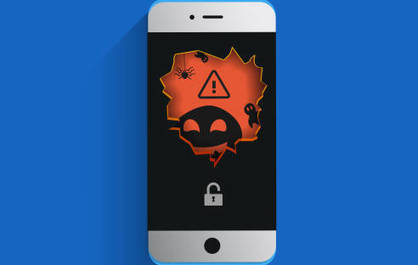

















Sicherheitsforscher haben einen nicht patchbaren Fehler im iOS-Boot-ROM entdeckt. Dieser trägt den Namen checkm8 und ermöglicht es, den Boot-Prozess der Geräte zu umgehen und Inhalte auszulesen. Dafür erforderlich ist allerdings ein physischer Zugriff.
Schwerwiegender Fehler in Apples iOS: Sicherheitsforscher haben mit checkm8 eine Schwachstelle im Boot-ROM von iPhones und iPads entdeckt. Laut den Experten von Malwarebytes lässt sich der Fehler nicht vollständig beheben.
Bestätigt wurde dies auch von dem Twitter-Nutzer und iOS-Forscher @axi0mX. Er schreibt, dass es sich bei checkm8 um einen "permanenten, nicht patchbaren Boot-ROM-Exploit" handelt, von dem alle Geräte vom iPhones 4S, bis hin zum iPhone X betroffen sind. Sicher sein sollen nur Geräte mit Chips ab A12 oder neuer.
Learn more / En savoir plus / Mehr erfahren:
https://www.scoop.it/t/apple-mac-ios4-ipad-iphone-and-in-security