 Your new post is loading...

|
Scooped by
Gust MEES
July 24, 2016 6:24 AM
|
Nouvelle vulnérabilité affectant MacOS et iOS, à partir d'une simple image
Sécurité : Dans un nouveau patch publié par Apple, la société corrige une faille permettant à un attaquant d’exécuter du code potentiellement malveillant sur la machine ciblée. Pour cela, celui si peut se contenter d’exploiter une faille dans la façon dont les terminaux Apple traitent les images au format .tiff. Learn more / En savoir plus / Mehr erfahren: http://www.scoop.it/t/apple-mac-ios4-ipad-iphone-and-in-security
|
|
Scooped by
Gust MEES
July 22, 2016 12:44 PM
|
|
|
Scooped by
Gust MEES
July 12, 2016 5:58 AM
|
Viren, Trojaner und andere Schadsoftware galten lange als Windows-Problem. Apples Mac-Rechner schienen dagegen immun gegen Malware-Attacken zu sein. Diese Zeiten sind längst vorbei. Auch Macbook Pro und Co. befinden sich längst im Fokus der Hacker. Nun ist ein neuer Trojaner aufgetaucht, der die betroffenen Nutzer zuhause ausspionieren will.
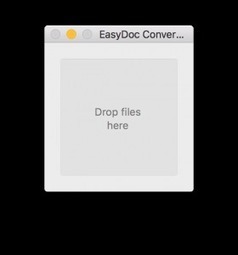
Die Entdecker vom Antiviren-Hersteller "Bitdefender" beschreiben den Trojaner mit dem Namen "Backdoor.MAC.Eleanor" in einem Blog-Eintrag. Weil Hacker auf dem Mac immer noch Schwierigkeiten haben, Schadsoftware ohne Mitwirken des Nutzers einzuschmuggeln, tarnt sich die Malware als vermeintlich harmloses Programm. Bekannt ist die Tarnung als "EasyDoc Converter", ob auch andere Programme als Deckmantel herhalten müssen, ist noch unklar. Learn more / En savoir plus / Mehr erfahren: http://www.scoop.it/t/apple-mac-ios4-ipad-iphone-and-in-security
|
|
Scooped by
Gust MEES
July 9, 2016 11:59 AM
|
Steve Ragan of CSO Online:
"On July 1, Alanna Coca noticed her iPad had started beeping. When she opened the cover, the lock screen had a message displaying a phrase in Russian – "Dlya polucheniya parolya, napshite na email" – followed by a Gmail address."
"Roughly translated, the phrase was telling her that in order to receive a password, she'll need to email the address displayed."
Such attacks aren't unusual (you may remember a message from Russian hacker Oleg Pliss popping up on some users' iMacs, iPhones and iPads back in 2014), and are perpetrated by a hacker putting a victim's device into lost mode after breaking into their Apple ID account.
A message sent by the hacker to the locked device asks for the victim to get in touch to arrange the ransom payment, and may even make a veiled threat that the device's data will be erased if cash is not transferred promptly.
What spices things up a little more this time is that Ragan reports rumours of a massive data breach at Apple potentially impacting 40 million iCloud accounts.
That may be nonsense, of course - it's possible that accounts have fallen under the control of hackers because of less sensational reasons - such as poor password choices, phishing or reusing the same password on multiple sites.
What is clear is that some Apple users are having their devices hijacked by extortionists. So make sure that you have a unique, hard-to-crack, hard-to-guess password protecting your Apple ID account.
And, if you haven't already done so, I strongly recommend enabling two-step verification on your Apple ID account to make it harder for hackers to break in.
Read more on CSO Online. Learn more / En savoir plus / Mehr erfahren: http://www.scoop.it/t/apple-mac-ios4-ipad-iphone-and-in-security
|
|
Scooped by
Gust MEES
July 9, 2016 8:24 AM
|
|
|
Scooped by
Gust MEES
July 8, 2016 8:30 AM
|
After yesterday security researchers from Bitdefender discovered the Eleanor trojan targeting Macs and opening a backdoor using Tor, today it's ESET's turn to reveal the existence of a similar backdoor trojan that also uses a Tor2Web service to steal Keychain passwords.
Named Keydnap and detected as OSX/Keydnap, this trojan is a new arrival on the Mac malware scene, first seen this past May (internal version 1.3.1), and later in June (version 1.3.5).
The malware's mode of operation is very simple, even if the infection chain is drawn out in several steps.
Keydnap dropper disguised as image or text files
Everything starts when users receive an email that contains an archive. Unzipping this file drops at first glance either an image or a text file. In reality, there's a space after the file's extension, meaning the file will run in the Mac terminal. This file is a Mach-O executable that uses a fake icon.
When executed, this file runs its malicious behavior and then shows an image if it's trying to pose as a picture, or a text pad, if it's trying to pose as a text file. Learn more / En savoir plus / Mehr erfahren: http://www.scoop.it/t/apple-mac-ios4-ipad-iphone-and-in-security
|
|
Scooped by
Gust MEES
June 22, 2016 6:28 AM
|
Addressing a vulnerability that could have potentially resulted in remote code execution, Apple yesterday announced a firmware update for several of its AirPort Wi-Fi products.
According to an Apple mailing list notification, firmware updates 7.6.7 and 7.7.7 have been applied to AirPort Express, AirPort Extreme and AirPort Time Capsule base stations using the 802.11n Wi-Fi standard, as well as AirPort Extreme and AirPort Time Capsule base stations with the 802.11ac standard and using AirPort Utility for Mac or iOS. Learn more / En savoir plus / Mehr erfahren: http://www.scoop.it/t/apple-mac-ios4-ipad-iphone-and-in-security
|
|
Scooped by
Gust MEES
June 9, 2016 6:53 PM
|
Phishing-Warnung für Apple-Nutzer: Daten zu iCloud, Apple-ID und Schlüsselbund sind für Cyber-Ganoven ein gefundenes Fressen. Aktuell warnen die Sicherheitsforscher von Fireeye vor einer neuen Angriffswelle, deren Vorgehensweisen sich von früheren Phishing-Kampagnen unterscheidet.
Die Betrüger schrecken mittlerweile nicht einmal davor zurück, gleich mehrere Seiten mit demselben gefährlichen Inhalt aufzubauen. So haben die Sicherheitsforscher beispielsweise unzählige Webseiten entdeckt, die mit demselben Phishing-Kit erstellt wurden.
Doch der Aufwand lohnt, denn wer Passwörter und zusätzliche Informationen wie Sperrcode und Geburtstag kennt, der erlangt die volle Kontrolle über ein Apple-Gerät. Das kann bis zur Ausspähung der Keychain führen, worin Anwender ihre Kreditkartendaten hinterlegt haben. Learn more / En savoir plus / Mehr erfahren: http://www.scoop.it/t/apple-mac-ios4-ipad-iphone-and-in-security
|
|
Scooped by
Gust MEES
May 17, 2016 9:15 AM
|
Seit Apple am Pfingstmontag damit begonnen hat, die neue mobile Version seines Betriebssystems iOS 9.3.2 für iPhones und iPads auszuliefern, berichten zahlreiche Besitzer eines iPad Pro mit 9,7-Zoll-Bildschirm von einem folgenschweren Problem: In Nutzerforen wie etwa bei Macrumors berichten sie, dass ihr Apple-Tablet mit der aktuellen Version des Betriebssystems nicht mehr hochfährt und somit unbrauchbar ist.
Statt des gewohnten Home-Screens sehen die Nutzer nach Update und Neustart nur noch einen "Error 56" auf dem Bildschirm und werden aufgefordert, ihr Tablet an den PC oder Mac anzuschließen und dort über den Apple-Store iTunes zurückzusetzen. "Sollte ein Kunde Probleme haben, soll er sich wie beschrieben an den Support wenden", heißt es bei Apple dazu schlicht. Laut der Apple-Supportdatenbank handelt es sich beim "Error 56" aber eigentlich um einen Hardwaredefekt.
Besitzer des kleinen iPad Pros sollten mit Update warten
Auch wenn das Problem nicht bei allen iPad Pros im kleineren 9,7-Zoll-Format auftritt – Besitzern dieser Tablets kann derzeit vom Update auf die neue iOS-Version nur so lange abgeraten werden, bis Apple eine Version veröffentlicht, die das Problem behebt. Learn more / En savoir plus / Mehr erfahren: http://www.scoop.it/t/apple-mac-ios4-ipad-iphone-and-in-security
|
|
Scooped by
Gust MEES
April 8, 2016 7:40 AM
|
|
|
Scooped by
Gust MEES
March 31, 2016 11:05 AM
|
Apple made iOS 9.3 available last week, fixing a number of serious security holes.
But it hasn’t been plain sailing for everyone, with hundreds of Apple users complaining in the Apple Support Communities and on Twitter that links in Safari, Mail, Messages and other apps sometimes cause their iDevices to crash, freeze or hang. Learn more / En savoir plus / Mehr erfahren: http://www.scoop.it/t/apple-mac-ios4-ipad-iphone-and-in-security
|
|
Scooped by
Gust MEES
March 22, 2016 12:14 AM
|
For some time, Apple has forcefully pushed a message to consumers that it takes privacy seriously.
Here, for instance, is what Apple’s website says about its approach to privacy when it comes to iMessages:
Your iMessages and FaceTime calls are your business, not ours. Your communications are protected by end-to-end encryption across all your devices when you use iMessage and FaceTime... Learn more / En savoir plus / Mehr erfahren: http://www.scoop.it/t/apple-mac-ios4-ipad-iphone-and-in-security
|
|
Scooped by
Gust MEES
March 21, 2016 1:43 PM
|
Well known American cryptographer Matthew Green has just announced a zero-day flaw in Apple’s iMessage, and perhaps in other online Apple services.
Green and a team of students from Johns Hopkins University in Baltimore, Maryland, figured out a cryptographic flaw in the way iPhones interact with Apple’s servers.
(To give them their due, the students are named by The Register as: Ian Miers, Christina Garman, Gabriel Kaptchuk, and Michael Rushanan.)
The hole apparently allows a determined attacker to shake loose photos and videos sent via Apple’s iMessage service by figuring out the needed cryptographic secrets bit-by-bit, photo-by-photo.
In other words, this is not a trivial attack; it doesn’t break open any of your Apple accounts to give open access to crooks; and it doesn’t let an attacker download all your digital treasures in one go.
As far as we can see, you get one photo or video each time you mount the attack, about which the abovementioned Ian Miers has tweeted “you have 14 hours to guess what the attack is.”
That tweet was 8 hours ago [as at 2016-03-21T12:30Z], so perhaps he means that Apple’s fix is coming out in six hours’ time, because the team’s paper will intentionally only be published after Apple ships its patch.
Miers also tweeted that “[t]he attack is more interesting than just attachments and affected more than just iMessage. Apple had to fix other apps, but won’t say what.”
Ah, the mystery! Learn more / En savoir plus / Mehr erfahren: http://www.scoop.it/t/apple-mac-ios4-ipad-iphone-and-in-security
|
|
|
Scooped by
Gust MEES
July 24, 2016 6:08 AM
|
La faille, qui touche aussi bien les iPhones que les iPad et les Mac, menace notamment la confidentialité de vos codes et mots de passe. Le fiasco pourrait être de même ampleur que pour Stagefright, la faille critique qui avait fait trembler les utilisateurs d'Android. Dans un post de blog, Tyler Bohan, un chercheur en sécurité informatique de l'entreprise Cisco Talos, il existerait actuellement une faille de sécurité importante dans iOS et Mac OS X, qui permettrait notamment à un pirate de récupérer un mot de passe d'iPhone simplement à partir de l'envoi d'un iMessage ou d'un MMS.
Comment cette faille fonctionne-t-elle ? Selon le chercheur, il suffit qu'un individu mal intentionnéenvoie sur votre appareil, par message multimédia, un petit programme qu'il aura intégré dans une image de format TIFF.
Une fois le message reçu sur votre appareil, le programme en question s'exécute alors tout seul, même si vous n'ouvrez pas le message en question. Il exploite alors une faille dans l'interface de programmation applicative (API) qui gère les données image (imageIO) qui lui permet d'accéder à des données auxquelles un programme de ce type n'est pas censé accéder, telles que vos mots de passe de réseau wi-fi ou de messagerie. Learn more / En savoir plus / Mehr erfahren: http://www.scoop.it/t/apple-mac-ios4-ipad-iphone-and-in-security
|
|
Scooped by
Gust MEES
July 21, 2016 8:57 AM
|
In short, a malicious hacker could email a malformed TIFF to you, or direct you to a webpage where one is embedded, or simply send it directly to your phone via MMS if they knew your number. Whatever route they took, if an attacker managed to trick your computer into rendering the malformed image, your Mac computer or smartphone would be in danger.
The exploitable flaws were discovered by researchers at Cisco’s Talos team, who noted that boobytrapped image files “are an excellent vector for attacks since they can be easily distributed over web or email traffic without raising the suspicion of the recipient.”
The good news is that Apple issued fixes for the problem earlier this week. If you have already updated your systems to iOS 9.3.3, tvOS 9.2.2, watchOS 2.2.2, and El Capitan v10.11.6 then you have done the right thing. Learn more / En savoir plus / Mehr erfahren: http://www.scoop.it/t/apple-mac-ios4-ipad-iphone-and-in-security
|
|
Scooped by
Gust MEES
July 11, 2016 2:28 PM
|
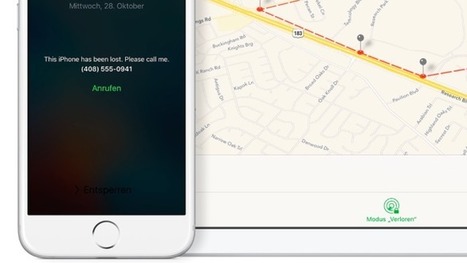
Angreifer setzen offenbar erneut auf "Mein iPhone suchen", um das Gerät aus der Ferne zu sperren. Die Freigabe des iPhones erfolge nur nach Zahlung einer Lösegeldsumme, so die Drohung.
Apples iCloud-Fernortungsfunktion kommt erneut für Erpressungsversuche zum Einsatz, wie die Sicherheitsseite CSO berichtet. Russischsprachige Angreifer sperren dabei das iPhone oder iPad des Opfers aus der Ferne und schicken eine Benachrichtigung, die die Zahlung von Lösegeld erfordert. Derzeit sind angeblich besonders Nutzer in Europa und den USA betroffen.
Die Angreifer hoffen offenbar, dass das Opfer schon bezahlt hat, bevor es bemerkt, dass es tatsächlich weiter auf das eigene Gerät zugreifen kann. Das Fern-Setzen einer neuen PIN ist nämlich nur für Macs, nicht aber bei iOS-Geräten möglich – zumindest wenn dort die Code-Sperre eingerichtet wurde.
"Mein iPhone suchen" als Angriffsvektor
Für die Angriffe kommt den Berichten zufolge Apples Sicherheitsfunktion "Mein iPhone suchen" zum Einsatz: Sie ermöglicht, das Gerät aus der Ferne in den Verloren-Modus zu versetzen und dem Nutzer eine Nachricht zu übermitteln. Dies ist eigentlich dafür gedacht, um eine Kontaktmöglichkeit für den ehrlichen Finder zu hinterlegen. Learn more / En savoir plus / Mehr erfahren: http://www.scoop.it/t/apple-mac-ios4-ipad-iphone-and-in-security http://www.scoop.it/t/apple-mac-ios4-ipad-iphone-and-in-security/?tag=iCloud
|
|
Scooped by
Gust MEES
July 9, 2016 8:38 AM
|
Des logiciels malveillants spécialement pensés pour infecter les ordinateurs d'Apple se multiplient. Piqûre de rappel : les Mac ne sont pas infaillibles. Deux logiciels malveillants, autrement appelés «malwares», destinés au système d’exploitation Apple OS X, ont été repérés cette semaine. La réputation de la marque à la pomme, considérée comme étant bien plus sûre que ses concurrents, risque d’en prendre un coup. Le logiciel malveillant OSX/Keydnap a été découvert le 6 juillet par ESET, une société spécialisée dans la sécurité des systèmes informatiques. Il serait présent en pièce jointe dans certains mails indésirables ou téléchargé par mégarde à partir de sites non sécurisés. Une fois installé sur l’ordinateur, il se présente sous la forme d’un fichier ZIP. Il demande le mot de passe de la session active et le tour est joué. Le pirate aux manettes peut récupérer les identifiants et mots de passe des logiciels installés sur l’ordinateur et peut aussi accéder à ceux des services en ligne des internautes. Cependant, les appareils équipés de la protection Gatekeeper seraient en mesure de bloquer l’attaque. Learn more / En savoir plus / Mehr erfahren: http://www.scoop.it/t/apple-mac-ios4-ipad-iphone-and-in-security/?tag=Keydnap+Malware+Steals+Keychain+Passwords
|
|
Scooped by
Gust MEES
July 8, 2016 6:57 PM
|
More proof-of-concept malware than serious threat, "OSX/Eleanor-A" nevertheless tells an intriguing tale. Mac malware is sufficiently rare, at least compared to Windows and Android, that new OS X malware strains often get a lot of attention. That’s both good and bad. It’s good, because it reminds us all that Macs aren’t magically immune to cybercriminality, and that basing your digital lifestyle on that assumption would be a risky strategy. And it’s bad, because it tends to bring out extreme views, with one side saying that the fuss about Mac malware is no better than unwarranted exaggeration, and the other side accusing Mac users of being credulous fanboys (and gurlz). Nevertheless, Mac malware is often technically interesting, and offers an intriguing insight into online cybercriminality. So, we thought you’d enjoy an article about the recently-discovered OSX/Eleanor-A malware. This malware shows how crooks who don’t know a lot about programming can nevertheless easily and cheaply construct devious attack tools from everyday components. Learn more / En savoir plus / Mehr erfahren: http://www.scoop.it/t/apple-mac-ios4-ipad-iphone-and-in-security
|
|
Scooped by
Gust MEES
July 7, 2016 11:32 AM
|
|
|
Scooped by
Gust MEES
June 14, 2016 7:07 PM
|
|
|
Scooped by
Gust MEES
June 1, 2016 9:40 AM
|
Kieran Claessens (19 ans) a découvert une faille dans iCloud d'Apple. Il en a abusé pour atteindre facilement les comptes d'autres utilisateurs. Apple a reconnu la brèche et l'a entre-temps colmatée. Grâce à sa trouvaille, le jeune Belge figure à présent dans le 'Hall of Fame' de l'entreprise. Learn more / En savoir plus / Mehr erfahren: http://www.scoop.it/t/apple-mac-ios4-ipad-iphone-and-in-security
|
|
Scooped by
Gust MEES
May 16, 2016 7:11 PM
|
Apple has banned a top-selling iOS app that raised the alarm if it determined your iPhone or iPad had been jailbroken without your knowledge.
The app, "System and Security Info," was only released a week ago and made its way rapidly to the top of the paid-for app charts, outselling the likes of Minecraft and Grand Theft Auto.
I don't think anyone really expected System and Security Info to maintain a lead over such popular, heavyweight video games for long, but I certainly didn't anticipate Apple throwing it out of the iTunes Store quite so quickly either. Learn more / En savoir plus / Mehr erfahren: http://www.scoop.it/t/apple-mac-ios4-ipad-iphone-and-in-security
|
|
Scooped by
Gust MEES
March 31, 2016 7:53 PM
|
Earlier this week we reported a bug in iOS 9.3 that caused apps to become unresponsive after tapping on links in Safari. The bug seemed to affect any iOS device, but was most prevalent on the iPhone 6s and 6s Plus.
Today, Apple released an update to fix the problem. Learn more / En savoir plus / Mehr erfahren: http://www.scoop.it/t/apple-mac-ios4-ipad-iphone-and-in-security
|
|
Scooped by
Gust MEES
March 28, 2016 6:27 PM
|
Des chercheurs de SentinelOne ont mis au jour une importante faille de sécurité qui touche presque la totalité des versions d'iOS et de Mac OS X. Cette dernière permet de réécrire la mémoire afin de prendre le contrôle d'un Mac ou d'un appareil sous iOS et d'exécuter des commandes illicites. Là où le bât blesse, est que ce type d'attaque est difficilement décelable, il est donc possible d'être infecté sans s'en rendre compte et réagir.
Cette vulnérabilité découverte début 2015 et présentée à Apple en janvier 2016 a été corrigée sur les dernières versions d'iOS 9.3 et OS X 10.11.4, vous n'avez pas effectué ces MAJ, on ne peut donc que vous recommander de le faire. L'utilisation de cette faille est complexe et n'est pas du ressort de tout le monde, à ce jour selon les chercheurs de SentinelOne aucun virus ne semble l'exploiter. Learn more / En savoir plus / Mehr erfahren: http://www.scoop.it/t/apple-mac-ios4-ipad-iphone-and-in-security
|
|
Scooped by
Gust MEES
March 22, 2016 12:10 AM
|
|



























Learn more / En savoir plus / Mehr erfahren:
http://www.scoop.it/t/apple-mac-ios4-ipad-iphone-and-in-security