A new type of computer memory which could solve the digital technology energy crisis has been invented and patented by scientists from Lancaster University in the UK. The electronic memory device -- described in research published in Scientific Reports -- promises to transform daily life with its ultra-low energy consumption.
In the home, energy savings from efficient lighting and appliances have been completely wiped out by increased use of computers and gadgets, and by 2025 a 'tsunami of data' is expected to consume a fifth of global electricity. But this new device would immediately reduce peak power consumption in data centers by a fifth. It would also allow, for example, computers which do not need to boot up and could instantaneously and imperceptibly go into an energy-saving sleep mode -- even between key stokes.
The device is the realization of the search for a "Universal Memory" which has preoccupied scientists and engineers for decades.
Physics Professor Manus Hayne of Lancaster University said: "Universal Memory, which has robustly stored data that is easily changed, is widely considered to be unfeasible, or even impossible, but this device demonstrates its contradictory properties."
A US patent has been awarded for the electronic memory device with another patent pending, while several companies have expressed an interest or are actively involved in the research.
The inventors of the device used quantum mechanics to solve the dilemma of choosing between stable, long-term data storage and low-energy writing and erasing.
The device could replace the $100 Billion market for Dynamic Random Access Memory (DRAM), which is the 'working memory' of computers, as well as the long-term memory in flash drives. While writing data to DRAM is fast and low-energy, the data is volatile and must be continuously 'refreshed' to avoid it being lost: this is clearly inconvenient and inefficient. Flash stores data robustly, but writing and erasing is slow, energy intensive and deteriorates it, making it unsuitable for working memory.
Professor Hayne said: "The ideal is to combine the advantages of both without their drawbacks, and this is what we have demonstrated. Our device has an intrinsic data storage time that is predicted to exceed the age of the Universe, yet it can record or delete data using 100 times less energy than DRAM."
A team of researchers from Carnegie Mellon has made a breakthrough in the field of noninvasive robotic device control. Using a noninvasive brain-computer interface, they have developed the first-ever successful mind-controlled robotic arm exhibiting the ability to continuously track and follow a computer cursor.
Being able to non-invasively control robotic devices using only thoughts will have broad applications, in particular benefiting the lives of paralyzed patients and those with movement disorders.
BCIs have been shown to achieve good performance for controlling robotic devices using only the signals sensed from brain implants. When robotic devices can be controlled with high precision, they can be used to complete a variety of daily tasks.
Until now, however, BCIs successful in controlling robotic arms have used invasive brain implants. These implants require a substantial amount of medical and surgical expertise to correctly install and operate, not to mention cost and potential risks to subjects, and as such, their use has been limited to just a few clinical cases.
A grand challenge in BCI research is to develop less invasive or even totally noninvasive technology that would allow paralyzed patients to control their environment or robotic limbs using their own "thoughts." Such noninvasive BCI technology, if successful, would bring such much needed technology to numerous patients and even potentially to the general population.
However, BCIs that use noninvasive external sensing, rather than brain implants, receive "dirtier" signals, leading to current lower resolution and less precise control. Thus, when using only the brain to control a robotic arm, a noninvasive BCI doesn't stand up to using implanted devices. Despite this, BCI researchers have forged ahead, their eye on the prize of a less- or non-invasive technology that could help patients everywhere on a daily basis.
Bin He, Trustee Professor and Department Head of Biomedical Engineering at Carnegie Mellon University, is achieving that goal, one key discovery at a time.
"There have been major advances in mind controlled robotic devices using brain implants. It's excellent science," says He. "But noninvasive is the ultimate goal. Advances in neural decoding and the practical utility of noninvasive robotic arm control will have major implications on the eventual development of noninvasive neurorobotics."
Using novel sensing and machine learning techniques, He and his lab have been able to access signals deep within the brain, achieving a high resolution of control over a robotic arm. With noninvasive neuroimaging and a novel continuous pursuit paradigm, He is overcoming the noisy EEG signals leading to significantly improve EEG-based neural decoding, and facilitating real-time continuous 2D robotic device control.
Using a noninvasive BCI to control a robotic arm that's tracking a cursor on a computer screen, for the first time ever, He has shown in human subjects that a robotic arm can now follow the cursor continuously. Whereas robotic arms controlled by humans noninvasively had previously followed a moving cursor in jerky, discrete motions -- as though the robotic arm was trying to "catch up" to the brain's commands -- now, the arm follows the cursor in a smooth, continuous path.
In a paper published in Science Robotics, the team established a new framework that addresses and improves upon the "brain" and "computer" components of BCI by increasing user engagement and training, as well as spatial resolution of noninvasive neural data through EEG source imaging.
Survey of 300 stars in search of exoplanets finds that the biggest, Jupiter-size gas giants are found just about where Jupiter is in our own solar system.
As planets form in the swirling gas and dust around young stars, there seems to be a sweet spot where most of the large, Jupiter-like gas giants congregate, centered around the orbit where Jupiter sits today in our own solar system. The location of this sweet spot is between 3 and 10 times the distance Earth sits from our sun (3-10 astronomical units, or AU). Jupiter is 5.2 AU from our sun. That’s just one of the conclusions of an unprecedented analysis of 300 stars captured by the Gemini Planet Imager, or GPI, a sensitive infrared detector mounted on the 8-meter Gemini South telescope in Chile.
The GPI Exoplanet Survey, or GPIES, is one of two large projects that search for exoplanets directly, by blocking stars’ light and photographing the planets themselves, instead of looking for telltale wobbles in the star — the radial velocity method — or for planets crossing in front of the star — the transit technique. The GPI camera is sensitive to the heat given off by recently-formed planets and brown dwarfs, which are more massive than gas giant planets, but still too small to ignite fusion and become stars.
The analysis of the first 300 of more than 500 stars surveyed by GPIES, published June 12, 2019, in the The Astronomical Journal, “is a milestone,” said Eugene Chiang, a UC Berkeley professor of astronomy and member of the collaboration’s theory group. “We now have excellent statistics for how frequently planets occur, their mass distribution and how far they are from their stars. It is the most comprehensive analysis I have seen in this field.”
The study complements earlier exoplanet surveys by counting planets between 10 and 100 AU, a range in which the Kepler Space Telescope transit survey and radial velocity observations are unlikely to detect planets. It was led by Eric Nielsen, a research scientist at the Kavli Institute for Particle Astrophysics and Cosmology at Stanford University, and involved more than 100 researchers at 40 institutions worldwide, including the University of California, Berkeley.
Rather than relying on optics, the DNA microscopy system offers a chemically encoded way to map biomolecules’ relative positions.
Microscopy just got reinvented – again. Traditionally, scientists have used light, x-rays, and electrons to peer inside tissues and cells. Today, scientists can trace thread-like fibers of nerves throughout the brain and even watch living mouse embryos conjure the beating cells of a rudimentary heart. But there’s one thing these microscopes can’t see: what’s happening in cells at the genomic level.
Now, biophysicist Joshua Weinstein and colleagues have invented an unorthodox type of imaging dubbed “DNA microscopy” that can do just that. Instead of relying on light (or any kind of optics at all), the team uses DNA “bar codes” to help pinpoint molecules’ relative positions within a sample.
With DNA microscopy, scientists can build a picture of cells and simultaneously amass enormous amounts of genomic information, Weinstein says. “This gives us another layer of biology that we haven’t been able to see.”
Weinstein, Howard Hughes Medical Institute (HHMI) Investigator Aviv Regev, and molecular biologist Feng Zhang, who was selected as an HHMI investigator in 2018, report the work June 20, 2019, in the journal Cell.
“It’s an entirely new category of microscopy,” Regev says. “It’s not just a new technique, it’s a way of doing things that we haven’t ever considered doing before.”
“Life on Earth has littered the fossil record with a wealth of information that has only recently been accessible to science,” says Phil Manning, a professor at Manchester University. “A suite of new imaging techniques can now be deployed, which permit us to peer deep into the chemical history of a fossil organism and the processes that preserved its tissues. Where once we saw simply minerals, now we gently unpick the ‘biochemical ghosts’ of long extinct species.”
Researchers have for the first time detected chemical traces of red pigment in an ancient fossil – an exceptionally well-preserved mouse, not unlike today’s field mice, that roamed the fields of what is now the German village of Willershausen around 3 million years ago.
The study revealed that the extinct creature, affectionately nicknamed “mighty mouse” by the authors, was dressed in brown to reddish fur on its back and sides and had a tiny white tummy.
The results were published today in Nature Communications.
An international team of theoretical physicists has found that when gravity is combined with quantum mechanics, no global symmetries are possible.
Quantum gravity is a field of theoretical physics that seeks to describe gravity according to the principles of quantum mechanics. Image credit: Gerd Altmann. “There are four kinds of fundamental forces in Nature: electromagnetism, strong force, weak force, and gravity,” said MIT researcher Daniel Harlow and Hirosi Ooguri from Caltech and the University of Tokyo. “Of the four, the gravity is the only one still unexplainable at the quantum level.”
“We believe the holographic principle is an important hint to combine the gravity and quantum mechanics successfully.”
The holographic principle allows physicists to study gravitational systems by projecting them on a boundary that surrounds the entire Universe.
The anti-de Sitter/conformal field theory (AdS/CFT) correspondence, developed in the 1990s by the Argentine-American theoretical physicist Juan Maldacena, has been particularly useful because it gives a precise mathematical definition of the holographic principle.
In the new paper, published in the journal Physical Review Letters, Professor Ooguri and Dr. Harlow proved that no symmetry is possible in a gravitational theory if it obeys the holographic principle. “Our previous work had found a precise mathematical analogy between the holographic principle and quantum error correcting codes, which protects information in a quantum computer,” they said.
“In the new paper, we showed such quantum error correcting codes are not compatible with any symmetry, meaning that symmetry would not be possible in quantum gravity.”
NASA’s Curiosity rover has been exploring the red planet for almost seven years, spending most of its time analyzing the geology and taking selfies. However, it also has some instruments that can detect possible signs of life on Mars. The agency reports that Curiosity just detected an unusually high concentration of methane, a gas that we associate with biological processes.
Curiosity has an instrument called the Sample Analysis at Mars (SAM), a tunable laser spectrometer capable of measuring atmospheric composition. Data from last week showed a methane concentration of 21 parts per billion units by volume (ppbv). That’s more than double what NASA might expect to find on a typical Martian day.
The SAM cannot, however, tell us about the origin of that methane. On Earth, many living organisms release methane, including microbial life. That’s why the presence of methane is considered a potential indicator of life. That’s not the only way to produce methane, though. There are geological processes involving water and certain minerals that can also produce methane. Still, the detection was high enough that the Curiosity team has put other experiments on hold to gather additional data.
Cornell engineers have created a synthetic vascular system for soft robots capable of pumping an energy-dense hydraulic liquid that stores and deploys energy in an integrated design.
Untethered robots suffer from a stamina problem. A possible solution: a circulating liquid – “robot blood” – to store energy and power its applications for sophisticated, long-duration tasks.
Humans and other complex organisms manage life through integrated systems. Humans store energy in fat reserves spread across the body, and an intricate circulatory system transports oxygen and nutrients to power trillions of cells.
But crack open the hood of an untethered robot and things are much more segmented: Over here is the solid battery and over there are the motors, with cooling systems and other components scattered throughout.
Cornell researchers have recently created a synthetic vascular system capable of pumping an energy-dense hydraulic liquid that stores energy, transmits force, operates appendages and provides structure, all in an integrated design. “In nature we see how long organisms can operate while doing sophisticated tasks. Robots can’t perform similar feats for very long,” said Rob Shepherd, associate professor of mechanical and aerospace engineering. “Our bio-inspired approach can dramatically increase the system’s energy density while allowing soft robots to remain mobile for far longer.”
New research indicates Ahuna Mons, a mountain on the protoplanet Ceres, is made of mud and ice.
eres is the largest object in the asteroid belt, the band of rubble orbiting the Sun between Mars and Jupiter. At nearly 1,000 kilometers wide, it’s technically a protoplanet — something that was on its way to becoming a full-fledged planet before it ran out of material to feed on and grow. That was over 4 billion years ago, so you might expect it to be a dead, frozen world now, with nothing new happening on it geologically speaking except for possibly the odd asteroid impact or two.
But the one thing the Universe does well is pervert our expectations. When the Dawn spacecraft arrived at Ceres in 2015, it did indeed see a world scarred by impacts. But it also saw two very, very strange things. One was a series of bright reflective patches scattered across the surface, usually in craters, and easy to spot in contrast to the generally very dark gray surface. The other was Ahuna Mons.
The world's largest maker of quantum computers, Canada's D-Wave Systems Inc., recently announced the Pegasus generation of its quantum computers, featuring 2.5 times the qubits (more than 5,000) than its predecessor, as well as the elimination of a major stumbling block to commercialization by directly connecting each of those qubits to three times as many nearby qubits as its previous generation, the Chimera. Analysts are predicting that Pegasus will advance quantum applications down the technology lifetime exponential growth curve.
"D-Wave's Pegasus opens up new application horizons," said Bob Sorensen, chief analyst for quantum computing at Hyperion Research. "By adding over twice as many qubits and three times as many interconnections, the quantum annealing operations performed by Pegasus can be adapted to many other applications besides optimization; from machine learning to financial portfolio risk-assessment."
"Quantum annealing" describes the hardware architecture used by all D-Wave processors. Quantum annealing sidesteps the need for extensive error correction, a problem that plagues the gate-level implementations of Google, IBM, Microsoft, Rigetti, and Xanadu, limiting them to fewer than 70 qubits. Only Fujitsu has also adopted quantum annealing, albeit in a 1024-bit digital chip that only emulates a quantum computer.
According to Sorensen, D-Wave's Pegasus topology takes it very close to the threshold of commercial growth by virtue of its vastly improved interconnection matrix, in which each qubit is connected to 15 nearby qubits. "Pegasus bridges the gap between quantum computing and real world of applications," said Sorensen.
Collecting DNA samples for human genetic studies can be an expensive, lengthy process that has often made it difficult to include diverse populations in studies of medical and health data. University of Michigan researchers and their colleagues believe they have found a way to harness the power of social media and its ubiquitous presence to recruit a large, diverse participant pool they hope will help provide quick, reliable data for genetic studies. Their study appears in the June 13, 2019 issue of The American Journal of Human Genetics.
“The ability to study very large groups of individuals is a key challenge in human genetics, which is using very rare genetic changes—each present in very few individuals—to understand human biology and health and provide leads for design of new medicines,” said senior author Gonçalo Abecasis, a professor at U-M’s School of Public Health.
Katharine Brieger, a doctoral student in public health and first author of the report, said that for studies to be relevant to a broader population, they need to include samples of a wide range of racial, ethnic and socioeconomic backgrounds. “Historically, genetic studies were largely made up of people who lived near university medical centers, inadvertently excluding people who lived in more remote areas or who didn’t have the time and money to travel,” she said. “Allowing remote participation with Genes for Good allows many of these people to participate in research for the first time.”
Researchers invited people to participate in the Genes for Good study through Facebook starting in January 2015. Requirements included that participants live in the United States, have a Facebook account and be at least 18. Most of the recruitment was done organically, with people finding the Genes for Good application through family and friends.
As of March 2019, about 117,000 people tried the app, 80,000 people had engaged with the study, 32,000 kits had been sent and 27,000 DNA samples collected. Genotypes for the first 20,232 participants were analyzed.
Thirty-three years have passed after the melt-down of reactor No. 4 at the Chernobyl Nuclear Power Plant near Pripyat, Ukraine. It has resulted in the permanent evacuation of entire towns, killing thousands and creating a massive Exclusion Zone. The disaster is now back in the news thanks to HBO’s hit miniseries, “Chernobyl” and its accompanying podcast.
With a cumulative series viewership of 8 million and counting, the buzz has even caused controversy, spurring tourists to visit the overgrown corner of Ukraine, posing for selfies in front of the now-dormant shuttered nuclear plant, and at the ruins of Pripyat. There is debate as to whether the Exclusion Zone is becoming too commercialized.
The city of Pripyat, Ukraine, once had a population around 50,000, many of whom were employed at the Chernobyl Nuclear Power Plant. The meltdown released radiation that scorched the surrounding forests red and sent a poisonous cloud across Europe. Now, decades later, experts say it’s dissipated to the point of being safe for visitors, and the tours avoid highly contaminated areas. Some sites, like inside Reactor 4 and the basement of the Hospital 126, are still dangerous and are forbidden to visit.
Pripyat was originally founded in 1970, along with the the massive V.I. Lenin Nuclear Power Plant, as it was officially named. Housing was needed for the men and women who would operate the facility, and Pripyat was built for that purpose. The population reached 50,000 by the mid-1980s, and in better days mothers and fathers pushed baby carriages along broad boulevards where flowers bloomed, families swam at the community pool and played sports in the main gymnasium. There was even a small amusement park. The residents’ apartments were roomy and well-furnished by prevailing Soviet standards.
Now a number of big construction companies are testing technology that could save lives, and money, by predicting when accidents will happen.
Suffolk, a construction giant based in Boston, has been developing the system for more than a yearin collaboration with SmartVid, a computer vision company in the same city. Earlier this year, the company persuaded several of its competitors to join a consortium that would share data to improve the technology. Jit Kee Chin, chief data officer and an executive vice president at Suffolk, discussed the project and the collaboration at EmTech Next, a conference hosted by MIT Technology Reviewthis week.
The system makes use of a deep-learning algorithm trained on construction site images and accident records. It can then be put to work monitoring a new construction site and flagging situations that seem likely to lead to an accident, such as worker not wearing gloves or working too close to a dangerous piece of machinery.
“Safety is a huge problem for construction,” said Chin on stage at EmTech. “The standard way safety is managed today is you try to change behavior.” The project demonstrates the potential for AI-enabled computer vision to track and predict workplace activity. This is especially important for the construction industry, which also suffers from poor productivity and severe cost overruns. Indeed, the construction world has adoptedc omputer vision, machine learning, and other advanced technology relatively rapidly.
Scientists are realizing that the Moon contains clues to the ancient mysteries of the Sun, which are crucial to understanding the development of life.
When the Sun was just a baby four billion years ago, it went through violent outbursts of intense radiation, spewing scorching, high-energy clouds and particles across the solar system. These growing pains helped seed life on early Earth by igniting chemical reactions that kept Earth warm and wet. Yet, these solar tantrums also may have prevented life from emerging on other worlds by stripping them of atmospheres and zapping nourishing chemicals.
Just how destructive these primordial outbursts were to other worlds would have depended on how quickly the baby Sun rotated on its axis. The faster the Sun turned, the quicker it would have destroyed conditions for habitability.
This critical piece of the Sun's history, though, has bedeviled scientists, said Prabal Saxena, an astrophysicist at NASA's Goddard Space Flight Center in Greenbelt, Maryland. Saxena studies how space weather, the variations in solar activity and other radiation conditions in space, interacts with the surfaces of planets and moons. Now, he and other scientists are realizing that the Moon, where NASA will be sending astronauts by 2024, contains clues to the ancient mysteries of the Sun, which are crucial to understanding the development of life.
"We didn't know what the Sun looked like in its first billion years, and it's super important because it likely changed how Venus' atmosphere evolved and how quickly it lost water. It also probably changed how quickly Mars lost its atmosphere, and it changed the atmospheric chemistry of Earth," Saxena said.
The Sun-Moon Connection
Saxena stumbled into investigating the early Sun's rotation mystery while contemplating a seemingly unrelated one: Why, when the Moon and Earth are made of largely the same stuff, is there significantly less sodium and potassium in lunar regolith, or Moon soil, than in Earth soil? This question, too, revealed through analyses of Apollo-era Moon samples and lunar meteorites found on Earth, has puzzled scientists for decades -- and it has challenged the leading theory of how the Moon formed.
Our natural satellite took shape, the theory goes, when a Mars-sized object smashed into Earth about 4.5 billion years ago. The force of this crash sent materials spewing into orbit, where they coalesced into the Moon. "The Earth and Moon would have formed with similar materials, so the question is, why was the Moon depleted in these elements?" said Rosemary Killen, an planetary scientist at NASA Goddard who researches the effect of space weather on planetary atmospheres and exospheres.
The two scientists suspected that one big question informed the other -- that the history of the Sun is buried in the Moon's crust.
Killen's earlier work laid the foundation for the team's investigation. In 2012, she helped simulate the effect solar activity has on the amount of sodium and potassium that is either delivered to the Moon's surface or knocked off by a stream of charged particles from the Sun, known as the solar wind, or by powerful eruptions known as coronal mass ejections.
Saxena incorporated the mathematical relationship between a star's rotation rate and its flare activity. This insight was derived by scientists who studied the activity of thousands of stars discovered by NASA's Kepler space telescope: The faster a star spins, they found, the more violent its ejections. "As you learn about other stars and planets, especially stars like our Sun, you start to get a bigger picture of how the Sun evolved over time," Saxena said.
Using sophisticated computer models, Saxena, Killen and colleagues think they may have finally solved both mysteries. Their computer simulations, which they described on May 3 in the The Astrophysical Journal Letters, show that the early Sun rotated slower than 50% of baby stars. According to their estimates, within its first billion years, the Sun took at least 9 to 10 days to complete one rotation. They determined this by simulating the evolution of our solar system under a slow, medium, and then a fast-rotating star. And they found that just one version -- the slow-rotating star -- was able to blast the right amount of charged particles into the Moon's surface to knock enough sodium and potassium into space over time to leave the amounts we see in Moon rocks today.
Pathology typically involves cutting tissue samples by hand, placing each sample between two pieces of glass, and studying it under a microscope. While microscopes have improved with time, the method has remained largely unchanged for more than 150 years. A human can typically process about 12 sample slices per hour.
3Scan speeds this process up considerably. Its KESM tool uses an automated diamond knife to cut samples at 1,000 slices per hour while simultaneously scanning an image of each slice. Those scans are layered to create a 3D tissue model with micron-scale resolution.
3Scan’s platform has the potential to illuminate the mechanisms by which biological processes become abnormal, which could improve diagnostics, Daniel says: “There’s only so much tissue one person can see in their lifetime, and if we can build something that looks at pathology across many different demographics, across many different cases and diseases, we can get better insights.
There are also reports that show that pathologists achieve consensus on a case 80% of the time. That’s a pretty high success rate—unless it’s your diagnosis, in which case it’s very scary.” Once 3Scan’s tools do the imaging and initial analytics, the data is sent back to pathologists, who explore and translate the findings. “We like to imagine the pathologist as the conductor of an orchestra of robots that can go out there and image vast fields of biology,” Daniel, one of the inventors says. “The pathologist plays a crucial role in being the informed human perspective, differentiating what is pathologic versus normal within that biology.”
Shipworms are known for boring into wood and digesting it, but scientists found a new species with a very different diet.
Lithoredo abatanica is an organism with an unusual appetite: This creature eats stone. And when it excretes, what comes out is sand, the leftovers of a still-mysterious digestion process. The creature was unearthed from the bottom of a river in the Philippines and was introduced recently by an international group of scientists in Proceedings of the Royal Society B. It is a shipworm, a group of burrowing animals related to clams, but so different from known examples that it is both a new species and genus.
Shipworms are usually known for their habit of eating wood. It’s right there in the name: They use their shells, attached to one end of their bodies, as chewing devices to burrow into and consume ship bottoms, docks and any other submerged wood. The behavior has made them the plague of mariners past and present, and in recent times, they have even sampled the delights of at least one New York City pier.
Wood-eating shipworms fascinate scientists because they digest pulverized wood with the help of symbiotic bacteria that live in their gills. The bacteria manufacture an array of enzymes and other substances, and studying them and finding new shipworms may prove helpful in the search for new antibiotics, a subject of interest to the scientists behind the new paper.
First heat images of the rings of Uranus enable scientists to determine their temperature: a frigid -320 Fahrenheit
The rings of Uranus are invisible to all but the largest telescopes — they weren’t even discovered until 1977 — but they are surprisingly bright in new heat images of the planet taken by two large telescopes in the high deserts of Chile. The thermal glow gives astronomers another window onto the rings, which have been seen only because they reflect a little light in the visible, or optical, range and in the near-infrared. The new images taken by the Atacama Large Millimeter/submillimeter Array (ALMA) and the Very Large Telescope (VLT) allowed the team for the first time to measure the temperature of the rings: a cool 77 Kelvin, or 77 degrees above absolute zero — the boiling temperature of liquid nitrogen and equivalent to 320 degrees below zero Fahrenheit.
The observations also confirm that Uranus’s brightest and densest ring, called the epsilon ring, differs from the other known ring systems within our solar system, in particular the spectacularly beautiful rings of Saturn.
“Saturn’s mainly icy rings are broad, bright and have a range of particle sizes, from micron-sized dust in the innermost D ring, to tens of meters in size in the main rings,” said Imke de Pater, a UC Berkeley professor of astronomy. “The small end is missing in the main rings of Uranus; the brightest ring, epsilon, is composed of golf ball-sized and larger rocks.”
By comparison, Jupiter’s rings contain mostly small, micron-sized particles (a micron is a thousandth of a millimeter). Neptune’s rings are also mostly dust, and even Uranus has broad sheets of dust between its narrow main rings.
“We already know that the epsilon ring is a bit weird, because we don’t see the smaller stuff,” said graduate student Edward Molter. “Something has been sweeping the smaller stuff out, or it’s all glomming together. We just don’t know. This is a step toward understanding their composition and whether all of the rings came from the same source material, or are different for each ring.”
Rings could be former asteroids captured by the planet’s gravity, remnants of moons that crashed into one another and shattered, the remains of moons torn apart when they got too close to Uranus, or debris remaining from the time of formation 4.5 billion years ago.
An oxide-free, floating-gate memory cell invented and patented by Lancaster University researchers promises to transform daily life with its ultra-low energy consumption.
The new memory device is the realization of the search for a ‘Universal Memory’ which has preoccupied scientists and engineers for decades. “Universal Memory, which has robustly stored data that is easily changed, is widely considered to be unfeasible, or even impossible,” said Lancaster University’s Professor Manus Hayne. “But this device demonstrates its contradictory properties.”
Professor Hayne and his colleagues used quantum mechanics to solve the dilemma of choosing between stable, long-term data storage and low-energy writing and erasing. The new device would immediately reduce peak power consumption in data centers by a fifth.
It would also allow, for example, computers which do not need to boot up and could instantaneously and imperceptibly go into an energy-saving sleep mode — even between key stokes. It could replace the $100B market for Dynamic Random Access Memory (DRAM), which is the ‘working memory’ of computers, as well as the long-term memory in flash drives.
While writing data to DRAM is fast and low-energy, the data is volatile and must be continuously ‘refreshed’ to avoid it being lost: this is clearly inconvenient and inefficient. Flash stores data robustly, but writing and erasing is slow, energy intensive and deteriorates it, making it unsuitable for working memory.
“The ideal is to combine the advantages of both without their drawbacks, and this is what we have demonstrated,” Professor Hayne said.
From breast cancer to brain aneurysms, artificial intelligence continues to establish itself as a valuable diagnostic tool. Researchers at Stanford University have created predictive AI to detect the likelihood of aneurysms in brain scans with high accuracy. Although relatively rare, brain aneurysms present suddenly and have a very short timeframe for treatment before they become fatal. According to the Brain Aneurysm Foundation, about 30,000 people in the United States experience this condition per year, 15 percent die on the way to the hospital, and 40 percent of all cases result in fatality. Of the survivors, 66 percent suffer some degree of decreased neurological function. This makes an accurate and early diagnosis the most important factor in preventing brain aneurysm, but that has proven to be a very difficult task for medical professionals.
Researches at Stanford University recognized the difficulty of this problem and created a tool to help solve it. Kristen Yeom, associate professor of radiology and co-senior author of the paper, explains why AI is a vital component in the diagnostic process:
The search for an aneurysm is one of the most labor-intensive and critical tasks radiologists undertake. Given inherent challenges of complex neurovascular anatomy and potential fatal outcome of a missed aneurysm, it prompted me to apply advances in computer science and vision to neuroimaging.
Brain aneurysms present when the wall of an artery in brain balloons up, but the real problems don’t begin until these bulges begin to leak blood or burst. The larger they become, the more difficult treatment becomes if they rupture. While other diagnostic efforts seek to find signs of a disease before it can noticeably manifest, brain aneurysms have a diverse range of origins from drug abuse to cancer to various blood-related issues. The greater problem remains in detecting existing aneurysms in the first place. Before they rupture, brain aneurysms typically do not present any symptoms and removing them requires corrective surgery. This leads to a cautious and thorough diagnostic process, as clinicians do not want to order brain surgery without assurance of its necessity.
L’anévrisme cérébral est l’une des tâches les plus compliquées et prenantes pour un neuroradiologue, il consiste en la détection d’une déformation de la paroi d’une artère cérébrale, celle-ci souvent asymptomatique peut causer, en cas de rupture, de graves dommages neurologiques ou le décès. Des chercheurs de Stanford menés par Kristen Yeom ont développé un logiciel HeadXNet, basé sur l’intelligence artificielle, il indique au radiologue les régions cérébrales avec une forte probabilité d’anévrisme. Il n’influence ainsi pas de mauvais diagnostiques mais est un réel outil d’aide à la décision pour le neuroradiologue.
By stretching like a rubber band to more than 25 times its original length, a new nanogenerator has set a new stretchability record. The triboelectric nanogenerator's 2500% stretchability represents a significant increase over the previous best values of approximately 1000%. In addition, the device is the first triboelectric nanogenerator that is completely fabricated with 3D printing.
The researchers, including Kaushik Parida, Gurunathan Thangavel, and Pooi See Lee at Nanyang Technology University and the Singapore-HUJ Alliance for Research and Enterprise (SHARE), have published their results on the highly stretchable, all-3D-printed triboelectric nanogenerator in a recent issue of Nature Communications.
Triboelectric nanogenerators (TENGs) harvest energy from ambient mechanical movements, such as finger tapping, and have potential applications as wearable electronic devices. Making TENGs stretchable is difficult because the two main layers—the triboelectric layer and the conductor—usually have different elastic properties, so they tend to come apart after repeated stretching.
To address this issue, in the new study the researchers used the same elastic material (polyurethane acrylate, or PUA) as the basis for both the triboelectric layer and the polymer matrix for the conductor. To increase the conductivity, the researchers also added liquid metal particles and silver flakes to the conductor.
When the nanogenerator undergoes extreme stretching, the hydrogen bonds in the PUA reversibly break and reform to support the desired stretchability. At the same time, the liquid metal particle shells break and release conductive liquid metal to provide a connection between the separated silver flakes in the PUA matrix, allowing the device to maintain a high conductivity.
The researchers also demonstrated that the nanogenerator can be cut apart into separate pieces, and yet still almost completely regain its original performance after a healing process consisting of 24 hours of heating.
The nanogenerator is also the first in which all components were printed using a 3D printer. Previously, only the triboelectric layer has been 3D-printed, since most elastomeric materials have limited stretchability when fabricated with 3D printing.
An international team has constructed the most detailed, highest resolution simulation of a black hole to date. The simulation proves theoretical predictions about the nature of accretion disks - the matter that orbits and eventually falls into a black hole - that have never before been seen. The research is published on June 5, 2019, in the Monthly Notices of the Royal Astronomical Society. Among the findings, the team of computational astrophysicists from Northwestern University, the University of Amsterdam and the University of Oxford found that the inner-most region of an accretion disk aligns with its black hole's equator.
This discovery solves a longstanding mystery, originally presented by Nobel Prize-winning physicist John Bardeen and astrophysicist Jacobus Petterson in 1975. At the time, Bardeen and Petterson argued that a spinning black hole would cause the inner region of a tilted accretion disk to align with its black hole's equatorial plane.
After a decades-long, global race to find the so-called Bardeen-Petterson effect, the team's simulation found that, whereas the outer region of an accretion disk remains tilted, the disk's inner region aligns with the black hole.
A smooth warp connects the inner and outer regions. The team solved the mystery by thinning the accretion disk to an unprecedented degree and including the magnetized turbulence that causes the disk to accrete. Previous simulations made a substantial simplification by merely approximating the effects of the turbulence.
"This groundbreaking discovery of Bardeen-Petterson alignment brings closure to a problem that has haunted the astrophysics community for more than four decades," said Northwestern's Alexander Tchekhovskoy, who co-led the research.
"These details around the black hole may seem small, but they enormously impact what happens in the galaxy as a whole. They control how fast the black holes spin and, as a result, what effect black holes have on their entire galaxies."
Rice University's solar-powered approach for purifying salt water with sunlight and nanoparticles is even more efficient than its creators first believed.
Researchers in Rice's Laboratory for Nanophotonics (LANP) this week showed they could boost the efficiency of their solar-powered desalination system by more than 50% simply by adding inexpensive plastic lenses to concentrate sunlight into "hot spots." The results are available online in the Proceedings of the National Academy of Sciences.
"The typical way to boost performance in solar-driven systems is to add solar concentrators and bring in more light," said Pratiksha Dongare, a graduate student in applied physics at Rice's Brown School of Engineering and co-lead author of the paper. "The big difference here is that we're using the same amount of light. We've shown it's possible to inexpensively redistribute that power and dramatically increase the rate of purified water production."
In conventional membrane distillation, hot, salty water is flowed across one side of a sheetlike membrane while cool, filtered water flows across the other. The temperature difference creates a difference in vapor pressure that drives water vapor from the heated side through the membrane toward the cooler, lower-pressure side. Scaling up the technology is difficult because the temperature difference across the membrane—and the resulting output of clean water—decreases as the size of the membrane increases.
Rice's "nanophotonics-enabled solar membrane distillation" (NESMD) technology addresses this by using light-absorbing nanoparticles to turn the membrane itself into a solar-driven heating element.
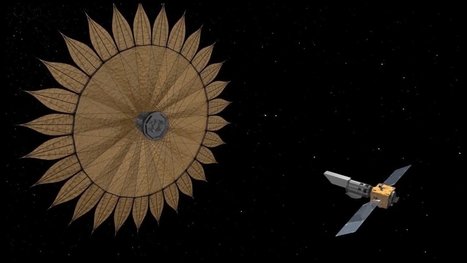
Starshade exoplanet-hunting missions may be technologically daunting, but not beyond NASA's reach. Such a mission would employ a space telescope and a separate craft flying about 25,000 miles (40,000 kilometers) ahead of it. This latter probe would be equipped with a large, flat, petaled shade designed to block starlight, potentially allowing the telescope to directly image orbiting alien worlds as small as Earth that would otherwise be lost in the glare. Instruments called coronagraphs, which have been installed on multiple ground-based and space telescopes, work on the same light-blocking principle. But coronagraphs are incorporated into the telescope itself.
There are no starshade missions from NASA planned yet. In order for such a project to work, the two spacecrafts would need to be aligned incredibly precisely — to within about 3 feet (1 meter) of each other, NASA officials said.
"The distances we're talking about for the starshade technology are kind of hard to imagine," Michael Bottom, an engineer at NASA's Jet Propulsion Laboratory (JPL) in Pasadena, California, said in a statement. "If the starshade were scaled down to the size of a drink coaster, the telescope would be the size of a pencil eraser, and they'd be separated by about 60 miles [100 kilometers]," Bottom added. "Now imagine those two objects are free-floating in space. They're both experiencing lots of little tugs and nudges from gravity and other forces, and over that distance we're trying to keep them both precisely aligned to within about 2 millimeters."
Slight alignment failures could theoretically be detected by a camera inside the space telescope. Small amounts of starlight will always leak around the starshade, forming a light-and-dark pattern on the scope. The camera would pick up misalignments by recognizing when the light-and-dark pattern was off-center. Bottom devised a computer program that tested whether this technique could actually work — and the results were encouraging. "We can sense a change in the position of the starshade down to an inch, even over these huge distances," Bottom said in
the same statement.Meanwhile, fellow JPL engineer Thibault Flinois and his colleagues came up with their own suite of algorithms, which use information from Bottom's program to determine when the starshade should autonomously fire its thrusters to maintain alignment.
Put together, this work — which is detailed in a report completed earlier this year — suggests that starshade missions are technologically feasible. Indeed, it should be possible to keep a big starshade and a space telescope aligned at distances up to 46,000 miles (74,000 km), NASA officials said. "This to me is a fine example of how space technology becomes ever more extraordinary by building upon its prior successes," Phil Willems, manager of NASA's Starshade Technology Development activity, said in the same statement. "We use formation flying in space every time a capsule docks at the International Space Station," Willems added. "But Michael and Thibault have gone far beyond that and shown a way to maintain formation over scales larger than Earth itself."
For the sake of studying the most distant objects in the Universe, astronomers often rely on a technique known as Gravitational Lensing. Based on the principles of Einstein’s Theory of General Relativity, this technique involves relying on a large distribution of matter (such as a galaxy cluster or star) to magnify the light coming from a distant object, thereby making it appear brighter and larger.
However, in recent years, astronomers have found other uses for this technique as well. For instance, a team of scientists from the Harvard-Smithsonian Center for Astrophysics (CfA) recently determined that Gravitational Lensing could also be used to determine the mass of white dwarf stars. This discovery could lead to a new era in astronomy where the mass of fainter objects can be determined.
The study which details their findings, titled “Predicting gravitational lensing by stellar remnants” appeared in the Monthly Noticed of the Royal Astronomical Society. The study was led by Alexander J. Harding of the CfA and included Rosanne Di Stefano, and Claire Baker (also from the CfA), as well as members from the University of Southampton, Georgia State University, the University of Nigeria, and Cornell University.
The genomes of bacteria are under constant assault from ‘selfish’ DNA segments (such as genes from bacterium-infecting viruses and mobile genetic elements), which enhance their own propagation and transmission, rather than their host’s. One type of mobile element is called a transposon. Some transposons carry just five genes, the sole function of which is to spread the transposon among bacteria2. The protein products of these genes work together to insert the transposon DNA into a specific spot in a bacterium’s genome at which insertion does not harm the host. The transposon thus becomes a permanent ‘passenger’ in that bacterium. When the opportunity arises, it transfers itself into one of the small, circular pieces of DNA that bacteria pass between each other to transfer genetic material, and can thereby move to a new host2.
Bacteria are armed with several defence systems against such parasites. One is known as CRISPR3, and works in a similar way to a ‘wanted’ poster of a criminal. When foreign DNA enters a bacterial cell, CRISPR chops it up and places a few fragments into the bacterial genome. These fragments are not dust-gathering war trophies, but ‘memories’ of past invasions: the bacterium copies them into short snippets of RNA, and hands them over to dedicated CRISPR-associated nuclease enzymes, of which Cas9 is the best studied4,5. These nucleases carry the RNA snippets and compare them with incoming DNA; if there is a match, the invading DNA is destroyed.
In 2017, a strange fact was reported by Peters et al.6: some transposons also carry genes for Cascade, a type of CRISPR defence system. This made no sense. Why would a parasitic genetic element need defence machinery that targets itself? Not all features of living things are Darwinian adaptations, but the puzzling prevalence of Cascade in transposons from many bacteria implied that it had to be there for a reason.
However, Peters et al. noted two peculiarities of the Cascade–transposon systems. First, although the Cascade machinery still recognized a target DNA by comparing it with an RNA snippet carried on a Cas-type protein, this machinery could not cut the DNA, and so was like a gun loaded with blanks. Second, the transposon carried all the usual genes required to integrate its DNA into a bacterial genome, but lacked the gene that directs that integration to the usual ‘safe for the host’ destination — thus preventing the Cascade gun from aiming at a specific target. Peters et al. hypothesized that these two minuses make a plus: perhaps the transposon uses Cascade to recognize a new DNA target in a bacterium, and then routes the integration of transposon DNA to that site?
Klompe and co-workers now provide a wealth of experimental data that prove and expand this idea. They show that the transposon can use the RNA-guided component of its Cascade passenger to direct Cascade to a particular position in a genome. They also report that, after recognizing the target DNA, Cascade directly binds to a protein (TniQ) that guides the insertion of the transposon to the new location in the genome (Fig. 1). This insertion is impressively specific — in all 25 cases studied by the authors, the transposon was delivered precisely and exclusively to the targeted address in the bacterial genome. Klompe and colleagues’ findings illuminate how evolution in microbes can morph, shuffle and combine components to come up with radical new solutions to problems — in this case, resulting in an RNA-guided transposition of DNA.
To get content containing either thought or leadership enter:
To get content containing both thought and leadership enter:
To get content containing the expression thought leadership enter:
You can enter several keywords and you can refine them whenever you want. Our suggestion engine uses more signals but entering a few keywords here will rapidly give you great content to curate.


 Your new post is loading...