Your new post is loading...

|
Scooped by
Dr. Stefan Gruenwald
July 16, 2019 4:00 PM
|
To solve some of physics' greatest mysteries, researchers at Cornell University have developed an algorithm designed to visualize models of the universe. The algorithm was developed by applying scientific principles used to create models for understanding cell biology and physics to the challenges of cosmology and big data. "Science works because things behave much more simply than they have any right to," said physicist James Sethna. "Very complicated things end up doing rather simple collective behavior." Sethna is the senior author of "Visualizing Probabilistic Models with Intensive Principal Component Analysis," published in Proceedings of the National Academy of Sciences. The algorithm, designed by first author Katherine Quinn, allows researchers to image a large set of probabilities to look for information that might be useful, and provides scientists with better intuition for understanding complex models and data. Michael Niemack, a co-author of the paper and an NSF CAREER awardee, is developing astronomical instrumentation that will use the algorithm to study the characteristics of the early universe. "We need better algorithms that can extract what we're interested in," Quinn said. "We can't just say, 'Look for interesting universes.' This algorithm is a way of untangling information that can reveal the interesting structure of the data." "What stands out about this algorithm is its general applicability," said Daryl Hess, a program director in NSF's Division of Materials Research, which provided funding for the project along with the Division of Astronomical Sciences. "Ideas from different fields -- information geometry, physics, and biology -- were combined to create this tool enabling insights into complex data."
|
|
Scooped by
Dr. Stefan Gruenwald
July 16, 2019 3:49 PM
|
Rutgers researchers have created a device that can determine whether targeted chemotherapy drugs are working on individual cancer patients. The portable device, which uses artificial intelligence and biosensors, is up to 95.9 percent accurate in counting live cancer cells when they pass through electrodes, according to a study in the journal Microsystems & Nanoengineering. "We built a portable platform that can predict whether patients will respond positively to targeted cancer therapy," said senior author Mehdi Javanmard, an assistant professor in the Department of Electrical and Computer Engineering in the School of Engineering at Rutgers University-New Brunswick. "Our technology combines artificial intelligence and sophisticated biosensors that handle tiny amounts of fluids to see if cancer cells are sensitive or resistant to chemotherapy drugs." The device provides immediate results and will allow for more personalized interventions for patients as well as better management and detection of the disease. It can rapidly analyze cells without having to stain them, allowing for further molecular analysis and instantaneous results. Current devices rely on staining, limiting the characterization of cells.
|
|
Scooped by
Dr. Stefan Gruenwald
July 16, 2019 3:44 PM
|
Physicists from the University of Glasgow have described how they recorded the phenomenon, where where two particles interact and share their physical states. Physicists have for the first time captured an image of quantum entanglement, which a baffled Albert Einstein once called 'spooky action at a distance'. Researchers say they have captured visual evidence of a strong form of the elusive phenomenon called Bell entanglement. Quantum entanglement is where two particles interact and share their physical states for an instant - no matter how great the distance which separates them. This connection, despite being impossible under the rules which govern the wider universe, underpins the field of quantum mechanics. A team of physicists from the University of Glasgow described how they recorded the phenomenon in a photo for the first time. They devised a system which fires a stream of entangled photons from a quantum source of light at 'non-conventional' objects - displayed on liquid-crystal materials which change the phase of the photons as they pass through. 'The image we've managed to capture is an elegant demonstration of a fundamental property of nature, seen for the very first time in the form of an image,' said Paul-Antoine Moreau, of the university's school of physics and astronomy. 'It's an exciting result which could be used to advance the emerging field of quantum computing and lead to new types of imaging.'
|
|
Scooped by
Dr. Stefan Gruenwald
July 16, 2019 3:37 PM
|
Using Earth’s most powerful array of radio telescopes, astronomers have made the first observations of a circumplanetary disk of gas and dust like the one that is believed to have birthed the moons of Jupiter.
The find, reported online today in Astrophysical Journal Letters, adds to the intriguing story of planet PDS 70 c, a still-forming gas giant about 370 light years from Earth that was first revealed last month in visible light images.
Using the massive 66-antenna Atacama Large Millimeter/submillimeter Array (ALMA) in Chile, Rice University astronomer Andrea Isella and colleagues collected millimeter wave radio signals that revealed the presence of dust grains throughout the star system where PDS 70 c and its sister planet, PDS 70 b, are still forming.
“Planets form from disks of gas and dust around newly forming stars, and if a planet is large enough, it can form its own disk as it gathers material in its orbit around the star,” Isella said. “Jupiter and its moons are a little planetary system within our solar system, for example, and it’s believed Jupiter’s moons formed from a circumplanetary disk when Jupiter was very young.”
|
|
Scooped by
Dr. Stefan Gruenwald
July 16, 2019 3:32 PM
|
A team of researchers from Columbia University has found that radiation levels from atomic testing in the Marshall Islands are still too high for human habitation. In their paper published inProceedings of the National Academy of Sciences, the group describes radiation readings of soil samples from four of the islands, and what they found. Over the years 1946 to 1958, scientists working for the U.S. government carried out 67 nuclear explosion tests in the Bikini and Enewetak atolls in the Marshall Islands. The tests were conducted to learn more about nuclear weapons and their destructiveness. Prior to conducting such tests, officials with the U.S. forcibly removed the atoll residents to other sites in the Marshall Islands. During testing, researchers discovered that fallout was reaching two other inhabited atolls (Rongelap and Utirik), so those people were moved, as well. After testing ended, officials with the U.S. government met with officials from the Marshall Islands to discuss the possibility of cleaning up the test sites, and when the relocated people might return. In this new effort, the researchers ventured to all four of the atolls and tested soil samples forradiation. The researchers tested soil samples on 11 islands that were part of the four atolls, and found that external gamma radiation levels varied greatly from test to test. They further report that some of the levels were much higher than expected, and far exceeded the legal exposure limit that was agreed to by officials with both countries. Levels on Bikini, for example, were measured as high as 648 millirems per year. The "safe" level set by governmental agreement is 100 millirems per year. The researchers note such levels are also much higher than those found around the Chernobyl and Fukushima nuclear accident sites. The same group of researchers also conducted two prior tests—one that involved measuring radiation levels in fruit from trees in the affected areas, and another that studied the crater created by the largest explosion to take place in the region. They reported in papers also published in PNAS that they found radiation levels in fruit too high for human consumption on many of the islands. They also found that radiation levels in soil sediments in the crater were still several orders of magnitude higher than normal levels.
|
|
Scooped by
Dr. Stefan Gruenwald
July 15, 2019 5:53 PM
|
Intel plans to make its digital brain chip, code-named Loihi, available to researchers in 2018, in a bid to put its hardware into cutting-edge AI applications. Will your PC be next? Intel is reportedly preparing to fabricate “Loihi,” a self-learning “brain chip” that mimics how the human intellect functions, as a foundation for further developments in artificial intelligence. Named after an active undersea volcano south of the island of Hawaii, Intel said in a statement Monday that Loihi includes a total of 130,000 silicon “neurons” connected with 130 million “synapses,” the junctions that in humans connect the neurons within the brain. The Loihi chip, which Wiredreported will be manufactured next month on Intel’s 14-nm process technology, will be shared with leading universities and research institutions next year in a bid to advance AI development, Intel said. Coincidentally, Microsoft said that it, too, is working on ways to develop new avenues for alternative computing, including manufacturing actual chips and systems, as well as developing software to power quantum computers. Intel’s Loihi doesn’t employ quantum techniques, but it has a similar goal: Instead of trying to “brute force” its way into a solution, as traditional chips do, Loihi tries to mimic the parallel structure of the human brain to arrive at those same answers much more efficiently. Intel said it believes the Loihi chip could be used autonomously, A Loihi-powered medical device, for example, could determine what a “normal” heart rate was and therefore be able to figure out when an abnormal heart condition presented itself. Intel emphasized that its chip is intended to “self-learn,” teaching itself the answers to problems, using its digital array of synthetic neurons and synapses. Each “neuromorphic core” includes a learning engine that can be programmed to adapt. “As AI workloads grow more diverse and complex, they will test the limits of today’s dominant compute architectures and precipitate new disruptive approaches,” Michael Mayberry, corporate vice president and managing director of Intel Labs, wrote in a blog post.
|
|
Scooped by
Dr. Stefan Gruenwald
July 12, 2019 2:32 PM
|
A tale of numbers that like to turn: a different look at complex numbers and the strange things they do. A fractal is a geometric pattern that repeats at every level of magnification. Another way to explain it might be to use Mandelbrot's own definition that "a fractal is a geometric shape that can be separated into parts, each of which is a reduced-scale version of the whole." Think of Russian nesting dolls. Fractals are common in nature and are found nearly everywhere. An example is broccoli. Every branch of broccoli looks just like its parent stalk. The surface of the lining of your lungs has a fractal pattern that allows for more oxygen to be absorbed. Such complex real-world processes can be expressed in equations through fractal geometry. Even to the everyday person, fractals are generally neat to look at even if you don't understand what a fractal is. But to a mathematician, it is a neat, neat subject area. Why are fractals important? Fractals help us study and understand important scientific concepts, such as the way bacteria grow, patterns in freezing water (snowflakes) and brain waves, for example. Their formulas have made possible many scientific breakthroughs. Wireless cell phone antennas use a fractal pattern to pick up the signals better, and pick up a wider range of signals, rather than a simple antenna. Anything with a rhythm or pattern has a chance of being very fractal-like. Why do we hear so much about fractals? Actually, some fractals were understood long before Mandelbrot coined the term. He popularized the concept with computer graphics and pictures of fractal patterns in nature. While, the Mandelbrot set and Julia sets (two well-known fractals) were investigated in the early 20th century, they never left the mathematical/physical "ghetto" until fast computers and good computer graphics came along, which in turn led to a wave of new research and better understanding.
|
|
Scooped by
Dr. Stefan Gruenwald
July 12, 2019 1:43 PM
|
On 1 January 2011, Germany introduced early benefit assessment (Frühe Nutzenbewertung) of new drugs through the reform of the market for medicinal products act (AMNOG). Its aim is to determine whether a new drug has any added benefit over standard care. The Federal Joint Committee (G-BA), the main decision making body within the German statutory health insurance system, is responsible for the assessment procedure and ultimately decides on the added benefit.
The G-BA specifies the standard care based on criteria laid down in the law. According to these criteria, standard care is an approved and reimbursed intervention that is established in clinical practice and for which a benefit has been proved according to the standards of evidence based medicine (predominantly based on studies with patient relevant outcomes). If appropriate, standard care might also be watchful waiting or best supportive care.
The added benefit of the new drug is primarily determined by a direct or a suitable indirect comparison (only adjusted indirect comparisons using appropriate common comparators are accepted10) with standard care using the outcomes of mortality, morbidity (including adverse events), or health related quality of life.
The assessment is performed for the authorized use of both the new drug and standard care. There is a special procedure for orphan drugs with a revenue below €50m (£45m; $57m) a year and these drugs are not included in the current analysis.
When a newly approved drug enters the German market, the drug company responsible must submit a standardized dossier containing all available evidence of the drug’s added benefit over standard care to the G-BA. The G-BA generally commissions IQWiG to assess the evidence contained in the dossier within three months after market entry. The results of this assessment serve as the basis for G-BA’s decisions on the added benefit. After publication of IQWiG’s assessment report, the G-BA conducts a commenting procedure and hearing, during which the drug company and other specified parties may submit comments. After evaluation of these comments, the G-BA issues a decision on the probability and extent of added benefit. The final decisions therefore sometimes differ from IQWiG’s assessment. For the 216 assessments described in this article, the G-BA’s decision was as follows: no added benefit: 115/216 (53%), major added benefit: 1/216 (<1%), considerable added benefit: 55/216 (25%), minor added benefit: 33/216 (15%), non-quantifiable added benefit: 12/216 (6%), less benefit: 0/216 (0%) (https://www.g-ba.de/informationen/nutzenbewertung/).
The conclusions on added benefit are used to inform pricing negotiations between the umbrella organization of statutory health insurance and the drug company. Even if the G-BA concludes that a new drug has no added benefit, the drug is permitted to stay on the market. However, in general, a new drug with no added benefit should not cost more than standard care. The conclusions on added benefit can also have an important effect on provision of healthcare, as they can also be used for clinical practice guidelines and individual treatment decisions by patients and physicians.
|
|
Scooped by
Dr. Stefan Gruenwald
July 12, 2019 1:33 PM
|
Scientists have known insects experience something like pain since 2003, but new research published today from Associate Professor Greg Neely and colleagues at the University of Sydney proves for the first time that insects also experience chronic pain that lasts long after an initial injury has healed. Chronic pain is defined as persistent pain that continues after the original injury has healed. It comes in two forms: inflammatory pain and neuropathic pain. The study of fruit flies looked at neuropathic 'pain', which occurs after damage to the nervous system and, in humans, is usually described as a burning or shooting pain. Neuropathic pain can occur in human conditions such as sciatica, a pinched nerve, spinal cord injuries, postherpetic neuralgia (shingles), diabetic neuropathy, cancer bone pain, and in accidental injuries. Testing pain in fruit flies In the study, Associate Professor Neely and lead author Dr Thang Khuong from the University's Charles Perkins Centre, damaged a nerve in one leg of the fly. The injury was then allowed to fully heal. After the injury healed, they found the fly's other legs had become hypersensitive. "After the animal is hurt once badly, they are hypersensitive and try to protect themselves for the rest of their lives," said Associate Professor Neely. "That's kind of cool and intuitive." Next, the team genetically dissected exactly how that works. "The fly is receiving 'pain' messages from its body that then go through sensory neurons to the ventral nerve cord, the fly's version of our spinal cord. In this nerve cord are inhibitory neurons that act like a 'gate' to allow or block pain perception based on the context," Associate Professor Neely said. "After the injury, the injured nerve dumps all its cargo in the nerve cord and kills all the brakes, forever. Then the rest of the animal doesn't have brakes on its 'pain'. The 'pain' threshold changes and now they are hypervigilant." "Animals need to lose the 'pain' brakes to survive in dangerous situations but when humans lose those brakes it makes our lives miserable. We need to get the brakes back to live a comfortable and non-painful existence."
Researchers from two University of Texas System institutions have engineered biological components that can rewire genetic response pathways, creating a template for designing new cellular behaviors with wide-ranging potential applications. Dr. Faruck Morcos of The University of Texas at Dallas and Dr. Clement Chan of UT Tyler have collaborated on modular versions of repressors—the proteins that block genetic instructions. In a paper recently published in Nucleic Acids Research, they proposed a new strategy to create living cells that can sense multiple signals via reporter proteins. Their work, which has potential applications in medical diagnostics, originates from an interdisciplinary field called synthetic biology. "The goal of synthetic biology is to use existing biological systems to develop solutions for problems," said Morcos, an assistant professor of biological sciences at UT Dallas. "It's an engineering approach to biology." The research team aims to build diagnostic cells that would inhabit a patient's body and detect a variety of symptoms. After the symptoms have subsided, the engineered cells can be switched off simultaneously in response to a specific "reset" signal so that they can monitor if the symptoms reoccur. These living diagnostics were developed based on the cellular machinery for regulating gene expression. In living cells, genes hold instructions for making the proteins that carry out various processes. Those instructions are copied in a process called transcription. Signals from the environment or other cells activate these copiers. The segments of a DNA strand where transcription begins are called promoters. In some situations, a repressor agent can attach to a promoter, blocking a genetic segment from being copied and overriding its instruction. Due to the manner in which evolution has occurred, each repressor is extremely specific in purpose. "One specific signal controls whether or not a specific gene gets expressed," said Chan, an assistant professor of biology and biochemistry at UT Tyler. "These interactions are so individualized that it has been difficult to engineer a tool that either uses one signal to control gene expression by multiple promoters or uses multiple signals to control the same promoter. This rigidity poses a major challenge in creating new cellular behavior."
Via Gerd Moe-Behrens
|
|
Scooped by
Dr. Stefan Gruenwald
July 11, 2019 3:03 PM
|
Mantis shrimp hold the title for the fastest punch in the animal kingdom—powerful enough to break seashells and aquarium glass. They also boast some of the world’s most complex, extraordinary eyes. Human eyes have three kinds of light receptor cells, but these shrimp have a dozen, allowing them to sense properties of light invisible to other animals. Engineers at the University of Illinois at Urbana-Champaign have now made a camera that closely copies the crustacean’s impressive visual system. The device, described last October in Optica, is a one-inch cube, and researchers say it could be made in bulk for $10 apiece. They believe it could ultimately be used to help cars detect hazards, to let military drones see camouflaged or shadowed targets, and to enable surgeons to perform more accurately. Mantis shrimp have two visual superpowers. For one, they can sense “polarized” light, in which all the waves undulate in the same plane (unpolarized light vibrates in every direction). Light bouncing off objects always contains a polarized component, and this property of light can reveal objects that otherwise blend into the background; mantis shrimp use it to find prey in their blue-tinged ocean environs. They can also detect an extensive span of light intensities known as dynamic range, which lets them see very bright and dark areas at once. The new camera emulates both abilities. Electrical and computer engineer Viktor Gruev and his colleagues made an array of tiny, silicon-based light detectors similar to those found in commercial polarization cameras. But whereas conventional detectors produce an electric current that increases linearly with light intensity, the new detectors respond exponentially. This yields a dynamic range about 10,000 times higher than today’s commercial cameras. The researchers also covered the detectors with microscopic aluminum wires to imitate microvilli, the tubular structures in shrimp eyes that filter and sense polarized light. For a real-world test, the team drove around in a car mounted with their new camera and a standard one. Pictures from the shrimp-eye camera had much higher contrast, especially in foggy and rainy conditions and in scenes with a lot of light and shadows, Gruev says. The mantis shrimp is the only creature that can sense a full spectrum of colors and polarization, says Thomas Cronin, a professor of biological sciences at the University of Maryland, Baltimore County, who was not involved in the study. This characteristic makes it ideal for a camera to emulate, he says: “You would get clear images of objects in a complicated background that are difficult to pick out with other techniques.”
|
|
Scooped by
Dr. Stefan Gruenwald
July 11, 2019 2:57 PM
|
Researchers have used liquid metals to turn carbon dioxide back into solid coal, in a world-first breakthrough that could transform our approach to carbon capture and storage. The research team led by RMIT University in Melbourne, Australia, have developed a new technique that can efficiently convert CO2from a gas into solid particles of carbon. Published in the journal Nature Communications, the research offers an alternative pathway for safely and permanently removing the greenhouse gas from our atmosphere. Current technologies for carbon capture and storage focus on compressing CO2 into a liquid form, transporting it to a suitable site and injecting it underground. But implementation has been hampered by engineering challenges, issues around economic viability and environmental concerns about possible leaks from the storage sites. RMIT researcher Dr Torben Daeneke said converting CO2 into a solid could be a more sustainable approach. "While we can't literally turn back time, turning carbon dioxide back into coal and burying it back in the ground is a bit like rewinding the emissions clock," Daeneke, an Australian Research Council DECRA Fellow, said."To date, CO2 has only been converted into a solid at extremely high temperatures, making it industrially unviable. "By using liquid metals as a catalyst, we've shown it's possible to turn the gas back into carbon at room temperature, in a process that's efficient and scalable. "While more research needs to be done, it's a crucial first step to delivering solid storage of carbon."
|
|
Scooped by
Dr. Stefan Gruenwald
July 11, 2019 2:49 PM
|
Permafrost at outposts in the Canadian Arctic is thawing 70 years earlier than predicted, an expedition has discovered, in the latest sign that the global climate crisis is accelerating even faster than scientists had feared. A team from the University of Alaska Fairbanks said they were astounded by how quickly a succession of unusually hot summers had destabilized the upper layers of giant subterranean ice blocks that had been frozen solid for millennia. “What we saw was amazing,” Vladimir Romanovsky, a professor of geophysics at the university, told Reuters. “It’s an indication that the climate is now warmer than at any time in the last 5,000 or more years.“ With governments meeting in Bonn this week to try to ratchet up ambitions in United Nations climate negotiations, the team’s findings, published on 10 June in Geophysical Research Letters, offered a further sign of a growing climate emergency. The paper was based on data Romanovsky and his colleagues had been analyzing since their last expedition to the area in 2016. The team used a modified propeller plane to visit exceptionally remote sites, including an abandoned cold war-era radar base more than 300km from the nearest human settlement.
|
|
|
Scooped by
Dr. Stefan Gruenwald
July 16, 2019 3:51 PM
|
The puzzling inconsistency between different measurements of the Hubble constant, which describes rate of expansion of the universe, could soon be better understood thanks to a new technique for analysing the explosive merger of two neutron stars. Conflicting measurements of the Hubble constant arise from two different methods that have been used to measure the parameter. One involves observing stellar explosions called type Ia supernovae and the other involves fitting cosmological models to the cosmic microwave background (CMB) radiation. The supernova method gives a Hubble constant of 73.5 km/s/Mpc, where a parsec (pc) is 3.26 light-years. This means that a point one million parsecs from Earth is expanding away from Earth at a rate of 73.5 km/s. Meanwhile, analysis of the European Space Agency’s Planck spacecraft’s observations of the CMB suggest a Hubble constant of 67.4 km/s/Mpc. While there are uncertainties in both measurements, the disagreement between the two values is statistically significant. New physics? The conflict suggests that either there is a flaw (or flaws) in how one or both measurements are made and interpreted; or that some sort of new physics is at work. Either way, solving the mystery will reveal new and potentially useful information and physicists are therefore keen on developing new and independent ways of calculating the Hubble constant. One promising method it to study the gravitational waves and light that are produced in the merger of two neutron stars. This involves measuring the strength of the gravitational wave signal – which gives the distance to the merger – and the redshift of the light, which gives the speed at which the merged object is moving away from Earth. Such measurements are now possible thanks to the LIGO and Virgo gravitational-wave detectors, which have already seen one merger (called GW170817) and should see more. The main challenge in using this technique is that the observed strength of the gravitational waves depends strongly on Earth’s relative orientation to the orbital plane of the neutron stars before they merged. If we happen to be looking along the direction perpendicular to the orbital plane, we will see the strongest signal. If not, the signal strength will be weaker. Therefore, the angle of inclination between the perpendicular and our direction of view is needed to calculate the distance to the merger. One way of determining this angle is to measure the polarization of the gravitational waves. Earlier this year Stephen Feeney of the Flatiron Institute in New York City, Hiranya Peiris of University College London and colleagues showed that an accurate determination of the Hubble constant could be made in this way by studying approximately 50 neutron-star merger events.
|
|
Scooped by
Dr. Stefan Gruenwald
July 16, 2019 3:47 PM
|
The ever-more-humble carbon nanotube may be just the device to make solar panels - and anything else that loses energy through heat - far more efficient. Rice University scientists are designing arrays of aligned single-wall carbon nanotubes to channel mid-infrared radiation (aka heat) and greatly raise the efficiency of solar energy systems. Gururaj Naik and Junichiro Kono of Rice's Brown School of Engineering introduced their technology in ACS Photonics. Their invention is a hyperbolic thermal emitter that can absorb intense heat that would otherwise be spewed into the atmosphere, squeeze it into a narrow bandwidth and emit it as light that can be turned into electricity. The discovery rests on another by Kono's group in 2016 when it found a simple method to make highly aligned, wafer-scale films of closely packed nanotubes. Discussions with Naik, who joined Rice in 2016, led the pair to see if the films could be used to direct "thermal photons." "Thermal photons are just photons emitted from a hot body," Kono said. "If you look at something hot with an infrared camera, you see it glow. The camera is capturing these thermally excited photons." Infrared radiation is a component of sunlight that delivers heat to the planet, but it's only a small part of the electromagnetic spectrum. "Any hot surface emits light as thermal radiation," Naik said. "The problem is that thermal radiation is broadband, while the conversion of light to electricity is efficient only if the emission is in a narrow band. "The challenge was to squeeze broadband photons into a narrow band," he said. The nanotube films presented an opportunity to isolate mid-infrared photons that would otherwise be wasted. "That's the motivation," Naik said. "A study by (co-lead author and Rice graduate student) Chloe Doiron found that about 20% of our industrial energy consumption is waste heat. That's about three years of electricity just for the state of Texas. That's a lot of energy being wasted.
|
|
Scooped by
Dr. Stefan Gruenwald
July 16, 2019 3:41 PM
|
A group of researchers from the Instituto de Astrofísica de Canarias (IAC) has clarified one of the mysteries of 2018 in the field of extragalactic astrophysics: the supposed existence of a galaxy without dark matter. Galaxies with no dark matter are impossible to understand in the framework of the current theory of galaxy formation, because the role of dark matter is fundamental in causing the collapse of the gas to form stars. In 2018, a study published in Nature magazine announced the discovery of a galaxy that lacked dark matter, which made a strong impact, and occupied the covers of popular scientific magazines. Now, according to an article published in the Monthly Notices of the Royal Astronomical Society (MNRAS) a group of researchers at the Instituto de Astrofísica de Canarias (IAC) has solved this mystery via a very complete set of observations of KKS2000]04 (NGC1052-DF2), previously nicknamed “the galaxy without dark matter”. In this study the researchers, perplexed because all the parameters that depended on the distance of the galaxy were anomalous; have revised the available distance indicators. Using five independent methods to estimate the distance of the object they found that all of them coincided in one conclusion: the galaxy is much nearer than the value presented in the previous research. The original article published in Nature stated that the galaxy is at a distance of some 64 million light years from the Earth. However, this new research has revealed that the real distance is much less, around 42 million light years. Thanks to these new results, the parameters of the galaxy inferred from its distance have become “normal” and fit the observed trends traced by galaxies with similar characteristics. The most relevant datum that has been found via the new distance analysis is that the total mass of this galaxy is around a half of the mass estimated previously, but the mass of its stars is only about quarter of the previously estimated mass. This implies that a significant part of the total mass must be made up of dark matter. The results of this work show the fundamental importance of the correct measurement of extragalactic distances. It has always been one of the most challenging tasks in astrophysics: how to measure the distances to objects which are very far away and which we cannot touch.
|
|
Scooped by
Dr. Stefan Gruenwald
July 16, 2019 3:33 PM
|
Helium and water are known to be abundant throughout the universe, particularly in giant planets such as Uranus and Neptune. Although helium is typically nonreactive at common atmospheric conditions, past studies have found that it can sometimes react with other elements and compounds under high pressure. Researchers at Nanjing University and the University of Cambridge have recently carried out a study investigating the reaction between helium and water under high pressure conditions such as those on other planets. In their study, featured in Nature Physics, they unveiled two previously unknown types of superionic states, which they refer to as SI-I and SI-II. Superionic states are essentially phases of matter in which a compound can simultaneously exhibit both some properties of a liquid and a solid. "Helium is the most inert element in the periodic table and generally considered to be unreactive under ambient conditions," Jian Sun, one of the researchers who carried out the study, told Phys.org. "However, helium has been found react with some elements and compounds at high pressure. We wanted to understand whether helium and water can react with each other under high pressure and the nature of the states that may emerge under planetary conditions." In recent years, superionic states have become a topic of interest for many research teams worldwide. A known example of these states is superionic water (or ice), a phase of water that occurs at very high temperatures and pressures at which hydrogen atoms can move freely and oxygen atoms are fixed in their sublattice. In their study, Sun and his colleagues used calculations to show that helium (He) and water (H2O) can form several stable compounds, which exist in a wide range of pressure conditions (from 2–92 GPa). Interestingly, they found that at high pressures and temperatures, these compounds can form superionic states that have never been observed before.
|
|
Scooped by
Dr. Stefan Gruenwald
July 16, 2019 3:30 PM
|
Modeling the shape and movement of near-Earth asteroids is now up to 25 times faster thanks to new Washington State University research. The WSU scientists improved the software used to track thousands of near-Earth asteroids and comets, which are defined as being within 121 million miles or about 1.3 times the distance to the sun. Their work provides a valuable new tool for studying asteroids and determining which of them might be on a collision course with Earth. Matt Engels, a Ph.D. student who has been working with Professor Scott Hudson in the School of Engineering and Applied Sciences at WSU Tri-Cities, is lead author of a paper on the research in the July issue of Astronomy and Computing. Researchers would like to have better information on asteroids, including which of them might crash into earth. The rocks also can provide valuable scientific information, answering fundamental questions about the creation of our solar system and providing a glimpse into our planetary past. Knowing more about individual asteroid composition also could open up new opportunities for possible asteroid mining. NASA maintains a catalog that includes information on more than 20,000 near-earth asteroids and comets. In the mid-1990s scientists knew of less than 200 of such outer space rocks, but with better telescopes and more efforts at surveying, the numbers of known asteroids has grown dramatically.
|
|
Scooped by
Dr. Stefan Gruenwald
July 14, 2019 5:39 PM
|
In July 2019, the village of Gallargues-le-Montueux located in southern France outside of Montpellier topped 114.6 degrees Fahrenheit, the highest temperature ever recorded in continental France.
That sweltering heat broke the previous record of 113.2 degrees, which was set just hours before in the village of Villevieille. And those weren’t the only hot spots. Brian Kahn at Earther reports that at least 12 weather stations in France detected temperatures above 111.4 degrees Fahrenheit, the previous hottest temperature set in 2003.
According to Agence-France Presse, the temperature spike makes France the seventh European nation to ever break the 113-degree-Fahrenheit mark, joining Bulgaria, Portugal, Italy, Spain, Greece and North Macedonia.
France was not the only nation dealing with extreme heat last week. Andorra, Luxembourg, Poland, the Czech Republic, and Germany all set record temperatures for the month of June. Germany lowered the speed limit on parts of the Autobahn, worried about buckling roads. And the heat set off the worst wildfires Spain has seen in 20 years with three major blazes burning throughout the nation. (One blaze started when improperly stored chicken manure combusted due to the heatwave.)
At least seven people died in France in July 2019 due to the heat with at least two fatalities in Spain and two in Italy. But that’s a far cry from 2003, when an estimated 70,000 people died in Europe, including 15,000 people in France, during a devestating heatwave, reports Sasha Ingber at NPR. After that, the French government implemented a series of measures to help protect people from the heat, including a warning system. The French weather service issued its highest warning for four regions of the country last week, leading to the closure of 4,000 schools. Public cooling rooms were also opened in cities across the country and public parks and pools stayed open for extended hours.
Though the French people seem to have weathered the heat fine, French wine is suffering. After three years of drought, many vineyards in France's southern wine country were already experiencing stress. The extreme heat pushed some over the edge, with vines withering and drying out in the oppressive temperatures. “I’ve been a winegrower for 30 years. I have never seen a vine burnt by a sudden onset of heat [until now],” Jerome Dempsey tells AFP.
On Sunday, the heatwave's grip finally broke in much of France and other parts of Europe—though it is expected to persist in Germany and parts of Eastern Europe for a day or two longer.
So what led to the massive early summer temperature spike? In an earlier article, Earther's Brian Kahn explains that the heat wave was caused by a weather phenomenon called a rex block. The weather pattern happens when stationary high pressure system over Greenland and a low pressure system over the North Atlantic contorts the jet stream, cutting off cooler air from northern latitudes from reaching Europe. The jet stream has also dipped down toward Africa, transporting hot air from the Sahara across the Mediterranean.
Karsten Haustein, a climate scientist at the University of Oxford who is affiliated with the World Weather Attribution Network, which tries to figure out how much weather events are tied to climate change, tells Carolyn Gramling at Science News that it’s hard to say how much this event is due to climate change. He says that some researchers believe the fluctuations in the jet stream may be linked to warming temperatures in the Arctic. In general, however, he says heat waves like this one are twice as likely to occur due to climate change.
|
|
Scooped by
Dr. Stefan Gruenwald
July 12, 2019 1:45 PM
|
Using just the language in millions of old scientific papers, a machine learning algorithm was able to make completely new scientific discoveries. In a study published in Nature on July 3, 2019, researchers from the Lawrence Berkeley National Laboratory used an algorithm called Word2Vec sift through scientific papers for connections humans had missed. Their algorithm then spit out predictions for possible thermoelectric materials, which convert heat to energy and are used in many heating and cooling applications. The algorithm didn’t know the definition of thermoelectric, though. It received no training in materials science. Using only word associations, the algorithm was able to provide candidates for future thermoelectric materials, some of which may be better than those we currently use. “It can read any paper on material science, so can make connections that no scientists could,” researcher Anubhav Jain said. “Sometimes it does what a researcher would do; other times it makes these cross-discipline associations.” To train the algorithm, the researchers assessed the language in 3.3 million abstracts related to material science, ending up with a vocabulary of about 500,000 words. They fed the abstracts to Word2vec, which used machine learning to analyze relationships between words. “The way that this Word2vec algorithm works is that you train a neural network model to remove each word and predict what the words next to it will be,” Jain said. “By training a neural network on a word, you get representations of words that can actually confer knowledge.” Using just the words found in scientific abstracts, the algorithm was able to understand concepts such as the periodic table and the chemical structure of molecules. The algorithm linked words that were found close together, creating vectors of related words that helped define concepts. In some cases, words were linked to thermoelectric concepts but had never been written about as thermoelectric in any abstract they surveyed. This gap in knowledge is hard to catch with a human eye, but easy for an algorithm to spot. After showing its capacity to predict future materials, researchers took their work back in time, virtually. They scrapped recent data and tested the algorithm on old papers, seeing if it could predict scientific discoveries before they happened. Once again, the algorithm worked. In one experiment, researchers analyzed only papers published before 2009 and were able to predict one of the best modern-day thermoelectric materials four years before it was discovered in 2012. This new application of machine learning goes beyond materials science. Because it’s not trained on a specific scientific dataset, you could easily apply it to other disciplines, retraining it on literature of whatever subject you wanted. Vahe Tshitoyan, the lead author on the study, says other researchers have already reached out, wanting to learn more. “This algorithm is unsupervised and it builds its own connections,” Tshitoyan said. “You could use this for things like medical research or drug discovery. The information is out there. We just haven’t made these connections yet because you can’t read every article.”
|
|
Scooped by
Dr. Stefan Gruenwald
July 12, 2019 1:38 PM
|
Scientists who peered inside snoozing zebrafish have spotted some strikingly familiar patterns of activity. Zebrafish, like the adult seen here, seem to experience sleep cycles that are similar to REM sleep in humans, according to a new study that looked at neural activity in the tiny aquatic animals. It took a decade’s worth of work—and probably a few sleepless nights—but for the first time, researchers have identified sleep patterns in the brains of tiny zebrafish, and those patterns look remarkably similar to the brain activity in sleeping humans. As scientists report today in the journal Nature, evidence of similar sleep patterns in both fish and mammals may offer clues about the evolution of sleep in our common ancestors, which could in turn help us better understand the biological function of nodding off. “Sleep is a huge mystery in neuroscience,” says William Joiner, a biologist at the University of California, San Diego, who studies sleep in fruit flies but was not involved with this research. Plenty of work has asked why we do it, and “people really haven’t settled on a good answer.” For the new study, the team used advanced imaging techniques to watch as zebrafish fell asleep, and they found that the tiny fish cycle between sleep states similar to what we have in humans: rapid eye movement, or REM, sleep and non-REM sleep. This pattern has been seen before in a wide range of mammals, birds, and lizards, but this is the first time it’s been spotted in a fish. Based on our understanding of the evolutionary relationships between fish and mammals, the team suggests that REM-like sleep states evolved more than 450 million years ago, making this type of sleep a deeply held biological phenomenon. “We share a backbone, but we share much more than that,” says study coauthor Philippe Mourrain, a neuroscientist at Stanford University. “It makes it easier to understand sleep and what it does in ourselves.”
|
|
Scooped by
Dr. Stefan Gruenwald
July 12, 2019 12:30 AM
|
The explosion of AI and machine learning is changing the very nature of computing, so says one of the biggest practitioners of AI, Google. Google software engineer Cliff Young gave the opening keynote on Thursday morning at the Linley Group Fall Processor Conference, a popular computer-chip symposium put on by venerable semiconductor analysis firm The Linley Group, in Santa Clara, California. Said Young, the use of AI has reached an "exponential phase" at the very same time that Moore's Law, the decades-old rule of thumb about semiconductor progress, has ground to a standstill. "The times are slightly neurotic," he mused. "Digital CMOS is slowing down, we see that in Intel's woes in 10-nanometer chip production, we see it in GlobalFoundries getting out of 7-nanometer, at the same time that there is this deep learning thing happening, there is economic demand." CMOS, or complementary metal-oxide semiconductor, is the most common material for computer chips. As conventional chips struggle to achieve greater performance and efficiency, demand from AI researchers is surging, noted Young. He rattled off some stats: The number of academic papers about machine learning listed on the arXiv pre-print server maintained by Cornell University concerning is doubling every 18 months. And the number of internal projects focused on AI at Google, he said, is also doubling every 18 months. Even more intense, the number of floating-point arithmetic operations needed to carry out machine learning neural networks is doubling every three and a half months. All that growth in computing demand is adding up to a "Super Moore's Law," said Young, a phenomenon he called "a bit terrifying," and "a little dangerous," and "something to worry about." "Why all this exponential growth?" in AI, he asked. "In part, because deep learning just works," he said. "For a long time, I spent my career ignoring machine learning," said Young. "It wasn't clear these things were going to take off." But then breakthroughs in things such as image recognition started to come quickly, and it became clear deep learning is "incredibly effective," he said. "We have been an AI-first company for most of the last five years," he said, "we rebuilt most of our businesses on it," from search to ads and many more. The demand from the Google Brain team that leads research on AI is for "gigantic machines" said Young. For example, neural networks are sometimes measured by the number of "weights" they employ, variables that are applied to the neural network to shape its manipulation of data. Whereas conventional neural nets may have hundreds of thousand of such weights that must be computed, or even millions, Google's scientists are saying "please give us a tera-weight machine," computers capable of computing a trillion weights. That's because "each time you double the size of the [neural] network, we get an improvement in accuracy." Bigger and bigger is the rule in AI. To respond, of course, Google has been developing its own line of machine learning chips, the "Tensor Processing Unit." The TPU, and parts like it, are needed because traditional CPUs and graphics chips (GPUs) can't keep up. "For a very long time, we held back and said Intel and Nvidia are really great at building high-performance systems," said Young. "We crossed that threshold five years ago." The TPU caused a commotion when it was first unveiled in 2017, boasting of performance superior to conventional chips. Google is now on its third iteration of the TPU, which it uses internally and also offers as an on-demand compute node through Google Cloud.
Bacteria are armed with several defence systems against such parasites. One is known as CRISPR3, and works in a similar way to a ‘wanted’ poster of a criminal. When foreign DNA enters a bacterial cell, CRISPR chops it up and places a few fragments into the bacterial genome. These fragments are not dust-gathering war trophies, but ‘memories’ of past invasions: the bacterium copies them into short snippets of RNA, and hands them over to dedicated CRISPR-associated nuclease enzymes, of which Cas9 is the best studied4,5. These nucleases carry the RNA snippets and compare them with incoming DNA; if there is a match, the invading DNA is destroyed. In 2017, a strange fact was reported by Peters et al.6: some transposons also carry genes for Cascade, a type of CRISPR defense system. This made no sense. Why would a parasitic genetic element need defense machinery that targets itself? Not all features of living things are Darwinian adaptations, but the puzzling prevalence of Cascade in transposons from many bacteria implied that it had to be there for a reason. However, Peters et al. noted two peculiarities of the Cascade–transposon systems. First, although the Cascade machinery still recognized a target DNA by comparing it with an RNA snippet carried on a Cas-type protein, this machinery could not cut the DNA, and so was like a gun loaded with blanks. Second, the transposon carried all the usual genes required to integrate its DNA into a bacterial genome, but lacked the gene that directs that integration to the usual ‘safe for the host’ destination — thus preventing the Cascade gun from aiming at a specific target. Peters et al. hypothesized that these two minuses make a plus: perhaps the transposon uses Cascade to recognize a new DNA target in a bacterium, and then routes the integration of transposon DNA to that site? Klompe and co-workers now provide a wealth of experimental data that prove and expand this idea. They show that the transposon can use the RNA-guided component of its Cascade passenger to direct Cascade to a particular position in a genome. They also report that, after recognizing the target DNA, Cascade directly binds to a protein (TniQ) that guides the insertion of the transposon to the new location in the genome. This insertion is impressively specific — in all 25 cases studied by the authors, the transposon was delivered precisely and exclusively to the targeted address in the bacterial genome. Klompe and colleagues’ findings illuminate how evolution in microbes can morph, shuffle and combine components to come up with radical new solutions to problems — in this case, resulting in an RNA-guided transposition of DNA.
Via Gerd Moe-Behrens
|
|
Scooped by
Dr. Stefan Gruenwald
July 11, 2019 3:01 PM
|
Cornell astronomers have reached into nature’s color palette from early Earth to create a cosmic “cheat sheet” for looking at distant worlds. Using nature's color palette from early Earth, Cornell University astronomers have created a cosmic "cheat sheet" in order to understand where discovered exoplanets may fall along their own evolutionary spectrum. Jack O'Malley-James, a research associate at the Carl Sagan Institute, and Lisa Kaltenegger, professor of astronomy and director of the Carl Sagan Institute, co-authored "Expanding the Timeline for Earth's Photosynthetic Red Edge Biosignature" published in the Astrophysical Journal. "In our search to understand exoplanets, we're using the early Earth and its biological milestones in history as a Rosetta stone," O'Malley-James said. "Scientists can observe surface biosignatures beyond vegetation on Earth-like exoplanets by using our own planet as the key for what to look for." For the last half-billion years -- roughly 10 percent of our planet's lifetime -- chlorophyll, present in many familiar forms of plant life such as leaves and lichen, has been the key component in Earth's biosignature. But other flora, such as cyanobacteria and algae, are much older than land-based vegetation, but their chlorophyll-containing structures leave their own telltale signs on a planet's surface. "Astronomers had concentrated only on vegetation before, but with a better color palette, researchers can now look beyond a half-billion years and up to 2.5 billion years back on Earth's history to match like periods on exoplanets," Kaltenegger said. "If an alien had used color to observe if our Earth had life, that alien would see very different colors throughout our planet's history -- going back billions of years -- when different life forms dominated Earth's surface." O'Malley-James and Kaltenegger modeled spectra of Earth-like exoplanets with different surface organisms that use chlorophyll. Lichens (a symbiotic fungal and photosynthetic partnership) may have colonized Earth's land masses some 1.2 billion years ago and would have painted Earth in sage to mint green colors. This coverage would have generated a "nonvegetative" photosynthetic red-edge signature. A red-edge signature is the part of the spectrum that helps keep planets from getting burned by the sun. "When we discover an exoplanet, this research gives us a much wider range to look back in time," Kaltenegger said. "We extend the time that we can find surface biota from 500 million years (widespread land vegetation) to about 1 billion years ago with lichen and up to 2 or 3 billion years ago with cyanobacteria."
|
|
Scooped by
Dr. Stefan Gruenwald
July 11, 2019 2:51 PM
|
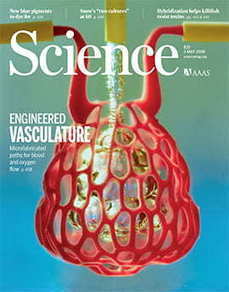
Bioengineers have cleared a major hurdle on the path to 3D printing replacement organs. It's a breakthrough technique for bioprinting tissues with exquisitely entangled vascular networks that mimic the body's natural passageways for blood, air, lymph and other vital fluids. The new innovation allows scientists to create exquisitely entangled vascular networks that mimic the body's natural passageways for blood, air, lymph and other vital fluids. The research is featured on the cover of this week's issue of Science. It includes a visually stunning proof-of-principle -- a hydrogel model of a lung-mimicking air sac in which airways deliver oxygen to surrounding blood vessels. Also reported are experiments to implant bioprinted constructs containing liver cells into mice. The work was led by bioengineers Jordan Miller of Rice University and Kelly Stevens of the University of Washington (UW) and included 15 collaborators from Rice, UW, Duke University, Rowan University and Nervous System, a design firm in Somerville, Massachusetts. "One of the biggest road blocks to generating functional tissue replacements has been our inability to print the complex vasculature that can supply nutrients to densely populated tissues," said Miller, assistant professor of bioengineering at Rice's Brown School of Engineering. "Further, our organs actually contain independent vascular networks -- like the airways and blood vessels of the lung or the bile ducts and blood vessels in the liver. These interpenetrating networks are physically and biochemically entangled, and the architecture itself is intimately related to tissue function. Ours is the first bioprinting technology that addresses the challenge of multivascularization in a direct and comprehensive way." Stevens, assistant professor of bioengineering in the UW College of Engineering, assistant professor of pathology in the UW School of Medicine, and an investigator at the UW Medicine Institute for Stem Cell and Regenerative Medicine, said multivascularization is important because form and function often go hand in hand. "Tissue engineering has struggled with this for a generation," Stevens said. "With this work we can now better ask, 'If we can print tissues that look and now even breathe more like the healthy tissues in our bodies, will they also then functionally behave more like those tissues?' This is an important question, because how well a bioprinted tissue functions will affect how successful it will be as a therapy."
|



![Scientists Solve the Mystery of the "Galaxy with No Dark Matter" – KKS2000]04 (NGC1052-DF2) | Amazing Science | Scoop.it](https://img.scoop.it/DbiXrBJDyBMGufsEtBvQAjl72eJkfbmt4t8yenImKBVvK0kTmF0xjctABnaLJIm9)