Your new post is loading...

|
Scooped by
Dr. Stefan Gruenwald
August 14, 2019 10:52 AM
|
Climate change is a problem facing countries around the world, but media coverage of the topic differs from one nation to the next. A new study from the University of Kansas shows the way media frame climate change coverage can be predicted by several national factors, yet none tend to frame it as an immediate problem requiring national policies to address the issue. While richer countries tend to frame climate change coverage as a political issue, poorer countries more often frame it as an international issue that the world at large needs to address. “Media can tell people what to think about. At the same time, framing can have an effect on how people think about certain issues,” said Hong Vu, assistant professor of journalism at KU and the study’s lead author. “Not only can framing have an impact onhow an issue is perceived but on whether and how policy is made on the issue. With big data, machine-learning techniques, we were able to analyze a large amount of media climate change coverage from 45 countries and territories from 2011 to 2015.” Vu and co-authors Yuchen Liu, graduate student at KU; and Duc Vinh Tran of Hanoi University of Science and Technology published their findings in the journal Global Environmental Change. They analyzed over 37,000 articles and considered national factors such as economic development, weather and energy consumption. They reviewed headlines from nationally circulated publications of varying political ideologies that contained the keywords “greenhouse gas,” “climate change” and/or “global warming,” or the local language equivalent. The most consistent predictor of how the issue was framed was a nation’s gross domestic product per capita. “We showed that the issue is more politicized in richer countries. In poorer countries, it was framed more as an international issue,” Vu said. “Which makes sense, as poorer countries don’t have the resources that richer countries do to fight it.”
|
|
Scooped by
Dr. Stefan Gruenwald
August 14, 2019 10:47 AM
|
Farms could hold the key to meeting humanity's energy demands and ushering in a greener, more sustainable future. Research from Oregon State University published last week showed that covering just one percent of the world’s farmland with solar panels would be enough to meet global electricity needs. Research from Oregon State University that was published last week shows that covering just one percent of the world’s farmland with solar panels would be enough to meet global electricity needs. The findings, which looked at five Tesla-supplied setups in the area to model a global solution, have been published in the journal Scientific Reports. “There’s an old adage that agriculture can overproduce anything,” Chad Higgins, an associate professor in OSU’s college of agricultural sciences, said in a statement. “That’s what we found in electricity, too. It turns out that 8,000 years ago, farmers found the best places to harvest solar energy on Earth.” The setup, known as both “agrivoltaics” or “agrophotovoltaics,” has been shown in previous research as a more efficient way of using the same farmland. It could benefit crops and provide power for both the farm itself and the broader community. Agrivoltaics: How It Works Crops take up land. Solar panels also take up land. But solar doesn’t need to sit directly on the ground like the crops, so why not place them over the crops to better use the land? That’s the thinking behind agrivoltaics. One of the first to outline the idea was Adolf Goetzberger and Armin Zastrow, who wrote a 1981 paper in the International Journal of Solar Energy calling for solar panels to be placed two meters above crops. The University of Hohenheim in Germany explored the idea in 2017, and found that it could hold great benefits. They studied 720 solar panels covering a number of crops to see the change in yields. Clover grass yields dropped 5.3 percent, and others like potatoes and wheat by 18 percent, but the energy could match the farm load and send surplus energy to a nearby utility company.
|
|
Scooped by
Dr. Stefan Gruenwald
August 8, 2019 12:00 PM
|
Astronomers are planning to hunt for cores of exoplanets around white dwarf stars by 'tuning in' to the radio waves that they emit. In new research led by the University of Warwick, scientists have determined the best candidate white dwarfs to start their search, based upon their likelihood of hosting surviving planetary cores and the strength of the radio signal that we can 'tune in' to. Published in the Monthly Notices of the Royal Astronomical Society, the research led by Dr Dimitri Veras from the Department of Physics assesses the survivability of planets that orbit stars which have burnt all of their fuel and shed their outer layers, destroying nearby objects and removing the outer layers of planets. They have determined that the cores which result from this destruction may be detectable and could survive for long enough to be found from Earth. The first exoplanet confirmed to exist was discovered orbiting a pulsar by co-author Professor Alexander Wolszczan from Pennsylvania State University in the 1990s, using a method that detects radio waves emitted from the star. The researchers plan to observe white dwarfs in a similar part of the electromagnetic spectrum in the hope of achieving another breakthrough. The magnetic field between a white dwarf and an orbiting planetary core can form a unipolar inductor circuit, with the core acting as a conductor due to its metallic constituents. Radiation from that circuit is emitted as radio waves which can then be detected by radio telescopes on Earth. The effect can also be detected from Jupiter and its moon Io, which form a circuit of their own. However, the scientists needed to determine how long those cores can survive after being stripped of their outer layers. Their modelling revealed that in a number of cases, planetary cores can survive for over 100 million years and as long as a billion years. The astronomers plan to use the results in proposals for observation time on telescopes such as Arecibo in Puerto Rico and the Green Bank Telescope in West Virginia to try to find planetary cores around white dwarfs.
|
|
Scooped by
Dr. Stefan Gruenwald
August 7, 2019 7:59 PM
|
Using genetic tools in mice, researchers at Johns Hopkins Medicine say they have identified a pair of proteins that precisely control when sound-detecting cells, known as hair cells, are born in the mammalian inner ear. The proteins, described in a report published June 12 in eLife, may hold a key to future therapies to restore hearing in people with irreversible deafness. “Scientists in our field have long been looking for the molecular signals that trigger the formation of the hair cells that sense and transmit sound,” says Angelika Doetzlhofer, Ph.D., associate professor of neuroscience at the Johns Hopkins University School of Medicine. “These hair cells are a major player in hearing loss, and knowing more about how they develop will help us figure out ways to replace hair cells that are damaged.” In order for mammals to hear, sound vibrations travel through a hollow, snail shell-looking structure called the cochlea. Lining the inside of the cochlea are two types of sound-detecting cells, inner and outer hair cells, which convey sound information to the brain. An estimated 90% of genetic hearing loss is caused by problems with hair cells or damage to the auditory nerves that connect the hair cells to the brain. Deafness due to exposure to loud noises or certain viral infections arises from damage to hair cells. Unlike their counterparts in other mammals and birds, human hair cells cannot regenerate. So, once hair cells are damaged, hearing loss is likely permanent. Scientists have known that the first step in hair cell birth starts at the outermost part of the spiraled cochlea. Here, precursor cells start transforming into hair cells. Then, like sports fans performing “the wave” in a stadium, precursor cells along the spiral shape of the cochlea turn into hair cells along a wave of transformation that stops when it reaches the inner part of the cochlea. Knowing where hair cells start their development, Doetzlhofer and her team went in search of molecular cues that were in the right place and at the right time along the cochlear spiral. Of the proteins the researchers examined, the pattern of two proteins, Activin A and follistatin, stood out from the rest. Along the spiral path of the cochlea, levels of Activin A increased where precursor cells were turning into hair cells. Follistatin, however, appeared to have the opposite behavior of Activin A. Its levels were low in the outermost part of the cochlea when precursor cells were first starting to transform into hair cells and high at the innermost part of the cochlea’s spiral where precursor cells hadn’t yet started their conversion. Activin A seemed to move in a wave inward, while follistatin moved in a wave outward.
|
|
Scooped by
Dr. Stefan Gruenwald
August 6, 2019 11:57 AM
|
University of Sydney astronomers, working with international colleagues, have found a star system like none seen before in our galaxy. The scientists believe one of the stars—about 8000 light years from Earth—is the first known candidate in the Milky Way to produce a dangerous gamma-ray burst, among the most energetic events in the universe, when it explodes and dies. The system, comprising a pair of scorchingly luminous stars, was nicknamed Apep by the team after the serpentine Egyptian god of chaos. One star is on the brink of a massive supernova explosion. The findings, published today in Nature Astronomy, are controversial as no gamma-ray burst has ever been detected within our own galaxy, the Milky Way. Yet in the southern constellation of Norma, nestled just beneath Scorpio's tail, astronomers have discovered this uniquely beautiful star system. At its heart, wrapped in an elegantly sculpted plume of dust and gas, lies a powerful binary pair. The two hot, luminous stars—known to astronomers as Wolf-Rayets - orbit each other every hundred years or so, according to the research conducted at the Sydney Institute for Astronomy. This orbital dance is embossed on a fast wind streaming off the stars. Using spectroscopy, the astronomers have measured the velocity of the stellar winds as fast as 12 million kilometers an hour, about 1 percent the speed of light. Dr. Joe Callingham, lead author of the study, said: "We discovered this star as an outlier in a survey with a radio telescope operated by the University of Sydney. "We knew immediately we had found something quite exceptional: the luminosity across the spectrum from the radio to the infrared was off the charts," said Dr. Callingham, who is now at the Netherlands Institute for Radio Astronomy. When we saw the stunning dust plume coiled around the these incandescent stars, we decided to name it 'Apep' - the monstrous serpent deity and mortal enemy of Sun god Ra from Egyptian mythology." That sculpted plume is what makes the system so important, said Professor Peter Tuthill, research group leader at the University of Sydney. "When we saw the spiral dust tail we immediately knew we were dealing with a rare and special kind of nebula called a pinwheel," Professor Tuthill said.
|
|
Scooped by
Dr. Stefan Gruenwald
August 5, 2019 8:02 PM
|
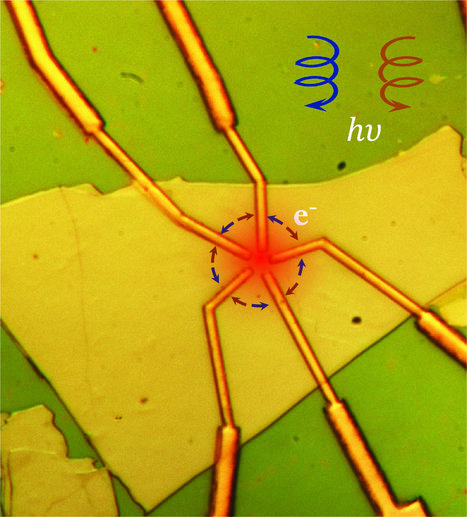
Insights from quantum physics have allowed engineers to incorporate components used in circuit boards, optical fibers, and control systems in new applications ranging from smartphones to advanced microprocessors. But, even with significant progress made in recent years, researchers are still looking for new and better ways to control the uniquely powerful electronic properties of quantum materials. A new study from Penn researchers found that Weyl semimetals, a class of quantum materials, have bulk quantum states whose electrical properties can be controlled using light. The project was led by Ritesh Agarwal and graduate student Zhurun Ji in the School of Engineering and Applied Science. The findings are published in Nature Materials. A hint of these unconventional photogalvanic properties, or the ability to generate electric current using light, was first reported by Agarwal in silicon. His group was able to control the movement of electrical current by changing the chirality, or the inherent symmetry of the arrangement of silicon atoms, on the surface of the material. "At that time, we were also trying to understand the properties of topological insulators, but we could not prove that what we were seeing was coming from those unique surface states," Agarwal explains. Then, while conducting new experiments on Weyl semimetals, where the unique quantum states exist in the bulk of the material, Agarwal and Ji got results that didn't match any theories that could explain how the electrical field was moving when activated by light. Instead of the electrical current flowing in a single direction, the current moved around the semimetal in a swirling circular pattern. Agarwal and Ji turned to Kane and Mele to help develop a new theoretical framework that could explain what they were seeing. After conducting new, extremely thorough experiments to iteratively eliminate all other possible explanations, the physicists were able to narrow the possible explanations to a single theory related to the structure of the light beam. "When you shine light on matter, it's natural to think about a beam of light as laterally uniform," says Mele. "What made these experiments work is that the beam has a boundary, and what made the current circulate had to do with its behavior at the edge of the beam." Using this new theoretical framework, and incorporating Rappe's insights on the electron energy levels inside the material, Ji was able to confirm the unique circular movements of the electrical current. The scientists also found that the current's direction could be controlled by changing the light beam's structure, such as changing the direction of its polarization or the frequency of the photons.
|
|
Scooped by
Dr. Stefan Gruenwald
August 4, 2019 10:55 AM
|
The phrase "positive reinforcement," is something you hear more often in an article about child rearing than one about artificial intelligence. But according to Alice Parker, Dean's Professor of Electrical Engineering in the Ming Hsieh Department of Electrical and Computer Engineering, a little positive reinforcement is just what our AI machines need. Parker has been building electronic circuits for over a decade to reverse-engineer the human brain to better understand how it works and ultimately build artificial systems that mimic it. Her most recent paper, co-authored with Ph.D. student Kun Yue and colleagues from UC Riverside, was just published in the journal Science Advances and takes an important step towards that ultimate goal. Neuromorphic computing is an approach to efficiently solve complicated learning and cognition problems like the human brain using electronics. To efficiently implement the functionality of biological neurons, nanodevices and their implementations in circuits are exploited. Here, we describe a general-purpose spiking neuromorphic system that can solve on-the-fly learning problems, based on magnetic domain wall analog memristors (MAMs) that exhibit many different states with persistence over the lifetime of the device. The research includes micromagnetic and SPICE modeling of the MAM, CMOS neuromorphic analog circuit design of synapses incorporating the MAM, and the design of hybrid CMOS/MAM spiking neuronal networks in which the MAM provides variable synapse strength with persistence. Using this neuronal neuromorphic system, simulations show that the MAM-boosted neuromorphic system can achieve persistence, can demonstrate deterministic fast on-the-fly learning with the potential for reduced circuitry complexity, and can provide increased capabilities over an all-CMOS implementation.
|
|
Scooped by
Dr. Stefan Gruenwald
August 4, 2019 10:48 AM
|
Scientists have long suspected that a quantum phenomenon might play a role in photosynthesis and other chemical reactions of nature, but don't know for sure because such a phenomenon is so difficult to identify. Purdue University researchers have demonstrated a new way to measure the phenomenon of entanglement in chemical reactions—the ability of quantum particles to maintain a special correlation with each other over a large distance. Uncovering exactly how chemical reactions work could bring ways to mimic or recreate them in new technologies, such as for designing better solar energy systems. The study, published on Aug. 2nd 2019 in Science Advances, generalizes a popular theorem called "Bell's inequality" to identify entanglement in chemical reactions. In addition to theoretical arguments, the researchers also validated the generalized inequality through a quantum simulation. "No one has experimentally shown entanglement in chemical reactions yet because we haven't had a way to measure it. For the first time, we have a practical way to measure it," said Sabre Kais, a professor of chemistry at Purdue. "The question now is, can we use entanglement to our advantage to predict and control the outcome of chemical reactions?"
|
|
Scooped by
Dr. Stefan Gruenwald
August 4, 2019 10:43 AM
|
Scientists can tell a lot about a star by the light it gives off. The color, for example, reveals its surface temperature and the elements in and around it. Brightness correlates with a star’s mass, and for many stars, brightness fluctuates, a bit like a flickering candle. A team of scientists led by UC Santa Barbara researcher Thomas Kupferrecently discovered a new class of these pulsators that vary in brightness every five minutes. Their results appeared in The Astrophysical Journal Letters. “Many stars pulsate, even our sun does on a very small scale,” said Kupfer, a postdoctoral scholar at UC Santa Barbara’s Kavli Institute for Theoretical Physics (KITP). A true pulsator can vary in brightness by some 10% due to a periodic change in its temperature, radius or both. “Those with the largest brightness changes are usually radial pulsators, ‘breathing’ in and out as the entire star changes size,” he explained. By studying pulsations in detail, scientists can learn about these stars’ interior properties. Initially, Kupfer and his colleagues at Caltech were searching for binary stars with periods less than an hour in observations from the Zwicky Transient Facility, a sky survey at the Palomar Observatory near San Diego. Four stood out due to large changes in their brightness over just a few minutes. Follow-up data quickly confirmed that they were indeed pulsators, not binary pairs. Working with his Caltech collaborators, alongside former UC Santa Barbara doctoral student Evan Bauer and KITP Director Lars Bildsten, Kupfer has now identified the stand-out stars as hot subdwarf pulsators. A subdwarf is a star about one-tenth the diameter of the sun with a mass between 20 and 50% that of sun. They’re incredibly hot — up to 90,000 degrees Fahrenheit, compared to the sun’s 10,000 F. “These stars have certainly completed fusing all of the hydrogen in their core into helium, explaining why they are so small and can oscillate so rapidly,” said Bildsten.
|
|
Scooped by
Dr. Stefan Gruenwald
July 31, 2019 5:53 PM
|
Researchers in Israel created malware to draw attention to serious security weaknesses in medical imaging equipment and networks. When Hillary Clinton stumbled and coughed through public appearances during her 2016 presidential run, she faced critics who said that she might not be well enough to perform the top job in the country. To quell rumors about her medical condition, her doctor revealed that a CT scan of her lungs showed that she just had pneumonia. But what if the scan had shown faked cancerous nodules, placed there by malware exploiting vulnerabilities in widely used CT and MRI scanning equipment? Researchers in Israel say they have developed such malware to draw attention to serious security weaknesses in critical medical imaging equipment used for diagnosing conditions and the networks that transmit those images — vulnerabilities that could have potentially life-altering consequences if unaddressed. The malware they created would let attackers automatically add realistic, malignant-seeming growths to CT or MRI scans before radiologists and doctors examine them. Or it could remove real cancerous nodules and lesions without detection, leading to misdiagnosis and possibly a failure to treat patients who need critical and timely care. Yisroel Mirsky, Yuval Elovici and two others at the Ben-Gurion University Cyber Security Research Center in Israel who created the malware say that attackers could target a presidential candidate or other politicians to trick them into believing they have a serious illness and cause them to withdraw from a race to seek treatment. The research isn’t theoretical. In a blind study the researchers conducted involving real CT lung scans, 70 of which were altered by their malware, they were able to trick three skilled radiologists into misdiagnosing conditions nearly every time. In the case of scans with fabricated cancerous nodules, the radiologists diagnosed cancer 99 percent of the time. In cases where the malware removed real cancerous nodules from scans, the radiologists said those patients were healthy 94 percent of the time.
|
|
Scooped by
Dr. Stefan Gruenwald
July 31, 2019 12:09 PM
|
He's big. He's slimy. And he's red?! Meet Triboniophorus aff. graeffei, a new species of 8-inch-long (20-centimeter-long) slug that's found only on one Australian mountain. Scientists already knew that a bright-pink slug lived on Mount Kaputar (map), thinking it was a variety of the red. Scientists already knew that a bright-pink slug lived on Mount Kaputar (map), thinking it was a variety of the red triangle slug, a species common along the east coast of Australia. But new research shows that the colorful critter is actually its own species, said Australia’s National Parks and Wildlife Service ranger Michael Murphy. “Recent morphological and genetics work by a researcher working on this slug family—the Athorcophoridae—has indicated the Kaputar slugs are a unique species endemic to Mount Kaputar and the only representative of this family in inland Australia,” said Murphy, who’s been stationed on Mount Kaputar for 20 years. The pink slug had gone unstudied for so long because Australian slug and snail researchers—known as malacologists—are far outnumbered by their koala-investigating brethren, Murphy said. Their research on the new slug will likely be submitted for publication soon, he added. Meanwhile, though, the Australian government has moved to protect this rosy rarity and other unique species by designating their mountain home in New South Wales as an “endangered ecological area.” Quirk of Evolution Tens of millions of years ago, Australia was part of a larger southern continent known as Gondwana, which included Australia, Papua New Guinea, India, and parts of Africa and South America. It was covered in rain forests similar to those of modern-day Papua New Guinea. A volcanic eruption 17 million years ago on Mount Kaputar kept a small, four-square-mile (ten-square-kilometer) area lush and wet even as much of the rest of Australia turned to desert. This changing environment marooned the plants and animals living on Mount Kaputar from their nearest neighbors for millions of years, making the area a unique haven for species such as the pink slug. Because the pink slugs live in beds of red eucalyptus leaves, Murphy suspects their color could potentially serve as camouflage, helping the animals blend in to their leafy habitat.
|
|
Scooped by
Dr. Stefan Gruenwald
July 26, 2019 9:42 PM
|
Complex neuromorphic systems are set to drive many more benefits in the future, Intel hopes. Intel has revealed a new powerful AI solution codenamed Pohoiki Beach, which the chip giant boasts can crunch data up to 1,000 times faster than a general-purpose CPU. Pohoiki Beach is a complex neuromorphic system built from 64 Loihi research chips, and its architecture is crafted along the same lines as the human brain. With this new system, Intel promises not just to process information up to 1,000 times faster than your typical CPU, as already mentioned, but furthermore, even greater gains in terms of efficiency to the tune of a factor of 10,000. Of course, this is for specific compute-intensive applications such as sparse coding, graph search and constraint-satisfaction, Intel advises. Real-world benefits With real-world usage, this tech can be applied to a wide variety of scenarios, such as improving the performance of a powered robotic prosthetic leg – helping it deal with uneven ground underfoot – or indeed bettering the world of self-driving cars by facilitating more accurate digital maps for these autonomous vehicles. Intel further notes that Pohoiki Beach projects also include automating a foosball table with neuromorphic sensing and control, which sounds interesting, along with facilitating tactile input for the skin of an iCub robot. Pohoiki Beach is currently an 8 million neuron system, but Intel is looking to scale up to 100 million neurons before 2019 is out, so bigger and better things are to come with the data crunching power on tap. The company boasts: “Later this year, Intel will introduce an even larger Loihi system named Pohoiki Springs, which will build on the Pohoiki Beach architecture to deliver an unprecedented level of performance and efficiency for scaled-up neuromorphic workloads.” Check out the best business PCs of 2019
|
|
Scooped by
Dr. Stefan Gruenwald
July 26, 2019 9:31 PM
|
It was no less a luminary than Isaac Newton who taught us that for every action, there is an equal and opposite reaction. Push on the wall, and it pushes back. With that in mind, cosmic “white holes” make a lot of sense — they seem inevitable, even.
We all know about black holes, those cosmic vacuum cleaners that suck in anything (including light) that gets too close. Well, what about the opposite? Might the vast unending cosmos also feature white holes, which emit matter and energy into the void, but could never be entered?
It’s appealing to our sense that things often come in binaries — if there’s an off switch, there’s probably an on switch somewhere. And white holes also feel like a necessary balance to the finality of black holes: Where does all that sucked-up stuff go?
Unfortunately, whether or not white holes truly exist remains an open question. But that hasn’t stopped researchers from thinking about what they’d be like if they do exist. Some theories suggest they might even be necessary to solve some longstanding problems, from the nature of dark matter to the nature of the universe itself. As with all things cosmic and “hole”-y, white holes trace their origins to Albert Einstein’s general theory of relativity. Some solutions of the theory’s complex equations produce black holes and, it turns out, other solutions produce white holes. The two are, mathematically at least, equally likely to exist.
Further, black holes and white holes are as intertwined as the names suggest. NASA astrophysicists have referred to the latter as “the time-inverse of black holes.” Reverse the film footage of a black hole, in other words, and you’ll get a white hole — and vice versa.
Great, but what does that actually mean? Some interpretations are fairly literal. White holes may simply be the opposite end of black holes, connected by theoretical tunnels of space-time called (of course) wormholes. So the matter and energy falling into a black hole would eventually beam out of a white hole, somewhere in this or another universe.
But don’t go rushing into a black hole just yet, hoping for a free vacation to a distant land: The crushing gravity would ensure that only a mangled and broken down version of you and your luggage would make it out the white hole on the other side. Black Holes Reborn Another interpretation of what they could look like in real life came in 2014, when researchers suggested white holes might arise from the corpses of black holes. Current thinking says that black holes emit radiation and slowly evaporate, getting tinier and tinier until they just pop out of existence. But, it now seems, certain conceptions of the universe say that might be impossible. Just as light and matter are quantized — they come in discrete bundles of packets that can’t be divided — so, too, might space-time itself come in distinct chunks.
If that’s true, then a black hole could only shrink until hitting that natural limit. That’s when it would rebound outward in a “quantum bounce,” turning the shrinking black hole into an expanding white hole. It sounds fantastical, but the math apparently checks out.
This idea could solve a number of problems plaguing physics. First, the black hole information paradox would be almost trivially resolved. Put simply, the paradox states that the information entering black holes would disappear completely along with the death of a black hole, as it evaporated into nothing. But information is supposed to be inviolate, and can never be completely destroyed. Quantum bounces would solve that problem neatly: All the information stored within a black hole would simply be spewed out when it becomes a white hole.
White holes might also help explain the identity of dark matter, another recurring headache among theorists. The problem here is that something is holding together parts of the universe, even though nothing is visibly doing so. The current explanation calls that invisible stuff dark matter, a mysterious substance that doesn’t react with light or any other known force of nature except gravity. No one knows just what dark matter might be, even though it seems to make up about 84 percent of all the matter in the universe. But a 2018 paper suggested that white holes — hard to detect, and made of a mysterious kind of matter — might just make up a big chunk, if not all, of the dark stuff.
|
|
|
Scooped by
Dr. Stefan Gruenwald
August 14, 2019 10:50 AM
|
Smog can spike during hot days. A new study finds that the effects of breathing air pollution may be cumulative. Long-term exposure may lead to lung disease, even among people who've never smoked. Emphysema is considered a smoker's disease. But it turns out, exposure to air pollution may lead to the same changes in the lung that give rise to emphysema. A new study published Tuesday in JAMA finds that long-term exposure to slightly elevated levels of air pollution can be linked to accelerated development of lung damage, even among people who have never smoked. The study looked at the health effects of breathing in various pollutants, including ground-level ozone, the main component of smog. The researchers found that people in the study who were exposed for years to higher-than-average concentrations of ground-level ozone developed changes to their lungs similar to those seen in smokers. "We found that an increase of about three parts per billion [of ground-level ozone] outside your home was equivalent to smoking a pack of cigarettes a day for 29 years," says one study author, Joel Kaufman, a physician and epidemiologist at the University of Washington.
|
|
Scooped by
Dr. Stefan Gruenwald
August 8, 2019 1:41 PM
|
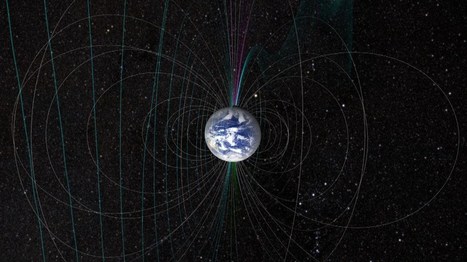
The last reversal of Earth's magnetic poles happened long before humans could record it, but research on the flow of ancient lava has helped scientists estimate the duration of this strange phenomenon. A team of researchers used volcanic records to study Earth's last magnetic-field reversal, which occurred about 780,000 years ago. They found that this flip may have taken much longer than researchers previously thought, the scientists reported in a new study. Earth's magnetic field has flipped dozens of times in the past 2.5 million years, with north becoming south and vice versa. Scientists know the last reversal took place during the Stone Age, but they have little information about the duration of this phenomenon and when the next "flip" might occur.
|
|
Scooped by
Dr. Stefan Gruenwald
August 8, 2019 11:39 AM
|
In an attempt to create a "Noah's ark" or a "back-up" for the Earth, non-profit organization The Arch Mission sent a lunar library -- a stack of DVD-sized disks that acts as an archive of 30 million pages of information about the planet -- to the moon. Along with the library, Arch Mission sent human DNA samples and a payload of tardigrades, which had been dehydrated, into space. "We chose them because they are special. They are the toughest form of life we know of. They can survive practically any planetary cataclysm. They can survive in the vacuum of space, they can survive radiation," Nova Spivack, co-founder of the Arch Mission Foundation, said. Tardigrades have eight legs with claws at the end, a brain and central nervous system, and a sucker-like pharynx behind their mouth, which can pierce food. The Arch Mission put the creatures into a state of "suspended animation," where the body dries out and the metabolism slows to as little as 0.01% of its normal rate. "In that state you can later rehydrate them in a laboratory and they will wake up and be alive again," Spivack explained. Although the animals won't be able to reproduce or move around in their dehydrated state -- if they have survived the crash -- if rehydrated they could come back to life years later. "We don't often get a chance to land life on the moon that we decided to seize the day and send some along for the ride," Spivack added. The Arch Mission also sent a 30 million-page library along for the ride. Researchers hope that along with the tardigrades, the majority of the information from the lunar library survived the impact of the crash -- and could be used to regenerate human life in millions of years. "Best-case scenario is that the little library is fully intact, sitting on a nice sandy hillside on the moon for a billion years. In the distant future it might be recovered by our descendants or by a future form of intelligent life that might evolve long after we're gone," Spivack said. "From the DNA and the cells that we included, you could clone us and regenerate the human race and other plants and animals," he added.
|
|
Scooped by
Dr. Stefan Gruenwald
August 7, 2019 7:56 PM
|
How can a planet be "hotter than hot?" The answer is when heavy metals are detected escaping from the planet's atmosphere, instead of condensing into clouds. Observations by NASA's Hubble Space Telescope reveal magnesium and iron gas streaming from the strange world outside our solar system known as WASP-121b. The observations represent the first time that so-called "heavy metals" -- elements heavier than hydrogen and helium -- have been spotted escaping from a hot Jupiter, a large, gaseous exoplanet very close to its star. Normally, hot Jupiter-sized planets are still cool enough inside to condense heavier elements such as magnesium and iron into clouds. But that's not the case with WASP-121b, which is orbiting so dangerously close to its star that its upper atmosphere reaches a blazing 4,600 degrees Fahrenheit. The temperature in WASP-121b's upper atmosphere is about 10 times greater than that of any known planetary atmosphere. The WASP-121 system resides about 900 light-years from Earth. "Heavy metals have been seen in other hot Jupiters before, but only in the lower atmosphere," explained lead researcher David Sing of the Johns Hopkins University in Baltimore, Maryland. "So you don't know if they are escaping or not. With WASP-121b, we see magnesium and iron gas so far away from the planet that they're not gravitationally bound." Ultraviolet light from the host star, which is brighter and hotter than the Sun, heats the upper atmosphere and helps lead to its escape. In addition, the escaping magnesium and iron gas may contribute to the temperature spike, Sing said. "These metals will make the atmosphere more opaque in the ultraviolet, which could be contributing to the heating of the upper atmosphere," he explained. The sizzling planet is so close to its star that it is on the cusp of being ripped apart by the star's gravity. This hugging distance means that the planet is football shaped due to gravitational tidal forces. "We picked this planet because it is so extreme," Sing said. "We thought we had a chance of seeing heavier elements escaping. It's so hot and so favorable to observe, it's the best shot at finding the presence of heavy metals. We were mainly looking for magnesium, but there have been hints of iron in the atmospheres of other exoplanets. It was a surprise, though, to see it so clearly in the data and at such great altitudes so far away from the planet. The heavy metals are escaping partly because the planet is so big and puffy that its gravity is relatively weak. This is a planet being actively stripped of its atmosphere." The researchers used the observatory's Space Telescope Imaging Spectrograph to search in ultraviolet light for the spectral signatures of magnesium and iron imprinted on starlight filtering through WASP-121b's atmosphere as the planet passed in front of, or transited, the face of its home star. This exoplanet is also a perfect target for NASA's upcoming James Webb Space Telescope to search in infrared light for water and carbon dioxide, which can be detected at longer, redder wavelengths. The combination of Hubble and Webb observations would give astronomers a more complete inventory of the chemical elements that make up the planet's atmosphere. The WASP-121b study is part of the Panchromatic Comparative Exoplanet Treasury (PanCET) survey, a Hubble program to look at 20 exoplanets, ranging in size from super-Earths (several times Earth's mass) to Jupiters (which are over 100 times Earth's mass), in the first large-scale ultraviolet, visible, and infrared comparative study of distant worlds. The observations of WASP-121b add to the developing story of how planets lose their primordial atmospheres. When planets form, they gather an atmosphere containing gas from the disk in which the planet and star formed. These atmospheres consist mostly of the primordial, lighter-weight gases hydrogen and helium, the most plentiful elements in the universe. This atmosphere dissipates as a planet moves closer to its star. "Hot Jupiters are mostly made of hydrogen, and Hubble is very sensitive to hydrogen, so we know these planets can lose the gas relatively easily," Sing said. "But in the case of WASP-121b, the hydrogen and helium gas is outflowing, almost like a river, and is dragging these metals with them. It's a very efficient mechanism for mass loss."
|
|
Scooped by
Dr. Stefan Gruenwald
August 5, 2019 8:42 PM
|
Ironically, from the bacterium's perspective, the very enzyme that it uses to protect itself from antibiotics becomes complicit in its own demise. Bacteria come in two very broad categories based on the structure of their cell walls, the outer region that gives the cells shape and integrity. The cell walls of Gram-positive bacteria consist of a membrane surrounded by a thick layer of sugar and protein, while the cell walls of Gram-negative bacteria consist of a membrane surrounded by a second membrane. This fundamental anatomical difference has a profound medical implication: The types of antibiotics that can kill Gram-positive bacteria are likely ineffective against Gram-negative bacteria and vice versa. A major reason is the cell wall: An antibiotic may be able to penetrate one type but not the other. This is why, for instance, that the drug vancomycin is prescribed to treat Gram-positive infections, such as Staphylococcus, but is completely useless against Gram-negative infections, such as E. coli. Finding new ways to sneak antibiotics past these cell wall barriers is one way that microbiologists are fighting antibiotic resistance. Now, researchers have shown that a synthetic "double Trojan horse" drug can fool bacteria into willingly accepting a toxic antibiotic, essentially causing them to commit suicide.
|
|
Scooped by
Dr. Stefan Gruenwald
August 4, 2019 11:36 AM
|
The huge northern ice sheet is in the middle of its second major melt event this year, a warning sign for the planet. The heat wave that wreaked havoc on Europe in late July has now migrated northward, parking itself over Greenland. As air temperatures over the ice rise, the ice sheet is responding in the only way it knows how: by melting. By Tuesday, over half of the surface of the Greenland ice sheet had softened to slush. This is the second major hot stretch to hit the ice sheet this season, and the second to cause melting across major swaths of the ice sheet. The heat waves were particularly impactful because they arrived after mild, dry winter and spring seasons that primed the ice sheet for melt. The result of this brutal setup is a summer melt season so intense that it’s on track to tie or break the record for the most water loss ever recorded. Already, the melt extent is well outside the range of what’s normally observed at this time of year, said Ruth Mottram, a polar scientist at the Danish Meteorological Institute. “These are records we don’t want to see broken,” she says. This will soon be unexceptional A tectonic plate is dying under Oregon. Here’s why that matters. So far, 2019 is shaping up to rival the worst melt year on record: 2012. At its worst point, in July of 2012, 97 percent of the surface of the Greenland ice sheet was experiencing some sort of melt, scientists estimated—even the icy, more-than-mile-high interior of the ice sheet, which rarely had been seen to soften. Melt coursing off the ice sheet caused rivers to gush so intensely that they blew out bridges in coastal towns. Scientists stepped outside their stations only to sink deep into the unexpectedly soft surface. By the end of July 2012, the ice sheet had lost about 250 billion tons of melt, enough to tick global sea levels up by about eight tenths of a millimeter. That’s pretty close to the estimated 248 billion tons that have been lost so far this year, according to observations made by Marco Tedesco, a polar scientist at Columbia University’s Lamont Doherty Earth Observatory. “We’re basically on pace. We’re in the ballpark of the 2012 record,” he says. On one day (Tuesday) alone, the ice sheet shed about seven billion tons of melt. That’s enough water to fill almost three billion Olympic swimming pools, and about 1.75 times as much as it might lose per day in the average year.
|
|
Scooped by
Dr. Stefan Gruenwald
August 4, 2019 10:49 AM
|
The genes that first enabled plants to grow shoots and conquer the land have been identified by University of Bristol researchers. The findings, published in Current Biology, explain how a 450-million years ago a switch enabled plants to delay reproduction and grow shoots, leaves and buds. Over the course of half a billion years of evolution, plants have evolved from tiny and simple ground-hugging forms into diverse and complex varieties that abound the Earth today, from the garden rose to the 100-metre tall redwood tree. An international research team from the Universities of Bristol (UK), Lyon (France) and Palacký (Czech Republic) has now discovered the secrets of shoot evolution. The team discovered that around 450-million years ago a switch enabled plants to delay reproduction and displace new cells downwards from the shoot tips, paving the way to plant diversification. Using cutting-edge developmental and genetic techniques, the team studied the swollen reproductive structures at the tips of the small stems of mosses. These plants, which represent a starting point for plant evolution, are raised upwards by new cells generated in the middle of the stem. Despite their different patterns of growth, similar genes are responsible for elongating the stems of mosses and plants with more elaborate shoots. Contrary to prior work, the results demonstrate a nascent mechanism for shoot development as plants first emerged on land and suggest that a change in the timing and location of gene activity triggered the radiation of shooting forms. Dr. Jill Harrison, the study's lead author and Senior Lecturer from Bristol's School of Biological Sciences, explains: "By comparing our new findings from a moss with previous findings, we can see that a pre-existing genetic network was remodelled to allow shoot systems to arise in plant evolution." This discovery furthers our basic understanding of how genes regulate plant shape, which could inform efforts to engineer shape and improve the yield of future crops.
|
|
Scooped by
Dr. Stefan Gruenwald
August 4, 2019 10:45 AM
|
Quantum sensors based on nitrogen-vacancy (NV) centers in diamond are a promising detection mode for nuclear magnetic resonance spectroscopy due to their micron-scale detection volume and noninductive-based sample detection requirements. A challenge that exists is to sufficiently realize high spectral resolution coupled with concentration sensitivity for multidimensional NMR analysis of picoliter sample volumes. In a new report now on Science Advances, Janis Smits and an interdisciplinary research team in the departments of High Technology Materials, Physics and Astronomy in the U.S. and Latvia addressed the challenge by spatially separating the polarization and detection phases of the experiment in a microfluidic platform. They realized a spectral resolution of 0.65±0.05 Hz, an order-of-magnitude improvement compared with previous diamond NMR studies. Using the platform, they performed 2-D correlation spectroscopy of liquid analytes with an effective detection volume of ~40 picoliters. The research team used diamond quantum sensors as in-line microfluidic NMR detectors in a major step forward for applications in mass-limited chemical analysis and single-cell biology. Nuclear magnetic resonance (NMR) spectroscopy is a powerful and well-established technique for compositional, structural and functional analysis in a variety of scientific disciplines. In conventional NMR spectrometry the signal-to-noise ratio (SNR) is strongly dependent on the external field strength (B0). As the spectral resolution increased, the B0 increased as well, motivating the development of increasingly large and expensive superconducting magnets for improved resolution and SNR, resulting in a two-fold increase in field strength within the past 25 years. However, even with large B0 values, the detection of microscale volumes often required isotopic labeling, concentrated samples and long experimental timelines. To improve the sensitivity for small sample volumes, researchers developed miniature inductive coils, which allowed several advances, including spectroscopy of egg cells and in vitro diagnostics. The existing sensitivity and detection limits are yet suboptimal for metabolic analysis of single mammalian cells or for inclusion into in-line microfluidic assays. As an alternative NMR detection strategy, quantum-sensors based on nitrogen-vacancy (NV) centers in diamond have emerged due to their sub-micrometer spatial resolution and noninductive-based detection.
|
|
Scooped by
Dr. Stefan Gruenwald
August 2, 2019 7:02 PM
|
Until now, the understanding of the galaxy's shape had been based upon indirect measurements of celestial landmarks within it and inferences from structures observed in other galaxies. The Milky Way is not flat, as previously thought, but warped and twisted in shape, according to the most detailed map ever constructed. Astronomers at the University of Warsaw used a telescope in the Chilean Andes to measure the distances between the sun and 2,400 stars to build a three-dimensional picture of the galaxy we live in. In doing so, they showed it is in fact a disk, with four major spiral arms and a pole-like core running through the middle. Previous maps, which relied on structures observed in other galaxies and indirect measurements of 'landmarks' in the Milky Way, suggested it was flat. 'For the first time, our whole galaxy - from edge to edge of the disk - was mapped using real, precise distances,' said University of Warsaw astronomer Andrzej Udalski, co-author of the study published in the journal Science. The map showed that the galaxy's disk, far from flat, is significantly warped and varies in thickness from place to place, with increasing thickness measured further from the galactic center. The new map was formulated using precise measurements of the distance from the sun to 2,400 stars called 'Cepheid variables' scattered throughout the galaxy. 'Cepheids are ideal to study the Milky Way for several reasons,' added University of Warsaw astronomer and study co-author Dorota Skowron. 'Cepheid variables are bright supergiant stars and they are 100 to 10,000 times more luminous than the sun, so we can detect them on the outskirts of our galaxy. They are relatively young - younger than 400 million years - so we can find them near their birthplaces.' The astronomers tracked the Cepheids using the Warsaw Telescope located in the Chilean Andes. These stars pulsate at regular intervals and can be seen through the galaxy's immense clouds of interstellar dust that can make dimmer stellar bodies hard to spot. The map showed that the galaxy's disk, far from flat, is significantly warped and varies in thickness from place to place, with increasing thickness measured further from the galactic center. The disk boasts a diameter of about 140,00 light years. Each light year is about 6 trillion miles (9 trillion km). The Milky Way began to form relatively soon after the Big Bang explosion that marked the beginning of the universe some 13.8 billion years ago.
|
|
Scooped by
Dr. Stefan Gruenwald
July 31, 2019 5:21 PM
|
Five years after Google acquired DeepMind, the health and artificial intelligence group is unveiling its biggest breakthrough yet in health care. Its technology is able to predict if a patient has potentially fatal kidney injuries 48 hours before many symptoms can be recognized by doctors. In a paper published on Wednesday in the journal Nature, DeepMind researchers said their algorithms correctly predicted 90 percent of acute kidney injuries that would end up requiring dialysis. The work was the result of a project with the U.S. Department of Veteran Affairs to help doctors get a head start on treatment. “We’ve been really excited for the potential of using AI to support clinicians moving care from reactive to proactive and preventative,” said Dominic King, DeepMind’s co-founder and clinical lead, in an interview. About 2 million people die every year across the globe from acute kidney injury, according to researchers from the University of Pittsburgh School of Medicine. The condition, which involves a sudden episode of kidney failure or damage, can be tricky for doctors to diagnose because there aren’t always immediate and clear symptoms. Studies have shown that catching it early can decrease the likelihood of serious injury or death. In 2014, Google acquired DeepMind for a reported $500 million as it looked to expand in AI and bring in top industry experts to work on hard problems involving machine learning. As Alphabet and its various units have stepped into the health-care space in the past few years, much of the focus has been on using its technology to predict serious health outcomes before they happen. DeepMind’s health projects will soon be folded into Google Health, led by David Feinberg. The group hasn’t said much publicly beyond its website, which says it’s studying how AI can be used to assist in “diagnosing cancer, predicting patient outcomes, preventing blindness, and much more.” Much of its team remains based in the U.K., although its health unit is expected to relocate to Google’s Silicon Valley headquarters.
|
|
Scooped by
Dr. Stefan Gruenwald
July 31, 2019 12:03 PM
|
The Chattanooga Metropolitan Airport has announced the completion of a solar farm that can power 100% of its daily energy needs. It's the first airport in America to do so. Chattanooga's been having quite a cultural moment recently, what with dozens of new restaurants and bars popping up across town. Last September,The Edwin Hotel, a member of The Autograph Collection, opened with much fanfare, joining The Dwell and The Moxy Chattanooga Downtown in The Scenic City's growing boutique hotel scene. Now, Tennessee's fourth-largest city is once again turning heads by claiming a first in the sustainability sector. Earlier this month, the Chattanooga Metropolitan Airport announced that it had hit a much-anticipated milestone in becoming the first airfield in the United States powered by 100% solar energy. The end result of an ambitious project that started seven years ago, the airport's 2.64-megawatt solar farm was completed with about $5 million of funding from the Federal Aviation Administration. That investment is expected to be earned back in under 20 years, as a renewable energy stream brings down the facility's overall costs of operation. According to a press release, the installation measures about the size of 16 football fields—eight long and two wide. “This is a momentous day for the Chattanooga Airport as we complete our solar farm and achieve a major sustainability milestone,” said Terry Hart, president and CEO of the Chattanooga Airport in the release. “This project has immediate benefits to our airport and community, and we’re proud to set an example in renewable energy for other airports, businesses and our region. While generating a local renewable resource, we are also increasing the economic efficiency of the airport.” According to Bloomberg, Chattanooga Airport's solar farm saves energy via storage units that allow operations to continue after sundown. The publication also reports that the system is expected to last between 30 and 40 years. It's worth pointing out that Chattanooga Airport's operation is relatively small, with direct flights to just ten cities including Chicago, Dallas, and New York City via Allegiant, American, Delta, and United Airlines. Still, the airport saw growth in traffic in 2018, with an increase of 4% from the previous year for total of 504,298 passengers. Furthermore, the success of the project could inspire similar endeavors across the nation—already, solar grids are in place at Denver International Airport and Indianapolis International Airport, whose solar farm is the largest in the country. Globally, Chattanooga Airport joins the likes of South Africa's George Airport, The Galapagos' Seymour Airport, and most impressively, India's Cochin International Airport, which became the world's first solar-powered airport back in 2015. Using a 12-megawatt plant, the airport operates 1,000 weekly flights for 27 airlines, serving 10 million passengers annually. Meanwhile Spain's airport operator, Aena, earlier this year approved a $280 million plan to install solar panels in half of its airports.
|
|
Scooped by
Dr. Stefan Gruenwald
July 26, 2019 9:37 PM
|
The race to crack one of biology’s grandest challenges — predicting the 3D structures of proteins from their amino-acid sequences — is intensifying, thanks to new artificial-intelligence (AI) approaches. At the end of last year, Google’s AI firm DeepMind debuted an algorithm called AlphaFold, which combined two techniques that were emerging in the field and beat established contenders in a competition on protein-structure prediction by a surprising margin. And in April this year, a US researcher revealed an algorithm that uses a totally different approach. He claims his AI is up to one million times faster at predicting structures than DeepMind’s, although probably not as accurate in all situations. More broadly, biologists are wondering how else deep learning — the AI technique used by both approaches — might be applied to the prediction of protein arrangements, which ultimately dictate a protein’s function. These approaches are cheaper and faster than existing lab techniques such as X-ray crystallography, and the knowledge could help researchers to better understand diseases and design drugs. “There’s a lot of excitement about where things might go now,” says John Moult, a biologist at the University of Maryland in College Park and the founder of the biennial competition, called Critical Assessment of protein Structure Prediction (CASP), where teams are challenged to design computer programs that predict protein structures from sequences. Innovative approach The latest algorithm’s creator, Mohammed AlQuraishi, a biologist at Harvard Medical School in Boston, Massachusetts, hasn’t yet directly compared the accuracy of his method with that of AlphaFold — and he suspects that AlphaFold would beat his technique in accuracy when proteins with sequences similar to the one being analysed are available for reference. But he says that because his algorithm uses a mathematical function to calculate protein structures in a single step — rather than in two steps like AlphaFold, which uses the similar structures as groundwork in the first step — it can predict structures in milliseconds rather than hours or days. “AlQuraishi’s approach is very promising. It builds on advances in deep learning as well as some new tricks AlQuraishi has invented,” says Ian Holmes, a computational biologist at the University of California, Berkeley. “It might be possible that, in the future, his idea can be combined with others to advance the field,” says Jinbo Xu, a computer scientist at the Toyota Technological Institute at Chicago, Illinois, who competed at CASP13. At the core of AlQuraishi’s system is a neural network, a type of algorithm inspired by the brain’s wiring that learns from examples. It’s fed with known data on how amino-acid sequences map to protein structures and then learns to produce new structures from unfamiliar sequences. The novel part of his network lies in its ability to create such mappings end-to-end; other systems use a neural network to predict certain features of a structure, then another type of algorithm to laboriously search for a plausible structure that incorporates those features. AlQuraishi’s network takes months to train, but once trained, it can transform a sequence to a structure almost immediately.
|