Your new post is loading...

|
Scooped by
Dr. Stefan Gruenwald
December 15, 2019 10:08 PM
|
The discovery of terrestrial exoplanets, planets that orbit stars outside the solar system, has been one of the most significant developments in modern astronomy. Several exoplanets lie in the “habitable zones” of stars, where planets are thought to be able to maintain liquid water on their surface, and have the potential to host life. However, an exoplanet that is too close to its host star is highly sensitive to radiation bursts from the star, also known as flares. In this new study, NYUAD Center for Space Science Research Scientist Dimitra Atri found that not all exoplanets in habitable zones will be able to maintain hospitable conditions for life. Exoplanets in close proximity to stars are subject to radiation bursts which can disrupt habitable conditions unless the exoplanet has significant atmospheric or magnetic shielding. In the study, published in the journal Monthly Notices of the Royal Astronomical Society: Letters, Atri explores how flares from stars affect a planet’s surface radiation dose, and if that can disrupt the planet’s ability to host life. The role of a planet’s magnetic field strength and its atmosphere in providing shielding from these bursts was also examined. The factors measured include flare strength and spectrum, as well as the planetary atmospheric density and magnetic field strength. To calculate the surface radiation dose, particle spectra from 70 major flare emitting events (observed between 1956 and 2012) were used as proxy, and the GEANT4 Monte Carlo model was used to simulate flare interaction with exoplanetary atmospheres. From this study it was concluded that flares can abruptly increase the radiation level on planetary surfaces and have the capability to disrupt potentially habitable conditions on planets. It was also found that the atmospheric depth (column density) and planetary magnetic field are major factors in protecting planets from flares and maintaining a substantial planetary atmosphere. “As we continue to explore the planets of the solar system and beyond, discovering if these planets have the ability to support life continues to be of immense importance,” said Atri. “More progress in this area will improve our understanding of the relationship between extreme solar events, radiation dose, and planetary habitability.” Reference: ” Stellar proton event-induced surface radiation dose as a constraint on the habitability of terrestrial exoplanets” by Dimitra Atri, 4 November 2019, Monthly Notices of the Royal Astronomical Society: Letters. DOI: 10.1093/mnrasl/slz166
|
|
Scooped by
Dr. Stefan Gruenwald
December 15, 2019 10:01 PM
|
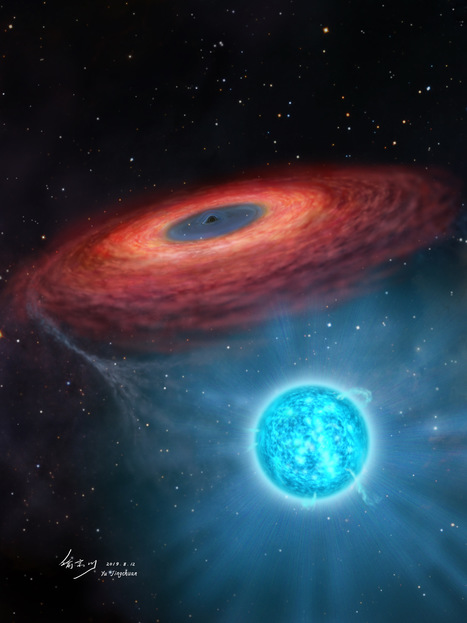
An international team of scientists, led by researchers from the National Astronomical Observatory of China and with the participation of the Instituto de Astrofísica de Canarias and the Universidad de La Laguna, have observed a stellar black hole with a mass 70 times heavier than the Sun. The giant object, called LB-1, challenges the standard theory of stellar evolution. Its detection has been possible thanks to the exhaustive monitoring carried out during several months with the Gran Telescopio Canarias at the Roque de los Muchachos Observatory (La Palma). The result is published in the prestigious scientific journal Nature. How big are the black holes created by the collapse of massive stars? Astronomers estimate that there are 100 million black holes in our Galaxy They thought that the holes were rather small: not more than 15 times the mass of the Sun. But now, an international team of scientists led by Jifeng Liu (National Astronomical Observatory of China, Chinese Academy of Sciences) and with the participation of the Instituto de Astrofísica de Canarias (IAC) has spotted a stellar black hole with a mass 70 times heavier than the Sun. This came as a big surprise. "Black holes of such mass should not even exist in our Galaxy, according to most of the current models of stellar evolution", explains Liu; "now theorists will have to take up the challenge to explain its formation in a solar metallicity environment". The newly discovered monster is located 15 thousand light years from us and has been named LB-1 by the discovery team.
Until just a few years ago, black holes of stellar origin could only be discovered when they gobbled up gas from a companion star. This process creates powerful emissions of X-rays, detectable from Earth, which reveal the presence of the collapsed object. However, the vast majority of black holes in our Galaxy are not engaged in a cosmic banquet right now, and remain in complete darkness. That is why only about two dozen Galactic black holes out of 100 million have been well identified and measured. Liu and collaborators used a different technique to find new black holes. They surveyed the sky with the 4 meter LAMOST optical telescope in north-east China to look for stars that orbit around an invisible object, pulled by its gravity. This search is by no means an easy task. At most one star in a thousand may be going round a black hole: it is like trying to find a needle in a haystack. Recent technological developments of telescopes and detectors have finally made this quest possible, more than 200 years after this technique was first proposed by the visionary English scientist John Michell. The largest existing telescopes, the Spanish 10.4 meter Gran Telescopio Canarias (GTC), also known as Grantecan, and United States 10 meter Keck telescope, were used to follow-up LB-1 LAMOST discovery to determine the system physical parameters. “These observations were made possible thanks to the large light collecting area of the Grantecan and to its highly flexible observing mode, which allowed an intensive monitoring of the source over several months”, adds Romano Corradi, director of the telescope.
|
|
Scooped by
Dr. Stefan Gruenwald
December 15, 2019 9:57 PM
|
Carbon capture is a fascinating technology that the United Nations reports claim will be needed to avoid the possibly catastrophic effects of climate change. By removing CO2 from places where fossil fuels are being burned and from the atmosphere, Carbon Capture and Storage (CCS) can help not only stop greenhouse gas levels from increasing but could begin to reverse the buildup of greenhouse gases. Now, researchers in Sweden have developed a new foam that can help make this process more sustainable and cost-effective. In a new study published in the journal ACS Applied Materials & Interfaces, researchers from Sweden’s Chalmers University of Technology and Stockholm University explain how a “bio-based hybrid foam” can be used to capture the CO2. This new material was made by combining gelatin and cellulose with zeolites, minerals known for their absorbent properties. The researchers claim this new material is cheap and absorbs CO2 extremely well. Walter Rosas Arbelaez, a Ph.D. student at Chalmers’ Department of Chemistry and Chemical Engineering and one of the researchers behind the study, said in a statement that all of the compounds work really well together. “Together, this makes a durable, lightweight, stable material with a high reusability,” Arbelaez said. “Our research has shown that the cellulose does not interfere with the zeolites’ ability to adsorb carbon dioxide. The cellulose and zeolites together therefore create an environmentally friendly, affordable material.” As of now, carbon capture typically uses a solution that’s related to ammonia to absorb the CO2. The solution is heavy and not environmentally friendly. With this foam, the process could be sustainable and less difficult.
|
|
Scooped by
Dr. Stefan Gruenwald
December 12, 2019 12:17 AM
|
In 2019, a new world record of 31.4 trillion digits of Pi was announced on pi day (3/14)! From September to January, Emma Haruka Iwao of Google (@Yuryu) ran a computation of Pi to 31.4 trillion digits - surpassing Peter Trueb's 2016 computation of 22.4 trillion. The exact number of digits that was computed is 31,415,926,535,897 decimal digits and 26,090,362,246,629 hexadecimal digits. Last Decimal Digits: 6394399712 5311093276 9814355656 1840037499 3573460992 : 31,415,926,535,850
1433955296 8972122477 1577728930 8427323262 4739940 Last Hexadecimal Digits: 71467b597c efe8be6acc a3301327c9 34f72265a5 d745a239ed : 26,090,362,246,600
cc238665e9 17c5727284 e08bdde8e More information can be found on the official Google blogs:
|
|
Scooped by
Dr. Stefan Gruenwald
December 11, 2019 6:07 PM
|
Technologies on Display
A wide range of innovative devices competed for the award, including surgical products, real-time diagnostic equipment, disease treatments, and drug delivery systems. Other notable nominees included:
Lynch Biologics—Augment Regenerative Solutions, an alternative to using patient bone in ankle and hindfoot fusions, uses a combination of recombinant human platelet-derived growth factor BB and calcium phosphate-based granules to create scaffolds that facilitate new bone growth.
Boston Scientific Corporation—the AXIOS Stent and Electrocautery Enhanced Delivery System allows for the endoscopic drainage of symptomatic pancreatic pseudocysts and walled-off dead tissue under endoscopic ultrasound imaging guidance, providing endoscopic treatment options for pancreatic conditions.
Clinical Research Consultants—the CustomFlex Artificial Iris is a prosthetic iris made from thin, flexible medical-grade silicone. This device is custom-made and treats congenital iris disorders where the iris is completely or partially absent, or other iris defects.
Boston Scientific Corporation—HeartLogic Heart Failure Diagnostic provides continuous measurement of early worsening signs of heart failure, using sensors to evaluate heart sounds, respiration rate and volume, thoracic impedance, and heart rate and activity.
Medtronic—Implantable System for Remodulin is an infusion system that delivers Remodulin, a drug to treat hypertension, through a patient's veins. The technology prevents narrowing of the pulmonary arteries, improves lung function, and maintains normal blood pressure.
Glaukos Corporation—iStent inject reduces intraocular pressure in patients diagnosed with glaucoma. The device is implanted through a single-entry point during cataract surgery or as a stand-alone procedure, creating a bypass through the primary blockage site.
The deep brain stimulation system for epilepsy significantly reduces the frequency of seizures. Image: Medtronic Medtronic—the DBS (deep brain stimulation) System for Epilepsy significantly reduces the frequency of seizures in adults with partial-onset epilepsy that does not respond to drug treatments. The system targets the anterior nucleus of the thalamus, where many seizures originate.
Teva—the ProAir Digihaler is a digital inhaler with built-in sensors that connect to a mobile application that provides inhaler use information to people with respiratory challenges. Patients can review their data history and share it with their healthcare professionals.
Pulmonx—the Zephyr Endobronchial Valve is an endoscopic lung volume reduction therapy that significantly improves lung function and exercise capacity. Once implanted, the one-way valve prevents airflow into the diseased region, while allowing trapped air and fluids to escape.
Pear Therapeutics—reSET is a 90-day prescription digital therapeutic for substance use disorder (SUD) that provides cognitive behavioral therapy (CBT) to help manage the condition. The dashboard displays information about lessons completed, cravings and triggers, compliance, rewards, and drug-testing results.
Reader’s Choice: Artificial Tongue to Spot a Fake Whisky
|
|
Scooped by
Dr. Stefan Gruenwald
December 11, 2019 2:34 PM
|
Just two years ago, GEDmatch was still an obscure genealogy website, known only to a million or so hobbyist DNA sleuths looking to fill in their family trees. The site was free, public, and run by two guys with a knack for writing algorithms that helped relatives find each other. All in all, it was a pretty controversy-free place. That all changed in April of 2018, when news broke that police had used GEDmatch to identify a suspect in the 40-year-old Golden State Killer case. As the site emerged as a crime-fighting tool, some users and privacy experts began to worry about how people’s genetic data might ensnare them in criminal investigations, when all they wanted was to learn about their family history. The transition has been rocky for GEDmatch. One drama after another has engulfed the website: Police searches have grown increasingly invasive; the site’s owners tried to react with changes to its terms of service that ended up backfiring; and white-hat hackers pointed out glaring security flaws. But starting Monday, that’s all someone else’s problem. Early December 2019, GEDmatch announced it was being taken over by a new owner, the forensic genomics firm Verogen. The San Diego-based company spun out of sequencing giant Illumina two years ago, specializing in next-generation DNA testing services catered to law enforcement. With the acquisition of GEDmatch, Verogen may also start offering genealogy searches like the ones that have so far identified suspects in as many as 70 cases. “Never before have we as a society had the opportunity to serve as a molecular eyewitness, enabling law enforcement to solve violent crimes efficiently and with certainty,” Verogen CEO Brett Williams said in a statement announcing the deal. The terms of the agreement were not disclosed. Reactions so far, have been mixed. “I suspect this will be the last straw for all the genealogists who don’t want to share with law enforcement,” Debbie Kennett, a genealogist and honorary research associate at University College London, told WIRED. On Monday GEDmatch updated its terms of service to reflect the new ownership, but it did not alert users via email. Kennett found out from a Facebook group discussion. When she tried to log into GEDmatch, she discovered she was locked out until she accepted the new terms. Additional options included deciding later and permanently deleting all her data from the GEDmatch servers. According to a Verogen spokesperson, whatever settings users had earlier selected for their GEDmatch profiles—opting in or out of police searches—will remain under the new terms. GEDmatch itself has not always stuck to its word on such matters. Earlier this month, the site’s users discovered their privacy settings weren’t ironclad, when reports surfaced that a Florida detective had obtained a warrant to search the site’s full database, including individuals who had opted out of cooperating with law enforcement. A few days prior, a team of genetic security researchers revealed a flaw in GEDmatch’s relative-matching algorithm that would allow a hacker to scrape more than 90 percent of users’ DNA data. Verogen’s Williams says GEDmatch has already addressed these security issues, and that his company will continue to monitor other possible vulnerabilities.
|
|
Scooped by
Dr. Stefan Gruenwald
December 9, 2019 9:29 PM
|
The first map showing the global geology of Saturn’s largest moon, Titan, has been completed and fully reveals a dynamic world of dunes, lakes, plains, craters and other terrains. Titan is the only planetary body in our solar system other than Earth known to have stable liquid on its surface. But instead of water raining down from clouds and filling lakes and seas as on Earth, on Titan what rains down is methane and ethane – hydrocarbons that we think of as gases but that behave as liquids in Titan’s frigid climate. “Titan has an active methane-based hydrologic cycle that has shaped a complex geologic landscape, making its surface one of most geologically diverse in the solar system,” said Rosaly Lopes, a planetary geologist at NASA’s Jet Propulsion Laboratory in Pasadena, California, and lead author of new research used to develop the map. “Despite the different materials, temperatures and gravity fields between Earth and Titan, many surface features are similar between the two worlds and can be interpreted as being products of the same geologic processes. The map shows that the different geologic terrains have a clear distribution with latitude, globally, and that some terrains cover far more area than others.” Lopes and her team, including JPL’s Michael Malaska, worked with fellow planetary geologist David Williams of the School of Earth and Space Exploration at Arizona State University in Tempe. Their findings, which include the relative age of Titan’s geologic terrains, were recently published in the journal Nature Astronomy.Lopes’ team used data from NASA’s Cassini mission, which operated between 2004 and 2017 and did more than 120 flybys of the Mercury-size moon. Specifically, they used data from Cassini’s radar imager to penetrate Titan’s opaque atmosphere of nitrogen and methane. In addition, the team used data from Cassini’s visible and infrared instruments, which were able to capture some of Titan’s larger geologic features through the methane haze. “This study is an example of using combined datasets and instruments,” Lopes said. “Although we did not have global coverage with synthetic aperture radar [SAR], we used data from other instruments and other modes from radar to correlate characteristics of the different terrain units so we could infer what the terrains are even in areas where we don’t have SAR coverage.” Williams worked with the JPL team to identify what geologic units on Titan could be determined using first the radar images and then to extrapolate those units to the non-radar-covered regions. To do so, he built on his experience working with radar images on NASA’s Magellan Venus orbiter and from a previous regional geologic map of Titan that he developed. “The Cassini mission revealed that Titan is a geologically active world, where hydrocarbons like methane and ethane take the role that water has on Earth,” Williams said. “These hydrocarbons rain down on the surface, flow in streams and rivers, accumulate in lakes and seas, and evaporate into the atmosphere. It’s quite an astounding world!”
|
|
Scooped by
Dr. Stefan Gruenwald
December 9, 2019 11:11 AM
|
There are dozens of disciplines and subdisciplines within the broad ambit of climate science, studying everything from ancient geology to the spread of disease. But one discipline in particular is exposed to intense public scrutiny, the subject of long-running political and legal disputes: modeling.
As interesting as the details of climate science may be, what society most needs from it is an answer to a simple question: What the hell is going to happen? What are we in for? That’s the question models seek to answer.
It turns out that attempting to understand, model, and predict the entire global biophysical/atmospheric system is complicated. It’s especially tricky because there’s no way to run tests. There’s no second Earth to use as an experimental control group. The best scientists can do is use their knowledge of climate history and climate physics to build models of Earth systems and then test the models against future emission scenarios.
This reliance on models has always been a bête noire for climate change deniers, who have questioned their accuracy as a way of casting doubt on their dire projections. For years, it has been a running battle between scientists and their critics, with the former rallying to defend one dataset and model after another. (The invaluable site Skeptical Science has a page devoted to attacks on modeling, with links to further reading.)
Now, for the first time, a group of scientists — Zeke Hausfather of UC Berkeley, Henri Drake and Tristan Abbott of MIT, and Gavin Schmidt of the NASA Goddard Institute for Space Studies — has done a systematic review of climate models, dating back to the late 1970s. Published in Geophysical Research Letters, it tests model performance against a simple metric: how well they predicted global mean surface temperature (GMST) through 2017, when the latest observational data is available.
Long story short: “We find that climate models published over the past five decades were generally quite accurate in predicting global warming in the years after publication.”
This is contrary to deniers, who claim that models overestimate warming, and contrary to the bizarre op-ed the New York Times ran in November, which claimed that scientists underestimate warming. As it happens, models have roughly hit the mark all along. It’s just, nobody listened.
The good news, as the authors say, is that this result “increases our confidence that models are accurately projecting global warming.” As uncertain as we may be about our future emissions (more on that later), we have a pretty good handle on how the planet is going to respond to them.
The bad news is that the projections from those models are unrelentingly grim, so accuracy isn’t very reassuring.
|
|
Scooped by
Dr. Stefan Gruenwald
December 9, 2019 1:04 AM
|
For the first time plants have been recorded making sounds when stressed. The sounds differed when they were injured or thirsty, a finding that could help farmers. Stressed plants show altered phenotypes, including changes in color, smell, and shape. Yet, the possibility that plants emit airborne sounds when stressed – similarly to many animals – has not been investigated. Researchers now show, for the first time, that stressed plants emit airborne sounds that can be recorded remotely, both in acoustic chambers and in greenhouses. The scientists recorded ∼65 dBSPL ultrasonic sounds 10 cm from tomato and tobacco plants, implying that these sounds could be detected by some organisms from up to several meters away. The team developed machine learning models that were capable of distinguishing between plant sounds and general noises, and identifying the condition of the plants – dry, cut, or intact – based solely on the emitted sounds. These results suggest that animals, humans, and possibly even other plants, could use sounds emitted by a plant to gain information about the plant’s condition. More investigation on plant bioacoustics in general and on sound emission in plants in particular may open new avenues for understanding plants and their interactions with the environment, and it may also have a significant impact on agriculture.
|
|
Scooped by
Dr. Stefan Gruenwald
December 6, 2019 3:26 PM
|
Scientists at Johns Hopkins Medicine report they have created a tiny, nanosize container that can slip inside cells and deliver protein-based medicines and gene therapies of any size—even hefty ones attached to the gene-editing tool called CRISPR. If their creation—constructed of a biodegradable polymer—passes more laboratory testing, it could offer a way to efficiently ferry larger medical compounds into specifically selected target cells. A report on their work appears in the Dec. 6, 2019 issue of Science Advances. "Most medicines spread throughout the body in an indiscriminate way and don't target a specific cell," says biomedical engineer Jordan Green, Ph.D., leader of the research team. "Some medicines, such as antibodies, latch on to targets on the cell's surface receptors, but we don't have good systems for delivering biological medicines straight to the inside of a cell, which is where therapies would have the best chance at working properly and with fewer side effects." Many academic and commercial scientists have long sought better transit systems for therapies, says Green, professor of biomedical engineering, ophthalmology, oncology, neurosurgery, materials science and engineering, and chemical and biomolecular engineering at the Johns Hopkins University School of Medicine, and a member of the Bloomberg~Kimmel Institute for Cancer Immunotherapy at Johns Hopkins. Some commercially available techniques use stripped down forms of viruses—known for their ability to "infect" cells directly—to deliver therapies, although the noninfectious versions of these delivery systems can unleash an unwanted immune system response. Other therapies aimed at diseased blood cells, for example, are more cumbersome, requiring patients' blood to be removed, then zapped with an electric current that opens pores in the cell membrane to gain entry. The nanosize container that Green and his team developed at Johns Hopkins borrows an idea from the properties of viruses, many of which are nearly spherical in shape and carry both negative and positive charges. With a more neutral overall charge, viruses can get close to cells.
|
|
Scooped by
Dr. Stefan Gruenwald
December 6, 2019 3:20 PM
|
A new study proposed a scheme to achieve ultrahigh reduced transition temperature, up to Tc/TF ~ 1, in two-component atomic Fermi gases, a system that mimic high Tc superconductors, via a tunable pairing interaction strength, using mixed dimensions where one component is in a deep one-dimensional (1D) optical lattice with a large lattice spacing, while the other remains in 3D free space. Quantum atomic Fermi gases have provided an ideal prototype for studying the physics of high Tc superconductivity, including the underlying pairing mechanism and the unusual pseudogap phenomena, which have been at the heart of debate in the field of high Tc superconductivity.
In a Letter published in SCIENCE CHINA Physics, Mechanics & Astronomy, theorists from Zhejiang University, Sun Yat-Sen University, and Zhejiang University of Technology, as well as the Synergetic Innovation Center of Quantum Information and Quantum Physics, report that by tuning the lattice spacing to be large in a mixed dimensional setting, the reduced superfluid transition temperature, Tc/TF, can be made extremely high, higher than that for any known systems.
It has been a long-term goal in the field of superconductivity to achieve a high transition temperature Tc, ideally up to room temperature (about 300 K) and above. Given that the typical electron kinetic energy, represented by its Fermi temperature TF, is of the order of 10000 K in a solid, this is only a small fraction. Conventional superconductors in metals and alloys have a transition temperature of a few Kelvins, usually below 20 K. The high Tc cuprate superconductors, discovered in 1986, has a Tc up to 95 K at the optimal oxygen doping concentration under ambient pressure, and up to 164 K under high pressure, has a relatively low TF due to strong electron correlations, which pushes the reduced temperature Tc/TF up to about 0.05.
This ratio does not exceed this value for other families of superconductors, either, including iron-based superconductors, heavy fermion superconductors, organic superconductors, the monolayer FeSe/SrTiO3 superconductors, and the newly discovered magic angle twisted bilayer graphene, as well as the Tc record holder, H2S under high pressure. A higher ratio is made possible in ultracold atomic Fermi gases, with Tc/TF up to 0.218 in the BEC limit in the 3D homogeneous case. This ratio can be further raised to 0.518 in a harmonic trap in the BEC limit, utilizing the enhanced local Fermi energy at the trap center. This enhancement led to the idea of using mixed dimensions to tune the Fermi energy as a function of lattice spacing.
|
|
Scooped by
Dr. Stefan Gruenwald
December 6, 2019 3:15 PM
|
When NASA's James Webb Space Telescope launches in 2021, one of its most anticipated contributions to astronomy will be the study of exoplanets—planets orbiting distant stars. Among the most pressing questions in exoplanet science is: Can a small, rocky exoplanet orbiting close to a red dwarf star hold onto an atmosphere? In a series of four papers in the Astrophysical Journal, a team of astronomers proposes a new method of using Webb to determine whether a rocky exoplanet has an atmosphere. The technique, which involves measuring the planet's temperature as it passes behind its star and then comes back into view, is significantly faster than more traditional methods of atmospheric detection like transmission spectroscopy. "We find that Webb could easily infer the presence or absence of an atmosphere around a dozen known rocky exoplanets with less than 10 hours of observing time per planet," said Jacob Bean of the University of Chicago, a co-author on three of the papers. Astronomers are particularly interested in exoplanets orbiting red dwarf stars for a number of reasons. These stars, which are smaller and cooler than the sun, are the most common type of star in our galaxy. Also, because a red dwarf is small, a planet passing in front of it will appear to block a larger fraction of the star's light than if the star were larger, like our sun. This makes the planet orbiting a red dwarf easier to detect through this "transit" technique. Red dwarfs also produce a lot less heat than our sun, so to enjoy habitable temperatures, a planet would need to orbit quite close to a red dwarf star. In fact, to be in the habitable zone—the area around the star where liquid water could exist on a planet's surface—the planet has to orbit much closer to the star than Mercury is to the sun. As a result, it will transit the star more frequently, making repeated observations easier. But a planet orbiting so close to a red dwarf is subjected to harsh conditions. Young red dwarfs are very active, blasting out huge flares and plasma eruptions. The star also emits a strong wind of charged particles. All of these effects could potentially scour away a planet's atmosphere, leaving behind a bare rock. "Atmospheric loss is the number one existential threat to the habitability of planets," said Bean. Another key characteristic of exoplanets orbiting close to red dwarfs is central to the new technique: They are expected to be tidally locked, meaning they have a permanent dayside and nightside. As a result, we see different phases of the planet at different points in its orbit. When it crosses the face of the star, we see only the planet's nightside. But when it is about to cross behind the star (an event known as a secondary eclipse), or is just emerging from behind the star, we can observe the dayside. If a rocky exoplanet lacks an atmosphere, its dayside would be very hot, just as we see with the Moon or Mercury. However if a rocky exoplanet has an atmosphere, the presence of that atmosphere is expected to lower the dayside temperature that Webb would measure. It could do this in two ways. A thick atmosphere could transport heat from the dayside to the nightside through winds. A thinner atmosphere could still host clouds, which reflect a portion of the incoming starlight thereby lowering the temperature of the planet's dayside. "Whenever you add an atmosphere, you're going to lower the temperature of the dayside. So if we see something cooler than bare rock, we would infer it's likely a sign of an atmosphere," explained Daniel Koll of the Massachusetts Institute of Technology (MIT), the lead author on two of the papers.
|
|
Scooped by
Dr. Stefan Gruenwald
December 6, 2019 3:11 PM
|
Nineteen newly discovered dwarf galaxies seem to be missing their dark matter, and physicists aren't sure why. The find dramatically increases the number of galaxies that appear to be missing dark matter, the mysterious, invisible stuff that exerts gravitational pull, yet emits no light. Dark matter is thought to be a key ingredient in galaxy formation, with its gravity pulling together atoms of gas to form galaxies. We can tell dark matter is present in a galaxy because it makes the matter in that galaxy swirl faster than it would if the matter we see made up the galaxy's whole mass. This faster swirling has shown up in every galaxy that could be precisely measured. Recently, however, researchers have found that certain small galaxies, now including these 19, behave as if they're dominated by baryons — the particles that make up ordinary matter. The evidence for their unseen halos of dark matter is missing. Kyle Oman, an astrophysicist at Durham University in the United Kingdom, who wasn't involved in this discovery, said that these galaxies comprise the longest list of apparently dark matter-free objects yet reported. But they aren't the first. The most widely reported discovery of a galaxy that seemed to lack dark matter came in March 2018. A team of astrophysicists led by Pieter van Dokkum, an astrophysicist at Yale University, showed that the average speed of globular clusters in galaxy NGC 1052–DF2 matched a baryons-only galaxy model, though many questioned the validity of the result, as Live Science reported. Even as that story played out, however, additional teams found galaxies that seemed to lack dark matter. Those researchers used a different method, which singles out the motion of hydrogen atoms in a distant galaxy — the galaxy's "H1 rotation curves" — to show that the clouds of gas rotated as if they were not under the influence of dark matter. Oman worked on one such paper, which was published Sept. 25 in The Astrophysical Journal Letters. The newest paper, published Nov. 25 2019 in the journal Nature Astronomy, identified the 19 dark matter-free galaxies using the same method.
|
|
|
Scooped by
Dr. Stefan Gruenwald
December 15, 2019 10:04 PM
|
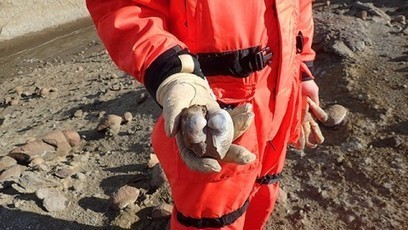
By measuring chemistry of fossilized seashells, researchers found that the Earth was already experiencing carbon cycle instability when the asteroid hit that wiped out the dinosaurs. New evidence gleaned from Antarctic seashells confirms that Earth was already unstable before the asteroid impact that wiped out the dinosaurs. The study, led by researchers at Northwestern University, is the first to measure the calcium isotope composition of fossilized clam and snail shells, which date back to the Cretaceous-Paleogene mass extinction event. The researchers found that — in the run-up to the extinction event — the shells’ chemistry shifted in response to a surge of carbon in the oceans. This carbon influx was likely due to long-term eruptions from the Deccan Traps, a 200,000-square-mile volcanic province located in modern India. During the years leading up to the asteroid impact, the Deccan Traps spewed massive amounts of carbon dioxide (CO2) into the atmosphere. The concentration of CO2 acidified the oceans, directly affecting the organisms living there. “Our data suggest that the environment was changing before the asteroid impact,” said Benjamin Linzmeier, the study’s first author. “Those changes appear to correlate with the eruption of the Deccan Traps.” The study will be published in the January 2020 issue of the journal Geology, which comes out later this month. Jacobson is a professor of Earth and planetary sciences in Northwestern’s Weinberg College of Arts and Sciences. Linzmeier was a postdoctoral researcher with the Ubben Program for Climate and Carbon Science at the Institute for Sustainability and Energy at Northwestern when the research was conducted. He is now a postdoctoral fellow at the University of Wisconsin-Madison in the Department of Geoscience.
|
|
Scooped by
Dr. Stefan Gruenwald
December 15, 2019 9:59 PM
|
A team of researchers at McMaster University has developed a self-cleaning surface that can repel all forms of bacteria, preventing the transfer of antibiotic-resistant superbugs and other dangerous bacteria in settings ranging from hospitals to kitchens. The new plastic surface – a treated form of conventional transparent wrap – can be shrink-wrapped onto door handles, railings, IV stands and other surfaces that can be magnets for bacteria such as MRSA and C. difficile. The treated material is also ideal for food packaging, where it could stop the accidental transfer of bacteria such as E. coli, Salmonella and listeria from raw chicken, meat and other foods, as described in a paper published today by the journal ACS Nano. The research was led by engineers Leyla Soleymani and Tohid Didar, who collaborated with colleagues from McMaster’s Institute for Infectious Disease Research and the McMaster-based Canadian Centre for Electron Microscopy. Inspired by the water-repellent lotus leaf, the new surface works through a combination of nano-scale surface engineering and chemistry. The surface is textured with microscopic wrinkles that exclude all external molecules. A drop of water or blood, for example, simply bounces away when it lands on the surface. The same is true for bacteria.
|
|
Scooped by
Dr. Stefan Gruenwald
December 12, 2019 12:31 AM
|
Humans are able to see from birth, so we often take it for granted. Trying to teach a machine to see from scratch, however, is a whole other ballpark. But first, what even is “seeing” in the first place? Vision has three parts: - Being able to physically “see” the object in front of you
- Understanding and recognizing what it is
- Being able to respond to it
In humans, this process corresponds to our eyes being able to see what is in front of us, then our brains recognizing what it is. For instance, imagine you see someone walking down the street. Your brain receives and processes this image, eventually recognizing that it’s your childhood friend from 2nd grade. From this new information, you’re able to respond by saying hi to your friend. Eventually, the two of you end up grabbing a coffee together. Pretty simple, right? Well, these simple processes that we conduct every day are hugely important for properly functioning AI. We got the first part down pretty early with the invention of the camera in 1816, nearly 200 years ago! The next step is a bit harder. The computer can capture an image but has no idea what’s happening in the picture. There was no sense of understanding or intelligence. “Just like to hear is not the same as to listen, to take pictures is not the same as to see, and by seeing, we really mean understanding.” However, developments in image recognition have given computers the intelligence to do just that. First, there’s an input — this would be the image. The network breaks up the image into smaller portions, to make it more manageable and easier to process. Then, each portion undergoes a series of convolutions. Convolutions are just a fancy way of saying mathematical operations. This involves a lot of complex matrix multiplication, weights, biases, etc. However, the ultimate goal of these convolutions is to identify a feature — like an edge, a shadow, etc. As more and more simple features are identified, these can be put together and interpreted as something more complex. So, then the network would first recognize edges, then gradually, a head, eyes, ears, and ultimately, determine that it’s a child. Max pooling is a process used to downsize the computations by taking the largest number from every subsection of the array. This method keeps the most important parts of the array, and again, makes the data easier to manage. This can be done multiple times at different stages in the network. The final output would be numbers representing the probabilities of the image being each class the network was trained to identify. Again, using the same image earlier, it’d have a high likelihood for the “child” class and a significantly lower one for, let’s say, the “hammer” class. The machine will then take the class with the highest number, group the image as such, and voila! CNNs in a nutshell.
|
|
Scooped by
Dr. Stefan Gruenwald
December 11, 2019 6:23 PM
|
The TROPOspheric Monitoring Instrument (TROPOMI), launched on 13 October 2017, aboard the Sentinel‐5 Precursor satellite, measures reflected sunlight in the ultraviolet, visible, near‐infrared, and shortwave infrared spectral range. It enables daily global mapping of key atmospheric species for monitoring air quality and climate. Methane is the second most important anthropogenic greenhouse gas. Improved knowledge about methane variations and detection of localized sources is of great importance for scientists, policy makers, and private companies. One of the goals of the recently launched European Space Agency Sentinel‐5 Precursor satellite, with on board the cutting‐edge TROPOspheric Monitoring Instrument (TROPOMI), is to measure methane with an unprecedented combination of accuracy, spatial coverage, and resolution. The first TROPOMI methane measurements show that the results are in excellent agreement with methane measurements from the validated Japanese Greenhouse gases Observing SATellite satellite.
|
|
Scooped by
Dr. Stefan Gruenwald
December 11, 2019 4:22 PM
|
Deepfakes, or media that takes a person in an existing image, audio recording, or video and replaces them with someone else’s likeness using AI algorithms, are multiplying quickly. Amsterdam-based cybersecurity startup Deeptrace found 14,698 deepfake videos on the internet during its most recent tally in June and July, up from 7,964 last December — an 84% increase within only seven months. That’s troublesome not only because deepfakes might be used to sway public opinion during, say, an election, or to implicate someone in a crime they didn’t commit, but because the technology has already generated pornographic material and swindled firms out of hundreds of millions of dollars. In an effort to fight deepfakes’ spread, Facebook — along with Amazon Web Services (AWS), Microsoft, the Partnership on AI, Microsoft, and academics from Cornell Tech, MIT, University of Oxford, UC Berkeley; University of Maryland, College Park; and State University of New York at Albany — are spearheading the Deepfake Detection Challenge, which was announced in September. It’s launching globally at the NeurIPS 2019 conference in Vancouver this week, with the goal of catalyzing research to ensure the development of open source detection tools.
|
|
Scooped by
Dr. Stefan Gruenwald
December 10, 2019 6:44 PM
|
Researchers at Washington University in St. Louis are developing a new imaging technique that can reportedly provide accurate, real-time, computer-aided diagnosis of colorectal cancer. Using deep learning, a type of machine learning, the team used the technique on more than 26,000 individual frames of imaging data from colorectal tissue samples to determine the method’s accuracy. Compared with pathology reports, they were able to identify tumors with 100% accuracy in this pilot study. This is the first report (“Real-time colorectal cancer diagnosis using PR-OCT with deep learning”) using this type of imaging combined with machine learning to distinguish healthy colorectal tissue from precancerous polyps and cancerous tissue. Results appear in advance online publication in the journal Theranostics. Current colon cancer screening is performed by flexible colonoscopy. The procedure involves visual inspection of the mucosal lining of the colon and rectum with a camera mounted on an endoscope. Abnormal appearing areas are then biopsied for analysis. Although this is the current standard of care, it does have its shortcomings. First, this technique relies on visual detection, but small lesions are hard to detect with the naked eye, and early malignancies are often missed. Second, visual endoscopy can only detect changes in the surface of the bowel wall, not in its deeper layers. The investigational technique is based on optical coherence tomography (OCT), an optical imaging technology that has been used for two decades in ophthalmology to take images of the retina. However, engineers in the university’s McKelvey School of Engineering and elsewhere have been advancing the technology for other uses since it provides high spatial and depth resolution for up to 1- to 2-mm imaging depth. OCT detects the differences in the way health and diseased tissue refract light and is highly sensitive to precancerous and early cancer morphological changes. When further developed, the technique could be used as a real-time, noninvasive imaging tool alongside traditional colonoscopy to assist with screening deeply seated precancerous polyps and early-stage colon cancers. “We think this technology, combined with the colonoscopy endoscope, will be very helpful to surgeons in diagnosing colorectal cancer,” said Quing Zhu, PhD, professor of biomedical engineering in the school of engineering, the paper’s senior author, and who also is a professor of radiology at the Mallinckrodt Institute of Radiology at Washington University School of Medicine. “More research is necessary, but the idea is that when the surgeons use a colonoscopy to examine the colon surface, this technology could be zoomed in locally to help make a more accurate diagnosis of deeper precancerous polyps and early-stage cancers versus normal tissue.”
|
|
Scooped by
Dr. Stefan Gruenwald
December 9, 2019 2:42 PM
|
A vaccine manufactured inside insect pupae has been submitted for the first time to the European Medicines Agency (EMA) for regulatory approval. A vaccine manufactured inside insect pupae has been submitted for the first time to the European Medicines Agency (EMA) for regulatory approval. Algenex’ CrisBio® technology aims to disrupt the recombinant protein production industry by replacing the bioreactors with pupae of the Trichoplusia ni Lepidoptera (cabbage looper moth). According to José Escribano, PhD, founder and CSO of Algenex, the pupae are infected with a baculovirus that has been genetically modified to carry foreign DNA. Once the pupae cells are expressing the desired protein, they can be crushed, and the protein purified. “The downstream process is not much more complex than a standard process,” Escribano told GEN in an exclusive interview. “The one difference is the first step of the process, when the protein is extracted from the insects.” Advantages of the system, he explained, include the scalability. “When you scale up in bioreactors to 100 L, etc., you need to adapt the system. But with the insects we just infect more or less pupae. Productivity and cost grow proportionally, but the complexity is the same.” Claudia Jiménez, general manager of Algenex, claimed a dose of vaccine can be produced using CrisBio® for less than one Euro cent (upstream part) and pupae don’t require as much investment as a bioreactor. Some insect cells, according to the company, can produce 1,600 times more protein than equivalent mammalian cells.
|
|
Scooped by
Dr. Stefan Gruenwald
December 9, 2019 1:11 AM
|
There are a few fundamental facts about the Universe — its origin, its history, and what it is today — that are awfully hard to wrap your head around. There are a few fundamental facts about the Universe — its origin, its history, and what it is today — that are awfully hard to wrap your head around. One of them is the Big Bang, or the idea that the Universe began a certain time ago: 13.8 billion years ago to be precise. That’s the first moment we can describe the Universe as we know it to be today: full of matter and radiation, and the ingredients that would eventually grow into stars, galaxies, planets and human beings. So how far away can we see? You might think, in a Universe limited by the speed of light, that would be 13.8 billion light years: the age of the Universe multiplied by the speed of light. But 13.8 billion light years is far too small to be the right answer. In actuality, we can see for 46 billion light years in all directions, for a total diameter of 92 billion light years.
|
|
Scooped by
Dr. Stefan Gruenwald
December 6, 2019 3:28 PM
|
The new experiment demonstrated a bizarre quantum effect from the double-slit experiment at an unprecedented scale. Giant molecules can be in two places at once, thanks to quantum physics. That's something that scientists have long known is theoretically true based on a few facts: Every particle or group of particles in the universe is also a wave — even large particles, even bacteria, even human beings, even planets and stars. And waves occupy multiple places in space at once. So any chunk of matter can also occupy two places at once. Physicists call this phenomenon "quantum superposition," and for decades, they have demonstrated it using small particles. But in recent years, physicists have scaled up their experiments, demonstrating quantum superposition using larger and larger particles. Now, in a paper published Sept. 23 in the journal Nature Physics, an international team of researchers has caused molecule made up of up to 2,000 atoms to occupy two places at the same time.
|
|
Scooped by
Dr. Stefan Gruenwald
December 6, 2019 3:22 PM
|
Stars don't shine forever. Eventually, even the brightest stars run out of fuel and collapse in a massive explosion, called a supernova. We usually know that supernovae have happened in the past because history is full of the stories people tell about them. But it's been hard to match those stories with an astronomical event—until now. We normally see stars by the light they emit. Once they've exploded, that tends to get a little bit harder. Instead, astronomers look for the clues that get left behind. Like looking for prints a foot leaves in sand, they look for the prints a supernova leaves in the interstellar medium—the thin spread of dust and gas that fills the space between stars. Using the gigantic Murchison Widefield Array (MWA) telescope in the WA outback, 27 of the faintest star prints we've ever seen have been discovered, from explosions that happened 9000 years ago, in a massive dataset they call GLEAM.
|
|
Scooped by
Dr. Stefan Gruenwald
December 6, 2019 3:16 PM
|
A Queen's University Belfast scientist has led an international team to the ground-breaking discovery of why the Sun's magnetic waves strengthen and grow as they emerge from its surface, which could help to solve the mystery of how the corona of the Sun maintains its multi-million degree temperatures. For more than 60 years observations of the Sun have shown that as the magnetic waves leave the interior of the Sun they grow in strength but until now there has been no solid observational evidence as to why this was the case. The corona's high temperatures have also always been a mystery. Usually the closer we are to a heat source, the warmer we feel. However, this is the opposite of what seems to happen on the Sun—its outer layers are warmer than the heat source at its surface. Scientists have accepted for a long time that magnetic waves channel energy from the Sun's vast interior energy reservoir, which is powered by nuclear fusion, up into the outer regions of its atmosphere. Therefore, understanding how the wave motion is generated and spread throughout the Sun is of huge importance to researchers. The team, which was led by Queen's, included 13 scientists, spanning five countries and 11 research institutes including University of Exeter; Northumbria University; the European Space Agency; Instituto de Astrofísica de Canarias, Spain; University of Oslo, Norway; the Italian Space Agency and California State University Northridge, USA. The experts formed a consortium called "Waves in the Lower Solar Atmosphere (WaLSA)" to carry out the research and used advanced high-resolution observations from the National Science Foundation's Dunn Solar Telescope, New Mexico, to study the waves. Dr. David Jess from the School of Mathematics and Physics at Queen's led the team of experts. He explains: "This new understanding of wave motion may help scientists uncover the missing piece in the puzzle of why the outer layers of the Sun are hotter than its surface, despite being further from the heat source.
|
|
Scooped by
Dr. Stefan Gruenwald
December 6, 2019 3:13 PM
|
Slightly bending semiconductors made of organic materials can roughly double the speed of electricity flowing through them, according to new research. The finding could benefit next-generation electronics such as sensors and solar cells. “If implemented in electrical circuits, such an enhancement—achieved by very slight bending—would mean a major leap toward realizing next-generation, high-performance organic electronics,” says senior author Vitaly Podzorov, a professor in the physics and astronomy department at Rutgers University–New Brunswick. Semiconductors include materials that conduct electricity and different external stimuli can tune their conductivity, making them essential for all electronics. Organic semiconductors are made of organic molecules (mainly consisting of carbon and hydrogen atoms) that form light, flexible crystals called van der Waals molecular crystals. These novel materials are quite promising for applications in optoelectronics, which harness light and include flexible and printed electronics, sensors, and solar cells. Traditional semiconductors made of silicon or germanium have limitations, including cost and rigidity. One of the most important characteristics of organic and inorganic semiconductors is how fast electricity can flow through electronic devices. Thanks to progress over the last decade, organic semiconductors can perform roughly 10 times better than traditional amorphous silicon transistors. Tuning semiconductors by bending them is called “strain engineering,” which would open a new avenue of development in the semiconductor industry if implemented successfully. But until now, there were no conclusive experimental results on how bending organic semiconductors, including those in transistors, may affect the speed of electricity flowing in them. The new study reports the first such measurement, and a 1% bend in an organic transistor can roughly double the speed of electrons flowing through it.
|