Your new post is loading...

|
Scooped by
Dr. Stefan Gruenwald
February 29, 2020 11:05 PM
|
More than half of mainland China’s Covid-19 patients did not have a fever when admitted to hospital, a leading researcher said on Saturday, calling on the Hong Kong government to introduce social distancing measures such as flexible lunch hours when civil servants resume work next week, as the city recorded its 95th infection. Chinese University respiratory medicine expert Professor David Hui Shu-cheong, who co-authored the study, also urged for more tests to be conducted in private and public clinics to enable early detection and isolation of suspected cases after the study findings showed more than 80 per cent of coronavirus inpatients had reduced lymphocyte count in their blood. Hong Kong has been battling the spread of a novel strain of coronavirus, which causes the disease Covid-19. The newest case, announced by the Centre for Health Protection late on Saturday, concerned a 46-year-old woman admitted to United Christian Hospital in Kwun Tong. She is the daughter-in-law of a 70-year-old woman infected on Thursday after visiting the Fook Wai Ching She Buddhist worship hall. The infection was the 15th related to the North Point venue. “She developed sore throat today and her deep throat saliva specimen was tested positive for Covid-19 virus,” the center said in a statement. It said the woman was in a stable condition. She had not travelled during the virus’s incubation period, and did not visit the worship hall. Her husband and son, who live with her, were also under quarantine.
|
|
Scooped by
Dr. Stefan Gruenwald
February 29, 2020 10:58 PM
|
University of British Columbia astronomy student Michelle Kunimoto has discovered 17 new planets, including a potentially habitable, Earth-sized world, by combing through data gathered by NASA’s Kepler mission. Over its original four-year mission, the Kepler satellite looked for planets, especially those that lie in the “Habitable Zones” of their stars, where liquid water could exist on a rocky planet’s surface. The new findings, published in The Astronomical Journal, include one such particularly rare planet. Officially named KIC-7340288 b, the planet discovered by Kunimoto is just 1 ½ times the size of Earth – small enough to be considered rocky, instead of gaseous like the giant planets of the Solar System – and in the habitable zone of its star. “This planet is about a thousand light years away, so we’re not getting there anytime soon!” said Kunimoto, a PhD candidate in the department of physics and astronomy. “But this is a really exciting find, since there have only been 15 small, confirmed planets in the Habitable Zone found in Kepler data so far.” The planet has a year that is 142 ½ days long, orbiting its star at 0.444 Astronomical Units (AU, the distance between Earth and our Sun) – just bigger than Mercury’s orbit in our Solar System, and gets about a third of the light Earth gets from the Sun. Of the other 16 new planets discovered, the smallest is only two-thirds the size of Earth – one of the smallest planets to be found with Kepler so far. The rest range in size up to eight times the size of Earth. Kunimoto is no stranger to discovering planets: she previously discovered four during her undergraduate degree at UBC. Now working on her PhD at UBC, she used what is known as the “transit method” to look for the planets among the roughly 200,000 stars observed by the Kepler mission.
|
|
Scooped by
Dr. Stefan Gruenwald
February 22, 2020 9:06 PM
|
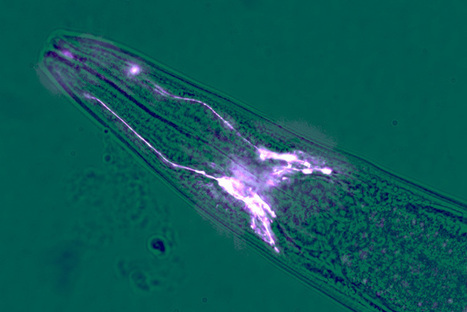
The roundworm Caenorhabditis elegans is helping scientists understand how the brain controls aging, including age-related muscle atrophy. While many of us worry about proteins aggregating in our brains as we age and potentially causing Alzheimer’s disease or other types of neurodegeneration, we may not realize that some of the same proteins are aggregating in our muscles, setting us up for muscle atrophy in old age. University of California, Berkeley, scientists have now found brain cells that help clean up these tangles and prolong life — at least in worms and possibly mice. This could lead to drugs that improve muscle health or extend a healthy human lifespan. The research team’s most recent discovery, published Jan. 24 in the journal Science, is that a mere four glial cells in the worm’s brain control the stress response in cells throughout its body and increase the worm’s lifespan by 75%. That was a surprise, since glial cells are often dismissed as mere support cells for the neurons that do the brain’s real work, like learning and memory. This finding follows a 2013 study in which the UC Berkeley group reported that neurons help regulate the stress response in peripheral cells, though in a different way than glial cells, and lengthen a worm’s life by about 25%. In mice, boosting neuronal regulation increases lifespan by about 10%. Together, these results paint a picture of the brain’s two-pronged approach to keeping the body’s cells healthy. When the brain senses a stressful environment — invading bacteria or viruses, for example — a subset of neurons sends electrical signals to peripheral cells to get them mobilized to respond to the stress, such as through breaking up tangles, boosting protein production and mobilizing stored fat. But because electrical signals produce only a short-lived response, the glial cells kick in to send out a long-lasting hormone, so far unidentified, that maintains a long-term, anti-stress response.
|
|
Scooped by
Dr. Stefan Gruenwald
February 22, 2020 8:56 PM
|
Dr. Hun-Gi Jung and his research team at the Center for Energy Storage Research of the Korea Institute of Science and Technology (KIST, President Lee Byung Gwon) have announced the development of silicon anode materials that can increase battery capacity four-fold in comparison to graphite anode materials and enable rapid charging to more than 80% capacity in only five minutes. When applied to batteries for electric vehicles, the new materials are expected to more than double their driving range. The batteries currently installed in mass-produced electric vehicles use graphite anode materials, but their low capacity contributes to electric vehicles' having a shorter driving range than vehicles with internal combustion engines. Consequently, silicon, with an energy storage capacity 10-times greater than graphite, has drawn attention as a next-generation anode material for the development of long-range electric vehicles. However, silicon materials have not yet been commercialized because their volume expands rapidly and storage capacity decreases significantly during charge and discharge cycles, which limits commercialization. A number of methods have been suggested for enhancing the stability of silicon as an anode material, but the cost and complexity of these methods have prevented silicon from replacing graphite. To enhance the stability of silicon, Dr. Jung and his team focused on using materials that are common in our everyday lives, such as water, oil, and starch. They dissolved starch and silicon in water and oil, respectively, and then mixed and heated them in order to produce carbon-silicon composites. A simple thermal process used for frying food was employed to firmly fix the carbon and silicon, preventing the silicon anode materials from expanding during charge and discharge cycles. The composite materials developed by the research team demonstrated a capacity four-times greater than that of graphite anode materials (360mAh/g ? 1,530mAh/g) and stable capacity retention over 500 cycles. It was also found that the materials enable batteries to charge to more than 80% capacity in only five minutes. Carbon spheres prevent the usual volume expansion of silicon, thereby enhancing the stability of silicon materials. Also, the use of highly conductive carbon and the rearrangement of the silicon structure resulted in a high output. "We were able to develop carbon-silicon composite materials using common, everyday materials and simple mixing and thermal processes with no reactors," said Dr. Jung, the lead researcher of the KIST team. He continued, "The simple processes we adopted and the composites with excellent properties that we developed are highly likely to be commercialized and mass-produced. The composites could be applied to lithium-ion batteries for electric vehicles and energy storage systems (ESSs)."
|
|
Scooped by
Dr. Stefan Gruenwald
February 22, 2020 8:45 PM
|
Birds have emerged as a particularly important part of understanding the growing impact of climate change — including the black-throated blue warbler. It’s hard to be a bird these days. Take the black-throated blue warbler. The migration patterns of this small songbird have been slowly but steadily changing over the past 50 years, according to a study published in the journal The Auk: Ornithological Advances. The timing of the bird’s flight patterns has been advancing, with its spring migration occurring around one day earlier per decade. While the warbler isn’t facing the same risks as some of its other feathered friends, it’s the kind of small but unignorable change that ornithologists are becoming all too familiar with. “There’s a reason the saying ‘canary in a coal mine’ is out there,” said Andrew Farnsworth, a research associate at the Cornell Lab of Ornithology, who was not involved with the new study. “Birds are very susceptible to changes, and they are really good indicators of what’s happening around them in their physical environment.” This has made birds a particularly important part of understanding the growing impact of climate change. The report on warblers does not directly link their migration changes to global warming, nor does it incorporate temperature and climate data. But within the field of ornithology, it is becoming difficult not to see echoes of climate change across the spectrum of research. Kristen Covino, an assistant professor of biology at Loyola Marymount University in Los Angeles, and lead author of the warbler study, said the findings have been received within the ornithology community as another example of the effects of global warming.
|
|
Scooped by
Dr. Stefan Gruenwald
February 22, 2020 8:36 PM
|
We’re off to a hot start in 2020, with January setting a new mark as the warmest instance of that month on record for the globe. And as NOAA pointed out in its monthly summary released Thursday, that occurred without the warming influence of an El Niño in the equatorial Pacific Ocean, where conditions remain neutral. Few places around the world had a cool month, with much of India and Alaska/Western Canada providing exceptions. Europe through to northern Asia was particularly warm, and January ranked fifth warmest over the contiguous US. This was largely due to remarkably tight circulation of the “polar vortex,” which helped keep Arctic air bottled up north of the mid-latitudes. For the US, the weather pattern was dominated by an area of low pressure around Alaska and high pressure off the coast of California. Alaska and western Canada stayed colder in this pattern, which also funneled moisture over the Pacific Northwest while keeping the US Southwest dry. In the middle of the month, the low pressure shifted east for a bit, bringing just enough cool air over the central US to produce a fair bit of precipitation.
|
|
Scooped by
Dr. Stefan Gruenwald
February 22, 2020 8:31 PM
|
Physicists captured individual atoms and observed them merge into a molecule, finding the atoms didn't merge as quickly as existing models can explain. To understand how atoms unite to turn into molecules, we need to catch them in action. But to do that, physicists must force atoms to pause long enough for their exchanges to be recorded. That's no easy task, and one physicists from the University of Otago have only just recently achieved. Until now, the best physicists could do to understand the finer points of various atomic interactions was to calculate correlations based on averages among a crowd that's been chilled down to the point that they all share an identity. This crowd-sourced version of atomics provides plenty of useful insights, but can't capture key details on the bump and grind of collisions between separate particles that sends some scattering and others merging. Even if you do happen to capture a handful of atoms in one space, every collision risks sending atoms careening out of your experiment. One way to analyze such encounters is to grab isolated atoms with the equivalent of a tiny pair of tweezers, hold them still, and record the changes as they meet. Fortunately just such a pair of tweezers exists. Made from specially aligned polarized light, these laser-based forceps can act as optical traps for tiny objects. Given short enough light waves, an experimenter has a good chance of trapping something as tiny as an individual atom in its pinch. Of course, first the atoms need to be cooled right down to make them easier to catch, and then separated into an empty space.
|
|
Scooped by
Dr. Stefan Gruenwald
February 13, 2020 10:06 PM
|
A magnetic atom epitomizes the scaling limit for magnetic information storage. Individual atomic spins have recently exhibited magnetic remanence, a requirement for magnetic memory. However, such memory has been only realized on thin insulating surfaces. Black phosphorus (BP) has recently gained substantial momentum within the fields of physics, electronics and optoelectronics because of its layer-dependent band gap spanning the visible spectrum, high carrier mobility, and field-tunable band topology. While black phosphorus devices gain sophistication and performance at remarkable speeds, the atomic scale properties remain largely unexplored. Using atomic scale probes, scientists have recently been able to classify, characterize, and quantify the primary native defects in BP, namely P vacancies. They have further shown that such vacancies host electronic states near the valence band edge, acting a p-type dopants and serve as scattering centers for free carriers. The interactions and arrangements of alkali metal dopants on the surface of BP have revealed a complex distance dependent electrostatic screening mediated by strongly confined 2D states at the BP surface. A peculiar case is the single cobalt atom (extrinsic defect) on the surface of black phosphorus. Screening from the black phosphorus enables these magnetic atoms to stabilize multiple orbital configurations (3d8 and 3d9) allowing us to demonstrate a proof-of-concept single atom magnetic memory.
|
|
Scooped by
Dr. Stefan Gruenwald
February 11, 2020 6:07 PM
|
Designed by a Dutch firm, Aqua features its own infinity pool, helipad, spa, and gym with room for 14 guests and 31 crew members. Superyachts seemed to be among the last modes of (luxe) transportation to bend toward the growing consumer demand for eco-friendly engine designs. But if news from last week’s Monaco Yacht Show served as a bellwether, the industry meant to cater to the wealthiest among us made a progressive splash with the unveiling of Aqua, the world's first hydrogen-powered superyacht. Designed by the Dutch firm Sinot Yacht & Architecture Design, Aqua is a nearly 400-foot-long vessel that's run entirely by a renewable energy source. "Water is the eternal fuel of life, the life-sustaining force that makes planet Earth habitable," says Sander Sinot, founder of the firm that bears his name. "Water is soft, yet at the same time it cuts through hard rocks." It was this appreciation of water that helped the firm find balance between the natural world and the technological. The propulsion system is made up of two 28-ton vacuumed tanks that each contain liquified hydrogen which are stored at -423 degrees Fahrenheit. Along with being eco-friendly, hydrogen-based energy means for a quieter experience aboard the ship in comparison to traditional engines. That said, there will be backup diesel generators handy should the captain ever need them.
|
|
Scooped by
Dr. Stefan Gruenwald
February 11, 2020 5:42 PM
|
The FT has enlisted the help of readers, researchers and entrepreneurs to find 50 new ideas that will shape the world in the future. Read all 50 ideas
|
|
Scooped by
Dr. Stefan Gruenwald
February 11, 2020 5:24 PM
|
A little-known start-up helps law enforcement match photos of unknown people to their online images — and “might lead to a dystopian future or something,” a backer says. A tiny company, Clearview AI, devised a groundbreaking facial recognition app. You take a picture of a person, upload it and get to see public photos of that person, along with links to where those photos appeared. The system — whose backbone is a database of more than three billion images that Clearview claims to have scraped from Facebook, YouTube, Venmo and millions of other websites — goes far beyond anything ever constructed by the United States government or Silicon Valley giants. Federal and state law enforcement officers said that while they had only limited knowledge of how Clearview works and who is behind it, they had used its app to help solve shoplifting, identity theft, credit card fraud, murder and child sexual exploitation cases. Until now, technology that readily identifies everyone based on his or her face has been taboo because of its radical erosion of privacy. Tech companies capable of releasing such a tool have refrained from doing so; in 2011, Google’s chairman at the time said it was the one technology the company had held back because it could be used “in a very bad way.” Some large cities, including San Francisco, have barred police from using facial recognition technology. But without public scrutiny, more than 600 law enforcement agencies have started using Clearview in the past year, according to the company, which declined to provide a list. The computer code underlying its app, analyzed by The New York Times, includes programming language to pair it with augmented-reality glasses; users would potentially be able to identify every person they saw. The tool could identify activists at a protest or an attractive stranger on the subway, revealing not just their names but where they lived, what they did and whom they knew. And it’s not just law enforcement: Clearview has also licensed the app to at least a handful of companies for security purposes. “The weaponization possibilities of this are endless,” said Eric Goldman, co-director of the High Tech Law Institute at Santa Clara University. “Imagine a rogue law enforcement officer who wants to stalk potential romantic partners, or a foreign government using this to dig up secrets about people to blackmail them or throw them in jail.” Clearview has shrouded itself in secrecy, avoiding debate about its boundary-pushing technology. When I began looking into the company in November, its website was a bare page showing a nonexistent Manhattan address as its place of business. The company’s one employee listed on LinkedIn, a sales manager named “John Good,” turned out to be Mr. Ton-That, using a fake name. For a month, people affiliated with the company would not return my emails or phone calls.
|
|
Scooped by
Dr. Stefan Gruenwald
February 10, 2020 11:11 AM
|
Original announcement In a population of animals or plants, genetic diversity can decline much more quickly than species diversity in response to various stress factors: disease, changes to habitat or climate, and so on. Yet not much is known about fish genetic diversity around the world. Help on that front is now on the way from an international team of scientists from French universities and ETH Zurich. They have produced the first global distribution map for genetic diversity among freshwater and marine fish. Furthermore, they identified the environmental factors that are instrumental in determining the distribution of genetic diversity. Their study was recently published in the journal Nature Communications. Genetic diversity is unevenly distributed To begin their study, the researchers analyzed a database that contained the data of over 50,000 DNA sequences representing 3,815 species of marine fish and 1,611 species of freshwater fish. From this sequence data, the scientists estimated the average genetic diversity in sections of bodies of water, each section measuring 200 square kilometers. Their analysis revealed that genetic diversity is unevenly distributed throughout marine and freshwater fish. The greatest genetic diversity was found among marine fish in the western Pacific Ocean, the northern Indian Ocean and the Caribbean. Among freshwater fish, genetic diversity was greatest in South America, but comparatively low in Europe. In addition, the researchers determined that temperature is a key factor influencing genetic diversity among marine fish: as the temperature rises, so does diversity. By contrast, the key determinants of genetic diversity in freshwater fish were the complexity of their habitat structure and how their habitats have changed over time.
|
|
Scooped by
Dr. Stefan Gruenwald
January 30, 2020 8:02 PM
|
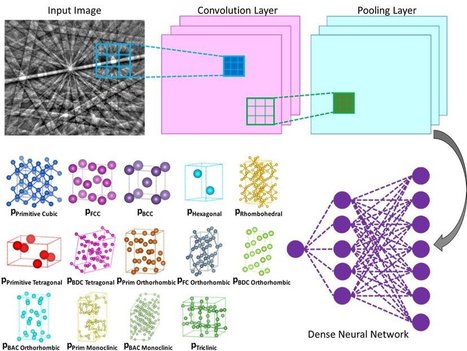
Nanoengineers at the University of California San Diego have developed a computer-based method that could make it less labor-intensive to determine the crystal structures of various materials and molecules, including alloys, proteins and pharmaceuticals. The method uses a machine learning algorithm, similar to the type used in facial recognition and self-driving cars, to independently analyze electron diffraction patterns, and do so with at least 95% accuracy. The work is published in the Jan. 31 issue of Science. A team led by UC San Diego nanoengineering professor Kenneth Vecchio and his Ph.D. student Kevin Kaufmann, who is the first author of the paper, developed the new approach. Their method involves using a scanning electron microscope (SEM) to collect electron backscatter diffraction (EBSD) patterns. Compared to other electron diffraction techniques, such as those in transmission electron microscopy (TEM), SEM-based EBSD can be performed on large samples and analyzed at multiple length scales. This provides local sub-micron information mapped to centimeter scales. For example, a modern EBSD system enables determination of fine-scale grain structures, crystal orientations, relative residual stress or strain, and other information in a single scan of the sample. However, the drawback of commercial EBSD systems is the software's inability to determine the atomic structure of the crystalline lattices present within the material being analyzed. This means a user of the commercial software must select up to five crystal structures presumed to be in the sample and then the software attempts to find probable matches to the diffraction pattern. The complex nature of the diffraction pattern often causes the software to find false structure matches in the user selected list. As a result, the accuracy of the existing software's determination of the lattice type is dependent on the operator's experience and prior knowledge of their sample. The method that Vecchio's team developed does this all autonomously, as the deep neural network independently analyzes each diffraction pattern to determine the crystal lattice, out of all possible lattice structure types, with a high degree of accuracy (greater than 95%).
|
|
|
Scooped by
Dr. Stefan Gruenwald
February 29, 2020 11:02 PM
|
Doctors are using brain scanners to ask patients who cannot speak about their treatment wishes When a person sustains a severe brain injury that leaves them unable to communicate, their families and doctors often have to make life-or-death decisions about their care for them. Now brain scanners are being tested in intensive care to see if mind-reading can enable some patients to have their say, New Scientist can exclusively reveal. At the moment, doctors ask the families of people who have a poor prognosis and cannot communicate if they think their relatives would want to continue life-sustaining treatments such as being on a ventilator. “Life would be so much easier if you could just ask the person,” says Adrian Owen at the University of Western Ontario in Canada. Owen’s team previously developed a brain-scanning approach for a much smaller group of people – those in states between consciousness and being in a coma, for example, those in a vegetative state. Such people show few signs of awareness and have to be fed through a tube. Owen found that some of these people can direct their thoughts in response to instructions, which can be picked up on brain scans. If someone is asked to imagine playing tennis, for instance, the part of their brain involved in movement lights up in the scan. This has let him and other teams ask those who are able to respond in this way yes/no questions, which can give people a say over their living conditions. About a fifth of people the technique is tried on can respond. Owen is now using the same technique on people who are in intensive care in the first few days after sustaining a severe brain injury. In such circumstances, just over a quarter of people end up having their treatment withdrawn due to a poor prognosis. For example, in some cases, doctors may predict that if the person survives, they would be paralyzed and unable to speak. “A decision will typically be made in the first 10 days about whether to go on or pull the plug,” says Owen.
|
|
Scooped by
Dr. Stefan Gruenwald
February 29, 2020 10:50 PM
|
Satellite images have shown a dramatic decline in pollution levels over China, which is "at least partly" due to an economic slowdown prompted by the coronavirus, US space agency Nasa says. Nasa maps show falling levels of nitrogen dioxide this year. It comes amid record declines in China's factory activity as manufacturers stop work in a bid to contain coronavirus. China has recorded nearly 80,000 cases of the virus since the outbreak began. It has spread to more than 50 countries but the vast majority of infections and deaths are in China, where the virus originated late last year. Nasa scientists said the reduction in levels of nitrogen dioxide - a noxious gas emitted by motor vehicles and industrial facilities - was first apparent near the source of the outbreak in Wuhan city but then spread across the country. Nasa compared the first two months of 2019 with the same period this year.
|
|
Scooped by
Dr. Stefan Gruenwald
February 22, 2020 8:58 PM
|
Astronomers have validated their first exoplanet with the Habitable Zone Planet Finder instrument on the Hobby-Eberly Telescope, one of the world’s largest telescopes, located at The University of Texas at Austin’s McDonald Observatory. About twice the size of Earth and possibly 12 times as massive, the planet could be similar to Neptune, but in miniature. Called G 9-40b, it orbits a small star called a red dwarf about 100 light-years from Earth. It completes a full orbit every six Earth days. The research is in the current issue of The Astronomical Journal. The finding shows that the Habitable Zone Planet Finder “is really performing very, very well,” said Bill Cochran, research professor at The University of Texas at Austin and a co-author of the research paper. “It’s doing what we hoped it would do, discovering nearby habitable-zone planets.” The instrument was built by Penn State University, with participation from UT Austin. The habitable zone is the distance from the star where a planet could harbor liquid water, the basic component for life as known on Earth. The planet finder provides a unique capability to look at nearby red dwarf stars that would normally be too faint for our optical instruments, as they are faint and cool. “The overwhelming number of nearby stars fall into this category,” Cochran said. “This instrument was designed to look for planets around these stars.” The exciting thing about this discovery is that “this is a really nearby system,” Cochran said. “It’s in the solar neighborhood; it’s on our block.”
|
|
Scooped by
Dr. Stefan Gruenwald
February 22, 2020 8:48 PM
|
Molecular oxygen is a key component of the air humans breathe, and now astronomers have spotted it a half-billion light years away. But don't hold your breath for quasar whippets. Astronomers have spotted molecular oxygen in a galaxy far far away, marking the first time that this important element has ever been detected outside of the Milky Way. This momentous “first detection of extragalactic molecular oxygen,” as it is described in a recent study in The Astrophysical Journal, has big implications for understanding the crucial role of oxygen in the evolution of planets, stars, galaxies, and life. Oxygen is the third most abundant element in the universe, after hydrogen and helium, and is one of the key ingredients for life here on Earth. Molecular oxygen is the most common free form of the element and consists of two oxygen atoms with the designation O2. It is the version of the gas that we humans, among many other organisms, need to breathe in order to live. Yet despite its ubiquity and significance to habitability, scientists have struggled for decades to detect molecular oxygen in the wider cosmos. Now, a team led by Junzhi Wang, an astronomer at the Shanghai Astronomical Observatory, reports the discovery of molecular oxygen in a dazzling galaxy called Markarian 231, located 581 million light years from the Milky Way. The researchers were able to make this detection with ground-based radio observatories. “Deep observations” from the IRAM 30-meter telescope in Spain and the NOEMA interferometer in France revealed molecular oxygen emission “in an external galaxy for the first time,” Wang and his co-authors wrote. Earth’s atmosphere absorbs a lot of the wavelengths that are needed to detect oxygen, so it can be tricky for ground telescopes to pinpoint the element through the veil of gas that encircles the planet. As a result, the only two detections of molecular oxygen within the Milky Way were spotted by space telescopes that didn’t have to deal with an obstructive atmosphere. Within the past 20 years, satellites have successfully detected molecular oxygen in the Rho Ophiuchi cloud and the Orion Nebula, which are respectively 350 and 1,344 light years from Earth.
|
|
Scooped by
Dr. Stefan Gruenwald
February 22, 2020 8:42 PM
|
Since the discovery of penicillin, antibiotics have become the cornerstone of modern medicine. However, the continued efficacy of these essential drugs is uncertain due to the global dissemination of antibiotic-resistance determinants. Moreover, the decreasing development of new antibiotics in the private sector that has resulted from a lack of economic incentives is exacerbating this already dire problem. Indeed, without immediate action to discover and develop new antibiotics, it is projected that deaths attributable to resistant infections will reach 10 million per year by 2050. Historically, antibiotics were discovered largely through screening soil-dwelling microbes for secondary metabolites that prevented the growth of pathogenic bacteria. This approach resulted in the majority of clinically used classes of antibiotics, including β-lactams, aminoglycosides, polymyxins, and glycopeptides, among others. Semi-synthetic derivatives of these scaffolds have maintained a viable clinical arsenal of antibiotics by increasing potency, decreasing toxicity, and sidestepping resistance determinants. Entirely synthetic antibiotics of the pyrimidine, quinolone, oxazolidinone, and sulfa classes have also found prolonged clinical utility, and continue to be optimized for the same properties. Unfortunately, the discovery of new antibiotics is becoming increasingly difficult. Natural product discovery is now plagued by the dereplication problem, wherein the same molecules are being repeatedly discovered. Moreover, given the rapid expansion of chemical spaces that are accessible by the derivatization of complex scaffolds, engineering next-generation versions of existing antibiotics results in substantially more failures than leads. Therefore, many antibiotic discovery programs have turned to screening large synthetic chemical libraries. However, these libraries, which can contain hundreds of thousands to a few million molecules, are often prohibitively costly to curate, limited in chemical diversity, and fail to reflect the chemistry that is inherent to antibiotic molecules. Since the implementation of high-throughput screening in the 1980s, no new clinical antibiotics have been discovered using this method. Novel approaches to antibiotic discovery are needed to increase the rate at which new antibiotics are identified and simultaneously decrease the associated cost of early lead discovery. Given recent advancements in machine learning ( Camacho et al., 2018), the field is now ripe for the application of algorithmic solutions for molecular property prediction to identify novel structural classes of antibiotics. Indeed, adopting methodologies that allow early drug discovery to be performed largely in silico enables the exploration of vast chemical spaces that is beyond the reach of current experimental approaches. The idea of analytical exploration in drug design is not new. Decades of prior work in chemoinformatics have developed models for molecular property prediction ( Mayr et al., 2018, Wu et al., 2017). However, the accuracy of these models has been insufficient to substantially change the traditional drug discovery pipeline. With recent algorithmic advancements in modeling neural network-based molecular representations, we are beginning to have the opportunity to influence the paradigm of drug discovery. An important development relates to how molecules are represented; traditionally, molecules were represented by their fingerprint vectors, which reflected the presence or absence of functional groups in the molecule, or by descriptors that include computable molecular properties and require expert knowledge to construct. Even though the mapping from these representations to properties was learned automatically, the fingerprints and descriptors themselves were designed manually. The innovation of neural network approaches lies in their ability to learn this representation automatically, mapping molecules into continuous vectors that are subsequently used to predict their properties. These designs result in molecular representations that are highly attuned to the desired property, yielding gains in property prediction accuracy over manually crafted representations ( Yang et al., 2019). While neural network models narrowed the performance gap between analytical and experimental approaches, a difference still exists. Here, we demonstrate how the combination of in silico predictions and empirical investigations can lead to the discovery of new antibiotics. Our approach consists of three stages. First, we trained a deep neural network model to predict growth inhibition of E. coli using a collection of 2,335 molecules. Second, we applied the resulting model to several discrete chemical libraries, comprising >10^7 million molecules, to identify potential lead compounds with activity against E. coli. After ranking the compounds according to the model’s predicted score, we lastly selected a list of candidates based on a pre-specified prediction score threshold, chemical structure, and availability.
|
|
Scooped by
Dr. Stefan Gruenwald
February 22, 2020 8:33 PM
|
At least 26 per cent of our oceans need urgent conservation attention to preserve Earth's marine biodiversity, a University of Queensland-led international study has found. Dr Kendall Jones said the international community needed to rapidly increase marine conservation efforts to maintain the health of the world's oceans. "Preserving a portion of habitat for all marine species would require 8.5 million square kilometers of new conservation areas," Dr Jones said. "Currently one-third of all marine species have less than 10 per cent of their range covered by protected areas. Conserving the areas we've identified in our study would give all marine species a reasonable amount of space to live free from human impacts like fishing, commercial shipping or pesticide runoff." The authors mapped more than 22,000 marine species habitats and applied a mathematical approach to identify the minimum area required to capture a portion of each species range. They also included areas of international importance for biodiversity (known as Key Biodiversity Areas), and areas where human impacts on the ocean are extremely low (known as marine wildernesses). They found that the total ocean area required for conservation varied from 26-41 per cent, depending on the proportion of each species range conserved. Key regions for conservation included the Northern Pacific Ocean near China and Japan, and the Atlantic between West Africa and the Americas.
|
|
Scooped by
Dr. Stefan Gruenwald
February 13, 2020 10:35 PM
|
ESA's Solar Orbiter is now on its way to the sun, beginning a nearly two-year journey. A new sungazing spacecraft has launched on a mission to chart the sun’s unexplored polar regions and to understand how our star creates and controls the vast bubble of plasma that envelops the solar system. At 11:03 pm ET on February 9, 2020, the European Space Agency’s Solar Orbiter rocketed away from Cape Canaveral, Fla. The spacecraft now begins a nearly two-year convoluted journey — getting two gravity assists from Venus and one from Earth — to an orbit that will repeatedly take it a bit closer to the sun than Mercury gets. Slated to study the sun for at least four years starting in November 2021, Solar Orbiter is going where few spacecraft have gone. The probe will soar above and below the orbits of the planets to get a peek at the sun’s north and south poles — a region no one has yet seen. One of the mission’s many goals is to see how the poles change when the sun’s magnetic field flips at the height of the next solar cycle, sometime in the middle of this decade. The probe carries a suite of 10 science instruments, including cameras and devices to measure the sun’s magnetic field and the solar wind, a stream of plasma that flows from the sun and eventually peters out at the solar system’s border with interstellar space . At Solar Orbiter’s closest approach to the sun, about 42 million kilometers above the surface, the sun will appear 13 times as bright as it does from Earth, heating the spacecraft to nearly 500° Celsius. To view the sun safely, most of its instruments will peek through protective windows tucked behind sliding doors in the spacecraft’s heat shield.
|
|
Rescooped by
Dr. Stefan Gruenwald
from Daily Magazine
February 13, 2020 1:39 AM
|
As a frame of reference, the act of reading is a human invention that’s only a few thousand years old. In Europe and the United States, mass literacy—meaning more than 50 percent of the population knows how to read—has only been around for about 150 years. In other areas of the world, such as most of Asia, the Middle East, and Africa, it’s much more recent. Because the human brain doesn’t come already wired to read, there is no “reading center” of the brain and there are no “reading genes.” As Proust and the Squid author Maryanne Wolf writes, each individual brain must learn how to read on its own. In learning to read, the brain performs an amazing feat: it creates a specialized circuit that’s just for reading, forging a new circuit by combining parts of the brain that were originally designed to serve other functions, such as retrieving names. This new “reading circuit” combines processes from different areas of the brain and then runs at a speed so fast it’s nearly automatic. But not all brains forge a flowing reading circuit easily. This is the case with dyslexia. Rather than being a disease or a medical condition (the common misperception), dyslexia is a different brain organization—one in which the brain’s reading circuit has been disrupted or re-routed in at least one way, and sometimes in two or three ways. This re-routing slows down critical parts of the reading process: - attaching the right sound to a letter happens more slowly and
- forming words or sentences takes longer, then comprehending what was just read also takes longer
Dyslexia can additionally affect memory, especially working memory, making it harder for students to remember what they just read, or directions and learning sequences. It’s important to note that dyslexia is NOT caused by visual problems, and it isn’t the flipping of letters, or reading letters backwards, or mispronouncing words—and it’s not related to motivation or intelligence. It’s merely the result of a brain with a different organization that makes reading and writing more difficult.
Via Dr. Tom D'Amico (@TDOttawa) , Dennis Swender, THE OFFICIAL ANDREASCY
|
|
Scooped by
Dr. Stefan Gruenwald
February 11, 2020 5:54 PM
|
Coronaviruses (CoVs) are enveloped positive-sense RNA viruses, and are characterized by club-like spikes that project from their surface, an unusually large RNA genome, and a unique replication strategy. Coronaviruses cause a variety of diseases in mammals and birds ranging from enteritis in cows and pigs and upper respiratory disease chickens to potentially lethal human respiratory infections. Here we provide a brief introduction to coronaviruses discussing their replication and pathogenicity, and current prevention and treatment strategies. We will also discuss the outbreaks of the highly pathogenic Severe Acute Respiratory Syndrome Coronavirus (SARS-CoV) and the recently identified Middle Eastern Respiratory Syndrome Coronavirus (MERS-CoV). Classification
Coronaviruses (CoVs) are the largest group of viruses belonging to the Nidovirales order, which includes Coronaviridae, Arteriviridae, and Roniviridae families. The Coronavirinae comprise one of two subfamilies in the Coronaviridae family, with the other being the Torovirinae. The Coronavirinae are further subdivided into four groups, the alpha, beta, gamma and delta coronaviruses. The viruses were initially sorted into these groups based on serology but are now divided by phylogenetic clustering. All viruses in the Nidovirales order are enveloped, non-segmented positive-sense RNA viruses. They all contain very large genomes for RNA viruses, with Coronavirinae having the largest identified RNA genomes, containing approximately 30 kilobase (kb) genomes. Other common features within the Nidovirales order include: i) a highly conserved genomic organization, with a large replicase gene preceding structural and accessory genes; ii) expression of many nonstructural genes by ribosomal frameshifting; iii) several unique or unusual enzymatic activities encoded within the large replicase-transcriptase polyprotein; and iv) expression of downstream genes by synthesis of 3′ nested sub-genomic mRNAs. In fact, the Nidovirales order name is derived from these nested 3′ mRNAs as nido is Latin for “nest”. The major differences within the Nidovirus families are in the number, type, and sizes of the structural proteins. These differences cause significant alterations in the structure and morphology of the nucleocapsids and virions. Genomic Organization
As previously mentioned, coronaviruses contain a non-segmented, positive-sense RNA genome of ∼30 kb. The genome contains a 5′ cap structure along with a 3′ poly (A) tail, allowing it to act as a mRNA for translation of the replicase polyproteins. The replicase gene encoding the nonstructural proteins (Nsps) occupies two-thirds of the genome, about 20 kb, as opposed to the structural and accessory proteins, which make up only about 10 kb of the viral genome. The 5′ end of the genome contains a leader sequence and untranslated region (UTR) that contains multiple stem loop structures required for RNA replication and transcription. Additionally, at the beginning of each structural or accessory gene are transcriptional regulatory sequences (TRSs) that are required for expression of each of these genes. The 3′UTR also contains RNA structures required for replication and synthesis of viral RNA. The organization of the coronavirus genome is 5′-leader-UTR-replicase-S (Spike)–E (Envelope)-M (Membrane)-N (Nucleocapsid)-3′UTR-poly (A) tail with accessory genes interspersed within the structural genes at the 3′ end of the genome. The accessory proteins are almost exclusively non-essential for replication in tissue culture; however some have been shown to have important roles in viral pathogenesis.
|
|
Scooped by
Dr. Stefan Gruenwald
February 11, 2020 5:28 PM
|
Pix self-moving spaces are clever autonomous mobile units. These modular systems can be reconfigured and stacked freely to form different functional units, as well as be sold as stand-alone parts to various industries. The Pix concept is anchored on a modular autonomous chassis on which almost any application can be built – a vehicle, a hotel room, a gym, or a vending machine, as one customer in Dallas has specified. The Pix self-moving spaces can also be bought as a blueprint with full data for 3D printing the chassis and key components, so the buyer downloads the instructions and builds their autonomous units anywhere around the world. This novel concept is the brainchild of Pix Moving, a tech start-up based in Guiyang, China, who has fully developed and manufactured the technology. The firm is simultaneously working on a further idea called Pix City. This ambitious project expands on the Pix self-moving space concept to propose an ideal urban setting of continuous movement, so buildings and structures and roads evolve alongside technology, seamlessly adapting to change. Pix takes a fresh approach to autonomous mobility of the future, where transport is interwoven with the urban fabric.
|
|
Scooped by
Dr. Stefan Gruenwald
February 10, 2020 1:19 PM
|
Comprehensive genomic characterization of tumours became a major goal of cancer researchers as soon as the first human genome had been sequenced in 2001. Since then, advances in sequencing technology and analytical tools have allowed this research field to flourish. In six papers1–6 in this issue of Nature, the Pan-Cancer Analysis of Whole Genomes (PCAWG) Consortium presents the most comprehensive and ambitious meta-analysis of cancer genomes so far. Unlike previous efforts that focused largely on protein-coding regions of the cancer genome, PCAWG analyses whole genomes. Each article scrutinizes an important aspect of cancer genetics — together, their findings will be key to understanding the full genetic complexity of cancer. Before discussing the impact of these analyses, it is crucial to highlight the massive amount of data and the complex organizational framework that underpin the PCAWG endeavor. The project involved an interdisciplinary group of scientists from 4 continents, with 744 affiliations between them, who had to overcome major technical, legal and ethical challenges to carry out distributed analyses while protecting patient data. Researchers were divided into 16 working groups, each focused on distinct facets of cancer genomics — assessing the recurrence of mutations, for instance, or inferring tumor evolution. Altogether, the consortium performed integrative analyses of 38 tumor types. The group sequenced 2,658 whole-cancer genomes (Fig. 1), alongside matched samples of non-cancerous cells from the same individuals. These data were complemented by 1,188 transcriptomes — the sequences and abundances of RNA transcripts in a tumor.
|
|
Scooped by
Dr. Stefan Gruenwald
February 9, 2020 12:33 AM
|
A drug designed entirely by artificial intelligence is about to enter clinical human trials for the first time. The drug, which is intended to treat obsessive-compulsive disorder (OCD), was discovered using AI systems from Oxford-based biotech company Exscientia. While it would usually take around four and a half years to get a drug to this stage of development, Exscientia says that by using the AI tools it's taken less than 12 months. The drug, known as DSP-1181, was created by using algorithms to sift through potential compounds, checking them against a huge database of parameters, including a patient's genetic factors. Speaking to the BBC, Exscientia chief executive Professor Andrew Hopkins described the trials as a "key milestone in drug discovery" and noted that there are "billions" of decisions needed to find the right molecules for a drug, making their eventual creation a "huge decision." With AI, however, "the beauty of the algorithm is that they are agnostic, so can be applied to any disease." We've already seen multiple examples of AI being used to diagnose illness and analyze patient data, so using it to engineer drug treatment is an obvious progression of its place in medicine. But the AI-created drugs do pose some pertinent questions. Will patients be comfortable taking medication designed by a machine? How will these drugs differ from those developed by humans alone? Who will make the rules for the use of AI in drug research? Hopkins and his team hope that these and myriad other questions will be explored in the trials, which will begin in March.
|