 Your new post is loading...

|
Scooped by
Dr. Stefan Gruenwald
October 1, 2020 12:18 PM
|
While digital technology is extremely good at solving certain problems, it often struggles with tasks that the human brain excels at. In a new study, scientists have leveraged brain-inspired connectivity between artificial neurons to solve a real-world problem of identifying mutations of a new viral species. In the September issue of the journal Nature, scientists from Texas A&M University, Hewlett Packard Labs and Stanford University have described a new nanodevice that acts almost identically to a brain cell. Furthermore, they have shown that these synthetic brain cells can be joined together to form intricate networks that can then solve problems in a brain-like manner. "This is the first study where we have been able to emulate a neuron with just a single nanoscale device, which would otherwise need hundreds of transistors," said Dr. R. Stanley Williams, senior author on the study and professor in the Department of Electrical and Computer Engineering. "We have also been able to successfully use networks of our artificial neurons to solve toy versions of a real-world problem that is computationally intense even for the most sophisticated digital technologies." In particular, the researchers have demonstrated proof of concept that their brain-inspired system can identify possible mutations in a virus, which is highly relevant for ensuring the efficacy of vaccines and medications for strains exhibiting genetic diversity. Over the past decades, digital technologies have become smaller and faster largely because of the advancements in transistor technology. However, these critical circuit components are fast approaching their limit of how small they can be built, initiating a global effort to find a new type of technology that can supplement, if not replace, transistors. In addition to this "scaling-down" problem, transistor-based digital technologies have other well-known challenges. For example, they struggle at finding optimal solutions when presented with large sets of data. "Let's take a familiar example of finding the shortest route from your office to your home. If you have to make a single stop, it's a fairly easy problem to solve. But if for some reason you need to make 15 stops in between, you have 43 billion routes to choose from," said Dr. Suhas Kumar, lead author on the study and researcher at Hewlett Packard Labs. "This is now an optimization problem, and current computers are rather inept at solving it." Kumar added that another arduous task for digital machines is pattern recognition, such as identifying a face as the same regardless of viewpoint or recognizing a familiar voice buried within a din of sounds. But tasks that can send digital machines into a computational tizzy are ones at which the brain excels. In fact, brains are not just quick at recognition and optimization problems, but they also consume far less energy than digital systems. Hence, by mimicking how the brain solves these types of tasks, Williams said brain-inspired or neuromorphic systems could potentially overcome some of the computational hurdles faced by current digital technologies. To build the fundamental building block of the brain or a neuron, the researchers assembled a synthetic nanoscale device consisting of layers of different inorganic materials, each with a unique function. However, they said the real magic happens in the thin layer made of the compound niobium dioxide. When a small voltage is applied to this region, its temperature begins to increase. But when the temperature reaches a critical value, niobium dioxide undergoes a quick change in personality, turning from an insulator to a conductor. But as it begins to conduct electric currents, its temperature drops and niobium dioxide switches back to being an insulator. These back-and-forth transitions enable the synthetic devices to generate a pulse of electrical current that closely resembles the profile of electrical spikes, or action potentials, produced by biological neurons. Further, by changing the voltage across their synthetic neurons, the researchers reproduced a rich range of neuronal behaviors observed in the brain, such as sustained, burst and chaotic firing of electrical spikes. "Capturing the dynamical behavior of neurons is a key goal for brain-inspired computers," said Kumar. "Altogether, we were able to recreate around 15 types of neuronal firing profiles, all using a single electrical component and at much lower energies compared to transistor-based circuits."
|
|
Scooped by
Dr. Stefan Gruenwald
October 1, 2020 12:14 PM
|
People infected by the novel coronavirus can have symptoms that range from mild to deadly. Now, two new analyses suggest that some life-threatening cases can be traced to weak spots in patients' immune systems. At least 3.5 percent of study patients with severe COVID-19, the disease caused by the novel coronavirus, have mutations in genes involved in antiviral defense. And at least 10 percent of patients with severe disease create "auto-antibodies" that attack the immune system, instead of fighting the virus. The results, reported in two papers in the journal Science on September 24, 2020, identify some root causes of life-threatening COVID-19, says study leader Jean-Laurent Casanova, a Howard Hughes Medical Institute Investigator at The Rockefeller University. Seeing these harmful antibodies in so many patients -- 101 out of 987 -- was "a stunning observation," he says. "These two papers provide the first explanation for why COVID-19 can be so severe in some people, while most others infected by the same virus are okay." The work has immediate implications for diagnostics and treatment, Casanova says. If someone tests positive for the virus, they should "absolutely" be tested for the auto-antibodies, too, he adds, "with medical follow-up if those tests are positive." It's possible that removing such antibodies from the blood could ease symptoms of the disease. A global effort Casanova's team, in collaboration with clinicians around the world, first began enrolling COVID-19 patients in their study in February. At the time, they were seeking young people with severe forms of the disease to investigate whether these patients might have underlying weaknesses in their immune systems that made them especially vulnerable to the virus. The plan was to scan patients' genomes -- in particular, a set of 13 genes involved in interferon immunity against influenza. In healthy people, interferon molecules act as the body's security system. They detect invading viruses and bacteria and sound the alarm, which brings other immune defenders to the scene. Casanova's team has previously discovered genetic mutations that hinder interferon production and function. People with these mutations are more vulnerable to certain pathogens, including those that cause influenza. Finding similar mutations in people with COVID-19, the team thought, could help doctors identify patients at risk of developing severe forms of the disease. It could also point to new directions for treatment, he says. In March, Casanova's team was aiming to enroll 500 patients with severe COVID-19 worldwide in their study. By August, they had more than 1,500, and they now have over 3,000. As the researchers began analyzing patient samples, they started to uncover harmful mutations, in people young and old. The team found that 23 out of 659 patients studied carried errors in genes involved in producing antiviral interferons. Without a full complement of these antiviral defenders, COVID-19 patients wouldn't be able to fend off the virus, the researchers suspected. That thought sparked a new idea. Maybe other patients with severe COVID-19 also lacked interferons -- but for a different reason. Maybe some patients' bodies were harming these molecules themselves. As in autoimmune disorders such as type 1 diabetes and rheumatoid arthritis, some patients might be making antibodies that target the body. "That was the eureka moment for us," Casanova says. The team's analysis of 987 patients with life-threatening COVID-19 revealed just that. At least 101 of the patients had auto-antibodies against an assortment of interferon proteins. "We said, 'bingo'!" Casanova remembers. These antibodies blocked interferon action and were not present in patients with mild COVID-19 cases, the researchers discovered.
|
|
Scooped by
Dr. Stefan Gruenwald
September 29, 2020 11:14 AM
|
Researchers at Mass Eye and Ear have developed a unique diagnostic tool that can detect dystonia from MRI scans, the first technology of its kind to provide an objective diagnosis of the disorder. Dystonia is a potentially disabling neurological condition that causes involuntary muscle contractions, leading to abnormal movements and postures. It is often misdiagnosed and can take people up to 10 years to get a correct diagnosis. In a new study published September 28 in PNAS, researchers developed an AI-based deep learning platform -called DystoniaNet - to compare brain MRIs of 612 people, including 392 patients with three different forms of isolated focal dystonia and 220 healthy individuals. The platform diagnosed dystonia with 98.8 percent accuracy. During the process, the researchers identified a new microstructural neural network biological marker of dystonia. With further testing and validation, they believe DystoniaNet can be easily integrated into clinical decision-making.
|
|
Scooped by
Dr. Stefan Gruenwald
September 27, 2020 11:45 AM
|
New research led by the American Museum of Natural History and funded by NASA identifies a process that might have been key in producing the first organic molecules on Earth about 4 billion years ago, before the origin of life. The process, which is similar to what might have occurred in some ancient underwater hydrothermal vents, may also have relevance to the search for life elsewhere in the universe. Details of the study are published this week in the journal Proceedings of the National Academy of Sciences. All life on Earth is built of organic molecules—compounds made of carbon atoms bound to atoms of other elements such as hydrogen, nitrogen and oxygen. In modern life, most of these organic molecules originate from the reduction of carbon dioxide (CO2) through several “carbon-fixation” pathways (such as photosynthesis in plants). But most of these pathways either require energy from the cell in order to work, or were thought to have evolved relatively late. So how did the first organic molecules arise, before the origin of life? To tackle this question, Museum Gerstner Scholar Victor Sojo and Reuben Hudson from the College of the Atlantic in Maine devised a novel setup based on microfluidic reactors, tiny self-contained laboratories that allow scientists to study the behavior of fluids—and in this case, gases as well—on the microscale. Previous versions of the reactor attempted to mix bubbles of hydrogen gas and CO2 in liquid but no reduction occurred, possibly because the highly volatile hydrogen gas escaped before it had a chance to react. The solution came in discussions between Sojo and Hudson, who shared a lab bench at the RIKEN Center for Sustainable Resource Science in Saitama, Japan. The final reactor was built in Hudson's laboratory in Maine. “Instead of bubbling the gases within the fluids before the reaction, the main innovation of the new reactor is that the fluids are driven by the gases themselves, so there is very little chance for them to escape,” Hudson said. The researchers used their design to combine hydrogen with CO2 to produce an organic molecule called formic acid (HCOOH). This synthetic process resembles the only known CO2-fixation pathway that does not require a supply of energy overall, called the Wood-Ljungdahl acetyl-CoA pathway. In turn, this process resembles reactions that might have taken place in ancient oceanic hydrothermal vents. “The consequences extend far beyond our own biosphere,” Sojo said. “Similar hydrothermal systems might exist today elsewhere in the solar system, most noticeably in Enceladus and Europa—moons of Saturn and Jupiter, respectively—and so predictably in other water-rocky worlds throughout the universe.” “Understanding how carbon dioxide can be reduced under mild geological conditions is important for evaluating the possibility of an origin of life on other worlds, which feeds into understanding how common or rare life may be in the universe,” added Laurie Barge from NASA’s Jet Propulsion Laboratory, an author on the study.
|
|
Scooped by
Dr. Stefan Gruenwald
September 27, 2020 11:35 AM
|
To the surprise of many planetary scientists, the oxidized iron mineral hematite has been discovered at high latitudes on the Moon, according to a study published today in Science Advances led by Shuai Li, assistant researcher at the Hawai‘i Institute of Geophysics and Planetology (HIGP) in the UH Mānoa School of Ocean and Earth Science and Technology (SOEST). Iron is highly reactive with oxygen—forming reddish rust commonly seen on Earth. The lunar surface and interior, however, are virtually devoid of oxygen, so pristine metallic iron is prevalent on the Moon and highly oxidized iron has not been confirmed in samples returned from the Apollo missions. In addition, hydrogen in solar wind blasts the lunar surface, which acts in opposition to oxidation. So, the presence of highly oxidized iron-bearing minerals, such as hematite, on the Moon is an unexpected discovery. “Our hypothesis is that lunar hematite is formed through oxidation of lunar surface iron by the oxygen from the Earth’s upper atmosphere that has been continuously blown to the lunar surface by solar wind when the Moon is in Earth’s magnetotail during the past several billion years,” said Li. To make this discovery, Li, HIGP professor Paul Lucey and co-authors from NASA’s Jet Propulsion Laboratory (JPL) and elsewhere analyzed the hyperspectral reflectance data acquired by the Moon Mineralogy Mapper (M3) designed by NASA JPL onboard India’s Chandrayaan-1 mission. This new research was inspired by Li’s previous discovery of water ice in the Moon’s polar regions in 2018. “When I examined the M3 data at the polar regions, I found some spectral features and patterns are different from those we see at the lower latitudes or the Apollo samples,” said Li. “I was curious whether it is possible that there are water-rock reactions on the Moon. After months investigation, I figured out I was seeing the signature of hematite.” The team found the locations where hematite is present are strongly correlated with water content at high latitude Li and others found previously and are more concentrated on the nearside, which always faces the Earth. “More hematite on the lunar nearside suggested that it may be related to Earth,” said Li. “This reminded me a discovery by the Japanese Kaguya mission that oxygen from the Earth’s upper atmosphere can be blown to the lunar surface by solar wind when the Moon is in the Earth’s magnetotail. So, Earth’s atmospheric oxygen could be the major oxidant to produce hematite. Water and interplanetary dust impact may also have played critical roles”
|
|
Scooped by
Dr. Stefan Gruenwald
September 23, 2020 7:53 PM
|
A top U.S. health official told a U.S. Senate committee on Wednesday that he expects COVID-19 vaccinations to take place over many months and that most Americans could be vaccinated by July of 2021 at the latest. U.S. Centers for Disease Control and Prevention head Robert Redfield said he expects there to be about 700 million doses of vaccines available by late March or April, enough for 350 million people. “I think that’s going to take us April, May, June, you know, possibly July, to get the entire American public completely vaccinated,” Redfield told the U.S. Senate Health, Education, Labor and Pensions Committee. Redfield, U.S. Food and Drug Administration head Stephen Hahn, U.S. National Institute of Allergy and Infectious Diseases head Anthony Fauci and Health and Human Services official Brett Giroir were testifying on the COVID-19 pandemic, which has caused more than 200,000 deaths in the United States. There is no vaccine for COVID-19 yet, but there are several in late stage trials here, including from Pfizer Inc PFE.N, Moderna Inc MRNA.O and Johnson & Johnson JNJ.N. Companies have begun manufacturing the vaccine in anticipation of a fast regulatory authorization once they are shown to work. Fauci said he expects 50 million doses to be available in November and 100 million by the end of December. He expects a total of 700 million doses by April. Health officials and President Donald Trump have presented different views about when the vaccines will be ready for most Americans. The process for deciding how to distribute vaccines falls largely to the CDC. With more than 200,000 Americans dead from Covid-19 and President Donald Trump's coronavirus task force reportedly in turmoil, pharmaceutical companies are racing to roll out vaccines to halt the coronavirus pandemic. There are 4 vaccine candidates now in Phase 3 trials: - Johnson & Johnson (JNJ) announced recently that it has started a 60,000-participant trial of its single-dose Covid-19 vaccine in the U.S., Brazil, South Africa, and other countries. The U.S. government is helping to fund the study and initial results could be in by early 2021.
- AstraZeneca's (AZN) Phase 3 trials started in August 2020 and have resumed abroad but are on hold in the U.S. because a participant in the U.K. developed a serious medical condition. AstraZeneca (AZN) expects to have enough data by the end of 2020 or early next year to submit the vaccine for approval.
- Moderna (MRNA) started its Phase 3 trial in July 2020 and hopes to have 30,000 volunteers enrolled by the end of September. CEO Stéphane Bancel has said that the vaccine could be found safe and effective by late fall, but more likely in November at the onset of winter or, "in a worst-case scenario in December."
- Pfizer (PFE) has partnered with the German drug-maker BioNTech for developing a possible vaccine,. They started Phase 3 U.S. trials in July 2020. Pfizer hopes to have data indicating whether its candidate vaccine works by the end of October 2020.
|
|
Scooped by
Dr. Stefan Gruenwald
September 18, 2020 7:16 PM
|
Perhaps the most compelling part of any remarkable story is its origin: how it all began. We can take that question back as far as we want, asking what came before and gave rise to whatever we were asking about previously, until we find ourselves pondering the origin of the Universe itself. This is perhaps the greatest origin story of all, which occupied the minds of poets, philosophers, theologians and scientists for countless millennia. It was only in the 20th century that science began to make progress on that question, however, eventually resulting in the scientific theory of the Big Bang. Early on, the Universe was extremely hot and dense, and has expanded, cooled, and gravitated to become what it is today. But the Big Bang itself wasn't the beginning, after all, and we have four independent pieces of scientific evidence that show us what came before it and set it up.
|
|
Scooped by
Dr. Stefan Gruenwald
September 18, 2020 12:01 AM
|
Since the start of the COVID-19 pandemic, researchers at MIT and the Broad Institute of MIT and Harvard, along with their collaborators at the University of Washington, Fred Hutchinson Cancer Research Center, Brigham and Women's Hospital, and the Ragon Institute, have been working on a CRISPR-based diagnostic for COVID-19 that can produce results. A strip of paper can now indicate presence of pathogens, tumor DNA, or any genetic signature of interest. 100-fold greater sensitivity, the ability to detect multiple targets at once, and other new features further enhance SHERLOCK's power for detecting genetic signatures. The team that first unveiled the rapid, inexpensive, highly sensitive CRISPR-based diagnostic tool called SHERLOCK has greatly enhanced the tool’s power, and has developed a miniature paper test that allows results to be seen with the naked eye — without the need for expensive equipment. The SHERLOCK team developed a simple paper strip to display test results for a single genetic signature, borrowing from the visual cues common in pregnancy tests. After dipping the paper strip into a processed sample, a line appears, indicating whether the target molecule was detected or not. This new feature helps pave the way for field use, such as during an outbreak. The team has also increased the sensitivity of SHERLOCK and added the capacity to accurately quantify the amount of target in a sample and test for multiple targets at once. All together, these advancements accelerate SHERLOCK’s ability to quickly and precisely detect genetic signatures — including pathogens and tumor DNA — in samples. Described first in Science, the innovations build on the team’s earlier version of SHERLOCK (shorthand for Specific High-sensitivity Enzymatic Reporter unLOCKing) and add to a growing field of research that harnesses CRISPR systems for uses beyond gene editing. The work, led by researchers from the Broad Institute of MIT and Harvard and the Massachusetts Institute of Technology, has the potential for a transformative effect on research and global public health. “SHERLOCK provides an inexpensive, easy-to-use, and sensitive diagnostic method for detecting nucleic acid material — and that can mean a virus, tumor DNA, and many other targets,” said senior author Feng Zhang, core institute member at the Broad Institute, investigator at the McGovern Institute for Brain Research at MIT, and the James and Patricia Poitras Professor of Neuroscience at MIT. “The SHERLOCK improvements now give us even more diagnostic information and put us closer to a tool that can be deployed in real-world applications.”
|
|
Scooped by
Dr. Stefan Gruenwald
September 15, 2020 12:17 PM
|
Measurements of trace gases in planetary atmospheres help us explore chemical conditions different to those on Earth. Our nearest neighbor planet, Venus, has clouds that are temperate but hyperacidic. Here we report the apparent presence of phosphine (PH3) gas in Venus’s atmosphere, where any phosphorus should be in oxidized forms. Single-line millimeter-waveband spectral detections (quality up to ~15σ) from the JCMT and ALMA telescopes have no other plausible identification. Atmospheric PH3 at ~20 ppb abundance is inferred. The presence of PH3 is unexplained after exhaustive study of steady-state chemistry and photochemical pathways, with no currently known abiotic production routes in Venus’s atmosphere, clouds, surface and subsurface, or from lightning, volcanic or meteoritic delivery. PH3 could originate from unknown photochemistry or geochemistry, or, by analogy with biological production of PH3 on Earth, from the presence of life. Other PH3 spectral features should be sought, while in situ cloud and surface sampling could examine sources of this gas. The detection of ~20 ppb of phosphine in Venus clouds by observations in the millimeter-wavelength range from JCMT and ALMA is puzzling, because according to our knowledge of Venus, no phosphine should be there. As the most plausible formation paths do not work, the source could be unknown chemical processes—maybe even life? Studying rocky-planet atmospheres gives clues to how they interact with surfaces and subsurfaces, and whether any non-equilibrium compounds could reflect the presence of life. Characterizing extrasolar-planet atmospheres is extremely challenging, especially for rare compounds 1. The Solar System thus offers important testbeds for exploring planetary geology, climate and habitability, via both in situ sampling and remote monitoring. Proximity makes signals of trace gases much stronger than those from extrasolar planets, but issues remain in interpretation. Thus far, Solar System exploration has found compounds of interest, but often in locations where the gas sources are inaccessible, such as the Martian subsurface2 and water reservoirs inside icy moons3,4. Water, simple organics and larger unidentified carbon-bearing species5,6,7 are known. However, geochemical sources for carbon compounds may exist8, and temporal/spatial anomalies can be hard to reconcile, for example, for Martian methane sampled by rovers and observed from orbit9. An ideal biosignature gas would be unambiguous. Living organisms should be its sole source, and it should have intrinsically strong, precisely characterized spectral transitions unblended with contaminant lines—criteria that are not usually all achievable. It was recently proposed that any phosphine (PH3) detected in a rocky planet’s atmosphere is a promising sign of life10. Trace PH3 in Earth’s atmosphere (parts per trillion abundance globally11) is uniquely associated with anthropogenic activity or microbial presence—life produces this highly reducing gas even in an overall oxidizing environment. PH3 is found elsewhere in the Solar System only in the reducing atmospheres of giant planets12,13, where it is produced in deep atmospheric layers at high temperatures and pressures, and dredged upwards by convection14,15. Solid surfaces of rocky planets present a barrier to their interiors, and PH3 would be rapidly destroyed in their highly oxidized crusts and atmospheres. Thus PH3 meets most criteria for a biosignature-gas search, but is challenging as many of its spectral features are strongly absorbed by Earth’s atmosphere. “I was very surprised - stunned, in fact,” said astronomer Jane Greaves of Cardiff University in Wales, lead author of the research published in the journal Nature Astronomy. Journal References: - Jane S. Greaves, Anita M. S. Richards, William Bains, Paul B. Rimmer, Hideo Sagawa, David L. Clements, Sara Seager, Janusz J. Petkowski, Clara Sousa-Silva, Sukrit Ranjan, Emily Drabek-Maunder, Helen J. Fraser, Annabel Cartwright, Ingo Mueller-Wodarg, Zhuchang Zhan, Per Friberg, Iain Coulson, E’lisa Lee, Jim Hoge. Phosphine gas in the cloud decks of Venus. Nature Astronomy, Sept. 14, 2020; DOI: 10.1038/s41550-020-1174-4
- Sara Seager, Janusz J. Petkowski, Peter Gao, William Bains, Noelle C. Bryan, Sukrit Ranjan, Jane Greaves. The Venusian Lower Atmosphere Haze as a Depot for Desiccated Microbial Life: A Proposed Life Cycle for Persistence of the Venusian Aerial Biosphere. Astrobiology, 2020; DOI: 10.1089/ast.2020.2244
- Clara Sousa-Silva, Sara Seager, Sukrit Ranjan, Janusz Jurand Petkowski, Zhuchang Zhan, Renyu Hu, William Bains. Phosphine as a Biosignature Gas in Exoplanet Atmospheres. Astrobiology, 2020; 20 (2): 235 DOI: 10.1089/ast.2018.1954
|
|
Scooped by
Dr. Stefan Gruenwald
September 12, 2020 8:57 PM
|
Nearly 25% of our genes are widely known to be transcribed by sequences that resemble TATAAA, which is called the “TATA box.” How the other three-quarters are turned on, or promoted, has remained a mystery due to the enormous number of DNA base sequence possibilities, which has kept the activation information shrouded. Now, with the help of artificial intelligence, researchers at the University of California San Diego have identified a DNA activation code that’s used at least as frequently as the TATA box in humans. Their discovery, which they termed the downstream core promoter region (DPR), could eventually be used to control gene activation in biotechnology and biomedical applications. The details are described September 9, 2020 in the journal Nature. “The identification of the DPR reveals a key step in the activation of about a quarter to a third of our genes,” said James T. Kadonaga, a distinguished professor in UC San Diego’s Division of Biological Sciences and the paper’s senior author. “The DPR has been an enigma—it’s been controversial whether or not it even exists in humans. Fortunately, we’ve been able to solve this puzzle by using machine learning.” In 1996, Kadonaga and his colleagues working in fruit flies identified a novel gene activation sequence, termed the DPE (which corresponds to a portion of the DPR), that enables genes to be turned on in the absence of the TATA box. Then, in 1997, they found a single DPE-like sequence in humans. However, since that time, deciphering the details and prevalence of the human DPE has been elusive. Most strikingly, there have been only two or three active DPE-like sequences found in the tens of thousands of human genes. To crack this case after more than 20 years, Kadonaga worked with lead author and post-doctoral scholar Long Vo ngoc, Cassidy Yunjing Huang, Jack Cassidy, a retired computer scientist who helped the team leverage the powerful tools of artificial intelligence, and Claudia Medrano. In what Kadonaga describes as “fairly serious computation” brought to bear in a biological problem, the researchers made a pool of 500,000 random versions of DNA sequences and evaluated the DPR activity of each. From there, 200,000 versions were used to create a machine learning model that could accurately predict DPR activity in human DNA. The results, as Kadonaga describes them, were “absurdly good.” So good, in fact, that they created a similar machine learning model as a new way to identify TATA box sequences. They evaluated the new models with thousands of test cases in which the TATA box and DPR results were already known and found that the predictive ability was “incredible,” according to Kadonaga. These results clearly revealed the existence of the DPR motif in human genes. Moreover, the frequency of occurrence of the DPR appears to be comparable to that of the TATA box. In addition, they observed an intriguing duality between the DPR and TATA. Genes that are activated with TATA box sequences lack DPR sequences, and vice versa.
|
|
Scooped by
Dr. Stefan Gruenwald
September 12, 2020 8:44 PM
|
Lymphedema can occur when tissue fluid cannot enter or leaks from the lymphatic system into surrounding tissues. Some genetic causes of primary lymphedema are known and previous studies have shown that dominant-negative mutations in angiopoietin 2 (ANGPT2) promote lymphangiogenesis in mice. New research shows that inactivating mutations in ANGPT2 are associated with primary lymphedema in humans. “The mutations result in loss of the normal function of the ANGPT2 protein that is known to play a role in lymphatic and blood vessel maturation. This important discovery opens possibilities for the development of improved treatments of lymphedema,” explained Kari Alitalo, MD, research professor at the Finnish Academy of Sciences in the Faculty of Medicine of the University of Helsinki, and a director of the Centre of Excellence in Translational Cancer Biology and the Wihuri Research Institute. The study is published in Science Translational Medicine in an article titled, “Characterization of ANGPT2 mutations associated with primary lymphedema.” Lymphedema is a chronic disease resulting from abnormal development or function of the lymphatic system. In affected patients, lymph is poorly drained from tissues, causing swelling, and fibrosis, limiting the mobility of the affected body part, and increasing the likelihood of infections. The 28 currently known genes causing primary lymphedema can explain <30% of cases. Researchers collected samples from patients (and family members) suffering from primary lymphedema. By screening 543 individuals affected by primary lymphedema, using whole-exome sequencing, mutations in ANGPT2 were discovered in patients from five families; one heterozygous de novo ANGPT2 whole-gene deletion and four heterozygous ANGPT2 missense mutations. The ANGPT2 encodes the angiopoietin 2 protein, a growth factor that binds to receptors in blood and lymphatic vessels. ANGPT2 has previously been shown to influence lymphatic development in mice, but this is the first time when mutations in this gene were found to cause lymphedema in humans,” noted Alitalo.
|
|
Scooped by
Dr. Stefan Gruenwald
September 12, 2020 8:30 PM
|
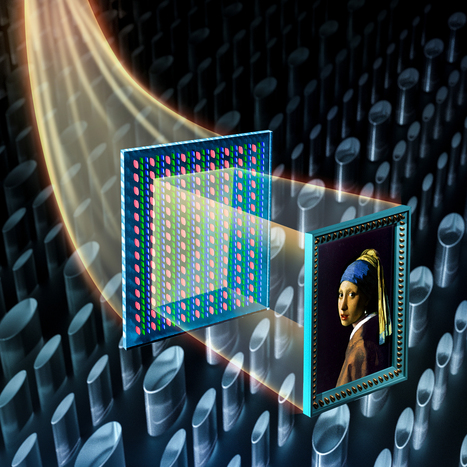
By shining white light on a glass slide stippled with millions of tiny titanium dioxide pillars, researchers at the National Institute of Standards and Technology (NIST) and their collaborators have reproduced with astonishing fidelity the luminous hues and subtle shadings of “Girl With a Pearl Earring,” Dutch artist Johannes Vermeer’s masterpiece. The approach has potential applications in improving optical communications and making currency harder to counterfeit. For example, by adding or dropping a particular color, or wavelength, of light traveling in an optical fiber, scientists can control the amount of information carried by the fiber. By altering the intensity, researchers can maintain t the brightness of the light signal as it travels long distances in the fiber. The approach might also be used to “paint” paper money with small but intricate color details that a counterfeiter would have great difficulty forging. Other scientists have previously used tiny pillars, or nanopillars, of varying sizes to trap and emit specific colors when illuminated with white light. The width of the nanopillars, which are about 600 nanometers in height, or less than one-hundredth the diameter of a human hair, determines the specific color of light that a pillar traps and emits. For a demanding test of such a technique, researchers examined how well the nanopillars reproduced the colors of a familiar painting, such as the Vermeer. Although several teams of researchers had successfully arranged millions of nanopillars whose sizes were tailored to transmit red, green or blue light to create a specific palette of output colors, the scientists had no way to control the intensity of those colors. The intensity, or brightness, of colors determines an image’s light and shadow — its chiaroscuro —and enhances the ability to convey impressions of perspective and depth, a signature feature of Vermeer’s work. Now, by fabricating nanopillars that not only trap and emit specific colors of light but also change its polarization by varying degrees, the NIST researchers and their collaborators from Nanjing University in China have for the first time demonstrated a way to control both color and intensity. The researchers, who include Amit Agrawal and Wenqi Zhu of NIST and the University of Maryland in College Park, and Henri Lezec of NIST, describe their findings in the September 20 issue of the journal Optica, posted online today.
|
|
Scooped by
Dr. Stefan Gruenwald
September 12, 2020 8:24 PM
|
To date only the length of the legendary giant shark Megalodon had been estimated but now, a new study led by the University of Bristol and Swansea University has revealed the size of the rest of its body, including fins that are as large as an adult human. There is a grim fascination in determining the size of the largest sharks, but this can be difficult for fossil forms where teeth are often all that remain. Today, the most fearsome living shark is the Great White, at over six meters (20 feet) long, which bites with a force of two tonnes. Its fossil relative, the big tooth shark Megalodon, star of Hollywood movies, lived from 23 to around three million years ago, was over twice the length of a Great White and had a bite force of more than ten tons. The fossils of the Megalodon are mostly huge triangular cutting teeth bigger than a human hand. Jack Cooper, who has just completed the MSc in Palaeobiology at the University of Bristol’s School of Earth Sciences, and colleagues from Bristol and Swansea used a number of mathematical methods to pin down the size and proportions of this monster, by making close comparisons to a diversity of living relatives with ecological and physiological similarities to Megalodon. The project was supervised by shark expert Dr Catalina Pimiento from Swansea University and Professor Mike Benton, a palaeontologist at Bristol. Dr Humberto Ferrón of Bristol also collaborated. Their findings are published today in the journal Scientific Reports. The picture shows the comparison of an adult Megalodon's dorsal fin to a 1.6 m diver. This means an adult human could stand on the back of this shark and would be about the same height as the dorsal fin. The reconstruction of the size of Megalodon body parts represents a fundamental step towards a better understanding of the physiology of this giant, and the intrinsic factors that may have made it prone to extinction.
|
|
|
Scooped by
Dr. Stefan Gruenwald
October 1, 2020 12:16 PM
|
A newly identified genetic factor allows adult skin to repair itself like the skin of a newborn babe. The discovery has implications for wound treatment and preventing some of the aging process in skin. In a recent study, published in the journal eLife on Sept. 29, 2020, the researchers identified a factor that acts like a molecular switch in the skin of baby mice that controls the formation of hair follicles as they develop during the first week of life. The switch is mostly turned off after skin forms and remains off in adult tissue. When it was activated in specialized cells in adult mice, their skin was able to heal wounds without scarring. The reformed skin even included fur and could make goose bumps, an ability that is lost in adult human scars. "We were able to take the innate ability of young, neonatal skin to regenerate and transfer that ability to old skin," said Driskell, an assistant professor in WSU's School of Molecular Biosciences. "We have shown in principle that this kind of regeneration is possible." Mammals are not known for their regenerative abilities compared to other organisms, such as salamanders that can regrow entire limbs and regenerate their skin. The WSU study suggests that the secret to human regeneration might be found by studying our own early development. "We can still look to other organisms for inspiration, but we can also learn about regeneration by looking at ourselves," said Driskell. "We do generate new tissue, once in our life, as we are growing." Driskell's team used a new technique called single cell RNA sequencing to compare genes and cells in developing and adult skin. In developing skin, they found a transcription factor -- proteins that bind to DNA and can influence whether genes are turned on or off. The factor the researchers identified, called Lef1, was associated with papillary fibroblasts which are developing cells in the papillary dermis, a layer of skin just below the surface that gives skin its tension and youthful appearance. When the WSU researchers activated the Lef1 factor in specialized compartments of adult mouse skin, it enhanced the skins' ability to regenerate wounds with reduced scarring, even growing new hair follicles that could make goose bumps. Driskell first got the idea to look at early stages of mammalian life for the capacity to repair skin after learning of the work of Dr. Michael Longaker of Stanford University. When performing emergency life-saving surgery in utero, Longaker and his colleagues observed that when those babies were born they did not have any scars from the surgery. A lot of work still needs to be done before this latest discovery in mice can be applied to human skin, Driskell said, but this is a foundational advance. With the support from a new grant from the National Institutes of Health, the WSU research team will continue working to understand how Lef1 and other factors work to repair skin. Also to help further this research, the Driskell lab has created an open, searchable web resource for the RNA sequence data for other scientists to access at skinregeneration.org.
|
|
Scooped by
Dr. Stefan Gruenwald
October 1, 2020 11:19 AM
|
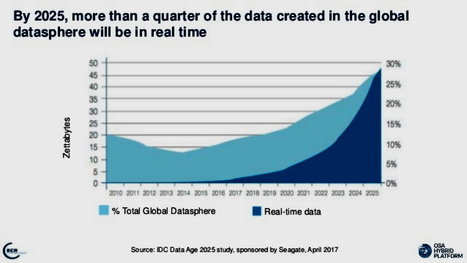
A large hard drive for a personal computer might have a terabyte of storage capacity. Now imagine filling one of those with data every day for around 161 million years, and you’ll have an idea how much data will be “created, captured, copied and consumed” in 2020 alone, according to market intelligence firm International Data Corporation (IDC). This month, IDC released its updated Global DataSphere forecast, predicting more than 59 zettabytes of data creation and consumption within the year and a 26% compound growth rate in data growth through 2024. This massive amount of data – nearly double the data used in 2018 – will be enough that the next three years of data creation and consumption will eclipse that of the previous 30 years. These projections are roughly in line with IDC’s estimates from late 2018, which forecasted ~50 zettabytes of data use in 2020 and 175 zettabytes of data use by 2025. Perhaps most notably, the forecast shows a dramatic uptick in data consumption due to the boom in work-from-home activity caused by COVID-19. (This uptick is not shared by data creation, which has been slightly stymied by the pandemic.) IDC expects the gap between content creation and consumption to widen over the next few years, moving from a 1:9 ratio to a 1:10 ratio by 2024. “Growth of the Global DataSphere is driven more by the data that we consume and analyze than what we create,” said David Reinsel, senior vice president for the Global DataSphere program. “Obviously, data must be created before it can be analyzed, but the recursion rate of data – the rate at which the same data is processed again – continues to grow exponentially driving the ‘unique’ DataSphere down to 10% of the total DataSphere.” IDC expects that productivity data will quickly expand, with total enterprise data use gaining 4% on consumer data use (which stands at around 50%). Furthermore, IDC projects drastic increases in metadata and sensor data, potentially surpassing all other data types in the near future. Overall, 40% of the DataSphere is expected to be attributable to entertainment data (like Netflix), with productivity tools also driving an increase in video data use. “We live in an increasingly video-enabled and video-assisted world, and consume an increasing amount of entertainment video each year – these are key factors driving the growth of the Global DataSphere,” said John Rydning, research vice president for the Global DataSphere program. “At the same time, we are steadily making more productive use of the video data we capture, which is contributing to the growth of productivity data in the DataSphere.”
|
|
Scooped by
Dr. Stefan Gruenwald
September 27, 2020 11:51 AM
|
The Standard Model of particle physics describes all the known elementary particles and three of the four fundamental forces governing the universe; everything except gravity. These three forces—electromagnetic, strong, and weak—govern how particles are formed, how they interact, and how the particles decay. Studying particle and nuclear physics within this framework, however, is difficult, and relies on large-scale numerical studies. For example, many aspects of the strong force require numerically simulating the dynamics at the scale of 1/10th to 1/100th the size of a proton to answer fundamental questions about the properties of protons, neutrons, and nuclei. "Ultimately, we are computationally limited in the study of proton and nuclear structure using lattice field theory," says assistant professor of physics Phiala Shanahan. "There are a lot of interesting problems that we know how to address in principle, but we just don't have enough compute, even though we run on the largest supercomputers in the world." To push past these limitations, Shanahan leads a group that combines theoretical physics with machine learning models. In their paper "Equivariant flow-based sampling for lattice gage theory," published this month in Physical Review Letters, they show how incorporating the symmetries of physics theories into machine learning and artificial intelligence architectures can provide much faster algorithms for theoretical physics. "We are using machine learning not to analyze large amounts of data, but to accelerate first-principles theory in a way which doesn't compromise the rigor of the approach," Shanahan says. "This particular work demonstrated that we can build machine learning architectures with some of the symmetries of the Standard Model of particle and nuclear physics built in, and accelerate the sampling problem we are targeting by orders of magnitude." Shanahan launched the project with MIT graduate student Gurtej Kanwar and with Michael Albergo, who is now at NYU. This month's paper is one in a series aimed at enabling studies in theoretical physics that are currently computationally intractable. "Our aim is to develop new algorithms for a key component of numerical calculations in theoretical physics," says Kanwar. "These calculations inform us about the inner workings of the Standard Model of particle physics, our most fundamental theory of matter. Such calculations are of vital importance to compare against results from particle physics experiments, such as the Large Hadron Collider at CERN, both to constrain the model more precisely and to discover where the model breaks down and must be extended to something even more fundamental."
|
|
Scooped by
Dr. Stefan Gruenwald
September 27, 2020 11:43 AM
|
Observations by the NASA/ESA Hubble Space Telescope and the European Southern Observatory's Very Large Telescope (VLT) in Chile have found that something may be missing from the theories of how dark matter behaves. This missing ingredient may explain why researchers have uncovered an unexpected discrepancy between observations of the dark matter concentrations in a sample of massive galaxy clusters and theoretical computer simulations of how dark matter should be distributed in clusters. The new finding indicates that some small-scale concentrations of dark matter produce lensing effects that are 10 times stronger than expected. Dark matter is the invisible glue that keeps stars, dust, and gas together in a galaxy. This mysterious substance makes up the bulk of a galaxy's mass and forms the foundation of our Universe's large-scale structure. Because dark matter does not emit, absorb, or reflect light, its presence is only known through its gravitational pull on visible matter in space. Astronomers and physicists are still trying to pin down what it is. Galaxy clusters, the most massive and recently assembled structures in the Universe, are also the largest repositories of dark matter. Clusters are composed of individual member galaxies that are held together largely by the gravity of dark matter. "Galaxy clusters are ideal laboratories in which to study whether the numerical simulations of the Universe that are currently available reproduce well what we can infer from gravitational lensing," said Massimo Meneghetti of the INAF-Observatory of Astrophysics and Space Science of Bologna in Italy, the study's lead author. "We have done a lot of testing of the data in this study, and we are sure that this mismatch indicates that some physical ingredient is missing either from the simulations or from our understanding of the nature of dark matter," added Meneghetti. "There's a feature of the real Universe that we are simply not capturing in our current theoretical models," added Priyamvada Natarajan of Yale University in Connecticut, USA, one of the senior theorists on the team. "This could signal a gap in our current understanding of the nature of dark matter and its properties, as these exquisite data have permitted us to probe the detailed distribution of dark matter on the smallest scales." The distribution of dark matter in clusters is mapped by measuring the bending of light -- the gravitational lensing effect -- that they produce. The gravity of dark matter concentrated in clusters magnifies and warps light from distant background objects. This effect produces distortions in the shapes of background galaxies which appear in images of the clusters. Gravitational lensing can often also produce multiple images of the same distant galaxy. The higher the concentration of dark matter in a cluster, the more dramatic its light-bending effect. The presence of smaller-scale clumps of dark matter associated with individual cluster galaxies enhances the level of distortions. In some sense, the galaxy cluster acts as a large-scale lens that has many smaller lenses embedded within it. Hubble's crisp images were taken by the telescope's Wide Field Camera 3 and Advanced Camera for Surveys. Coupled with spectra from the European Southern Observatory's Very Large Telescope (VLT), the team produced an accurate, high-fidelity, dark-matter map. By measuring the lensing distortions astronomers could trace out the amount and distribution of dark matter. The three key galaxy clusters, MACS J1206.2-0847, MACS J0416.1-2403, and Abell S1063, were part of two Hubble surveys: The Frontier Fields and the Cluster Lensing And Supernova survey with Hubble (CLASH) programs. To the team's surprise, in addition to the dramatic arcs and elongated features of distant galaxies produced by each cluster's gravitational lensing, the Hubble images also revealed an unexpected number of smaller-scale arcs and distorted images nested near each cluster's core, where the most massive galaxies reside. The researchers believe the nested lenses are produced by the gravity of dense concentrations of matter inside the individual cluster galaxies. Follow-up spectroscopic observations measured the velocity of the stars orbiting inside several of the cluster galaxies to thereby pin down their masses. "The data from Hubble and the VLT provided excellent synergy," shared team member Piero Rosati of the Università degli Studi di Ferrara in Italy, who led the spectroscopic campaign. "We were able to associate the galaxies with each cluster and estimate their distances."
|
|
Scooped by
Dr. Stefan Gruenwald
September 27, 2020 11:32 AM
|
Interindividual clinical variability in the course of SARS-CoV-2 infection is immense. A new report demonstrates that at least 101 of 987 patients with life-threatening COVID-19 pneumonia have neutralizing IgG auto-Abs against IFN-ω (13 patients), the 13 types of IFN-α (36), or both (52), at the onset of critical disease; a few also had auto-Abs against the other three type I IFNs. The auto-Abs neutralize the ability of the corresponding type I IFNs to block SARS-CoV-2 infection in vitro. These auto-Abs were not found in 663 individuals with asymptomatic or mild SARS-CoV-2 infection and were present in only 4 of 1,227 healthy individuals. Patients with auto-Abs were aged 25 to 87 years and 95 were men. A B cell auto-immune phenocopy of inborn errors of type I IFN immunity underlies life-threatening COVID-19 pneumonia in at least 2.6% of women and 12.5% of men.
|
|
Scooped by
Dr. Stefan Gruenwald
September 23, 2020 11:34 AM
|
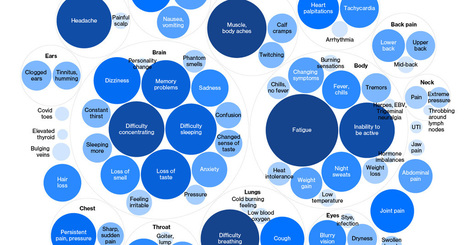
Like many other illnesses, Covid-19 can cause enduring problems. Some victims report serious symptoms weeks and months after infection, even many who were never ill enough to be hospitalized. Nearly 100 different long-term problems, detailed in the chart below, were reported to Indiana University Medical School researcher Natalie Lambert, in a survey of more than 1,500 patients. Some of these issues go well beyond typical Covid-19 symptoms.
|
|
Scooped by
Dr. Stefan Gruenwald
September 18, 2020 12:07 AM
|
A look at all the vaccines that have reached trials in humans.
Vaccines typically require years of research and testing before reaching the clinic, but scientists are racing to produce a safe and effective coronavirus vaccine by next year. Researchers are testing 40 vaccines in clinical trials on humans, and at least 92 preclinical vaccines are under active investigation in anima Work began in January with the deciphering of the SARS-CoV-2 genome. The first vaccine safety trials in humans started in March, but the road ahead remains uncertain. Some trials will fail, and others may end without a clear result. But a few may succeed in stimulating the immune system to produce effective antibodies against the virus. Here is the status of all the vaccines that have reached trials in humans, along with a selection of promising vaccines still being tested in cells or animals. For an overview of different Covid-19 treatments, see NYT's Coronavirus Drug and Treatment Tracker.
|
|
Scooped by
Dr. Stefan Gruenwald
September 17, 2020 11:57 PM
|
Theorists publish improved prediction for the tiny difference in kaon decays observed by experiments. A new calculation performed using the world's fastest supercomputers allows scientists to more accurately predict the likelihood of two kaon decay pathways, and compare those predictions with experimental measurements. The comparison tests for tiny differences between matter and antimatter that could, with even more computing power and other refinements, point to physics phenomena not explained by the Standard Model. Scientists first observed a slight difference in the behavior of matter and antimatter—known as a violation of “CP symmetry”—while studying the decays of subatomic particles called kaons in a Nobel Prize winning experiment at Brookhaven Lab in 1963. While the Standard Model of particle physics was pieced together soon after that, understanding whether the observed CP violation in kaon decays agreed with the Standard Model has proved elusive due to the complexity of the required calculations. The new calculation gives a more accurate prediction for the likelihood with which kaons decay into a pair of electrically charged pions vs. a pair of neutral pions. Understanding these decays and comparing the prediction with more recent state-of-the-art experimental measurements made at CERN and DOE’s Fermi National Accelerator Laboratory gives scientists a way to test for tiny differences between matter and antimatter, and search for effects that cannot be explained by the Standard Model. The new calculation represents a significant improvement over the group’s previous result, which was published in Physical Review Letters in 2015. Based on the Standard Model, it gives a range of values for what is called “direct CP symmetry violation” in kaon decays that is consistent with the experimentally measured results. That means the observed CP violation is now, to the best of our knowledge, explained by the Standard Model, but the uncertainty in the prediction needs to be further improved since there is also an opportunity to reveal any sources of matter/antimatter asymmetry lying beyond the current theory’s description of our world. “An even more accurate theoretical calculation of the Standard Model may yet lie outside of the experimentally measured range. It is therefore of great importance that we continue our progress, and refine our calculations, so that we can provide an even stronger test of our fundamental understanding,” said Brookhaven Lab theorist Amarjit Soni. All of the experiments that show a difference between matter and antimatter involve particles made of quarks, the subatomic building blocks that bind through the strong force to form protons, neutrons, and atomic nuclei—and also less-familiar particles like kaons and pions. “Each kaon and pion is made of a quark and an antiquark, surrounded by a cloud of virtual quark-antiquark pairs, and bound together by force carriers called gluons,” explained Christopher Kelly, of Brookhaven National Laboratory. The Standard Model-based calculations of how these particles behave must therefore include all the possible interactions of the quarks and gluons, as described by the modern theory of strong interactions, known as quantum chromodynamics (QCD). In addition, these bound particles move at close to the speed of light. That means the calculations must also include the principles of relativity and quantum theory, which govern such near-light-speed particle interactions. “Because of the huge number of variables involved, these are some of the most complicated calculations in all of physics,” noted Tianle Wang, of Columbia University.
|
|
Scooped by
Dr. Stefan Gruenwald
September 12, 2020 9:02 PM
|
The newest Covid-19 vaccine candidate to start human testing is the first where volunteers won’t get a painful injection. Instead, they’ll receive a spray through the nose. China recently approved phase I human testing for the nasal spray vaccine, which is co-developed by researchers at Xiamen University and Hong Kong University, as well as by vaccine maker Beijing Wantai Biological Pharmacy Enterprise Co. Intranasal spray has previously been developed as a vaccine for the flu and is recommended for use among children and adults who want to avoid the more common needle injection. While it is not the most frequent choice for delivery, scientists around the world are working to develop sprays as an alternative to muscle jabs for all sorts of vaccines. The intranasal vaccine is the 10th candidate from China to proceed to the crucial stage of human testing. The country is building its lead in vaccine development after western front-runner AstraZeneca Plc had to pause its late-stage human trial to investigate a spinal cord illness in a person who received its experimental shot. The intranasal spray contains weakened flu virus that carries the genetic segments of the coronavirus’s spike protein. Administered through the nasal tract, it mimics the natural infection of respiratory viruses to stimulate the body’s immune response against the pathogen that cause Covid-19, according to Science and Technology Daily, a paper affiliated with China’s Ministry of Science and Technology. Some scientists hope a vaccine that gets sprayed through the nose may have a better chance of stopping the spread of the insidious virus through respiratory tracts. A needle injection can arouse a systematic immune response to prevent severe illness, but may not be strong enough to ward off infection. Preclinical studies have shown the nasal vaccine can significantly reduce lung damage among mice and hamsters when challenged with the coronavirus, Science and Technology Daily reported. Global Race The nasal spray joins about 35 other candidates currently in human testing, as the global race to be first with an effective vaccine against the deadly pathogen intensifies. In the wake of AstraZeneca’s setback, China’s most advanced vaccine developers, including CanSino Biologics Inc. and state-owned China National Biotec Group Co., have emphasized the safety of their own shots. CNBG said the two shots it is testing are effective in staving off infection. None of the Chinese diplomats and workers traveling to virus hot spots overseas has reported infections several months after receiving the vaccines, Zhou Song, CNBG’s general counsel, said in a article published in Science and Technology Daily.
|
|
Scooped by
Dr. Stefan Gruenwald
September 12, 2020 8:52 PM
|
Researchers from the University of Cambridge used a numerical experiment to determine the limits of matt structural color – a phenomenon which is responsible for some of the most intense colors in nature – and found that it extends only as far as blue and green in the visible spectrum. The results, published in PNAS, could be useful in the development of non-toxic paints or coatings with intense color that never fades. Structural color, which is seen in some bird feathers, butterfly wings or insects, is not caused by pigments or dyes, but internal structure alone. The appearance of the color, whether matt or iridescent, will depending on how the structures are arranged at the nanoscale. Ordered, or crystalline, structures result in iridescent colors, which change when viewed from different angles. Disordered, or correlated, structures result in angle-independent matt colors, which look the same from any viewing angle. Since structural color does not fade, these angle-independent matt colors would be highly useful for applications such as paints or coatings, where metallic effects are not wanted. “In addition to their intensity and resistance to fading, a matt paint which uses structural color would also be far more environmentally-friendly, as toxic dyes and pigments would not be needed,” said first author Gianni Jacucci from Cambridge’s Department of Chemistry. “However, we first need to understand what the limitations are for recreating these types of colors before any commercial applications are possible.” “Most of the examples of structural color in nature are iridescent – so far, examples of naturally-occurring matt structural color only exist in blue or green hues,” said co-author Lukas Schertel. “When we’ve tried to artificially recreate matt structural color for reds or oranges, we end up with a poor-quality result, both in terms of saturation and color purity.” The researchers, who are based in the lab of Dr Silvia Vignolini, used numerical modeling to determine the limitations of creating saturated, pure and matt red structural color. The researchers modeled the optical response and color appearance of nanostructures, as found in the natural world. They found that saturated, matt structural colors cannot be recreated in the red region of the visible spectrum, which might explain the absence of these hues in natural systems. “Because of the complex interplay between single scattering and multiple scattering, and contributions from correlated scattering, we found that in addition to red, yellow and orange can also hardly be reached,” said Vignolini. Despite the apparent limitations of structural color, the researchers say these can be overcome by using other kinds of nanostructures, such as network structures or multi-layered hierarchical structures, although these systems are not fully understood yet.
|
|
Scooped by
Dr. Stefan Gruenwald
September 12, 2020 8:33 PM
|
LOCKDOWN EARTH - The lack of human activity during lockdown caused human-linked vibrations in the Earth to drop by an average of 50% between March and May 2020. The lack of human activity during lockdown caused human-linked vibrations in the Earth to drop by an average of 50% between March and May 2020. This quiet period, likely caused by the total global effect of social distancing measures, closure of services and industry, and drops in tourism and travel, is the longest and most pronounced quiet period of seismic noise in recorded history. The new research, led by the Royal Observatory of Belgium and five other institutions around the world including Imperial College London, showed that the dampening of ‘seismic noise’ caused by humans was more pronounced in more densely populated areas. The relative quietness allowed researchers to listen in to previously concealed earthquake signals, and could help us differentiate between human and natural seismic noise more clearly than ever before. Co-author Dr Stephen Hicks, from Imperial’s Department of Earth Science and Engineering, said: “This quiet period is the longest and largest dampening of human-caused seismic noise since we started monitoring the Earth in detail using vast monitoring networks of seismometers. “Our study uniquely highlights just how much human activities impact the solid Earth, and could let us see more clearly than ever what differentiates human and natural noise.” The paper been published in the journal Science.
|
|
Scooped by
Dr. Stefan Gruenwald
September 12, 2020 8:27 PM
|
A team from Osaka City University, in collaboration with other international partners, has demonstrated a reliable and precise microscope-based thermometer that works in live, microscopic animals based on quantum technology, specifically, detecting temperature-dependent properties of quantum spins in fluorescent nanodiamonds. The research is published in Science Advances. The optical microscope is one of the most basic tools for analysis in biology that uses visible light to allow the naked eye to see microscopic structures. In the modern laboratory, fluorescence microscope, an enhanced version of the optical microscope with various fluorescent biomarkers, is more frequently used. Recent advancements in such fluorescence microscopy have allowed for live imaging of the details of a structure, and through this, obtaining various physiological parameters in these structures, such as pH, reactive oxygen species, and temperature. Quantum sensing is a technology that exploits the ultimate sensitivity of fragile quantum systems to the surrounding environment. High-contrast MRIs are examples of quantum spins in fluorescent diamonds and are some of the most advanced quantum systems working at the forefront of real-world applications. Applications of this technique to thermal biology were introduced seven years ago to quantify temperatures inside cultured cells. However, they had yet to be applied to dynamic biological systems where heat and temperature are more actively involved in biological processes. The research team decorated the surface of the nanodiamonds with polymer structures and injected them to C. elegans nematode worms, one of the most popular model animals in biology. They needed to know the base "healthy" temperature of the worms. Once inside, the nanodiamonds moved quickly but the team's novel quantum thermometry algorithm successfully tracked them and steadily measured the temperature. A fever was induced within the worms by stimulating their mitochondria with a pharmacological treatment. The team's quantum thermometer successfully observed a temperature increase in the worms. "It was fascinating to see quantum technology work so well in live animals and I never imagined the temperature of tiny worms less than 1 mm in size could deviate from the norm and develop into a fever," said Masazumi Fujiwara, a lecturer at the Department of Science at Osaka City University. "Our results are an important milestone that will guide the future direction of quantum sensing as it shows how it contributes to biology,"
|



















https://chaojiyaowu.com/
https://chaojiyaowu.com/产品/在线购买迈辛巴/
https://chaojiyaowu.com/产品/在线购买赛尼可减肥药/
https://chaojiyaowu.com/产品/在线购买-wegovy/
https://chaojiyaowu.com/产品/在线购买-victoza/
https://chaojiyaowu.com/产品/在线购买-adipex/
https://chaojiyaowu.com/产品/在线购买芬特明/
https://chaojiyaowu.com/产品/购买麻黄碱盐酸盐-30mg/
https://chaojiyaowu.com/产品/在线购买西布曲明/
https://chaojiyaowu.com/产品/在线购买-ozempic-1-毫克/
https://chaojiyaowu.com/产品/在线购买萨克森达/
https://chaojiyaowu.com/产品/在线购买-adderall-xr-30mg/
https://chaojiyaowu.com/产品/在线购买-subutex/
https://chaojiyaowu.com/产品/在线购买丁丙诺啡/
https://chaojiyaowu.com/产品/在线购买万斯-vyvanse-30mg/
https://chaojiyaowu.com/产品/在线购买利他林/
https://chaojiyaowu.com/产品/在线购买协奏曲-18mg/
https://chaojiyaowu.com/产品/在线购买奥施康定-10mg/
https://chaojiyaowu.com/产品/在线购买戊巴比妥/
https://chaojiyaowu.com/产品/在线购买羟考酮-10mg/
https://chaojiyaowu.com/产品/购买-adderall-30-毫克/
https://farmaciadimagrante.com/
https://farmaciadimagrante.com/Prodotto/acquista-mysimba-online/
https://farmaciadimagrante.com/Prodotto/acquista-mounjaro-online/
https://farmaciadimagrante.com/Prodotto/acquista-victoza-online/
https://farmaciadimagrante.com/Prodotto/acquistare-saxenda-6mg-ml-online/
https://farmaciadimagrante.com/Prodotto/acquista-ozempic-online/
https://farmaciadimagrante.com/Prodotto/acquista-wegovy-online/
https://farmaciadimagrante.com/Prodotto/acquista-nembutal-in-polvere-online/
https://farmaciadimagrante.com/Prodotto/acquista-online-nembutal-solution/
https://farmaciadimagrante.com/Prodotto/acquista-ketamina-hcl-500mg-10ml-in-linea/
https://farmaciadimagrante.com/Prodotto/acquistare-fentanyl-in-polvere-online/
https://farmaciadimagrante.com/Prodotto/acquistare-fentanyl-online/
https://farmaciadimagrante.com/Prodotto/acquista-cristallo-mdma-online/
https://farmaciadimagrante.com/Prodotto/acquista-ativan-online/
https://farmaciadimagrante.com/Prodotto/acquista-botox-online/
https://farmaciadimagrante.com/Prodotto/acquista-cerotti-al-fentanil/
https://farmaciadimagrante.com/Prodotto/acquista-codeina-linctus-online/
https://farmaciadimagrante.com/Prodotto/acquista-codeina-online/
https://farmaciadimagrante.com/Prodotto/acquista-demerol-online/
https://farmaciadimagrante.com/Prodotto/acquista-depalgo-online/
https://farmaciadimagrante.com/Prodotto/acquista-diazepam-online/
https://farmaciadimagrante.com/Prodotto/acquista-instanyl-online/
https://farmaciadimagrante.com/Prodotto/acquista-l-ritalin-online/
https://farmaciadimagrante.com/Prodotto/acquista-metadone/
https://farmaciadimagrante.com/Prodotto/acquista-opana-online/
https://farmaciadimagrante.com/Prodotto/acquista-stilnox-online/
https://farmaciadimagrante.com/Prodotto/acquista-suboxone-8mg/
https://farmaciadimagrante.com/Prodotto/acquista-subutex-online/
https://farmaciadimagrante.com/Prodotto/acquista-vicodin-online/
https://farmaciadimagrante.com/Prodotto/acquista-vyvanse-online/
https://farmaciadimagrante.com/Prodotto/acquista-xanax-2mg/
https://farmaciadimagrante.com/Prodotto/acquistare-rohypnol-2mg/
https://farmaciadimagrante.com/Prodotto/acquistare-sibutramina-online/
https://farmaciadimagrante.com/Prodotto/efedrina-hcl-in-polvere/
https://farmaciadimagrante.com/Prodotto/ephedrine-hcl-30mg/
https://farmaciadimagrante.com/Prodotto/sciroppo-di-metadone/
https://farmaciadimagrante.com/Prodotto/tramadolo-hcl-200mg/
https://farmaciadimagrante.com/Prodotto/acquista-adipex-online/
https://farmaciadimagrante.com/Prodotto/acquista-adderall-30mg/
https://farmaciadimagrante.com/Prodotto/acquista-oxycontin-online/
https://farmaciadimagrante.com/Prodotto/acquista-ossicodone-online/
https://farmaciadimagrante.com/Prodotto/acquista-phentermine-online/
https://farmaciadimagrante.com/Prodotto/acquista-ambien/
https://farmaciadimagrante.com/Prodotto/acquista-percocet-online/
https://farmaciadimagrante.com/Prodotto/acquistare-buprenorfina-8mg-2mg/
https://farmaciadimagrante.com/Prodotto/a-215-ossicodone-actavis/
https://farmaciadimagrante.com/Prodotto/acquista-eroina-bianca/
https://globaalapotheek.com/product/koop-adderall-online/
https://globaalapotheek.com/product/efedrine-hcl-poeder-kopen/
https://globaalapotheek.com/product/koop-abstral-fentanyl-sublingual-online/
https://globaalapotheek.com/product/koop-actavis-hoestsiroop-online/
https://globaalapotheek.com/product/koop-adipex-online/
https://globaalapotheek.com/product/koop-ambien-online/
https://globaalapotheek.com/product/koop-ativan-online/
https://globaalapotheek.com/product/koop-botox-online/
https://globaalapotheek.com/product/koop-bromazepam-online/
https://globaalapotheek.com/product/koop-buprenorfine-online/
https://globaalapotheek.com/product/koop-desoxyn-online/
https://globaalapotheek.com/product/koop-dexedrine-online/
https://globaalapotheek.com/product/koop-diamorfine-online/
https://globaalapotheek.com/product/koop-dianabol-online/
https://globaalapotheek.com/product/koop-dysport-online/
https://globaalapotheek.com/product/koop-ecstasy-online/
https://globaalapotheek.com/product/koop-efedrine-hcl-online/
https://globaalapotheek.com/product/koop-endocet-online/
https://globaalapotheek.com/product/koop-fentanyl-citraat-injectie-online/
https://globaalapotheek.com/product/koop-fentanyl-pleisters-actavis/
https://globaalapotheek.com/product/koop-fentanyl-pleisters-mylan/
https://globaalapotheek.com/product/koop-fentanyl-sandoz-5x-100mcg/
https://globaalapotheek.com/product/koop-fentanyl-sandoz-5x-375mcg/
https://globaalapotheek.com/product/koop-focalin-xr-online/
https://globaalapotheek.com/product/koop-furanyl-fentanyl-poeder-online/
https://globaalapotheek.com/product/koop-humatrope-online/
https://globaalapotheek.com/product/koop-hydromorfoon-online/
https://globaalapotheek.com/product/koop-klonopin-online/
https://globaalapotheek.com/product/koop-ksalol-xanax-online/
https://globaalapotheek.com/product/koop-methadon-online/
https://globaalapotheek.com/product/koop-modafinil-online/
https://globaalapotheek.com/product/koop-morfine-sulfaat-200mg-online/
https://globaalapotheek.com/product/koop-morfine-sulfaat-30mg-online/
https://globaalapotheek.com/product/koop-morfine-sulfaat-60mg-online/
https://globaalapotheek.com/product/koop-neurobloc-online/
https://globaalapotheek.com/product/koop-norco-online/
https://globaalapotheek.com/product/koop-oramorph-online/
https://globaalapotheek.com/product/koop-oxycodon-80mg-online/
https://globaalapotheek.com/product/koop-oxycontin-online/
https://globaalapotheek.com/product/koop-oxymorfoon-online/
https://globaalapotheek.com/product/koop-percocet-online/
https://globaalapotheek.com/product/koop-quaalude-online/
https://globaalapotheek.com/product/koop-restoril-30mg-online/
https://globaalapotheek.com/product/koop-ritalin-online/
https://globaalapotheek.com/product/koop-roxicodone-online/
https://globaalapotheek.com/product/koop-soma-online/
https://globaalapotheek.com/product/koop-stilnox-online/
https://globaalapotheek.com/product/koop-suboxone-online/
https://globaalapotheek.com/product/koop-subutex-online/
https://globaalapotheek.com/product/koop-tramadol-online/
https://globaalapotheek.com/product/koop-triazolam-halcion-online/
https://globaalapotheek.com/product/koop-valium-online/
https://globaalapotheek.com/product/koop-vicodin-online/
https://globaalapotheek.com/product/koop-vyvanse-50mg-online/
https://globaalapotheek.com/product/koop-vyvanse-70mg-online/
https://globaalapotheek.com/product/koop-xanax-online/
https://globaalapotheek.com/product/koop-xls-max-online/
https://globaalapotheek.com/product/koop-zaleplon-online/
https://globaalapotheek.com/product/koop-zopiclon-online/
https://globaalapotheek.com/product/morfine-kopen/
https://globaalapotheek.com/product/morfine-injectie-kopen/
https://globaalapotheek.com/product/oxycodon-40mg-kopen-sandoz/
https://globaalapotheek.com/product/oxycodon-80mg-kopen-sandoz/
https://globaalapotheek.com/product/phentermine-online-kopen/
https://globaalapotheek.com/product/vyvanse-kopen/
https://perderepesoefedrina.com/
https://perderepesoefedrina.com/Prodotto/acquista-ossicodone-online/
https://perderepesoefedrina.com/Prodotto/acquista-oxycontin-online/
https://perderepesoefedrina.com/Prodotto/acquista-percocet-online/
https://perderepesoefedrina.com/Prodotto/acquista-phentermine-online/
https://perderepesoefedrina.com/Prodotto/acquista-eroina-bianca/
https://perderepesoefedrina.com/Prodotto/a-215-ossicodone-actavis/
https://perderepesoefedrina.com/Prodotto/acquista-adderall-30mg/
https://perderepesoefedrina.com/Prodotto/acquista-adipex-online/
https://perderepesoefedrina.com/Prodotto/acquista-adma-online/
https://perderepesoefedrina.com/Prodotto/acquista-ambien/
https://perderepesoefedrina.com/Prodotto/acquista-ativan-online/
https://perderepesoefedrina.com/Prodotto/acquista-botox-online/
https://perderepesoefedrina.com/Prodotto/acquista-cerotti-al-fentanil/
https://perderepesoefedrina.com/Prodotto/acquista-codeina-linctus-online/
https://perderepesoefedrina.com/Prodotto/acquista-codeina-online/
https://perderepesoefedrina.com/Prodotto/acquista-demerol-online/
https://perderepesoefedrina.com/Prodotto/acquista-depalgo-online/
https://perderepesoefedrina.com/Prodotto/acquista-diazepam-online/
https://perderepesoefedrina.com/Prodotto/acquista-dilaudid-8mg/
https://perderepesoefedrina.com/Prodotto/acquista-endocet-online/
https://perderepesoefedrina.com/Prodotto/acquista-green-xanax/
https://perderepesoefedrina.com/Prodotto/acquista-hydrocodone-online/
https://perderepesoefedrina.com/Prodotto/acquista-instanyl-online/
https://perderepesoefedrina.com/Prodotto/acquista-l-ritalin-online/
https://perderepesoefedrina.com/Prodotto/acquista-metadone/
https://perderepesoefedrina.com/Prodotto/acquista-morfina-solfato/
https://perderepesoefedrina.com/Prodotto/acquista-opana-online/
https://perderepesoefedrina.com/Prodotto/acquista-roxicodone-30mg/
https://perderepesoefedrina.com/Prodotto/acquista-stilnox-online/
https://perderepesoefedrina.com/Prodotto/acquista-suboxone-8mg/
https://perderepesoefedrina.com/Prodotto/acquista-subutex-online/
https://perderepesoefedrina.com/Prodotto/acquista-vicodin-online/
https://perderepesoefedrina.com/Prodotto/acquista-vyvanse-online/
https://perderepesoefedrina.com/Prodotto/acquista-xanax-2mg/
https://perderepesoefedrina.com/Prodotto/acquistare-dapoxetina-online/
https://perderepesoefedrina.com/Prodotto/acquistare-rohypnol-2mg/
https://perderepesoefedrina.com/Prodotto/acquistare-sibutramina-online/
https://perderepesoefedrina.com/Prodotto/efedrina-hcl-in-polvere/
https://perderepesoefedrina.com/Prodotto/ephedrine-hcl-30mg/
https://perderepesoefedrina.com/Prodotto/sciroppo-di-metadone/
https://perderepesoefedrina.com/Prodotto/tramadolo-hcl-200mg/
https://perderepesoefedrina.com/Prodotto/acquista-cristallo-mdma-online/