Your new post is loading...

|
Scooped by
Dr. Stefan Gruenwald
October 29, 2020 2:01 PM
|
As humanity ramps up its search for alien life, we should keep in mind that E.T. might be hunting for us as well. A new study makes that point by identifying more than 1,000 nearby stars that are favorably positioned for spotting life on Earth. "If observers were out there searching [from planets orbiting these stars], they would be able to see signs of a biosphere in the atmosphere of our Pale Blue Dot,” study lead author Lisa Kaltenegger, an associate professor of astronomy at Cornell and director of the university's Carl Sagan Institute, said in a statement. "And we can even see some of the brightest of these stars in our night sky without binoculars or telescopes," Kaltenegger said. Astronomers have found most of the more than 4,000 exoplanets discovered to date with the "transit method," which detects the tiny brightness dips caused when an orbiting world crosses its host star's face from the observer's perspective. This strategy was used to great effect by NASA's pioneering Kepler space telescope and is currently being employed by its successor, the Transiting Exoplanet Survey Satellite (TESS). Soon, researchers will also be able to scan the atmospheres of some nearby transiting planets for potential signs of life. This search will be one of the many tasks undertaken by NASA's $9.8 billion James Webb Space Telescope, which is scheduled to launch late next year, for example. And coming ground-based megascopes such as the Giant Magellan Telescope will do such work as well. In the new study, Kaltenegger and co-author Joshua Pepper, an associate professor of physics at Lehigh University, thought about Earth as the target of a transiting-planet survey rather than the source of one. The scientists scrutinized the datasets of TESS and Europe's star-mapping Gaia spacecraft, looking for stars within 100 parsecs (about 326 light-years) that are aligned with the ecliptic, the plane of Earth's orbit around the sun. Such alignment is necessary to see Earth cross the sun's face. This search turned up 1,004 qualifying main-sequence stars — stars that, like our sun, fuse hydrogen into helium in their cores. And 508 of those stars "guarantee a minimum 10-hour-long observation of Earth's transit" across the sun's face, Kaltenegger and Pepper wrote in the new study, which was published online Tuesday (Oct. 20, 2020) in the journal Monthly Notices of the Royal Astronomical Society: Letters.
|
|
Scooped by
Dr. Stefan Gruenwald
October 28, 2020 10:43 PM
|
At the center of a black hole, matter is compressed down to an infinitely tiny point, and all conceptions of time and space completely break down. It could be that deep inside a black hole, matter doesn't get squished down to an infinitely tiny point. Instead, there could be a smallest possible configuration of matter, the tiniest possible pocket of volume. This is called a Planck star, and it's a theoretical possibility envisioned by loop quantum gravity, which is itself a highly hypothetical proposal for creating a quantum version of gravity. In the world of loop quantum gravity, space and time are quantized — the universe around us is composed of tiny discrete chunks, but at such an incredibly tiny scale that our movements appear smooth and continuous. This theoretical chunkiness of space-time provides two benefits. One, it takes the dream of quantum mechanics to its ultimate conclusion, explaining gravity in a natural way. And two, it makes it impossible for singularities to form inside black holes. As matter squishes down under the immense gravitational weight of a collapsing star, it meets resistance. The discreteness of space-time prevents matter from reaching anything smaller than the Planck length (around 1.68 times 10^-35 meters, so…small). All the material that has ever fallen into the black hole gets compressed into a ball not much bigger than this. Perfectly microscopic, but definitely not infinitely tiny. This resistance to continued compression eventually forces the material to un-collapse (i.e., explode), making black holes only temporary objects. But because of the extreme time dilation effects around black holes, from our perspective in the outside universe it takes billions, even trillions, of years before they go boom. So we're all set for now. Gravastars Another attempt to eradicate the singularity — one that doesn't rely on untested theories of quantum gravity — is known as the gravastar. It's such a theoretical concept that my spell checker didn't even recognize the word. The difference between a black hole and a gravastar is that instead of a singularity, the gravastar is filled with dark energy. Dark energy is a substance that permeates space-time, causing it to expand outward. It sounds like sci-fi, but it's real: dark energy is currently in operation in the larger cosmos, causing our entire universe to accelerate in its expansion. As matter falls onto a gravastar, it isn't able to actually penetrate the event horizon (due to all that dark energy on the inside) and therefore just hangs out on the surface. But outside that surface, gravastars look and act like normal black holes. However, recent observations of merging black holes with gravitational wave detectors have potentially ruled out the existence of gravastars, because merging gravastars will give a different signal than merging black holes, and outfits like LIGO (the Laser Interferometer Gravitational-Wave Observatory) and Virgo are getting more and more examples by the day. While gravastars aren't exactly a no-go in our universe, they are definitely on thin ice.
|
|
Scooped by
Dr. Stefan Gruenwald
October 24, 2020 2:55 PM
|
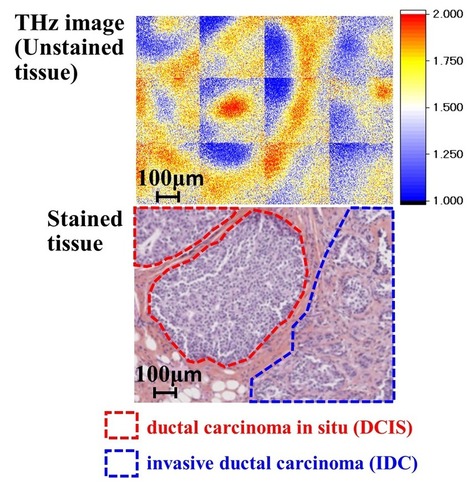
A team of researchers at Osaka University, in collaboration with the University of Bordeaux and the Bergonié Institute in France, has succeeded in terahertz imaging of early-stage breast cancer less than 0.5 mm without staining, which is difficult to identify even by pathological diagnosis. Their work provides a breakthrough towards rapid and precise on-site diagnosis of various types of cancer and accelerates the development of innovative terahertz diagnostic devices. Breast cancer is roughly divided into two types: invasive and non-invasive. The former, invasive ductal carcinoma (IDC), begins in the cells of a breast duct, growing through the duct walls and into the surrounding breast tissue, potentially spreading to other parts of the body. The latter, ductal carcinoma in situ (DCIS), is an early-stage small breast cancer confined to the breast duct, but it can lead to invasive cancer. Therefore, early detection of DCIS is crucial. For pathological diagnosis of cancer, the tissue sample is chemically stained, and a pathologist makes a diagnosis using an image of the stained tissue. However, the staining process takes time, and it is difficult to distinguish DCIS from malignant IDC as they look nearly identical. Terahertz imaging can distinguish cancer tissue from normal tissue without staining and radiation exposure. However, it was still difficult to identify an individual DCIS lesion (which typically range from 50 to 500 µm) by terahertz imaging due to its diffraction-limited spatial resolution of just several millimeters. “To overcome this drawback, we developed a unique imaging technique in which terahertz light sources that are locally generated at irradiation spots of laser beams in a nonlinear optical crystal directly interact with a breast cancer tissue sample. Consequently, we succeeded in clearly visualizing a DCIS lesion of less than 0.5 mm,” explains lead author Kosuke Okada. The accuracy of this technique is approximately 1000 times higher than that of conventional techniques using terahertz waves.
|
|
Scooped by
Dr. Stefan Gruenwald
October 24, 2020 2:51 PM
|
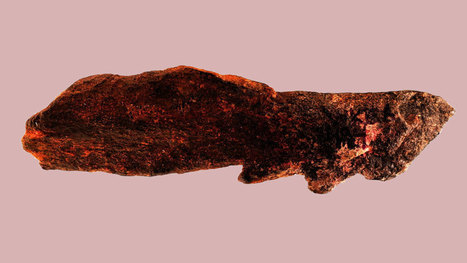
Carved artifacts excavated from Tanzania’s Olduvai Gorge suggest now-extinct hominids made barbed bone points long before humans did, researchers say. A type of bone tool generally thought to have been invented by Stone Age humans got its start among hominids that lived hundreds of thousands of years before Homo sapiens evolved, a new study concludes. A set of 52 previously excavated but little-studied animal bones from East Africa’s Olduvai Gorge includes the world’s oldest known barbed bone point, an implement probably crafted by now-extinct Homo erectus at least 800,000 years ago, researchers say. Made from a piece of a large animal’s rib, the artifact features three curved barbs and a carved tip, the team reports in the November Journal of Human Evolution. Among the Olduvai bones, biological anthropologist Michael Pante of Colorado State University in Fort Collins and colleagues identified five other tools from more than 800,000 years ago as probable choppers, hammering tools or hammering platforms. The previous oldest barbed bone points were from a central African site and dated to around 90,000 years ago (SN: 4/29/95), and were assumed to reflect a toolmaking ingenuity exclusive to Homo sapiens. Those implements include carved rings around the base of the tools where wooden shafts were presumably attached. Barbed bone points found at H. sapiens sites were likely used to catch fish and perhaps to hunt large land prey. The Olduvai Gorge barbed bone point, which had not been completed, shows no signs of having been attached to a handle or shaft. Ways in which H. erectus used the implement are unclear, Pante and his colleagues say. This find and four of the other bone implements date to at least 800,000 years ago, based on their original positions below Olduvai sediment that records a known reversal of Earth’s magnetic field about 781,000 years ago. Another bone artifact dates to roughly 1.7 million years ago, the researchers say.
|
|
Scooped by
Dr. Stefan Gruenwald
October 24, 2020 2:47 PM
|
A new OLED display from Samsung and Stanford can achieve more than 10,000 pixels per inch, which might lead to advanced virtual reality and augmented reality displays, researchers say. An organic light-emitting diode (OLED) display possesses a film of organic compounds that emits light in response to an electric current. A commercial large-scale OLED television might have a pixel density of about 100 to 200 pixels per inch (PPI), whereas a mobile phone's OLED display might achieve 400 to 500 PPI. Two different kinds of OLED displays have reached commercial success in mobile devices and large-scale TVs. Mobile devices mostly used red, green and blue OLEDs, which companies manufacture by depositing dots of organic film through metal sheets with many tiny holes punched in them. However, the thickness of these metal sheets limits how small these fabricated dots can be and sagging of these metal sheets limits how large these displays can get. In contrast, large-scale TVs use white OLEDs with color filters placed over them. However, these filters absorb more than 70% of light from the OLEDs. As such, these displays are power-hungry and can suffer "burn-in" of images that linger too long. The filters also limit how much the pixels can scale down in size. The new display uses OLED films to emit white light between two reflective layers, one of which is made of a silver film, whereas the other is a "metasurface," or forest of microscopic pillars each spaced less than a wavelength of light apart. Square clusters of these 80-nanometer-high, 100-nanometer-wide silver pillars served as pixels each roughly 2.4 microns wide, or slightly less than 1/10,000th of an inch.
|
|
Scooped by
Dr. Stefan Gruenwald
October 24, 2020 2:43 PM
|
People are more likely to comply with a large request when it is preceded by another, smaller request, and this is known as the “foot-in-the-door” (FITD). The FITD has been widely studied in social psychology and is thought to arise from mutually conflicting beliefs about past and present behavior (cognitive dissonance) or changes in self-perception. Across two experiments, scientists found that pigeons’ latency to respond to an effortful second stimulus in a pair scales with how much effort they had exerted on the first stimulus. As such, pigeons also display a FITD-like effect. The researchers argue that the FITD may not be caused by conflicting beliefs or changes in self-perception but may instead be the product of behavioral contrast.
|
|
Scooped by
Dr. Stefan Gruenwald
October 22, 2020 8:17 PM
|
Outwitting Albert Einstein just got even tougher. More than 100 years ago, the famous physicist published his explanation of gravity, known as general relativity (GR), which successfully explains everything from the orbits of planets to the bending of starlight. Still, some physicists have been trying to invent theories that can solve puzzles GR cannot—for example, by explaining away the need for invisible dark matter, whose gravity appears to bind the galaxies. But the first direct image of a black hole, revealed last year, has now provided a tough new test for theories of gravity. Fail it and your theory is dead. “It’s a new hoop to jump through and a fairly narrow one,” says Feryal Özel, an astrophysicist at the University of Arizona who helped devise the new test. In 1915, Einstein hypothesized that gravity arises because massive bodies like Earth warp space and time, or spacetime. That bent spacetime causes the path of a free-falling object to curve, resulting in the parabolic arc of a cannonball on Earth or the elliptical orbit of the Moon. In the 1930s, scientists discovered one surprising implication of GR: If a sufficiently massive star burns out, its core can collapse to an infinitesimal point, leaving behind nothing but a self-sustaining, ultraintense gravitational field—a black hole, so-called because within a certain distance, not even light can escape. Only last year did humans get their first direct view of a black hole. This one was created not by a single collapsing star, but presumably formed when many black holes coalesced. It lurks in the heart of a galaxy 53 million light-years away and weighs 65 billion times as much as the Sun. To study it, a team of more than 180 astronomers and astrophysicists coordinated radio dishes around the globe to work as one big telescope in a project known as the Event Horizon Telescope (EHT). The false-color image looks just like it ought to: a fiery ring surrounding an inky black dot. The glow emanates from hot gas that swirls around the black hole, and the dot in the middle is the “shadow” cast by the black hole as it captures any light that passes too close—even from the gas in front of it. EHT scientists used GR to calculate how big that shadow—which is also magnified by the black hole’s gravity—should appear, and found that their results agreed with the observation. But they couldn’t use the image to test other theories of gravity, Özel explains, as they had no easy way to calculate how big the shadow should be if an alternative theory of gravity is at work. Now, Özel and colleagues have developed a fairly simple way to make that calculation, they report this week in Physical Review Letters. That’s no mean feat, as in principle there are almost innumerable ways that one might modify or expand on Einstein’s theory—say, by changing exactly how matter and energy warp spacetime. However, when used to describe a black hole, every theory eventually has to produce a metric—a mathematical expression that encodes the shape of the warped spacetime in the vicinity of the black hole. That metric can be written in an approximate form as sum of ever smaller mathematical terms. The first term is well-known and gives the prediction of GR. Experiments in our own solar system have shown the next term—technically known as the first “post-Newtonian” correction—is very close to zero. Now, Özel and colleagues have shown that if they write out the math describing a black hole in the right way, the size of the shadow is determined by the next post-Newtonian correction. So to test a new theory of gravity, theorists need only to calculate the value it predicts for that second post-Newtonian parameter, Özel says. If the value falls outside a certain range, conflicting with the measured size of the shadow, the theory is out. Using the black hole’s shadow, the team has narrowed the possible range for the parameter by a factor of 500. It’s surprising that a single parameter controls the size of the shadow, says Ilya Mandel, a theoretical astrophysicist at Monash University, Clayton. “I might have thought that there’s some combination of 23 parameters that determines the shadow’s size and that it’s going to be incredibly difficult to pull them apart,” he says.
|
|
Scooped by
Dr. Stefan Gruenwald
October 22, 2020 8:11 PM
|
Today, the U.S. Food and Drug Administration approved the antiviral drug Veklury (remdesivir) for use in adult and pediatric patients 12 years of age and older and weighing at least 40 kilograms (about 88 pounds) for the treatment of COVID-19 requiring hospitalization. Veklury should only be administered in a hospital or in a healthcare setting capable of providing acute care comparable to inpatient hospital care. Veklury is the first treatment for COVID-19 to receive FDA approval. This approval does not include the entire population that had been authorized to use Veklury under an Emergency Use Authorization (EUA) originally issued on May 1, 2020. In order to ensure continued access to the pediatric population previously covered under the EUA, the FDA revised the EUA for Veklury to authorize the drug’s use for treatment of suspected or laboratory confirmed COVID-19 in hospitalized pediatric patients weighing 3.5 kg to less than 40 kg or hospitalized pediatric patients less than 12 years of age weighing at least 3.5 kg. Clinical trials assessing the safety and efficacy of Veklury in this pediatric patient population are ongoing.
|
|
Scooped by
Dr. Stefan Gruenwald
October 22, 2020 8:06 PM
|
Several coronavirus disease 2019 (COVID-19) vaccines are currently in human trials. In June 2020, we surveyed 13,426 people in 19 countries to determine potential acceptance rates and factors influencing acceptance of a COVID-19 vaccine. Of these, 71.5% of participants reported that they would be very or somewhat likely to take a COVID-19 vaccine, and 61.4% reported that they would accept their employer’s recommendation to do so. Differences in acceptance rates ranged from almost 90% (in China) to less than 55% (in Russia). Respondents reporting higher levels of trust in information from government sources were more likely to accept a vaccine and take their employer’s advice to do so. The COVID-19 pandemic is expected to continue to impose enormous burdens of morbidity and mortality while severely disrupting societies and economies worldwide. Governments must be ready to ensure large-scale, equitable access and distribution of a COVID-19 vaccine if and when a safe and effective one becomes available. This will require sufficient health system capacity, as well as strategies to enhance trust in and acceptance of the vaccine and those who deliver it. In 2015, the World Health Organization (WHO) Strategic Advisory Group of Experts on Immunization defined vaccine hesitancy as a ’delay in acceptance or refusal of vaccination despite availability of vaccination services’1, which can vary in form and intensity based on when and where it occurs and what vaccine is involved, as has been confirmed in multiple studies2,3. Concern about vaccine hesitancy is growing worldwide4; in fact, WHO identified it as one of the top ten global health threats in 2019. In many countries, vaccine hesitancy and misinformation present substantial obstacles to achieving coverage and community immunity5,6. Governments, public health officials and advocacy groups must be prepared to address hesitancy and build vaccine literacy so that the public will accept immunization when appropriate. Anti-vaccination activists are already campaigning in multiple countries against the need for a vaccine, with some denying the existence of COVID-19 altogether7. Misinformation spread through multiple channels could have a considerable effect on the acceptance of a COVID-19 vaccine8. The accelerated pace of vaccine development has further heightened public anxieties and could compromise acceptance9. Governments and societies must gauge current levels of willingness to receive a potentially safe and effective COVID-19 vaccine and identify correlates of vaccine hesitancy and/or acceptance. We present findings from a survey of the likelihood of vaccine acceptance from a sample of 13,426 respondents in 19 countries.
|
|
Rescooped by
Dr. Stefan Gruenwald
from Virus World
October 22, 2020 7:54 PM
|
People with Down syndrome were more likely than those without the disorder to be hospitalized and die from COVID-19-related complications, according to a new report published in Annals of Internal Medicine. Julia Hippisley-Cox, MD, professor of clinical epidemiology and general practice in the Nuffield Department of Primary Care Health Sciences at the University of Oxford, and colleagues estimated that Down syndrome was associated with a four-fold increased risk for COVID-19-related hospitalization and 10-fold increased risk for COVID-19-related mortality. “Although the results are from an observational study and we haven't nailed the causality or exact reasons for this elevated risk, we feel that clinicians and other health care workers should be aware of potential risks,” Hippisley-Cox told Healio Primary Care. “These findings could be used by health care workers within the context of other factors to have a more nuanced risk assessment for their patients.” Down syndrome is a common genetic disorder that is linked to immune dysfunction, congenital heart disease and pulmonary issues, according to the researchers. However, it is not currently on the CDC’s list of populations at “increased risk” for COVID-19 complications. To determine whether Down syndrome is a risk factor for poor COVID-19 outcomes, Hippisley-Cos and colleagues analyzed individual-level data from QResearch, a primary care database, on adults in the United Kingdom. The data were collected from January 24 to June 30. Of the 8.26 million adults included in the analysis, 4,053 had Down syndrome. Among them, 68 died during the study period. Nearly 40% of the deaths among adults with Down syndrome were attributed to COVID-19 compared with 20.3% of deaths among people without Down syndrome. In an analysis adjusted for age, sex, ethnicity, BMI, dementia, care home residency, congenital heart disease and other co-morbidities and treatments, the researchers reported that people with Down syndrome and COVID-19 were about four times more likely to be hospitalized (adjusted HR [aHR] = 4.94; 95% CI, 3.63-6.73) and 10 times more likely to die of COVID-19-related complications (aHR = 10.39; 95% CI, 7.08-15.23) than those with COVID-19 who did not have Down syndrome. Hippisley-Cox and colleagues noted that the findings “motivate further investigation. "We are unaware of the effects of Down syndrome on COVID-19 outcomes being reported elsewhere yet during this pandemic,” they concluded. “Novel evidence that specific conditions may confer elevated risk should be used by public health organizations, policymakers, and health care workers to strategically protect vulnerable individuals.” Original Study in Annals Int. Medicine (Oct. 21, 2020): https://doi.org/10.7326/M20-4986
Via Juan Lama
|
|
Scooped by
Dr. Stefan Gruenwald
October 18, 2020 8:59 PM
|
A new study finds that the Atlantic Ocean just had its hottest decade in at least 2,900 years. The new findings are published in the Proceedings of the National Academy of Sciences on Monday, and are another sign the climate is entering an unprecedented state. More than 20 years after intoning, “The water’s getting warm, so you might as well swim,” Smash Mouth’s “All Star” continues to be prophetic. Case in point: A new study finds that the Atlantic Ocean just had its hottest decade in at least 2,900 years. Someone award Smash Mouth a PhD and calculate the h-index of their discography immediately. The new findings, published in the Proceedings of the National Academy of Sciences on Monday, rely on a mix of ice and sediment cores as well as thermometer data to track the state of the Atlantic. The ocean has gone through a well-known up-and-down swing in sea surface temperature, known as the Atlantic multidecadal oscillation. Plotted over hundreds of years, the AMO looks like a pretty steady wave pattern. In its warm phase, it can lead to a greater number of intense hurricanes, while the opposite is true in its cool phase. In addition to hurricanes, the phase of the AMO also influences temperature and precipitation over landmasses both immediately adjacent to the ocean and as far away as India. So the state of the AMO is big deal, especially knowing where it’s heading in a warming climate. To get a handle on where the AMO has been, the researchers turned to a surprising source: the sediment in a lake on Ellesmere Island in the Canadian Arctic. The region is one of the areas heavily influenced by shifts in Atlantic Ocean temperatures. When the Atlantic runs hot, it creates higher pressure over the region, resulting in thinner snowpack; less snowpack means less sediment runoff. Researchers were able to analyze titanium in layer upon layer of lake sediment to create a time series of the past 2,900 years of Atlantic Ocean temperatures. The finding show the wave pattern of warm and cool periods extends into the past, including a big dip in the heart of the Little Ice Age that ran from 1300 until about 1860. Since then, it’s been rising steadily up, with a sharp peak in the past few decades. The scientists also compared parts of the new Canadian Arctic to shorter, higher-resolution sediment cores from other locations, including one from off the southern coast of Iceland that covers the past 230 or so years. That record relies on Turborotalita quinqueloba, a tiny, cold-water-loving shelled creature, as a proxy for temperature. The core shows a drop in their numbers over the past century, with the rate of disappearance speeding up. Taken together, the results show that “recent Atlantic warming is unparalleled” in at least 2,900 years. There are natural factors that could be influencing the shift, but it’s impossible to not consider the impact of climate change. The hallmark of climate change is heat, especially in the oceans. Marine heat waves have become more common and intense. Findings published just last month show rising heat is causing the oceans to stratify. Arctic sea ice plunged to its second lowest levels on record in September as well, again due to hotter oceans.
|
|
Scooped by
Dr. Stefan Gruenwald
October 18, 2020 8:45 PM
|
Two studies published today in Blood Advances suggest people with blood type O may have a lower risk of COVID-19 infection and reduced likelihood of severe outcomes, including organ complications, if they do get sick. As the pandemic continues, the global biomedical research community is working urgently to identify coronavirus risk factors and potential therapeutic targets. The potential role of blood type in predicting risk and complications of COVID-19 infection has emerged as an important scientific question. These new studies add evidence that there may be an association between blood type and vulnerability to COVID-19; however, additional research is needed to better understand why and what it means for patients. Blood type O may offer some protection against COVID-19 infection, according to a retrospective study. Researchers compared Danish health registry data from more than 473,000 individuals tested for COVID-19 to data from a control group of more than 2.2 million people from the general population. Among the COVID-19 positive, they found fewer people with blood type O and more people with A, B, and AB types. The study results suggest that people with blood types A, B, or AB may be more likely to be infected with COVID-19 than people with type O. The researchers did not find any significant difference in rate of infection between A, B, and AB types. Since blood group distributions vary among ethnic subgroups, the researchers also controlled for ethnicity and maintained that fewer people with blood type O tested positive for the virus. “It is very important to consider the proper control group because blood type prevalence may vary considerably in different ethnic groups and different countries,” said study author Torben Barington, MD, of Odense University Hospital and the University of Southern Denmark. “We have the advantage of a strong control group – Denmark is a small, ethnically homogenous country with a public health system and a central registry for lab data – so our control is population-based, giving our findings a strong foundation.” People with blood groups A or AB appear to exhibit greater COVID-19 disease severity than people with blood groups O or B, according to a separate retrospective study. Researchers examined data from 95 critically ill COVID-19 patients hospitalized in Vancouver, Canada. They found that patients with blood groups A or AB were more likely to require mechanical ventilation, suggesting that they had greater rates of lung injury from COVID-19. They also found more patients with blood group A and AB required dialysis for kidney failure.
|
|
Scooped by
Dr. Stefan Gruenwald
October 18, 2020 8:33 PM
|
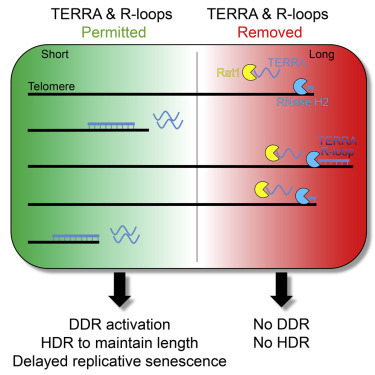
A new study by EPFL researchers shows how RNA species called TERRA muster at the tip of chromosomes, where they help to prevent telomere shortening and premature cell aging. Molecules that accumulate at the tip of chromosomes are known to play a key role in preventing damage to our DNA. Now, researchers at EPFL have unraveled how these molecules home in on specific sections of chromosomes—a finding that could help to better understand the processes that regulate cell survival in aging and cancer. Much like an aglet of a shoelace prevents the end of the lace from fraying, stretches of DNA called telomeres form protective caps at the ends of chromosomes. But as cells divide, telomeres become shorter, making the protective cap less effective. Once telomeres get too short, the cell stops dividing. Telomere shortening and malfunction have been linked to cell aging and age-related diseases, including cancer. Scientists have known that RNA species called TERRA help to regulate the length and function of telomeres. Discovered in 2007 by postdoc Claus Azzalin in the team of EPFL Professor Joachim Lingner, TERRA belongs to a class of molecules called noncoding RNAs, which are not translated into proteins but function as structural components of chromosomes. TERRA accumulates at chromosome ends, signaling that telomeres should be elongated or repaired. However, it was unclear how TERRA got to the tip of chromosomes and remained there. “The telomere makes up only a tiny bit of the total chromosomal DNA, so the question is ‘how does this RNA find its home?’”, Lingner says. To address this question, postdoc Marianna Feretzaki and others in the teams of Joachim Lingner at EPFL and Lumir Krejci at Masaryk University set out to analyze the mechanism through which TERRA accumulates at telomeres, as well as the proteins involved in this process. The findings are published in Nature.
|
|
|
Scooped by
Dr. Stefan Gruenwald
October 29, 2020 1:48 PM
|
The gravitational force in the Universe under which it has evolved from a state almost uniform at the Big Bang until now, when matter is concentrated in galaxies, stars and planets, is provided by what is termed 'dark matter." But in spite of the essential role that this extra material plays, we know almost nothing about its nature, behavior and composition, which is one of the basic problems of modern physics. In a recent article in Astronomy & Astrophysics Letters, scientists at the Instituto de Astrofísica de Canarias (IAC)/University of La Laguna (ULL) and of the National University of the North-West of the Province of Buenos Aires (Junín, Argentina) have shown that the dark matter in galaxies follows a 'maximum entropy' distribution, which sheds light on its nature. Dark matter makes up 85% of the matter of the Universe, but its existence shows up only on astronomical scales. That is to say, due to its weak interaction, the net effect can only be noticed when it is present in huge quantities. As it cools down only with difficulty, the structures it forms are generally much bigger than planets and stars. As the presence of dark matter shows up only on large scales the discovery of its nature probably has to be made by astrophysical studies. Maximum Entropy To say that the distribution of dark matter is organized according to maximum entropy (which is equivalent to 'maximum disorder' or 'thermodynamic equilibrium') means that it is found in its most probable state. To reach this 'maximum disorder' the dark matter must have had to collide within itself, just as gas molecules do, so as to reach equilibrium in which its density, pressure, and temperature are related. However, we do not know how the dark matter has reached this type of equilibrium. "Unlike the molecules in the air, for example, because gravitational action is weak, dark matter particles ought hardly to collide with one another, so that the mechanism by which they reach equilibrium is a mystery," says Jorge Sánchez Almeida, an IAC researcher who is the first author of the article. "However if they did collide with one another this would give them a very special nature, which would partly solve the mystery of their origin," he adds. The maximum entropy of dark matter has been detected in dwarf galaxies, which have a higher ratio of dark matter to total matter than have more massive galaxies, so it is easier to see the effect in them. However, the researchers expect that it is general behavior in all types of galaxies. The study implies that the distribution of matter in thermodynamic equilibrium has a much lower central density that astronomers have assumed for many practical applications, such as in the correct interpretation of gravitational lenses, or when designing experiments to detect dark matter by its self-annihilation. This central density is basic for the correct interpretation of the curvature of the light by gravitational lenses: if it is less dense the effect of the lens is less. To use a gravitational lens to measure the mass of a galaxy one needs a model, if this model is changed, the measurement changes. The central density also is very important for the experiments which try to detect dark matter using its self-annihilation. Two dark matter particles could interact and disappear in a process which is highly improbable, but which would be characteristic of their nature. For two particles to interact they must collide. The probability of this collision depends on the density of the dark matter; the higher the concentration of dark matter, the higher is the probability that the particles will collide. "For that reason, if the density changes so will the expected rate of production of the self-annihilations, and given that the experiments are designed on the prediction of a given rate, if this rate were very low the experiment is unlikely to yield a positive result," says Sánchez Almeida. Finally, thermodynamic equilibrium for dark matter could also explain the brightness profile of the galaxies. This brightness falls with distance from the center of a galaxy in a specific way, whose physical origin is unknown, but for which the researchers are working to show that it is the result of an equilibrium with maximum entropy.
|
|
Scooped by
Dr. Stefan Gruenwald
October 28, 2020 10:39 PM
|
New results from NASA's Juno mission at Jupiter suggest that either "sprites" or "elves" could be dancing in the upper atmosphere of the solar system's largest planet. It is the first time these bright, unpredictable and extremely brief flashes of light—formally known as transient luminous events, or TLE's—have been observed on another world. The findings were published on Oct. 27, 2020, in the Journal of Geophysical Research: Planets. Scientists predicted these bright, superfast flashes of light should also be present in Jupiter's immense roiling atmosphere, but their existence remained theoretical. Then, in the summer of 2019, researchers working with data from Juno's ultraviolet spectrograph instrument (UVS) discovered something unexpected: a bright, narrow streak of ultraviolet emission that disappeared in a flash. "UVS was designed to characterize Jupiter's beautiful northern and southern lights," said Giles, a Juno scientist and the lead author of the paper. "But we discovered UVS images that not only showed Jovian aurora, but also a bright flash of UV light over in the corner where it wasn't supposed to be. The more our team looked into it, the more we realized Juno may have detected a TLE on Jupiter."
|
|
Scooped by
Dr. Stefan Gruenwald
October 24, 2020 2:53 PM
|
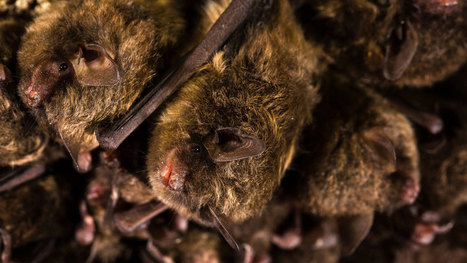
Scientists are calling for a “hands-off” approach to research to decrease the chances of spreading the coronavirus to bats in North America. There’s nothing Winifred Frick likes better than crawling through guano-filled caves and coming face-to-face with bats. As chief scientist of Bat Conservation International, she is on a mission to promote understanding of bats and protect imperiled species from extinction. For months, though, Frick has avoided research that would put her within spitting distance of bats. Her only projects to persist through the pandemic have been conducted from afar, like using acoustic monitors to eavesdrop on the animals’ squeaks and swooshes. In an era of COVID-19, that “hands-off” approach and other precautions are crucial to protect both bats and people, Frick, a biologist at the University of California, Santa Cruz, and over two dozen other scientists argue online September 3 in PLOS Pathogens. Why the call to action? SARS-CoV-2, the virus that causes COVID-19, likely originated in bats in China (SN: 3/26/20). But neither it nor other coronaviruses belonging to the same genus — Betacoronavirus — have been detected in the more than 40 bat species in North America, although the animals do harbor other types of coronaviruses. Scientists are not worried about catching SARS-CoV-2 from these bats. They’re afraid of giving it to the bats — not an impossibility, the authors argue, given that the United States leads the world in infections, with nearly 8 million as of October 16, 2020.
|
|
Scooped by
Dr. Stefan Gruenwald
October 24, 2020 2:50 PM
|
In June, the U.S. government purchased the vast majority of world’s supply of remdesivir—a FDA-approved antiviral treatment for Covid-19—for July through September. Gilead, the company that makes the compound, recently announced that it would meet international demand by the end of October. Yet all along, digital instructions for whipping up a batch of the nearly 400-atom molecule at the push of a button have been sitting on Github, an online software repository, freely available to anyone with the hardware needed to execute the chemical “program.” A dozen such chemical computers or “chemputers” sit in the University of Glasgow lab of Lee Cronin, the chemist who designed the bird’s nest of tubing, pumps, and flasks, and wrote the remdesivir code that runs on it. He’s spent years dreaming of a future where researchers can distribute and produce molecules as easily as they email and print PDFs, making not being able to order a drug as archaic as not being able to locate a modern text. Professor Lee Cronin, the lab’s principal investigator, has designed a robotic chemist called a “chemputer” that can produce chemicals from XDL programs, including the drug remdesivir, a FDA-approved antiviral treatment for the coronavirus. “If we have standard way of discovering molecules, making molecules, and then manufacturing them, suddenly nothing goes out of print,” he says. “It’s like an ebook reader for chemistry.” Cronin and his colleagues described their machine’s capability to produce multiple molecules last year, and now they’ve taken a second major step toward digitizing chemistry with an accessible way to program with the machine. Their software turns academic papers into chemputer-executable programs that researchers can edit without learning to code, they announced earlier this month in Science. And they’re not alone. The team represents one of dozens of groups spread across academia and industry all racing to bring chemistry into the digital age, a development that could lead to safer drugs, more efficient solar panels, and a disruptive new industry.
|
|
Scooped by
Dr. Stefan Gruenwald
October 24, 2020 2:45 PM
|
Researchers from Tokyo Metropolitan University have discovered a new mechanism by which clumps of tau protein are created in the brain, killing brain cells and causing Alzheimer's disease. A specific mutation to an enzyme called MARK4 changed the properties of tau, usually an important part of the skeletal structure of cells, making it more likely to aggregate, and more insoluble. Getting to grips with mechanisms like this may lead to breakthrough treatments. A team led by Associate Professor Kanae Ando of Tokyo Metropolitan University has been exploring the role played by the MARK4 (Microtubule Affinity Regulating Kinase 4) enzyme in Alzheimer's disease. When everything is working normally, the tau protein is an important part of the structure of cells, or the cytoskeleton. To keep the arms of the cytoskeleton or microtubules constantly building and disassembling, MARK4 actually helps tau detach from the arms of this structure. Problems start when a mutation occurs in the gene that provides the blueprint for making MARK4. Previous work had already associated this with an increased risk of Alzheimer's, but it was not known why this was the case. The team artificially introduced mutations into transgenic drosophila fruit flies that also produce human tau, and studied how the proteins changed in vivo. They discovered that this mutant form of MARK4 makes changes to the tau protein, creating a pathological form of tau. Not only did this "bad" tau have an excess of certain chemical groups that caused it to misfold, they found that it aggregated much more easily and were no longer soluble in detergents. This made it easier for tau to form the tangled clumps that causes neurons to degenerate. MARK4 has also been found to cause a wide range of other diseases which involve the aggregation and buildup of other proteins. That's why the team's insights into tau protein buildup may lead to new treatments and preventative measures for an even wider variety of neurodegenerative conditions.
|
|
Scooped by
Dr. Stefan Gruenwald
October 22, 2020 8:21 PM
|
An international team has found a way to potentially prevent the novel coronavirus from infecting cells, as well as clues as to why it is more infectious than similar viruses. University of Bristol researchers Dr Yohei Yamauchi and Professor Peter Cullen identified where the virus binds when it is infecting host cells and then joined forces with Dr Kai-En (Kevin) Chen and Professor Brett Collins from IMB to find out more. Putting more pieces of the puzzle together, Dr Chen and Professor Collins were able to show exactly how the virus binds to a host cell by modelling the site where they interact. “The SARS-CoV-2 virus uses a protein called Spike to bind and enter host cells, and we now know that in addition to the already known ACE2 receptor, the Spike binds to a second receptor on the host cells called neuropilin,” Professor Collins said. “We used X-ray crystallography to see the structure of proteins at the atomic level and visualize the binding sites at a spectacular level of detail.” The University of Bristol team then looked at the effect of disrupting the binding between the virus and the second receptor. "We discovered that by blocking the virus protein from binding neurophilin on the cells, it was possible to reduce the infection rate of the virus," Dr Yamauchi said. “If we can make a drug that blocks the virus from binding to cells, this has potential as a new therapy for treating COVID-19."
|
|
Scooped by
Dr. Stefan Gruenwald
October 22, 2020 8:15 PM
|
The spacecraft attempted to suck up rocks and dirt from the asteroid, which could aid humanity’s ability to divert one that might slam into Earth. [How much of Bennu did NASA’s OSIRIS-REX collect? We’re waiting to find out.] A NASA robot pogo-sticked off an asteroid on Tuesday and grabbed a sample of dirt and rocks, material that could give scientists new insights to the birth of the solar system. From first impressions recorded 200 millions away on Earth, the OSIRIS-REX spacecraft pulled off its collection of bits of asteroid, a carbon-rich rock known as Bennu, perfectly. It then backed away and headed back to orbit. “Transcendental,” Dante Lauretta, the principal investigator of the mission, said moments later. “I mean, I can’t believe we actually pulled this off.” It will take a few more days before scientists can completely declare success. At present, they can only say that the spacecraft executed its instructions exactly as programmed. What is not yet known is how much material was actually grabbed. Scientists are hoping for at least a couple of ounces, but the sampling mechanism can hold up to four pounds. “It’s up to Bennu now to see how the event went,” Dr. Lauretta said. If it succeeded in its goal of sucking up some rocks and dirt from the asteroid’s surface, it could potentially unlock secrets to what the solar system was like when it first formed 4.5 billion years ago. “The asteroids are like time capsules, floating in space, that can provide a fossil record of the birth of our solar system,” Lori Glaze, director of NASA’s planetary science division, said during a news conference on Monday. Many asteroids — including Bennu — cross the orbit of Earth and could collide with our planet someday. A better understanding of these space rocks, which come in many types, could aid humanity’s ability to divert one that might slam into Earth. The name OSIRIS-REX is a shortening of Origins, Spectral Interpretation, Resource Identification, Security, Regolith Explorer.
|
|
Scooped by
Dr. Stefan Gruenwald
October 22, 2020 8:09 PM
|
The diabolical ironclad beetle is almost uncrushable thanks to two newly discovered features of its exoskeleton. Mimicking these could help us build tougher structures. “You can run these things over with a car and they don’t die,” says David Kisailus at the University of California, Irvine. “We took a Toyota, like a sedan, and drove over them and they survived. That was kind of surprising.” To investigate what makes these creatures virtually uncrushable, Kisailus and his colleagues performed compression tests on the beetle’s exoskeleton, while analysing it under a microscope and by CT scan. The researchers discovered ellipsoidal beam-like structures surrounding the beetle’s exoskeleton, which combine with tiny interlocking blades that form joints between the two segments of the beetle’s exoskeletal forewings, enabling the beetle to endure extreme compression. Kisailus hopes that understanding the diabolical ironclad beetle’s uniquely tough structure will help inform the design of stronger components for use in building lighter aircraft, resulting in planes that consume less fuel and emit less carbon dioxide. “No need to reinvent the wheel, just figure out what nature’s done,” he says. As a test, he and his team joined together a carbon-based material with a piece of metal, mimicking the joint structure of the beetle’s exoskeleton. They found it was about twice as tough as a standard joint commonly used to connect similar parts when building aircraft. “In engineering applications, commonly used joints between materials often fracture at their thinnest regions due to stress concentration,” says Po-Yu Chen at National Tsing Hua University in Taiwan. The beetle’s tiny interlocking blades provide a new way to improve toughness and prevent fracturing at these types of joints, he says. Why this species of beetle evolved such a tough exoskeleton in the first place is a mystery. The beetle spends a lot of its time squeezing under rocks and into bark, says Kisailus, and is predated by rodents, birds and lizards. “Maybe it was just exposed to a more dangerous environment than other beetles.” Journal reference: Nature, DOI: 10.1038/s41586-020-2813-8
|
|
Scooped by
Dr. Stefan Gruenwald
October 22, 2020 8:00 PM
|
Mouse models represent powerful tools in cancer research that have influenced much of our understanding of tumor development and our current anticancer strategies. Yet, central signaling pathways differ considerably between mouse and human, including gene regulatory networks (GRNs) of the most important tumor suppressor p53 and its oncogenic sibling p63. Mouse models are widely used in basic cancer research and preclinical cancer studies, despite their limited translation potential being extensively discussed [1,2]. Murine models remain an approximation of the human system, as mice are not only smaller and die at a younger age; they also have an increased metabolic rate and develop a different spectrum of tumors than humans do. Luckily, humans are less susceptible to cancer development than mice. Transcriptional landscapes are important in cancer research. Transcription factors represent key nodes in most oncogenic signaling pathways, and they shape transcriptional landscapes through their gene regulatory networks (GRNs), which comprise all their differentially regulated target genes. Yet, the Mouse ENCODE project reported significant differences in cisregulatory regions, which recruit transcription factors to DNA to regulate target gene expression, between mice and humans. For example, only ~36% of mouse DNAse I hypersensitive sites (DHSs), which reflect open chromatin regions that are accessible to productive transcription factor binding, and ~22% of mouse transcription factor footprints, which are DNA segments that are protected by transcription factor binding, were found to be conserved in humans [3,4]. Consequently, several transcription factors, including important regulators of cancer development, such as MYC, display very limited conservation of their binding site repertoires [4,5]. Similarly, the FANTOM project revealed that more than 56% of promoters that regulate proteincoding genes have diverged between mouse and human [6]. Recent studies have revealed that GRNs of the wellstudied p53 transcription factor family members p53 and p63 differ substantially between mouse and human [7,8]. Given that p63 (ΔNp63) serves a crucial role in squamous cell carcinoma development and p53 is key to the development of almost all tumors, the extensive difference in their GRNs, through which they mediate their function, potentially affects the successful translation of many preclinical results from mouse models to humans.
|
|
Rescooped by
Dr. Stefan Gruenwald
from Biomimicry
October 22, 2020 7:51 PM
|
Researchers have been studying the secret of these wings and have created an artificial structure that functions on the same principle. When open, the earwig wing expands ten times larger than when closed—one of the highest folding ratios in the animal kingdom. The large wing area allows the insect to fly, while the compact way the wings retract enables the creature to tunnel underground without damaging its wings. The wing design has another unique feature; however, in its open, locked state the wing remains stiff with no need for muscle power to provide stability. With just one “click” the wing folds into itself completely, without the action of muscles. To analyze the wing structure and function, lead author Jakob Faber from the research group of André Studart, professor for complex materials at ETH Zurich, in collaboration with professor Andres Arrieta of Purdue University, performed a computer simulation of the wing’s function. This showed that if the wing were to operate on the classical origami principle—using rigid, straight folds with an angular sum of 360 degrees at their intersections—the earwig would only be able to fold its wing down to a third of its size. The crucial factor in the design of the insect’s wing is its elastic folds, which can operate either as an extensional or rotational spring. The wing joints are made from layers of a special elastic biopolymer, resilin, whose arrangement and thickness determines the spring type. In some instances, both extensional and rotational functions combine in the same joint. Faber and his colleagues also examined the point in the earwig’s wing that is responsible for stability in both the open and closed state: the central mid-wing joint. At this point, the folds intersect at angles that are incompatible with rigid origami theory. “This point locks the wing in place in both its open and closed state,” Faber stresses.
Via Miguel Prazeres
|
|
Scooped by
Dr. Stefan Gruenwald
October 18, 2020 8:56 PM
|
UArizona researchers developed one of the most accurate COVID-19 antibody tests available and now have shown antibodies persist for months after infection, providing long-term immunity. One of the most significant questions about the novel coronavirus is whether people who are infected are immune from reinfection and, if so, for how long. To determine the answer, University of Arizona Health Sciences researchers studied the production of antibodies from a sample of nearly 6,000 people and found immunity persists for at least several months after being infected with SARS-CoV-2, the virus that causes COVID-19. "We clearly see high-quality antibodies still being produced five to seven months after SARS-CoV-2 infection," said Deepta Bhattacharya, associate professor in the UArizona College of Medicine – Tucson's Department of Immunobiology. "Many concerns have been expressed about immunity against COVID-19 not lasting. We used this study to investigate that question and found immunity is stable for at least five months." The resulting paper, "Orthogonal SARS-CoV-2 Serological Assays Enable Surveillance of Low Prevalence Communities and Reveal Durable Humoral Immunity," is published in the journal Immunity. Bhattacharya and Dr. Janko Nikolich-Žugich, professor and head of the Department of Immunobiology, led the research team. When a virus first infects cells, the immune system deploys short-lived plasma cells that produce antibodies to immediately fight the virus. Those antibodies appear in blood tests within 14 days of infection. The second stage of the immune response is the creation of long-lived plasma cells, which produce high-quality antibodies that provide lasting immunity. Bhattacharya and Nikolich-Žugich tracked antibody levels over several months in people who tested positive for SARS-CoV-2 antibodies. They found SARS-CoV-2 antibodies are present in blood tests at viable levels for at least five to seven months, although they believe immunity lasts much longer. "Whether antibodies provide lasting protection against SARS-CoV-2 has been one of the most difficult questions to answer," said UArizona Health Sciences Senior Vice President Dr. Michael D. Dake, who is a co-author on the paper. "This research not only has given us the ability to accurately test for antibodies against COVID-19, but also has armed us with the knowledge that lasting immunity is a reality." Earlier studies extrapolated antibody production from initial infections and suggested antibody levels drop quickly after infection, providing only short-term immunity. Bhattacharya believes those conclusions focused on short-lived plasma cells and failed to take into account long-lived plasma cells and the high-affinity antibodies they produce. "The latest time-points we tracked in infected individuals were past seven months, so that is the longest period of time we can confirm immunity lasts," Bhattacharya said. "That said, we know that people who were infected with the first SARS coronavirus, which is the most similar virus to SARS-CoV-2, are still seeing immunity 17 years after infection. If SARS-CoV-2 is anything like the first one, we expect antibodies to last at least two years, and it would be unlikely for anything much shorter."
|
|
Scooped by
Dr. Stefan Gruenwald
October 18, 2020 8:40 PM
|
Using telescopes from the European Southern Observatory (ESO) and other organizations around the world, astronomers have spotted a rare blast of light from a star being ripped apart by a supermassive black hole. The phenomenon, known as a tidal disruption event, is the closest such flare recorded to date at just over 215 million light-years from Earth, and has been studied in unprecedented detail. The research is published today in Monthly Notices of the Royal Astronomical Society. “The idea of a black hole ‘sucking in’ a nearby star sounds like science fiction. But this is exactly what happens in a tidal disruption event,” says Matt Nicholl, a lecturer and Royal Astronomical Society research fellow at the University of Birmingham, UK, and the lead author of the new study. But these tidal disruption events, where a star experiences what’s known as spaghettification as it’s sucked in by a black hole, are rare and not always easy to study. The team of researchers pointed ESO’s Very Large Telescope (VLT) and ESO’s New Technology Telescope (NTT) at a new flash of light that occurred last year close to a supermassive black hole, to investigate in detail what happens when a star is devoured by such a monster. Astronomers know what should happen in theory. “When an unlucky star wanders too close to a supermassive black hole in the centre of a galaxy, the extreme gravitational pull of the black hole shreds the star into thin streams of material,” explains study author Thomas Wevers, an ESO Fellow in Santiago, Chile, who was at the Institute of Astronomy, University of Cambridge, UK, when he conducted the work. As some of the thin strands of stellar material fall into the black hole during this spaghettification process, a bright flare of energy is released, which astronomers can detect. Although powerful and bright, up to now astronomers have had trouble investigating this burst of light, which is often obscured by a curtain of dust and debris. Only now have astronomers been able to shed light on the origin of this curtain. “We found that, when a black hole devours a star, it can launch a powerful blast of material outwards that obstructs our view,” explains Samantha Oates, also at the University of Birmingham. This happens because the energy released as the black hole eats up stellar material propels the star’s debris outwards. The discovery was possible because the tidal disruption event the team studied, AT2019qiz, was found just a short time after the star was ripped apart. “Because we caught it early, we could actually see the curtain of dust and debris being drawn up as the black hole launched a powerful outflow of material with velocities up to 10 000 km/s,” says Kate Alexander, NASA Einstein Fellow at Northwestern University in the US. “This unique ‘peek behind the curtain’ provided the first opportunity to pinpoint the origin of the obscuring material and follow in real time how it engulfs the black hole.” The team carried out observations of AT2019qiz, located in a spiral galaxy in the constellation of Eridanus, over a 6-month period as the flare grew in luminosity and then faded away. “Several sky surveys discovered emission from the new tidal disruption event very quickly after the star was ripped apart,” says Wevers. “We immediately pointed a suite of ground-based and space telescopes in that direction to see how the light was produced.”
|