Your new post is loading...

|
Scooped by
Dr. Stefan Gruenwald
November 25, 2020 1:54 PM
|
There's good news about coronavirus vaccines. At least three of the experimental vaccines show remarkable efficacy, at least according to information released by the makers in news releases. Global vaccine giant AstraZeneca reports its vaccine prevented coronavirus infection 62% of the time when people got two doses a month apart. But in a subgroup of volunteers who got a half dose followed by a full dose a month later, the vaccine appeared to be 90% effective. That averages out to 70% efficacy. The vaccines made by Pfizer Inc and biotechnology company Moderna appear to protect against symptomatic infection 95% of the time. Pfizer's and Moderna's vaccines use very similar technology, while AstraZeneca uses a different approach. They are among six vaccines getting some kind of federal government support in the United States and dozens in development around the world. CNN provides a look at the technology behind some of the candidates that are the furthest along in development -- mostly in Phase 3 clinical trials, the last step before seeking the go-ahead from the US Food and Drug Administration and other regulators around the world.
|
|
Scooped by
Dr. Stefan Gruenwald
November 25, 2020 1:46 PM
|
Even though people tend to remember fewer details about past events as time goes by, the details they do remember are retained with remarkable fidelity, according to a new study. This finding holds true regardless of the age of the person or the amount of time that elapsed since the event took place.
Scientists studying the complex relationship between aging and memory have found that in a controlled experiment, people can remember the details about past events with a surprising 94% accuracy, even accounting for age. These results, published in the journal Psychological Science, suggest that the stories we tell about past events are accurate, although details tend to fade with time.
“These results are surprising to many, given the general pessimism about memory accuracy among scientists and the prevalent idea that memory for one-time events is not to be trusted,” said Nicholas Diamond, the study’s lead researcher, a former graduate student at Baycrest’s Rotman Research Institute (RRI), and currently a postdoctoral researcher at the University of Pennsylvania.
“These results will be helpful for understanding memory in healthy aging.”Brian Levine, Baycrest’s Rotman Research Institute
About 400 academics, including memory scientists, surveyed as part of this study estimated memory accuracy to be around 40% at best, expecting this score to be even lower for older participants or when greater amounts of time had elapsed since the events.
“This study shows us that memory accuracy is actually quite good under normal circumstances, and it remains stable as we age,” said Brian Levine, a senior scientist at RRI and a professor of psychology and neurology at the University of Toronto and co-author on the study. “These results will be helpful for understanding memory in healthy aging.”
|
|
Scooped by
Dr. Stefan Gruenwald
November 25, 2020 1:42 PM
|
Using machine learning, researchers have developed a treatment algorithm that could help improve antibiotic prescribing for uncomplicated urinary tract infections (UTIs), according to a study today in Science Translational Medicine.
UTIs are one of most common conditions for which antibiotics are prescribed in the United States, resulting in 4.7 million prescriptions annually. But in more than 40% of cases of uncomplicated UTI, clinicians prescribe fluoroquinolones, which are the second-line therapy according to guidelines from the Infectious Diseases Society of America (IDSA). The first-line antibiotics are the narrow-spectrum nitrofurantoin and trimethoprim-sulfamethoxazole.
The decision to use broader-spectrum fluoroquinolones is likely related to concerns about rising antibiotic resistance to first-line treatment for UTIs. And in emergency rooms and other outpatient settings where UTIs are diagnosed and patients are sent home with an antibiotic, clinicians may favor empiric treatment with agents like ciprofloxacin or levofloxacin to minimize the risk of first-line therapy failure.
But this is problematic, because fluoroquinolones are associated with adverse events like tendon rupture and peripheral neuropathy, and increased use of fluoroquinolones can increase the risk of Clostridioides difficile infections in patients and promote the emergence of multidrug-resistant organisms.
|
|
Scooped by
Dr. Stefan Gruenwald
November 25, 2020 1:34 PM
|
A species of leaf-cutter ant is the first known example of an insect with mineralized armor, which shields them during combat.The armor, which is made up of tiny crystals, develops as the ants mature and seems to be produced by the underlying waxy outer coating of the body of mature workers. Although calcareous anatomical structures have evolved in diverse animal groups, such structures have been unknown in insects. Here, we report the discovery of high-magnesium calcite [CaMg(CO3)2] armor overlaying the exoskeletons of major workers of the leaf-cutter ant Acromyrmex echinatior. Live-rearing and in vitro synthesis experiments indicate that the biomineral layer accumulates rapidly as ant workers mature, that the layer is continuously distributed, covering nearly the entire integument, and that the ant epicuticle catalyzes biomineral nucleation and growth. In situ nano-indentation demonstrates that the biomineral layer significantly hardens the exoskeleton. Increased survival of ant workers with biomineralized exoskeletons during aggressive encounters with other ants and reduced infection by entomopathogenic fungi demonstrate the protective role of the biomineral layer. The discovery of biogenic high-magnesium calcite in the relatively well-studied leaf-cutting ants suggests that calcareous biominerals enriched in magnesium may be more common in metazoans than previously recognized. Biomineral armor is known in a number of diverse creatures but has not previously been observed in insects. Here, the authors report on the discovery and characterization of high-magnesium calcite armor which overlays the exoskeletons of leaf-cutter ants.
|
|
Scooped by
Dr. Stefan Gruenwald
November 25, 2020 1:28 PM
|
Using Planck data from the cosmic microwave background radiation, an international team of researchers has observed a hint of new physics. The team developed a new method to measure the polarization angle of the ancient light by calibrating it with dust emission from our own Milky Way. While the signal is not detected with enough precision to draw definite conclusions, it may suggest that dark matter or dark energy causes a violation of the so-called “parity symmetry.” The laws of physics governing the Universe are thought not to change when flipped around in a mirror. For example, electromagnetism works the same regardless of whether you are in the original system, or in a mirrored system in which all spatial coordinates have been flipped. If this symmetry, called “parity,” is violated, it may hold the key to understanding the elusive nature of dark matter and dark energy, which occupy 25 and 70 percent of the energy budget of the Universe today, respectively. While both dark, these two components have opposite effects on the evolution of the Universe: dark matter attracts, while dark energy causes the Universe to expand ever faster. A new study, including researchers from the Institute of Particle and Nuclear Studies (IPNS) at the High Energy Accelerator Research Organization (KEK), the Kavli Institute for the Physics and Mathematics of the Universe (Kavli IPMU) of the University of Tokyo, and the Max Planck Institute for Astrophysics (MPA), reports on a tantalizing hint of new physics—with 99.2 percent confidence level —which violates parity symmetry. Their findings were published in the journal Physical Review Letters on November 23, 2020; the paper was selected as the “Editors’ Suggestion,” judged by editors of the journal to be important, interesting, and well written. The hint to a violation of parity symmetry was found in the cosmic microwave background radiation, the remnant light of the Big Bang. The key is the polarized light of the cosmic microwave background. Light is a propagating electromagnetic wave. When it consists of waves oscillating in a preferred direction, physicists call it “polarized.” The polarization arises when the light is scattered. Sunlight, for instance, consists of waves with all possible oscillating directions; thus, it is not polarized. The light of a rainbow, meanwhile, is polarized because the sunlight is scattered by water droplets in the atmosphere. Similarly, the light of the cosmic microwave background initially became polarized when scattered by electrons 400,000 years after the Big Bang. As this light traveled through the Universe for 13.8 billion years, the interaction of the cosmic microwave background with dark matter or dark energy could cause the plane of polarization to rotate by an angle β (see figure). “If dark matter or dark energy interact with the light of the cosmic microwave background in a way that violates parity symmetry, we can find its signature in the polarization data,” points out Yuto Minami, a postdoctoral fellow at IPNS, KEK.
|
|
Scooped by
Dr. Stefan Gruenwald
November 13, 2020 4:33 PM
|
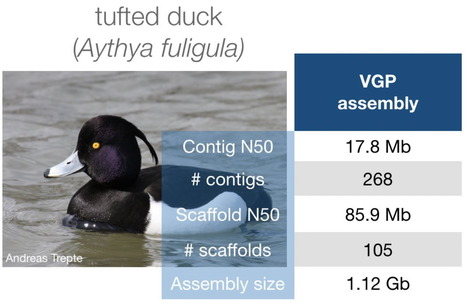
The VGP Genomes are among the most complete reference genomes for their species and will be stored and publicly available in the genome ark database, a digital open-access library of genomes.The Vertebrate Genomes Project (VGP), a project of the G10K Consortium, aims to generate near error-free reference genome assemblies of ~70,000 extant vertebrate species. The VGP Species List details our Phase 1 Progress and includes a full list of the >70,000 extant, vertebrate species.
These genomes will be used to address fundamental questions in biology and disease, to identify species most genetically at risk for extinction, and to preserve genetic information of life. The motivation for the VGP is based in part on the G10K mission to generate genomes of 10,000 or more vertebrate species and on lessons learned from The Avian Phylogenomics Project.
The VGP will be completed based on taxonomic hierarchy, which is a relative ranking of a group of organisms beginning with the largest classification, domain, to the smallest classification, species: Orders (Phase 1), Families (Phase 2), and Genera (Phase 3) to eventually all species (Phase 4). This strategy will allow us to gain scientific insight at each phase, to continue to integrate emerging technologies, and to complete genomic analyses at increasing levels of phylogenetic scale. Additionally, we expect our approaches and questions at each phase to lead to the development of new algorithms, including algorithms for genome assemblies, alignments, annotations, comparative genomics, etc., which would then be applied to the next phase. This approach will also help us secure the needed funds in stages through grants and other fundraising efforts.
At each phase, species selection is based on a combination of criteria, including those with existing draft genomes in need of improvement, those with specialized traits that inform us about human biology, those in immediate danger of becoming extinct, and those with prominent use in biomedical research. Endangered species are a high priority and critical because our planet is experiencing its 6th mass extinction event, the worst since the die-off of dinosaurs 66 million years ago. This priority is in part due to human influence on pollution, habitat destruction, and climate change. Our planet is at risk of losing 1 in 8 vertebrate species (~8000 in total) to extinction. The VGP aims to map the DNA of these at-risk species to not only preserve blueprints of their genomes but also to help identify genetic variants that might protect these species from total extinction. This knowledge can guide conservation strategies to prevent or at least minimize loss of species resulting from humankind’s impact on the environment.
The VGP intends to use the genomic data that it produces for multiple studies. A list of studies planned for the Phase 1 ordinal VGP include: - Genome-scale family tree of vertebrates.
- Comparative genomics of specialized traits in each vertebrate lineage.
- Comparative genomics of convergent traits (e.g. vocal learning, flight, loss of limbs, and aquatic / terrestrial adaptations).
- Developing universal vertebrate gene orthology and nomenclature.
- Deciphering vertebrate chromosomal genome evolution.
- Reconstruction of the common ancestor genomes of all vertebrates and of key vertebrate clades (e.g. mammals, birds, reptiles, amphibians, teleost, bony vertebrates, jawed vertebrates, and tetrapods).
- Evolution of nucleotides to chromosomes of the human genome.
- Genetics of why some lineages are more disease resistant than others.
- Conservation genomics of endangered species sequenced.
- The genomes of all remaining Kakapo parrots on the planet.
- Genetic signatures of domestication across vertebrates.
- Genetics of sex determination and sex chromosome evolution among vertebrates.
- Brain cell type evolution and homologies using genomics and transcriptomics.
- 3-D genome structure across vertebrates.
- Consequences of the evolutionary battle between transposons and host factors.
- New algorithms for near complete genome assemblies.
- New algorithms for reference free multi-way genome alignments.
|
|
Scooped by
Dr. Stefan Gruenwald
November 13, 2020 1:28 PM
|
Mars once had oceans but is now bone-dry, leaving many to wonder how the water was lost. University of Arizona researchers have discovered a surprisingly large amount of water in the upper atmosphere of Mars, where it is rapidly destroyed, explaining part of this Martian mystery. In standard models, molecular hydrogen produced from water in the lower atmosphere diffuses into the upper atmosphere where it is dissociated, producing atomic hydrogen, which is lost. Using observations from the Neutral Gas and Ion Mass Spectrometer on the Mars Atmosphere and Volatile Evolution spacecraft, the scientists were able to demonstrate that water is instead transported directly to the upper atmosphere, then dissociated by ions to produce atomic hydrogen. The water abundance in the upper atmosphere varied seasonally, peaking in southern summer, and surged during dust storms, including the 2018 global dust storm. From these data they calculated that this transport of water dominates the present-day loss of atomic hydrogen to space and influenced the evolution of Mars’ climate.
|
|
Scooped by
Dr. Stefan Gruenwald
November 13, 2020 12:25 PM
|
According to new research using data from NASA’s retired planet-hunting mission, the Kepler space telescope, about half the stars similar in temperature to our Sun could have a rocky planet capable of supporting liquid water on its surface. Since astronomers confirmed the presence of planets beyond our solar system, called exoplanets, humanity has wondered how many could harbor life. Now, we're one step closer to finding an answer. According to new research using data from NASA's retired planet-hunting mission, the Kepler space telescope, about half the stars similar in temperature to our Sun could have a rocky planet capable of supporting liquid water on its surface. Our galaxy holds at least an estimated 300 million of these potentially habitable worlds, based on even the most conservative interpretation of the results in a new study to be published in The Astronomical Journal. Some of these exoplanets could even be our interstellar neighbors, with at least four potentially within 30 light-years of our Sun and the closest likely to be at most about 20 light-years from us. These are the minimum numbers of such planets based on the most conservative estimate that 7% of Sun-like stars host such worlds. However, at the average expected rate of 50%, there could be many more. This research helps us understand the potential for these planets to have the elements to support life. This is an essential part of astrobiology, the study of life's origins and future in our universe. The study is authored by NASA scientists who worked on the Kepler mission alongside collaborators from around the world. NASA retired the space telescope in 2018 after it ran out of fuel. Nine years of the telescope's observations revealed that there are billions of planets in our galaxy -- more planets than stars. "Kepler already told us there were billions of planets, but now we know a good chunk of those planets might be rocky and habitable," said the lead author Steve Bryson, a researcher at NASA's Ames Research Center in California's Silicon Valley. "Though this result is far from a final value, and water on a planet's surface is only one of many factors to support life, it's extremely exciting that we calculated these worlds are this common with such high confidence and precision." For the purposes of calculating this occurrence rate, the team looked at exoplanets between a radius of 0.5 and 1.5 times that of Earth's, narrowing in on planets that are most likely rocky. They also focused on stars similar to our Sun in age and temperature, plus or minus up to 1,500 degrees Fahrenheit. That's a wide range of different stars, each with its own particular properties impacting whether the rocky planets in its orbit are capable of supporting liquid water. These complexities are partly why it is so difficult to calculate how many potentially habitable planets are out there, especially when even our most powerful telescopes can just barely detect these small planets. That's why the research team took a new approach After revealing more than 2,800 confirmed planets outside our solar system, the data collected by the Kepler space telescope continues to yield important new discoveries about our place in the universe. Though Kepler's field of view covered only 0.25% of the sky, the area that would be covered by your hand if you held it up at arm's length towards the sky, its data has allowed scientists to extrapolate what the mission's data means for the rest of the galaxy. That work continues with TESS, NASA's current planet hunting telescope.
|
|
Scooped by
Dr. Stefan Gruenwald
November 13, 2020 12:19 PM
|
The right indoor lighting can help set the mood, from a soft romantic glow to bright, stimulating colors. But some materials used for lighting, such as plastics, are not eco-friendly. Now, researchers reporting in ACS Nano have developed a bio-based, luminescent, water-resistant wood film that could someday be used as cover panels for lamps, displays and laser devices. Consumer demand for eco-friendly, renewable materials has driven researchers to investigate wood-based thin films for optical applications. However, many materials developed so far have drawbacks, such as poor mechanical properties, uneven lighting, a lack of water resistance or the need for a petroleum-based polymer matrix. Qiliang Fu, Ingo Burgert and colleagues wanted to develop a luminescent wood film that could overcome these limitations. The researchers treated balsa wood with a solution to remove lignin and about half of the hemicelluloses, leaving behind a porous scaffold. The team then infused the delignified wood with a solution containing quantum dots –– semiconductor nanoparticles that glow in a particular color when struck by ultraviolet (UV) light. After compressing and drying, the researchers applied a hydrophobic coating. The result was a dense, water-resistant wood film with excellent mechanical properties. Under UV light, the quantum dots in the wood emitted and scattered an orange light that spread evenly throughout the film’s surface. The team demonstrated the ability of a luminescent panel to light up the interior of a toy house. Different types of quantum dots could be incorporated into the wood film to create various colors of lighting products, the researchers say.
|
|
Scooped by
Dr. Stefan Gruenwald
November 12, 2020 8:44 PM
|
The search for life beyond Earth is really just getting started, but science has an encouraging early answer: there are plenty of planets in the galaxy, many with similarities to our own. But what we don’t know fills volumes. Observations from the ground and from space have confirmed thousands of planets beyond our solar system. Our galaxy likely holds trillions. But so far, we have no evidence of life beyond Earth. Is life in the cosmos easily begun, and commonplace? Or is it incredibly rare? More questions than answers In the thousands of years humanity has been contemplating the cosmos, we are the first people to know one thing for sure: The stars beyond our Sun are teeming with planets. They come in many varieties, and a good chunk of them are around the size of Earth. Like most scientific questions, though, getting an answer to this one just breeds more questions: Which, if any, of these exoplanets harbors some form of life? How quickly does life get its start? And how long does it last? Where is everybody? The universe's eerie silence has its own name – the "Fermi paradox." Physicist Enrico Fermi famously posed the question: "Where is everybody?" Even at slow travel speeds, the universe's billions of years of existence allow plenty of time for intelligent, technological lifeforms to traverse the galaxy. Why, then, is the cosmos so quiet? Meanwhile, exoplanet discoveries over the past two decades have filled in a few of the terms in the much-debated Drake Equation – a chain of numbers that might one day tell us how many intelligent civilizations we can expect to find. Most of its terms remain blank – the fraction of planets with life, with intelligent life, with detectable technology – but the equation itself suggests we might one day arrive at an answer. It feels at least a little more hopeful than Fermi's silence. Is Earth an Oddball? We stand at a crossroads in the search for life. We've found thousands of planets in our Milky Way galaxy, a large fraction of them in Earth's size range and orbiting in their stars' "habitable zones" – the distance from the star at which liquid water could exist on the surface. We know the galaxy likely holds trillions of planets. Our telescopes in space and on the ground, and our remote-sensing technology, grow ever more powerful. Yet so far, the only life we know of is right here at home. For the moment, we're staring into the void, hoping someone is staring back.
The Reactor Room is a digital installation featuring the work of students in Professor José Vergara’s course Chernobyl: Nuclear Narratives and the Environment (Spring 2020) at Swarthmore College. This interactive exhibition seeks to facilitate public engagement with the Chernobyl catastrophe and its associated mythology. This narrative dives deep into the night of the Chernobyl reactor explosion and the causes associated with it. Starting with the decisions made leading up to the disaster and moving to a second-by-second description of the explosion, this project follows the status of the reactor with graphics that show the weight of what happened. This project hopes to make clear which underlying issues and decisions led to the disaster. When examining the Chernobyl disaster, a person could point to any number of different causes. There were social issues, political issues, technological issues, and others that all culminated in the worst nuclear disaster that the world has ever seen. The state of the Soviet Union at the time is important to understand because it put the operators of the reactor in a situation that only took a few missteps to cause a nuclear disaster. There was significant political pressure for industries (like the nuclear industry) to produce fast results no matter the way they did it. This led to corners being cut throughout the entire construction processes and officials disregarding safety precautions under the fear that they would lose their jobs if they didn’t produce the results the Communist Party was looking for. While the factors that led to the early morning of April 26, 1986 were significant, the events that happened the night of the disaster and the day before were the physical causes of the reactor explosion. It is therefore important to understand what physically happened in the reactor and the decisions that were made by the operators that primed the reactor for disaster. Blame cannot be pinned on most of these operators because they were put in situations they were never prepared for, but their actions still caused the disaster.
Via Nik Peachey
|
|
Scooped by
Dr. Stefan Gruenwald
November 12, 2020 6:26 PM
|
Mouser and life science industry experts explore cutting-edge applications for artificial intelligence (AI) in diverse life science areas such as flu prevention and wildlife protection. The captivating new AI series is the latest addition to Mouser’s Empowering Innovation Together program. “We are excited to provide this type of enlightening content for our customers and followers. Artificial intelligence has revolutionized many high-profile industries, and we are now seeing this groundbreaking technology applied to new applications in life sciences,” said Kevin Hess, Senior Vice President, Marketing at Mouser Electronics. “This first eBook in The Intelligent Revolution series explores some of the most exciting new uses for AI in life sciences, as industry leaders highlight what has been achieved as well as what’s to come.” The new eBook features a fascinating article about Tanya Berger-Wolf, a computational ecologist at the Ohio State University, as well as insightful contributions from noted science writer David Freedman. The first article explores Berger-Wolf’s use of AI in matching photographs to specific animals, a critical function in wildlife protection. Specific animal matching enables scientists to determine whether a population is increasing or declining, and to determine how much funding and land should be allocated to protect the animal population. Freedman’s contributions explore the role of AI in two medical applications: analyzing the sounds of coughs to track flu outbreaks, and identifying patterns in brain scans to predict the outcomes of speech therapy. Established in 2015, Mouser’s Empowering Innovation Together program is one of the industry’s most recognized electronic component marketing programs. Previous series have highlighted the process of turning an idea into a product, as well as innovative developments in robotics and smart city design.
|
|
Rescooped by
Dr. Stefan Gruenwald
from Papers
November 12, 2020 5:51 PM
|
It has been thought of as many things: a pointlike object, an excitation of a field, a speck of pure math that has cut into reality. But never has physicists’ conception of a particle changed more than it is changing now. - “At the moment that I detect it, it collapses the wave and becomes a particle. The particle is the collapsed wave function.”
—Dimitri Nanopoulos - “What is a particle from a physicist’s point of view? It’s a quantum excitation of a field. We write particle physics in a math called quantum field theory. In that, there are a bunch of different fields; each field has different properties and excitations, and they are different depending on the properties, and those excitations we can think of as a particle.”
—Helen Quinn - “Particles are at a very minimum described by irreducible representations of the Poincaré group.”
— Sheldon Glashow - “Ever since the fundamental paper of Wigner on the irreducible representations of the Poincaré group, it has been a (perhaps implicit) definition in physics that an elementary particle ‘is’ an irreducible representation of the group, G, of ‘symmetries of nature.’”
—Yuval Ne’eman and Shlomo Sternberg - “Particles have so many layers.”
—Xiao-Gang Wen - “What we think of as elementary particles, instead they might be vibrating strings.”
—Mary Gaillard - “Every particle is a quantized wave. The wave is a deformation of the qubit ocean.”
—Xiao-Gang Wen - “Particles are what we measure in detectors. … We start slipping into the language of saying that it’s the quantum fields that are real, and particles are excitations. We talk about virtual particles, all this stuff — but it doesn’t go click, click, click in anyone’s detector.”
—Nima Arkani-Hamed Read the full article at: www.quantamagazine.org
Via Complexity Digest
|
|
|
Scooped by
Dr. Stefan Gruenwald
November 25, 2020 1:52 PM
|
Chagas disease is an important disease affecting millions of people in the New World and is caused by a protozoan transmitted by hematophagous kissing bugs. It can be treated with drugs during the early acute phase. However, effective therapy against the chronic form of Chagas disease has yet to be discovered and developed. A research team now tested the activity of solenopsin alkaloids extracted from two species of fire ants against the protozoan parasite Trypanosoma cruzi, the etiologic agent of Chagas disease. Although IC50 determinations showed that solenopsins are more toxic to the parasite than benznidazole, the drug of choice for Chagas disease treatment, the ant alkaloids presented a lower selectivity index. As a result of exposure to the alkaloids, the parasites became swollen and rounded in shape, with hypertrophied contractile vacuoles and intense cytoplasmic vacuolization, possibly resulting in osmotic stress. No accumulation of multiple kinetoplasts and/or nuclei was detected. Overexpressing phosphatidylinositol 3-kinase (PI3 Kinase) — an enzyme essential for osmoregulation that is a known target of solenopsins in mammalian cells — did not prevent swelling and vacuolization, nor did it counteract the toxic effects of alkaloids on the parasites. Additional experimental results suggested that solenopsins induced a type of autophagic and programmed cell death in T. cruzi. Solenopsins also reduced the intracellular proliferation of T. cruzi amastigotes in infected macrophages in a concentration-dependent manner and demonstrated activity against Trypanosoma brucei rhodesiense bloodstream forms, which is another important etiological kinetoplastid parasite. These results suggest the potential of solenopsins as novel natural drugs against neglected parasitic diseases caused by kinetoplastids.
|
|
Scooped by
Dr. Stefan Gruenwald
November 25, 2020 1:44 PM
|
Even after recovery, the body continues to improve its antibody response to the coronavirus — perhaps thanks to viral bits hiding in the intestine. As coronavirus cases in the United States and around the world rise, scientists are uncovering hints that immunity for those who have had COVID-19 can last at least six months, if not longer. After people with COVID-19 have largely recovered, immune proteins called antibodies are still detectable six months later. What’s more, the proteins have sharpened their skills at fighting the coronavirus, researchers report in a preliminary study posted November 5 at bioRxiv.org. Leftover pieces of the virus remaining in the gut after symptoms have disappeared may help the immune system work to refine that response. The finding also bodes well for how long a vaccination might provide protection. Immunity from a vaccine is expected to last as long or longer than natural immunity. Antibodies, which are immune proteins that bind to microbes to fight off an infection, are part of the body’s cache of immune defenses. People typically make a wide variety of antibodies during an infection. These proteins can recognize different surfaces on viruses — like a Swiss Army knife able to work on various parts of the virus — and evolve over time to better recognize their target (SN: 4/28/20). Six months after an infection with the coronavirus that causes COVID-19, called SARS-CoV-2, people appear to have built an arsenal of antibodies that are not only more potent than the ones developed early on, similar to what has been seen in other infections. Those antibodies can also recognize mutated versions of the virus, researchers found. In addition to antibody upgrades, long-lasting immune cells that make antibodies, called memory B cells, stick around in the blood, poised to launch a rapid response should people be exposed to the virus again. “The main message is that the immune response persists,” says Julio Lorenzi, a viral immunologist at the Rockefeller University in New York City. “We see these B cells surviving over time and the antibodies six months after infection are even better than the beginning of the infection.” In the study, Lorenzi and colleagues analyzed the antibodies that 87 people made against the coronavirus at one and six months after developing symptoms. Although antibody levels in the blood waned, the immune proteins were still detectable after six months. Importantly, levels of memory B cells were stable, an assessment of 21 of the 87 participants showed — a sign that those cells may remain in the body for a while. Other studies have hinted that B cells can persist for more than six months in recovered COVID-19 patients. Preliminary results of one study uncovered that memory B cells — as well as other cells involved in immune memory known as T cells — decline slowly in the blood, researchers reported November 16 at bioRxiv.org. That slow decrease could mean that immunity might last for years, at least in some people (SN: 10/19/20).
|
|
Scooped by
Dr. Stefan Gruenwald
November 25, 2020 1:37 PM
|
None of the mutations currently documented in the SARS-CoV-2 virus appear to increase its transmissibility in humans, according to a study led by UCL researchers. The analysis of virus genomes from over 46,000 people with COVID-19 from 99 countries is published today in Nature Communications. First and corresponding author Dr Lucy van Dorp (UCL Genetics Institute) said: “The number of SARS-CoV-2 genomes being generated for scientific research is staggering. We realised early on in the pandemic that we needed new approaches to analyse enormous amounts of data in close to real time to flag new mutations in the virus that could affect its transmission or symptom severity. “Fortunately, we found that none of these mutations are making COVID-19 spread more rapidly, but we need to remain vigilant and continue monitoring new mutations, particularly as vaccines get rolled out.” Coronaviruses like SARS-CoV-2 are a type of RNA virus, which can all develop mutations in three different ways: by mistake from copying errors during viral replication, through interactions with other viruses infecting the same cell (recombination or reassortment), or they can be induced by host RNA modification systems which are part of host immunity. Most mutations are neutral, while others can be advantageous or detrimental to the virus. Both neutral and advantageous mutations can become more common as they get passed down to descendant viruses. The research team from UCL, Cirad and the Université de la Réunion, and the University of Oxford, analyzed a global dataset of virus genomes from 46,723 people with COVID-19, collected up until the end of July 2020. The researchers have so far identified 12,706 mutations in SARS-CoV-2, the virus causing COVID-19. For 398 of the mutations, there is strong evidence that they have occurred repeatedly and independently. Of those, the researchers honed in on 185 mutations which have occurred at least three times independently during the course of the pandemic. To test if the mutations increase transmission of the virus, the researchers modeled the virus’s evolutionary tree, and analyzed whether a particular mutation was becoming increasingly common within a given branch of the evolutionary tree – that is, testing whether, after a mutation first develops in a virus, descendants of that virus outperform closely-related SARS-CoV-2 viruses without that particular mutation. The researchers found no evidence that any of the common mutations are increasing the virus’s transmissibility. Instead, they found most common mutations are neutral for the virus. This includes one mutation in the virus spike protein called D614G, which has been widely reported as being a common mutation that may make the virus more transmissible. The new evidence finds that this mutation is in fact not associated with significantly increasing transmission.
|
|
Scooped by
Dr. Stefan Gruenwald
November 25, 2020 1:30 PM
|
Dolphins actively slow down their hearts before diving, and can even adjust their heart rate depending on how long they plan to dive for, a new study suggests. Published in Frontiers in Physiology, the findings provide new insights into how marine mammals conserve oxygen and adjust to pressure while diving.
The authors worked with three male bottlenose dolphins (Tursiops truncatus), specially trained to hold their breath for different lengths of time upon instruction. "We trained the dolphins for a long breath-hold, a short one, and one where they could do whatever they want", explains Dr Andreas Fahlman of Fundación Oceanogràfic, Valencia, Spain. "When asked to hold their breath, their heart rates lowered before or immediately as they began the breath-hold. We also observed that the dolphins reduced their heart rates faster and further when preparing for the long breath-hold, compared to the other holds".
The results reveal that dolphins, and possibly other marine mammals, may consciously alter their heart rate to suit the length of their planned dive. "Dolphins have the capacity to vary their reduction in heart rate as much as you and I are able to reduce how fast we breathe", suggests Fahlman. "This allows them to conserve oxygen during their dives, and may also be key to avoiding diving-related problems such as decompression sickness, known as "the bends"".
Understanding how marine mammals are able to dive safely for long periods of time is crucial to mitigate the health impacts of man-made sound disturbance on marine mammals. "Man-made sounds, such as underwater blasts during oil exploration, are linked to problems such as "the bends" in these animals", continues Fahlman. "If this ability to regulate heart rate is important to avoid decompression sickness, and sudden exposure to an unusual sound causes this mechanism to fail, we should avoid sudden loud disturbances and instead slowly increase the noise level over time to cause minimal stress. In other words, our research may provide very simple mitigation methods to allow humans and animals to safely share the ocean".
The practical challenges of measuring a dolphin's physiological functions, such as heart rate and breathing, have previously prevented scientists from fully understanding changes in their physiology during diving. "We worked with a small sample size of three trained male dolphins housed in professional care", Fahlman explains. "We used custom-made equipment to measure the lung function of the animals, and attached electrocardiogram (ECG) sensors to measure their heart rates".
|
|
Scooped by
Dr. Stefan Gruenwald
November 24, 2020 5:18 PM
|
With help from computer algorithms, researchers designed proteins from scratch that can trounce the coronavirus in lab animals. The coronavirus might be new, but nature long ago gave humans the tools to recognize it, at least on a microscopic scale: antibodies, Y-shaped immune proteins that can latch onto pathogens and block them from infiltrating cells. Millions of years of evolution have honed these proteins into the disease-fighting weapons they are today. But in a span of just months, a combination of human and machine intelligence may have beaten Mother Nature at her own game. Using computational tools, a team of researchers at the University of Washington designed and built from scratch a molecule that, when pitted against the coronavirus in the lab, can attack and sequester it at least as well as an antibody does. When spritzed up the noses of mice and hamsters, it also appears to protect animals from becoming seriously sick. This molecule, called a mini-binder for its ability to glom onto the coronavirus, is petite and stable enough to be shipped en masse in a freeze-dried state. Bacteria can also be engineered to churn out these mini-binders, potentially making them not only effective but also cheap and convenient. The team’s product is still in the very early stages of development, and will not be on the market any time soon. But so far “it’s looking very promising,” said Lauren Carter, one of the researchers behind the project, which is led by the biochemist David Baker. Eventually, healthy people might be able to self-administer the mini-binders as a nasal spray, and potentially keep any inbound coronavirus particles at bay. “The most elegant application could be something you keep on your bedside table,” Ms. Carter said. “That’s kind of the dream.”
|
|
Scooped by
Dr. Stefan Gruenwald
November 13, 2020 1:31 PM
|
A large team of researchers affiliated with a host of institutions in Italy, the U.K and Hungary has carried out the most precise measurements yet of deuterium fusing with a proton to form helium-3. In their paper published in the journal Nature, the group describes their effort and how they believe it will contribute to better understanding the events that transpired during the first few minutes after the Big Bang. Astrophysics theory suggests that the creation of deuterium was one of the first things that happened after the Big Bang. Therefore, it plays an important role in Big Bang nucleosynthesis—the reactions that happened afterward that led to the production of several of the light elements. Theorists have developed equations that show the likely series of events that occurred, but to date, it has been difficult to prove them correct without physical evidence. In this new effort, the researchers working at the Laboratory for Underground Nuclear Astrophysics in Italy have carried out experiments to simulate those first few minutes, hoping to confirm the theories. The work was conducted deep under the thick rock cover of the Gran Sasso mountain to prevent interference from cosmic rays—it involved firing a beam of protons at a deuterium target—deuterium being a form of hydrogen with just one proton and one neutron—and then measuring the rate of fusion. But because the rate of fusion is so low, the bombardment had to be carried out many times—the team carried out their work nearly every weekend for three years. The hope was that the measured rate would match the amount of cosmic microwave background radiation detected by scientists who have been studying it for many years. Researchers believe such radiation came into existence as the cosmos cooled approximately 380,000 years after the Big Bang. The researchers found that the measured rate of deuterium fusing across a range of temperatures fell between the rate predicted by the latest theories and tentative measurements taken back in 1997, the last time scientists tried to measure the rate of deuterium fusing with a proton to form helium-3. But most importantly, when they plugged the rate they measured into models that projected Big Bang nucleosynthesis density estimates, it closely matched estimated measurements of the CMB 380,000 years later.
|
|
Scooped by
Dr. Stefan Gruenwald
November 13, 2020 1:26 PM
|
Though we may not always realize it, photodetectors contribute greatly to the convenience of modern life. Also known as photosensors, photodetectors convert light energy into electrical signals to complete tasks such as opening automatic sliding doors and automatically adjusting a cell phone's screen brightness in different lighting conditions. A new paper, published by a team of Penn State researchers in ACS Nano, seeks to further advance photodetectors' use by integrating the technology with durable Gorilla glass, the material used for smart phone screens that is manufactured by Corning Incorporated. The integration of photodetectors with Gorilla glass could lead to the commercial development of "smart glass," or glass equipped with automatic sensing properties. Smart glass has a number of applications ranging from imaging to advanced robotics, according to the researchers. "There are two problems to address when attempting to manufacture and scale photodetectors on glass," said principal investigator Saptarshi Das, assistant professor of engineering science and mechanics (ESM).?"It must be done using relatively low temperatures, as the glass degrades at high temperatures, and must ensure the photodetector can operate on glass using minimal energy." To overcome the first challenge, Das, along with ESM doctoral student Joseph R. Nasr, determined that the chemical compound molybdenum disulfide was the best material to use as a coating on the glass. Then, Joshua Robinson, professor of materials science and engineering (MatSE) and MatSE doctoral student Nicholas Simonson used a chemical reactor at 600 degrees Celsius -- a low enough temperature so as not to degrade the Gorilla glass -- to fuse together the compound and glass. The next step was to turn the glass and coating into a photodetector by patterning it using a conventional electron beam lithography tool. "We then tested the glass using green LED lighting, which mimics a more natural lighting source unlike laser lighting, which is commonly used in similar optoelectronics research," Nasr said. The ultra-thin body of the molybdenum disulfide photodetectors allows for better electrostatic control, and ensures it can operate with low power -- a critical need for the smart glass technology of the future. "The photodetectors need to work in resource-constrained or inaccessible locations that by nature do not have access to sources of unrestricted electricity," Das said. "Therefore, they need to rely on pre-storing their own energy in the form of wind or solar energy."
|
|
Scooped by
Dr. Stefan Gruenwald
November 13, 2020 12:23 PM
|
Think about your favorite t-shirt, the one you’ve worn a hundred times, and all the abuse you’ve put it through. You’ve washed it more times than you can remember, spilled on it, stretched it, crumbled it up, maybe even singed it leaning over the stove once. We put our clothes through a lot and if the smart textiles of the future are going to survive all that we throw at them, their components are going to need to be resilient. Now, researchers from the Harvard John A. Paulson School of Engineering and Applied Sciences and the Wyss Institute for Biologically Inspired Engineering have developed an ultra-sensitive, seriously resilient strain sensor that can be embedded in textiles and soft robotic systems. The research is published in Nature. Current soft strain gauges are really sensitive but also really fragile,” said Oluwaseun Araromi, a Research Associate in Materials Science and Mechanical Engineering at SEAS and the Wyss Institute and first author of the paper. “The problem is that we’re working in an oxymoronic paradigm — highly sensitivity sensors are usually very fragile and very strong sensors aren’t usually very sensitive. So, we needed to find mechanisms that could give us enough of each property.” In the end, the researchers created a design that looks and behaves very much like a Slinky. “A Slinky is a solid cylinder of rigid metal but if you pattern it into this spiral shape, it becomes stretchable,” said Araromi. “That is essentially what we did here. We started with a rigid bulk material, in this case carbon fiber, and patterned it in such a way that the material becomes stretchable.” The pattern is known as a serpentine meander, because its sharp ups and downs resemble the slithering of a snake. The patterned conductive carbon fibers are then sandwiched between two pre-strained elastic substrates. The overall electrical conductivity of the sensor changes as the edges of the patterned carbon fiber come out of contact with each other, similar to the way the individual spirals of a slinky come out of contact with each other when you pull both ends. This process happens even with small amounts of strain, which is the key to the sensor’s high sensitivity. Unlike current highly sensitive stretchable sensors, which rely on exotic materials such as silicon or gold nanowires, this sensor doesn’t require special manufacturing techniques or even a clean room. It could be made using any conductive material. The researchers tested the resiliency of the sensor by stabbing it with a scalpel, hitting it with a hammer, running it over with a car, and throwing it in a washing machine ten times. The sensor emerged from each test unscathed.
|
|
Scooped by
Dr. Stefan Gruenwald
November 12, 2020 11:50 PM
|
Three years ago, the place you are reading about now did not exist. Then, suddenly, an underwater volcano erupted in the middle of the South Pacific, and by the time the smoke and ash cleared, a new land mass stood revealed – an island that no-one had ever seen before. That's how the volcanic island of Hunga Tonga-Hunga Ha'apai (Hunga Tonga) came into the world in January 2015, nestling in between two existing, uninhabited Polynesian islands that make up part of the Kingdom of Tonga. In the last 150 years, only three volcanic islands have emerged like this and survived for more than a few months, with the most famous of them being Surtsey – which appeared off the southern coast of Iceland during a four-year eruption that began in 1963. Scientists have studied Surtsey for decades, but Hunga Tonga – informally named after the submarine volcano above which it sits – is set apart by being the only kind of island like this to emerge in the era of the modern satellite, which gives us a whole new way of studying how these rocky land masses evolve. For example, just for fun, if you do a search for 'Hunga Tonga' in Google Maps' regular Maps view, you'll see an outdated illustration of two islands separated by an expanse of blue water. But if you flick the switch to Satellite view, the newly born island is revealed in all its glory. That kind of perspective is what intrigues scientists, who are using satellite data to learn what they can about such volcanic upstarts, before erosion inevitably sees Hunga Tonga vanish away again under the waves. "There's a huge amount of material that came out from this eruption, possibly larger than at Surtsey," says geologist Vicki Ferrini from Columbia University, who is studying the island with researchers from NASA. "The other interesting thing is that the two islands that surround this new land mass have some pretty tough substrate, so there's something happening to help make this solidify and stay in place, chemically." Initially, scientists estimated Hunga Tonga might only last for a few months before disappearing, but researchers now think the island – which covers some 200 hectares (nearly 500 acres) and extends as high as 120 meters (400 feet) above the ocean – could survive for as long as 30 years. Using satellite data updated in real time, the team is developing 3D maps of the island's topography, studying its shifting coastlines and the amount of its land that sits above sea level.
|
|
Scooped by
Dr. Stefan Gruenwald
November 12, 2020 8:37 PM
|
Earlier this year, the Earth saw a huge dip in carbon emissions as nations around the globe locked down to slow the spread of the coronavirus. It offered a glimpse into what the world might look like if we took drastic steps to reduce our carbon emissions to slow the spread of global warming: For a brief moment, smog-choked cities around the world had clear skies. But according to a new modeling study published in Scientific Reports, even if we made such drastic reductions permanent, it would still not be enough. The study suggests that if we stopped all human-made greenhouse gas emissions immediately, the Earth’s temperatures would continue to rise because of self-sustaining melting ice and permafrost. These “feedback loops” — in which melting ice causes less sunlight to be reflected back into space, which in turn raises temperatures and causes more ice melt — have already been set into motion, the researchers argue. Humanity “is beyond the point-of-no-return when it comes to halt the melting of the permafrost using greenhouse gas cuts as the single tool,” Jørgen Randers, PhD, professor emeritus of climate strategy at BI Norwegian Business School and lead author of the study, tells Future Human in an email. That’s not to say we should give up on reducing emissions: Rather, Randers says that the world "should accelerate its effort to cut greenhouse gas emissions (in order to postpone as much as possible the temperature rise) and start developing the technologies for large scale removal of greenhouse gases from the atmosphere.” For decades, climate scientists have tried to predict the so-called tipping point at which it would be too late to stop global warming — too late to limit the amount the temperature rises, the amount of sea level rise, and the number of lives claimed by both and other climate-induced ecological disasters — through reducing carbon emissions alone. Climate scientists point to either 2030 or 2050 as deadlines for the world to get to zero emissions before runaway climate change kicks in. But according to the new study, no matter how much we reduce emissions now, warming will continue, and the self-sustained melting of Arctic ice and permafrost that has already begun could continue for 500 years. “It simply will not stop from cutting manmade greenhouse gasses,” says Randers. “We need to do something more in order to stop it.” He and co-author Ulrich Goluke, an associate professor at Business School Lausanne in Switzerland, make the case that it’s time to pursue more aggressive climate strategies, like carbon sequestration.
|
|
Scooped by
Dr. Stefan Gruenwald
November 12, 2020 7:12 PM
|
Just as our brains evolve early in our lives, AI should evolve as we increasingly apply it in real-world scenarios at scale. Mirroring The Intricacies Of The Human Brain In Early Childhood To continue to drive AI advancement in the decades to come, we need to reimagine deep learning at its core. A promising approach is to mirror how the human brain develops, particularly in early childhood. During infancy, the brain experiences synaptogenesis — an explosion of synapse formation as the brain begins to develop. In early childhood, we have the greatest number of synapses that we will have in our lifetime, with totals increasing until about two years old. Over time, our synapses begin to "train" — strengthening, weakening and evolving as the connections in our brains begin to sparsify. From this stage through our late teenage years, while learning is most prevalent, synapse usage and pruning occurs at more rapid levels. Our brain continuously removes unneeded synapses and cells, which sparsifies the brain even further. The connections themselves learn over time, and the entire structure of our brain is modified to remain lean. This is why the brain of a child has a huge amount of plasticity, while the brain of an adult is thought to lose much of its plasticity. Because of this, a child's brain can continuously reform and learn and may better recover from damage. Replicating Neurological Attributes In Deep Learning To improve and achieve real-world AI deployments, we should reinvent the training process of deep learning models to emulate the "training process" of the human brain. For deep learning, the model training stage is very similar to the initial learning stage of humans. During early stages, the model experiences a mass intake of data, which creates a significant amount of information to mine for each decision and requires significant processing time and power to determine the action or answer. But as training occurs, neural connections become stronger with each learned action and adapt to support continuous learning. As each connection becomes stronger, redundancies are created and overlapping connections can be removed. This is why continuously restructuring and sparsifying deep learning models during training time, and not after training is complete, is necessary. After the training stage, the model has lost most of its plasticity and the connections cannot adapt to take over additional responsibility, so removing connections can result in decreased accuracy. Current methods such as the one unveiled in 2020 by MIT researchers where attempts are made to make the deep learning model smaller post-training phase have reportedly seen some success. However, if you prune in the earlier stages of training when the model is most receptive to restructuring and adapting, you can drastically improve results.
|
|
Rescooped by
Dr. Stefan Gruenwald
from Papers
November 12, 2020 6:06 PM
|
Artificial Life, often shortened as ALife. What is your first thought when reading those words? A brand of T-shirts? A Greg Egan novel?
For hundreds of ALifers, ALife is the bottom-up scientific study of the fundamental principles of life. Just as Artificial Intelligence researchers ponder the nature of intelligence by trying to build intelligent systems from scratch, ALife researchers investigate the nature of “life” by trying to build living systems from scratch. What is the aim of ALife research? The ALife academic field naturally overlaps with biology and chemistry, but also computer science, astrobiology, physics, complex systems, network sciences, geology, evolutionary science, origins of life research, and of course AI and animal behavior studies. The catchphrase? “Life as it could be.” A natural place to start explaining this field would be addressing what we mean when we say “life.” You might be thinking that the question “what is life” has been solved a long time ago: something that grows and reproduces is alive. But, that definition is far from the messy scientific reality of “life.” Many video game simulations include animals that grow and reproduce, and although you could certainly find people arguing that those are alive, the consensus is that “grow and reproduce” is not enough to define “being alive.” Likewise, salt crystals grow and cause more crystals to grow around them, but they are not alive. But wait, what about DNA? In junior high school, you might have learned that DNA is the one common point between all life on Earth. Even if you are looking for life on another planet, DNA is the smoking gun that you should look for, right? Well, things can get more interesting than that. One crucial thing about DNA, beyond the fact that “it is a double helix made of Adenine Thymine Guanine and Cytosine” (its substrate), is that it encodes information about cells that can be passed from parent to offspring (its function). If you focus on this function, it does not matter what DNA is made of or what shape it takes -- you can encode and transfer information using just anything you like, including 8-letter DNA or a string of 0 and 1 in a computer. Some substrates are better than others under certain conditions, but the function “information transfer” is not dependent on DNA itself. In that sense, ALife is substrate-agnostic. So, what do we mean when we say “life?” That is what we are trying to figure out! Broadly, just as AI researchers develop programs that in various ways mimic aspects of known human intelligence without necessarily agreeing on what “intelligence” is, we seek to create dynamical systems that mimic aspects of known biological life without necessarily agreeing on what “life” is. In other words, ALifers are after a set of functions that can define life as a process and allows you to “run” it on a suitable platform under certain conditions, just like you can run a piece of software on many different hardware platforms.
Via Complexity Digest
|