In art, the negative space in a painting can be just as important as the painting itself. Something similar is true in insulating materials, where the empty spaces left behind by missing electrons play a crucial role in determining the material's properties. When a negatively charged electron is excited by light, it leaves behind a positive hole. Because the hole and the electron are oppositely charged, they are attracted to each other and form a bond. The resulting pair, which is short lived, is known as an exciton [pronounced exit-tawn].
Excitons are a key part of many technologies, including solar panels, photodetectors and sensors, as well as light-emitting diodes found in televisions and digital display screens. In most cases, the exciton pairs are bound by electrical, or electrostatic, forces, also known as Coulomb interactions. Now, in a new study in Nature Physics, Caltech researchers report detecting excitons that are not bound via Coulomb forces but rather by magnetism. This is the first experiment to detect how these so-called Hubbard excitons, named after the late physicist John Hubbard, form in real-time.
"Using an advanced spectroscopic probe, we were able to observe in real time the generation and decay of magnetically bound excitons, the Hubbard excitons," says study lead author Omar Mehio (PhD '23), a recent graduate student at Caltech who worked with David Hsieh, the Donald A. Glaser Professor of Physics at Caltech. Mehio is now a postdoctoral fellow at the Kavli Institute at Cornell.
"In most insulators, oppositely charged electrons and holes interact with one another just as an electron and a proton bind to form a hydrogen atom," Mehio explains. "However, in a special class of materials known as Mott insulators, the photo-excited electrons and holes instead bind through magnetic interactions."
The results could have applications in the development of new exciton-related technologies, or excitonics, in which the excitons would be manipulated through their magnetic properties. "Hubbard excitons and their magnetic binding mechanism demonstrate a drastic departure from the paradigms of traditional excitonics, creating the opportunity to develop a whole ecosystem of novel technologies that are fundamentally unavailable in conventional excitonic systems," Mehio says. "Having excitons and magnetism strongly intertwined in a single material could lead to new technologies that harness both properties."
A new U.K. study showed that symptoms of a cold can linger well beyond the main period of illness, suggesting that rather like “long Covid,” “long colds” can also exist.
he study, published Friday in scientific journal The Lancet, showed that non-Covid infections can be associated with a range of illnesses more than four weeks after the initial infection.
After studying 10,171 participants, scientists at the Queen Mary University of London concluded that there may be long-lasting health impacts from other respiratory infections.
They were unable to say whether the symptoms of “long colds” would last as long as those of “long Covid.”
The study, published Friday in scientific journal The Lancet, showed that non-Covid infections can be associated with a range of illnesses more than four weeks after the initial infection. After studying 10,171 participants, scientists at the Queen Mary University of London concluded that there may be long-lasting health impacts from other respiratory infections, such as the common cold, that are unrecognized. They were unable to say whether the symptoms of “long colds” would last as long as those of “long Covid.” “Post-acute infection syndromes are not a new phenomenon; indeed, many cases of chronic fatigue syndrome are reported to follow an infection-like episode. Nonetheless, these syndromes often go undiagnosed owing to the wide range of symptoms and lack of diagnostic tests,” an introduction to the research on The Lancet website said.
There were similarities between the symptoms of those with “long Covid” and “long colds,” but typical post-Covid issues such as taste and smell deficiencies and dizziness were less common in people suffering from long colds. “Long Covid” typically refers to a range of mid- and long-term effects that can emerge following a Covid infection — including fatigue, breathlessness and cognitive dysfunction. The term “long Covid” was coined in spring 2020 when people who had had Covid-19 did not fully recover for several weeks or months after they were first infected. The World Health Organization defines it as “the continuation or development of new symptoms three months after the initial infection ... with these symptoms lasting for at least two months with no other explanation.”
Research published in eClinical Medicine (Oct. 6, 2023):
Scientists of the NOMAD Laboratory at the Fritz Haber Institute of the Max Planck Society recently proposed a workflow that can dramatically accelerate the search for novel materials with improved properties. They demonstrated the power of the approach by identifying more than 50 strongly thermally insulating materials. These can help alleviate the ongoing energy crisis, by allowing for more efficient thermoelectric elements, i.e., devices able to convert otherwise wasted heat into useful electrical voltage.
Discovering new and reliable thermoelectric materials is paramount for making use of the more than 40% of energy given off as waste heat globally and help mitigate the growing challenges of climate change. One way to increase the thermoelectric efficiency of a material is to reduce its thermal conductivity, κ, and thereby maintaining the temperature gradient needed to generate electricity. However, the cost associated with studying these properties limited the computational and experimental investigations of κ to only a minute subset of all possible materials. A team of the NOMAD Laboratory recently made efforts to reduce these costs by creating an AI-guided workflow that hierarchically screens out materials to efficiently find new and better thermal insulators.
The work recently published in npj Computational Materials proposes a new way of using Artificial Intelligence (AI) to guide the high-throughput search for new materials. Instead of using physical/chemical intuition to screen out materials based on general, known or suspected trends, the new procedure learns the conditions that lead to the desired outcome with advanced AI methods. This work has the potential to quantify the search for new energy materials and increase the efficiency of these searches.
The first step in designing these workflows is to use advanced statistical and AI methods to approximate the target property of interest, κ in this case. To this end, the sure-independence screening and sparsifying operator (SISSO) approach is used. SISSO is a machine learning method that reveals the fundamental dependencies between different materials properties from a set of billions of possible expressions. Compared to other "black-box" AI models, this approach is similarly accurate, but additionally yields analytic relationships between different material properties. This allows us to apply modern feature importance metrics to shed light on which material properties are the most important. In the case of κ, these are the molar volume, Vm; the high-temperature limit Debye Temperature, θD,∞; and the anharmonicity metricfactor, σA.
Furthermore, the described statistical analysis allows to distill out rule-of-thumbs for the individual features that enable to a priori estimate the potential of material to be a thermal insulator. Working with the three most important primary features hence allowed to create AI-guided computational workflows for discovering new thermal insulators. These workflows use state-of-the-art electronic structure programs to calculate each of the selected features. During each step materials were screened out that are unlikely to be good insulators based on their values of Vm, θD,∞, and σA. With this, it is possible to reduce the number of calculations needed to find thermally insulating materials by over two orders of magnitude. In this work, this is demonstrated by identifying 96 thermal insulators (κ < 10 Wm-1K-1) in an initial set of 732 materials. The reliability of this approach was further verified by calculating κ for 4 of these predictions with highest possible accuracy.
Alexandru Lupsasca and Michael Johnson won the physics prize for their work on photon spheres — weird rings of light around black holes that may reveal a theory of quantum gravity.
The two scientists have won a $100,000 prize for describing both the structure and a way to detect mysterious black hole photon spheres. These enigmatic structures form at the edges of black holes, and could reveal the underlying physics that govern the most extreme objects in the cosmos.
Alexandru Lupsasca, of Vanderbilt University, and Michael Johnson, of Harvard University, won the New Horizon Prize in Physics "for elucidating the sub-structure and universal characteristics of black hole photon rings, and their proposed detection by next-generation interferometric experiments."
The New Horizons award is given each year to early career researchers by the Breakthrough Prize Foundation, and the prize money is donated by tech billionaires Sergey Brin, Priscilla Chan and Mark Zuckerberg, Yuri and Julia Milner, and Anne Wojcicki. A second prize was also awarded this year to Mikhail Ivanov, of MIT, Oliver Philcox, of Columbia University and the Simons Foundation, and Marko Simonović, of the University of Florence for their work on the universe's 'cosmological collider'.
When photons stream toward a black hole, most are either bent away or (if they cross its event horizon) engulfed permanently in the dark abyss. Yet some rare light particles avoid this fate — instead they surf the cosmic monster's gaping mouth in a series of tight orbits and, if the black hole is spinning, steal some of its rotational energy to miraculously spring free.
Detecting these photons for the first time would give physicists unprecedented insight into the most extreme objects in our universe, as well as how the known laws of physics break down in the presence of their infinite gravitational pulls.
"Gravity is the big mystery. To date we don't know how to combine Einstein's theory of general relativity, which is the relativistic picture of gravity as the bending of space-time, with quantum mechanics," the theory of the very small, Alexandru Lupsasca, who used relativity to devise what the rings should look like and find the parameters that describe them, told Live Science.
"The problem is that gravity is very weak — it's the weakest of all forces," Lupsasca said. "So to have a chance of understanding quantum gravity, we have to look where gravity is strongest. And nowhere is gravity stronger than around a black hole."
NASA's James Webb Space Telescope (JWST) has only been operational for just over a year, but this isn't stopping the world's biggest space agency from discussing the next big space telescope that could serve as JWST's successor sometime in the future. Enter the Habitable Worlds Observatory (HWO), which was first proposed as NASA's next flagship Astrophysics mission during the National Academy of Sciences' Decadal Survey on Astronomy and Astrophysics 2020 (Astro2020) While its potential technological capabilities include studying exoplanets, stars, galaxies, and a myriad of other celestial objects for life beyond Earth, there's a long way to go before HWO will be wowing both scientists and the public with breathtaking images and new datasets.
"Before we can design the mission, we need to develop the key technologies as much as possible," said Dr. Dimitri Mawet, who is a Professor of Astronomy at Caltech and a Senior Research Scientist at the NASA Jet Propulsion Laboratory (JPL). "We are in a phase of technology maturation. The idea is to further advance the technologies that will enable the Habitable Worlds Observatory to deliver its revolutionary science while minimizing the risks of cost overruns down the line."
Dr. Mawet is one of 56 individuals who have been selected to be part of the Technical Assessment Group (TAG) for HWO, which is scheduled to hold their first meetings in Washington D.C. between October 31 and November 2, 2023. As part of these meetings, the individuals will be organized into two groups as part of NASA's "Great Observatory Maturation Program" (GOMAP): Science, Technology, Architecture Review Team (START) and a Technical Assessment Group (TAG) (a full member list for both teams is available here). While START will focus on HWO'S science goals, TAG will focus on HWO'S design and the necessary technology to meet the design requirements.
"The Decadal Survey recommended this mission as its top priority because of the transformational capabilities it would have for astrophysics, together with its ability to understand entire solar systems outside of our own," said Dr. Fiona Harrison, who co-chaired the Astro2020 decadal report committee and is a Harold A. Rosen Professor of Physics and the Kent and Joyce Kresa Leadership Chair of the Division of Physics, Mathematics and Astronomy, both at Caltech.
For now, trying to identify biosignatures on exoplanets is limited to studying their atmospheres using spectroscopy, a method that involves analyzing light to identify any gases that might be present. A key aspect of analyzing exoplanet atmospheres is blocking out the immense glare from an exoplanet's parent star, leaving only faint starlight that reflects off a nearby exoplanet's atmosphere. This blocking of star glare is conducted with one of two primary ways: a coronagraph and a starshade.
First invented by French astronomer Dr. Bernard Lyot in 1939 to study our sun, a coronagraph is internal to the telescope and blocks out starlight through a multi-step process involving a mask, a washer (also called a Lyot stop), and a special mirror all working in tandem to first reduce large amounts of starlight coming into the telescope and finally revealing the exoplanets that were hiding within the star's glare. Astronomers then can use spectroscopy to analyze the light from these exoplanets to identify gases within their respective atmospheres.
Currently, NASA's Hubble Space Telescope and JWST are the only space telescopes that use coronagraphs to study exoplanets, along with several ground-based telescopes, including the European Southern Observatory's (ESO) Very Large Telescope (VLT), the Gemini Planet Imager, and telescopes located at the Keck Observatory in Hawaii. Going forward, there are plans for NASA's upcoming Nancy Grace Roman Space Telescope (often shortened as the Roman Space Telescope) to use an advanced coronagraph known as the Coronagraphic Instrument (CGI) for imaging gaseous exoplanets, with Roman slated to launch onboard a SpaceX Falcon Heavy sometime in 2027.
"We estimate there are as many as several billion Earth-size planets in the habitable zone in our galaxy alone," said Dr. Nick Siegler, who is the chief technologist of NASA's Exoplanet Exploration Program at NASA JPL. "We want to probe the atmospheres of these exoplanets to look for oxygen, methane, water vapor, and other chemicals that could signal the presence of life. We aren't going to see little green men but rather spectral signatures of these key chemicals, or what we call biosignatures."
The record-breaking find of a star 43,000 times more magnetic than the sun could help unravel the mystery of how magnetars form.
Scientists just uncovered the most magnetic star in the universe. The star, known as HD 45166, has a unique, helium-rich spectral signature that hints at an unusual origin.
And in addition to setting records, it might represent the first stage in the lifecycle of a magnetar — a strange type of neutron star. Neutron stars are the densest known celestial objects in the universe, packing a sun's worth of mass into a ball no wider than a city. Their highly magnetic versions — known as magnetars — have some of the strongest known magnetic fields in the universe. Neutron stars and magnetars form in the wake of massive supernova explosions, when the leftover material from a dead star condenses back into an extremely dense, hot object.
But astronomers are still trying to understand what conditions produce magnetars versus regular neutron stars. The new study, which was published in Science on Aug. 17, 2023, could shed light on that process. Located 3,000 light-years from Earth in the constellation Monoceros (the Unicorn), HD 45166 has puzzled scientists for more than a century. The star behaves similarly to a type of extremely bright stellar object known as a Wolf-Rayet star, except that it is smaller, dimmer and has an abnormally high concentration of helium. However, nobody had put forth a satisfactory hypothesis to account for its weird spectral signature — until now.
"I remember having a Eureka moment while reading the literature: 'What if this star is magnetic?'" Tomer Shenar, an astronomer at the University of Amsterdam and co-author of the new study, said in a statement. Using data from several ground observatories, Shenar and his team discovered that HD 45166 is extremely magnetic — a record-smashing 43,000 times more magnetic than the sun. The researchers suspect that, unlike most massive helium stars, which evolve from red supergiants, HD 45166 formed during a merger between two smaller stars. They also believe that in several million years, it will explode into a modest supernova and re-form as a magnetar.
An asteroid discovery algorithm — designed to uncover near-Earth asteroids for the Vera C. Rubin Observatory’s upcoming 10-year survey of the night sky — has identified its first “potentially hazardous” asteroid, a term for space rocks in Earth’s vicinity that scientists like to keep an eye on. The roughly 600-foot-long asteroid, designated 2022 SF289, was discovered during a test drive of the algorithm with the ATLAS survey in Hawaii. Finding 2022 SF289, which poses no risk to Earth for the foreseeable future, confirms that the next-generation algorithm, known as HelioLinc3D, can identify near-Earth asteroids with fewer and more dispersed observations than required by today’s methods.
“By demonstrating the real-world effectiveness of the software that Rubin will use to look for thousands of yet-unknown potentially hazardous asteroids, the discovery of 2022 SF289 makes us all safer,” said Rubin scientist Ari Heinze, the principal developer of HelioLinc3D and a researcher at the University of Washington.
The solar system is home to tens of millions of rocky bodies ranging from small asteroids not larger than a few feet, to dwarf planets the size of our moon. These objects remain from an era over four billion years ago, when the planets in our system formed and took their present-day positions. Most of these bodies are distant, but a number orbit close to the Earth, and are known as near-Earth objects, or NEOs. The closest of these — those with a trajectory that takes them within about 5 million miles of Earth’s orbit, or about 20 times the distance from Earth to the moon — warrant special attention. Such “potentially hazardous asteroids,” or PHAs, are systematically searched for and monitored to ensure they won’t collide with Earth, a potentially devastating event.
Scientists search for PHAs using specialized telescope systems like the NASA-funded ATLAS survey, run by a team at the University of Hawaii’s Institute for Astronomy. They do so by taking images of parts of the sky at least four times every night. A discovery is made when they notice a point of light moving unambiguously in a straight line over the image series. Scientists have discovered about 2,350 PHAs using this method, but estimate that at least as many more await discovery.
From its peak in the Chilean Andes, the Vera C. Rubin Observatory is set to join the hunt for these objects in early 2025. Funded primarily by the U.S. National Science Foundation and the U.S. Department of Energy, Rubin’s observations will dramatically increase the discovery rate of PHAs. Rubin will scan the sky unprecedentedly quickly with its 8.4-meter mirror and massive 3,200-megapixel camera, visiting spots on the sky twice per night rather than the four times needed by present telescopes. But with this novel observing “cadence,” researchers need a new type of discovery algorithm to reliably spot space rocks.
Rubin’s solar system software team at the University of Washington’s DiRAC Institute has been working to just develop such codes. Working with Smithsonian senior astrophysicist and Harvard University lecturer Matthew Holman, who in 2018 pioneered a new class of heliocentric asteroid search algorithms, Heinze and Siegfried Eggl, a former University of Washington researcher who is now an assistant professor at the University of Illinois at Urbana-Champaign, developed HelioLinc3D: a code that could find asteroids in Rubin’s dataset. With Rubin still under construction, Heinze and Eggl wanted to test HelioLinc3D to see if it could discover a new asteroid in existing data, one with too few observations to be discovered by today’s conventional algorithms.
Katalin Karikó and Drew Weissman laid the groundwork for immunizations that were rolled out during the pandemic at record-breaking speed. This year’s Nobel Prize in Physiology or Medicine has been awarded to biochemist Katalin Karikó and immunologist Drew Weissman for discoveries that enabled the development of mRNA vaccines against COVID-19. The vaccines have been administered more than 13 billion times, saved millions of lives and prevented millions of cases of severe COVID-19, said the Nobel committee. Karikó, who is at Szeged University in Hungary, and Weissman, at the University of Pennsylvania in Philadelphia (UPenn), paved the way for the vaccines’ development by finding a way to deliver genetic material called messenger RNA into cells without triggering an unwanted immune response. They will each receive an equal share of the prize, which totals 11 million Swedish krona (US$1 million). Karikó is the 13th female scientist to win a Nobel Prize in medicine or physiology. She was born in Hungary, and moved to the United States in the 1980s. “Hopefully, this prize will inspire women and immigrants and all of the young ones to persevere and be resilient. That’s what I hope,” she tells Nature.
A new chapter
The COVID-19 vaccines developed by Moderna and the Pfizer–BioNTech collaboration deliver mRNA that instructs cells to create copies of a protein that is found on SARS-CoV-2 virus particles, called the spike protein. This stimulates the body to make antibodies that target the protein, as well as triggering other immune responses. For decades, mRNA vaccines were considered unfeasible because the injection of mRNA into the body triggered an immune reaction that immediately broke down the mRNA. In the mid-2000s, working at UPenn, Karikó and Weissman demonstrated that swapping one type of molecule in mRNA, called uridine, with a similar one called pseudouridine bypasses the cells’ innate immune defences[1].
“I’m delighted to see them recognized,” says Robin Shattock, a vaccine scientist at Imperial College London, who has worked on mRNA vaccines. “Their contribution was really fundamental in the success of the COVID-19 vaccines, and I think will underlie RNA technology for some time to come.” “They demonstrated that changing the type of the RNA nucleotides within the vaccine altered the way in which cells see it,” said John Tregoning, a vaccine immunologist at Imperial College London, in a press statement for the UK Science Media Centre. “This increased the amount of vaccine protein made following the injection of the RNA, effectively increasing the efficiency of the vaccination: more response for less RNA. This discovery has opened a new chapter for medicine,” said Nobel committee member Qiang Pan Hammarström, an immunologist at the Karolinska Institute in Stockholm, at a press conference after the prize announcement. “Investment in long-term basic research is very important.”
Vaccine revolution
There are now mRNA vaccines in development for a number of other diseases, including influenza, HIV, malaria and Zika. “It’s really like a revolution starting since the COVID pandemic,” says Rein Verbeke, an mRNA vaccine researcher at the Ghent University in Belgium. He adds that Karikó and Weissman’s contributions were essential to the vaccines’ success during the pandemic, and beyond. “Their part was really crucial to the development of this platform.” A COVID-19 mRNA vaccine containing unmodified RNA, developed by CureVac, based in Tübingen, Germany, was widely seen as a flop after its mediocre performance in clinical trials. Another key component of COVID-19 mRNA vaccines was the lipid nanoparticles (LNPs) that surround the modified RNA and ease its entry into cells.
Numerous scientists contributed to the development of LNPs, says Verbeke, and it would have been nice if the Nobel committee had also recognized their contributions to mRNA vaccines. The modification of mRNA and the development of LNPs “were the two major steps that were necessary to have mRNA vaccines working”, he says. Many people were involved in developing LNPs, however, and it would be difficult to single out any one contribution, says Pierre Meulien, who worked on using mRNA to trigger immune responses in the 1990s at Transgène, a small biotech firm near Strasbourg in France. Karikó and Weissman “really created the key to success of the whole enterprise around mRNA vaccines”, he adds. The development of mRNA vaccines and therapeutics is still in its infancy, says Shattock.
Scientists and biotechnology companies are busy coming up with new applications for mRNA technology, from cancer treatments to next-generation COVID-19 vaccines. Many teams are also working on improved ways of delivering mRNA. “What we see used today is not what’s going to be used in the future,” he says. “We’re at the beginning of an RNA revolution.” Although COVID-19 jabs put mRNA vaccines on the map, the technology’s impact is likely to reach far and wide, says Karikó. “It is just limitless.”
A team of Earth and planetary scientists from the Southwest Research Institute, Yale University, Université Paris-Saclay, Universidad del País Vasco/Euskal Herriko Unibertsitatea and Sorbonne Université has created a 3D model to show the likely impact of methane lakes on local weather on Saturn's largest moon, Titan. They have published a paper on the arXiv preprint server describing the factors that went into their model and comparing it with 2D models.
Prior research has shown that the primary drivers of weather on Earth are sunlight and water. Prior research has also shown that the primary drivers of weather on Titan are sunlight and methane. To better understand how weather might work on Titan, scientists have applied 2D models originally created to better understand conditions on the Earth's moon. In this new effort, the research team added new features to such models to allow them to better show the impact of different physical features on weather in other places, such as on Titan.
Creating a 3D model to simulate weather pattern on Titan began with use of pictures taken by the ESA's Huygen space probe back in 2005 as it descended to the surface—they showed a complex landscape, including land areas, lakes and rivers. Later it was found that instead of water, the lakes and rivers were filled with methane, which on Titan can take the form of ice, gas or liquid. For this to occur, logic suggests, weather must drive these dynamics. And that suggests that weather on Titan must be impacted locally, as it is on Earth, by features such as lakes, due to differences in rates of temperature change. To simulate such an impact, the research team added the third dimension missing from current models. To do so, they used useful features of 2D models and data from lakes on Earth.
Once the team had a model built that they believed offered a reasonably faithful rendering of weather conditions on Titan, they ran it to see the kinds of impacts a lake would have. The results showed that 2D models tend to overestimate lake breezes and how far they travel over land, while also underestimating other things, such as how much downward atmospheric movement there is behind such lake breezes. They also found that in some cases, certain parts of some lakes may hold enough methane vapor to create thin fogs.
At-home testing is becoming a thing not just for COVID-19, but for seasonal flu and other infections. Here's what you need to know. B efore COVID-19, figuring out whether a sore throat, fever, and runny nose were caused by a cold, flu, or strep wasn’t a top priority. You either powered through, knowing you’d be miserable for a few days but would probably feel better soon or you visited the doctor’s office, urgent care, or emergency room where you might get a test to figure out which virus or bacteria was behind your misery, and maybe a prescription to treat it. But even doctors often don’t order tests, preferring instead to make diagnoses based on symptoms. During the pandemic, however, it became more critical to know who was infected with SARS-CoV-2 so those people could isolate and not spread the virus. At-home test kits became household products, and most people are by now adept at squeezing out a few drops of solution onto a card, sticking a swab up their nose, swirling the swab in the testing liquid, and waiting for a result.
Tests for COVID-19
Anumber of companies, offer at-home test kits for COVID-19 that people can buy without a prescription. Most of these are rapid antigen tests, which pick up antigens, or substances that the SARS-CoV-2 virus makes. While they are relatively accurate, because it takes some time for levels of these antigens to build up after an infection, these tests are less reliable in the day or so immediately after exposure to the virus. That’s why doctors recommend repeating the test a couple of days apart. Then there are PCR, or molecular, tests, that are closer to the gold standard used in laboratories, and rely on finding the smallest genetic signatures of the virus and amplifying them.Cue Health sells a palm-sized COVID-19 PCR device that people can purchase for $300 that allows for 10 at-home tests and doesn’t require a prescription. The device reads a saliva sample and provides results to a smartphone app in 20 minutes. Other testing companies, such asLabcorp andEverlywell, also sell PCR-based tests for COVID-19, but they are technically collection kits, which means that you have to send a saliva sample into a lab to get results, which can mean critical days will pass before you get results.
Tests for seasonal flu
There is only one at-home test authorized by the FDA for influenza: Lucira, now owned by Pfizer, makes a combined flu and COVID-19 molecular test. The kit uses a PCR-related method of amplifying and reading any viral genes in a sample, providing a result in about 30 minutes. In coming months, eMed, a digital health company that sells test kits and telehealth services, plans to offer that kit, as well another that is currently being reviewed by the U.S. Food and Drug Administration. (The combined kit currently available on eMed’s website only tests for COVID-19 and provides a survey to help telemedicine professionals determine if a user likely has the flu.)
Tests for RSV
There currently aren’t at-home tests for RSV, because typically only infants and the elderly are at risk for severe illness. Doctors’ offices, hospitals, and urgent care centers can perform RSV tests that provide results in about 30 minutes.
The advantages of at-home testing
The currently cumbersome journey from symptoms to treatment rests on people making appointments with their doctors or at an urgent care center and could be contributing to the spread of viruses. Self-testing could reduce some of that risk since people are most infectious while they are waiting to get tested and receive treatment. Ideally, if someone tests themselves at home and finds they are positive for influenza or COVID-19, for example, they don’t necessarily have to physically visit their doctor or go into an urgent care or emergency room, where they could spread the virus to others. Instead, they could video conference with a doctor who could assess their symptoms and at-home test results, then write a prescription for, say, oseltamivir if it’s the flu, or Paxlovid if it’s COVID-19. “If you’re trying to minimize morbidity and mortality, and cut down on transmission, then [at-home] testing is an incredible tool to have,” says Thomas Denny, chief operating officer of the Duke University Human Vaccine Institute.
At the Quantum World Congress recently IonQ announced two new systems (Forte Enterprise and Tempo) intended to be rack-mountable and deployable in a traditional data center. Yesterday, speaking at Tabor Communications HPC and AI on Wall Street conference, the company made a strong pitch for reaching quantum advantage in 2-3 years, using the new systems.
If you’ve been following quantum computing, you probably know that deploying quantum computers in the datacenter is a rare occurrence. Access to the vast majority NISQ era computers has been through web portals. The latest announcement from IonQ, along with somewhat similar announcement from neutral atom specialist QuEra in August, and increased IBM efforts (Cleveland Clinic and PINQ2) to selectively place on-premise quantum systems suggest change is coming to the market.
IonQ’s two rack-mounted solutions are designed for businesses and governments wanting to integrate quantum capabilities within their existing infrastructure. “Businesses will be able to harness the power of quantum directly from their own data centers, making the technology significantly more accessible and easy to apply to key workflows and business processes,” reported the company. IonQ is calling the new systems enterprise-grade. (see the official announcement.)
Snapshot of the new systems:
“IonQ Forte Enterprise brings quantum computing to modern data centers: With a target performance of #AQ 35, IonQ Forte Enterprise is expected to further IonQ’s lead as the provider of the most powerful, commercially available quantum computer in the world. IonQ Forte Enterprise is designed for complex computational problems, including process optimization, quantum machine learning, correlation analysis, and pattern recognition. With today’s announcement, IonQ is streamlining these capabilities into a compact form factor that can be easily deployed across existing data center infrastructures.
“IonQ Tempo enables commercial advantage capabilities for the most demanding use-cases: IonQ has revealed for the first time new details of its highly anticipated #AQ 64 enterprise-grade system, IonQ Tempo. Tempo is anticipated to be a commercial advantage system capable of delivering substantial business value for today’s use cases. An #AQ 64-based Tempo system would far exceed what can be simulated with classical computers and GPUs, and provide a computational space 536 million times larger than even IonQ Forte Enterprise, an astonishing leap in computational power.”
IonQ reported its Forte Enterprise system will be introduced in 2024 and the Temp on 2025.
Speaking at Tabor’s HPC and AI on Wall Street conference, Philip Farah, VP strategic partnerships, and Bob Fletcher, director, enterprise sales, jointly reviewed IonQ’s progress and plans for delivering quantum advantage. It’s thought that financial services will be among the first industry sectors to deploy quantum computers.
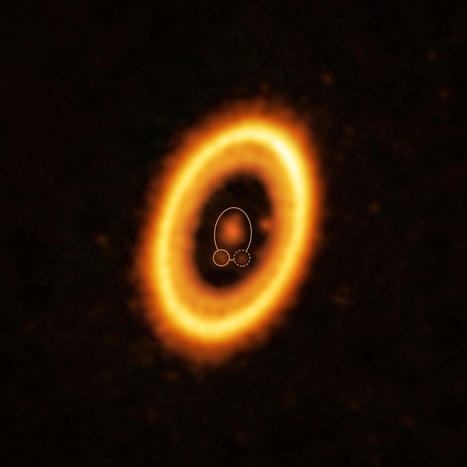
Using the Atacama Large Millimeter/submillimeter Array (ALMA), astronomers have found the possible "sibling" of a planet orbiting a distant star. The team has detected a cloud of debris that might be sharing this planet's orbit, which they believe could be the building blocks of a new planet or the remnants of one already formed. If confirmed, this discovery would be the strongest evidence yet that two exoplanets can share one orbit.
"Two decades ago it was predicted in theory that pairs of planets of similar mass may share the same orbit around their star, the so-called Trojan or co-orbital planets. For the first time, we have found evidence in favor of that idea," says Olga Balsalobre-Ruza, a student at the Centre for Astrobiology in Madrid, Spain who led the paper published today in Astronomy & Astrophysics.
Trojans, rocky bodies in the same orbit as a planet, are common in our own solar system, the most famous example being the Trojan asteroids of Jupiter—more than 12,000 rocky bodies that are in the same orbit around the sun as the gas giant. Astronomers have predicted that Trojans, in particular Trojan planets, could also exist around a star other than our sun, but evidence for them is scant.
"Exotrojans [Trojan planets outside the solar system] have so far been like unicorns: They are allowed to exist by theory but no one has ever detected them," says co-author Jorge Lillo-Box, a senior researcher at the Centre for Astrobiology.
Now, an international team of scientists have used ALMA, in which ESO is a partner, to find the strongest observational evidence yet that Trojan planets could exist—in the PDS 70 system. This young star is known to host two giant Jupiter-like planets, PDS 70b and PDS 70c. By analyzing archival ALMA observations of this system, the team spotted a cloud of debris at the location in PDS 70b's orbit where Trojans are expected to exist.
CMU physics doctoral student Beka Modrekiladze sees artificial intelligence as the way to unlock its secrets.
The magical mystery of quantum mechanics thrills Beka Modrekiladze. The Carnegie Mellon University physics doctoral student sees artificial intelligence as the way to unlock its secrets. "I want to understand what space-time is made of," he said. "Is it fundamental, or is it something else? One of the most important goals in my life is to understand the universe on a deeper level." Quantum gravity is one way that Modrekiladze studies space-time, a model that joins the two concepts into a single idea.
"Space-time oscillates, and we can measure this oscillation to see how time slows down or accelerates, and we can detect those waveforms," he said. One challenge is that there is a lot of noise, so researchers rely on looking for waves similar to pre-existing candidates. "That approach was philosophically unsatisfying for me," Modrekiladze said. "To really accelerate science, we have to think beyond our imagination."
That's where AI comes in.
"The universe doesn't always make sense," Modrekiladze said. "But mathematics helps us to close our eyes and follow its logic to get somewhere new. Mathematics sometimes deletes bias. That's how quantum mechanics was discovered. We followed the mathematics to see that the universe works in an unexpected way. "AI is hyper-mathematics in that sense, because it will push us out of our comfort zone to make even more new discoveries."
As a member of Carnegie Mellon's faculty for more than 50 years, Nobel Laureate Herbert "Herb" A. Simon conducted extensive research on human decision-making and problem- solving processes, which led to the creation of computational tools that both simulated and augmented human thinking. Simon's work with Allen Newell led to the invention of computer systems that could learn and adapt — a precursor to the modern-day field of artificial intelligence.
"Carnegie Mellon was the only choice for my Ph.D., because it has a really good physics department and it is literally the best at AI in the world," he said. Modrekiladze published a paper in the Journal of High Energy Physics earlier this year on gravitational wave signals from the collision of black holes and compact stars. "It's the ultimate laboratory that the universe can offer," Modrekiladze said about the phenomenon. "The high energies are the perfect place to test our best theories. Being able to study gravitational waves which are the oscillations of space and time itself introduced a new era for astronomy."
The Habitable Zone Planet Finder, or HPF, is an astronomical spectrograph currently in development. It will be installed on the 10-meter Hobby-Eberly Telescope at McDonald Observatory in Texas. HPF will search for exoplanets by using the Doppler effect. As a planet orbits its star, it exerts a tiny gravitational pull on the star, causing the star to “wobble.” Just as a moving siren causes the pitch heard by a stationary observer to change, the star’s motion causes the absorption lines in its spectrum to shift in wavelength very slightly. An excellent animation of the effect may be seen here.
The HPF spectrograph will target small, cool stars called M dwarfs. These stars emit most of their light at infrared wavelengths, so HPF will be optimized to detect near-infrared light. One of the challenges for an infrared spectrograph is the background radiation from the instrument itself. At room temperature, the materials in the instrument radiate so much infrared light that any starlight would be completely overwhelmed! To remedy this problem, HPF will be placed in a vacuum chamber and cooled to 180 Kelvin (-93 degrees Celsius, or -136 degrees Fahrenheit).
Our current understanding of biology and planetary physics suggests that in order to be habitable, a planet must be a rocky planet, like the inner planets of the Solar system. Such planets have low masses, and therefore the stellar Doppler signals from them will be small. For M dwarfs, the signals are larger than for stars like the Sun because the stars themselves are less massive, but we still need to be able to measure their motions to a precision of about 1 meter per second–roughly walking speed for humans. Placing HPF in a vacuum chamber at constant temperature helps achieve the needed precision, as changes in air pressure or temperature can alter our measured wavelengths. We will also employ a state-of-the-art calibration system, which will be discussed in detail in upcoming posts.
A team led by Northwestern University researchers has developed the first artificial intelligence (AI) to date that can intelligently design robots from scratch. To test the new AI, the researchers gave the system a simple prompt: Design a robot that can walk across a flat surface. While it took nature billions of years to evolve the first walking species, the new algorithm compressed evolution to lightning speed -- designing a successfully walking robot in mere seconds.
But the AI program is not just fast. It also runs on a lightweight personal computer and designs wholly novel structures from scratch. This stands in sharp contrast to other AI systems, which often require energy-hungry supercomputers and colossally large datasets. And even after crunching all that data, those systems are tethered to the constraints of human creativity -- only mimicking humans' past works without an ability to generate new ideas. The study will be published on Oct. 3, 2023 in the Proceedings of the National Academy of Sciences (PNAS).
"We discovered a very fast AI-driven design algorithm that bypasses the traffic jams of evolution, without falling back on the bias of human designers," said Northwestern's Sam Kriegman, who led the work. "We told the AI that we wanted a robot that could walk across land. Then we simply pressed a button and presto! It generated a blueprint for a robot in the blink of an eye that looks nothing like any animal that has ever walked the earth. I call this process 'instant evolution.'"
Kriegman is an assistant professor of computer science, mechanical engineering and chemical and biological engineering at Northwestern's McCormick School of Engineering, where he is a member of the Center for Robotics and Biosystems. David Matthews, a scientist in Kriegman's laboratory, is the paper's first author. Kriegman and Matthews worked closely with co-authors Andrew Spielberg and Daniela Rus (Massachusetts Institute of Technology) and Josh Bongard (University of Vermont) for several years before their breakthrough discovery.
From xenobots to new organisms
In early 2020, Kriegman garnered widespread media attention for developing xenobots, the first living robots made entirely from biological cells. Now, Kriegman and his team view their new AI as the next advance in their quest to explore the potential of artificial life. The robot itself is unassuming -- small, squishy and misshapen. And, for now, it is made of inorganic materials. But Kriegman says it represents the first step in a new era of AI-designed tools that, like animals, can act directly on the world.
Astronomers have spotted two huge jets fired off by the 'monster' black hole M87 wobbling on an 11-year cycle, proving for the first time that black holes spin.
The discovery was made by studying powerful jets of energy beamed from the solar system-size black hole at the center of the neighboring Messier 87 galaxy. The black hole, called M87, is the best studied black hole to date and the first to ever be directly imaged in 2019, with its "donut hole" shadow crowned by a fuzzy halo of light.
Astrophysicists have long predicted that black holes spun, but the challenge of imaging the cosmic monstrosities has, until now, made evidence hard to come by. The researchers published their findings Sept. 27, 2023 in the journal Nature.
"After the success of black hole imaging in this galaxy with the [Event Horizon Telescope (EHT)], whether this black hole is spinning or not has been a central concern among scientists," Kazuhiro Hada, an astronomer at the National Astronomical Observatory of Japan, said in a statement. "Now anticipation has turned into certainty. This monster black hole is indeed spinning."
Black holes have such a powerful gravitational pull that nothing (not even light) can escape, but this doesn't mean they can't be seen. This is because active black holes are surrounded by accretion disks — vast plumes of material stripped from gas clouds and stars, heated to red-hot temperatures by friction as it spirals into the black holes' mouths.
Scientists have caught fast-moving hydrogen atoms—the keys to countless biological and chemical reactions—in action.
A team led by researchers at the Department of Energy's SLAC National Accelerator Laboratory and Stanford University used ultrafast electron diffraction (UED) to record the motion of hydrogen atoms within ammonia molecules. Others had theorized they could track hydrogen atoms with electron diffraction, but until now nobody had done the experiment successfully. The results, published in Physical Review Letters, leverage the strengths of high-energy Megaelectronvolt (MeV) electrons for studying hydrogen atoms and proton transfers, in which the singular proton that makes up the nucleus of a hydrogen atom moves from one molecule to another.
Proton transfers drive countless reactions in biology and chemistry—think enzymes, which help catalyze biochemical reactions, and proton pumps, which are essential to mitochondria, the powerhouses of cells—so it would be helpful to know exactly how its structure evolves during those reactions. But proton transfers happen super-fast—within a few femtoseconds, one millionth of one billionth of one second. It's challenging to catch them in action.
One possibility is to shoot X-rays at a molecule, then use the scattered X-rays to learn about the molecule's structure as it evolves. Alas, X-rays only interact with electrons—not atomic nuclei—so it's not the most sensitive method.
To get to the answers they were looking for, a team led by SLAC scientist Thomas Wolf, put MeV-UED, SLAC's ultrafast electron diffraction camera to work. They used gas-phase ammonia, which has three hydrogen atoms attached to a nitrogen atom. The team struck ammonia with ultraviolet light, dissociating, or breaking, one of the hydrogen-nitrogen bonds, then fired a beam of electrons through it and captured the diffracted electrons.
Not only did they catch signals from the hydrogen separating from the nitrogen nucleus, they also caught the associated change in the structure of the molecule. What's more, the scattered electrons shot off at different angles, so they could separate the two signals.
"Having something that's sensitive to the electrons and something that's sensitive to the nuclei in the same experiment is extremely useful," Wolf said. "If we can see what happens first when an atom dissociates—whether the nuclei or the electrons make the first move to separate—we can answer questions about how dissociation reactions happen."
The longest yet time-lapse footage of an exoplanet has been assembled from real data to create a digital image that shows an exoplanet 12 times the mass of Jupiter orbiting a star in the Pictor constellation. The time-lapse condenses 17 years of data into 10 seconds.
What is even more remarkable in the creation is the contribution from a young person – a high school student contributed to the project through Northwestern’s REACH program. The Research Experiences in Astronomy at CIERA for High School Students is a highly interactive, 3-week program.
Constructed from real data, the digital footage shows Beta Pictoris b — a planet 12 times the mass of Jupiter — moving around its star in a tilted orbit. The time-lapse video condenses 17 years of footage (collected between the years 2003 and 2020) into just 10 seconds. Within those seconds, viewers can watch the planet make about 75 percent of one full orbit.
Commenting on the success, astrophysicist Jason Wang states: “We need another six years of data before we can see one whole orbit…We’re almost there. Patience is key.” An expert in exoplanet imaging, Wang is an assistant professor of physics and astronomy in Northwestern’s Weinberg College of Arts and Sciences and member of the Center for Interdisciplinary Exploration and Research in Astrophysics (CIERA). Wang has also previously unveiled a 12-year time-lapse video of a family of four exoplanets orbiting their star.
With the new footage, Beta Pictoris b is an enormous planet, located about 63 light-years from Earth in the constellation Pictor. The distance between Beta Pictoris b and its star (Beta Pictoris) is about 10 times the distance between the Earth and the sun. Compared to our Sun, Beta Pictoris is 1.75 times as massive and 8.7 times more luminous. It also is very young — only 20 to 26 million years old.
The face of astronomy is changing. Though narrow-field point-and-shoot astronomy still matters (JWST anyone?), large wide-field surveys promise to be the powerhouses of discovery in the coming decades, especially with the advent of machine learning.
A recently developed machine learning program, called ASTRONOMALY, scanned nearly four million galaxy images from the Dark Energy Camera Legacy Survey (DECaLS), discovering 1,635 anomalies including 18 previously unidentified sources with "highly unusual morphology." It is a sign of things to come: a partnership between humans and software that can do better observational science than either could do on their own.
Survey telescopes have long been part of the astronomers' toolkit. The difference in the 21st century is that they can now produce incredibly vast amounts of data, far more than a human could hope to dig through and examine on their own. The upcoming Vera Rubin Observatory, for example, is expected to create 20 terabytes of data every single night (60 petabytes over 10 years), and ultimately provide "32 trillion observations of 20 billion galaxies." Poring through all that data would take humans decades. AI can do it much faster.
Most previous anomaly detection programs were trained on test datasets, teaching the algorithm to look for specific phenomena. The limitation of these programs is that they tend to find many anomalies of the same type, rather than entirely new anomalies.
ASTRONOMALY is instead run "unsupervised," allowing it to find new kinds of outliers—the kind of thing that gets astronomers excited, like gravitational lenses, galactic mergers, odd red-shift patterns, and anything else that is just weird. However, ASTRONOMALY performs best when it employs a form of active learning, with input from humans to correct its mistakes. Incorporating this feedback into its searches offers much better results. The best part: it only takes the astronomer a few hours.
In a recent preprint paper posted to arXiv, astronomers tested ASTRONOMALY on a larger dataset than ever before, demonstrating that it can work at scale. After feeding the program a huge amount of DECaLS data, they tested several different algorithms. The results showed that the unsupervised method, enhanced by active learning input from humans, offered the highest output of unique anomalies.
Programming a cluster to scale deep learning is painful. It typically requires dozens to hundreds of engineering hours and remains a practical barrier for many to realize the value of large-scale AI for their work. On a traditional GPU cluster, ML researchers – typically using a special version of their ML framework – must figure out how to distribute their model while still achieving some fraction of their convergence and performance target. They must navigate the complex hierarchy of individual processors’ memory capacity, bandwidth, interconnect topology, and synchronization; all while performing a myriad of hyper-parameter and tuning experiments along the way. What’s worse is that the resultant implementation is brittle to change, and this time only delays overall time to solution. With the WSE, there is no bottleneck. We give you a cluster-scale AI compute resource with the programming ease of a single desktop machine using stock TensorFlow or PyTorch. Spend your time in AI discovery, not cluster engineering.
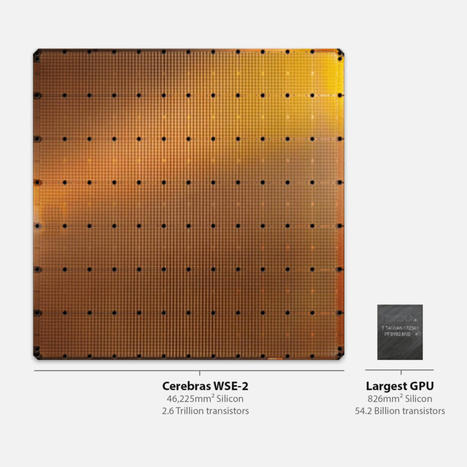
Each core on the WSE is independently programmable and optimized for the tensor-based, sparse linear algebra operations that underpin neural network training and inference for deep learning, enabling it to deliver maximum performance, efficiency, and flexibility. The WSE-2 packs 850,000 of these cores onto a single processor. With that, and any data scientist can run state-of-the-art AI models and explore innovative algorithmic techniques at record speed and scale, without ever touching distributed scaling complexities.
1000x Memory Capacity and Bandwidth
Unlike traditional devices, in which the working cache memory is tiny, the WSE-2 takes 40GB of super-fast on-chip SRAM and spreads it evenly across the entire surface of the chip. This gives every core single-clock-cycle access to fast memory at extremely high bandwidth – 20 PB/s. This is 1,000x more capacity and 9,800x greater bandwidth than the leading GPU. This means no trade-off is required. You can run large, state-of-the art models and real-world datasets entirely on a single chip. Minimize wall clock training time and achieve real-time inference within latency budgets, even for large models and datasets.
220Pb/s
High Bandwidth - Low Latency
Deep learning requires massive communication bandwidth between the layers of a neural network. The WSE uses an innovative high bandwidth, low latency communication fabric that connects processing elements on the wafer at tremendous speed and power efficiency. Dataflow traffic patterns between cores and across the wafer are fully configurable in software. The WSE-2 on-wafer interconnect eliminates the communication slowdown and inefficiencies of connecting hundreds of small devices via wires and cables. It delivers an incredible 220 Pb/s processor-processor interconnect bandwidth. That’s more than 45,000x the bandwidth delivered between graphics processors.
With a remarkable observational campaign that involved 12 telescopes both on the ground and in space, including three European Southern Observatory (ESO) facilities, astronomers have uncovered the strange behaviour of a pulsar, a super-fast-spinning dead star. This mysterious object is known to switch between two brightness modes almost constantly, something that until now has been an enigma. But astronomers have now found that sudden ejections of matter from the pulsar over very short periods are responsible for the peculiar switches.
“We have witnessed extraordinary cosmic events where enormous amounts of matter, similar to cosmic cannonballs, are launched into space within a very brief time span of tens of seconds from a small, dense celestial object rotating at incredibly high speeds,” says Maria Cristina Baglio, researcher at New York University Abu Dhabi, affiliated with the Italian National Institute for Astrophysics (INAF), and the lead author of the paper published today in Astronomy & Astrophysics.
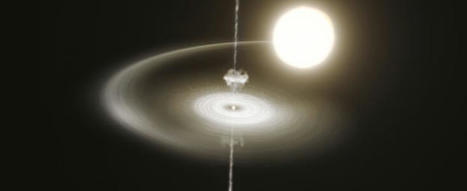
A pulsar is a fast-rotating, magnetic, dead star that emits a beam of electromagnetic radiation into space. As it rotates, this beam sweeps across the cosmos — much like a lighthouse beam scanning its surroundings — and is detected by astronomers as it intersects the line of sight to Earth. This makes the star appear to pulse in brightness as seen from our planet. PSR J1023+0038, or J1023 for short, is a special type of pulsar with a bizarre behaviour. Located about 4500 light-years away in the Sextans constellation, it closely orbits another star. Over the past decade, the pulsar has been actively pulling matter off this companion, which accumulates in a disc around the pulsar and slowly falls towards it.
Since this process of accumulating matter began, the sweeping beam virtually vanished and the pulsar started incessantly switching between two modes. In the ‘high’ mode, the pulsar gives off bright X-rays, ultraviolet and visible light, while in the ‘low’ mode it’s dimmer at these frequencies and emits more radio waves. The pulsar can stay in each mode for several seconds or minutes, and then switch to the other mode in just a few seconds. This switching has thus far puzzled astronomers.
"Our unprecedented observing campaign to understand this pulsar’s behaviour involved a dozen cutting-edge ground-based and space-borne telescopes," says Francesco Coti Zelati, a researcher at the Institute of Space Sciences, Barcelona, Spain, and co-lead author of the paper. The campaign included ESO’s Very Large Telescope (VLT) and ESO’s New Technology Telescope (NTT), which detected visible and near-infrared light, as well as the Atacama Large Millimeter/submillimeter Array (ALMA), in which ESO is a partner.
Over two nights in June 2021, they observed the system make over 280 switches between its high and low modes. “We have discovered that the mode switching stems from an intricate interplay between the pulsar wind, a flow of high-energy particles blowing away from the pulsar, and matter flowing towards the pulsar,” says Coti Zelati, who is also affiliated with INAF.
A single-atom-thick sheet of carbon known as graphene has remarkable properties on its own, but things can get even more interesting when you stack up multiple sheets.
When two or more overlying sheets of graphene are sightly misaligned—twisted at certain angles relative to each other—they take on a plethora of exotic identities. Depending on the twist angle, these materials, known as moiré quantum matter, can suddenly generate their own magnetic fields, become superconductors with zero electrical resistance, or conversely, turn into perfect insulators.
Joseph A. Stroscio and his colleagues at the National Institute of Standards and Technology (NIST), along with an international team of collaborators, have developed a "quantum ruler" to measure and explore the strange properties of these twisted materials. The work may also lead to a new, miniaturized standard for electrical resistance that could calibrate electronic devices directly on the factory floor, eliminating the need to send them to an off-site standards laboratory.
Collaborator Fereshte Ghahari, a physicist from George Mason University in Fairfax, Virginia, took two layers of graphene (known as bilayer graphene) of about 20 micrometers across and twisted them relative to another two layers to create a moiré quantum matter device. Ghahari made the device using the nanofabrication facility at NIST's Center for Nanoscale Science and Technology.
NIST researchers Marlou Slot and Yulia Maximenko then chilled this twisted material device to one-hundredth of a degree above absolute zero, reducing random motions of atoms and electrons and heightening the ability for electrons in the material to interact. After reaching ultra-low temperatures, they examined how the energy levels of electrons in the layers of graphene changed when they varied the strength of a strong external magnetic field. Measuring and manipulating the energy levels of electrons is critical for designing and manufacturing semiconductor devices.
To measure the energy levels, the team used a versatile scanning tunneling microscope that Stroscio designed and built at NIST. When the researchers applied a voltage to the graphene bilayers in the magnetic field, the microscope recorded the tiny current from the electrons that "tunneled" out from the material to the microscope probe tip.
In a magnetic field, electrons move in circular paths. Ordinarily, the circular orbits of the electrons in solid materials have a special relationship with an applied magnetic field: The area enclosed by each circular orbit, multiplied by the applied field, can only take on a set of fixed, discrete values, due to the quantum nature of electrons.
Astronomers expect to see some repeating radio signals in space, but they usually blink on and off much more quickly.
In 2022, astronomers made an intriguing discovery: a radio signal in space that switched on and off every 18 minutes. Astronomers expect to see some repeating radio signals in space, but they usually blink on and off much more quickly. The most common repeating signals come from pulsars, rotating neutron stars that emit energetic beams like lighthouses, causing them to blink on and off as they rotate towards and away from the Earth.
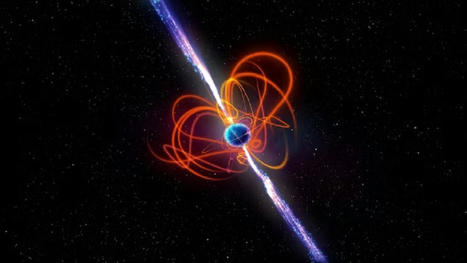
Pulsars slow down as they get older, and their pulses become fainter, until eventually they stop producing radio waves altogether. Our unusually slow pulsar could best be explained as a magnetar—a pulsar with exceedingly complex and powerful magnetic fields that could generate radio waves for several months before stopping.
Unfortunately, we detected the source using data gathered in 2018. By the time we analyzed the data and discovered what we thought might be a magnetar it was 2020, and it was no longer producing radio waves. Without additional data, we were unable to test our magnetar theory.
Our Universe is vast, and so far every new phenomenon we’ve discovered has not been unique. We knew that if we looked again, with well-designed observations, we had a good chance of finding another long-period radio source. So, we used the Murchison Widefield Array radio telescope in Western Australia to scan our Milky Way galaxy every three nights for several months.
We didn’t need to wait long. Almost as soon as we started looking, we found a new source, in a different part of the sky, this time repeating every 22 minutes. At last, the moment we had been waiting for. We used every telescope we could find, across radio, X-ray, and optical light, making as many observations as possible, assuming it would not be active for long. The pulses lasted five minutes each, with gaps of 17 minutes between. Our object looked a lot like a pulsar, but spinning 1,000 times slower.
Researchers led by Chang Liu of PPPL have unveiled a promising approach to mitigating damaging runaway electrons created by disruptions in tokamak fusion devices. Key to the approach was harnessing a unique type of plasma wave that bears the name of astrophysicist Hannes Alfvén, a 1970 Nobel laureate.
Alfvén waves have long been known to loosen the confinement of high-energy particles in tokamak reactors, allowing some to escape and reducing the efficiency of the doughnut-shaped devices. However, the new findings by Chang Liu and researchers at General Atomics, Columbia University and PPPL uncovered beneficial results in the case of runaway electrons.
Remarkably circular
The scientists found that such loosening can diffuse or scatter high-energy electrons before they can grow into avalanches that damage tokamak components. This process was determined to be remarkably circular: The runaways create instabilities that give rise to Alfvén waves that keep the avalanche from forming. "These discoveries provide a comprehensive explanation for the direct observation of Alfvén waves in disruption experiments," said Liu, a staff researcher at PPPL and lead author of a paper that details the results in Physical Review Letters. "The findings establish a distinct link between these modes and the generation of runaway electrons."
Researchers derived a theory for the remarkable circularity of these interactions. The results aligned well with runaways in experiments on the DIII-D National Fusion Facility, a DOE tokamak that General Atomics operates for the Office of Science. Tests of the theory also proved positive on the Summit supercomputer at Oak Ridge National Laboratory.
"Chang Liu's work shows that the runaway electron population size can be controlled by instabilities driven by the runaway electrons themselves," said Felix Parra Diaz, head of the Theory Department at PPPL. "His research is very exciting because it might lead to tokamak designs that naturally mitigate runaway electron damage through inherent instabilities."
Using the Atacama Large Millimeter/submillimeter Array (ALMA), astronomers have detected the magnetic field of a galaxy so far away that its light has taken more than 11 billion years to reach us: we see it as it was when the Universe was just 2.5 billion years old. The result provides astronomers with vital clues about how the magnetic fields of galaxies like our own Milky Way came to be.
Lots of astronomical bodies in the Universe have magnetic fields, whether it be planets, stars or galaxies. “Many people might not be aware that our entire galaxy and other galaxies are laced with magnetic fields, spanning tens of thousands of light-years,” says James Geach, a professor of astrophysics at the University of Hertfordshire, UK, and lead author of the study published today in Nature.
“We actually know very little about how these fields form, despite their being quite fundamental to how galaxies evolve,” adds Enrique Lopez Rodriguez, a researcher at Stanford University, USA, who also participated in the study. It is not clear how early in the lifetime of the Universe, and how quickly, magnetic fields in galaxies form because so far astronomers have only mapped magnetic fields in galaxies close to us.
Now, using ALMA, in which the European Southern Observatory (ESO) is a partner, Geach and his team have discovered a fully formed magnetic field in a distant galaxy, similar in structure to what is observed in nearby galaxies. The field is about 1000 times weaker than the Earth’s magnetic field, but extends over more than 16 000 light-years.
“This discovery gives us new clues as to how galactic-scale magnetic fields are formed,” explains Geach. Observing a fully developed magnetic field this early in the history of the Universe indicates that magnetic fields spanning entire galaxies can form rapidly while young galaxies are still growing.
To get content containing either thought or leadership enter:
To get content containing both thought and leadership enter:
To get content containing the expression thought leadership enter:
You can enter several keywords and you can refine them whenever you want. Our suggestion engine uses more signals but entering a few keywords here will rapidly give you great content to curate.


 Your new post is loading...




















Oxycodone without a prescription
Phentermine 37.5 mg for sale
Phentremin weight loss
purchase Adderall online
Where Fentanyl Patches online
Where to buy Acxion Fentermina