An n-ball of radius 1 (a “unit ball”) will just fit inside an n-cube with sides of length 2. The surface of the ball kisses the center of each face of the cube. In this configuration, what fraction of the cubic volume is filled by the ball? The question is answered easily in the familiar low-dimensional spaces we are all accustomed to living in. At the bottom of the hierarchy is onedimensional geometry, which is rather dull: Everything looks like a line segment. A 1-ball with r = 1 and a 1-cube with s = 2 are actually the same object— a line segment of length 2. Thus in one dimension the ball completely fills the cube; the volume ratio is 1.0. In two dimensions, a 2-ball inside a 2-cube is a disk inscribed in a square, and so this problem can be solved with one of my childhood formulas. With r = 1, the area πr2 is simply π, whereas the area of the square, s2 , is 4; the ratio of these quantities is about 0.79. In three dimensions, the ball’s volume is 4 ∕3π, whereas the cube has a volume of 8; this works out to a ratio of approximately 0.52. On the basis of these three data points, it appears that the ball fills a smaller and smaller fraction of the cube as n increases. There’s a simple, intuitive argument suggesting that the trend will continue: The regions of the cube that are left vacant by the ball are the corners. Each time n increases by 1, the number of corners doubles, so we can expect ever more volume to migrate into the nooks and crannies near the cube’s vertices. Beyond the fifth dimension, the volume of a unit n-ball decreases as n increases! I tried a few larger values of n, finding that V(20,1) is about 0.0258, and V(100,1) is in the neighborhood of 10–40. Thus it looked very much like the n-ball dwindles away to nothing as n approaches infinity.
In 1956, John Milnor was investigating 7-dimensional manifolds when he found a shape which seemed very strange. On one hand, it contained no holes, and so it seemed to be a sphere. On the other hand, the way it was curved around was not like a sphere at all. Initially Milnor thought that he had found a counterexample to the 7-dimensional version of the Poincaré conjecture: a shape with no holes, which was not a sphere. But on closer inspection, his new shape could morph into a sphere (as Poincaré insists it must be able to do), but - remarkably - it could not do so smoothly. So, although it was topologically a sphere, in differential terms it was not.
Milnor had found the first exotic sphere, and he went on to find several more in other dimensions. In each case, the result was topologically spherical, but not differentially so. Another way to say the same thing is that the exotic spheres represent ways to impose unusual notions of distance and curvature on the ordinary sphere.
In dimensions one, two, and three, there are no exotic spheres, just the usual ones. This is because the topological and differential viewpoints do not diverge in these familiar spaces. Similarly in dimensions five and six there are only the ordinary spheres, but in dimension seven, suddenly there are 28. In higher dimensions the number flickers around between 1 and arbitrarily large numbers:
Number of spheres–1 1 1 ? 1 1 28 2 8 6 992 1 3 2 16256 2 16 16
The realm which remains the most mysterious, even today, is 4-dimensional space. No exotic spheres have yet been found here. At the same time no-one has managed to prove that none can exist. The assertion that there are no exotic spheres in four dimensions is known as the smooth Poincaré conjecture. In case anyone has got this far and is still not sure, let me make this clear: the smooth Poincaré conjecture is not the same thing as the Poincaré conjecture! Among other differences, the Poincaré conjecture has been proved, but the smooth Poincaré conjecture remains stubbornly open today.
An interdisciplinary team of researchers enabled by the National Science Foundation-funded Materials Research Science and Engineering Centers (MRSEC) program has developed a way to break fibers or sheets of material into many tiny, almost perfectly uniform segments or strips. The method can work on plastics, metals, glasses, and even natural materials such as silk or hair, producing sectioned particles ranging in size from nanoparticles to ones that can be handled and easily seen with the naked eye.
In fact, the new method makes it possible to create nanoparticles — particles whose sizes are measured in billionths of a meter — using just a pen and a strip of plastic, the researchers say. More complex versions of the technique could lead to mass-produced high-tech optical and potentially electronic devices.
The new findings are described this week in the journal Nature, in a paper led by Ayman Abouraddy, a former MIT postdoc and now an associate professor of optics and photonics at the University of Central Florida (UCF); MIT professor of materials science and director of the Research Laboratory of Electronics Yoel Fink; and nine others in Florida and Singapore.
The underlying technology, a process called cold-drawing, has been used for almost a century in the production of synthetic fibers such as nylon and rayon. It was based on a serendipitous discovery by scientists at DuPont, who found that pulling on a naturally brittle thread can actually make it more flexible and robust — thereby ushering in the era of fabrics made of synthetic fibers. In Abouraddy’s research, this old technique has now been expanded to include fibers made up of multiple materials, including ones that ordinarily would be expected to shatter when subjected to stretching or flexing.
Abouraddy and his collaborators have found that under the right conditions, some materials embedded within synthetic polymer fibers will naturally break apart into pieces of uniform length, as the fiber itself is cold-drawn. The cause of this surprising phenomenon is a kind of wave that sweeps along the polymer fiber during the drawing process. This wave is known as a “neck,” since it propagates in the form of a depression with moving “shoulders” — visible to the naked eye — that continuously extend in opposite directions until they span the whole fiber length.
As the shoulders propagate down the fiber, they pinch off any brittle threads embedded in the fiber, which break apart into short, uniformly sized segments. The result can be a bundle of short rods kept in place within the polymer fiber, or the polymer can be dissolved away to leave a collection of separated rods of precisely matched size and shape, which can be of a nanoscale size that would be difficult to manufacture by other methods.
The same basic method, the team found, can also be applied to drawing out thin tissue-like films of material. When a flexible material containing embedded sheets of brittle material is drawn, the brittle material fragments into a set of uniform ribbon-like strips. This configuration could be an inexpensive way of making diffraction gratings, which are transparent substrates with a series of parallel grooves or strips, usually etched into a material via lithography, and are often the basis for optical systems such as spectrographs used to determine the chemical composition of materials.
Techniques involving the use of terahertz radiation have been evolving in recent years, leading to devices able to see through materials to take pictures of what lies beneath. Because T-rays are less energetic than X-ray or gamma rays, they are less likely to cause damage. That has made them ideal for use in detecting hidden images behind paintings and discovering defects in panels used on space craft. But there have been two problems with using T-rays more widely, the first is that it costs a lot, and the second is that it cannot be used in applications smaller than its wavelength, which has held back its resolution abilities. In this new effort, the researchers have not found a solution for the first problem but have dramatically improved the second.
To improve the resolution, the team illuminated an object hidden behind a silicon wafer with two different sources, one of them was a standard terahertz beam, and the other was light that sent pulses of different dark and light patterns onto the object under study. The patterns that were projected onto the wafer caused part of it to become conductive, which meant the T-rays could not pass through them. Thus the T-rays were able to easily pass through the wafer but were then scattered as they struck the object hidden on the other side. Using a pixel detector allowed for recording the T-rays that made their way through, allowing for image creation.
Using the technique, the researchers report that they were able to detect cracks in a circuit board affixed to the opposite side of a wafer, at approximately double the resolution of existing terahertz imaging techniques. They believe their technique could prove useful in the microelectronics industry, and perhaps in medicine, as it might be used to detect very tiny tumors.
New research from the Kosik Molecular and Cellular Neurobiology Lab at UC Santa Barbara has pinpointed a specific long nocoding ribonucleic acid (lncRNA) that regulates neural development (ND). The findings appear in the journal Neuron. "This lncND, as we've called it, can be found only in the branch of primates that leads to humans. It is a stretch of nucleotides that does not code a protein," said senior author Kenneth S. Kosik, the Harriman Professor of Neuroscience Research in UCSB's Department of Molecular, Cellular, and Developmental Biology. "We demonstrate that lncND is turned on during development and turned off when the cell matures."
Lead author Neha Rani, a postdoctoral scholar in the Kosik Lab, idenfitied several binding sites on lncND for another type of RNA called a microRNA. One of them, called microRNA-143, binds to lncND. "We found that lncND could sequester this microRNA and in doing so regulate the expression of Notch proteins," Rani said. "Notch proteins are very important regulators during neuronal development. They are involved in cell differentiation and cell fate and are critical in the neural development pathway."
Kosik describes lncND as a platform that binds these microRNAs like a sponge. "This allows Notch to do what it's supposed to do during development," he explained. "Then as the brain matures, levels of lncND go down and when they do, those microRNAs come flying off the platform and glom onto Notch to bring its levels down. You want Notch levels to be high while the brain is developing but not once maturation occurs. This lncND is an elegant way to change Notch levels quickly."
To replicate these cell culture results, Rani used human stem cells to grow neurons into what is called a mini brain. In this pea-sized gob of brain tissue, she identified a subpopulation -- radial glial cells (neuronal stem cells) and other neural progenitors -- responsible for making lncND.
"It was right where we thought it would be in brain tissue," said Kosik, who is also the co-director of UCSB's Neuroscience Research Institute. "But we still had one more thing we had to do because people would still not be satisfied that we had done everything possible to show that lncND was really doing something functionally."
So the UCSF team introduced lncND into the fetal brain of a gestating mouse. Green fluorescent protein labeling allowed them to see the early development pattern and show that lncND, which ordinarily is not present in mice -- lncND is present only in some primates including humans -- had a functional effect on development.
"When we overexpressed lncND in the mouse fetus, we actually affected development in the predicted manner," Kosik said. "The early developmental pattern was shifted toward more precursor cells, even though the mouse does not make lncND at all."
By now it’s clear that bots will cause a major paradigm shift in customer service, e-commerce, and, quite frankly, all aspects of software-to-human interaction.
Today when two software systems have to talk to each other, software developers need to implement an integration using APIs (application programming interfaces). This integration process is time consuming. That’s why, over the last couple of years, services such as Zapier, Scribe, and IFTT have become popular. They provide out-of-the-box interfaces to hundreds of software applications, allowing you to connect, for example, your CRM system with a mailing tool or analytics platform.
In the bot-to-bot era, however, each software application can talk to each other system, regardless of whether they have an actual API integration in place. Granted, bot-to-bot communication will not be used to exchange large amounts of data, but it will allow for ad-hoc communication between, for example, my banking software and a web shop. My banking software could talk to the webshop bot and ask for that missing invoice: “Niko needs an invoice for order 45678, can you provide that?”
The beauty of bot-to-bot communication will be that it is in plain English, it will be conversations that every human can understand. Assuming that all conversations between my bot Annie and other bots are archived, I will be able to go back and see how my two little bots came to a certain conclusion. In my banking example, when an invoice is missing after all, I could click on a “details” button, which would show me the conversation Annie had with the webshop. The archived bot-to-bot conversation would show me the webshop bot response, that the invoice will not be available for another couple of weeks.
But it gets better. If my bot is stuck in a conversation with another bot, she can call me in for help: “Niko, it’s Annie here, your finance bot. I’m talking to a supplier, but I’m having some trouble understanding what they are saying.” I could chime in — when I have time of course, a couple of hours later, since bots have unlimited patience — and I would rephrase the question of Annie and get the answer from the other bot. Next, Annie could continue the conversation and handle my business.
Czech writer Karel Čapek’s 1920 play R.U.R. (Rossum’s Universal Robots), which famously introduced the word robot to the world, begins with synthetic humans—the robots from the title—toiling in factories to produce low-cost goods. It ends with those same robots killing off the human race. Thus was born an enduring plot line in science fiction: robots spiraling out of control and turning into unstoppable killing machines. Twentieth-century literature and film would go on to bring us many more examples of robots wreaking havoc on the world, with Hollywood notably turning the theme into blockbuster franchises like The Matrix, Transformers, and The Terminator.
Lately, fears of fiction turning to fact have been stoked by a confluence of developments, including important advances in artificial intelligence and robotics, along with the widespread use of combat drones and ground robotsin Iraq and Afghanistan. The world’s most powerful militaries are now developing ever more intelligent weapons, with varying degrees of autonomy and lethality. The vast majority will, in the near term, be remotely controlled by human operators, who will be “in the loop” to pull the trigger. But it’s likely, and some say inevitable, that future AI-powered weapons will eventually be able to operate with complete autonomy, leading to a watershed moment in the history of warfare: For the first time, a collection of microchips and software will decide whether a human being lives or dies.
Not surprisingly, the threat of “killer robots,” as they’ve been dubbed, has triggered an impassioned debate. The poles of the debate are represented by those who fear that robotic weapons could start a world war and destroy civilization and others who argue that these weapons are essentially a new class of precision-guided munitions that will reduce, not increase, casualties. In December, more than a hundred countries are expected to discuss the issue as part of a United Nations disarmament meeting in Geneva.
Black lines converge then shift, contract and explode.
A single bird becomes several, and then several dozen, which orbit one another in a dance of quantum chaos inside a transparent box. Some spin on imaginary axes, while others weave waveforms across the paper, before disappearing altogether.
A perch in the bottom left-hand corner dissolves into its shadow, and a fleeting outline of a giant bird fades from view, leaving a final frame of perfect white.
The animation shown above, called Schrodinger's Bird, aims to illustrate some of the mind-bending, almost magical, concepts of quantum mechanics, says its creator, Sydney-based artist Steve Durbach.
"Birds are a good metaphor because they're flighty, they're elusive," Durbach explains.
Harvard Chemist Daniel Nocera has announced during a lecture at the Energy Policy Institute in Chicago, that he and his colleagues have engineered a bacterium that has made it capable of taking in carbon dioxide and hydrogen, and excreting several types of alcohol fuels, along with biomass that can be burned and used as an energy source. During the talk, he claimed that a paper he and his colleagues have written regarding the work will soon be published in the journal Science.
In order to determine how fast quantum technologies can ultimately operate, physicists have established the concept of "quantum speed limits." Quantum speed limits impose limitations on how fast a quantum system can transition from one state to another, so that such a transition requires a minimum amount of time (typically on the order of nanoseconds). This means, for example, that a future quantum computer will not be able to perform computations faster than a certain time determined by these limits.
Deep neural networks for drug discovery (credit: Insilico Medicine, Inc.) Scientists from Insilico Medicine, Inc. have trained deep neural networks (DNNs).
Scientists from Insilico Medicine, Inc. have trained deep neural networks (DNNs) to predict the potential therapeutic uses of 678 drugs, using gene-expression data obtained from high-throughput experiments on human cell lines from Broad Institute’s LINCS databases and NIH MeSH databases. The supervised deep-learning drug-discovery engine used the properties of small molecules, transcriptional data, and literature to predict efficacy, toxicity, tissue-specificity, and heterogeneity of response.
“We used LINCS data from Broad Institute to determine the effects on cell lines before and after incubation with compounds, co-author and research scientist Polina Mamoshina explained. “We used gene expression data of total mRNA from cell lines extracted and measured before incubation with compound X and after incubation with compound X to identify the response on a molecular level. The goal is to understand how gene expression (the transcriptome) will change after drug uptake. It is a differential value, so we need a reference (molecular state before incubation) to compare.” The research is described in a paper in the upcoming issue of the journal Molecular Pharmaceutics.
Alex Zhavoronkov, PhD, Insilico Medicine CEO, who coordinated the study, said the initial goal of their research was to help pharmaceutical companies significantly accelerate their R&D and increase the number of approved drugs. “In the process we came up with more than 800 strong hypotheses in oncology, cardiovascular, metabolic, and CNS spaces and started basic validation,” he said.
The team measured the “differential signaling pathway activation score for a large number of pathways to reduce the dimensionality of the data while retaining biological relevance.” They then used those scores to train the deep neural networks.*
“This study is a proof of concept that DNNs can be used to annotate drugs using transcriptional response signatures, but we took this concept to the next level,” said Alex Aliper, president of research, Insilico Medicine, Inc., lead author of the study.
Via Pharma.AI, a newly formed subsidiary of Insilico Medicine, “we developed a pipeline for in silico drug discovery — which has the potential to substantially accelerate the preclinical stage for almost any therapeutic — and came up with a broad list of predictions, with multiple in silico validation steps that, if validated in vitro and in vivo, can almost double the number of drugs in clinical practice.”
Despite the commercial orientation of the companies, the authors agreed not to file for intellectual property on these methods and to publish the proof of concept. According to Mamoshina, earlier this month, Insilico Medicine scientists published the first deep-learned biomarker of human age — aiming to predict the health status of the patient — in a paper titled “Deep biomarkers of human aging: Application of deep neural networks to biomarker development” by Putin et al, in Aging; and an overview of recent advances in deep learning in a paper titled “Applications of Deep Learning in Biomedicine” by Mamoshina et al., also in Molecular Pharmaceutics.
The distribution of galaxies on very large scales encodes valuable information about the origin and fate of the Universe. To study this, the Baryon Oscillation Spectroscopic Survey (BOSS), a branch of the Sloan Digital Sky Survey (SDSS-III), has measured the redshift distribution of galaxies with unprecedented accuracy. One important question arises in the analysis of the data provided by such surveys: if the Universe is comparable to a huge unique experiment, how can we determine the uncertainties in the measurement of quantities derived from observing it?
While common experiments can be repeated an arbitrary number of times in the laboratory, the cosmic Universe is only reproducible in super-computing facilities. One needs to consider the statistical fluctuations caused by the so-called cosmic variance, having its origin in the primordial seed fluctuations. However, reconstructing the large-scale structure covering the volumes of a survey like BOSS from the fluctuations generated after the Big Bang until the formation of the observed galaxies after about 14 billion years of cosmic evolution is an extremely expensive task, requiring millions of super-computing hours.
Francisco Kitaura from the Leibniz Institute for Astrophysics Potsdam (AIP) states: "We have developed the necessary techniques to generate thousands of simulated galaxy catalogues, reproducing the statistical properties of the observations."
The production of the catalogues followed three steps: first, thousands of Dark Matter fields were generated with different seed perturbations at different cosmic epochs. Second, the galaxies were distributed in a nonlinear, stochastic way matching the statistical properties of the observations. Third, the mass of each galaxy – determined by its environment – was reconstructed. Finally, the catalogues of different cosmic times were combined into light cones reproducing the observational properties of the BOSS data, such as the survey geometry, and galaxy number density at different distances and lookback times.
Chia-Hsun Chuang from the AIP explains: "With this novel approach we are able to reliably constrain the errors to the cosmological parameters we extract from the data".
"The MareNostrum super-computing facility at the Barcelona Supercomputing Center (BSC) was used to produce the largest number of synthetic galaxy catalogues to date covering a volume more than ten times larger than the sum of all the large volume simulations carried out so far", reports Gustavo Yepes from the Autonomous University of Madrid (UAM).
Rice University researchers who developed the first nanocars and colleagues at North Carolina State University found in recent tests that driving their vehicles in ambient conditions -- exposed to open air, rather than a vacuum -- got dicey after a time because the hydrophobic single-molecule cars stuck to the "road" and created what amounted to large speed bumps.
The findings were reported in the American Chemical Society's Journal of Physical Chemistry C.
The work by Rice chemist James Tour, NC State analytical chemist Gufeng Wang and their colleagues came as Rice prepares to take part in the first NanoCar Race in Toulouse, France, in October. Rice researchers are members of one of five international teams that plan to enter the competition.
Just like in the macro world, driving conditions are important for moving nanocars. Though the race will be run in an ultra-cold vacuum, the Rice researchers thought it wise to study how their latest model of nanocars would fare in a more natural setting.
"Our long-term goal is to make nanomachines that operate in ambient environments," Tour said. "That's when they will show potential to become useful tools for medicine and bottom-up manufacturing."
The newest generation of Rice nanocars features adamantane wheels that are slightly hydrophobic (water-repellent). Tour said some hydrophobicity is important to help keep the nanocars attached to a surface, but if the tires are too hydrophobic, the cars could become permanently immobilized. That is because hydrophobic things tend to stick together to minimize the amount of surface area that is in contact with water. Things that are hydrophilic, or water-liking, are more amenable to floating freely in water, Tour said.
In the latest Rice tests with the new tires, the nanocars were placed on surfaces that were either clean glass or glass coated with the polymer polyethylene glycol (PEG). Glass is the most frequently used substrate in nanocar research. Tour said the PEG-coated glass slides were used for their anti-fouling -- nonsticky -- properties, while the clean glass slides were treated with hydrogen peroxide so the hydrophobic wheels wouldn't stick.
He said the cars weren't so much being driven as undergoing "directed diffusion" in the tests. The point, he said, was to establish the kinetics of nanocar movement and understand the potential energy surface interaction between the car and surface over time. "We wanted to know what makes a nanocar 'hit the brakes' and how much external energy we need to apply to start it moving again," he said. The researchers let their cars run freely on a solid surface exposed to the air and tracked their movements by exciting embedded fluorescent tags.
The cars that moved via Brownian diffusion slowed down during the 24 hours that the slides were under observation. Tour said slides absorbed molecules from the air; as more and more of these molecules stuck to the surface, the slides become progressively more "dirty" throughout the experiment. Each nanocar is a single, complex molecule that contains just a few hundred atoms, so any other molecules they encounter on the roadway are huge obstacles that act like sticky foam. Each collision with one of these obstructions makes the nanocar slow down, and eventually the cars become permanently stuck.
Wang said that from an energy perspective -- that is, the energetic relationship between the molecular cars and those that make up the road -- molecules adsorbed from air generate many potential energy wells, just like puddles on the potential energy surface. These puddles can slow or permanently trap the nanocars.
A group of 25 scientists officially announced their plan to build a human genome from scratch within the next 10 years. They have also given more details about their intended applications for the synthetic DNA – but not everyone is convinced by their approach.
The team bills this grand challenge as a natural extension of the Human Genome Project. If that was about reading – or sequencing – the code of life, this new project proposes to write it, chemically synthesising each letter or base pair.
Poring over our DNA has limitations, the team argues. “Reading the genome can only get you so far,” says Susan Rosser, a co-author on the paper and the director of the Mammalian Synthetic Biology Research Centre at the University of Edinburgh, UK. “At some point you have to build it.”
The team, which is led by maverick geneticist George Church at Harvard University and Andrew Hessel of design software company Autodesk, says it is aiming to launch the ambitious initiative – known as The Human Genome Project–Write – this year, depending on raising an initial £100 million.
Stem cell boon Within 10 years, the project’s primary goal is to engineer large genomes of up to 100-billion base pairs (a human genome is 3 billion base pairs), which could include “whole genome engineering of human cell lines and other organisms of agricultural and public health significance”. This will require technological development early on in the project “to propel large-scale genome design and engineering,” the researchers write.
While difficult to put a figure on at this early stage, the team says it expects the final bill for the project to be less than the $3-billion cost of the first Human Genome Project.
Alongside the main project, they outline several pilot projects that will take advantage of the progress as it is made. Those discussed in the paper published today include the development of an ultra-safe line of cells that would be virus resistant, cancer resistant and free of potentially harmful genes that could lead, for example, to prion diseases.
A new image reconstruction algorithm for the Event Horizon Telescope project could help produce the first direct views of black holes, using very long baseline interferometry (VLBI) data.
Researchers from MIT’s Computer Science and Artificial Intelligence Laboratory, the Harvard-Smithsonian Center for Astrophysics, and the MIT Haystack Observatory have developed a new algorithm that could help astronomers produce the first image of a black hole.
The algorithm would stitch together data collected from radio telescopes scattered around the globe, under the auspices of an international collaboration called the Event Horizon Telescope. The project seeks, essentially, to turn the entire planet into a large radio telescope dish.
“Radio wavelengths come with a lot of advantages,” says Katie Bouman, an MIT graduate student in electrical engineering and computer science, who led the development of the new algorithm. “Just like how radio frequencies will go through walls, they pierce through galactic dust. We would never be able to see into the center of our galaxy in visible wavelengths because there’s too much stuff in between.”
But because of their long wavelengths, radio waves also require large antenna dishes. The largest single radio-telescope dish in the world has a diameter of 1,000 feet, but an image it produced of the moon, for example, would be blurrier than the image seen through an ordinary backyard optical telescope.
“A black hole is very, very far away and very compact,” Bouman says. “[Taking a picture of the black hole in the center of the Milky Way galaxy is] equivalent to taking an image of a grapefruit on the moon, but with a radio telescope. To image something this small means that we would need a telescope with a 10,000-kilometer diameter, which is not practical, because the diameter of the Earth is not even 13,000 kilometers.”
The solution adopted by the Event Horizon Telescope project is to coordinate measurements performed by radio telescopes at widely divergent locations. Currently, six observatories have signed up to join the project, with more likely to follow.
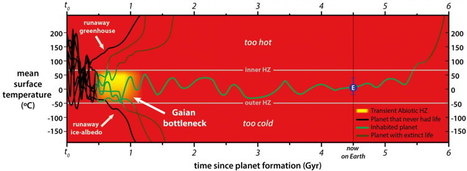
The Earth is not the only planet in our galaxy with liquid water on its surface and energy sources and nutrients to enable life to form. Although the universe is filled with stars and planets conducive to life, the absence of any evidence for alien life suggests that even if the emergence of life is easy, its persistence may be difficult.
Recehnt work challenges conventional views that physics-based habitable zones provide stable conditions for life for many billions of years. Although, the cottage industry of habitable zone modellers can turn various knobs that control atmospheric and geophysical properties to stabilise planets over short-timescales, they have mostly ignored the role of biology in keeping planets habitable over billions of years. This is in part because the complexities of interactions between microbial communities that keep ecosystems stable are not sufficiently understood.
Scientists now hypothesize that even if life does emerge on a planet, it rarely evolves quickly enough to regulate greenhouse gases, and thereby keep surface temperatures compatible with liquid water and habitability.
Discovered just five years ago, topological semimetals are materials with unusual physical properties that could make them useful for future electronics.
In the latest issue of Nature Physics, MIT researchers report a new theoretical characterization of topological semimetals' electrical properties that accurately describes all known topological semimetals and predicts several new ones.
Guided by their model, the researchers also describe the chemical formula and crystal structure of a new topological semimetal that, they reason, should exhibit electrical characteristics never seen before.
"Generally, the properties of a material are sensitive to many external perturbations," says Liang Fu, an assistant professor of physics at MIT and senior author on the new paper. "What's special about these topological materials is they have some very robust properties that are insensitive to these perturbations. That's attractive because it makes theory very powerful in predicting materials, which is rare in condensed-matter physics. Here, we know how to distill or extract the most essential properties, these topological properties, so our methods can be approximate, but our results will be exact."
Semimetals are somewhat like semiconductors, which are at the core of all modern electronics. Electrons in a semiconductor can be in either the "valence band," in which they're attached to particular atoms, or the "conduction band," in which they're free to flow through the material as an electrical current. Switching between conductive and nonconductive states is what enables semiconductors to instantiate the logic of binary computation.
Bumping an electron from the valence band into the conduction band requires energy, and the energy differential between the two bands is known as the "band gap." In a semimetal -- such as the much-studied carbon sheets known as graphene -- the band gap is zero. In principle, that means that semimetal transistors could switch faster, at lower powers, than semiconductor transistors do.
Small nucleolar RNAs play a role in the development of some diseases.
C/D box small nucleolar RNAs (SNORDs) are abundant, short, nucleoli-residing, noncoding RNAs that guide the methyltransferase fibrillarin to perform 2′-O-methylation of target RNAs. Scientists now identified 29 SNORDs present in a fibrillarin-containing fraction as well as a fibrillarin-free fraction enriched in spliceosomes. One of these SNORDs, SNORD27, directs rRNA methylation and regulates alternative pre-mRNA splicing (AS) of E2F7 pre-mRNA, a transcriptional repressor of cell cycle-regulated genes.SNORD27 likely regulates E2F7 pre-mRNA AS by masking splice sites through base pairing. This previously unidentified function of SNORDs increases the number of factors regulating AS, a critical step in the expression of the vast majority of human genes, and highlights a potential coupling between AS, cell cycle, proliferation, and ribosome biogenesis.
For a long time dismissed as "junk DNA", we now know that also the regions between the genes fulfil vital functions. Mutations in those DNA regions can severely impair development in humans and may lead to serious diseases later in life. Until now, however, regulatory DNA regions have been hard to find. Scientists around Prof. Julien Gagneur, Professor for Computational Biology at the Technical University of Munich (TUM) and Prof. Patrick Cramer at the Max Planck Institute (MPI) for Biophysical Chemistry in Göttingen have now developed a method to find regulatory DNA regions which are active and controlling genes.
Björn Schwalb and Margaux Michel, members of Cramer’s team, as well as Benedikt Zacher, scientist in Gagneur’s group, have now succeeded in developing a highly sensitive method to catch and identify even very short-lived RNA molecules – the so-called TT-Seq (transient transcriptome sequencing) method. The results are reported in the latest issue of the renowned scientific journal Science on June 3rd. In order to catch the RNA molecules, the three junior researchers used a trick: They supplied cells with a molecule acting as a kind of anchor for a couple of minutes. The cells subsequently incorporated the anchor into each RNA they made during the course of the experiment. With the help of the anchor, the scientists were eventually able to fish the short-lived RNA molecules out of the cell and examine them.
"The RNA molecules we caught with the TT-Seq method provide a snapshot of all DNA regions that were active in the cell at a certain time – the genes as well as the regulatory regions between genes that were so hard to find until now," Cramer explains. "With TT-Seq we now have a suitable tool to learn more about how genes are controlled in different cell types and how gene regulatory programs work," Gagneur adds.
In many cases, researchers have a pretty good idea which genes play a role in a certain disease, but do not know which molecular switches are involved. The scientists around Cramer and Gagneur are hoping to be able to use the new method to uncover key mechanisms that play a role during the emergence or course of a disease. In a next step they want to apply their technique to blood cells to better understand the progress of a HIV infection in patients suffering from AIDS.
30,000+ scientists and professionals gathered for the annual Society for Neuroscience conference in Chicago last month, proving the growing interest and activities to better understand the inner workings of the human brain, and to discover ways and technologies to enhance its health and performance.
Now, which of all those ongoing efforts are closer to touching our lives, to empower consumers, patients and health professionals?
To answer that question, we recently examined the worldwide landscape of Pervasive Neurotechnology patents, given that investment in intellectual property is a crucial signal in the life-cycle of technology commercialization. We paid extra attention to neurotechnologies which, being digital, are scalable and relatively inexpensive, and that, being non-invasive, pose few if any negative side-effects.
Through our year-long analysis of thousands of patents, we uncovered ten innovative brain health and brain enhancement systems on the cutting edge, that, in our estimation, are likely to go mainstream over the next few years.
An international team of scientists has pushed the limits of radio astronomy to detect a faint signal emitted by hydrogen gas in a galaxy more than five billion light years away — almost double the previous record.
Using the Very Large Array of the National Radio Astronomy Observatory in the US, the team observed radio emission from hydrogen in a distant galaxy and found that it would have contained billions of young, massive stars surrounded by clouds of hydrogen gas.
As the most abundant element in the Universe and the raw fuel for creating stars, hydrogen is used by radio astronomers to detect and understand the makeup of other galaxies.
The team, led by the University of Cambridge, have invented a way to make such sheets on industrial scales, opening up applications ranging from smart clothing for people or buildings, to banknote security.
Using a new method called Bend-Induced-Oscillatory-Shearing (BIOS), the researchers are now able to produce hundreds of meters of these materials, known as 'polymer opals', on a roll-to-roll process. The results are reported in the journal Nature Communications. Some of the brightest colors in nature can be found in opal gemstones, butterfly wings and beetles. These materials get their color not from dyes or pigments, but from the systematically-ordered microstructures they contain.
The team behind the current research, based at Cambridge's Cavendish Laboratory, have been working on methods of artificially recreating this 'structural color' for several years, but to date, it has been difficult to make these materials using techniques that are cheap enough to allow their widespread use.
In order to make the polymer opals, the team starts by growing vats of transparent plastic nano-spheres. Each tiny sphere is solid in the middle but sticky on the outside. The spheres are then dried out into a congealed mass. By bending sheets containing a sandwich of these spheres around successive rollers the balls are magically forced into perfectly arranged stacks, by which stage they have intense color.
By changing the sizes of the starting nano-spheres, different colors (or wavelengths) of light are reflected. And since the material has a rubber-like consistency, when it is twisted and stretched, the spacing between the spheres changes, causing the material to change color. When stretched, the material shifts into the blue range of the spectrum, and when compressed, the color shifts towards red. When released, the material returns to its original color. Such chameleon materials could find their way into color-changing wallpapers, or building coatings that reflect away infrared thermal radiation.
"Finding a way to coax objects a billionth of a meter across into perfect formation over kilometer scales is a miracle," said Professor Jeremy Baumberg, the paper's senior author. "But spheres are only the first step, as it should be applicable to more complex architectures on tiny scales."
In order to make polymer opals in large quantities, the team first needed to understand their internal structure so that it could be replicated. Using a variety of techniques, including electron microscopy, x-ray scattering, rheology and optical spectroscopy, the researchers were able to see the three-dimensional position of the spheres within the material, measure how the spheres slide past each other, and how the colors change.
"It's wonderful to finally understand the secrets of these attractive films," said PhD student Qibin Zhao, the paper's lead author.
Astronomers using NASA's Hubble Space Telescope have discovered that the universe is expanding 5 percent to 9 percent faster than expected. "This surprising finding may be an important clue to understanding those mysterious parts of the universe that make up 95 percent of everything and don't emit light, such as dark energy, dark matter, and dark radiation," said study leader and Nobel Laureate Adam Riess of the Space Telescope Science Institute and The Johns Hopkins University, both in Baltimore, Maryland. The results will appear in an upcoming issue of The Astrophysical Journal.
Riess' team made the discovery by refining the universe's current expansion rate to unprecedented accuracy, reducing the uncertainty to only 2.4 percent. The team made the refinements by developing innovative techniques that improved the precision of distance measurements to faraway galaxies.
The team looked for galaxies containing both Cepheid stars and Type Ia supernovae. Cepheid stars pulsate at rates that correspond to their true brightness, which can be compared with their apparent brightness as seen from Earth to accurately determine their distance. Type Ia supernovae, another commonly used cosmic yardstick, are exploding stars that flare with the same brightness and are brilliant enough to be seen from relatively longer distances.
By measuring about 2,400 Cepheid stars in 19 galaxies and comparing the observed brightness of both types of stars, they accurately measured their true brightness and calculated distances to roughly 300 Type Ia supernovae in far-flung galaxies.
The team compared those distances with the expansion of space as measured by the stretching of light from receding galaxies. The team used these two values to calculate how fast the universe expands with time, or the Hubble constant.
The improved Hubble constant value is 73.2 kilometers per second per megaparsec. A megaparsec equals 3.26 million light-years. The new value means the distance between cosmic objects will double in another 9.8 billion years.
This refined calibration presents a puzzle, however, because it does not quite match the expansion rate predicted for the universe from its trajectory seen shortly after the big bang. Measurements of the afterglow from the big bang by NASA's Wilkinson Microwave Anisotropy Probe (WMAP) and the European Space Agency's Planck satellite mission yield predictions for the Hubble constant that are 5 percent and 9 percent smaller, respectively.
Computer scientists at the University of Basel have developed a new method for conducting image and video database searches based on hand-drawn sketches. The user draws a sketch on a tablet or interactive paper, and the system searches for a matching image in the database. The new method is free to access for researchers.
People today are increasingly confronted with the challenge of having to find their way around vast collections of photos and videos, both in their work lives and at home. Although search engines such as Google and Bing make it easy to find documents or websites quickly and efficiently using search terms, the options for searching collections of multimedia objects are more limited.
Researchers at the Department of Mathematics and Computer Science at the University of Basel have developed a system known as 'vitrivr', which allows a search for images and videos by means of a sketch. The user creates a sketch of the desired object on a tablet or interactive paper, and the program delivers the images and video clips that most resemble it. For videos, the user can even specify on the sketch in which direction an object is moving in the searched sequence.
In designing the system, the researchers deliberately set a very broad similarity concept and adapted it to different types of sketch; for example, similar colors, shapes or directions of movement.
Individual searches can then be augmented by a range of other query types -- search terms, examples of images and videos, or combinations of all these. An important feature of the new system is its scalability, a feature that means it can be used even with very large multimedia collections.
Researchers at the University of California, Riverside and Purdue University are one step closer to developing super strong composite materials, thanks to the mantis shrimp, a small, multicolored marine crustacean that crushes the shells of its prey using a fist-like appendage called a dactyl club.
Their latest research, to be published in the journal Advanced Materials, describes for the first time a unique herringbone structure, not previously reported in nature, within the appendage's outer layer. It is this tough herringbone structure that not only protects the club during impact, but also enables the mantis shrimp to inflict incredible damage to its prey.
Mantis shrimp, also called stomatopods, come in two varieties: 'smashers' and 'spearers.' While spearers kill prey by driving a spear into soft-bodied sea creatures, smashers kill hard-shelled prey such as crabs and snails by pulverizing them with incredible speed and force. The dactyl club can reach an acceleration of 10,000g, unleashing a barrage of impacts with the speed of a .22 caliber bullet.
For the past eight years, David Kisailus, the Winston Chung Endowed Professor in Energy Innovation in UCR's Bourns College of Engineering, and his team have been studying smashers' dactyl clubs and using them as inspiration in their development of next generation composite materials. Their research is already being translated into real-world products by Nature Inspired Industries, a recent startup led by Kisailus that spun out from UC Riverside's Office of Research and Economic Development.
In previous work, including a 2012 study published in the journal Science, the researchers identified several different regions of the dactyl club, including an interior region--called the periodic region--with an energy-absorbent structure that also filters out damaging shear waves, which travel through objects when they are under stress. This energy absorbing "periodic region" consists of two phases: an organic phase made of chitin--a compound found in the shells of insects and crustaceans--arranged in a helicoidal structure that resembles a spiral staircase, and an inorganic phase comprising amorphous calcium phosphate and calcium carbonate.
The current research describes for the first time a unique herringbone structure within the dactyl club's outer layer, called the impact region. The impact region is a crack-resistant layer that shields the club as the mantis shrimp pummels its prey. However, unlike the periodic region, the impact region consists of crystalline calcium phosphate (the same mineral found in human bone) surrounding the organic chitin fibers. The researchers found that these heavily mineralized fibers were compacted to form a "herringbone structure" that is significantly stiffer than the structure in the periodic region. The highly ordered compacted herringbone structure is a pitch-graded sinusoidal arrangement of helicoidal chitin fibers mineralized with highly textured calcium phosphate.
To get content containing either thought or leadership enter:
To get content containing both thought and leadership enter:
To get content containing the expression thought leadership enter:
You can enter several keywords and you can refine them whenever you want. Our suggestion engine uses more signals but entering a few keywords here will rapidly give you great content to curate.


 Your new post is loading...