Your new post is loading...

|
Scooped by
Dr. Stefan Gruenwald
August 2, 2016 11:34 AM
|
The universe is 13.8 billion years old, while our planet formed just 4.5 billion years ago. Some scientists think this time gap means that life on other planets could be billions of years older than ours. "If you ask, 'When is life most likely to emerge?' you might naively say, 'Now,'" says lead author Avi Loeb of the Harvard-Smithsonian Center for Astrophysics. "But we find that the chance of life grows much higher in the distant future." Life as we know it first became possible about 30 million years after the Big Bang, when the first stars seeded the cosmos with the necessary elements like carbon and oxygen. Life will end 10 trillion years from now when the last stars fade away and die. Loeb and his colleagues considered the relative likelihood of life between those two boundaries. The dominant factor proved to be the lifetimes of stars. The higher a star's mass, the shorter its lifetime. Stars larger than about three times the sun's mass will expire before life has a chance to evolve. Conversely, the smallest stars weigh less than 10 percent as much as the Sun. They will glow for 10 trillion years, giving life ample time to emerge on any planets they host. As a result, the probability of life grows over time. In fact, chances of life are 1000 times higher in the distant future than now. "So then you may ask, why aren't we living in the future next to a low-mass star?" says Loeb. "One possibility is we're premature. Another possibility is that the environment around a low-mass star is hazardous to life." Although low-mass, red dwarf stars live for a long time, they also pose unique threats. In their youth they emit strong flares and ultraviolet radiation that could strip the atmosphere from any rocky world in the habitable zone. To determine which possibility is correct—our premature existence or the hazard of low-mass stars—Loeb recommends studying nearby red dwarf stars and their planets for signs of habitability. Future space missions like the Transiting Exoplanet Survey Satellite and James Webb Space Telescope should help to answer these questions.
|
|
Scooped by
Dr. Stefan Gruenwald
August 2, 2016 11:26 AM
|
Writing in the Proceedings of the National Academy of Sciences, the scientists reveal how they turned to sediment cores taken from a lake on St Paul Island to determine what finished off the mammoths, and when. To pinpoint when the mammoths died out on the island, the team examined traces of ancient DNA found within sediment cores that had been collected and radiocarbon dated. “When the mammoths lived along the lake they probably waded into it, they probably defecated in it, urinated it in, bathed in it, so their DNA got into the lake water and settled to the bottom ,” said Russell Graham, the co-author of the study and professor of geosciences at Pennsylvania State University. By extracting this sedimentary ancient DNA, and looking at where in the core it was present, the researchers discovered that mammoths seem to have to disappeared around 5,600 years ago. The conclusion was backed up by the analysis of fungal spores from within the core, which are thought to have grown in the mammoths’ dung. A new set of mammoth remains added further weight to the theory, with radiocarbon dating putting the youngest of the remains at 5,530 years ago. To unravel the cause of the mammoths’ demise, researchers studied other markers within the sediment core, including the type of microorganisms and creatures that once lived in the water and which provide clues about the conditions within the lake. The team also looked at the ratio of different forms of oxygen over time - an indicator of the rate of evaporation of the water. Their findings reveal that between 7,850 and 5,600 years ago the lake became saltier, shallower and more turbid. With rising sea levels shrinking the size of the island, and lakes becoming shallower, the mammoths would have been forced to rely on fewer water supplies, said Graham, adding that the animals themselves could have made a bad situation worse. “They started congregating around the two probably remaining water holes and when modern elephants do that they destroy the vegetation and it causes increased erosion and infilling of lakes - and that was happening as well, you can see that through the sediment,” he said.
|
|
Scooped by
Dr. Stefan Gruenwald
August 2, 2016 11:19 AM
|
The extinction of most of the world’s remaining megafauna mammals is more or less imminent (over the next few decades) without major changes and improved conservation strategies, according to a public declaration published in the journal BioScience. The public declaration — which calls for a coordinated global plan to prevent further megafauna extinctions — was signed by over 40 conservation researchers and experts. The main drivers behind this rapid slide towards mass megafauna extinctions are the same ones that have been in play for centuries and millennia now — the expansion of agriculture and livestock grazing, the attendant wild habitat loss, deforestation, and over-hunting often owing to demand from the wealthy; i.e., as with the extinction of the European lion during the growth days of the Roman Republic/Empire owing to a demand for lion pelts. “The more I look at the trends facing the world’s largest terrestrial mammals, the more concerned I am we could lose these animals just as science is discovering how important they are to ecosystems and to the services they provide for people,” stated Dr William Ripple, professor of ecology at Oregon State University and lead author of the study. Roughly 59% of the world’s biggest mammalian carnivore species, and 60% of the largest herbivores, are now categorized as being threatened with extinction, according to the International Union for Conservation of Nature’s Red List of Threatened Species. These animals are of license vitally important to the ecosystems and regions in which they live — the loss of large herds of migrating herbivores is associated with vastly increased rates of desertification in dry-land regions; the loss of large carnivores with attendant ecosystem collapses owing to lack of predators; etc. “The loss of elephants in the forests of Central Africa is increasingly damaging the function of the region’s most important ecosystems,” noted WCS Conservation Scientist Dr Fiona Maisels, one of the study’s co-authors. “We’re only beginning to understand how vital these keystone species are to the health of rainforests and other species that inhabit them.” The press release notes that the paper “includes a 13-part declaration that highlights the need to acknowledge the threatened status of many large mammals and the vital ecological roles they play.
|
|
Scooped by
Dr. Stefan Gruenwald
July 28, 2016 10:41 AM
|
A team of engineering researchers from the University of Victoria (UVic) and the University of Rochester (UR) has developed a way to detect single molecules using a light-based technology inspired by the "whispering gallery" of St. Paul's Cathedral in London The new technology, described in a study published today in the peer-reviewed journal, Nature Communications, has many potential applications, including medical diagnostics, drug development, security screening and environmental science. "The ability to detect a single molecule or nanoparticle is essential for many applications," says Wenyan Yu, a PhD student and one of the paper's authors along with photonic engineer Tao Lu of UVic, and optical engineers Wei Jiang and Qiang Lin of UR. "To date, many approaches have been used to observe single particles. Our discovery may allow scientists the ability to detect particles as miniscule as a single atom, or a single base pair of DNA." The whispering gallery of St. Paul's Cathedral in London is an acoustic marvel. When a person whispers against one wall, the voice travels around the chamber's circular rim and is clearly audible over 34 metres away on the other side. A "whispering gallery microcavity" is a kind of gallery-in-miniature, typically 100 microns in diameter—about the width of a human hair—in which waves of light, rather than sound, can be confined in a microstructure. Light circulating inside the cavity produces a force that makes the cavity vibrate, or quiver, creating the so-called optical spring effect. The research team discovered that when an individual particle or biomolecule lands on the surface of quivering microcavity, the optical spring force changes the vibration in a particular and measurable way. "Although the optical spring effect has been known for more than a decade," says Wei Jiang, "this discovery significantly enhances the sensitivity of the device." Lu and the team are now refining the detection sensitivity and says eventually it could be used to detect specific protein molecules to diagnose cancer at an early stage, or to find out whether a drug interacts with single biomolecules. The UVic team fabricated the devices, prepared the samples, conceived, designed and performed the experiments, and processed the data. The UR team discovered the sensing principle and mechanism, developed the theory, and conducted the numerical simulation. The teams worked together on the analysis and interpretation.
|
|
Scooped by
Dr. Stefan Gruenwald
July 28, 2016 10:38 AM
|
The crew of the Exploration Vessel Nautilus has posted a YouTube video of their discovery of a mysterious purple orb-shaped creature living very near the bottom of the Pacific Ocean not far off the coast of Los Angeles. In addition to footage of the creature, the researchers can be heard making observations and engaging in a discussion on how to capture it and bring it aboard for further study. Preliminary investigations hints to a new species of nudibranch.
|
|
Scooped by
Dr. Stefan Gruenwald
July 28, 2016 10:22 AM
|
In a study published in the July 25 issue of the journal Vaccine, the team shows that a novel chlamydial antigen known as BD584 is a potential vaccine candidate for the most common species of chlamydia known as Chlamydia trachomatis. “As most C. trachomatis infections are asymptomatic, chlamydia can often go untreated and lead to upper genital tract infections, pelvic inflammatory disease, and infertility,” said co-author Dr. David Bulir, from the Michael G. DeGroote Institute for Infectious Disease Research and St. Joseph’s Research Institute. “This is why the promise of a vaccine would be extremely beneficial.” In the study, BD584 was able to reduce chlamydial shedding – a symptom of C. trachomatis – by 95%. The antigen also decreased hydrosalpinx, another C. trachomatis symptom which involves fallopian tubes being blocked with serous fluids, by 87.5%. “The results look very promising,” said study senior author Prof. James Mahony, from McMaster University’s Department of Pathology and Molecular Medicine, the Michael G. DeGroote Institute for Infectious Disease Research and St. Joseph’s Research Institute.
|
|
Scooped by
Dr. Stefan Gruenwald
July 27, 2016 12:11 PM
|
A long-known relationship between African men who harvest honey and a bird called a honeyguide allows both species to get the delectable treat. When humans speak up, the little African birds called honeyguides listen—and can understand, a new study confirms for the first time. Honeyguides in northern Mozambique realize that when a man makes a special trilling sound, he wants to find a bees’ nest—and its delectable honey. Birds that hear this trill often lead human hunters to a nest, receiving a reward of honeycomb. Communication between domesticated species and people is well known, but “the fascinating point in the case of the honeyguide is that it describes such a relationship between a wild animal and humans,” says behavioral biologist Claudia Wascher of Anglia Ruskin University in Great Britain, who was not involved with the new research. “This has not been described scientifically before.” Though the science may be new, the relationship isn't: Honeyguides and people have been cooperating in Africa for thousands if not millions of years.
|
|
Scooped by
Dr. Stefan Gruenwald
July 27, 2016 12:01 PM
|
Researchers have demonstrated a display that lets audiences watch 3-D films in a theater without extra eyewear. Dubbed “Cinema 3D,” the MIT / Weizmann Institute of Science prototype uses lenses and mirrors to enable viewers to watch a 3-D movie from any seat. “Existing approaches to glasses-free 3-D require screens whose resolution requirements are so enormous that they are completely impractical,” says MIT professor Wojciech Matusik, one of the co-authors on a related paper whose first author is Weizmann PhD Netalee Efrat. “This is the first technical approach that allows for glasses-free 3-D on a large scale.” While the researchers caution that the system isn’t currently market-ready, they are optimistic that future versions could push the technology to a place where theaters would be able to offer glasses-free alternatives for 3-D movies. Among the paper’s co-authors are MIT research technician Mike Foshey; former CSAIL postdoc Piotr Didyk; and two Weizmann researchers that include Efrat and professor Anat Levin. Efrat will present the paper at this week’s SIGGRAPH computer-graphics conference in Anaheim, California. Glasses-free 3-D already exists, but not in a way that scales to movie theaters. Traditional methods for TV sets use a series of slits in front of the screen (a “parallax barrier”) that allows each eye to see a different set of pixels, creating a simulated sense of depth. But because parallax barriers have to be at a consistent distance from the viewer, this approach isn’t practical for larger spaces like theaters that have viewers at different angles and distances. Other methods, including one from the MIT Media Lab, involve developing completely new physical projectors that cover the entire angular range of the audience. However, this often comes at a cost of lower image-resolution.
|
|
Scooped by
Dr. Stefan Gruenwald
July 27, 2016 11:55 AM
|
Using neuroimaging data, Carnegie Mellon University researchers have identified four distinct stages of math problem solving, according to a new study published in the journal Psychological Science. “How students were solving these kinds of problems was a total mystery to us until we applied these techniques,” says psychological scientist John Anderson, lead researcher on the study. “Now, when students are sitting there thinking hard, we can tell what they are thinking each second.” Insights from this work may eventually be applied to the design of more effective classroom instruction, says Anderson. Anderson combined two analytical approaches — multivoxel pattern analysis (MVPA) and hidden semi-Markov models (HSMM) — to shed light on the different stages of thinking. MVPA has typically been used to identify momentary patterns of activation; adding HSMM, Anderson hypothesized, would yield information about how these patterns play out over time. The researchers applied this combined approach to neuroimaging data collected from participants as they solved specific types of math problems. To gauge whether the stages that were identified mapped on to actual stages of thinking, the researchers manipulated different features of the math problems; some problems required more effort in coming up with an appropriate solution plan and others required more effort in executing the solution. The aim was to test whether these manipulations had the specific effects one would expect on the durations of the different stages.
|
|
Scooped by
Dr. Stefan Gruenwald
July 27, 2016 11:43 AM
|
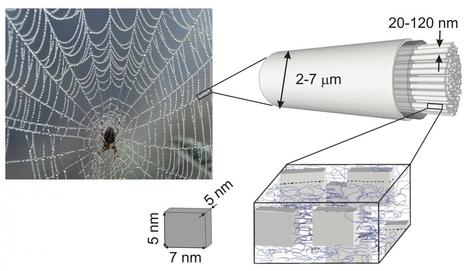
New discoveries about spider silk could inspire novel materials to manipulate sound and heat in the same way semiconducting circuits manipulate electrons, according to scientists at Rice University, in Europe and in Singapore. A paper in Nature Materials today looks at the microscopic structure of spider silk and reveals unique characteristics in the way it transmits phonons, quasiparticles of sound. The research shows for the first time that spider silk has a phonon band gap. That means it can block phonon waves in certain frequencies in the same way an electronic band gap - the basic property of semiconducting materials - allows some electrons to pass and stops others. The researchers wrote that their observation is the first discovery of a "hypersonic phononic band gap in a biological material." How the spider uses this property remains to be understood, but there are clear implications for materials, according to materials scientist and Rice Engineering Dean Edwin Thomas, who co-authored the paper. He suggested that the crystalline microstructure of spider silk might be replicated in other polymers. That could enable tunable, dynamic metamaterials like phonon waveguides and novel sound or thermal insulation, since heat propagates through solids via phonons. "Phonons are mechanical waves," Thomas said, "and if a material has regions of different elastic modulus and density, then the waves sense that and do what waves do: They scatter. The details of the scattering depend on the arrangement and mechanical couplings of the different regions within the material that they're scattering from." Spiders are adept at sending and reading vibrations in a web, using them to locate defects and to know when "food" comes calling. Accordingly, the silk has the ability to transmit a wide range of sounds that scientists think the spider can interpret in various ways. But the researchers found silk also has the ability to dampen some sound. "Spider silk has a lot of different, interesting microstructures, and our group found we could control the position of the band gap by changing the strain in the silk fiber," Thomas said. "There's a range of frequencies that are not allowed to propagate. If you broadcast sound at a particular frequency, it won't go into the material."
|
|
Scooped by
Dr. Stefan Gruenwald
July 27, 2016 11:31 AM
|
Animals exhibit various physiological and behavioural strategies for minimizing travel costs. Fins of aquatic animals play key roles in efficient travel and, for sharks, the functions of dorsal and pectoral fins are considered well divided: the former assists propulsion and generates lateral hydrodynamic forces during turns and the latter generates vertical forces that offset sharks’ negative buoyancy. A group of scientists now show that great hammerhead sharks drastically reconfigure the function of these structures, using an exaggerated dorsal fin to generate lift by swimming rolled on their side. Tagged wild sharks spend up to 90% of time swimming at roll angles between 50° and 75°, and hydrodynamic modeling shows that doing so reduces drag—and in turn, the cost of transport—by around 10% compared with traditional upright swimming. Employment of such a strongly selected feature for such a unique purpose raises interesting questions about evolutionary pathways to hydrodynamic adaptations, and our perception of form and function.
A very unusual new species of zoantharian surprised Drs Takuma Fujii and James Davis Reimer, affiliated with Kagoshima University and University of the Ryukyus.
The scientists stumbled upon a solitary individual polyp while conducting SCUBA surveys around the southern Japanese island of Okinawa. They noticed that the creatures were buried almost completely in the soft sediment of the seafloor. It was only their oral disks and tentacles that were protruding above the surface. Generally, most known zoantharians are colonial (hence their common name of 'colonial anemones'), and many dwell in shallow waters of subtropical and tropical regions, where their large colonies can be found on coral reefs. However, these newly discovered polyps were not only leading solitary lives. They were also found to lack zooxanthellae, single-celled organisms that coexist in symbiosis with certain marine invertebrates, also typical for the majority of zoantharians. The discovery of this unusual new species is reported in the open access journal ZooKeys. Solitary zoantharian species, such as this one, are known from scant few reports, and only three species are described, all reported more than 100 years ago from the Indo-Pacific region. Overall, very little is known about the hereby studied genus Sphenopus.
Via Mariaschnee
A young star cluster surrounded by three concentric bubbles was recently found near the M33 galaxy, revealing a cosmic splendor that could be compared to Russian matryoshka nesting dolls. The concentric bubbles, which comprise what researchers call a triple-bubble, are actually three supernova remnants, shells of gas and dust that form following the explosion of a star. This is the first known case of three supernova remnants nesting one inside the other, said the researchers from the Institute of Astrophysics of the Canary Islands (IAC), who made the discovery. The above illustration shows what a cross section of the three rings might look like if scientists could get a closer look. The shells provide a unique opportunity to study the remains of these stellar explosions, as well as the the interstellar medium, which is the gas and dust that lies between stars, John Beckman, co-author of the new study, said in a news release. Beckman is an astrophysicist with the Spanish National Resource Council and IAC. "We can measure how much matter there is in a shell, approximately a couple of hundred times the mass of the sun in each of the shells," he said. Supernova Explosion Seen in Nearby Galaxy (Video)
Via Mariaschnee
|
|
|
Scooped by
Dr. Stefan Gruenwald
August 2, 2016 11:32 AM
|
The Milky Way is a spiral galaxy containing many billions of stars with our Sun about 26,000 light years from its centre. Measuring the distribution of these stars is crucial to our understanding of how our Galaxy formed and evolved. Pulsating stars called Cepheids are ideal for this. They are much younger (between 10 and 300 million years old) than our Sun (4.6 billion years old) and they pulsate in brightness in a regular cycle. The length of this cycle is related to the luminosity of the Cepheid, so if astronomers monitor them they can establish how bright the star really is, compare it with what we see from Earth, and work out its distance. Despite this, finding Cepheids in the inner Milky Way is difficult, as the Galaxy is full of interstellar dust which blocks out light and hides many stars from view. Matsunaga's team compensated for this, with an analysis of near-infrared observations made with a Japanese-South African telescope located at Sutherland, South Africa. To their surprise they found hardly any Cepheids in a huge region stretching for thousands of light years from the core of the Galaxy. Noriyuki Matsunaga explains: "We already found some while ago that there are Cepheids in the central heart of our Milky Way (in a region about 150 light years in radius). Now we find that outside this there is a huge Cepheid desert extending out to 8000 light years from the center." This suggests that a large part of our Galaxy, called the Extreme Inner Disk, has no young stars. Co-author Michael Feast notes: "Our conclusions are contrary to other recent work, but in line with the work of radio astronomers who see no new stars being born in this desert."
|
|
Scooped by
Dr. Stefan Gruenwald
August 2, 2016 11:23 AM
|
In the search for life beyond Earth, false alarms abound. Researchers have generally considered, and rejected, claims ranging from a 1970s report of life on Mars to the 1990s ‘discovery’ of fossilized space microbes in a meteorite. Now, inspired by the detection of thousands of planets beyond the Solar System, NASA has started a fresh effort to learn how to recognize extraterrestrial life. The goal is to understand what gases alien life might produce — and how Earth-bound astronomers might detect such ‘biosignatures’ in light passing through the atmospheres of planets trillions of kilometers away (see ‘Searching for alien life’). The effort comes at a crucial time, as astronomers grapple with how to interpret exoplanet data from the next generation of telescopes. Some scientists are working to understand how nature could produce archetypal biosignature gases, such as oxygen, in the absence of living organisms. Others are trying to think as expansively as possible about the types of biochemistry that could sustain life. “We could fool ourselves into thinking a lifeless planet has life — or we could be missing life because we don’t really understand the context of what could be produced on another planet,” says Sarah Rugheimer, an astronomer at the University of St Andrews, UK. Detecting a biosignature gas is just the first step to understanding what could be happening on an exoplanet. Each world has its own combination of physical and chemical factors that may or may not lead to life, says Victoria Meadows, an astronomer at the University of Washington in Seattle. “Planets are hard, and we shouldn’t think they are all going to be the same or reveal their secrets very easily,” she says. A planet’s environment is key. Some Earth-sized planets orbit M dwarf stars — the most common type of star in the Galaxy — at the right distance to harbor liquid water. But Meadows’ collaborators have shown1 that photo-chemical reactions can send water into the planet’s atmosphere and then break off its hydrogen, which escapes into space. What’s left is a thick blanket of oxygen that might seem as if it came from living organisms, but results from a run-away greenhouse effect.
|
|
Scooped by
Dr. Stefan Gruenwald
July 28, 2016 10:47 AM
|
It's called the Smart Flower Recognition System but it might never have happened were it not for a chance encounter last year between Microsoft researchers and botanists at the Institute of Botany, Chinese Academy of Sciences (IBCAS). Yong Rui, assistant managing director of Microsoft Research Asia (MSRA), was explaining image-recognition technology at a seminar—much to the delight of IBCAS botanists whose own arduous efforts to collect data on regional flower distribution were experiencing poor results. The IBCAS botanists soon realized the potential of MSRA's image-recognition technology. At the same time, Yong Rui knew he had found the perfect vehicle to improve image recognition while addressing a reality-based problem that benefits society. It also helped that IBCAS had accumulated a massive public store of 2.6 million images. Since anyone in the world could upload pictures to this flower photo dataset—and no human could possibly supervise the uploads—the MSRA team had to create algorithms to filter out the "bad" pictures. That was the first of many difficult problems facing researcher Jianlong Fu and his team in building a tool capable of discerning tiny anomalies among the many species of flowers.
|
|
Scooped by
Dr. Stefan Gruenwald
July 28, 2016 10:39 AM
|
Rice University scientists who analyze the properties of materials as small as a single molecule have encountered a challenge that appears at very low temperatures. In trying to measure the plasmonic properties of gold nanowires, the Rice lab of condensed matter physicist Douglas Natelson determined that at room temperature, the wire heated up a bit when illuminated by a laser; but confoundingly, at ultracold temperatures and under the same light, its temperature rose by far more. This is an issue for scientists like Natelson whose experiments require ultracold materials to stay that way. Laser heating, while it may seem minimal, presents a thermal barrier to simultaneous inelastic electron tunneling spectroscopy and surface-enhanced optical spectroscopy, which measure a material's electrical and optical properties. Their report on the phenomenon appears in the American Chemical Society journal ACS Nano.
|
|
Scooped by
Dr. Stefan Gruenwald
July 28, 2016 10:25 AM
|
Researchers from Boston University's (BU) Center for Space Physics report today in Nature that Jupiter's Great Red Spot may provide the mysterious source of energy required to heat the planet's upper atmosphere to the unusually high values observed. Sunlight reaching Earth efficiently heats the terrestrial atmosphere at altitudes well above the surface-even at 250 miles high, for example, where the International Space Station orbits. Jupiter is over five times more distant from the Sun, and yet its upper atmosphere has temperatures, on average, comparable to those found at Earth. The sources of the non-solar energy responsible for this extra heating have remained elusive to scientists studying processes in the outer solar system. "With solar heating from above ruled out, we designed observations to map the heat distribution over the entire planet in search for any temperature anomalies that might yield clues as to where the energy is coming from," explained Dr. James O'Donoghue, research scientist at BU, and lead author of the study. Astronomers measure the temperature of a planet by observing the non-visible, infra-red (IR) light it emits. The visible cloud tops we see at Jupiter are about 30 miles above its rim; the IR emissions used by the BU team came from heights about 500 miles higher. When the BU observers looked at their results, they found high altitude temperatures much larger than anticipated whenever their telescope looked at certain latitudes and longitudes in the planet's southern hemisphere. "We could see almost immediately that our maximum temperatures at high altitudes were above the Great Red Spot far below--a weird coincidence or a major clue?" O'Donoghue added. Jupiter's Great Red Spot (GRS) is one of the marvels of our solar system. Discovered within years of Galileo's introduction of telescopic astronomy in the 17th Century, its swirling pattern of colorful gases is often called a "perpetual hurricane." The GRS has varied is size and color over the centuries, spans a distance equal to three earth-diameters, and has winds that take six days to complete one spin. Jupiter itself spins very quickly, completing one revolution in only ten hours.
|
|
Scooped by
Dr. Stefan Gruenwald
July 28, 2016 10:20 AM
|
Astronomers announced today that they have discovered a new type of binary star, in which a rapidly-spinning white dwarf star sweeps powerful beams of particles and radiation over its companion red dwarf star, causing it to pulse across almost the entire electromagnetic spectrum from the UV to radio.
|
|
Scooped by
Dr. Stefan Gruenwald
July 27, 2016 12:05 PM
|
MIT engineers find a new haptic interface could enable obstacle avoidance both for astronauts engaged in extravehicular activity and for the visually impaired. Video of astronauts tripping over moon rocks can make for entertaining Internet viewing, but falls in space can jeopardize astronauts’ missions and even their lives. Getting to one’s feet in a bulky, pressurized spacesuit can consume time and precious oxygen reserves, and falls increase the risk that the suit will be punctured. Most falls happen because spacesuits limit astronauts’ ability to both see and feel the terrain around them, so researchers from MIT’s Department of Aeronautics and Astronautics (AeroAstro) and the Charles Stark Draper Laboratory in Cambridge, Massachusetts are developing a new space boot with built-in sensors and tiny “haptic” motors, whose vibrations can guide the wearer around or over obstacles. Recently, at the International Conference on Human-Computer Interaction, the researchers presented the results of a preliminary study designed to determine what types of stimuli, administered to what parts of the foot, could provide the best navigation cues. On the basis of that study, they’re planning further trials using a prototype of the boot. The work could also have applications in the design of navigation systems for the visually impaired. The development of such systems has been hampered by a lack of efficient and reliable means of communicating spatial information to users. “A lot of students in my lab are looking at this question of how you map wearable-sensor information to a visual display, or a tactile display, or an auditory display, in a way that can be understood by a nonexpert in sensor technologies,” says Leia Stirling, an assistant professor of AeroAstro and an associate faculty member at MIT’s Institute for Medical Engineering and Science, whose group led the work. “This initial pilot study allowed Alison Gibson, a graduate student in AeroAstro and first author on the paper, to learn about how she could create a language for that mapping.” Gibson and Stirling are joined on the paper by Andrea Webb, a psychophysiologist at Draper.
|
|
Scooped by
Dr. Stefan Gruenwald
July 27, 2016 11:58 AM
|
Facebook Connectivity Lab announced today the first full-scale test flight of Aquila — a solar-powered unmanned airplane/drone designed to bring affordable internet access to some of the 1.6 billion people living in remote locations with no access to mobile broadband networks. When complete, Aquila will be able to circle a region up to 60 miles in diameter, beaming internet connectivity down from an altitude of more than 60,000 feet to people within a 60-mile communications diameter for up to 90 days at a time. It will be part of a future fleet of drones.
|
|
Scooped by
Dr. Stefan Gruenwald
July 27, 2016 11:46 AM
|
The juvenile Issus - a plant-hopping insect found in gardens across Europe - has hind-leg joints with curved cog-like strips of opposing ‘teeth’ that intermesh, rotating like mechanical gears to synchronize the animal’s legs when it launches into a jump.
The finding demonstrates that gear mechanisms previously thought to be solely man-made have an evolutionary precedent. Scientists say this is the “first observation of mechanical gearing in a biological structure”. Through a combination of anatomical analysis and high-speed video capture of normal Issus movements, scientists from the University of Cambridge have been able to reveal these functioning natural gears for the first time. The findings are reported in the latest issue of the journal Science.
The gears in the Issus hind-leg bear remarkable engineering resemblance to those found on every bicycle and inside every car gear-box. Each gear tooth has a rounded corner at the point it connects to the gear strip; a feature identical to man-made gears such as bike gears – essentially a shock-absorbing mechanism to stop teeth from shearing off.
The gear teeth on the opposing hind-legs lock together like those in a car gear-box, ensuring almost complete synchronicity in leg movement - the legs always move within 30 ‘microseconds’ of each other, with one microsecond equal to a millionth of a second.
|
|
Scooped by
Dr. Stefan Gruenwald
July 27, 2016 11:37 AM
|
Lithium-air batteries are considered highly promising technologies for electric cars and portable electronic devices because of their potential for delivering a high energy output in proportion to their weight. But such batteries have some pretty serious drawbacks: They waste much of the injected energy as heat and degrade relatively quickly. They also require expensive extra components to pump oxygen gas in and out, in an open-cell configuration that is very different from conventional sealed batteries.
|
|
Scooped by
Dr. Stefan Gruenwald
July 27, 2016 11:28 AM
|
For those of us who are concerned about global warming, two of the most critical questions we ask are, “how fast is the Earth warming?” and “how much will it warm in the future?”.
The first question can be answered in a number of ways. For instance, we can actually measure the rate of energy increase in the Earth’s system (primarily through measuring changing ocean temperatures). Alternatively, we can measure changes in the net inflow of heat at the top of the atmosphere using satellites. We can also measure the rate of sea-level rise to get an estimate of the warming rate.
Since much of sea-level rise is caused by thermal expansion of water, knowledge of the water-level rise allows us to deduce the warming rate. We can also use climate models (which are sophisticated computer calculations of the Earth’s climate) or our knowledge from Earth’s past (paleoclimatology).
Many studies use combinations of these study methods to attain estimates and typically the estimates are that the planet is warming at a rate of perhaps 0.5 to 1 Watt per square meter of Earth’s surface area. However, there is some discrepancy among the actual numbers.
So assuming we know how much heat is being accumulated by the Earth, how can we predict what the future climate will be? The main tool for this is climate models (although there are other independent ways we can study the future). With climate models, we can play “what-if scenarios” and input either current conditions or hypothetical conditions and watch the Earth’s climate evolve within the simulation. Two incorrect but nevertheless consistent denial arguments are that the Earth isn’t warming and that climate models are inaccurate. A new study, published by Kevin Trenberth, Lijing Cheng, and others (I was also an author) answers these questions. The study was just published in the journal Ocean Sciences; a draft of it is available here. In this study, we did a few new things. First, we presented a new estimate of ocean heating throughout its full depth (most studies only consider the top portion of the ocean). Second, we used a new technique to learn about ocean temperature changes in areas where there are very few measurements. Finally, we used a large group of computer models to predict warming rates, and we found excellent agreement between the predictions and the measurements. According to the measurements, the Earth has gained 0.46 Watts per square meter between 1970 and 2005. Since, 1992 the rate is higher (0.75 Watts per square meter) and therefore shows an acceleration of the warming. To put this in perspective, this is the equivalent of 5,400,000,000,000 (or 5,400 billion) 60-watt light bulbs running continuously day and night. In my view, these numbers are the most accurate measurements of the rate at which the Earth is warming.
|
|
Rescooped by
Dr. Stefan Gruenwald
from DNA and RNA research
July 25, 2016 1:43 PM
|
Females have two X chromosomes in each of their cells. Fully unfolded, each copy is two inches long. One of these two X chromosomes is inactive – its genes are turned off. This copy folds into a structure called the Barr body, a mysterious configuration that was discovered in 1949. Recently, scientists have shown that the Barr body contains massive superloops bringing DNA sequences at opposite ends of the chromosome together inside the nucleus of a cell. Now, a team of scientists at Baylor College of Medicine, Florida State University and the Broad Institute of MIT and Harvard has determined which part of the DNA code is responsible for these superloops and has shown that it is possible to use this information to change the structure of the Barr body as a whole. The report, which sheds light on female development in mammals, appears today in Proceedings of the National Academy of Sciences. “X inactivation is fundamentally important for female development,” said Dr. Miriam Huntley, co-first author on the study. “Without it, females would generate too much of every gene product of the X chromosome.” Huntley recently received her Ph.D. at Harvard University, where she worked with co-senior author Dr. Erez Lieberman Aiden, assistant professor of molecular and human genetics, a McNair scholar and director of the Center for Genome Architecture at Baylor. In earlier work, Huntley and her colleagues in the Aiden lab created the first genome-wide map of loops – positions where the genome folds back on itself in the nucleus of a cell and points that lie far apart along the contour of a chromosome come together in 3-D. In the process, they demonstrated that the Barr body – the inactive X chromosome that is present in females – contains superloops, structures that have no analog in men. “The typical loop in a male genome spans about 200,000 letters of the DNA code. If fully stretched out, it would be about three thousandths of an inch long. But the loops in the Barr body can span as many as 77 million DNA letters – an inch of DNA,” said Huntley. “We call these giant structures superloops.” Independently, the laboratory of Dr. Brian Chadwick at Florida State University had been studying X inactivation with a different set of techniques. “We had found that the human inactive X was organized into at least two different types of silent DNA that alternated along the chromosome. At one of the intersections was a strange DNA element called DXZ4, where a single sequence repeated, over and over again, for hundreds of thousands of letters,” said Chadwick, co-senior author of the new study. “I've always been fascinated with what the purpose of this repeat was. Other large repeats in our genome perform structural roles, such as the centromeres and telomeres. I was convinced that the role of DXZ4 was just waiting to be discovered.”
Via Integrated DNA Technologies
|