Your new post is loading...

|
Scooped by
Dr. Stefan Gruenwald
October 14, 2016 5:11 PM
|
Most bacteria divide by placing a protein called FtsZ at the division site. Traditionally, it was thought that FtsZ must organize into a ring in order to recruit a dozen of other proteins and together with them exert an homogeneous and simultaneous constricting force pinching the bacterium from side to side. Just as when one tries to squeeze a rod-shaped air-balloon with a thumb and a ring finger. Although it is still debated which one – among the division complex proteins – is generating the constricting force, it has never been debated that FtsZ forms a ring. Be it made by continuous FtsZ filaments or by short and partly overlapping ones, be it patchy, elliptic or toroid, a ring has been long believed to be sine qua non for cell division.
Bacterial cell biology textbooks have been written by studying microorganisms that can be grown in the laboratory. However, most microbes are not cultivable yet and can only be observed in their natural environment. This is the case of microbes engaging in intimate associations with multicellular organisms.
Silvia Bulgheresi and her team study the bacteria that grow and reproduce on the surface of a small family of marine nematodes, the Stilbonematinae. It is on those occurring around a tropical island in the middle of the Caribbean that the unconventional microbe was discovered. The analysis of this bacterium, the symbiont of the marine nematode Robbea hypermnestra reinvigorates the discussion about how the constrictive force that drives bacterial cell division is generated.
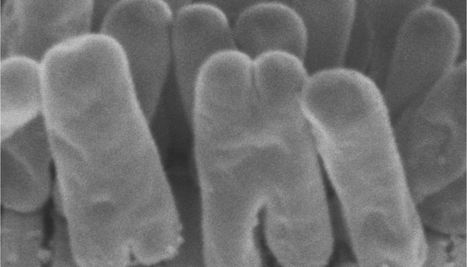
The symbiont is a roughly 1 X 3 µm rod-shaped bacterium attached with one pole to the surface of its nematode host. First weird thing it does, is to orient its division plane parallel to its long axis, which makes it divide longitudinally instead of transversally (like conventional rod-shaped bacteria do). But as if building a wall and pinching a membrane over an approximately three times longer distance were not challenging enough, this resourceful organism tops it up by dividing asynchronously. Namely: it first invaginates at the nematode-attached pole and then at its free pole. "But the biggest surprise came as we searched for the FtsZ ring and we found none" explains Nikolaus Leisch, first author of the paper and currently a Postdoc at the Max Plank Institute, Bremen.
|
|
Scooped by
Dr. Stefan Gruenwald
October 14, 2016 5:04 PM
|
Cancer cells are notorious for their genomes gone haywire, often yielding fusion proteins -- mash-ups of two disparate genes that, once united, assume new and harmful capabilities. Exactly how such genome scrambling impacts RNA, particularly the vast and mysterious world of non-coding RNA, has been largely unexplored. Now, a team led by investigators at Beth Israel Deaconess Medical Center (BIDMC) offers some early answers by studying an intriguing class of non-coding RNAs known as circular RNAs. Published in the March 31 advance online issue of Cell, their findings reveal that circular RNAs -- like their protein counterparts -- are also affected by genomic rearrangements in cancer, resulting in abnormal fusions. Moreover, these fusion-circular RNAs are not mere bystanders; they appear to promote tumor growth and progression, underscoring their role in the disease. "Cancer is essentially a disease of mutated or broken genes, so that motivated us to examine whether circular RNAs, like proteins, can be affected by these chromosomal breaks," said senior author Pier Paolo Pandolfi, MD, PhD, Director of the Cancer Center at BIDMC and George C. Reisman Professor of Medicine at Harvard Medical School. "Our work paves the way to discovering many more of these unusual RNAs and how they contribute to cancer, which could reveal new mechanisms and druggable pathways involved in tumor progression." When it comes to RNA, scientists' worldview is in the midst of a significant shift. Long dismissed as a mere messenger, RNA is perhaps best known for its role ferrying instructions from the genome, which is cloistered in the nucleus, to more far-flung parts of the cell, where it is made into protein. Yet only 2 percent of the genome is copied (or "transcribed") from DNA into RNA and then translated into protein. Scientists now recognize that much, if not all, of the remaining 98 percent -- which had previously been deemed non-functioning -- is in fact transcribed into RNA. The roles this vast swath of so-called "non-coding RNA" might play in human biology and disease now signify an area of intense research. Curious about the possibility of circular RNAs contributing to cancer, Pandolfi and his colleagues set out to see if they could detect relevant changes in tumors known to harbor distinct fusion proteins, which result when different chromosomes abnormally join together, melding two separate genes into a new centaur-like gene. These chromosomal translocations are common in various types of leukemia, so the researchers examined two types: acute promyelocytic leukemia, which often carries a translocation between the PML and RARα genes; and acute myeloid leukemia, which can harbor a translocation between the MLL and AF9 genes. The researchers found abnormal fusion-circular RNAs (f-circRNAs), corresponding to different exons associated with the PML-RARα gene fusion as well as the MLL-AF9 gene fusion. Normally, multiple circular RNAs can be generated from a single gene, so it is not entirely surprising to find different f-circRNAs emerging from the same fusion gene. Remarkably, Pandolfi and his colleagues uncovered f-circRNAs in solid tumors, too -- in samples from Ewing sarcoma, a form of soft tissue cancer, and lung cancer. Moreover, the team identified them using two distinct methods, PCR-based amplification as well as sequencing-based approaches, underscoring f-circRNAs as bona fide biological entities, rather than experimental artifacts.
|
|
Scooped by
Dr. Stefan Gruenwald
October 14, 2016 1:08 PM
|
In March Ukrainian mathematician Maryna Viazovska, a postdoctoral researcher at the Berlin Mathematical School and at Humboldt University of Berlin, solved the sphere-packing problem in eight dimensions. The next week she and several co-authors extended her techniques to 24 dimensions. The solution of the problem in the seemingly arbitrary dimensions of eight and 24 highlights the fundamental weirdness of sphere packing, which has now been solved only in dimensions one, two, three, eight and 24. The breakthrough has given researchers hope that building on her techniques may be a viable way to answer questions about sphere packing in higher dimensions. “This is the beginning of understanding sphere packings rather than the end,” says Henry Cohn, a mathematician at Microsoft Research and one of Viazovska’s collaborators for the 24-dimensional case. Although it is virtually impossible to visualize eight-dimensional space, mathematicians are comfortable working with spaces of eight, 24 or thousands of dimensions by analogy to lower-dimensional spaces. In three dimensions points are labeled using three coordinates—length, width and height, or x, y, z—so in eight dimensions points are labeled using eight coordinates. In three dimensions a sphere is the set of points in three-dimensional space that are all equidistant from one center point. In eight dimensions it is the set of points in eight-dimensional space that are all equidistant from one center point. In any dimension the sphere-packing problem is the question of how equal-size spheres can be arranged with as little empty space between them as possible. Whereas it would seem logical for mathematicians to solve successively higher dimensions in turn—after solving three, researchers could build on their work to solve four and then five—it is no accident that Viazovska leapfrogged over dimensions four through seven and solved sphere packing in eight dimensions or that 24 was the one to follow that. “Part of what I love about the sphere-packing problem is that every dimension has its own idiosyncrasies,” says Cohn, who has worked at sphere packing for many years. “Some dimensions just behave much better than others.”
|
|
Scooped by
Dr. Stefan Gruenwald
October 14, 2016 12:41 PM
|
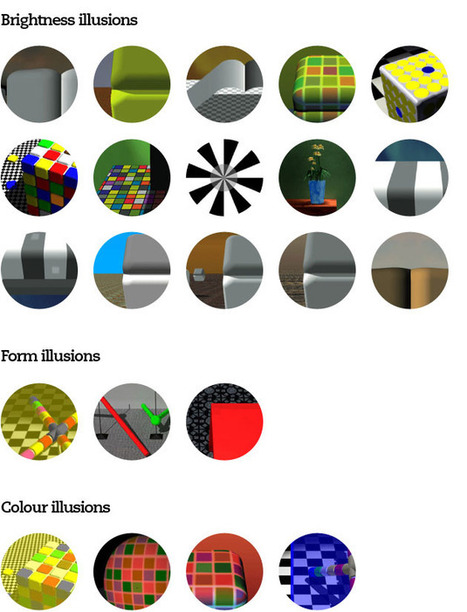
The beautiful thing about illusions is that they make us realize not only that things are never what they seem, but also that our experiences of the world shape our understanding of it.
The whole concept of an illusion is predicated on a misconception. When you see an illusion, you are entertaining two realities simultaneously. Take the first illusion on this page, for example: you see one reality (two grey squares that look different) but you also know another reality, namely that the grey squares are, in fact, physically the same. In other words, the brain causes the illusion by in that moment trying to make sense of what the eyes are seeing. You’re in the position of actually experiencing yourself having an experience.
Illusions are useful as a research tool because they tell us how the brain works, that the brain evolved NOT to see the retinal image (which is made up of meaningless, or ambiguous, patterns of light) – i.e. not the world ‘as it is’ – but to see the world in a way that proved useful in the past. It constructs what it knows by searching for useful patterns in sensory information and then associating those patterns with a past record of their behavioral relevance, and then using that information to guide behavior. Which means that the brain is innately a creative and curious machine that evolved to continually redefine normality, a ‘normality’ that is necessarily contextual and historical.
The powerful color, motion and shape illusions on this page have all been created in-house. Feel free to use these images, with proper accreditation.
|
|
Scooped by
Dr. Stefan Gruenwald
October 14, 2016 12:31 PM
|
The joint ESA-Roscosmos ExoMars 2016 mission is a week away from arriving at Mars to answer important astrobiological questions. While the mission’s Schiaparelli demonstrator will focus on testing landing technologies, one of its scientific instruments will be in the right place at the right time to investigate the planet’s intense dust storms. The ExoMars 2016 mission consists of two spacecraft: the Trace Gas Orbiter (TGO) that will search for evidence of methane and other minute atmospheric gases, and the Schiaparelli lander – an entry, descent, and landing demonstrator module. On Oct. 16, the lander will separate from TGO. It will enter the Martian atmosphere a few days later on Oct. 19 for a 6-minute descent ending in a landing in Meridiani Planum. While TGO will commence its science mission at the end of 2017 following a year of complex aerobraking maneuvers around Mars to circularize its orbit, Schiaparelli is expected to be on duty immediately after entry into the Martian atmosphere, collecting crucial data during the automated descent and landing. After landing, Schiaparelli will activate its Dust Characterisation, Risk Assessment, and Environment Analyser on the Martian Surface (DREAMS), which could provide important insights on the nature of intense dust storms that periodically occur on the planet. “After landing, we will operate the DREAMS environmental station,” Jorge L. Vago, ExoMars Project Scientist at ESA, told Astrowatch.net. “One objective of DREAMS is to measure for the first time the large electric fields that get generated due to friction between dust grains in the Martian atmosphere – the same happens in the Sahara on Earth.” The DREAMS station includes a set of sensors designed to measure wind speed and direction (MetWind), humidity (DREAMS-H), pressure (DREAMS-P), atmospheric temperature close to the surface (MarsTem), the transparency of the atmosphere (Solar Irradiance Sensor, SIS), as well as atmospheric electrification (Atmospheric Radiation and Electricity Sensor; MicroARES). In general, ExoMars scientists hope DREAMS will provide measurements of the concentration of atmospheric dust, which could yield new results regarding the role of electric forces on dust lifting, the trigger for these storms.
|
|
Scooped by
Dr. Stefan Gruenwald
October 14, 2016 12:26 PM
|
Liquid droplets have been arranged into 2D arrays by researchers at the University of Bristol in the UK. The droplets contain entangled polymers and are created within a tank of water. A range of different chemicals can be added to the droplets, which could be used to create high-throughput analyses systems for developing new drugs or performing rapid medical diagnostics. The droplet arrays could even be used to study how living cells communicate with each other. Although arrays of liquid droplets have been made before, previous attempts had involved either using oil-and-water mixtures or evaporating the liquid to create the array on a dry surface. Neither technique is also suitable for supporting water-based chemical reactions, which was a primary goal of Bruce Drinkwater and his team of physicists, engineers and chemists, who developed the new technology. The droplet-forming process begins with an aqueous solution of the polymer PDDA and the biomolecule adenosine triphosphate (ATP). Electrostatic interactions cause these two materials to agglomerate into tiny nanometre-sized droplets by a process of "coacervation". When a 2D ultrasound standing wave is created in the liquid using piezoelectric transducers, the droplets move to the nodes of the standing wave, where they coalesce and grow until they reach about 50–100 μm in diameter. Technique could be used to simulate interactions between living cells.
|
|
Scooped by
Dr. Stefan Gruenwald
October 13, 2016 11:57 AM
|
Toronto General Hospital performs world-first triple transplant combination of double lung, liver and pancreas organs simultaneously. A unique triple transplant has transformed the life of a 19-year-old Cystic Fibrosis patient who can now walk without an oxygen tank, exercise, eat full meals, and plan for the future. Just two weeks after his life-saving three-organ transplant, Reid Wylie was walking around the transplant unit, inhaling and exhaling without coughing, and diligently keeping up his breathing exercises to expand his lungs. “For the first time, when I walk, my legs are more tired than my lungs,” says a smiling and shy Reid, who was diagnosed with Cystic Fibrosis when he was two years old. Reid received a world-first transplant combining double lungs, liver, and a pancreas in the summer of 2015. The procedure took 17 hours, with 15 staff which included: surgeons, surgical fellows, anesthesiologists, operating room nurses and healthcare specialists in the use of the heart-lung machine during surgery.
|
|
Scooped by
Dr. Stefan Gruenwald
October 13, 2016 11:39 AM
|
Large-scale reference data sets of human genetic variation are critical for the medical and functional interpretation of DNA sequence changes. Here a group of scientists describes the aggregation and analysis of high-quality exome (protein-coding region) DNA sequence data for 60,706 individuals of diverse ancestries generated as part of the Exome Aggregation Consortium (ExAC). This catalog of human genetic diversity contains an average of one variant every eight bases of the exome, and provides direct evidence for the presence of widespread mutational recurrence. The researchers have used this catalog to calculate objective metrics of pathogenicity for sequence variants, and to identify genes subject to strong selection against various classes of mutation; identifying 3,230 genes with near-complete depletion of predicted protein-truncating variants, with 72% of these genes having no currently established human disease phenotype. Finally, they were able to demonstrate that these data can be used for the efficient filtering of candidate disease-causing variants, and for the discovery of human ‘knockout’ variants in protein-coding genes. ExAC has turned human genetics upside down, says geneticist David Goldstein of Columbia University in New York City. Instead of starting with a disease or trait and working backwards to find its genetic underpinnings, researchers can start with mutations that look like they should have an interesting effect and investigate what might be happening in the people who harbour them. “This really is a new way of working,” he says. ExAC is also providing better information for families facing genetic diagnoses. D178N, for example, was strongly suspected of causing prion disease because it had been seen in several people with the condition and seldom elsewhere. But before ExAC, no one really had the power to see just how rare it was. If it shows up in people more frequently than prion disease does, that would mean Vallabh's risk of getting the disease is much lower than predicted. Read more here
|
|
Scooped by
Dr. Stefan Gruenwald
October 13, 2016 1:05 AM
|
The saga of giant viruses (i.e. visible by light microscopy) started in 2003 with the discovery of Mimivirus. Two additional types of giant viruses infecting Acanthamoeba have been discovered since: the Pandoraviruses (2013) and Pithovirus sibericum (2014), the latter one revived from 30,000-y-old Siberian permafrost. A group of scientists now describe Mollivirus sibericum, a fourth type of giant virus isolated from the same permafrost sample. These four types of giant virus exhibit different virion structures, sizes (0.6–1.5 µm), genome length (0.6–2.8 Mb), and replication cycles. Their origin and mode of evolution are the subject of conflicting hypotheses. The fact that two different viruses could be easily revived from prehistoric permafrost, even after 30,000 years of being frozen, should be of concern in a context of global warming.
|
|
Scooped by
Dr. Stefan Gruenwald
October 13, 2016 12:47 AM
|
Microlensing technique has potential to find planets that cannot be found by other methods. Astronomers have, for the first time, found a planet orbiting a binary star system using microlensing. Gravitational lensing is a technique that made its name by aiding in the discovery of galaxies. It observes how much a relatively nearby galaxy gravitationally warps the space around it, allowing light from a more distant galaxy to curve around the nearby galaxy and form one or more distorted images of the distant galaxy. Microlensing applies the same principle to observing stars within our own Milky Way galaxy. The system is located 8,000 light-years away toward the center of the Milky Way. The circumbinary planet orbits roughly 300 million miles from the binary stars, at about the position of the asteroid belt in our solar system. It completes an orbit around both stars roughly every seven years. The two red dwarf stars are a mere 7 million miles apart. The Kepler space telescope discovered 10 other planets orbiting tight binary stars by means other than microlensing, but those planets are all much closer to their stars than this one. Survey groups such as the Optical Gravitational Lensing Experiment (OGLE) and Microlensing Observations in Astrophysics (MOA) scan the central galactic bulge, where there are lots of stars to act as sources for potential lens stars closer to Earth. When they detect a localized increase in brightness and recognize that it is heading for a high-magnification event, meaning that the near lens star is closely aligned with the far source star, other observatories around the world train their telescopes on the spot. “There has to be some magnification before the OGLE or MOA telescopes can identify it as a microlensing event, but since MOA and OGLE or both are surveying the sky regularly, they have data before it was magnified,” says David Bennett, an astrophysicist at NASA’s Goddard Space Flight Center in Greenbelt, Md., and lead author of the paper announcing the microlensing results. The paper has been accepted for publication in theAstronomical Journal (“The First Circumbinary Planet Found by Microlensing: OGLE-2007-BLG-349L(AB)c”). The time for the source and lens stars to move through their alignment is much faster than for a pair of galaxies, so astronomers can view the whole event. It is still slow enough, however — 118 days for this event — for follow-up telescopes to be notified in time to focus on it before it reaches peak magnification.
New research indicates that face mites are unique to different ethnicities, and may provide clues as to how humans populated the Earth. Please don’t panic, but there’s something crawling on your face. Thousands of them actually, and they’ve been there your entire life. “They” are part of the species Demodex, known commonly as face mites, and are eight-legged arthropods that live in your hair follicles and snack on dead skin cells. Thankfully, our mites go about their business unnoticed, but not by Michelle Trautwein. She and a group of researchers at Bowdoin College and the California Academy of Sciences have been analyzing the DNA of the Demodex folliculorum mite, because our mites have a long story to tell about human history. Trautwein’s team discovered that as humanity spread across the planet, our mite friends have been right there with us, carried from generation to generation and place to place, eventually evolving alongside us to the point where distinct lineages of face mites emerged for different ethnicities. Her team collected mite samples from 70 individuals from a range of ethnicities and countries and found that they could break mites into four separate lineages based on subtle differences in their DNA. Distinct strains corresponding to Africa, Asia, Latin America and Europe emerged from their research.
Via Kathy Bosiak

|
Suggested by
Flip The Movie Script
October 13, 2016 12:30 AM
|
Using a layer of self-assembled particles allows researcher to etch an almost-perfect reflector. Using a metamaterial created out of silicon, scientists have created a way to create an almost-perfect reflector that would be used for lasers and telescopes. The world has become increasingly fascinated with worlds beyond our own, more so, the cosmos. To get a better understanding of the stars and planets/exoplanets near and far, scientists require the best telescopes that will reflect perfect light. Recently published in ACS Photonics of 8 May 2015, advantages have been taken from dielectric metamaterials than plasmonic materials because it offers low-loss alternatives. With the help of this material and the focus on an alternative method, it helps separate the electric and magnetic resonances to achieve the required reflection bandwidth while maintaining high tolerance to disorder. In other words, the material helps produce a sharper more accurate reflection while allowing scientists to scan different bandwidths with ease, with high resolution and very very minimal loss.
|
|
Scooped by
Dr. Stefan Gruenwald
October 13, 2016 12:19 AM
|
A mutation in a single DNA letter causes a painful and debilitating disease known as sickle-cell anaemia. Researchers have wrestled with this illness for more than 65 years, and have now added CRISPR–Cas9 gene editing to their armory. In a paper published 12 October in Science Translational Medicine1, researchers reported some success in correcting the mutation in mice, though they concede that human applications are still years away. The efficiency of the process is also slightly too low for practical use, cautions author Jacob Corn, a biochemist at the University of California, Berkeley. But the advance — and other recent efforts — has given Corn hope that the first treatment to address the cause of sickle-cell anaemia could be only a few years away. “We now finally may have some paths to address the cause of the disease rather than the symptoms,” he says.
|
|
|
Scooped by
Dr. Stefan Gruenwald
October 14, 2016 5:07 PM
|
The African naked mole rat is an odd, homely creature with the closest thing to real-life super powers on earth. These small rodents can live for 32 years, they are cancer-resistant, and they are impervious to some types of pain. Now, new research has pinpointed the evolutionary change that made the naked mole rat so uniquely pain-free, according to a study published on October 11th in Cell Reports. "We think evolution has selected for this tweak just subtly enough so that the pain signaling becomes non-functional, but not strong enough that it becomes a danger for the animal," says lead author Gary R. Lewin, a professor at the Max-Delbruck Center for Molecular Medicine in Berlin, Germany. Imagine the sting of entering a hot tub with a bad sunburn. The naked mole rat wouldn't be bothered, but most animals would sense this as thermal hyperalgesia, and the scientists who conducted the study have a good idea of what goes on at a cellular level when this happens. In response to high temperatures and inflammation around sensory neurons, nerve growth factor (NGF) molecules bind to a receptor called TrkA. This kicks off a cascade of chemical signals that "sensitize" an ion channel -- called TRPV1 -- on the surface of the sensory neuron so that it opens. Once TRPV1 opens, it results in sensory nerve firing that tells the brain to register pain at temperatures that are not normally painful. Through more than a dozen carefully designed experiments, Lewin and colleagues found what differentiates the naked mole rat from other animals in this process -- a small change in their TrkA receptor. For example, if the scientists swapped out the TRPV1 channels in a mouse cell for naked mole rat versions of TRPV1, then thermal hyperalgesia occurred normally. But if a cell had a common rat TRPV1 and a naked mole rat TrkA, then the cell couldn't sense thermal hyperalgesia. Researchers compared the gene for the naked mole rat's TrkA receptor to those of 26 other mammals, and five other African mole rat species. They discovered a switch of just one to three amino acid changes on one section of the naked mole rat TrkA receptor that make it less sensitive. "Even though the naked mole rat's version of the TrkA receptor is almost identical to that of a mouse or a rat, it has a very significant effect on the animal's ability to feel pain," says Lewin.
|
|
Scooped by
Dr. Stefan Gruenwald
October 14, 2016 1:20 PM
|
A scientist who recently visited the Great Barrier Reef has said "if it was a person, it would be on life support", as researchers strive to highlight the plight of the reef. New images have shown the worrying extent of the damage done to the reef by climate change. Rising water temperatures have damaged the world’s largest reef system, which stretches for over 1,400 miles off the coast of Australia. In May, researchers found that more than a third of the coral in northern and central parts of the reefs was dead, and 93 per cent of individual reefs had been affected by a condition known as coral bleaching. This usually leads the corals to die as it ends their symbiotic relationship with algae-like single cell protozoa, which are expelled when corals are exposed to water which is too warm. Scientists have found that the situation has worsened. Amanda McKenzie, CEO of the Australian Climate Council, toldABC: "After the bleaching event in May, 60 per cent of what we saw was bleached very white. "Another 19-20 per cent was covered in sludgy brown algae. Even of what remained healthy, some looked a bit on edge. "When we went back a few weeks ago to see if they had recovered or died, quite a large proportion had died." She estimated around half of the bleached corals they visited had died, and that the bleaching had mostly affected delicate corals rather than the stronger 'brain corals'. However, the researchers discovered that fewer species of fish were found on the reef.
|
|
Scooped by
Dr. Stefan Gruenwald
October 14, 2016 12:53 PM
|
While photographing shelves of human brains stored away in a closet at the University of Texas for his next book, Adam Voorhes happened upon a truly unique find: a brain with no folds. David Dexter, scientific director at Parkinson's UK Brain Bank, told New Scientist that he had never seen an adult brain like this before: "We do get the odd individual where certain sulci are missing but nothing to the extent of this brain.” The lack of grooves (sulci) and folds (gyri) that characterize a human brain are due to a rare condition calledlissencephaly. The disorder is caused by abnormal neuronal migration during embryonic development. To learn more about this rare find, Voorhes spent over a year trying to hunt down the details of this and the approximately 100 other human brains in the collection. He sifted through a century’s worth of documents and found a history rife with battle for ownership of the collection. However, nothing about the specific individual came to light. People with similar though less extensive forms of lissencephaly often experience difficulty swallowing, muscle spasms, seizures, and learning difficulties. Many individuals with this condition die before the age of 10. All the brains in the collection are from patients at the Austin State Mental Hospital and were subsequently preserved in jars of formaldehyde. For more than 20 years, the brains were forgotten about in a dark closet somewhere in the back of an animal lab. While all the rediscovered brains are considered disfigured or abnormal in some way, a brain with so few folds and grooves is a rarity amongst the rare.
|
|
Scooped by
Dr. Stefan Gruenwald
October 14, 2016 12:33 PM
|
Astronomers using data from the NASA/ESA Hubble Space Telescopes and other telescopes have performed an accurate census of the number of galaxies in the Universe. The group came to the surprising conclusion that there are at least 10 times as many galaxies in the observable Universe as previously thought. The results have clear implications for our understanding of galaxy formation, and also help solve an ancient astronomical paradox — why is the sky dark at night? One of the most fundamental questions in astronomy is that of just how many galaxies the Universe contains. The Hubble Deep Field images, captured in the mid 1990s, gave the first real insight into this. Myriad faint galaxies were revealed, and it was estimated that the observable Universe contains between 100 to 200 billion galaxies [1]. Now, an international team, led by Christopher Conselice from the University of Nottingham, UK, have shown that this figure is at least ten times too low. Conselice and his team reached this conclusion using deep space images from Hubble, data from his team’s previous work, and other published data [2]. They painstakingly converted the images into 3D, in order to make accurate measurements of the number of galaxies at different times in the Universe’s history. In addition, they used new mathematical models which allowed them to infer the existence of galaxies which the current generation of telescopes cannot observe. This led to the surprising realisation that in order for the numbers to add up, some 90% of the galaxies in the observable Universe are actually too faint and too far away to be seen — yet. “It boggles the mind that over 90% of the galaxies in the Universe have yet to be studied. Who knows what interesting properties we will find when we observe these galaxies with the next generation of telescopes,” explains Christopher Conselice about the far-reaching implications of the new results. In analysing the data the team looked more than 13 billion years into the past. This showed them that galaxies are not evenly distributed throughout the Universe’s history. In fact, it appears that there were a factor of 10 more galaxies per unit volume when the Universe was only a few billion years old compared with today. Most of these galaxies were relatively small and faint, with masses similar to those of the satellite galaxies surrounding the Milky Way. These results are powerful evidence that a significant evolution has taken place throughout the Universe’s history, an evolution during which galaxies merged together, dramatically reducing their total number. “This gives us a verification of the so-called top-down formation of structure in the Universe,” explains Conselice.
|
|
Scooped by
Dr. Stefan Gruenwald
October 14, 2016 12:29 PM
|
Optical system can study sub-cellular processes in large biological specimens. A new microscope lens that offers the unique combination of a large field of view with high resolution has been created by researchers in the UK. The new "mesolens" for confocal microscopes can create 3D images of much larger biological samples than was previously possible – while providing detail at the sub-cellular level. According to the researchers, the ability to view whole specimens in a single image could assist in the study of many biological processes and ensure that important details are not overlooked. Laser-scanning confocal microscopes are an important tool in modern biological sciences. They emerged in the 1980s as an improvement on fluorescence microscopes, which view specimens that have been dyed with a substance that emits light when illuminated. Standard fluorescence microscopes are not ideal because they pick up fluorescence from behind the focal point, creating images with blurry backgrounds. To eliminate the out-of-focus background, confocal microscopes use a small spot of illuminating laser light and a tiny aperture so that only light close to the focal plane is collected. The laser is scanned across the specimen and many images are taken to create the full picture. Due to the small depth of focus, confocal microscopes are also able to focus a few micrometres through samples to build up a 3D image. In microscopy there is a trade-off between resolution and the size of the specimen that can be imaged, or field-of-view – you either have a large field-of-view and low resolution or a small field-of-view and high resolution. Current confocal microscopes struggle to image large specimens, because low magnification produces poor resolution. "Normally, when a large object is imaged with a low-magnification lens, rays of light are collected from only a small range of angles (i.e. the lens has a low numerical aperture)," explains Gail McConnell from the Centre for Biophotonics at the University of Strathclyde, in Glasgow. "This reduces the resolution of the image and has an even more serious effect in increasing the depth of focus, so all the cells in a tissue specimen are superimposed and you cannot see them individually." Large objects can be imaged by stitching smaller images together. But variations in illumination and focus affect the quality of the final image. McConnell and colleagues set out to design a lens that could image larger samples, while retaining the detail produced by confocal microscopy. They focused on creating a lens that could be used to image an entire 12.5 day-old mouse embryo – a specimen that is typically about 5 mm across. This was to "facilitate the recognition of developmental abnormalities" in such embryos, which "are routinely used to screen human genes that are suspected of involvement in disease", says McConnell.
|
|
Scooped by
Dr. Stefan Gruenwald
October 13, 2016 12:05 PM
|
Interrogating the genome of the WO phage, a widespread bacteria-infecting virus, researchers at Vanderbilt University in Nashville, Tennessee, have unveiled a few surprises, including sequences that relate to the black widow’s spiders deadly latrotoxin. “Discovering DNA related to the black widow spider toxin gene came as a total surprise because it is the first time that a phage . . . has been found carrying animal-like DNA,” Vanderbilt University’s Seth Bordenstein, who published the results with his wife and coauthor Sarah Bordenstein this week (October 11) in Nature Communications, said in a press release. The duo also found that bits of WO DNA shared sequence similarity with other animal genomes, including a gene involved in sensing pathogens and triggering cell death, as well as immune-evasion genes. “These sequences are more typical of eukaryotic viruses, not phages,” Seth Bordenstein said. “It’s the first report of a virus infecting multiple domains of life,” Elizabeth McGraw, a Wolbachia specialist at Monash University in Australia, told The Atlantic. By picking up animal genes, WO has become “a Frankenphage that may be better at infecting animals than its ancestors that contained only phage genes.” Among the bacteria that the WO phage infects is Wolbachia, a bacterium that is commonly found infecting insects, spiders, and other animals, meaning that any phage that infects Wolbachia is also likely to be living inside a eukaryote. When it comes time for the virus’s progeny to burst from the Wolbachiacell, the viruses will also have to escape the eukaryotic cell hosting the Wolbachia, and must thus evade the animal’s immune system when it does so. To better understand how WO does this, the Bordensteins sequenced its genome. In total, they found that eukaryotic genes made up nearly 50 percent of WO’s DNA. “For a phage to devote about half its genome to these eukaryotic-like genes, they must be important to the phage function,” Sarah Bordenstein told New Scientist. In addition, WO appears to have taken its animal-derived genes and combined or reconfigured them. “Viruses do this,” Sarah Bordenstein told The Atlantic. “It’s like a buffet. They take bits from different genes and put them together to form this super gene.” WO’s weird genetics may serve the virus as bursts free from its host within a host, she added. “Once it gets out, it needs some way of cloaking itself, or counterattacking, or evading animal defenses.”
|
|
Scooped by
Dr. Stefan Gruenwald
October 13, 2016 11:53 AM
|
A research team based in Shanghai, China, has for the first time successfully diagnosed the most common form of muscular dystrophy using noninvasive prenatal testing (NIPT). Duchenne muscular dystrophy (DMD) is inherited via the X chromosome and affects 1 in 3,600 to 6,000 boys. The researchers used a technique they developed to recover, in a single step, the fetal genotype and both parental sequences from DNA in maternal blood plasma. Using this approach, they accurately predicted the mutation status of the fetus in eight pregnant women known to be DMD carriers. The tests showed that three of the fetuses were girls, two of whom did not inherit the DMD mutation. All five of the male fetuses were positive for the DMD trait. The results were confirmed by amniocentesis. Prior to this study, the researchers had shown that the technique effectively identified several autosomal recessive disorders, including congenital adrenal hyperplasia, maple syrup urine disease, and congenital deafness. However, no one had used NIPT to noninvasively predict the fetal mutation status in an X-linked disease. The test is not yet ready for routine clinical use, but the ability to diagnose common genetic disorders noninvasively early in pregnancy is sure to have important implications, both medical and ethical.
|
|
Scooped by
Dr. Stefan Gruenwald
October 13, 2016 11:31 AM
|
Cancer is first and foremost a genetic disease, driven by mutations, or errors, in our DNA. Identifying and characterizing these errors requires specialized machines, skilled personnel and complex data analysis. Even today, the precise molecular causes of many cancers remain unknown. As a result, many patients with cancer are treated without having a precise genetic diagnosis. To truly understand, diagnose and treat cancer, we need a better sight of its genetics. This aligns with the panel’s recommendations to conduct retroactive analysis of biospecimens from patients treated with standard of care, to better understand tumor heterogeneity and to generate human tumor atlases. Governments and private industry are recognizing the research and population health benefits of genomics sequencing. Multiple large-scale sequencing projects have been initiated worldwide -for example, the U.S. government’s Million Veteran Program, the U.K. government’s 100,000 Genomes Project and the AstraZeneca-led integrated genomics initiative for drug development and discovery. Thanks to these and other projects, millions of sequenced cancer whole genomes will be a reality. An estimated 100 million to 2 billion human genomes will have been sequenced by 2025. As the number of sequenced genomes grows, this data set will be an increasingly rich resource for the cancer research community, enabling precise characterization of the molecular changes that define cancer cells. Two of the 10 recommendations specifically call for a direct patient engagement network and the creation of adult (and pediatric) immunotherapy clinical trials networks. However, collaboration is at the core of all 10 recommendations, as the Blue Ribbon Panel unequivocally calls for better data sharing. The scale of the data used in cancer discovery means computation has a huge role in supporting research. Every sequenced genome requires 300-400 GB of hard disk space just to store the raw and processed files. By 2025, the amount of human genomic data is predicted to be 2-40 exabytes, exceeding the storage requirements of astronomy and YouTube (the other two major data-sprouting entities). Downloading and sharing this data will be difficult, time-consuming and costly. Working in real time on a collaborative analysis with a colleague on a different continent will be nigh on impossible. To overcome these challenges, the cancer research community is increasingly turning to the cloud to store and analyze cancer genomic data. The U.S. National Cancer Institute (NCI) initiated Cancer Genomics Cloud Pilots to enable researchers to access The Cancer Genome Atlas (TCGA) — the world’s largest public genomic data set — containing over 2 petabytes of sequencing and other data from more than 11,000 patients.
|
|
Scooped by
Dr. Stefan Gruenwald
October 13, 2016 12:54 AM
|
New data has confirmed that the Earth has been experiencing the hottest temperatures on record. The latest findings from NASA’s top climate scientists now reveal the world is heating up at a rate that hasn’t occurred within the past 1,000 years. According to NASA, the planet will continue to warm “at least” 20 times faster than the historical average over the next 100 years. Gavin Schmidt, director of Nasa’s Goddard Institute for Space Studies, said that “in the last 30 years we’ve really moved into exceptional territory.” He added, “It’s unprecedented in 1,000 years. There’s no period that has the trend seen in the 20th century in terms of the inclination (of temperatures).” July 2016 was the hottest month on record, and this year the average global temperature peaked at 1.38˚C above levels reported in the 19th century. That number is dangerously close to the 1.5C limit determined by the Paris Climate Agreement. Nasa warns that temperatures will only increase by leaps and bounds at the rate we are going. If we have even the slimmest of hopes to combat this unprecedented rate of global warming, Schmidt says, “maintaining temperatures below the 1.5˚C guardrail requires significant and very rapid cuts in carbon dioxide emissions or co-ordinated geo-engineering. That is very unlikely. We are not even yet making emissions cuts commensurate with keeping warming below 2˚C.” “It’s the long-term trend we have to worry about though and there’s no evidence it’s going away and lots of reasons to think it’s here to stay,” Schmidt said. “There’s no pause or hiatus in temperature increase. People who think this is over are viewing the world through rose-tinted spectacles. This is a chronic problem for society for the next 100 years.”
Doctors at the USC Neurorestoration Center and Keck Medicine of USC injected an experimental treatment made from stem cells and other cells into the damaged cervical spine of a recently paralyzed 21-year-old man as part of a multi-center clinical trial. Two weeks after surgery, Kristopher (Kris) Boesen began to show signs of improvement. Three months later, he’s able to feed himself, use his cell phone, write his name, operate a motorized wheelchair, and hug his friends and family. Improved sensation and movement in both arms and hands also make it easier for Kris to care for himself, and to envision a life lived more independently. “Typically, spinal cord injury patients undergo surgery that stabilizes the spine but generally does very little to restore motor or sensory function,” explains Charles Liu, MD, PhD, director of the USC Neurorestoration Center. “With this study, we are testing a procedure that may improve neurological function, which could mean the difference between being permanently paralyzed and being able to use one’s arms and hands. Restoring that level of function could significantly improve the daily lives of patients with severe spinal injuries.”
Via Kathy Bosiak
The last known member of his species has died at Atlanta Botanical Garden. Known as “Toughie,” the tiny male frog, originally from Panama, spent the past few years living by himself at Atlanta Botanical Garden. The species has not been observed in the wild since 2007, just two years after it was first discovered by scientists. Toughie’s death follows four and a half years after another Rabbs’ tree frog died at Zoo Atlanta. That frog was euthanized in 2012 after its health began to decline. Both of these Rabbs’ tree frogs were collected in Panama while scientists were there investigating the deadly chytrid fungus, which has devastated amphibian populations in that country and around the world. Although no signs of wild Rabbs’ tree frogs have shown up in the past nine years, at least one scientist still held out hope they might one day be found again. “The habits of this genus can make them extremely difficult to find if they remain high up in the trees,” says Jonathan Kolby, director of the Honduras Amphibian Rescue and Conservation Center. “Being that this species breeds in tree cavities up in the canopy, I would hope that this behavior offers some protection from exposure to chytrid fungus, although the species was reported to have become much less common after the arrival of chytrid in the region.” Still, the likelihood remains that the Rabbs’ fringe-limbed tree frog is now truly gone. That’s notable, not just for the extinction, but for the circumstances around Toughie’s life. Extinctions, you see, are very rarely witnessed by humans. Instead, they tend to be discovered years or even decades after the last member of a species gave up the fight. The Rabbs’ tree frog was a rare exception. For the past four and a half years, Toughie has been a very public ambassador for his lost species, and for all of the frog species going extinct around the world during the current amphibian extinction crisis. How many thousands of people who walked by his enclosure at Atlanta Botanical Garden felt the pull and gravity of his inevitable extinction? As the organization posted today on Facebook, “He will be missed by Garden staff and visitors alike.”
Via Kathy Bosiak
|
|
Scooped by
Dr. Stefan Gruenwald
October 13, 2016 12:21 AM
|
The first transistor with a working 1-nanometer (nm) gate* has been created by a team led by Lawrence Berkeley National Laboratory (Berkeley Lab) scientists. Until now, a transistor gate size less than 5 nanometers has been considered impossible because of quantum tunneling effects. The breakthrough was achieved by creating a 2D (flat) semiconductor field-effect transistor using molybdenum disulfide (MoS2) instead of silicon and a 1D single-walled carbon nanotube (SWCNT) as a gate electrode, instead of various metals. (SWCNTs are hollow cylindrical tubes with diameters as small as 1 nanometer.) Compared with MoS2, electrons flowing through silicon are lighter and encounter less resistance . But with a gate length below 5 nanometers in length, a quantum mechanical phenomenon called tunneling kicks in, and the gate barrier is no longer able to keep the electrons from barging through from the source to the drain terminals, so the transistor cannot be turned off. Electrons flowing through MoS2 are heavier, so their flow can be controlled with smaller gate lengths. MoS2 can also be scaled down to atomically thin sheets, about 0.65 nanometers thick, with a a larger band gap and lower dielectric constant, a measure reflecting the ability of a material to store energy in an electric field (similar to a capacitor). These properties help improve the control of the flow of current inside the transistor when the gate length is reduced to 1 nanometer.
|