Your new post is loading...

|
Scooped by
Dr. Stefan Gruenwald
October 30, 2016 2:29 PM
|
Researchers have created a printed array of metamaterials that can produce passive 3D acoustic holograms from a simple sound source, such as a single speaker. The device is made up of 3D-printed Lego-like blocks that can be put together in different configurations. The researchers say that their method is cheaper and simpler than other techniques and that they expect it to "open a new realm of holographic acoustic wave manipulation". A visual hologram manipulates electromagnetic waves in the visible part of the spectrum to create a 3D image. Because sound also travels in waves, it should be possible to create complex 3D fields of sound – acoustic holograms – in a similar way. While visual holograms can be made with physical structures that diffract light, it isn't so easy with sound due to a lack of materials with the required acoustic properties. Generally, acoustic holograms use a transducer array controlled by complex phase shifting electronics. The new device created by Steve Cummer, an electrical and computer engineer at Duke University in North Carolina, US, and colleagues uses metamaterials to create a physical structure that can shift sound waves into the required 3D shapes. Metamaterials are engineered materials that have structural properties that don't usually occur naturally. They are used to control and manipulate light, sound and other physical phenomena. The device is made up of a range of 12 3D-printed plastic blocks, or "cells". Each cell contains a different labyrinth pattern that is designed to modulate the phase of an acoustic wave. They work at a frequency of 4000 Hz and the 12 cells cover 180° of relative phase delay. A double layer of the cells can produce 360° of relative phase delay. Cummer told physicsworld.com that although printing the cells was "time consuming," fabricating each individual piece was "straightforward". The more challenging part, he added, "was actually designing the components so that each one manipulates sound in precisely the way we need".
|
|
Scooped by
Dr. Stefan Gruenwald
October 30, 2016 2:26 PM
|
Scientists from MIT and elsewhere have reconstructed the extreme collision that created one of the moon’s largest craters, 3.8 billion years ago. The team has retraced the moon’s dramatic response in the first hours following the massive impact, and identified the processes by which large, multi-ring basins can form in the aftermath of such events. The findings, published today in two papers in the journal Science, may shed light on how giant impacts shaped the evolution of the moon, and even life on Earth, shortly after the planets formed. The team’s results pertain to the moon’s Orientale basin, an expansive, bull’s eye-shaped depression on the southwestern edge of the moon, just barely visible from Earth. The basin is surrounded by three concentric rings of rock, the largest one stretching 580 miles across — about three times as wide as the state of Massachusetts. Until now, it’s been unclear how such massive, multi-ring basins materialized. Using data collected by NASA’s Gravity Recovery and Interior Laboratory (GRAIL) mission, the researchers determined that the 3.8-billion-year-old basin was created by a huge impactor that punched an initial, transient crater into the lunar surface, measuring up to 285 miles in diameter — about as wide as the state of New York. This impact, the researchers calculated, sent at least 816,000 cubic miles of pulverized lunar crust flying out from the impact site — an amount equivalent to 135 times the combined volume of the Great Lakes. The ejected material, which the team modeled in computer simulations, rose up like a tidal wave, then crashed down to the lunar surface, creating giant faults through the entire crust and forming two concentric walls of rock on the surface, each rising several kilometers high. Most of the action, according to simulations, occurred over just a couple of hours.
|
|
Scooped by
Dr. Stefan Gruenwald
October 25, 2016 2:40 PM
|
It's long been clear that people from different parts of the world differ in their susceptibility to developing infections as well as chronic inflammatory and autoimmune diseases. Now, two studies reported inCell on October 20 show that those differences in disease susceptibility can be traced in large part to differences at the genetic level directing the way the immune systems of people with European and African ancestry are put together. The researchers also found that differences between populations have been selected for over time because they conferred advantages to people facing distinct health challenges in the places where they lived. As a result, according to the new evidence, people of African ancestry generally show stronger immune responses than Europeans do. The discovery suggests that European populations have been selected to display reduced immune responses since our ancestors first made their way out of Africa. Intriguingly, the immune systems of Europeans were partly shaped by the introduction of new genetic variants through interbreeding between some of our early European ancestors and Neanderthals. "Our findings show that population differences in transcriptional responses to immune activation are widespread, and that they are mainly accounted for by genetic variants that differ in their frequencies between human populations," said Lluis Quintana-Murci of Institut Pasteur and CNRS in Paris, France, who led one of the two studies. "I was expecting to see ancestry-associated differences in immune response but not such a clear trend towards an overall stronger response to infection among individuals of African descent," added Luis Barreiro of the University of Montreal and the CHU Sainte-Justine in Canada, senior author of the other study. Quintana-Murci and colleagues used RNA-sequencing to characterize the way that immune cells, known as primary monocytes, derived from 200 people of self-reported African or European ancestry would respond to attack by a bacteria or a virus. The researchers detected many differences in the activity of particular genes in those immune cells both within and between populations. They also discovered that changes in a single gene encoding an important immune receptor lead to decreased inflammation only in Europeans.
|
|
Scooped by
Dr. Stefan Gruenwald
October 25, 2016 2:37 PM
|
With the rise in wearables such as smartwatches and fitness trackers that rely on smart sensors, and the continued popularity of smartphones, smart devices are taking our country by storm. Wireless data for such devices is typically beamed through Wi-Fi or Bluetooth, yet, the new wireless communication technology of "visible light communication (VLC)," has emerged as a new option albeit with limitations due to the challenges it faces in practice, such as being easily blocked or not being able to sustain transmission when light is off. Through a new Dartmouth project called "DarkLight," researchers have developed and demonstrated for the first-time, how visible light can be used to transmit data even when the light appears dark or off. DarkLight provides a new communication primitive similar to infrared communication, however, it exploits the LED lights already around us rather than needing additional infrared emitters. The study, ""The DarkLight Rises: Visible Light Communication in the Dark," will be presented at "MobiCom 2016: The 22nd Annual International Conference on Mobile Computing and Networking" on October 4 at 10:40 a.m., by Dartmouth co-author Zhao Tian, the lead Ph.D. student for the project. Demos of Darklight will be held later that day from 5:30 p.m. to 7:30 p.m., as part of the conference's demo/poster session. Through DarkLight, light-based communication is sustained even when LEDs emit extremely low luminance, by encoding data into ultra-short, imperceptible light pulses by using off-the-shelf, low-cost LEDs ($7 each) and photodiodes ($6-8 each), semiconductor devices that convert light into a current. In order for the DarkLight prototype to efficiently generate and reliably detect ultra-short light pulses, Dartmouth researchers developed a holistic solution to meet challenges regarding circuit designs, data encoding/decoding schemes, and DarkLight networking. The current DarkLight prototype supports 1.6-Kbps data rate at 1.8-m distance. DarkLight defies the long-standing assumption that visible light communication requires a visible light beam to shine. For end users/consumers, this means that visible light can be reused in many scenarios that were never considered possible until now. DarkLight offers new capabilities in the areas of visible light communication and sensing: - For visible light communication, if you don't want your lights on, such as during a sunny day or when you go out or leave your home, DarkLight could serve as a special mode that your ceiling LED lights switch to, so that the light bulbs can still beam data to smart devices (e.g., smart sensors, smartphones) in the environment.
- LEDs and light sensors are common on smartphones. With DarkLight, data could be transmitted by using your phone's flashlight to another phone in proximity, without shining a light beam. The technology offers one more alternative for secure communication, since visible light is directional and degrades fast over distance.
|
|
Scooped by
Dr. Stefan Gruenwald
October 25, 2016 2:33 PM
|
Two more teeny moons might be lurking around Uranus, in addition to the 27 we already know about. Fluctuations in the density of two of the planet’s dark rings, seen in radio data from the 1986 flyby of the Voyager 2 spacecraft could be caused by unseen moonlets, astronomers Robert Chancia and Matthew Hedman, both at the University of Idaho in Moscow, report online October 9 at arXiv.org. Both moons are probably just 4 to 14 kilometers wide and would be very difficult to detect in Voyager 2 images, the researchers report. New observations with ground-based telescopes might have better luck.
|
|
Scooped by
Dr. Stefan Gruenwald
October 25, 2016 2:31 PM
|
Space energy anomalies more than 50 million light years from our galaxy are creating conditions that should be destroying stars, but instead are regenerating them, according to an astronomer at The University of Alabama. Dr. Jimmy Irwin, UA associate professor of physics and astronomy, along with a three-student team of undergraduate researchers, detected seven instances of massive flares of energy in X-ray binary stars in two separate galaxies after poring through over a decade of Chandra X-ray Observatory data. But, unlike supernovas or gamma ray bursts in other galaxies, which collapse and are destroyed by huge increases in energy, the two stars researchers detected flare to the verge of exploding, only to simmer to baseline energy in an hour. They repeat the process every few days. "We've seen this kind of huge variability where there's an energy uplift of 100 in less than a minute, but the object is usually destroyed," Irwin said. "Whatever these objects are -- we don't know just yet -- there's some sort of undiscovered mechanism by which compact objects can accrete matter from a companion star. "It could be a black hole, it could be a neutron star … we don't have enough information yet. But it's not something we've seen in our own galaxy. It must be rare enough that our galaxy doesn't contain one of these examples, and we have to go to other galaxies to find other examples of these." Irwin details the findings in "Ultraluminous X-ray bursts in two ultracompact companions to nearby elliptical galaxies" a paper scheduled to be published in Nature Oct. 20. Irwin and his team were looking for any types of variability in the x-ray sources around distant galaxies, which can contain more than 100 different sources per each galaxy. An x-ray detector on the telescope provides a photon-by-photon account of the x-rays that reach the detector. "We were looking for kind of mild variations, maybe factors of three over a timescale of an hour," Irwin said. "But when the undergraduates found things that were varying by a hundred on timescales of a minute, we took notice. We were kind of already looking for it, but never expected something this drastic." The flares occurred in a globular cluster, a system of a few hundred thousand stars around the target galaxy. The Milky Way Galaxy, for instance, has roughly 150 clusters scattered throughout it, Irwin said.
|
|
Scooped by
Dr. Stefan Gruenwald
October 24, 2016 3:08 PM
|
Harvard researchers have designed nanoscale electronic scaffolds (support structures) that can be seeded with cardiac cells to produce a new “bionic” cardiac patch (for replacing damaged cardiac tissue with pre-formed tissue patches). It also functions as a more sophisticated pacemaker: In addition to electrically stimulating the heart, the new design can change the pacemaker stimulation frequency and direction of signal propagation. In addition, because because its electronic components are integrated throughout the tissue (instead of being located on the surface of the skin), it could detect arrhythmia far sooner, and “operate at far lower (safer) voltages than a normal pacemaker, [which] because it’s on the surface, has to use relatively high voltages,” according to Charles Lieber, the Mark Hyman, Jr. Professor of Chemistry and Chair of the Department of Chemistry and Chemical Biology. “Even before a person started to go into large-scale arrhythmia that frequently causes irreversible damage or other heart problems, this could detect the early-stage instabilities and intervene sooner,” he said. “It can also continuously monitor the feedback from the tissue and actively respond.” The patch might also find use, Lieber said, as a tool to monitor responses to cardiac drugs, or to help pharmaceutical companies screen the effectiveness of drugs under development.
|
|
Scooped by
Dr. Stefan Gruenwald
October 24, 2016 12:41 PM
|
Jupiter’s moon Io continues to be the most volcanically active body in the solar system, as documented by the longest series of frequent, high-resolution observations of the moon’s thermal emission ever obtained. Using near-infrared adaptive optics on two of the world’s largest telescopes — the 10-meter Keck II and the 8-meter Gemini North, both located near the summit of the dormant volcano Maunakea in Hawaii — UC Berkeley astronomers tracked 48 volcanic hot spots on the surface over a period of 29 months from August 2013 through the end of 2015.
|
|
Scooped by
Dr. Stefan Gruenwald
October 24, 2016 12:29 PM
|
A team at Microsoft's Artificial Intelligence and Research group has published a study in which they demonstrate a technology that recognizes spoken words in a conversation as well as a real person does. Last month, the same team achieved a word error rate (WER) of 6.3%. In their new paper this week, they report a WER of just 5.9%, which is equal to that of professional transcriptionists and is the lowest ever recorded against the industry standard Switchboard speech recognition task. “We’ve reached human parity,” said Xuedong Huang, the company’s chief speech scientist. “This is an historic achievement.” “Even five years ago, I wouldn’t have thought we could have achieved this,” said Harry Shum, the group's executive vice president. “I just wouldn’t have thought it would be possible.” Microsoft has been involved in speech recognition and speech synthesis research for many years. The company developed Speech API in 1994 and later introduced speech recognition technology in Office XP and Office 2003, as well as Internet Explorer. However, the word error rates for these applications were much higher back then. In their new paper, the researchers write: "the key to our system's performance is the systematic use of convolutional and LSTM neural networks, combined with a novel spatial smoothing method and lattice-free MMI acoustic training." The team used Microsoft’s own Computational Network Toolkit – an open source, deep learning framework. This was able to process deep learning algorithms across multiple computers, running a specialized GPU to greatly improve its speed and enhance the quality of research. The team believes their milestone will have broad implications for both consumer and business products, including entertainment devices like the Xbox, accessibility tools such as instant speech-to-text transcription, and personal digital assistants such as Cortana. “This will make Cortana more powerful, making a truly intelligent assistant possible,” Shum said. “The next frontier is to move from recognition to understanding,” said Geoffrey Zweig, who manages the Speech & Dialog research group. Future improvements may also include speech recognition that works well in more real-life settings – places with lots of background noise, for example, such as at a party or while driving on the highway. The technology will also become better at assigning names to individual speakers when multiple people are talking, as well as working with a wide variety of voices, regardless of age, accent or ability. The full study – Achieving Human Parity in Conversational Speech Recognition – is available at: https://arxiv.org/abs/1610.05256
|
|
Scooped by
Dr. Stefan Gruenwald
October 24, 2016 12:15 PM
|
Traces of long-lost human cousins may be hiding in modern people’s DNA, a new computer analysis suggests. People from Papua New Guinea (shown) and Australia carry small amounts of DNA from extinct human relatives. New research suggests that the DNA may not come from Neandertals or Denisovans, but from a third, previously unknown extinct hominid. People from Melanesia, a region in the South Pacific encompassing Papua New Guinea and surrounding islands, may carry genetic evidence of a previously unknown extinct hominid species, Ryan Bohlender reported October 20 at the annual meeting of the American Society of Human Genetics. That species is probably not Neandertal or Denisovan, but a different, related hominid group, said Bohlender, a statistical geneticist at the University of Texas MD Anderson Cancer Center in Houston. “We’re missing a population or we’re misunderstanding something about the relationships,” he said. This mysterious relative was probably from a third branch of the hominid family tree that produced Neandertals and Denisovans, an extinct distant cousin of Neandertals. While many Neandertal fossils have been found in Europe and Asia, Denisovans are known only from DNA from a finger bone and a couple of teeth found in a Siberian cave (SN: 12/12/15, p. 14). Bohlender isn’t the first to suggest that remnants of archaic human relatives may have been preserved in human DNA even though no fossil remains have been found. In 2012, another group of researchers suggested that some people in Africa carry DNA heirlooms from an extinct hominid species (SN: 9/8/12, p. 9). Less than a decade ago, scientists discovered that human ancestors mixed with Neandertals. People outside of Africa still carry a small amount of Neandertal DNA, some of which may cause health problems (SN: 3/5/16, p. 18). Bohlender and colleagues calculate that Europeans and Chinese people carry a similar amount of Neandertal ancestry: about 2.8 percent. Europeans have no hint of Denisovan ancestry, and people in China have a tiny amount — 0.1 percent, according to Bohlender’s calculations. But 2.74 percent of the DNA in people in Papua New Guinea comes from Neandertals, and another 3 to 6 percent stems from Denisovans, Bohlender calculated.
|
|
Scooped by
Dr. Stefan Gruenwald
October 24, 2016 12:07 PM
|
The oldest known vocal organ of a bird has been found in an Antarctic fossil of a relative of ducks and geese that lived more than 66 million years ago during the age of dinosaurs. The discovery of the Mesozoic-era vocal organ—called a syrinx—and its apparent absence in non-avian dinosaur fossils of the same age indicate that the organ may have originated late in the evolution of birds and that other dinosaurs may not have been able to make noises similar to the bird calls we hear today, according to findings published in Nature on Oct 12. Birds are direct descendants of dinosaurs and are considered living dinosaurs by scientists.
|
|
Scooped by
Dr. Stefan Gruenwald
October 22, 2016 12:05 AM
|
The race is on build a ‘universal’ quantum computer. Such a device could be programmed to speedily solve problems that classical computers cannot crack, potentially revolutionizing fields from pharmaceuticals to cryptography. Many of the world's major technology firms are taking on the challenge, but Microsoft has opted for a more tortuous route than its rivals. IBM, Google and a number of academic labs have chosen relatively mature hardware, such as loops of superconducting wire, to make quantum bits (qubits). These are the building blocks of a quantum computer: they power its speedy calculations thanks to their ability to be in a mixture (or superposition) of ‘on’ and ‘off’ states at the same time. Microsoft, however, is hoping to encode its qubits in a kind of quasiparticle: a particle-like object that emerges from the interactions inside matter. Some physicists are not even sure that the particular quasiparticles Microsoft are working with — called non-abelian anyons — actually exist. But the firm hopes to exploit their topological properties, which make quantum states extremely robust to outside interference, to build what are called topological quantum computers. Early theoretical work on topological states of matter won three physicists the Nobel Prize in Physics on 4 October, 2016. The firm has been developing topological quantum computing for more than a decade and today has researchers writing software for future machines, and working with academic laboratories to craft devices.
|
|
Scooped by
Dr. Stefan Gruenwald
October 21, 2016 5:25 PM
|
Mitochondrial diseases are a group of genetic disorders that are characterized by defects in oxidative phosphorylation and caused by mutations in genes in the nuclear DNA (nDNA) and mitochondrial DNA (mtDNA) that encode structural mitochondrial proteins or proteins involved in mitochondrial function. Mitochondrial diseases are the most common group of inherited metabolic disorders and are among the most common forms of inherited neurological disorders. One of the challenges of mitochondrial diseases is the marked clinical variation seen in patients, which can delay diagnosis. However, advances in next-generation sequencing techniques have substantially improved diagnosis, particularly in children. Establishing a genetic diagnosis allows patients with mitochondrial diseases to have reproductive options, but this is more challenging for women with pathogenetic mtDNA mutations that are strictly maternally inherited. Recent advances in in vitro fertilization techniques, including mitochondrial donation, will offer a better reproductive choice for these women in the future. The treatment of patients with mitochondrial diseases remains a challenge, but guidelines are available to manage the complications of disease. Moreover, an increasing number of therapeutic options are being considered, and with the development of large cohorts of patients and biomarkers, several clinical trials are in progress.
|
|
|
Scooped by
Dr. Stefan Gruenwald
October 30, 2016 2:27 PM
|
A new technique for training deep-learning neural networks on natural-language-processing tasks provides rationales for the systems’ decisions. The technique was developed at MIT’s Computer Science and Artificial Intelligence Laboratory (CSAIL). In recent years, the best-performing systems in artificial-intelligence research have come courtesy of neural networks, which look for patterns in training data that yield useful predictions or classifications. A neural net might, for instance, be trained to recognize certain objects in digital images or to infer the topics of texts. But neural nets are black boxes. After training, a network may be very good at classifying data, but even its creators will have no idea why. With visual data, it’s sometimes possible to automate experiments that determine which visual features a neural net is responding to. But text-processing systems tend to be more opaque. At the Association for Computational Linguistics’ Conference on Empirical Methods in Natural Language Processing, researchers from MIT’s Computer Science and Artificial Intelligence Laboratory (CSAIL) will present a new way to train neural networks so that they provide not only predictions and classifications but rationales for their decisions. “In real-world applications, sometimes people really want to know why the model makes the predictions it does,” says Tao Lei, an MIT graduate student in electrical engineering and computer science and first author on the new paper. “One major reason that doctors don’t trust machine-learning methods is that there’s no evidence.” “It’s not only the medical domain,” adds Regina Barzilay, the Delta Electronics Professor of Electrical Engineering and Computer Science and Lei’s thesis advisor. “It’s in any domain where the cost of making the wrong prediction is very high. You need to justify why you did it.” “There’s a broader aspect to this work, as well,” says Tommi Jaakkola, an MIT professor of electrical engineering and computer science and the third coauthor on the paper. “You may not want to just verify that the model is making the prediction in the right way; you might also want to exert some influence in terms of the types of predictions that it should make. How does a layperson communicate with a complex model that’s trained with algorithms that they know nothing about? They might be able to tell you about the rationale for a particular prediction. In that sense it opens up a different way of communicating with the model.”
|
|
Scooped by
Dr. Stefan Gruenwald
October 30, 2016 2:19 PM
|
New photos from NASA's Mars orbiter reveal the Schiaparelli lander crash in finer detail. What’s the most powerful telescope for observing Mars? A telephoto lens on the HiRise camera on the Mars Reconnaissance Orbiter that can resolve features as small as 3 feet (1-meter) across. NASA used that camera to provide new details of the scene near the Martian equator where Europe’s Schiaparelli test lander crashed to the surface last week. During an October 25, 2016 imaging run HiRise photographed three locations where hardware from the lander hit the ground all within about 0.9 mile (1.5 kilometers) of each other. The dark crater in the photo above is what you’d expect if a 660-pound object (lander) slammed into dry soil at more than 180 miles an hour (300 km/h). The crater’s about a foot and a half (half a meter) deep and haloed by dark rays of fresh Martian soil excavated by the impact. But what about that long dark arc northeast of the crater? Could it have been created by a piece of hardware jettisoned when Schiaparelli’s propellant tank exploded? The rays are curious too. The European Space Agency says that the lander fell almost vertically when the thrusters cut out, yet the asymmetrical nature of the streaks — much longer to the west than east — would seem to indicate an oblique impact. It’s possible, according to the agency, that the hydrazine propellant tanks in the module exploded preferentially in one direction upon impact, throwing debris from the planet’s surface in the direction of the blast, but more analysis is needed. Additional white pixels in the image could be lander pieces or just noise.
|
|
Scooped by
Dr. Stefan Gruenwald
October 25, 2016 2:38 PM
|
Authenticity is an important trait, and zebrafish take it especially seriously. An interdisciplinary team of researchers at the NYU Tandon School of Engineering discovered that zebrafish engage more with 3D-moving robotic models of themselves than with other stimuli. The team, headed by Maurizio Porfiri, professor of Mechanical and Aerospace Engineering, devised the controllable, customizable robotic platform to help researchers more accurately study freshwater fish behavior. Like a puppet master, the robotic platform maneuvers biologically inspired 3D-printed replicas to mimic the swimming patterns of real fish. Zebrafish are highly versatile and increasingly taking the place of more complex animals in behavioral studies. Understanding their social behavior may help researchers explore mechanisms behind human disorders like anxiety, addiction, autism, and schizophrenia. For this test, Porfiri and his team introduced the live zebrafish in the middle section of a three-compartment experimental tank with the robotic fish and an empty section on either side. The researchers contrasted the response of live fish to the 3D-moving replica, a 2D-moving replica, a static replica, a transparent replica, and a non-moving rod. Their findings showed that fish were attracted to a robot that mimicked both the appearance and the motion of real fish, and this attraction was lost when either differed. "The fish, when presented with the choice between a static robot and one that was moving in 3D and beating its tail, preferred to spend time with the latter. This clarifies the important role motion plays in influencing zebrafish behavior," said Porfiri. "These experiments also significantly refined the robotic platform that enables consistent, repeatable tests with our live subjects." The research team includes NYU Tandon researchers Tommaso Ruberto and Daniele Neri, doctoral student Violet Mwaffo, and undergraduate student Sukhgewanpreet Singh.
|
|
Scooped by
Dr. Stefan Gruenwald
October 25, 2016 2:35 PM
|
Jupiter’s colorful bands originate several hundred kilometers beneath the cloud tops, the Juno spacecraft reveals. Jupiter’s clouds have deep roots. The multicolored bands that wrap around the planet reach hundreds of kilometers down into the atmosphere, NASA’s Juno spacecraft reveals, providing an unprecedented peek into the giant planet’s interior. “Whatever’s making those colors and stripes still exists pretty far down,” planetary scientist Scott Bolton, head of the Juno mission, said October 19 at a meeting of the American Astronomical Society’s Division for Planetary Sciences. “That came as a surprise to many scientists.” Until now, researchers weren’t sure if Jupiter’s stripes were just blemishes atop the clouds or extended farther inward. The bands reach at least 350 to 400 kilometers beneath the cloud deck, Bolton reported in a news conference. Juno arrived at Jupiter on July 4 and made its first up-close investigation of the planet on August 27 (SN: 10/1/16, p. 13). Coming within 5,000 kilometers of the cloud tops, Juno recorded the intensity of radio waves emanating from the planet. Different frequencies come from different depths; low frequencies originate from deep in the atmosphere while high frequencies originate higher up. “Deep down, Jupiter is similar but also very different than what we see on the surface,” said Bolton, of the Southwest Research Institute in San Antonio. Some bands broaden while others vanish. “We can’t tell what all of it means yet, but it’s telling us hints about the deep dynamics and chemistry of Jupiter’s atmosphere.”
|
|
Scooped by
Dr. Stefan Gruenwald
October 25, 2016 2:31 PM
|
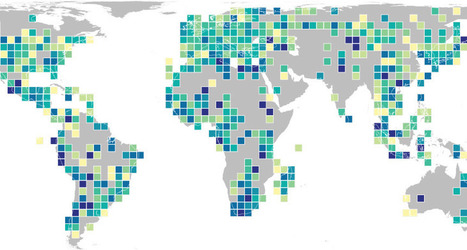
Maps have long been used to show the animal kingdom’srange, regional mix, populations at risk and more. Now a new set of maps reveals the global distribution of genetic diversity. “Without genetic diversity, species can’t evolve into new species,” says Andreia Miraldo, a population geneticist at the Natural History Museum of Denmark in Copenhagen. “It also plays a fundamental role in allowing species populations to adapt to changes in their environment.” Miraldo and her colleagues gathered geographical coordinates for more than 92,000 records of mitochondrial DNA from 4,675 species of land mammals and amphibians. The researchers compared changes in cytochrome b, a gene often used to measure genetic diversity within a species, and then mapped the average genetic diversity for all species within roughly 150,000 square-kilometer areas.
|
|
Scooped by
Dr. Stefan Gruenwald
October 25, 2016 2:28 PM
|
Ever wondered what it would be like if a device could decode your thoughts into actual speech or written words? While this might enhance the capabilities of already existing speech interfaces with devices, it could be a potential game-changer for those with speech pathologies, and even more so for "locked-in" patients who lack any speech or motor function. "So instead of saying 'Siri, what is the weather like today' or 'Ok Google, where can I go for lunch?' I just imagine saying these things," explains Christian Herff, author of a review recently published in the journal Frontiers in Human Neuroscience. While reading one's thoughts might still belong to the realms of science fiction, scientists are already decoding speech from signals generated in our brains when we speak or listen to speech. In their review, Herff and co-author, Dr. Tanja Schultz, compare the pros and cons of using various brain imaging techniques to capture neural signals from the brain and then decode them to text. The technologies include functional MRI and near infrared imaging that can detect neural signals based on metabolic activity of neurons, to methods such as EEG and magnetoencephalography (MEG) that can detect electromagnetic activity of neurons responding to speech. One method in particular, called electrocorticography or ECoG, showed promise in Herff's study. This study presents the Brain-to-text system in which epilepsy patients who already had electrode grids implanted for treatment of their condition participated. They read out texts presented on a screen in front of them while their brain activity was recorded. This formed the basis of a database of patterns of neural signals that could now be matched to speech elements or "phones." When the researchers also included language and dictionary models in their algorithms, they were able to decode neural signals to text with a high degree of accuracy. "For the first time, we could show that brain activity can be decoded specifically enough to use ASR technology on brain signals," says Herff. "However, the current need for implanted electrodes renders it far from usable in day-to-day life." So, where does the field go from here to a functioning thought detection device? "A first milestone would be to actually decode imagined phrases from brain activity, but a lot of technical issues need to be solved for that," concedes Herff. Their study results, while exciting, are still only a preliminary step towards this type of brain-computer interface.
|
|
Scooped by
Dr. Stefan Gruenwald
October 24, 2016 12:48 PM
|
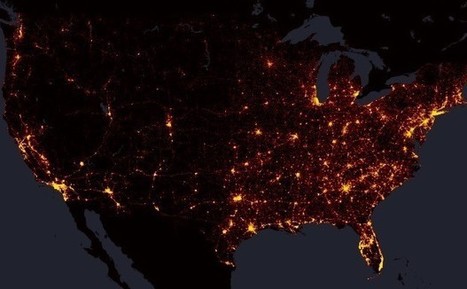
The death toll amounts to 373,377 lost lives. Max Galka of Metrocosm has made some lovely maps in 2015—tracking everything from obesity trends to property values to UFO sightings—but his latest effort may be the most powerful yet. Using data from the federal Fatality Analysis Reporting System, Galka maps every single U.S. road fatality from 2004 to 2013. The death toll amounts to 373,377 lost lives. At the national level, Galka’s map almost looks like an electricity grid stretching across America’s road network—with bright orange clusters in metro areas connected via dim red threads across remote regions. Here’s a wide view of the whole country:
|
|
Scooped by
Dr. Stefan Gruenwald
October 24, 2016 12:37 PM
|
Mars and Earth have several things in common. Like Earth, Mars is a terrestrial planet (i.e. composed of silicate rock and minerals). It also has polar ice caps, a tilted axis, and evidence of liquid water on its surface. On top of that, Mars and Earth are the only terrestrial planets in the Solar System to have natural satellites.
In fact, Mars has two satellites, which are appropriately named Phobos and Deimos (named after the Greek gods of horror and terror, respectively). Of the two, Deimos is the smaller moon and orbits at a greater distance from the planet. It has the characteristics of an asteroid, which is a strong indication of where it may have come from.
|
|
Scooped by
Dr. Stefan Gruenwald
October 24, 2016 12:16 PM
|
Scientists have found the first experimental evidence that an atomic nucleus can harbor bubbles. The unstable isotope silicon-34 has a bubble-like center with a paucity of protons, scientists report October 24 inNature Physics. This unusual “bubble nucleus” could help scientists understand how heavy elements are born in the universe, and help scientists find new, ultraheavy stable isotopes. In their quirky quantum way, protons and neutrons in a nucleus refuse to exist in only one place at a time. Instead, they are spread out across the nucleus in nuclear orbitals, which describe the probability that each proton or neutron will be found in a particular spot. Normally, due to the strong nuclear force that holds the two types of particles together, nuclei have a fairly constant density in their centers, regardless of the number of protons and neutrons they contain. In silicon-34, however, some scientists predicted that one of the proton orbitals that fills the center of the nucleus would be almost empty, creating a bubble nucleus. But not all theories agreed. “This was the reason for doing the experiment,” says coauthor Olivier Sorlin, a nuclear physicist at the National Large Heavy Ion Accelerator, GANIL, in Caen, France. “Some people didn’t believe that it would exist.” In pursuit of the bubble nucleus, the scientists smashed silicon-34 nuclei into a beryllium target, which knocked single protons out of the nuclei to create aluminum-33. The resulting aluminum-33 nuclei were in excited, or high-energy, states and quickly dropped down to a lower energy by emitting photons, or light particles. By observing the energy of those photons, Sorlin and colleagues could reconstruct the orbital of the proton that had been kicked out of the nucleus. The scientists found that they ejected few protons from the central orbital that theorists had predicted would be empty. While the orbital can theoretically hold up to two protons, it held only 0.17 protons on average. In silicon-34, the central proton density is about half that of a comparable nucleus, the scientists calculated, after taking into account other central orbitals that contain normal numbers of protons. The density of neutrons in silicon-34’s center, however, is normal.
|
|
Scooped by
Dr. Stefan Gruenwald
October 24, 2016 12:11 PM
|
Five years ago, the Nobel Prize in Physics was awarded to three astronomers for their discovery, in the late 1990s, that the universe is expanding at an accelerating pace. Their conclusions were based on analysis of Type Ia supernovae – the spectacular thermonuclear explosions of dying stars – picked up by the Hubble space telescope and large ground-based telescopes. It led to the widespread acceptance of the idea that the universe is dominated by a mysterious substance named 'dark energy' that drives this accelerating expansion. Now, a team of scientists led by Professor Subir Sarkar of Oxford University's Department of Physics has cast doubt on this standard cosmological concept. Making use of a vastly increased data set – a catalogue of 740 Type Ia supernovae, more than ten times the original sample size – the researchers have found that the evidence for acceleration may be flimsier than previously thought, with the data being consistent with a constant rate of expansion. The study is published in the Nature journal Scientific Reports. Professor Sarkar, who also holds a position at the Niels Bohr Institute in Copenhagen, said: 'The discovery of the accelerating expansion of the universe won the Nobel Prize, the Gruber Cosmology Prize, and the Breakthrough Prize in Fundamental Physics. It led to the widespread acceptance of the idea that the universe is dominated by "dark energy" that behaves like a cosmological constant – this is now the "standard model" of cosmology. 'However, there now exists a much bigger database of supernovae on which to perform rigorous and detailed statistical analyses. We analysed the latest catalogue of 740 Type Ia supernovae – over ten times bigger than the original samples on which the discovery claim was based – and found that the evidence for accelerated expansion is, at most, what physicists call "3 sigma". This is far short of the 5 sigma standard required to claim a discovery of fundamental significance. 'An analogous example in this context would be the recent suggestion for a new particle weighing 750 GeV based on data from the Large Hadron Collider at CERN. It initially had even higher significance – 3.9 and 3.4 sigma in December last year – and stimulated over 500 theoretical papers. However, it was announced in August that new data shows that the significance has dropped to less than 1 sigma. It was just a statistical fluctuation, and there is no such particle.'
|
|
Scooped by
Dr. Stefan Gruenwald
October 22, 2016 12:11 AM
|
Lengthening our lives will come at a cost. A study published online in Nature uses demographic data to reveal a lifespan that human beings cannot exceed, simply by virtue of being human. It’s like running, as an accompanying News and Views article points out. Elite athletes might shave a few milliseconds off the world record for the 100-meter sprint, but they’ll never run the same distance in, say, five seconds, or two. Human beings are simply not made that way. The same is true for longevity. The consequences of myriad factors related to our genetics, metabolism, reproduction and development, all shaped over millions of years of evolution, means that few humans will make it past their 120th birthdays. The name of Jeanne Calment, who died in 1997 at the age of 122, is likely to remain as long in the memory in the Methuselah stakes as that of Usain Bolt on the Olympic track. Maximum lifespan is a bald measure of years accumulated. It is not the same as life expectancy, which is an actuarial measure of how long one is expected to live from birth, or indeed from any given age. Life expectancy at birth has increased in most countries over the past century, not because people have longer lifespans, but mainly because infectious disease does not kill as many infants as it once did. Factors such as poverty and warfare conspire to decrease life expectancy. Although life expectancy at birth has risen steadily for both men and women in France since 1900, for example, there are dramatic and poignant drops that coincide with the two world wars. In Britain in the early twentieth century, many children still died from infectious diseases, and men would die shortly after retiring from physically demanding jobs. The National Health Service was the political response. It has become, in some ways, the victim of its own success. People live longer than they did even a few decades ago, and die (eventually) of different (and more expensive) complaints. As any beginning medical student is soon taught, gerontology is far from a dying discipline. So if we owe our increases in life expectancy to better public health, nutrition, sanitation and vaccination, is it not fair to ask whether more-effective treatments for diseases such as cancer, Parkinson’s disease and Alzheimer’s might also yield dividends in maximum lifespan? Will 120th birthday parties become routine, outmatched by a small yet increasing number of sesquicentenarians? The demographic data say no. People are living longer, and the population as a whole is greying, but the rate of increase in the number of centenarians is slowing, and might even have peaked.
|
|
Scooped by
Dr. Stefan Gruenwald
October 21, 2016 5:37 PM
|
The US Department of Agriculture (USDA) will not regulate a mushroom genetically modified withthe gene-editing tool CRISPR–Cas9. The long-awaited decision means that the mushroom can be cultivated and sold without passing through the agency's regulatory process — making it the first CRISPR-edited organism to receive a green light from the US government. “The research community will be very happy with the news,” says Caixia Gao, a plant biologist at the Chinese Academy of Sciences’s Institute of Genetics and Developmental Biology in Beijing, who was not involved in developing the mushroom. “I am confident we'll see more gene-edited crops falling outside of regulatory authority.” Yinong Yang, a plant pathologist at Pennsylvania State University (Penn State) in University Park, engineered the common white button (Agaricus bisporus) mushroom to resist browning. The effect is achieved by targeting the family of genes that encodes polyphenol oxidase (PPO) — an enzyme that causes browning. By deleting just a handful of base pairs in the mushroom’s genome, Yang knocked out one of six PPO genes — reducing the enzyme’s activity by 30%. The mushroom is one of about 30 genetically modified organisms (GMOs) to sidestep the USDA regulatory system in the past five years. In each case, the agency's Animal and Plant Health Inspection Service (APHIS) has said that the organisms — mostly plants — do not qualify as something the agency must regulate. Once a crop passes the USDA reviews, it may still undergo a voluntary review by the US Food and Drug Administration. Several of the plants that bypassed the USDA were made using gene-editing techniques such as the zinc-finger nuclease (ZFN) and transcription activator-like effector nuclease (TALEN) systems. But until now, it was not clear whether the USDA would give the same pass to organisms engineered with science’s hottest new tool, CRISPR–Cas9.
|