Researchers at Oregon State University have combined one of nature's tiny miracles, the diatom, with a version of inkjet printing and optical sensing to create an exceptional sensing device that may be up to 10 million times more sensitive than some other commonly used approaches.
A patent has been approved on the new "optofluidic" technology, and the findings published in the journal Nanoscale.
When implemented in working devices, this approach might improve biomedical sensing of cancer biomarkers; be used for extraordinarily precise forensics work; save the lives of military personnel in combat situations; detect illegal drugs; or help tell whether organic food is really pesticide free or not.
The enormous sensitivity and low cost of the technology may have endless applications, researchers say, ranging from health monitoring to environmental protection, biological experiments and other uses.
"Some existing sensors can detect compounds at levels of one part per billion, which sounds pretty good, but for many purposes that's not good enough," said Alan Wang, an OSU assistant professor of electrical engineering in the OSU College of Engineering, and corresponding author on the study.
"With this approach, we can detect some types of compounds at less than one part per trillion, about the level of a single molecule in a small sample. That's really difficult. Aside from its sensitivity, the technology can also work with ultra-small samples, is fast, and should be very inexpensive to use."
As the global spread of the Zika virus continues, efforts are underway to halt the disease’s transmission. While no licensed therapies or vaccines to protect against the Zika virus are currently available, new research published in the journal npj Vaccines demonstrates how a synthetic DNA vaccine approach successfully protected against infection, brain damage and death caused by the mosquito-borne Zika virus in vivo.
In this preclinical study, 100 percent of the animal models were protected from Zika after vaccination followed by a challenge with the Zika virus. In addition, they were protected from degeneration in the cerebral cortex and hippocampal areas of the brain, while the other cohort showed degeneration of the brain after Zika infection.
“Our results support the critical importance of immune responses for both preventing infection as well as ameliorating disease caused by the Zika virus,” said lead researcher David B. Weiner, Ph.D., Executive Vice President and Director of the Vaccine Center at The Wistar Institute and the W.W. Smith Charitable Trust Professor in Cancer Research at Wistar. “As the threat of Zika continues, these results provide insight into a new aspect of the possibly protective ability of such a vaccine as a preventative approach for Zika infection.”
This study is the first of its kind to analyze a vaccine in an animal model that is susceptible to the disease, providing information regarding the protective impact of the immune response in susceptible individuals. Prior studies of the Zika virus have tested vaccines in animal models that are naturally resistant to Zika. This study extends these prior research studies in an important manner.
J. Joseph Kim, Ph.D., MBA, President and CEO of Inovio Pharmaceuticals, Inc., added, “Working with Wistar, we have clearly demonstrated the power and the speed of our product development platform when we and our collaborators moved our Zika vaccine from the bench to human studies in less than six months, taking advantage of our platform to help in this outbreak situation.
In this latest study, Weiner and colleagues demonstrated how a synthetic DNA vaccine expressed specific antigens for Zika in vivo. They observed that this novel vaccine generated robust antigen-specific antibody and T cell responses that neutralized the virus in preclinical animal models. Moreover, they found that the vaccine provided protection against the disease and death in animal models while also being neuro-protective, meaning that the disease was unable to spread to the brain. This is especially important given the risk that infants born with the disease have of developing microcephaly, a birth defect resulting in an abnormally small head and that may prevent the brain from developing properly.
One important aspect of Zika and many other mosquito-borne diseases is that not everyone infected with the virus will actually become ill as a result. With Zika, only about 20 to 25 percent of individuals with the virus are actually impacted by the disease, according to previous studies from the U.S. Centers for Disease Control (CDC). However, there is no way to know for certain who will be at risk for illness due to the virus, which is why it was crucial for this study to examine how a vaccine would operate in an infected, symptomatic host.
Northwestern University engineers have invented a tool to make a super-high-resolution representation of RNA folding as it is being synthesized. It could potentially lead to future discoveries in basic biology, gene expression, RNA viruses, and disease.
Made up of long chains of nucleotides, RNA is responsible for many tasks in the cellular environment, including making proteins, transporting amino acids, gene expression, and carrying messages between DNA and ribosomes. To accomplish all these tasks, RNA folds into complex structures — “one of the biggest, most essential pieces of biology that we know comparatively nothing about,” said Julius B. Lucks, Ph.D, an associate professor of chemical and biological engineering at Northwestern’s McCormick School of Engineering.
RNA folding is an essential requirement to life, but is difficult to investigate because the process occurs rapidly and is extremely hard to measure. Existing technology to image RNA folding is very-low-resolution and can’t image RNA’s individual components rapidly enough to capture these processes.
Instead, Lucks’s technology combines two existing components: a next-generation sequencing technique, which is typically used for sequencing human genomes, and a chemistry technique to turn RNA structure measurements into big data.
“Instead of treating it like a genome sequencer, we’re treating it like a molecular microscope to get a massive snapshot,” Lucks said. The technique captures the RNA-folding pathway in a massive dataset. Lucks’s group then uses computational tools to mine and organize the data, which reveals points where the RNA folds and what happens after it folds.
From the structural information that they gather, the researchers can reconstruct a movie of the RNA folding process. The team plans to make the data-analysis component open source, so researchers anywhere can download and run the program.
Lucks and his team have already used the technology to view the folding of a ribo-switch, a segment of RNA that acts as a genetic “light switch” to turn protein expression on or off in response to a molecular signal, in this case fluoride.
Mathematics involves an intriguing interplay between finite and infinite collections and between discrete and continuous structures. Discussing summation methods, Alexander Kharazishvili looks at the fascinating paradoxes of convergent and divergent sequences.
Classical mathematical analysis involves an intriguing interplay between finite and infinite collections and between discrete and continuous structures. What makes the interplay intriguing is the emergence from the most elementary considerations of results that are paradoxical, or, at least, utterly counterintuitive. What, for example is the sum of 1+2+3+4+...+n?
The sum? Surely this sequence of numbers is simply getting bigger and bigger; and beyond this, it is not converging to anything. Not so. The sum is –1/12.
Niels Abel called divergent series the Devil’s invention.1 Having made outstanding contributions to the subject as the Devil’s plaything, he knew what he was talking about.
Seas could rise by a foot off the U.S. east coast by 2040 if we continue at a high level of emissions.
Even as negotiators meet in Marrakech, Morocco to take the next steps to avert dangerous human-caused climate change — and, even as the U.S. decides whether or not to elect a president who is skeptical it is happening — a new study has highlighted the sharp stakes involved, particularly when it comes to the ongoing rise in global sea level and the dramatic but uneven way in which it could affect the world’s coastlines.
The goal of the Paris climate agreement is to hold the planet’s temperature rise to “well below” a 2 degrees Celsius (3.6 degrees Fahrenheit) increase above what it was in pre-industrial times. We’ve already seen about a 1 degree Celsius (1.8 degrees Fahrenheit) increase since then.
But the new research just published in the Proceedings of the National Academy of Sciences notes that if we stay on a current, high-emissions pathway and do not achieve the cuts that the Paris agreement seeks to institutionalize, then we could hit 2 degrees Celsius by 2040 or so. For the planet’s sea level, this would mean over a half-foot rise averaged around the globe, in comparison with average sea levels from 1986 to 2005. The sea-level increase, however, would be far worse in certain places, such as the U.S. East Coast, where it could be over a foot.
And that’s just the beginning. Assuming we still don’t reform our ways, the 40 years after 2040 could then see another sharp 2 degree increase in temperatures — to 4 degrees Celsius — and another dramatic surge in sea level, culminating in a rise of 2 feet averaged across the globe, or more if we’re unlucky. The study finds that by 2100, New York could see a sea level rise of more than 3.5 feet.
“Basically we spent 200 years to warm our planet by 2 degrees, and then we will do it in 40 years time, this shows a completely different scale of what’s going on,” said Svetlana Jevrejeva, the lead author of the study and a researcher at the National Oceanography Centre in the United Kingdom, in describing the scenario presented in the study. Jevrejeva completed the work with researchers at institutions in the U.K., the Netherlands, Denmark, China, and Finland.
"Biological processes that make life happen and cause diseases largely take place inside cells, which can be studied with microscopes and other techniques, but not in enough detail," said Michael Feig, an MSU professor of biochemistry and molecular biology who led the research project. "Our research has revealed unprecedented details about what exactly takes place inside biological cells, and how proteins in particular behave in their natural environment."
The team set out to examine whether the crowding in biological cells alters the properties of biological molecules and their ability to carry out their function. Armed with access to the "K computer," a supercomputer housed at the RIKEN Advanced Institute for Computational Science in Kobe, Japan, the research team was able to conduct computer simulations that model the cellular interior of a bacterium, and show a detailed view of how the various molecular components interact in a very dense environment.
"Our computer simulations were not too far away from simulating an entire cell in full atomistic detail," Feig said. "These simulations exceeding 100 million atoms are the largest simulations of this kind and are several orders of magnitude larger than what is typical research work today."
The powerful computer simulation led to a discovery that some proteins may not be as stable in very dense environments, losing the structures necessary for biological function. The research also found that this cellular environment might bring proteins involved in related biological processes closer to each other, which would enhance the overall efficiency of the cell in converting food to energy.
"Proteins in cells are squeezed together like people in the Tokyo subway during rush hour, where the crush violates personal space. But for proteins this is sometimes more welcome than we thought," Feig said.
A third major finding is that smaller molecules, such as those providing food and carrying energy, appear to be distracted by the many opportunities to interact with the larger proteins, affecting their biological function. "This is a breakthrough achievement in understanding how the molecules that biochemists normally study interact in real life conditions," said Thomas Sharkey, chair of the Department of Biochemistry and Molecular Biology at MSU. "It will provide critical insights that will be used by people working to cure cancer and other diseases that depend on the cellular processes that are now much better understood."
Scientists think they've located a region of the brain that's linked to the placebo effect - a psychological phenomenon where patients feel better because they think they've been given real drugs, when in fact all they've been given is sugar pills.
The findings could not only help researchers identify those who are more likely to experience a placebo effect - it could also lead to more personalised treatments for those suffering from chronic pain, giving scientists a new way to tailor drugs to particular brain types.
Working with 98 volunteers with chronic knee osteoarthritis, the team used a customised functional magnetic resonance imaging (fMRI) technique to identify a specific region in the mid-frontal gyrus part of the brain that could be linked to the placebo effect.
From the original pool of volunteers, they then randomly selected 39, and used this technique to try and identify those who responded well to placebo treatments. They were correct 95 percent of the time.
That's important, because being able to accurately identify those who respond well to placebos before a clinical trial gets underway would make a big difference in clinical trials.
Not only would it allow researchers to eliminate volunteers who might be particularly affected by placebos in a clinical trial, it could also help them get more accurate readings on the effectiveness of drugs by accounting for an individual's placebo effect.
"Given the enormous societal toll of chronic pain, being able to predict placebo responders in a chronic pain population could both help the design of personalised medicine and enhance the success of clinical trials," said team member, Marwan Baliki, from Northwestern University.
In the past, doctors have had to use a trial and error method for choosing drugs to target chronic pain, but this research could help them select treatments that are much more personalised, based on a patient's fMRI scans.
"The new technology will allow physicians to see what part of the brain is activated during an individual’s pain, and choose the specific drug to target this spot," said one of the researchers, A. Vania Apkarian.
"It also will provide more evidence-based measurements. Physicians will be able to measure how the patient's pain region is affected by the drug."
To be clear, the sample size in this study is very small, so it's going to take a much larger pool of volunteers to demonstrate if the technique works as well as it appeared to in these experiments. But the researchers think there's enough evidence here to spark further investigation.
The team also says that because their study looked at long-term pain issues, rather than isolated pain experiments as most other placebo effect studies have, it should be more useful in putting together treatments in the future.
"These results provide some evidence for clinical placebo being predetermined by brain biology, and show that brain imaging may also identify a placebo-corrected prediction of response to active treatment," they write in PLOS Biology.
Now we just need to figure out why the placebo effect happens at all.
Things can go downhill fast when a patient has sepsis, a life-threatening condition in which bacteria or fungi multiply in the blood—often too fast for antibiotics to help.
A new device inspired by the human spleen and developed by a team at Harvard’s Wyss Institute for Biologically Inspired Engineering may radically transform the way doctors treat sepsis. “Even with the best current treatments, sepsis patients are dying in intensive care units at least 30 percent of the time,” said Mike Super, senior staff scientist at the Wyss Institute. “We need a new approach.”
Sepsis kills at least 8 million people worldwide each year and is the leading cause of hospital deaths. The device, called a “biospleen,” exceeded the team’s expectations with its ability to cleanse human blood tested in the laboratory and to increase survival in animals with infected blood, as reported in Nature Medicine on Sept. 14. In a matter of hours, it was able to filter live and dead pathogens from the blood, as well as dangerous toxins released from the pathogens.
Sepsis occurs when a patient’s immune system overreacts to a bloodstream infection, triggering a chain reaction that can cause inflammation, blood clotting, organ damage and death. It can arise from a variety of infections, including appendicitis, urinary tract infections and skin or lung infections, as well as from contaminated IV lines, surgical sites and catheters.
Identifying the specific pathogen responsible for a patient’s sepsis can take several days, and in most cases the causative agent is never identified. If doctors are unable to pinpoint which types of bacteria or fungi are causing the infection, they treat sepsis patients empirically with broad-spectrum antibiotics—but these often fail, and they can have devastating side effects.
The sepsis treatment challenge continues to grow more complex as the prevalence of drug-resistant bacteria increases while the development of new antibiotics lags. “This is setting the stage for a perfect storm,” said Super, who was part of a team led by Wyss Institute Founding Director Don Ingber, the Judah Folkman Professor of Vascular Biology at Harvard Medical School and at the Vascular Biology Program at Boston Children’s Hospital.
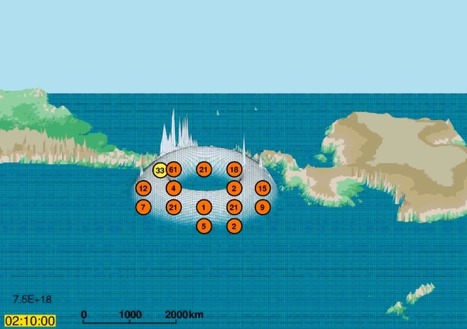
When a mountain-sized asteroid struck the deep ocean off the coast of Antarctica 2.5 million years ago, it set off an apocalyptic chain of events: a devastating rain of molten rock and then a deadly tsunami that inundated the coastlines of the Pacific Ocean. But according to a team of Australian researchers, this was just the beginning. Then came a protracted ice age that killed off many of the Earth’s large mammals.
The Eltanin meteor, named after the USNS Eltanin which surveyed the area in 1964, is the only impact that has ever been discovered in a deep-ocean basin. These deep water impacts must be more common – so much of the planet is ocean – but they’re tricky to find because of the inaccessible depths of the impact craters. Researchers examining sediments in the area discovered tiny grains of impact melt and debris from meteorite fragments. Something big smashed this spot.
An asteroid strike on land is devastating, but an asteroid strike in the deep ocean is even worse. On both land and ocean, you get the plume of water vapor, sulfur, and dust blasted into the high atmosphere, raining molten rock down across a wide area. But for asteroid strikes in the ocean, this is followed by a devastating tsunami that inundates coastlines around the world. There are waves hundreds of meters high at the crash site, and they travel deep inland on every coastline. A local event becomes a global event.
But with the Eltanin meteor, this was followed by a prolonged ice age. Professor James Goff and his colleagues from the University of New South Wales in Australia have been researching the Eltanin meteor and its after-effects. The timing of the impact seems to line up with geologic deposits in Chile, Australia and Antarctica. Geologists traditionally connected these deposits with slower geological processes, like glaciation. But Goff and his team think these deposits might have been dropped all at once by the devastating tsunami from Eltanin.
Here’s a video that shows how the impact and subsequent tsunami might have played out. Although the Earth was already thought to be cooling in the mid to late Pliocene, the material kicked into the high atmosphere by Eltanin could have pushed the planet’s climate past the tipping point:
“There’s no doubt the world was already cooling through the mid and late Pliocene,” says co-author Professor Mike Archer. “What we’re suggesting is that the Eltanin impact may have rammed this slow-moving change forward in an instant – hurtling the world into the cycle of glaciations that characterized the next 2.5 million years and triggered our own evolution as a species.”
It was this time of a global ice age that transitioned the planet from the Pliocene to the Pleistocene. It was a bad time to be a Chalicothere or Anthracotheriidae, but a good time to be a hominid. So… thanks Eltanin.
Earth's Moon is an unusual object in our solar system, and now there's a new theory to explain how it got where it is, which puts some twists on the current "giant impact" theory. The work is published Oct. 31 in the journal Nature.
The Moon is relatively big compared to the planet it orbits, and it's made of almost the same stuff, minus some more volatile compounds that evaporated long ago. That makes it distinct from every other major object in the Solar System, said Sarah Stewart, professor of Earth and planetary sciences at the University of California, Davis and senior author on the paper.
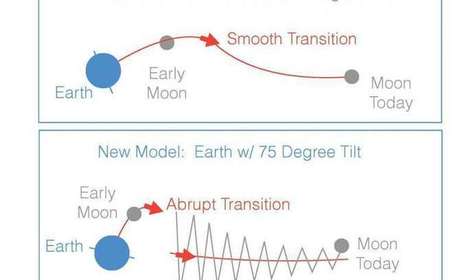
The textbook theory of lunar formation goes like this. Late in the formation of the solar system came the "giant impact" phase, when hot planet-size objects collided with each other. A Mars-sized object grazed what would become Earth, throwing off a mass of material from which the Moon condensed. This impact set the angular momentum for the Earth-Moon system, and gave the early Earth a five-hour day. Over millennia, the Moon has receded from the Earth and the rotation has slowed to our current 24-hour day. Scientists have figured this out by looking at the Moon's current orbit, working out how rapidly angular momentum of the Earth-Moon system has been transferred by the tidal forces between the two bodies, and working backwards.
But there are a couple of problems with the textbook theory. One is the Moon's surprisingly Earth-like composition. Another is that if the Moon condensed from a disk of material rotating around Earth's equator, it should be in orbit over the equator. But the Moon's current orbit is tilted off the equator, meaning some more energy must have been put in to move it. Stewart, her former postdoctoral fellow Matija Ćuk (now a scientist at the SETI Institute in Mountain View, Calif.), with Douglas Hamilton at the University of Maryland and Simon Lock, Harvard University, have come up with an alternative model.
In the new model, a high energy collision left a mass of vaporized and molten material from which the Earth and Moon formed. The Earth was set spinning with a two-hour day, its axis pointing towards the Sun. Because the collision could have been more energetic than in the current theory, the material from Earth and the impactor would have mixed together, and both Earth and Moon condensed from the same material and therefore have a similar composition. As angular momentum was dissipated through tidal forces, the Moon receded from the Earth until it reached a point called the "LaPlace plane transition," where the forces from the Earth on the Moon became less important than gravitational forces from the Sun. This caused some of the angular momentum of the Earth-Moon system to transfer to the Earth-Sun system. This made no major difference to the Earth's orbit around the Sun, but it did flip Earth upright. At this point, the models built by the team show the Moon orbiting Earth at a high angle, or inclination, to the equator.
Over a few tens of million years, the Moon continued to slowly move away from Earth until it reached a second transition point, the Cassini transition, at which point the inclination of the Moon—the angle between the Moon's orbit and the Earth's orbit about the sun—dropped to about five degrees, putting the Moon more or less in its current orbit.
Research also provides new clues about the roles of subsurface bacteria in globally important cycles.
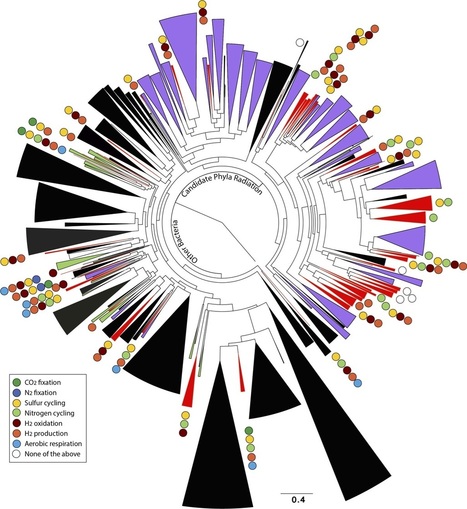
The bacterial bonanza comes from scientists who reconstructed the genomes of more than 2,500 microbes from sediment and groundwater samples collected at an aquifer in Colorado. The effort was led by researchers from the Department of Energy’s Lawrence Berkeley National Laboratory (Berkeley Lab) and UC Berkeley. DNA sequencing was performed at the Joint Genome Institute, a DOE Office of Science User Facility.
As reported online October 24 2016 in the journal Nature Communications, the scientists netted genomes from 80 percent of all known bacterial phyla, a remarkable degree of biological diversity at one location. They also discovered 47 new phylum-level bacterial groups, naming many of them after influential microbiologists and other scientists. And they learned new insights about how microbial communities work together to drive processes that are critical to the planet’s climate and life everywhere, such as the carbon and nitrogen cycles.
These findings shed light on one of Earth’s most important and least understood realms of life. The subterranean world hosts up to one-fifth of all biomass, but it remains a mystery. “We didn’t expect to find this incredible microbial diversity. But then again, we know little about the roles of subsurface microbes in biogeochemical processes, and more broadly, we don’t really know what’s down there,” says Jill Banfield, a Senior Faculty Scientist in Berkeley Lab’s Climate & Ecosystem Sciences Division and a UC Berkeley professor in the departments of Earth and Planetary Science, and Environmental Science, Policy, and Management.
UC Berkeley’s Karthik Anantharaman, the first author of the paper, adds, “To better understand what subsurface microbes are up to, our approach is to access their entire genomes. This enabled us to discover a greater interdependency among microbes than we’ve seen before.”
Although quantum dots were discovered in the 1980s, so far there have been no widespread commercial applications of these nano-sized light-emitting semiconductor particles. The main problem is that quantum dots need to be deposited and patterned onto substrates, and currently there is no method that can do this both with a high resolution and on a large scale.
Now in a new study, researchers have developed a method that overcomes this tradeoff by combining two conventional methods: photolithography, which uses light to pattern the quantum dots with a high resolution; and layer-by-layer assembly, which uses the electric charges of the quantum dots to uniformly deposit them in layers over a large area.
The researchers, Joon-Suh Park et al., have published a paper on the new quantum dot patterning process in a recent issue of Nano Letters. They expect that the new method will provide a practical, low-cost solution to the bottleneck in fabricating high-resolution, large-scale quantum dot devices. "We believe that our work provides a quantum dot patterning method that is compatible with conventional semiconductor fabrication processes that lowers the barrier for the industrial development," Park, at the Korea Institute of Science and Technology (KIST), explained. "As quantum dots are more robust against water or oxygen exposure compared to organic materials, we believe that quantum dots can be applied to broad aspects in which organic materials are currently in place: displays (AMOLEDs), photodetectors, phototransistors, and solar cells."
Although there are a variety of techniques for depositing and patterning particles onto substrates, quantum dots present a greater challenge due to their unusual properties. For instance, because of their high molecular weight, evaporation techniques are infeasible, and due to their hydrophobic coating, they have a tendency to dissolve when they come in contact with the organic chemicals used in conventional photolithography.
A new approach has been developed to combat diseases caused by herpesvirus infections, including everything from cold sores to cancer.
Researchers at the University of Leeds have discovered a way to prevent herpesviruses hijacking important pathways in cells which are required for the virus to replicate and cause disease.
Professor Adrian Whitehouse from the School of Molecular Biology and Astbury Centre for Structural Molecular Biology at the University led the five year study, the results of which are published today in the journal Nature Microbiology.
Prof Whitehouse said: "We've spent several years demonstrating that a protein found in all herpesviruses, recruits a protein complex in the host cell, called human TREX, to help stabilise and transport herpesvirus RNAs out of a cell's nucleus so they are turned into viral proteins. "Now we have identified a compound which can disrupt this essential virus-host cell interaction which in turn prevents herpesviruses replicating and producing infectious particles."
The approach the researchers used was unique as it targeted the enzyme activity of a key component of the cellular human TREX complex, known as UAP56. Inhibiting t his activity prevented the remodelling of the human TREX complex which stopped the interaction with the viral protein.
The project is a collaboration between virologists led by Professor Whitehouse and a team of chemists led by Dr Richard Foster also from the University of Leeds. Dr Foster's team performed a virtual screen of thousands of compounds to identify potential inhibitors. These were then tested for their ability to stop herpesvirus replication without damaging the host cell.
Over the next decade we will look at our smartphone screens less and less and even if using mobile phone screens to watch a virtual reality event will be quite a different experience than staring down at a mobile phone in your hands. Beacons, Internet of Things, new kinds of sensors and artificial intelligence systems will cause us to interact with the world differently.
searchers at University of California San Diego School of Medicine, Texas A&M College of Medicine and the Omni-Net Birth Defects Prevention Program in Ukraine have identified a blood test that may help predict how severely a baby will be affected by alcohol exposure during pregnancy, according to a study published November 9, 2016 in the journal PLOS ONE. Study authors say the findings could facilitate early intervention to improve the health of infants and children who were prenatally exposed to alcohol.
Fetal alcohol syndrome is a severe form of a spectrum of mental and physical disabilities called fetal alcohol spectrum disorders (FASD) that can affect children’s development with long-lasting consequences. In the United States and Western Europe, it’s estimated that 2 to 5 percent of school-age children are affected by FASD. In some parts of the world, the number is higher.
Children and adults affected by FASD may experience a range of symptoms, from physical changes like a small head and subtle differences in facial characteristics to learning difficulties and behavioral issues.
Despite widespread prevention guidelines, drinking during pregnancy still occurs, in part because roughly half of pregnancies in the United States are unplanned and many women may not realize that they need to stop consuming alcohol before harm occurs. “It’s a huge problem,” said Rajesh Miranda, PhD, professor in the Texas A&M College of Medicine and co-senior author of the study, “but we might not realize the full scope because infants born with normal-looking physical features may be missed, making many cases difficult to diagnose early.”
Seeking to develop a predictive test using biomarkers, researchers looked at birth outcomes for 68 pregnant women enrolled in the study at two perinatal care clinics in western Ukraine. The team obtained detailed health and alcohol consumption histories and second and third trimester blood samples from each woman. The results indicated that moderate to high levels of alcohol exposure during early pregnancy resulted in significant differences in some circulating small RNA molecules called microRNAs (miRNAs) in maternal blood. These differences were particularly notable in mothers whose infants showed some physical or neurobehavioral signs of alcohol effects in the first 12 months of life.
“Collectively, our data indicate that maternal plasma miRNAs may help predict infant outcomes and may be useful to classify difficult-to-diagnose FASD subpopulations,” Miranda said.
Unlike mammals, zebrafish efficiently regenerate functional nervous system tissue after major spinal cord injury. Whereas glial scarring presents a roadblock for mammalian spinal cord repair, glial cells in zebrafish form a bridge across severed spinal cord tissue and facilitate regeneration. Scientists now performed a genome-wide profiling screen for secreted factors that are up-regulated during zebrafish spinal cord regeneration. They found that connective tissue growth factor A (ctgfa) is induced in and around glial cells that participate in initial bridging events. Mutations in ctgfa disrupted spinal cord repair, and transgenic ctgfa overexpression and local delivery of human CTGF recombinant protein accelerated bridging and functional regeneration. This study reveals that CTGF is necessary and sufficient to stimulate glial bridging and natural spinal cord regeneration.
Strange pulses of cosmic light might be signals from hundreds of different alien civilizations — or just the latest false alarm in the tortuous search for ET.
A recent paper entitled “Discovery of peculiar periodic spectral modulations in a small fraction of solar type stars” by Borra and Trottier (2016), Université Laval, Quebec, reports the detection of periodic spectral modulations in 234 out of 2.5 million stars observed by the Sloan Digital Sky Survey (SDSS). Authors Borra and Trottier state that the signal is consistent with a prediction from an earlier paper by Borra, for signals from extraterrestrial civilizations broadcasting extremely rapid (shorter than 0.1 nanoseconds) optical pulses superimposed on the light of the host stars. The one in 10,000 objects with unusual spectra seen by Borra and Trottier are certainly worthy of additional study.
However, extraordinary claims require extraordinary evidence. It is too early to unequivocally attribute these purported signals to the activities of extraterrestrial civilizations. Internationally agreed-upon protocols for searches for evidence of advanced life beyond Earth (SETI) require candidates to be confirmed by independent groups using their own telescopes, and for all natural explanations to be exhausted before invoking extraterrestrial agents as an explanation.
Careful work must be undertaken to determine false positive rates, to rule out natural and instrumental explanations, and most importantly, to confirm detections using two or more independent telescopes. Peaks in Fourier analysis of stellar spectra, such as those discussed by Borra and Trottier, can be caused by instrumental optics or introduced during data reduction. Data artifacts, fringing, and inconsistencies in the manufacture of detectors are known to users of high resolution spectrographs to cause minute patterns to appear in the resulting spectra. The movement of the telescope, variations in observing conditions, and the process of wavelength calibration can easily introduce undesired signals at levels that are only barely detectable. It is therefore important to check the claimed signal using a different telescope and instrument.
The Berkeley SETI Research Center (BSRC) team has added several stars from the Borra and Trottier sample to the Breakthrough Listen observing queue on the 2.4-meter Automated Planet Finder (APF) optical telescope. The capabilities of the APF spectrograph are well matched to those of the original detection, and these independent follow-up observations will enable us to verify or refute the reported detections.
We look forward to consulting with Professor Borra and his team on these observations, as well as additional follow up investigations using other data sources. The international SETI community has established a 0 to 10 scale for quantifying detections of phenomena that may indicate the existence of advanced life beyond the Earth called the “Rio Scale.” The BSRC team assesses the Borra-Trottier result to currently be a 0 or 1 (None/Insignificant) on this scale. If the signal were to be confirmed with another independent telescope, its significance would rise, though an exhaustive analysis of other possible explanations, including instrumental phenomena, must be performed before supporting the hypothesis that artificially generated pulses are responsible for the claimed signal.
Spectroscopy of exotic molecules can offer insight into fundamental physics. Hori et al. studied the transition frequencies of an unusual helium atom in which one of the two electrons was substituted by an antiproton, the negatively charged antiparticle partner of the proton. The antiprotonic helium was cooled down to low temperatures to allow the frequencies to be measured with high precision. The extracted mass of the antiproton (relative to the electron mass) was in good agreement with previous measurements of the proton mass. This finding is in keeping with the implications of the combined charge, parity, and time-reversal symmetry of physical laws.
Charge, parity, and time reversal (CPT) symmetry implies that a particle and its antiparticle have the same mass. The antiproton-to-electron mass ratio can be precisely determined from the single-photon transition frequencies of antiprotonic helium.
The physicists measured 13 such frequencies with laser spectroscopy to a fractional precision of 2.5 × 10⁻⁹ to 16 × 10−9. About 2 × 10⁹ antiprotonic helium atoms were cooled to temperatures between 1.5 and 1.7 kelvin by using buffer-gas cooling in cryogenic low-pressure helium gas; the narrow thermal distribution led to the observation of sharp spectral lines of small thermal Doppler width. The deviation between the experimental frequencies and the results of three-body quantum electrodynamics calculations was reduced by a factor of 1.4 to 10 compared with previous single-photon experiments.
From this, was determined as 1836.1526734(15), which agrees with a recent proton-to-electron experimental value within 8 × 10⁻¹⁰.
If scientists had sacred objects, this would be one of them: a single, closely guarded 137-year-old cylinder of metal, housed in a vault outside of Paris. It is a prototype that precisely defines a kilogram of mass everywhere in the universe. A kilogram of ground beef at the grocery store has the same mass as this one special hunk of metal, an alloy of platinum and iridium. A 60-kilogram woman has a mass 60 times as much. Even far-flung astronomical objects such as comets are measured relative to this all-important cylinder: Comet 67P/Churyumov–Gerasimenko, which was recently visited by the European Space Agency’s Rosetta spacecraft (SN: 2/21/15, p. 6), has a mass of about 10 trillion such cylinders.
But there’s nothing special about that piece of metal, and its mass isn’t even perfectly constant — scratches or gunk collecting on its surface could change its size subtly (SN: 11/20/10, p. 12). And then a kilogram of beef would be slightly more or less meat than it was before. That difference would be too small to matter when flipping burgers, but for precise scientific measurements, a tiny shift in the definition of the kilogram could cause big problems.
That issue nags at some researchers. They would prefer to define important units — including kilograms, meters and seconds — using immutable properties of nature, rather than arbitrary lengths, masses and other quantities dreamed up by scientists. If humans were to make contact with aliens and compare systems of units, says physicist Stephan Schlamminger, “we’d be the laughingstock of the galaxy.”
To set things right, metrologists — a rare breed of scientist obsessed with precise measurements — are revamping the system. Soon, they will use fundamental constants of nature — unchanging numbers such as the speed of light, the charge of an electron and the quantum mechanical Planck constant — to calibrate their rulers, scales and thermometers. They’ve already gotten rid of an artificial standard that used to define the meter — an engraved platinum-iridium bar. In 2018, they plan to jettison the Parisian kilogram cylinder, too.
The sheer size of the Ebola epidemic that began in 2013 and engulfed West Africa is still a bit of a riddle for scientists. Previous Ebola outbreaks had never sickened more than 600 people. But the outbreak in Liberia, Sierra Leone, and Guinea infected more than 28,000 before it was finally brought under control. Part of the explanation was that the virus had suddenly surfaced in major cities, making it harder to stamp out than in the isolated rural locales where it had struck before. The countries’ poor public health infrastructure and other environmental factors played roles as well.
But two papers raise another intriguing possibility. They show that some 3 months after the outbreak took off and became a full-blown epidemic, the virus underwent a mutation that made it better suited for humans than for its presumed natural host, a fruit bat species. “The virus has never had this many human-to-human transmissions before, and there are a lot of mutations happening,” says Harvard University’s Pardis Sabeti, an evolutionary geneticist who co-authored one of the papers.
Sabeti stresses that her team only has a “circumstantial” case about the timing of the mutation and the epidemic’s explosion, but her group and an independent team that published the second study have amassed what she calls “compelling evidence” that for the first time links a mutation in the virus to a preference for human cells. The findings “raise the possibility that this mutation contributed directly to greater transmission and thus to the severity of the outbreak,” the team writes. And they found an “association” with increased mortality. “We should neither be alarmist nor complacent,” Sabeti says. “Any possibility that one of the mutations can have a serious impact should be interrogated.”
Working with a team led by Jeremy Luban from the University of Massachusetts Medical School in Worcester, Sabeti and co-workers sequenced samples from 1489 West African patients and analyzed them. By March 2014—about the time the epidemic was detected, but some 3 months after the first case actually occurred—the sequences had split into two distinct lineages, one of which was characterized by a single amino acid change in a region of the virus’s surface protein and allows it to bind to cells. The mutant, Luban says, “completely supplanted the ancestral virus.”
The big question, of course, is whether the mutation could help the virus spread. The researchers did not have access to a biosafety level (BSL) 4 laboratory necessary to test that with the real Ebola virus, so they engineered harmless “pseudotyped” viruses that contained the gene for the surface protein in both its ancestral and mutated form. The mutant far more easily infected human immune cells than did the ancestral pseudotype, the team reports today in Cell. The researchers also showed that the mutant more easily infects primate cells than cells from rodents or carnivores.
The second paper, published today in Cell by a team led by Jonathan Ball at the United Kingdom’s University of Nottingham and Etienne Simon-Loriere of the Pasteur Institute in Paris, independently arrived at a similar conclusion. The team analyzed its own 1610 sequences from the epidemic and also found that they separated into two lineages based on the single mutation in the glycoprotein. The researchers also compared pseudotyped Ebola viruses that matched the ancestor with ones with the same mutation, and found they preferentially infected cells from humans as opposed to the fruit bat species Hypsignathus monstrosus. They also found this mutant’s infectivity was increased by other mutations, which suggests that the virus didn’t undergo just one, but several adaptations allowing it to jump more easily from human to human. That could have complicated attempts to bring the epidemic to an end.
But Ball, Simon-Loriere, and colleagues approach this conclusion most cautiously, stressing that epidemiologic factors, such as “increased circulation in urban areas that in turn led to larger chains of transmission,” likely were the most important driver. “Despite the experimental data provided here, it is impossible to clearly establish whether the adaptive mutations observed were in part responsible for the extended duration of the 2013–16 epidemic,” they write in their paper.
A study published by Science in March of last year did not find any evidence that the virus evolved to become more transmissible or more virulent. But the first author of that paper, virologist Thomas Hoenen of the Friedrich Loeffler Institute in Riems, Germany, says the two new papers make a powerful case that the glycoprotein mutation benefited the virus. “The question now is, what does this really mean in terms of biological consequences?”
Luban stresses that Hoenen’s analysis and others that reached similar conclusions weren’t wrong. But the researchers were analyzing viral sequences to address different questions—such as the viral mutation rate—or only looked at samples isolated in the early days of the outbreak. “You have to do wet experiments sometimes,” Luban says. “All of the algorithm crunching suggested Ebola is Ebola is Ebola. These two experiments say it doesn’t matter what the computers say. The virus is more infectious.”
The authors of the new studies agree that to clarify the impact the mutation has on transmissibility and virulence, scientists must do experiments with the real virus and engineered mutants of it, both in cell cultures and animals. But they have had difficulty finding a BSL-4 lab that’s willing to collaborate and funding is a challenge, too. “We need to pay attention to this,” Sabeti says. The rapid adaptation to humans underscores the need to respond quickly to animal to human transmissions of Ebola and other viruses, she adds. “Anytime you see one of these sparks ignite it could turn into full on forest fire.”
The theory called Holographic Space-time is an attempt to generalize String Theory so that one can discuss local regions of space-time. It's key feature is a mapping between quantum concepts and the geometry of space-time. Causality conditions are imposed, as in quantum field theory, by insisting that things which cannot have mutual quantum interference are things that are causally separated. Geometrical sizes are encoded via the Holographic Principle: the number of quantum states in a region is determined by the area of a certain surface surrounding that region. Inside a black hole, space stretches and squeezes much faster than light.
In 1995, Jacobson showed that one could derive Einstein's equations by imposing this principle in every space-time region. Einstein's equations are the hydrodynamic equations of a system whose statistics obeys the Holographic connection between space-time and the number of quantum states.
Dr. Banks will outline the application of these ideas to a new model of the early inflationary universe, as well as to a rough prediction of the masses of supersymmetric particles.
Neutron stars are unimaginably dense, so when you have the rare case of two neutron stars orbiting each other in a binary system, the fun begins. Their orbits slowly decay and the two stars inexorably circle closer and closer, eventually meeting in a final embrace of each other. The energy released when they finally collide explodes out in short, unimaginable strong and sharp jets of gamma rays, followed by dense, radioactive stellar material ejected in an explosion, the kilonova flash. In the explosion on 4 June 2013, the gamma ray burst was 100 billion times brighter than the kilonova flash that followed. In any one given galaxy, these events occur once every million years or so, says Tanvir. But across the Universe, five or six are detected each year.
A few percent of the neutron stars' mass is ejected in the explosion, "a few tens of Jupiters," estimates Tanvir. Research released in June this year, which used visible and near-infrared measurements of kilonovae, suggested that these neutron star collisions could be how gold and other heavy elements are created in the Universe -- yes, the same dying embrace that creates black holes and intense gamma ray bursts also showers the Universe with gold. "The fabric of spacetime wobbles when you have binary systems like neutrons," says Tanvir, hinting at why these binary neutron star systems and their blinging catastrophic deaths could hold the key to measuring cosmic gravitational waves. "These binary systems might be the first places you would detect gravitational waves," he says.
Gravitational waves are ripples in space time that are predicted by Einstein's Theory of General Relativity. They are difficult to detect because gravity is, counterintuitively, so weak (think about it, if gravity is so strong, then why does a simple fridge magnet overpower it and remain on your fridge?).
Orbiting neutron stars are exactly the kind of intense gravitational environments where the ripples would be strongest. Short-duration gamma ray bursts and kilonovae are like beacons -- they say to astronomers, look over here, it's a binary neutron star system.
With this benchmark, researchers will be able to target their search for gravitational waves and, importantly, measure how far away the source of the waves is, thereby helping us understand how they propagate through space-time.
Colliding neutron stars, black holes, the creation of gold, and gravitational waves -- yes, short-term gamma-ray bursts may just be the most interesting things in the Universe.
A team of researchers at the University of Cambridge has succeeded in creating turbulence in a Bose–Einstein condensate (BEC) and in the process, have possibly opened the door to a new avenue of research. In their paper published in the journal Nature, the team describes how they achieved this feat and the evidence they found for a cascade. Brian Anderson with the University of Arizona offers a News & Views piece describing the work done by the team in the same journal issue and offers a brief overview of the characteristic distribution of kinetic energy in turbulent fluids.
Scientists have learned a lot about the nature of turbulence in fluids over the past several hundred years, some of which surrounds the way kinetic energy is distributed among components that have different momenta—which can be seen in action, as Anderson notes, by stirring cream into a cup of coffee. But until now, no one had succeeded in producing turbulence in a BEC, in which a gas of bosons is cooled to near absolute zero causing them to occupy the lowest possible quantum state, thereby allowing for viewing quantum phenomena—Anderson calls them "microscopic droplets of atomic gasses."
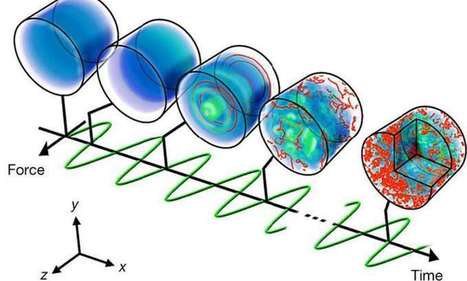
In this new effort, the researchers conducted experiments designed to discover what might happen if turbulence were introduced to a BEC, in this case, one made of rubidium atoms captured in a laser-created virtual box—this type of setup provided uniform density of the atoms. The team then applied a timed magnetic field that served to shake up the cloud of atoms, which added energy to the system. They then determined the momentum distribution. For small time intervals, they found most of the atoms in the cloud were in a low-momentum mode—more shaking pushed the atoms into a higher momentum mode. After approximately two seconds, the researchers found evidence of a cascade of excitations by releasing the cloud and capturing what occurred with a 2-D camera.
The method used by the team to cause the turbulence in a BEC is likely to be used as a model for future experiments involving quantum turbulence.
Researchers sift through clues after Schiaparelli crash in hopes of averting mistakes in 2020 mission.
The events of 19 October 2016 may be painful for ESA scientists to recall, but they will now have to relive them over and over again in computer simulations. The lander, called Schiaparelli, was part of ESA's ExoMars mission, which is being conducted jointly with the Russian Space Agency Roscosmos. It was a prelude to a planned 2020 mission, when researchers aim to land a much larger scientific station and rover on Mars, which will drill up to 2-meters down to look for signs of ancient life in the planet’s soil. Figuring out Schiaparelli’s faults and rectifying them is a priority, says Jorge Vago, project scientist for ExoMars. “That’s super important. I think it’s on everybody’s mind.”
Unlike the British-led and ESA-operated Beagle 2 mission, which disappeared during its landing on Mars on Christmas Day 2003, Schiaparelli sent data to its mother ship during its descent. Preliminary analysis suggests that the lander began the maneuver flawlessly, braking against the planet’s atmosphere and deploying its parachute. But at 4 minutes and 41 seconds into an almost 6-minute fall, something went wrong. The lander’s heat shield and parachute ejected ahead of time, says Vago. Then thrusters, designed to decelerate the craft for 30 seconds until it was meters off the ground, engaged for only around 3 seconds before they were commanded to switch off, because the lander's computer thought it was on the ground.
The lander even switched on its suite of instruments, ready to record Mars’s weather and electrical field, although they did not collect data. “My guess is that at that point we were still too high. And the most likely scenario is that, from then, we just dropped to the surface,” says Vago.
The craft probably fell from a height of between 2 and 4 kilometers before slamming into the ground at more than 300 kilometers per hour, according to estimates based on images of the probe’s likely crash site, taken by NASA’s Mars Reconnaissance Orbiter on 20 October.
Scientists fabricated isotropic, near-net-shape, neodymium-iron-boron (NdFeB) bonded magnets at DOE's Manufacturing Demonstration Facility at ORNL using the Big Area Additive Manufacturing (BAAM) machine. The result, published in Scientific Reports, was a product with comparable or better magnetic, mechanical, and microstructural properties than bonded magnets made using traditional injection molding with the same composition.
The additive manufacturing process began with composite pellets consisting of 65 volume percent isotropic NdFeB powder and 35 percent polyamide (Nylon-12) manufactured by Magnet Applications, Inc. The pellets were melted, compounded, and extruded layer-by-layer by BAAM into desired forms.
While conventional sintered magnet manufacturing may result in material waste of as much as 30 to 50 percent, additive manufacturing will simply capture and reuse those materials with nearly zero waste, said Parans Paranthaman, principal investigator and a group leader in ORNL's Chemical Sciences Division.
Using a process that conserves material is especially important in the manufacture of permanent magnets made with neodymium, dysprosium—rare earth elements that are mined and separated outside the United States. NdFeB magnets are the most powerful on earth, and used in everything from computer hard drives and head phones to clean energy technologies such as electric vehicles and wind turbines.
The printing process not only conserves materials but also produces complex shapes, requires no tooling and is faster than traditional injection methods, potentially resulting in a much more economic manufacturing process, Paranthaman said.
"Manufacturing is changing rapidly, and a customer may need 50 different designs for the magnets they want to use," said ORNL researcher and co-author Ling Li. Traditional injection molding would require the expense of creating a new mold and tooling for each, but with additive manufacturing the forms can be crafted simply and quickly using computer-assisted design, she explained.
To get content containing either thought or leadership enter:
To get content containing both thought and leadership enter:
To get content containing the expression thought leadership enter:
You can enter several keywords and you can refine them whenever you want. Our suggestion engine uses more signals but entering a few keywords here will rapidly give you great content to curate.


 Your new post is loading...










https://drogaspoderosas.com/producto/comprar-adderall-xr/
https://drogaspoderosas.com/producto/comprar-adipex-en-linea/
https://drogaspoderosas.com/producto/comprar-ambien-en-linea/
https://drogaspoderosas.com/producto/comprar-ativan/
https://drogaspoderosas.com/producto/comprar-blue-xanax/
https://drogaspoderosas.com/producto/comprar-botox-en-linea/
https://drogaspoderosas.com/producto/comprar-codeina/
https://drogaspoderosas.com/producto/comprar-demerol-50mg-ml/
https://drogaspoderosas.com/producto/comprar-diazepam-en-linea/
https://drogaspoderosas.com/producto/comprar-dilaudid-8mg/
https://drogaspoderosas.com/producto/comprar-efedrina-hcl-30mg/
https://drogaspoderosas.com/producto/comprar-endocet-en-linea/
https://drogaspoderosas.com/producto/comprar-green-xanax/
https://drogaspoderosas.com/producto/comprar-hidrocodona-en-linea/
https://drogaspoderosas.com/producto/comprar-metadona-10mg/
https://drogaspoderosas.com/producto/comprar-morfina-15mg/
https://drogaspoderosas.com/producto/comprar-opana-en-linea/
https://drogaspoderosas.com/producto/comprar-stilnox-en-linea/
https://drogaspoderosas.com/producto/comprar-oxicodona-en-linea/
https://drogaspoderosas.com/producto/comprar-oxycontin-en-linea/
https://drogaspoderosas.com/producto/comprar-percocet-10mg-325mg/
https://drogaspoderosas.com/producto/comprar-rohipnol-2mg/
https://drogaspoderosas.com/producto/comprar-stilnox-en-linea/
https://drogaspoderosas.com/producto/comprar-suboxone-8mg/
https://drogaspoderosas.com/producto/comprar-subutex-8mg/
https://drogaspoderosas.com/producto/comprar-tableta-demerol/
https://drogaspoderosas.com/producto/comprar-vicodin-en-linea/
https://drogaspoderosas.com/producto/comprar-vyvanse-en-linea/
https://drogaspoderosas.com/producto/comprar-xanax-2mg/
https://drogaspoderosas.com/producto/compre-ritalin-en-linea/
https://drogaspoderosas.com/producto/parches-de-fentanilo/
https://globaalapotheek.com/product/efedrine-hcl-poeder-kopen/
https://globaalapotheek.com/product/koop-abstral-fentanyl-sublingual-online/
https://globaalapotheek.com/product/koop-actavis-hoestsiroop-online/
https://globaalapotheek.com/product/koop-adderall-online/
https://globaalapotheek.com/product/koop-adipex-online/
https://globaalapotheek.com/product/koop-ambien-online/
https://globaalapotheek.com/product/koop-ativan-online/
https://globaalapotheek.com/product/koop-botox-online/
https://globaalapotheek.com/product/koop-bromazepam-online/
https://globaalapotheek.com/product/koop-buprenorfine-online/
https://globaalapotheek.com/product/koop-desoxyn-online/
https://globaalapotheek.com/product/koop-dexedrine-online/
https://globaalapotheek.com/product/koop-diamorfine-online/
https://globaalapotheek.com/product/koop-dianabol-online/
https://globaalapotheek.com/product/koop-dysport-online/
https://globaalapotheek.com/product/koop-ecstasy-online/
https://globaalapotheek.com/product/koop-efedrine-hcl-online/
https://globaalapotheek.com/product/koop-endocet-online/
https://globaalapotheek.com/product/koop-fentanyl-citraat-injectie-online/
https://globaalapotheek.com/product/koop-fentanyl-pleisters-actavis/
https://globaalapotheek.com/product/koop-fentanyl-pleisters-mylan/
https://globaalapotheek.com/product/koop-fentanyl-sandoz-5x-100mcg/
https://globaalapotheek.com/product/koop-fentanyl-sandoz-5x-375mcg/
https://globaalapotheek.com/product/koop-focalin-xr-online/
https://globaalapotheek.com/product/koop-furanyl-fentanyl-poeder-online/
https://globaalapotheek.com/product/koop-humatrope-online/
https://globaalapotheek.com/product/koop-hydromorfoon-online/
https://globaalapotheek.com/product/koop-klonopin-online/
https://globaalapotheek.com/product/koop-ksalol-xanax-online/
https://globaalapotheek.com/product/koop-methadon-online/
https://globaalapotheek.com/product/koop-modafinil-online/
https://globaalapotheek.com/product/koop-morfine-sulfaat-200mg-online/
https://globaalapotheek.com/product/koop-morfine-sulfaat-30mg-online/
https://globaalapotheek.com/product/koop-morfine-sulfaat-60mg-online/
https://globaalapotheek.com/product/koop-neurobloc-online/
https://globaalapotheek.com/product/koop-norco-online/
https://globaalapotheek.com/product/koop-oramorph-online/
https://globaalapotheek.com/product/koop-oxycodon-80mg-online/
https://globaalapotheek.com/product/koop-oxycontin-online/
https://globaalapotheek.com/product/koop-oxymorfoon-online/
https://globaalapotheek.com/product/koop-percocet-online/
https://globaalapotheek.com/product/koop-quaalude-online/
https://globaalapotheek.com/product/koop-restoril-30mg-online/
https://globaalapotheek.com/product/koop-ritalin-online/
https://globaalapotheek.com/product/koop-roxicodone-online/
https://globaalapotheek.com/product/koop-soma-online/
https://globaalapotheek.com/product/koop-stilnox-online/
https://globaalapotheek.com/product/koop-suboxone-online/
https://globaalapotheek.com/product/koop-subutex-online/
https://globaalapotheek.com/product/koop-tramadol-online/
https://globaalapotheek.com/product/koop-triazolam-halcion-online/
https://globaalapotheek.com/product/koop-valium-online/
https://globaalapotheek.com/product/koop-vicodin-online/
https://globaalapotheek.com/product/koop-vyvanse-50mg-online/
https://globaalapotheek.com/product/koop-vyvanse-70mg-online/
https://globaalapotheek.com/product/koop-xanax-online/
https://globaalapotheek.com/product/koop-xls-max-online/
https://globaalapotheek.com/product/koop-zaleplon-online/
https://globaalapotheek.com/product/koop-zopiclon-online/
https://globaalapotheek.com/product/morfine-kopen/
https://globaalapotheek.com/product/morfine-injectie-kopen/
https://globaalapotheek.com/product/oxycodon-40mg-kopen-sandoz/
https://globaalapotheek.com/product/oxycodon-80mg-kopen-sandoz/
https://globaalapotheek.com/product/phentermine-online-kopen/
https://globaalapotheek.com/product/vyvanse-kopen/
<a href="https://globaalapotheek.com/product/efedrine-hcl-poeder-kopen/">efedrine-hcl-poeder-kopen</a>;
<a href="https://globaalapotheek.com/product/koop-abstral-fentanyl-sublingual-online/">koop-abstral-fentanyl-sublingual-online</a>;
<a href="https://globaalapotheek.com/product/koop-actavis-hoestsiroop-online/">koop-actavis-hoestsiroop-online</a>;
<a href="https://globaalapotheek.com/product/koop-adderall-online/">koop-adderall-online</a>;
<a href="https://globaalapotheek.com/product/koop-adipex-online/">koop-adipex-online</a>;
<a href="https://globaalapotheek.com/product/koop-ambien-online/">koop-ambien-online</a>;
<a href="https://globaalapotheek.com/product/koop-ativan-online/">koop-ativan-online</a>;
<a href="https://globaalapotheek.com/product/koop-botox-online/">koop-botox-online</a>;
<a href="https://globaalapotheek.com/product/koop-bromazepam-online/">koop-bromazepam-online</a>;
<a href="https://globaalapotheek.com/product/koop-buprenorfine-online/">koop-buprenorfine-online</a>;
<a href="https://globaalapotheek.com/product/koop-desoxyn-online/">koop-desoxyn-online</a>;
<a href="https://globaalapotheek.com/product/koop-dexedrine-online/">koop-dexedrine-online</a>;
<a href="https://globaalapotheek.com/product/koop-diamorfine-online/">koop-diamorfine-online</a>;
<a href="https://globaalapotheek.com/product/koop-dianabol-online/">koop-dianabol-online</a>;
<a href="https://globaalapotheek.com/product/koop-dysport-online/">koop-dysport-online</a>;
<a href="https://globaalapotheek.com/product/koop-ecstasy-online/">koop-ecstasy-online</a>;
<a href="https://globaalapotheek.com/product/koop-efedrine-hcl-online/">koop-efedrine-hcl-online</a>;
<a href="https://globaalapotheek.com/product/koop-endocet-online/">koop-endocet-online</a>;
<a href="https://globaalapotheek.com/product/koop-fentanyl-citraat-injectie-online/">koop-fentanyl-citraat-injectie-online</a>;
<a href="https://globaalapotheek.com/product/koop-fentanyl-pleisters-actavis/">koop-fentanyl-pleisters-actavis</a>;
<a href="https://globaalapotheek.com/product/koop-fentanyl-pleisters-mylan/">koop-fentanyl-pleisters-mylan</a>;
<a href="https://globaalapotheek.com/product/koop-fentanyl-sandoz-5x-100mcg/">koop-fentanyl-sandoz-5x-100mcg</a>;
<a href="https://globaalapotheek.com/product/koop-fentanyl-sandoz-5x-375mcg/">koop-fentanyl-sandoz-5x-375mcg</a>;
<a href="https://globaalapotheek.com/product/koop-focalin-xr-online/">koop-focalin-xr-online</a>;
<a href="https://globaalapotheek.com/product/koop-furanyl-fentanyl-poeder-online/">koop-furanyl-fentanyl-poeder-online</a>;
<a href="https://globaalapotheek.com/product/koop-humatrope-online/">koop-humatrope-online</a>;
<a href="https://globaalapotheek.com/product/koop-hydromorfoon-online/">koop-hydromorfoon-online</a>;
<a href="https://globaalapotheek.com/product/koop-klonopin-online/">koop-klonopin-online</a>;
<a href="https://globaalapotheek.com/product/koop-ksalol-xanax-online/">koop-ksalol-xanax-online</a>;
<a href="https://globaalapotheek.com/product/koop-methadon-online/">koop-methadon-online</a>;
<a href="https://globaalapotheek.com/product/koop-modafinil-online/">koop-modafinil-online</a>;
<a href="https://globaalapotheek.com/product/koop-morfine-sulfaat-200mg-online/">koop-morfine-sulfaat-200mg-online</a>;
<a href="https://globaalapotheek.com/product/koop-morfine-sulfaat-30mg-online/">koop-morfine-sulfaat-30mg-online</a>;
<a href="https://globaalapotheek.com/product/koop-morfine-sulfaat-60mg-online/">koop-morfine-sulfaat-60mg-online</a>;
<a href="https://globaalapotheek.com/product/koop-neurobloc-online/">koop-neurobloc-online</a>;
<a href="https://globaalapotheek.com/product/koop-norco-online/">koop-norco-online</a>;
<a href="https://globaalapotheek.com/product/koop-oramorph-online/">koop-oramorph-online</a>;
<a href="https://globaalapotheek.com/product/koop-oxycodon-80mg-online/">koop-oxycodon-80mg-online</a>;
<a href="https://globaalapotheek.com/product/koop-oxycontin-online/">koop-oxycontin-online</a>;
<a href="https://globaalapotheek.com/product/koop-oxymorfoon-online/">koop-oxymorfoon-online</a>;
<a href="https://globaalapotheek.com/product/koop-percocet-online/">koop-percocet-online</a>;
<a href="https://globaalapotheek.com/product/koop-quaalude-online/">koop-quaalude-online</a>;
<a href="https://globaalapotheek.com/product/koop-restoril-30mg-online/">koop-restoril-30mg-online</a>;
<a href="https://globaalapotheek.com/product/koop-ritalin-online/">koop-ritalin-online</a>;
<a href="https://globaalapotheek.com/product/koop-roxicodone-online/">koop-roxicodone-online</a>;
<a href="https://globaalapotheek.com/product/koop-soma-online/">koop-soma-online</a>;
<a href="https://globaalapotheek.com/product/koop-stilnox-online/">koop-stilnox-online</a>;
<a href="https://globaalapotheek.com/product/koop-suboxone-online/">koop-suboxone-online</a>;
<a href="https://globaalapotheek.com/product/koop-subutex-online/">koop-subutex-online</a>;
<a href="https://globaalapotheek.com/product/koop-tramadol-online/">koop-tramadol-online</a>;
<a href="https://globaalapotheek.com/product/koop-triazolam-halcion-online/">koop-triazolam-halcion-online</a>;
<a href="https://globaalapotheek.com/product/koop-valium-online/">koop-valium-online</a>;
<a href="https://globaalapotheek.com/product/koop-vicodin-online/">koop-vicodin-online</a>;
<a href="https://globaalapotheek.com/product/koop-vyvanse-50mg-online/">koop-vyvanse-50mg-online</a>;
<a href="https://globaalapotheek.com/product/koop-vyvanse-70mg-online/">koop-vyvanse-70mg-online</a>;
<a href="https://globaalapotheek.com/product/koop-xanax-online/">koop-xanax-online</a>;
<a href="https://globaalapotheek.com/product/koop-xls-max-online/">koop-xls-max-online</a>;
<a href="https://globaalapotheek.com/product/koop-zaleplon-online/">koop-zaleplon-online</a>;
<a href="https://globaalapotheek.com/product/koop-zopiclon-online/">koop-zopiclon-online</a>;
<a href="https://globaalapotheek.com/product/morfine-kopen/">morfine-kopen</a>;
<a href="https://globaalapotheek.com/product/morfine-injectie-kopen/">morfine-injectie-kopen</a>;
<a href="https://globaalapotheek.com/product/oxycodon-40mg-kopen-sandoz/">oxycodon-40mg-kopen-sandoz</a>;
<a href="https://globaalapotheek.com/product/oxycodon-80mg-kopen-sandoz/">oxycodon-80mg-kopen-sandoz</a>;
<a href="https://globaalapotheek.com/product/phentermine-online-kopen/">phentermine-online-kopen</a>;
<a href="https://globaalapotheek.com/product/vyvanse-kopen/">vyvanse-kopen</a>;