Your new post is loading...
Different kinds of quantum computers encode information using their own wavelengths of light, but a device that modifies their photons could allow them to network. Quantum computers are theoretically capable of running calculations exponentially faster than classical computers, and can be made by exploiting atoms, superconductors, diamond crystals and more. Each of these has its own strengths: atoms are better at storing information, while superconductors are better at processing it. A device linking these diverse systems together would combine their strengths and compensate for their weaknesses. Once linked, these systems would talk to each other by sending and receiving photons. The photons would encode quantum states but, unlike the voltages and currents interpreted by a classical computer chip, they cannot be transmitted via copper wires. What’s more, quantum rules require that a single photon must essentially carry a spread of frequencies, rather than a single frequency. For different components to talk to each other using photons, the spread of the sender’s photons must therefore be converted to the spread that the receiver can handle. That requires a device in the middle that can convert photons from one spread of frequencies to another, while still preserving their delicate quantum state. Christine Silberhorn of the University of Paderborn in Germany and her colleagues have designed such a system. It includes a converter that “translates” photons emitted from one component into the infrared. That infrared photon is then transmitted over a fibre optic cable connected to a second component. Finally, the photon is translated into another frequency that the receiving component can read. Only part of the system has been built so far: the researchers have managed to convert infrared photons to a visible wavelength – while leaving their quantum state intact – with a success rate of about 75 per cent. But the technique could be adapted to build the full system, Silberhorn says. Once that is done, the next step would be to figure out how to fit the device on a chip that could be manufactured easily and cheaply in large quantities, says Arka Majumdar of the University of Washington in Seattle. “The science works,” he says. “But scalability is the biggest problem. Making the same device 1000 times is extremely difficult.”
Via Mariaschnee
Astronomers have precisely measured the strength of a fundamental force of Nature in a galaxy seen eight billion years in the past.
Researchers from Swinburne University of Technology and the University of Cambridge have confirmed that electromagnetism in a distant galaxy has the same strength as here on Earth.
They observed a quasar – a supermassive black hole with enormously bright surroundings – located behind the galaxy. On its journey toward Earth, some of the quasar's light was absorbed by gas in the galaxy eight billion years ago, casting shadows at very specific colors.
"The pattern of colors tells us how strong electromagnetism is in this galaxy, and because the quasar is one of the brightest ones known, we were able to make the most precise measurement so far," says lead author of the study, Swinburne PhD candidate Srđan Kotuš.
"We found electromagnetism in this galaxy was the same as here on Earth within just one part per million – about the width of a human hair compared to the size of a sports stadium."
Via Mariaschnee
The New Scientist magazine is 60 years old this week, and what better thing to do on a landmark birthday than wax lyrical about a different time. But we're not going to hark back to the past. We’re going to gaze another 60 years forward, to 2076. In the articles below we will delve into how science and technology might upturn the world as we know it, for good and ill. Along the way we'll allow ourselves some reminiscences too. First, some thoughts about how to think about the future from New Scientist's editor-in-chief
Via Levin Chin

|
Rescooped by
Dr. Stefan Gruenwald
from DNA and RNA research
November 17, 2016 12:15 PM
|
Most antibiotics in use today are based on natural molecules produced by bacteria—and given the rise of antibiotic resistance, there’s an urgent need to find more of them. Yet coaxing bacteria to produce new antibiotics is a tricky proposition. Most bacteria won’t grow in the lab. And even when they do, most of the genes that cause them to churn out molecules with antibiotic properties never get switched on. The researchers placed tiny droplets of 25 newly discovered antibiotics on a carpet of beta-lactam resistant S. aureus. They identified two compounds that generated circles of dead bacteria (dark spots) around each droplet. Researchers at The Rockefeller University have found a way around these problems, however. By using computational methods to identify which genes in a microbe’s genome ought to produce antibiotic compounds and then synthesizing those compounds themselves, they were able to discover two promising new antibiotics without having to culture a single bacterium. The team, which was led by Sean Brady, head of the Laboratory of Genetically Encoded Small Molecules, began by trawling publicly available databases for the genomes of bacteria that reside in the human body. They then used specialized computer software to scan hundreds of those genomes for clusters of genes that were likely to produce molecules known as non-ribosomal peptides that form the basis of many antibiotics. They also used the software to predict the chemical structures of the molecules that the gene clusters ought to produce. The software initially identified 57 potentially useful gene clusters, which the researchers winnowed down to 30. Brady and his colleagues then used a method called solid-phase peptide synthesis to manufacture 25 different chemical compounds. By testing those compounds against human pathogens, the researchers successfully identified two closely related antibiotics, which they dubbed humimycin A and humimycin B. Both are found in a family of bacteria called Rhodococcus—microbes that had never yielded anything resembling the humimycins when cultured using traditional laboratory techniques. The humimycins proved especially effective against Staphylococcus and Streptococcus bacteria, which can cause dangerous infections in humans and tend to grow resistant to various antibiotics. Further experiments suggested that the humimycins work by inhibiting an enzyme that bacteria use to build their cell walls—and once that cell-wall building pathway is interrupted, the bacteria die.
Via Integrated DNA Technologies
Researchers from the University of Colorado Boulder and Northwestern University have developed a tiny, soft and wearable acoustic sensor that measures vibrations in the human body, allowing them to monitor human heart health and recognize spoken words.
The stretchable device captures physiological sound signals from the body, has physical properties well-matched with human skin and can be mounted on nearly any surface of the body, said CU Boulder Assistant Professor Jae-Woong Jeong, one of three lead study authors. The sensor, which resembles a small Band-Aid, weighs less than one-hundredth of an ounce and can gather continuous physiological data. "This device has a very low mass density and can be used for cardiovascular monitoring, speech recognition and human-machine interfaces in daily life," said Jeong of the Department of Electrical, Computer and Energy Engineering. "It is very comfortable and convenient - you can think of it as a tiny, wearable stethoscope." A paper on the subject was published Nov. 16, 2016 in Science Advances. The other two co-corresponding authors are Professors Yonggang Huang and John Rogers of Northwestern. "The thin, soft, skin-like characteristics of these advanced wearable devices provide unique capabilities for 'listening in' to the intrinsic sounds of vital organs of the body, including the lungs and heart, with important consequences in continuous monitoring of physiological health," said Rogers, the Simpson Querrey Professor of Materials Science and Engineering, Biomedical Engineering and Neurological Surgery. Rogers also is director of Northwestern's Center for Bio-Integrated Electronics.
Via Mariaschnee
|
|
Scooped by
Dr. Stefan Gruenwald
November 17, 2016 12:06 PM
|
Tiny molecular machines will chase around a gold track in a 38-hour sprint. Have you heard of the 24 Hours of Le Mans? The gruelling day-long endurance race held every year in the south of France? Just down the road in Toulouse, scientists are gearing up for an even longer, totally unprecedented race. It won’t take place on a classic track, but on the world’s smallest purpose built gold racing circuit. It’s the first ever nanocar race or, simply, nanorace. Fun as it may seem, the race has a serious scientific purpose: testing a unique scanning tunnelling microscope (STM) recently installed in the south of France. The race will also provide new insights into how nanocars cope in extreme conditions. Christian Joachim, a researcher at France’s National Centre for Scientific Research (CNRS) and organiser of the nanorace, says that ‘thanks to the progress on STM systems, it’s now possible to manipulate single atoms, or even molecules’. ‘With the new four tip microscope, different people can work on the same surface simultaneously. This technique will ultimately increase the operational speed of an otherwise slow instrument,’ he adds. This means that four nanocars can be ‘driven’ independently, with each tip powering a machine. The electrons flowing from each tip will in effect be the nanocar’s fuel—propelling it along—and the winning machine will be the one that travels the furthest.
|
|
Scooped by
Dr. Stefan Gruenwald
November 17, 2016 11:57 AM
|
Millions of years ago, some plants in the mustard family made the switch from simple leaves to complex leaves through two tiny tweaks to a single gene. One tweak to a small enhancer sequence gave the gene a new domain of expression in the leaf. Paradoxically, the other tweak sub-optimised its function in this new domain. But together, these changes gave rise to fit plants with complex leaves. Scientists from MPIPZ had already discovered that a homeobox gene called RCO was important for leaf shape variation in mustard plants. The RCO gene (its abbreviation stands for reduced complexity) is found in hairy bittercress, where its function is to divide the leaf into distinct leaflets by locally repressing growth at the leaf margins, creating a complex shape. RCO arose in the mustard family via the duplication of an already existing gene, LMI1. The scientists found a good match between the gain or loss of RCO in a genome and the gain or loss of complex leaf shape. In thale cress, for example, the RCO gene has been lost, and this plant has simple leaves; and when scientists added RCO to thale cress by genetic modification, the plant grew complex rather than simple leaves. In this current research, the scientists identified a small stretch of DNA, called an enhancer, that determines why RCO, rather than LMI1, is needed to make complex leaves. Miltos Tsiantis, Director of the Department of Comparative Development and Genetics at MPIPZ, explains that this enhancer “evolved to switch each gene on to produce protein in completely different areas of the leaf—LMI1 at the tip and RCO at the base of the leaf.” The scientists found that when they replaced this enhancer in the LMI1 gene with the RCO sequence, thale cress (which doesn’t have the RCO gene) grew complex rather than simple leaves, just like hairy bittercress. They were able to conclude that gaining the RCO enhancer was a key step in gaining a complex leaf shape during the evolutionary history of hairy bittercress. The proteins generated by RCO and LMI1 genes are strong growth repressors, and thus are potentially a problem for the plant as a whole: too much of them produces miniature plants. Moreover, these proteins are not entirely interchangeable—LMI1 can fulfil the function of RCO to increase leaf complexity but at the cost of reducing leaf size. Tsiantis concludes that “there are trade-offs between the ability to change shape and potential ill effects on growth and development.” But the scientists discovered that a single amino acid change, which reduced the stability of the RCO protein compared to LMI1, maximized the balance between increased leaf complexity and good leaf size. By comparing the rate at which the RCO and LMI1 genes evolved, the scientists were able to conclude that natural selection acted on RCO DNA sequences to retain the changes to both the coding sequence (that produce the RCO protein) and the enhancer (that regulates it). RCO, the scientists discovered, has a positive effect on the fixation of carbon dioxide during photosynthesis, and on the plant’s seed yield, which means that it has a positive effect on the plant’s chances for success and survival.
|
|
Scooped by
Dr. Stefan Gruenwald
November 16, 2016 3:15 PM
|
Sharp metal needles can be used to emit electrons. A quantum effect opens up new possibilities of controlling electron emission with extremely high accuracy. In an electron microscope, electrons are emitted by pointy metal tips, that way the can be steered and controlled with high precision. Recently, such metal tips have also been used as high precision electron sources for generating x-rays. A team of researchers at TU Wien (Vienna), together with colleagues from the FAU Erlangen-Nürnberg (Germany), have developed a method of controlling electron emission with higher precision than ever before. With the help of two different laser pulses it is now possible to switch the flow of electrons on and off on extremely short time scales.
|
|
Scooped by
Dr. Stefan Gruenwald
November 16, 2016 3:05 PM
|
Global mean surface temperatures are rising in response to anthropogenic greenhouse gas emissions. The magnitude of this warming at equilibrium for a given radiative forcing—referred to as specific equilibrium climate sensitivity (S)—is still subject to many uncertainties. A team of scientists now estimate global mean temperature variations and S using a 784,000-year-long field reconstruction of sea surface temperatures and a transient paleoclimate model simulation. Their results reveal that S is strongly dependent on the climate background state, with significantly larger values attained during warm phases. Using the Representative Concentration Pathway 8.5 for future greenhouse radiative forcing, they find that the range of paleo-based estimates of Earth’s future warming by 2100 CE overlaps with the upper range of climate simulations conducted as part of the Coupled Model Intercomparison Project Phase 5 (CMIP5). Furthermore, they find that within the 21st century, global mean temperatures will very likely exceed maximum levels reconstructed for the last 784,000 years and could rise up to 7 degrees centigrade. On the basis of temperature data from eight glacial cycles, these results provide an independent validation of the magnitude of current CMIP5 warming projections.
|
|
Scooped by
Dr. Stefan Gruenwald
November 16, 2016 2:55 PM
|
Where freshwater meets saltwater, Aleksandra Radenovic sees a wold of untapped renewable energy. Radenovic is a nanoscientist at the Swiss Federal Institute of Technology, and today she published the schematics of a brand new type of flat, membrane-like power generator. The generator siphons energy from the process of osmosis—when the salts in salty water spread out evenly into freshwater though a membrane. Only three atoms wide at its thinnest point, the generator could be used in places like river mouths and estuaries, or other locations where waters of different salinities constantly mix. Radenovic says the electric promise of her generator could be enormous. She estimates that just a three foot square made of her flat device could theoretically produce an entire megawatt of power. That's enough juice to run 50,000 energy-saving light-bulbs. The generator is described in the journal Nature.
|
|
Scooped by
Dr. Stefan Gruenwald
November 16, 2016 2:47 PM
|
The position of the dwarf planet’s heart has long been a puzzle. Now two research teams suggest Pluto tipped over - potentially aided by a huge ocean Pluto may have a vast ocean beneath its frozen crust, according to researchers studying a heart-shaped feature on the dwarf planet’s surface. Captured in high resolution by the New Horizon’s spacecraft in 2015, the bright, heart-shaped expanse is known as Tombaugh Regio, the left lobe of which is formed by the 1,000-kilometer-wide Sputnik Planitia. This plain is thought to have arisen after a meteorite slammed into Pluto’s surface billions of years ago, producing a crater that later filled with nitrogen ice. But scientists have been puzzled as to why Sputnik Planitia lies near Pluto’s equator and faces almost directly away from Pluto’s largest moon, Charon, pointing out there is only a 5% likelihood that it could have ended up in such a position by chance. Now, in a pair of papers published in the journal Nature, two teams of researchers say they have the answer: Pluto tipped over , potentially aided by a vast ocean beneath its icy surface. “Roughly speaking it has got the same volume as the Earth’s oceans, because it is a lot deeper - it might be 100 km deep - but Pluto is smaller,” said Francis Nimmo from the University of California, Santa Cruz, and a co-author of one of the studies, adding that the ocean likely stretches all the way around Pluto.
|
|
Scooped by
Dr. Stefan Gruenwald
November 16, 2016 2:44 PM
|
Periods and amplitudes were presented together for the first time in 1994 by Kreimer and David Broadhurst, a physicist at the Open University in England, with a paper following in 1995. The work led mathematicians to speculate that all amplitudes were periods of mixed Tate motives — a special kind of motive named after John Tate, emeritus professor at Harvard University, in which all the periods are multiple values of one of the most influential constructions in number theory, the Riemann zeta function. In the situation with an electron-positron pair going in and a muon-antimuon pair coming out, the main part of the amplitude comes out as six times the Riemann zeta function evaluated at three. If all amplitudes were multiple zeta values, it would give physicists a well-defined class of numbers to work with. But in 2012 Brown and his collaborator Oliver Schnetz proved that’s not the case. While all the amplitudes physicists come across today may be periods of mixed Tate motives, “there are monsters lurking out there that throw a spanner into the works,” Brown said. Those monsters are “certainly periods, but they’re not the nice and simple periods people had hoped for.” What physicists and mathematicians do know is that there seems to be a connection between the number of loops in a Feynman diagram and a notion in mathematics called “weight.” Weight is a number related to the dimension of the space being integrated over: A period integral over a one-dimensional space can have a weight of 0, 1 or 2; a period integral over a two-dimensional space can have weight up to 4, and so on. Weight can also be used to sort periods into different types: All periods of weight 0 are conjectured to be algebraic numbers, which can be the solutions to polynomial equations (this has not been proved); the period of a pendulum always has a weight of 1; pi is a period of weight 2; and the weights of values of the Riemann zeta function are always twice the input (so the zeta function evaluated at 3 has a weight of 6). This classification of periods by weights carries over to Feynman diagrams, where the number of loops in a diagram is somehow related to the weight of its amplitude. Diagrams with no loops have amplitudes of weight 0; the amplitudes of diagrams with one loop are all periods of mixed Tate motives and have, at most, a weight of 4. For graphs with additional loops, mathematicians suspect the relationship continues, even if they can’t see it yet. “We go to higher loops and we see periods of a more general type,” Kreimer said. “There mathematicians get really interested because they don’t understand much about motives that are not mixed Tate motives.” Mathematicians and physicists are currently going back and forth trying to establish the scope of the problem and craft solutions. Mathematicians suggest functions (and their integrals) to physicists that can be used to describe Feynman diagrams. Physicists produce configurations of particle collisions that outstrip the functions mathematicians have to offer. “It’s quite amazing to see how fast they’ve assimilated quite technical mathematical ideas,” Brown said. “We’ve run out of classical numbers and functions to give to physicists.”
|
|
Scooped by
Dr. Stefan Gruenwald
November 16, 2016 2:29 PM
|
Scientists stumbled upon the potentially new species in a Chinese rain forest. For Matjaz Kuntner, it was just another evening trek through southwestern China's Yunnan rain forest—until his headlamp illuminated a strand of spider silk. That's not so surprising on its own. But what attracted the arachnologist's attention is the silk appeared to attach a leaf to a tree branch. After looking closer, Kuntner realized one of these leaves was actually a spider. “If there’s a web, there’s a spider,” says Kuntner, of the Smithsonian Institution and the Evolutionary Zoology Laboratory in Slovenia. “I was so taken aback.” That's because Kuntner and colleagues suspect they've found a new species of orb-weaving spider—and the first one known to mimic a leaf.
|
|
|
Scooped by
Dr. Stefan Gruenwald
November 17, 2016 12:43 PM
|
Engineering molecules with a tunable bond length and defined quantum states lies at the heart of quantum chemistry. The unconventional binding mechanism of Rydberg molecules makes them a promising candidate to implement such tunable molecules. A very peculiar type of Rydberg molecules are the so-called butterfly molecules, which are bound by a shape resonance in the electron–perturber scattering. A group of scientists now report the observation of these exotic molecules and employ their exceptional properties to engineer their bond length, vibrational state, angular momentum and orientation in a small electric field. Combining the variable bond length with their giant dipole moment of several hundred Debye, they observed counter-intuitive molecules which locate the average electron position beyond the internuclear distance.
|
|
Scooped by
Dr. Stefan Gruenwald
November 17, 2016 12:37 PM
|
Postage-stamp sized patches that target vaccines to the immune system are now in clinical trials. Think of a device which is around postage stamp size and has thousands upon thousands of tiny spikes on its surface: this is a nanopatch. There are approximately 20,000 projections per square centimeter on each patch, each around 60 to 100 micrometres in length. One micrometre is one million times smaller than a metre, so the height of these tiny spikes is approximately the width of a human hair. The nanopatch is produced using a technique known as “deep reactive ion etching”, which essentially makes use of ions (charged atoms) in an electric field to selectively etch the surface of a material away. Controlling the electric field and the ions allows a high degree of control, so the microprojections are regularly spaced and of similar dimensions. An added advantage of this approach is it has been used in the electronic circuit and solar energy industries for many years, and has the potential for increasing the scale of production. It’s just one example of new manufacturing techniques that have become available through advances in nanotechnology, a process of engineering on the nanoscale (one nanometre is one billionth of a metre).
|
|
Scooped by
Dr. Stefan Gruenwald
November 17, 2016 12:32 PM
|
Technology like computer vision and machine learning help identify cancerous spots. Melanoma, the deadliest form of skin cancer, is expected to cause more than 10,000 deaths in the U.S. alone in 2016. Researchers are now hard-pressed to find a new way to catch the disease and others like it in the earliest stages. That's where that handy, ubiquitous iPhone camera can help, according to new research. In an IBM Research Blog post, Dr. Noel Codella outlines a means of identifying markers of melanoma via skin image analysis that might be available to doctors and patients in the future. The methodology for home diagnosis via smartphone is relatively simple (at least in theory): When someone finds a questionable spot on their skin, they use their handset's camera to take a picture of the lesion and submit the image to be assessed by an analytics service, which can recognize and reliably identify the characteristics of disease. In practice, though, it's much more complicated than that. We've seen this type of system put to the test before in standalone apps, but those programs were woefully inadequate at best, resulting in a dreadful 93 percent failure rate in some instances. But that was all the way back in 2013. Now, the IBM team is employing much more powerful tools to improve the accuracy of computer image analysis. The key to the success of this project hinges on two factors. The first is the widespread use of Dermascopes, which are devices that can be attached to smartphone cameras to optimize photos of lesions for analyzation. The second (and more important) factor is the development of a massive database containing images of cancerous skin spots. The database is accessed using IBM's machine learning, computer vision and cloud computing capabilities to develop the means to consistently identify cases of melanoma through technology.
|
|
Rescooped by
Dr. Stefan Gruenwald
from DNA and RNA research
November 17, 2016 12:12 PM
|
By studying enzymes that demethylate mRNA and tRNA, researchers have uncovered a new potential mechanism for regulating gene expression. Methyl groups attached to DNA and RNA have great power. Slicing one off the transfer RNA (tRNA) that normally delivers the first methionine for a new protein makes the tRNA unstable, which could shut down translation. Now, researchers have reported in Cell the discovery of an enzyme that makes just such a cut (1). “This adds a new possible mechanism of post-transcriptional gene expression regulation,” said author Chuan He of the University of Chicago. The work adds another player to the managers of the “epitranscriptome,” modifiers of messenger and long noncoding as well as tRNAs, a field of study that only erupted recently. The role of methylation in the DNA epigenome, where it muffles genes, is well-known. But RNAs are also decorated with molecular markers. When scientists first identified methylated mRNAs in the 1970s, there was controversy over whether those methyl tags were functional or merely contaminants, said Samie Jaffrey of Weill Cornell Medicine in New York. In the case of methyl groups on tRNAs, scientists generally believed they help the molecules fold and remain stable. In 2012, Jaffrey’s lab and that of Gideon Rechavi at Tel Aviv University in Israel reported how they had mapped the methylation patterns of mRNAs using antibodies to isolate the methylated segments for sequencing. Methylation occurred only on select transcripts, often near the stop codon. Rechavi’s team also identified proteins that bind and “read” the methylation patterns on RNA. These studies provided key clues that RNA methylation has a clear purpose in the cell. Indeed, altering mRNA methylation patterns interferes with cellular differentiation and is one of the processes that goes haywire in cancer cells. Since 2008, He and his colleagues, along with co-author Tao Pan, have been pondering the possibility that RNA modifications might be reversible. Being able to remove as well as add RNA tags, they reasoned, would give the cell an additional means to fine-tune gene expression. The pair focused on the AlkB family of enzymes, some of which mediate DNA repair and demethylation, as candidate RNA demethylases. It took some time, but in 2011 they reported the first mRNA demethylase: the fat mass and obesity-associated protein (FTO), named for its role in weight control. Pan and He found that FTO could remove one of the most common methyl groups on mRNA, a methyl attached to an adenosine, both in vitro and in cultured human cells.
Via Integrated DNA Technologies
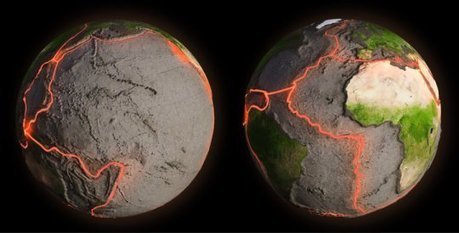
New information about conditions that can cause Earth's tectonic plates to sink into the earth has been released in a new report. In a paper published in Proceedings of the National Academy of Sciences (PNAS) Saint Louis University researchers report new information about conditions that can cause Earth's tectonic plates to sink. John Encarnacion, Ph.D., professor of earth and atmospheric sciences at SLU, and Timothy Keenan, a graduate student, are experts in tectonics and hard rock geology, and use geochemistry and geochronology coupled with field observations to study tectonic plate movement. "A plate, by definition, has a rigidity to it. It is stiff and behaves as a unit. We are on the North American Plate and so we're moving roughly westward together about an inch a year," Encarnacion said. "But when I think about what causes most plates to move, I think about a wet towel in a pool. Most plates are moving because they are sinking into Earth like a towel laid down on a pool will start to sink dragging the rest of the towel down into the water." Plates move, on average, an inch or two a year. The fastest plate moves at about four inches a year and the slowest isn't moving much at all. Plate motions are the main cause of earthquakes, and seismologists and geologists study the details of plate motions to make more accurate predictions of their likelihood. "Whenever scientists can show how something that is unexpected might have actually happened, it helps to paint a more accurate picture of how Earth behaves," Encarnacion said. "And a more accurate picture of large-scale Earth processes can help us better understand earthquakes and volcanoes, as well as the origin and locations of mineral deposits, many of which are the effects and products of large-scale plate motions."
Via Mariaschnee
|
|
Scooped by
Dr. Stefan Gruenwald
November 17, 2016 12:04 PM
|
Google Earth VR is a surprise project from Google’s Geo team that is being both announced and released today. This is the team behind Google Maps and the original Google Earth. The group has spent the better part of a decade collecting and cataloging an obscene amount of visual data from all over the planet. Now, all of that information is being used to create a VR experience that can take you almost anywhere on Earth you want to go. According to Mike Podwal, project manager for Google Earth VR, “94 percent of the world’s population is covered in this experience. 54 percent of the Earth’s land mass is covered. There are around 175 cities with full, 3D data, and over 600 ‘urban cores’ as well.” Google Earth turns all of this data into completely explorable, scalable 3D immersive worlds for the HTC Vive VR headset.
|
|
Scooped by
Dr. Stefan Gruenwald
November 17, 2016 11:55 AM
|
A Chinese group has become the first to inject a person with cells that contain genes edited using the revolutionary CRISPR–Cas9 technique. On 28 October 2016, a team led by oncologist Lu You at Sichuan University in Chengdu delivered the modified cells into a patient with aggressive lung cancer as part of a clinical trial at the West China Hospital, also in Chengdu. Earlier clinical trials using cells edited with a different technique have excited clinicians. The introduction of CRISPR, which is simpler and more efficient than other techniques, will probably accelerate the race to get gene-edited cells into the clinic across the world, says Carl June, who specializes in immunotherapy at the University of Pennsylvania in Philadelphia and led one of the earlier studies. "I think this is going to trigger ‘Sputnik 2.0’, a biomedical duel on progress between China and the United States, which is important since competition usually improves the end product,” he says. June is the scientific adviser for a planned US trial that will use CRISPR to target three genes in participants’ cells, with the goal of treating various cancers. He expects the trial to start in early 2017. And in March 2017, a group at Peking University in Beijing hopes to start three clinical trials using CRISPR against bladder, prostate and renal-cell cancers. Those trials do not yet have approval or funding. Lu’s trial received ethical approval from a hospital review board in July. Injections into participants were supposed to begin in August but the date was pushed back, Lu says, because culturing and amplifying the cells took longer than expected and then the team ran into China’s October holidays. The researchers removed immune cells from the recipient’s blood and then disabled a gene in them using CRISPR–Cas9, which combines a DNA-cutting enzyme with a molecular guide that can be programmed to tell the enzyme precisely where to cut. The disabled gene codes for the protein PD-1, which normally puts the brakes on a cell’s immune response: cancers take advantage of that function to proliferate. Removing this brake, the hope is that the patient's own immune system will be strong enough to fight the cancer.
|
|
Scooped by
Dr. Stefan Gruenwald
November 16, 2016 3:10 PM
|
It appears inside doomed cells when bidden, like a creature from a horror film: a seven-pronged, wheel-shaped structure that orders its minions to go on a killing spree. They obey, snipping away at critical parts of a cell until it implodes. The command structure is called the wheel of death, or, if you’re a scientist, the apoptosome. But the process, called programmed cell death, or apoptosis—from the Greek words for leaves falling from a tree—is a normal part of life. Cells die in an orderly fashion so that during development, we’re not born with webbed hands, for example, and during adulthood we have a protective layer of dead skin cells on top of live ones. Apoptosis is perhaps best known for its role in cancer, either killing cancer cells as they start to proliferate or failing to kill them. At the center of all this destruction is the apoptosome, the cellular structure that facilitates programmed cell death. Scientists knew it existed decades ago, and over time they have slowly, painstakingly, built models of its structure to better understand its function. In October 2016, a team led by Christopher Akey, a Boston University School of Medicine professor of physiology and biophysics, revealed the most detailed three-dimensional model of the apoptosome to date. The model, published in the journal eLife, answers some questions and raises others. Ultimately, a better understanding of how cell death occurs may lead to treatment options that can enhance or suppress the process. “The apoptosome was discovered more than 20 years ago, but now we have a much better idea of how it works,” says Yale School of Medicine postdoctoral associate Tat Cheung Cheng, lead author on the eLife paper and a former postdoctoral fellow under Akey. “This lays groundwork for future drug development.”
|
|
Scooped by
Dr. Stefan Gruenwald
November 16, 2016 2:58 PM
|
Scientists from the National Institutes of Health have identified an antibody from an HIV-infected person that potently neutralized 98 percent of HIV isolates tested, including 16 of 20 strains resistant to other antibodies of the same class. The remarkable breadth and potency of this antibody, named N6, make it an attractive candidate for further development to potentially treat or prevent HIV infection, say the researchers. The scientists, led by Mark Connors, M.D., of NIH’s National Institute of Allergy and Infectious Diseases (NIAID), also tracked the evolution of N6 over time to understand how it developed the ability to potently neutralize nearly all HIV strains. This information will help inform the design of vaccines to elicit such broadly neutralizing antibodies. Identifying broadly neutralizing antibodies against HIV has been difficult because the virus rapidly changes its surface proteins to evade recognition by the immune system. In 2010, scientists at NIAID’s Vaccine Research Center (VRC) discovered an antibody called VRC01 that can stop up to 90 percent of HIV strains from infecting human cells. Like VRC01, N6 blocks infection by binding to a part of the HIV envelope called the CD4 binding site, preventing the virus from attaching itself to immune cells. Findings from the current study showed that N6 evolved a unique mode of binding that depends less on a variable area of the HIV envelope known as the V5 region and focuses more on conserved regions, which change relatively little among HIV strains. This allows N6 to tolerate changes in the HIV envelope, including the attachment of sugars in the V5 region, a major mechanism by which HIV develops resistance to other VRC01-class antibodies. The new findings suggest that N6 could pose advantages over VRC01, which currently is being assessed as intravenous infusions in clinical trials to see if it can safely prevent HIV infection in humans. Due to its potency, N6 may offer stronger and more durable prevention and treatment benefits, and researchers may be able to administer it subcutaneously (into the fat under the skin) rather than intravenously. In addition, its ability to neutralize nearly all HIV strains would be advantageous for both prevention and treatment strategies.
|
|
Scooped by
Dr. Stefan Gruenwald
November 16, 2016 2:51 PM
|
Researchers from the University of Veterinary Medicine in Vienna and the University of Oxford have shown that Goffin's cockatoos can make and use elongated tools of appropriate shape and length out of different materials, suggesting that the birds can anticipate how the tools will be used. Tool manufacture was once regarded as a defining feature of mankind, but it is now known that a variety of animal species use and make their own tools. In nature, some of the most striking cases of tool-related behavior are seen not just among close relatives of Homo sapiens, such as chimps and other primates, but among birds including crows, vultures and Galapagos finches. In all cases, what makes this possible is possessing the right combination of heritable and acquired competencies, as well as being capable of a degree of individual creativity. The Goffin's cockatoo is a particularly interesting example for scientists to study, as it has unlikely to have a repertoire of inherited tool-related skills and relies more on innovation and problem-solving. The Goffin's cockatoo, which is native to Indonesia, is neither known to use tools in the wild nor to have evolved related abilities for manipulating twigs for other purposes such as nest building. One bird, called Figaro, previously displayed the ability to spontaneously (ie without training) make tools by biting long splinters out of the wooden beams of its cage, which he then used to rake pieces of food that were otherwise out of reach. Three others have since followed, showing that making such tools is within the capacity of the species.
|
|
Scooped by
Dr. Stefan Gruenwald
November 16, 2016 2:46 PM
|
Patients on blood thinning medications or those who can’t form blood clots need medical help to prevent uncontrolled bleeding that can quickly become life-threatening. In a new Science Translational Medicine study, researchers introduce a hydrogel that can rapidly and easily block the flow of blood.
Aneurysms or other forms of uncontrolled hemorrhaging are often treated by inserting a tiny metallic coil into the person’s blood vessel. But for 47 percent of patients who cannot form blood clots this isn’t a permanent solution and they’ll bleed again. This is also no small problem. In 2010 25 million people were prescribed warfarin in the United States, which is an anticoagulant or blood thinning drug that prevents blood clots in patients with heart conditions, stroke risk or risk of thrombosis after an operation.
“Current therapies that try to occlude blood vessels and stop bleeding in cases of internal bleeding do not work for a major segment of population that are on anticoagulant medication or have disorders which prevents their blood from clotting,” says Ali Khademhosseini, professor at Harvard Medical School and Brigham and Women's Hospital. “Our material provides a solution to this issue and allows for a new standard of care that replaces metallic coils, which are expensive and complicated to use.”
Together with Rahmi Oklu, interventional radiologist at Mayo Clinic, Khademhosseini developed the new biomaterial, known as shear-thinning biomaterial (STB), by combining gelatin – which gives it a consistency similar to toothpaste – and nanoparticles.
|
|
Scooped by
Dr. Stefan Gruenwald
November 16, 2016 2:32 PM
|
Four billion years ago, an asteroid the size of Manhattan smacked into Pluto, punching out a crater that filled up with ice from above and water from below, eventually becoming so heavy it caused the entire planet to tip over. That, at least, is the conclusion of two new scientific papers published today in the journal Nature. Each paper seeks to explain how Sputnik Planitia—the brilliant, ice filled basin affectionately called the “left lobe” of Pluto’s heart—formed and evolved over time. Together, the two studies tell a remarkable, almost fantastical origin story involving giant asteroids, buried oceans, and exotic ices that twisted entire worlds upside down in eons past. While the papers agree on the broad brushstrokes and diverge on the details of how Sputnik Planitia came to be, neither analysis is complete or irrefutable. The truth about Pluto’s icy heart possibly lies somewhere in the middle.
|