Your new post is loading...

|
Scooped by
Dr. Stefan Gruenwald
November 28, 2016 2:10 PM
|
MIT researchers find a tabletop all-optical terahertz-driven electron gun could replace car-sized radio-frequency (RF) guns in electron diffraction imaging and ultrafast X-ray imaging. Ultrashort bursts of electrons have several important applications in scientific imaging, but producing them has typically required a costly, power-hungry apparatus about the size of a car. In the journal Optica, researchers at MIT, the German Synchrotron, and the University of Hamburg in Germany describe a new technique for generating electron bursts, which could be the basis of a shoebox-sized device that consumes only a fraction as much power as its predecessors. Ultrashort electron beams are used to directly gather information about materials that are undergoing chemical reactions or changes of physical state. But after being fired down a particle accelerator a half a mile long, they’re also used to produce ultrashort X-rays. Last year, in Nature Communications, the same group of MIT and Hamburg researchersreported the prototype of a small “linear accelerator” that could serve the same purpose as the much larger and more expensive particle accelerator. That technology, together with a higher-energy version of the new “electron gun,” could bring the imaging power of ultrashort X-ray pulses to academic and industry labs. Indeed, while the electron bursts reported in the new paper have a duration measured in hundreds of femtoseconds, or quadrillionths of a second (which is about what the best existing electron guns can manage), the researchers’ approach has the potential to lower their duration to a single femtosecond. An electron burst of a single femtosecond could generate attosecond X-ray pulses, which would enable real-time imaging of cellular machinery in action. “We’re building a tool for the chemists, physicists, and biologists who use X-ray light sources or the electron beams directly to do their research,” says Ronny Huang, an MIT PhD student in electrical engineering and first author on the new paper. “Because these electron beams are so short, they allow you to kind of freeze the motion of electrons inside molecules as the molecules are undergoing a chemical reaction. A femtosecond X-ray light source requires more hardware, but it utilizes electron guns.” In particular, Huang explains, with a technique called electron diffraction imaging, physicists and chemists use ultrashort bursts of electrons to investigate phase changes in materials, such as the transition from an electrically conductive to a nonconductive state, and the creation and dissolution of bonds between molecules in chemical reactions. Ultrashort X-ray pulses have the same advantages that ordinary X-rays do: They penetrate more deeply into thicker materials. The current method for producing ultrashort X-rays involves sending electron bursts from a car-sized electron gun through a billion-dollar, kilometer-long particle accelerator that increases their velocity. Then they pass between two rows of magnets — known as an “undulator” — that converts them to X-rays.
|
|
Scooped by
Dr. Stefan Gruenwald
November 28, 2016 1:57 PM
|
A key glacier in Antarctica is breaking apart from the inside out, suggesting that the ocean is weakening ice on the edges of the continent. The Pine Island Glacier, part of the ice shelf that bounds the West Antarctic Ice Sheet, is one of two glaciers that researchers believe are most likely to undergo rapid retreat, bringing more ice from the interior of the ice sheet to the ocean, where its melting would flood coastlines around the world. A nearly 225-square-mile iceberg broke off from the glacier in 2015, but it wasn't until Ohio State University researchers were testing some new image-processing software that they noticed something strange in satellite images taken before the event. In the images, they saw evidence that a rift formed at the very base of the ice shelf nearly 20 miles inland in 2013. The rift propagated upward over two years, until it broke through the ice surface and set the iceberg adrift over 12 days in late July and early August 2015. They report their discovery in the journal Geophysical Research Letters. "It's generally accepted that it's no longer a question of whether the West Antarctic Ice Sheet will melt, it's a question of when," said study leader Ian Howat, associate professor of earth sciences at Ohio State. "This kind of rifting behavior provides another mechanism for rapid retreat of these glaciers, adding to the probability that we may see significant collapse of West Antarctica in our lifetimes."
|
|
Scooped by
Dr. Stefan Gruenwald
November 28, 2016 1:55 PM
|
Passengers simmered in Jacuzzis and feasted on gourmet cuisine this summer as the 850-foot cruise ship Crystal Serenity moved through the Northwest Passage. But in the summer of 1778, when Capt. James Cook tried to find a Western entrance to the route, his men toiled on frost-slicked decks and complained about having to supplement dwindling rations with walrus meat. The British expedition was halted north of the Bering Strait by "ice which was as compact as a wall and seemed to be 10 or 12 feet high at least," according to the captain's journal. Cook's ships followed the ice edge all the way to Siberia in their futile search for an opening, sometimes guided through fog by the braying of the unpalatable creatures the crew called Sea Horses. More than two centuries later, scientists are mining meticulous records kept by Cook and his crew for a new perspective on the warming that has opened the Arctic in a way the 18th century explorer could never have imagined. Working with maps and logs from Cook's voyage and other historical records and satellite imagery, University of Washington mathematician Harry Stern has tracked changes in ice cover in the Chukchi Sea, between Alaska and Russia, over nearly 240 years. The results, published this month in the journal Polar Geography, confirm the significant shrinkage of the summer ice cap and shed new light on the timing of the transformation. The analysis also extends the historical picture back nearly 75 years, building on previous work with ships' records from the 1850s. "This old data helps us look at what conditions were like before we started global warming, and what the natural variability was," said Jim Overland, a Seattle-based oceanographer for the National Oceanic and Atmospheric Administration who was not involved in Stern's project.
|
|
Scooped by
Dr. Stefan Gruenwald
November 28, 2016 1:02 PM
|
These white mounds are the world’s largest gypsum dune field, centerpiece of the White Sands National Monument. The white hills sprawling in every direction look like mounds built by snow plows, or massive hills of sugar. In fact, they’re the world’s largest gypsum dune field: the White Sands National Monument, located in southern New Mexico. During the last Ice Age, melting snow and ice from the San Andres Mountains (west of the dunes) and the Sacramento Mountains (to the east) eroded minerals from the hillsides and carried them downhill to the basin below. Lake Otero formed on the spot. As the climate warmed and the water evaporated, the basin remained full of selenite (the crystalline form of gypsum) and created the Alkali Flats. Over time, winds broke the crystals into sand grains, which built up into the dunes visible in this mosaic of photographs taken by an astronaut from the International Space Station on June 20, 2016. Today, that geological process continues. Gypsum-rich mountain waters flow down into the basin below, where the hot desert sun dries the water and winds break up newly formed selenite crystals. At the south end of the monument, occasional rains cause water to accumulate in Lake Lucero before evaporating. Because the basin has no outlet, gypsum here accumulates instead of getting pushed downstream and dissolving.
|
|
Rescooped by
Dr. Stefan Gruenwald
from Nostri Orbis
November 28, 2016 12:55 PM
|
Artificial intelligence is not only reshaping the technology these tech giants use but how they organize and operate their businesses. Fei-Fei Li is a big deal in the world of AI. As the director of the Artificial Intelligence and Vision labs at Stanford University, she oversaw the creation of ImageNet, a vast database of images designed to accelerate the development of AI that can “see.” And, well, it worked, helping to drive the creation of deep learning systems that can recognize objects, animals, people, and even entire scenes in photos—technology that has become commonplace on the world’s biggest photo-sharing sites. Now, Fei-Fei will help run a brand new AI group inside Google, a move that reflects just how aggressively the world’s biggest tech companies are remaking themselves around this breed of artificial intelligence. Alongside a former Stanford researcher—Jia Li, who more recently ran research for the social networking service Snapchat—the China-born Fei-Fei will lead a team inside Google’s cloud computing operation, building online services that any coder or company can use to build their own AI. This new Cloud Machine Learning Group is the latest example of AI not only re-shaping the technology that Google uses, but also changing how the company organizes and operates its business. Google is not alone in this rapid re-orientation. Amazon is building a similar group cloud computing group for AI. Facebook and Twitter have created internal groups akin to Google Brain, the team responsible for infusing the search giant’s own tech with AI. And in recent weeks, Microsoft reorganized much of its operation around its existing machine learning work, creating a new AI and research group under executive vice president Harry Shum, who began his career as a computer vision researcher. Oren Etzioni, CEO of the not-for-profit Allen Institute for Artificial Intelligence, says that these changes are partly about marketing—efforts to ride the AI hype wave. Google, for example, is focusing public attention on Fei-Fei’s new group because that’s good for the company’s cloud computing business. But Etzioni says this is also part of very real shift inside these companies, with AI poised to play an increasingly large role in our future. “This isn’t just window dressing,” he says.
Via Fernando Gil
|
|
Rescooped by
Dr. Stefan Gruenwald
from DNA and RNA research
November 28, 2016 12:50 PM
|
Berkeley and Illinois researchers have bumped up crop productivity by increasing the expression of genes that result in more efficient use of light in photosynthesis. Their work could potentially be used to help address the world’s future food needs. Scientists at the Department of Energy’s Lawrence Berkeley National Laboratory (Berkeley Lab), the University of California, Berkeley (UC Berkeley), and the University of Illinois targeted three genes involved in a process plants use to protect themselves from damage when they get more light than they can safely use. By increasing the expression of those genes, the scientists saw increases of 14-20 percent in the productivity of modified tobacco plants in field experiments. The researchers described their findings in a paper published today in the journal Science. “Tobacco was used as the model crop plant in this study because it is easy to work with, but we’re working to make the same modifications in rice and other food crops,” said co-senior author Krishna Niyogi, a faculty scientist in Berkeley Lab’s Division of Molecular Biophysics and Integrative Bioimaging. “The molecular processes we’re modifying are fundamental to plants that carry out photosynthesis, so we hope to see a similar increase in yield in other crops.” Niyogi, who is a Howard Hughes Medical Institute investigator and a UC Berkeley professor of plant and microbial biology, teamed up with Stephen Long, a plant biology and crop sciences professor at the University of Illinois, for the study. In photosynthesis, plants use the energy in sunlight to take up carbon dioxide from the atmosphere and convert it into biomass, which we use for food, fuel, and fiber. When there is too much sunlight, the photosynthetic machinery in chloroplasts can be damaged, so plants need photoprotection. Inside chloroplasts, plants have a system called NPQ, or nonphotochemical quenching, for this purpose. Niyogi compared NPQ to a pressure relief valve in a steam engine. “When there is too much sunlight, it’s like pressure building up,” said Niyogi. “NPQ turns on and gets rid of the excess energy safely. In the shade, the pressure in the engine decreases. NPQ turns off, but not quickly enough. It’s like having a leak in the system with the valve left open. The photosynthetic engine can’t work as efficiently.” The highly variable levels of light plants receive, particularly in densely planted crop fields, presents a challenge to the efficient use of solar energy. Plants must adapt to intermittent shading from leaves that are higher in the canopy, or from passing clouds. Niyogi and his postdoctoral research associates Lauriebeth Leonelli, Stéphane Gabilly, and Masakazu Iwai figured out a way to speed up recovery from photoprotection and demonstrated a proof of this concept in the laboratory. They used a new method to rapidly test gene expression in tobacco leaves. By boosting the expression of three genes involved in NPQ, they showed that NPQ turned off more quickly, and the efficiency of photosynthesis in the shade was higher.
Via Integrated DNA Technologies
|
|
Rescooped by
Dr. Stefan Gruenwald
from Soggy Science
November 28, 2016 12:46 PM
|
Off the coast of Nova Scotia, pilot whales look out for each other. Have you ever watched a friend’s kid so he or she could take a much-needed break? Congratulations, you are an allo-parent. Babysitting is relatively common among intelligent, social mammals, and scientists have just entered one more species into the allo-parenting club: long-finned pilot whales. Before this, allo-parenting had only been confirmed in a few cetacean species, including orcas and sperm whales. It makes sense that pilot whales would be babysitters too, but scientifically demonstrating the behavior in marine mammals is difficult—all that water gets in the way. So when Dalhousie University’s Joana Augusto set out to study pilot whale parenting as part of her PhD research, she knew she had her work cut out. For three summers, Augusto and her colleagues tagged along on daily whale watching tours out of Nova Scotia’s Cape Breton. They collected photos of all the pairs of adults and calves they saw. They identified individuals by unique markings, such as the patterns of nicks and scratches on their dorsal fins. If they photographed a calf with more than one adult, they knew it was spending time with adults other than its mother. Augusto found that half of the calves identified in the study were spending time with more than one adult. Augusto believes that calves are not only safer when they’re accompanied by an adult, they’re also learning the social norms of their group. “In pilot whales and other long-lived, social mammals that have very strong bonds between individuals, allo-parenting behavior is not surprising,” says Robin Baird, a marine mammal biologist with the Cascadia Research Collective. After foraging at night, he explains, pilot whales spend the day resting and socializing, so it probably doesn’t take much extra effort for adults to keep an eye on each other’s calves while they’re all taking it easy. “This is something that we do as humans, helping take care of each other’s kids,” says Augusto. “I find it really cool that whales do the same thing.”
Via Grant W. Graves
A peacock's bright teal and brilliant blue feathers are not the result of pigments but rather nanoscale networks that reflect specific wavelengths of light. This so-called structural coloration has long interested researchers and engineers because of its durability and potential for application in solar arrays, biomimetic tissues and adaptive camouflage. But today's techniques to integrate structural color into materials are time-consuming and costly.
Now, researchers at the Harvard John A. Paulson School of Engineering and Applied Sciences (SEAS), in collaboration with King Abdullah University of Science and Technology, have developed a new, more robust and cost effective system to build large-scale metamaterials with structural color. The research is described in the journal Nature Light: Science and Applications. A peacock's feather or butterfly's wing rely on photonic crystals or highly ordered arrays of nanofibers to produce colors. Reproducing those structures in a lab requires precision and expensive fabrication. SEAS researchers were inspired by a very different kind of feather. Contingas are one of the most flamboyant bird families on the planet. In a sea of Amazon green, their feathers pop with electric blues, bright oranges and vibrant purples. Unlike a peacock's ordered array of nanostructures, contingas get their vibrant hues from a disordered and porous nanonetwork of keratin that looks like a sponge or piece of coral. When light strikes the feather, the porous keratin pattern causes red and yellow wavelengths to cancel each other out, while blue wavelengths of light amplify one another.
Via Mariaschnee
|
|
Rescooped by
Dr. Stefan Gruenwald
from DNA and RNA research
November 28, 2016 12:35 PM
|
St. Jude Children’s Research Hospital scientists have identified a small RNA (microRNA) that may be essential to restoring normal function in a brain circuit associated with the “voices” and other hallucinations of schizophrenia. The microRNA provides a possible focus for antipsychotic drug development. The findings appear today in the journal Nature Medicine. The work was done in a mouse model of a human disorder that is one of the genetic causes of schizophrenia. Building on previous St. Jude research, the results offer important new details about the molecular mechanism that disrupts the flow of information along a neural circuit connecting two brain regions involved in processing auditory information. The findings also provide clues about why psychotic symptoms of schizophrenia are often delayed until late adolescence or early adulthood. “In 2014, we identified the specific circuit in the brain that is targeted by antipsychotic drugs. However, the existing antipsychotics also cause devastating side effects,” said corresponding author Stanislav Zakharenko, M.D., Ph.D., a member of the St. Jude Department ofDevelopmental Neurobiology. “In this study, we identified the microRNA that is a key player in disruption of that circuit and showed that depletion of the microRNA was necessary and sufficient to inhibit normal functioning of the circuit in the mouse models. “We also found evidence suggesting that the microRNA, named miR-338-3p, could be targeted for development of a new class of antipsychotic drugs with fewer side effects.” There are more than 2,000 microRNAs whose function is to silence expression of particular genes and regulate the supply of the corresponding proteins. Working in a mouse model of 22q11 deletion syndrome, researchers identified miR-338-3p as the microRNA that regulates production of the protein D2 dopamine receptor (Drd2), which is the prime target of antipsychotics.
Via Integrated DNA Technologies
|
|
Scooped by
Dr. Stefan Gruenwald
November 28, 2016 12:28 PM
|
The UN calculates that there are more than 7 billion living humans on Earth, yet 200 years ago we numbered less than 1 billion.1 Recent estimates suggest that 6.5 percent of all people ever born are alive right now.2 This is the most conspicuous fact about world population growth: for thousands of years, population grew only slowly, but in recent centuries it has jumped dramatically. Between 1900 and 2000 the increase in world population was three times greater than the entire previous history of humanity– an increase from 1.5 to 6.1 billion in just 100 years. A picture of world population in the very long-run fits the pattern of exponential growth (when a population grows exponentially the rate of growth is proportional to the size of the population). Yet an empirical observation of how growth rates have developed in the course of the last century reveals that this pattern no longer holds. The annual rate of population growth has recently been going down. A long historical period of accelerated growth has thus come to an end; the annual world population growth rate peaked in 1962, at around 2.1%, and has come down to almost half since.3 Based on these observations, world history can be divided into three periods marked by distinct trends in population growth. The first period (pre-modernity) was a very long age of very slow population growth. The second period, beginning with the onset of modernity (with rising standards of living and improving health) and lasting until 1962, had an increasing rate of growth. Now that period is over, and the third part of the story has begun; the population growth rate is falling and will likely continue to fall, leading to an end of growth towards the end of this century.
|
|
Scooped by
Dr. Stefan Gruenwald
November 22, 2016 11:09 AM
|
A large space rock came fairly close to Earth on Sunday night. Astronomers knew it wasn't going to hit Earth, thanks in part to a new tool NASA is developing for detecting potentially dangerous asteroids. The tool is a computer program called Scout, and it's being tested at NASA Jet Propulsion Laboratory in Pasadena, Calif. Think of Scout as a celestial intruder alert system. It's constantly scanning data from telescopes to see if there are any reports of so-called Near Earth Objects. If it finds one, it makes a quick calculation of whether Earth is at risk, and instructs other telescopes to make follow-up observations to see if any risk is real. NASA pays for several telescopes around the planet to scan the skies on a nightly basis, looking for these objects. "The NASA surveys are finding something like at least five asteroids every night," says astronomer Paul Chodas of JPL. But then the trick is to figure out which new objects might hit Earth.
|
|
Scooped by
Dr. Stefan Gruenwald
November 17, 2016 5:21 PM
|
Some children suffer from completely tangled hair, which cannot be combed at all. In German, the phenomenon bears the apt name “uncombable hair syndrome” or even “Struwwelpeter syndrome”. Researchers have identified mutations in three genes that are responsible for this. Scientists from a total of eight countries were involved in the work. The results were published in the American Journal of Human Genetics. Many parents know from their own experience that it is not always easy to comb children's hair. Yet with patience and nerves of steel, even the toughest of knots can usually be undone. In the case of "uncombable hair syndrome," brushes and combs don't stand even the hint of a chance. Those affected have extremely frizzy, dry, generally light blonde hair with a characteristic shine, which successfully resists any attempt to tame it. These symptoms are most pronounced in childhood and then ease over time. In adulthood, the hair can more or less be styled normally. Virtually nothing has so far been known about the causes -- particularly because the phenomenon is relatively rare. It was described in the specialist literature for the first time in 1973; since then, around one hundred cases have been documented worldwide. "However, we assume that there are much more people affected," explains Professor Regina Betz from the Institute for Human Genetics at the University of Bonn. "Those who suffer from uncombable hair do not necessarily seek help for this from a doctor or hospital." Nevertheless, it is known that the anomaly occurs more frequently in some families -- it thus appears to have genetic causes. Betz is a specialist for rare hereditary hair disorders. A few years ago, she was approached at a conference by a British colleague. He had recently examined a family with two affected children. The Bonn-based human geneticist's interest was piqued. "Via contact with colleagues from around the world, we managed to find nine further children," she explains. The scientists in Bonn sequenced all the genes of those affected. When comparing large databases, they thus came across mutations in three genes that are involved in forming the hair. The changed genes bear the identifiers PADI3, TGM3 and TCHH. The first two contain the assembly instructions for enzymes, while the third -- TCHH -- contains an important protein for the hair shaft. In healthy hair, the TCHH proteins are joined to each other with extremely fine strands of keratin, which are responsible for the shape and structure of the hair. During this process, the two other identified genes play an important role: "PADI3 changes the hair shaft protein TCHH in such a way that the keratin filaments can adhere to it," explains the lead author of the study, Dr. Fitnat Buket Basmanav Ünalan. "The TGM3 enzyme then produces the actual link."
The cow goes "moo." The pig goes "oink." A child can learn from a picture book to associate images with sounds, but building a computer vision system that can train itself isn't as simple. Using artificial intelligence techniques, however, researchers at Disney Research and ETH Zurich have designed a system that can automatically learn the association between images and the sounds they could plausibly make. Given a picture of a car, for instance, their system can automatically return the sound of a car engine. A system that knows the sound of a car, a splintering dish, or a slamming door might be used in a number of applications, such as adding sound effects to films, or giving audio feedback to people with visual disabilities, noted Jean-Charles Bazin, associate research scientist at Disney Research. To solve this challenging task, the research team leveraged data from collections of videos. "Videos with audio tracks provide us with a natural way to learn correlations between sounds and images," Bazin said. "Video cameras equipped with microphones capture synchronized audio and visual information. In principle, every video frame is a possible training example." One of the key challenges is that videos often contain many sounds that have nothing to do with the visual content. These uncorrelated sounds can include background music, voice-over narration and off-screen noises and sound effects and can confound the learning scheme. "Sounds associated with a video image can be highly ambiguous," explained Markus Gross, vice president for Disney Research. "By figuring out a way to filter out these extraneous sounds, our research team has taken a big step toward an array of new applications for computer vision." "If we have a video collection of cars, the videos that contain actual car engine sounds will have audio features that recur across multiple videos" Bazin said. "On the other hand, the uncorrelated sounds that some videos might contain generally won't share any redundant features with other videos, and thus can be filtered out."
Via Mariaschnee
|
|
|
Scooped by
Dr. Stefan Gruenwald
November 28, 2016 2:05 PM
|
We're fast approaching the moment when humans and machines merge. Welcome to the Singularity movement. On Feb. 15, 1965, a diffident but self-possessed high school student named Raymond Kurzweil appeared as a guest on a game show called I've Got a Secret. He was introduced by the host, Steve Allen, then he played a short musical composition on a piano. The idea was that Kurzweil was hiding an unusual fact and the panelists — they included a comedian and a former Miss America — had to guess what it was. On the show (the clip on YouTube), the beauty queen did a good job of grilling Kurzweil, but the comedian got the win: the music was composed by a computer. Kurzweil got $200. (Watch TIME's video "Singularity: How Scared Should We Be?") Kurzweil then demonstrated 'the computer', which he built himself — a desk-size affair with loudly clacking relays, hooked up to a typewriter. The panelists were pretty blasé about it; they were more impressed by Kurzweil's young age than by anything he had actually done. They were ready to move on to Mrs. Chester Loney of Rough and Ready, Calif., whose secret was that she'd been President Lyndon Johnson's first-grade teacher. But Kurzweil would spend much of the rest of his career working out what his demonstration meant. Creating a work of art is one of those activities we reserve for humans and humans only. It's an act of self-expression; you're not supposed to be able to do it if you don't have a self. To see creativity, the exclusive domain of humans, usurped by a computer built by a 17-year-old is to watch a line blur that cannot be unblurred, the line between organic intelligence and artificial intelligence. That was Kurzweil's real secret, and back in 1965 nobody guessed it. Maybe not even him, not yet. But now, 46 years later, Kurzweil believes that we're approaching a moment when computers will become intelligent, and not just intelligent but more intelligent than humans. When that happens, humanity — our bodies, our minds, our civilization — will be completely and irreversibly transformed. He believes that this moment is not only inevitable but imminent. According to his calculations, the end of human civilization as we know it is about 35 years away. ( See the best inventions of 2010.) Computers are getting faster. Everybody knows that. Also, computers are getting faster faster — that is, the rate at which they're getting faster is increasing. True? True. So if computers are getting so much faster, so incredibly fast, there might conceivably come a moment when they are capable of something comparable to human intelligence. That 'something' is Artificial intelligence or often called AI. All that horsepower could be put in the service of emulating whatever it is our brains are doing when they create consciousness — not just doing arithmetic very quickly or composing piano music but also driving cars, writing books, making ethical decisions, appreciating fancy paintings, making witty observations at cocktail parties. If you can swallow that idea, and Kurzweil and a lot of other very smart people can, then all bets are off. From that point on, there's no reason to think computers would stop getting more powerful. They would keep on developing until they were far more intelligent than we are. Their rate of development would also continue to increase, because they would take over their own development from their slower-thinking human creators. Imagine a computer scientist that was itself a super-intelligent computer. It would work incredibly quickly. It could draw on huge amounts of data effortlessly. It wouldn't even take breaks to play Farmville. (See the best inventions of 2010.) Probably. But it's impossible to predict the behavior of these smarter-than-human intelligences with which (with whom?) we might one day share the planet, because if you could, you'd be as smart as they would be. But there are a lot of theories about it. Maybe we'll merge with them to become super-intelligent cyborgs, using computers to extend our intellectual abilities the same way that cars and planes extend our physical abilities. Maybe the artificial intelligences will help us treat the effects of old age and prolong our life spans indefinitely. Maybe we'll scan our consciousnesses into computers and live inside them as software, forever, virtually. Maybe the computers will turn on humanity and annihilate us. The one thing all these theories have in common is the transformation of our species into something that is no longer recognizable as such to humanity circa 2011. This transformation has a name: the Singularity. The difficult thing to keep sight of when you're talking about the Singularity is that even though it sounds like science fiction, it isn't, no more than a weather forecast is science fiction. It's not a fringe idea; it's a serious hypothesis about the future of life on Earth. There's an intellectual gag reflex that kicks in anytime you try to swallow an idea that involves super-intelligent immortal cyborgs, but suppress it if you can, because while the Singularity appears to be, on the face of it, preposterous, it's an idea that rewards sober, careful evaluation.
|
|
Scooped by
Dr. Stefan Gruenwald
November 28, 2016 1:56 PM
|
A new technology has been developed that uses nuclear waste to generate electricity in a nuclear-powered battery. A team of physicists and chemists from the University of Bristol have grown a man-made diamond that, when placed in a radioactive field, is able to generate a small electrical current. The development could solve some of the problems of nuclear waste, clean electricity generation and battery life. This innovative method for radioactive energy was presented at the Cabot Institute's sold-out annual lecture - 'Ideas to change the world'- on Friday, 25 November. Unlike the majority of electricity-generation technologies, which use energy to move a magnet through a coil of wire to generate a current, the man-made diamond is able to produce a charge simply by being placed in close proximity to a radioactive source. Tom Scott, Professor in Materials in the University's Interface Analysis Centre and a member of the Cabot Institute, said: "There are no moving parts involved, no emissions generated and no maintenance required, just direct electricity generation. By encapsulating radioactive material inside diamonds, we turn a long-term problem of nuclear waste into a nuclear-powered battery and a long-term supply of clean energy."
Living organisms have been persuaded to make chemical bonds not found in nature, a finding that may change how medicines and other chemicals are made in the future. A new study is the first to show that living organisms can be persuaded to make silicon-carbon bonds--something only chemists had done before. Scientists at Caltech "bred" a bacterial protein to make the man-made bonds--a finding that has applications in several industries. Molecules with silicon-carbon, or organosilicon, compounds are found in pharmaceuticals as well as in many other products, including agricultural chemicals, paints, semiconductors, and computer and TV screens. Currently, these products are made synthetically, since the silicon-carbon bonds are not found in nature. The new study demonstrates that biology can instead be used to manufacture these bonds in ways that are more environmentally friendly and potentially much less expensive. "We decided to get nature to do what only chemists could do--only better," says Frances Arnold, Caltech's Dick and Barbara Dickinson Professor of Chemical Engineering, Bioengineering and Biochemistry, and principal investigator of the new research, published in the Nov. 24 issue of the journal Science. The study is also the first to show that nature can adapt to incorporate silicon into carbon-based molecules, the building blocks of life. Scientists have long wondered if life on Earth could have evolved to be based on silicon instead of carbon. Science-fiction authors likewise have imagined alien worlds with silicon-based life, like the lumpy Horta creatures portrayed in an episode of the 1960s TV series Star Trek. Carbon and silicon are chemically very similar. They both can form bonds to four atoms simultaneously, making them well suited to form the long chains of molecules found in life, such as proteins and DNA. "No living organism is known to put silicon-carbon bonds together, even though silicon is so abundant, all around us, in rocks and all over the beach," says Jennifer Kan, a postdoctoral scholar in Arnold's lab and lead author of the new study. Silicon is the second most abundant element in Earth's crust. The researchers used a method called directed evolution, pioneered by Arnold in the early 1990s, in which new and better enzymes are created in labs by artificial selection, similar to the way that breeders modify corn, cows, or cats. Enzymes are a class of proteins that catalyze, or facilitate, chemical reactions. The directed evolution process begins with an enzyme that scientists want to enhance. The DNA coding for the enzyme is mutated in more-or-less random ways, and the resulting enzymes are tested for a desired trait. The top-performing enzyme is then mutated again, and the process is repeated until an enzyme that performs much better than the original is created. Directed evolution has been used for years to make enzymes for household products, like detergents; and for "green" sustainable routes to making pharmaceuticals, agricultural chemicals, and fuels. In the new study, the goal was not just to improve an enzyme's biological function but to actually persuade it to do something that it had not done before. The researchers' first step was to find a suitable candidate, an enzyme showing potential for making the silicon-carbon bonds. "It's like breeding a racehorse," says Arnold, who is also the director of the Donna and Benjamin M. Rosen Bioengineering Center at Caltech. "A good breeder recognizes the inherent ability of a horse to become a racer and has to bring that out in successive generations. We just do it with proteins."
Via Mariaschnee
|
|
Scooped by
Dr. Stefan Gruenwald
November 28, 2016 12:59 PM
|
Scientists behind a theory that the speed of light is variable – and not constant as Einstein suggested – have made a prediction that could be tested. Einstein observed that the speed of light remains the same in any situation, and this meant that space and time could be different in different situations. The assumption that the speed of light is constant, and always has been, underpins many theories in physics, such as Einstein’s theory of general relativity. In particular, it plays a role in models of what happened in the very early universe, seconds after the Big Bang. But some researchers have suggested that the speed of light could have been much higher in this early universe. Now, one of this theory’s originators, Professor João Magueijo from Imperial College London, working with Dr Niayesh Afshordi at the Perimeter Institute in Canada, has made a prediction that could be used to test the theory’s validity. Structures in the universe, for example galaxies, all formed from fluctuations in the early universe – tiny differences in density from one region to another. A record of these early fluctuations is imprinted on the cosmic microwave background – a map of the oldest light in the universe – in the form of a ‘spectral index’. Working with their theory that the fluctuations were influenced by a varying speed of light in the early universe, Professor Magueijo and Dr Afshordi have now used a model to put an exact figure on the spectral index. The predicted figure and the model it is based on are published in the journal Physical Review D.
|
|
Scooped by
Dr. Stefan Gruenwald
November 28, 2016 12:53 PM
|
The technology, used in Google Translate, can translate unseen material between languages. Google has previously taught its artificial intelligence to play games, and it's even capable of creating its own encryption. Now, its language translation tool has used machine learning to create a 'language' all of its own. In September 2016, the search giant turned on its Google Neural Machine Translation (GNMT) system to help it automatically improve how it translates languages. The machine learning system analyses and makes sense of languages by looking at entire sentences – rather than individual phrases or words. Following several months of testing, the researchers behind the AI have seen it be able to blindly translate languages even if it's never studied one of the languages involved in the translation. "An example of this would be translations between Korean and Japanese where Korean <> Japanese examples were not shown to the system," the Mike Schuster, from Google Brain wrote in a blogpost. The team said the system was able to make "reasonable" translations of the languages it had not been taught to translate. In one instance, a research paper published alongside the blog, says the AI was taught Portuguese→English and English→Spanish. It was then able to make translations between Portuguese→Spanish. "To our knowledge, this is the first demonstration of true multilingual zero-shot translation," the paper explains. To make the system more accurate, the computer scientists then added additional data to the system about the languages. However, the most remarkable feat of the research paper isn't that an AI can learn to translate languages without being shown examples of them first; it was the fact it used this skill to create its own 'language'. "Visual interpretation of the results shows that these models learn a form of interlingua representation for the multilingual model between all involved language pairs," the researchers wrote in the paper. An interlingua is a type of artificial language, which is used to fulfill a purpose. In this case, the interlingua was used within the AI to explain how unseen material could be translated. "Using a 3-dimensional representation of internal network data, we were able to take a peek into the system as it translated a set of sentences between all possible pairs of the Japanese, Korean, and English languages," the team's blogpost continued. The data within the network allowed the team to interpret that the neural network was "encoding something" about the semantics of a sentence rather than comparing phrase-to-phrase translations.
The draft genome of Ginkgo biloba, the sole surviving species of an ancient group of seed plants, has been published. Ginkgo biloba is a beautiful tree. Its elegant fan-shaped leaves, which turn a vivid yellow in Autumn, are often borrowed by the world of art and design. In South-East Asia, ginkgo has a long association with Buddhist temples and the trees themselves are regarded with reverence. While small wild populations have been identified in mountain groves in South West China, ginkgo has a global distribution, due to its popularity as a cultivated tree. Its tolerance of pollution makes it particularly popular with city planners. Male trees are preferable for this purpose, however (ginkgo is dioecious, with separate male and female trees), because the edible fleshy seeds are notoriously smelly. Ginkgo is also used in traditional medicine, and Ginkgo biloba extract is a widely available dietary supplement. Ginkgo biloba is the archetypal “living fossil” of the plant world, even if this label sometimes causes more confusion than it solves. Fossils tell us that the gross morphology of its leaves has remained stable for more than 200 million years, although a variety of associated reproductive structures have been recognized. The fossil record also tells us that ginkgoes were widespread, and found in fossil assemblages not too different ecologically from the forests they still live in today. What ancient fossils cannot tell us is very much about how ginkgoes are related to the other major plant groups. Despite producing fleshy seeds, ginkgo is not a flowering plant. It is a gymnosperm: it produces pollen, which fertilizes ovules which are not fully enclosed within an ovary. It is also notable for its motile sperm. There are three other living groups of gymnosperms – conifers, cycads and gnetophytes – and past molecular studies have tended to place ginkgo most closely with the cycads. The publication of a draft genome for Ginkgo biloba by a team of scientists at BGI, Zheijiang University and the Chinese Academy of Sciences will help to answer questions about the big picture of plant evolution. The genome of Ginkgo biloba is huge. At more than 10 gigabases (the number of nucleotide base pairs, or DNA letters), it is 80 times larger than the genome of Arabidopsis thaliana, the flowering plant which is the standard model organism of plant biology. It is also bigger than the notoriously large maize genome, although only half the size of the enormous genome of the Norway Spruce, Picea abies. The overall size of the genome reflects a very high proportion (more than 75%) of repetitive sequences, resulting from both gradual accumulation over deep time, and from two whole genome duplication (WGD) events. The authors suggest that the more ancient of these two WGD events is the same one that has already been recognized in all seed plants, but not seen in ferns. Since this is WGD is estimated in this paper at between 515 and 735 million years ago, before plants moved onto land, there are (as is so often the case) interesting discrepancies between the fossil and molecular stories. The second WGD is estimated to have taken place between 74 and 147 million year ago, after ginkgoes and conifers had already diverged.
Via Meristemi
What could be better than a world-leading atomic clock? Two clocks in one.
Physicists at the National Institute of Standards and Technology (NIST) have combined two experimental atomic clocks based on ytterbium atoms to set yet another world record for clock stability. Stability can be thought of as how precisely the duration of each clock tick matches every other tick that comes before and after. This extraordinary stability makes the ytterbium lattice clock a more powerful tool for precision tests such as whether the "fundamental constants" of nature are really constant, and searches for the elusive dark matter purported to make up much of the universe. The experiment demonstrating the double-clock design is reported in Nature Photonics. "We eliminated a critical type of noise in the clock's operation, effectively making the clock signal stronger," NIST physicist Andrew Ludlow said. "This means we can reach a clock instability of 1.5 parts in a quintillion (1 followed by 18 zeros) in just a few thousand seconds. While this only slightly beats the record level of clock stability we demonstrated a few years ago, we get there 10 times faster." NIST atomic clocks routinely perform at very high levels, but scientists continually tweak them to reduce slight imperfections. The new double-clock design eliminates a small but significant distortion in the laser frequency that probes and synchronizes with the atoms. The more stable the clock, the better its measurement power. The new ytterbium lattice 'double clock' is the most stable clock in the world, although another NIST atomic clock, based on strontium and located at JILA, holds the world record for precision. Precision refers to how closely the clock tunes itself to the natural frequency at which the atoms oscillate between two electronic energy levels.
Via Mariaschnee
|
|
Rescooped by
Dr. Stefan Gruenwald
from DNA and RNA research
November 28, 2016 12:37 PM
|
XSEDE Stampede supercomputer models 3-D human pre-initiation complex. It sounds like something out of the Borg in Star Trek. Nano-sized robots self-assemble to form biological machines that do the work that keeps one alive. And yet something like this really does go on. Every cell in our body - be they flesh and blood, brain and everything in between - has identical DNA, the twisted staircase of nucleic acids uniquely coded to each organism. Complex assemblages that resemble molecular machines take pieces of DNA called genes and make a brain cell when needed, instead of, say, a bone cell. These molecular machines are so complex, yet so tiny, that scientists today are just starting to understand their structure and function using the latest microscopes and supercomputers. Biological molecular machines could lay the foundation for developing cures to diseases like cancer. How small can one see, and what will one find? Cryo-electron microscopy combined with supercomputer simulations have created the best model yet, with near atomic-level detail, of a vital molecular machine, the human pre-initiation complex (PIC). A science team from Northwestern University, Berkeley National Laboratory, Georgia State University, and UC Berkeley published their results on the PIC May 2016 in the journal Nature. "For the first time, structures have been detailed of the complex groups of molecules that open up human DNA," said study co-author Ivaylo Ivanov, associate professor of chemistry at Georgia State University. Ivanov led the computational work that modeled the atoms of the different proteins that act like cogs of the PIC molecular machine. The PIC finds genes associated with making a specific protein, such as an antibody or an enzyme. There the PIC pulls apart the two strands of DNA and feeds the coding strand to the workhorse enzyme RNA polymerase II. This starts transcription, where DNA bits are copied by RNA polymerase II into a single strand of messenger RNA. The RNA makes its way to 'protein factories' in the cell called ribosomes that take them as orders for which protein to make. If DNA is like the blueprint of a new house, RNAs are instructions to the 'contractors' at the ribosome work station. The manufactured proteins are like the nails, wood, plaster, and just about everything else in the house. The experiment began with images painstakingly taken of PIC. They were made by a group led by study co-author Eva Nogales, a professor in the Department of Molecular and Cellular Biology at UC Berkeley and also Senior Faculty Scientist at the Lawrence Berkeley National Laboratory and Howard Hughes Medical Investigator.
Via Integrated DNA Technologies
|
|
Scooped by
Dr. Stefan Gruenwald
November 28, 2016 12:33 PM
|
Caleb Scharf, an astrophysicist at Columbia University, recently published an article that posits alien life may be so far advanced that we cannot tell it apart from the laws of physics. Is it possible that the universe is potentially teeming with intelligence, it’s just so far ahead of us that it has literally become part of the fabric of space and time? Scharf provides a few ideas on how this might be the case, so let’s unpack this whopper of a speculative hypothesis. He begins with a logical first step, the machine singularity. Assuming a civilization survives long enough, the ability to bridge the gap between a biological brain and an artificial machine brain may be possible. Once an intelligence becomes one with a computer, and the computational power of the brain exponentially increases, the brain/computer could reach a ‘singularity’, a point at which the entire understanding of the universe becomes child’s play. While this is purely speculative, Scharf points out that some machinations of the universe are so strange that the singularity hypothesis might fit the bill. For example, only 5% of the universe’s mass-energy consists of matter; a larger chunk, about 27%, is spooky dark matter that exists only in models and math, and is yet imperceptible to us.
|
|
Scooped by
Dr. Stefan Gruenwald
November 28, 2016 10:44 AM
|
The relentless drive for energy efficiency in power generation and propulsion places immense value on the development of high-performance materials. Turbine engine efficiency and reduction in carbon emissions are directly related to engine operating temperature. With increasing temperatures, materials start to change in shape or size—a process known as creep—which eventually limits the materials’ performance. An article appearing this week in Nature Communications shares results of a study titled “Phase transformation strengthening of high-temperature superalloys,” led by Materials Science and Engineering Professor Michael Mills, faculty colleagues Wolfgang Windl, Hamish Fraser and David McComb, and graduate students Tim Smith, Bryan Esser, and Nik Antolin. “Increased performance in aircraft engines and land-based power generators require the development of a new generation of high-temperature structural materials that are resistant to creep,” said Mills. This study serves to address a deficit in quantitative, comprehensive understanding of deformation mechanisms for various alloy compositions in high-temperature, high-stress conditions that are relevant to advanced engine designs. The quantitative analysis combined atomic-resolution imaging with density functional theory (DFT) calculations, led by experts such as Robert Williams at Ohio State’s Center for Electron Microscopy and Analysis (CEMAS) and Anna Carlsson of FEI/Thermo Fisher Scientific. This coupled approach resulted in the discovery of a high-temperature strengthening mechanism, which the research team refers to as phase transformation strengthening.
|
|
Scooped by
Dr. Stefan Gruenwald
November 17, 2016 5:40 PM
|
A discovery that was supposed to help reveal how the bursts arise only thickens the plot. No astronomer had ever seen anything like it. No theorist had predicted it. Yet there it was — a 5-millisecond radio burst that had arrived on 24 August 2001 from an unknown source seemingly billions of light years away. “It was so bright, we couldn't just dismiss it,” says Duncan Lorimer, who co-discovered the signal1 in 2007 while working on archived data from the Parkes radio telescope in New South Wales, Australia. “But we didn't really know what to do with it.” Such fleeting radio bursts usually came from pulsars — furiously rotating neutron stars whose radiation sweeps by Earth with the regularity of a lighthouse beam. But Lorimer, an astrophysicist at West Virginia University in Morgantown, saw this object erupt only once, and with more power than any known pulsar. But when no more bursts appeared, initial excitement turned to doubt. Radio astronomers have learnt to be skeptical of mysterious spikes in their detectors: the events can all too easily result from mobile-phone signals, stray radar probes, strange weather phenomena and instrumental glitches. Wider acceptance of what is now known as the Lorimer burst came only in the past few years, after observers working at Parkes and other telescopes spotted similar signals. Today, the 2001 event is recognized as the first in a new and exceedingly peculiar class of sources known as fast radio bursts (FRBs) — one of the most perplexing mysteries in astronomy.
|
|
Scooped by
Dr. Stefan Gruenwald
November 17, 2016 5:16 PM
|
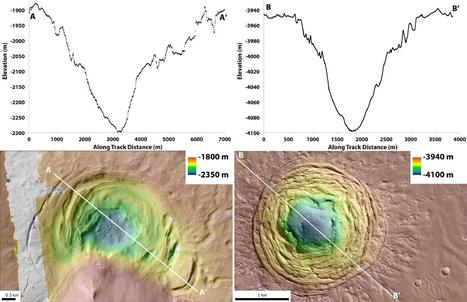
A strangely shaped depression on Mars could be a new place to look for signs of life on the Red Planet, according to a University of Texas at Austin-led study. The depression was probably formed by a volcano beneath a glacier and could have been a warm, chemical-rich environment well suited for microbial life. The findings were published this month in Icarus, the International Journal of Solar System Studies.
|