Your new post is loading...

|
Scooped by
Dr. Stefan Gruenwald
January 2, 2017 7:41 PM
|
Deep in the caves of Goyet in Belgium researchers have found the grisly evidence that the Neanderthals did not just feast on horses or reindeer, but also on each other. Human bones from a newborn, a child and four adults or teenagers who lived around 40,000 years ago show clear signs of cutting and of fractures to extract the marrow within, they say. "It is irrefutable, cannibalism was practised here," says Belgian archaeologist Christian Casseyas as he looks inside a cave halfway up a valley in this site in the Ardennes forest. The bones in Goyet date from when Neanderthals were nearing the end of their time on earth before being replaced by Homo sapiens, with whom they also interbred. Once regarded as primitive cavemen driven to extinction by smarter modern humans, studies have found that Neanderthals were actually sophisticated beings who took care of the bodies of the deceased and held burial rituals. But there is a growing body of proof that they also ate their dead.
|
|
Scooped by
Dr. Stefan Gruenwald
January 2, 2017 7:38 PM
|
An international team of researchers reports the discovery of a series of concentric rings in the debris disk around a young nearby star known as HIP 73145. These unusual substructures could provide new details about the evolution of circumstellar disks around young stars. The findings were presented in a paper published on arXiv.org. Located some 400 light years away, HIP 73145 (also known as HD 131835) is a 15-million-year-old star with a spectral type of A2IV. It belongs to the Upper Centaurus Lupus (UCL) moving group, which is part of the Scorpius–Centaurus association. The star is about 70 percent more massive than the sun and has a radius of 1.38 solar radii. Importantly, HIP 73145 is known to host a debris disk with a radius of approximately 96 AU. HIP 73145's disk was first detected in scattered light in the near-infrared, and at far-infrared wavelengths in 2015. However, no substructures were spotted during these observations. This year also, a team of astronomers led by Markus Feldt of the Max Planck Institute for Astronomy in Heidelberg, Germany, has conducted a multi-wavelength observational campaign which allowed them to distinguish concentric rings in the star's debris disk. These observations were carried out in May 2015 using the European Southern Observatory's extreme adaptive optics coronagraphic instrument, known as the Spectro-Polarimetric High-contrast Exoplanet REsearch (SPHERE). They were part of the SpHere INfrared survey for Exoplanets (SHINE) campaign aimed at the detection and characterization of extrasolar planets. The researchers found a substructure of concentric rings around the star. They detected one ring inside the disk with a radius of 66 AU. Moreover, the team also spotted structures further in at 35 AU and 45 AU from the star. "We report the results of an observation with SPHERE in non-polarized scattered light in the H band. (...) We detect a bright ring of scattered light plus some secondary structures inside, at least one of them forming a secondary, concentric ring with the first. This is the first detection of this disk in total-intensity scattered light," the authors write.
|
|
Scooped by
Dr. Stefan Gruenwald
January 1, 2017 11:39 PM
|
Tufts University engineers have created a new format of solids made from silk protein that can be preprogrammed with biological, chemical, or optical functions, such as mechanical components that change color with strain, deliver drugs, or respond to light, according to a paper published online this week in Proceedings of the National Academy of Sciences (PNAS). Using a water-based fabrication method based on protein self-assembly, the researchers generated three-dimensional bulk materials out of silk fibroin, the protein that gives silk its durability. Then they manipulated the bulk materials with water-soluble molecules to create multiple solid forms, from the nano- to the micro-scale, that have embedded, pre-designed functions. For example, the researchers created a surgical pin that changes color as it nears its mechanical limits and is about to fail, functional screws that can be heated on demand in response to infrared light, and a biocompatible component that enables the sustained release of bioactive agents, such as enzymes. Although more research is needed, additional applications could include new mechanical components for orthopedics that can be embedded with growth factors or enzymes, a surgical screw that changes color as it reaches its torque limits, hardware such as nuts and bolts that sense and report on the environmental conditions of their surroundings, or household goods that can be remolded or reshaped. Silk's unique crystalline structure makes it one of nature's toughest materials. Fibroin, an insoluble protein found in silk, has a remarkable ability to protect other materials while being fully biocompatible and biodegradable. "The ability to embed functional elements in biopolymers, control their self-assembly, and modify their ultimate form creates significant opportunities for bio-inspired fabrication of high-performing multifunctional materials," said senior and corresponding study author Fiorenzo G. Omenetto, Ph.D.
|
|
Scooped by
Dr. Stefan Gruenwald
January 1, 2017 11:33 PM
|
Your microbiota may not be on your side as you try improving your diet this New Year's. In a new study, researchers explore why mice that switch from an unrestricted American diet to a healthy, calorie-restricted, plant-based diet don't have an immediate response to their new program. They found that certain human gut bacteria need to be lost for a diet plan to be successful.
|
|
Scooped by
Dr. Stefan Gruenwald
December 31, 2016 5:01 PM
|
The US Dept. of Energy has confirmed that the W7-X's discrepancy is less than one part in 100,000 from its design expectations, truly impressive for the engineering of a fusion device. If future test are successful, the W7-X may be the key to giving society access to abundant, clean, and sustainable energy through fusion. The methods by which we power the world — burning fossil fuels, capturing solar energy, etc. — are limited in their efficiency, and each has its own drawbacks, be they environmental, financial, or health related. By mimicking how the sun reacts atoms together in a process called nuclear fusion, scientists believe we could create a potentially limitless source of clean, renewable energy. Unfortunately, no one has been able to develop a viable method for creating and harnessing this energy source yet. They are one step closer, however, thanks to the Wendelstein 7-X (W7-X) stellarator, a type of device that uses magnetic fields to confine the hot plasma that fuels fusion. Built in Greifswald, Germany, by the Max Planck Institute für Plasma Physik, the W7-X has been going through numerous tests since its debut last year, and a recent collaboration with physicists from the US Department of Energy’s Princeton Plasma Physics Laboratory (PPPL) just confirmed in Nature Communications that the stellarator does produce the extremely high quality magnetic fields anticipated by its design. The device’s discrepancy of less than one part in 100,000 from its design expectations is truly impressive. “To our knowledge, this is an unprecedented accuracy, both in terms of the as-built engineering of a fusion device, as well as in the measurement of magnetic topology,” the researchers said in the publication.
|
|
Rescooped by
Dr. Stefan Gruenwald
from Popular Science
December 30, 2016 11:45 PM
|
Lineages of all known species on earth are finally pieced together. Since Charles Darwin's day, biologists have depicted how new organisms evolve from old ones by adding branches to numerous trees that represent portions of the animal, plant and microbial kingdoms. Researchers from a dozen institutions recently completed a three-year effort to combine tens of thousands of trees into one diagram, most readable as a circle (above). The lines inside the circle represent all 2.3 million species that have been named. Biologists have genetic sequences for only about 5 percent of them, however; as more are finished, the relationships within and across groups of species may change. Experts estimate that up to 8.7 million species may inhabit the planet (about 15,000 are discovered every year). “We expect the circle to broaden,” says Karen Cranston, a computational evolutionary biologist at Duke University. Anyone can propose updates to the database (OpenTreeOfLife.org). Greater detail could improve understanding of evolution and help scientists invent drugs, make crops more productive and better control infectious diseases.
Via Neelima Sinha
|
|
Scooped by
Dr. Stefan Gruenwald
December 29, 2016 10:26 PM
|
Suzanne Gildert is a founder and CTO of Kindred AI – a company pursuing the modest vision of “building machines with human-like intelligence.” Her startup just came out of stealth mode and I am both proud and humbled to say that this is the first ever long-form interview that Suzanne has done. Kindred AI has raised 15 million dollars from notable investors and currently employs 35 experts in their offices in Toronto, Vancouver and San Francisco. Even better, Suzanne is a long term Singularity.FM podcast fan, total tech geek, Gothic artist, PhD in experimental physics and former D-Wave Quantum Computer maker. Right now I honestly can’t think of a more interesting person to have a conversation with.
During our 100 min discussion with Suzanne Gildert we cover a wide variety of interesting topics such as: why she sees herself as a scientist, engineer, maker and artist; the interplay between science and art; the influence of Gothic art in general and the images of angels and demons in particular; her journey from experimental physics into quantum computers and embodied AI; building tools to answer questions versus intelligent machines that can ask questions; the importance of massively transformative purpose; the convergence of robotics, the ability to move large data across networks and advanced machine learning algorithms; her dream of a world with non-biological intelligences living among us; whether she fears AI or not; the importance of embodying intelligence and providing human-like sensory perception; whether consciousness is classical Newtonian emergent properly or a Quantum phenomenon; ethics and robot rights; self-preservation and Asimov’s Laws of Robotics; giving robots goals and values; the magnifying mirror of technology and the importance of asking questions… Video is here
|
|
Scooped by
Dr. Stefan Gruenwald
December 29, 2016 1:53 PM
|
Marking an important step in the development of immunotherapy cancer treatment, scientists have demonstrated that nanoparticle-coated bacteria can effectively deliver an oral DNA vaccine that stimulates the body's own immune response. In the new paper, the researchers show for the first time that nanoparticle-coated bacteria have a much better chance than uncoated bacteria of overcoming these two hurdles and evoking a significantly stronger immune response. The nanoparticles contain positively charged polymers, which self-assemble onto the negatively charged cell walls of the Salmonellae due to electrostatic interactions. The coated bacteria can better tolerate the acidic stomach and intestines, partly because the coating acts as a buffer, resisting changes in pH, and partly due to the physical protection it offers. The coating also helps the bacteria escape the phagosomes because the cationic polymers initiate a "proton sponge effect," soaking up protons and causing the phagosomes to swell and rupture due to osmosis. Due to these advantages, the nanoparticle-coated bacteria are more likely to reach the lower gut to initiate the desired infection. The researchers found that 60% of mice vaccinated with NP/SAL carried by nanoparticle-coated bacteria survived the full 35-day study duration without tumor growth. The mice also lost almost no body weight, reflecting the low toxicity of the vaccine. The researchers expect that this strategy of using nanoparticle-coated bacteria as DNA vaccine vectors can be applied to a wide variety of vaccines, and potentially used to treat a wide spectrum of cancers. As Ping explained, these opportunities would not have been possible without recent research on understanding the immune system. "Immunotherapeutic agents have provided limited evidence of clinical success until recent advances in understanding how cancer cells escape recognition and attack by the immune system," Ping said. "This offers many opportunities for scientists to rationally design vaccines which can accomplish cancer immunotherapy. Because bacterial coatings can be simply achieved by the self-assembly between bacteria and nanoparticles, we expect that this type of vaccine can be used as traditional 'drug in the vial' type formulations for patients in clinical settings in the next 3-5 years." In the future, the researchers plan to experiment with different combinations of bacteria and vaccines to target specific applications.
|
|
Rescooped by
Dr. Stefan Gruenwald
from Eldritch Weird
December 29, 2016 1:50 PM
|
It may be hard to believe, but all the birds you see in the world today — from the tiny sparrow to the giant vulture — descended from a group of two-legged dinosaurs called theropods some 40 to 50 million years ago. This is what evolution, driven by speciation, entails — a gradual but continuous process that eventually gives rise to species that are entirely distinct. However, when it comes species that have just diverged, this distinction becomes less clear. In such instances, there is a wide "gray zone" of speciation — an intermediate state in which it is hard to distinguish one species from the other, and within which interbreeding is still possible to some extent. In a recent study published in the journal PLOS Biology, a team of researchers from the CNRS Institute of Evolutionary Sciences in France has characterized the ability of organisms to interbreed and exchange genes within this gray zone. In the process, the authors of the study have improved upon existing methods to track the history of speciation and highlighted the difficulty in delineating closely-related species. “The new method was applied to a large genomic dataset consisting of 61 pairs of populations or species of animals. Among the 61 population pairs ... the ‘gray zone’ included types of mussel, gorilla, trumpet worm, earthworm, butterfly and mosquito where the animals are in the process of splitting into two species, but still occasionally exchange genetic material,” the researchers explained in a statement. “Pairs of populations/species falling in this zone are typically characterized by a semi-permeable genome: some genes are freely exchanged between populations, but some are blocked and contribute to isolation.” The analysis revealed a net molecular divergence of between 0.5 percent and 2 percent between genomes of the species within this zone. In some cases, the researchers detected species barriers — factors that contribute to a species isolation by preventing interbreeding — at divergences as low as 0.075 percent.
Via SIN JONES
|
|
Rescooped by
Dr. Stefan Gruenwald
from Nostri Orbis
December 29, 2016 1:46 PM
|
As our desktop computers, laptops, mobile devices, etc. stand idly by for a huge portion of the day, the need for computing resources is growing at a fast pace. Large IoT ecosystems, machine learning and deep learning algorithms and other sophisticated solutions being deployed in every domain and industry are raising the demand for stronger cloud servers and more bandwidth to address the minute needs of enterprises and businesses. So how can we make a more economic and efficient use of all the computing power that’s going to waste? Blockchain, the distributed ledger that’s gaining traction across various domains, might have the answer to the dilemma by providing a platform that enables participants to lend and borrow computing resources — and make money in the process.
Via Fernando Gil
|
|
Scooped by
Dr. Stefan Gruenwald
December 29, 2016 1:37 PM
|
A giant South Korean-built manned robot that walks like a human but makes the ground shake under its weight has taken its first baby steps. Designed by a veteran of science fiction blockbusters, the four-meter-tall (13-foot), 1.5 ton Method-2 towers over a room on the outskirts of Seoul. The hulking human-like creation bears a striking resemblance to the military robots starring in the movie "Avatar". It is claimed as a world first by its creators at Hankook Mirae Technology, a South Korean robotics company, where about 30 engineers were hard at work conducting initial tests Tuesday afternoon. "Our robot is the world's first manned bipedal robot and is built to work in extreme hazardous areas where humans cannot go (unprotected)," said company chairman Yang Jin-Ho. A pilot sitting inside the robot's torso makes limb movements which are mimicked by Method-2, whose metal arms each weigh 130 kilograms (286 pounds). The robot, more than twice the size of a tall man, is so heavy that it shakes the ground when it takes a step with a loud whirring of motors. Yang, who dreamed as a child of building his own robot, said he has invested 242 billion won ($200 million) in the project since 2014 to "bring to life what only seemed possible in movies and cartoons". Building such a giant robot was a challenge for the engineers—most of them in their mid and late 30s—as its unprecedented scale meant they had nothing to refer to, said one who declined to be named. So far, it remains unclear how the robot will be used. Method-2 is seen more as a test-bed for various technologies that will allow the creators to build any type and size of robot in future. While its enormous size has grabbed media attention, the creators of Method-2 say the project's core achievement is the technology they developed and enhanced along the way.
Read more at: http://phys.org/news/2016-12-avatar-style-korean-robot-baby.html#jCp
|
|
Scooped by
Dr. Stefan Gruenwald
December 29, 2016 1:33 PM
|
Somewhere between Earth's creation and where we are today, scientists have demonstrated that some early life forms existed just fine without any oxygen. While researchers proclaim the first half of our 4.5 billion-year-old planet's life as an important time for the development and evolution of early bacteria, evidence for these life forms remains sparse including how they survived at a time when oxygen levels in the atmosphere were less than one-thousandth of one percent of what they are today. Recent geology research from the University of Cincinnati presents new evidence for bacteria found fossilized in two separate locations in the Northern Cape Province of South Africa. "These are the oldest reported fossil sulfur bacteria to date," says Andrew Czaja, UC assistant professor of geology. "And this discovery is helping us reveal a diversity of life and ecosystems that existed just prior to the Great Oxidation Event, a time of major atmospheric evolution." The 2.52 billion-year-old sulfur-oxidizing bacteria are described by Czaja as exceptionally large, spherical-shaped, smooth-walled microscopic structures much larger than most modern bacteria, but similar to some modern single-celled organisms that live in deepwater sulfur-rich ocean settings today, where even now there are almost no traces of oxygen.
|
|
Scooped by
Dr. Stefan Gruenwald
December 28, 2016 2:53 PM
|
Researchers in the UK have turned some highly specialized radar equipment to the skies to track a staggering volume of material—3.2 kilotons of it—as it transits the skies of southern England. The material in question? Insects, about 3.5 trillion of them each year. While smaller insects seem to drift on the prevailing wind, larger ones appear to undergo a directed, seasonal migration. The study relied on a combination of high-tech and old-fashioned hardware, shown above and below. The old-fashioned equipment was a traditional insect-catching net, albeit one that was sent aloft trailing below a miniature blimp. This was needed to pick up smaller insects—below 10mg in body mass—which couldn't be tracked using the radar. The radar was a special piece of equipment, called a vertical-looking entomological radar. It's impressive hardware. For anything above 10mg, the radar could record "body mass, flight altitude, aerial density, displacement speed, displacement direction, and flight heading." The equipment could do all this up to about 1.2km in altitude, allowing it to catch any high-flying insects. The equipment was set up in three locations in the southern UK and sampled the movement of insects for a full decade to produce the data analyzed in this new paper. During that time, the radars tracked more than 1.8 million individual insects, which were used to extrapolate general trends.
|
|
|
Scooped by
Dr. Stefan Gruenwald
January 2, 2017 7:40 PM
|
Scientists at Karolinska Institutet and the University of Gothenburg have generated a web-based software, Green Listed, which can facilitate the use of the CRISPR methodology. The software is published in the journal Bioinformatics and is freely available through greenlisted.cmm.ki.se where also information texts and films are available. The CRISPR method is based on a system that is found naturally in many bacteria and the method has received a lot of attention in the last few years. A very powerful way to use CRISPR is to in parallel study different parts of the DNA simultaneously, a so called CRISPR screen. "Green Listed" is specifically used to facilitate this type of large-scale studies. "By implementing the CRISPR methodology in our research, we can now explain phenomena's we have tried to understand for several years. This is primarily related to CRISPR screen experiments, where we in parallel modify a large number of selected parts of the DNA of isolated cells. The Green Listed software simplifies this process considerably and has been very important for our progress", Fredrik Wermeling says. DNA is an abstract concept researchers often use. Fredrik suggests that a way to think about DNA is that it is similar to a cookbook which cells carry around inside of them. "The reason for that the cells that make up an individual are different, is that they use different recipes of the cookbook in different ways. Many diseases can to a certain degree be explained by the existence of changes in the DNA of the affected patient. In line with the cookbook metaphor, this could be seen as that one or more recipes in the cookbook have been changed. It is easy to imagine that the end product is radically different if you change a recipe of a cookbook, for example a change from a tablespoon of sugar to a tablespoon of salt. With the CRISPR method, we can quickly make such changes in individual isolated cells and thereby learn about the diseases we study", Fredrik concludes.
|
|
Scooped by
Dr. Stefan Gruenwald
January 1, 2017 11:41 PM
|
Fire tornados, or ‘fire whirls,’ pose a powerful and essentially uncontrollable threat to life, property, and the surrounding environment in large urban and wildland fires. But now, a team of researchers in the University of Maryland’s A. James Clark School of Engineering say their discovery of a type of fire tornado they call a ‘blue whirl’ could lead to beneficial new approaches for reducing carbon emissions and improving oil spill cleanup. A new paper published online August 4, 2016, in the peer-reviewed journal Proceedings of the National Academy of Sciences (PNAS) describes this previously unobserved flame phenomenon, which burns nearly soot-free. “Blue whirls evolve from traditional yellow fire whirls. The yellow color is due to radiating soot particles, which form when there is not enough oxygen to burn the fuel completely,” said Elaine Oran, Glenn L. Martin Institute Professor of Engineering and co-author of the paper. “Blue in the whirl indicates there is enough oxygen for complete combustion, which means less or no soot, and is therefore a cleaner burn.” The Clark School team initially set out to investigate the combustion and burning dynamics of fire whirls on water. What they discovered was a novel, swirling blue flame that they say could help meet the growing worldwide demand for high-efficiency, low-emission combustion. “A fire tornado has long been seen as this incredibly scary, destructive thing. But, like electricity, can you harness it for good? If we can understand it, then maybe we can control and use it,” said Michael Gollner, assistant professor of fire protection engineering and co-author of the paper.
|
|
Scooped by
Dr. Stefan Gruenwald
January 1, 2017 11:36 PM
|
Whitehead Institute researchers provide insight into a specific gene pathway that appears to regulate the growth, structure, and organization of the human cortex. They also demonstrate that 3D human cerebral organoids can be effective in modeling the molecular, cellular, and anatomical processes of human brain development. One of the most significant ways in which the human brain is unique is the size and structure of the cerebral cortex. But what drives the growth of the human cortex, likely the foundation for our unique intellectual abilities? In research published in the journal Cell Stem Cell—in a study entitled, Induction of expansion and folding in human cerebral organoids—researchers at Whitehead Institute provide insight into a specific gene pathway that appears to regulate the growth, structure, and organization of the human cortex. They also demonstrate that 3D human cerebral organoids—miniature, lab-grown versions of specific brain structures—can be effective in modeling the molecular, cellular, and anatomical processes of human brain development. And they suggest a new path for identifying the cells affected by Zika virus. “We found that increased proliferation of neural progenitor cells (NPs) induces expansion of cortical tissue and cortical folding in human cerebral organoids,” says Yun Li, a lead author of study and post-doctoral researcher at Whitehead Institute. “Further, we determined that deleting the PTEN gene allows increased growth factor signaling in the cell, unleashing its growth potential, and stimulating proliferation.” These findings lend support to the notion that an increase in the proliferative potential of NPs contributes to the expansion of the human cerebral neocortex, and the emergence of surface folding. With normal NPs, the human organoid developed into relatively small cell clusters with smooth surface appearance, displaying some features of very early development of a human cortex. However, deleting PTEN allowed the progenitor population to continue expanding and delayed their differentiation into specific kinds of neurons—both key features of the developing human cortex. “Because the PTEN mutant NPs experienced more rounds of division and retained their progenitor state for an extended period, the organoids grew significantly larger and had substantially folded cortical tissue,” explains Julien Muffat, also a lead author and post-doctoral researcher at Whitehead Institute.
|
|
Scooped by
Dr. Stefan Gruenwald
December 31, 2016 5:03 PM
|
Flying cars might not have the most beautiful exteriors, nor are they the safest form of transportation, but for Atomico, a European venture firm, that doesn’t matter. They’re betting flying cars will take-off, not only literally but financially as well. It’s faith in this technology that has the venture firm investing 10 million euros in Lilium Aviation, a start-up aviation company that plans on bringing flying cars into reality. The company’s current prototype is the forth in a line of attempts. It boasts a lightweight frame that has a take-off weight of around 600 kilograms with a maximum payload of 200 kilograms. It’s able to fly by using VTOL technology, which is also seen in some military fighter jets. Instead of giant engines though, the flying car is able to lift-off vertically using 36 “highly mobile, ducted electric fans.” The vehicle is able to achieve flight by slowly turning the fans horizontally, with the wings and the fuselage generating aerodynamic lift. It has a maximum speed of 250 to 300 km/h (160 to 190 mph).
|
|
Scooped by
Dr. Stefan Gruenwald
December 31, 2016 12:18 PM
|
When it comes to digesting its prey, the plant is a calculating killer. If you accidentally get transformed into a fly, and get caught in a Venus flytrap, here is some valuable advice: Don’t panic. “If you just sit there and wait, the next morning, the trap will open and you can leave,” says Ranier Hedrich from the University of Würzburg. “If you panic, you induce a deadly cycle of disintegration.” Hedrich and others have found that the Venus flytrap can count the number of times that its victims touch the sensory hairs on its leaves. One touch does nothing. Two closes the trap. Three primes the trap for digestion. And five, according to Hedrich’s latest study, triggers the production of digestive enzymes—and more touches mean more enzymes. The plant apportions its digestive efforts according to the struggles of its prey. And the fly, by fighting for its life, tells the plant to start killing it, and how vigorously to do so. The Venus flytrap has captivated scientists for centuries, perhaps because of how un-plant-like it is. It captures and eats animals. Its leaves look unnervingly like fang-lined mouths. It moves quickly, with each of its traps closing shut in a tenth of a second. It has, on occasion, a fantastic singing voice. It is, as Charles Darwin said, “one of the most wonderful [plants] in the world.” To understand his admiration, it helps to slow things down, and see exactly what happens when the flytrap traps.
|
|
Scooped by
Dr. Stefan Gruenwald
December 30, 2016 11:35 PM
|
Multiphoton lithography (MPL) or multiphoton processing is an umbrella term for 3D printing methods relying on photochemical reactions triggered by multiphoton absorption (MPA). The most popular approach is the two-photon polymerization (2PP), also sometimes referred to as two-photon-absorbed photopolymerization, two-photon induced polymerization, two-photon lithography, two-photon laser scanning lithography, multiphoton-excited microfabrication, 3D multiphoton lithography, 3D laser lithography or even direct laser writing. Due to multiphoton absorption it allows the realization of complex 3D structures with spatial resolution down to a 100 nm level. In a recent effort to demonstrate the capabilities of MPL a group of nanotechnologists has produced a tiny castle (230 µm x 250 µm x 360 µm) directly on a tip of a pencil. Its design was developed in cooperation with Daniela Mitterberger and Tiziano Derme (MäID – FutureRetrospectiveNarrative). The Scanning Electron Microscopy (SEM) image of produced structure appeared on the cover of the recent book “Multiphoton Lithography: Techniques, Materials, and Applications”.
|
|
Rescooped by
Dr. Stefan Gruenwald
from DNA and RNA research
December 29, 2016 1:58 PM
|
One of the most profound changes in the life of an organism is what Antonio Giraldez calls “embryonic puberty”: the stage when an early embryo stops taking instructions from its mother on how to develop and activates its own genome to kick out those instructions instead. This critical stage, called the maternal-to-zygote transition, happens in all embryos, from sea anemones to humans. Yet how it is regulated in the embryo is not yet known. Recently published in Nature Methods, Giraldez and colleagues present a novel way to decipher the genetic code that embryos use to instruct many maternal messages (mRNAs) to be destroyed, and others to become stabilized. Giraldez is a Professor of Genetics at Yale University School of Medicine and was a 2016 Research Awardee in the MBL Whitman Center, where he conducted part of this research. The method, called RESA (RNA Element Selection Assay), has broad applications, Giraldez says. “It’s a modular method we can use in many contexts, depending on the question the investigator wants to ask, to dissect the meaning of different parts of the genome. It is a molecular ‘Rosetta Stone’ to help us decode the functional elements within the genome.” In this case, they used RESA to detect the stability or decay of millions of RNA fragments in the zebrafish embryo, which in turn gave information about the genes that are activated or shut down during the maternal-to-zygote transition. The team developed RESA in zebrafish, Giraldez says, “but the goal is to use it across many different species, so we can find meaningful ‘words’ or instructions in the genome from squid to mouse to human.” He plans to continue testing RESA in squid and other marine model systems at the MBL next year, such as sea urchin and ctenophores. “That’s the part I am most excited about, is the MBL offers us this opportunity to test RESA across many species,” Giraldez says. “That is priceless; it’s work that cannot be done anywhere else in the world.” “The MBL made me realize that we know so much about a few species, and so little about so many other species,” Giraldez says. “But now, with new sequencing technologies like RESA, we can really understand biology much more broadly across species. That is really a new revolution.” Reference: Yartseva, Valeria et al (2016) RESA identifies mRNA-regulatory sequences at high resolution. Nature Methods, doi: 10.1038/nmeth.4121
Via Integrated DNA Technologies
|
|
Scooped by
Dr. Stefan Gruenwald
December 29, 2016 1:51 PM
|
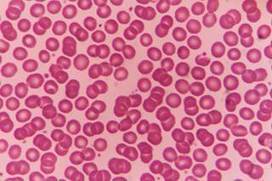
According to a presentation at the annual meeting of the American Society of Hematology, an artificial red blood cell has been created that can effectively pick up oxygen in the lungs and deliver it to tissues throughout the body. The artificial blood cell, which is about one-fiftieth the size of a normal red blood cell, is made from purified human hemoglobin proteins that have been coated with a synthetic polymer. The coating was developed by the study's lead researcher, Dipanjan Pan, PhD, an assistant professor of bioengineering with the University of Illinois at Urbana-Champaign.
|
|
Rescooped by
Dr. Stefan Gruenwald
from Eldritch Weird
December 29, 2016 1:47 PM
|
The red dwarf, which is the Sun's nearest stellar neighbor, actually orbits its two brighter companions — Alpha Centauri A and B — fresh observations have revealed. Are the three stars that constitute the Alpha Centauri star system — Alpha Centauri A, B, and Proxima Centauri — part of one gravitationally-bound triple system? This is the question that astronomers have, for the longest time, struggled to answer. Now, when interest in our nearest star system is at an all-time high — largely due to the recent discovery of a potentially habitable exoplanet, Proxima b, around Proxima Centauri — a team of researchers have finally concluded that the three objects do, in fact, form a bound system. Their findings, to be published in the upcoming edition of the journal Astronomy and Astrophysics, were based on extremely precise measurements made using the European Southern Observatory’s 3.6-metre telescope housed at the La Silla Observatory in Chile.
Via SIN JONES
|
|
Scooped by
Dr. Stefan Gruenwald
December 29, 2016 1:42 PM
|
Recording your voice and storing it on a server sounds alarming---OK, it is alarming---but there's a good reason why Amazon Echo and Google Home do it. If you got an Amazon Echo or Google Home voice assistant, welcome to a life of luxurious convenience. You’ll be asking for the weather, the news, and your favorite songs without having to poke around on your phone. You’ll be turning off lights and requesting videos from bed. The world is yours. But you know what? That little talking cylinder is always listening to you. And not just listening, but recording and saving many of the things you say. Should you freak out? Not if you’re comfortable with Google and Amazon logging your normal web activity, which they’ve done for years. Many other sites have also done it for years. Echo and Home simply continue the trend of saving a crumb trail of queries, except with snippets of your voice. However, it’s still a reasonable concern for anyone worried about privacy. If you only use Chrome in “Incognito Mode,” put tape over your laptop camera, and worry about snoops sniffing your packets, a web-connected microphone in your home seems risky. It’s a fair thing to be unsettled about. But recording your voice is a major part of how voice assistants work. Here’s how devices like Echo and Home record your voice, why they do it, what they do with the data, and how to scrub those recordings.
|
|
Scooped by
Dr. Stefan Gruenwald
December 29, 2016 1:35 PM
|
After decades of fruitless scanning the skies for alien messages, scientists say it's time to try a basic rule of etiquette: Say "hello" first. A new San Francisco-based organization called METI, or Messaging Extra Terrestrial Intelligence, plans to send signals to distant planets, rather than waiting for them to call Earth. By the end of 2018, the project aims to send some conversation-starters via radio or laser signals to a rocky planet circling Proxima Centauri, the nearest star other than the sun, and then to more distant destinations, hundreds or thousands of light years away. It would be the first effort to send powerful, repeated and intentional messages into space, targeting the same stars over months or years. "If we want to start an exchange over the course of many generations, we want to learn and share information," said Douglas Vakoch, president of METI and former director of Interstellar Message Composition at the Search for Extraterrestrial Intelligence Institute in Mountain View, Calif.,, known as SETI. Founded last year, METI will host two workshops next year, one in Paris and the other in St. Louis. It also plans to start raising the $1 million needed annually to staff and build or borrow a powerful transmitter in a remote location. Part of the mission will be to figure out how to craft the perfect message to say "Hello." Like much else in science, the project has turned controversial. Some ask: If aliens are hostile, do we really want them to know where we are? We shouldn't draw attention to ourselves, say science fiction writer David Brin and theoretical physicist Stephen Hawking. "We have almost zero idea of whether aliens are likely to be dangerous," physicist Mark Buchanan wrote in journal Nature Physics.
|
|
Scooped by
Dr. Stefan Gruenwald
December 29, 2016 11:45 AM
|
Scientists are sorting through chemical structures, twisting and turning known drugs and exploring new ways to ease pain. An opioid epidemic is upon us. Prescription painkillers such as fentanyl and morphine can ease terrible pain, but they can also cause addiction and death. The Centers for Disease Control and Prevention estimates that nearly 2 million Americans are abusing or addicted to prescription opiates. Politicians are attempting to stem the tide at state and national levels, with bills to change and monitor how physicians prescribe painkillers and to increase access to addiction treatment programs. Those efforts may make access to painkillers more difficult for some. But pain comes to everyone eventually, and opioids are one of the best ways to make it go away. Morphine is the king of pain treatment. “For hundreds of years people have used morphine,” says Lakshmi Devi, a pharmacologist at the Ichan School of Medicine Mount Sinai in New York City. “It works, it’s a good drug, that’s why we want it. The problem is the bad stuff.” The “bad stuff” includes tolerance — patients have to take higher and higher doses to relieve their pain. Drugs such as morphine depress breathing, an effect that can prove deadly. They also cause constipation, drowsiness and vomiting. But “for certain types of pain, there are no medications that are as effective,” says Bryan Roth, a pharmacologist and physician at the University of North Carolina at Chapel Hill. The trick is constructing a drug with all the benefits of an opioid painkiller, and few to none of the side effects. There are three ways that scientists are searching for the next big pain buster, and three of the chemicals they have recently turned up.
|