Your new post is loading...
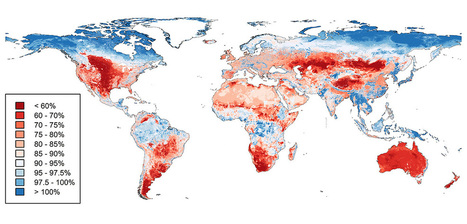
Scientists have a new 'big data' tool to study how human activity affects the planet's biodiversity, with the publication of a gigantic database that compiles studies from across the globe. More than 3.2 million records, sampled from over 26,000 locations and representing more than 47,000 species, are being released. The project is a mass collaborative effort. Hundreds of scientists from around the world are sharing research data through the database. 'We know that landscapes are going to change a lot in the future as the human population grows, but we haven't really known how biodiversity will change in response,' says project lead and Museum scientist Prof Andy Purvis. 'The PREDICTS database allows us to build global models from the individual local studies that help answer this question.'
Via Meristemi

|
Rescooped by
Dr. Stefan Gruenwald
from DNA and RNA research
January 25, 2017 7:22 PM
|
A Hokkaido University researcher has successfully developed a method to accurately manipulate gene expression by light illumination and demonstrated its usability by creating double-headed zebrafish. It has been difficult to freely manipulate the timing and duration of gene expression using existing gene manipulation technologies, which depend on organism’s gene regulating mechanism. In recent years, methods using light to regulate gene expression have been developed, but deemed insufficient to manipulate embryonic development. This is due to a time lag of several hours that occurs from light irradiation to the start/cessation of protein production. Existing photo-control technologies also require genetic modification, a process that is not only time-consuming but also strictly regulated by the Cartagena Protocol. Shinzi Ogasawara of Hokkaido University’s Creative Research Institution focused his research on controlling the process of translating messenger RNA (mRNA) to protein, instead of the conventional process of transcribing DNA to mRNA. As the new technology acts on mRNAs, genetic modification is unnecessary. Instead, the mRNAs were modified in such a way that they could bind to “Initiation Factors (IFs)” when irradiated with ultraviolet light which then starts the process of translation; whereas mRNAs were unable to bind to IFs when irradiated with blue light.
Via Integrated DNA Technologies
Rare and extinct animals are preserved in jars of alcohol in natural history museum collections around the world, which provide a wealth of information on the changing biodiversity of the planet. These preserved specimens of snakes, lizards, frogs, fish and other animals can last up to 500 years when processed in a chemical called formalin. While formalin helps preserve the specimen making it rigid and durable, it poses a challenge to extracting and sequencing DNA. Furthermore, DNA degrades and splits into small fragments over time. This fragmented DNA is difficult to amplify into long informative stretches of DNA that can be used to examine evolutionary relationships among species when using older DNA sequencing technology. Therefore, scientists have not been able to effectively sequence DNA from these specimens until now.
LSU Museum of Natural Science Curator and Professor Christopher Austin and his collaborator Rutgers-Newark Assistant Professor Sara Ruane developed a protocol and tested a method for DNA sequencing thousands of genes from these intractable snake specimens. Their research was published today in the international scientific journal Molecular Ecology Resources.
“Natural history museums are repositories for extinct species. Unfortunately, naturalists in the 1800s were not collecting specimens for analyses we conduct today such as DNA sequencing. Now with these new methods, we can get the DNA from these very old specimens and sequence extinct species like the Ivory Billed Woodpecker, the Tasmanian Wolf and the Dodo Bird,” Austin said.
He and Ruane found and tested an approach that includes taking a small piece of liver tissue from the snake specimen, heating it up over a longer period of time and applying an enzyme that digests the tissue sample and enables the DNA to be extracted. Their minimally invasive protocol preserves the specimen so additional information can be collected from the specimen in the future. It also includes applying the latest technology to chemically sequence the specimens’ DNA.
“A genome is a complex jigsaw puzzle broken up in to hundreds of millions of small pieces. We can sequence those pieces and computationally put them back together,” Austin said.
They extracted and sequenced the DNA of 13 historic or rare snake specimens from all over the world many of which had never been analyzed using modern genetic methods. Some of the specimens were more than 100 years old. They also integrated these data with modern samples to create a genetic family tree, or phylogeny, that maps the evolutionary relationships of various snake species. This work resulted in thousands of genetic markers for snake specimens collected as far back as the early 1900s.
“The exciting thing about this work is that it makes species that have been essentially lost to science, due to extirpation, rarity or general secretiveness, which applies to many animals and not just snakes, available for scientific research in the modern age of genomics,” Ruane said.
“We also believe this research will benefit scientists working with rare animals that are either hard to collect or extinct but are represented in fluid-preserved historical collections. It also underscores the continued importance of museum collections in modern science,” Austin said.
Via Integrated DNA Technologies
|
|
Scooped by
Dr. Stefan Gruenwald
January 25, 2017 7:12 PM
|
A team of scientists has invented a replacement for daily glucose-level finger-pricking and insulin shots: a painless “smart” patch that monitors blood glucose and releases insulin when levels climb too high. The report on the device, which has only been tested on mice so far, appears in the journal ACS Nano. People with Type 1 diabetes don’t make insulin — a hormone that regulates blood glucose (sugar). Those with Type 2 diabetes can’t use insulin effectively. Either way, glucose builds up in the blood, which can lead to a host of health problems, including heart disease, stroke, blindness and amputation of toes, feet or legs. To avoid these outcomes, people with Type 1 or advanced Type 2 diabetes regularly prick their fingers to measure blood-sugar levels, and some patients must inject themselves with insulin when needed. But sometimes, despite a person’s vigilance, glucose levels can still get out of whack. So Zhen Gu and colleagues* decided to invent a simpler, more effective, shot-free way to manage diabetes: a skin patch covered in painless microneedles that are loaded with tiny insulin-carrying pouches. The pouches (vesicles) are engineered to break apart rapidly and release the insulin in response to rising glucose levels. Diabetic mice wearing the patch maintained consistent concentrations of insulin in their blood. When these mice received a shot of glucose, their blood sugar levels spiked initially, but then fell to normal levels within two hours.
|
|
Scooped by
Dr. Stefan Gruenwald
January 25, 2017 7:07 PM
|
Astronomers have spotted a mysterious faint object in the vicinity of a quadruply lensed quasar designated MG 0414+0534. MG 0414+0534 is a quadruply lensed, radio-loud quasar that showcases a strong sign of anomaly in the flux ratio and reddening in the optical and near-infrared band. This anomaly baffles scientists as its origin is not fully understood yet. In order to reveal more insights into this mysterious anomaly, a team of researchers led by Kaiki Taro Inoue of Kindai University in Japan conducted continuum observations of MG 0414+0534 with ALMA. The observational campaign, which was carried out in June and August 2015, resulted in the discovery of a faint object with a flux of about 0.3 mJy in the vicinity of the quasar. For the purpose of the research, this newly found object was designated "object Y." According to the paper, "object Y" has an ellipticity of about 0.7 at a redshift between 0.5 and 1.0 and its linear size is at least 16,300 light years. The scientists estimate that the dark matter plus baryon mass associated with the object is about one billion solar masses, while its dust mass is approximately 10 million times greater than that of the sun. The images obtained by ALMA allowed the researchers to draw conclusions that the newly detected object is most likely a dusty dark dwarf galaxy, previously undetected in either optical, near-infrared or radio bands. "Our findings suggest that the object is a dusty dark dwarf galaxy," the paper reads. However, the astronomers also explore the possibility that "object Y" could be an UDG. With stellar masses typical of dwarf galaxies, UDGs are extremely-low-density galaxies. The largest UDGs have sizes comparable to the Milky Way but contain only about one percent as many stars as our home galaxy. Notably, the phenomenon of UDGs still puzzles scientists as they try explain why these faint but large galaxies are not ripped apart by the tidal fields of their host clusters.
|
|
Scooped by
Dr. Stefan Gruenwald
January 24, 2017 4:21 PM
|
The black holes in our universe may seem like bizarre, voracious beasts – but stranger ones are possible. Simulations of black holes have revealed the first superfluid specimen. Superfluids are a form of matter that take mere melting one step further. When a solid turns to a liquid, what was once sturdy and inflexible begins to flow. Superfluids have zero stickiness or viscosity: they can even flow uphill. They also have completely uniform temperature. But superfluids are extremely difficult to create. Only liquid helium has been coaxed into going superfluid, and then only at temperatures close to absolute zero. The stuff is even harder to study or model: many of the important calculations are ones that nobody knows how to do yet. Now, Robert Mann at the University of Waterloo in Canada and his colleagues have modelled a theoretical black hole that changes in a way that’s mathematically identical to what liquid helium does when it turns superfluid.
Imagine predicting your car will break down and being able to replace the faulty part before it becomes a problem. Now Australian physicists have found a way to do this – albeit on a quantum scale. In Nature Communications, they enlisted machine learning to “foresee” the future failure of a quantum bit, or qubit, and makes the necessary corrections to stop it happening. Quantum computing is a potentially world-changing technology with the potential to complete tasks in minutes what current computers take thousands of years. But achieving a practical, large-scale quantum technologies is probably a long way off. One of the major challenges is maintaining qubits in the delicate, zen-like state of superposition they need to do their business. Any tiny nudge from the environment – such as the jiggly atom next door – knocks the qubit off balance. So physicists go to great lengths to stabilize qubits, cooling them to more than 200 degrees below zero to reduce atomic jiggling. Still, superposition typically lasts but a tiny fraction of a second, and this cuts quantum number-crunching time short. A team led by Michael Biercuk at the University of Sydney found a new way of stabilizing qubits against noise in the environment. It works by predicting how a qubit will behave and act preemptively. In a quantum computer, the technique could make qubits twice as stable as before. The team used control theory and machine learning (a kind of artificial intelligence) to estimate how the future of a qubit would play out. Control theory is the branch of engineering that deals with feedback systems, such as the thermostat keeping your room temperature constant. The thermostat reacts to changes in the environment, initiating warm or cool air to pump into the room. Meanwhile, new machine learning algorithms look at how the system behaved in the past and use this information predict how it will react to future events. First, Biercuk’s team made a qubit by trapping a single ion of ytterbium in a beam of laser light. To train their algorithm, they simulated noise, tweaking the light to disturb the atom in a controlled way. Their algorithm monitored how the qubit responded to these tweaks and made a prediction for how it would behave in future. Next, they let events play out for the qubit to check their algorithm’s accuracy. The longer the algorithm watched the qubit, the more accurate its predictions became. Finally, the team used the predictions to help the system self-correct. The qubit was twice as stable with the algorithm as without it.
Via Mariaschnee
|
|
Scooped by
Dr. Stefan Gruenwald
January 20, 2017 3:40 PM
|
New evidence involving the ancient poop of some of the huge and astonishing creatures that once roamed Australia indicates the primary cause of their extinction around 45,000 years ago was likely a result of humans, not climate change.
|
|
Rescooped by
Dr. Stefan Gruenwald
from Soggy Science
January 20, 2017 3:32 PM
|
The twilight zone lies deep below the ocean surface, and the fish that live there could feed the world's population many times over – if we can work out how to catch them. Until relatively recently, some believed that domestic chickens were the most abundant vertebrates on the planet with numbers estimated at around 24 billion. In fact, this figure is dwarfed by some fish in the twilight zone. The global bristlemouth population is so vast, for instance, that numbers may lie in the quadrillions while various estimates of lanternfish suggest that their biomass alone is several times greater than the entire world fisheries catch. Such is the abundance of these fish that they greatly perplexed oceanographers trying to measure the depth of the world's oceans using sonar during World War Two. The sonar signals reflected back off the fish, giving the impression of a "false ocean bottom", only a few hundred meters down. Once they realized what was going on, the US military considered trying to use these layers of fish as a camouflage to hide their submarines. In total, based on new acoustic surveys, scientists now believe that the biomass of fish in the twilight zone is at least 10 billion metric tons. "It's an immense number," St John says. "There is enough fish there to make up 1.3 tons per human on the planet. If you take and harvest 50% of that, turn it into fishmeal and then feed it to chickens through agriculture or pigs, you're creating 4.3 kilos of animal protein per human per day. So you've got people starving on the planet right now through food shortages, and here's a huge larder which we haven't even touched."
Via Grant W. Graves
|
|
Rescooped by
Dr. Stefan Gruenwald
from TAL effector science
January 20, 2017 3:26 PM
|
Targeted genome editing has become a powerful genetic tool for studying gene function or for modifying genomes by correcting defective genes or introducing genes. A variety of reagents have been developed in recent years that can generate targeted double-stranded DNA cuts which can be repaired by the error-prone, non-homologous end joining repair system or via the homologous recombination-based double-strand break repair pathway provided a suitable template is available. These genome editing reagents require components for recognizing a specific DNA target site and for DNA-cleavage that generates the double-stranded break. In order to reduce potential toxic effects of genome editing reagents, it might be desirable to control the in vitro or in vivo activity of these reagents by incorporating regulatory switches that can reduce off-target activities and/or allow for these reagents to be turned on or off. This review here will outline the various genome editing tools that are currently available and describe the strategies that have so far been employed for regulating these editing reagents. In addition, this review will examine potential regulatory switches/strategies that can be employed in the future in order to provide temporal control for these reagents.
Via dromius
|
|
Scooped by
Dr. Stefan Gruenwald
January 20, 2017 3:16 PM
|
A Northwestern University team developed a new computational model that performs at human levels on a standard intelligence test. This work is an important step toward making artificial intelligence systems that see and understand the world as humans do. “The model performs in the 75th percentile for American adults, making it better than average,” said Northwestern Engineering’s Ken Forbus. “The problems that are hard for people are also hard for the model, providing additional evidence that its operation is capturing some important properties of human cognition.” The new computational model is built on CogSketch, an artificial intelligence platform previously developed in Forbus’ laboratory. The platform has the ability to solve visual problems and understand sketches in order to give immediate, interactive feedback. CogSketch also incorporates a computational model of analogy, based on Northwestern psychology professor Dedre Gentner’s structure-mapping theory. Forbus, Walter P. Murphy Professor of Electrical Engineering and Computer Science at Northwestern’s McCormick School of Engineering, developed the model with Andrew Lovett, a former Northwestern postdoctoral researcher in psychology. Their research was published online this month in the journal Psychological Review.
|
|
Scooped by
Dr. Stefan Gruenwald
January 20, 2017 3:11 PM
|
When matter changes from solids to liquids to vapors, the changes are called phase transitions. Among the most interesting types are more exotic changes—quantum phase transitions—where the strange properties of quantum mechanics can bring about extraordinary changes in curious ways. In a paper published in Physical Review Letters, a team of researchers led by the Department of Energy's Oak Ridge National Laboratory reports the discovery of a new type of quantum phase transition. This unique transition happens at an elastic quantum critical point, or QCP, where the phase transition isn't driven by thermal energy but instead by the quantum fluctuations of the atoms themselves. The researchers used a combination of neutron and X-ray diffraction techniques, along with heat capacity measurements, to reveal how an elastic QCP can be found in a lanthanum-copper material by simply adding a little bit of gold. Phase transitions associated with QCPs happen at near absolute zero temperature (about minus 460 degrees Fahrenheit), and are typically driven at that temperature via factors such as pressure, magnetic fields, or by substituting additional chemicals or elements in the material. "We study QCPs because materials exhibit many strange and exciting behaviors near the zero temperature phase transition that can't be explained by classical physics," said lead author Lekh Poudel, a University of Tennessee graduate student working in ORNL's Quantum Condensed Matter Division. "Our goal was to explore the possibility of a new type of QCP where the quantum motion alters the arrangement of atoms. "Its existence had been theoretically predicted, but there hadn't been any experimental proof until now," he said. "We're the first to establish that the elastic QCP does exist."
|
|
Scooped by
Dr. Stefan Gruenwald
January 17, 2017 12:28 AM
|
Meet Malaysia's new pink ladies: Two species of katydid whose females sport distinctly rosy hues. While the males of the new species are a uniform green color, the females are standouts in red and pink. Not only that, both sexes look just like leaves, with distinctive veins and leaf-like lobes on their legs. Also see a new species of spider that looks like a leaf. The insects, which live in northern Borneo, are especially unusual because one of them was identified based on photographs alone. In 2013, a friend showed George Beccaloni pictures of a spectacularly colored katydid—a type of grasshopper-like insect—that Beccaloni couldn’t identify. Beccaloni sent them to Sigfrid Ingrisch, an expert on Asian katydids. “He was reluctant to name and describe it because it’s not good practice to describe new species based only on photos,” says Beccaloni, a zoologist at London's Natural History Museum. “Often you need to look at microscopic characteristics, things that don’t show up in photos, to differentiate species.” But in this case, the scientists felt confident naming the insect as a new species, Eulophophyllum kirki, since the veins of its wings were clearly visible and unlike any other known species. Wing veins are often used to tell katydid species apart.
|
Life's genetic code has only ever contained four natural bases. These bases pair up to form two "base pairs"—the rungs of the DNA ladder—and they have simply been rearranged to create bacteria and butterflies, penguins and people. Four bases make up all life as we know it.
Until now. Scientists at The Scripps Research Institute (TSRI) have announced the development of the first stable semisynthetic organism. Building on their 2014 study in which they synthesized a DNA base pair, the researchers created a new bacterium that uses the four natural bases (called A, T, C and G), which every living organism possesses, but that also holds as a pair two synthetic bases called X and Y in its genetic code.
TSRI Professor Floyd Romesberg and his colleagues have now shown that their single-celled organism can hold on indefinitely to the synthetic base pair as it divides. Their research was published January 23, 2017, online ahead of print in the journal Proceedings of the National Academy of Sciences.
Via Mariaschnee
Physicists from The Australian National University (ANU) have invented a tiny device that creates the highest quality holographic images ever achieved, opening the door to imaging technologies seen in science fiction movies such as Star Wars. Lead researcher Lei Wang said the team created complex holographic images in infrared with the invention that could be developed with industry. "As a child, I learned about the concept of holographic imaging from the Star Wars movies. It's really cool to be working on an invention that uses the principles of holography depicted in those movies," said Mr Wang, a PhD student at the ANU Research School of Physics and Engineering. Holograms perform the most complex manipulations of light. They enable the storing and reproduction of all information carried by light in 3D. In contrast, standard photographs and computer monitors capture and display only a portion of 2D information. "While research in holography plays an important role in the development of futuristic displays and augmented reality devices, today we are working on many other applications such as ultra-thin and light-weight optical devices for cameras and satellites," he said. Mr Wang said the device could replace bulky components to miniaturize cameras and save costs in astronomical missions by reducing the size and weight of optical systems on space craft. Co-lead researcher Dr Sergey Kruk said the device consisted of millions of tiny silicon pillars, each up to 500 times thinner than a human hair. "This new material is transparent, which means it loses minimal energy from the light, and it also does complex manipulations with light," said Dr Kruk from the ANU Research School of Physics and Engineering. "Our ability to structure materials at the nanoscale allows the device to achieve new optical properties that go beyond the properties of natural materials. The holograms that we made demonstrate the strong potential of this technology to be used in a range of applications." Dr Kruk said ANU led the design, fabrication and optical testing of the device.
Via Mariaschnee
|
|
Scooped by
Dr. Stefan Gruenwald
January 25, 2017 7:14 PM
|
From oil rigs to farms, more of the country's workplaces than ever are now welcoming robotic laborers. That spells lower costs for the companies that employ them, but it could be an awkward moment for the new president, whose pro-business stance and "America first" populism will have to contend with the fact that many of the machines will be made in China. Robots have a long track record of piecing together complex products like cars and consumer electronics. As their role in factory settings continues to expand, they are also now being used in more unpredictable settings. Bloomberg reports, for example, that oil drilling sites are becoming increasingly automated, with robots taking over the job of joining heavy pipes as they’re driven into wells. One oil company says that wells that previously required 20 employees may soon need as few as five. Meanwhile, the rising price of workers is driving some farmers of labor-intensive crops—such as fresh fruits and vegetables—to adopt robots. As both Forbes and Bloomberg report, the devices can currently be used to pick crops or thin out seedlings, and, despite their high upfront costs, don’t demand a minimum wage. The mining industry is undergoing similar changes, and even construction sites may soon get a robotic helping hand. It all sounds like a lot of jobs are at stake. And it’s certainly true that many traditional roles will be lost to robots. But as a recent report suggested, it will probably be a while yet before robots gobble up jobs en masse. Instead, the U.S. might choose to worry about where these robots actually come from. As Farhad Manjoo points out in the New York Times, many of the machines that will be used to automate jobs in America will come from China. The U.S. hasn’t invested heavily in building commercial robots, while China has been busy building an army of them.
|
|
Scooped by
Dr. Stefan Gruenwald
January 25, 2017 7:10 PM
|
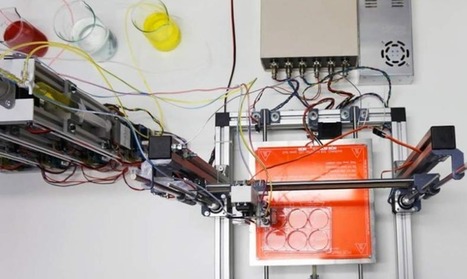
A prototype 3D bioprinter that can create totally functional human skin has been developed by scientists from Universidad Carlos III de Madrid (UC3M) and BioDan Group in Spain. The skin has been used to treat burns as well as traumatic and surgical wounds in a large number of patients in Spain, according to the scientists. The system provides two processes. Autologous skin (from the patient’s own cells to generate human collagen) for therapeutic use, such as in the treatment of severe burns, instead of the animal collagen used in other methods. The researchers have applied for approval by various European regulatory agencies to guarantee that the skin that is produced is adequate for use in transplants on burn patients and on those with other skin problems. The 3D-printed skin replicates human bilayered skin, using “bioinks” (biological components) containing human plasma as well as primary human fibroblasts and keratinocytes obtained from skin biopsies. These are controlled by a computer, which deposits them on a print bed in an orderly manner to then produce the skin. The researchers were able to generate 100 cm2 of printed skin in less than 35 minutes (including the 30 min required for fibrin gelation). Allogeneic skin (from a stock of cells), done on a large scale for industrial processes. This skin can be used to test pharmaceutical products, cosmetics, and consumer chemical products where current regulations require testing that does not use animals. “This method of bioprinting allows skin to be generated in a standardized, automated way, and the process is less expensive than manual production,” says Alfredo Brisac, CEO of BioDan Group, the Spanish bioengineering firm specializing in regenerative medicine that is collaborating on this research and commercializing this technology. The research was published online in the journal Biofabrication.
|
|
Scooped by
Dr. Stefan Gruenwald
January 25, 2017 7:05 PM
|
The presence of water on ancient Mars is a paradox. There's plenty of geographical evidence that rivers periodically flowed across the planet's surface. Yet in the time period when these waters are supposed to have run—three to four billion years ago—Mars should have been too cold to support liquid water.
Researchers from the Harvard John A. Paulson School of Engineering and Applied Science (SEAS) suggest that early Mars may have been warmed intermittently by a powerful greenhouse effect. In a paper published in Geophysical Research Letters, researchers found that interactions between methane, carbon dioxide and hydrogen in the early Martian atmosphere may have created warm periods when the planet could support liquid water on the surface. "Early Mars is unique in the sense that it's the one planetary environment, outside Earth, where we can say with confidence that there were at least episodic periods where life could have flourished," said Robin Wordsworth, assistant professor of environmental science and engineering at SEAS, and first author of the paper. "If we understand how early Mars operated, it could tell us something about the potential for finding life on other planets outside the solar system." Four billion years ago, the Sun was about 30 percent fainter than today and significantly less solar radiation—a.k.a. heat—reached the Martian surface. The scant radiation that did reach the planet was trapped by the atmosphere, resulting in warm, wet periods. For decades, researchers have struggled to model exactly how the planet was insulated. The obvious culprit is CO2. Carbon dioxide makes up 95 percent of today's Martian atmosphere and is the most well-known and abundant greenhouse gas on Earth. But CO2 alone does not account for Mars' early temperatures. "You can do climate calculations where you add CO2 and build up to hundreds of times the present day atmospheric pressure on Mars and you still never get to temperatures that are even close to the melting point," said Wordsworth. There must have been something else in Mars' atmosphere that contributed to a greenhouse effect. The atmospheres of rocky planets lose lighter gases, such as hydrogen, to space over time. Carl Sagan first speculated that hydrogen warming could have been important on early Mars back in 1977, but this is the first time scientists have been able to calculate its greenhouse effect accurately. It is also the first time that methane has been shown to be an effective greenhouse gas on early Mars. "This research shows that the warming effects of both methane and hydrogen have been underestimated by a significant amount," said Wordsworth. "We discovered that methane and hydrogen, and their interaction with carbon dioxide, were much better at warming early Mars than had previously been believed." The researchers hope that future missions to Mars will shed light on the geological processes that produced methane billions of years ago. "One of the reasons early Mars is so fascinating is that life needs complex chemistry to emerge," said Wordsworth. "These episodes of reducing gas emission followed by planetary oxidation could have created favorable conditions for life on Mars."
|
|
Scooped by
Dr. Stefan Gruenwald
January 20, 2017 3:50 PM
|
By Gabe Cherry
In research that could one day lead to advances against neurodegenerative diseases like Alzheimer's and Parkinson's, University of Michigan engineering researchers have demonstrated a technique for precisely measuring the properties of individual protein molecules floating in a liquid.
Proteins are essential to the function of every cell. Measuring their properties in blood and other body fluids could unlock valuable information, as the molecules are a vital building block in the body. The body manufactures them in a variety of complex shapes that can transmit messages between cells, carry oxygen and perform other important functions.
Sometimes, however, proteins don't form properly. Scientists believe that some types of these misshapen proteins, called amyloids, can clump together into masses in the brain. The sticky tangles block normal cell function, leading to brain cell degeneration and disease.
But the processes of how amyloids form and clump together are not well understood. This is due in part to the fact that there's currently not a good way to study them. Researchers say current methods are expensive, time-consuming and difficult to interpret, and can only provide a broad picture of the overall level of amyloids in a patient's system.
The University of Michigan and University of Fribourg researchers who developed the new technique believe that it could help solve the problem by measuring an individual molecule's shape, volume, electrical charge, rotation speed and propensity for binding to other molecules.
They call this information a "5-D fingerprint" and believe that it could uncover new information that may one day help doctors track the status of patients with neurodegenerative diseases and possibly even develop new treatments. Their work is detailed in a paper published in Nature Nanotechnology.
"Imagine the challenge of identifying a specific person based only on their height and weight," said David Sept, a U-M biomedical engineering professor who worked on the project. "That's essentially the challenge we face with current techniques. Imagine how much easier it would be with additional descriptors like gender, hair color and clothing. That's the kind of new information 5-D fingerprinting provides, making it much easier to identify specific proteins."
Michael Mayer, the lead author on the study and a former U-M researcher who's now a biophysics professor at Switzerland's Adolphe Merkle Institute, says identifying individual proteins could help doctors keep better tabs on the status of a patient's disease, and it could also help researchers gain a better understanding of exactly how amyloid proteins are involved with neurodegenerative disease.
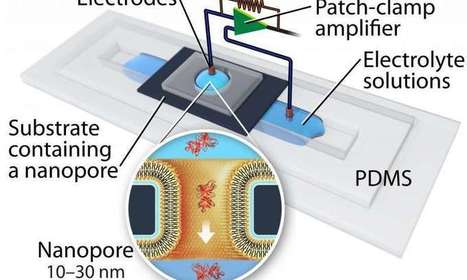
To take the detailed measurements, the research team uses a nanopore 10-30 nanometers wide—so small that only one protein molecule can fit through at a time. The researchers filled the nanopore with a salt solution and passed an electric current through the solution.
As a protein molecule tumbles through the nanopore, its movement causes tiny, measurable fluctuations in the electric current. By carefully measuring this current, the researchers can determine the protein's unique five-dimensional signature and identify it nearly instantaneously.
"Amyloid molecules not only vary widely in size, but they tend to clump together into masses that are even more difficult to study," Mayer said. "Because it can analyze each particle one by one, this new method gives us a much better window to how amyloids behave inside the body."
Ultimately, the team aims to develop a device that doctors and researchers could use to quickly measure proteins in a sample of blood or other body fluid. This goal is likely several years off; in the meantime, they are working to improve the technique's accuracy, honing it in order to get a better approximation of each protein's shape. They believe that in the future, the technology could also be useful for measuring proteins associated with heart disease and in a variety of other applications as well.
"I think the possibilities are pretty vast," Sept said. "Antibodies, larger hormones, perhaps pathogens could all be detected. Synthetic nanoparticles could also be easily characterized to see how uniform they are."
The study is titled "Real-time shape approximation and fingerprinting of single proteins using a nanopore."
|
|
Scooped by
Dr. Stefan Gruenwald
January 20, 2017 3:42 PM
|
Messenger RNAs carry the information for the assembly of proteins from the DNA in the cell nucleus to the sites of protein synthesis in the cytoplasm, and are crucial for cell function. In nerve cells, which form cytoplasmic processes that can be very long, many neuronal mRNAs must be conveyed to the sites of action of their protein products to ensure that the correct intercellular connections can be established. This requires a dedicated transport system that links remote regions of the cytoplasm with the cell nucleus. Dierk Niessing, a professor at LMU’s Biomedical Center and leader of a research group in the Institute of Structural Biology at the Helmholtz Zentrum München, has now characterized the structure of a macromolecular complex involved in the transport of mRNAs in yeast cells. The new findings appear in the journal Nature Structural & Molecular Biology. As a member of the DFG Research Unit “Macromolecular Complexes in mRNA Localization” Niessing explores the workings of the cell’s molecular transport systems in several model organisms. In the new study, carried out in collaboration with first author Franziska Edelmann at the Helmholtz Zentrum München, the authors used baker’s yeast (Saccharomyces cerevisiae) to investigate at high resolution the succession of structural interactions required for the specific recognition of mRNA in the nucleus and its subsequent transport in the cytoplasm. The research team systematically isolated and crystallized sub-complexes of the molecular machine responsible for the process and subjected them to X-ray crystallographic analysis. The resulting models clearly show, for the first time, how the hairpin-like conformation of the RNA is altered when it is recognized by the requisite binding proteins in the nucleus. “We were surprised to see that the RNA is not only recognized by these proteins, they also force it to adopt a new form. They staple it together, so to speak,” Niessing says. Carriage of the RNAs is the responsibility of so-called motor proteins. With the help of unfolded adaptor proteins, they attach to the RNA-protein complex as it emerges from the nucleus. In doing so, they stabilize the whole assembly, as the structural models demonstrate, thus allowing the RNA to be transported to its destination along the fibers that make up the cytoskeleton, which serve as the system’s ‘railway lines’.
|
|
Scooped by
Dr. Stefan Gruenwald
January 20, 2017 3:35 PM
|
The country’s Internet giants are focusing on AI research, and domestic venture capital funding is pouring into the field. The nation’s search giant, Baidu, is leading the charge. Already making serious headway in AI research, it has now announced that former Microsoft executive Qi Lu will take over as its chief operating officer. Lu ran the applications and services division at Microsoft, but, according to the Verge, a large part of his remit was developing strategies for artificial intelligence and chatbots. In a statement, Baidu cites hiring Lu as part of its plan to become a “global leader in AI.” Meanwhile, Baidu’s chief scientist, Andrew Ng, has announced that the company is opening a new augmented reality lab in Beijing. Baidu has already made progress in AR, using computer vision and deep learning to add an extra layer to the real world for millions of people. But the new plans aim to use a 55-strong lab to increase revenue by building AR marketing tools—though it’s thought that the company will also consider health-care and education applications in the future. But Baidu isn’t alone in pushing forward. Late last year, Chinese Internet giant Tencent—the company behind the hugely successful mobile app WeChat, which has 846 million active users—said that it was determined to build a formidable AI lab. It plans to start publishing its work at conferences this year. Smaller players could also get a shot in the arm. According to KPMG, Chinese venture capital investment looks set to pour into AI research in the coming year. Speaking to Fintech Innovation, KPMG partner Egidio Zarrella explained that “the amount being invested in artificial intelligence in Asia is growing by the day.” Similar growth is already underway in China's research community. Astudy by Japan's National Institute of Science and Technology Policy found China to be a close second to the U.S. in terms of the number of AI studies presented at top academic conferences in 2015. And a U.S.government report says that the number of papers published by Chinese researchers mentioning "deep learning" already exceeds the number published by U.S. researchers. All of which has seen South China Morning Post label AI and AR as “must haves” in any self-respecting Chinese investment portfolio. No kidding. This year, it seems, many U.S. tech companies might find themselves looking East to identify competition.
|
|
Rescooped by
Dr. Stefan Gruenwald
from Nostri Orbis
January 20, 2017 3:29 PM
|
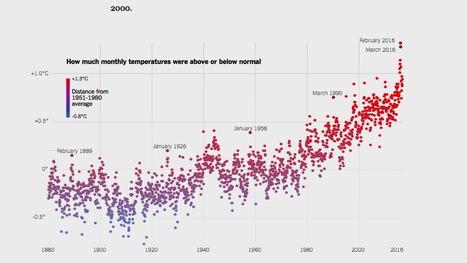
Global temperatures have continued to rise, making 2016 the hottest year on the historical record and the third consecutive record-breaking year, scientists say. Of the 17 hottest years ever recorded, 16 have now occurred since 2000.
Via Fernando Gil
|
|
Rescooped by
Dr. Stefan Gruenwald
from DNA and RNA research
January 20, 2017 3:21 PM
|
Metagenomics database helps fill in 10 percent of previously unknown protein structures. For proteins, appearance matters. These important molecules largely form a cell’s structures and carry out its functions: proteins control growth and influence mobility, serve as catalysts, and transport or store other molecules. Comprised of long amino acid chains, the one-dimensional amino acid sequence may seem meaningless on paper. Yet when viewed in three dimensions, researchers can see what a protein’s structure is and how a protein’s structure, and particularly the way it folds, determines its functions. There are close to 15,000 protein families – groups of families that share an evolutionary origin – in the database Pfam. For nearly a third (4,752) of these protein families, there is at least one protein in each family that already has an experimentally determined structure. For another third (4,886) of the protein families, comparative models could be built with some degree of confidence. For the final third (5,211) of the protein families in the database, however, no structural information exists. In the January 20, 2017 issue of Science, a team led by University of Washington’s David Baker in collaboration with researchers at the U.S. Department of Energy Joint Genome Institute (DOE JGI), a DOE Office of Science User Facility, reports that structural models have been generated for 614 or 12 percent of the protein families that had previously had no structural information available. “That this could be accomplished using computational modeling methods was not at all apparent 5 years ago,” the team noted in their paper. This accomplishment was made possible through a collaboration in which the Baker lab’s protein structure prediction server Rosetta analyzed the metagenomic sequences publicly available on the Integrated Microbial Genomes (IMG) system run by the DOE JGI. “A large number of protein families (in Pfam) have low number of sequences,” said study first author Sergey Ovchinnikov, a graduate student in the Baker lab. “This resulted in two consequences: 1) nobody cared about these families (since they were small); and, 2) co-evolution methods could not be applied to study them. With metagenomics, we found that some of these neglected families with only a handful of sequences so far, can now become as large as some of the most studied ones, when metagenomics data are taken into account! Moreover, we can offer a 3D model of a representative sequence from the family. We hope this will spark interest in some of these families.”
Via Integrated DNA Technologies
|
|
Scooped by
Dr. Stefan Gruenwald
January 20, 2017 3:12 PM
|
Researchers have found a way to trigger the innate, but previously hidden, ability of graphene to act as a superconductor - meaning that it can be made to carry an electrical current with zero resistance. The finding, reported in Nature Communications, further enhances the potential of graphene, which is already widely seen as a material that could revolutionise industries such as healthcare and electronics. Graphene is a two-dimensional sheet of carbon atoms and combines several remarkable properties; for example, it is very strong, but also light and flexible, and highly conductive. Since its discovery in 2004, scientists have speculated that graphene may also have the capacity to be a superconductor. Until now, superconductivity in graphene has only been achieved by doping it with, or by placing it on, a superconducting material - a process which can compromise some of its other properties. But in the new study, researchers at the University of Cambridge managed to activate the dormant potential for graphene to superconduct in its own right. This was achieved by coupling it with a material called praseodymium cerium copper oxide (PCCO). Superconductors are already used in numerous applications. Because they generate large magnetic fields they are an essential component in MRI scanners and levitating trains. They could also be used to make energy-efficient power lines and devices capable of storing energy for millions of years. Superconducting graphene opens up yet more possibilities. The researchers suggest, for example, that graphene could now be used to create new types of superconducting quantum devices for high-speed computing. Intriguingly, it might also be used to prove the existence of a mysterious form of superconductivity known as "p-wave" superconductivity, which academics have been struggling to verify for more than 20 years.
|
|
Scooped by
Dr. Stefan Gruenwald
January 17, 2017 12:32 AM
|
A San Francisco startup has landed Food and Drug Administration approval for artificial intelligence-assisted cardiac imaging in the cloud. Arterys Inc.’s Cardio DL program applies deep learning, a form of artificial intelligence, to automate tasks that radiologists have been performing manually. It represents the first FDA-cleared, zero-footprint use of cloud computing and deep learning through AI in a clinical setting, the company said. Arterys developed the technology by mining a data set of more than 3,000 cardiac cases. Cardio DL produces editable, automated contours, according to a company statement. It can provide accurate and consistent cardiac measurements in seconds, as opposed to one hour for manual processing. Obtaining an image of a heart through MRI is a complex, time-consuming process that Arterys is working to improve, according to Arterys CEO Fabien Beckers. Radiologists have traditionally used software to segment and draw contours around the ventricle to determine how the heart is functioning, Becker said. The new, AI-assisted software can provide deep learning-generated contours of the insides and outsides of the heart’s ventricles to speed up the process and improve accuracy. “It’s the new way of doing medical imaging, a cloud medical imaging application that can have AI embedded in it,” he said. “It has the potential to make sure that physicians benefit from the work of thousands of other physicians and can be transforming healthcare in a positive fashion.”
|