Your new post is loading...

|
Scooped by
Dr. Stefan Gruenwald
March 13, 2017 1:34 PM
|
The odds of life spreading between the worlds of the newly-discovered seven-planet TRAPPIST-1 system are up to 1,000 times greater than in our own solar system. That’s the conclusion of a new analysis posted March 2 to the arXiv, an online repository of scientific papers. The idea that simple organisms could accidentally travel between planets is known as panspermia. “Imagine one planet has life, and then you have a meteorite or asteroid impact that ejects some rock into space,” says mathematical physicist and lead author Manasvi Lingam of Harvard University in Cambridge, Massachusetts. “If these rocks are captured by a different planet, they could spawn life there.” Panspermia has ancient origins, dating back to the Greek philosopher Anaxagoras in 500 B.C., who believed that cosmic “life seeds” brought organisms to Earth. The first detailed scientific treatment came in 1908, when Swedish chemist Svante Arrhenius wrote a book arguing that bacterial spores could have bounded from one planet to another. A modern-day version of the hypothesis briefly gained popularity in 1996 when a Martian meteorite found in Antarctica seemed to bear signs of microbial fossils—a claim ultimately rejected by most researchers. Announced last month, TRAPPIST-1 is the newest exoplanetary system to spur excitement among astronomers. Orbiting the cool red dwarf star are seven rocky worlds ranging in size from slightly larger than Mars to a bit bigger than Earth. Three of them are in the star’s habitable zone, meaning liquid water could theoretically exist on their surface—though because red dwarf stars produce more flares and harsh radiation than sun-like stars, some scientists think life is unlikely on the surrounding planets. Others disagree. Because the star TRAPPIST-1 is smaller and dimmer than our sun, its habitable zone encompasses a closer-in region—the three potentially habitable planets take only six, nine, and 12 days, respectively, to go around their parent star. The planets are much closer to each other as well. The two inner potentially habitable planets, for instance, are 30 times closer than Venus is to Earth, while the two farther ones are 65 times closer than Earth and Mars. Applying models from the field of ecology, the researchers presuppose that the microbial transfer is similar to species jumping between islands. If the islands are closer together, a larger number of species could potentially travel between them. Hence, by analogy, it’s possible that many species might have made it from one planet in the TRAPPIST-1 system to another. “Of course, this is only an analogy and not an exact match,” says Lingam. “But we know that greater biodiversity in any ecosystem also implies greater stability. If you have more species being transferred to the new planet, there’s less of a chance that they’ll die.” Many unknowns remain, including just how long microbes can survive in space, whether or not they would be viable after traversing an atmosphere and crash-landing on a surface, and if the habitat of one world is similar enough to its sibling planets to allow such organisms to flourish. The TRAPPIST-1 system is well-positioned to answer at least some of these; its exoplanets all eclipse in front of their parent star, meaning that telescopes here on Earth can capture starlight filtering through any potential planetary atmospheres. Such observations could reveal signs of vegetation—plants on Earth preferentially absorb red light, for example, giving our planet a “red edge” as seen from far away—or other biosignature molecules. If the TRAPPIST-1 worlds display similar signals, it could imply that panspermia occurred. “What’s exciting to me more than anything is that this hypothesis is testable. This is no longer in the realm of theory,” says astronomer Rory Barnes of the University of Washington in Seattle, who was not involved in the work. Current and upcoming telescopes might be up the challenge, though it will likely take a large new space-based observatory such as the proposed Large UV/Optical/Infrared Surveyor (LUVOIR), which wouldn’t be launched until the 2030s, to answer such questions in detail.
|
|
Scooped by
Dr. Stefan Gruenwald
March 13, 2017 1:29 PM
|
Time is weird – in spite of what we think, the Universe doesn't have a master clock to run by, making it possible for us to experience time differently depending on how we're moving or how much gravity is pulling on us. Now physicists have combined two grand theories of physics to conclude not only is time not universally consistent, any clock we use to measure it will blur the flow of time in its surrounding space. Don't worry, that doesn't mean your wall clock is going to make you age quicker. We're talking about time keepers in highly precise experiments here, such as atomic clocks. A team of physicists from the University of Vienna and the Austrian Academy of Sciences have applied quantum mechanics and general relativity to argue that increasing the precision of measurements on clocks in the same space also increases their warping of time. Let's take a step back for a moment and consider in simple terms what physicists already know. Quantum mechanics is incredibly useful in describing the Universe on a very tiny scale, such as sub-atomic particles and forces over short distances. As accurate and incredibly useful as the mathematics supporting quantum mechanics might be, it makes predictions which seem counter-intuitive to our everyday experiences. One such prediction is called Heisenberg's uncertainty principle, which says as you know one thing with increasing precision, measurement of a complementary variable becomes less precise. For example, the more you pinpoint the position of an object in time and space, the less certain you can be about its momentum. This isn't a question of being clever enough or having better equipment – the Universe fundamentally works this way; electrons keep from crashing into protons thanks to a balance of 'uncertainty' of position and momentum. Another way to think of it is this: objects with ultra-precise positions require us to consider increasingly ridiculous amounts of energy. Applied to a hypothetical timepiece, splitting fractions of a second on our clock makes us less certain about the clock's energy. This is where general relativity comes in – another highly trusted theory in physics, only this time it is most useful in explaining how massive objects affect one another at a distance. Thanks to Einstein's work, we understand there is an equivalence between mass and energy, made famous in the equation (for objects at rest) as Energy = mass x speed of light squared (or E=mc^2). We also know time and space are connected, and that this space-time can be affected as if it was more than just an empty box; mass – and therefore energy – can 'bend' it. This is why we see cool things like gravitational lensing, where massive objects like stars and black holes dimple space so much, light can both travel straight and yet bend around them. It also means mass can affect time through a phenomenon called gravitational time dilation, where time looks like it is running slower the closer it gets to a gravitational source. Unfortunately, while the theories are both supported by experiments, they usually don't play well together, forcing physicists to consider a new theory that will allow them both to be correct at the same time. Meanwhile, it's important that we continue to understand how both theories describe the same phenomena, such as time. Which is what this new paper does. In this case, the physicists hypothesized the act of measuring time in greater detail requires the possibility of increasing amounts of energy, in turn making measurements in the immediate neighborhood of any time-keeping devices less precise. "Our findings suggest that we need to re-examine our ideas about the nature of time when both quantum mechanics and general relativity are taken into account", says researcher Esteban Castro.
|
|
Scooped by
Dr. Stefan Gruenwald
March 13, 2017 1:24 PM
|
Time crystals are one of the most interesting things physics has come up with in recent months, because they point to a whole new world of 'non-equilibrium' phases that are entirely different from anything scientists have studied in the past. For decades, we've been studying matter, such as metals and insulators, that's defined as being 'in equilibrium' - a state where all the atoms in a material have the same amount of heat. Now it looks like time crystals are the first example of the hypothesized but unstudied 'non-equilibrium' state of matter, and they could revolutionize how we store and transfer information via quantum systems. "It shows that the richness of the phases of matter is even broader [than we thought]," physicist Norman Yao from the University of California, Berkeley, who published the blueprint in January, told Gizmodo. "One of the holy grails in physics is understanding what types of matter can exist in nature. [N]on-equilibrium phases represent a new avenue different from all the things we've studied in the past." First proposed by Nobel Prize-winning theoretical physicist Frank Wilczek back in 2012, time crystals are hypothetical structures that appear to have movement even at their lowest energy state, known as a ground state. Usually when a material enters its ground state - also referred to as the zero-point energy of a system - movement should theoretically be impossible, because it would require it to expend energy. But Wilczek envisioned an object that could achieve everlasting movement while in its ground state by periodically switching the alignment of atoms inside the crystal over and over again - out of the ground state, back again, and repeat. Let's be clear - this isn't a perpetual motion machine, because there's zero energy in the system. But the hypothesis did initially seem unlikely for another reason. It hinted at a system that breaks one of the most fundamental assumptions of our current understanding of physics - time-translation symmetry, which states that the laws of physics are the same everywhere and at all times. As Daniel Oberhaus explains for Motherboard, time-translation symmetry is the reason why it would be impossible to flip a coin at one moment and have the odds of heads or tails at 50/50, but then the next time you flip it, the odds are suddenly 70/30.
|
|
Scooped by
Dr. Stefan Gruenwald
March 13, 2017 1:18 PM
|
MIT physicists have created a new form of matter, a supersolid, which combines the properties of solids with those of superfluids. By using lasers to manipulate a superfluid gas known as a Bose-Einstein condensate, the team was able to coax the condensate into a quantum phase of matter that has a rigid structure — like a solid — and can flow without viscosity — a key characteristic of a superfluid. Studies into this apparently contradictory phase of matter could yield deeper insights into superfluids and superconductors, which are important for improvements in technologies such as superconducting magnets and sensors, as well as efficient energy transport. The researchers report their results this week in the journal Nature. “It is counterintuitive to have a material which combines superfluidity and solidity,” says team leader Wolfgang Ketterle, the John D. MacArthur Professor of Physics at MIT. “If your coffee was superfluid and you stirred it, it would continue to spin around forever.” Physicists had predicted the possibility of supersolids but had not observed them in the lab. They theorized that solid helium could become superfluid if helium atoms could move around in a solid crystal of helium, effectively becoming a supersolid. However, the experimental proof remained elusive. The team used a combination of laser cooling and evaporative cooling methods, originally co-developed by Ketterle, to cool atoms of sodium to nanokelvin temperatures. Atoms of sodium are known as bosons, for their even number of nucleons and electrons. When cooled to near absolute zero, bosons form a superfluid state of dilute gas, called a Bose-Einstein condensate, or BEC. Ketterle co-discovered BECs — a discovery for which he was recognized with the 2001 Nobel Prize in physics. “The challenge was now to add something to the BEC to make sure it developed a shape or form beyond the shape of the ‘atom trap,’ which is the defining characteristic of a solid,” explains Ketterle.
|
|
Scooped by
Dr. Stefan Gruenwald
March 9, 2017 11:19 AM
|
Next time a flu epidemic hits your area, putting everyone in bed, rejoice: it may mean that the recession is over. A new paper by Jérôme Adda, a scholar at Bocconi’s Department of Economics (Economic Activity and the Spread of Viral Diseases: Evidence from High Frequency Data, in The Quarterly Journal of Economics (2016) 131 (2): 891-941. doi: 10.1093/qje/qjw005), highlights the connection between the business cycle and the spread of viruses: “We find that epidemics spread faster during economic booms”, he writes. “During booms more people are traveling, which increases inter-personal contacts and the spread of diseases”.
The paper underlines the role of transportation in the expansion of epidemics and rates not only the impact of policies that limit interpersonal contacts, but also their cost-effectiveness, through a cost-benefit analysis. “Shutting down schools”, Adda says, “proves to be effective in curbing the spread of viral diseases, provided that the incubation period is short enough, but is not an efficient measure, unless it is offset by a corresponding number of extra school days in other periods of the year”. Closing transportation networks turns out to be cost-effective only in very extreme cases. “In general, such measures are efficient only when epidemics are more deadly than the typical flu”, Adda says, “as in the 2009 swine flu outbreak”.
Adda has reached his conclusions thanks to a unique dataset of high frequency data collected by French authorities since the ‘80s, detailing the weekly evolution of the incidence of three major viral diseases (the flu, gastro-enteritis and chickenpox) across geographical locations and age groups. He uses quasi-experiments to determine the effects of school shutdowns and transportation network closures, observing how spreading patterns change during vacations (mandated school shutdowns) and transportation strikes. “Furthermore, data confirm that the opening of new high-speed train lines makes viruses spread faster”, Adda says.
The most striking result of the study is the strength of the transportation effect, but its results may also help authorities shape effective measures in case of an outbreak. Longer school vacations in the winter, when viruses are more likely to spread, and shorter in the summer definitely make sense.
“We’ve seen that the effectiveness of some policies depends on the characteristics of different diseases”, Adda says, “and this is valuable information in an environment exposed to the emergence of new viruses and the resurgence of old ones, due to lack of vaccinations in immigrant populations and anti-vaxxers or to global warming that, as probably happened last August in Siberia, can cause the melting of permafrost and the release of frozen, extinct pathogens”.
|
|
Scooped by
Dr. Stefan Gruenwald
March 8, 2017 5:17 PM
|
Dana-Farber scientists report that a compound able to reverse the allegiance of innate immune system cells – turning them from tumor enablers into tumor opponents – caused breast tumors in mice to shrink and withdraw from distant metastases. In a new study in the journal Nature, Dana-Farber Cancer Institute scientists report that a compound able to reverse the allegiance of innate immune system cells -- turning them from tumor enablers into tumor opponents -- caused breast tumors in mice to shrink and withdraw from distant metastases. When combined with chemotherapy or another immunotherapy, the new compound significantly extended the period of tumor remission. The findings suggest a way to bring the full repertoire of the immune system to bear on cancer in humans, the authors said. "Most current forms of cancer immunotherapy influence the behavior of T cells -- white blood cells that are part of the adaptive immune system -- by 'teaching' them to attack tumor cells or removing impediments to such an attack," said the study's lead author Jennifer Guerriero, PhD, of Dana-Farber. "This strategy has been effective against several types of cancer, but generally only a subset of patients benefit. We wanted to see if harnessing both arms of the immune system could produce superior results." The targets of the new study were innate immune system cells known as tumor-associated macrophages (TAMs). They're often found deeply embedded within tumors, but although they're part of the immune system -- the body's defense against disease -- they frequently promote tumor growth. In doing so, they're responding to cues issued by the tumor itself. The roles that macrophages play -- whether protective or destructive -- depend on signals from their environment. In wound healing, for example, macrophages marshal the elements of the immune system that clear away damaged tissue and restore the affected area. Tumor macrophages manage to hijack some of these supportive functions for their own purposes. Not without reason is cancer sometimes referred to as a wound that doesn't heal. In previous research, the Dana-Farber scientists and their colleagues showed that a compound known as TMP195 could convert TAMs from aiding tumor growth to organizing an attack on it. A selective, first-in-class, class IIa HDAC inhibitor, TMP195 switches the macrophage response by altering gene activity within TAMs. In this current study, TMP195 sharply reduced the rate of tumor growth in mice with breast tumors, researchers found. They next combined TMP195 with various chemotherapy regimens and with a form of immunotherapy known as T-cell checkpoint blockade. In both cases, the combinations produced longer-lasting remissions of breast cancer than TMP195 alone did. "Once they've undergone conversion, macrophages act as the orchestrators of the immune system attack on the tumor," said Anthony Letai, MD, PhD, of Dana-Farber, co-senior author of the study with Michael A. Nolan, PhD, of GlaxoSmithKline. "Our findings demonstrate that class IIa HDAC inhibitors can be an effective way of harnessing the anti-tumor potential of macrophages in cancer therapy. "The future of cancer treatment is likely to involve combinations of therapies that act on both the innate and adaptive arms of the immune system, as well as therapies, such as chemotherapy, radiation therapy, or targeted therapy, that act on cancer cells themselves," he continued. "The ability to engage the innate immune system is an exciting new front in cancer therapy."
|
|
Scooped by
Dr. Stefan Gruenwald
March 8, 2017 1:01 PM
|
A quantum microscope that uses a sensor built from diamonds could allow researchers to study such nanoscale mysteries as how DNA folds in a cell, why drugs work or how bacteria metabolize metals. Crucially, the microscope can image individual ions in a solution and reveal biochemical reactions as they occur — without interfering in the process. The team behind the system described the results in a 14 February preprint on the arXiv server1. Researchers have long wanted an imaging system for molecular structures that works like hospital magnetic resonance imaging (MRI) machines, which reveal structures inside the human body without harming them. The idea behind a quantum MRI — which images at the quantum level using electron spins — is to do the same for chemical reactions including those involving metal ions. Current magnetic resonance techniques can only reveal structures measuring 10 micrometers or more, and the only way to detect metal ions inside a cell is to add reactive chemicals or freeze the cell so it can be imaged under powerful microscopes — procedures that kill the cell. A hospital MRI machine works by placing a patient inside a magnetic field, such that protons in the body's atoms align with the machine's magnet. The machine then sends radio pulses through the body area being imaged, which knocks the protons out of alignment. When these pulses are switched off, the protons realign and emit electromagnetic waves at a particular frequency. If the frequency emitted by the body's tissues matches that of sensors in the machine, the two frequencies will resonate like guitar strings tuned to the same note. The machine uses this resonance to reconstruct an image of the body.
A mystery concerning the structure of protons is a step closer to being solved, thanks to a seven-year experiment led by researchers at MIT. The findings suggest that two photons, not one, are exchanged in electron-proton interactions. For many years researchers have probed the structure of protons — subatomic particles with a positive charge — by bombarding them with electrons and examining the intensity of the scattered electrons at different angles. In this way they have attempted to determine how the proton’s electric charge and magnetization are distributed. These experiments had previously led researchers to assume that the electric and magnetic charge distributions are the same, and that one photon — an elementary particle of light — is exchanged when the protons interact with the bombarding electrons. However, in the early 2000s, researchers began to carry out experiments using polarized electron beams, which measure electron-proton elastic scattering using the spin of the protons and electrons. These experiments revealed that the ratio of electric to magnetic charge distributions decreased dramatically with higher-energy interactions between the electrons and protons. This led to the theory that not one but two photons were sometimes being exchanged during the interaction, causing the uneven charge distribution. What’s more, the theory predicted that both of these particles would be so-called “hard,” or high-energy photons. In a bid to identify this “two-photon exchange,” an international team led by researchers in the Laboratory for Nuclear Science at MIT carried out a seven-year experiment, known as OLYMPUS, at the German Electron Synchrotron (DESY) in Hamburg. In a paper published this week in the journal Physical Review Letters, the researchers reveal the results of this experiment, which indicate that two photons are indeed exchanged during electron-proton interactions. However, unlike the theoretical predictions, analysis of the OLYMPUS measurements suggests that, most of the time, only one of the photons has high energy, while the other must carry very little energy indeed, according to Richard Milner, a professor of physics and member of the Laboratory for Nuclear Science’s Hadronic Physics Group, who led the experiment. “We saw little if no evidence for a hard two-photon exchange,” Milner says. Having proposed the idea for the experiment in the late 2000s, the group was awarded funding in 2010. The researchers had to disassemble the former BLAST spectrometer — a complex 125-cubic-meter-sized detector based at MIT — and transport it to Germany, where it was reassembled with some improvements. They then carried out the experiment over three months in 2012, before the particle accelerator at the laboratory was itself decommissioned and shut down at the end of that year. The experiment, which was carried out at the same time as two others in the U.S. and Russia, involved bombarding the protons with both negatively charged electrons and positively charged positrons, and comparing the difference between the two interactions, according to Douglas Hasell, a principal research scientist in the Laboratory for Nuclear Science and the Hadronic Physics Group at MIT, and another of the paper’s authors. The process will produce a subtly different measurement depending on whether the protons are scattered by electrons or positrons, Hasell says. “If you see a difference (in the measurements), it would indicate that there is a two-photon effect that is significant.” The collisions were run for three months, and the resulting data took a further three years to analyze, Hasell says. The difference between the theoretical and experimental results means further experiments may need to be carried out in the future, at even higher energies where the two-photon exchange effect is expected to be larger, Hasell says.
Via Mariaschnee
|
|
Rescooped by
Dr. Stefan Gruenwald
from DNA and RNA research
March 8, 2017 12:47 PM
|
In a recent study, Rochester scientists made two important contributions to DNA damage research. First, though scientists could previously point to an association between DNA damage and aging, the Rochester group has demonstrated a causal relationship between reduced DNA damage and extended lifespan. Second, the researchers have identified a cellular factor—an enzyme called topoisomerase 2, or Top2, implicated in DNA damage—that can be targeted to reduce that damage. The findings are published in the journal Aging. “This part of the puzzle has been missing from the DNA damage theory of aging,” says David Goldfarb, professor of biology. There are many examples of DNA damage being associated with aging, but never has a reduction in DNA damage been shown to extend lifespan. The study also shows how this information may have therapeutic potential. Goldfarb’s lab exposed yeast—which ages much like humans—to a lifespan-shortening, drug-like molecule that acts on Top2 and helped the lab uncover Top2’s role. Top2 introduces double strand breaks into DNA as part of its catalytic cycle. The breaks must then be resealed. “Every once in a while Top2 gets trapped on the DNA before it can seal the breaks,” Goldfarb says. “When that happens, at least in young cells, there are a number of back-up systems that recognize the breaks and repair them.” However, a number of researchers have shown that DNA damage repair systems decline as cells age, causing the unrepaired DNA breaks created by Top2 to persist. The unrepaired double strand breaks cause aging, diseases like cancer, and, ultimately, death.
Via Integrated DNA Technologies
Scientists have found that Mars was likely far wetter – and capable of supporting life – than we previously thought. A new study, which simulated Martian meteorites to understand more about its ancient environment, suggests that our history of the planet's surface might be entirely wrong. Until now, a specific mineral found in Martian meteorites was used as proof that the planet had an ancient, dry environment. But in fact it might have contained hydrogen, which may see the history of the Red Planet rewritten into one far more covered with water.
Via Levin Chin
|
|
Scooped by
Dr. Stefan Gruenwald
March 7, 2017 8:20 PM
|
In January 1958, two medical officers at Porton Down, Britain’s military science facility, exposed their forearms to 50-microgram droplets of a substance called VX, which was a new, fast-acting nerve agent that could kill by seeping through the skin. VX, short for “venomous agent X,” is tasteless, odorless and causes uncontrollable muscle contractions that eventually stop a person’s breathing within minutes. That experiment in 1958, according to University of Kent historian Ulf Schmidt, was perhaps the first human test of VX in the Western world. Though VX is outlawed under the 1997 Chemical Weapons Convention, it was used to kill North Korean leader Kim Jong-un’s half-brother, Kim Jong-nam, in Malaysia. North Korea maintains the third largest stockpile of chemical weapons, trailing only the United States and Russia, according to the Nuclear Threat Initiative project. As such, South Korea has pinned blame for the attack on the North Korean government, and the use of a banned weapon may increase pressure on the international community to formulate a response. Given these recent developments, it shouldn’t come as a surprise that this lethal chemical agent has a checkered, infamous past. In the mid-1990s, the Japanese cult Aum Shinrikyo used VX in attempts to kill three people—one was successful. In 1969, the U.S. Army admitted that VX was responsible for the deaths of 6,000 sheep in Utah. But VX was trouble from the very start. You see, that first first-of-its-kind human trial in 1958 at Porton Down was actually an unauthorized experiment conducted in shadows, as Schmidt revealed in his 2015 book “Secret Science”.
|
|
Scooped by
Dr. Stefan Gruenwald
March 7, 2017 7:36 PM
|
The universe has come into sharper focus with the release this week of new images from the one of the largest telescopes in the world. A multinational collaboration led by the National Astronomical Observatory of Japan that includes Princeton University scientists has published a "cosmic census" of a large swath of the night sky containing roughly 100 million stars and galaxies, including some of the most distant objects in the universe. These high-quality images allow an unprecedented view into the nature and evolution of galaxies and dark matter. These images and accompanying data were collected using a digital optical-imaging camera on the Subaru Telescope, located at the Mauna Kea Observatory in Hawaii. The camera, known as Hyper Suprime-Cam, is mounted directly in the optical path, at the "prime focus," of the Subaru Telescope. A single image from the camera captures an amount of sky equal to the area of about nine full moons. The project, known as the Hyper Suprime-Cam Subaru Strategic Program, is led by the National Astronomical Observatory of Japan (NAOJ) in collaboration with the Kavli Institute for the Physics and Mathematics of the Universe in Japan, the Academia Sinica Institute of Astronomy and Astrophysics in Taiwan, and Princeton University. The release includes data from the first one-and-a-half years of the project, consisting of 61.5 nights of observations beginning in 2014. The project will take 300 nights over five to six years. The data will allow researchers to look for previously undiscovered galaxies and to search for dark matter, which is matter that neither emits nor absorbs light but which can be detected via its effects on gravity. A 2015 study using Hyper Suprime-Cam sur-veyed 2.3 square degrees of sky and found gravitational signatures of nine clumps of dark matter, each weighing as much as a galaxy cluster (Miyazaki et al., 2015). The current data release covers about 50 times more sky than was used in that study, showing the potential of these data to reveal the statistical properties of dark matter. The survey consists of three layers: a Wide survey that will eventually cover an area equal to 7000 full moons, or 1400 square degrees; a Deep survey that will look farther into the universe and encompass 26 square degrees; and an UltraDeep survey that will cover 3.5 square degrees and penetrate deep into space, allowing observations of some of the most distant galaxies in the universe. The surveys use optical and near infrared wavelengths in five broad wavelength bands (green, red, infrared, z, and y) and four narrow-band filters. In the multi-band images, the images are extremely sharp, with star images only 0.6 to 0.8 arcseconds across.
|
|
Scooped by
Dr. Stefan Gruenwald
March 7, 2017 7:29 PM
|
Scientists have made the most detailed observation yet of a black hole outflow, from the active galaxy IRAS 13224-3809. The outflow's temperature changed on time scales of less than an hour -- hundreds of times faster than ever seen before. The rapid fluctuations in the outflow's temperature also indicated that the outflow was responding to X-ray emissions from the accretion disk, a dense zone of gas and other materials that surrounds the black hole.
|
|
|
Scooped by
Dr. Stefan Gruenwald
March 13, 2017 1:30 PM
|
Health data collected entirely from smartphones can be reliable, research from Mount Sinai Hospital claims. The researchers involved found that Apple’s ResearchKit platform and an app for asthma were fairly accurate when compared to existing patient studies. Finding and recruiting participants is a big hurdle for medical studies. In recent years, people have started collecting health data from smartphones, which seems sensible given how common smartphones are. But this raises questions about whether data gathered this way can be trusted. Today’s study, published today in the journal Nature Biotechnology, suggests that health care apps may be reliable, at least in regards to asthma. This is good news since smartphone usage is only increasing — there are supposed to be 6 billion smartphones used worldwide by 2020 — and collecting reliable health data from them could be very good for research. Apple launched ResearchKit, a software medical platform, in 2015. It helps researchers recruit participants for studies; participants can enroll in trials and take surveys or provide other data. Early research partners included big names like the University of Oxford, Stanford Medicine, and the Dana-Farber Cancer Institute. The asthma mobile app from today’s study was one of the five disease-specific apps that Apple launched with the initial release of ResearchKit. In today’s study, nearly 50,000 iPhone users downloaded the asthma app. Of these, about 7,600 people enrolled in the six-month study after completing the consent form. People in the study took surveys on how they treated their asthma; the app also provided information about location and air quality. The scientists then looked at how this patient-reported data measured up when compared to external factors. For example, around the time there were fires in Washington state, patients in the area reported worse asthma symptoms, as might be expected, suggesting the data was fairly reliable. They were similarly able to correlate data related to heat and pollen.
|
|
Scooped by
Dr. Stefan Gruenwald
March 13, 2017 1:25 PM
|
University of Miami Rosenstiel School of Marine and Atmospheric Science scientist Mark Donelan and his Norwegian Meteorological Institute colleague captured new information about extreme waves, as one of the steepest ever recorded passed by the North Sea Ekofisk platforms in the early morning hours of Nov. 9 2007. Within the first hour of the day, the Andrea wave passed by a four-point square array of ocean sensors designed by the researchers to measure the wavelength, direction, amplitude and frequency of waves at the ocean surface. Using the information from the wave set—a total of 13,535 individual waves—collected by the system installed on a bridge between two offshore platforms, the researchers took the wave apart to examine how the components came together to produce such a steep wave. The data from the 100-meter wide “wall of water” moving at 40 miles per hour showed that Andrea may have reached heights greater than the recorded height of 49 feet above mean sea level. They also found that rogue waves are not rare as previously thought and occur roughly twice daily at any given location in a storm. The findings showed that the steeper the waves are, the less frequent their occurrence, which is about every three weeks at any location for the steepest rogues. The Andrea crest height was 1.63 times the significant height (average height of the one third highest waves). Optimal focusing of the Andrea wave showed that the crest could have been even higher and limited by breaking at 1.7 times the significant height. This establishes the greatest height rogues can reach for any given (or forecasted) significant height. “Rogue waves are known to have caused loss of life as well as damage to ships and offshore structures,” said Mark Donelan, professor emeritus of ocean sciences at the UM Rosenstiel School. “Our results, while representing the worst-case rogue wave forecast, are new knowledge important for the design and safe operations for ships and platforms at sea.” The study, titled “The Making of the Andrea Wave and other Rogues,” was published in the March 8 issue of the journal Scientific Reports. The authors include: Donelan and Anne-Karin Magnusson from the Norwegian Meteorological Institute. The work was partly performed within the ExWaMar project (ID 256466/O80) funded by the Norwegian Research Council. ConocoPhillips provided the wave data.
|
|
Scooped by
Dr. Stefan Gruenwald
March 13, 2017 1:21 PM
|
"This one lineage of dinosaurs that became ever-more-birdy over time happened to hit on something successful." Bird evolution is like a Legend of Zelda puzzle: the pieces may take a while to come together, but once they do, it's next-level.Paleontologists have created what they claim is the most detailed family tree of meat-eating dinosaurs ever, revealing fresh insights into the origin of birds. By analyzing 853 body features across 150 specimens of coelurosaurs (a group including tyrannosaurs, raptors, and birds), researchers discovered that the transition from dinosaur to bird was gradual—that is, until classic bird morphology clicked into place. At that point, some 150 millions years ago, the team observed a sudden explosion of diversity within the clade. "We hypothesize that the classic avian body plan was assembled gradually over many millions of years, but when it came together fully, then bam, something changed," lead author Steve Brusatte told me. "Something was unlocked, allowing birds to evolve much, much faster than other dinosaurs." The study, published today in the journal Current Biology, has broader implications for evolutionary biology as a whole. The sudden explosion of bird success, characterized by species like Archaeopteryx, substantiates a controversial theory first proposed by George Gaylord Simpson in the 1940s. Simpson argued that novel anatomical arrangements periodically result in a surge of evolutionary success.
|
|
Scooped by
Dr. Stefan Gruenwald
March 13, 2017 1:17 PM
|
A team in China has corrected genetic mutations in at least some of the cells in three normal human embryos using the CRISPR genome editing technique. The latest study is the first to describe the results of using CRISPR in viable human embryos, New Scientist can reveal. While this study – which attempted to repair the DNA of six embryos in total – was very small, the results suggest CRISPR works much better in normal embryos than it did in previous tests on abnormal embryos that could not develop into children. “It is encouraging,” says Robin Lovell-Badge of the Francis Crick Institute in London, who has contributed to several major reports on human genome editing. The numbers are far too low to make strong conclusions though, he cautions. The CRISPR gene editing technique is a very efficient way of disabling genes, by introducing small mutations that disrupt the code of a DNA sequence. CRISPR can also be used to repair genes, but this is much more difficult. Until now, results have only been published from experiments in which the CRISPR technique was used in abnormal embryos, made when two sperm fertilize the same egg. The idea behind this work was that it was more ethical to test the technique on embryos that could never fully develop. In the first attempt to fix genes in human embryos, fewer than 1 in 10 cells were successfully repaired – an efficiency rate that is too low to make the method practical. A second study published in 2016 also had a low rate of efficiency. However, because these embryos were very genetically abnormal, these experiments may not have given an accurate indication of how well the technique would work in healthier embryos. The Chinese team behind the latest study, at the Third Affiliated Hospital of Guangzhou Medical University, first carried out experiments with abnormal embryos, and found the repair rate was very low. But they had more success when they tried to repair mutations in normal embryos derived from immature eggs donated by people undergoing IVF.
|
|
Scooped by
Dr. Stefan Gruenwald
March 8, 2017 5:22 PM
|
An international team of scientists led by Liang-shi Li at Indiana University have engineered the world's most efficient molecule to convert carbon dioxide into carbon monoxide with light or electricity. The discovery is an important leap forward in the quest to cheaply and efficiently create carbon neutral fuels from air and store sunlight as energy. The chemists have engineered a molecule that uses light or electricity to convert the greenhouse gas carbon dioxide into carbon monoxide -- a carbon-neutral fuel source -- more efficiently than any other method of "carbon reduction." The process is reported in the Journal of the American Chemical Society. "If you can create an efficient enough molecule for this reaction, it will produce energy that is free and storable in the form of fuels," said Li, associate professor in the IU Bloomington College of Arts and Sciences' Department of Chemistry. "This study is a major leap in that direction." Burning fuel -- such as carbon monoxide -- produces carbon dioxide and releases energy. Turning carbon dioxide back into fuel requires at least the same amount of energy. A major goal among scientists has been decreasing the excess energy needed. This is exactly what Li's molecule achieves: requiring the least amount of energy reported thus far to drive the formation of carbon monoxide. The molecule -- a nanographene-rhenium complex connected via an organic compound known as bipyridine -- triggers a highly efficient reaction that converts carbon dioxide to carbon monoxide. The ability to efficiently and exclusively create carbon monoxide is significant due to the molecule's versatility. "Carbon monoxide is an important raw material in a lot of industrial processes," Li said. "It's also a way to store energy as a carbon-neutral fuel since you're not putting any more carbon back into the atmosphere than you already removed. You're simply re-releasing the solar power you used to make it." The secret to the molecule's efficiency is nanographene -- a nanometer-scale piece of graphite, a common form of carbon (i.e. the black "lead" in pencils) -- because the material's dark color absorbs a large amount of sunlight. Li said that bipyridine-metal complexes have long been studied to reduce carbon dioxide to carbon monoxide with sunlight. But these molecules can use only a tiny sliver of the light in sunlight, primarily in the ultraviolet range, which is invisible to the naked eye. In contrast, the molecule developed at IU takes advantage of the light-absorbing power of nanographene to create a reaction that uses sunlight in the wavelength up to 600 nanometers -- a large portion of the visible light spectrum.
|
|
Scooped by
Dr. Stefan Gruenwald
March 8, 2017 1:46 PM
|
To get a 3-D shape from an ordinary polynomial takes a little doing. The first step is to run the polynomial dynamically — that is, to iterate it by feeding each output back into the polynomial as the next input. One of two things will happen: either the values will grow infinitely in size, or they’ll settle into a stable, bounded pattern. To keep track of which starting values lead to which of those two outcomes, mathematicians construct the Julia set of a polynomial. The Julia set is the boundary between starting values that go off to infinity and values that remain bounded below a given value. This boundary line — which differs for every polynomial — can be plotted on the complex plane, where it assumes all manner of highly intricate, swirling, symmetric fractal designs. If you shade the region bounded by the Julia set, you get the filled Julia set. If you use scissors and cut out the filled Julia set, you get the first piece of the surface of the eventual 3-D shape. To get the second, DeMarco and Lindsey wrote an algorithm. That algorithm analyzes features of the original polynomial, like its degree (the highest number that appears as an exponent) and its coefficients, and outputs another fractal shape that DeMarco and Lindsey call the “planar cap.” “The Julia set is the base, like the southern hemisphere, and the cap is like the top half,” DeMarco said. “If you glue them together you get a shape that’s polyhedral.” The algorithm was Thurston’s idea. When he suggested it to Lindsey in 2010, she wrote a rough version of the program. She and DeMarco improved on the algorithm in their work together and “proved it does what we think it does,” Lindsey said. That is, for every filled Julia set, the algorithm generates the correct complementary piece. The filled Julia set and the planar cap are the raw material for constructing a 3-D shape, but by themselves they don’t give a sense of what the completed shape will look like. This creates a challenge. When presented with the six faces of a cube laid flat, one could intuitively know how to fold them to make the correct 3-D shape. But, with a less familiar two-dimensional surface, you’d be hard-pressed to anticipate the shape of the resulting 3-D object. “There’s no general mathematical theory that tells you what the shape will be if you start with different types of polygons,” Lindsey said. Mathematicians have precise ways of defining what makes a shape a shape. One is to know its curvature. Any 3-D object without holes has a total curvature of exactly 4π; it’s a fixed value in the same way any circular object has exactly 360 degrees of angle. The shape — or geometry — of a 3-D object is completely determined by the way that fixed amount of curvature is distributed, combined with information about distances between points. In a sphere, the curvature is distributed evenly over the entire surface; in a cube, it’s concentrated in equal amounts at the eight evenly spaced vertices.
|
|
Rescooped by
Dr. Stefan Gruenwald
from 21st century learning
March 8, 2017 12:58 PM
|
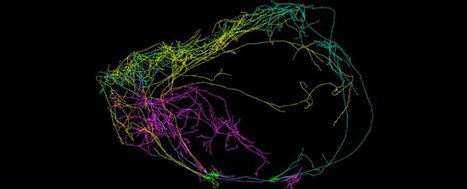
For the first time, scientists have detected a giant neuron wrapped around the entire circumference of a mouse's brain, and it's so densely connected across both hemispheres, it could finally explain the origins of consciousness. Using a new imaging technique, the team detected the giant neuron emanating from one of the best-connected regions in the brain, and say it could be coordinating signals from different areas to create conscious thought. This recently discovered neuron is one of three that have been detected for the first time in a mammal's brain, and the new imaging technique could help us figure out if similar structures have gone undetected in our own brains for centuries. At a recent meeting of the Brain Research through Advancing Innovative Neurotechnologies initiative in Maryland, a team from the Allen Institute for Brain Science described how all three neurons stretch across both hemispheres of the brain, but the largest one wraps around the organ's circumference like a "crown of thorns". You can see them highlighted in the image at the top of the page. Lead researcher Christof Koch told Sara Reardon at Nature that they've never seen neurons extend so far across both regions of the brain before. Oddly enough, all three giant neurons happen to emanate from a part of the brain that's shown intriguing connections to human consciousness in the past - the claustrum, a thin sheet of grey matter that could be the most connected structure in the entire brain, based on volume.
Via Wildcat2030, Miloš Bajčetić, Tania Gammage
The Swatch Group has built the world’s smallest low-energy Bluetooth chip, designed to improve the autonomy and connectivity of watches and small devices. The R&D news comes as the Swiss watchmaking industry hopes to recover from its longest slump since the 1980s.The tiny integrated circuit, designed by EM Microelectronic, Swatch Group R & D and the Swiss Center for Electronics and Microtechnology (CSEM) in Neuchâtel, measures just five square millimeters but its surface is packed with five million transistors. Swatch claims that it is the smallest Bluetooth chip in the world, with the lowest energy consumption and highest start-up speed capability. “The ultra-miniaturization of electronic components is crucial for the densification of functions in portable electronic devices and for the Internet of Things,” it said in a statement on Friday. The device, with the latest Bluetooth standard, version 5.0., is aimed at increasing the autonomy of connected objects. “It can work alone or in conjunction with various sensors; system integrators can take advantage of a microcontroller with very low power consumption or can use the chip to add a Bluetooth communication function to any portable electronic device,” Swatch added.
Via Levin Chin
Neuromorphic chips are being designed to specifically mimic the human brain – and they could soon replace CPUs. Canadian startup Applied Brain Research is one of a wave of companies developing neuromorphic chips – which have several advantages over traditional CPUs. “Things like vision systems, speech systems, motion control, and adaptive robotic controllers have already been built with Nengo,” Peter Suma, a trained computer scientist and the other CEO of Applied Brain Research, tells me. Perhaps the most impressive system built using the compiler is Spaun, a project that in 2012 earned international praise for being the most complex brain model ever simulated on a computer. Spaun demonstrated that computers could be made to interact fluidly with the environment, and perform human-like cognitive tasks like recognizing images and controlling a robot arm that writes down what it’s sees. The machine wasn’t perfect, but it was a stunning demonstration that computers could one day blur the line between human and machine cognition. Recently, by using neuromorphics, most of Spaun has been run 9000x faster, using less energy than it would on conventional CPUs – and by the end of 2017, all of Spaun will be running on Neuromorphic hardware. Eliasmith won NSERC’s John C. Polyani award for that project — Canada’s highest recognition for a breakthrough scientific achievement – and once Suma came across the research, the pair joined forces to commercialize these tools. “While Spaun shows us a way towards one day building fluidly intelligent reasoning systems, in the nearer term neuromorphics will enable many types of context aware AIs,” says Suma. Suma points out that while today’s AIs like Siri remain offline until explicitly called into action, we’ll soon have artificial agents that are ‘always on’ and ever-present in our lives. “Imagine a SIRI that listens and sees all of your conversations and interactions. You’ll be able to ask it for things like - "Who did I have that conversation about doing the launch for our new product in Tokyo?" or "What was that idea for my wife's birthday gift that Melissa suggested?,” he says. “The most fundamental difference between most available AI systems of today and the biological intelligent systems we are used to, is the fact that the latter always operate in real-time. Bodies and brains are built to work with the physics of the world,” he says. Already, major efforts across the IT industry are heating up to get their AI services into the hands of users. Companies like Apple, Facebook, Amazon, and even Samsung, are developing conversational assistants they hope will one day become digital helpers. With the rise of neuromorphics, and tools like Nengo, we could soon have AI’s capable of exhibiting a stunning level of natural intelligence – right on our phones.
Via Scott Turner
|
|
Scooped by
Dr. Stefan Gruenwald
March 7, 2017 8:27 PM
|
The researchers, Hoi-Kwan Lau et al., have published a paper on generalizing quantum machine learning to infinite dimensions in a recent issue of Physical Review Letters. As the physicists explain, quantum machine learning is a new subfield within the field of quantum information that combines the speed of quantum computing with the ability to learn and adapt, as offered by machine learning. One of the biggest advantages of having a quantum machine learning algorithm for continuous variables is that it can theoretically operate much faster than classical algorithms. Since many science and engineering models involve continuous variables, applying quantum machine learning to these problems could potentially have far-reaching applications. "Our work demonstrates the ability to take advantage of photonics to perform machine learning tasks on a quantum computer that could far exceed the speed of any conventional computer," coauthor George Siopsis at the University of Tennessee told Phys.org. "Quantum machine learning also offers potential advantages such as lower energy requirements owing to the ability to store more information per qubit, and a very low cost per qubit compared to other technologies." Most quantum machine learning algorithms developed so far work only with problems involving discrete variables. Applying quantum machine learning to continuous-variable problems requires a very different approach. To do this, the physicists had to develop a new set of tools that work with continuous variables. This involves replacing the logic gates that are used for discrete-variable states with physical gates, which work for continuous-variable states. Building up from these basic building blocks of the algorithm, the scientists then developed new methods that power the quantum machine learning problems, called subroutines, which are represented by matrices and vectors. Although the results of the study are purely theoretical, the physicists expect that the new algorithm for continuous variables could be experimentally implemented using currently available technology. The implementation could be done in several ways, such as by using optical systems, spin systems, or trapped atoms. Regardless of the type of system, the implementation would be challenging. For example, an optical implementation that the scientists outlined here would require some of the latest technologies, such as "cat states" (a superposition of the "0" and "1" states) and high rates of squeezing (to reduce quantum noise). In the future, the scientists hope to further investigate how continuous-variable quantum machine learning can be extended to replicate some of the latest results involving discrete variables. Another interesting avenue to pursue is a hybrid approach, which would combine the methods of both discrete and continuous variables in a single algorithm.
|
|
Scooped by
Dr. Stefan Gruenwald
March 7, 2017 7:39 PM
|
Combining computational with experimental approaches, researchers identify 12 new materials with potential use in solar fuels generators. Researchers at Caltech and Lawrence Berkeley National Laboratory (Berkeley Lab) have -- in just two years -- nearly doubled the number of materials known to have potential for use in solar fuels. They did so by developing a process that promises to speed the discovery of commercially viable solar fuels that could replace coal, oil, and other fossil fuels. Solar fuels, a dream of clean-energy research, are created using only sunlight, water, and carbon dioxide (CO2). Researchers are exploring a range of target fuels, from hydrogen gas to liquid hydrocarbons, and producing any of these fuels involves splitting water. Each water molecule is comprised of an oxygen atom and two hydrogen atoms. The hydrogen atoms are extracted, and then can be reunited to create highly flammable hydrogen gas or combined with CO2 to create hydrocarbon fuels, creating a plentiful and renewable energy source. The problem, however, is that water molecules do not simply break down when sunlight shines on them -- if they did, the oceans would not cover most of the planet. They need a little help from a solar-powered catalyst. To create practical solar fuels, scientists have been trying to develop low-cost and efficient materials, known as photoanodes, that are capable of splitting water using visible light as an energy source. Over the past four decades, researchers identified only 16 of these photoanode materials. Now, using a new high-throughput method of identifying new materials, a team of researchers led by Caltech's John Gregoire and Berkeley Lab's Jeffrey Neaton and Qimin Yan have found 12 promising new photoanodes. A paper about the method and the new photoanodes appears the week of March 6 in the online edition of the Proceedings of the National Academy of Sciences. The new method was developed through a partnership between the Joint Center for Artificial Photosynthesis (JCAP) at Caltech, and Berkeley Lab's Materials Project, using resources at the Molecular Foundry and the National Energy Research Scientific Computing Center (NERSC). "This integration of theory and experiment is a blueprint for conducting research in an increasingly interdisciplinary world," says Gregoire, JCAP thrust coordinator for Photoelectrocatalysis and leader of the High Throughput Experimentation group. "It's exciting to find 12 new potential photoanodes for making solar fuels, but even more so to have a new materials discovery pipeline going forward." "What is particularly significant about this study, which combines experiment and theory, is that in addition to identifying several new compounds for solar fuel applications, we were also able to learn something new about the underlying electronic structure of the materials themselves," says Neaton, the director of the Molecular Foundry.
|
|
Scooped by
Dr. Stefan Gruenwald
March 7, 2017 7:33 PM
|
Increasingly crowded imaging & diagnostics: 19 out of the 24 companies under imaging & diagnostics raised their first equity funding round since January 2015 (this includes seed or Series A rounds, as well as a first round raised by stealth startup Imagen Technologies). In 2014, Butterfly Networks raised a $100M Series C, backed by Aeris Capital and Stanford University. This was one of the largest equity rounds to an AI in healthcare company, after China-based iCarbonX’s $154M mega-round and two $100M+ raises by oncology-focused Flatiron Health. Remote patient monitoring: London-based Babylon Health, backed by investors including Kinnevik and Google-owned DeepMind Technologies, raised a $25M Series A round in 2016 to develop an AI-based chat platform. New York-based AiCure raised $12.3M in Series A funding from investors including Biomatics Capital Partners, New Leaf Venture Partners, Pritzker Group Venture Capital, and Tribeca Venture Partners, for the use of artificial intelligence to ensure patients are taking their medications. California-based Sense.ly has developed a virtual nursing assistant, Molly, to follow up with patients post-discharge. The company claims Molly gives clinicians “20% of their day back.” Sentrian, backed by investors including Frost Data Capital, analyzes biosensor data and sends patient-specific alerts to clinicians. Core AI companies bring their algorithms to healthcare: Core AI startup Ayasdi, which has developed a machine intelligence platform based on topological data analysis, is bringing its solutions to healthcare providers for applications including patient risk scoring and readmission reduction. Other core AI startups looking at healthcare include H2O.ai and Digital Reasoning Systems. Top VCs: Khosla Ventures and Data Collective are the top VC investors in healthcare AI startups, and have backed 5 unique companies each. Khosla Ventures backed California-based Ginger.io, which focuses on patients with depression and anxiety; healthcare analytics platform Lumiata; Israel’s Zebra Medical Vision and California-based Bay Labs, which applies AI to medical imaging; as well as drug discovery startup Atomwise. Data Collective backed imaging & diagnostics startups Enlitic, Bay Labs and Freenome, analytics platform CloudmedX, and previously mentioned Atomwise. Drug discovery is also gaining attention: Startups are using machine learning algorithms to reduce drug discovery times, and VCs have backed 6 out of the 9 startups on the map. Andreessen Horowitz recently seed funded twoXAR, developer of the DUMA drug discovery platform; Khosla Ventures and Data Collective backed Atomwise, which published its first findings of Ebola treatment drugs last year, and has also partnered with MERCK; Lightspeed Venture Partners invested in Numedii in 2013; Foundation Capital participated in 3 equity funding rounds to Numerate. AI in oncology: IBM Watson Group-backed Pathway Genomics has recently started a research study for its new blood test kit, CancerIntercept Detect. The company will collect blood samples from high-risk individuals who have never been diagnosed with the disease to determine if early detection is possible. Other oncology-focused startups include Flatiron Health, Cyrcadia (wearable device), CureMetrix, SkinVision, Entopsis, and Smart Healthcare.
|