Your new post is loading...

|
Scooped by
Dr. Stefan Gruenwald
July 9, 2017 11:36 AM
|
More than 100,000 years ago in a Siberian cave there lived a child with a loose tooth. One day her molar fell out, and fossilized over many millenniums, keeping it safe from the elements and the tooth fairy. But she wasn’t just any child. Scientists say she belonged to a species of extinct cousins of Neanderthals and modern humans known today as the Denisovans. And in a paper published Friday in the journal Science Advances, a team of paleoanthropologists reported that she is only the fourth individual of this species ever discovered. “We only have relatively little data from this archaic group, so having any additional individuals is something we’re very excited about,” saidViviane Slon, a doctoral candidate at the Max Planck Institute for Evolutionary Anthropology in Leipzig, Germany, and lead author of the study. The scant fossil record for these ancient hominins previously included only two adult molars and a finger bone. The Denisovans were only correctly identified in 2010 by a team of researchers led by Svante Paabo, who used the finger bone to sequence the species’ genome.
|
|
Scooped by
Dr. Stefan Gruenwald
July 3, 2017 6:10 PM
|
|
|
Scooped by
Dr. Stefan Gruenwald
June 30, 2017 11:49 AM
|
When women undergo lumpectomies to remove breast cancer, doctors try to remove all the cancerous tissue while conserving as much of the healthy breast tissue as possible. But currently there’s no reliable way to determine during surgery whether the excised tissue is completely cancer-free at its margins — the proof that doctors need to be confident that they removed all of the tumor. It can take several days for pathologists using conventional methods to process and analyze the tissue. That’s why between 20 and 40 percent of women have to undergo second, third or even fourth breast-conserving surgeries to remove cancerous cells that were missed during the initial procedure, according a recent study. The new light-sheet microscope — which is described in a new paper published June 26, 2017 in Nature Biomedical Engineering — offers other advantages over existing processes and microscope technologies. It conserves valuable tissue for genetic testing and diagnosis, quickly and accurately images the irregular surfaces of large clinical specimens, and allows pathologists to zoom in and “see” biopsy samples in three dimensions. “The tools we use in pathology have changed little over the past century,” said co-author Nicholas Reder, chief resident and clinical research fellow in UW Medicine’s Department of Pathology. “This light-sheet microscope represents a major advance for pathology and cancer patients, allowing us to examine tissue in minutes rather than days and to view it in three dimensions instead of two — which will ultimately lead to improved clinical care.”
Physicists have exploited the laws of quantum mechanics to send information without transmitting a signal. But have they, really? Quantum mechanics is the consummate theory of particles, so it naturally describes measurements and interactions. During the past few decades, as computers have nudged the quantum, the theory has been reframed to encompass information, too. What quantum mechanics implies for measurements and interactions is notoriously bizarre. Its implications for information are stranger still. One of the strangest of these implications refutes the material basis of communication as well as common sense. Some physicists believe that we may be able to communicate without transmitting particles. In 2013 an amateur physicist named Hatim Salih even devised a protocol, alongside professionals, in which information is obtained from a place where particles never travel. Information can be disembodied. Communication may not be so physical after all. In April 2017, the early edition of a short article about Salih’s protocol appeared online in the Proceedings of the National Academy of Sciences. Most of the article’s 10 authors were members of the University of Science and Technology of China, at its branches in Shanghai and Hefei. The final author was Jian-Wei Pan, an eminent physicist who has also developed a constellation of satellites for communicating through quantum mechanics. He recently used this network for transmitting entangled particles over a distance of 1,200 kilometers. Pan and his collaborators publish at a rate of more than one paper a month. But the paper that they published in April, co-written by Yuan Cao and Yu-Huai Li, was exceptional. They described an experiment in which they sent a black-and-white image of a Chinese knot to a computer, without transmitting any particles. Extraordinary claims require extraordinary evidence—even the person whose work dug the original foundation for the team’s evidence, Lev Vaidman, doubts their claim. Vaidman and others have been arguing about how to interpret such results for a decade. And their communication is now changing how we understand the quantum theory. Physicists strain to comprehend what quantum mechanics whispers about reality and what we can know about the material world. The theory, however, is starting to speak up. Physicists now question the uncertainty that the quantum theory has imposed, as even weak measurements reveal particulars that were once thought impossible. At stake are the very notions of measurements and interactions, and the foundations of the information technologies of the future.
Via Mariaschnee
|
|
Rescooped by
Dr. Stefan Gruenwald
from DNA and RNA research
June 30, 2017 11:19 AM
|
Our genomes are minefields, studded with potentially damaging DNA sequences over which hundreds of thousands of sentries stand guard. These sentries, called epigenetic marks, attach to the double helix at such spots and prevent the underlying DNA sequences from springing into destructive action. A team from Cold Spring Harbor Laboratory (CSHL) describes now what might be considered emergency replacements for the sentries, shock troops pressed into service across the genome only during these curiously undefended moments. Specifically, these defenders are protecting the genome in mammalian embryos, at the very early point in their development before they are implanted in the wall of the maternal uterus. The preimplantation embryo is one of two normal settings in which epigenetic marks are wiped clean before being reinscribed. The other setting is a step in the formation of germline cells—sperm and eggs—which have temporary defenders already known to biology, so-called piwi-interacting RNAs (piRNAs). The research published today, led by first author Andrea Schorn, a postdoctoral researcher in the lab of Rob Martienssen, demonstrates that another species of small RNA performs an analogous genome-defending role in preimplantation embryos during an interval of epigenetic reprogramming. Dr. Martienssen is a CSHL Professor and Howard Hughes Medical Institute investigator. The newly identified defenders come in two varieties — RNA fragments consisting of 18 and 22 nucleotides. These RNA fragments, Dr. Schorn discovered, are perfect complements of sequences in retrotransposons that must be engaged in order for the genomic parasites to be activated. This fact led to the discovery. Schorn scrutinized the contents of mouse embryonic stem cells and found many free-floating RNA fragments 18 nucleotides in length. Computer analysis revealed that their sequences perfectly matched sequences within transfer RNAs. tRNAs are ubiquitous, and are involved in the synthesis of proteins. It has been known for decades that tRNAs are hijacked by long terminal repeat (LTR)-retrotransposons, a portion of their sequence docking at a primer binding site (PBS) and initiating a process that activates the genomic parasite. “Knowing that LTR retrotransposons need tRNAs to replicate, it was very tempting to believe that these 18-nucleotide tRNA fragments we were seeing in preimplantation embryonic stem cells could interfere with that process,” says Schorn. “We think the cell is deliberately chopping up full-length tRNAs into smaller fragments precisely because both tRNAs and the fragments cut from them recognize the PBS. This means the small, tRNA-derived fragments would be able to occupy that site and inhibit retrotransposon replication and mobility,” Martienssen explains. The implications, Martienssen says, are potentially profound. This appears to tell us one way in which the genomes of mammals have tolerated vast numbers of transposons and other parasitic elements, even during periods when the genome is wiped clean of repressive epigenetic marks. “It’s plausible that this is a very ancient mechanism that cells have found to not only inhibit retrotransposons but help in protection against viruses as well,” Martienssen says. The research discussed here was supported by NIH grant R01GM076396; a Bristol-Myers Squibb fellowship from the Watson School of Biological Sciences; the Howard Hughes Medical Institute; the Gordon and Betty Moore Foundation (GMBF3033); and CSHL Cancer Center Support Grant (5PP30CA045508). “LTR-Retrotransposon Control by tRNA-Derived Small RNAs” appears online in Cell June 29, 2017. The authors are: Andrea J. Schorn, Michael J. Gutbrod, Chantal LeBlanc and Rob Martienssen. The paper can be accessed at: http://www.cell.com/cell/newarticles
Via Integrated DNA Technologies
|
|
Scooped by
Dr. Stefan Gruenwald
June 29, 2017 9:14 PM
|
An international team of scientists has identified a long-sought protein that causes liver fibrosis (scarring), paving the way for new treatments. The research was published in the journal Nature Genetics. The team led by Professor Jacob George and Dr. Mohammed Eslam of the Westmead Institute for Medical Research in Sydney, Australia, has unequivocally shown that variations in the interferon lambda 3 (INLF3) protein are responsible for tissue damage in the liver. The researchers had previously identified that the common genetic variations associated with liver fibrosis were located on chromosome 19 between the IFNL3 and IFNL4 genes. In the new study, they analyzed liver samples from 2,000 patients with hepatitis C, using state-of-the art genetic and functional analysis, to determine the specific IFNL protein responsible for liver fibrosis. They demonstrated that following injury there is increased migration of inflammatory cells from blood to the liver, increasing IFNL3 secretion and liver damage. Notably, this response is determined to a great extent by an individual’s inherited genetic makeup. “This was a significant outcome that will help to predict risk of liver disease for individuals, enabling early intervention and lifestyle changes,” said Prof. George, who is the corresponding author of the study. “We have designed a diagnostic tool based on our discoveries, which is freely available for all doctors to use, to aid in predicting liver fibrosis risk. This test will help to determine whether an individual is at high risk of developing liver fibrosis, or whether a patient’s liver disease will progress rapidly or slowly, based on their genetic makeup. This important discovery will play a vital role in reducing the burden of liver disease into the future,” he said. “This discovery holds great promise for the development of effective therapeutic treatments for liver disease,” added co-lead author Dr. Eslam. “There is an urgent need for a safe pharmacologic therapy that can prevent of regress the progression of liver damage. There are currently no treatments available for patients with advanced fibrosis, and liver transplantation is the only treatment for liver failure,” he said. “Now that we’ve identified IFNL3 as the cause of liver scarring, we can work towards developing novel treatments specifically targeting this gene. This could be medicine targeting IFNL3 that is tailored to an individual’s genetic makeup, but could also include modifying usual treatment depending on whether a patient has IFNL3 risk genes.”
|
|
Scooped by
Dr. Stefan Gruenwald
June 29, 2017 9:09 PM
|
Methyl isocyanate (CH3NCO) is the simplest isocyanate, which along formamide (NH2CHO) contains C, N and O atoms, and could play a key role in the synthesis of amino acid chains known as peptides. Interstellar methyl isocyanate was first detected in Sagittarius B2(N), the hot core of a giant molecular cloud near the Galactic center, in 2015. Now, two international groups of astronomers have detected, for the first time, methyl isocyanate in solar-type protostars, the kind from which our Sun and the Solar System formed. “Our findings indicate that the key ingredients for the origin of life could have been produced at an early stage of the Solar System,” said Dr. David Quénard, from Queen Mary University of London. “This star system seems to keep on giving! Following the discovery of sugars, we’ve now found methyl isocyanate,” said Leiden Observatory astronomer Dr. Niels Ligterink and University College London researcher Dr. Audrey Coutens. “This family of organic molecules is involved in the synthesis of peptides and amino acids, which, in the form of proteins, are the biological basis for life as we know it.” IRAS 16293-2422 is located in a large star-forming region called Rho Ophiuchiin the constellation of Ophiuchus, at a distance of 391 light-years from Earth. The system is composed of two infant stars, IRAS 16293-2422A and IRAS 16293-2422B, whose masses are about 0.5 solar masses. The new results from ALMA show that methyl isocyanate gas surrounds each of these stars.
|
|
Scooped by
Dr. Stefan Gruenwald
June 29, 2017 9:05 PM
|
Uranus and Neptune are known as ‘ice giants.’ In spite of this name, relatively little solid ice is thought to be in them today, but it is believed there is a massive liquid ocean beneath their clouds. This makes them fundamentally different from Solar System’s terrestrial planets and gas giants. To date, Uranus and Neptune have been visited briefly by one spacecraft,NASA’s Voyager 2: it rapidly flew by Uranus in 1986 and Neptune in 1989, as part of its grand tour of discovery that previously took it by Jupiter and Saturn. “Exploration of at least one ‘ice giant’ system is critical to advance our understanding of the Solar System, exoplanetary systems, and to advance our understanding of planetary formation and evolution,” the study authors said. “Three key points highlight the importance of sending a mission to Uranus and Neptune.” “First, they represent a class of planet that is not well understood, and which is fundamentally different from the gas giants (Jupiter and Saturn) and the terrestrial planets. Ice giants are, by mass, about 65% water and other so-called ‘ices,’ such as methane and ammonia. In spite of the ‘ice’ name, these species are thought to exist primarily in a massive, super-critical liquid water ocean. No current model for their interior structure is consistent with all observations.” “A second key factor in their importance is that ice giants are extremely common in our Galaxy. They are much more abundant than gas giants such as Jupiter, and the majority of planets discovered so far appear to be ice giants. Exploration of our local ice giants would allow us to better characterize exoplanets.” “The final point to emphasize about ‘ice giants’ is that they challenge our understanding of planetary formation, evolution and physics.”
|
|
Scooped by
Dr. Stefan Gruenwald
June 29, 2017 8:58 PM
|
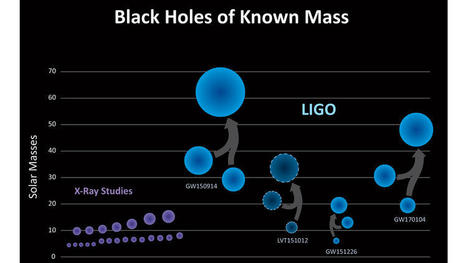
For the third time, LIGO has detected a collision of two black holes — and cemented the idea that gravity-wave astronomy is here to stay. Gravitational waves are ripples in the fabric of space-time, caused by objects accelerating or decelerating through space. Their existence was predicted more than a century ago by Albert Einstein as part of his general theory of relativity, but they were thought to be so faint as to be virtually undetectable. LIGO changed that. Last year, the collaboration announced that its twin detectors had picked up a passing distortion in late 2015 caused by two black holes crashing into each other. The resulting gravitational waves stretched one leg of each detector and squeezed the other, briefly changing their lengths and triggering a laser signal. A second event soon followed. With the third confirmed find, announced Thursday, scientists are finally moving LIGO’s work from the examination of singular curiosities to demographic studies of the sky’s invisible denizens. Already, this third discovery is revealing that there may be some diversity in this mysterious cosmic population. This merger between a binary pair of black holes happened around 3 billion years ago, at a distance more than double that of the first two finds (which occurred around 1.3 billion and 1.4 billion light-years from us, respectively). Scientists believe one of the black holes held as much mass as 31.2 suns, while the other held 19.4 solar masses. When they coalesced, the new singularity weighed in at 48.7 solar masses, and the remaining mass was transformed into gravitational waves.
|
|
Scooped by
Dr. Stefan Gruenwald
June 29, 2017 12:28 PM
|
Along with its aesthetic function of helping create the glorious Aurora Borealis, or Northern Lights, the powerful magnetic field surrounding our planet has a fairly important practical value as well: It makes life possible. By deflecting harmful charged particles from the sun and the cosmic rays that constantly bombard the planet, and preventing the solar wind from eroding the atmosphere, Earth's magnetic field has allowed multi-cellular life forms up to and including humans to develop and survive. And now, with the discovery of thousands of planets beyond the solar system known as exoplanets, scientists are eager to learn if rocky "super-Earths," up to 10 times more massive than Earth, might also be able to harbor life. "Finding habitable exoplanets is one of the top three goals of the planetary science and astronomy communities," said Lawrence Livermore National Laboratory physicist Rick Kraus. "With these discoveries come many questions: What do these planets look like? Is our solar system unique? Is Earth unique? Or more specifically, is Earth uniquely habitable?" Those questions have inspired a current National Ignition Facility (NIF) Discovery Science campaign aimed at determining if giant rocky planets could have Earth-like magnetic fields. An atmosphere, mild climate and liquid water are usually considered the bare essentials for life as we know it to evolve, but the presence of a magnetic field is equally important, Kraus said. "Active plate tectonics and a magnetosphere are both considered requirements for a habitable exoplanet," he said. "A stable surface environment free of ionizing radiation is one of the most important qualities of a planet that are considered a requirement for habitability." Earth's magnetic field is generated as convection currents in the planet's liquid iron outer core are twisted by the planet's spin, creating a magneto-dynamo that produces the magnetosphere (dynamos convert mechanical energy into electric energy or in this case, magnetism). A planet with only a solid core may not have a magnetic field, and thus be unlikely to harbor life as we know it. "We need to understand the melting transition of the iron cores in order to determine if it is even possible to have a liquid outer core and a solid inner core within a super-Earth," Kraus said.
The next digital evolution is the rise of the internet of things—sometimes now called the “internet on things.” This refers to the growing phenomenon of building connectivity into vehicles, wearable devices, appliances and other household items such as thermostats, as well as goods moving through business supply chains. It also covers the rapid spread of data-emitting or tracking sensors in the physical environment that give readouts on everything from crop conditions to pollution levels to where there are open parking spaces to babies’ breathing rates in their cribs. The explosion of data has given prominence to algorithms as tools for finding meaning in data and using it to shape decisions, predict humans’ behavior, and anticipate their needs. Analysts such as Aneesh Aneesh of the University of Wisconsin, Milwaukee, foresee algorithms taking over public and private activities in a new era of “algocratic governance” that supplants the way current “bureaucratic hierarchies” make government decisions. Others, like Harvard University’s Shoshana Zuboff, describe the emergence of “surveillance capitalism” that gains profits from monetizing data captured through surveillance and organizes economic behavior in an “information civilization.” The experts' views compiled by the Pew Research Center and Elon University offer several broad predictions about the algorithmic age. They predicted that algorithms will continue to spread everywhere and agreed that the benefits of computer codes can lead to greater human insights into the world, less waste, and major safety advantages. A share of respondents said data-driven approaches to problem-solving will often improve on human approaches to addressing issues because the computer codes will be refined at much greater speeds. Many predicted that algorithms will be effective tools to make up for human shortcomings. But respondents also expressed concerns about algorithms. They worried that humanity and human judgment are lost when data and predictive modeling become paramount. These experts argued that algorithms are primarily created in pursuit of profits and efficiencies and that this can be a threat; that algorithms can manipulate people and outcomes; that a somewhat flawed yet inescapable “logic-driven society” could emerge; that code will supplant humans in decision-making and that, in the process, humans will lose skills and specialized, local intelligence in a world where decisions are based on more homogenized algorithms; and that respect for individuals could diminish. Just as grave a concern is that biases exist in algorithmically organized systems that could worsen social divisions. Many in the expert sampling said that algorithms reflect the biases of programmers and that the data sets they use are often limited, deficient, or incorrect. This can deepen societal divides. Those who are disadvantaged could be even more so in an algorithm-organized future, especially if algorithms are shaped by corporate data collectors. That could limit people’s exposure to a wider range of ideas and eliminate serendipitous encounters with information.
Via Jim Lerman, massimo facchinetti
|
|
Scooped by
Dr. Stefan Gruenwald
June 27, 2017 4:48 PM
|
This tiny stingless bee (3 - 5 mm) is the only native species, in Sydney, that lives in a social colony and makes honey. The queen bee lays all the eggs, and the thousands of sterile female worker bees and male drone bees work harmoniously in building, maintaining and sustaining the colony and its hive. The bees’ hive is usually nested inside hollow trees, branches and logs. The nest is constructed from cerumen, a dark brown mixture of wax (secreted by the workers) and resins (collected by the foragers from ‘bleeding’ trees). Pollen, nectar and honey are stored in clusters of small pots around the edges of the nest. In the centre, the queen lays the colony’s future eggs, in hexagonal cells within a horizontal spiraling brood comb. Native Bee enthusiasts have developed techniques for keeping these unique bees in specially constructed hive boxes. Colonies can then be propagated by splitting a single hive in two. This will help to conserve and re-establish colonies of stingless bees back into urbanized areas.
|
|
Scooped by
Dr. Stefan Gruenwald
June 27, 2017 4:37 PM
|
A team of researchers at Washington University in St. Louis has taken images of a laser pulse generating an optical Mach cone: the equivalent of a sonic boom, but for light. To make an optical Mach cone, a pulse of light would need to be traveling faster than the waves it’s emitting can propagate forward. But the researchers were able to peel apart the properties of a laser beam, interacting separately with velocity, wavelength, and frequency. They directed the beam through a layered confection of silicone panels, aluminum oxide powder, and dry ice. The source of the light waves was moving faster than the waves themselves as they passed through the layers, leaving behind the optical Mach cone. To capture the cone itself, the researchers set up CCD cameras next to the cone-generating apparatus. One of the cameras was a streak camera, which exploits the motion of charged particles to create a spatial “pulse profile” that characterizes the light waveform in 3-space over time. Using the streak camera and the CCDs, the researchers captured a 2D sequence of images from three perspectives in a single take. They then spliced the images back together like a CAT scan to make a 3D model of the cone. Lead author Jinyang Liang hopes that these developments can be pressed into use not just in physics, but in neuroscience. Their imaging setup can capture 100 billion frames a second. With that kind of temporal resolution, researchers could capture neurons firing in real time. Optical shockwaves, as it turns out, are pretty easy to photograph if you have the right kind of camera setup. This jet is producing a Mach wave at its nose because the air molecules can’t get out of the way fast enough for the plane to make its way neatly through them — not unlike the physical wave that happens at the bow of a fast-moving ship as it plows through the water. It was photographed with a method called Schlieren photography, which takes high-speed images and then compares the backgrounds, to see where the wave of distortion traveled through the frame. And optical shockwaves aren’t constrained to places with an atmosphere, either. They also happen at a much, much larger scale. When a body in space gets moving fast enough, it can produce a phenomenon called a bow shock. Kappa Casseiopeiae is an enormous rogue star traveling at 2.5 million miles an hour, which is a quarter of a percent the speed of light. It’s so big, and moving so fast, that its bow shock is twelve light-years across and stands four light-years apart from the star itself.
|
|
|
Scooped by
Dr. Stefan Gruenwald
July 9, 2017 11:34 AM
|
Scientists at the University of Alberta have put together – from scratch – a relative of the smallpox virus, which serves as a reminder that the threat of deadly viruses created by humans is more than just theoretical.
The smallpox virus, which triggered brutal disease for centuries, was declared eradicated in 1980 after a successful global effort to end its reign of terror. But some scientists fear that it could be revived through what’s known as synthetic biology — the ability to make a virus by putting together by the recipe outlined in its genetic code.
The horsepox virus the Canadian team created is not a threat to human health — or even the health of horses — should it ever escape from a lab. And it’s not the first virus created by putting pieces of DNA together in the right sequence.
Still, the news that a team headed by David Evans, a professor of medical microbiology and immunology, had accomplished this feat — at a relatively low cost of about $100,000 plus labor — was a bit of a wakeup call. The news was first reported Thursday in Science Magazine.
“This is an example of what modern technologies can do,” noted Dr. Anthony Fauci, director of the National Institute of Allergy and Infectious Diseases.
The warnings about the implications of synthetic biology have echoed since Eckard Wimmer of the State University of New York at Stony Brook reported in 2002 that he and his team had made a poliovirus from scratch.
Polioviruses are small in comparison with poxviruses, and a far less complex task. But scientists watching this field feared it was only a matter of time before the obstacles to creating other viruses were surmounted.
|
|
Scooped by
Dr. Stefan Gruenwald
June 30, 2017 11:54 AM
|
In a recent publication, Aalto University researchers show that in a transparent medium each photon is accompanied by an atomic mass density wave. The optical force of the photon sets the medium atoms in motion and makes them carry 92% of the total momentum of light, in the case of silicon.
The novel discovery solves the centennial momentum paradox of light. In the literature, there has existed two different values for the momentum of light in the transparent medium. Typically, these values differ by a factor of ten and this discrepancy is known as the momentum paradox of light. The difference between the momentum values is caused by neglecting the momentum of atoms moving with the light pulse.
To solve the momentum paradox the authors prove that the special theory of relativity requires an extra atomic density to travel with the photon. In related classical computer simulations, they use optical force field and Newton´s second law to show that a wave of increased atomic mass density is propagating through the medium with the light pulse.
The mass transfer leads to splitting of the total momentum of light into two components. The fields’ share of momentum is equal to the Abraham momentum while the total momentum, which includes also the momentum of atoms driven forward by the optical force, is equal to the Minkowski momentum.
”Since our work is theoretical and computational it must be still verified experimentally, before it can become a standard model of light in a transparent medium. Measuring the total momentum of a light pulse is not enough but one also has to measure the transferred atomic mass. This should be feasible using present interferometric and microscopic techniques and common photonic materials”, researcher Mikko Partanen says. The researchers are working on potential optomechanical applications enabled by the optical shock wave of atoms predicted by the new theory. However, the theory applies not only to transparent liquids and solids but also to dilute interstellar gas. Using a simple kinematic consideration it can be shown that the energy loss caused by the mass transfer effect becomes for dilute interstellar gas proportional to the photon energy and distance travelled by light.
“This prompts for further simulations with realistic parameters for interstellar gas density, plasma properties and temperature. Presently the Hubble’s law is explained by Doppler shift being larger from distant stars. This effectively supports the hypothesis of expanding universe. In the mass polariton theory of light this hypothesis is not needed since redshift becomes automatically proportional to the distance from the star to the observer”, explains Professor Jukka Tulkki. Thus, an expanding universe scenario is no longer needed. Research article: Mikko Partanen, Teppo Häyrynen, Jani Oksanen, and Jukka Tulkki. Photon mass drag and the momentum of light in a medium. Physical Review A 95. DOI: 10.1103/PhysRevA.95.063850
|
|
Scooped by
Dr. Stefan Gruenwald
June 30, 2017 11:39 AM
|
One of the most beautiful places in the United States that every American should visit at least once in their life is Yellowstone National Park, a vast region of wildlife and geographical wonders that stretches through parts of Wyoming, Montana and Idaho. Between the massive herds of bison that can be seen grazing out in the valleys, and the incredible geysers and hot springs that have been around for thousands of years, Yellowstone really does deserve to be one of the most popular tourist locations in the country. But despite its beauty, there is an ancient monster in Yellowstone that has remained dormant for 70,000 years… and it just might be getting ready to wake up. Recently, there have been over 400 earthquakes recorded in Yellowstone, the latest being a magnitude 3 earthquake that struck on Monday, June 19. Just four days earlier, Yellowstone was hit with an even larger, magnitude 4.5 earthquake. “The epicenter of the shock was located in Yellowstone National Park, eight miles north-northeast of the town of West Yellowstone, Montana,” said scientists from the University of Utah in a statement. “The earthquake was reportedly felt in the towns of West Yellowstone and Gardiner, Montana, in Yellowstone National Park, and elsewhere in the surrounding region.” (Related: Scientists have been underestimating the threat of earthquakes.) The earthquake that took place on June 15 was the largest to have hit Yellowstone since March 30, 2014, when the area of the Norris Geyser Basin experienced a magnitude 4.8 earthquake. This pattern of rather severe earthquakes in Yellowstone has led many to believe that avolcanic eruption is due to take place sometime in the near future, even though it is currently impossible to know when exactly that will happen. According to experts at the U.S. Geological Survey (USGS), the chances that the Yellowstone supervolcano will erupt is still significantly low. A USGS spokesperson recently told Newsweek that volcanic activity seems to be “slowly winding down” and that “no other geological activity has been detected.” As of right now, the chances that Yellowstone’s supervolcano will erupt within the next year is one in 730,000. But even though the chances of a massive volcanic eruption in Yellowstone are slim, what would happen if it did? Three years ago, the USGS published a report that modeled what would happen if Yellowstone’s supervolcano erupted. According to their findings, such an eruption would cover the majority of North America with a blanket of ash, with some areas of the country even being buried a meter deep.
|
|
Rescooped by
Dr. Stefan Gruenwald
from DNA and RNA research
June 30, 2017 11:21 AM
|
Electrostatic forces known as phosphate steering help guide the actions of an enzyme called FEN1 that is critical in DNA replication and repair, finds a new study led by Berkeley Lab researchers. The findings help explain how FEN1 distinguishes which strands of DNA to target, revealing key details about a vital process in healthy cells as well as providing new directions for cancer treatment research. The actions of a protein used for DNA replication and repair are guided by electrostatic forces known as phosphate steering, a finding that not only reveals key details about a vital process in healthy cells, but provides new directions for cancer treatment research. Crystal structure of FEN1 protein bound to its target DNA. When shown with the protein surface, the gateway through which a single-stranded DNA flap can enter is visible. Without the surface, the metal catalyst, shown as a gray ball, can be seen. (Credit: Susan Tsutakawa/Berkeley Lab). The findings,published this week in the journal Nature Communications, focus on an enzyme called flap endonuclease 1, or FEN1. Using a combination of crystallographic, biochemical, and genetic analyses, researchers at the Department of Energy’s Lawrence Berkeley National Laboratory (Berkeley Lab) showed that phosphate steering kept FEN1 in line and working properly. “FEN1, like many DNA replication and repair proteins, have paradoxical roles relevant to cancer,” said study lead author Susan Tsutakawa, a biochemist at Berkeley Lab’s Molecular Biophysics and Integrated Bioimaging Division. “A mistake by FEN1 could damage the DNA, leading to the development of cancer. On the other side, many cancers need replication and repair proteins to survive and to repair DNA damaged from cancer treatments. New evidence shows that phosphate steering helps ensure that FEN1 behaves as it should to prevent genome instability.” During the process of replication, double-stranded DNA unzips to expose the nucleotides along its two separate strands. In that process, flaps of single-stranded DNA are created. The job of FEN1 is to remove those flaps by positioning metal catalysts so that they can break down the phosphodiester bonds that make up the backbone of nucleic acid strands. This cleavage action occurs in the duplex DNA near the junction with the single-stranded flap.
Via Integrated DNA Technologies
A retired German man has found the proof to a complex geometry and probability problem that experts have tried to solve for decades, only for his achievement to go largely unnoticed. Thomas Royen was reportedly brushing his teeth when he struck upon an idea in July 2014. Then 67 years old, the former statistician for a pharmaceutical company, from Schwalbach am Taunus, a town on the edge of Frankfurt, found the solution to the conjecture, known as the Gaussian correlation inequality (GCI).
Via Levin Chin
|
|
Scooped by
Dr. Stefan Gruenwald
June 29, 2017 9:12 PM
|
“A new era in science has emerged without a clear path to portraying the impacts of microbes across the tree of life,”Rutgers University Professor Debashish Bhattacharya said. “What’s needed is an interdisciplinary approach to classifying life that incorporates the countless species that depend on each other for health and survival, such as the diverse bacteria that coexist with humans, corals, algae and plants.” “In our opinion, one should not classify the bacteria or fungi associated with a plant species in separate phylogenetic systems (trees of life) because they’re one working unit of evolution. The goal is to transform a two-dimensional tree into one that is multi-dimensional and includes biological interactions among species.” A tree of life has branches showing how diverse forms of life, such as bacteria, plants and animals, evolved and are related to each other. Much of the Earth’s biodiversity consists of microbes, such as bacteria, viruses and fungi, and they often interact with plants, animals and other hosts in beneficial or harmful ways. Forms of life that are linked physically and evolve together (i.e. are co-dependent) are called symbiomes. Prof. Bhattacharya and his colleagues from the University of Colorado, Boulder, Rutgers University, Chicago Botanic Garden, Chinese Academy of Sciences’ Institute of Microbiology, Sun Yat-Sen University, and Wuhan Institute of Virology, propose a new tree of life framework that incorporates symbiomes: SYMPHY (short for symbiome phylogenetics). “The idea is to use sophisticated computational methods to paint a much broader, more inclusive picture of the evolution of organisms and ecosystems,” the researchers explained. “Today’s tree of life fails to recognize and include symbiomes. Instead, it largely focuses on individual species and lineages, as if they are independent of other branches of the tree of life. We believe that an enhanced tree of life will have broad and likely transformative impacts on many areas of science, technology and society. These include new approaches to dealing with environmental issues, such as invasive species, alternative fuels and sustainable agriculture; new ways of designing and engineering machinery and instruments; enlightened understanding of human health problems; and new approaches to drug discovery.”
|
|
Scooped by
Dr. Stefan Gruenwald
June 29, 2017 9:07 PM
|
Insomnia is among the most frequent complaints in general practice. Even after treatment, poor sleep remains a persistent vulnerability for many people. A research team led by Vrije Universiteit Professor Danielle Posthuma has come closer to unraveling the biological mechanisms that cause the predisposition for insomnia. “Our findings are the start of a path towards an understanding of insomnia at the level of communication within and between neurons, and thus towards finding new ways of treatment,” Vrije Universiteit Professor Van Someren, co-author of the study. “As compared to the severity, prevalence and risks of insomnia, only few studies targeted its causes. Insomnia is all too often dismissed as being ‘all in your head.’ Our research brings a new perspective. Insomnia is also in the genes.” To identify genetic factors for insomnia complaints, Prof. Posthuma, Prof. Someren and their colleagues performed a genome-wide association study and a genome-wide gene-based association study in 113,006 individuals. As a result, the researchers identified seven genes associated with insomnia. “These genes play a role in the regulation of transcription, the process where DNA is read in order to make an RNA copy of it, and exocytosis, the release of molecules by cells in order to communicate with their environment,” the authors said. “One of the identified genes, MEIS1, has previously been related to two other sleep disorders: periodic limb movements of sleep (PLMS) and restless legs syndrome (RLS).” “Variants in the MEIS1 gene seem to contribute to all three disorders,” they added. “Strikingly, PLMS and RLS are characterized by restless movement and sensation, respectively, whereas insomnia is characterized mainly by a restless stream of consciousness.” The team also found a strong genetic overlap with other traits, such as anxiety disorders, depression and neuroticism, and low subjective wellbeing. “This is an interesting finding, because these characteristics tend to go hand in hand with insomnia,” said study first author Anke Hammerschlag, a PhD student at Vrije Universiteit. “We now know that this is partly due to the shared genetic basis.”
|
|
Scooped by
Dr. Stefan Gruenwald
June 29, 2017 9:01 PM
|
The saga of the Wow! signal dates back to 1977, when a SETI (Search for Extraterrestrial Intelligence) survey being conducted at the Big Ear radio telescope at Ohio State University Radio Observatory detected a powerful but unexplained burst of radio waves coming from the general direction of the constellation Sagittarius. The signal was at 1420MHz, which is the frequency of the 21cm wavelength radio waves emitted by neutral hydrogen in space. So the logic goes, any intelligent life out there transmitting signals for us to hear would know that our astronomers will be studying galactic hydrogen at 21cm and therefore be guaranteed to detect their signal. Hence, the Big Ear’s survey was conducted at 1420MHz/21cm. The print-out from the Big Ear telescope that shows the Wow! signal. The numbers and letters refer to the intensity of the radio signal. Intensities above 9 are given by a letter. The signal reached a peak intensity (denoted by ‘U’) that was thirty times stronger than the background noise. Astronomer Jerry Ehman scribbled ‘Wow!’ in the margin upon seeing the signal and the name and the signal entered folklore. Now Antonio Paris of St Petersburg College in Florida and the Center for Planetary Science, which is a non-profit research organization based in the United States, has published new results which he argues proves that the Wow! signal was actually produced by a comet that was in the vicinity at the time. Paris followed up on this comet, 266/P Christensen, and performed radio observations with a dedicated 10 meter radio telescope to test his theory. Writing in the Journal of the Washington Academy of Sciences, he confirms that his experiment did indeed detect a signal of 1420MHz from the comet. However, not everyone is convinced. Alan Fitzsimmons, an astronomer at Queens University Belfast who specializes in studying comets, dismisses Paris’ conclusion as “rubbish.” Aside from the fact that 1420MHz emission has never been detected from a comet before, Fitzsimmons points out that 266/P Christensen is a fairly quiet comet even at perihelion (its closest point to the Sun, which in Christensen’s case is over twice as far from the Sun as Earth, or 2.3 astronomical units). “Paris has targeted a comet that has little activity when at perihelion,” Fitzsimmons tells Astronomy Now. “When he observed the comet it was over four astronomical units from the Sun, which means it would have been effectively inactive. There would have been no hydrogen coma to detect and therefore he could not have seen the comet.” Seth Shostak, who is the Senior Astronomer at the SETI Institute in California, agrees with Fitzsimmons. “I don’t know of any detection of the 21cm line of neutral hydrogen from a comet, and as I used to study galaxies in the neutral hydrogen line, I probably would have heard of that,” he says. Paris is not troubled by this. “Astronomers have not detected hydrogen emission from comets because there has not been much research specifically on this subject,” he says. “While there has been a handful of studies, I suspect we are the first to build a ten-metre telescope to specifically look at this type of Solar System body.” Another problem with the comet theory is that on 15 August 1977, the day that the Wow! signal was detected, the comet was in the wrong place. Bob Dixon, who was Director of the Ohio State University Radio Observatory at the time the Wow! signal was detected, points out that 266/P Christensen’s location was RA 18h 32m 15s, Declination –27º 22’, whereas the Wow! signal was either located at RA 19h 25m 31s, Declination –26º 57’, or RA 19h 28m 22s. Either way, 266/P Christensen would have been visible to the Big Ear 55 minutes earlier instead.
|
|
Scooped by
Dr. Stefan Gruenwald
June 29, 2017 5:04 PM
|
Did our sun have a twin when it was born 4.5 billion years ago? Almost certainly yes - though not an identical twin. And so did every other sunlike star in the universe, according to a new analysis by a theoretical physicist from UC Berkeley and a radio astronomer from the Smithsonian Astrophysical Observatory at Harvard University. Many stars have companions, including our nearest neighbor, Alpha Centauri, a triplet system. Astronomers have long sought an explanation. Are binary and triplet star systems born that way? Did one star capture another? Do binary stars sometimes split up and become single stars? Astronomers have even searched for a companion to our sun, a star dubbed Nemesis because it was supposed to have kicked an asteroid into Earth's orbit that collided with our planet and exterminated the dinosaurs. It has never been found. The new assertion is based on a radio survey of a giant molecular cloud filled with recently formed stars in the constellation Perseus, and a mathematical model that can explain the Perseus observations only if all sunlike stars are born with a companion. "We are saying, yes, there probably was a Nemesis, a long time ago," said co-author Steven Stahler, a UC Berkeley research astronomer. "We ran a series of statistical models to see if we could account for the relative populations of young single stars and binaries of all separations in the Perseus molecular cloud, and the only model that could reproduce the data was one in which all stars form initially as wide binaries. These systems then either shrink or break apart within a million years." In this study, "wide" means that the two stars are separated by more than 500 astronomical units, or AU, where one astronomical unit is the average distance between the sun and Earth (93 million miles). A wide binary companion to our sun would have been 17 times farther from the sun than its most distant planet today, Neptune. Based on this model, the sun's sibling most likely escaped and mixed with all the other stars in our region of the Milky Way galaxy, never to be seen again. "The idea that many stars form with a companion has been suggested before, but the question is: how many?" said first author Sarah Sadavoy, a NASA Hubble fellow at the Smithsonian Astrophysical Observatory. "Based on our simple model, we say that nearly all stars form with a companion. The Perseus cloud is generally considered a typical low-mass star-forming region, but our model needs to be checked in other clouds." The idea that all stars are born in a litter has implications beyond star formation, including the very origins of galaxies, Stahler said. Stahler and Sadavoy posted their findings in April on the arXiv server. Their paper has been accepted for publication in the Monthly Notices of the Royal Astronomical Society.
|
|
Scooped by
Dr. Stefan Gruenwald
June 27, 2017 5:11 PM
|
Five years from now, there will be more machines talking to one another than people using smartphones, tablets and laptops, according to Cisco's annual internet forecast. Machine-to-machine communication, also called M2M, will soar to 51 percent of internet usage, with humans picking up the rest of the slack. The machines in question? Devices in your smart home, hospitals and offices. They'll account for more than half of 27.1 billion devices and connections, Cisco projects. Over the next five years (2016 – 2021), global digital transformation will continue to have a significant impact on the demands and requirements of IP networks according to today’s release of the Cisco Visual Networking Index™ (VNI) Complete Forecast. Top-level indicators include the projected increase in Internet users—from 3.3 to 4.6 billion or 58 percent of the global population[1], greater adoption of personal devices and machine-to-machine (M2M) connections—from 17.1 billion to 27.1 billion from 2016- 2021, averagebroadband speed advances—from 27.5 Mbps to 53.0 Mbps, and more video viewing—from 73 percent to 82 percent of total IP traffic. Over the forecast period, global IP traffic is expected to increase three-fold reaching an annual run rate of 3.3 zettabytes by 2021, up from an annual run rate of 1.2 zettabytes in 2016. For the first time in the 12 years of the forecast, M2M connections that support Internet of Things (IoT) applications are calculated to be more than half of the total 27.1 billion devices and connections and will account for five percent of global IP traffic by 2021. IoT innovations in connected home, connected healthcare, smart cars/transportation and a host of other next-generation M2M services are driving this incremental growth—a 2.4-fold increase from 5.8 billion in 2016 to 13.7 billion by 2021. With the rise of connected applications such as health monitors, medicine dispensers, and first-responder connectivity, the health vertical will be fastest-growing industry segment (30 percent CAGR). The connected car and connected cities applications will have the second-fastest growth (29 percent CAGRs respectively). Video will continue to dominate IP traffic and overall Internet traffic growth—representing 80 percent of all Internet traffic by 2021, up from 67 percent in 2016. Globally, there will be nearly 1.9 billion Internet video users (excluding mobile-only) by 2021, up from 1.4 billion in 2016. The world will reach three trillion Internet video minutes per month by 2021, which is five million years of video per month, or about one million video minutes every second. Emerging mediums such as live Internet video will increase 15-fold and reach 13 percent of Internet video traffic by 2021—meaning more streaming of TV apps and personal live streaming on social networks. While live streaming video is reshaping today’s online entertainment patterns, virtual reality (VR) and augmented reality (AR) are also gaining traction. By 2021, VR/AR traffic will increase 20-fold and represent one percent of global entertainment traffic. “As global digital transformation continues to impact billions of consumers and businesses, the network and security will be essential to support the future of the Internet,” said Yvette Kanouff, SVP and GM of Service Provider Business, Cisco. “Driving network innovation with service providers will be key for Cisco to support the needs of their customers who want reliable, secure, and high quality connected experiences.”
|
|
Scooped by
Dr. Stefan Gruenwald
June 27, 2017 4:56 PM
|
The physicist-mathematician Dr Miranda Cheng is working to harness a mysterious connection between string theory, algebra and number theory. She happened to have read a book about the “monstrous moonshine,” a mathematical structure of truly monstrous dimensions that unfolded out of a similar bit of numerology: In the late 1970s, the mathematician John McKay noticed that 196,884, the first important coefficient of an object called the j-function, was the sum of one and 196,883, the first two dimensions in which a giant collection of symmetries called the monster group could be represented. By 1992, researchers had traced this farfetched (hence “moonshine”) correspondence to its unlikely source: string theory of all places – a candidate for the fundamental theory of physics that casts elementary particles as tiny oscillating strings. The j-function describes the strings’ oscillations in a particular string theory model, and the monster group captures the symmetries of the space-time fabric that these strings inhabit.
By the time of the Eyjafjallajökull’s eruption in 2010, “this was ancient stuff,” Cheng said — a mathematical volcano that, as far as physicists were concerned, had gone dormant. The string theory model underlying monstrous moonshine was nothing like the particles or space-time geometry of the real world. But Cheng sensed that a new moonshine, if it was one, might be different. It involved K3 surfaces — the geometric objects that she and many other string theorists study as possible toy models of real space-time.
By the time she flew home from Paris, Cheng had uncovered more evidence that the new moonshine existed. She and collaborators John Duncan and Jeff Harvey gradually teased out evidence of not one but 23 new moonshines: mathematical structures that connect symmetry groups on the one hand and fundamental objects in number theory called mock modular forms (a class that includes the j-function) on the other. The existence of these 23 moonshines, posited in their Umbral Moonshine Conjecture in 2012, was proved by Duncan and coworkers late last year.
Meanwhile, Cheng is 37, and is on the hot trail of the K3 string theory underlying the 23 moonshines — a particular version of the theory in which space-time has the geometry of a K3 surface. She and other string theorists hope to be able to use the mathematical ideas of umbral moonshine to study the properties of the K3 model in detail. This in turn could be a powerful means for understanding the physics of the real world where it can’t be probed directly — such as inside black holes. An assistant professor at the University of Amsterdam on leave from France’s National Center for Scientific Research, Cheng spoke with Quanta Magazine about the mysteries of moonshines, her hopes for string theory, and her improbable path from punk-rock high school dropout to a researcher who explores some of the most abstruse ideas in math and physics. An edited and condensed version of the conversation follows.
|
|
Scooped by
Dr. Stefan Gruenwald
June 27, 2017 4:40 PM
|
Earth is the only planet we know of right now that supports life, but considering the scale of the universe it seems like there could be others. The first step in finding these Earth-like worlds is to detect planets orbiting nearby stars. That’s what NASA’s Kepler space telescope has been doing these past eight years. The project has had its ups and downs, but the final planetary catalog unveiled by astronomers during a recent meeting at the Ames Research Center signifies the final chapter of Kepler. Its grand total: 4,034 objects. These exoplanets were detected by Kepler using what’s known as the transit method. The telescope watches a patch of the sky, recording dips in luminance that could indicate a planet passing between its host star and us. By monitoring over time, astronomers can determine the size, mass, and orbit of such a planet. This requires the distant solar system to be at just the right angle, and Kepler can only see a small segment of the sky. Still, we knew of only 300 probably exoplanets when Kepler launched. Now, there are thousands. However, the Kepler satellite hit a snag four years ago when two of its four reaction wheels failed, leaving it unable to maintain orientation. The mission seemed doomed, but NASA worked out a clever solution in 2013 using the solar wind to stabilize the spacecraft in certain parts of its orbit. This K2 search program has been underway ever since, and it slated to come to an end on September 30th, 2017. The list includes many objects that are confirmed planets, but everything on the list is at least 90 percent certain to be an exoplanet. To date, more than 1,200 exoplanets have been confirmed using Kepler data. The latest update to Kepler’s survey of the sky includes 219 new planetary candidates. Ten of them are in the habitable zone of their stars, meaning they (or their moons) could support life. Kepler’s discoveries with new planets indicated in yellow on the above graph. One analysis presented alongside the new data sheds light on the way smaller planets form. The most common “small” planets come in two sizes. There are rocky worlds about 1.5-times the diameter of Earth, known as super-Earths. Then, the commonality of planets drops off until you get to “mini-Neptunes” at about two times Earth’s diameter. All planets seem to begin with roughly the same amount of solid material in the core, then gas adheres in large quantities to create a gas giant. Alternatively, a small envelope of gas sticks and you get a planet like Earth. The data acquired by Kepler will instrumental in the search for life. NASA plans to deploy a satellite in the 2030s that could capture images of these planets. In the meantime, the Webb Space Telescope might be able to image some of these planets with its 6.5-meter mirror. It launches in October 2018.
|