Your new post is loading...

|
Scooped by
Dr. Stefan Gruenwald
August 6, 2017 9:55 PM
|
In the shadow of the Large Hadron Collider, six teams are competing to answer one of the Universe’s deepest existential questions. In a high-ceilinged hangar at CERN, six rival experiments are racing to understand the nature of one of the Universe's most elusive materials. They sit just meters apart. In places, they are literally on top of one another: the metallic beam of one criss-crosses another like a shopping-centre escalator, its multi-ton concrete support hanging ominously overhead. “We're constantly reminded of each other,” says physicist Michael Doser, who leads AEGIS, an experiment that is vying to be the first to discover how antimatter — matter's rare mirror image — responds to gravity. Doser and his competitors have little choice but to get cosy. CERN, Europe's particle-physics laboratory near Geneva, Switzerland, boasts the world's only source of antiprotons — particles that seem identical to protons in every way except for their opposite charge and spin. The lab's Antiproton Decelerator is a ring, 182 meters around, that feeds from the same accelerators as the lab's bigger and more famous sibling, the Large Hadron Collider (LHC). Antiprotons enter the machine traveling close to the speed of light. As the name implies, the decelerator slows the particles down, providing a stream of antiprotons from which experiments must take turns to sip. All this must be done carefully; upon meeting matter, the antiparticles vanish in a puff of energy.
|
|
Scooped by
Dr. Stefan Gruenwald
August 6, 2017 9:50 PM
|
Shrinking the telescope: The experimental SPIDER optical instrument developed by Lockheed Martin could usher in ultra-thin devices that weigh 90 percent less than typical telescopes while providing equivalent resolution. The first images captured by the device have now been revealed. Telescopes could dramatically shrink in the future with a gen-after-next technology called SPIDER. A thin, scalable array of tiny lenslets piece together visual information like a jigsaw puzzle—a science called interferometry—and will eliminate all the bulk of traditional telescopes. Lighter instruments that are faster to build mean cheaper launches, multi-mission spacecraft and even benefits down here on Earth. SPIDER was originally developed for DARPA by Lockheed's research partners at the University of California, Davis, and independently advanced by Lockheed at its Advanced Technology Center (ATC). Unlike conventional telescopes, which rely on lenses or mirrors, SPIDER replaces the primary lens with a thin array of tiny, insect-like lenses. Each of these lenses feeds light to a silicon-chip photonic integrated circuit (PIC), so the telescope is essentially a bank of still cameras. These images are combined using the principle of interferometry. This is where the light waves from the array images interferes with one another, and by analyzing the amplitude and phase of the interference patterns, a processor can generate a new image of much higher resolution. This technology allows for ultra-thin, flat telescopes with arrays of photonic sensors. For the released images, Lockheed created an array of 30 lenses that are each less than a millimeter wide. These were placed in an optical system using a 4-ft (1.2-m) mirror assembly to simulate a distance of 280 mi (450 km) when capturing images of two test targets: a standard bar test pattern and an overhead view of a complex railway yard. Lockheed says that when the technology is mature it could be used to make space telescopes as efficient as conventional ones, but will allow for a significant reduction in payload weight. In addition, it can be used on aircraft, drones, and cars, where the sensors can be installed flush under wings or in radiator grilles. The next phase of development will concentrate on assembling a larger instruments with higher resolution and wider fields of view. Video is here
|
|
Scooped by
Dr. Stefan Gruenwald
August 6, 2017 9:41 PM
|
Washington State University (WSU) physicists have found a way to write an electrical circuit into a crystal, opening up the possibility of transparent, three-dimensional electronics that, like an Etch A Sketch, can be erased and reconfigured. Ordinarily, a crystal does not conduct electricity. But when the researchers heated up crystal strontium titanate under the specific conditions, the crystal was altered so that light made it conductive. The circuit could be erased by heating it with an optical pen. The physicists were able to increase the crystal’s conductivity 1,000-fold. The phenomenon occurred at room temperature. “It opens up a new type of electronics where you can define a circuit optically and then erase it and define a new one,” said Matt McCluskey, a WSU professor of physics and materials science. The work was published July 27, 2017 in the open-access on-line journal Scientific Reports. The research was funded by the National Science Foundation.
|
|
Scooped by
Dr. Stefan Gruenwald
August 6, 2017 9:36 PM
|
A pioneering new study is set to help surgeons repair hearts without damaging precious tissue. A team of scientists from Liverpool John Moores University (LJMU), The University of Manchester, Aarhus University and Newcastle University, have developed a way of producing 3D data to show the cardiac conduction system -- the special cells that enable our hearts to beat -- in unprecedented detail. The findings were published in Scientific Reports. The new data in this study gives them a much more accurate framework than previously available for computer models of the heartbeat and should improve our ability to make sense of troublesome heart rhythms like atrial fibrillation that affects 1.4 million people in the UK. The data reveals exactly where the cardiac conduction system is in a normal heart. For example, it shows just how close it runs to the aortic valve. Professor Jonathan Jarvis who is based at the LJMU School of Sport and Exercise Sciences explained: "The 3D data makes it much easier to understand the complex relationships between the cardiac conduction system and the rest of the heart. We also use the data to make 3D printed models that are really useful in our discussions with heart doctors, other researchers and patients with heart problems. "New strategies to repair or replace the aortic valve must therefore make sure that they do not damage or compress this precious tissue. In future work we will be able to see where the cardiac conduction system runs in hearts that have not formed properly. This will help the surgeons who repair such hearts to design operations that have the least risk of damaging the cardiac conduction system." Co-author Dr Halina Dobrzynski, who is based in The University of Manchester's Cardiovascular Division, has been working on the anatomy of the cardiac conduction system for 20 years. She says: "This is just the beginning. The British Heart Foundation is supporting my group to visualize this system in 3D from aged and failing hearts. With my research assistant Andrew Atkinson and working with Professor Jonathan Jarvis, Robert Stephenson and others, we will produce families of data from aged and failing hearts in 3D."
|
|
Scooped by
Dr. Stefan Gruenwald
August 6, 2017 9:26 PM
|
The fastest rotating fluid ever seen has been created by an international team of physicists working on the Relativistic Heavy Ion Collider (RHIC) at Brookhaven National Laboratory in the US. The record-breaking vortices are quark–gluon plasmas (QGPs), which are made by smashing gold ions together at energies up to 200 GeV. QGPs can be thought of as tiny versions of the universe shortly after the Big Bang – and studying their rotation could provide insight into both the early universe and the strong force that binds quarks together. A QGP is created in a high-energy collision when the quarks and gluons that make up protons and neutrons become de-confined and create a hot, dense fluid-like state of matter. These collisions are rarely perfectly head on, so the resulting QGP can be left spinning with extremely high angular momentum. The rotation of the QGP cannot be measured directly and instead physicists working on the STAR detector at RHIC look at hadrons that are emitted from the QGP as it rotates. The intrinsic spins of these particles tend to be aligned with the angular rotation of the QGP, so the challenge becomes how to measure their intrinsic spins. Fortunately one of these hadrons – the Lambda; hyperon – decays rapidly to a proton and a pion – and the proton tends to be emitted along the direction of the Λ hyperon's intrinsic spin. The team tracks the proton and pion as they travel through the STAR detector. Because the two particles have opposite electrical charge, they are deflected in opposite directions by the detector's electric and magnetic fields. The result is a distinct set of tracks that can be traced back to the Λ hyperon (see figure). By studying the intrinsic spin of the ejected Λ hyperons, the team worked out that the QGPs spin at a rate of about 1022 rotations per second. This makes them the fastest fluid vortex ever observed. Their speed is many orders of magnitude faster than a tornado, Jupiter's red spot and even the previous record holder – vortices in superfluid helium that have been clocked at 107 rotations per second. Studying QGPs should provide important information about the state of the universe shortly after the Big Bang, when the cosmos was itself a plasma of quarks and gluons. After a short while, this primordial QGP cooled to form the familiar hadrons (protons and neutrons) that comprise most matter today – and physicists are very interested in knowing exactly how this phase transition occurs. By studying the rotational properties of QGPs made here on Earth, physicists should gain important insight into the collective properties of QGPs that drove this transition.
|
|
Scooped by
Dr. Stefan Gruenwald
August 6, 2017 9:22 PM
|
Hypercomplex numbers are similar to the usual 2D complex numbers, except they can be extended to 3 dimensions or more. When you use hypercomplex numbers to generate fractals, you can create some interesting looking 3D fractals.
|
|
Scooped by
Dr. Stefan Gruenwald
August 1, 2017 1:56 PM
|
In a 1999 paper, Erik Demaine—now an MIT professor of electrical engineering and computer science, but then an 18-year-old PhD student at the University of Waterloo, in Canada—described an algorithm that could determine how to fold a piece of paper into any conceivable 3-D shape. It was a milestone paper in the field of computational origami, but the algorithm didn't yield very practical folding patterns. Essentially, it took a very long strip of paper and wound it into the desired shape. The resulting structures tended to have lots of seams where the strip doubled back on itself, so they weren't very sturdy. At the Symposium on Computational Geometry in July, Demaine and Tomohiro Tachi of the University of Tokyo will announce the completion of a quest that began with that 1999 paper: a universal algorithm for folding origami shapes that guarantees a minimum number of seams. "In 1999, we proved that you could fold any polyhedron, but the way that we showed how to do it was very inefficient," Demaine says. "It's efficient if your initial piece of paper is super-long and skinny. But if you were going to start with a square piece of paper, then that old method would basically fold the square paper down to a thin strip, wasting almost all the material. The new result promises to be much more efficient. It's a totally different strategy for thinking about how to make a polyhedron." Demaine and Tachi are also working to implement the algorithm in a new version of Origamizer, the free software for generating origami crease patterns whose first version Tachi released in 2008.
|
|
Scooped by
Dr. Stefan Gruenwald
August 1, 2017 1:48 PM
|
A study by a researcher in the Syracuse University College of Arts and Sciences offers new clues to what may have triggered the world's most catastrophic extinction, nearly 252 million years ago. James Muirhead, a research associate in the Department of Earth Sciences, is the co-author of an article in Nature Communications (Macmillan Publishers Limited, 2017) titled "Initial Pulse of Siberian Traps Sills as the Trigger of the End-Permian Mass Extinction." His research involves Seth Burgess, the article's lead author and a geologist at the U.S. Geological Survey, and Samuel Bowring, the Robert R. Shock Professor of Geology at the Massachusetts Institute of Technology. Their findings suggest that the formation of intrusive igneous rock, known as sills, sparked a chain of events that brought the Permian geological period to a close. In the process, more than 95 percent of marine species and 70 percent of land species vanished. "There have been five major mass extinctions, since life originated on Earth more than 600 million years ago," says Burgess, who works at the nexus of volcanic and tectonic processes. "Most of these events have been blamed, at various times, on volcanic eruptions and asteroids impacts. By reexamining the timing and connection between magmatism [the movement of magma], climate change and extinction, we've created a model that explains what triggered the end-Permian mass extinction." Central to their study is a large igneous province (LIP) in Russia called the Siberian Traps. Spanning more than 500,000 square miles, this rocky outpost was the site of nearly a million years of epic volcanic activity. Broad, flat volcanoes likely dispelled significant volumes of lava, ashes and gas, while pushing sulfur dioxide, carbon dioxide and methane to dangerous levels in the environment.
|
|
Scooped by
Dr. Stefan Gruenwald
August 1, 2017 1:42 PM
|
Despite still unsolved technical glitches and regulatory hurdles, nanosatellite swarms could someday be the cornerstone for revolutionary interplanetary or even interstellar space-science missions, experts believe. Breakthrough Starshot, the $100 million initiative aiming to send robotic missions to nearby stars by the mid-21st century, has achieved what might prove to be a “Sputnik moment” in successfully lofting its first spacecraft—the smallest ever launched and operated in orbit. In 1957 the Soviet Union shocked the world by flying the first artificial satellite, Sputnik 1, an 83-kilogram metallic orb about twice the size of a basketball that broadcast a radio message to anyone listening down on Earth. On June 23, Breakthrough Starshot sent not one but six satellites into low-Earth orbit, riding as supplementary payloads on an Indian rocket launching two other educational satellites built by the European space company OHB System AG. These six satellites are comparatively dainty, but punch far above their weight. Called “Sprites,” each is a 4-gram flake of circuit-board just 3.5 centimeters on a side, packing solar panels, computers, sensors and communications equipment into an area equal to a U.S. postage stamp. Representatives of Breakthrough Starshot, which is funded by the Russian billionaire Yuri Milner, brokered the deal that sent the Sprites piggybacking to orbit. They also worked with the U.S. State Department to ensure the project did not violate strict federal regulations limiting exports of spaceflight hardware. Manufactured in bulk, low-cost Sprites could be deployed and networked by the hundreds or thousands to create space-based sensor arrays of unprecedented breadth, with each craft so lightweight that it could operate without propellant, shifting or maintaining its orbit solely through the radiation pressure of starlight or the forces imparted by a planet’s magnetic field. More wildly, future iterations of Sprites could become Breakthrough’s hoped-for “StarChips”—spacecraft integrated with gossamer-thin, meter-wide “lightsails” that would travel at 20 percent the speed of light to Alpha Centauri or other nearby stars, propelled by high-powered pulses of photons from a gargantuan ground-based laser array. Progress toward this starry-eyed goal is slow but steady, Breakthrough representatives say, and the organization is set to solicit research proposals for the associated “grand challenges” in optics, communications, materials science and other disciplines later this year.
For the first time, a team of scientists have calculated the distribution of all light energy contained within the Milky Way, which will provide new insight into the make-up of our galaxy and how stars in spiral galaxies such as ours form. The study is published in the journal Monthly Notices of the Royal Astronomical Society. This research, conducted by astrophysicists at the University of Central Lancashire (UCLan), in collaboration with colleagues from the Max Planck Institute for Nuclear Physics in Heidelberg, Germany and from the Astronomical Institute of the Romanian Academy, also shows how the stellar photons, or stellar light, within the Milky Way control the production of the highest energy photons in the Universe, the gamma-rays. This was made possible using a novel method involving computer calculations that track the destiny of all photons in the galaxy, including the photons that are emitted by interstellar dust, as heat radiation. Previous attempts to derive the distribution of all light in the Milky Way based on star counts have failed to account for the all-sky images of the Milky Way, including recent images provided by the European Space Agency's Planck Space Observatory, which map out heat radiation or infrared light. Lead author Prof Cristina Popescu from the University of Central Lancashire, said: "We have not only determined the distribution of light energy in the Milky Way, but also made predictions for the stellar and interstellar dust content of the Milky Way." By tracking all stellar photons and making predictions for how the Milky Way should appear in ultraviolet, visual and heat radiation, scientists have been able to calculate a complete picture of how stellar light is distributed throughout our Galaxy. An understanding of these processes is a crucial step towards gaining a complete picture of our Galaxy and its history. The modeling of the distribution of light in the Milky Way follows on from previous research that Prof Popescu and Dr Richard Tuffs from the Max Planck Institute for Nuclear Physics conducted on modeling the stellar light from other galaxies, where the observer has an outside view.
Via Mariaschnee
|
|
Scooped by
Dr. Stefan Gruenwald
July 30, 2017 7:51 PM
|
Phys.org reports that the team lead by Dr. David Kipping, assistant professor of astronomy at Columbia University, has spotted what might be the first evidence of a moon orbiting an exoplanet. By harnessing data from the Hubble Space Telescope, researchers have identified an exomoon candidate, called Kepler-1625b. “It would be a pretty big deal if this exomoon candidate turns out to be real, because it would be the first of its kind, and moons stand to tell us quite a bit about our solar system and other star systems,” Alex Teachey, a National Science Foundation graduate research fellow at Columbia University, who participated in the research, told Fox News via email. "This could provide vital clues about how star systems form and evolve, he added. Kepler-1625b, which is orbiting the star Kepler-1625, is approximately 4,000 light years away, according to the report. The BBC reports that the exomoon may have the size and mass of Neptune, and is circling a planet about the size of Jupiter, but with 10 times the mass. “It it turns out to be, as we've suspected, a massive Jupiter-like planet with a moon roughly the size of Neptune, it's very strange, and not like anything astronomers have expected to exist out there,” Teachey explains. “And that might tell you there's really some strange stuff going on elsewhere, not at all like what we see in our neighborhood.” Teachey adds that scientists need to do a lot more research on the possible exomoon. “Of course, its strangeness is reason enough to pause and say, 'is this for real?' and believe me, we've asked ourselves that quite a bit,” he said. “And so we just want to be as clear as possible that, while we think this candidate is worthy of follow-up with Hubble, there's still a chance we end up seeing nothing when we observe it in October. We'll just have to wait and see.”
|
|
Scooped by
Dr. Stefan Gruenwald
July 30, 2017 11:55 AM
|
The interdisciplinary nexus of biology and engineering, known as synthetic biology, is growing at a rapid pace, opening new vistas that could scarcely be imagined a short time ago. In a new research, Alex Green, an assistant professor at ASU’s Biodesign Institute, demonstrates how living cells can be induced to carry out computations in the manner of tiny robots or computers. The results of the new study have significant implications for intelligent drug design and smart drug delivery, green energy production, low-cost diagnostic technologies and even the development of futuristic nanomachines capable of hunting down cancer cells or switching off aberrant genes. “We’re using very predictable and programmable RNA-RNA interactions to define what these circuits can do,” Green said. “That means we can use computer software to design RNA sequences that behave the way we want them to in a cell. It makes the design process a lot faster.” The study appears in the advance online edition of the journal Nature.
|
|
Rescooped by
Dr. Stefan Gruenwald
from DNA and RNA research
July 30, 2017 11:48 AM
|
Researchers image 3D genome in nucleus of living human cell for the first time. Stretched out, the DNA from all the cells in our body would reach Pluto. So how does each tiny cell pack a two-meter length of DNA into its nucleus, which is just one-thousandth of a millimeter across? The answer to this daunting biological riddle is central to understanding how the three-dimensional organization of DNA in the nucleus influences our biology, from how our genome orchestrates our cellular activity to how genes are passed from parents to children.
Via Integrated DNA Technologies
|
|
|
Rescooped by
Dr. Stefan Gruenwald
from Soggy Science
August 6, 2017 9:53 PM
|
Although they form chains to swim as a collective, these gelatinous marine organisms use uncoordinated strokes when not in danger, a study finds. What mysterious, gelatinous, clear blob that you might find washed up on a beach looks like a jellyfish but isn’t? Meet the sea salp. It typically lives in deep waters, where its barrel-shaped body glides around the ocean by jet propulsion, sucking in water from a siphon on one end and spitting it back though another. It swims alone for part of its life. But it spends the rest of it with other salps, linked together in chains arranged as wheels, lines or other architectural designs. “They’re totally cool, and totally beautiful to watch underwater,” said Kelly Sutherland, a marine biologist at the University of Oregon. Over years of watching them swim in chains, she made a surprising discovery. They synchronize their strokes when threatened by predators or strong waves and currents. But while linked together in day-to-day life, each salp in the chain swims at its own asynchronous and uncoordinated pace. Counterintuitively, this helps salps that form linear chains make long nightly journeys more efficiently. She and a colleague, Daniel Weihs, an aerospace engineer at the Israel Institute of Technology, presented their findings on Wednesday in Journal of the Royal Society Interface. The life story of the sea salp is peculiar. Each one starts life as a female, then switches to male and never switches back, but no one knows why.
Via Grant W. Graves
|
|
Scooped by
Dr. Stefan Gruenwald
August 6, 2017 9:42 PM
|
Disney Research has created the first shared, combined augmented/mixed-reality experience, replacing first-person head-mounted displays or handheld devices with a mirrored image on a large screen — allowing people to share the magical experience as a group. Sit on Disney Research’s Magic Bench and you may see an elephant hand you a glowing orb, hear its voice, and feel it sit down next to you, for example. Or you might get rained on and find yourself underwater. People seated on the Magic Bench can see themselves on a large video display in front of them. The scene is reconstructed using a combined depth sensor/video camera (Microsoft‰ Kinect) to image participants, bench, and surroundings. An image of the participants is projected on a large screen, allowing them to occupy the same 3D space as a computer-generated character or object. The system can also infer participants’ gaze.* Speakers and haptic sensors built into the bench add to the experience (by vibrating the bench when the elephant sits down in this example). The research team will present and demonstrate the Magic Bench at SIGGRAPH 2017, the Computer Graphics and Interactive Techniques Conference, which began Sunday, July 30 in Los Angeles. * To eliminate depth shadows that occur in areas where the depth sensor has no corresponding line of sight with the color camera, a modified algorithm creates a 2D backdrop, according to the researchers. The 3D and 2D reconstructions are positioned in virtual space and populated with 3D characters and effects in such a way that the resulting real-time rendering is a seamless composite, fully capable of interacting with virtual physics, light, and shadows.
|
|
Scooped by
Dr. Stefan Gruenwald
August 6, 2017 9:39 PM
|
Computer characters and eventually robots could learn complex motor skills like walking and running through trial and error, thanks to a milestone algorithm. "We're creating physically-simulated humans that learn to move with skill and agility through their surroundings," said Michiel van de Panne, a UBC computer science professor who is presenting this research today at SIGGRAPH 2017, the world's largest computer graphics and interactive techniques conference. "We're teaching computer characters to learn to respond to their environment without having to hand-code the required strategies, such as how to maintain balance or plan a path through moving obstacles. Instead, these behaviors can be learned." The work, called DeepLoco, offers an alternative way to animate human movement in games and film instead of the current method which makes use of actors and motion capture cameras or animators. DeepLoco allows characters to automatically move in ways that are both realistic and attentive to their surroundings and goals. In the future, two or four-legged robots could learn to navigate through their environment without needing to hand-code the appropriate rules. Using his algorithm, simulated characters have learned to walk along a narrow path without falling off, to avoid running into people or other moving obstacles, and even to dribble a soccer ball towards a goal. The method makes advanced use of deep reinforcement learning, a type of machine learning algorithm in which experience is gained through trial and error and is informed by rewards. Over time, the system progressively identifies better actions to take in given situations. "It's like learning a new sport," said van de Panne. "Until you try it, you don't know what you need to pay attention to. If you're learning to snowboard, you may not know that you need to distribute your weight in a particular way between your toes and heels. These are strategies that are best learned, as they are very difficult to code or design in any other way." The motion of humans and animals is governed not just by physics but also control. While humans learn motor control through trial and error, van de Panne says it's hard to tell how much the algorithm mimics the human learning process. After all, the computer program still learns much more slowly than a human. He began working on this type of motor learning problem when he had children; they are now 17 and 20. "I distinctly remember wondering who will learn agile walking and running skills first: my son, daughter or the algorithm?" he said. "My son and daughter beat me by a long shot." Watch a video here: https://youtu.be/15IyqCwTV4A
|
|
Scooped by
Dr. Stefan Gruenwald
August 6, 2017 9:34 PM
|
Astronomers like to say we are the byproducts of stars, stellar furnaces that long ago fused hydrogen and helium into the elements needed for life through the process of stellar nucleosynthesis. As the late Carl Sagan once put it: "The nitrogen in our DNA, the calcium in our teeth, the iron in our blood, the carbon in our apple pies were made in the interiors of collapsing stars. We are made of star stuff." But what about the heavier elements in the periodic chart, elements such as gold, platinum and uranium? Astronomers believe most of these "r-process elements" -- elements much heavier than iron -- were created, either in the aftermath of the collapse of massive stars and the associated supernova explosions, or in the merging of binary neutron star systems. "A different kind of furnace was needed to forge gold, platinum, uranium and most other elements heavier than iron," explained George Fuller, a theoretical astrophysicist and professor of physics who directs UC San Diego's Center for Astrophysics and Space Sciences. "These elements most likely formed in an environment rich with neutrons." In a paper published August 7, 2017 in the journal Physical Review Letters, he and two other theoretical astrophysicists at UCLA -- Alex Kusenko and Volodymyr Takhistov -- offer another means by which stars could have produced these heavy elements: tiny black holes that came into contact with and are captured by neutron stars, and then destroy them. Neutron stars are the smallest and densest stars known to exist, so dense that a spoonful of their surface has an equivalent mass of three billion tons. Tiny black holes are more speculative, but many astronomers believe they could be a byproduct of the Big Bang and that they could now make up some fraction of the "dark matter" -- the unseen, nearly non-interacting stuff that observations reveal exists in the universe. If these tiny black holes follow the distribution of dark matter in space and co-exist with neutron stars, Fuller and his colleagues contend in their paper that some interesting physics would occur. They calculate that, in rare instances, a neutron star will capture such a black hole and then devoured from the inside out by it. This violent process can lead to the ejection of some of the dense neutron star matter into space. "Small black holes produced in the Big Bang can invade a neutron star and eat it from the inside," Fuller explained. "In the last milliseconds of the neutron star's demise, the amount of ejected neutron-rich material is sufficient to explain the observed abundances of heavy elements. As the neutron stars are devoured," he added, "they spin up and eject cold neutron matter, which decompresses, heats up and make these elements."
|
|
Scooped by
Dr. Stefan Gruenwald
August 6, 2017 9:25 PM
|
When you imagine what a rocky, habitable planet looks like, it's easy to picture an alternate Earth where land and oceans exist in an ideal balance. When you imagine what a rocky, habitable planet looks like, it's easy to picture an alternate Earth where land and oceans exist in an ideal balance. Unfortunately, that's not necessarily how it will pan out in real life... in fact, you might be surprised if there's land at all. University of Barcelona researcher Fergus Simpson has published a study suggesting that most planets with any significant amount of water are likely to be completely (or almost completely) submerged in it. He ran computer simulations accounting for numerous factors in a planet (such as the deep water cycle and erosion), and most with substantial water levels had an above-water land mass of less than 10 percent -- well below Earth's 29 percent. Those planets that had less water tended to have much less, to the point where deserts dominated the landscape. Also, size plays a role. Larger habitable planets (including Earth) are more likely to be water worlds thanks to deeper oceans and stronger gravity, according to the calculations, while smaller ones are drier. If reasonably accurate, the data points to Earth hitting a rare sweet spot, possibly due to unusually deep water basins. And that makes sense at first glance. Despite what Earth looks like, water only occupies a tiny amount of volume compared to the rest of the planet. It wouldn't take much more to inundate the land, or much less to make it barren. You can see for yourself in the video below. There is reason to be skeptical. Astrophysicist Sean Raymond warns that there are still a number of unknowns that may play an important role in water levels, and recent models suggest that water delivery to planets is relatively "reliable" with fewer surges or shortfalls. However, Simpson is quick to add that his theory should be testable soon. Future instruments (likely including the James Webb Space Telescope) will have enough power to measure the atmospheric compositions of alien planets, giving a clue as to how much water there is on the surface. If nothing else, the study is a reminder that we shouldn't assume a planet is human-friendly just because there's plenty of H2O.
|
|
Scooped by
Dr. Stefan Gruenwald
August 2, 2017 2:20 PM
|
A team of Vanderbilt University researchers have worked out the molecular details that explain how one of the most potent bacterial toxins known -- yatakemycin (YTM) -- kills cells by preventing their DNA from replicating. One of the most potent toxins known acts by welding the two strands of the famous double helix together in a unique fashion which foils the standard repair mechanisms cells use to protect their DNA. A team of Vanderbilt University researchers have worked out the molecular details that explain how this bacterial toxin -- yatakemycin (YTM) -- prevents DNA replication. Their results, described in a paper published online July 24 by Nature Chemical Biology, explain YTM's extraordinary toxicity and could be used to fine-tune the compound's impressive antimicrobial and antifungal properties. YTM is produced by some members of the Streptomyces family of soil bacteria to kill competing strains of bacteria. It belongs to a class of bacterial compounds that are currently being tested for cancer chemotherapy because their toxicity is extremely effective against tumor cells. "In the past, we have thought about DNA repair in terms of protecting DNA against different kinds of chemical insults," said Professor of Biological Sciences Brandt Eichman. "Now, toxins like YTM are forcing us to consider their role as part of the ongoing chemical warfare that exists among bacteria, which can have important side effects on human health." Cells have developed several basic types of DNA repair, including base excision repair (BER) and nucleotide excision repair (NER). BER generally fixes small lesions and NER removes large, bulky lesions. A number of DNA toxins create bulky lesions that destabilize the double helix. However, some of the most toxic lesions bond to both strands of DNA, thereby preventing the cell's elaborate replication machinery from separating the DNA strands so they can be copied. Normally, this distorts the DNA's structure, which allows NER enzymes to locate the lesion and excise it. "YTM is different," said postdoctoral fellow Elwood Mullins. "Instead of attaching to DNA with multiple strong covalent bonds, it forms a single covalent bond and a large number of weaker, polar interactions. As a result, it stabilizes the DNA instead of destabilizing it, and it does so without distorting the DNA structure so NER enzymes can't find it." "We were shocked by how much it stabilizes DNA," Eichman added. "Normally, the DNA strands that we used in our experiments separate when they are heated to about 40 degrees [Celsius] but, with YTM added, they don't come apart until 85 degrees." The Streptomyces bacteria that produce YTM have also evolved a special enzyme to protect their own DNA from the toxin. Surprisingly, this is a base excision repair enzyme -- called a DNA glycosylase -- that is normally limited to repairing small lesions, not the bulky adducts caused by YTM. Nevertheless, studies have shown that it is extremely effective. It so happens that one of Streptomyces' competitors, Bacillus cereus, has managed to co-opt the gene that produces this particular enzyme. In Bacillus, however, the enzyme it produces -- called AlkD -- provides only limited protection.
|
|
Scooped by
Dr. Stefan Gruenwald
August 1, 2017 1:50 PM
|
Researchers have designed an optical lens that exhibits two properties that so far have not been demonstrated together: self-focusing and an optical effect called the Talbot effect that creates repeating patterns of light. The researchers showed that the combination of these two properties can be used to transfer an encoded digital signal without information loss, which has potential applications for realizing highly efficient optical communication systems. The scientists, Xiangyang Wang and Hui Liu at Nanjing University, Huanyang Chen at Xiamen University, along with their coauthors, have published a paper on the new lens, called a "conformal lens," in a recent issue of Physical Review Letters. This type of a conformal lens, which is also known as a Mikaelian lens, arose from the field of transformation optics, which is based on the idea that lenses can direct light in analogy with how the curved geometry of spacetime bends light in general relativity. The main goal of the study was to design a conformal lens that works simultaneously in two different regimes: the geometry optics regime, in which light is treated as a particle, and the wave optics regime, which also accounts for the wave-like properties of light. Working in both regimes is challenging because the two regimes have two seemingly opposing requirements for the size of the working wavelengths. On one hand, the working wavelengths must be much smaller than the size of the lens, but at the same time they must be larger than the basic units that make up the lens. To address this challenge, the researchers started with a Maxwell's fish-eye lens, which dates back to the 1850s, as the basis for the conformal lens. They explained that trying to realize a lens with the desired properties using conventional transformation optics is very challenging, in part due its demands on a three-dimensional medium. On the other hand, conformal transformation optics places demands on a two-dimensional medium, which eases the fabrication requirements.
|
|
Scooped by
Dr. Stefan Gruenwald
August 1, 2017 1:45 PM
|
The two co-orbiting brown dwarfs drift between the stars 95 light-years from Earth, and form the lightest binary system ever found A pair of objects drifting in interstellar space may look like a rogue “double planet,” but it's actually two failed stars, a new study finds.The duo is the most lightweight binary system ever discovered and may be the closest approximation of a free-floating “double planet” that astronomers have found so far. The object, named 2MASS J11193254−1137466, is located about 95 light-years from Earth, in the constellation Hydra. A 2016 study suggested it was a free-floating planet-like body — a “rogue” object without a parent star. This previous research estimated that the mass of this object, also known as 2M1119, was four to eight times that of Jupiter. This suggested it was abrown dwarf, also known as a failed star. [Brown Dwarfs: Strange Failed Stars of the Universe Explained (Infographic)] Brown dwarfs, like regular stars, begin as clouds of gas and dust that collapse under their own gravity. However, brown dwarfs lack the mass to squeeze atoms enough to trigger nuclear fusion. Instead, they are not quite planets and not quite stars. Now, with the aid of the Keck II telescope in Hawaii, scientists have found that 2M1119 is actually two brown dwarfs, of equal brightness, orbiting each other. “The fact that it was a binary, not another boring single system, was completely new,” study co-author Trent Dupuy, an astronomer at the University of Texas at Austin, told Space.com. “Maybe it means that planetary-mass objects can form like stars and also, very rarely, form like binary stars.”
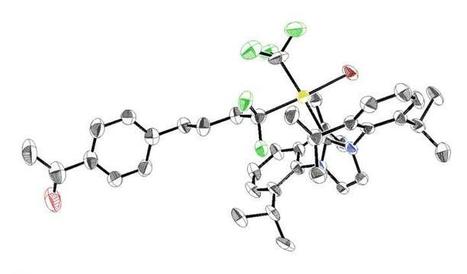
Researchers have found a surprisingly versatile workaround to create chemical compounds that could prove useful for medical imaging and drug development. The chemical mechanism, discovered by scientists at the Department of Energy's Lawrence Berkeley National Laboratory (Berkeley Lab) and UC Berkeley, could also broaden our understanding of basic chemical reaction processes involving common helpers, called catalysts, like copper and gold. While studying chemical reactions of a gold-containing molecule, the research team happened upon a chemical mechanism that can be used to form trifluoromethyl (CF3) compounds and attach them to other chemical compounds. Their discovery could aid in the synthesis of new "radiotracers" - chemical compounds that contain a radioactive form, or isotope, of an element - for use with a noninvasive, high-resolution 3-D medical imaging technology known as PET (positron emission tomography) scanning. Drug companies have shown an increasing interest in incorporating CF3 compounds - which contain carbon and fluorine - in a range of pharmaceuticals. These compounds can make drugs more selective, effective, or potent. The antidepressant Prozac, HIV drug Sustiva, and anti-inflammatory Celebrex are among the examples of drugs containing CF3 compounds. So in testing the biological uptake of drugs that incorporate CF3 compounds, it's useful to incorporate fluorine-18 (18F), a radioactive isotope of fluorine in the CF3 compound as a sort of label or "tracer" that can be detected by PET scanners.
Via Mariaschnee
|
|
Scooped by
Dr. Stefan Gruenwald
August 1, 2017 1:32 PM
|
A Broadcom flaw that undermined scores of Android and iOS devices hints the future of smartphone hacking lies in third-party components. If you haven't updated your iPhone or Android device lately, do it now. Until very recent patches, a bug in a little-examined Wi-Fi chip would have allowed a hacker to invisibly hack into any one of a billion devices. Yes, billion with a b. A vulnerability that pervasive is rare, for good reason. Apple and Google pile millions of dollars into securing their mobile operating systems, layering on hurdles for hackers and paying bounties for information about vulnerabilities in their software. But a modern computer or smartphone is a kind of silicon Frankenstein, with components sourced from third-party companies whose code Apple and Google don't entirely control. And when security researcher Nitay Artenstein dug into the Broadcom chip module that helps power every iPhone and most modern Android devices, he found a flaw that had the potential to completely undermine the expensive security of all of them.
Hopes of sequencing the DNA of every living thing on earth are taking a step forward with the announcement of plans to sequence at least 10,000 genomes representing every major clade of plants and eukaryotic microbes. Chinese sequencing giant BGI and the China National Genebank (CNGB) held a workshop yesterday on the sidelines of the International Botanical Congress, being held this week in BGI's hometown of Shenzhen, to discuss what they are calling the 10KP plan. About 250 plant scientists participated in the discussions and "are raring to go," says Gane Ka-Shu Wong, a genomicist and bioinformaticist at University of Alberta in Edmonton. The 10KP plan will be a key part of the Earth BioGenome Project (EBP), an ambitious and still evolving scheme to get at least rough sequence data on the 1.5 million eukaryotic species, starting with detailed sequences of one member of each of the 9000 eukaryotic families. The effort to sequence plants is moving ahead a bit faster than other aspects of EBP "because plant scientists are more collaborative," Wong says jokingly. The 10KP plan is also building on a previous 1000 plant (1KP) transcriptome project. That effort, launched in 2012 and now nearing completion, was also led by BGI, where Wong is an associate director.
Via Integrated DNA Technologies
|
|
Rescooped by
Dr. Stefan Gruenwald
from DNA and RNA research
July 30, 2017 11:50 AM
|
Human-engineered systems, from ancient irrigation networks to modern semiconductor circuitry, rely on spatial organization to guide the flow of materials and information. Living cells also use spatial organization to control and accelerate the transmission of molecular signals, for example by co-localizing the components of enzyme cascades and signaling networks. In a new paper published today by the journal Nature Nanotechnology, scientists at the University of Washington and Microsoft Research describe a method that uses spatial organization to build nanoscale computational circuits made of synthetic DNA. Called “DNA domino” circuits, they consist of DNA “domino” molecules that are positioned at regular intervals on a DNA surface. Information is transmitted when DNA dominoes interact with their immediate neighbors in a cascade. For decades, scientists in the field of molecular programming have been studying how to use DNA molecules to compute. This includes developing algorithms that operate effectively at the molecular scale, and identifying fundamental principles of molecular computation. The components of these molecular devices are typically made from strands of synthetic DNA, where the sequence of the strands determines how they interact. Real-world applications of these devices could in the future include in vitro diagnostics of pathogens, biomanufacturing of materials, smart therapeutics and high-precision methods for imaging and probing biological experiments. So far, however, most of these devices have been designed to operate in a chemical soup, where billions of DNA molecules rely on the relatively slow process of random diffusion to bump into each other and execute a computational step. This limits the speed of the computation and the number of different components that can effectively be used. This is because the freely diffusing DNA molecules can collide with each other at random, so they must be carefully designed to avoid unintended computations when these random collisions occur. DNA domino circuits represent an important advance. They were developed through a collaboration between Georg Seelig’slab at the University of Washington in Seattle and Andrew Phillips’s Biological Computation group at Microsoft Research. Since DNA dominoes are positioned close to each other on a surface, they can quickly interact with their immediate neighbors without relying on random diffusion for each computational step. This can lead to an order of magnitude increase in speed compared to circuits where all the components are freely diffusing. In addition, DNA dominoes can be re-used in multiple locations with almost no interference since their physical location, in addition to their chemical specificity, determines what interactions can and cannot take place.
Via Integrated DNA Technologies
|