Your new post is loading...

|
Rescooped by
Dr. Stefan Gruenwald
from Longevity science
March 16, 2018 12:51 PM
|
In order to have their vital signs continuously monitored, patients in emergency rooms have to be hooked up to a variety of sensors – this makes it awkward for them to move around, among other things. Soon, however, all those machines could be replaced by one small electronic patch that adheres to their chest. The device was developed by Swiss startup Smartcardia, a company that was spun off from the EPFL research institute. Applied to a patient's chest under their clothes, the patch uses integrated sensors to monitor stats such as temperature, pulse, blood pressure, blood oxygen levels, cardiac rhythm and cardiac electrical activity – it reportedly does so just as accurately as traditional cable-based sensors. The data is wirelessly transmitted to a server, which doctors can access in real time via a smartphone, tablet, or any internet-connected device. Along with its use in hospitals, the patch could also allow patients to be remotely monitored while in their homes, going about their daily activities. This would minimize the number of visits that they would need to pay to the hospital just to get checked, while ensuring that any problems got detected right away. To that end, Smartcardia is also working on an artificial intelligence system that would allow the patch to spot health problems early. It would do so by detecting slight changes in a patient's vital signs and linking them together, to see if the combination corresponded to existing models of serious conditions. The Smartcardia patch has already been tested on hundreds of patients at several hospitals, and recently received the European Union's CE marking for medical devices. Large-scale production has begun, and a commercial launch for the Swiss and EU markets should reportedly be taking place quite soon.
Via Ray and Terry's
|
|
Scooped by
Dr. Stefan Gruenwald
March 15, 2018 5:36 PM
|
The faithful inheritance of the epigenome is critical for cells to maintain gene expression programs and cellular identity across cell divisions. A team of scientists now mapped strand-specific DNA methylation after replication forks and show maintenance of the vast majority of the DNA methylome within 20 minutes of replication and inheritance of some hemi-methylated CpG dinucleotides (hemiCpGs). Mapping the nascent DNA methylome targeted by each of the three DNA methyltransferases (DNMTs) reveals interactions between DNMTs and substrate daughter cytosines en route to maintenance methylation or hemimethylation. Finally, the scientists show the inheritance of hemi-CpGs at short regions flanking CCCTC-binding factor (CTCF)/cohesin binding sites in pluripotent cells. Elimination of hemimethylation causes reduced frequency of chromatin interactions emanating from these sites, suggesting a role for hemimethylation as a stable epigenetic mark regulating CTCF-mediated chromatin interactions. CTCF is a highly conserved zinc finger protein and is best known as a transcription factor. It can function as a transcriptional activator, a repressor or an insulator protein, blocking the communication between enhancers and promoters. CTCF can also recruit other transcription factors while bound to chromatin domain boundaries. The three-dimensional organization of the eukaryotic genome dictates its function, and CTCF serves as one of the core architectural proteins that help establish this organization. The mapping of CTCF-binding sites in diverse species has revealed that the genome is covered with CTCF-binding sites. CTCF is a member of the BORIS - CTCF gene family and encodes a transcriptional regulator protein with 11 highly conserved zinc finger (ZF) domains. This nuclear protein is able to use different combinations of the ZF domains to bind different DNA target sequences and proteins.
|
|
Scooped by
Dr. Stefan Gruenwald
March 15, 2018 5:11 PM
|
You, too, can now attempt a record-setting denial-of-service attack, as the tools used to launch the attacks were publicly posted to GitHub this week. Proof-of-concept code by Twitter user @037 combined with a list of 17,000 IP addresses of vulnerable memcached servers allows anyone to send forged UDP packets to memcached servers obtained from the Shodan.io computer search engine. It’s been just over a week since the first massive memcache-fueled denial of service attack. The code’s authors says it’s being released “to bring more attention to the flaw and force others into updating their devices.” The era of terabit DDoS attacks was ushered in this month with giant denial of service attacks last week set records with 1.35-terabit-per-second and 1.7 -terabit-per-second attacks. They used unsecured memcached servers to launch the attacks, one of which targeted GitHub itself. The latter attack targeted an unnamed U.S. service provider, according to Arbor Networks. A second tool was released on Monday, BleepingComputer reports, but the author is unknown. Akamai and Cloudflare predicted more attacks following the record-setting efforts. Cloudflare CEO Matthew Prince said he was seeing separate attacks of a similar size last week.
|
|
Scooped by
Dr. Stefan Gruenwald
March 15, 2018 5:06 PM
|
Much the way ships form bow waves as they move through water, CMEs set off interplanetary shocks when they erupt from the Sun at extreme speeds, propelling a wave of high-energy particles. These particles can spark space weather events around Earth, endangering spacecraft and astronauts. Understanding a shock’s structure — particularly how it develops and accelerates — is key to predicting how it might disrupt near-Earth space. But without a vast array of sensors scattered through space, these things are impossible to measure directly. Instead, scientists rely upon models that use satellite observations of the CME to simulate the ensuing shock’s behavior. The scientists — Ryun-Young Kwon, a solar physicist at George Mason University in Fairfax, Virginia, and Johns Hopkins University Applied Physics Laboratory, or APL, in Laurel, Maryland, and APL astrophysicist Angelos Vourlidas — pulled observations of two different eruptions from three spacecraft: ESA/NASA’s Solar and Heliospheric Observatory, or SOHO, and NASA’s twin Solar Terrestrial Relations Observatory, or STEREO, satellites. One CME erupted in March 2011 and the second, in February 2014. The scientists fit the CME data to their models — one called the “croissant” model for the shape of nascent shocks, and the other the “ellipsoid” model for the shape of expanding shocks — to uncover the 3-D structure and trajectory of each CME and shock. Each spacecraft’s observations alone weren’t sufficient to model the shocks. But with three sets of eyes on the eruption, each of them spaced nearly evenly around the Sun, the scientists could use their models to recreate a 3-D view. Their work confirmed long-held theoretical predictions of a strong shock near the CME nose and a weaker shock at the sides.
A team of researchers from several institutions across the U.S. has found evidence suggesting that there was an explosion of diversity in fish after the end-Cretaceous mass extinction. In their paper published in the journal Nature Ecology and Evolution, the team describes their genetic study involving more than 1800 species of fish and what they found. After the end-Cretaceous mass extinction—the one that killed off the dinosaurs—mammals became much more diverse and dominant. Without the dinosaurs to feast on them, they were free to prosper. Much less is known about what went on in the oceans. In this new effort, the researchers have added some new pieces to that puzzle. Prior research has suggested that the asteroid or comet that smashed into the Earth approximately 65 million years ago killed off more than the dinosaurs—approximately 50 percent of all species worldwide disappeared. These include many sharks and other reptiles, leaving a void of sorts in the world's oceans that allowed fish to flourish. And flourish they did, according to the researchers with this new effort. To learn more about what happened with sea creatures after the end-Cretaceous mass extinction, the researchers collected tissue samples from 118 acanthomorph species, looking specifically at 1,000 DNA sequences that were similar across the genomes of their samples—as part of that effort, they searched for variations in genetic sequences that offered clues regarding how closely related the fish were to one another. The researchers found that six large groups of fish originated over the course of 10 million years after the mass extinction. Of those groups, five were acanthomorphs (spiny-rayed fish). Today, there are approximately 18,000 members of the acanthomorphs species and they represent approximately one in three vertebrate species alive today. That so many of them originated in the time after the dinosaurs disappeared shows that they, like mammals, found the world a much friendlier place—one where they were allowed to prosper. Such an explosion suggests that sharks and other reptile populations and their diversity must have plunged, leaving a vast void for the acanthomorphs to fill. Still unclear is why acanthomorphs, rather than other fish species, became so dominant.
Via Mariaschnee
|
|
Scooped by
Dr. Stefan Gruenwald
March 15, 2018 2:22 PM
|
Artificial intelligence is sweeping industries like medicine and finance. What if the machine you’re reading this on could learn too? In a recent paper, Google describes using deep learning—an AI method that employs a large simulated neural network—to improve prefetching. Although the researchers haven’t shown how much this speeds things up, the boost could be big, given what deep learning has brought to other tasks. “The work that we did is only the tip of the iceberg,” says Heiner Litz of the University of California, Santa Cruz, a visiting researcher on the project. Litz believes it should be possible to apply machine learning to every part of a computer, from the low-level operating system to the software that users interact with. Such advances would be opportune. Moore’s Law is finally slowing down, and the fundamental design of computer chips hasn’t changed much in recent years. Tim Kraska, an associate professor at MIT who is also exploring how machine learning can make computers work better, says the approach could be useful for high-level algorithms, too. A database might automatically learn how to handle financial data as opposed to social-network data, for instance. Or an application could teach itself to respond to a particular user’s habits more effectively. “We tend to build general-purpose systems and hardware,” Kraska says. “Machine learning makes it possible that the system is automatically customized, to its core, to the specific data and access patterns of a user.” Kraska cautions that using machine learning remains computationally expensive, so computer systems won’t change overnight. “However, if it is possible to overcome these limitations,” he says, “the way we develop systems might fundamentally change in the future.” Litz is more optimistic. “The grand vision is a system that is constantly monitoring itself and learning,” he says. “It’s really the start of something really big.”
|
|
Scooped by
Dr. Stefan Gruenwald
March 15, 2018 2:13 PM
|
Two teams of researchers working independently of one another have come up with an experiment designed to prove that gravity and quantum mechanics can be reconciled. The first team is a pairing of Chiara Marletto of the University of Oxford and Vlatko Vedral of National University of Singapore. The second is an international collaboration. In the papers, both published in Physical Review Letters, the teams describe their experiment and how it might be carried out. Gravity is a tough nut to crack, there is just no doubt about it. In comparison, the strong, weak and electromagnetic forces are a walk in the park. Scientists still can't explain the nature of gravity, though how it works is rather well understood. The current best theory regarding gravity goes all the way back to Einstein's general theory of relativity, but there has been no way to reconcile it with quantum mechanics. Some physicists suggest it could be a particle called the graviton. But proving that such a particle exists has been frustrating, because it would be so weak that it would be very nearly impossible to measure its force. In this new effort, neither team is suggesting that their experiment could reconcile gravity and quantum mechanics. Instead, they are claiming that if such an experiment is successful, it would very nearly prove that it should be possible to do it. The experiment essentially involves attempting to entangle two particles using their gravitational attraction as a means of confirming quantum gravity. In practice, it would consist of levitating two tiny diamonds a small distance from one another and putting each of them into a superposition of two spin directions. After that, a magnetic field would be applied to separate the spin components. At this point, a test would be made to see if each of the components is gravitationally attracted. If they are, the researchers contend, that will prove that gravity is quantum; if they are not, then it will not. The experiment would have to run many times to get an accurate assessment. And while a first look might suggest such an experiment could be conducted very soon, the opposite is actually true. The researchers suggest it will likely be a decade before such an experiment could be carried out due to the necessity of improving scale and the sensitivity involved in such an experiment.
|
|
Scooped by
Dr. Stefan Gruenwald
March 15, 2018 2:09 PM
|
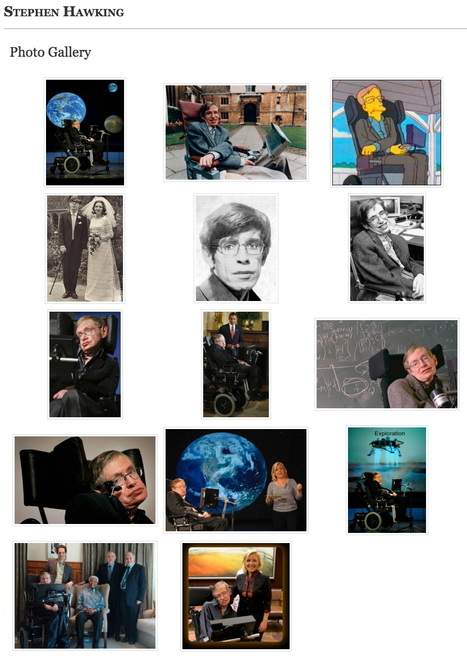
Stephen Hawking, whose brilliant mind ranged across time and space though his body was paralyzed by disease, died Wednesday. He was 76. Hawking died at his home in Cambridge, England, according to a statement by the University of Cambridge. The best-known theoretical physicist of his time, Hawking wrote so lucidly of the mysteries of space, time and black holes that his book, "A Brief History of Time," became an international best-seller, making him one of science's biggest celebrities since Albert Einstein. "He was a great scientist and an extraordinary man whose work and legacy will live on for many years," his children Lucy, Robert and Tim said in a statement. "His courage and persistence with his brilliance and humor inspired people across the world. He once said, 'It would not be much of a universe if it wasn't home to the people you love.' We will miss him forever." Even though his body was attacked by amyotrophic lateral sclerosis, or ALS, when Hawking was 21, he stunned doctors by living with the normally fatal illness for more than 50 years. A severe attack of pneumonia in 1985 left him breathing through a tube, forcing him to communicate through an electronic voice synthesizer that gave him his distinctive robotic monotone. But he continued his scientific work, appeared on television and married for a second time. As one of Isaac Newton's successors as Lucasian Professor of Mathematics at Cambridge University, Hawking was involved in the search for the great goal of physics—a "unified theory." Hawking's own website: www.hawking.org.uk
|
|
Scooped by
Dr. Stefan Gruenwald
March 15, 2018 1:51 AM
|
A solar panel that can generate electricity from falling raindrops has been invented, enabling power to flow even when skies cloud over or the sun has set. Solar power installation is soaring globally thanks to costs plunging 90% in the past decade, making it the cheapest electricity in many parts of the world. But the power output can plummet under grey skies and researchers are working to squeeze even more electricity from panels. The new device, demonstrated in a laboratory at Soochow University in China, places two transparent polymer layers on top of a solar photovoltaic (PV) cell. When raindrops fall on to the layers and then roll off, the friction generates a static electricity charge. “Our device can always generate electricity in any daytime weather,” said Baoquan Sun, at Soochow University. “In addition, this device even provides electricity at night if there is rain.” Other researchers have recently created similar devices on solar panels, known as triboelectric nanogenerators (Tengs), but the new design is significantly simpler and more efficient as one of the polymer layers acts as the electrode for both the Teng and the solar cell. “Due to our unique device design, it becomes a lightweight device,” said Sun, whose team’s work is published in the journal ACS Nano. “In future, we are exploring integrating these into mobile and flexible devices, such as electronic clothes. However, the output power efficiency needs to be further improved before practical application.”
|
|
Scooped by
Dr. Stefan Gruenwald
March 12, 2018 11:45 AM
|
If there's a magic number for NASA's Launch Services Program (LSP) at the agency's Kennedy Space Center in Florida, it could be six. That's because there are six primary NASA missions scheduled to launch from two different coasts, within about six months, atop six different rocket configurations (five different rockets). "Not since 2003 has the Launch Services Program had a denser and more diverse manifest as it will this year," said Chuck Dovale, the program's deputy manager. "We are poised and ready for the challenges ahead." "It's going to be an exceptional year, with a variety of launches," said Tim Dunn, LSP launch director. Kicking off the year will be the launch of NOAA's Geostationary Operational Environmental Satellite-S, or GOES-S. The satellite is scheduled to launch on March 1, atop a United Launch Alliance (ULA) Atlas V rocket from Space Launch Complex 41 at Cape Canaveral Air Force Station (CCAFS), on the east coast. The GOES-S weather satellite, which will be renamed GOES-17, will launch into a geostationary orbit around the Earth and join its predecessor GOES-R (now GOES-16), which was launched just over a year ago. The satellite will help give the big weather picture, including precise data on hurricanes. Following closely behind will be the Transiting Exoplanet Survey Satellite, or TESS, which will launch March 20 atop a SpaceX Falcon 9 rocket from Space Launch Complex 40 at CCAFS. TESS will search for planets outside our solar system, including those that could support life. The Interior Exploration using Seismic Investigations, Geodesy and Heat Transport, or InSight, is the first of two interplanetary missions, and the first one ever launching from the west coast. The probe will launch on its mission to Mars on May 5 atop a ULA Atlas V rocket from Space Launch Complex-3E at Vandenberg Air Force Base in California. InSight is a NASA Discovery Program mission. The single lander will descend to the surface of Mars and use its seismic sensors to study the interior of the Red Planet. The second interplanetary mission is the Parker Solar Probe. The spacecraft, about the size of a small car, will launch July 31 atop a ULA Delta IV Heavy rocket from Space Launch Complex 37 at CCAFS. The probe will travel to about 4 million miles from the Sun's surface and study the giant fireball's corona. "The Parker Solar Probe is truly our 'shiny object' mission," said Omar Baez, LSP launch director for this mission. "It is the first time we will fly a Delta IV Heavy with a science payload. We need to meet the very short 20-day planetary opportunity." Dunn said that interplanetary missions are more difficult. Those missions, by their very nature and how the trajectories work, have very precise windows when they can launch. For example, to get to Mars this year, the program has only about a 4.5-week period between early May and the first week of June to launch, or the program would have to stand down for about 26 months. On Sept. 12, the Ice, Cloud, and land Elevation Satellite-2, or ICESat-2, will launch atop the final United Launch Alliance Delta II rocket from Space Launch Complex-2W at Vandenberg. "As a 'parent' of many rockets, we're not supposed to have favorites," Dunn said, "but the final launch of a Delta II rocket will hold a special place in my heart. I worked on the Delta II team back in the 1990s at Cape Canaveral Air Force Station. It was there that I really learned the inner workings of what it takes to launch that particular rocket." ICESat-2 will carry a single instrument, the Advanced Topographic Laser Altimeter System, or ATLAS. It will gauge the slope of Earth's surface and gather data to estimate the annual height change of Greenland and Antarctica ice sheets to within 4 millimeters – the width of a pencil. The Ionospheric Connection Explorer, or ICON, will launch aboard an Orbital ATK Pegasus XL rocket later this year. Pegasus is the only airborne-launched rocket. It will be attached beneath the company's L-1011 Stargazer aircraft, carried to 39,000 feet, and then released for launch.
|
|
Scooped by
Dr. Stefan Gruenwald
March 5, 2018 5:28 PM
|
Much like detectives study fingerprints to identify the culprit, scientists used NASA's Hubble and Spitzer space telescopes to find the 'fingerprints' of water in the atmosphere of a hot, bloated, Saturn-mass exoplanet some 700 light-years away. Using Hubble and Spitzer, astronomers analyzed the atmosphere of the "hot Saturn" exoplanet WASP-39b, and they captured the most complete spectrum of an exoplanet's atmosphere possible with present-day technology. By dissecting starlight filtering through the planet's atmosphere into its component colors, the team found clear evidence for water vapor. Although the researchers predicted they would see water, they were surprised by how much water they found - three times as much water as Saturn has. This suggests that the planet formed farther out from the star, where it was bombarded by icy material.
|
|
Scooped by
Dr. Stefan Gruenwald
March 4, 2018 5:10 AM
|
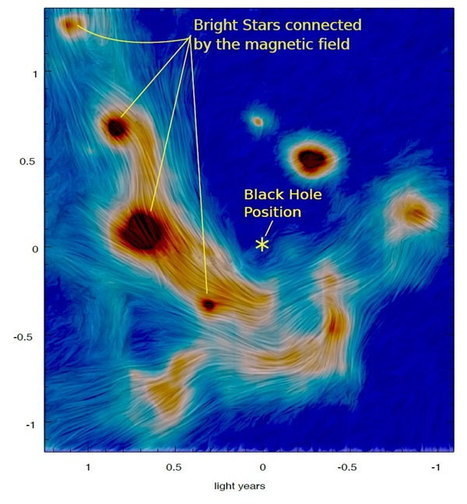
This new high-resolution map shows the magnetic field lines embedded in gas and dust around the supermassive black hole at the core of the Milky Way (center of image; see below for annotated version). Red areas are regions where warm dust particles and stars are emitting lots of infrared radiation (heat), while dark blue areas show cooler regions that lack pronounced warm and dusty filaments. At the center of nearly every galaxy resides a gargantuan black hole. For the Milky Way, the supermassive black hole — dubbed Sagittarius A* — is so massive that its gravity flings stars around at speeds of up to 18.5 million miles (30 million kilometers) per hour. In order to accelerate stars to these breakneck speeds, astronomers estimate thatSagittarius A* must be about 4 million times more massive than the Sun.
With such a monstrous and intriguing object located in the center of our galaxy, you would think that astronomers know a great deal about it. However, thanks to the fact that the Milky Way is full of light-blocking gas and dust, many questions still remain about the structure and behavior of Sagittarius A*.
In a paper published last month in Monthly Notices of the Royal Astronomical Society, astronomers shed a bit a light on this black hole by producing a new high-resolution map that traces the magnetic field lines present within gas and dust swirling around Sagittarius A*. The team created the map, which is the first of its kind, by observing polarized infrared light that is emitted by warm, magnetically aligned dust grains.
“This collaborative work is an exciting step forward in our collective efforts to gain a greater understanding of our own galaxy and the supermassive black hole at the center of it,” said Chris Packham, a professor of physics and astronomy at the University of Texas at San Antonio, in a press release. “It also demonstrates the importance of access to the largest telescopes using advanced cameras [and] techniques."
To create the detailed map, which spans about one light-year on each side of Sagittarius A*, the researchers used the CanariCam infrared camera on the Gran Telescopio Canarias (GTC), located on the island of La Palma, Spain. Because infrared light passes straight through the visual-light-blocking dust located between Earth and the Milky Way’s core, astronomers were able to view the area around Sagittarius A* much more clearly than would have been possible with other types of telescopes. Furthermore, since CanariCam combines infrared imaging with a device that preferentially filters polarized light associated with magnetic fields, the team was able to trace the magnetic field lines around Sagittarius A* in unprecedented detail.
“Big telescopes like GTC, and instruments like CanariCam deliver real results,” said Pat Roche, a professor of astrophysics at The University of Oxford, in a press release. “We’re now able to watch material race around a black hole 25,000 light-years away, and for the first time see magnetic fields there in detail.”
|
|
Scooped by
Dr. Stefan Gruenwald
March 3, 2018 5:56 PM
|
A protein involved in cognition and storing long-term memories looks and acts like a capsid protein from viruses. The protein, called Arc, has properties similar to those that viruses use for infecting host cells, and originated from a chance evolutionary event that occurred hundreds of millions of years ago. The prospect that virus-like proteins could be the basis for a novel form of cell-to-cell communication in the brain could change our understanding of how memories are made, according to Jason Shepherd, a neuroscientist at University of Utah Health and senior author of the study publishing in the journal Cell on Jan. 11., 2018. Shepherd first suspected that something was different about Arc when his colleagues captured an image of the protein showing that Arc was assembling into large structures. With a shape that resembles a capsule from a lunar lander, these structures looked a lot like the retrovirus HIV. “At the time, we didn’t know much about the molecular function or evolutionary history of Arc,” says Shepherd who has researched the protein for 15 years. “I had almost lost interest in the protein, to be honest. After seeing the capsids, we knew we were onto something interesting.” The gap in research was not for want of an interesting subject. Prior work had shown that mice lacking Arc forgot things they had learned a mere 24 hours earlier. Further, their brains lacked plasticity. There is a window of time early in life when the brain is like a sponge, easily soaking up new knowledge and skills. Without Arc, the window never opens. Scientists had never considered that mechanisms responsible for acquiring knowledge could stem from foreign origins. Now, the work by Shepherd and his team has raised this intriguing possibility. Seeing Arc’s unusual propensity to form virus-like structures prompted Shepherd to scrutinize the protein sequence with a new set of eyes. He found that regions of the code were similar to that from viral capsids. An essential tool for viral infection, capsids carry virus’ genetic information and deliver it from cell to cell in its victim. Given that Arc looks like a viral protein, Shepherd and his colleagues designed a set of experiments to test whether it also acts like one. They first determined that several copies of Arc self-assemble into hollow virus-like capsids and stash its own genetic material, in this case mRNA, inside them. When the scientists added the capsids to mouse brain cells, or neurons, growing in a dish, Arc transferred its genetic cargo into the cells. After viruses invade host cells, they emerge ready to infect once again. It appears that Arc works in a similar way. The scientists gathered Arc that had been released from mouse neurons and determined that the proteins and their cargo could be taken up by another set of neurons. Unlike for viruses, activating neurons mobilizes Arc, triggering the release of capsids.
|
|
|
Scooped by
Dr. Stefan Gruenwald
March 15, 2018 5:39 PM
|
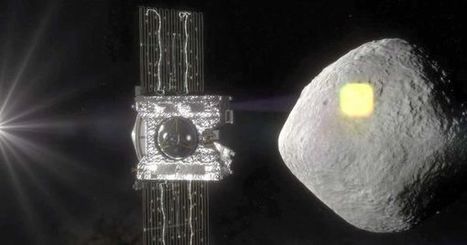
NASA scientists have devised a plan to take care of an asteroid that has a 1 in 2,700 chance of hitting Earth on September 21, 2135. Their solution? Blast it with nukes. The asteroid, known as Bennu, is currently orbiting the Sun about 54 million miles from Earth. The 1,600-foot-wide, 74-billion-pound space object is probably not going to hit the Earth, but it’s not in the U.S. government’s nature to sit idle when a potential threat — no matter how unlikely — exists. NASA, the National Nuclear Security Administration, and two Energy Department weapons labs have come together to design spacecraft that could explode Bennu if it gets too close. According to Buzzfeed News, the Hypervelocity Asteroid Mitigation Mission for Emergency Response spacecraft, HAMMER for short, could use one of two tactics to combat an impact. If an asteroid is small enough, HAMMER would use an 8.8-ton “impactor” to smash the object. But, if the asteroid is too big, the spacecraft would instead use an on-board nuclear device to blow it up. Physicist David Dearborn from the Lawrence Livermore National Laboratory even suggested to Buzzfeed News that multiple HAMMER craft could throw themselves in front of the asteroid to slow it and change its course.
|
|
Scooped by
Dr. Stefan Gruenwald
March 15, 2018 5:17 PM
|
Though still a far-off fantasy in the minds of many, 19 states have passed legislation relating to autonomous vehicles — many starting small by defining terms like "automated driving system," "dynamic driving task" or "autonomous vehicle." Additionally, governors from four states have issued executive orders creating councils and working groups of stakeholders and public officials dedicated to looking at how their states should proceed. Where states like Florida have embraced fewer regulations, others, like California, have taken more tightly regulated approaches. Though these states have differed in their approaches, the future of transportation is in the midst of a revolution. The revolution, in short, means that the traditional rules no longer hold up when applied to the rapidly advancing technology. From the electrification of vehicles to the growth of transportation network companies and automated driving, traditional driving regulations must be updated to keep pace. Self-driving vehicles can already be spotted on test tracks across the country and on public streets in select cities, and several major companies including Ford, Toyota and BMW have all committed to driverless vehicles on American road within five years.
|
|
Scooped by
Dr. Stefan Gruenwald
March 15, 2018 5:07 PM
|
The dream of nuclear fusion is on the brink of being realised, according to a major new US initiative that says it will put fusion power on the grid within 15 years. The project, a collaboration between scientists at MIT and a private company, will take a radically different approach to other efforts to transform fusion from an expensive science experiment into a viable commercial energy source. The team intend to use a new class of high-temperature superconductors they predict will allow them to create the world’s first fusion reactor that produces more energy than needs to be put in to get the fusion reaction going. Bob Mumgaard, CEO of the private company Commonwealth Fusion Systems, which has attracted $50 million in support of this effort from the Italian energy company Eni, said: “The aspiration is to have a working power plant in time to combat climate change. We think we have the science, speed and scale to put carbon-free fusion power on the grid in 15 years.”
|
|
Rescooped by
Dr. Stefan Gruenwald
from Social Foraging
March 15, 2018 5:00 PM
|
Computers that operate more like the human brain than computers—a field sometimes referred to as neuromorphic computing—have promised a new era of powerful computing. While this all seems promising, one of the big shortcomings in neuromorphic computing has been that it doesn’t mimic the brain in a very important way. In the brain, for every neuron there are a thousand synapses—the electrical signal sent between the neurons of the brain. This poses a problem because a transistor only has a single terminal, hardly an accommodating architecture for multiplying signals. Now researchers at Northwestern University, led by Mark Hersam, have developed a new device that combines memristors—two-terminal non-volatile memory devices based on resistance switching—with transistors to create what Hersam and his colleagues have dubbed a “memtransistor” that performs both memory storage and information processing. This most recent research builds on work that Hersam and his team conducted back in 2015 in which the researchers developed a three-terminal, gate-tunable memristor that operated like a kind of synapse. While this work was recognized as mimicking the low-power computing of the human brain, critics didn’t really believe that it was acting like a neuron since it could only transmit a signal from one artificial neuron to another. This was far short of a human brain that is capable of making tens of thousands of such connections. “Traditional memristors are two-terminal devices, whereas our memtransistors combine the non-volatility of a two-terminal memristor with the gate-tunability of a three-terminal transistor,” said Hersam to IEEE Spectrum. “Our device design accommodates additional terminals, which mimic the multiple synapses in neurons.”
Via Ashish Umre
|
|
Rescooped by
Dr. Stefan Gruenwald
from Daily Magazine
March 15, 2018 4:52 PM
|
Scientists have created the world’s first rechargeable proton battery, a crucial step towards cheaper and more environmentally-friendly energy storage. While the battery is just a small-scale prototype, it has the potential to be competitive with currently available lithium-ion batteries. The rechargeable battery, created by researchers at RMIT university in Melbourne, uses carbon and water instead of lithium. The lead researcher Professor John Andrews said that as the world moved towards renewables, there would be a significant need for storage technologies that relied on cheap and abundant materials. “Lithium-ion batteries are great but they rely on ultimately scarce and expensive resources,” he said. “Hydro is also a good technology but suitable sites are limited and the cost may be very high. “The advantage is we’re going to be storing protons in a carbon-based material, which is abundant, and we are getting protons from water which is readily available.” The battery itself produces no carbon emissions and it can store electricity from zero-emissions renewables. Andrews said it could be commercially available within five to 10 years. “When it is commercially available, it would be a competitor to the Tesla Powerwall and then eventually we’d hope we might find applications at the scale of the huge Tesla battery [in South Australia] and even larger.”
Via THE OFFICIAL ANDREASCY
|
|
Scooped by
Dr. Stefan Gruenwald
March 15, 2018 2:16 PM
|
Imagine that you’re a voracious carnivore who sinks its teeth into the tail of a small reptile and anticipates a delicious lunch, when, in a flash, the reptile is gone and you are left holding a wiggling tail between your jaws. A new study by the University of Toronto Mississauga research team led by Professor Robert Reisz and PhD student Aaron LeBlanc, published March 5 in the open source journal, Scientific Reports, shows how a group of small reptiles who lived 289 million years ago could detach their tails to escape the grasp of their would-be predators — the oldest known example of such behaviour. The reptiles, called Captorhinus, weighed less than 2 kilograms and were smaller than the predators of the time. They were abundant in terrestrial communities during the Early Permian period and are distant relatives of all the reptiles today. As small omnivores and herbivores, Captorhinus and its relatives had to scrounge for food while avoiding being preyed upon by large meat-eating amphibians and ancient relatives of mammals. “One of the ways captorhinids could do this,” says first author LeBlanc, “was by having breakable tail vertebrae.” Like many present-day lizard species, such as skinks, that can detach their tails to escape or distract a predator, the middle of many tail vertebrae had cracks in them. It is likely that these cracks acted like the perforated lines between two paper towel sheets, allowing vertebrae to break in half along planes of weakness. “If a predator grabbed hold of one of these reptiles, the vertebra would break at the crack and the tail would drop off, allowing the captorhinid to escape relatively unharmed,” says Reisz, a Distinguished Professor of Biology at the University of Toronto Mississauga.
|
|
Scooped by
Dr. Stefan Gruenwald
March 15, 2018 2:11 PM
|
Quantum mechanics has fundamental speed limits—upper bounds on the rate at which quantum systems can evolve. However, two groups working independently have published papers showing for the first time that quantum speed limits have a classical counterpart: classical speed limits. The results are surprising, as previous research has suggested that quantum speed limits are purely quantum in nature and vanish for classical systems. Both groups—one consisting of Brendan Shanahan and Adolfo del Campo at the University of Massachusetts along with Aurelia Chenu and Norman Margolus at MIT, the other composed of Manaka Okuyama of the Tokyo Institute of Technology and Masayuki Ohzeki at Tohoku University—have published papers on classical speed limits in Physical Review Letters. Over the past several decades, physicists have been investigating quantum speed limits, which determine the minimum time for a given process to occur in terms of the energy fluctuations of the process. A quantum speed limit can then be thought as a time-energy uncertainty relation. Although this concept is similar to Heisenberg's uncertainty principle, which relates position and momentum uncertainties, time is treated differently in quantum mechanics (as a parameter rather than an observable). Still, the similarities between the two relations, along with the fact that Heisenberg's uncertainty principle is a strictly quantum phenomenon, have long suggested that quantum speed limits are likewise strictly quantum and have no classical counterpart. The only known limitation on the speed of classical systems is that objects may not travel faster than the speed of light due to special relativity, but this is unrelated to the energy-time relation in quantum speed limits. The new papers show that speed limits based on a trade-off between energy and time do exist for classical systems, and in fact, that there are infinitely many of these classical speed limits. The results demonstrate that quantum speed limits are not based on any underlying quantum phenomena, but instead are a universal property of the description of any physical process, whether quantum or classical.
|
|
Scooped by
Dr. Stefan Gruenwald
March 15, 2018 1:55 AM
|
The hunt for habitability outside our solar system is both ongoing and won’t be slowing down anytime soon. The pursuit of exoplanets not only furthers the search for extraterrestrial life, but also helps us understand the formation and evolution of celestial objects, including those close to home. With the help of space- and ground-based telescopes, a group of researchers surveying red dwarf stars near Earth identified 15 new exoplanets — and one of them has the potential to host liquid water. The team of researchers, led by Teruyuki Hirano of Tokyo Institute of Technology’s Department of Earth and Planetary Sciences, used data from NASA’s Kepler spacecraft and observations from Spain’s Nordic Optical Telescope and Hawaii’s Subaru Telescope to carry out the study. The findings were published in The Astronomical Journal in a series of two papers. The “star” of the study is K2-155, a bright red dwarf about 200 light-years away. The researchers found three super-Earths (planets larger than Earth but smaller than Neptune) orbiting the star, with the farthest planet, K2-155d, potentially in its habitable zone. By measuring the radius of K2-155d, which is estimated at about 1.6 times that of Earth, and using a 3-D global climate simulation, they found it’s highly probable that liquid water could exist on its surface. The team can’t say this with certainty, though, because the unmeasured radius and temperature of its host star could impact K2-155d’s habitability — habitability that also depends on the assumptions that go into the simulation. "In our simulations, the atmosphere and the composition of the planet were assumed to be Earth-like, and there's no guarantee that this is the case," said Hirano in a press release.
|
|
Scooped by
Dr. Stefan Gruenwald
March 15, 2018 1:48 AM
|
In a study published March 9 in The Monthly Notices of the Royal Astronomical Society, astronomers announced the discovery that all disk galaxies rotate about once every billion years, no matter their size or mass. “It’s not Swiss watch precision,” said Gerhardt Meurer, an astronomer from the International Centre for Radio Astronomy Research (ICRAR), in a press release. “But regardless of whether a galaxy is very big or very small, if you could sit on the extreme edge of its disk as it spins, it would take you about a billion years to go all the way round.” “Discovering such regularity in galaxies really helps us to better understand the mechanics that make them tick,” he said. “You won’t find a dense galaxy rotating quickly, while another with the same size but lower density is rotating more slowly.” To carry out the study, the researchers measured the radial velocities of neutral hydrogen in the outer disks of a plethora of galaxies — ranging from small dwarf irregulars to massive spirals. These galaxies differed in both size and rotational velocity by up to a factor of 30. With these radial velocity measurements, the researchers were able to calculate the rotational period of their sample galaxies, which led them to conclude that the outer rims of all disk galaxies take roughly a billion years to complete one rotation. However, the researchers note that further research is required to confirm the clock-like spin rate is a universal trait of disk galaxies and not just a result of selection bias. Based on theoretical models, the researchers also expected to find only sparse populations of young stars and interstellar gas on the outskirts of these galaxies. But instead, they discovered a significant population of much older stars mingling with the young stars and gas. “This is an important result because knowing where a galaxy ends means we astronomers can limit our observations and not waste time, effort, and computer processing power on studying data from beyond that point,” said Meurer. “So because of this work, we now know that galaxies rotate once every billion years, with a sharp edge that’s populated with a mixture of interstellar gas [and] both old and young stars.”
|
|
Scooped by
Dr. Stefan Gruenwald
March 9, 2018 1:09 AM
|
The biggest planet in the solar system has no tilt as it moves, so its poles have never been visible from Earth. But in the past two years, with NASA’s Juno spacecraft, scientists have gotten a good look at the top and bottom of the planet for the first time. What they found astounded them: bizarre geometric arrangements of storms, each arrayed around one cyclone over the north and south poles—unlike any storm formation seen in the universe. The new study, authored by scientists from an international group of institutions including the University of Chicago, is published in March 8’s Nature as part of a set of four papers dedicated to new observations from the Juno spacecraft. Juno launched in 2011 with the ambitious mission of finally seeing beneath the dense clouds covering Jupiter. On July 4, 2016, it finally reached the planet’s orbit. Since then it’s been orbiting the planet, taking pictures and measuring the planet’s profile in infrared, microwave, ultraviolet, gravity and magnetism—and answering questions scientists have had about Jupiter for decades. One of these was the question of what lay at its elusive poles. When scientists got the first images, they were stunned. At the north pole, eight storms surrounded one storm at the center. At the south pole, it was the same arrangement, only with five storms. But the numbers stayed oddly constant; the storms weren’t drifting and merging, as our current understanding of the science suggested they should. “They are extraordinarily stable arrangements of such chaotic elements,” said Morgan O’Neill, a University of Chicago postdoctoral scholar and a co-author on the paper. “We’d never seen anything like it.”
|
|
Scooped by
Dr. Stefan Gruenwald
March 5, 2018 5:24 PM
|
Huntington's disease (HD) is a progressive autosomal dominant neurodegenerative disorder caused by the expansion of CAG repeats in the first exon of the huntingtin gene (HTT). The accumulation of polyglutamine-rich huntingtin proteins affects various cellular functions and causes selective degeneration of neurons in the striatum. Therapeutic strategies used to date to silence the expression of mutant HTT include antisense oligonucleotides, RNA interference-based approaches and, recently, genome editing with the CRISPR/Cas9 system. Researchers show that a new version of the CRISPR/Cas9 system -- a modern tool for editing DNA -- is safer and more specific than versions previously used to remove the disease-causing DNA sequence in the defective gene that causes Huntington's disease. The study, which was carried out in cellular models from a Huntington's patient, brings a possible treatment for this currently incurable genetic disease one step closer. As a model, the researchers used HD patient-derived fibroblasts with varied numbers of CAG repeats. The repeat excision inactivated the HTT gene and abrogated huntingtin synthesis in a CAG repeat length-independent manner. Because Cas9 nickases are known to be safe and specific, thid approach provides an attractive treatment tool for HD that can be extended to other polyQ disorders.
|
|
Scooped by
Dr. Stefan Gruenwald
March 3, 2018 6:01 PM
|
It’s been 10 years since Michael Wigler had a breakthrough revelation in autism genetics — one that arguably launched the field as we know it. In April 2007, Wigler and his then colleague, Jonathan Sebat, reported that ‘de novo’ mutations — those that arise spontaneously instead of being inherited — occur more often in people with autism than in typical people. The mutations they noted were in the form of ‘copy number variants’ (CNVs), deletions or duplications of long stretches of DNA. CNVs crop up frequently in cancer, an earlier focus of Wigler’s work. But his find that they are also involved in autism came as a surprise to those in the field. “Genetics was striking out with other efforts based on transmission and inheritance,” Wigler says. “In that vacuum, the new idea was quickly embraced.” The discovery fast led to further advances. Focusing primarily on de novomutations, three teams of scientists, including one led by Wigler, began hunting for genes that contribute to autism. Their approach was efficient: Rather than looking at the entire genome, they scoured the 2 percent that encodes proteins, called the exome. And they looked specifically at simplex families, which have a single child with autism and unaffected parents and siblings. The premise was that comparing the exomes of the family members might expose de novo mutations in the child with autism. The approach yielded a bumper crop: Based on data from more than 600 families, the teams together predicted that there are hundreds of autism genes. They identified six as leading candidates. Some of the genes identified at the time — CHD8, DYRK1A, SCN2A — quickly became hot areas of research. In 2014, the number of strong candidates jumped higher. In two massive studies analyzing the sequences of more than 20,000 people, researchers linked 50 genes to autism with high confidence. Wigler’s team looked at simplex families and found rare de novo mutations in 27 genes. In the second study, researchers screened for both inherited and de novo mutations and implicated 33 genes. The two studies identified 10 genes in common. Then, in 2016, the tally of autism gene candidates shot up again. Deploying statistical wizardry to combine the data on de novo and inherited mutations, along with CNV data from the Autism Genome Project, researchers pinpointed 65 genes and six CNVs as being key to autism. They also identified 28 genes that they could say with near certainty are ‘autism genes.’ “For so long, we’ve been saying if we could just find these genes, we’d be able to really make some headway,” says Stephan Sanders, assistant professor of psychiatry at the University of California, San Francisco, who co-led the study. “Suddenly, you’ve got this list of 65-plus genes, which we know have a causative role in autism, and as a foundation for going forward, it’s amazing.”
|