Your new post is loading...

|
Scooped by
Dr. Stefan Gruenwald
April 12, 2018 12:52 PM
|
In an advance that could grime-proof phone screens, countertops, camera lenses and countless other everyday items, a materials science researcher at the University of Michigan has demonstrated a smooth, durable, clear coating that swiftly sheds water, oils, alcohols and even peanut butter. Called "omniphobic" in materials science parlance, the new coating repels just about every known liquid. It's the latest in a series of breakthrough coatings from the lab of Anish Tuteja, U-M associate professor of materials science and engineering. The team's earlier efforts produced durable coatings that repelled ice and water, and a more fragile omniphobic coating. The new omniphobic coating is the first that's durable and clear. Easily applied to virtually any surface, it's detailed in a paper published in ACS Applied Materials & Interfaces.
|
|
Scooped by
Dr. Stefan Gruenwald
April 12, 2018 12:44 PM
|
Bloomberg reported this morning (April 4) that Apple is planning a new iPhone with touchless gesture control and displays that curve inward gradually from top to bottom. Apple’s probable use of microLED technology promises to offer “power savings and a reduced screen thickness when put beside current-generation display panels,”according to Apple Insider. But UC Berkeley engineers have an even more radical concept for future electronics: invisible displays, using a new atomically thin display technology. Imagine seeing the person you’re talking to projected onto a blank wall by just pointing at it, or seeing a map pop up on your car window (ideally, matched to the road you’re on) at night and disappear when you wave it off. The secret: an ultrathin monolayer semiconductor just three atoms thick — a bright “transient electroluminescent” device that is fully transparent when turned off and that can conform to curved surfaces, even human skin.* The four different monolayer materials each emit different colors of light. The display is currently a proof-of-concept design — just a few millimeters wide, and about 1 percent efficient (commercial LEDs have efficiencies of around 25 to 30 percent). “A lot of work remains to be done and a number of challenges need to be overcome to further advance the technology for practical applications,” explained Ali Javey, Ph.D., professor of Electrical Engineering and Computer Sciences at Berkeley. The research study was published March 26 in an open-access paper in Nature Communications. It was funded by the National Science Foundation and the Department of Energy.
|
|
Scooped by
Dr. Stefan Gruenwald
April 12, 2018 12:39 PM
|
Research published today in Nature has found that many of the viruses infecting us today have ancient evolutionary histories that date back to the first vertebrates and perhaps the first animals in existence. The study, a collaboration between the University of Sydney, the China Center for Disease Control and Prevention and the Shanghai Public Health Clinical Centre, looked for RNA viruses in 186 vertebrate species previously ignored when it came to viral infections. The researchers discovered 214 novel RNA viruses (where the genomic material is RNA rather than DNA) in apparently healthy reptiles, amphibians, lungfish, ray-finned fish, cartilaginous fish and jawless fish. "This study reveals some groups of virus have been in existence for the entire evolutionary history of the vertebrates -- it transforms our understanding of virus evolution," said Professor Eddie Holmes, of the Marie Bashir Institute for Infectious Diseases & Biosecurity at the University of Sydney. "For the first time we can definitely show that RNA viruses are many millions of years old, and have been in existence since the first vertebrates existed. Fish, in particular, carry an amazing diversity of viruses, and virtually every type of virus family detected in mammals is now found in fish. We even found relatives of both Ebola and influenza viruses in fish." However, Professor Holmes was also quick to emphasize that these fish viruses do not pose a risk to human health and should be viewed as a natural part of virus biodiversity. "This study emphasizes just how big the universe of viruses -- the virosphere -- really is. Viruses are everywhere. "It is clear that there are still many millions more viruses still to be discovered," he said. The newly discovered viruses appeared in every family or genus of RNA virus associated with vertebrate infection, including those containing human pathogens such as influenza virus. Because the evolutionary histories of the viruses generally matched those of their vertebrates, the researchers were able to conclude that these viruses had long evolutionary histories.
|
|
Scooped by
Dr. Stefan Gruenwald
April 10, 2018 9:18 PM
|
The force of scattering particles of light was measured in zeptonewtons, a billionth of a trillionth of a newton. An itty-bitty object can be used to suss out teeny-weeny forces. Scientists used an atom of the element ytterbium to sense an electromagnetic force smaller than 100 zeptonewtons, researchers report online March 23 in Science Advances. That’s less than 0.0000000000000000001 newtons — with, count ‘em, 18 zeroes after the decimal. At about the same strength as the gravitational pull between a person in Dallas and another in Washington, D.C., that’s downright feeble. After removing one of the atom’s electrons, researchers trapped the atom using electric fields and cooled it to less than a thousandth of a degree above absolute zero (–273.15° Celsius) by hitting it with laser light. That light, counterintuitively, can cause an atom to chill out. The laser also makes the atom glow, and scientists focused that light into an image with a miniature Fresnel lens, a segmented lens like those used to focus lighthouse beams. Monitoring the motion of the atom’s image allowed the researchers to study how the atom responded to electric fields, and to measure the minuscule force caused by particles of light scattering off the atom, a measly 95 zeptonewtons.
|
|
Rescooped by
Dr. Stefan Gruenwald
from Soggy Science
April 10, 2018 11:19 AM
|
A new soft robot that scales walls could help with surveillance or building inspections. Soft robots really get around. Some jump,others swim or crawl on the ground (SN Online: 12/13/16). Now, one can even scale walls. Inspired by an octopus’s suckers, researchers have constructed an inchwormlike robot that uses a pair of suction cups to scoot around vertical surfaces. The bot can clamber across rough and smooth terrain, aboveground and underwater, carrying up to five times its own weight. This kind of free-climbing machine, described April 3 at the Materials Research Society spring meeting, could one day help conduct surveillance or inspect buildings and bridges. Some rigid metal bots are designed to climb walls, too. But those machines are clunkier, more expensive and liable to break if they fall. Soft robots are relatively cheap to make and are lightweight and resilient, so there’s less risk involved with them losing their grip. The new robot is made of silicone rubber — a choice material for building soft, flexible, cephalopod-inspired machinery (SN: 11/11/17, p. 5). To move, the robot detaches one suction cup from the wall, straightens its spine and plants the sucker back down. It then peels up its other suction cup, arches its spine to pull the sucker forward, plants it and repeats. Researchers control the bending and stretching of the robot’s spine, and the suction cup attaching and detaching, by injecting air into and sucking air out of cavities embedded in the silicone. Tubes connected to the prototype bot supply this air. But the scientists want to devise a way to untether the artificial inchworm, said study coauthor Yichao Tang, an engineer at Temple University in Philadelphia.
Via Grant W. Graves
|
|
Rescooped by
Dr. Stefan Gruenwald
from Geology
April 9, 2018 11:09 PM
|
Relationship between plants and filamentous microbes not only dates back millions of years, but modern plants have maintained this ancient mechanism to accommodate and respond to microbial invaders. Why do some plants welcome some microbes with open arms while giving others the cold-shoulder? Like most relationships, it's complicated, and it all goes back a long way. By studying liverworts – which diverged from other land plants early in the history of plant evolution – researchers from the Sainsbury Laboratory at the University of Cambridge have found that the relationship between plants and filamentous microbes not only dates back millions of years, but that modern plants have maintained this ancient mechanism to accommodate and respond to microbial invaders. Published today in the journal Proceedings of the National Academy of Sciences, a new study shows that aggressive filamentous microbial (fungi-like) pathogens can invade liverworts and that some elements of the liverwort's response are shared with distantly related plants. The first author of the paper, Dr. Philip Carella, said the research showed that liverworts could be infected by the common and devastating microorganism Phytophthora: "We know a great deal about microbial infections of modern flowering plants, but until now we haven't known how distantly related plant lineages dealt with an invasion by an aggressive microbe. To test this, we first wanted to see if Phytophthora could infect and complete its life cycle in a liverwort." "We found that Phytophthora palmivora can colonize the photosynthetic tissues of the liverwort Marchantia polymorpha by invading living cells. Marchantia responds to this by deploying proteins around the invading Phytophthora hyphal structures. These proteins are similar to those that are produced in flowering plants such as tobacco, legumes or Arabidopsis in response to infections by both symbiont and pathogenic microbes." These lineages share a common ancestor that lived over 400 million years ago, and fossils from this time period show evidence that plants were already forming beneficial relationships with filamentous microbes.
Via Dr. Catherine Russell
|
|
Scooped by
Dr. Stefan Gruenwald
April 5, 2018 12:35 PM
|
When searching for extra-solar planets, astronomers most often rely on a number of indirect techniques. Of these, the Transit Method (aka. Transit Photometry) and the Radial Velocity Method (aka. Doppler Spectroscopy) are the two most effective and reliable (especially when used in combination). Unfortunately, direct imaging is rare since it is very difficult to spot a faint exoplanet amidst the glare of its host star. However, improvements in radio interferometers and near-infrared imaging has allowed astronomers to image protoplanetary discs and infer the orbits of exoplanets. Using this method, an international team of astronomers recently captured images of a newly-forming planetary system. By studying the gaps and ring-like structures of this system, the team was able to hypothesize the possible size of an exoplanet. The study, titled “Rings and gaps in the disc around Elias 24 revealed by ALMA “, recently appeared in the Monthly Notices of the Royal Astronomical Society. The team was led by Giovanni Dipierro, an astrophysicist from the University of Leicester, and included members from the Harvard–Smithsonian Center for Astrophysics (CfA), the Joint ALMA Observatory, the National Radio Astronomy Observatory, the Max-Planck Institute for Astronomy, and multiple universities and research institutes.
|
|
Scooped by
Dr. Stefan Gruenwald
April 4, 2018 3:29 PM
|
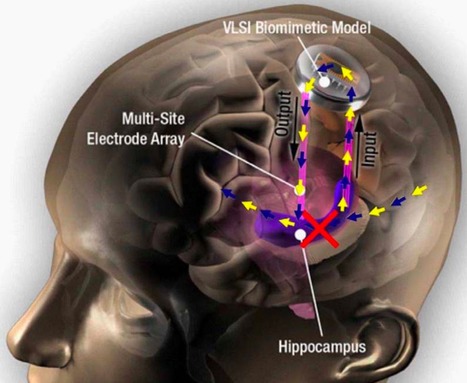
Scientists at Wake Forest Baptist Medical Center and the University of Southern California (USC) Viterbi School of Engineering have demonstrated a neural prosthetic system that can improve a memory by “writing” information “codes” (based on a patient’s specific memory patterns) into the hippocampus of human subjects via an electrode implanted in the hippocampus (a part of the brain involved in making new memories). In this pilot study, described in a paper published in Journal of Neural Engineering, epilepsy patients’ short-term memory performance showed a 35 to 37 percent improvement over baseline measurements, as shown in this video. The research, funded by the U.S. Defense Advanced Research Projects Agency (DARPA), offers evidence supporting pioneering research by USC scientist Theodore Berger, Ph.D. (a co-author of the paper), on an electronic system for restoring memory in rats (reported on KurzweilAI in 2011). “This is the first time scientists have been able to identify a patient’s own brain-cell code or pattern for memory and, in essence, ‘write in’ that code to make existing memory work better — an important first step in potentially restoring memory loss,” said the paper’s lead author Robert Hampson, Ph.D., professor of physiology/pharmacology and neurology at Wake Forest Baptist. The study focused on improving episodic memory (information that is new and useful for a short period of time, such as where you parked your car on any given day) — the most common type of memory loss in people with Alzheimer’s disease, stroke, and head injury. The researchers enrolled epilepsy patients at Wake Forest Baptist who were participating in a diagnostic brain-mapping procedure that used surgically implanted electrodes placed in various parts of the brain to pinpoint the origin of the patients’ seizures. Developing a hippocampal neural prosthetic to facilitate human memory encoding and recall.
|
|
Scooped by
Dr. Stefan Gruenwald
April 4, 2018 3:17 PM
|
The objective of the proposed work is to increase the set of possible exploration and science missions on Mars by investigating the feasibility of flapping wing aerospace architectures in a Martian environment. The proposed architecture consists of a Mars rover that serves as a mobile base and a swarm of Marsbees. Marsbees are robotic flapping wing flyers of a bumblebee size with cicada sized wings. The Marsbees are integrated with sensors and wireless communication devices. The mobile base can act as a recharging station and main communication center. The swarm of Marsbee can significantly enhance the Mars exploration mission with the following benefits: i) Facilitating reconfigurable sensor networks; ii) Creation of resilient systems; iii) Sample or data collection using single or collaborative Marsbees. This technical innovation includes the use of insect-like compliant wings to enhance aerodynamics and a low power design. High lift coefficients will be achieved by properly achieving dynamic similarity between the bioinspired insect flight regime and the Mars environment. Our preliminary numerical results suggest that a bumblebee with a cicada wing can generate sufficient lift to hover in the Martian atmosphere. Moreover, the power required by the Marsbee will be substantially reduced by utilizing compliant wing structures and an innovative energy harvesting mechanism. Because of the ultra-low Martian density, the power is dominated by the inertial power. A torsional spring mounted at the wing root to temporarily store otherwise wasted energy and reduce the overall inertial power at resonance. Whereas rotary wing concepts are much more mature in both design and control, these two innovations are uniquely suited to bioinspired flapping vehicles and provide flying near the Martian terrain as a viable means of mobility. From a systems engineering perspective, the Marsbee offers many benefits over traditional aerospace systems. The smaller volume, designed for the interplanetary spacecraft payload configuration, provides much more flexibility. Also, the Marsbee inherently offers more robustness to individual system failures. Because of its relatively small size and the small volume of airspace needed to test the system, it can be validated in a variety of accessible testing facilities. The proposed work combines expertise and talent from the US and Japan in a multidisciplinary program to address fundamental aspects of flapping wing flight in Martian atmosphere. The University of Alabama in Huntsville team will numerically model, analyze, and optimize a flapping flyer for Martian atmospheric conditions. The Japanese team will develop and test a micro flapping robot, uniquely designed and constructed for the low-density atmosphere on Mars. The hummingbird Micro-Air Vehicle (MAV), developed by the Japanese team is one of only a few robotic flappers in the world that can fly on Earth.
|
|
Scooped by
Dr. Stefan Gruenwald
April 3, 2018 6:47 PM
|
For the first time, astronomers have identified a ghostly galaxy that seems to contain very little, if any, dark matter. Dark matter is one of the most important — yet least understood — building blocks of our universe. This gravitationally inferred, but optically elusive type of matter is thought to account for 85 percent of the universe’s mass and is believed to form the underlying foundations upon which all galaxies are built. But in a study published March 28 in the journal Nature, a team of astronomers uncovered the first galaxy ever found to be lacking any significant amount of dark matter.
“We thought that every galaxy had dark matter and that dark matter is how a galaxy begins,” said lead author Pieter van Dokkum, an astrophysicist at Yale University, in a press release. “This invisible, mysterious substance is the most dominant aspect of any galaxy. So finding a galaxy without it is unexpected. It challenges the standard ideas of how we think galaxies work, and it shows that dark matter is real: it has its own separate existence apart from other components of galaxies.”
The oddball galaxy in question, NGC1052-DF2 (or DF2 for short), is a small galaxy in a collection of galaxies dominated by the much larger elliptical NGC 1052. The relatively innocuous galaxy DF2 only stood out to the researchers when they noticed it appeared differently in images taken by the Dragonfly Telephoto Array and those taken by the Sloan Digital Sky Survey (SDSS). In the Dragonfly images, DF2 looked like a blob of dim and diffuse light, but in the SDSS images, it appeared as a group of point-like sources.
To investigate, the team observed DF2 using the Advanced Camera for Surveys on the Hubble Space Telescope (HST) and performed follow-up spectroscopic observations with the 10-meter W.M. Keck Observatory. “I spent an hour just staring at the Hubble image,” said van Dokkum. “It’s so rare, particularly these days after so many years of Hubble, that you get an image of something and you say, ‘I’ve never seen that before.’ This thing is astonishing: a gigantic blob that you can look through. It’s so sparse that you see all of the galaxies behind it. It is literally a see-through galaxy.” Using the Hubble data, the researchers were able to determine that DF2, which they consider an ultra-diffuse galaxy due to its large size and transparent appearance, is located about 65 million light-years away. Although the galaxy is about as large as the Milky Way, they found it contains 200 times fewer stars.
|
|
Scooped by
Dr. Stefan Gruenwald
April 3, 2018 6:42 PM
|
The nanoscale structure of a chicken eggshell changes to fulfill different functions as the egg incubates. A chicken eggshell has a tricky job: It must protect a developing chick, but then ultimately let the chick break free. The secret to its success lies in its complex nanostructure — and how that structure changes as the egg incubates. Chicken eggshells are about 95 percent calcium carbonate by mass. But they also contain hundreds of different kinds of proteins that influence how that calcium carbonate crystalizes. The interaction between the mineral crystals and the proteins yields an eggshell that’s initially crack-resistant, while making nanoscale adjustments over time that ultimately let a chick peck its way out, researchers report online March 30 in Science Advances. Researchers used a beam of ions to cut thin cross sections in chicken eggshells. They then analyzed the shells with electron microscopy and other high-resolution imaging techniques. The team found that proteins disrupt the crystallization of calcium carbonate, so that what seems at low resolution to be neatly aligned crystals is actually a more fragmented jumble. This misalignment can make materials more resilient: Instead of spreading unimpeded, a crack must zig and zag through scrambled crystals.
|
|
Scooped by
Dr. Stefan Gruenwald
April 3, 2018 2:26 PM
|
It has puzzled scientists for over 100 years but now they appear to have cracked it: what, exactly, is it that causes that wince-inducing sound when you pop your knuckles? ove it or loathe it, knuckle-cracking is very common. Earlier studies have established that not all joints can be cracked, and that—for that those that can—the act can't be repeated for another 20 minutes. But the source of the sound remained a mystery. And "popping", it turns out, is exactly what it is, researchers said on Thursday after finding that the distinctive cracking sound was caused by the collapse of microscopic bubbles of joint fluid in the hand. Using a mathematical model alongside a geometrical representation of the joint, experts from Paris' Ecole Polytechnique and Stanford University in the United States simulated the events leading up to the crack.
|
|
Scooped by
Dr. Stefan Gruenwald
March 28, 2018 11:43 AM
|
Single-cell RNA sequencing (scRNA-seq) is currently transforming our understanding of biology, as it is a powerful tool to resolve cellular heterogeneity and molecular networks. Over 50 protocols have been developed in recent years and also data processing and analyzes tools are evolving fast. Here, a group of scientists review the basic principles underlying the different experimental protocols and how to benchmark them. They also review and compare the essential methods to process scRNA-seq data from mapping, filtering, normalization and batch corrections to basic differential expression analysis.
|
|
|
Scooped by
Dr. Stefan Gruenwald
April 12, 2018 12:46 PM
|
Scientists from RMIT University in Australia and Wuhan Institute of Technology in China have developed a radical new high-capacity optical disc called “nano-optical long-data memory” that they say can record and store 10 TB (terabytes, or trillions of bytes) of data per disc securely for more than 600 years. That’s a four-times increase of storage density and 300 times increase in data lifespan over current storage technology. According to IDC’s Data Age 2025 study in 2017, the recent explosion of Big Data and global cloud storage generates 2.5 PB (1015 bytes) a day, stored in massive, power-hungry data centers that use 3 percent of the world’s electricity supply. The data centers rely on hard disks, which have limited capacity (2TB per disk) and last only two years. IDC forecasts that by 2025, the global datasphere will grow exponentially to 163 zettabytes (that’s 163 trillion gigabytes) — ten times the 16.1ZB of data generated in 2016. Examples of massive Long Data: - The Square Kilometer Array (SKA) radio telescope produces 576 petabytes of raw data per hour.
- The Brain Research through Advancing Innovative Neurotechnologies (BRAIN) Initiative to map the human brain is handling data measured in yottabytes (one trillion terabytes).
- Studying the mutation of just one human family tree over ten generations (500 years) will require 8 terabytes of data.
IDC estimates that by 2025, nearly 20% of the data in the global datasphere will be critical to our daily lives (such as biomedical data) and nearly 10% of that will be hypercritical. “By 2025, an average connected person anywhere in the world will interact with connected devices nearly 4,800 times per day — basically one interaction every 18 seconds,” the study estimates.
|
|
Scooped by
Dr. Stefan Gruenwald
April 12, 2018 12:42 PM
|
MIT researchers have invented a system that allows someone to communicate silently and privately with a computer or the internet by simply thinking — without requiring any facial muscle movement. The AlterEgo system consists of a wearable device with electrodes that pick up otherwise undetectable neuromuscular subvocalizations — saying words “in your head” in natural language. The signals are fed to a neural network that is trained to identify subvocalized words from these signals. Bone-conduction headphones also transmit vibrations through the bones of the face to the inner ear to convey information to the user — privately and without interrupting a conversation. The device connects wirelessly to any external computing device via Bluetooth. A silent, discreet, bidirectional conversation with machines “Our idea was: Could we have a computing platform that’s more internal, that melds human and machine in some ways and that feels like an internal extension of our own cognition?,” says Arnav Kapur, a graduate student at the MIT Media Lab who led the development of the new system. Kapur is first author on an open-access paper on the research presented in March at the IUI ’18 23rd International Conference on Intelligent User Interfaces. In one of the researchers’ experiments, subjects used the system to silently report opponents’ moves in a chess game and silently receive recommended moves from a chess-playing computer program. In another experiment, subjects were able to undetectably answer difficult computational problems, such as the square root of large numbers or obscure facts. The researchers achieved 92% median word accuracy levels, which is expected to improve. “I think we’ll achieve full conversation someday,” Kapur said.
|
|
Scooped by
Dr. Stefan Gruenwald
April 11, 2018 11:39 PM
|
It seems that the intricacies of technology are only speeding up, and every day we get closer to the sci-fi future predicted in so many novels and movies. In a recent video from Google, we got a look into what that future might look like. Google introduced a new product called Project Soli, which uses radar technology to detect movements to such a detailed degree that you can use subtle finger movements to control it. The technology can capture 10,000 frames per second, an unprecedented level of information processing to be put into such a small chip. "What is most exciting about it is that you can shrink the entire radar and put it into a tiny chip," Ivan Poupyrev, Project Soli Founder, said in a YouTube video. "That's what makes this approach so promising: it's extremely reliable. There is nothing to break, no moving part, no lenses, just a piece of sand on a board." The video is here
|
|
Scooped by
Dr. Stefan Gruenwald
April 10, 2018 11:51 AM
|
When you plug in an appliance or flip on a light switch, electricity seems to flow instantly through wires in the wall. But in fact, the electricity is carried by tiny particles called electrons that slowly drift through the wires. On their journey, electrons occasionally bump into the material's atoms, giving up some energy with every collision. The degree to which electrons travel unhindered determines how well a material can conduct electricity. Environmental changes can enhance conductivity, in some cases drastically. For example, when certain materials are cooled to frigid temperatures, electrons team up so they can flow uninhibited, without losing any energy at all—a phenomenon called superconductivity. Now a team of researchers from the University of Maryland (UMD) Department of Physics together with collaborators has seen exotic superconductivity that relies on highly unusual electron interactions. While predicted to occur in other non-material systems, this type of behavior has remained elusive. The team's research, published in the April 6 issue of Science Advances, reveals effects that are profoundly different from anything that has been seen before with superconductivity. Electron interactions in superconductors are dictated by a quantum property called spin. In an ordinary superconductor, electrons, which carry a spin of ½, pair up and flow uninhibited with the help of vibrations in the atomic structure. This theory is well-tested and can describe the behavior of most superconductors. In this new research, the team uncovers evidence for a new type of superconductivity in the material YPtBi, one that seems to arise from spin-3/2 particles. "No one had really thought that this was possible in solid materials," explains Johnpierre Paglione, a UMD physics professor and senior author on the study. "High-spin states in individual atoms are possible but once you put the atoms together in a solid, these states usually break apart and you end up with spin one-half." Finding that YPtBi was a superconductor surprised the researchers in the first place. Most superconductors start out as reasonably good conductors, with a lot of mobile electrons—an ingredient that YPtBi is lacking. According to the conventional theory, YPtBi would need about a thousand times more mobile electrons in order to become superconducting at temperatures below 0.8 Kelvin. And yet, upon cooling the material to this temperature, the team saw superconductivity happen anyway. This was a first sign that something exotic was going on inside this material.
Nissan unveiled research today that will enable vehicles to interpret signals from the driver’s brain, redefining how people interact with their cars. The company’s Brain-to-Vehicle, or B2V, technology promises to speed up reaction times for drivers and will lead to cars that keep adapting to make driving more enjoyable. Nissan will demonstrate capabilities of this exclusive technology at the CES 2018 trade show in Las Vegas. B2V is the latest development in Nissan Intelligent Mobility, the company’s vision for transforming how cars are driven, powered and integrated into society. “When most people think about autonomous driving, they have a very impersonal vision of the future, where humans relinquish control to the machines. Yet B2V technology does the opposite, by using signals from their own brain to make the drive even more exciting and enjoyable,” said Nissan Executive Vice President Daniele Schillaci. “Through Nissan Intelligent Mobility, we are moving people to a better world by delivering more autonomy, more electrification and more connectivity.” This breakthrough from Nissan is the result of research into using brain decoding technology to predict a driver’s actions and detect discomfort: - Predict: By catching signs that the driver’s brain is about to initiate a movement – such as turning the steering wheel or pushing the accelerator pedal – driver assist technologies can begin the action more quickly. This can improve reaction times and enhance manual driving.
- Detect: By detecting and evaluating driver discomfort, artificial intelligence can change the driving configuration or driving style when in autonomous mode.
Other possible uses include adjusting the vehicle’s internal environment, said Dr. Lucian Gheorghe, senior innovation researcher at the Nissan Research Center in Japan, who’s leading the B2V research. For example, the technology can use augmented reality to adjust what the driver sees and create a more relaxing environment. “The potential applications of the technology are incredible,” Gheorghe said. “This research will be a catalyst for more Nissan innovation inside our vehicles in the years to come.”
Via Daniel Perez-Marcos
|
|
Scooped by
Dr. Stefan Gruenwald
April 8, 2018 1:14 AM
|
There is no doubt that as the technology improves, autonomous weapons will be highly effective. But does that necessarily mean they’re a good idea? Imagine turning on the TV and seeing footage from a distant urban battlefield, where robots are hunting down and killing unarmed children. It might sound like science fiction – a scene from Terminator, perhaps. But unless we take action soon, lethal autonomous weapons systems – robotic weapons that can locate, select and attack human targets without human intervention – could be a reality. Many people are worried about a future of “killer robots”. In July 2016, over 3,000 engineers and scientist in artificial intelligence and robotics research – including many members of the Forum’s Global Agenda Council on Artificial Intelligence and Robotics – signed an open letter calling for a treaty to ban lethal autonomous weapons. They were joined by another 17,000 signatories from fields as diverse as physics, philosophy and law, including Stephen Hawking, Elon Musk, Steve Wozniak and Noam Chomsky. The letter made headlines around the world, with more than 2,000 media articles in over 50 countries. So what is the debate about? We’re all familiar, in varying degrees, with three pieces of modern technology: - The self-driving car: You tell it where to go and it chooses a route and does all the driving, “seeing” the road through its onboard camera.
- Chess software: You tell it to win and it chooses where to move its pieces and which enemy pieces to capture.
- The armed drone: You fly it remotely through a video link, you choose the target, and you launch the missile.
A lethal autonomous weapon might combine elements of all three: imagine that instead of a human controlling the armed drone, the chess software does, making its own tactical decisions and using vision technology from the self-driving car to navigate and recognize targets. In the UK – one of at least six states researching, developing and testing fully autonomous weapons – the Ministry of Defence has said that such weapons are probably feasible now for some aerial and naval scenarios. Two programs from the US Defense Advanced Research Project Agency (DARPA) already provide clues as to how autonomous weapons might be used in urban settings. The Fast Lightweight Autonomy program will see tiny rotorcraft maneuver unaided at high speed in urban areas and inside buildings. The Collaborative Operations in Denied Environment program plans to create teams of autonomous aerial vehicles that could carry out every step of a strike mission in situations where enemy jamming makes communication with a human commander impossible. In a press release describing the program, DARPA memorably compared it to “wolves hunting in coordinated packs”. Robots of mass destruction The primary strategic impact of autonomous weapons lies not so much in combat superiority compared to manned systems and human soldiers, but in their scalability. A system is scalable if one can increase its impact just by having lots more of it; for example, as we scale nuclear bombs from tons to kilotons to megatons, they have much more impact. We call them weapons of mass destruction for a good reason. Kalashnikovs are not scalable in the same sense. A million Kalashnikovs can kill an awful lot of people, but only if carried by a million soldiers, who require a huge military-industrial complex to support them – essentially a whole nation-state. A million autonomous weapons, on the other hand, need just a few people to acquire and program them – no human pilots, no support personnel, no medical corps. Such devices will form a new, scalable class of weapons of mass destruction with destabilizing properties similar to those of biological weapons: they tip the balance of power away from legitimate states and towards terrorists, criminal organizations, and other non-state actors. Finally, they are well suited for repression, being immune to bribery or pleas for mercy. Autonomous weapons, unlike conventional weapons, could also lead to strategic instability. Autonomous weapons in conflict with other autonomous weapons must adapt their behavior quickly, or else their predictability leads to defeat. This adaptability is necessary but makes autonomous weapons intrinsically unpredictable and hence difficult to control. Moreover, the strategic balance between robot-armed countries can change overnight thanks to software updates or cybersecurity penetration. Finally, many military analysts worry about the possibility of an accidental war – a military “flash crash”. The UN has already held several meetings in Geneva to discuss the possibility of a treaty governing autonomous weapons. Ironing out the details of a treaty will be quite a challenge, though not impossible. Perhaps more complicated are the issues of treaty verification and diversion of dual-use technology. Experience with the Biological and Chemical Weapons Conventions suggests that transparency and industry cooperation will be crucial. The pace of technological advances in the area of autonomy seems to be somewhat faster than the typical process of creating arms-control treaties – some of which have been many decades in development. The process at present is balanced on a knife-edge: while many nations have expressed strong reservations about autonomous weapons, others are pressing ahead with research and development. International discussions over the next 12 to 18 months will be crucial. Time is of the essence.
|
|
Rescooped by
Dr. Stefan Gruenwald
from Geology
April 4, 2018 4:13 PM
|
In the first fractions of a second after the birth of our universe, not only elementary particles and radiation, but also magnetic fields were generated. A team led by the Max Planck Institute for Astrophysics in Garching has now calculated what these magnetic fields should look like today in the universe – in great detail and in 3D. The Big Bang is still shrouded in mystery in many respects. Cosmologists use various ways to try and get information about the first moments of our universe. One possibility are cosmic magnetic fields, which were created by the birth of the universe and should have survived to this day. In addition to a number of highly speculative mechanisms, which have been proposed for this so-called magnetogenesis, there is a simple plasma-physical effect: the Harrison effect. This must have produced magnetic fields at the Big Bang. Vortex movements in the plasma of the early universe produced electric currents due to friction, thus inducing a magnetic field. Knowing the plasma vortices at that early time, one could calculate in detail how these magnetic fields were generated. If one also knew the plasma motions since then, one could calculate what these magnetic fields should look like today.
Via Dr. Catherine Russell
|
|
Scooped by
Dr. Stefan Gruenwald
April 4, 2018 3:22 PM
|
A commonly used anti-parasite drug could be the next weapon in the fight against malaria. Researchers from Kenya and the United Kingdom report that dosing people with ivermectin, commonly used in heartworm pills, makes them deadly targets for the mosquitoes that transmit malaria. Nearly all of the mosquitoes in the experiment died after drinking ivermectin-laced blood, they say. While malaria rates have been dropping historically, the disease still afflicts over 200 million people a year, mostly in the developing world, and was responsible for nearly half a million deaths in 2015, according to the WHO. And there are worries that resistance to artemisinin, the drug of choice for combating malaria, could continue to spread beyond southeast Asia, where most resistant strains are currently found. Ivermectin could be another solution, and one that’s easily applicable given the prevalence of the drug. In the study, published last month in The Lancet, the researchers gave 47 malaria patients 600-milligram doses of ivermectin for three consecutive days. That’s around three times the normal dose, but the drug possesses few side effects, and had already been shown to be deadly to mosquitoes when in the bloodstream. After feeding blood from the patients to mosquitoes, the researchers report that 97 percent of the blood-suckers died after two weeks, and the blood remained deadly for up to 28 days. The patients, meanwhile reported little in the way of side effects. A separate group of patients received doses of 300 mg per day, but the mosquito-killing effect wasn’t as strong. It remains to be seen how safe the drug is for children at such high doses, and the authors do note that their participants were all malaria patients, so the effects could differ in healthy people. And worries of drug resistance could hound ivermectin as well — if it begins to see widespread use, mosquitoes may begin to evolve immunity. Further studies will be needed, NPRreports, and would likely be only part of an effective campaign to eradicate malaria.
|
|
Scooped by
Dr. Stefan Gruenwald
April 4, 2018 3:13 PM
|
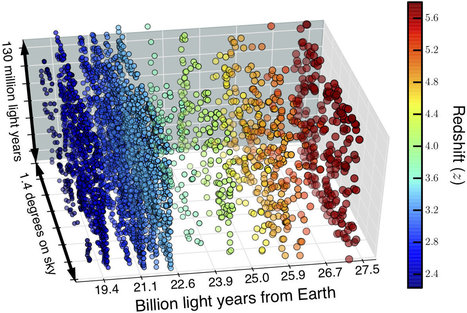
Astronomers today announce one of the largest 3D maps of the infant Universe, in a presentation at the European Week of Astronomy and Space Science in Liverpool. A team led by Dr David Sobral of Lancaster University made the chart using the Subaru telescope in Hawaii and the Isaac Newton telescope in the Canary Islands. Looking back in time to 16 different epochs between 11 and 13 billion years ago, the researchers discovered almost 4000 early galaxies, many of which will have evolved into galaxies like our own Milky Way. Light from the most distant galaxies takes billions of years to reach us. This means that telescopes act as time machines, allowing astronomers to see galaxies in the distant past. The light from these galaxies is also stretched by the expansion of the Universe, increasing its wavelength to make it redder. This so-called redshift is related to the distance of the galaxy. By measuring the redshift of a galaxy, astronomers can thus deduce its distance, how long its light has taken to reach us and hence how far back in time we are seeing it. In the new work the team used filters to sample particular wavelengths of light, and hence specific epochs in the history of the Universe. Sergio Santos, a Lancaster PhD student and team member, comments: "We used large amounts of data taken with 16 special filters on wide field cameras and processed them here in Lancaster to literally slice the Universe in cosmic time and time-travel to the distant past with 16 well defined cosmic time destinations." Dr Sobral adds: "These early galaxies seem to have gone through many more "bursts" when they formed stars, instead of forming them at a relatively steady rate like our own galaxy. Additionally, they seem to have a population of young stars that is hotter, bluer and more metal-poor than those we see today."
|
|
Scooped by
Dr. Stefan Gruenwald
April 3, 2018 6:45 PM
|
The blistering blue star, which existed almost 10 billion years ago, was imaged thanks to a chance alignment that magnified it by a factor of at least 2,000. In a study published today in Nature Astronomy, an international team of researchers announced the discovery of the most distant star ever observed. The team detected the blue supergiant star — which shone when the universe was just one-third its current age — with the help of both the Hubble Space Telescope and an observational phenomenon known as gravitational lensing.
“This is the first time we’re seeing a magnified, individual star,” said Patrick Kelly, an astrophysicist of the University of Minnesota and lead author of the new study, in a press release. “You can see individual galaxies out there, but this star is at least 100 times farther away than the next individual star we can study, except for supernova explosions.” The unique discovery not only provides astronomers with insight into the formation and evolution of stars in the early universe, but also the composition of galaxy clusters, and even the very nature of dark matter itself.
The light from the record-breaking star, which the team has since nicknamed Icarus, was emitted just 4.4 billion years after the Big Bang. Although the star was undoubtedly bright, being located at such a great distance away would have typically made it impossible to view, even with our most powerful telescopes. Fortunately, “the star became bright enough to be visible for Hubble thanks to a process called gravitational lensing,” said co-author Jose Diego, an astronomer from the Instituto de Física de Cantabria, in a press release.
|
|
Scooped by
Dr. Stefan Gruenwald
April 3, 2018 6:29 PM
|
Birds can sense Earth’s magnetic field, and this uncanny ability may help them fly home from unfamiliar places or navigate migrations that span tens of thousands of kilometers. For decades, researchers thought iron-rich cells in birds’ beaks acted as microscopic compasses (SN: 5/19/12, p. 8). But in recent years, scientists have found increasing evidence that certain proteins in birds’ eyes might be what allows them to see magnetic fields (SN: 10/28/09, p. 12). Scientists have now pinpointed a possible protein behind this “sixth sense.” Two new studies — oneexamining zebra finches published March 28 in Journal of the Royal Society Interface, the other looking at European robins published January 22 in Current Biology — both single out Cry4, a light-sensitive protein found in the retina. If the researchers are correct, this would be the first time a specific molecule responsible for the detection of magnetic fields has been identified in animals. Cry4 is part of a class of proteins called cryptochromes, which are known to be involved in circadian rhythms, or biological sleep cycles (SN: 10/02/17, p. 6). But at least some of these proteins are also thought to react to Earth’s magnetic field thanks to the weirdness of quantum mechanics (SN: 7/23/16, p. 8). The protein’s quantum interactions could help birds sense this field, says Atticus Pinzon-Rodriguez, a biologist at the University of Lund in Sweden who was involved with the zebra finch study. To figure out which of three cryptochromes is responsible for this quantum compass, Pinzon-Rodriguez and his colleagues examined the retinas, muscles and brains of 39 zebra finches for the presence of the three proteins Cry1, Cry2 and Cry4. The team found that while levels of Cry1 and Cry2 followed a rhythmic pattern that rose and fell over the day, Cry4 levels remained constant, indicating the protein was being produced steadily. “We assume that birds use magnetic compasses any time of day or night,” says Lund biologist Rachel Muheim, a coauthor on the zebra finch study. European robins also showed constant levels of Cry4 during a 24-hour cycle, and higher levels during their migratory season. And the researchers in that study found Cry4 in an area of the robin’s retina that receives a lot of light — a position that would help it work as a compass, the study says. “We have quite a lot of evidence, but Cry4 is not proven,” says Henrik Mouritsen, an animal navigation expert at the Institute of Biology and Environmental Sciences in Oldenburg, Germany, who participated in the robin study. More definitive evidence might come from observing birds without a functioning Cry4 protein, to see if they still seem to have an internal compass.
|
|
Scooped by
Dr. Stefan Gruenwald
March 28, 2018 11:47 AM
|
True artificial intelligence is on its way, and we aren’t ready for it. Just as our forefathers had trouble visualizing everything from the modern car to the birth of the computer, it’s difficult for most people to imagine how much truly intelligent technology could change our lives as soon as the next decade — and how much we stand to lose if AI goes out of our control. Fortunately, there’s a league of individuals working to ensure that the birth of artificial intelligence isn’t the death of humanity. From Max Tegmark’s Future of Life Institute to the Harvard Kennedy School of Government’s Future Society, the world’s most renowned experts are joining forces to tackle one of the most disruptive technological advancements (and greatest threats) humanity will ever face. Perhaps the most famous organization to be born from this existential threat is OpenAI. It’s backed by some of the most respected names in the industry: Elon Musk, the SpaceX billionaire who founded Open AI, but departed the board this yearto avoid conflicts of interest with Tesla; Sam Altman, the president of Y Combinator; and Peter Thiel, of PayPal fame, just to name a few. If anyone has a chance at securing the future of humanity, it’s OpenAI. But there’s a problem. When it comes to creating safe AI and regulating this technology, these great minds have little clue what they’re doing. They don’t even know where to begin.
|