Your new post is loading...

|
Scooped by
Dr. Stefan Gruenwald
April 13, 2018 5:15 PM
|
How old is the oldest human language? It’s tough to say. Using linguistic analysis and statistics, scientists from the Max Planck Institute have estimated the date of the Dravidian family of languages on the southern parts of India at 4,500 years old. Phys.org reports that Dravidians were present a thousand years before Indo-Aryans arrived in India. 80 derived dialects of the ancient language family are still spoken today by some 220 million people. On the one hand, they wish to think that our equals ‘evolved’ over 300,000 years ago, and soon after that migrated into Europe and Asia. Also, when they got there, they had no trouble interbreeding with the Neanderthals. But then, at the other extreme, one of the oldest language groups dates back no more than 4,500 years ago. What did people like us do for 295,000 years? “The study of the Dravidian languages is crucial for understanding prehistory in Eurasia, as they played a significant role in influencing other language groups,” explains corresponding author Annemarie Verkerk of the Max Planck Institute for the Science of Human History. Neither the geographical origin of the Dravidian language nor its exact dispersal through time is known with certainty. The consensus of the research community is that the Dravidians are natives of the Indian subcontinent and were present prior to the arrival of the Indo-Aryans (Indo-European speakers) in India around 3,500 years ago. It is likely that the Dravidian languages were much more widespread to the west in the past than they are today. The estimate appears to be on the high side, pushing back the language earlier than previously thought, but not more than 4,500 years in total. The researchers used advanced statistical methods to infer the age and subgrouping of the Dravidian language family at about 4,000-4,500 years old. This estimate, while in line with suggestions from previous linguistic studies, is a more robust result because it was found consistently in the majority of the different statistical models of evolution tested in this study. This age also matches well with inferences from archaeology, which have previously placed the diversification of Dravidian into North, Central, and South branches at exactly this age, coinciding with the beginnings of cultural developments evident in the archaeological record.
|
|
Rescooped by
Dr. Stefan Gruenwald
from Geology
April 13, 2018 5:08 PM
|
Mapping minerals from space was one of the main motivating reasons for creating the earliest multispectral satellite systems such as the Landsat satellites when they were launched in 1972. More modern systems, including the recent Landsat 8,Sentinel-2, and ASTER, have improved upon this endeavor by giving more accurate readings at higher resolutions. Using spectral response functions along with pixel aggregate has shown that the Sentinel-2 satellite compares favorably to maps created by ASTER, which since the early 2000s had become among the leading multispectral satellite systems for geological mapping. In particular, shortwave infrared (SWIR; 0.9-1.7 microns for wavelength) and visible and near-infrared bands (VNIR; 0.36-1.05 microns for wavelength) show comparable results in detecting iron. In 2000, NASA had launched its Hyperion system, which covers 0.4-2.5/spi mu/m spectral range with 242 bands. While hyperspectral imagery has been established with aircraft systems, where the wide band coverage means that many types of minerals could potentially be differentiated more easily, this type of system was not used on satellites. Hyperion was NASA’s way of testing the utility of hyperspectral satellite imagery for various applications. Because of the increased band coverage, what has been useful about Hyperion is that it does provide capabilities to detect a wide variety of minerals, comparable to some extent to some aircraft systems. Minerals such as carbonates, chlorite, epidote, kaolinite, alunite, buddingtonite, muscovite, hydrothermal silica, and zeolite are evident using different bands from the system. In many regions, the most common surface minerals are found within clays. This has required new techniques to be made to utilize satellite systems to better map types of clays and minerals found within. Using SWIR and thermal infrared (TIR) bands, it has become possible to differentiate clay types that include illite from montmorillonite clays. This can have important implications for agricultural areas or areas that have greater or worse water retention, including groundwater deposits, due to clay and mineral types found affecting water deposits. Variation in the clay signatures could also be potentially used to monitor erosion activities, including wind and water erosion that affects surfaces.
Via Dr. Catherine Russell
|
|
Scooped by
Dr. Stefan Gruenwald
April 13, 2018 2:57 PM
|
Repair of damaged DNA is essential for maintaining genome integrity and for preventing genome-instability-associated diseases, such as cancer. By combining proximity labeling with quantitative mass spectrometry, we generated high-resolution interaction neighborhood maps of the endogenously expressed DNA repair factors 53BP1, BRCA1, and MDC1. New spatially resolved interaction maps reveal rich network intricacies, identify shared and bait-specific interaction modules, and implicate previously concealed regulators in this process. A research group now identified a novel vertebrate-specific protein complex, shieldin, comprising REV7 plus three previously uncharacterized proteins, RINN1 (CTC-534A2.2), RINN2 (FAM35A), and RINN3 (C20ORF196). Recruitment of shieldin to DSBs, via the ATM-RNF8-RNF168-53BP1-RIF1 axis, promotes NHEJ-dependent repair of intrachromosomal breaks, immunoglobulin class-switch recombination (CSR), and fusion of unprotected telomeres. Shieldin functions as a downstream effector of 53BP1-RIF1 in restraining DNA end resection and in sensitizing BRCA1-deficient cells to PARP inhibitors. These findings have implications for understanding cancer-associated PARPi resistance and the evolution of antibody CSR in higher vertebrates. SHIELDIN (CTC-534A2.2 + FAM35A + C20ORF196) as a new complex promoting DNA_repair by NHEJ. Paper is here: https://goo.gl/c9ix1a
|
|
Scooped by
Dr. Stefan Gruenwald
April 13, 2018 2:19 PM
|
“That's odd” must be a scientist's favourite phrase: a set of images of a distant supernova has shown off a phenomenon first predicted more than 50 years ago in 1964. The supernova was spotted in Hubble images by Dr Patrick Kelly of Berkeley while searching for distant galaxies – and because of the effect of gravitational lensing, it appears not once, but four times – apparently at different places and (slightly) different times. It's just the one supernova, however: the huge gravity of the MACS J1149.6+2223 cluster has bent light to make the supernova appear in a configuration referred to as “an Einstein cross”. The observation gave astroboffins a yardstick with which they can measure a bunch of different assumptions about the state of the Universe when the star exploded: the Theory of Relativity, the strength of gravity at the time, dark matter, and dark energy. It's not four supernova, it's one through a gravity lens, in an "Einstein cross" configuration. Gravitational lensing was first predicted by Einstein: the presence of enough mass, he reasoned, would bend light passing an object. As the paper, published in Science, explains, in 1964, Norwegian astronomer Sjur Refsdal, theorised about how this could be observed. Dr Brad Tucker, part of the team that wrote the paper, explained to The Register that Refsdal's idea was to use “time-delayed images from a lensed supernova to study the expansion of the universe”. The paper explains this is the first time the phenomenon has been spotted: “Many decades of transient searches, however, have not identified an example of a SN visible at multiple positions around a gravitational lens”, it states.
|
|
Scooped by
Dr. Stefan Gruenwald
April 13, 2018 1:54 PM
|
In February of 2017, the world was astounded to learn that astronomers – using data from theTRAPPIST telescope in Chile and the Spitzer Space Telescope – had identified a system of seven rocky exoplanets in the TRAPPIST-1 system. As if this wasn’t encouraging enough for exoplanet-enthusiasts, it was also indicated that three of the seven planets orbited within the stars’ circumstellar habitable zone (aka. “Goldilocks Zone”). Since that time, this system has been the focus of considerable research and follow-up surveys to determine whether or not any of its planets could be habitable. Intrinsic to these studies has been the question whether or not the planets have liquid water on their surfaces. But according to a new studyby a team of American astronomers, the TRAPPIST planets may actually have too much water to support life. The study, titled “Inward Migration of the TRAPPIST-1 Planets as Inferred From Their Water-Rich Compositions“, recently appeared in the journal Nature Astronomy. The study was led by Cayman T. Unterborn, a geologist with the School of Earth and Space Exploration (SESE), and included Steven J. Desch, Alejandro Lorenzo (also from the SESE) and Natalie R. Hinkel – an astrophysicists from Vanderbilt University, Nashville.
|
|
Scooped by
Dr. Stefan Gruenwald
April 13, 2018 1:24 PM
|
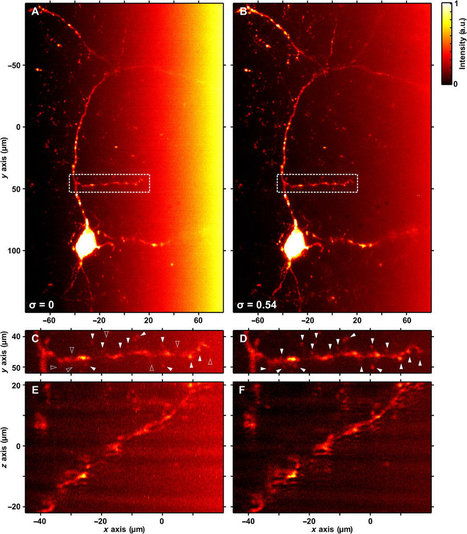
A new method of using light to scan the human body, developed by researchers at the University of St Andrews, could result in less intrusive and more effective diagnosis for patients. The work is the result of a collaboration between researchers from the Schools of Physics and Astronomy, Biology, Medicine and the Scottish Oceans Institute at the University. The new technique allows the light to be shaped so it can reach greater depths within biological tissue enabling high quality three-dimensional (3-D) images to be acquired. It can also allow detailed 3-D images of biological specimens to be made without dissection or having to rotate specimens and take multiple images which are then fused together. Published in the journal Science Advances, the research shows that the new method adds value to two existing imaging techniques—Bessel beam based light-sheet microscopy and Airy beam based light-sheet microscopy. Dr. Jonathan Nylk of the School of Physics and Astronomy said: "We've recently discovered particular beam shapes that retain their shape when traveling through biological tissue. These beams, called Airy beams and Bessel beams resist the effects of scattering but they still become dimmer as they travel deeper, so it remains challenging to collect enough signal back through the tissue to form an image. "Now we show that these beams can be further enhanced to give us more control over their shape, such that they actually get brighter as they travel (propagate). When the increase in brightness (intensity) is matched with the decrease in brightness (intensity) when travelling through tissue, a strong signal and a clear image can still be acquired from deep within the sample." This latest research builds on previous advances in "light-sheet imaging", in which a thin sheet of light cuts across the sample like a razor blade to section the sample – but without actually cutting or damaging it. The use of curved Airy light-sheets was shown to give sharp images over a volume ten times larger than previously possible.
|
|
Scooped by
Dr. Stefan Gruenwald
April 13, 2018 1:19 PM
|
Among the most recent JunoCam images released by NASA is an intricate, color-enhanced photo of Jupiter’s cloud tops taken April 1, 2018, that has the appearance of a watercolor painting. A closeup of the northern hemisphere’s swirling blue and purple cloud tops, the image was enhanced for color and contrast by citizen scientist Kevin Gill. According to NASA, the image of intricate cloud patterns was taken by the JunoCam instrument while the Juno spacecraft was about 7,659 miles (12,326 kilometers) from the tops of Jupiter’s clouds at a northern latitude of 50.2 degrees as the probe was performing its 12th close flyby, or perijove, of the planet. Images processed by citizen scientists and members of the public for the Juno mission are available on the JunoCam website for viewing. Other website features include a discussion on points of interest about Jupiter’s atmosphere, an opportunity to upload telescopic images of Jupiter and provide input into mission planning, and a chance to vote on points of interest for JunoCam to image in upcoming perijove flybys. Launched in August 2011, Juno arrived at Jupiter in July 2016 with the goal of probing through the giant planet’s clouds and learning about the planet’s atmosphere, composition, structure, and history. The missions science goals include determining the amount of water in Jupiter’s atmosphere, measuring the composition and temperature of the planet’s clouds, mapping its magnetic and gravity fields to reveal Jupiter’s deep structure, and studying the magnetosphere near the planet’s poles with a special focus on its auroras. Juno orbits Jupiter in an elliptical polar orbit, flying close as close as 2,600 miles (4,100 kilometers) above the planet every 53 days. Initial plans called for starting with two 53-day orbits before moving to shorter 14-day orbits for the remainder of the mission. However, after two helium check valves crucial to the probe’s main engine malfunctioned in October 2016, mission scientists decided the shorter orbit was too risky to the spacecraft and instead decided to stay with the longer orbit. That decision enabled the spacecraft to study Jupiter’s magnetosphere and magnetotail so scientists could better understand how both interact with solar wind. Now six years and eight months into its seven-year mission, Juno will likely be given an extended mission with additional science goals, as is done with many NASA probes.
|
|
Scooped by
Dr. Stefan Gruenwald
April 13, 2018 1:15 PM
|
Work by Cardiff University astronomers suggests there may be a cosmic lack of a chemical element essential to life. Dr Jane Greaves and Dr Phil Cigan will present their results at the European Week of Astronomy and Space Science in Liverpool. Greaves has been searching for phosphorus in the universe, because of its link to life on Earth. If this element -- with the chemical code P -- is lacking in other parts of the cosmos, then it could be difficult for extra-terrestrial life to exist. She explains: "Phosphorus is one of just six chemical elements on which Earth organisms depend, and it is crucial to the compound adenosine triphosphate (ATP), which cells use to store and transfer energy. Astronomers have just started to pay attention to the cosmic origins of phosphorus and found quite a few surprises. In particular, P is created in supernovae -- the explosions of massive stars -- but the amounts seen so far don't match our computer models. I wondered what the implications were for life on other planets if unpredictable amounts of P are spat out into space and later used in the construction of new planets." The team used the UK's William Herschel Telescope, sited on La Palma in the Canary islands, to observe infrared light from phosphorus and iron in the Crab Nebula, a supernova remnant around 6500 light years away in the direction of the constellation of Taurus. Cigan, an expert on these stellar remnants, says: "This is only the second such study of phosphorus that has been made. The first looked at the Cassiopeia A (Cas A) supernova remnant, and so we are able to compare two different stellar explosions and see if they ejected different proportions of phosphorus and iron. The first element supports life, while the second is a major part of our planet's core". The astronomers struggled with foggy nights at the telescope, back in November 2017, and are only just starting to get scientific results from a few hours of data. Cigan cautions "These are our preliminary results, which we extracted only in the last couple of weeks! But at least for the parts of the Crab Nebula we were able to observe so far, there seems to be much less phosphorus than in Cas A. The two explosions seem to differ from each other, perhaps because Cas A results from the explosion of a rare super-massive star. We've just asked for more telescope time to go back and check, in case we've missed some phosphorus-rich regions in the Crab Nebula."
|
|
Scooped by
Dr. Stefan Gruenwald
April 12, 2018 9:15 PM
|
For the first time, researchers have played matchmaker between two specific atoms, joining them together to form a molecule. Typically, chemists make molecules by mixing up many constituent atoms, some of which stick to each other to form the desired compounds. In the new, supercontrolled chemical reaction, researchers trapped a single sodium atom in one optical tweezer — a device that snares small particles in a laser beam — and a cesium atom in another tweezer. Both atoms were cooled to less than one ten-thousandth of a degree above absolute zero. The researchers moved these tweezers closer together until the laser beams overlapped, allowing the sodium and cesium atoms to collide. A third laser shot a pulse of light at the atoms to provide a boost of energy that helped the atoms bond into a sodium cesium molecule, researchers report online April 12 in Science. Fashioning individual molecules atom by atom could allow researchers to study atomic collisions in the most controlled environment possible, as well as to observe how molecules behave in isolation. Researchers could also use optical tweezers to construct molecules with specific quantum properties, says study coauthor Kang-Kuen Ni, a chemist at Harvard University. These designer molecules could store qubits of data in future quantum computers, she explains.
|
|
Scooped by
Dr. Stefan Gruenwald
April 12, 2018 9:03 PM
|
Researchers are using astronomical techniques used to study distant stars to survey endangered species. The team of scientists is developing a system to automatically identify animals using a camera that has been mounted on a drone. It is able to identify them from the heat they give off, even when vegetation is in the way. Details of the system were presented at the annual meeting of the European Astronomical Society in Liverpool, UK. The idea was developed by Serge Wich, a conservationist at Liverpool John Moores University, and Dr Steve Longmore, an astrophysicist at the same university. He says that the system has the potential to greatly improve the accuracy of monitoring endangered species and so help save endangered species. "Conservation is not only about the numbers of animals but also about political will and local community supporting conservation. But better data always helps to move good arguments forward. Solid data on what is happening to animal populations is the foundation of all conservation efforts".
|
|
Scooped by
Dr. Stefan Gruenwald
April 12, 2018 8:48 PM
|
A new study indicates that solar tornadoes may have been misnamed because scientists have so far only been able to observe them using 2D images. Solar tornadoes — gigantic structures several times the size of the Earth — have been observed on the Sun for around a hundred years. They are so called because of their striking shape and apparent resemblance to tornadoes on Earth, but that is where the comparison ends. Whereas terrestrial tornadoes are formed from intense winds and are very mobile, solar tornadoes are instead magnetized gas. They seem to be rooted somewhere further down the solar surface, and so stay fixed in place. The term was re-popularized a few years ago when solar astronomers looked at movies obtained by the Atmospheric Imaging Assembly (AIA) instrument onNASA’s Solar Dynamics Observatory. These show hot plasma in extreme UV light apparently rotating to form a giant structure taking the shape of a tornado. Now, using the Doppler effect to add a third dimension to their data, a team of European astronomers has been able to measure the speed of the moving plasma, as well as its direction, temperature and density. Using several years’ worth of observations, they were able to build up a more complete picture of the magnetic field structure that supports the plasma, in structures known as prominences. “We found that despite how prominences and tornadoes appear in images, the magnetic field is not vertical, and the plasma mostly moves horizontally along magnetic field lines,” said team leader Dr. Nicolas Labrosse, from the University of Glasgow. “However we see tornado-like shapes in the images because of projection effects, where the line of sight information is compressed onto the plane of the sky.”
|
|
Scooped by
Dr. Stefan Gruenwald
April 12, 2018 6:26 PM
|
A newly discovered ancient sea monster from the dinosaur age was nearly the size of a blue whale. About 205 million years ago, a ginormous sea monster — so large it was nearly the size of a modern blue whale — swam through the ocean, fueling its colossal body by preying on prehistoric squid and fish, a new study finds. The recent discovery of this creature's immense jawbone has helped researchers identify a previously unknown species and to solve a nearly 170-year-old mystery. In 1850, beachgoers in southern England found Late Triassic fossils by the shore that were so massive, they were thought to be the limb bones of giant dinosaurs, such as the long-necked sauropods. But now, thanks to the newfound jawbone finding, researchers think those bones likely belonged to the largest-known ichthyosaur (ik-thee-o-saur) ever found. These creatures, marine reptiles resembling modern-day dolphins, went extinct at the end of the dinosaur age, around 66 million years ago [Ancient Monsters of the Sea]. In May 2016, while walking on a beach in Lilstock, England, study co-researcher and fossil collector Paul de la Salle found pieces of a jawbone that, when pieced together, measured an astounding 3.1 feet (96 centimeters) long. After connecting with ichthyosaur researchers, including Dean Lomax, a paleontologist at The University of Manchester in England, and Judy Massare, professor emerita of geology at SUNY College at Brockport in New York, de la Salle determined that the specimen belonged to a giant ichthyosaur known as a shastasaurid from the Triassic, which lasted from 251 million to 199 million years ago. The researchers have yet to name the new species and are calling it the Lilstock specimen for now. Based on the jawbone's length, the researchers estimated that the Lilstock ichthyosaur measured more than 85 feet (26 meters) long, making it the largest ichthyosaur on record — up to 25 percent larger than the previous shastasaurid record holder, Shonisaurus sikanniensis, a 69-foot-long (21 m) beast found in British Columbia, the researchers said.
|
|
Scooped by
Dr. Stefan Gruenwald
April 12, 2018 6:19 PM
|
This would allow us to gain a new understanding of extraterrestrial life. Life on other planets might not be located the most obvious of places. While researchers used to think that Earth-like planets such as Mars or Venus were capable of holding life, modern research has shown that places like Europa or Enceladus are much more likely to be hospitable (Europa and Enceladus are two frozen moons of Jupiter and Saturn respectively). However, astronomers have evidence that beneath the frozen surface lies a vast ocean of liquid where life may very well thrive. Researchers want to explore this avenue before actually landing a shuttle on the surface of these moons (which may take a very long time) and the best way to do that is by studying subglacial lakes. Subglacial lakes are bodies of water perfectly sealed under a glacier — typically an ice cap or ice sheet. There are 400 known subglacial lakes in the world, most of which can be found in Antarctica, with Lake Vostok being probably the most well known. Since they’re sealed off from the rest of the world, life can develop andadapt independently — this essentially means that subglacial lakes are potentially unique microbial habitats which can provide information about how life might have developed on places like Europa. Now, lead author Anja Rutishauser, a Ph.D. student at the University of Alberta, has found the first subglacial lakes in the Canadian High Arctic. “If there is microbial life in these lakes, it has likely been under the ice for at least 120,000 years, so it likely evolved in isolation,” Rutishauser said. “If we can collect a sample of the water, we may determine whether microbial life exists, how it evolved, and how it continues to live in this cold environment with no connection to the atmosphere.” What makes these newly discovered lakes extra special is that they seem to contain very salty water — all other subglacial lakes we know of are thought to contain freshwater, or only mildly saline water. All subglacial lakes are good analogs for life beyond Earth, but the hypersaline nature of these newly discovered lakes makes them particularly tantalizing analogs for ice-covered moons in our solar system, according to the researchers. There is strong evidence that Jupiter’s icy moon Europa contains hypersaline water. The lake was discovered using remote sensing, which is promising, especially considering that NASA’s Europa Clipper mission, which is set to launch sometime in the 2020s and take samples from Europa, will use similar remote sensing techniques. An analysis of the radar data shows that the lakes are located 550 to 750 meters beneath the Devon Ice Cap, one of the largest ice caps in the Canadian Arctic. They’ve not had contact with the outside world for tens of thousands of years.
|
Even with no one in charge, army ants work collectively to build bridges out of their bodies. New research reveals the simple rules that lead to such complex group behavior. Army ants form colonies of millions yet have no permanent home. They march through the jungle each night in search of new foraging ground. Along the way they perform logistical feats that would make a four-star general proud, including building bridges with their own bodies. "Much like the swarms of cheap, dumb robots that I explored in my recent article, army ants manage this coordination with no leader and with minimal cognitive resources. An individual army ant is practically blind and has a minuscule brain that couldn’t begin to fathom their elaborate collective movement. There is no leader, no architect ant saying ‘we need to build here,” said Simon Garnier, director of the Swarm Lab at the New Jersey Institute of Technology and co-author of a new study that predicts when an army ant colony will decide to build a bridge. Garnier’s study helps to explain not only how unorganized ants build bridges, but also how they pull off the even more complex task of determining which bridges are worth building at all.
Via Complexity Digest, june holley
Large-scale population genomic surveys are essential to explore the phenotypic diversity of natural populations. Scientists now report the whole-genome sequencing and phenotyping of 1,011 Saccharomyces cerevisiae isolates, which together provide an accurate evolutionary picture of the genomic variants that shape the species-wide phenotypic landscape of this yeast. Genomic analyses support a single ‘out-of-China’ origin for this species, followed by several independent domestication events. Although domesticated isolates exhibit high variation in ploidy, aneuploidy and genome content, genome evolution in wild isolates is mainly driven by the accumulation of single nucleotide polymorphisms. A common feature is the extensive loss of heterozygosity, which represents an essential source of inter-individual variation in this mainly asexual species. Most of the single nucleotide polymorphisms, including experimentally identified functional polymorphisms, are present at very low frequencies. The largest numbers of variants identified by genome-wide association are copy-number changes, which have a greater phenotypic effect than do single nucleotide polymorphisms. This resource will guide future population genomics and genotype–phenotype studies in this classic model system.
Via Peris
|
|
Scooped by
Dr. Stefan Gruenwald
April 13, 2018 2:22 PM
|
Without an atmosphere to protect it, the Moon is under constant assault from meteorites and asteroids, hitting the satellite and leaving behind a horde of craters. AIs are getting better and better. Thus, using a novel AI-based technique, a team of researchers has developed a new way to identify and count these craters. Ali-Dib wasn’t the first to come up with this idea. Several projects have attempted to develop algorithms for the detection of lunar craters, but they performed rather poorly. However, the new algorithm, which was trained on a large dataset covering two-thirds of the moon, performed much better. It was so good at understanding the general shape and characteristics of a crater that it was even able to detect craters on other bodies, such as Mercury. “It’s the first time we have an algorithm that can detect craters really well for not only parts of the moon, but also areas of Mercury,” says Ali-Dib, who developed the technique along with Ari Silburt, Chenchong Charles Zhu, and a group of researchers at CPS and the Canadian Institute for Theoretical Astrophysics (CITA). They fed 90,000 images of the moon’s surface into an artificial neural network (ANN). ANNs mimic the vast network of neurons in a brain, simulating the biological learning process. After the learning process, the neural network was able to not only identify but also categorize craters larger than five kilometers. The team believes that with further “training” it will also be able to zoom in on smaller craters. Since the moon also doesn’t have tectonics or strong erosion, the craters can remain visible for extremely long periods of time, with Ali-Dib’s team finding craters as old as four billion years. However, this is also the main drawback of the algorithm: it requires an atmosphere-less body, without erosion, and clearly visible craters. Journal Reference: Ari Silburt et al. Lunar Crater Identification via Deep Learning. arxiv.org/abs/1803.02192
|
|
Scooped by
Dr. Stefan Gruenwald
April 13, 2018 1:57 PM
|
For the sake of studying the most distant objects in the Universe, astronomers often rely on a technique known as Gravitational Lensing. Based on the principles of Einstein’s Theory of General Relativity, this technique involves relying on a large distribution of matter (such as a galaxy cluster or star) to magnify the light coming from a distant object, thereby making it appear brighter and larger. However, in recent years, astronomers have found other uses for this technique as well. For instance, a team of scientists from the Harvard-Smithsonian Center for Astrophysics (CfA) recently determined that Gravitational Lensing could also be used to determine the mass of white dwarf stars. This discovery could lead to a new era in astronomy where the mass of fainter objects can be determined. The study which details their findings, titled “Predicting gravitational lensing by stellar remnants” appeared in the Monthly Noticed of the Royal Astronomical Society. The study was led by Alexander J. Harding of the CfA and included Rosanne Di Stefano, and Claire Baker (also from the CfA), as well as members from the University of Southampton, Georgia State University, the University of Nigeria, and Cornell University.
|
|
Scooped by
Dr. Stefan Gruenwald
April 13, 2018 1:52 PM
|
A maser is just like a laser, only it shoots electromagnetic radiation in the microwave range. If this doesn’t sound familiar, you’re not alone. Despite being the precursor to the laser, the maser is rather obscure because of the difficulty of manufacturing and operating one. Usually, they’re confined to ‘esoteric’ niches like astrophysics. That’s mostly because a maser needs to be cooled down to almost absolute zero to function, making it extremely bulky and expensive. But now, scientists at Imperial College London (ICL) have unveiled the world’s first continuous room-temperature solid-state maser, opening up a myriad of new opportunities in research. Maser stands for “microwave amplification by stimulated emission of radiation.” It fires higher frequency photons in the ultraviolet or visible light spectrum — a beam of microwaves, essentially, instead of a beam of light, as a laser does. Masers were invented in the 1950s and laid the groundwork for the invention of the laser in the early 1960s, but soon enough the two technologies drifted apart significantly. Today, it’s not uncommon at all to find half a dozen lasers in the typical American household embedded in various technological items, from DVD players to optical cables. Masers, on the other hand, have remained confined mainly to astrophysical labs, far away from the public’s perception. What the ICL researchers led by Dr. Jonathan Breeze managed to do was to devise a new maser that is solid state, operates at room temperature and doesn’t require a magnetic field. In 2012, the same team built such a maser that used the organic molecule pentacene, instead of a hard, inorganic maser crystal. However, this maser was not able to work continuously, as the radiation would have eventually melted the crystal molecules. Now, the scientists found a solution by using a different material: a synthetic diamond grown in a nitrogen-rich atmosphere. A high-energy electron beam was used to knock carbon atoms out of the synthetic diamond, which left very tiny holes or vacancies in the diamond’s atomic structure. When the scientists heated the diamond, the nitrogen atoms and the carbon vacancies paired off, forming so-called nitrogen-vacancy defect centers. The final step was placing the diamond inside a sapphire ring. When a green laser light was shone on it, a continuous stream of laser light was emitted — and all at room temperature.
|
|
Scooped by
Dr. Stefan Gruenwald
April 13, 2018 1:21 PM
|
Scientists have decoded faint distortions in the patterns of the universe's earliest light to map huge tubelike structures invisible to our eyes - known as filaments - that serve as superhighways for delivering matter to dense hubs such as galaxy clusters. The international science team, which included researchers from the Department of Energy's Lawrence Berkeley National Laboratory (Berkeley Lab) and UC Berkeley, analyzed data from past sky surveys using sophisticated image-recognition technology to home in on the gravity-based effects that identify the shapes of these filaments. They also used models and theories about the filaments to help guide and interpret their analysis. Published April 9 in the journal Nature Astronomy, the detailed exploration of filaments will help researchers to better understand the formation and evolution of the cosmic web - the large-scale structure of matter in the universe - including the mysterious, unseen stuff known as dark matter that makes up about 85 percent of the total mass of the universe. Dark matter constitutes the filaments - which researchers learned typically stretch across hundreds of millions of light years - and the so-called halos that host clusters of galaxies are fed by the universal network of filaments. More studies of these filaments could provide new insights about dark energy, another mystery of the universe that drives its accelerating expansion. Filament properties could also put gravity theories to the test, including Einstein's theory of general relativity, and lend important clues to help solve an apparent mismatch in the amount of visible matter predicted to exist in the universe - the "missing baryon problem." "Usually researchers don't study these filaments directly - they look at galaxies in observations," said Shirley Ho, a senior scientist at Berkeley Lab and Cooper-Siegel associate professor of physics at Carnegie Mellon University who led the study. "We used the same methods to find the filaments that Yahoo and Google use for image recognition, like recognizing the names of street signs or finding cats in photographs." The study used data from the Baryon Oscillation Spectroscopic Survey, or BOSS, an Earth-based sky survey that captured light from about 1.5 million galaxies to study the universe's expansion and the patterned distribution of matter in the universe set in motion by the propagation of sound waves, or "baryonic acoustic oscillations," rippling in the early universe.
|
|
Scooped by
Dr. Stefan Gruenwald
April 13, 2018 1:17 PM
|
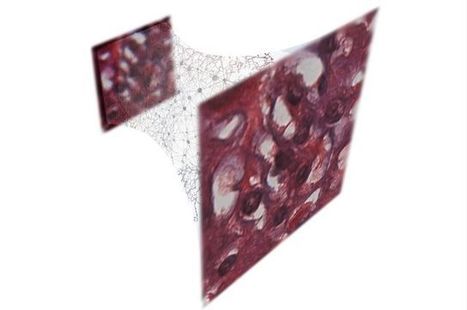
Researchers at the UCLA Samueli School of Engineering have demonstrated that deep learning, a powerful form of artificial intelligence, can discern and enhance microscopic details in photos taken by smartphones. The technique improves the resolution and color details of smartphone images so much that they approach the quality of images from laboratory-grade microscopes. The advance could help bring high-quality medical diagnostics into resource-poor regions, where people otherwise do not have access to high-end diagnostic technologies. And the technique uses attachments that can be inexpensively produced with a 3-D printer, at less than $100 a piece, versus the thousands of dollars it would cost to buy laboratory-grade equipment that produces images of similar quality. Cameras on today's smartphones are designed to photograph people and scenery, not to produce high-resolution microscopic images. So the researchers developed an attachment that can be placed over the smartphone lens to increase the resolution and the visibility of tiny details of the images they take, down to a scale of approximately one millionth of a meter. But that only solved part of the challenge, because no attachment would be enough to compensate for the difference in quality between smartphone cameras' image sensors and lenses and those of high-end lab equipment. The new technique compensates for the difference by using artificial intelligence to reproduce the level of resolution and color details needed for a laboratory analysis.The research was led by Aydogan Ozcan, Chancellor's Professor of Electrical and Computer Engineering and Bioengineering, and Yair Rivenson, a UCLA postdoctoral scholar. Ozcan's research group has introduced several innovations in mobile microscopy and sensing, and it maintains a particular focus on developing field-portable medical diagnostics and sensors for resource-poor areas. "Using deep learning, we set out to bridge the gap in image quality between inexpensive mobile phone-based microscopes and gold-standard bench-top microscopes that use high-end lenses," Ozcan said.
|
|
Scooped by
Dr. Stefan Gruenwald
April 13, 2018 1:10 AM
|
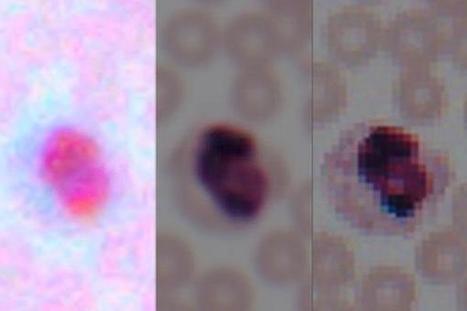
The new technique produces better images than current methods, and it’s easier to implement because it requires fewer measurements and performs computation. A form of machine learning called deep learning is one of the key technologies behind recent advances in applications like real-time speech recognition and automated image and video labeling. The approach, which uses multi-layered artificial neural networks to automate data analysis, also has shown significant promise for health care: It could be used, for example, to automatically identify abnormalities in patients’ X-rays, CT scans and other medical images and data. In two new papers, UCLA researchers report that they have developed new uses for deep learning: reconstructing a hologram to form a microscopic image of an object and improving optical microscopy. Their new holographic imaging technique produces better images than current methods that use multiple holograms, and it’s easier to implement because it requires fewer measurements and performs computations faster. The research was led by Aydogan Ozcan, an associate director of the UCLA California NanoSystems Institute and the Chancellor’s Professor of Electrical and Computer Engineering at the UCLA Henry Samueli School of Engineering and Applied Science; and by postdoctoral scholar Yair Rivenson and graduate student Yibo Zhang, both of UCLA’s electrical and computer engineering department. For one study (PDF), published in Light: Science and Applications, the researchers produced holograms of Pap smears, which are used to screen for cervical cancer, and blood samples, as well as breast tissue samples. In each case, the neural network learned to extract and separate the features of the true image of the object from undesired light interference and from other physical byproducts of the image reconstruction process. “These results are broadly applicable to any phase recovery and holographic imaging problem, and this deep-learning–based framework opens up myriad opportunities to design fundamentally new coherent imaging systems, spanning different parts of the electromagnetic spectrum, including visible wavelengths and even X-rays,” said Ozcan, who also is an HHMI Professor at the Howard Hughes Medical Institute.
|
|
Scooped by
Dr. Stefan Gruenwald
April 12, 2018 9:12 PM
|
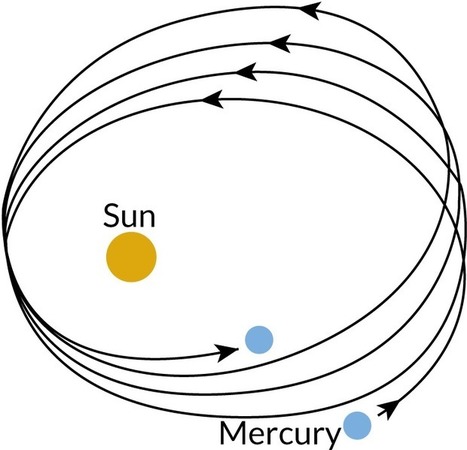
A tiny effect of general relativity on Mercury’s orbit has been calculated for the first time. The calculation of Mercury’s orbit is being tweaked — for a second time. And it’s all thanks to Albert Einstein. Before the famous physicist came up with his theory of gravity, known as the general theory of relativity, scientists’ predictions for Mercury’s motions were slightly off: The planet’s orbit disagreed with expectations. When Einstein realized that general relativity accounted for the mismatch, it was the first sign his theory was right. Now, physicist Clifford Will has calculated another effect of general relativity on Mercury’s orbit, he reports in a paper accepted in Physical Review Letters. The effect is too subtle to have been detected in observations so far. Mercury orbits the sun in an ellipse that gradually rotates over time (illustrated). General relativity alters the predicted amount of rotation, which explains why Mercury’s orbit didn’t quite align with earlier predictions. Planets in the solar system move in elliptical orbits that gradually rotate as each planet journeys around the sun. That rotation is mainly due to gravitational tugs from the other planets. But according to general relativity, gravity is the result of massive objects like the sun and planets warping spacetime. The warping caused by the sun, Einstein realized, would affect the rotation of each planet’s orbit slightly and would be most noticeable for Mercury, since it is closest to the sun. But a smaller quirk of general relativity hadn’t been explicitly calculated until now. The sun’s warping of spacetime also alters how the other planets pull on Mercury, says Will, of the University of Florida in Gainesville. Likewise, the warping caused by the planets changes how the sun pulls on Mercury. The combined effect is so small that it would take 2 billion years to add a degree to the rotation of Mercury’s orbit, Will estimates.
|
|
Scooped by
Dr. Stefan Gruenwald
April 12, 2018 8:53 PM
|
As astronomers worldwide are preparing to explore the second data release of ESA's Gaia satellite, the Data Processing and Analysing Consortium announced just how many sources will be included in the new catalogue, which will be made public on 25 April. Launched in December 2013, Gaia is charting more than 1 billion stars in our Milky Way and neighbouring galaxies, measuring their positions, parallaxes and proper motions at an accuracy level never before achieved, far below one thousandth of an arcsecond. Parallax is a small motion in the apparent position of a star caused by Earth's yearly revolution around the Sun and depends on the star's distance from us: with measurements of stellar positions and parallaxes, astronomers can pinpoint stars in three-dimensional space. Proper motion is caused by the actual movement of stars through the Galaxy. Gaia is compiling the largest astrometric catalogue ever created, enabling investigations into the Milky Way's origin and evolution. And there is more: the satellite has also been measuring stellar brightnesses and colours and has been taking spectra of the brightest stars in its survey. The much awaited second release of Gaia data will contain the position and brightness on the sky of 1 692 919 135 stars, as well as measurements of the parallax and proper motion of 1 331 909 727 stars. Derived from 22 months of observations, between 25 July 2014 and 23 May 2016, this represents a huge leap forward with respect to the mission's first data release. The initial release was based on just over one year of data and listed positions of more than one billion stars but 'only' two million parallaxes and proper motions. The second Gaia data release will also include a wide range of additional information: the colors of 1.38 billion stars [1]; the radial velocities of 7 224 631 stars; information about 550 737 variable sources; an estimate of the surface temperature for 161 497 595 stars, the extinction – a measure of the amount of dust along the line of sight – for 87 733 672 stars, and the radius and luminosity of 76 956 778 stars. Closer to home, the new data set will contain the position of 14 099 known Solar System objects – mostly asteroids – based on more than 1.5 million observations. The announcement was made today by Anthony Brown, Chair of the Gaia Data Processing and Analysis Consortium (DPAC) Executive [2], during the European Week of Astronomy and Space Science in Liverpool, UK. More details on the content of Gaia's second data release here.
|
|
Scooped by
Dr. Stefan Gruenwald
April 12, 2018 6:29 PM
|
The startup Luminar aims to challenge market leaders by building its hardware at a never-before-seen scale. A new lidar sensor could equip thousands of driverless cars with the sensing abilities required to drive at high speeds on the open road. Lidar has become the primary way most driverless cars sense the world around them, bouncing laser light off nearby objects to create 3-D maps of their surroundings. For years, the industry leader in lidar has been Velodyne, which builds some of the most expensive ultrahigh-resolution sensors available. But the rapid advance of research on self-driving vehicles prompted other firms to start building them too—among them a startup called Luminar, which was set up by Stanford dropout Austin Russell and came out of stealth last year. Luminar’s technology is different from other lidar systems. It uses a longer wavelength of light to operate at higher power, allowing it to see darker objects over longer distances. It’s also able to zoom in on areas of specific interest. But its sensors, which use a mechanical mirror system and expensive indium gallium arsenide semiconductors, were difficult and pricey to produce. Early units cost at least tens of thousands of dollars, and they required an entire day of human labor to assemble. Over the last year, says Russell, who was one of MIT Technology Review’s 35 Innovators under 35 in 2017, the firm has taken steps to change that. It acquired a chip design firm called Black Forest Engineering, hired consumer electronics experts, and set up its own manufacturing complex in Orlando, Florida—all with the aim of building its sensor at commercial scale.
|
|
Scooped by
Dr. Stefan Gruenwald
April 12, 2018 6:22 PM
|
Pioneering new research has given an illuminating new insight into the metallic, iridescent colors found on the earliest known ancestors of moths and butterflies, which habited the earth almost 200 million years ago. An international team of researchers, including Dr Tim Starkey from the University of Exeter, have discovered new evidence for colour in Mesozoic fossils. The structural colors of the fossils studied resulted from light scattering by intricate microstructures, extending the evidence for these light-scattering structures in the insect fossil record by more than 130 million years. The research team examined fossilized remains dating back 180 million years, with some specimens originating from the Jurassic Coast, only a short distance from Exeter. Using powerful electron microscopes and using optical models, the team found microscopic ridges and grooves in the insect's wing scales, similar to those seen in today's moths. Models revealed these tiny features are photonic structures that would have produced metallic bronze to golden color appearances in the insect wings. The research is published in leading journal Science Advances on April 11 2018.
|