In a follow-up to their groundbreaking study, Baylor researchers were able to reconstruct baleen whales' lifetime stress response to whaling and other manmade and environmental factors spanning nearly 150 years. Using a technique they pioneered six years ago, Stephen J. Trumble, Ph.D., associate professor of biology, and Sascha Usenko, Ph.D., associate professor of environmental science, both in Baylor University's College of Arts & Sciences, analyzed earplug laminae, a growth layer representing six months found in whale earwax, as part of their recent study published in Nature Communications this month.
Using earplugs taken from fin, humpback and blue whales originating in the Pacific and Atlantic Oceans from 1870 to 2016, Trumble and Usenko were able to determine the whales' cortisol levels, a stress-response hormone, to industrial whaling, World War II wartime activities and sea-surface temperature. "This is the first-ever study to quantify temporal stress patterns in baleen whales," Trumble said. "While the generated stress profile spans nearly 150 years, we show that these whales experienced survivor stress, meaning the exposure to the indirect effects of whaling, including ship noise, ship proximity and constant harassment, results in elevated stress hormones in whales spanning vast distances."
Whaling had a significant impact on whales' cortisol levels. During the 1960s when whaling was at its peak with 150,000 whales harvested, cortisol peaked to a maximum and was the highest average in whales in the 20th century, according to the study's findings. During World War II when whaling declined, whales still showed an increase in cortisol levels. Trumble and Usenko suggest the impact of the theater of war.
"The stressors associated with activities specific to WWII may supplant the stressors associated with industrial whaling for baleen whales," Usenko said. "We surmised that wartime activities such as under water detonation, naval battles including ships, planes and submarines, as well as increased vessel numbers, contributed to increase cortisol concentrations during this period of reduced whaling." When whaling moratoriums were introduced in the mid-1970s, whaling decreased as well as cortisol levels--reaching their lowest concentrations.
"From the 1970s through the 2010s whaling counts were reportedly zero in the Northern Hemisphere, but mean cortisol levels steadily increased, with recent peaks reaching near the maximum levels observed before whaling moratoriums," Usenko said. The impact of stress on whales could have larger implications for baleen whales, which are "considered sentinels of their environment and indicators of anthropogenic or manmade stressors," Usenko said.
"This study shows that anthropogenic stressors results in a physiological response in large whales. These chronic stressors may impact life history events such as reproductive parameters," Trumble said. "Lastly, human-based stressors such as warming sea surface temperatures may also result in elevated stress in these whales."
Astronomers have found a star that was likely born in the same stellar nursery as our Sun. The newfound sibling is only the second ever to be identified.
After combing through the celestial records, the team found a star that has an uncanny resemblance to the Sun. HD186302 is a main sequence star, and it sits about 184 light-years from Earth. The star has roughly the same age, metallicity, chemical abundances and even ratios of carbon isotopes as the Sun. In other words, it's just about as Sun-like as you can get. These undeniable commonalities make it just one of two stellar sibling ever identified, following just behind HD 162826, discovered in 2014.
Astronomers could use these similarities to determine the type of environment that the siblings formed in, helping to paint a picture of their now-defunct stellar nursery and the other family members that were born within it. The discovery also leads researchers to wonder if, like the Sun, HD186302 could house life and habitable planets.
“Some theoretical calculations show that there is non-negligible probability that life spread from Earth to other planets or exoplanetary systems, during the period of the late heavy bombardment. If we are lucky, and our sibling candidate has a planet, and the planet is a rocky type, in the habitable zone, and finally if this planet was 'contaminated' by the life seeds from Earth, then we have what one could dream – an Earth 2.0, orbiting a Sun 2.0,” said lead researcher Vardan Adibekyan, whose discovery of HD186302 was published in the journal Astronomy & Astrophysics, in a news release.
Finding solar siblings, that is, stars that formed in the same cluster as the Sun, will yield information about the conditions at the Sun's birthplace. Finding possible solar siblings is difficult since they are spread widely throughout our Galaxy. The astronomers now searched for solar sibling candidates in AMBRE, the very large spectra database of solar vicinity stars. Since the ages and chemical abundances of solar siblings are very similar to those of the Sun, they carried out a chemistry- and age-based search for solar sibling candidates. They used high-resolution spectra to derive precise stellar parameters and chemical abundances of the stars. They used these spectroscopic parameters together with Gaia DR2 astrometric data to derive stellar isochronal ages.
Gaia data were also used to study the kinematics of the sibling candidates. From the about 17000 stars that are characterized within the AMBRE project, the astronomers first selected 55 stars whose metallicities are closest to the solar value (-0.1≤[Fe/H]≤0.1dex). For these stars they derived precise chemical abundances of several iron-peak, α- and neutron-capture elements, based on which they selected 12 solar sibling candidates with average abundances and metallicities between -0.03 to 0.03dex. Further selection left them with 4 candidates with stellar ages that are compatible with the solar age within observational uncertainties. For the 2 of the hottest candidates, they derived the carbon isotopic ratios, which are compatible with the solar value. HD186302 is the most precisely characterized and probably the most probable candidate of our 4 best candidates. Very precise chemical characterization and age estimation is necessary to identify solar siblings. The astronomers propose that in addition to typical chemical tagging, the study of isotopic ratios can give further important information about the relation of sibling candidates with the Sun. Ideally, asteroseismic age determinations of the candidates could solve the problem of imprecise isochronal ages.
Since the first airplane took flight over 100 years ago, virtually every aircraft in the sky has flown with the help of moving parts such as propellers, turbine blades, and fans, which are powered by the combustion of fossil fuels or by battery packs that produce a persistent, whining buzz.
Now MIT engineers have built and flown the first-ever plane with no moving parts. Instead of propellers or turbines, the light aircraft is powered by an “ionic wind” — a silent but mighty flow of ions that is produced aboard the plane, and that generates enough thrust to propel the plane over a sustained, steady flight. Unlike turbine-powered planes, the aircraft does not depend on fossil fuels to fly. And unlike propeller-driven drones, the new design is completely silent.
“This is the first-ever sustained flight of a plane with no moving parts in the propulsion system,” says Steven Barrett, associate professor of aeronautics and astronautics at MIT. “This has potentially opened new and unexplored possibilities for aircraft which are quieter, mechanically simpler, and do not emit combustion emissions.”
He expects that in the near-term, such ion wind propulsion systems could be used to fly less noisy drones. Further out, he envisions ion propulsion paired with more conventional combustion systems to create more fuel-efficient, hybrid passenger planes and other large aircraft. Barrett and his team at MIT have published their results today in the journal Nature.
Hobby crafts
Barrett says the inspiration for the team’s ion plane comes partly from the movie and television series, “Star Trek,” which he watched avidly as a kid. He was particularly drawn to the futuristic shuttlecrafts that effortlessly skimmed through the air, with seemingly no moving parts and hardly any noise or exhaust. “This made me think, in the long-term future, planes shouldn’t have propellers and turbines,” Barrett says. “They should be more like the shuttles in ‘Star Trek,’ that have just a blue glow and silently glide.”
About nine years ago, Barrett started looking for ways to design a propulsion system for planes with no moving parts. He eventually came upon “ionic wind,” also known as electroaerodynamic thrust — a physical principle that was first identified in the 1920s and describes a wind, or thrust, that can be produced when a current is passed between a thin and a thick electrode. If enough voltage is applied, the air in between the electrodes can produce enough thrust to propel a small aircraft.
For years, electroaerodynamic thrust has mostly been a hobbyist’s project, and designs have for the most part been limited to small, desktop “lifters” tethered to large voltage supplies that create just enough wind for a small craft to hover briefly in the air. It was largely assumed that it would be impossible to produce enough ionic wind to propel a larger aircraft over a sustained flight.
“It was a sleepless night in a hotel when I was jet-lagged, and I was thinking about this and started searching for ways it could be done,” he recalls. “I did some back-of-the-envelope calculations and found that, yes, it might become a viable propulsion system,” Barrett says. “And it turned out it needed many years of work to get from that to a first test flight.”
A DNA vaccine tested in mice reduces accumulation of both types of toxic proteins associated with Alzheimer's disease, according to research that scientists say may pave the way to a clinical trial.
A new study by UT Southwestern's Peter O'Donnell Jr. Brain Institute shows that a vaccine delivered to the skin prompts an immune response that reduces buildup of harmful tau and beta-amyloid - without triggering severe brain swelling that earlier antibody treatments caused in some patients.
"This study is the culmination of a decade of research that has repeatedly demonstrated that this vaccine can effectively and safely target in animal models what we think may cause Alzheimer's disease," said Dr. Roger Rosenberg, founding Director of the Alzheimer's Disease Center at UT Southwestern. "I believe we're getting close to testing this therapy in people."
The research published in Alzheimer's Research and Therapy demonstrates how a vaccine containing DNA coding for a segment of beta-amyloid also reduces tau in mice modeled to have Alzheimer's disease. In addition, the vaccine elicits a different immune response that may be safe for humans. Two previous studies from Dr. Rosenberg's lab showed similar immune responses in rabbits and monkeys.
The vaccine is on a shortlist of promising antibody treatments aimed at protecting against both types of proteins that kill brain cells as they spread in deadly plaques and tangles on the brains of Alzheimer's disease patients. Although earlier research established that antibodies significantly reduce amyloid buildup in the brain, Dr. Rosenberg's team needed to find a safe way to introduce them into the body. A vaccine developed elsewhere showed promise in the early 2000s, but when tested in humans, it caused brain swelling in some patients.
Dr. Rosenberg's idea was to start with DNA coding for amyloid and inject it into the skin rather than the muscle to produce a different kind of immune response. The injected skin cells make a three-molecule chain of beta-amyloid (Aβ42), and the body responds by producing antibodies that inhibit the buildup of amyloid and indirectly also of tau.
The latest study - consisting of four cohorts of between 15 and 24 mice each - shows the vaccine prompted a 40 percent reduction in beta-amyloid and up to a 50 percent reduction in tau, with no adverse immune response. Dr. Rosenberg's team predicts that if amyloid and tau are indeed the cause of Alzheimer's disease, achieving these reductions in humans could have major therapeutic value.
"If the onset of the disease could be delayed by even five years, that would be enormous for the patients and their families," said Dr. Doris Lambracht-Washington, the study's senior author. "The number of dementia cases could drop by half."
Alzheimer's disease is characterized by progressive deterioration of the brain as neurons are destroyed. About 5.7 million Americans have the fatal disease, with the number expected to more than double by 2050, according to the Centers for Disease Control and Prevention.
Reseachers from Wageningen University & Research are inspired by the ovipositor of the parasitic wasp for the development of a steerable surgical needle.
Flexible, ultra-thin and steerable needles would help surgeons perform operations even better. Researchers at Wageningen University & Research are therefore studying the ovipositor with which the parasitic wasp lays its eggs. Based on their findings, colleagues at Delft University of Technology have developed the first prototype of this needle which is the thinnest needle in the world. Solutions found in nature are often the source of human inventions such as self-cleaning paint and underwater robots.
During medical procedures, it is important to cause as little damage as possible to tissue, nerve bundles and blood vessels. This can be especially complicated in brain surgery or surgery performed around the spinal cord. Researchers from Delft University of Technology are therefore working on the development of an ultra-thin, flexible and steerable needle. They asked their colleagues at Wageningen University & Research for possible solutions inspired by nature. They in turn turned to the parasitic wasp for inspiration.
The parasitic wasp lays its eggs in the larvae of other insects which are often hidden inside plants or fruit. The parasitic wasp inserts the eggs through a narrow, hollow tube-like structure at the end of her abdomen called the ovipositor. She uses this to pierce through obstacles until she reaches the larvae into which she can insert her eggs. These larvae then become the food for the larvae of the parasitic wasp. The ovipositor of the parasitic wasp is unique, as it is exceptionally flexible.
Chinese news readers may have some new competition – artificially intelligent robot anchors that can mimic human facial expressions and mannerisms while reading out reports. The AI anchor, developed by state news agency Xinhua and tech firm Sogou Inc, was on display at the World Internet Conference in the eastern Chinese town of Wuzhen, drawing in curious passers-by.
The anchor, modelled on real-life Chinese news reader Qiu Hao and sporting a black suit and red tie, is part of a major push by China to advance its prowess in AI technology, from surveillance equipment to self-driving cars.
In another video presentation from Xinhua, a different robot presenter said it was his “very first day” at the news agency and promised to “work tirelessly to keep you informed as texts will be typed into my system uninterrupted”.
At the internet summit, Sogou marketing staff said it wasn’t clear when the technology would actually go into use, but crowds gathered nonetheless to take selfies with the digital anchor and Qiu himself who was at the event. The conference is China’s top tech event of the year, and has in the past attracted names like Apple Inc, CEO Tim Cook and Alphabet Inc head Sundar Pichai.
This year’s iteration, however, which opened on Wednesday, was more muted and has a less glitzy global line-up, even as battle lines for control of the web have hardened amid a biting trade war between China and the United States. Foreign websites such as Alphabet’s Google and Facebook Inc are blocked in China, where authorities also tightly control online content and censor or punish those who post material seen as opposed to “core socialist values”.
Pinpointing where and how the human genome is evolving can be like hunting for a needle in a haystack. Each person’s genome contains three billion building blocks called nucleotides, and researchers must compile data from thousands of people to discover patterns that signal how genes have been shaped by evolutionary pressures.
To find these patterns, a growing number of geneticists are turning to a form of machine learning called deep learning. Proponents of the approach say that deep-learning algorithms incorporate fewer explicit assumptions about what the genetic signatures of natural selection should look like than do conventional statistical methods.
“Machine learning is automating the ability to make evolutionary inferences,” says Andrew Kern, a population geneticist at the University of Oregon in Eugene. “There is no question that it is moving things forward.”
One deep-learning tool called ‘DeepSweep’, developed by researchers at the Broad Institute of MIT and Harvard in Cambridge, Massachusetts, has flagged 20,000 single nucleotides for further study. Some or all of these simple mutations may have helped humans survive disease, drought or what Charles Darwin called the “conditions of life”, researchers reported last month at the annual meeting of the American Society of Human Genetics in San Diego, California.
Since the 1970s, geneticists have created mathematical models to describe the fingerprint of natural selection in DNA. If a mutation arises that renders a person better able to survive and produce offspring than their neighbours, the percentage of the population with that gene variant will grow over time.
One example is the mutation that gives many adults the ability to drink cow’s milk. It enables the body to produce lactase, an enzyme that digests the sugar in milk, into adulthood. By analysing human genomes with statistical methods, researchers discovered that the mutation spread rapidly through communities in Europe thousands of years ago— presumably because nutrients in cow’s milk helped people to produce healthy children1,2 . Today, nearly 80% of people of European descent carry this variant.
Yet geneticists have struggled to identify, and confirm, other specific snippets of the genome that spread throughout populations because they provided an adaptive edge. Deep learning excels at just this sort of task: discovering subtle patterns hidden in large amounts of data. But there is a catch. Deep-learning algorithms often learn to classify information after being trained by exposure to real data; Facebook, for example, primes algorithms to recognize faces on the basis of pictures that people have already labelled. Because geneticists don’t yet know which parts of the genome are being shaped by natural selection, they must train their deep-learning algorithms on simulated data.
Generating that simulated data requires researchers to posit what the signature of natural selection looks like, says Sohini Ramachandran, a population geneticist at Brown University in Providence, Rhode Island. “We don’t have ground truth data, so the worry is that we may not be simulating properly.” And because deep-learning algorithms operate as black boxes, it’s hard to know what criteria they use to identify patterns in data, says Philipp Messer, a population geneticist at Cornell University in Ithaca, New York. “If the simulation is wrong, it’s not clear what the response means,” he adds.
With the increasing resistance of many Gram-negative bacteria to existing classes of antibiotics, identifying new paradigms in antimicrobial discovery is an important research priority. Of special interest are the proteins required for the biogenesis of the asymmetric Gram-negative bacterial outer membrane (OM)
Seven Lpt proteins (LptA to LptG) associate in most Gram-negative bacteria to form a macromolecular complex spanning the entire envelope, which transports lipopolysaccharide (LPS) molecules from their site of assembly at the inner membrane to the cell surface, powered by adenosine 5′-triphosphate hydrolysis in the cytoplasm. The periplasmic protein LptA comprises the protein bridge across the periplasm, which connects LptB2FGC at the inner membrane to LptD/E anchored in the OM.
Scientists now show that the naturally occurring, insect-derived antimicrobial peptide thanatin targets LptA and LptD in the network of periplasmic protein-protein interactions required to assemble the Lpt complex, leading to the inhibition of LPS transport and OM biogenesis in Escherichia coli.
Nature comes to our rescue again, 100 years later. I hope this does not get mainstream medication until more restrictive laws and regulations for antibiotics are in place, so we do not lose this advantage in a few years
In Morocco there grows a cactus-like plant, that contains a chemical that is so hot that it destroys nerve endings on contact. On the Scoville Scale of hotness, its active ingredient, resiniferatoxin (RTX), clocks in at 16 billion units. That’s 10,000 times hotter than the Carolina reaper, the world’s hottest pepper, and 45,000 times hotter than the hottest of habaneros, and 4.5 million times hotter than a piddling little jalapeno. Euphorbia resinifera, aka the resin spurge, is not to be eaten. Just to be safe, you probably shouldn’t even look at it.
But while that toxicity will lay up any mammal dumb enough to chew on the resin spurge, resiniferatoxin has also emerged as a promising painkiller. Inject RTX into an aching joint, and it’ll actually destroy the nerve endings that signal pain. Which means medicine could soon get a new tool to help free us from the grasp of opioids.
The human body is loaded with different kinds of sensory neurons. Some flavors respond to light touch, others signal joint position, yet others respond only to stimuli like tissue injury and burns. RTX isn’t going to destroy the endings of all these neurons unbiased. Instead, it binds to a major molecule in specifically pain-sensing nerve endings, called TRPV1.
This TRPV1 receptor normally responds to temperature. But it also responds to a family of molecules called pungents, which includes capsaicin, the active ingredient in hot pepper. “So when you put hot pepper on your tongue and it feels like it's burning, it's not because your tongue is on fire,” says Tony Yaksh, an anesthesiologist and pharmacologist at UC San Diego who’s studied RTX. “It's simply activating the same sensory axons that would have been activated if your tongue had been on fire.”
RTX is a capsaicin analog, only it’s between 500 and 1,000 times more potent. When RTX binds to TRPV1, it props open the nerve cell’s ion channel, letting a whole lot of more calcium in than it normally does. That’s toxic, leading to the inactivation of the pain-sensing nerve endings.
Other varieties of sensory neurons are left unaffected, because RTX is highly specific to TRPV1. “So you gain selectivity because it only acts on TRPV1, which is only on a certain class of fibers, which only transmit pain,” says Yaksh. “Therefore you can selectively knock out pain without knocking out, say, light touch or your ability to walk.”
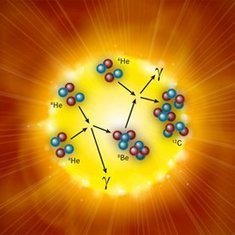
Using supercomputers and new mathematical techniques, physicists are working to reveal how the Hoyle state atomic nucleus gives rise to the light elements that enable life, and how it drives the evolution of stars.
Carbon, so crucial for the chemistry of all living organisms and life in general, forms at the interior of burning stars in what is called the triple-alpha process: two alpha particles (helium nuclei) react to form beryllium-8, which in turn reacts with a third alpha particle to form carbon-12. This last step does not produce the carbon-12 as we know it, however, but rather an excited state called the Hoyle state.
This state is a resonance, meaning it is not localized spatially and it has a finite lifetime governed by its distance (in energy) from the particle-emission threshold. The resonance allows approximately four out of ten thousand decays to produce the ground state of carbon-12. Fred Hoyle predicted the resonance in 1954, arguing that without it, stable carbon would not exist [1]. Three years later, an experimental group at Caltech proved he was right [2].
Counting tiny particles that can zip straight through the Earth reveals what the planet is like on the inside.
Puny particles have given scientists a glimpse inside the Earth.
For the first time, physicists have measured the planet’s mass using neutrinos, minuscule subatomic particles that can pass straight through the entire planet. Researchers also used the particles to probe the Earth’s innards, studying how the planet’s density varies from crust to core.
Typically, scientists determine Earth’s mass and density by quantifying the planet’s gravitational pull and by studying seismic waves that penetrate the globe. Neutrinos provide a completely independent test of the planet’s properties. Made using data from the IceCube neutrino observatory at the South Pole, the new planetary profile agreed with traditional measurements, a trio of physicists reports November 5, 2018 in Nature Physics.
To make the measurement, the scientists studied high-energy neutrinos that were produced when protons and other energetic particles from space slammed into the Earth’s atmosphere. These neutrinos can zip clean through the entire Earth, but sometimes they smash into atomic nuclei and are absorbed instead. How often neutrinos get stopped in their tracks reveals the density of the stuff they’re traveling through.
Neutrinos that arrived at the IceCube detector from different angles probed different layers of the Earth. For example, a neutrino coming from the opposite side of the planet, at the North Pole, would pass through the Earth’s crust, mantle and core before reaching the South Pole. But one that skimmed in at an angle might pass through only the crust. By measuring how many neutrinos came from various angles, the team inferred the densities of different parts of the Earth and its total mass.
The technique doesn’t yet reveal anything new about the planet. But one day it might help scientists determine whether all of Earth’s mass comes from normal matter. Perhaps some of the mass is due to something that shuns neutrinos, such as a type of dark matter, a shadowy substance that scientists believe must exist to account for missing mass observed in measurements of other galaxies. Neutrinos could help physicists nail down whether the Earth harbors such dark matter within.
Yeast intentionally stuffed with bacteria may teach scientists something about the origins of cells’ powerhouses. Cellular power-generating organelles, called mitochondria, are thought to have once been bacteria captured by archaea, single-celled microbes that are one of the earliest forms of life. Now, almost all eukaryotic cells (cells with a nucleus) contain mitochondria.
At first, the bacteria may have lived inside archaea as endosymbionts, independent organisms that cooperate with their hosts. Over time, mitochondria lost many of their genes and eventually became an integral part of the cell. This scenario has support from genetics. But “if you really want to prove something’s true,” says chemical biologist Peter Schultz, researchers should be able to make something similar in the lab. So Schultz, of the Scripps Research Institute in La Jolla, Calif., and his colleagues created a hybrid cell by fusing two popular lab organisms — the baker’s yeast Saccharomyces cerevisiae and a common gut bacteria called E. coli.
“It’s a pioneering approach,” says evolutionary biologist Antonio Lazcano of the National Autonomous University of Mexico in Mexico City, who was not involved in the experiments. No one has made such a hybrid organism before. But the work, described October 29 in the Proceedings of the National Academy of Sciences, suggests it may not be so hard to make a free-living organism into an endosymbiont, he says.
Not that it was easy to get bacteria adapted to living on their own to grow inside another species’ cells. First, the researchers had to give the yeast and bacteria a reason to team up. Schultz’s team disabled a gene in yeast’s mitochondria so that the organelles couldn’t produce chemical energy in the form of adenosine triphosphate, or ATP, under some circumstances. E. coli were engineered to lack a gene needed to make the B vitamin thiamine, which the bacteria need to live. The team also outfitted the bacteria with a transporter protein that can move ATP and its precursor adenosine diphosphate, or ADP, in or out of the cell. When the bacteria was put inside the yeast cells, the bacteria supplied the ATP the yeast needed to live, and the yeast made thiamine for the bacteria.
It wasn’t a perfect arrangement, though. The yeast kept digesting the bacteria. So Schultz’s team equipped the E. coli with SNARE proteins from Chlamydia trachomatis bacteria, which can live inside human cells and cause the sexually transmitted disease chlamydia. SNARE proteins can prevent a host cell’s digestive compartments, called lysosomes, from coming together to dismantle invading microbes. SNARE-outfitted E. coli eventually were able to grow inside the yeast cell, the researchers found. The hybrid yeast-bacteria cells grew for more than 40 generations, the researchers report.
There’s no way to know the exact environmental and physiological conditions microbes faced that led to formation of eukaryotic cells 1.5 billion years ago, says evolutionary biologist Ryan Gawryluk of the University of Victoria in Canada who was not involved in the work. Exchanging energy for nutrients may have been one impetus for bacteria and archaea to join forces, but some scientists don’t think it was the evolutionary force that shaped the partnership, he says. After all, “bacteria have no interest in sending ATP outside of their cells.” Mitochondria-precursor bacteria may have been parasites or endosymbionts that gradually lost the ability to live outside the host for other reasons.
Small molecules — from naturally occurring metabolites and hormones to synthetic medicines and pesticides — can have big effects on living things. But for scientists to understand how the molecules work and how to design beneficial ones, they need to know the precise arrangement of atoms and chemical bonds. Now researchers have found a faster, simpler and potentially more reliable way to solve the structures of small molecules. They report their results in ACS Central Science.
Currently, the gold standard for determining small-molecule structures is X-ray crystallography. In this technique, researchers crystallize a small molecule and then bombard the crystal with X-rays, which diffract in complex patterns that reveal the molecule’s 3D structure. However, producing large, high-quality crystals is time-consuming or impossible for many compounds. Brian Stoltz, Jose Rodriguez, Hosea Nelson and Tamir Gonen wondered if they could use a form of cryoelectron microscopy to characterize small molecules. Known as microcrystal-electron diffraction (MicroED), this technique was developed 5 years ago to study protein structures. In this technique, electron beams, instead of X-rays, are diffracted from crystals, which can be much smaller than those required for X-ray crystallography.
The researchers first tested MicroED on a sample of powdered progesterone, which contained thousands of nanocrystals. They rotated a single crystal and collected electron diffraction data from different angles, determining the structure of the hormone at high resolution (1 angstrom) in less than 30 minutes, compared with weeks or months for X-ray crystallography. They went on to successfully characterize 11 other natural, synthetic and pharmaceutical products, including acetaminophen, ibuprofen and several antibiotics. The researchers even identified four different molecules in a mixture by studying individual nanocrystals.
Using MicroED, the researchers analyzed crystals that were a billionth of the size typically needed for X-ray crystallography. The rapid, precise method has the potential to greatly accelerate research in the fields of synthetic chemistry, natural product chemistry and drug discovery, the researchers say.
General-purpose computers have become ubiquitous and important for everyday life, but they are difficult for people with paralysis to use. Specialized software and personalized input devices can improve access, but often provide only limited functionality. In this study, three research participants with tetraplegia who had multielectrode arrays implanted in motor cortex as part of the BrainGate2 clinical trial used an intracortical brain-computer interface (iBCI) to control an unmodified commercial tablet computer. Neural activity was decoded in real time as a point-and-click wireless Bluetooth mouse, allowing participants to use common and recreational applications (web browsing, email, chatting, playing music on a piano application, sending text messages, etc.). Two of the participants also used the iBCI to “chat” with each other in real time. This study demonstrates, for the first time, high-performance iBCI control of an unmodified, commercially available, general-purpose mobile computing device by people with tetraplegia.
Scientists from Sanford Burnham Prebys Medical Discovery Institute (SBP) have identified gene recombination in neurons that produces thousands of new gene variants within Alzheimer’s disease brains. The study, published in Nature, reveals for the first time how the Alzheimer’s-linked gene, APP, is recombined by using the same type of enzyme found in HIV.
Using new analytical methods focused on single and multiple-cell samples, the researchers found that the APP gene, which produces the toxic beta amyloid proteins defining Alzheimer’s disease, gives rise to novel gene variants in neurons—creating a genomic mosaic. The process required reverse transcription and reinsertion of the variants back into the original genome, producing permanent DNA sequence changes within the cell’s DNA blueprint.
“We used new approaches to study the APP gene, which gives rise to amyloid plaques, a pathological hallmark of the disease,” says Jerold Chun, M.D., Ph.D., senior author of the paper and professor and senior vice president of Neuroscience Drug Discovery at SBP. “Gene recombination was discovered as both a normal process for the brain and one that goes wrong in Alzheimer’s disease.”
Une étude très intéressante menée par le scientifique de l’institut de découverte Sanford Burnham Prebys (SBP) a identifié que la recombinaison génétique du gène APP, menant à la production de la toxine beta amyloïde caractéristique de la maladie Alzheimer serait dû à la transcriptase inverse, aussi retrouvée dans les mécanismes du virus du sida. Cela laisse imaginer que les thérapies antirétrovirales contre le sida pourraient être un nouveau remède dans les maladies d’Alzheimer. Un nouvel espoir alors que les essais cliniques dirigés contres la protéine beta amyloïdes echouent.
Millions of people take up to five or more medications a day, but doctors have no idea what side effects might arise from adding another drug. Now, Stanford University computer scientists have developed a deep-learning system (a kind of AI modeled after the brain) called Decagon that could help doctors make better decisions about which drugs to prescribe. It could also help researchers find better combinations of drugs to treat complex diseases.
The problem is that with so many drugs currently on the U.S. pharmaceutical market, “it’s practically impossible to test a new drug in combination with all other drugs, because just for one drug, that would be five thousand new experiments,” said Marinka Zitnik, a postdoctoral fellow in computer science and lead author of a paper presented July 10 at the 2018 meeting of the International Society for Computational Biology. With some new drug combinations (“polypharmacy”), she said, “truly we don’t know what will happen.”
How proteins interact and how different drugs affect these proteins
So Zitnik and associates created a network describing how the more than 19,000 proteins in our bodies interact with each other and how different drugs affect these proteins. Using more than 4 million known associations between drugs and side effects, the team then designed a method to identify patterns in how side effects arise, based on how drugs target different proteins, and also to infer patterns about drug-interaction side effects. Based on that method, the system could predict the consequences of taking two drugs together.
To evaluate this strategyu the group looked to see if its predictions came true. In many cases, they did. For example, there was no indication in the original data that the combination of atorvastatin (marketed under the trade name Lipitor among others), a cholesterol drug, and amlopidine (Norvasc), a blood-pressure medication, could lead to muscle inflammation. Yet Decagon predicted that it would, and it was right.
In the future, the team members hope to extend their results to include more multiple drug interactions. They also hope to create a more user-friendly tool to give doctors guidance on whether it’s a good idea to prescribe a particular drug to a particular patient, and to help researchers developing drug regimens for complex diseases, with fewer side effects.
Google's artificial intelligence technology may sometimes seem like it’s reading our mind, but neuroscientists at Canada’s University of Toronto Scarborough are literally using A.I. for that very purpose — by reconstructing images based on brain perception using data gathered by electroencephalography (EEG).
In a test, subjects were hooked up to EEG brainwave-reading equipment and shown images of faces. While this happened, their brain activity was recorded and then analyzed using machine learning algorithms. Impressively, the researchers were able to use this information to digitally re-create the face image stored in the person’s mind. Unlike basic shapes, being able to re-create faces involves a high level of fine-grained visual detail, showcasing a high level of sophistication for the technology.
While this isn’t the first time that A.I. has been used to read people’s minds, it’s the first time this has been achieved using EEG data. Previous studies involved fMRI technology, which measures brain activity by detecting changes in its blood flow. One of the most exciting differences between the two techniques is that EEG is far more portable, inexpensive, and can deliver greater levels of detail in mere milliseconds.
The technology could potentially be used by law enforcement for creating more accurate eyewitness reports about a potential suspect’s likeness. Currently, this information is relayed to a sketch artist through verbal descriptions, thereby potentially lowering its levels of accuracy. It might also serve as a way of helping people who lack the ability to communicate verbally. The EEG technology could be employed to produce a neural-based reconstruction of what a person is perceiving at any given time, as well as visualizing memories or imagination that let them express themselves.
In the future, the team hopes to build on this work by looking at how effectively they can reconstruct images with EEG data, based on a person’s memory of an event. They also want to move beyond faces to explore whether they can recreate accurate images of other objects.
A paper describing the work, titled “The Neural Dynamics of Facial Identity Processing: insights from EEG-Based Pattern Analysis and Image Reconstruction,” was recently published in the journal eNeuro.
Autodesk announced its new innovative lander design today at the company’s conference in Las Vegas — revealing a spacecraft that looks like a spider woven from metal. The company says the idea to create the vehicle was sparked when Autodesk approached NASA to validate a lander prototype it had been working on. After looking at Autodesk’s work, JPL and the company decided to form a design team — comprised of five engineers from Autodesk and five from JPL — to come up with a new way to design landers.
NASA is starting to think about ways to land on distant moons in our Solar System that may harbor oceans underneath their crusts. Saturn’s moon Enceladus is one such candidate, as it may have the right conditions to support life in its unseen waters. And NASA has already studied concepts for landers to touch down on the surface of Jupiter’s moon Europa, in order to sample the world’s ice to see if it might host life.
The lander collaboration with Autodesk was mostly experimental, with JPL giving the company a very clear goal: figure out a way to reduce the weight of a deep-space lander. When it comes to space travel, the best materials to withstand the harshness of space are things like titanium and aluminum, but these metals can be heavy. And the more a vehicle weighs, the more difficult and more expensive it is to launch into space. So shaving pounds can help reduce the overall cost and complexity of a mission. Weight reduction also allows for the opportunity to add more instruments and sensors to a lander, to gather more valuable science data.
Here is a list of extrasolar planets that have been directly observed, sorted by observed separations. The method used works best for young planets that emit infrared light and are far from the glare of the star. Currently, this list includes both directly imaged planets and imaged planetary-mass companions (objects that orbit a star but formed through a binary-star-formation process, not a planet-formation process). This list does not include free-floating planetary-mass objects in star-forming regions or young associations, which are also referred to as rogue planets.
The data given for each planet is taken from the latest published paper on the planet to have that data. In many cases it is not possible to have an exact value, and an estimated range is instead provided. The least massive planet is Fomalhaut b, which has a mass of 2 MJ or less. The coldest and oldest is 59 Virginis b with a mean temperature of 240 °C and age of 100–500 million years.[1] This list includes the four members of the multi-planet system that orbit HR 8799.
Polygenic risk scores represent a giant leap for gene-based diagnostic tests. Here is what they mean for predictive personalized medicine:
When researchers completed the first drafts of the human genome in the early 2000s, many expected that it would mark the start of a medical revolution. Geneticists started searching for the differences that might explain why one person develops diabetes or heart disease whereas another does not. The idea was simple: compare a group of people with the condition to a group without and look for differences in their DNA. The variations generally came in the form of DNA-letter swaps, known as single nucleotide polymorphisms, or SNPs. If people with a condition tended to have a T at a certain location whereas others had a C, that suggested that the SNP was associated in some way with the disease.
These genome-wide association studies — or GWASs, as they came to be known — became very popular. But after years of searching, scientists could still only explain a small bit of the inherited risk for common diseases. It turned out that most of these conditions were related to many more SNPs than scientists had first expected, says Ali Torkamani, a geneticist at the Scripps Research Institute, La Jolla, California.
Worse still, a majority of the variants conferred a very small risk — detectable only when surveying huge groups of people.“We didn’t have the sample size to really drive prediction as well as some people naively thought,” says Ewan Birney, director of the European Bioinformatics Institute in Hinxton, UK. By 2007, geneticists were fretting about something they called “missing heritability”. It was clear that many of these conditions had a genetic component, but GWASs clearly weren’t catching much of it.
Today, things are finally changing. With access to massive data sets, as well as advances in how data are analyzed, scientists are getting better at measuring those very small risks. A prime example is the technique geneticist Kathiresan used to generate his 6.6-million SNP score, which was published in August 20181. He and his team took data from a 2015 meta-analysis that combined 48 GWASs, consisting of 61,000 people with coronary artery disease and 120,000 controls2. They then tested their polygenic predictor on 290,000 people in the UK Biobank, finding that those scoring in the highest few percentiles had on average several times higher risk of developing the disease than did the rest of the population. Of the 23,000 people who received the highest scores, for example, 7% had coronary artery disease, compared with 2.7% of the remaining population. The group conducted similar analyses for four other disorders, including inflammatory bowel disease and breast cancer, each time identifying a group who scored in the top few percentiles and were at particularly high risk.
Understanding how people will react to polygenic scores is a high priority for researchers. Ripatti and his colleagues have given more than 7,000 individuals in Finland information about their likelihood of developing heart disease, based on both polygenic scores and conventional risk factors such as high blood pressure. Most of the respondents say that getting this information motivates them to make positive changes, says Ripatti. Preliminary results suggest that those with high genetic risk are the most likely to take actions such as losing weight or stopping smoking.
In nearby Estonia, researchers are in the process of genotyping 100,000 individuals, adding to the 50,000 the country has already sampled. And unlike many other biobanks, participants in the Estonian project can sign up to receive feedback. Among the results being returned to them are polygenic risk scores for type 2 diabetes and cardiovascular disease, says Lili Milani, a geneticist at the Estonian Genome Center at the University of Tartu, Estonia. Similar to the Finnish work, participants are shown graphs of how lifestyle changes could reduce or increase their risk. And, says Milani, initial indications are that people are glad for the advice.
For now, people are receiving their scores from genetic counsellors. But Milani is working with the Estonian government to work out how to integrate genomic data into the health-care system, so that it can be used every day by doctors. The country ultimately aims to genotype anyone who’s interested, right up to its entire population of 1.3 million, Milani says. “The goal is to build something so great that all doctors will want to recommend it and all of the population will want it.”
This review article discusses, in a format of a timeline, the studies of different types of genetic variants, present in Homo sapiens, but absent in all other primate, mammalian, or vertebrate species, tested so far. The main characteristic of these variants is that they are found in regions of high evolutionary conservation.
These sequence variations include single nucleotide substitutions (called human accelerated regions or HARs), deletions, and segmental duplications. The rationale for finding such variations in the human genome is that they could be responsible for traits, specific to our species, of which the human brain is the most remarkable.
As became obvious, the vast majority of human-specific single nucleotide substitutions are found in noncoding, likely regulatory regions. A number of genes, associated with these human-specific alleles, often through novel enhancer activity, were in fact shown to be implicated in human-specific development of certain brain areas, including the prefrontal cortex.
Human-specific deletions may remove regulatory sequences, such as enhancers. Segmental duplications, because of their large size, create new coding sequences, like new functional paralogs. Further functional study of these variants will shed light on evolution of our species, as well as on the etiology of neurodevelopmental disorders.
By 2050, we could be living on a drastically different planet Earth — one that’s much harder to survive on. We’d see higher ocean levels, warmer temperatures, and more extreme weather events.
To demonstrate what life on the planet might be like in the future, meteorologists from countries around the world created weather reports of a day in 2050. While the reports were, of course, fictional, they were based on various scientific data. The Brazilian report included rains so heavy in South Brazil and the West Amazon that they surpassed the expected amount of rainfall for the month in a few days. Northern Brazil and the East Amazon, meanwhile, were struggling with drought. Similar, but less drastic, conditions have already occurred in Brazil. In 2014, rainfall from a series of storms over three days was three times higher than the historical average. Eleven people died in the storms.
The rest of the predictions involved similarly bleak conditions and included events such as drought, heat waves and hurricanes. They also predicted warmer-than-usual temperatures that would change the ecosystems of the area.
Who Will It Impact?
Spoiler alert: everybody on planet Earth. If we hit two degrees of warming by 2050 (which we are well on the way right now), most of the people alive today will experience extreme climate changes (fires, flooding, extreme wind). It would impact everyone, but some areas would feel stronger effects sooner than others.
If we decrease our emissions, about 1 billion people could be living in drastically different climates than they are today. If your emissions levels stay where they are now, that number could be as high as 5 billion. Despite the tendency to focus on the Arctic when looking for the impacts of climate change, tropical regions would likely experience significant impacts first. Temperatures in the Arctic historically have varied much more than in the tropics, meaning tropical areas aren’t as prepared to adjust to changing temperatures.
Species such as coral reefs are highly temperature-sensitive. They’ve already been bleaching in huge numbers. These reefs serve as the habitats for all sorts of ocean life. If we lost those species, the results would be dramatic. Ocean ecosystems would crumble, and we’d lose fish species that are important food sources and that tropical economies, many of which are already struggling, depend on. As ocean levels rise, coastal cities would eventually have to be evacuated as well, displacing huge amounts of people and placing strains on other parts of the world.
What Can We Do?
Is there anything we can do to stop these catastrophes from occurring? The effects of climate change are already happening, so we can’t stop it entirely. We may, however, be able to slow it down and buy ourselves some time.
To slow down climate change, we need to reduce our carbon emissions. Switching from fossil fuels to energy sources that don’t produce greenhouse gas emissions, and replacing gasoline-powered cars with electric cars, would go a long way. We also need to stop deforestation and plant more trees. This list could go on and on. Anything that reduces greenhouse gas emissions will help.
This article is incredibly horrifying to me. Just by 2050, surviving on this planet will be much different. According to this article, by 2050, the temperatures could rise by 2 degrees celsius globally. There will also be a difference in ocean levels, temperatures, and more extreme weather disasters. This is scary. This article proves more that we need to save our planet, not destroy it.
To unearth new functional regions in the human genome with potential roles in shaping clinically important traits, researchers searched for how elephants, hibernating bats, orcas, dolphins, naked mole rats, and ground squirrels changed critical parts of the human genome that are shared with most other mammals. These regions are highly conserved, but to evolve their highly distinctive traits, these seven species had to change how these conserved DNA elements work.
For example, elephants are the largest land mammals and were discovered to have changed several conserved regions associated with DNA repair. This discovery hints at why elephants rarely get cancer despite their large size and may provide clues to the genetics of human cancer. The study was published March 6 2018 in the journal Cell Reports.
"What we've done is use animals with extraordinary traits to reveal new elements in the human genome that we think are important, but were hidden to us before," says senior author Christopher Gregg (Twitter: @GreggNeuroLab), a neuroscientist and geneticist at the University of Utah. "By decoding some of the noncoding parts of the genome, these data sets also revealed traits that you wouldn't have thought about in relation to these animals, like bats have enriched pathways involving uterus development and squirrels changed DNA regions related to human pigmentation abnormalities"
After casting a wide net, Gregg and his team looked specifically at their finding related to elephant DNA repair. They found elephant-specific changes near a gene called FANCL, a master regulatory of DNA repair. Then, in collaboration with Joshua Schiffman, a pediatric oncologist at the Huntsman Cancer Institute and University of Utah, the group looked directly at elephant cells exposed to irradiation to identify a DNA damage response program in elephant cells. The researchers discovered that the entire set of DNA damage response genes is changed in the elephant--revealing a composite of candidate elements across the genome that can affect cancer.
"This was exactly what our hypothesis predicted," Gregg says. "The genes that were responding to DNA damage in elephant cells were enriched with elephant accelerated regions all around them, and what's exciting is those elements are conserved across mammals. They exist in humans, which means they may be relevant for shaping DNA damage responses in human cells."
Elephants need to be resistant to mutations because of the amount of cell division required to generate and sustain an organism of an elephant's size and lifespan. Humans are smaller and may have less evolutionary pressure to have similarly enhanced DNA repair mechanisms. Gregg argues that, by understanding the evolution of regulatory elements that contribute to enhanced cancer prevention in elephants, we may learn more about the mechanisms that can prevent cancer in humans.
Gregg's success with the elephant motivated his team to use other extraordinary species to further decode noncoding regions of the human genome. For example, bats evolved pointy ears and webbed fingers and toes, and Gregg's team discovered that the bat changed many noncoding regions near genes linked to Stahl ear, a human morphological disorder in which a person has "Spock-like" ears, and syndactyly, a condition in which a person's fingers are fused together. Naked mole rats, which live completely underground and have lost their vision, evolved changes around genes related to human glaucoma, a form of visual degeneration.
"What we have now is an atlas of new candidate elements for shaping particular phenotypes," Gregg says. "But this is just the beginning. We need functional studies to determine what the elements we discovered actually do, and whether they do have important functional roles in shaping clinically-relevant phenotypes."
The tiny, repeating structure could reveal weird behavior of electrons in fractional dimensions.
Physicists have created an oddity known as a quantum fractal, a structure that could reveal new and strange types of electron behaviors. Fractals are patterns that repeat themselves on different length scales: Zoom in and the structure looks the same as it does from afar. They’re common in the natural world. For instance, a cauliflower stalk looks like a miniature version of the full head. A lightning stroke splits into many branches, each of which has the same forked structure as the whole bolt.
But in the tiny quantum realm, fractals aren’t so easy to come by. Now scientists have artificially created a quantum fractal by placing carbon monoxide molecules on a copper surface. Confined between the molecules, electrons in the copper form a fractal shape of triangles within triangles called a Sierpinski triangle (SN Online: 12/30/02), the researchers report November 12 in Nature Physics. A full-fledged Sierpinski triangle would contain an infinite number of triangles, so the researchers created an approximation to that shape, with enough triangles for its repeating structure to be evident.
Electrons inhabiting a fractal don’t live in 3-D like the rest of us. Nor do they exist in a flat 2-D world or a one-dimensional line. Instead they occupy an in-between, fractional number of dimensions. In this case, the scientists found that the electrons lived in approximately the number of dimensions expected for a Sierpinski triangle, 1.58 to be precise.
Quantum particles tend to act in unusual ways when confined to one or two dimensions. Scientists don’t yet know how electrons will behave in fractional dimensions, says physicist Cristiane Morais Smith of Utrecht University in the Netherlands. “What can come out of our work is completely uncharted territory.”
Scientists are using solar energy and outer space to make a fossil fuel-free air conditioner. This new, developing device works to both heat and cool the area around it without fossil fuels.
As people search for solutions to the climate change crisis on Earth, scientists are working to create renewable energy sources as alternatives to fossil fuels. Now, scientists at Stanford University hope to offer a new solution as they are developing a single device that collects solar energy and shoots radiation out into space – acting as both a heater and air conditioner.
Collecting the sun’s energy via solar power has been a leading alternative energy source for many years. But this new work suggests that devices could both collect solar energy could and also use what is described as “space energy,” which isn’t really a source of energy, but rather a heat sink.
Alternative Cooling
Objects emit heat as infrared radiation (a type of light we can’t see). This radiation is mostly reflected back to Earth by reflective particles in the atmosphere. But some of it can escape into space. But this new technology, known as “radiative cooling,” capitalizes on this process and uses infrared light to cool its surrounding area, essentially allowing for fossil fuel-free air conditioning.
Space Energy
The research team thinks that such cooling “space energy” could potentially improve the efficiency of solar cells. And they’ve now developed a device that combines radiative cooling and solar absorption tech. “On a rooftop, we imagine a photovoltaic cell can supply electricity while the radiative cooler can cool down the house on hot summer days,” study lead author Zhen Chen, who is a former postdoctoral research associate at Stanford University and current professor at the Southeast University of China, said in a statement.
The device is made up of a solar absorber on top of a radiative cooler, which is composed of layers of nitride, silicon and aluminum. These layers are then vacuum-sealed to prevent heat loss. The device takes in solar energy and reflects infrared radiation in the cooler back to outer space. The device is still in development, but the researchers behind it claim that it can warm the surrounding area up to 75 degrees Fahrenheit (24 degrees Celsius) and cool the surrounding area up to 84 degrees Fahrenheit (29 degrees Celsius). The team also asserts that, since the solar absorber blocks the radiative cooler, it improves its performance.
But, while the promise of cooling your home using reflected infrared radiation from outer space sounds intriguing, it’s far from ready. Chen said there is a lot of work left to do before this technology could be scaled up and capable of commercial use.
If it works, the tech could be significant. The International Energy Agency says that emissions from air conditioners will continue to increase dramatically in the years ahead. As our planet warms, more people will use air conditioners and contribute to increased fossil fuel use.
To get content containing either thought or leadership enter:
To get content containing both thought and leadership enter:
To get content containing the expression thought leadership enter:
You can enter several keywords and you can refine them whenever you want. Our suggestion engine uses more signals but entering a few keywords here will rapidly give you great content to curate.


 Your new post is loading...