 Your new post is loading...

|
Scooped by
Linda Holroyd
July 12, 2015 6:08 PM
|
If you want to be a leader whom people follow with absolute conviction, you have to be a likeable leader. Tyrants and curmudgeons with brilliant vision can command a reluctant following for a time, but it never lasts. They burn people out before they ever get to see what anyone is truly capable of. When I speak to smaller audiences, I often ask them to describe the best and worst leaders they have ever worked for. People inevitably ignore innate characteristics (intelligence, extraversion, attractiveness, and so on) and instead focus on qualities that are completely under the leader’s control, such as approachability, humility, and positivity. These words, and others like them, describe leaders who are skilled in emotional intelligence. TalentSmart research data from more than a million people shows that leaders who possess these qualities aren’t just highly likeable, they outperform those who don’t possess them by a large margin. Becoming a more likeable leader is completely under your control, and it’s a matter of emotional intelligence (EQ). Unlike innate, fixed characteristics, such as your intelligence (IQ), EQ is a flexible skill that you can improve with effort. What follows are 10 key behaviors that emotionally intelligent leaders engage in that make them so likeable. 1. They Form Personal Connections Even in a crowded room, likeable leaders make people feel like they’re having a one-on-one conversation, as if they’re the only person in the room that matters. And, for that moment, they are. Likeable leaders communicate on a very personal, emotional level. They never forget that there’s a flesh-and-blood human being standing in front of them. 2. They’re Approachable You know those people who only have time for you if you can do something for them? Likeable leaders truly believe that everyone, regardless of rank or ability, is worth their time and attention. They make everyone feel valuable because theybelieve that everyone is valuable. 3. They’re Humble Few things kill likeability as quickly as arrogance. Likeable leaders don’t act as though they’re better than you because they don’t think that they’re better than you. Rather than being a source of prestige, they see their leadership position as bringing them additional accountability for serving those who follow them. 4. They’re Positive Likeable leaders always maintain a positive outlook, and this shows in how they describe things. They don’t have to give a presentation to the board of directors; they get to share their vision and ideas with the board. They don’t have to go on a plant tour; they get to meet and visit with the people who make their company’s products. They don’t even have to diet; they get to experience the benefits of eating healthfully. Even in undeniably negative situations, likeable leaders emanate an enthusiastic hope for the future, a confidence that they can help make tomorrow better than today. 5. They’re Even-Keeled When it comes to their own accomplishments and failures, likeable leaders take things in stride. They don’t toot their own horns, nor do they get rattled when they blow it. They savor success without letting it go to their heads, and they readily acknowledge failure without getting mired in it. They learn from both and move on. 6. They’re Generous We’ve all worked for someone who constantly holds something back, whether it’s knowledge or resources. They act as if they’re afraid you’ll outshine them if they give you access to everything you need to do your job. Likeable leaders are unfailingly generous with whom they know, what they know, and the resources they have access to. They want you to do well more than anything else because they understand that this is their job as a leader and because they’re confident enough to never worry that your success might make them look bad. In fact, they believe that your success is their success. 7. They Demonstrate Integrity Likeable leaders inspire trust and admiration through their actions, not just their words. Many leaders say that integrity is important to them, but likeable leaders walk their talk by demonstrating integrity every day. Even a leader who oozes charm won’t be likeable if that charm isn’t backed by a solid foundation of integrity. 8. They Read People Like A Book Likeable leaders know how to read people as unspoken communication is often more important than the words people say. They note facial expressions, body language, and tone of voice in order to get what’s really going on with their people. In other words, they have high social awareness, a critical EQ skill. 9. They Appreciate Potential Robert Brault said, “Charisma is not so much getting people to like you as getting people to like themselves when you’re around.” Likeable leaders not only see the best in their people, but they also make sure that everyone else sees it too. They draw out people’s talents so that everyone is bettering themselves and the work at hand. 10. They Have Substance Daniel Quinn said, “Charisma only wins people’s attention. Once you have their attention, you have to have something to tell them.” Likeable leaders understand that their knowledge and expertise are critical to the success of everyone who follows them. Therefore, they regularly connect with people to share their substance (as opposed to superficial small talk). Likeable leaders don’t puff themselves up or pretend to be something they’re not, because they don’t have to. They have substance, and they share it with their people. Bringing It All Together Likeability isn’t a birthright; it results from acquirable skills that are crucial to your professional success. And just like any other professional skills, you can study the people who have them, copy what works, and adapt them to your own style. Try these ten strategies and watch your likeability soar. What qualities describe the best and worst bosses that you’ve ever worked for? Please share your thoughts in the comments section below as I learn just as much from you as you do from me. ABOUT THE AUTHOR: Dr. Travis Bradberry is the award-winning co-author of the #1 bestselling book,Emotional Intelligence 2.0, and the cofounder of TalentSmart, the world's leading provider of emotional intelligence tests and training, serving more than 75% of Fortune 500 companies. His bestselling books have been translated into 25 languages and are available in more than 150 countries. Dr. Bradberry has written for, or been covered by, Newsweek, TIME, BusinessWeek, Fortune, Forbes, Fast Company, Inc., USA Today, The Wall Street Journal, The Washington Post, andThe Harvard Business Review.
|
|
Scooped by
Linda Holroyd
July 1, 2015 11:49 AM
|
The world economy’s operating system is being rewritten. In this exclusive excerpt from the new book No Ordinary Disruption, its authors explain the trends reshaping the world and why leaders must adjust to a new reality.April 2015 | byRichard Dobbs, James Manyika, and Jonathan Woetzel In the Industrial Revolution of the late 18th and early 19th centuries, one new force changed everything. Today our world is undergoing an even more dramatic transition due to the confluence of four fundamental disruptive forces—any of which would rank among the greatest changes the global economy has ever seen. Compared with the Industrial Revolution, we estimate that this change is happening ten times faster and at 300 times the scale, or roughly 3,000 times the impact. Although we all know that these disruptions are happening, most of us fail to comprehend their full magnitude and the second- and third-order effects that will result. Much as waves can amplify one another, these trends are gaining strength, magnitude, and influence as they interact with, coincide with, and feed upon one another. Together, these four fundamental disruptive trends are producing monumental change. 1. Beyond Shanghai: The age of urbanization The first trend is the shifting of the locus of economic activity and dynamism to emerging markets like China and to cities within those markets. These emerging markets are going through simultaneous industrial and urban revolutions, shifting the center of the world economy east and south at a speed never before witnessed. As recently as 2000, 95 percent of the Fortune Global 500—the world’s largest international companies including Airbus, IBM, Nestlé, Shell, and The Coca-Cola Company, to name a few—were headquartered in developed economies. By 2025, when China will be home to more large companies than either the United States or Europe, we expect nearly half of the world’s large companies—defined as those with revenue of $1 billion or more—to be headquartered in emerging markets. “Over the years, people in our headquarters, in Frankfurt, started complaining to me, ‘We don’t see you much around here anymore,’” said Josef Ackermann, the former chief executive officer of Deutsche Bank. “Well, there was a reason why: growth has moved elsewhere—to Asia, Latin America, the Middle East.”
Perhaps equally important, the locus of economic activity is shifting within these markets. The global urban population has been rising by an average of 65 million people annually during the past three decades, the equivalent of adding seven Chicagos a year, every year. Nearly half of global GDP growth between 2010 and 2025 will come from 440 cities in emerging markets—95 percent of them small- and medium-size cities that many Western executives may not even have heard of and couldn’t point to on a map.1 Yes, Mumbai, Dubai, and Shanghai are familiar. But what about Hsinchu, in northern Taiwan? Brazil’s Santa Catarina state, halfway between São Paulo and the Uruguayan border? Or Tianjin, a city that lies around 120 kilometers southeast of Beijing? In 2010, we estimated that the GDP of Tianjin was around $130 billion, making it around the same size as Stockholm, the capital of Sweden. By 2025, we estimate that the GDP of Tianjin will be around $625 billion—approximately that of all of Sweden. 2. The tip of the iceberg: Accelerating technological change The second disruptive force is the acceleration in the scope, scale, and economic impact of technology. Technology—from the printing press to the steam engine and the Internet—has always been a great force in overturning the status quo. The difference today is the sheer ubiquity of technology in our lives and the speed of change. It took more than 50 years after the telephone was invented until half of American homes had one. It took radio 38 years to attract 50 million listeners. But Facebook attracted 6 million users in its first year and that number multiplied 100 times over the next five years. China’s mobile text- and voice-messaging service WeChat has 300 million users, more than the entire adult population of the United States. Accelerated adoption invites accelerated innovation. In 2009, two years after the iPhone’s launch, developers had created around 150,000 applications. By 2014, that number had hit 1.2 million, and users had downloaded more than 75 billion total apps, more than ten for every person on the planet. As fast as innovation has multiplied and spread in recent years, it is poised to change and grow at an exponential speed beyond the power of human intuition to anticipate. Processing power and connectivity are only part of the story. Their impact is multiplied by the concomitant data revolution, which places unprecedented amounts of information in the hands of consumers and businesses alike, and the proliferation of technology-enabled business models, from online retail platforms like Alibaba to car-hailing apps like Uber. Thanks to these mutually amplifying forces, more and more people will enjoy a golden age of gadgetry, of instant communication, and of apparently boundless information. Technology offers the promise of economic progress for billions in emerging economies at a speed that would have been unimaginable without the mobile Internet. Twenty years ago, less than 3 percent of the world’s population had a mobile phone; now two-thirds of the world’s population has one, and one-third of all humans are able to communicate on the Internet.2 Technology allows businesses such as WhatsApp to start and gain scale with stunning speed while using little capital. Entrepreneurs and start-ups now frequently enjoy advantages over large, established businesses. The furious pace of technological adoption and innovation is shortening the life cycle of companies and forcing executives to make decisions and commit resources much more quickly. 3. Getting old isn’t what it used to be: Responding to the challenges of an aging world The human population is getting older. Fertility is falling, and the world’s population is graying dramatically. While aging has been evident in developed economies for some time—Japan and Russia have seen their populations decline over the past few years—the demographic deficit is now spreading to China and soon will reach Latin America. For the first time in human history, aging could mean that the planet’s population will plateau in most of the world. Thirty years ago, only a small share of the global population lived in the few countries with fertility rates substantially below those needed to replace each generation—2.1 children per woman. But by 2013, about 60 percent of the world’s population lived in countries with fertility rates below the replacement rate. This is a sea change. The European Commission expects that by 2060, Germany’s population will shrink by one-fifth, and the number of people of working age will fall from 54 million in 2010 to 36 million in 2060, a level that is forecast to be less than France’s. China’s labor force peaked in 2012, due to income-driven demographic trends. In Thailand, the fertility rate has fallen from 5 in the 1970s to 1.4 today. A smaller workforce will place a greater onus on productivity for driving growth and may cause us to rethink the economy’s potential. Caring for large numbers of elderly people will put severe pressure on government finances. 4. Trade, people, finance, and data: Greater global connections The final disruptive force is the degree to which the world is much more connected through trade and through movements in capital, people, and information (data and communication)—what we call “flows.” Trade and finance have long been part of the globalization story but, in recent decades, there’s been a significant shift. Instead of a series of lines connecting major trading hubs in Europe and North America, the global trading system has expanded into a complex, intricate, sprawling web. Asia is becoming the world’s largest trading region. “South–south” flows between emerging markets have doubled their share of global trade over the past decade. The volume of trade between China and Africa rose from $9 billion in 2000 to $211 billion in 2012. Global capital flows expanded 25 times between 1980 and 2007. More than one billion people crossed borders in 2009, over five times the number in 1980. These three types of connections all paused during the global recession of 2008 and have recovered only slowly since. But the links forged by technology have marched on uninterrupted and with increasing speed, ushering in a dynamic new phase of globalization, creating unmatched opportunities, and fomenting unexpected volatility. Resetting intuition These four disruptions gathered pace, grew in scale, and started collectively to have a material impact on the world economy around the turn of the 21st century. Today, they are disrupting long-established patterns in virtually every market and every sector of the world economy—indeed, in every aspect of our lives. Everywhere we look, they are causing trends to break down, to break up, or simply to break. The fact that all four are happening at the same time means that our world is changing radically from the one in which many of us grew up, prospered, and formed the intuitions that are so vital to our decision making. This can play havoc with forecasts and pro forma plans that were made simply by extrapolating recent experience into the near and distant future. Many of the assumptions, tendencies, and habits that had long proved so reliable have suddenly lost much of their resonance. We’ve never had more data and advice at our fingertips—literally. The iPhone or the Samsung Galaxy contains far more information and processing power than the original supercomputer. Yet we work in a world in which even, perhaps especially, professional forecasters are routinely caught unawares. That’s partly because intuition still underpins much of our decision making. Our intuition has been formed by a set of experiences and ideas about how things worked during a time when changes were incremental and somewhat predictable. Globalization benefited the well established and well connected, opening up new markets with relative ease. Labor markets functioned quite reliably. Resource prices fell. But that’s not how things are working now—and it’s not how they are likely to work in the future. If we look at the world through a rearview mirror and make decisions on the basis of the intuition built on our experience, we could well be wrong. In the new world, executives, policy makers, and individuals all need to scrutinize their intuitions from first principles and boldly reset them if necessary. This is especially true for organizations that have enjoyed great success. While it is full of opportunities, this era is deeply unsettling. And there is a great deal of work to be done. We need to realize that much of what we think we know about how the world works is wrong; to get a handle on the disruptive forces transforming the global economy; to identify the long-standing trends that are breaking; to develop the courage and foresight to clear the intellectual decks and prepare to respond. These lessons apply as much to policy makers as to business executives, and the process of resetting your internal navigation system can’t begin soon enough. There is an urgent imperative to adjust to these new realities. Yet, for all the ingenuity, inventiveness, and imagination of the human race, we tend to be slow to adapt to change. There is a powerful human tendency to want the future to look much like the recent past. On these shoals, huge corporate vessels have repeatedly foundered. Revisiting our assumptions about the world we live in—and doing nothing—will leave many of us highly vulnerable. Gaining a clear-eyed perspective on how to negotiate the changing landscape will help us prepare to succeed. This article is an edited excerpt from No Ordinary Disruption: The Four Global Forces Breaking All the Trends, (Public Affairs, May 2015). To learn more about it and order copies, please visit Amazon, Barnes & Noble, or other leading bookstores. About the authors Richard Dobbs is a director of the McKinsey Global Institute and a director in McKinsey’s London office, James Manyika is a director of the McKinsey Global Institute and a director in the San Francisco office, and Jonathan Woetzel is a director of the McKinsey Global Institute and a director in the Shanghai office.
|
|
Scooped by
Linda Holroyd
June 16, 2015 9:06 PM
|
June 2015 | by Michele Bertoncello and Dominik Wee Autonomous vehicles (AVs) represent a major innovation for the automotive industry, but their potential impact with respect to timing, uptake, and penetration remains hazy. While high levels of uncertainty currently surround the issue, the ultimate role that AVs could play regarding the economy, mobility, and society as a whole could be profound. In an effort to look beyond today’s rapidly changing predictions on AV penetration, we interviewed more than 30 experts across Europe, the United States, and Asia and combined these findings with our insights to arrive at ten thought-provoking potential implications of self-driving cars. The widespread use of AVs could profoundly affect a variety of industry sectors. To explore these implications in depth, we focused on three time horizons of AV diffusion: before such vehicles are commercially available to individual buyers, when they are in the early stage of adoption, and when they become the primary means of transport (exhibit). Era one: AVs not yet available to consumers1. Industrial fleets lead the way. While it’s unlikely that any on-road vehicles will feature “fully autonomous” drive technology in the short term (for instance, by 2020–22), AVs are already a reality in selected applications that feature controlled environments, such as mining and farming. In these cases, the restricted nature of operations and the possibility to operate on private roads facilitate adoption. Some of the benefits of autonomy in these fields include labor-cost savings and the reduction in carbon dioxide (CO2) emissions through optimized driving (shown to cut emissions by as much as 60 percent). Other adjacent equipment applications—for example, in the construction and warehousing sectors—should see the next AV applications for vehicles such as excavators, forklifts, and loaders. In the medium term (through 2040), on-highway trucks will likely be the first vehicles to feature the full technology on public roads. Prototypes already exist, and companies are currently developing the software algorithms needed to handle complex driving situations. Long-term automated commercial fleets might include vehicles for parcel delivery as well as automated drones, which multiple players are already field-testing. 2. Car OEMs face a decision. Automakers worldwide will likely define and communicate their strategic position on AVs in the next two to three years. We have identified four strategic stances they can assume when introducing their autonomous-vehicle offerings: - Premium incumbents. Established premium players with extensive customer bases and strong technical and commercial legacies will probably take an incremental approach to AVs. This likely means they will gradually introduce increasing levels of advanced driver-assistance systems (ADAS) in their vehicles.
- Attackers. New industry players developing “radically new” vehicle architectures—such as high-tech giants, first-tier suppliers, and mobility operators—will focus on the “accessible mobility” consumer segment to capture volumes quickly and sustain ancillary business models.
- Fast followers. These OEMs have significant technical and commercial legacies. They will most likely invest in AV research and then wait for the vehicle-level costs of the core technologies to drop while penetration in the premium segments grows.
- Late entrants/nonadopters. As the name implies, these automakers will avoid entering the AV market in the short to medium term.
3. New mobility models emerge. While OEMs are developing autonomous vehicles, a variety of other transport-mobility innovations are already hitting the road. Many of these take the form of pay-per-use models such as car sharing, carpooling, “e-hailing” taxi alternatives, and peer-to-peer car rentals. These plays are attracting investments and seeing impressive growth rates. The e-hailing model in particular has experienced strong growth given both annual investment funding and market penetration. Era two: AVs enter the early-adoption phase4. The car-service landscape changes. The proliferation of AVs could represent an opportunity for car OEMs. As of 2014, for example, roughly 80 percent of the car-service shops in Germany were “independent” from OEMs. Given the safety-critical nature of AV technologies, customers might strongly prefer strict adherence to OEM service processes and the use of original service equipment when it comes to maintaining and repairing AV systems. This could imply a disadvantaged position for independent service providers unable to afford AV-maintenance systems. Furthermore, our research shows that nearly 60 percent of customers would follow their smart cars’ recommendations for service locations. Beyond the benefits of a bigger after-sales revenue stream, OEMs will have a strong incentive to service these vehicles, since regulators could ultimately force them to take on the greatest portion of the responsibility and risk associated with crashes caused by AV technical failures. 5. Car insurers might shift their business model. Car insurers have always provided consumer coverage in the event of accidents caused by human error. With driverless vehicles, auto insurers might shift the core of their business model, focusing mainly on insuring car manufacturers from liabilities from technical failure of their AVs, as opposed to protecting private customers from risks associated with human error in accidents. This change could transform the insurance industry from its current focus on millions of private consumers to one that involves a few OEMs and infrastructure operators, similar to insurance for cruise lines and shipping companies. 6. Companies could reshape their supply chains. AV technologies could help to optimize the industry supply chains and logistics operations of the future, as players employ automation to increase efficiency and flexibility. AVs in combination with smart technologies could reduce labor costs while boosting equipment and facility productivity. What’s more, a fully automated and lean supply chain can help reduce load sizes and stocks by leveraging smart distribution technologies and smaller AVs. Era three: AVs go mainstream7. Drivers have more time for everything. AVs could free as much as 50 minutes a day for users, who will be able to spend traveling time working, relaxing, or accessing entertainment. The time saved by commuters every day might add up globally to a mind-blowing one billion hours—equivalent to twice the time it took to build the Great Pyramid of Giza. It could also create a large pool of value, potentially generating global digital-media revenues of €5 billion per year for every additional minute people spend on the mobile Internet while in a car. 8. Parking becomes easier. AVs could change the mobility behavior of consumers, potentially reducing the need for parking space in the United States by more than 5.7 billion square meters. Multiple factors would contribute to the reduction in parking infrastructure. For example, self-parking AVs do not require open-door space for dropping off passengers when parked, allowing them to occupy parking spaces that are 15 percent tighter. 9. Accident rates drop. By midcentury, the penetration of AVs and other ADAS could ultimately cause vehicle crashes in the United States to fall from second to ninth place in terms of their lethality ranking among accident types. Today, car crashes have an enormous impact on the US economy. For every person killed in a motor-vehicle accident, 8 are hospitalized, and 100 are treated and released from emergency rooms. The overall annual cost of roadway crashes to the US economy was $212 billion in 2012. Taking that year as an example, advanced ADAS and AVs reducing accidents by up to 90 percent would have potentially saved about $190 billion. 10. AVs accelerate robotics development for consumer applications. The broad penetration of AVs will likely accelerate the development of robotics for consumer applications (including humanoid robots), since the two share many technologies. These include remote advanced sensing, hyperprecise positioning/GPS, image recognition, and advanced artificial intelligence. In addition to sharing technology, AVs and robots could benefit from using the same infrastructure, including recharging stations, service centers, and machine-to-machine communication networks. These commonalities might push multiple players to invest in both applications, as already shown by the significant investments in robotics made by selected automakers and high-tech players. In addition to transforming the automotive industry, the rise of autonomous vehicles will likely have a profound impact on society. The ten developments described here provide a snapshot over the wide spectrum of possible outcomes linked to the increasing penetration of AVs in the market, offering industry leaders a look forward at this evolving landscape as it unfolds before them. Defining how to shape this landscape effectively represents a significant strategic challenge for the industry and regulatory authorities in the coming years. About the authors Michele Bertoncello is an associate principal in McKinsey’s Milan office, and Dominik Wee is a principal in the Munich office.
|
|
Scooped by
Linda Holroyd
June 5, 2015 6:41 PM
|
complacency is the enemy of achievement - so get comfortable being uncomfortable - seek mentors to help you navigate through uncomfortable situations
- in general, people want to help and pay it forward.
- spend time with and talk with non-engineers. build understanding and empathy of others that are not like you
- as a ceo of composite software, i built empathy around the challenges of sales and the importance of understanding the difference in a sales culture vs eng culture.
- seek diverse perspectives - unlearn what you have learned
- building a mobile operating system (webOS) is very different that rebuilding an online service like twitter
- keep building regardless of your age or experience - once a builder - always a builder
- i always have had a side project that i am building...
your biggest risk is pursuing a journey whereby you are too comfortable
|
|
Scooped by
Linda Holroyd
April 22, 2015 2:13 PM
|
70% Transformation failures due to inability to adopt new behaviors quickly and completely Given the continued weakness of the global economy, pressure is mounting on CEOs and business leaders to deliver above-market growth. While mergers and acquisitions can generate growth, consistently beating the market over time requires excellent commercial capabilities in marketing and sales. While hiring new talent is a crucial component of building necessary capabilities, our experience has shown that developing a market-beating company requires change that comes within the organization itself. Business executives today need to focus on building capabilities with the same level of commitment they showed when transforming their businesses through lean operations in the 1980s. Competitive advantage just doesn’t last very long anymore. That prospect, however, is daunting considering that, traditionally, less than a third of transformations have succeeded as expected. A staggering 70 percent of the failures are due to an organization’s inability to adopt required new behaviors quickly and completely.1 At the same time, leaders often doom any transformation effort by being overly tentative about changing their commercial structures for fear of disrupting sales activities. This level of change requires significant courage and leadership. Fortunately, there is new approach to commercial transformation (the process of upgrading marketing, sales, and pricing capabilities to drive revenues and/or margin improvements). We have found an astonishing 90 percent of companies that embrace this new approach to overhauling their commercial drivers are not only delivering above-market growth but also sustaining it over time. Furthermore, two-thirds of all companies pushing these transformations are achieving this sustainable growth in either profitability or revenues, and a quarter are achieving it in both. The case for change While most major companies understand the need to adapt to the marketplace, we find that they often don’t have the level of commitment needed for a commercial transformation to succeed over time. Increasingly, however, the decision for change is one that leadership can’t put off. Better commercial capabilities are necessary to respond to something that we observe more and more often in the marketplace: Competitive advantage just doesn’t last very long anymore. Competitors spot and adapt to innovations and new products quickly. “Sometimes we'll spend a lot of time bringing a product to market, and we need to plan for the fact that that gives us only a six-month head start,” says Gary Booker, CMO for Dixons Retail. “We need to then figure out, whilst our competitors are catching up with what we've just done, what we’re doing to make sure that when they get there we're already on to the next thing.” What that means in practice is having an agile organization that is constantly innovating, constantly spotting and reacting to new opportunities, and constantly evolving with the customer. Erwin van Laethem, CEO for Dutch energy company Essent, puts it succinctly: “Every success we’ve had in the market has been copied by our competitors,” he says. “What you can't copy is how people work together in an organization.” Our research demonstrates that companies with advanced marketing and sales capabilities tend to grow their revenue two to three times more than the average company within their sector (see exhibit). ExhibitCompanies that invest in marketing & sales capabilities drive above market growth Enlarge Furthermore, successful commercial transformations have delivered consistently impressive results: A chemicals company grew revenue 7 percent annually while cutting marketing and sales costs by 8 percent; a manufacturer saw a 3-5 percent uptick in revenue based on revised marketing plans; a paper and packaging company is on track to increase ROIC from 6 percent to 10 percent in three years, thanks to its program to build a continuous-improvement mindset in marketing and sales. The case for change is clear; how to do it is less so. How have these commercial transformations succeeded where others before have faltered? Our experience leading 100 commercial transformations in the past five years, together with the results from a survey of 2,300 executives, distilled the recipe for success into the following six components: 1. Know where you are and where you’re going “You need to create the compelling case for change. Define what problem the organization is trying to solve and why the current status is not good enough.” That’s the advice of one European chief commercial officer, and it crystallizes where any transformation should start. A clear vision is essential and should be based on insights from data rather than on hunches. Companies often don’t have the level of commitment needed for a commercial transformation to succeed over time. Typically, companies don’t have a strong sense of their commercial capabilities. High-performing companies, however, systematically assess their capabilities at a granular enough level to allow executives to take meaningful action. The best companies are deliberate about identifying the strengths and weaknesses of their capabilities and then mapping them against their goals so they understand which capabilities to prioritize. Everyone in the C-suite must be able to articulate what two to three commercial capabilities their organization is focused on building, how they are building them, and how well the capability-building effort is translating into impact. Leading companies use intense multiday workshops to distill this initial vision into concrete targets and timelines that can be filtered down from the leadership team. Connecting a visionary goal with a clear and pragmatic timeline creates tremendous energy to start the transformation. 2. Create a transformation team built on trust With the aspirations and fact base in place, the next stage is to create a resilient commercial-transformation team. While it is typically led by either the CEO, head of sales, CMO, or sometimes even the COO, it should include marketing, sales, operations, and business-unit leaders. Team members need to be respected—their day-to-day colleagues should feel they can’t afford to lose them. It is also important to include HR and communications professionals alongside a project manager who keeps everyone focused on the next step of the journey and tracks the relevant metrics. Since commercial transformations are long processes and involve taking risks, the team must invest time in building deep levels of trust to keep morale high over time. We’ve found that 63 percent of successful commercial transformations balance team health with performance. Activities to build that trust should focus on learning what really makes each person tick, understanding motivations, and identifying attitudes towards change and risk. Transformations will not succeed unless they deliver substantive wins within six to twelve months. To kick-start team building at a healthcare company, for instance, executives went on an offsite that included an extreme ropes course and an outdoor orienteering exercise where some team members were blindfolded. Trust builds quickly when you’re dangling 50 feet above the ground or relying on someone else to see. The second half of the offsite focused on sharing stories, often personal ones related to issues that employees might not otherwise bring up in the workplace but that can explain behaviors with a major impact on a transformation. What matters is that the team members understand their own motivations and those of their colleagues as they embark on a transformational journey that definitely involves new experiences and risks. 3. Score quick wins Transformations will not succeed unless they deliver substantive short-term wins within six to twelve months. Typically, therefore, the best companies build momentum by focusing first on initiatives that have early impact—and help fund the transformation—then on building a case for further change efforts. A heavy-equipment manufacturer discovered there was a large consumer market of people who liked the brand but couldn’t easily buy the products because they were sold only through B2B sales channels. As a result, the company quickly moved its midpriced product line into big-box retailers, thus gaining access to the consumer segment. Revenues grew by 10 percent within just eight months. Aside from the additional revenue, this success proved that the company could get its products into new segments through both targeted marketing and building relationships with retailers, without upsetting its traditional sellers. In the longer term, this quick win moved customer insights to the heart of everything the company did and proved to any skeptics that the transformation into a customer-solutions organization was both worth pursuing and achievable. 4. Activate the organization Working with leadership, the transformation team has to structure a plan for pushing change throughout the organization. That requires a clear vision for building new habits at every level of the organization. For the C-suite, it’s about mindset change and developing new leadership and change-management skills. For managers, the focus needs to be on coaching, product knowledge, and problem solving. Frontline reps need specific selling skills like consultative selling and using pricing analytics. You can’t do everything at once, of course, so the team needs to carefully sequence the effort, from rolling out training sessions to doing field work to reinforcing habits through e-learning, for example. The really critical component in building a performance culture is putting in place the right metrics to track and adjust performance. Activating an entire organization also requires finding the right people to make the change happen throughout the business. More than 60 percent of our survey respondents said that having committed change leaders across the organization was “extremely important” to the transformation effort. At a packaging company, senior managers used network-analysis and organizational-health-index tools to discover who would be “up for the battle,” in the words of one marketing director. The company ran a survey to identify to whom staff turned when they had questions, and who was trusted. The results revealed the most influential people at key points across the organization, and they were invited to become “change champions.” These are the people who have to reinforce the messages relentlessly and deliver the change on the ground. Imaginative communications are also necessary so that everyone continues to sit up, take notice, and act. These may involve internal or even external advertising campaigns, social media, town hall meetings, and a raft of other communication efforts. 5. Commit to coaching Coaching is so critical for success that we want to highlight it specifically. Good coaching is much more than going on a ride-along with your buddies or doing a sales pitch while someone watches. It’s about a real commitment to improving your people by providing constructive feedback, empathizing, helping them work through issues, and reinforcing their strengths . . . at the right cadence. It’s also about role modeling new behaviors, something that rarely happens in practice. The CEO of a business division said that “personal development through manager coaching is now a hallmark of how we run our business.” It’s clear that success doesn’t just come from shiny new tools; it comes from breaking old habits. But turning sales managers into coaches requires a change in behavior. One company provided managers with training in traditional skills such as handling difficult conversations and assigned a “supercoach” to each sales manager. These coaches, drawn from its central sales-training team, observed real-life coaching interactions between managers and sales reps and gave specific feedback on the managers’ coaching skills. The company credits the enhanced coaching role of the sales managers with a resulting 25 percent improvement in close rates. In sales, companies have found that a structured coaching program with at least weekly contact between coach and sales rep is vital to changing how people work. For example, a consumer-services company mandates that sales managers conduct daily 15-minute check-in calls with all reps who fail to hit their monthly targets. Reps who make their targets get weekly one-on-one sessions, and reps who exceed their targets get a 10-minute praise call every week. The company also requires managers to join each rep for a day every month. Such regular and frequent team touchpoints can be vital to the success of pilot projects. One company held weekly meetings at which the team could plot strategy for the week ahead. The results of the first pilots exceeded all aspirations. Sales calls per rep rose by 40 percent, offers closed per sales team rocketed by 75 percent, and the average contract value per week rose by 80 percent—and by as much as 150 percent for new deals. These results were achieved with the same sales reps and managers who had previously been underperforming. It was the company’s approach to performance management rather than the specific tools that made the difference. 6. Hardwire a performance culture The reality of today’s economy is that change is constant. Hard-wiring a high-performance culture into a company’s DNA is the only way to assure growth above the market year after year. As Tom O’Brien, group vice president and general manager, marketing & sales, at Sasol, says of the pricing transformation he led at the company: “The real success of this is not if we deliver two to three billion, but if we deliver that and then identify another two to three billion, and deliver on that, again and again.” Building this culture requires putting in place specific processes and tools to redirect the organization, reinforce behavior, and build new habits. But the really critical component is putting in place the right metrics to track and adjust performance. Without them, it’s virtually impossible to understand what is and isn’t working. The best-performing companies develop dashboards to track progress. They include basic financial-performance metrics, of course, but importantly they also track indicators of changes in behavior, such as understanding how marketing is helping the salesforce sell, which tools helped close sales, and how often collaboration meetings occurred. These companies also actively track capability metrics, such as training courses their people have taken, whether they passed or failed, and how that correlates with performance in the field. They then use those calculations to adjust their capability-building efforts and zero in on weak performers who need more or different training. The companies that effect a successful transformation go one step further by adding surveys and in-person interviews with their people to provide an even more comprehensive picture of commercial performance. They also develop customer-satisfaction measures—using sales, business units, and pricing as the “customers” of marketing. To be most effective, measurement must start before a transformation kicks in, in order to create a baseline. Then at regular intervals, companies remeasure to understand what progress has been made at both the organizational and capability levels. One multinational industrial company took this comprehensive commercial view of metrics and discovered a big gap between what sales reps were doing in the field and what their distributors actually wanted from them. Although the product and pricing were good, their distributors wanted to visualize the product and calculate the cost and payoff of various product options. They found further that the things marketing was creating, such as brochures, weren’t helping with the sales process. Sales decided to ask marketing to create a calculator that would help tabulate the answers to distributor questions in real time. As a European marketing director put it, “The organization needs to be—and stay—hungry. Focus on what needs to be done, and then ensure you sustain it.” A new breed of commercial transformation is rewriting the playbook on how to deliver successful, sustained, above-market growth. At least as much investment is needed in organizational culture and health as in the intricacies of what will change on the ground. This makes transformation challenging, yes, but it also means the rewards are substantial. Not only do all the pieces of the transformational jigsaw have to fit, but the picture they create has to be clear and easily understood by everyone. A strong leader needs to ensure that the enthusiasm, energy and momentum is sustained throughout the process. It’s likely to be one of the most challenging things a company undertakes—but it has the potential to be the most rewarding both for your people and for achieving above-market growth. Listen and lead – what leaders say about taking responsibility Ultimately, a commercial transformation lives or dies on the hunger and determination to make it succeed. Just as companies set corporate visions, they can also set “people visions.” During a transformation, people are invited to do things they haven’t done before and perhaps they didn’t think they could do. None of this is possible without leadership. In conversations with senior marketing and sales executives who have gone through successful transformations, leadership emerged as paramount. Here are some of their insights: - Be consistent, be accessible, be passionate. Show that you care.
- Translate the change story within the organization, but keep it simple, celebrate successes, and give tough feedback when things are going wrong.
- Be transparent, and trust people. One CEO shares KPIs with 35,000 people through weekly webcasts to help people understand where the company is in the change journey.
- Have honest conversations. There is huge value and respect to be gained from saying “I don’t know!”
- Find great people, have the courage of your convictions, but recognize that you don’t have a monopoly on insight.
- Be fair, be clear, respect people, and be a true part of the team—never miss meetings or fail to respond to e-mails, etc.).
|
|
Scooped by
Linda Holroyd
March 25, 2015 2:10 PM
|
Facebook Messenger has amassed more than 600 million monthly active users, CNBC has learned, as CEO Mark Zuckerberg seeks to establish his company's dominance in the newest mobile battleground. It's an eye-popping growth number, considering it's been just four months since Facebook announced that Messenger had crossed the 500 million user mark. And as Zuckerberg prepares to take the stage at the company's F8 Developer Conference, it's a ringing validation of the company's controversial strategy to remove Messenger from the main Facebook mobile experience and all but force users to adopt something new. Validating A Tough Call Splitting off Messenger as a separate app caused headaches at first, as users rebelled against the move ... More on CNBC.com
|
|
Scooped by
Linda Holroyd
February 3, 2015 1:57 PM
|
Over the past 50 years, global economic growth was exceptionally rapid. The world economy expanded sixfold. Average per capita income almost tripled. Hundreds of millions of people were lifted out of poverty. Yet unless we can dramatically improve productivity, the next half century will look very different. The rapid expansion of the past five decades will be seen as an aberration of history, and the world economy will slide back toward its relatively sluggish long-term growth rate. Global growth: Can productivity save the day in an aging world? MGI’s Richard Dobbs, James Manyika, and Jaana Remes explain why global economic growth is destined to slow unless governments and business find ways to increase productivity.The problem is that slower population growth and longer life expectancy are limiting growth in the working-age population. For the past half century, the twin engines of rapid population growth (expanding the number of workers) and a brisk increase in labor productivity powered the expansion of gross domestic product. Employment and productivity grew at compound annual rates of 1.7 percent and 1.8 percent, respectively, between 1964 and 2014, pushing the output of an average employee 2.4 times higher. Yet this demographic tailwind is weakening and even becoming a headwind in many countries. The net result is that employment will grow by just 0.3 percent annually during the next 50 years, forecasts a new report from the McKinsey Global Institute (MGI)—Global growth: Can productivity save the day in an aging world? Even if productivity growth matches its rapid rate during the past half century, the rate of increase in global GDP growth will therefore still fall by 40 percent, to about 2.1 percent a year (Exhibit 2). Our new normal would then be economic growth slower than it was during the past five years of recovery from the Great Recession and during the energy-crisis decade of 1974 to 1984. Per capita income and living standards, in both the developed and the emerging worlds, will rise more slowly. The employment challenge Global employment growth has been slowing for more than two decades. By around 2050, our research finds, the global number of employees is likely to peak. In fact, employee headcounts are already declining in Germany, Italy, Japan, and Russia; in China and South Korea, they are likely to begin falling as early as 2024. While there is significant scope for policies that boost labor-market participation among women, young people, and those over the age of 65, that will be far from easy. Employment growth could double, to 0.6 percent, in the countries we studied: the G19 (the G20 without the European Union as a composite member) plus Nigeria—economies that account for 63 percent of the world’s population and 80 percent of global GDP. But that will happen only if each gender and age group, throughout these countries, closes the employment gap with the high-performing economies. In any case, even a doubling of employment growth won’t fully counter the erosion of the labor pool. So productivity growth must drive the expansion of GDP in the longer term. Indeed, it would have to reach 3.3 percent a year—80 percent faster than its average rate during the past half century—to compensate fully for slower employment growth. Is this possible? Actually, our case studies of five sectors (agriculture, automotive, food processing, healthcare, and retailing) found scope to boost annual productivity growth as high as 4 percent, more than enough to counter demographic trends. The productivity solution The world isn’t running out of technological potential for growth. But achieving the increase in productivity required to revitalize the global economy will force business owners, managers, and workers to innovate by adopting new approaches that improve the way they operate. Our study found that about three-quarters of the potential productivity growth comes from the broader adoption of existing best practices, or catch-up improvements. The remaining one-quarter—counting only what we can foresee—comes from technological, operational, or business innovations that go beyond today’s best practices and push the frontier of the world’s GDP potential. Efforts to improve the traditionally weak productivity performance of the large and growing government and healthcare sectors around the world will be particularly important. Business must play a critical role: aggressively upgrading capital and technology, taking risks by investing in R&D and unproven technologies or processes, and mitigating the labor pool’s erosion by providing a more flexible work environment for women and older workers, as well as training and mentorship for young people. In an environment of potentially weaker global economic growth, and definitely evolving growth dynamics, executives need to anticipate where the market opportunities will be and the competitors they will meet in those markets. Above all, companies need to be competitive in a world where productivity will increasingly be the arbiter of success or failure. The past half century has been a time of extraordinary economic expansion. Yet without significantly boosting the one engine the world economy still has—productivity growth—this period may prove to be a historic anomaly. Our report has identified ten enablers that could lift global GDP growth closer to its potential by increasing transparency and competition, creating incentives for innovation, mobilizing labor, and further integrating the world economy. But all this will be hard. Only sweeping change by the private and public sectors—and a smarter approach to growth—will overcome the forces that now threaten global economic prosperity.
|
|
Scooped by
Linda Holroyd
January 27, 2015 12:58 PM
|
I thought I was done with the hard work of being a human being. I sold my first company for $15 million.
Phew! That was hard. I thought after that that I was done. Time to drink and do everything else that is bad.
Done!
Got a few people pregnant. Lost all my money. Lost my home. Done!
This happened to me a few times. I sold a company in 1998. I sold a company in 2004. I sold a company in 2008. Wasn't this my goal in life?
Each time, I felt like I no longer needed to keep up the facade of being healthy. I was now a success. No longer did I need to work for success. I WAS success.
But then...bad. And once-friendly faces would stick out:
"I knew it!" or "I told you so!" or just "I hate you and will make you punish!"
People will not hesitate to punish you.
So many people on their own layers of hell, eager to see someone fall past them so they know, beyond certainty, that there are hells deeper than the one they find themselves in.
So what then, is success. Because it is not money. And it is not some physical achievement. It's not a book written, or a reward received or a job completed or a promotion anointed.
Here are the stages of success that I think exist. I can easily be wrong. This is what works for me now.
Success has no definition. It's a myth. No microscope can dissect it.
Stages of fake success:
– GOAL. You've created something of so much value to the masses that the value gets reflected back to you.
People look up to you. Money is showered down. This feels like success. It really does feel real good. Like super-cocaine. Success crack.
But, one might say, donuts can be perceived as creating value for the many. So many people might get pleasure from your donuts that your "success" knows no bounds.
In the long run donuts make you sick.
So this definition might be suspect.
– HAPPY. You're happy with spouse, job, place, your private creative achievements.
You wake up and the birds sing. You're happy.
But we all know we age. People die. Creativity always carries on its back the weight of the criticisms all too eager to pile on. So this success is fleeting and hence suspect.
– HEALTHY. I always advocate a daily practice: every day attempt to improve just 1% along physical, emotional, mental, and spiritual pillars.
But I'm afraid. Something can always go wrong.
What can go wrong to the people I love today? What anonymous strangers will reach out and attempt to strangle me today?
I get almost every day letters from someone who promises to get me for implanting a chip in his brain and controlling him with secret technology.
Is it success if we are physically emotionally mentally spiritually healthy? If we improve those areas by 1% each day?
I think that's closer. But I still don't know. What's wrong with "no improvement". Why do we put the guns to our heads to improve?
Such pressure!
– PRESENCE. Most of my life I time travel.
I've spent much time in the future analyzing the possible alternatives and being afraid of everything bad about to happen.
I've also spent valuable hours in the past, replaying, rewriting, regretting.
"But you have to focus on tomorrow," people say, "so today you can best prepare for it."
I'm staying in a house right now where the owner has a cute pad of "Lists" - every day she writes her to-do, grocery, bucket, life, etc lists.
But no matter how many items are on our list, we can only do one thing at a time. The rest is just possibility.
I can worry about fifteen things, but worrying will only weaken my energy for today, and do nothing to solve the problems of tomorrow. No matter what those problems are.
– FREEDOM. Some of us are in prison. Some of us are in man-made prisons, Every excuse is a brick or a chain.
"It's too late." "I have no time" "I have no education" "I have no connections" etc.
Some of us are in self-imposed prisons, "if I don't do THIS then I've FAILED".
We're the only jailers of these prisons. The doors are always open.
We open the doors by lowering our expectations. We walk out the doors when we realize how easy it is to exceed those expectations.
In a universe filled with a trillion galaxies and a trillion more years, there is no anointed goal that, when accomplished, will cause you to shout, "Success!"
Doing the best we can this moment is success. It brings about all the other stages of success described above.
The only way to have a successful tomorrow, and a successful life, and a successful legacy, is having a successful moment right now.
I can't claim to do it. I try and usually I fail. Success is not meant to be every second. Else, how would you know what to compare it to.
Be gentle to yourself. You're a little baby and someone needs to cradle you and whisper to you and love you.
|
|
Scooped by
Linda Holroyd
January 27, 2015 12:02 PM
|
Growth is once again top of mind for business executives. As they turn their attention from improving the operational performance of their companies to making those companies grow again, many of them will follow the standard message: consistently strong, value-creating revenue growth lies within reach of major corporations that pursue best practice in strategy, marketing, operations, and organization.Or does it? Execution and fundamentals are certainly vital, but growth, particularly for the largest companies, requires more than best practice. At the median annual revenue level of today's Fortune 100—about $30 billion—a corporation would in effect have to create a $2 billion company each year to sustain 6 percent top-line growth. Can investors and capital markets reasonably expect that kind of performance? How do some companies achieve it? To explore the particular challenges of revenue growth in big corporations, we studied the performance of about 100 of the largest ones in the United States, in 17 sectors, over the two most recent business cycles. Almost a third of the companies managed to increase their revenues at a rate faster than the growth of GDP over the second cycle, from 1994 to 2003, while at the same time delivering shareholder returns above those of the S&P 500 index. The relatively large number of high performers here might indicate that the odds for companies aspiring to grow are decent, if not for a sobering fact: 90 percent of these companies were concentrated in just four sectors—financial services, health care, high tech, and retailing. It isn't surprising that they are overrepresented. These sectors as a whole, or markets and segments within them, offer favorable growth environments supported by established trends: aging populations, rapid product or format innovation, deregulation, and consolidation. What's striking for large growth-minded corporations is just how crucial it is to have this kind of favorable wind at their backs when they try to achieve strong growth. Looking across the two economic cycles also revealed the critical role of top-line growth. Large companies that trailed GDP for an entire business cycle were five times more likely to be acquired or otherwise go out of business than were faster growers. Eventually, companies that don't increase their revenues run out of ways to drive earnings and shareholder returns. Even if a company finds a way to create shareholder value, slow-growing companies remain attractive acquisition targets. These findings have broad implications for management. The first is that large companies need to pay at least as much attention to top-line growth as to increasing the bottom line. While cost improvements can drive earnings and shareholder value in the near term, companies that raise their total returns to shareholders (TRS) without achieving top-line growth have the worst long-term odds of survival. Many companies that struggle to grow do indeed face a "grow-or-go" situation. Second, where to compete is just as important as how. The choices a large company makes today about its portfolio mix and where to place its bets will shape its growth trajectory over the next five to ten years. Unless the company enjoys the advantages of fast-growing pools of revenues and profits or has ample opportunity to consolidate, growth that just keeps pace with GDP will be difficult to sustain, even if execution is great. That vital top-line growth Our research focused on 102 US public companies: the top 75 in 1994 revenues and the top 75 in 1994 market capitalization. We tracked these companies over the 1994–2003 business cycle and segmented their growth performance by revenues (including acquisitions and divestitures) and TRS, which encompasses both share prices and dividends. The median compound annual growth rate (CAGR) for revenues was around 5 percent, corresponding to nominal GDP growth over the period. At 11 percent, the median annual growth rate of TRS was roughly equal to that of TRS for the S&P 500 index.
We labeled companies whose top-line growth outpaced GDP and whose TRS outperformed the S&P 500 as growth giants and those that achieved above-average TRS growth but trailed in revenues as TRS performers. The unrewarded companies increased their revenues at a rate faster than the median but weren't rewarded with corresponding TRS growth. The challenged companies underperformed on both measures. Thirty-two companies occupy our growth giants category, and most of them—20 percent of the overall sample—achieved double-digit revenue growth over the period while outperforming the S&P 500 on TRS (Exhibit 1). That accomplishment struck us as particularly impressive, even if more than half of these companies used acquisitions extensively1 to drive top-line growth. Although we found a positive relationship between the growth of revenues and of TRS over the ten-year period, exceptions abounded. Companies that increased their revenues at a rate faster than the growth of GDP were 60 percent more likely to outperform the S&P 500 index. But nearly 20 percent outperformed it despite sluggish top-line growth. In fact, the median TRS performer increased its revenue by only 3 percent but, like the growth giants, boasted average TRS growth of 16 percent. As might be expected, the TRS performers compete mostly in slower-growth industries, such as consumer goods, engineering and construction, and utilities. The keys to their ability to create value were good execution, cost controls, and savvy portfolio management—all of which generated strong earnings growth. Many of these companies sold or exited lower-margin businesses and bought or entered higher-margin ones. Half of the TRS performers increased their earnings at a rate at least twice that of their revenues, and 37 percent pursued major divestiture programs.2 Next we asked what might happen over the longer term. How would the TRS performers and the growth giants cope in a subsequent business cycle? Could they maintain their momentum for an additional five or ten years? And what of the challenged and unrewarded companies—could they turn their TRS around, or did another outcome await them? To find out, we chose a slightly different sample and a longer time horizon. With the same method we used for our first sample, we identified the 100 largest US public companies in 1984 and then followed their performance over the business cycles of 1984–93 and 1994–2003. When we segmented the performance of these companies during the earlier business cycle, only 20 percent made the grade as growth giants (Exhibit 2, part 1). We then tracked the companies from each quadrant into the 1994–2003 cycle, examining patterns of survival and TRS performance. The correlation between the future survival of a company and its past revenue growth—but not its TRS—was striking. A company whose revenue increased more slowly than GDP did was five times more likely to succumb, usually through acquisition, than a company that expanded more rapidly (Exhibit 2, part 2). Past TRS performance, by contrast, was a surprisingly poor indicator of corporate survival. Past revenue growth was also a superior predictor of future TRS performance. Almost half (45 percent) of the growth giants sustained their outperformance in both top-line growth and value creation through the 1994–2003 cycle, and nearly two-thirds continued creating value at a high rate. Even the unrewarded top-line growers from the previous decade had a better than even chance of surviving and outperforming during the 1994–2003 cycle (Exhibit 2, part 3). It was the challenged companies and, above all, the TRS performers that had the worst odds. The reason is straightforward: most TRS performers from the 1984–93 cycle competed in slower-growth industries, such as utilities and telecommunications, which consolidated during the subsequent one. Most of those that weren't acquired continued to struggle with revenue and earnings growth. Unless these companies embarked on a successful acquisitions program or shifted their business mix, they couldn't capture enough gains from reducing costs or restructuring in their existing businesses to compensate for the lack of top-line growth. Companies that don't increase the top line eventually hit a TRS wall and often become targets for acquisition. Even the largest companies may therefore find themselves grappling with fundamental grow-or-go decisions. Where to compete How does a large company achieve and maintain strong growth? Our analysis of the 32 growth giants in the 1994–2003 sample reveals a sobering reality: good execution is required, but being in the right business at the right time is almost always a prerequisite as well. The tailwind factor Four sectors—financial services, health care, high tech, and retailing—collectively accounted for half of all large companies in our sample but for nearly 90 percent of all growth giants in the 1994–2003 cycle (Exhibit 3). The overall economy grew at a rate of 5 percent during those years. Meanwhile, financial services, supported by deregulation, increased borrowing, and the trend toward broader participation in equity markets, grew by 7 percent. So did high tech, propelled by the innovation and information revolution of the 1990s; high-tech services grew even more robustly, at 9 percent. Health care expenditures grew by 7 percent as a result of innovation and an aging population. Most of the health care growth giants, such as Johnson & Johnson, Eli Lilly, and Pfizer, were concentrated in pharmaceuticals, which expanded even more quickly—by a 12.5 percent CAGR from 1994 to 2003. A similar story unfolded in retailing, which expanded by only 4.5 percent as a whole but much faster in segments where growth giants competed. Wal-Mart Stores' format innovations in the late 1980s, for instance, boosted growth in the overall discount-store segment, to the benefit of followers like Target. In the home-improvement segment, Lowe's, another growth giant, revamped its store format and capitalized on the do-it-yourself craze that The Home Depot created in the 1980s. Since most growth giants had the benefit of a favorable growth environment, more than 70 percent of them (23 in all) succeeded in generating impressive financial results by exploiting opportunities in their existing businesses. Most of these companies focused on incremental product innovations or consolidation or on the geographic expansion of a business model or a series of products within the United States. For the 3 growth giants lacking a tailwind, consolidation in the core business was the preferred strategy.3 Breakthrough innovations—new products, retail formats, supply chain models, and so forth that change the competitive game or produce a distinct competitive advantage—were unusual for large companies. We found only four growth giants that developed such innovations during the 1994–2003 cycle and used them as the primary driver of growth. All of them were new products from R&D-intensive industries that experienced a tailwind: technology and health care. None of the growth giants owed their achievements to reinventing the business model. While radical innovations of this kind have propelled companies (such as Dell) from relative obscurity to the Fortune 100, they are rarely pursued or executed successfully after companies become large. Not all growth giants stuck to their knitting; the other 30 percent (nine in all) extended the scope of their portfolios by building or acquiring new businesses or expanding into global markets.4 Except for the diversified conglomerate Berkshire Hathaway, all of the growth giants entered adjacent customer or product markets or focused on internationalizing a successful business model or series of products. Seven of the nine companies used acquisitions to enter new markets. But success in building businesses was about more than acquisitions or customer and product strategies. The companies that excelled at it had either truly distinctive capabilities or operational assets that created a real competitive advantage in the new arena. Johnson & Johnson and Medtronic, for example, use acquisitions to enter new product spaces but drive organic growth by leveraging excellent product development and commercialization capabilities and superior relationships with doctors, hospitals, and other customers. Of the nine business builders, eight took advantage of industry momentum by building or acquiring new operations in health care, financial services, or technology. Only one growth giant built a big new business without the backdrop of a rapidly growing market: Wal-Mart, which used its network of stores, its brand, its supply chain expertise, and a format innovation to enter the relatively slow-growing US market for perishable grocery products. The other business builders may or may not have been looking for the next favorable business environment. Creating a new business, however, not only gave them opportunities to behave and grow like an attacker but also provided moderate diversification if the prevailing favorable winds were to shift in the core business.5 The experience of the large companies that we followed across the 1984–93 and 1994–2003 business cycles shows how difficult it is to grow without a tailwind. Although almost half of these companies maintained their status as growth giants through the two cycles, all except Wal-Mart had or built new businesses in health care or financial services—sectors that were hot in both cycles. Similarly, most companies in the challenged category from 1984 to 1993 lumbered along in industries that were then growing slowly: automotive, defense, oil, and utilities. Twenty percent of the challenged companies (7 of 37) managed to become growth giants during the next cycle, but a favorable environment was important: five of the seven growth turnarounds took place in industries whose conditions improved dramatically. Only 2 companies moved from our challenged category to become growth giants without substantial growth in demand. Both were grocery chains that relied heavily on consolidation, investing at least 80 percent of their 2003 market cap in acquisitions over the period. Catch the wind When large companies face slow-growing markets and have few options for consolidation in their existing businesses, opportunities to change the growth trajectory are limited. The best approach is to reposition the portfolio of businesses, customers, products, and geographies to create a mix with a higher potential for growth. In 1994, for example, ITT Industries was a diversified conglomerate with holdings ranging from hotels to defense electronics. It then decided to concentrate on two segments—defense electronics and fluid technologies (pumps, mixers, and valves)—that seemed likely to grow and were well aligned with ITT's capabilities. The rest of the portfolio was spun off, and these divestitures not only created substantial value for shareholders but also gave the remaining parts of ITT a strong operational focus in segments with favorable growth conditions. In 2003, the company's revenue had reached only 70 percent of its 1994 level, so ITT wasn't a growth giant by our criteria. It did, however, increase its annual TRS by 18 percent during this portfolio transition, and the remaining businesses are growing rapidly, by an average of 18 percent over the past three years. IBM's turnaround strategy also focused on the portfolio, although the company did less pruning and put greater emphasis on building new businesses. Management believed that IBM's brand, customer relationships, and engineering skills could propel growth in the emerging IT services market. From 1994 to 2003, the company's largely organic growth in services ranged from 15 to 20 percent, and the proportion of its corporate revenue from services, starting out at 25 percent, rose to almost 50 percent.6 These strong growth prospects have been a major driver of the company's TRS—almost 22 percent a year during the sample period. Viewed over the course of ten years, the top-line growth performance of ITT, IBM, and other companies that transformed their portfolios was characterized by divestitures or strategic decisions to exit businesses with relatively low growth potential. These transformations created considerable shareholder value and gave such companies a better position to increase their revenues and TRS in the next cycle. Grow or go? When a large company faces a headwind in its existing businesses, consolidation and efforts to transform the portfolio are its most plausible ways to grow. Even so, these are not without risk. Consolidation strategies have a better chance for success when a company can show that it has "earned the right to buy." Do its operating margins and returns on invested capital (ROIC) compare favorably with those of its industry peers? Has it created value through mergers and acquisitions in the past? The answers to these questions—as well as the industry's readiness for consolidation—have a direct bearing on whether buying makes more sense than selling. M&A skills and sound operations are part of the picture for any company that considers transforming its portfolio. But it is even more important to place the right bets on where to compete. A company must not only figure out which markets are likely to be attractive but also have a realistic view of its own capabilities. Are any of them powerful enough to confer a competitive advantage in a new geography, product, or customer segment—or even a different sector? The importance of having a real competitive advantage holds whether an entry strategy calls for organic growth or acquisitions. The bar for distinctive capabilities is high. A company may believe that it has them in logistics or the supply chain, for example. But are they so strong that customers of other companies will switch? Will these capabilities support a price premium or allow the company to maintain operating margins that competitors can't match? If the answer to all of these questions is no, the capabilities don't provide a true competitive advantage; they are merely things the company does well. For companies struggling to increase their revenues, a high bar to investments in new capabilities, markets, and growth seems particularly well justified. One-third of the 37 challenged companies from the 1980s chose to sell before 2003. As a group, the sellers performed well, realizing median compound annual TRS growth of 19 percent from 1994 to the time of sale, as compared with only 11 percent for the median survivor in the challenged category. In other words, unless your company has a reasonable chance of turning itself around, don't dismiss the "sell" option too quickly. As a company becomes larger, the question of where it should compete becomes more critical. Choosing the right battlegrounds means matching its distinctive capabilities to the businesses, customers, products, and geographies where profitable growth is most likely to occur and acting on those insights before it's too late. A company that struggles with growth may have few distinctive capabilities. Building or acquiring new ones that can stimulate growth surely ought to be explored—as should the possibility of selling. About the authors Sven Smit is a director in McKinsey's Amsterdam office; Caroline Thompson is a consultant andPatrick Viguerie is a director in the Atlanta office.
|
|
Scooped by
Linda Holroyd
January 26, 2015 12:07 PM
|
Winston Churchill, so often quoted and studied, is arguably the greatest leader of modern times, possibly of all time. But why exactly? His story is so 'familiar' that it's easy to overlook some of the key learning points.This post tries to tease them out. Yesterday (Saturday 24th January 2015) was the 50th Anniversary of the death of Winston Churchill. In the last week the UK media has been full of reflections, tributes, pictures and video footage. Two programmes in particular - one on radio and one on TV - have captivated and moved me, and I suspect many others too. On Friday morning I listened on BBC Radio 4 to a 30 minute programme about Churchill's grave. If you don't know the answer to the following question it will surprise and may even astonish you, and it immediately tells you something essential about him - Where is he buried? Churchill was born into an aristocratic family on 30th November 1874 in the magnificent Blenheim Palace, just outside Oxford, His father was Lord Randolph Churchill, 3rd son of the 7th Duke of Marlborough, and his mother Jennie Jerome was the daughter of an American millionaire. When he died Churchill was given a state funeral on 30th January 1965, said to have been greater than that afforded to a monarch, and with good reason. He saved the United Kingdom, and thus eventually freed Europe from the appalling tyranny of Nazism, by standing alone as leader of free world against the might of Hitler's Third Reich during the critical (and desperate) 19 months from his appointment as UK Prime Minister in May 1940 until the Americans entered World War II following the Japanese attack on Pearl Harbor on 7th December 1941. The chosen circumstances of his burial speak volumes about his character and values. He refused to be buried at Westminster Abbey in London, the traditional resting place of great British leaders and war heroes. Instead he lies with members of his immediate family in a simple grave in the churchyard at Bladon, a small village 2 miles from Blenhein Palace. In fact his grave is so unremarkable that you would not know it was there unless someone directed you to it. Friday's Radio 4 programme interviewed local people in Bladon and others whose lives have been affected by Churchill. One is businessman Martin Long, who has set up a series of businesses including the well-known (in the UK) insurance company Churchill, named after his hero. He described how, as an 11 year old schoolboy in London, struggling academically, he discovered in 1961 that Churchill, then aged 86, had also done badly at school. Interviewed in the churchyard close to Churchill's grave, his voice cracking with emotion, Long said that Churchill had been a lifelong source of inspiration to him. He has studied the great man's life in depth and regularly makes the pilgrimage to Churchill's home, Chartwell, in Kent, and the graveyard in Bladon. The presenter of the programe told us that over many years Long has amassed a remarkable collection of Churchill memorabilia. Even more moving was last night's superb 2 hour programme Guy Martin's Spitfireon Channel 4 television. For two years (2012-14) motorbike racing champion Guy Martin worked with a specialist team at the Imperial War Museum in Duxford, south of Cambridge, to rebuild a Mark 1 Spitfire aircraft, N3200, coded 'QV', which crashed on Dunkerque beach in Northern France in 1940. The pilot, Squadron Leader Geoffrey Stephenson, managed to evade capture for days and made his way to Brussels where he sought refuge in the US Embassy. Unfortunately the Americans refused him entry because they were still 'neutral' in 1940 and did not want to offend the Germans, so he turned himself in as a prisoner of war. He was so troublesome to the Germans in captivity that he was eventually sent to legendary POW camp Colditz, where he was reunited with his great friend the literally (not alcoholically!) legless air ace Douglas Bader and spent the rest of the war unsuccessfully trying to escape. Sadly he later died testing a new jet fighter in the USA in 1954. Winston Churchill and the Supermarine Spitfire were arguably the two greatest British icons of World War II, which would have been lost without either. Together they were instrumental in preventing a German invasion in the so-called Battle of Britain, Britain's 'darkest hour' as Churchill called it, in the Summer and Autumn of 1940.The story of the expert reconstruction and rebirth of Spitfire N3200 and it's eventual first flight last summer in front of Geoffrey Stephenson's two daughters was astounding and deeply emotional. I defy anyone not to be moved, or to be in love with this superb aircraft having watched the programme. Whilst the Spitfire was, as the programme stated, a brilliantly manoeuverable gun platform and therefore in brutal reality an instrument of death, it remains the most beautiful evocation when in flight of moral courage and the perpetual fight against evil. Many of its pilots were ridiculously young, some as young as 19 - still boys. My son turns 19 next month and it is incredible to imagine kids of his age risking all - many sadly dying horribly and violently - to save the free world in the skies over southern England in 1940. Churchill had it so profoundly right when he uttered those immortal words: "Never in the field of human conflict was so much owed by so many to so few". The test pilot who flew N3200 on its maiden flight last year captured the spirit of this fabulous machine when he quoted a US pilot who once said: "In America we get into a fighter plane, but you put a Spitfireon". So what lessons do I take away from the 50th Anniversary commemorations of Churchill's death juxtaposed with the restoration of one of the exceptional aircraft that came to symbolise the eventual defeat of Nazi Germany? - Churchill and the Spitfire capture the essence of the indomitable human spirit. They make me proud to be British (as opposed to what makes me ashamed of it) and determined to fight for the truth and for freedom. The problem is that this fight goes on every day, in all walks of life. Hitler and his evil cronies may have become hackneyed cariacatures of big, bad bogeymen, but the reality is that the spirit of oppression, bullying, contempt, cyncism, hatred, exploitation of others, lust for and abuse of power, narcissm and sociopathy is to be found everywhere, including throughout so-called 'free' Western societies! What makes it insidious is that many privileged, wealthy and powerful figures in Western democracies see and tout themselves as bastions of freedom, as long as it doesn't inconvenience them!
- You cannot have truth without honesty and integrity. Sadly these are abused, overused and underpractised words. The majority of us pay lip service as long as, as I say, it doesn't cause us discomfort. However, underneath we think we're too clever and sophisticated to need to conform like sheep to these quaint, old-fashioned notions. In so doing we make precisely the same colossal error as the generations before us and, no doubt, the generations to come.For the truth exists, and unfortunately it is often unpalatable. It is also often complex and multi-faceted - one person or one group's truth is another's lie, or mortal threat. But there is always deeper truth, and it tends to be threatening to those who feel they have something to lose if it gets out.
- When 'the rubber hits the road' most of us are found wanting, unless the threat we face is mortal like Britain's in 1940. Otherwise we tend to resemble the rich young ruler in Jesus's parable, for whom entering the Kingdom of Heaven was more difficult than a camel passing through the eye of a needle because much as he valued in theory the ideas Jesus put forward he could not bear to give up what he had. Let's be clear - you do not have to be a Christian to understand the point of the parable - the secret of happiness and fulfilment is not how much money, status or fame you've got. It's why I've adopted my favorite Churchill quote as the underpinning core of my business behaviour, to be found in my business email signature:
"We make a living by what we get, but we make a life by what we give"- Intelligent giving of oneself, one's time and one's talents in the service of others is cathartic because, as neuroscience now clearly shows, our brains are wired for it. It is how we collaborate and thus best advance ourselves as a species. The majority of people in authority are scared - scared they'll be 'found out', that they'll be humiliated, that somehow they'll lose their privileges and status. So instead of encouraging others they try to suppress them to prevent them being a 'threat'.
Above all Churchill possessed two timeless qualities - wisdom and moral courage - which he was able to bring to bear when it mattered most, whatever his many and serious shortcomings.He was also humble, generous in spirit, truth-seeking, fun-loving, unifying, witty and error-prone. This is an intoxicating package - a sure-fire winner! He was utterly human, 'warts and all', yet utterly inspirational. This is the inevitable paradox of outstanding leadership. The problem we all have is that our childlike primeval instincts tell us our leaders should be perfect - they never are. Two of Churchill's other personality traits are worthy of note. Firstly he was, to use one of my key words of the moment, contrarian. In other words he knew his own mind and did not follow the herd or toe the party line. At times his contrarian behaviour infuriated his colleagues, his allies, his friends and his family, but he never wavered. Without this vital personal attribute he would never have become Prime Minister in Britain's darkest hour and led her to eventual victory in World War II. Secondly he humbly understood his weaknesses (which no doubt contributed to his regular bouts of depression) but crucially also his strengths. One of his greatest strengths was his ability to write and speak most powerfully, in a way that motivated, inspired and encouraged vast numbers of people. The greatest leaders are those who put others ahead of themselves. Think of it this way - they act like loving parents, not spoilt, selfish and opinionated teenage playground bullies. What's so remarkable about that, and why on earth is it so rare for goodness sake??!!Churchill understood profoundly well the need to combine three elements espoused by that Ancient Greek font of perennial wisdom - Aristotle. You cannot have one without the other two. They are: - LOGOS - the 'word', in other words the facts and the data. In World War II Churchill famously set up a group outside normal reporting circles called the Statistical Office, to feed him raw, unfiltered, unsanitised facts about the progress of the war, which was not at all good during the first 2 years
- ETHOS - character, integrity
- PATHOS - emotional connection with others, a genuine concern for them and interest in their well-being.
It's a devilishly simple formula. So how about you? Can you get your camel through the eye of the needle?! "Courage is what it takes to stand up and speak; courage is also what it takes to sit down and listen." Winston Churchill
|
|
Scooped by
Linda Holroyd
January 23, 2015 5:44 PM
|
The Top Trends Shaping the World of HealthcareEvery year I sit down with our team of healthcare futurists to carefully choose the right cards and place our bets on what we can expect to see in the coming year. It’s always both a terrifying and exciting experience because at the end of the year, you can always go back to validate what trends our team was able to key in on and the degree it shaped the events of that year, and, yes, even identify what might have caught us by surprise. Without getting into a deep retrospective, unequivocally the rate and scale to which the Ebola pandemic spread was an unforeseen game-changer for 2014. In terms of predictions that came to pass, our team really was honed in on some of the major players that would become involved in mega multi-billion dollar M&A transactions, a trend that should continue into 2015. However, I believe there is plenty of time to look back at 2014. But for now, onwards into 2015. Here’s what you can expect this year. - Landslide Acceptance of Private Exchanges
We expect growth of nearly 300% for 2015 in terms of the number of enrollees who will select their health plans through private healthcare exchanges. While Healthcare.gov and the clunky roll out of the public insurance exchange got all the attention in 2014, the real action is in the private exchanges. While reports of employers dropping healthcare benefits for their employees en masse following approval of the Affordable Care Act were more hype than reality, businesses are definitely looking at making significant changes to the types of plans and defined contributions they make available to their employees. Negotiating options through private exchanges is fast becoming one of their primary means to accomplish that goal. Serving approximately 2.5 million enrollees in 2014, according to the Kaiser Family Foundation, many more businesses are expected to buy into the model over the coming years.
- Employers Incentivizing mHealth
As a carrot on the other end of the stick that is employers pushing a greater degree of the healthcare cost burden to its employees, we project as many as 70-80% of large businesses will soon or already provide employees vouchers or discounts for mHealth products and service platforms by the end of 2015. The obvious rationale behind these initiatives is that employers are hoping their employees will have greater awareness about their health and take more preventative measures to avoid more acute outcomes. For example, in 2014, energy giant BP America purchased 25,000 Fitbit devices for North American employees in order to encourage a healthier lifestyle.
- Consumers Spending Out of Pocket on Health & Wellness
Just this week (January 20), the FDA put out new guidance on where it believes the delineation exists between clinical wearables that fall under the regulatory scrutiny of its agency and those geared to more general well being and healthy living. It’s a preliminary guidance report that is not binding in its statements, but we believe this preliminary release speaks to the agency’s expectations for the explosion of new wearables that will be launched and used by consumers in 2015. We project consumer out-of-pocket spending on non-clinical health, wellness, and self-disease management technologies and services to grow by 60-70% from 2014. High-profile launches like the Apple AAPL +0.54% Watch and its hyped Health Kit are among a confluence of factors that make 2015 the year wearables and mHealth-centric applications reach significant mass.
- Boom or Bust for Wearables
While seemingly contradictory to our previous prediction, we see the market as being over saturated with me-too products with similar functionalities, lacking a distinctive value proposition to the consumer. As our analysts walked the halls of the consumer electronics show (CES) this past month, they were amazed at the number of product developers with wrist-wearable products that tracked similar metrics and lacked a distinctive value proposition for consumers. Traditional dynamics of consumermarkets dictate that the market will contract over the next year, settling on only a handful of developers with distinct feature sets and capable of catering to defined user segments. In context of our previous prediction, what we are saying is that there will be more business for fewer companies. In either case, smart investors know the real money is in the apps ecosystem.
- E-commerce Giants Take First Steps in Healthcare
In their quest to be everything to everyone, Alibaba and Amazon have truly disrupted the traditional business model for a wide spectrum of markets and industries. While they currently have some minor services geared toward healthcare customers, we believe that 2015 is the year both companies introduce dedicated services around healthcare. Capable of servicing both institutional organizations as well as individual customers, the traditional healthcare supply chain is about to witness a new breed of competition. In a more patient-centric healthcare model, it is possible these types of retailers are better suited to meet the needs of customers.
- Healthcare Hacked
It is almost inevitable that a high-profile healthcare stakeholder will experience a significant data breach on the scale of high-profile attacks we have witnessed byTarget TGT -0.63% and Sony in recent history. Industry watch groups have long pointed out that many hospital networks continue to rely on outdated software systems, have less than robust redundancies in their security measures, and lack a coordinated strategy across all its departments and personnel. The influx of new mobile technologies and connected medical devices are only further straining the limits of existing security measures. According to the Identify Theft Resource Center, attacks on hospitals and other healthcare organizations accounted for 42.4 % of all major data breaches in 2014. The Department of Health and Human Services estimates that the top breaches could have affected nearly 7.4 million individuals in some form or another. Despite these red flags, either due to bureaucracy or costs, many care networks are highly susceptible to outside attacks.
- Cognitive Analytics Becomes Commercial
Healthcare analytics and cognitive computing markets are expected to grow by 27% in 2015 with the commercial launch of several SaaS modules that, to date, had been only in academic or pilot use.Issues preventing prior use such as cost, product maturity, scalability, and demonstrated track record are now at a point enabling commercialization. The most high-profile participant is, of course, IBM, which in 2014 announced access to customers of the Watson analytics engine for specific B2B initiatives. The ability to process natural language and unstructured data offers a functionality to healthcare analytics that is currently not addressed by more dedicated HCIT vendors.
- Opportunity Meets Promise in India
India will continue to see growth in private-sector healthcare delivery despite investments made by the government in public health, as there is an under served population for which the government needs to develop healthcare access. With the largest CAGR expected in HC expenditure up to 2020 at 19.8 percent, India is expected to become the third-largest in APAC in terms of total HC expenditure; the private sector is expected to continue to increase share from the current 65% as more investments pour into private primary care services, diagnostic services and hospitals from within the country and international investments.
- Chinese Competitors Stake Claims in Global Markets
By offering capabilities and functionalities at price points 20-30% lower than their other global competitors, Chinese medical technology and healthcare IT manufacturers establish a significant footprint in fast-growing emerging markets. Chinese manufacturers of medical imaging and other capital equipment have already begun to chip away at the share of larger multinational corporations based in the US, Europe, and Japan. Similarly, it’s is projected China will lead the tech disruption in APAC, with its share of the APAC healthcare IT market forecasted to grow from 21% in 2013 to 32% by 2020.
I’d love to hear what you are expecting for 2015. Maybe around this time in 2016 we can get together and compare notes to see how we did. The article was written with contribution from Frost & Sullivan Advanced Medical Technologies Principal Analyst Venkat Rajan.
|
|
Scooped by
Linda Holroyd
January 21, 2015 1:45 PM
|
Good news for the United States—PwC’s just-released 18th Annual Global CEO Survey shows that global CEO confidence in the US as a market for growth is increasing. In the last quarter of 2014, PwC surveyed 1,322 CEOs in 77 countries. In particular, we surveyed 103 US CEOs, interviewing 28 of them for in-depth discussions. We'll share more insights over the next few days, but for today, I want to focus on the big picture view of what we’ve learned.
First, for the first time in five years, foreign CEOs said they are looking to the United States more than any other market for their companies’ growth this year. Thirty-eight percent of foreign CEOs chose the United States, with China coming in at 34%, Germany at 19%, the UK at 11%, and Brazil at 10%. Given the respective economies, this isn’t surprising. We started the survey over three months ago, and I suspect the numbers would be higher if we re-ran the survey today.
Let’s look at the facts: the US economy is getting stronger while the other major economies are struggling greatly or weakening. US employment keeps growing as the labor market’s slack appears to be lessening. In addition, lower oil prices are boosting consumer spending, outweighing the negative impact on the US energy sector. These lower prices are putting more money in consumer pockets and keeping overall inflation down. And, given 1.5% core inflation, the Federal Reserve will likely continue to keep rates low for some time to come.
On the other hand, the world’s other economies are facing major challenges. The Eurozone is confronting potential recession and deflation, as is Japan. China’s expected growth rate of 7%, while more than twice that expected of the United States, is actually problematic. Seven percent is a hazardous slowdown for a country facing the challenging transition from an investment-led to a consumption-led economy. Thus, the stage is set for the United States to be the world economy’s growth engine in 2015.
Second, US CEOs are confident about their companies’ futures. Forty-six percent are “very confident” about their companies’ revenue growth this year. Not surprisingly, therefore, they are investing in their future prospects: 59% plan to expand headcount in their organizations over the next 12 months. Notably, 67% believe there are more growth opportunities today than there were three years ago, while 60% believe there are more threats to growth today than three years ago.
This is a crucial finding. Risks and opportunities are rising side-by-side. The US recovery is gaining adherents, but markets are also changing. CEOs know that where their organizations are today is not where they will be in three years. This latter point brings us to the third key theme.
US CEOs have their eyes open, identifying actual and potential challenges, threats, and disruptive trends. When it comes to business threats, cybersecurity, technological innovation, and talent shortfalls led the concerns. Of course, different sectors have different challenges, and CEOs must focus on those most likely to confront them and their business partners.
Generally, forty-five percent of US CEOs were extremely concerned about cyber threats, including data security (with another 42% somewhat concerned); 34% were extremely concerned about the availability of key skills (with another 44% somewhat concerned); and 26% were extremely concerned about the speed of technological change (with another 40% somewhat concerned).
When speaking to US business leaders, I often hear their concerns about finding and retaining top talent—a concern that CEOs around the world share. Globally, 28% of CEOs are extremely concerned about the availability of key skills, with another 45% somewhat concerned
It's noteworthy that our 2014 Family Business Survey shows a similar concern around talent among family business leaders. This survey, our seventh study of family businesses globally, is based on telephone and online interviews with key decision makers in family businesses in over 40 countries worldwide. We have additional insights about talent that I'll focus on in a future piece.
Finally, US CEOs are aggressively addressing the challenges they see in a variety of ways. One key strategy CEOs are contemplating is working with a more diverse network of partnerships. For example, 42% are at least considering engaging in joint ventures, strategic alliances, or other forms of informal collaborations with competitors, and 39% with firms from different industries.
As notable as these partnerships are, the reasons behind them are even more revealing. US CEOs today know partners can be more than a sales conduit. Twenty-eight percent ranked access to new technologies as their top reason for engaging in partnerships, and 20% ranked strengthening innovation as their top reason.
As with challenges, opportunities and how best to seize them can be very sector-specific. Moreover, a company’s ability to take advantage of opportunities requires more than recognizing them and acting now. In many cases, a company will need to have taken steps years ago to position itself advantageously today.
Overall, this year's survey tells a story about CEOs who are resilient and moving ahead, even in an environment that is more volatile and unpredictable. We'll have more insights to share around the risks and opportunities they are focused on as they put their plans into action in 2015.
|
|
Scooped by
Linda Holroyd
January 9, 2015 1:58 PM
|
Just because there won’t be any hoverboards or flying cars at CES 2015 (as Back to the Future predicted) doesn’t mean there won’t be plenty of life-changing technology. Our devices are more interconnected—and more personal—than ever before. The “Internet of Things” has finally hit the mainstream. The cloud provides a limitless space for storage and streaming. This burst of new technology will lead to changes in habits—how we consume media, how we make decisions, and what we expect from brands. And when habits change, marketers need to adapt. In 2015, being connected will mean much more than just searching on smartphones.“Connected life” platforms — one of the top three tech trends in our new infographic — are becoming more popular than ever. Your appliances, thermostats, and smoke alarms probably aren’t connected now, but soon enough they will be. If you’re looking for a new car, you’re not just choosing a color and trim package, you’re picking a mobile operating system, too. Consumer interest for these platforms is bigger than ever; in 2014, people watched 1.6 million hours of video about connected car platforms on YouTube. Soon enough, smart products won’t be limited to just cars and appliances, they’ll be everywhere, for everything. Smart frisbees? Sure. Smart slippers? Why not! Smart paper towels? Okay, that might be a stretch. But maybe not. What do all those devices connect to? Our smartphones. They’re the hub for our connected objects and the remote controls for our lives. This is all driving towards a more personalized web experience—an “Internet of Me.” Whereas the web used to be the same for everyone, it can now be tailored to us as individuals, using data to create unique experiences. Just think about how much easier life is now that your phone knows your location. If you’re looking for a product, you can see if it’s in stock nearby. If you call a car service, it knows where to pick you up. (In fact, one in five Google searches are related to location.) That’s just scratching the surface of what’s possible. The more data your smartphone has, the smarter it’ll be, the more it’ll simplify your life. As our products and services get more personal, they’ll get faster, too. The ever-increasing “Speed of Life” is our third top tech trend for the year ahead. Online or off, we can now get information and services in the exact moment we want them. When you’re watching Game of Thrones and NEED to know the name of that actor, you can find out right away. Same-day delivery services are becoming more popular. So are lightweight HD cameras like GoPro, which let us capture the moment in the moment. And drones—remote control flying vehicles, often equipped with cameras—are becoming a true “consumer” electronic. (They're no hoverboard, but not far off.) As a result, consumers expectations for fast, simple, and easy interactions will be higher than ever. These big trends will make 2015 an exciting year for marketers. They will challenge all of us to examine what we are doing today and ask ourselves: Are we there for our customers in the moments that they need us? Are we getting smarter and better with each interaction? Are we optimized for speed in everything we do? And most importantly, are we thinking about how we can use technology to reimagine our business? Because if we aren’t, someone else is.
|
|
|
Scooped by
Linda Holroyd
July 12, 2015 6:05 PM
|
The ultimate end of the media world (or, broader, the modern commercial world) as we know it probably began more recently than with the advent of the Internet. It likely began with the introduction of the DVR in 1999. Both TiVo and ReplayTV (with Marc Andreessen as an investor) launched at the Consumer Electronics Show in Las Vegas in 1999. The premise was to give a viewer control of the TV programming schedule, quite groundbreaking in and of itself, but even more earth-shattering, to provide the technological wherewithal to bypass advertising. Voilà. The media paradigm had been disrupted. There commenced a long rearguard action to delay the inevitable, but soon enough it was hard not to come to terms with an ultimate nightmare scenario of a world that would no longer willingly tolerate advertising. Even now, with television’s continuing hold on high-priced advertising, everybody is well aware that it is possible to watch as much television as you’d like without seeing any advertising at all. Likewise, more and more when you do come upon television advertising, instead of its being a seamless part and parcel of the television experience, a minor toll, it can appear as a quite unnatural and discordant, even fairly incomprehensible, moment—a broken synapse. In other words, there is a growing advertising free world from which it might not be possible to return to an advertising-ubiquitous world, even for brief visits. This is partly technology and pricing. Technology enables the unbundling of content from ads (first, rebelliously, through the TV ad-skipping devices, and then officially in OTT—over-the-top content—venues) and new payment options, enabling the consumer to directly pay for content. But it also would be ignoring the obvious not to note that the effectiveness of advertising, that is, traditional, high-margin, display advertising—that builder of brands and creator of desire—has reached some sort of plateau or even a level of net negative impact among jaded media consumers. Every major advertising holding group, those worldwide collections of agencies, marketing services companies, and media buying intermediaries (all with their programmatic buying desks), sees almost all of its growth coming from parts of the world that have only recently become consumer societies. No surprise that advertising tends to work in those markets in the manner it worked here at the dawn of consumer time—it’s a cost-effective way to enhance the desire to buy. Digital advertising works less well even beyond its own clumsy presentation because all advertising works less well, and, alas, digital allows a finer measurement of this ever-falling response rate. No one in responsible positions in digital or conventional media would, as a function of both fiduciary responsibilities and lack of imagination, openly speculate on the end of their core business basis. And yet it is possible to see most of their efforts at redefinition and future market positioning as a response to the great changes and gradual end to the advertising market as we have known it. From virtually 100 percent ad supported, television now gets half of its revenues from non-ad businesses—subscription, licensing, foreign sales. At the same time, it retains (and can be expected to maintain) a set of special, high-profile, one-time, real-time, can’t- avoid-the-ads events (the Super Bowl first among them, but in a sense all sports), in which advertising’s value, against the trends, continues to increase. Television, in a profound sense, no longer sells mere audiences, a game now of commodity and measurement, but rather unique product and cultural currency. In quite an extraordinary development it has converted lowbrow television entertainment, supported indirectly by advertising, into something valuable enough to be directly supported by the consumer and then, as an increasingly valuable currency, traded into one of the fastest-growing business sectors, the new world market for media and entertainment (where, in these markets, it is able to benefit once again from high advertising spending). The head of a big digital agency said to me: “We don’t do story. We facilitate the handshake by moving the cash register closer to the consumer. That’s much more economical and efficient than trying to create demand and desire.” In contrast to this model, digital media, disappointed in its efforts to attract a meaningful amount of high-margin brand advertising, has doubled down on its direct-selling advertising abilities, aping the low end of the advertising business—direct-response, call-to-action, act-now advertising. It’s the traditional bifurcation of the media business. On the one hand, there is the influential, the prestigious, the culturally significant, a business and medium of value, need, originality, and exclusivity. On the other hand, there’s the cheap, crass, and low, a constant and immediate arbitrage between what you spend to create the medium against the short-term sales it produces. One side of the business produces content meant to stand on its own (the content is the asset), another side makes the circulars, direct mail, advertorial, freestanding inserts (the junk in Sunday papers), telemarketing calls, crap magazines, and cable ads that in the end only justify the creation of the ad rather than any independent-value content. It’s all media, but with fundamentally different models and to a different effect. Facebook’s value as a technology company may seem high, but its actual value comes from the enormity of its meaningless, undifferentiated traffic. It has no other product it can sell than some ads next to complaints about neighbors’ dogs, party pics, and humblebrags. There are different degrees of acknowledging advertising’s dominance over content, from a defiant pretense otherwise (travel magazines, for instance), to the direct mail business, where there is no pretense. But the spectrum forms the essence of the media business— and most everyone, at some level, knows where they fall on it. Except when they don’t. What would otherwise be hack publishing can, in this new environment, appear to be a great experiment in an evolving market. Unlike any other medium, generating traffic, any kind of traffic, doesn’t tarnish prestige; it creates it. The digital media circumstance, in almost every instance where there is not meaningful subscription revenue (and there are few such instances), is a classic schlock model: advertising priced on the basis of its measurable response and immediate sales performance means low per-user revenues means cheap content— content that effectively converges into advertising (e.g., BuzzFeed’s “native content”). The only thing that truly distinguishes it from the cheap direct-response publishing model of long standing is the belief that technology has made such businesses almost infinitely scalable. BuzzFeed (or, for that matter, Facebook) may have a low-value user base, but it can grow one of almost infinite size. The ultimate result is that there will be no advertising. There is, in entrepreneurial fashion, quite a bit of fake-it-till-we-make-it hopefulness here. BuzzFeed, with its massive traffic growth fueled by its schlock skills, nevertheless touts the journalism it also tries to produce. (It’s a kind of kids’ version of the early CBS strategy, using its “Tiffany Network” image for news to offset what was arguably the nadir of prime-time programming, including The Beverly Hillbillies and Hogan’s Heroes.) The ultimate hope here is that, at some tipping point, a different kind of advertising, one not based on immediate response but on investing in shifts of mood, opinion, desire, of creating the grand illusions and stories that propel consumer life—and big media margins—will migrate to BuzzFeed and to Facebook from television. But the cycle is not going to be an easy one to break. Digital media has created, perhaps inexorably, an ever-larger, ever-more-low-value audience. As a response to this, or in tandem with this, advertising agencies have de-emphasized, even hollowed out, what had been their core talent and purpose—crafting vivid and theatrical consumer fantasies—in favor of being operators that profit off the transaction of ad placement, the measurement of response, and even the facilitation of payment. As the head of a big digital agency said to me: “We don’t do story. We facilitate the handshake by moving the cash register closer to the consumer. That’s much more economical and efficient than trying to create demand and desire.” In other words, the ultimate result is that there will be no advertising, not advertising of the kind that believed in investing large amounts of money to transform attitudes and behavior. Instead there will be more process and efficiency, the stuff that technology is good at, but that undermines the uniqueness of media and hence its value. Reprinted from Television is the New Television by Michael Wolff with permission of Portfolio, an imprint of Penguin Publishing Group, a division of Penguin Random House LLC. Copyright © Michael Wolff, 2015.
|
|
Scooped by
Linda Holroyd
July 1, 2015 11:38 AM
|
What can traditional organizations learn from digital natives? In this interview, Google’s VP of US sales and operations explains how the company’s culture developed and continues to be nurtured.
June 2015
For traditional companies, making the transition to thinking and acting digitally is easier said than done. Yet digital natives must also continually work to maximize the advantages of digital technology. In this interview, Google’s vice president of US sales and operations, Jon Kaplan, tells McKinsey’s Barr Seitz how the company’s culture developed and how Google keeps pushing to retain its entrepreneurial spirit. An edited transcript of Kaplan’s remarks follows.
Elements of Google’s DNA
From the very beginning, we were actually incredibly scrappy. Think about Larry and Sergey’s1 first servers: they were built, in part, with Legos. Literally, with Legos. It’s in the Smithsonian Museum right now. It was because they wanted to build the most efficient servers they possibly could. And they had very little money, so they built their own, and they built them with the materials that they had, that they thought would work.
That’s just one example of how scrappy the company had to be in the early days, and I think that’s really a part of what we’re trying to keep in the culture of the company. I think that’s number one. Number two is that we’re a data-driven company. At Google, you really don’t walk into a meeting talking about your gut feel on something. You need to have the data to back it up. And so data is another key tenet of what’s made our decision making really successful.
Third is that we have to be agile. As you think about the businesses that we are in and how the company has changed over the last 10 or 15 years, it’s totally different today than when we started. So we have to have leaders, we have to have employees, and we have to have technology that is all very agile for where the industry is going.
What agile means at Google
We do dozens of tests and experiments every single quarter. We can do that with a 1 percent test, for instance, on our core search product—scale that up if it’s successful, but we can start very small and test a theory, and if it doesn’t work, we can very quickly pull that back. That’s a really important part of what we do every day. We do thousands of tests a year on our various products to see how they perform, again, on a very small subset of our audience.
One of the hallmarks of Google, though, is how do we learn from failures that happen in this test-and-learn culture? And we have many examples of failure, first of all, and of using that information to improve the product going forward. We celebrate failure. Google Buzz is a great example of that. It was not a successful product in the social ecosystem, but we used that experience to understand how we would iterate for Google Plus in a much better way.
Focusing on the ‘10x return’
Everybody in the world is thinking about the next 10 percent. How do you think about a 10x improvement in an industry? Our role is how do you apply a technology to that—to fundamentally transform that industry? Think about the implications to this. If you are successful, there’s no competition, because you’re creating something that has never been created before. You’ve got an opportunity to really define a market. Second, it really inspires people to think big about the aspirations of the company and how they could do something that really does change the overall trajectory of an industry.
And third, you get the best people who want to solve the biggest, toughest problems in the world. And so, by nature, people want to start to work on those problems, and even if there’s just a halo effect of working at Google, that’s a real benefit for us.
There are product managers who can create amazing, incredible products. An example of this is our contact-lens project, Iris, which applies technology to the contact lens—the contact lens is connected to the Internet and it monitors your glucose. We were able to launch this as a product and then, in partnership with our business organization, struck a deal with Novartis to license it. That’s a great example for somebody who has a very tangible product. I think it’s now permeated the entire organization to say, “What does a 10x relationship change with our clients look like?”
How Google supports its culture
We are, as you could imagine, highly analytical about our culture. One of the key ways that we measure how Google is changing over time is called Googlegeist, which is our internal survey that we give to all of our employees once a year, in January. It covers every aspect of what a great culture would include: innovation and autonomy, forward thinking, teamwork. All the things that are important to the DNA of the culture. This is a very comprehensive study.
We look at this and analyze it every single year, and then we actually take every piece of feedback—the big buckets of feedback, where we need to improve—and, over the course of the rest of the year, all of our programs are designed to address the areas of our Googlegeist feedback that have not performed very well.
Balancing innovation and business results The 20 percent time has been a hallmark of Google’s culture from the very beginning. And I think that’s attracted people to come and work on a core product, but to have the ability to think about where this could go that would be, again, tangential to the core product.
I think it’s something that continues to be important to the culture, but it’s not hard and fast. It’s not literally that you have one day a week that you can go work on something totally different. You need to think about, if you’re an engineer, for instance, how that product—that 20 percent time product—would be complementary to something that is now our focus. In the early days, it was “Let a thousand flowers bloom, and we’ll see what happens.” Now there’s a lot more focus, and we say, “If we’re going to do 20 percent time, how is it tangential to a core product?”
Importantly, it can’t be just you out there doing your own 20 percent time. You need to create a team that would go work on a 20 percent project. So part of it is, you’ve got to be a good salesperson internally. Part of it is that it needs to be something that you are able to convince people that it’s a good enough idea that they should take their 20 percent time and go work on it, as opposed to creating their own idea.
Rapid prototyping in action
The concept of rapid prototyping is something that we have had to learn as we’ve got into new industries, like hardware. I think there are a couple of things that have benefited us as we’ve gone into that. First, we’ve actually brought the expertise of hardware manufacturing and fabrication in-house in some cases. So we have tinkerers—people who actually like building things. And it’s not going to be beautiful or perfect by any means. But there are incredible labs at Google where they are creating these initial prototypes.
I think second is that the technology, the software and hardware that are available, is allowing us to iterate very, very quickly. That’s a difference between a decade ago, where rapid prototyping wasn’t really something you could do with the hardware and software that were available. Those two things have been, most importantly that first one, the change that Google had to go through.
About the authors
Jon Kaplan is the vice president of US sales and operations at Google. This interview was conducted by McKinsey Digital and Marketing & Sales practices’ Barr Seitz.
|
|
Scooped by
Linda Holroyd
June 12, 2015 12:39 PM
|
From box to cloudSix critical success factors can help software companies make the move from selling packaged products to offering online subscriptions and services.June 2015 | bySantiago Comella-Dorda, Chandra Gnanasambandam, and Bhavik Shah Cloud computing is moving closer to the center of executives’ strategy discussions. Concerns about security and decision rights remain, but faster processing speeds, better network connections, the ubiquity of mobile devices and big data, and other technological advances are making it more appealing for companies in all industries to purchase their software as a service (SaaS) rather than buy it in a box.1 Under the SaaS model, companies access critical applications directly from central off-site servers; data capacity in the cloud is elastic, so companies can scale up or ramp down applications quickly, and they pay only for what they need. System upgrades happen automatically, so companies’ applications become less costly and onerous to maintain. As a result, some software providers are looking at adopting cloud-based delivery models for some or all of their offerings. According to International Data Corporation (IDC), the worldwide market for cloud-based SaaS offerings is expected to expand by about 20 percent per year through 2018, when it could exceed the $100 billion mark.2 Potential in the cloud The software providers that have already implemented some form of SaaS delivery are reporting improved customer experiences, lower delivery and support costs, access to new markets, and opportunities to create new products. Adobe, for instance, is now delivering its publishing and design tools in a suite of cloud-based applications, dubbed the Creative Cloud. Customers pay a monthly fee to access applications such as Illustrator and Photoshop from Adobe Systems’ central servers and to take advantage of online-only features, such as a social-networking site for creative professionals and content- and talent-search options. But for many leading software developers, SaaS still remains something of an afterthought. Another recent report from IDC estimates that only 8 percent of the revenues of the top 100 software companies come from SaaS models, and seven of the ten biggest firms draw less than 5 percent of their software revenue from SaaS. Most likely, this is because a shift from boxed software to cloud-based applications and services entails significant challenges: Is the existing application architecture sufficient for supporting cloud-based delivery of products? Will the code base need to be refactored (a controlled technique for restructuring code incrementally) or entirely rebuilt? Does the software provider have the right product-development, operating, and distribution models in place for cloud-based delivery? Does it have the right people, with the requisite expertise in SaaS? To answer these and other questions, CTOs, CIOs, heads of software development, and heads of application development would do well to consider several main technical questions and then emphasize six strategic principles for successfully switching to a cloud-based delivery model. The six principles focus on the process by which new products are developed and old products are reconfigured for the cloud, the ways companies should manage customer relationships, the pace at which product-development teams should operate, companies’ tolerance of failure, and the degree to which companies are willing to invest in new technologies and capabilities. In our experience, companies that follow these principles stand a better chance of prevailing in a market in which the Internet is increasingly becoming a core mechanism for software delivery. Six cloud-hopping principles Many factors have contributed to SaaS’s low adoption rates by software providers, but perhaps the biggest impediment is the design of existing applications: because packaged software typically was not developed with the cloud environment in mind, many reengineering questions must be answered. Our conversations with senior software development executives reveal a handful of critical technical concerns that companies must address before software and systems can change. These discussions also demonstrate the need for software providers to follow six core strategic principles. Emphasize minimum viable products rather than ‘big bang’ releases It can take up to two years for software-development teams to create new and “complete” versions of their packaged offerings for the cloud—software products or applications that are fully compliant with previous versions and that contain all the features customers want, plus additional ones designed to extend the usefulness of the software. Instead of following the traditional time line of releasing a “big bang” product every two years, companies should take advantage of the flexibility that a cloud-delivery model allows. They should plan on releasing minimum viable products (MVPs) to customers—“light” versions of software that are purposefully developed for testing and continual refinement. These MVPs can be released within months rather than years. Development teams can elicit useful feedback from customers about how these cloud-based offerings are working (or aren’t), and they can adjust critical elements of the software accordingly. Companies can continually test their assumptions about the functionality of their products and determine whether they are delivering sought-after core customer experiences. Treat users as part of the day-to-day development team Building on the first principle, software-development teams need to engage with their customers early and often as they create new products for the cloud or reconfigure old ones. The cloud model allows companies to bring end users under the tent more easily and interact with customer segments in different ways. Software developers can run applications centrally for everyone, but they can turn features on or off for specific end users, gather their feedback, and adapt. The cloud model also enables teams to roll out new software features in a controlled manner—testing them with, say, 2 percent of customers, then 5 percent if all goes well, and on until full rollout is achieved. Customers can provide feedback in real time—as soon as, or even before, applications or features go live. Software developers and product managers can ask customers to prioritize their needs via blogs when products are still in MVP phases, and they can codesign the full-featured version with them, engendering brand loyalty in many cases. As software-development teams collect more customer information, they can assess usage patterns and refine their A/B testing of certain software features and functions to determine which to include and which to drop. Expect and tolerate failure A cloud infrastructure brings many software-development benefits, including the ability to grow or shrink resources for an application in real time. However, the shared nature of cloud architectures can pose challenges because of factors that are beyond the software developer’s control, such as hardware or network failures or network slowdowns. IT architectures and cloud-based applications must be designed to accommodate these potential outages, but even so, companies will need to expect and tolerate some failure. This is antithetical to the development of “boxed” software products, where risk-averse teams recognize how complicated and costly bug fixes and system patches can be to roll out, so they prolong their testing cycles. By contrast, the cloud model enables easier maintenance, so developers should be given the liberty to release minimum viable products frequently and without hesitation, but with a mechanism in place for quick repairs. To deal with the potential for failure, some software providers have retooled their packaged products for the cloud to provide a “gracefully downgraded” customer experience—in the event of a network slowdown, for instance, removing all photos or other complex web-page elements—rather than a complete crash. Other companies have written automated scripts into their IT architectures that will, behind the scenes of daily operations, simulate random failures in the system and adjust parameters as needed. In this way, the company can test the systems’ responses to failures that haven’t happened yet but may eventually. Adopt agile approaches to software development Companies must acknowledge clear time-to-market differences between delivering software services in the cloud and shipping physical products. Given the expectations of accessibility and ubiquity associated with selling cloud-based offerings, software providers need to adopt a continuous-release mind-set—as we mentioned earlier, updating their applications frequently, rather than launching packaged products once every few years. This commitment to agile software development, in which requirements and solutions evolve through collaboration among self-organizing, cross-functional teams, can ease software providers’ path to the cloud. Specifically, these companies will need to tightly integrate their R&D operations with their IT organization—an approach commonly known as DevOps, which brings both groups together to optimize product design, delivery, quality assurance, and maintenance.4 Frequent, incremental releases can help the company reduce the complexity of software deployment, as well as the risk of large failures at the time of release. Companies can be more responsive to customers’ needs and requests. A bug reported by one customer can be fixed quickly—so efficiently that other customers accessing the same application don’t have a chance to see it or be affected by it. Our research shows that agile-software-development teams can increase their productivity by an average of 27 percent and boost the timeliness of feature releases by 30 percent (exhibit). Give developers quality-assurance and testing responsibility When the deployment of an update for a piece of cloud-based software fails, an immediate response is required. Companies cannot wait several months to issue the next release, as they can with packaged software; they must fix each problem as it occurs. The providers that have successfully transitioned their packaged offerings to the cloud hold their software developers, not just their code testers, accountable for ensuring high-quality products and experiences. In this way, they can roll out critical fixes while simultaneously releasing new features and applications. This model is efficient as well: a developer can fix a bug introduced two weeks ago more quickly than a flaw introduced six months or two years back. Because users are accessing applications in the cloud from multiple time zones, there is no optimal time to take servers offline to debug units of code, as companies might do with packaged software. So developers that are moving packaged products to the cloud should build advanced diagnostics and tracing capabilities into the software right from the start. Indeed, our conversations with developers that have successfully made the transition suggest that cloud-based products require three to four times more diagnostics capability than packaged software does. Invest in cutting-edge capabilities It should go without saying that making a successful switch to an SaaS model involves hiring top development talent who can inject new expertise into the organization at all operations and management levels—bringing in different perspectives on systems security, for instance, or capabilities in advanced analytics. Companies must also be willing to invest in the unique tools and infrastructure that will power a cloud-oriented product-development model. A DevOps model, for example, requires an advanced, fully automated testing environment in which developers can quickly try out code changes against various subsystems before releasing new features to customers. Cloud-based SaaS currently remains a relatively small part of most leading software developers’ product portfolios. But as customers’ adoption of SaaS takes hold in the coming months and years, so should providers’ attention to the box-to-cloud trend. The six principles described here can help developers successfully make this challenging shift. About the authors Santiago Comella-Dorda is a principal in McKinsey’s Boston office; Chandra Gnanasambandam is a principal in the Silicon Valley office, where Bhavik Shah is a consultant. The authors wish to thank Alex Ince-Cushman, Akash Shah, and Tobias Strålin for their contributions to this article.
|
|
Scooped by
Linda Holroyd
June 5, 2015 5:42 PM
|
India’s IT industry is unlikely to remain the amazing job-engine that it has been. For the past two decades, the fastest way to increase your income has been to land a job with an IT company. The industry has provided a ticket to prosperity for millions of young Indians; children of security guards, drivers, peons and cooks catapulted themselves and their families firmly into the middle class in a single generation by landing a job in a BPO. Hundreds of engineering colleges mushroomed overnight churning out over a million graduates a year to feel the insatiable demand of India’s IT factories. This party is coming to an end. A combination of slowing demand, rising competition and technological change means that companies will hire far fewer people. And this is not a temporary blip- this is the new normal. Wipro’s CEO has bravely admitted that automation can displace a third of all jobs within three years while Infosys CEO Sikka aims to increase revenue per employee by 50%. Even NASSCOM, the chronically optimistic industry association, admits that companies will hire far fewer people. Not only will the lines of new graduate waiting for job offers grow rapidly longer every year, but so too will the lines of the newly unemployed as all companies focus more on utilization, employee productivity and performance. Employees doing tasks that can be automated, the armies of middle managers who supervise them and all those with mediocre performance reviews and without hot skills are living on borrowed time. So what do you do if you are a member of these endangered species? What constitutes good career advice in these times? I’d say that the first thing is to embrace reality and recognize that the game has changed for good. The worst thing to do is be wishful and wait for the good times to return. They won’t. But there’re still lots of opportunities. What’s happening in the industry is ‘creative destruction”. New technologies are destroying old jobs but creating many new ones. There is an insatiable demand for developers of mobile and web applications. For data engineers and scientists. For cyber security expertise. So for anyone who is a quick learner, anyone with real expertise, there will be abundant opportunities. There has also never been a better time for anyone with an iota of entrepreneurial instinct. India is still a supply constrained economy and so there is room to start every kind of business: beauty parlour, bakery, catering, car-washing, mobile/electronics repair, laundry, housekeeping, tailoring. For entrepreneurs with a social conscience, there is a massive need for social enterprises that deliver affordable healthcare, education and financial services. Not only are there abundant opportunities but startups are “in” and there is no shame at all in failure. The ranks of Angel investors is swelling and it has never been so easy to get funded. There is even a website www.deasra.in that provides step by step instructions to would-be entrepreneurs. For those who prefer a good old-fashioned job, there are abundant jobs in old economy companies which are struggling to find every kind of talent- accountants, manufacturing and service engineers, salesreps. Technology is enabling the emergence of new ‘sharing services” such as Uber or Ola that enable lucrative self-employment; it is not uncommon to find cab drivers who make 30-40,000 rupees/month. My main point should be clear. While India may have a big challenge overall in creating enough jobs for its youthful population, at the individual level, there is no shortage of opportunities. The most important thing is a positive attitude. The IT boom was a tide that lifted all boats- even the most mediocre ones. However, this has bred an entitlement mentality and a lot of mediocrity. To prosper in the new world, two things will really matter. The first is the right attitude. This means a hunger to succeed. Being proactive in seeking opportunities not waiting either till you are fired or for something to drop into your lap . A willingness to take risks and the tenacity to work hard and make something a success. Humility. Frugality. The second is the ability to try and learn new things. The rate of change in our world is astonishing; whatever skills we have will largely be irrelevant in a decade. People are also living much longer. So the ability to learn new things, develop new competencies and periodically reinvent ourselves is a crucial one. Sadly too many of us have no curiosity and no interest in reading nor learning. The future will not be kind to such people.
|
|
Scooped by
Linda Holroyd
April 13, 2015 12:13 PM
|
Boardrooms In Market Leader And Fast Follower Organizations Rapidly Take Action To Address the Digital Chasm AheadConstellation Research surveyed over 200 CXO’s and identified 10 board room priorities for 2015. As anticipated, digital transformation has emerged as a significant board room topic and market leaders and fast followers seek guidance on what elements are required in the design to support digital business. Digital Transformation is defined as methodology in which organizations transform and create new business models and culture with digital technologies. The driver for digital transformation stems from the fact that since 2000, 52 percent of companies in the Fortune 500 have either gone bankrupt, been acquired or ceased to exist. These market leaders and fast followers surfaced a theme of ten priorities heavily skewed towards the higher end of the Constellation Corporate Hierarchy of Needs (see Figure 1) Figure 1. Constellation's Corporate Hierarchy of Needs Boardroom Priorities Reflect An Urgency For Change At Digital SpeedBrand Priorities Support the Delivery of Authenticity in Both Analog and Digital Worlds- Investment in digital presence. Digital personas must not only reflect the brand, but also expand upon the analog experience. Brand conscious leaders invest in the digital experience with an eye towards mass personalization at scale. While advertising plays a key role in carrying out the message, investment in the design of digital experiences emerges as the hot area of investment.
- Consistent delivery of customer experience (CX). Board members in highly competitive markets emphasize the need to improve and expand customer experience in order to grow lifetime customer value. They realize these initiatives require both a sustainable engagement model through communities and a loyalty dimension through gamification and value exchange.
Strategic Differentiation Focuses On Proactive and Reactive Digital Transformation Techniques- Digital transformation of the business. Leaders are scrambling to create new business models through disruptive technologies. One trend includes the introduction of new unit – cost business models. These business models seek to deliver the smallest unit of product or service to a customer and then seek subscription models for longer-term predictability. In addition, leaders are hoping to take advantage of the scale of digital to deliver on the long-term goal, which are customer segments of one.
- Rapid response to non-traditional competitors. With the rise of non-traditional competitors to almost every market segment, boards are asking their management teams to create SWAT teams to proactively identify potential market competitors. The goal – create potential responses to likely market scenarios based on start ups business models and disruptive technologies.
- Creation of insights driven business models. Expect organizations to deliver 20% of their revenue growth from big data business models by 2020. The brokering of insights as a content provider, network, or arms dealer emerges as new source of competitive differentiation and also revenue stream. Organizations must create the ability to deliver insights on their own and feed information brokers such as Thomson Reuters and Bloomberg.
|
|
Scooped by
Linda Holroyd
February 11, 2015 1:40 PM
|
The communications industry is undergoing a massive transformation. It is so fundamental; it will affect every person and every business on the face of the planet in the next 10 to 15 years. You can look at it as the third wave, comparable with the way railroads, automobiles and planes transformed life in the 20th century. Every application of BSS/OSS will move from legacy to one global, virtual, seamless IP world, based on IP and wireless. The internet that emerged as a mass medium in the 1990s wasn’t designed for this, and at the moment we’re only applying quick fixes. We need networks and an internet that are designed for sextuple play – that is quadruple play (phone calls, broadband, IPTV and mobile), plus sensory-based services (for example, applications in medicine and construction), plus financial services. These two new categories cannot tolerate latency in the networks, nor packet loss. Real-time and reliable are the key words here. We now need to be thinking how we change the internet to support these types of functions. The thinking in the 1990s was that the core network should be dumb, with the intelligence around the edge. Top 10 Technology Trends 1. IP networks must be ready for sextuple play, including sensory, gaming and IOT based devices. 2. Security requirements must move from a reactive, defensive 3P model (Proactive, Predictive, Preventative) onto the offensive – otherwise there will be problems of biblical proportions. 3. All future IP services will be designed for three screens – mobile, TV and PC. 4. Wireless internet access will be big – driving better modes of mobility with Wi-Fi and 4G+/5G, achieving explosive growth. 5. Sensor networks will proliferate – machine IP addresses will overtake host computers. 6. Video requirements especially around Ultra High Definition video signals will drive future IP network design and architecture, including use of SDN and NFV based services. 7. Broadband wireless will be common – locality is now important for presence and advertising – not routing. 8. Access speeds will no longer be bottlenecks and we will have access routers or switches at 10Gbps, and data will be symmetrical down and up link. New services will start generating billions for service providers worldwide. 9. Privacy becomes consumers’ biggest concern as technology gets closer to realizing services (think of the movie Minority Report). 10. Next generation speech recognition and natural language understanding will redefine the human machine interface. This was a big move from decades of engineering, where the intelligence was in the core public-switched telephone network, and the end devices were dumb – corded and cordless phones. This was a kind of IP bigotry, and it was clear to me that we would be storing up security problems of biblical proportions if we followed this line of thinking. In my mind, the best solution was intelligence in the core and at the edge in the form of smart devices and, over the last decade, this has happened with the great proliferation of smartphones which are getting cheaper and becoming more and more available to the masses all the time. This too has introduced more security issues: attacks on networks used to be against the core and Microsoft Windows, now criminals are targeting Apple and apps. Cyber crooks have become more sophisticated in other ways, too. The code they used was sloppy and it was a kind of carpet-bombing approach. Now it’s more like stealth fighting; the challenge is to detect what’s going on and the only way we can do that is to deploy technologies like deep packet inspection. We haven’t yet seen any indication of the real force of cyber warfare that lies ahead, where personal information is the target. We live in a world where Apple offers over 1M applications, there are 200,000 Android apps, not to mention all the other app stores – and another 5,000 are appearing daily. Taking a reactive approach to security is of no use – the damage is out there and has been done. We need to be predictive and proactive, and concentrate on protecting individuals’ private information. There are now more wireless devices in use worldwide than toothbrushes, and people use them for just about everything. We need to acknowledge that and act. Action is needed regarding the provision of bandwidth to keep up with demand too. We are moving into an era of high-definition everything and we’ll need 4G and 5G networks to provide the necessary quality of service and reliability. If people are unhappy with one service provider, they’ll churn. Lots of network operators are not investing enough in the provision of bandwidth to meet this situation and things are only going to get worse when they start losing customers as well. Operators need to think of cheap ways of offloading traffic from their networks – I call this off-hauling. It might be in the form of Wi-Fi, a 4G network or infrastructure provided by somebody else. There is also another major source of traffic on the horizon. After more than a century of heavily text-based communications, we’re moving into a new era of speech communications propelled by huge advances in speech recognition. It’s an area where the rate of innovation is five times that of any other area of IT and communications, and it’s going to transform the way we talk to each other. In the next decade to 15 years, if I’m talking to someone in Italian and they are an English speaker, we’ll have simultaneous translation at both ends, so the issue of a language barrier affecting communication will disappear. CxO level executives need to be thinking about all these issues (as shown in the diagram below). My objective is to help operators become more profitable in sustainable ways. If they do not take these issues on board, they will be left with nothing but infrastructure. They need to move away from thinking about themselves as primarily infrastructure providers and instead, see AND act like software companies. Right now, they haven’t got the expertise to do so. They need to address that issue urgently, laying the foundations for what’s coming now. In the 1990s, operators concentrated on data mining. Since the turn of the century, they have focused on business intelligence, based on that data, but it is not generated in real time. They need to move on, building knowledge from their many sources of intelligence in real time, otherwise when a major virus hits the computer, it's game over. At the moment, 50 million terabytes of traffic are generated every day (50 exabytes). We are already getting to the stage where databases are getting bigger and bigger, and eat up storage. We desperately need to come up with ways of compressing data while preserving its information value. Again this is a source of great concern that will soon become a pressing problem. Dr. Eslambolchi
|
|
Scooped by
Linda Holroyd
January 27, 2015 5:33 PM
|
Could better technology have prevented today's shocking decision-making blunder by Governor Andrew Cuomo and other political officials about winter storm Juno that led to a total economic shutdown across the Northeast United States? The answer is probably yes. Weather prediction technology in the United States is dangerously antiquated. And overly-timid federal U.S. governmental spending and political considerations are preventing the system from remaining state-of-the-art. The politicians ordered a total shutdown of public transportation systems including roads and mass transit across New York and much of New England. They feared an impending winter storm. While far-Eastern New England did get heavy snows, virtually no unusual weather materialized east of New Haven. But the economic consequences of this shutdown are surely huge. We will hear numbers in coming days, but the cost could easily go into the billions. Companies across the region were forced to shut down, unnecessarily, it turned out. Given New York's centrality to the U.S. economy, the ripple effects will be gigantic. In deciding to order the shutdown, the politicians relied on the predictions of the U.S. National Weather Service. But the systems that underlie weather prediction for the U.S.--including computers, satellites, and human staff--are increasingly inadequate. Weather forecasting today depends on supercomputers to crunch massive amounts of information about highly complex systems. But as this article from last Octoberpoints out, purchasing new supercomputer capacity for the Weather Service has been delayed, probably for political reasons. Money for a new computer was allocated by Congress, but the Obama administration delayed spending it. The purchase was to be from IBM, which then sold that business to China's Lenovo. Apparently, rather than buy the computer from a Chinese company, the government did nothing. Much-smaller countries like the UK and Korea now have many times the computing capacity of the U.S. in their weather supercomputers. As the author writes, "The U.S. is rapidly falling behind in the computational resources necessary for high quality numerical weather prediction." That's not all. One of the key data sources for those computers is satellites. Here again, the U.S. is falling behind. While the U.S. has a large number of satellites in orbit, that's largely because many have lasted far longer than was expected. Andthere have been major delays in completing and launching the next generation of satellites. As that same Popular Mechanics article puts it, we have "a broken system that...leaves America at risk for losing access to reliable weather data." Here's a 2013 PBS Nova article on the problem entitled "Going Blind: The Coming Satellite Crisis". And here's yet another scary article. As if that weren't enough, funding threatens the very ability of the Weather Service to do its job. In a New York Times op-ed essay last October entitled "Our Failing Weather Infrastructure", author Kathryn Miles wrote of "understaffed forecasting offices" and "radar that crashes, broken wind-detection devices, failing satellites and budget constraints that prevent them from utilizing tools like weather balloons." Miles, who wrote a book called Superstorm: Nine Days Inside Hurricane Sandy, adds that the Weather Service in 2013 "put in place a hiring freeze and cut off funding for forecaster training and equipment maintenance." That was largely because of the famous Congressionally-driven budget "sequestration." After Hurricane Sandy, the Department of Commerce did a study of the Weather Service and found what Miles says was "'a severe staffing shortage' in its technology and science branch, which is responsible for everything from software development to communicating watches and warnings." Yikes! My 22-year-old daughter, who got a day off when her own employer completely shut down today, just walked to our window on New York's 14th St. and said "Jeez, it's just a completely normal day out there." How that happened is something we should all worry about. A total economic shutdown by politicians seldom happens, and should certainly not be based on inadequate science and data. Yet that's what happened. Failure to stay technologically abreast with other nations radically impairs our country. We've seen that failure in our education system, and now we see it in our weather-prediction systems. The economic cost of falling behind, as in the Juno winter storm debacle, is huge.
|
|
Scooped by
Linda Holroyd
January 27, 2015 12:56 PM
|
Much has been made of the PayPal mafia. Without a doubt, Elon Musk, Peter Thiel,Max Levchin, Jeremy Stoppelman, Reid Hoffman, Keith Rabois, Chad Hurley, Roelof Botha, et al, are the most impressive group of company creators and investors to exist. There is an argument to be made about another group, the trailblazers who were responsible for turning Yahoo into the largest Internet company in the world circa 1998-2003. During this period, Yahoo was the breeding ground for the best and brightest cross-functional leaders on the Internet. These “Yahoo Bosses” have been indispensable as the critical managers who have stitched together the fabric of what makes today’s leading Internet companies and the Silicon Valley ecosystem thrive. Born in a trailer on the Stanford University campus 20 years ago, Yahoo is the archetype for hyper-growth, global, multi-billion-dollar companies born on the World Wide Web.
Yahoo is the company that created the blueprint for what is possible on the Internet. Born in a trailer on the Stanford University campus 20 years ago, Yahoo is the archetype for hyper-growth, global, multi-billion-dollar companies born on the World Wide Web. The invention of Jerry Yang and David Filo blazed a trail that made it possible for the world’s greatest enterprises to come to life at blazing speed. If not for Yahoo, it would have been difficult for there to be a Google, Facebook, Twitter, LinkedIn, YouTube, PayPal, Uber, Pinterest — you name it. Yahoo’s emergence was fast and furious. “The men and women who joined Jerry and David’s Guide to the World Wide Web had no training for what they were building. It all happened in real time, and many of the roles, responsibilities, functions and best practices were made up on the fly. The GE of the Internet Many years ago, I had the good fortune of working for Jeff Weiner, who has become one of the top managers in the world. At one of his staff meetings back in 2003, I said to him, “Yahoo is the GE of the Internet.” He gave me a puzzled look, a wry smile, and without a word, made my statement seem like the ramblings of a madman. Many years later, I saw him again, and he brought up that comment. I was blown away that he remembered it, but more floored when he said, “You were spot-on with the GE comment.” Building the first special Internet company prepared the folks who toiled in the trenches at Yahoo to know exactly what to do when they left Yahoo to help create the next phase of special companies. Before Facebook, Twitter, LinkedIn, Groupon, Zynga, YouTube, Dropbox, Pinterest, Yelp, Cloudera and many more of the rare unicorn companies that exploded in the past decade, their founders and investors called upon a special breed of managers to help … the Yahoo Bosses. Jerry Yang — the big boss — and his early gang Every manager mentioned in this post had the good fortune to work closely and interact with Jerry Yang. Yang was a great founder, evangelist, strategist and mentor, and has served on the boards of Yahoo, Cisco, Alibaba, Workday, and Stanford University. He cared deeply about Yahoo, and expected anyone who ran a business or function at Yahoo to compete ferociously. There is only a handful of truly visionary founders, and when you get to work, collaborate and go to battle alongside one of them, you are exposed to a level of greatness that helps shape you as a manager. The Yahoo Bosses were among the first generation of managers in the Internet age to have this experience. Yang was also aware enough to bring in the best possible managers when Yahoo was started. Tim Koogle, Yahoo’s early CEO; Jeff Mallett, the first COO; Farzad Nazem, CTO; and Tim Brady, the third employee after Jerry and David, were the best management team of any of the first-generation Internet companies. Following the dot-com crash, when Yahoo needed a different type of leader, Jerry lured old-school media mogul Terry Semel to lead the company. The startup factory When we think about the fabric of what makes Silicon Valley most special, it is the startup itself that creates the massive market disruptive force resulting in a world-changing company. The process of creating a startup was institutionalized in a boot-camp-like incubator at Y Combinator, which was founded by a special person within the startup ecosystem, Paul Graham. Graham was brought into Yahoo when his startup ViaWeb was acquired. He taught the founders of Airbnb, Dropbox and many other special companies how to do what made Yahoo special, and how to avoid those things that eventually got Yahoo into trouble. Along with Graham, brilliant engineer Trevor Blackwell and Geoff Ralston, who led the communication business and served as Yahoo’s chief product officer, have been instrumental in building Y Combinator into the world’s preeminent startup factory. Today’s best CEO grew up at Yahoo Regardless of the organizational function, whether it is in finance, HR, legal, sales, engineering, product management, investing or building the next big thing, Yahoo’s managers knew how to operate on the Internet. Yahoo circa 1998-2003 was definitely the GE of the Internet. LinkedIn CEO Jeff Weiner is the best non-founder operating executive at any Internet company. Reid Hoffman hand-picked him to shepherd his social network through its growth phase, and along that journey, Weiner tapped former GC Mike Callahan to be his legal lieutenant; Ryan Roslansky to break LinkedIn into thecontent game; Shannon Stubo to manage corporate communications; Joff Redfernas the product lead for mobile; and many other talented Yahoos. Today, LinkedIn is thought to be one of the best-run global companies, and according to Glassdoor’s 2014 CEO Survey, Weiner tops the list, ahead of leaders at Intel, Starbucks, Facebook, Apple, FedEx and Ford. C-level proving ground When recruiters and venture capital firms are tasked with bringing the right CEO, COO, GC, CMO or CFO to help a startup become a real company, the managers who grew up at Yahoo are frequently on the short list of execs they seek. These same Yahoo Bosses are also being asked to join the boards of some of the world’s most important companies. Facebook, of course, owes much of its success to the brilliance of its visionary founder. But before Mark Zuckerberg teamed up with Sheryl Sandberg and figured everything out, some of his most important hires were former Yahoo bosses. His first outside hire to help lead the charge on the product team was Doug Hirsch, former head of products for Yahoo’s entertainment group. When he needed the best possible ad sales chief, he brought on Mike Murphy, who would lead sales efforts and eventually become the company’s chief revenue officer. Another key department that had to have truly world-class talent was the finance organization.The perfect person to fill the CFO role was Gideon Yu, a bright young star at Yahoo, where he was treasurer. Upon leaving Yahoo, he first made a quick stop at YouTube as CFO, then went on to be a partner at Sequoia Capital and finally landed at Facebook as CFO. Yu brought along with him many talented executives, including Cipora Herman, who eventually became the treasurer and is now CFO at the San Francisco 49ers. Katie Mitic was brought in to figure out mobile for Facebook, and, since leaving, has joined the board of eBay and Restoration Hardware while getting ready to launch a new startup. There are only a handful of truly visionary founders, and when you get to work, collaborate and go to battle alongside one of them, you are exposed to a level of greatness that helps shape you as a manager.
Before Beats Music was sold to Apple for $3 billion last year, the company brought inIan Rogers, a visionary media executive who ran Yahoo’s music division, to be its CEO. His predecessor, Dave Goldberg, was picked to be CEO of SurveyMonkey; he has guided the Monkey through spectacular growth and value creation, with the latest round valuing the company at more than $1.35 billion, a near order-of-magnitude increase from when he took the reins. Katie Jacobs Stanton is another who has had a meteoric rise following her experience as the head of products for Yahoo Finance. Directly after Yahoo, she joined Google to help it build a respectable offering within the finance vertical. After proving herself to be an innovative leader at both Yahoo and Google, she was recruited by both the Obama administration and the State Department to help the government better leverage technology. She is currently the global head of media for Twitter. Joining her at Twitter is Mike Gupta, who held senior roles within Yahoo’s finance department, became Zynga’s CFO before jumping over to Twitter as CFO, and now heads its strategic investments with a war chest of nearly $4 billion. When recruiters and venture capital firms are tasked with bringing the right CEO, COO, GC, CMO or CFO to help a startup become a real company, the managers who grew up at Yahoo are frequently on the short-list of execs they seek.
The following companies have a combined valuation of more than $40 billion. Each one called upon a Yahoo Boss to take on a significant operating role. When Airbnb needed someone to deal with the huge regulatory hurdles that would make the company worth $10 billion, it went to Mike Callahan’s team, and chose his trusted lieutenant Belinda Johnson to be general counsel. Greg Coleman, who was responsible for Yahoo’s global ad sales efforts, has been called in to be the No. 2 executive at The Huffington Post, which sold to AOL; and at Criteo, which recently went public; and is now the president at BuzzFeed. When storied venture firm Kleiner-Perkins needed a CEO to come in to pre-public Chegg and ready it for its IPO, John Doerr and his partners called upon Yahoo’s ex-COO Dan Rosensweig to become CEO. Vish Makhijani is currently the president at Udacity, a promising startup that is disrupting higher education. He also was COO at Zynga, and an important executive at Russia’s Yandex. When young Matt Mullenweg needed someone to help him grow WordPress, he brought Toni Schneider in as the CEO of Automattic. Schneider helped grow the platform to a place where 25 percent of all websites are now powered by the WordPress platform.Dan Finnigan is CEO of Jobvite. Dave Mandelbrot is the No. 2 executive at Indiegogo, and is leading the company through an impressive growth spurt. Paul Levine, who led the charge on Yahoo’s local business, serves as Trulia’s COO. After Yahoo, Brad Garlinghouse, a popular executive and author of the famed “Peanut Butter Manifesto,” served as president of AOL’s applications and commerce division and serves on the board at Ancestry.com. Tim Cadogan, who ran the global ad business for Yahoo, is now CEO at OpenX, one of the top ad-tech companies, and a board member at publicly traded Acxiom. Chad Dickerson, former head of Yahoo’s Developer Network, was brought in to be the CTO at Etsy, and now serves as its CEO as the company readies for its IPO. One of Yahoo’s mobile executives, David Ko, grew into the COO role at Zynga and is now president and COO at Audax Health. Phu Hoang, considered by many to be one of the best early engineering managers on the Internet, co-founded and serves as CEO at the exciting big-data company Data Torrent. Dropbox recently interviewed scores of the world’s best CMOs in its search to find the right person to head its marketing efforts.When the dust settled, the last person standing was Julie Herendeen, who spent many years in top product roles at Yahoo. Herendeen’s husband, Eckart Walther, founded CardSpring, which was recently acquired by Twitter. Another husband who has made good is Cipora Herman’s husband, Vlado, who served as Yelp’s CFO and is now CFO at one of Andreessen Horowitz’s most exciting enterprise software companies, GitHub. Shazam just announced its unicorn status, raising money at a $1 billion valuation — CEO Rich Riley, who ran Yahoo’s small-business division, is leading the company through significant hyper growth. I had the good fortune of serving as CEO at SideStep and as president/COO atGroupon, both roles made possible because of the training I received as a general manager working over the years for Jeff Weiner, Greg Coleman, Phu Hoang and Tim Brady. Yahoo leaned in before it was popular.
Yahoo leaned in before it was popular. Many of the Yahoo Bosses were women, none more talented and sought after then Sue Decker. Decker was brought in as Yahoo’s CFO and promoted to president; since leaving the company, she has served on the boards of Pixar, Berkshire Hathaway and Costco. When Vivendi needed someone who could bridge traditional and social media, they tapped Stanton from Twitter. And when companies like SolarWinds and Zynga need the counsel of one of the earliest architects of monetization and business-development functions, they rely upon Ellen Siminoff. Caterina Fake, who co-founded Flickr, built and sold Hunch to eBay after her tenure at Yahoo, serves as chairman of the board at Etsy and is working on a discovery startup called Findery. Google has more data collected than just about anyone. In order to deal with the risks and challenges that went along with their attempts to compete with Facebook, the best person on the Internet for privacy and policy was Anne Toth, who invented the position during her career at Yahoo. She has since left Google and is figuring out privacy and compliance issues for Slack, a company that Marc Andreessen calls the fastest-growing enterprise service he has ever seen. One of the early product leaders at Uber, Frederique Dame, worked on Yahoo’s first forays into social. Change.org is having a huge social impact by employing a new model for nonprofits; guiding the company through its innovative approach is Jennifer Dulski, president and COO. The CMO at Virgin America is none other than the leader of Yahoo’s Buzz Marketing efforts, Luanne Calvert. And when Martha Stewart Living, Nintendo, Move.com, LifeLock, and 24-Hour Fitness needed to round out their executive ranks, they called upon Wenda Millard, Cammie Dunaway, Lorna Borenstein, Hilary Schneider and Elizabeth Blair, respectively. Functional leaders As Microsoft continues its renaissance, Steve Ballmer went after the development executive that many consider the best in the world, Qi Lu, who is now in charge of the most important units within Microsoft. Lars Rabbe, former CIO, went on to fill the same role at both Intuit and Skype. Dave Nakayama, a very early engineer, was brought into Amazon to lead its digital music efforts to counter the juggernaut that Apple created with iTunes. Lee Brown, one of the industry’s top sales executives, took on the top sales jobs at both Groupon and Tumblr. Google is building its entire development efforts for YouTube around Venkat Panchapakesan, who built many of Yahoo’s core infrastructures. One of the functions that was created and arguably perfected at Yahoo was business operations. Within the matrix org at Yahoo, Jeff Weiner tasked Andrew Braccia andMatt Heist to build a group that could sit between the business units and the centralized finance organization. Heist went on to be COO and CEO of High Gear Media, and many of his team members can be found leading either the biz ops or finance functions at some of Silicon Valley’s best companies: Allen Shim at Slack,Steven Trieu at Quora, Robby Kwok at TellApart, and Danny Moy at both Zynga and Candy Crush creator King.com. The Yahoo innovators Not to be completely outdone by the PayPal mafia, Yahoo had its own group of mobsters creating innovative special companies from scratch. Jan Koum and Brian Acton, two of Yahoo’s most talented engineers, created WhatsApp, and recently sold their baby to Facebook for $22 billion. Stewart Butterfield, who created Flickr and spent a few years at Yahoo, pivoted his game company into one of the industry’s more promising enterprise-productivity companies with Slack. Amr Awadallah has helped usher in the cloud era with Cloudera, now valued at $3 billion, and was incubated at Accel, where early Yahoo ops executive Andrew Braccia is a managing director. Albert Lee, who was a product lead on Yahoo’s Auction business, co-founded MyFitnessPal, which was recently funded by Accel and Kleiner Perkins. Julian Farrior, another alumnus of the Auctions team, built one of the first successful mobile gaming companies, Backflip studios, selling a majority stake to Hasbro in an exciting nine-figure deal. In the physical world, former Yahoo Shopping exec Michael Landau launched the Drybar. Pasha Sadri has built Polyvore into one of the most interesting social curation engines, and is now an engineering lead at WhatsApp. And funding the next great companies are VCs at Accel; Andrew Braccia, Greylock;James Slavet, Index; Dominique Vidal, Sutter Hill; Mike Speiser, Google Ventures;Ken Norton, Comcast Ventures; Michael Yang, AME Cloud; Jerry Yang, Morado Ventures; Ash Patel, Code Advisors; Mike Marquez, Mosaic Ventures; Toby Coppeland Simon Levene; and spreading the magic to India is Prashant Mehta at Lightbox. The first great Internet company served as the breeding ground for the Web’s first wave of leading executives.
The Yahoo Bosses can be found across all functions and in leadership positions at the most important Internet companies and VC firms. The first great Internet company served as the breeding ground for the Internet’s first wave of leading executives — in fact, the talent pool ran so deep that I have easily failed to mention scores of world-class managers. It takes a pioneering platform company to provide the leadership talent for an industry. Yahoo was the first of the Internet era to do so, and it will be very exciting to see what happens as the diaspora from Facebook, Twitter, Google, Uber, Airbnb, etc., spread their wings over the coming years.
|
|
Scooped by
Linda Holroyd
January 26, 2015 12:13 PM
|
Put the body-monitoring tool down, turn around, and slowly walk away. Just because something is measurable doesn’t mean you should measure it, especially if there’s no guarantee it will improve your quality of life. I’m not a technophobe—far from it. These days, I juggle many professional balls, so I gladly rely on my arsenal of technology almost as much as I depend on food, water, and air. The world has changed, the means by which we communicate have advanced, and there’s nothing I can do to change that—nor would I want to. But just as there’s an app for everything, there’s also an emerging trend of shiny, new tools that can track our fitness, productivity, health, and even happiness. It’s all part of the Quantified Self (QS) movement, which posits that we can live better through tracking and analyzing data about ourselves. Data love Those of us in the business world have been conditioned and encouraged to think in quantitative terms. “What are the numbers? What are the metrics? What’s the bottom line?” This makes sense: How can we know if a product or service is producing a profit, capturing market share, or qualifies as a success story without numbers to capture progress or signal failure? And so we crunch numbers, fill spreadsheets, and choose a set of performance indicators. In the marketplace, you can only manage what you measure, or so the maxim goes. And the marketplace has long expanded into our personal lives. This is why the QS movement is becoming popular; it’s an enticing proposition to know that you can now learn formerly unknowable things about how you work, sleep, and exercise by affixing a tool to your body and hitting the power button. Mood sensors, happiness meters, and socio-metric analyzers like Meeting Mediator that monitor social dynamics in meetings have arrived in the workplace and enhance our desire for perfecting our performance. We have even begun to delegate the most intimate aspects of our lives to data-tracking services: from flirting to dating to break-ups—there’s an app for it. There’s even one for recording (and enhancing) our performance in bed (aptly called “Spreadsheets”). Smaller lives While the ambitions of the QS movement are impressive, I want to caution us not to place too much focus on measuring multiple aspects of ourselves to achieve an unreachable nirvana of human optimization. We are not robots, and neither are we a problem seeking a solution. There is much more to the human experience than how our bodies perform and how we handle tasks at work. We are greater than the sum of all our data. We have emotions, seek to fulfill our curiosity, look for diversion, and possess big dreams. All these elements imbue us with our very human, and I would argue, our immeasurably romantic traits that we carry with us into failures and triumphs. It’s this part of ourselves that we draw on—and replenish—when we have the serendipitous encounters and moments of enchantment that allow us to feel truly alive. But when we tip the scales of balance by adopting a strict regimen of data tracking in a never-ending quest for self-improvement, we turn inward, leaving ourselves less open to the people and opportunities that give our existence its sharper edges. Big data is making our lives smaller. The more data points at our disposal, the less we often know. More numbers don’t necessarily lift us from a state of dissatisfaction to one of cheerful fulfillment. That last part is up to us. Feel more alive Only the examined life is worth living, the ancient Greek philosopher Socrates famously remarked, but it is important to remember that we can examine it without quantifying it. In business and beyond, we can manage what we can’t measure, and in fact we do it every day. To claim a life worth living, I recommend unplugging from your tools and your carefully cultivated matrix of data. Instead of tracking how many calories you torched during a workout, concentrate on the movements you make, what burns, and what doesn’t—are you able to get out of your head and let go of earlier stresses? To be truly open and present for moments that will bring you what tools can’t track—joy, laughter, happiness, wonder, and love—it is necessary to be attuned to the world around you. What will make you feel more satisfied? Six-months of sleep data, or a belly laugh with a co-worker? Monitoring tools will prove you are alive, but they won’t make you feel more alive. You may have a healthy blood pressure reading, find that you are happiest in early Friday morning meetings, or discover that your nightly sleep stats are to be admired and envied. But none of that data will make you more fulfilled for long—it just makes you more knowledgeable. You will maximize and optimize but lose the romance of getting to know. The quest for a contented life does not conclude with a month’s or year’s worth of data and a series of impressive graphs. It requires paying heed to your humanity, and mine. It involves the labor of love, working with no certain outcome, the thrill of not knowing what’s going to happen the next day at work. It means performing in a slightly new role every day and trying yourself out in one lifelong leap of faith. It requires looking up from your gadgets to observe the world around you with fresh eyes. There is no app for that.
|
|
Scooped by
Linda Holroyd
January 26, 2015 12:02 PM
|
We know two things somewhat conclusively in this argument: To quote Varsity Blues: "Things change, Mox." And for the tech industry, the thing that could kill it was actually predicted in 1995 by its greatest icon, Mr. Steve Jobs. Follow the bouncing ball: - I read this article on Forbes today about "The No. 1 predictor of career success."
- That article doesn't teach you that much about career success, admittedly, but it does contain a quote from Steve Jobs in a 1995 Wired article.
- That quote? Here we go: "Creativity is just connecting things. When you ask creative people how they did something, they feel a little guilty because they didn't really do it. They just saw something. It seemed obvious to them after a while; that's because they were able to connect experiences they've had and synthesize new things. And the reason they were able to do that was that they've had more experiences or they have thought more about their experiences than other people. Unfortunately, that's too rare a commodity. A lot of people in our industry haven't had very diverse experiences."
- To wit, look at some of the experiences in Jobs' own life -- and what they potentially led to:
- Now think about today's tech world: it's quite insular. Look at LinkedIn job stats, or read this article. (Or this one.)
- Think about Mark Zuckerberg, one of the "tech titans" to come in the wave after Jobs. He basically created Facebook at 22 or so. So even if he pulls a Bill Gates and walks away sometime in his 50s to pursue other things, stillessentially all he's known is the Silicon Valley tech world, that culture, those types of jobs, those types of experiences.
- There are more and more people probably thinking that way -- despite the cost of living in SF, there's a population boom. Those people are (likely) predominantly entering the tech industry, and doing so young.
- There's no "living on an apple orchard" or "taking a calligraphy class" for these people.
- Without an experiential base, topics like "curiosity" and "synthesis" becomeharder to pursue.
- Without diverse experience / curiosity / synthesis -- essentially, in a world made insular -- the creativity and the functionality of the product will decline. As it declines, other nations and other industries can rush in to fill the tech industry void.
- A doomsday scenario? Of course. Would this take years to play out? Naturally. But Steve Jobs, way back in 1995, may have pinpointed the exact thing that will bring down the industry where he made his fortune.
That creates a whole different doomsday scenario, to boot.
|
|
Scooped by
Linda Holroyd
January 21, 2015 6:41 PM
|
It’s been said that the greatest trick the devil ever pulled was convincing the world he didn’t exist. Google is not the devil - far from it, actually. But they’ve pretty much accomplished the same thing: although we use Google every day for nearly everything, it is almost as if it doesn’t exist. And that’s intentional. What? I’ve been reading the book What Would Google Do by Jeff Jarvis and some parts I’ve found particularly fascinating. For example, Jarvis said that when Google was first created, it didn’t care about making money. Instead, all it cared about was getting as many people to use it as possible. That strategy remains the key to Google’s success. They, to this day, care first and foremost about getting more and more people to use Google, regardless of how much money they are making off of them. In fact, they purposely keep their prices low and market-driven, so there is little opportunity for competitors. Jarvis argues that Google’s plan is to extract as little money as possible from as many people as possible. Google is sort of like that scam in the movie Office Space (although, Google is anything but a scam), where they make one-tenth of a cent on every transaction in the world. And that adds up to a lot of money. Here’s the thing, though. Yes, charging as little money as possible and continually building cool products is going to attract a lot of people. But, to keep them, Google needs to become invisible. And it has executed that perfectly. Understanding Google’s Invisibility When you go to Yahoo’s or AOL’s homepage, it is littered with articles and advertisements and everything else. They are busy sites that you instinctively have an opinion about, positive or negative. When you go to Google’s homepage, it is just a search bar, some sort of Google Doodle that is rarely controversial and a bunch of white space. You don’t really have an opinion about it – it is basically displayed as just a tool, no more interesting than that. In Google Chrome, you don’t even have to go to the Google homepage. You just type in the term in the address bar and it Googles it for you, and you almost forget you are using Google at all. The actual search results themselves are mostly just the results and white space. Again, there is almost no branding on it at all, nothing more really than the information you’re looking for. Google could make billions and billions of dollars selling ads on any of those pages. And yet they don’t, because they don’t really want you to have an opinion about Google. They just want you to use it. On top of all of that is the way Google's properties are built to embed into other sites. A lot of times you are seeing Google products while on another site – through Google ads, Google maps or its video service, YouTube – and yet you don’t even realize yet. Yes, you know it is a Google property if you really were to think about it, but you just don’t really think about it. Why Be Invisible? If people have any opinion about Google, it is generally that it is a cool company that builds crazy stuff. Few people I talk to have much to say about Google’s core function - the search engine - and yet they use it all the time. That’s how Google remains so popular. If people had really strong opinions about it – even if they were good opinions – other companies could take advantage. Instead, by just sort of fading into the background, people use Google almost by default. Of course, Google is smart by continually improving itself and building new, cool products (or buying new, cool products), so it remains a great search engine. But they do all of that without ever rocking the boat, with the aim of becoming more and more a part of your day while also sinking ever-deeper into the background. Google’s goal is to become like breathing; just a necessary function for accomplishing what you need to do. You don’t think about it, you don’t really talk about it; you just instinctively do it. And it’s succeeding.
|
|
Scooped by
Linda Holroyd
January 20, 2015 6:52 PM
|
The most significant announcement that Apple made in 2014 wasn’t a larger-sized iPhone. It was that Apple is entering the health-care industry. With HealthKit, it is building an iTunes-like platform for health; Apple Watch is its first medical device. Apple is, however, two steps behind Google, IBM, and hundreds of startups. They realized much earlier that medicine is becoming an information technology and that the trillion-dollar health-care market is ripe for disruption. My prediction is that 2015 will be the year in which tech takes baby steps in transforming medicine. The technologies that make this possible are advancing at exponential rates; their power and performance are increasing dramatically even as their prices fall and footprints shrink. The big leaps will start to happen at around the end of this decade. The health devices that companies such as Apple, Microsoft, and Samsung are developing are based on MEMS sensors, which are one of the exponential technologies. These enable the measurement of things such as heart rate, temperature, blood pressure, and activity levels and can feed data into cloud-based platforms such as HealthKit. They will be packaged in watches, Band-Aids, clothing—and contact lenses. Yes, Google announced in January that it is developing a contact lens that can measure glucose levels in a person’s tears and transmit these data via an antenna thinner than a human hair. In July, it said that it was licensing the technology to Novartis, enabling it to market it to people with diabetes. We will soon have sensors that monitor almost every aspect of our body’s functioning, inside and out. Advances in Microfluidics are making possible the types of comprehensive, inexpensive diagnostics that Theranos is developing. In a single drop of blood, it can test for things such as cancer, cholesterol, and cocaine. Newer technologies coming from nanobiophysics will soon make Theranos obsolete by providing immediate analysis at the point of care, rather than in a laboratory as Theranos does. One of the most promising of these, from Nanobiosym, is Gene-Radar, a portable nanotechnology platform that uses biological nanomachines to rapidly and accurately detect the genetic fingerprints of organisms. It will enable the detection of diseases such as HIV and Ebola and deliver the results to a mobile device within minutes—for a hundredth of the cost of conventional tests. By combining these data with our electronic medical records and the activity and lifestyle information that our smartphones observe, Artificial Intelligence-based systems will monitor us on a 24 x 7 basis. They will warn us when we are about to get sick and advise us on what medications we should take and how we should improve our lifestyle and habits. Watson, the technology that IBM developed to defeat human players on the TV show Jeopardy, has already become capable of diagnosing cancer more accurately than human physicians can. Soon it will be better than humans are in making every diagnosis. With the added sensors and the apps that tech companies will build, our smartphone will become a medical device akin to the Star Trek tricorder. Indeed, there are already ten finalists for the $10 million Qualcomm XPRIZE to build a device that can "diagnose patients better than or equal to a panel of board certified physicians". Watching one of these, Scanadu, in action, I have little doubt that we will see many revolutionary technologies by the time XPRIZE winners are selected in early 2016. With health data from millions of patients, technology companies will be able to take on and transform the pharmaceutical industry—which works on limited clinical-trial data and sometimes chooses to ignore information that does not suit it. These data can be used to accurately analyze what medications patients have taken, to determine which of them truly had a positive effect; which simply created adverse reactions and new ailments; and which did both. And then there is the genomics revolution. The cost of sequencing a human genome has fallen from $100 million in 2001 to about $1000 today and will likely cost as much as a blood test by the end of this decade. What this means is that the bits and bytes that make up a human being have been deciphered; for all intents and purposes, we have become software. Genome analysis is already being used to guide the treatment of cancers of the brain and the breast. Eric Green, director of the National Human Genome Research Institute, explained to me that a decade ago, scientists focused on using DNA-sequencing and computational technologies to interpret the genome and understand its biology. Now they are using them to improve diagnostics, medicines, and clinical practice. Green predicts that, before long, doctors will tailor treatment for diseases on the basis of an individual’s genomic information. This is what becomes possible by understanding the correlation between genome, habits, and disease. That is why Google and Amazon are competing to offer a repository for genomics. They are charging practically nothing ($25) to store your genome—so that they can peek at the data just as they peek at your emails and web searches. Google is, as well, developing nanoparticles that combine a magnetic material with antibodies or proteins that can attach to and detect cancers and other molecules inside the body and notify a wearable computer on the wrist. Entrepreneurs’ ambitions extend, however, far beyond diagnosing and curing disease. Craig Venter, who was a pioneer of genomic sequencing, announced, in March, that he was starting a company, Human Longevity, to develop cell therapies using genomics to extend the healthy lifespan of humans. And Google has made a significant investment in a company called Calico to research diseases that afflict the elderly, such as neurodegeneration and cancer. It wants to understand ageing and, ultimately, extend life. In an emerging field of synthetic biology, which allows the “writing” of DNA, researchers are creating new organisms and synthetic life forms. Entrepreneurs have developed software tools to “design” new organisms. As scary and risky as this may be, they are “designing” new drugs, therapeutic vaccines, and microorganisms. They hope to completely eradicate deadly diseases. Tissue-engineering and 3D-printing technologies are beginning to merge and make possible the “printing” of personalized organs and modification of the human body. Imagine exoskeletons and bionic enhancements of strength, vision, and hearing as we saw in the ’70s TV series The Six Million Dollar Man. This too is becoming possible. Perhaps the greatest leap of all is being attempted by Google. It is learning how the human brain works. One of its chief scientists, Ray Kurzweil, is bringing to life the theory of intelligence expounded in his book How to Create a Mind. He believes that we will be able to enhance our intelligence with technology and back up our brains to the cloud. 2014 marked an inflection point in the technology curve for medicine. It isn’t yet clear which technology advances will indeed affect humanity and which will be nothing more than cool science experiments. What is clear is that we have entered an era of acceleration and that there is much promise—and peril—ahead.
|





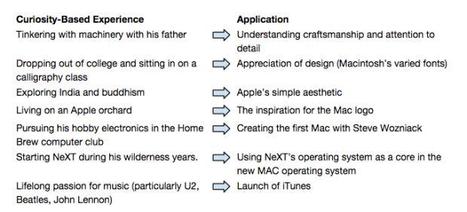








Likeable people are authentic, appreciative, positive, and genuine people-people who conduct themselves with maturity and integrity