



21st Century Learning and Teaching
791.5K views |
+0 today
Related articles to 21st Century Learning and Teaching as also tools...
Curated by
Gust MEES
 Your new post is loading...
 Scoop.it! 
A prior question -- should I go to college? -- has a definitive economic answer. College may not be right for everyone, but many studies have demonstrated that simply possessing a baccalaureate degree typically means much higher earnings throughout one's life, a fact even clearer today than in previous generations. They lack, we're told, an understanding of leadership, creativity, and emotional intelligence. In other words, it isn't primarily the "hard skills" that these graduates lack, but the so-called "soft skills. Read more: - http://www.huffingtonpost.com/thomas-a-kazee/liberal-education-soft-sk_b_5583044.html
Gust MEES's insight:
A prior question -- should I go to college? -- has a definitive economic answer. College may not be right for everyone, but many studies have demonstrated that simply possessing a baccalaureate degree typically means much higher earnings throughout one's life, a fact even clearer today than in previous generations. They lack, we're told, an understanding of leadership, creativity, and emotional intelligence. In other words, it isn't primarily the "hard skills" that these graduates lack, but the so-called "soft skills. Read more: - http://www.huffingtonpost.com/thomas-a-kazee/liberal-education-soft-sk_b_5583044.html 
Scoop.it!
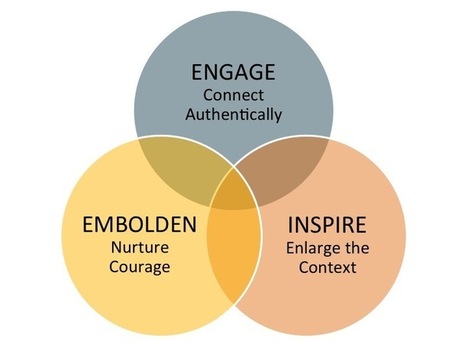
The human ingenuity within any organisation are it's greatest competitive advantage. Yet according to the latest statistics, over half of todays workers are disengaged . When leaders are committed and actively working to engage, inspire and embolden – they unleash untapped potential and raise the bar not just on productivity, but on the value their organization contributes to all stakeholders. Learn more: - http://www.scoop.it/t/21st-century-learning-and-teaching/?tag=LeaderShip Via Dr. Susan Bainbridge
Gust MEES's insight:
The human ingenuity within any organisation are it's greatest competitive advantage. Yet according to the latest statistics, over half of todays workers are disengaged . When leaders are committed and actively working to engage, inspire and embolden – they unleash untapped potential and raise the bar not just on productivity, but on the value their organization contributes to all stakeholders. Learn more: - http://www.scoop.it/t/21st-century-learning-and-teaching/?tag=LeaderShip

María Dolores Díaz Noguera's curator insight,
January 27, 2015 8:02 AM
Líderes comprometidos..Leadership Courage: Creating A Culture Where People Feel Safe To Take Risks | @scoopit via @eddebainbridge http://sco.lt/... 
W. Bradley Gooderham's curator insight,
January 28, 2015 4:38 PM
The future need innovators and the present needs innovative teachers to nurture them. Creativity and the ability to innovate are natural characteristics but they must be built up and encouraged in our students, colleagues, and selves. IteratED is committed to bringing out and nurturing the best in all of our faculty and students. We understand that this requires greater autonomy to make decisions and more trust in the natural ability to learn through exploration. Are you a teacher who wants to reach for your highest potential? We are here to help you get there. Contact IteratED for more information on how together we can provide exceptional 21st-century education. 
Tony Palmeri's curator insight,
October 24, 2015 12:40 PM
"...Human ingenuity within any organization is it's greatest competitive advantage". This quote alone made me scoop this resource. How do we tap into the resource that is our staff? Engaging with them in the classroom and in the hallways to build communication capacity is important. Inspiring staff to take risks is a tricky enterprise - leaders must value this sort of behavior. This means that attempts which result in failure must be cherished, not scrutinized as they often tend to be.
Scoop.it!

An examination into the realities of leadership in today's organizations and why it should be hard to lead our teams and organizations.
Gust MEES's insight:
An examination into the realities of leadership in today's organizations and why it should be hard to lead our teams and organizations.

John Michel's curator insight,
December 10, 2014 9:45 AM
Leadership can no longer be viewed as another rung up the career ladder, as something that is positionally ascribed because of the role we play in our organization. Instead, we need to view leadership for what it is – a calling to inspire, enable and motivate those around us to believe we can do things better; we can make things better than they are today.
Scoop.it!

The term "coaching" has been trending as a corporate buzzword for some time now. We're all familiar with athletics coaches. But when someone advises us to find a coach to learn a new skill or solve... - Coaches Don’t Set the Agenda - Coaches Focus on the Future- Coaches Listen - Coaches Ask Questions - Coaches are Action-Oriented- Coaches Give Responsibility
Gust MEES's insight:
- Coaches Don’t Set the Agenda - Coaches Focus on the Future- Coaches Listen - Coaches Ask Questions - Coaches are Action-Oriented

Pascale Hotterbeex's curator insight,
November 17, 2014 7:06 AM
Six things coaching leaders do that set them apart. 
Miguel A. de Jesus's curator insight,
November 18, 2014 12:33 AM
Who is responsible for Self Development? You are.
Scoop.it!

Are you courageous? People with courage possess these 10 characteristics. - Self-confidence. - Conviction. - Integrity. - Leadership. - Compassion. - Objectivity. - Adversity. - Change Masters. - Embrace the Unknown. - Action.
Gust MEES's insight:
Are you courageous? People with courage possess these 10 characteristics. - Self-confidence. - Conviction. - Integrity. - Leadership. - Compassion. - Objectivity. - Adversity. - Change Masters. - Embrace the Unknown. - Action.
Scoop.it!

Ultimately, an innovative leader should try to create new ideas, but it is more important that they create a culture of innovation. We often talk about empowering people and then getting out of their way, but what is often missed in the process is removing some of those barriers that they will encounter along the way. This why it is so important to spend time in the classrooms, see what teaching and learning looks like, and then help to create a better tomorrow for our students and educators. Again though, at the heart of innovation is people, not stuff. If we always keep that at the forefront of our work, we are more likely to create an innovative culture.
Gust MEES's insight:
Ultimately, an innovative leader should try to create new ideas, but it is more important that they create a culture of innovation. We often talk about empowering people and then getting out of their way, but what is often missed in the process is removing some of those barriers that they will encounter along the way. This why it is so important to spend time in the classrooms, see what teaching and learning looks like, and then help to create a better tomorrow for our students and educators. Again though, at the heart of innovation is people, not stuff. If we always keep that at the forefront of our work, we are more likely to create an innovative culture.
Scoop.it!
This infographic was first shared on Top 100 Thought Leader Linda Fisher Thornton's Blog at LeadinginContext.com/Blog. It has become a reader favorite. Intensi… Learn more: - http://www.scoop.it/t/21st-century-learning-and-teaching/?tag=Ethics - http://www.scoop.it/t/21st-century-learning-and-teaching/?tag=LeaderShip
Gust MEES's insight:
This infographic was first shared on Top 100 Thought Leader Linda Fisher Thornton's Blog at LeadinginContext.com/Blog. It has become a reader favorite. Intensi… Learn more: - http://www.scoop.it/t/21st-century-learning-and-teaching/?tag=Ethics - http://www.scoop.it/t/21st-century-learning-and-teaching/?tag=LeaderShip

Ian Berry's curator insight,
September 24, 2014 6:50 PM
I love the list of 16. It explains really well the shifts that are happening.
Scoop.it!

What types of leaders are there in businesses? What type of leader transforms an enterprise into a social enterprise? What characteristics should this leader have? Tell us in the comment section ;-) Learn more: - http://www.scoop.it/t/21st-century-learning-and-teaching/?tag=LeaderShip Via Dr. Susan Bainbridge
Gust MEES's insight:

Jerry Busone's curator insight,
October 22, 2014 7:18 AM
Transformational leading always a great topic....
Scoop.it!
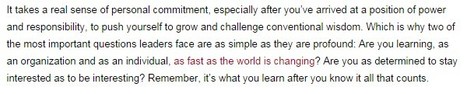
You have no excuse for being bored. Learn more: - http://www.scoop.it/t/21st-century-learning-and-teaching/?tag=mindset
Gust MEES's insight:
You have no excuse for being bored. Learn more: - http://www.scoop.it/t/21st-century-learning-and-teaching/?tag=mindset
Scoop.it!
Leading in Context believes in the kind of leadership that brings out the best in people,organizations and communities. Learn more: - http://www.scoop.it/t/21st-century-learning-and-teaching/?tag=LeaderShip
Gust MEES's insight:
Leading in Context believes in the kind of leadership that brings out the best in people,organizations and communities. Learn more: - http://www.scoop.it/t/21st-century-learning-and-teaching/?tag=LeaderShip
Scoop.it!

Just like a good tester breaks the system to find flaws so that the software becomes robust and stable, the same way, these people pinpoint where we are going wrong. Learn more: - http://www.scoop.it/t/21st-century-learning-and-teaching/?tag=Criticism - http://www.scoop.it/t/21st-century-learning-and-teaching?tag=Proactive+Thinking - http://www.scoop.it/t/21st-century-learning-and-teaching/?tag=LeaderShip Via Dr. Susan Bainbridge, Trish Sadar
Scoop.it!

Do you remember your 5th grade teachers? Would you say that any of your 5th grade teachers made a lifelong impression on your life? Via AlGonzalezinfo
Gust MEES's insight:
Well, might be good to read that as there are wise tips!
Jerry Busone's curator insight,
August 24, 2014 9:02 AM
Find yourself a mentor, teacher or coach ... 
Mirta Liliana Filgueira's curator insight,
August 25, 2014 12:01 AM
Los Profesores de Como Líderes, mentores y Entrenadores. 
Sacra Jáimez's curator insight,
August 27, 2014 4:03 AM
Magnífica reflexión para iniciar el nuevo curso. |
Scoop.it!
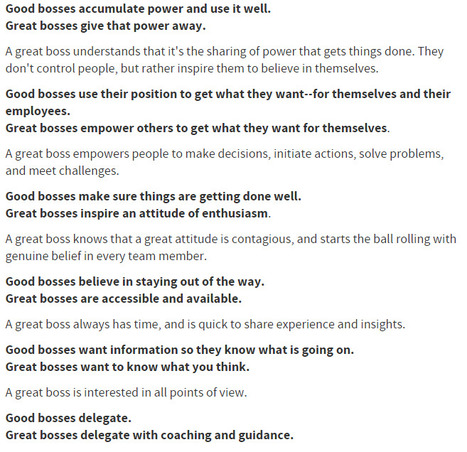
Anyone who's ever had a bad boss aspires to do better. It's fine to be a good boss, but honing your leadership skills can make you a great boss.
Gust MEES's insight:
Anyone who's ever had a bad boss aspires to do better. It's fine to be a good boss, but honing your leadership skills can make you a great boss.
Scoop.it!
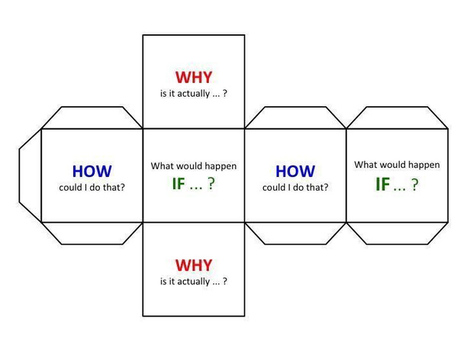
"Big idea: Teaching kids to ask smart questions on their own A four-year-old asks on average about 400 questions per day, and an adult hardly asks any. Our school system is structured around rewards for regurgitating the right answer, and not asking smart questions – in fact, it discourages asking questions. With the result that as we grow older, we stop asking questions. Yet asking good questions is essential to find and develop solutions, and an important skill in innovation, strategy, and leadership. So why do we stop asking questions – and more importantly, why don’t we train each other, and our future leaders, to ask the right questions starting from early on?"
Learn more: - http://www.scoop.it/t/21st-century-learning-and-teaching?tag=Critical-Thinking Via Beth Dichter, Dean J. Fusto, Suvi Salo, Juanita Jackson
Gust MEES's insight:
Big idea: Teaching kids to ask smart questions on their own A four-year-old asks on average about 400 questions per day, and an adult hardly asks any. Our school system is structured around rewards for regurgitating the right answer, and not asking smart questions – in fact, it discourages asking questions. With the result that as we grow older, we stop asking questions. Yet asking good questions is essential to find and develop solutions, and an important skill in innovation, strategy, and leadership. So why do we stop asking questions – and more importantly, why don’t we train each other, and our future leaders, to ask the right questions starting from early on?"
Learn more: - http://www.scoop.it/t/21st-century-learning-and-teaching?tag=Critical-Thinking

Jewelelelel's curator insight,
February 8, 2015 7:56 AM
I agree with the fact that recently,students have been 'trained' to give the correct and not ask smart questions.In school ,teachers usually ask us questions and if we answer that correctly, we get praised.For subjects sciences and humanities require a lot of questioning and thinking in order to understand and to learn more quickly.In my opinion, i think that teachers should give students a chance to ask questions that they have and not go through a topic blindly.If the students is shy to ask, the teacher could create a website so that the whole class can ask questions whenever they feel like and both the teachers and students themselves can answer the questions.This would enable the student to think out of the box to ask and answer questions by themselves
Scoop.it!
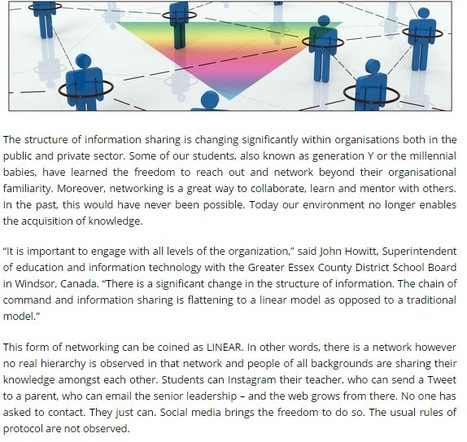
This form of networking can be coined as LINEAR. In other words, there is a network however no real hierarchy is observed in that network and people of all backgrounds are sharing their knowledge amongst each other. Students can Instagram their teacher, who can send a Tweet to a parent, who can email the senior leadership – and the web grows from there. No one has asked to contact. They just can. Social media brings the freedom to do so. The usual rules of protocol are not observed. Generation Y has been setting a precedence as a generation that wants to network linearly as collaborators of a community that transfer knowledge from one to another. The idea that they need permission to contact a superior before contacting another and another… is quickly becoming obsolete, because they can reach out to anyone through social media. Therefore, why bother asking! It can be said that Generation Y were raised with the notion that they have access to everyone, from teachers after school hours, to celebrities, to the CEO of companies. “In a traditional model of networking you would go through your immediate supervisor to obtain information,” said Howitt. “However, we are seeing many examples of skipping those traditional steps in the chain of command and creating a linear network of information sharing.”
Gust MEES's insight:
This form of networking can be coined as LINEAR. In other words, there is a network however no real hierarchy is observed in that network and people of all backgrounds are sharing their knowledge amongst each other. Students can Instagram their teacher, who can send a Tweet to a parent, who can email the senior leadership – and the web grows from there. No one has asked to contact. They just can. Social media brings the freedom to do so. The usual rules of protocol are not observed. Generation Y has been setting a precedence as a generation that wants to network linearly as collaborators of a community that transfer knowledge from one to another. The idea that they need permission to contact a superior before contacting another and another… is quickly becoming obsolete, because they can reach out to anyone through social media. Therefore, why bother asking! It can be said that Generation Y were raised with the notion that they have access to everyone, from teachers after school hours, to celebrities, to the CEO of companies. “In a traditional model of networking you would go through your immediate supervisor to obtain information,” said Howitt. “However, we are seeing many examples of skipping those traditional steps in the chain of command and creating a linear network of information sharing.”
Scoop.it!
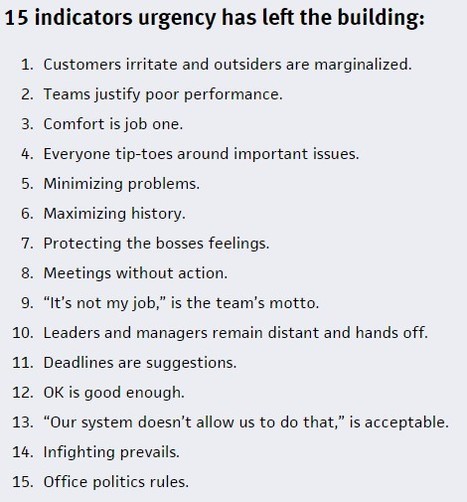
Failure is the result of lack of urgency. Comfortable rhythms set-in. People wander toward fuzzy goals. Focus becomes drifting. Complacency drives real leaders crazy. Goals without urgency are fant...
Gust MEES's insight:
Failure is the result of lack of urgency. Comfortable rhythms set-in. People wander toward fuzzy goals. Focus becomes drifting. Complacency drives real leaders crazy. Goals without urgency are fant...
Scoop.it!
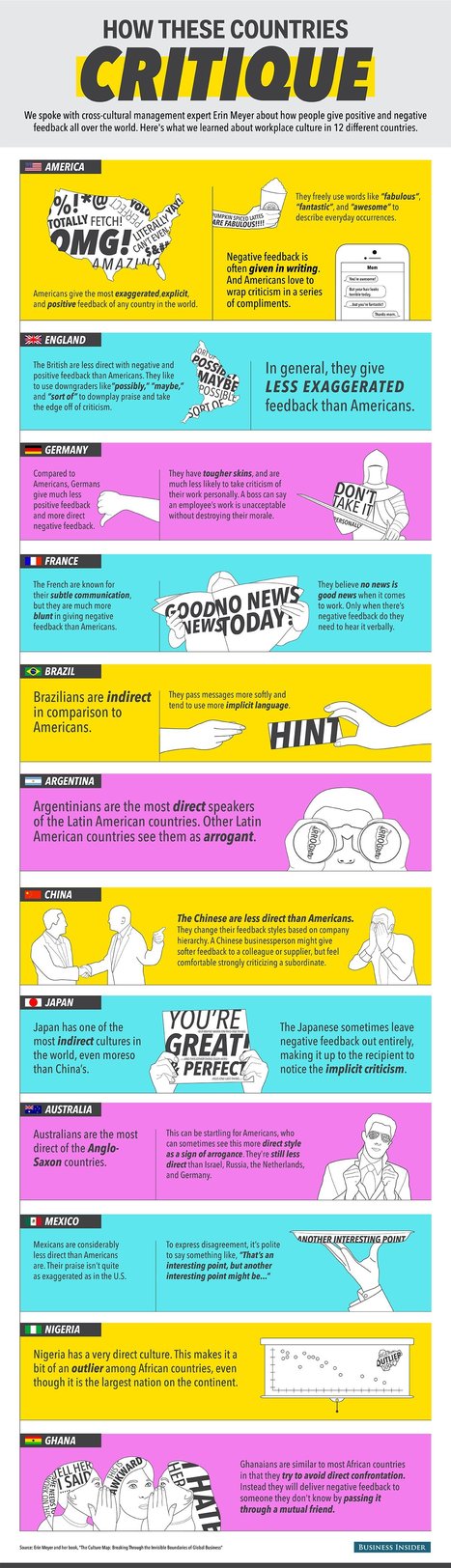
As anyone who has worked abroad will tell you, a communication strategy that's effective in one country doesn't necessarily work in another. Learn more: - http://www.scoop.it/t/21st-century-learning-and-teaching/?tag=Criticism - http://www.scoop.it/t/21st-century-learning-and-teaching/?tag=communication Via Yashy Tohsaku
Gust MEES's insight:
As anyone who has worked abroad will tell you, a communication strategy that's effective in one country doesn't necessarily work in another. Learn more: - http://www.scoop.it/t/21st-century-learning-and-teaching/?tag=Criticism - http://www.scoop.it/t/21st-century-learning-and-teaching/?tag=communication

Lisa Gorman's curator insight,
April 12, 2015 6:47 AM
Out of all the Anglo Saxon countries, Australians are the most direct. Sorry, I should have got to the point faster?!
Lisa Gorman's curator insight,
April 12, 2015 6:48 AM
This fun info-graphic provides a snapshot of cultural differences including...
Australians are the most direct out of all the Anglo Saxon Countries!
Perhaps I should have got to the point more quickly?!
Scoop.it!

Training and support for teachers on the effective use of educational technology is the key to enhancing learning in the connected classroom. That was the clear message from a recent one-day working summit in Washington, D.C., where some of the nation's top educators, edtech advocates, and policy...
Gust MEES's insight:
Training and support for teachers on the effective use of educational technology is the key to enhancing learning in the connected classroom. That was the clear message from a recent one-day working summit in Washington, D.C., where some of the nation's top educators, edtech advocates, and policy...
Scoop.it!
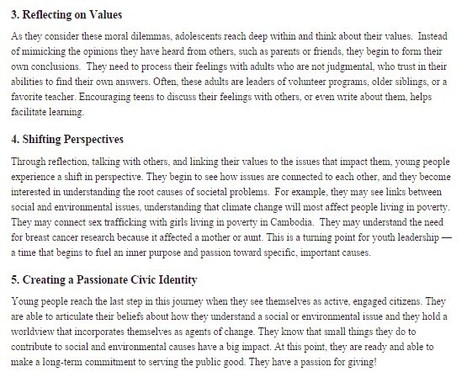
by Marilyn Price-Mitchell, Ph.D. Youth leadership development is vital to developing engaged citizens. Research shows five steps to youth leadership. Learn more: - http://www.scoop.it/t/21st-century-learning-and-teaching/?tag=Character - http://www.scoop.it/t/21st-century-learning-and-teaching/?tag=Empathy
Gust MEES's insight:
by Marilyn Price-Mitchell, Ph.D. Youth leadership development is vital to developing engaged citizens. Research shows five steps to youth leadership. Learn more: - http://www.scoop.it/t/21st-century-learning-and-teaching/?tag=Character - http://www.scoop.it/t/21st-century-learning-and-teaching/?tag=Empathy
Scoop.it!

Background Demand is growing throughout Europe to strengthen growth, innovation, competitiveness and jobs. There is a need to promote greater leadership in information and communication technology (ICT) related innovation and productivity to deliver stronger business value and benefits. The European Union has initiated several responses to this challenge. After developing the “EU e-Skills strategy”, launching a “Grand Coalition for Digital Jobs” and organising the “e-Skills for Jobs” campaign to fill the gap between demand and supply, a new focus is put on e-leadership to foster digital talent and excellence in Europe. Recent research and studies confirmed that the shortage of e-leadership skills across Europe is significant, calling for action.
Gust MEES's insight:
Background Demand is growing throughout Europe to strengthen growth, innovation, competitiveness and jobs. There is a need to promote greater leadership in information and communication technology (ICT) related innovation and productivity to deliver stronger business value and benefits. The European Union has initiated several responses to this challenge. After developing the “EU e-Skills strategy”, launching a “Grand Coalition for Digital Jobs” and organising the “e-Skills for Jobs” campaign to fill the gap between demand and supply, a new focus is put on e-leadership to foster digital talent and excellence in Europe. Recent research and studies confirmed that the shortage of e-leadership skills across Europe is significant, calling for action.
Scoop.it!

Every single leader, movement, and organization that has ever wanted to create greatness has had to challenge the status quo. Leaders challenge the status quo to entice improvements. Organizations challenge the status quo to assemble advancements. Learn more: - http://www.scoop.it/t/21st-century-learning-and-teaching/?tag=LeaderShip
Gust MEES's insight:
Every single leader, movement, and organization that has ever wanted to create greatness has had to challenge the status quo. Leaders challenge the status quo to entice improvements. Organizations challenge the status quo to assemble advancements. Learn more: - http://www.scoop.it/t/21st-century-learning-and-teaching/?tag=LeaderShip

jjfreo's curator insight,
September 21, 2014 7:53 PM
We definitely need to challenge the status quo, but it will always be more effective if it is a 'propositional challenge, rather than an oppositional challenge'.
Scoop.it!

Science confirms that our ability to inspire, empower and actualize our potential has never been greater; remember this, empower it, use it! Neuroscience confirms that we can rewrite default patterns of thinking, communicating and doing; we can build new emotional set-points that take us forward faster and better while also enhancing our ability to focus, ideate, learn and relearn. Learn more: - http://www.scoop.it/t/21st-century-learning-and-teaching/?tag=LeaderShip
Gust MEES's insight:

Don Cloud's curator insight,
September 3, 2014 2:01 PM
Turbulent times are where the "action is" and when leadership is needed the most ... and when it counts the most. The only question is will you choose to grab the "turbulent" bull by the horns and lead your people and organization to even greater potential, or will you let someone else lead instead ( ... perhaps your competition or adversary)?
Scoop.it!

The desire to do something unforgettable, exceptional and remarkable is the fire that burns in the head and hearts of leaders who strive to create a better Learn more: - http://www.scoop.it/t/21st-century-learning-and-teaching/?tag=LeaderShip
Gust MEES's insight:
The desire to do something unforgettable, exceptional and remarkable is the fire that burns in the head and hearts of leaders who strive to create a better Learn more: - http://www.scoop.it/t/21st-century-learning-and-teaching/?tag=LeaderShip
Scoop.it!
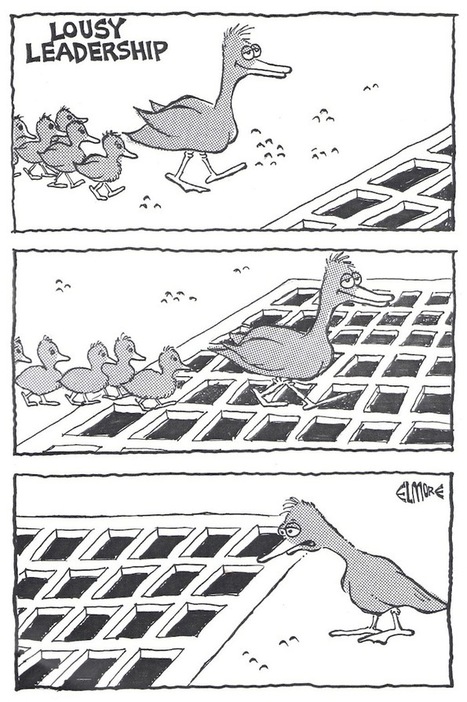
Because we, at Growing Leaders, believe in the power of using images to communicate truth—we plan to post a cartoon once in a while with a point to it. As far as I’m concerned, leaders must keep a sense of humor as we work with our teams and certainly as we work with students. It’s … Learn more: - http://www.scoop.it/t/21st-century-learning-and-teaching?tag=Proactive+Thinking - http://www.scoop.it/t/21st-century-learning-and-teaching/?tag=LeaderShip Via Lori DiMarco

AnnC's curator insight,
August 26, 2014 8:10 PM
Leaders need to think about who they are leading -DUH!

M Dolores Solé Gómez's curator insight,
August 27, 2014 7:23 AM
Leadership is important for workplace health promotion. Good leadership = good health (or almost) |







Learn more:
- https://gustmees.wordpress.com/2015/03/15/professional-development-why-educators-and-teachers-cant-catch-up-that-quickly-and-how-to-change-it/