 Your new post is loading...

|
Scooped by
Gust MEES
January 9, 2017 11:30 AM
|
|
|
Scooped by
Gust MEES
April 6, 2016 11:19 AM
|
In the best guide I’ve found to learning this skill, “Thanks for the Feedback: The Science and Art of Receiving Feedback Well,” Douglas Stone and Sheila Heen of the Harvard Negotiation Project explain that feedback — both positive and negative — is challenging because it hits us in the vulnerable soft spot between our desire to grow and our deep need to be accepted and respected. The key to hearing feedback well, they argue, is to adopt what the psychologist and author Carol Dweck calls a “growth mindset.” People with a growth mindset believe that effort and challenge make us better, stronger and smarter, while those with a “fixed mindset” believe that our inherent assets are static no matter what we do.
Not all of the criticism kids face is constructive. Some of it is born out of ulterior motives or dark intentions, but the good news is that a growth mindset can protect kids from this sort of feedback as well. Learn more: - http://www.scoop.it/t/21st-century-learning-and-teaching/?tag=Growth+Mindset - http://www.scoop.it/t/21st-century-learning-and-teaching/?tag=Criticism
|
|
Scooped by
Gust MEES
July 15, 2015 10:24 AM
|
|
|
Scooped by
Gust MEES
March 20, 2015 7:36 PM
|
Ten Disciplines of a Learner
We decided to continue the conversation on this topic at a faculty meeting. Several meetings later we had a new report card. We decided to give two grades and average them—one for “Learning,” the other for “Mastery.”
Sara might get an “F” in mastery and an “A” in learning, culminating in a “C” for the course. To be rigorous we picked ten observable behaviors and named them “Disciplines of a Learner:”
1. Asks questions
2. Builds on other people’s ideas
3. Uses mistakes as learning opportunities
4. Takes criticism constructively
5. Speaks up
6. Welcomes a challenge
7. Takes risks
8. Listens with an openness to change
9. Perseveres in tasks
10. Decides when to lead and when to follow.
Learn more:
- http://www.scoop.it/t/21st-century-learning-and-teaching/?tag=Criticism
|
|
Rescooped by
Gust MEES
from Education 2.0 & 3.0
November 14, 2014 7:15 PM
|
|
|
Rescooped by
Gust MEES
from Leadership Advice & Tips
August 25, 2014 2:52 PM
|
|
|
Scooped by
Gust MEES
June 22, 2014 5:27 PM
|
|
|
Scooped by
Gust MEES
March 29, 2014 10:31 PM
|
The effort to rank programs, by the National Council on Teacher Quality and "U.S. News & World Report," has been controversial since it started, in 2011.
Colleges of education are "an industry of mediocrity" that churns out unprepared teachers to work in the nation's elementary and secondary schools, according to a highly anticipated report. The report, "Teacher Prep Review," describes the findings of a controversial effort to rate the quality of programs at 1,130 institutions nationwide that prepare about 99 percent of the nation's traditionally trained teachers.
|
|
Scooped by
Gust MEES
December 27, 2013 11:54 AM
|
Your growth depends on your ability to pull value from criticism in spite of your natural responses and on your willingness to seek out even more advice and coaching from bosses, peers, and subordinates.
They may be good or bad at providing it, or they may have little time for it—but you are the most important factor in your own development. If you’re determined to learn from whatever feedback you get, no one can stop you.
|
|
Scooped by
Gust MEES
November 6, 2012 5:07 PM
|
|
|
Scooped by
Gust MEES
June 11, 2012 7:55 AM
|
These tips are intended help novice writers learn to take criticism from instructors, peer reviewers and editors. Start with the assumption that your work can be improved
The biggest mistake writers make is assuming that once they have submitted a piece of writing, that is finished… and perfect. This assumption sets the writer up for a frustration and anger when it is returned with a request for revisions. It can be helpful to approach your writing from the point of view there is always room for improvement.
Read more...
Via Ana Cristina Pratas
|
|
|
Rescooped by
Gust MEES
from Learning & Technology News
October 8, 2016 11:10 AM
|
|
|
Scooped by
Gust MEES
July 15, 2015 11:54 AM
|
|
|
Scooped by
Gust MEES
March 28, 2015 1:25 PM
|
|
|
Scooped by
Gust MEES
March 15, 2015 7:04 PM
|
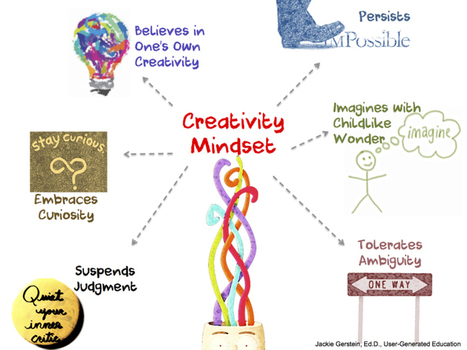
Suspends Judgment – Silences the Inner Critic
The ability to hold off on judging or critiquing an idea is important in the process of creativity. Often great ideas start as crazy ones – if critique is applied too early the idea will be killed and never developed into something useful and useable. (note – this doesn’t mean there is never a time for critique or judgement in the creative process – it’s actually key – but there is a time and place for it). (http://www.problogger.net/archives/2007/05/09/9-attitudes-of-highly-creative-people/) Many new ideas, because they are new and unfamiliar, seem strange, odd, bizarre, even repulsive. Only later do they become “obviously” great. Other ideas, in their original incarnations, are indeed weird, but they lead to practical, beautiful, elegant things. Thus, it is important for the creative thinker to be able to suspend judgment when new ideas are arriving, to have an optimistic attitude toward ideas in general. Tolerates Ambiguity Ambiguity tolerance may be… the “willingness to accept a state of affairs capable of alternate interpretations, or of alternate outcomes,” (English & English 1958). In other words, ambiguity tolerance may be central to creative thinking. (http://knowinnovation.com/tolerating-ambiguity/#sthash.XqxhaQh3.dpuf) With the toleration of ambiguity, creativity gives way to new ideas, stimulates the acceptance of others’ viewpoints, and thus raises tolerance, understanding and cooperation. (http://www.academia.edu/2506344/Creative_climate_as_a_means_to_promote_creativity_in_the_classroom
Persists Even When Confronted with Skepticism & Rejection
Learn more:
- http://www.scoop.it/t/21st-century-learning-and-teaching/?tag=Creativity
|
|
Scooped by
Gust MEES
September 16, 2014 3:57 PM
|
|
|
Scooped by
Gust MEES
August 3, 2014 6:21 PM
|
The terms 'critical' and 'reflection' are sorely misunderstood in education. Being critical is often misinterpreted as being negative. 'Reflection' is also frequently distorted to mean "reflect on what you are doing wrong". Too often the students that we teach give negative feedback when asked to be critical. So to counter act this, educators initiate strategies such as '2 stars and a wish' and SWNI (strengths, weaknesses, new ideas).
These strategies are designed to make reflective practices a more positive experience for students. It teaches them that being critically reflective is not just a negative activity, that it is important to be positive and give feedback to help improve or make something better.
Learn more:
|
|
Scooped by
Gust MEES
April 7, 2014 3:27 PM
|
If America's future success in the increasingly global economy will be determined by our children – and specifically by the way we educate our kids to compete in that economy – then Amanda Ripley's thought-provoking book, The Smartest Kids in the World: And How They Got That Way, raises cause [...]
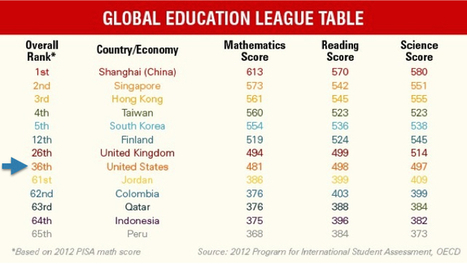
American kids have fallen far behind their peers in other countries, leaving them at a strong disadvantage in the globalized information economy, Ripley notes.
In a ranking of student performance on an international test called the Program for International Student Assessment (PISA), which gauges the teaching of creativity and critical thinking – correlated with success in the workplace – the U.S. comes in below 36 other countries.
|
|
Scooped by
Gust MEES
February 23, 2014 9:02 AM
|
Use this video and lesson to incorporate quality peer critiques in your classroom.
Feedback is necessary in an effective learning environment. It creates a path for students to follow on their learning journey.
Use a deeper learning strategy and video lesson to incorporate quality peer critiques in your classroom.
|
|
Scooped by
Gust MEES
November 5, 2012 5:12 PM
|

|
Suggested by
Vincenzo Storti
June 23, 2012 5:30 PM
|
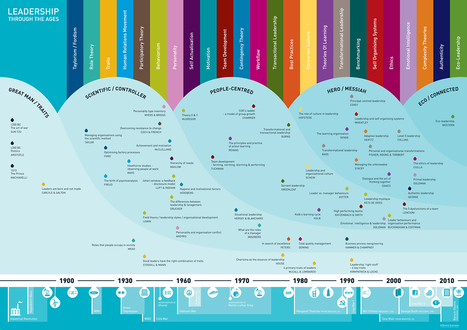
An infographic designed to assist in leadership development courses by helping participants to increase their awareness of leaders and leadership theory. Read (view) more: http://visual.ly/leadership-through-ages
|
|
Scooped by
Gust MEES
May 29, 2012 10:11 AM
|
Becoming a Critic Of Your Thinking By Dr. Linda Elder and Dr. Richard Paul Learning the Art of Critical Thinking Critical thinking is the disciplined art of ensuring that you use the best thinking you are capable of in any set of circumstances. The general goal of thinking is to “figure out the lay of the land” in any situation we are in. We all have multiple choices to make. We need the best information to make the best choices. What is really going on in this or that situation? Are they trying to take advantage of me? Does so-and-so really care about me? Am I deceiving myself when I believe that…? What are the likely consequences of failing to …? If I want to do …, what is the best way to prepare for it? How can I be more successful in doing…? Is this my biggest problem, or do I need to focus my attention on something else? Successfully responding to such questions is the daily work of thinking. However, to maximize the quality of your thinking, you must learn how to become an effective "critic" of your thinking. And to become an effective critic of your thinking, you have to make learning about thinking a priority. Thanks to https://twitter.com/#!/cmt1 who shared this on Twitter. Gust MEES: Read more, very interesting... http://www.criticalthinking.org/pages/becoming-a-critic-of-your-thinking/605
|








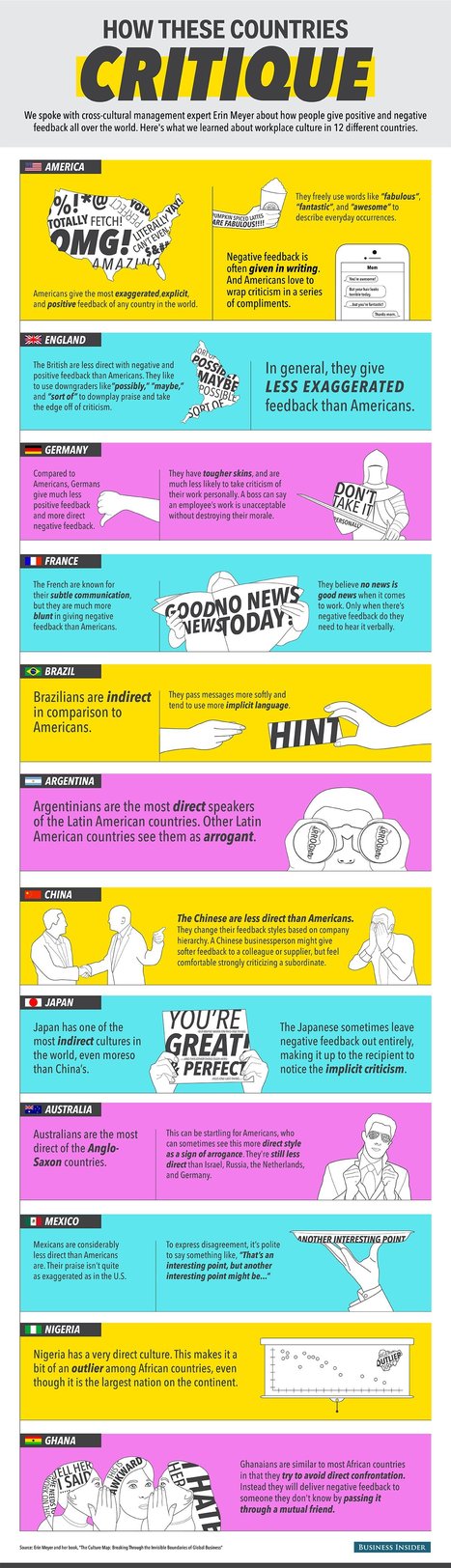











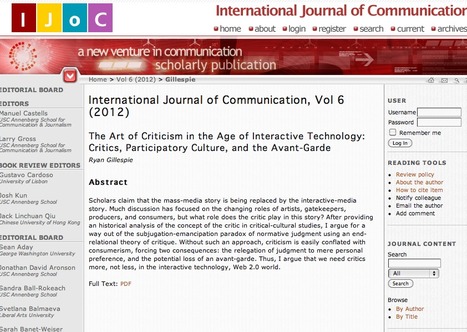



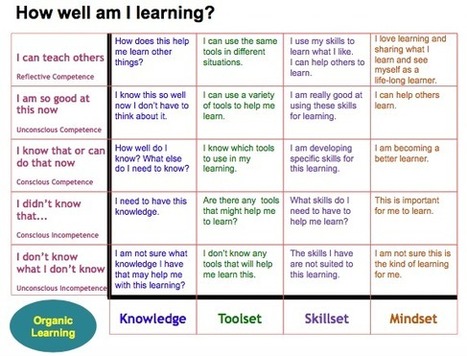


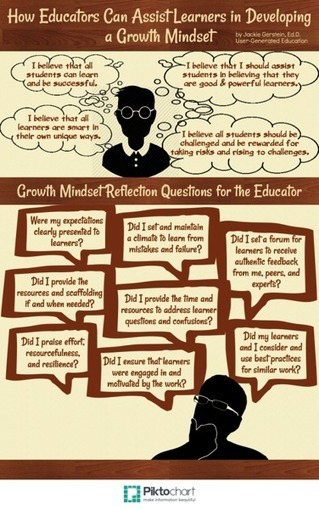



















In fact, we should thank folks who make the effort to nurture us with their valuable input –– even if it hurts at times. How do you expect to become a better person if you don’t know where to begin? The truth is, practice doesn’t make perfect if you’re doing it wrong. Feedback enables us to learn about our shortcomings and take corrective action. Don’t bury your head…nourish it. That’s how excellence is born.
Learn more / En savoir plus / Mehr erfahren:
http://www.scoop.it/t/21st-century-learning-and-teaching/?tag=feedback
http://www.scoop.it/t/21st-century-learning-and-teaching/?tag=Coaching
https://gustmees.wordpress.com/2014/01/04/practice-better-ways-to-say-i-dont-know-in-the-classroom/
http://www.scoop.it/t/21st-century-learning-and-teaching/?tag=Criticism