Deep dives
The largest topic worked as a specialist watchlist for plant immunity. It followed the molecular grammar of recognition and response: NLRs, helper proteins, resistosomes, cell-surface receptors, and the cell-death programs that mark a successful defense.
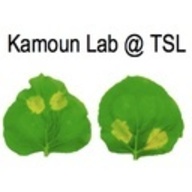
bioRxiv: The helper NLR immune protein NRC3 mediates the hypersensitive cell death caused by the cell-surface receptor Cf-4 (2021)
A recurring tension ran through the selections: pathogens do not simply attack plants, they interfere with signaling. Papers on effectors that block phosphorylation, alter secretion, or evade immune proteins gave the topic its sharp mechanistic edge.
bioRxiv: A bacterial effector protein prevents MAPK-mediated phosphorylation of SGT1 to suppress plant immunity (2020)
The feed also preserved the social life of the field. Alongside preprints and major journal papers, it included summer schools, conferences, reviews, and community resources, showing a lab that treated knowledge circulation as part of the science.
TSL Summer School Plant Microbe Interactions, 20–29th July 2020 Norwich, UK
The publications topic became more than a lab output stream. It paired papers on NLR biology, pathogen effectors, and plant defense with first-person essays about how research is framed, judged, and discussed.
Medium: Data vs hypothesis driven research: the false dichotomy (2025)
The Medium pieces gave the archive a direct voice. They challenged habits of academic prestige, conference culture, mentoring, and leadership, often from the position of a senior scientist asking colleagues to look harder at the systems they reproduce.
Medium: Stop displaying journal names on your slides (2025)
Even in its reflective mode, the topic stayed anchored in the bench and the preprint server. New work on small RNAs, helper NLRs, resistosome assembly, and late blight effectors kept the science close to the arguments about scientific culture.
bioRxiv: A conserved small RNA-generating gene cluster undergoes sequence diversification and contributes to plant immunity (2025)
The pathogenomics topic followed genomes as moving targets. Its selections emphasized mini-chromosomes, transposable elements, presence-absence variation, methylation, pangenomes, and the structural changes that let pathogens shift hosts or sharpen virulence.
bioRxiv: Genomic rearrangements generate hypervariable mini-chromosomes in host-specific lineages of the blast fungus (2020)
Fungal pathogens dominated the archive, especially blast fungi, Zymoseptoria, Colletotrichum, and Phytophthora. The effect was not a general genomics survey but a focused record of genome plasticity as an evolutionary weapon.
PLOS Genetics: Effector gene reshuffling involves dispensable mini-chromosomes in the wheat blast fungus (2019)
The topic also crossed back into plant immunity through pan-NLRomes and resistance genes. That bridge made the archive read as one arms race seen from both sides: pathogen genome innovation on one side, host immune diversity on the other.
bioRxiv: The Arabidopsis thaliana pan-NLRome (2019)