Click here for a direct link to the video titled "Education" on Amazon Prime video that is part 5 of director Steve McQueen's acclaimed "Small Axe" series. (Subscription to Prime is required)
PLOT SUMMARY (from IMDB)
"Education is the coming of age story of 12-year-old Kingsley (Kenyah Sandy), who has a fascination for astronauts and rockets. When Kingsley is pulled to the headmaster's office for being disruptive in class, he discovers he's being sent to a school for those with "special needs." Distracted by working two jobs, his parents (Sharlene Whyte, Daniel Francis) are unaware of the unofficial segregation policy at play, preventing many Black children from receiving the education they deserve, until a group of West Indian women take matters into their own hands."
We invite middle school and high school students to write opinion pieces on the issues that matter to them. Contest dates: Feb. 23 to April 13.
"Over the last seven years, tens of thousands of teenagers from around the world have answered these questions in the form of short opinion essays submitted to our annual spring Editorial Contest.
"They’ve made compelling arguments on issues big and small, from climate change, Black Lives Matter, lockdown drills, college admissions and immigration, to Ultimate Frisbee, teen slang, the blessings of selfie culture, and why pineapple pizza deserves more respect.
"Now we’re inviting students in 2021 to do the same: make an argument in 450 words or fewer about something that matters to them, and persuade us, with evidence, that we should care, too. To help, we have an all-new collection of 300 questions and images to spur ideas.
"Another place to start? With our collection of mentor texts — the many student essays that have won our past contests. One hundred of the best have been collected in a book, but you can also find many online. If you’ve taught with them already, we’d love to know how — and if you haven’t, we invite you to try and then tell us what happens.
"To learn more, join us for a live webinar on Feb. 11 as we walk through our student contest and share resources and mentor texts for teaching argumentative writing with The Times."
"My first attempts to incorporate identity, equity, and justice into my science teaching felt nerve-racking because I was new to it, but students responded positively; for 15 years now, anonymous post-unit surveys from a total of hundreds of students have indicated that 95 percent of my students have found these lessons worthwhile. Awareness of racial inequality has risen in recent years, and so has appreciation for this perspective in my courses. In the representative words of one student, “Social justice applies to everyone, everywhere, at any time.”
"In my experience, integrating social justice into science education is both exhilarating and uncomfortable. That discomfort is understandable—as science teachers, few of us received training in how to weave these threads together. And yet we must persist, as we do whenever we identify a change needed in our teaching practices.
"Our students will benefit as they construct a more accurate picture of the nature of science, who does science, and how science and they themselves are influenced by society. Our schools will benefit as our students gain experience and skill listening across differences and having honest conversations about challenging topics. And our society will benefit as our students enter it motivated and equipped to make concrete changes to make the world a more just place. In this way, our science teaching can become part of the practice of freedom."
"STEM Writing Contest is now accepting entries until March 2. We invite middle and high school students to choose an issue or question in science, technology, engineering, math or health and then write an engaging 500-word explanation. Last year’s winners wrote about topics ranging from jalapeños and chewing gum to cancer treatments and black holes. We have many resources to support teachers and students, including a unit plan, various mentor texts and an on-demand webinar."
For a Google doc version of this lesson, click here. You will need to make a copy of the Google doc for a version you can edit.
Overview
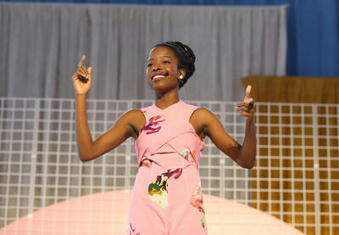
In this lesson, students examine the poetry of Amanda Gorman, who was chosen to read her poem “The Hill We Climb” at President-elect Joe Biden’s inauguration on Jan. 20, 2021. Gorman’s poem will complement Biden’s message and themes of “unity.”
Subjects English, English Language Arts, Social Studies
Two teachers show how their middle and high school students work with sentence structure using New York Times models. They also pose a sentence-writing challenge for your students.
“Sentences That Matter, Mentor and Motivate”: If you’re an English teacher, that headline alone might be enough to grab you. Yet if you take a closer look at our featured post today, you’ll see there’s something in it not just for teachers, but for students, too.
"Jodi Ramos, a middle school teacher in Texas, and Blake Bockholt, a high school teacher in Utah, describe how they’re using New York Times sentences in their hybrid classrooms this semester; they also pose a challenge. Can your students find their own examples of specific sentence structures in The Times, then use those sentences as mentors for fresh writing? If so, we invite them to post their creations to our comments section. Blake and Jodi will be reading the results, and so will we."
"In the variedly stimulating 1976 volume The Identities of Persons (public library), philosopher Amelie Rorty considers the seven layers of personhood, rooted in literature but extensible to life. She writes:
"Humans are just the sort of organisms that interpret and modify their agency through their conception of themselves. This is a complicated biological fact about us.
"Rorty offers a brief taxonomy of those conceptions before exploring each in turn:
"""Characters are delineated; their traits are sketched; they are not presumed to be strictly unified. They appear in novels by Dickens, not those by Kafka. Figures appear in cautionary tales, exemplary novels and hagiography. They present narratives of types of lives to be imitated. Selves are possessors of their properties. Individuals are centers of integrity; their rights are inalienable. Presences are descendants of souls; they are evoked rather than presented, to be found in novels by Dostoyevsky, not those by Jane Austen.""
"Depending on which of these we adopt, Rorty argues, we become radically different entities, with different powers and proprieties, different notions of success and failure, different freedoms and liabilities, different expectations of and relations to one another, and most of all a different orientation toward ourselves in the emotional, intellectual, and social spaces we inhabit."
Writing, as is the case with learning in general, is not only about product but is also about process. In other words, writing is about the cognitive processes (e.g., thinking skills and analytic reasoning) students get to activate and develop as they actively engage in the act of writing. Writing is also a mode of thinking, a heuristic for clear reflection and introspection. In his excellent book "The Digital Writing Workshop" (Amazon affiliate link) Tryo Hicks explains how we can use technology to bolster the writing process and enhance the teaching of writing. Inspired by insights from Tryo's work and from several other resources we shared here in the past, we designed the visual below that captures some of our favourite apps and tools teachers and students can use to enhance their writing. For each phase of the writing process we came up with corresponding apps that we believe work best to realize it.
This visual is also available for free download in PDF format. For links to the apps you may want to check this chart.
"My classes and students started to run together, and I kept looking at the clock. That doesn’t happen to me anymore since I have added projects-based learning to the curriculum."
"I discovered the Dover Bookstore in Mineola, New York, as a bored suburban teenager in the 1980s. “The Little Bookshop,” a room the size of my then-bedroom, was attached to a noisy warehouse and printshop next to the railroad tracks. Books containing the oddities of philosophic and mathematical knowledge, children’s literature, design, and history filled shelves stretching up to the ceiling. As a budding zine publisher and visual artist, I purchased books of copyright-free clip art, vintage black and white photographs reproduced on postcards, and craft instruction books from the $1 “damaged” bargain bin.
"While my proximity to the Dover Bookstore may have given me unique access to its huge and varied catalog, the publisher is well-loved by people of wide-ranging interests for its affordability, accessibility, and design. Started by Heyward and Blanche Cirker in their apartment in post-war Queens, Dover Publications produced 10,000 book titles over the course of 80 years. They built a profitable company through a number of unique and innovative publishing practices, most notably filling their catalog with republished versions of books that had fallen out of copyright."
Jim Lerman's insight:
I love(d) Dover Books and have a great many purchased over the years. Maybe you, or someone close to you, does (did) too. This story is enjoyable to inhale.
On the Spot! Improvisation (improv) is a theater technique where you perform spontaneously without any preparation. This app is an improv prompt generator that can be used in classrooms to learn or in a social setting to have fun.
"Instead of focusing on mechanics, we should be focusing on the content. We need to focus on leads, details, strong opinion statements, using evidence, creating suspense and so on. These types of skills generally make up about 80% of the points on most writing rubrics. Giving students feedback focused on these skills will have the biggest impact on student growth!
"Yes, I do teach my students to edit their writing. (You can read more about that HERE.) But, I don’t spend much of my feedback time worrying about spelling and edits because I know that feedback on the content will help my students to improve and grow faster."
"In my December post “How We Learned to Write Argument Online” I introduced the topic of teaching argument writing using real world issues that are impactful on our students – and shared some work my frequent collaborator Dr. Troy Hicks and I did with my 6th graders late last spring after remote learning began.
"In this post I want to pick up the thread and focus on the part of our lesson planning where we had students examine evidence they found in two articles they have read on the same topic (Covid-19 and reopening our country) – one from a more moderate to liberal source and the other from a conservative source.
"I’ll also discuss how students began drafting their argument writing with the use of sentence starters. This activity can be adapted to any classroom, and although it worked well for me, not every piece of it may work well for you. Enjoy!"
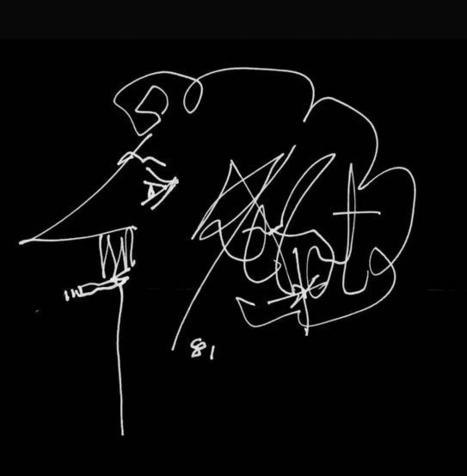
Now comes Kurt Vonnegut (November 11, 1922–April 11, 2007) — anarchist, Second Life dweller, imaginary interviewer of the dead, sad soul — with eight tips on how to write a good short story, narrated by the author himself.
National Youth Poet Laureate Amanda Gorman’s poem “The Hill We Climb,” written for the 2021 inauguration, presents a great opportunity for educators and students to discuss the ways creative expression can help us think about the meaning of democracy.
Instead of spending hours writing out comments or correcting student errors, the rubrics themselves are designed backwards from the end goal: persuasive, eloquent use of language and argument. With the specific criteria spelled out clearly on the rubrics, I only have to check the category it falls into under each standard (Publishable, Revisable, and Redo) and leave a quick note as to what the student can do to revise and strengthen that criterion if not yet Publishable.
I might add some additional marks on the paper itself, but these are now minimal thanks to the targeted rubrics. I experimented this past year with my senior Film and Composition class, a yearlong English course that I teach by myself and found my grading time was greatly reduced, even as the volume of submissions increased.
The rubric I designed is detailed and specific to my class—it may not be the right rubric or standards for you—but I believe the principles behind it can be applied successfully to other classes and age groups.
Order Vyvanse Online without Prescription and other highly controlled medications like BOTOX, MORPHINE, DILAUDID, FENTANYL PATCHES, XANAX, OXYCODONE, OXYCONTIN, OPANA, SUBOXONE, OXYNORM , STILNOX , HUMATROPE 72 IU, DEXEDRINE, ATIVAN, DESOXYN , VICODIN, YELLOW XANAX,SUBUTEX RITALIN,ANBIEN, DIAZEPAM, LORTAB, DEMEROL, KETAMAX INJECTION, CODEINE, NORCO, OPANA, NEMBUTAL SODIUM AND DESOXYN , MORPHINE INJECTION, ADDERALL, OXYCODONE, GREEN XANAX , XANAX ROXICODONE, SOMA, CATTLE, ULTRAM, ADIPEX, HYDROCODONE ACTAVIS COUGH SYRUP Online without prescription. You are always welcome to our Shop at any time to enjoy from our best online services feel free to contact our Store HERE.
"For half a century, Charles M. Schulz (November 26, 1922–February 12, 2000) made an art of difficult emotions while delighting the world with his enormously influential Peanuts. The 17,897 comic strips he published between 1950 and 2000 are considered, in the words of cultural historian Robert Thompson, “the longest story ever told by one human being.”
"In Only What’s Necessary: Charles M. Schulz and the Art of Peanuts (public library), beloved graphic designer Chip Kidd offers a guided behind-the-scenes tour of Schulz’s genius. With tremendous reverence and unprecedented access to the Charles M. Schulz Museum and Research Center, Kidd delves into the raw material of Schulz’s creative process — his sketches, his correspondence, rare early editions of his comics, a wealth of previously unpublished artwork, and various never-before-seen ephemera that emanate the singular spirit of this irreplaceable creative force."
Jim Lerman's insight:
Excellent appreciation of Charles Schulz and a marvelous story about the introduction of Franklin into the Peanuts gang after the assassination of Martin Luther King.
Streaming: Monday, November 9 at 5pm ET through Sunday, December 6 at 11:59pm ET
Approximate run time: 50 minutes. This program is free of charge.
From The New Yorker:
"Best of all is the New York tap dancer Michela Marino Lerman and her amazing band of dancers and musicians, Love Movement, in a knockout set filmed at the Whitney Museum last year. Caravanning around a jazz exhibit, effortlessly slipping into wide-ranging styles, they embody collective music-making at its most soul-warming and joyous."
From the Joyce Theatre:
"Michela Marino Lerman has established herself as one of the world’s brightest stars of tap. Love Movement, her ravishing troupe of exquisite musicians and dancers, performed during The Whitney’s "Jazz on a High Floor in the Afternoon", curated by jazz pianist, composer, and visual artist Jason Moran and Whitney performance curator Adrienne Edwards. This exhilarating 50-min work from 2019 will leave you breathless."
"Curiosity might be the most important disposition of the new age. It guides the explorations of youth, it powers invention and creation, and fuels chapters of life long learning.
Cultivated through habits of inquiry, curiosity is easily dampened by stress—physical or physiological and blocked by a lack of permission—real or perceived. In an age where curiosity and creativity are more important than ever, pandemic challenges and inequitable conditions block employees and students from the luxury of curiosity.
"The Building Blocks for Learning from Turnaround for Children is a framework for the development of skills children need for success in school and beyond. “Curiosity is at the top of the framework as a critical higher-order skill,” explained author Dr. Brook Stafford-Brizzard (now at CZI), “It’s more than wide-eyed wonder about the world, it’s the willingness and ability to explore, observe, take risks, follow the more difficult path."
"As many educators are teaching remotely or in hybrid environments, we need to have multiple options for our students to be able to create and express what they are learning. We should offer some options that promote creativity, student engagement, and student choice.
"Asking students to retell a story they have read or to create a story using the content material they are learning promotes more independence in learning. It also helps students to develop essential skills such as critical thinking and problem-solving and depending on the choices available to students, it also promotes the development of technology skills.
For students who may want to draw, use pictures, create a podcast, or make a video, there are many options out there to choose from. Many options also enable students to work together in the virtual space. With transitions during the school year, having a few options available for students to collaborate with peers will also help build social-emotional learning skills, which are essential for their future and now.
"Some of the tools my students have used for digital storytelling are great for creating short videos, newsletters, animations, and even augmented reality experiences. Here are some options to explore:"
These are great alternative to the traditional assignments that get students to take control of their learning by allowing them to create a short video explaining what they have learned.
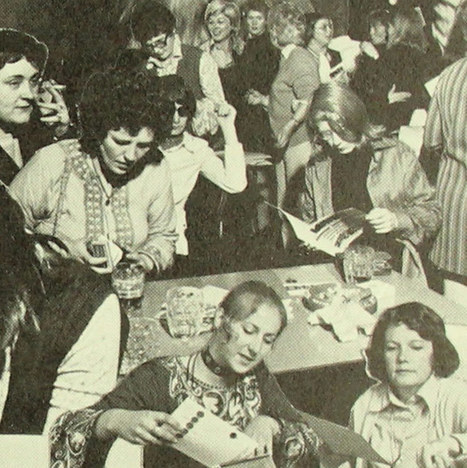
"UK readers are likely aware of the award-winning Glasgow Women's Library, and readers around the world may delight in this opportunity to become acquainted. The library champions women's achievements and contributions, and also seeks to dismantle gender inequalities that continue to persist. The library's LGBTQ Collections Online Resource draws on this mission by highlighting some key resources from the physical Lesbian Archive in an accessible, online format. This online resource is composed of several collections: Early Lesbian and Gay Publications, Feminism and Lesbian Politics, We Recuit!: Campaigns and Organisations, The Personal is Political: Lesbian Life, and LGBTQ Life in Scotland. These collections feature various media, including art and clothing, but a bulk of the materials are publications, pamphlets, and other snippets of literary work. For additional information readers may want to explore the Bibliography page, which lists other materials used in developing the LGBTQ Collections Online Resource. Additionally, readers on Twitter can stay up-to-date with new additions to the Lesbian Archive by following the hashtag #gwllesbianarchive."
"Kleon: Let’s talk about teaching. A Muse and a Maze — the Maze is the construction, that’s the thing that you can make, and the Muse is, well, the Muse. You say that usually we teach the Maze part, but do you think you can teach students to let themselves be open to The Muse?"
Jim Lerman's insight:
Enjoyable interview with lots of wonderful ideas about writing, teaching writing, and other fun things too.
To get content containing either thought or leadership enter:
To get content containing both thought and leadership enter:
To get content containing the expression thought leadership enter:
You can enter several keywords and you can refine them whenever you want. Our suggestion engine uses more signals but entering a few keywords here will rapidly give you great content to curate.


 Your new post is loading...