After teaching high school English for 8 years and grading 15,000 papers, Jeff Scheur created NoRedInk to help his students improve their writing skills. Now, he’s helping millions of students in grades 5-12 improve their writing with an adaptive curriculum that engages them through their personal interests, boosts their skills through targeted practice exercises, and guides them through each stage of the writing process in a way that only a veteran English teacher would know. A National Board Certified Teacher, former debate director, and speaker on education innovation, Jeff is intent on improving the feedback loop in classrooms and empowering students to become skilled, creative, and confident writers. He holds an MA in Education from the University of Michigan, Ann Arbor, and a BA from Oberlin College. In this Q&A, Jeff shares a bit of his own backstory in developing a solution for common struggles he witnessed as a high school English teacher, and he provides tips and guidance on how educators can improve student writing scores and bridge the achievement gap at their school – remotely and in the classroom.
"Four years ago we published a collection of 40 intriguing photographs from the first four years of our popular weekly feature “What’s Going On in This Picture?” The slide show quickly became a go-to resource for teachers around the world, and it remains one of our most utilized teaching resources — ever.
"To publish this sequel, we’ve had to wait patiently for four more years, gradually building a new collection of 40 remarkable images from “What’s Going On in This Picture?” that have already fascinated tens of thousands of students. Many of these photos are our most commented-on images; others are simply our favorites.
"We invite teachers and students to use this bank of 40 puzzling images, all stripped of their captions or context, to practice visual thinking and close reading skills by holding a “What’s Going On in This Picture?” discussion or writing activity, via in-person or remote instruction.
"If you’re not sure how to get started, we have a recorded webinar that walks teachers through the process and describes the power of this simple activity. In addition, we have lesson plans and resources to help teachers use a wide variety of Times images to get students writing, thinking, speaking and listening."
Jim Lerman's insight:
Go to the source article for several good links. I have always found these (and other) pictures to be very useful in teaching writing, creativity, and critical thinking.
Kristina Rizga: What have been the greatest challenges in your transition to remote learning in the Mississippi Delta?
Renee Moore: The Mississippi Delta region is very rural, and our biggest issue is access to broadband and wireless services. Some of the students don’t have access to the internet; others don’t have devices. The bandwidth isn’t used to this heavy traffic due to the coronavirus. Mississippi Delta Community Colleges are solving this issue in an innovative way by allowing students to use Wi-Fi outside of the campus, in the parking lots. Students pull up in their cars and get their work done in the parking lot.
The other big issue is that many of the teachers don’t have the skills to teach online. They all had technical training, like how to work the buttons and set up the system. But they haven’t had the pedagogical training: How do you teach your subject, like writing and reading, online? That to me is the greater concern and the biggest need right now. Teachers will have to learn on the fly how to teach online, and there will be even greater discrepancy in the quality of instruction for students.
"We are working toward a future full of positive, inclusive, fair online game communities for youth. This work is taking place hand-in-hand with game developers, advocacy groups, philanthropists, educators, parents, youth, researchers, and others. Check out our resources section for a place to get started!"
"While hexagonal thinking is not new in the world of business and innovation, it’s just making its way into the classroom. It’s a method for considering the connections between ideas and finding the nuances in those connections. If you’re looking for a fresh framework for discussion and critical thinking, this may be just the thing.
HOW IT WORKS "When you place an idea on a hexagon, it has six sides where connections could be made to other ideas. When you place many ideas on many hexagons, the discussion about where to connect what will be different every time.
"If you gave the same seven idea cards to seven people, do you think you’d get the same seven webs of interconnected hexagons? Would the people explain the connections in the same way?
"Nope.
"And really, that’s the beauty of hexagonal thinking. It provides a springboard for a totally creative discussion. When you give a small group of students a deck of hexagons and ask them to connect them however they choose, every group will come up with a different web for different reasons. Along the way they’ll hopefully question each other and dig deep into the concepts on the cards, arguing about which idea connects more to an important concept and which example deserves one of those precious six sides."
After an instructional lesson is over, educators are left with a classroom full of students looking at them. Did my students get the lesson? Are there any ideas, concepts or skills they are still unsure of? Do my students have any misconceptions about the lesson and its content? Do I have to review anything tomorrow?
These are just a few of the questions reflective educators are left to contemplate after the bell has rung. In truth, many of these reflective questions educators are left asking themselves can be addressed if they use an exit ticket. Exit tickets are a simple, quick, and oftentimes insightful formative assessment method employed close to the end of a lesson. It is a simple task that requires learners to answer a few questions or perform certain tasks explored during the learning process.
The format of an exit ticket varies. Educators can use a variety of question/activity types. There are multiple-choice, true or false, short written response, matching, cloze (fill in the blank), and surveys or polls to name but a few. In terms of classroom implementation, exit tickets should be short, concise, and engage learners in a review of the skills, concepts, and experiences explored during the lesson. They are also ideal for continuing the learning into the next class – many educators begin with the exit tickets from the previous lesson to activate students’ previous knowledge.
The Spark Creativity Teacher Podcast is designed to give you creative and practical teaching strategies for your ELA classroom in the time it takes to go for a run, drive to the store, or get ready in the morning. I know your life is BUSY. If you'd like some professional development that doesn't require a plane ticket or a week of your time, you can find all the shows on iTunes right here.
"Each week we publish four new short, accessible, image-driven prompts that invite students to create short stories, poems and memoirs; share experiences from their lives; analyze illustrations, graphs and charts; and debate current issues.
"Here are examples of the four types of writing we promote using our prompts:
Uppermost in our minds when we confer and interact with a writer must be the goal of leaving the writer intact and hopeful, with a sense of self-worth and an “I can do it!” spirit that propels the learner forward with dignity and energy to do the work. Here are 10 ways we can be sure we are putting our writers first.
"Do you enjoy writing short stories or other works of fiction? How do you find inspiration for what you write?
"In this activity, we invite you to create your own short story inspired by photographs and illustrations from our Picture Prompts series.
"Think of this exercise a little bit like cooking with a recipe. We’ll give you options for your main ingredients: You’ll choose a main character, setting and conflict from the images we’ve rounded up below. Then follow the steps to plan, write, revise and share your story.
"But, as with cooking, you don’t have to stick to the recipe exactly as it’s written. We encourage you to experiment with, build on and be inspired by our suggestions. We want you to use your own ideas, identity and imagination to come up with an original creative work."
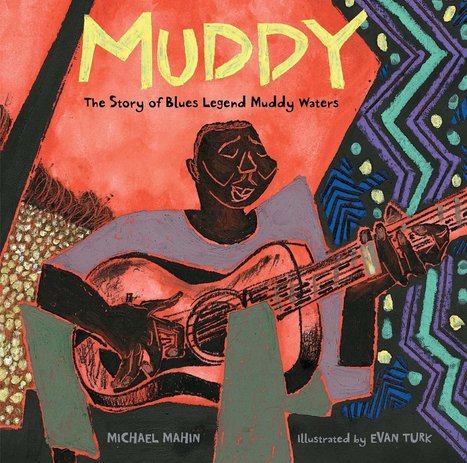
"Beethoven believed that music saved his life — he found in it “the joy of suffering overcome.” A century and a half later, this hard-earned joy alighted to another musician of groundbreaking genius and far-reaching influence: McKinley Morganfield (April 4, 1913–April 30, 1983), better known as Muddy Waters — a nickname the pioneering blues musician acquired as a child for being fond of playing in the muddy creek by the house where his grandmother raised him after his single mother died when he was a baby.
"We’ve been publishing our Picture Prompts series four days a week since 2016. These short, accessible, image-driven prompts invite students to create short stories, poems and memoirs; share experiences from their lives; analyze illustrations, graphs and charts; and weigh in on hot-button issues.
"Here, we’ve rounded up all the Picture Prompts we published for the 2019-20 school year and organized them by the type of writing they ask students to do. You can find even more in our roundups for the 2016-17, 2017-18 and 2018-19 school years. That’s over 600 prompts in all. And many are still open for comment by students 13 and up.
"If you use this feature with your students, or if you have other ideas for how to use photos, illustrations and graphics to encourage writing, let us know in the comments."
Tens of thousands of students from around the world participate in our contests each year, creating podcasts, writing editorials, telling stories, documenting their lives, and responding to the news.
Teachers tell us they appreciate how these contests invite students to compose for an “authentic audience” and motivate them to produce their best work. Students tell us they like the variety of ways they can express themselves — and the confidence boost when their writing and art are recognized. For us, these contests offer more formal opportunities to do what we try to do every day: show students that their voices and ideas matter.
Almost all of our usual annual contests are back this year, but here is what’s new for 2020-21:
There are many misconceptions about creativity. There’s an assumption that people have, that creativity is a trait you possess. Either you’re a creative sort of person, or you’re not.If we think that we’re “just not a creative person”, it feels like there’s not much we can do – and we might not try...
Rizga: You spend a great deal of time highlighting the importance of honesty in good writing. What does authentic writing mean to you, and how do you teach it?
McKamey: That is my favorite part about teaching students to write: getting them to believe that what they have to say is the most beautiful and the most interesting thing in the world to read. But the first level is helping them uncover what they want to say, not just the surface stuff. That takes a lot of daily writing, a lot of thinking, and a lot of feedback that doesn’t shut that process down.
In my class, students write every day. I read a lot about writing and how the brain works, and they often say that the best teachers of writing are people who write themselves. And I write. I think the reason might be that we realize how difficult it really is—and how it’s not just a matter of discipline, or being skilled and trained. It’s a matter of courage and boldness. You have to believe that what you write matters.
"If you are using Google Meet or Zoom or WebEx or other video chat platform you may have an issue with people who speak different languages. When they type in the chat... if you don't know the language, this could be an issue. A teacher told me she has several kids in her class that speak different languages. So I created a SPREADSHEET that the kids can use for the chat. They can put their chat comments into column B of the spreadsheet and students can reply in column B. Each in their own native language. Column C automatically translates whatever is in Column B... no matter the language... to English. The spreadsheet also translates to ALL other supported languages. This spreadsheet has NO code and thus no authorization required. Enjoy!"
Jim Lerman's Insight:
Outstanding resource from Alice Keeler by way of Tom D'Amico.
This is automatic translation from nearly any typed language to nearly any other typed language. Just fantastic! Five stars!
"On Sunday evening, Jacob Blake was shot in the back by police in Kenosha, Wisconsin. By Tuesday, a 16-year-old Texan, Kel, had built a one-page website, Justice for Jacob Blake, that offered context, templates for contacting officials, mental-health resources, and donation links.
"To build it, Kel turned to Carrd, a simple tool that lets anyone throw together a site in minutes. All it takes is an email address to have a site hosted by Carrd on whatever topic you want. “I don't have much of a platform and was even hesitant to share it at first,” says Kel, who asked not to be identified with her surname to avoid trolls. Carrds give anyone that platform.
Justice for Jacob Blake is just the most recent of the social-justice-related Carrds shared across Twitter, Instagram, and TikTok as one-stop resources in recent months. Such easy-to-use tools are reinventing the basic building block of the internet—the website—for people who want to share resources and information quickly, safely, and creatively. Along with better-known tools like Google Docs, they are forming the bedrock of a new form of “protest internet” for the 2020s.
"Carrd was launched in 2016 by founder AJ (who goes by just his initials) to simplify the process of creating web pages. He says it was never meant to be a protest tool—though he isn’t unhappy about how it has been repurposed. He just wanted a “boring” and simple way to throw up a website quickly. “My expectation was more ‘general use,’” AJ says. “I didn’t anticipate any of these other uses. Those were pleasant surprises.”
"Carrds were initially used as personal pages and homepages for small businesses touting things like homemade wares or tutoring. Like many recent trends, they found initial popularity among K-pop fans, who created elaborate digital collages of bands. But Carrds quickly proliferated beyond the K-pop set, initially into niches like Harry Potter fan fic, fantasy, and LGBTQ communities.
"Then George Floyd was murdered. AJ remembers the exact moment when Carrd exploded. On May 30, he got an automated notification that his server was about overloaded. It didn’t make sense. “I didn’t realize what was happening,” he says."
"Our 2019-20 Writing Curriculum is one of the most popular new features we’ve ever run on this site, so, of course, we’re back with a 2020-21 version — one we hope is useful whether you’re teaching online, indoors, outdoors, in a pod, or in some hybrid of these.
The curriculum detailed below is both a road map for teachers and an invitation to students. For teachers, it includes our writing prompts, mentor texts, contests and lesson plans, and organizes them all into seven distinct units. Each focuses on a different genre of writing that you can find not just in The Times but also in all kinds of real-world sources both in print and online.
But for students, our main goal is to show young people they have something valuable to say, and to give those voices a global audience. That’s always been a pillar of our site, but this year it is even more critical. The events of 2020 will define this generation, and many are living through them isolated from their ordinary communities, rituals and supports. Though a writing curriculum can hardly make up for that, we hope that it can at least offer teenagers a creative outlet for making sense of their experiences, and an enthusiastic audience for the results. Through the opportunities for publication woven throughout each unit, we want to encourage students to go beyond simply being media consumers to become creators and contributors themselves.
"So have a look, and see if you can find a way to include any of these opportunities in your curriculum this year, whether to help students document their lives, tell stories, express opinions, investigate ideas, or analyze culture. We can’t wait to hear what your students have to say!"
Earlier this week I joined the Call to Unite – a 24 hour global live stream event where I shared my thoughts on how we can seize the opportunity to transform how we educate our children, and how we approach our relationship with the world we live in.
"In a fantastic addition to the collected wisdom of celebrated writers, Baldwin looks back on his formidable career and shares what he has learned about the creative process, the psychological drivers of writing, and the habits of mind one must cultivate in order to excel at the craft."
Photo is of Baldwin with Shakespeare, taken in 1969. -JL
Though some people have knocked out an entire short story in a single sitting, it’s more realistic to see writing a story not as an inspiration-fueled creative binge but as a multiweek project. It’s one you’re a lot likelier to finish if, rather than waiting for the muse, you create the possibility for inspiration by planning a time and setting up the circumstances that will allow you to write regularly. It also should be fun! The act of constructing plots, developing characters and creating dialogue can be challenging, even frustrating, but I never find it boring, and it just might allow you to escape from your daily life at the same time that you access the most imaginative parts of your own brain.
Here’s a one-month plan for completing your first short story.
'Each school day, we publish a new Student Opinion question. The questions explore everything from family, school and friendships to race, gender and social media. Not surprisingly, this past year, many of our Student Opinion prompts also touched on how the coronavirus pandemic affected nearly all aspects of our lives.
"During the 2019-20 school year, we asked 177 questions, and you can find them all below or here as a PDF. The questions are divided into two categories — those that provide opportunities for debate and persuasive writing, and those that lend themselves to creative, personal or reflective writing.
A New "York Times article, interactive feature or video is the jumping-off point for each question, and students can view each linked Times article without a digital subscription.
"These questions are used by some teachers as a way to spark class discussion and debate, while other teachers use them as an entry point for practicing narrative or persuasive writing. Our Student Opinion questions offer an authentic audience for student voices as well as a way to encourage students to engage with current events and peers from around the world.
"We also have a free, on-demand webinar that offers other ideas on how to use our writing prompts in the classroom for everyday low-stakes writing practice across the curriculum."
"I recently taught Bryan Stevenson’s Just Mercy for the first time to my ninth-grade Introduction to World Literature class. The memoir tells the story of Stevenson’s quest to exonerate Walter McMillian, a Black man from Alabama who was sentenced to death after being wrongly convicted of murdering a White woman in 1986.
"In order to have a clear understanding of the beauty of Stevenson’s work, students must first see the irony of the genre and setting. McMillian’s case plays out in Monroeville, Alabama, the hometown of famed author Harper Lee. Her novelTo Kill a Mockingbird was set in the fictional town of Maycomb, which was modeled after Monroeville."
For 11 years now, The Learning Network has been running contests that offer students a chance to share their ideas and opinions with the world. From photography and editorials to personal narratives and podcasts, our contests give students voice and the opportunity to write for an authentic audience.
Each school year, we run approximately 10 contests, open to students around the world. Tens of thousands of students participate. All of our contests for the 2020-21 school year will be open to students in 7th-12th grade in the United States or 13 yrs and up internationally.
In this webinar, our editors and guest speakers will walk you through the logistics of participating in our various contests and share how they align with our free yearlong writing curriculum. We'll discuss the benefits of teaching with our contests and we’ll explore different ways to integrate them into your curriculum during the 2020-21 school year.
To get content containing either thought or leadership enter:
To get content containing both thought and leadership enter:
To get content containing the expression thought leadership enter:
You can enter several keywords and you can refine them whenever you want. Our suggestion engine uses more signals but entering a few keywords here will rapidly give you great content to curate.


 Your new post is loading...