By exploring stories, learners can acquire a deeper understanding and appreciation of STEM.
Via Darlene Clapham K12, Mark E. Deschaine, PhD, Stephania Savva, Ph.D, Jim Lerman

 Your new post is loading...
 Scoop.it! By exploring stories, learners can acquire a deeper understanding and appreciation of STEM. Via Darlene Clapham K12, Mark E. Deschaine, PhD, Stephania Savva, Ph.D, Jim Lerman 
No comment yet.
Sign up to comment
Scoop.it!
From
medium

Recently, I was listening to a seminar given by Brian Tracy, the same one that inspired the idea for my post about why nobody ever changed the world by checking email. One of the things he said was success comes from task completion.
Scoop.it!
We know how to help kids develop into powerful learners. Now, we just need to make that happen in schools. Via Jim Lerman

Jim Lerman's curator insight,
May 15, 2016 12:23 PM
Richardson has lived on the cutting edge of what I'll call "authentic" education for a long time and his books and presentations never fail to challenge, agitate...and offer a view toward successful outcomes. This presentation, from Nov. 2015, is one of a long line that will likely stimulate, engage, and hopefully, motivate you.
Scoop.it!

In today’s post we are sharing with you three very good iPad apps you can use with students in class to help them in their writing projects. The apps are especially helpful for creating outlines, structuring plots, capturing ideas and organizing thoughts. All of these apps provide you with export features that allow you to export your data in formats compatible with the major text editors. students can use them to brainstorm ideas and create outlines and then export their work to the editor of their choice where they can bring their writing projects to fruition.
Scoop.it!

The purpose of today’s post is to share with you this wonderful TED Ed video on critical thinking that you may want to use with your students in class. Besides explaining what critical thinking is all, the video also provides 5 main tips on how to improve one’s critical thinking abilities namely: Formulate your questions, Gather your information, Apply the information, Consider the implications, Explore other points of view. This video is also available as a TED Ed lesson with comprehension and discussion questions to use with your students in class. Enjoy Via John Evans, Stephania Savva, Ph.D, Miloš Bajčetić, diane gusa, Jim Lerman
Scoop.it!
Rob Morgan is the writer of The Assembly, and he spoke last year at GDC about narrative design in VR and the Via mirmilla, Jim Lerman
Scoop.it!

This ELT lesson plan is designed around a short film by Sarah Zorik titled The Other Pair and the themes of altruism and empathy. Students watch a short film, write a story, and speak about a story.
Jim Lerman's curator insight,
May 6, 2016 11:29 AM
Writing lesson for ELA, world language, or ESL educators. Nicely designed integration of a number of language skills.
Scoop.it!

Those who have a regular meditation practice can simply add the writing immediately following it, and those who find it difficult to do traditional meditation will find this practice fruitful as the writing gives your busy mind something to do. Via Susan Taylor, Lynnette Van Dyke

Susan Taylor's curator insight,
October 9, 2013 10:53 PM
Are you a meditation practitioner or do you find meditation practice to be a challenge? Either way, writing can be used as a way to bridge your active mind with the meditative mind. And as little as 10 minutes each day reaps great rewards. This blog tells you how:
(1) Sit in stillness for 5-15 minutes or begin by taking a minimum of 21 consecutive breaths. This sets the "intention to cultivate an atmosphere of warmth and openness toward yourself and your experience." (2) Set a timer and free write for 10 minutes. Just write what immediately comes to mind without conscious thinking. (Right now...) Suspend impusles to stop, contemplate, edit or analyze. (3) When the timer goes off, pause; take a breath or two and read what you wrote aloud to yourself. Give yourself permission to listen deeply to yourself. (4) Underline or highlight any words or phrases that resonate. These fragments can be used now or for other timed writing sessions. (5) At the conclusion of the session, intend that "whatever insight you gained produce positive effects for yourself and all beings touched by you."
This practice can be done anywhere, at any time in virtually any location. The practice creates the "conditions where insights can arise as you uncover hidden obstacles and unwind your judging mind into greater warmth, spaciousness and acceptance of of all."
Scoop.it!

Last week, 97 writers from all over the world came together for the Challenge I hosted right here. We had so many insightful and powerful conversations about the struggle to create, but here was the overall conclusion… Via Lynnette Van Dyke
Scoop.it!
In Elegy for a Dead World, you travel to distant planets and create stories about the people who once lived there. Elegy's a game for PC, Mac, and Linux, available on Steam. Learn more at dejobaan.com/elegy. Via Lynnette Van Dyke
Scoop.it!

Whether you’re having your marketing videos made by an explainer video production company, an independent designer or simply by yourself, this neat infographic crafted by Yum Yum Videos will help you learn how the work is done, what to expect in each step, and how to check the video making process before it’s complete. Check it out:
Scoop.it!

"...Mohammad’s video, along with stories of other young people “coming out” online as undocumented, are highlighted in an upcoming book, “By Any Media Necessary.” Co-authors and media scholars Henry Jenkins, Sangita Shresthova, Liana Gamber-Thompson, Neta Kligler-Vilenchik, and Arely M. Zimmerman explore how young people like Mohammad use media to participate in the political sphere and speak out about issues that matter to them.
Scoop.it!

Writer's Workshop is a wonderful way to incorporate all of the ELA standards while introducing your students to the love of writing. This best practice unit
|
Scoop.it!

The people at Listen Current have made it their mission to bring public radio podcasts directly to the classroom. They curate a growing collection of professionally produced podcasts, organize and tag them into categories, and build a set of outstanding instructional resources around each one. With Listen Current, teachers can easily use podcasts as classroom texts, amplifying content and giving students practice in required listening skills.
Scoop.it!

I know I'm a little biased, but I think we have a pretty amazing makerspace. It's getting bigger - and messier - every day and the kids are creating some incredible stuff. Until recently, the makerspace was pretty contained to the library. This certainly wasn't to exclude maker activities from occurring elsewhere - it just happened. Via John Evans
Scoop.it!
Jim Lerman's curator insight,
May 8, 2016 12:00 PM
Wonderful and inspiring piece. Share this with someone.
Scoop.it!
The purpose of today’s post is to share with you this wonderful TED Ed video on critical thinking that you may want to use with your students in class. Besides explaining what critical thinking is all, the video also provides 5 main tips on how to improve one’s critical thinking abilities namely: Formulate your questions, Gather your information, Apply the information, Consider the implications, Explore other points of view. This video is also available as a TED Ed lesson with comprehension and discussion questions to use with your students in class. Enjoy Via John Evans, Stephania Savva, Ph.D, Miloš Bajčetić, diane gusa, Jim Lerman
Scoop.it!

Until quite recently it was difficult to find pedagogically sound film material to help students improve their language through watching film, and teachers had to spend many hours creating their own materials. However, with the advent of the Internet there are now a wealth of online resources for both language teachers and their students. With so many resources it’s sometimes difficult for teachers to see the wood for the trees. Here I’m going to recommend the sites and resources that from my own experience I have found most useful and engaging.
Jim Lerman's curator insight,
May 6, 2016 11:38 AM
Excellent collection of resources for educators who wish to use film for teaching language skills
Scoop.it!

Scribeasy is a free iPad app that offers a fun environment in which students can write short stories. Students create stories on Scribeasy by first selecting a background image then dragging and dropping additional pictures onto their chosen background images. When students select objects to add to their backgrounds, a narrator reads the name of the object aloud. Students can move and resize all images to create a visual story in Scribeasy.
Scoop.it!

Many of us read blogs about learning and discuss the learning process with our colleagues, but few of us actually bother keeping up with the latest science. Maybe it’s because, if we do manage to identify a source or two, we are immediately turned off by all the dense scientific jargon. Or maybe it’s not always clear which resources provide information specifically on learning and not just education in general.
Scoop.it!
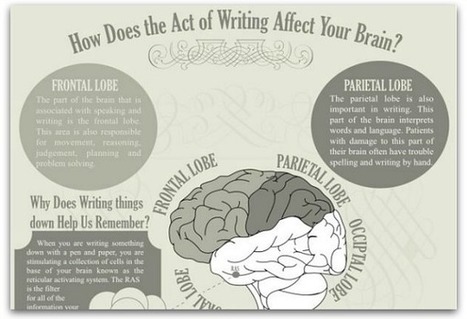
This infographic explains how writing helps your memory, how your brain reacts when it hears a story, why clichés are forgettable and more. Via Jeff Domansky, Jennifer Gandarias, Lynnette Van Dyke

Audrey's curator insight,
January 4, 2015 6:05 PM
You activate many areas of your brain when you tell a story. There are so many areas in education where students can use stories to remember details of information needed for writing exam answers. Stories are visual, can be auditory; you can introduce smells and engage with whatever you are writing about.
The whole brain becomes stimulated with a person's own record of the information. How can you forget? Go to www.hotmoodle.com for story writing information.
Scoop.it!

Learning about story arc and then applying each story element to our own writing.
Scoop.it!

Sometimes you just need someone to explain to you how to write an explainer video. It's not circular logic, it's a great new infographic. Starting with the planning and detailing the writing process, this infographic will have you ready with a script in no time. Clarify your objects and identify your audience and start writing!
Jim Lerman's curator insight,
May 3, 2016 9:14 AM
Obviously, this infographic is for a business setting. But, as they say, a little thought will enable the process to be transposed to education.
Scoop.it!

This is a shaggy and quite entertaining novel of ideas. The two most prominent of these are: Why are humans so eager, on sites like Twitter and Facebook, to give away their intellectual property to wealthy white men? And: What has happened to political activism? Do people think typing 140-character morality lectures is pushing society forward?
Jim Lerman's curator insight,
May 3, 2016 8:51 AM
A fictionalized, blistering indictment of the thumb-driven "activism" of contemporary political discourse. |