Over the next several weeks I will blog some practical suggestions for things you might try if you want to move from a traditional classroom to a more egalitarian, student-centered pedagogy. I will post these as I write them to the Futures Initiative Group on HASTAC where you can leave comments or ask questions. No way are these all my ideas! I've learned so many of these things from other people on the HASTAC network and everywhere else over the years. This is a compendium. Please keep adding to it! Add your own ideas to the Comments below or to the Google Doc: https://docs.google.com/document/d/18E3fZ0Ou9pP8Ngic9um3-VSblUDOL4Umcxa9...
There will be easy suggestions that anyone can incorporate into a classroom tomorrow and with great, interesting results. There will also be full, expansive major, and radical suggestions if you really want to turn your teaching inside out. You can pick and choose what works best for you, your students, your university, your subject matter.
In my experience, student-centered methods work equally well for every level of student, at every economic level, in every situation. (I've seen stunning progress in English language learning in first generation immigrant students at a community college who published a peer-evaluated student online magazine, for example, and with students at a top 10 private university working with local community organizers to create an ESL pre-college program for adolescent migrant farm workers in rural North Carolina as a final project.)
There are many tools for working collaboratively, and this post is a review of those tools. But we must point out, here at the start, that the specific tools you use for collaborative writing are less important than how you use them. We’ve used Google Docs extensively but have just as deftly passed notes back and forth with paper and pencil, our jumbled analog cursors co-habiting the space of an 8 ½ by 11 sheet of looseleaf paper. What’s at issue here is a way of thinking — a way of processing ideas — that’s altogether more vulnerable, letting a virtual flurry of cursors inside our own thinking and writing processes.
Published in 2014. Well written and thoughtful. Of course there is more recent information and some of can be found in Scrivener's Trappings. Gingko looks terrific, check it out on the list.
Clearly this game has struck a chord with players, but how does it work? The game sends people around to public locations in search of virtual treasure. Based on the 1990’s Pokémon video games and built using technology similar to a game called Ingress, Pokémon GO uses virtual reality technology along with a mobile device’s GPS and camera to bring Pokémon to the player’s real-world surroundings. Players can find “wild Pokémon” on an in-app map. As they approach the designated location, their device will buzz. At this point, the Pokémon character appears superimposed on a real-time image of the location; players can catch it by throwing a Poké Ball. Though this may sound easy, the difficulty varies by Pokémon to keep players engaged. Once a Pokémon is captured, it is added to the player’s Pokédex.
If there's one topic that writers can be counted on to tackle at least once in their working lives, it's writing itself. A good thing too, especially for all those aspiring writers out there looking for a little bit of guidance.
Historians of television news often cite the 1991 Gulf War as the breakthrough moment for cable — a conflict that proved there was a market for round-the-clock coverage of the sort that CNN was offering. For most humans, last week’s police shootings, the subsequent protests and the mass assassination of police officers in Dallas were a tragic commentary on modern American race relations. But for that subspecies of humans known as television executives, the events might also have functioned as an alarming peek at a radically altered future.
What we saw last week was live streaming’s Gulf War, a moment that will catapult the technology into the center of the news — and will begin to inexorably alter much of television news as we know it. And that’s not a bad thing. Though it will shake up the economics of TV, live streaming is opening up a much more compelling way to watch the news.
Connected classrooms can reach beyond physical barriers to create conversations with people from other classrooms, cultures, and communities. Social media provides venues for students to share their stories both within and beyond the classroom. It also grants opportunities for them to hear stories from beyond their school. Finally, being connected helps students recognize the power of personal voice.
When I asked my students mid-year what they thought social media added to our classroom, they offered the following responses:
“Social media can expand our thoughts and ideas and connect us to what is going on in the rest of the world. It would be cool getting ideas that are actually present outside our community.” Michael A.
“We could use social media as a class to compare and contrast ideas on different projects…[it] could be used to begin discussions.” Mandy S.
“It is cool how we have posted pictures on Instagram of what we are doing in class...We should also look at other classes from other schools and see if they give us any good ideas about stuff we can do in class.” Daniel S.
This evening, I was interviewed about how to teach writing by an East Carolina University student, Mikel Peterson. I've written the questions from Mikel below, along with my answers.
I believe the true beauty of a blog isn’t just that it provides students with an opportunity to write, but that it also provides students with an opportunity to demonstrate proficiency when it comes to a whole host of other 21st Century skills, including collaboration, creativity, tech and media, research, public speaking, and publishing, among others.
Digital portfolios are gaining ground. They can be edited continuously, they follow students from grade to grade, and they are easier than ever to create and maintain. Google Sites can get students started with building electronic portfolios. It’s free to anyone with a Google account, and the built-in tools make it easy for students to use content directly from their Google Drive with just a click of a button.
Langwitches, The Magic of Learning. Modern learning that transforms education in the 21st century. Finding new forms and redefining learning for the challenges of the future .
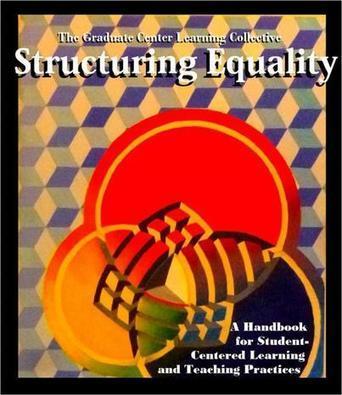
We're very proud to be posting the first draft of our book Structuring Equality: A Handbook to Student-Centered Learning and Teaching Practices by the Graduate Center Learning Collective.
The book includes essays, lesson plans, assignments that turn the principles of engaged, active learning into ways to structure equality, in the classroom and also throughout academe, in a variety of our assessment practices and methods.
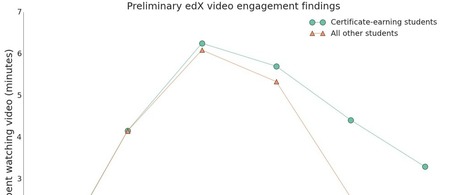
In this first post, I’ll share some preliminary results about video usage, obtained from initial analyses of a few edX math and science courses. Unsurprisingly, students engaged more with shorter videos. Traditional in-person lectures usually last an hour, but students have much shorter attention spans when watching educational videos online.
There have been a number of studies I've come across that have come to this same conclusion that 6 minutes is the optimal length for student engagement with an educational video. Yet, educators' urge to "cover the material" seems to get in the way of keeping videos to this level of conciseness. Six minutes guys!!
There have been a number of studies I've come across that have come to this same conclusion that 6 minutes is the optimal length for student engagement with an educational video. Yet, educators' urge to "cover the material" seems to get in the way of keeping videos to this level of conciseness. Six minutes guys!!
There have been a number of studies I've come across that have come to this same conclusion that 6 minutes is the optimal length for student engagement with an educational video. Yet, educators' urge to "cover the material" seems to get in the way of keeping videos to this level of conciseness. Six minutes guys!!
From writing down your experiences to reframing your perspective, myriad techniques can help you transcend painful setbacks and reshape your own story.
As you age, you’ll notice that time is the weirdest thing in the world, that surprises are relentless, and that getting older is not a stroll but an ambush.
One category of technology tools that is often purposefully avoided as an instructional asset is social media. What can hardly be avoided, however, is the way that functionality that is common in mass social media applications has influenced other types of software applications.
Collaborative, socially-enabled tools can provide excellent opportunities for practice, assessment, better writing, and better communication. Here are some excellent collaborative web apps and resources, with social functionality, that can play a valuable role in classroom lessons and assignments:
Before you eat, you set the table. Before you sell fruit, you create a beautiful display. If you want something to be special, then you have to create the right mood. Before you start your innovation project, your 20time, your Idea Farming, you are going to watch this video. BEFORE you watch the video have students take out paper and pen so that you don’t ruin the mood after the video with five minutes of students searching for paper.
Phraseum is social, so you can share phrases and phrasebooks with anyone else on the site and follow other people if you like the kinds of things they are saving and sharing. You can also click on any of the tags on your phrase to find other related words or phrases which have been saved by other users and add those to your own collection.Click here to edit the content
The whole class writing evaluation letter, true to its name, substitutes for providing feedback on every student paper in a class set. The purpose of an evaluation letter is to provide both an over-arching and granular sense of how well the class has performed on their essays. Importantly, the letter re-contextualizes the prompt and summarizes the multiple approaches that students took to satisfying expectations and meeting the criteria. In addition, the evaluation letter suggests ways in which essays generally came up short, why the instructor thinks that is, and what rethinking and revising strategies might be used to improve them. Finally, the letter should serve as model of rhetoric that is skillful and thoughtful, and that also leaves the student with useful examples, insightful ideas, and inspiration to revise and edit.
All that might seems daunting, but trust me, it is a better way to spend your energy than on 120 mini-essays where you're constantly repeating yourself and fighting irritation.
To get content containing either thought or leadership enter:
To get content containing both thought and leadership enter:
To get content containing the expression thought leadership enter:
You can enter several keywords and you can refine them whenever you want. Our suggestion engine uses more signals but entering a few keywords here will rapidly give you great content to curate.


 Your new post is loading...