 Your new post is loading...
The Two Minutes It Takes To Read This Will Improve Your Writing Forever You’re busy, so I’ll keep this quick.
Following are the simplest tips I can give you to easily — and forever — improve the quality of your writing.You’re busy, so I’ll keep this quick.
Via Elizabeth E Charles

|
Rescooped by
Jim Lerman
from Digital Storytelling
July 25, 2016 8:32 PM
|
Using pictures as the basis for a story can be a good way to get students to write a story. The pictures can serve as prompts for writing the story. All five of the tools listed below have that capability.
Via John Evans, Karen E Smith
|
|
Rescooped by
Jim Lerman
from Digital Storytelling
July 25, 2016 8:31 PM
|
Slides to support a workshop at the Building Learning Communities Conference in Boston, MA. 15 July 2015. How can we make learning sticky using powerful storyt…
Via José Carlos, Karen E Smith
|
|
Rescooped by
Jim Lerman
from Cultivating Creativity
July 25, 2016 8:29 PM
|
|
|
Rescooped by
Jim Lerman
from Cultivating Creativity
July 25, 2016 8:26 PM
|
How can we use technology tools to capture stories? Here's my favorite creation apps and websites to help students tell their stories.
Via Karen E Smith, Jim Lerman
|
|
Scooped by
Jim Lerman
July 24, 2016 8:28 PM
|
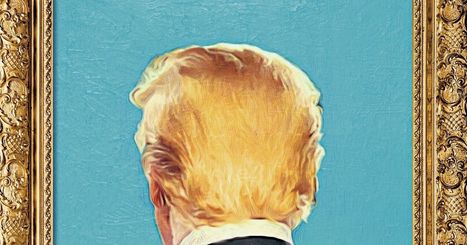
The Art of the Deal” made America see Trump as a charmer with an unfailing knack for business. Tony Schwartz helped create that myth—and regrets it.
|
|
Scooped by
Jim Lerman
July 24, 2016 7:51 PM
|
The Writer's Workbench is a single tool that incorporates the various tool types that many writers use to create an Integrated Writing Environment (IWE). It provides these various tools without binding a writer to a single structure or vision for constructing a story and seeks to enable the creative process by providing immediate access to any story artifact in the tool without the obtrusiveness of having many windows opened at the same time.
|
|
Rescooped by
Jim Lerman
from Into the Driver's Seat
July 23, 2016 1:19 AM
|
description by The Scout Project "Alphabet books have been used for centuries and are often one of the first texts that young children will encounter. ABC books is an online collection of 55 English language alphabet books published between 1805-1987. These books were collected from the Cotsen Children's Library for a spring 2016 Princeton University class on children's literature and are available for the public to browse. As the website notes, these books reveal more than changing aesthetic sensibilities; each book provides insight into past conceptions of childhood, morality, humor, and education. Many books are designed to teach moral lessons alongside literacy lessons, including Take Your Choice! (1822) and Anti-Slavery Alphabet (1947). Others are intended to be humorous and a surprising number center around apple pie. Some books, as the site notes, include offensive images, highlighting the way stereotypes and prejudice were modeled and taught to children through text. While many are centered around text and rhyming couplets, others are centered on illustration, providing a glimpse into how design in children's books throughout the past two centuries has evolved"
|
|
Rescooped by
Jim Lerman
from Pervasive Entertainment Times
July 22, 2016 12:51 PM
|
When I was a kid and we went to the movies my dad would say, “Let’s sit towards the back. I want to watch the movie not be in it!” My how…
Via Gary Hayes
|
|
Scooped by
Jim Lerman
July 21, 2016 3:35 PM
|
Technologies can transform; even simple technologies can make a significant impact. Here are eleven of the technologies that often affect classroom procedures and workflow. Use this checklist and infographic to make sure you’ve included the edtech essentials in your workflow this year.
|
|
Rescooped by
Jim Lerman
from Into the Driver's Seat
July 21, 2016 3:37 AM
|
This book explores the many pedagogical uses of Story in psychology instruction. Rich with teaching tips, examples, resources, and outcome data, the collected chapters serve as both a reference for developing creative uses of Story in the (real or virtual) classroom and as an example of evidence-based scholarship in the field. The volume is organized into sections focusing on the theoretical underpinnings of Story, the autobiographical use of Story, application of Story in different course contexts, and interdisciplinary perspectives on the pedagogical use of Story.
|
|
Scooped by
Jim Lerman
July 20, 2016 5:28 PM
|
All of the great Adam Schoenbart's writing about 20% time and genius hour.
|
|
Scooped by
Jim Lerman
July 20, 2016 5:18 PM
|
EVERY NOVEMBER FOR the last 17 years, thousands of people have participated in National Novel Writing Month, which is more commonly and less pronounceably known as NaNoWriMo. In 2015, 431,626 people signed up to try and write 50,000 words in a single month. One guy apparently wrote more than a million.
NaNoWriMo has been very good to Keith Blount. Blount is the creator and primary developer of Scrivener, an app made specifically for writers wrangling huge word counts. Scrivener’s first public launch came via the NaNoWriMo forums in 2005, and now Blount and his company, Literature and Latte, sponsor a camp for aspiring novelists every year. A huge group of writers, at all levels of acclaim and wealth and prolificness, rely on Scrivener to do their work on Macs and PCs. And today, after years of development and even more years of user requests, Scrivener’s also available for the iPhone and iPad.
|
|
|
Rescooped by
Jim Lerman
from Cultivating Creativity
July 26, 2016 1:17 AM
|
With an eye to the obsessive daily routines and strange creative rituals of many writers, and to the state of intense focus in the creative act known as “flow,” Hirshfield explores the path to concentration:
"Immersion in art itself can be the place of entry… Yet however it is brought into being, true concentration appears — paradoxically — at the moment willed effort drops away… At such moments, there may be some strong emotion present — a feeling of joy, or even grief — but as often, in deep concentration, the self disappears. We seem to fall utterly into the object of our attention, or else vanish into attentiveness itself.
"This may explain why the creative is so often described as impersonal and beyond self, as if inspiration were literally what its etymology implies, something “breathed in.” We refer, however metaphorically, to the Muse, and speak of profound artistic discovery and revelation. And however much we may come to believe that “the real” is subjective and constructed, we sill feel art is a path not just to beauty, but to truth: if “truth” is a chosen narrative, then new stories, new aesthetics, are also new truths."
|
|
Rescooped by
Jim Lerman
from Digital Storytelling
July 25, 2016 8:32 PM
|
"Stories ... are genuinely symbiotic organisms that we live with, that allow human beings to advance."
Stories have shapes, as Vonnegut b
Via Karen B Wehner, Karen E Smith
|
|
Rescooped by
Jim Lerman
from Digital Storytelling
July 25, 2016 8:30 PM
|
|
|
Rescooped by
Jim Lerman
from Digital Storytelling
July 25, 2016 8:28 PM
|
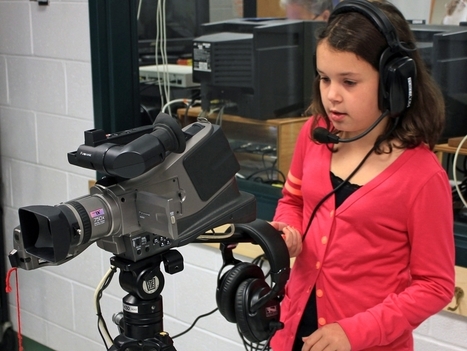
Not only is the idea of telling stories with video really engaging for many kids, filmmaking is ripe with opportunities to connect to almost every academic subject area. As the technology to shoot and edit films becomes more ubiquitous, where is a teacher with no experience in video production to begin?
Via Nik Peachey, Karen E Smith
|
|
Rescooped by
Jim Lerman
from Ed Tech & You
July 25, 2016 10:06 AM
|
Augmented reality could open up huge potential for education outside of the classroom and enable students to learn and interact with whatever is in their immediate physical environment at any particular time. It could also transform publishing and the way we interact with books and images by enabling us to transform them into interactive multimedia.
Via Nik Peachey, Karen Brooks
|
|
Rescooped by
Jim Lerman
from Into the Driver's Seat
July 24, 2016 7:53 PM
|
Children should be dreaming up quirky characters and gripping cliffhangers. Instead they are worrying about semi-colons and the passive voice
Via David M, Lynnette Van Dyke, Jim Lerman
|
|
Rescooped by
Jim Lerman
from AdLit
July 24, 2016 7:48 PM
|
Free Download BookWright 1.0.92 - Design e-books, magazines, trade and photo books using multiple layouts and tools, with this powerful an
Via Lynnette Van Dyke
|
|
Scooped by
Jim Lerman
July 23, 2016 12:40 AM
|
description by The Scout Report "What can readers learn about science from fiction? "Lab Lit: Writing Fiction Based on Real Science," a series of lesson plans designed by the New York Times Learning Lab, has been designed to explore this question and others like it. Interdisciplinary in nature, Lab Lit may be of interest to science and English literature instructors alike. At the heart of this lesson is a 2012Times essay by Katherine Bouton, in which she discusses "lab lit" - fictional stories that, as a website called LabLit.com puts it - "depicts realistic scientists as central characters and portrays fairly realistic scientific practice or concepts, typically taking place in a realistic - as opposed to speculative or future - world." Examples of lab lit include Ann Patchett's State of Wonder and Barbara Kinsolver's Flight Behavior. The Learning Lab team presents a series of lesson ideas to encourage students to critically consider how science and fiction can inform one another. In one suggested activity, students compose their own fictional stories based on science concepts explored in class. Check out the website for additional ideas and resources"
"Interactive Storytelling: 7 Examples of Online Graphic Novels - a helpful post from the team at Builtvisible.com ..."
Via Leona Ungerer, Lynnette Van Dyke
"Identifying who your customers are is great for your business, but it’s only the first step. To ensure that all marketing campaigns and materials you create will resonate with your target audience, you need to also know your ideal customer’s environment, who they are influenced by, what their pain points are, and their goals and challenges.
"This overwhelming collection of information can be easily organized with Empathy Maps. Going further than just creating a persona for your ideal customer, will help:
-to get a complete analysis of your targeted audience in a broader scale
-to align your campaigns and strategies with your products and services and your ideal customer
-to get a better understanding of which channels to focus on for a rewarding result
-having a visual representation will help you and your team understand what really matters
|
|
Rescooped by
Jim Lerman
from MiniTool Software Solution
July 21, 2016 1:46 AM
|
Teaching first-semester freshmen presents some unique challenges. You are teaching them not only your subject, but also how to be college students. One of the best strategies I have found is to begin with a collaborative project that asks them to research their new home: the campus.
Via MiniTool Software
|
|
Scooped by
Jim Lerman
July 20, 2016 5:23 PM
|
In #GeniusHour, I’ve seen students grow, investigate, and learn with more interest, activity, and innovation than ever before. I’ve also seen some struggle and not recover. In August, I’ll likely write an updated version of 5 Big Shifts in My Classroom in 2015, and the ideas from this post will be there, starting with no one fails. I want to work harder to reach every single student as a person and learner, both in #GeniusHour and in life.
|






















Definitely need to share this with my students, maybe make an anchor based off these suggestions.