 Your new post is loading...

|
Rescooped by
Jim Lerman
from Scriveners' Trappings
January 20, 2017 12:08 AM
|
We're already more than a week into January, but I'm still slowly working my way through all the "best of" year-end lists out there (there are so many of them!). Combing through these recommendations may be time-consuming, but it's worth the commitment, I've found, as sometimes you turn up an absolute gem you missed earlier in the year. Take the post titled "The Two Minutes It Takes to Read This Will Improve Your Writing Forever," by marketer Josh Spector, for example. As short as it is useful, the piece is one of the most recommended posts of 2016, Medium informs me. It's not hard to see why. Spector offers five dead-simple changes you can make to basically any piece of writing in a matter of seconds that will make it more forceful and compelling. We'd all enjoy reading a bit more if more writers followed his tips.
Via The Learning Factor, Jim Lerman
|
|
Scooped by
Jim Lerman
January 19, 2017 1:16 PM
|
Are you working on something now and feeling the pain of the creation process? Today’s infographic shares the emotional journey that most people go through when trying to create something GREAT:
|
|
Rescooped by
Jim Lerman
from Cultivating Creativity
January 19, 2017 1:12 PM
|
When you’ve hit a wall while working on a project, there’s no sense in banging your head against it. Here’s how Isaac Asimov, the prolific science fiction author and science writer, worked his way through creative blocks.
Asimov wrote more than 500 books in his lifetime, so he was no stranger to productivity or feeling stuck. What was his secret to success? Michael Chu highlights a strategy found in Asimov’s autobiography It’s Been a Good Life at Medium:
I don’t stare at blank sheets of paper. I don’t spend days and nights cudgeling a head that is empty of ideas. Instead, I simply leave the novel and go on to any of the dozen other projects that are on tap. I write an editorial, or an essay, or a short story, or work on one of my nonfiction books. By the time I’ve grown tired of these things, my mind has been able to do its proper work and fill up again. I return to my novel and find myself able to write easily once more.
The project you’re stuck on may be at the top of your to-do list, but you need to give your brain some time away from it. You don’t have to stop being productive, you just need to let your mind work through it in the background. When inspiration finally strikes again, take hold, and feel yourself get pulled from your mental rut.
|
|
Scooped by
Jim Lerman
January 17, 2017 10:19 PM
|
Third grade teachers at my school recently launched an opinion/ persuasive writing unit, and before long we were having the same conversation we have every year as this unit gets underway. What to do about the writers who say they can’t think of anything they feel strongly about? Or those who believe they don’t know any problems that they could solve, or situations they could improve? And what about the writers who choose topics we teachers know are going to be difficult to write about with conviction because the topics are, well, a little thin?
We’ve discovered (the hard way) that it’s hard to teach minlessons about the craft of persuasive writing before writers have solid topics. So this year, one teacher and I put the brakes on studying, teaching, and experimenting with craft moves, and spent one whole workshop class on ways to discover and develop meaningful and workable topics.
We began by gathering third grade writers for a quick minilesson about how to take an idea and grow it a bit.
|
|
Rescooped by
Jim Lerman
from Tools for Teachers & Learners
January 17, 2017 9:30 AM
|
Revise your writing with precision and power using SAS Writing Reviser add-on, free from SAS Curriculum Pathways.
Via Nik Peachey
|
|
Scooped by
Jim Lerman
January 16, 2017 11:17 PM
|
There comes a time after a lesson when the students are directed to write on a topic. An enlightened teacher will give students choices or let the learners choose their own topic. But often times, there are students, sometimes most, who can’t seem to put pen to paper or fingers to keyboard. "The reasons for this block varies. It might be that the student has so many ideas in their head that it’s difficult to choose a start. Brain freezes occur, or the voices in the student’s head may tell them they have nothing “worthy” to contribute. I’ve witnessed this in students with the writing task of a major paper or journal, to drafting for a 6 word story. I previously blogged about the Window Activity, and here is another effective protocol.
"Fastwrite – Quickwrite Protocol
This protocol helped my students find their writing voice and built their stamina to write. It’s simplicity makes the results so amazing."
|
|
Rescooped by
Jim Lerman
from Successful writing
January 16, 2017 7:17 PM
|
|
|
Rescooped by
Jim Lerman
from Into the Driver's Seat
January 16, 2017 7:15 PM
|
Check out this list of the best websites bloggers should bookmark for everyday use.
|
|
Scooped by
Jim Lerman
January 16, 2017 7:11 PM
|
Imagine, for a second, a duck teaching a French class. A ping-pong match in orbit around a black hole. A dolphin balancing a pineapple. You probably haven’t actually seen any of these things. But you could imagine them instantly. How does your brain produce an image of something you’ve never seen? Andrey Vyshedskiy details the neuroscience of imagination.
|
|
Scooped by
Jim Lerman
January 16, 2017 10:13 AM
|
English has always been a living language, changing and evolving with use. But before our modern alphabet was established, the language used many more characters we’ve since removed from our 26-letter lineup. The six that most recently got axed are:
|
|
Rescooped by
Jim Lerman
from Into the Driver's Seat
January 13, 2017 1:04 PM
|
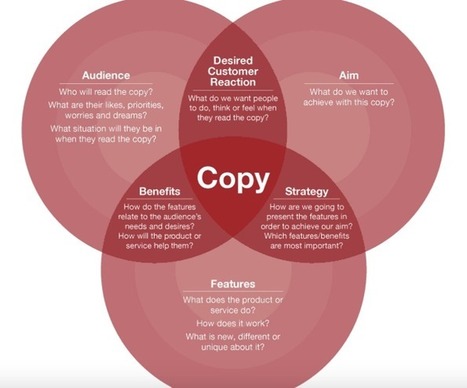
Epic copywriting is an integral part of driving traffic and making conversions. Smashing Magazine even states that “it’s not how can you become a world-class copywriter in a short period of time if you have only minimal experience?It took me 10 years to improve, figuring out these techniques. By practicing them, you’ll be able to improve a lot faster....
Via Jeff Domansky, massimo facchinetti
|
|
Scooped by
Jim Lerman
January 10, 2017 12:38 AM
|
"Storytelling in virtual reality has yet to take shape. While the simulated world of gaming has proved the visual capabilities of the medium, few have taken a crack at the art of building a compelling narrative.
"But now that the battle of the VR headsets is fully under way, a shift is evident. Content studios seem to be getting ready for the next wave of virtual reality. Over the past week alone, major VR studios have announced investments from Hollywood studios that seem indicative of the cinematic experiences to come. Within, formerly known as VRSE, has raised $12.56 million from investors including Andreessen Horowitz and 21st Century Fox, Felix & Paul Studios has seen $6.8 million in a round led by Comcast, and Virtual Reality Company (VRC) got $23 million from Beijing's Hengxin Mobile Business in exchange for exclusive distribution rights in China."
|
We're already more than a week into January, but I'm still slowly working my way through all the "best of" year-end lists out there (there are so many of them!). Combing through these recommendations may be time-consuming, but it's worth the commitment, I've found, as sometimes you turn up an absolute gem you missed earlier in the year. Take the post titled "The Two Minutes It Takes to Read This Will Improve Your Writing Forever," by marketer Josh Spector, for example. As short as it is useful, the piece is one of the most recommended posts of 2016, Medium informs me. It's not hard to see why. Spector offers five dead-simple changes you can make to basically any piece of writing in a matter of seconds that will make it more forceful and compelling. We'd all enjoy reading a bit more if more writers followed his tips.
Via The Learning Factor
|
|
Scooped by
Jim Lerman
January 19, 2017 1:14 PM
|
Writing is all about inspiration. Of course, it is a matter of discipline to a certain point. However, most of the process requires inspiration.
All the qualified writers with years of experience face the same thing: they feel stuck at a certain point having no ideas or insights on what to write about, how to create a piece which would inspire others, etc.
So, if you are new to writing and experience the same thing, don’t worry: it happens to all of us.
Nevertheless, what you might not know is that there are things most writers use to get back their desire to write. And in this article, we will introduce you to them.
Eleven tips for new writers on where to find your inspiration for writing
|
|
Scooped by
Jim Lerman
January 19, 2017 1:04 PM
|
A cohesive list of the 44th president's favoritesWhether he’s reading to kids at the White House, hitting up local bookstores on Black Friday, or giving recommendations to his daughters, President Barack Obama may as well be known as the Commander in Books.POTUS is an avid reader and recently spoke to the New York Times about the significant, informative and inspirational role literature has played in his presidency, crediting books for allowing him to “slow down and get perspective.”
|
|
Scooped by
Jim Lerman
January 17, 2017 10:18 PM
|
"One of my core beliefs about the teaching of writing is that students need time and space to write. In my ideal world, I would have endless time to really get to know each one of my 7th-grade students as writers.
"But the reality of my situation (and that of many middle school teachers) is that I have 49 precious minutes with the 95 students I see over the course of four class periods each day. 49 minutes to take on the daunting task of helping shape their writing identities.
"I know that the biggest portion of class time should be protected for students to write independently. However, if I’m not smart about how I approach my 10-minute minilessons, I risk letting the teaching portion our day run too long, leaving little room for my students to practice the strategy in their own writing.
"I have learned a few moves to help me beat the clock in the four years since I’ve implemented the workshop model. These small changes to my approach have had a big payoff when it comes to giving my students meaningful time to write."
|
|
Scooped by
Jim Lerman
January 16, 2017 11:21 PM
|
In a previous article, I talked about RAFTs as a framework for engaging students into writing for purposeful topics. Mentoring students to become better writers is an important process. RAFTs is an effective strategy that can support the coaching process. 6+1 Writing Traits by Education Northwest is the reference that I use in the following conversation. The rubrics are useful for coaching. "Students quickly pick-up how RAFTs work. When combined with teaching the writing process, there are rich opportunities for coaching students on developing their author’s craft. Teachers facilitate feedback conversation where they can pose questions that enable students to uncover the editing needs of their writing. Let’s use a RAFTs example from the previous blog:
|
|
Scooped by
Jim Lerman
January 16, 2017 11:15 PM
|
"The Window activity was taught to me by Sally Jessup, my close friend and colleague. She had a gift for recognizing in others a capacity that they did not always see in themselves. The Window activity, as she designed it, is a powerful tool for inspiring writing in all people. She understood that writing skills are a constant struggle that many people grapple with, primarily because of their own negative self perceptions regarding their capacity. To understand the value of the Window activity, context is needed regarding the complex challenges that remain mostly uncovered in education.
"Writing is a challenge for students. The writing process, particularly revision and reflection, is the elephant in every classroom from Kinder to college. Most teachers say that students need to use the writing process to become skillful writers, but few take the time to teach the craft, or do not know how. Through my teaching career, I’ve discovered that many students do not see themselves as good writers. For some, the fear of writing is nearly phobic.
"Sally Jessup understood the need for thoughtful practice. She also understood that writing needed to be purposeful and engaging. The Window activity provided the opportunity for all of these factors. A value added is that the Window activity opens conversations with students to mediate their negative self-perceptions as a writer."
|
|
Scooped by
Jim Lerman
January 16, 2017 7:16 PM
|
Short stories can be a creative exercise used to explore a new idea. They can be entered into anthologies or submitted to magazines, and they can be repackaged
|
|
Scooped by
Jim Lerman
January 16, 2017 7:13 PM
|
Cold Turkey is a free productivity program that you can use to temporarily block distractions so that you can get your work done!
|
|
Rescooped by
Jim Lerman
from Cultivating Creativity
January 16, 2017 6:52 PM
|
Google Yearbook, also known as Anuario Google, is my #Mex16 Innovator project. The goal of this project to lower the price of yearbooks while maintaining a high-quality product. Students are empowered to become graphic designers as they collaboratively create their yearbook. Because the project is bilingual, even more students can benefit from the project.
Make Your Own Google Yearbook
Link to Google Yearbook project
You can get started by going to my website with details about the project. Throughout the year, directions, resources, templates, and solutions will be added. Please take what you like and share the changes you make. Our students deserve high-quality low-cost yearbooks that capture their youthful memories.
Via Jim Lerman
Free resource of educational web tools, 21st century skills, tips and tutorials on how teachers and students integrate technology into education
Via Dr. Tom D'Amico (@TDOttawa)
|
|
Rescooped by
Jim Lerman
from :: The 4th Era ::
January 12, 2017 5:46 PM
|
Carol Barash, PhD, is the founder and CEO of Story2, a web platform that helps students tap into the power of storytelling by using a step-by-step process to transform spoken stories into authentic college admission essays. Story2 wonGoldman Sachs’ 10,000 Small Businesses competition, completed the Kaplan TechStars accelerator, was included in Forbes 10 EdTech Companies You Need to Know About in 2015 and 14 NY Tech Companies to Watch in 2016. Barash has taught at Princeton University, the University of Michigan, and Rutgers University, where she served as faculty advisor to the admissions committee. She graduated summa cum laude from Yale University, completed her M.A. at the University of Virginia, and Ph.D. at Princeton University.
|
|
Rescooped by
Jim Lerman
from Creativity in the School Library
January 10, 2017 12:40 AM
|
Lee Watanabe-Crockett writes: "Here are 6 great reasons to begin exploring digital storytelling in your classroom along with some suggestions for tools to get you started."
Via Mary Reilley Clark
|













Super quick changes, outsize impact.