Your new post is loading...

|
Rescooped by
Jim Lerman
from Into the Driver's Seat
November 27, 2019 10:46 AM
|
"Walk into any high school in America, and there is a high probability that you will find some portion of the student body reading 1984, Brave New World, or Fahrenheit 451. Talk to middle school students, and chances are they are familiar with The Giver or The Hunger Games.
"What do these novels have in common besides being omnipresent in English curricula nationwide? They are examples of dystopian literature, a genre in which authors explore themes of societal collapse and totalitarianism. Such novels often involve stories of governments or ruling elites using propaganda, restrictive laws, and state-sanctioned violence to subjugate their populations.
"The ubiquity of this literature in schools provides social studies teachers an opportunity to creatively teach one of the most important documents in U.S. history: the Bill of Rights. When James Madison wrote what would eventually become the first 10 amendments to the Constitution, he attempted to prevent the very future that modern dystopian authors fear.
"The core of these novels remains frightfully relevant to our world. Staggering numbers of people live without the basic freedoms that many Americans take for granted. Connecting the freedoms lost in dystopian novels with the freedoms secured by the U.S. Bill of Rights offers an opportunity for teachers to link social studies and language arts."
|
|
Rescooped by
Jim Lerman
from Cultivating Creativity
November 24, 2019 10:26 AM
|
“Those who tell the stories rule the world.” This proverb, attributed to the Hopi Indians, is one I wish I’d known a long time ago, because I would have used it when teaching my students the craft of storytelling. With a well-told story we can help a person see things in an entirely new way. We can forge new relationships and strengthen the ones we already have. We can change a law, inspire a movement, make people care fiercely about things they’d never given a passing thought.
But when we study storytelling with our students, we forget all that. Or at least I did. When my students asked why we read novels and stories, and why we wrote personal narratives and fiction, my defense was pretty lame: I probably said something about the importance of having a shared body of knowledge, or about the enjoyment of losing yourself in a book, or about the benefits of having writing skills in general.
I forgot to talk about the power of story. I didn’t bother to tell them that the ability to tell a captivating story is one of the things that makes human beings extraordinary. It’s how we connect to each other. It’s something to celebrate, to study, to perfect. If we’re going to talk about how to teach students to write stories, we should start by thinking about why we tell stories at all. If we can pass that on to our students, then we will be going beyond a school assignment; we will be doing something transcendent.
Now. How do we get them to write those stories? I’m going to share the process I used for teaching narrative writing. I used this process with middle school students, but it would work with most age groups.
|
|
Rescooped by
Jim Lerman
from Into the Driver's Seat
November 10, 2019 7:44 PM
|
Abi Frost writes: "Most teachers I know have a deep interest in words and academic language. That’s probably why many of us became teachers— so we could expand and deepen students’ vocabularies and in turn make them stronger readers, writers, speakers and thinkers. Right? Unfortunately, most teenagers are not inherently 'word nerds' like we are."
Via Mary Reilley Clark, Dennis Swender, Jim Lerman
|
|
Rescooped by
Jim Lerman
from Into the Driver's Seat
November 3, 2019 9:30 PM
|
Free resource of educational web tools, 21st century skills, tips and tutorials on how teachers and students integrate technology into education
Via Dr. Tom D'Amico (@TDOttawa) , Jim Lerman
|
|
Rescooped by
Jim Lerman
from :: The 4th Era ::
October 30, 2019 9:52 AM
|
There are always amazing things happening in schools and classrooms that we just need to share," says Steven Anderson, author of The Tech-Savvy Administrator (ASCD Arias, 2014). But those stories are infinitely more powerful when told by "the people in our buildings who mean the most—our kids."
From 2nd graders taking over classroom Twitter, Instagram, and Snapchat accounts, to high school students running school Facebook accounts, a growing number of educators are soliciting students to narrate their stories on social media.
Navigating the minefield around privacy and other concerns, however, can be tricky.
|
|
Rescooped by
Jim Lerman
from Cultivating Creativity
October 21, 2019 11:28 AM
|
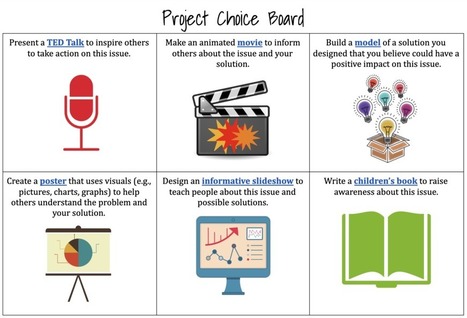
"In my blog post titled “3 Ways to Build Student Agency into Your Lessons,” I encouraged teachers to design lessons that allow students to make key decisions about their learning. Student agency is one of the easiest ways that teachers can begin to personalize learning. If students are invited to make decisions about the subject or topic they focus on, how they complete a task, or what they produce to demonstrate their learning, the learning path and products will be different for individual students. "In addition to personalizing learning, giving students agency is a powerful motivator. When students are given opportunities to select the lens they look through or decide how they want to approach a task, they are more likely to be interested and engaged in the learning. "A simple strategy for increasing student agency in your classroom is to provide students with a choice board of options they can choose from to demonstrate their learning at the end of an investigation, unit, or project."
Via Dr. Tom D'Amico (@TDOttawa) , Jim Lerman
|
|
Rescooped by
Jim Lerman
from Cultivating Creativity
October 16, 2019 11:27 PM
|
On the Brink --- a personal reflection
Dear Readers, Don't know about you, but I find tonight's late news deeply, deeply troubling. Nancy Pelosi says she's concerned about the President's "health"? Nobody can mistake what she's really talking about. We are witnessing a terrible, terrible, truly epic chain of worldwide events play out on our screens. With my limited knowledge of world history, I struggle to find a reality-based parallel to what is unfolding before our eyes...and am failing in the effort. My thoughts have turned to fiction, and the movie "The Caine Mutiny" starring Humphrey Bogart. I think it captures well the dynamics of what might be happening in our current government and the ways in which many things may unfold in the very near future. What a time to be alive. Jim Lerman
Via Jim Lerman
|
|
Rescooped by
Jim Lerman
from Cultivating Creativity
October 15, 2019 8:54 AM
|
Automatically create bibliographies, references, and citations in APA, MLA, Chicago, Harvard, and over 8,000 more styles with our totally free and no-ads citation generator. Jim Lerman's insight: This is an unsolicited recommendation for MyBib by Teacher Librarian Deb Schiano that she posted on the LM_NET listerv: "I HIGHLY recommend My Bib <https://www.mybib.com>, because it's honest and involves thinking. First, students have to identify what type of info they are citing...its container. Next, if the algorithms can't identify the author for a website, it asks you if there is one and continues to ask to identify other missing information. Plus, when it gives you a citation, it identifies what each part is! I spoke to the guys who created it and they get it!"
|
|
Rescooped by
Jim Lerman
from Cultivating Creativity
October 4, 2019 8:30 AM
|
The title of your blog post can determine whether or not people will read it, share it, and act on it. Here are ten tips for writing great blog post titles.
Via Stefano Principato, Jim Lerman
|
|
Rescooped by
Jim Lerman
from Into the Driver's Seat
October 4, 2019 8:25 AM
|
Contest Dates: Sept. 4, 2019 - Oct. 15, 2019 "What stereotypes about teenagers do the adults you know seem to hold? How does the media portray people your age — whether you’re called Gen Z, iGen or anything else? "What can you show us from your own life, or the lives of those around you, that might help make that portrait more interesting, nuanced, complete or real? "In this contest we invite young people to take photographs that depict some aspect of teenage life that you think may be misunderstood, ignored or largely unknown, and, in a short artist’s statement, tell us why. "Below is the submission form, followed by the rules and guidelines, as well as a list of related resources, including a lesson plan and the work of last year’s winners."
Via Jim Lerman
|
|
Rescooped by
Jim Lerman
from Cultivating Creativity
October 4, 2019 8:12 AM
|
Contest Dates: Oct. 3, 2019 - Nov. 12, 2019 "On The Learning Network, we invite teenagers to write about their opinions daily, but it’s only during our annual Editorial Cartoon Contest that we ask them to illustrate those ideas.
"With this, our Fifth Annual Editorial Cartoon Contest, we invite students to channel their thoughts into images. So if you have something to say about issues like the 2020 presidential race, climate change, student loans, racism, vaping or gun control — all topics the 2018 winners took on — or about any other subject The Times covers, try making an editorial cartoon that shows us what you think."
Via Jim Lerman
|
|
Scooped by
Jim Lerman
September 23, 2019 10:47 AM
|
Open Fewer Documents
One of the most effective things we can do to improve student writing is to give students feedback WHILE they are writing rather than after they submit their writing. Feedback given during the process is formative. No matter what way you cut it, the learning students receive from your feedback AFTER they are done is less. The worst is when we give feedback and they never read it at all, we wasted our time. The problem is the challenge of opening multiple Google Docs individually to provide feedback; it’s slow.
|
|
Rescooped by
Jim Lerman
from Into the Driver's Seat
September 22, 2019 1:14 PM
|
"[The], inspiriting, sanctifying power of listening is what writer Holly M. McGhee and illustrator Pascal Lemaître explore in the simply titled, sweetly unfolding Listen (public library) — a serenade to the heart-expanding, life-enriching, world-ennobling art of attentiveness as a wellspring of self-understanding, of empathy for others, of reverence for the loveliness of life, evocative of philosopher Simone Weil’s memorable assertion that “attention, taken to its highest degree, is the same thing as prayer.”
"Lemaître — who has previously illustrated the children’s book about kindness Toni Morrison co-wrote with her own son — brings McGhee’s buoyant words to life in his spare, infinitely tender lines and gentle washes of color."
|
|
|
Scooped by
Jim Lerman
November 24, 2019 1:43 PM
|
“What are students doing in the stations that are not the teacher-led station?” I field a lot of questions like this. Teachers want to know what types of activities I incorporate into station rotation lessons.
Since my teaching experience is in English, I wanted to share some of my favorite station ideas to inspire teachers who are flirting with the idea of trying the station rotation model. For those teachers who are already using the station rotation model, I hope you can add these ideas to your rotations to keep kids interested and engaged.
|
|
Rescooped by
Jim Lerman
from Into the Driver's Seat
November 22, 2019 9:46 AM
|
"In PBL, our learning goals target both content and skill development "And thinking about skills is one of the easiest ways to deploy a more cross-curricular element to any unit. After all, every unit should be focused on content, on standards and learning targets, but it also must be focused on the communication of that content. That’s where writing comes in.
"Once you get an idea of what content students will be learning, whether it be financial literacy or The Great Gatsby, it’s time to think about how students will communicate it. Maybe that means an oral presentation or a website or an ad campaign. Whatever that authentic product is, for whatever authentic audience you and your students deem applicable, you have to use writing to coach students to get there."
Via Jim Lerman
|
|
Rescooped by
Jim Lerman
from Into the Driver's Seat
November 3, 2019 9:57 PM
|
Via The Scout Project "Everyone from students and casual writers to professional authors can benefit from a little guidance. The Write Practice is a website devoted to "help[ing] you become a better writer faster," based on the core belief that practice is the secret to success. The site offers a Blog filled with articles guiding readers through writing and editing, as well as professionalization. Filter for particular blog topics using a Categories drop-down feature on the right side of the site. Visitors may wish to begin by taking the site's free assessment, which acts as a guide to the Write Practice's resources and subscribes readers to emails with tailored articles intended to match their writing interests and level of experience. The website also features self-guided tutorials on subjects like conducting interviews, writing short stories, and grammar practices. These tutorials are accessible via the landing page or on the right-hand side of the website when viewing the Blog and Resources sections. Other Resources featured include writing guidebooks and overviews of software authors may enjoy. "
|
|
Rescooped by
Jim Lerman
from :: The 4th Era ::
October 30, 2019 10:01 AM
|
Historical primary sources can support learning that is grounded in authentic, open-ended problems of today. Join educators for a discussion about teaching with primary sources as part of a sustained inquiry process throughout which youth share learning, solutions, and products beyond the classroom. Guests discussed the questions about matching primary sources with problem- and project-based learning. The conversation also pointed to specific resources and teaching strategies available from the Library of Congress.
This hangout was produced in support of Letters to the Next President 2.0, a project engaging youth in civic participation on issues and topics that matter to them in the US Presidential Election. It was also co-streamed at connectedlearning.tv.
Via Jim Lerman
|
|
Scooped by
Jim Lerman
October 24, 2019 4:34 PM
|
Camonghne Felix became the director of surrogates and strategic communications for Senator Elizabeth Warren’s presidential campaign in June. She is also the author of “Build Yourself a Boat,” a debut collection of poetry that was recently included on the long list for a National Book Award. Ms. Felix’s writings describe sexual assault, firsthand experience of abortion, and police violence, including poems about the trial of George Zimmerman, the man who shot Trayvon Martin.
Should we be surprised about a link between the highest levels of our political world and our most acclaimed poetry? I don’t think so — and I think we should get ready for more of it, because it’s coming and we need it, desperately. Political rhetoric can be so mangled these days, as President Trump and his cronies alter our language for the worse, renaming white nationalists “the alt-right” and calling journalism “fake news.”
|
|
Rescooped by
Jim Lerman
from Cultivating Creativity
October 18, 2019 9:06 PM
|
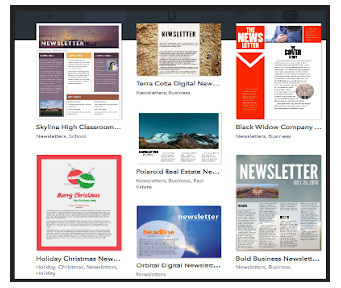
"Creating classroom newspapers is a great way for teachers to engage students in a wide variety of literacy activities. Students can use their writing skills to demonstrate their learning, share stories, and collaborate with their peers to produce meaningful reading content ..."
Via Leona Ungerer, Jim Lerman
|
|
Scooped by
Jim Lerman
October 15, 2019 10:39 AM
|
"Politics and the English Language’ was published just a couple of months before the publication of ‘Nineteen Eighty-Four’. This essay provides great insight into Orwell’s fears surrounding the declining state of language in the English speaking world, fears he expressed so boldly in ‘Nineteen Eighty-Four’. "I first came across George Orwell’s essay ‘Politics and the English Language’ many years ago and I have tried to use it as a guide for my writing, referring back to it every so often when I fear I am losing my way. "The essay opens with, “Most people who bother with the matter at all would admit that the English language is in a bad way, but it is generally assumed that we cannot by conscious action do anything about it.” Orwell, in his usual calm and measured way, shares his thoughts on how the modern writer could help to improve the general state of language. He lists six rules for writing that he believes will aid the fight against restrictive language:"
|
|
Rescooped by
Jim Lerman
from Into the Driver's Seat
October 13, 2019 5:46 PM
|
Free resource of educational web tools, 21st century skills, tips and tutorials on how teachers and students integrate technology into education
Via Dr. Tom D'Amico (@TDOttawa) , Jim Lerman
|
|
Scooped by
Jim Lerman
October 4, 2019 8:27 AM
|
"In this lesson, students will learn more about the movement and compare it to others throughout history to answer the question: Are protests an effective way to bring about change?"
|
|
Scooped by
Jim Lerman
October 4, 2019 8:17 AM
|
Contest Dates: Sept. 4, 2019 - Oct. 29, 2019 "When you think of The New York Times, you probably think of front-page news, but The Times also has a long tradition of publishing personal essays, and you can find new ones online nearly every day if you know where to look. "In fact, over the years there have been columns dedicated to personal narratives on themes from love and family to life on campus, how we relate to animals, living with disabilities and navigating anxiety. "For this new contest, our main inspiration is the long-running New York Times Magazine Lives column. Like that feature, which ran from 1996 to 2017, and included essays on everything from eating ramen to experiencing an emergency plane landing to wearing a monkey suit to work, we’re looking for “short, powerful stories about meaningful life experiences.” We want to hear your story, told in your unique voice. "Beyond a caution to write no more than 600 words, our rules are fairly open-ended. We’re not asking you to write to a particular theme or to use a specific structure or style; instead, we hope you’ll experiment and tell a tale that matters to you, in a way you enjoy telling it."
|
|
Rescooped by
Jim Lerman
from Cultivating Creativity
September 24, 2019 9:51 AM
|
"One of the most important skills educators can help students acquire is the ability to be a true lifelong learner. With the average student currently in school having five different careers (not jobs, completely different careers!) during his/her lifetime, the ability to constantly re-learn and embrace new knowledge and skills will be crucial.
This goes beyond the ability to simply “Google” a quick answer, but includes knowing if the answer given is valid or not. Students must be able to judge what is returned to them after a search. Unfortunately, the only way to learn this is to practice."
Via Jim Lerman
|
|
Rescooped by
Jim Lerman
from Into the Driver's Seat
September 23, 2019 10:41 AM
|
"Every year for the last five years I've published a free ebook that is simply titled The Practical Ed Tech Handbook. This week I finished creating the updated version for the 2019-20 school year. The Practical Ed Tech Handbook contains nine sections covering a wide variety of educational technology tools. Throughout the handbook you'll find ideas on how to use the tools in your classroom as well as tutorials the nuts and bolts of using them. The nine sections of the Practical Ed Tech Handbook are: - Communication with students and parents.
- Backchannels & informal assessment
- Learning to Program
- Augmented and Virtual Reality
- Digital portfolios
- Audio recording and publishing
- Video creation and flipped lessons
- Digital citizenship
- Web search strategies"
|